Cole Chaney is
“Anti-Machine”

While many young talents, willingly or hesitantly, bow down to music industry boardroom suits who promise stardom if they’ll follow a professionally curated path, Cole Chaney takes a hard pass. He knows exactly who he is, what he does, and how he wants to get there. He creates songs, not content. He’s a career musician, not a brand. And the only thing he hopes to influence, maybe, is someone, somewhere, who wants to make music for all the right reasons.

Chaney grew up in Catlettsburg, Kentucky, surrounded by the legacies and storytelling of his elders. After graduating high school he worked as a welder, uncertain of his career path, but already fueled by his passion for music. Today, he keeps one musical foot in the bluegrass traditions of his Appalachian roots and the other in guitar-centric, amplified bands like Soundgarden, Nirvana, Alice In Chains, and Stone Temple Pilots.

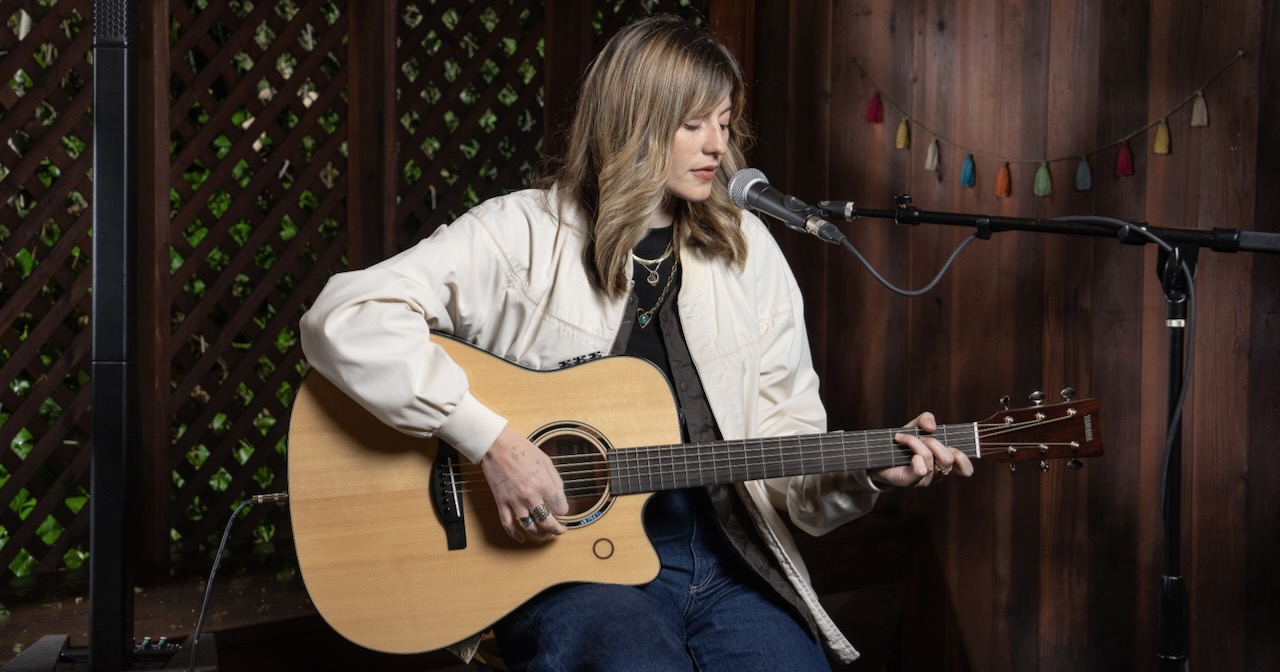
His debut album Mercy and subsequent OurVinyl Sessions reflect his love of acoustic music and showcase his leanings toward introspection and melancholy. In the Shadow of the Mountain, released last fall, takes that darkness to a new place, balances it with moments of light and leans into the aforementioned rock influences, while never losing the origins of his sound. All of this shines at peak level onstage, captured by Western AF on a Live AF Session.

Sitting outside at home on an April morning, drinking coffee and surrounded by the sounds of birds and a breeze, Chaney spent a couple of hours on the phone with Good Country. He spoke candidly about his music, faith, values, mental health, and the intertwining of inner peace and inner turbulence that make all these things uniquely him.

When you were ready to do this professionally, you went to Lexington. Most songwriters would have chosen Nashville. Was yours a deliberate decision or a natural one?

Cole Chaney: To understand that decision, you have to look at who I was looking up to at the time – and still do – and what drove that decision. When I was in high school, probably around my freshman or sophomore year, 2014 or 2015, I started getting into this band called Sundy Best. They’re from Prestonsburg, Kentucky, which is just down the road from me. This was pre-Tyler Childers. At the time, in Eastern Kentucky, these guys were the biggest thing coming and going. They leaned heavily on being from Kentucky, the same way I do, and they moved to Lexington to get a foothold.

That was my early example, watching those guys. I knew they weren’t going about it the traditional way, which was to go to Nashville and pray somebody picks you up. They did it in Lexington. A couple years later, Tyler Childers comes along – another super-influential figure in my musical upbringing. Of course, he’s anti-Nashville – not the city, but the machine, if you will. I’m pretty sure he lived in Lexington, or at least around the area in the scene, for a while. So did Sturgill Simpson. The list goes on.

I was like, “What business model makes more sense to me? Do I go to the place where there’s more songwriters than the rest of the entire planet or somewhere where people will actually understand what I’m saying and I can maybe build myself a little bit of a foundation?”

The way I saw it is if I started building a sort of fan base or if I had enough ticket buyers, places like Nashville or Denver, these big music scene cities, what choice would they have other than to book us? That’s the way I looked at it.

And it worked.

It did work. It’s a simple business model, but the difference between that model and the other is you’re not sitting around waiting for something to happen. It’s on you to go out and make your own connections. It’s a very grassroots and organic way of doing it and that’s the way I like to do things. I’m anti-machine. Even though I work with some bigger companies, I keep it as limited as possible. That’s so I can play pretty much wherever I want, whenever I want, and they understand that.

On the Whiskey Riff Raff Podcast you said, “Music found me.” Would you mind expanding on that just a bit?

It did. I never would have dreamed at 16 years old that I would be doing this as my full-time job at 25. That was never on the horizon for me. I didn’t know what I was going to do. I knew I was going to weld for a little bit, see what happened, and maybe try to start my own business. And I did. But I really didn’t think it was going to end up like this.

I started realizing that people liked to hear me play and sing around the same time that COVID hit really hard. That gave me an opportunity to sit down, write some songs, and think about what I wanted to do with the rest of my life.

I’m very much a subscriber to the Bible, and I think the Lord has a mysterious way of working. He put me on a path without me even realizing it way back then and I do my best to stay on it now. I think my job while I’m here is to create as much good stuff as I can, stuff that means something, get it out to the people, and get out in front of them and play it for them. As somebody who enjoys going to shows in their free time and watching my favorite bands perform live, I know how that feels, and it’s truly a privilege to be able to offer that same service to other people.

There is music in your bloodlines, not professionally, but family members who played in church and at home. You obviously assimilated the sound of the area, and also this wider scope with bands like Alice In Chains and Stone Temple Pilots. When did all of that begin seeping into your songwriting?

We listened to the radio when I was growing up. I didn’t get educated on music or how to play until I started really getting into it. To this day, I’m still being educated and learning how to play on a daily basis. Part of what keeps it so fun to me is how much I don’t know and constantly learning about things.

Mercy was my first album, and I had access to what was around me. I had just moved to Lexington and I was really into bluegrass. There’s a band called the Wooks that, to this day, Glory Bound is one of my top three favorite records of all time. I was infatuated with that sound and that was what I wanted Mercy to sound like, or at least as close to it as I could get. A lot of the Wooks ended up playing on that album, plus Michael Cleveland. It was crazy.

Alice In Chains has been a mainstay in my musical taste since I was probably 15 or 16 years old. Since I first found them, I was very drawn in by the tone of Layne Staley’s voice and the weight of Jerry Cantrell’s guitar. It feels like you could bite it and chew on it. I don’t know how to describe it.

I’ve also always loved bluegrass, so it was [figuring out] how to bridge the gap of what I listen to and where I want to go with my writing without completely abandoning that sound. And bringing the alternative rock sound into the folk realm, where you have mandolin, upright bass, fiddle, acoustic guitars, and drums. The biggest change in the sound has been the addition of drums over the past two years, navigating that and seeing how it fits into the whole equation. It opened up a lot of avenues for me as a songwriter.

You began playing guitar at 13 or 14. Did you always play acoustic?

The thing about electric guitar, for me, is that it’s such a deep realm of gear and a deep dive. I’ve always been attracted to good-sounding acoustic guitars and players like Tony Rice, so I felt my effort was best spent getting really good at playing the acoustic guitar.

That will carry over whenever I decide to pick up an electric guitar, more so than if I only played electric guitar and tried to write some bluegrass-style acoustic lines. It would be a tougher transition to come over from light gauge strings on an electric guitar to .013s on a dreadnought and trying to play “Blue Railroad Train” or something like that.

Do you have an electric guitar?

I have several electric guitars. I’ve got a ’57 reboot Stratocaster, an American Professional Telecaster, my old Paul Reed Smith that I learned how to play electric on, and a nice Vox amp. I don’t know all that much about electric guitars. I still have a lot to learn.

Prior to this interview, you sent over your touring rig: a Gibson J-45 Banner in standard tuning with a K&K Pure Mini pickup, and a Breedlove sitka/rosewood Custom Dreadnought in drop D/double drop D, with an LR Baggs Element VTC pickup. Also two Grace BiX DI’s and a Lampifier Model 711 cardioid mic for lead vocals.

Those are my road guitars. They aren’t the ones I recorded everything with, but those are what you see at the shows.

In addition to the Gibson and Breedlove, do you have other acoustics?

I have two Gary Cotten guitars. [On] OurVinyl [Sessions, that] was my first Cotten I recorded with. On In the Shadow of the Mountain, many of those songs are my newer Cotten, which is sinker mahogany and an Adirondack top. “Alone?,” “In the Shadow of the Mountain,” “Into,” “Feels Like Rain,” and “Spirit” [were all recorded] on the Cotten.

That guitar sounds huge. It’s an outstanding guitar. I don’t tour with it because I’m scared something would happen to it and it’s too special to me. And Gary’s a great dude. He’s always taken really good care of me, and I want that guitar to stick around for a long time.

I don’t have any electronics in it, either. It’s a very traditional style, it’s a dovetail, and I want to keep it as traditional as I can and keep as much weight out of it as I can, because the more weight you add, sometimes it makes them sound worse.

What makes the Gibson and Breedlove right for touring?

They’re super-versatile and they both sound fantastic plugged in. That Breedlove is the longest-standing guitar I have that I’ve consistently played shows with. I got it in 2019 from 4 o’clock Rock Guitar Shop in Ashland [Kentucky]. It’s a custom dreadnought that they shop-ordered and it’s got the LR Baggs VTC Element in it. It has always sounded so good plugged in. I mean, all guitars sound bad plugged in, but it’s a matter of how much of the original sound can you actually preserve when you plug it in.

I’ve gotten to the point where I am almost starting to desire a little bit of that direct input texture. Maybe it’s because I’m listening to too much MTV Unplugged, but I’m starting to desire that kind of cardboard bad sound.

The Gibson, I put a K&K Pure Mini in and it sounds really close to what it sounds like not plugged in. Man, that Gibson is a beast. I love that guitar. It’s been to every show with me since I bought it last year.

I still have a Paul Reed Smith acoustic guitar and it’s a damned good little guitar. I’ll probably end up using it again on some stuff. It’s one of those that you plug in and it sounds great, too. But when I got into the whole bluegrass thing, I knew I needed something with a little more body.

Sometimes you use a pick, sometimes fingers. Either way, your attack is strong. How did your technique develop?

It’s one hundred percent out of necessity. I had a really bad injury in 2015 and I damn near cut my index finger completely off at the knuckle. I can’t wholly bend my index finger and I can’t feel the picking side of that finger. If you watch some of my older videos, my index finger is flailing around all the time. It’s because I’m picking with my thumb and middle finger, and that’s where I’m holding the pick. That took me long enough to learn how to do.

In recent years I’ve learned how to use my middle finger to lock my index in place and be able to hold a pick. It looks normal, but if you could see how the sausage is made, it’s not that pretty. I wish I had that dexterity in my finger. The takeaway message from that is, “Take care of your hands, y’all.”

Let’s talk about the through line from bluegrass to bands like Stone Temple Pilots and Alice In Chains. You blend the genres seamlessly and it all makes sense. Did you always feel that connection?

If you listen to any playlist I’ve had, I’ll go from Ralph Stanley to Chris Cornell in a heartbeat. Obviously the music is different, but there are common themes between the two. Mountain folk music, hard rock, and that era are very dark and brooding, and they can be heavy in their own ways too.

What is heavy? What makes a song heavy? You’ve got people drop-tuning their guitars, but it’s still not as heavy as Pantera or Black Sabbath or something like that. So it’s not necessarily the sound that makes it heavy. It’s the vibe of the song.

I feel like a salesman a little bit, trying to sell this idea that this stuff can be brought together and related in an authentic capacity. Let’s take [Stone Temple Pilots’] “Big Empty,” for example. To do a cover of that and be looked at as a folk artist or an Appalachian artist, or some people will even say country – which I disagree with, but whatever – it always seems like somebody will start into a cover of this great song, but then they’ll get hokey with it and it loses all its purity.

That’s not at all the intended purpose for me. It’s to say, “This is a fantastic song and it fits the vibe that we’re all going for in this realm.” A lot of people probably didn’t know that a mandolin or fiddle sounds great on “Big Empty,” but now they do, because it fits. That’s the way I listen to that kind of stuff. It’s just how to pull that off without being cheesy or coming off in a capitalistic way. More so in a way of, “I love this song and you guys should listen to it.”

Was it challenging to find musicians who understand going from bluegrass to Stone Temple Pilots and back again?

The band, I think through a lot of prayer/manifestation, has come together and, as you hear, they’re fantastic. They can play anything in any style. Ella [Webster] and Kyle [Kleinman] come from a more traditional folk music side of things. Kyle is a bluegrasser and Ella is an old-time fiddle player. Lars [Swanson] and James [Gooding] are jazz cats, so they have infinite vocabulary when it comes to music. If you can play jazz, then you’re going to be all right. If you can pull off that stuff, you don’t have anything to worry about when it comes to my type of music. Stone Temple Pilots is a walk in the park for you.

In our van, the most listened-to bands between us are Soundgarden, Pantera, whatever James’s choice of jazz is, and Alice In Chains MTV Unplugged. That’s a really good piece of music. But yeah, they’re a great band and they can play anything.

Did Lars and James know each other before they joined your band? To lock in a rhythm section…

No, they didn’t. Once you start playing with a jazz drummer, you need somebody who can comprehend the stuff he’s laying out and answer that on the bass. To have those two sit in a room and jam is really something to witness and listen to, because they speak a language to each other that I don’t understand. But I love when they do it, and it’s great to hear.

I’ll be playing onstage, singing and doing my thing, those guys are behind me and I’ll hear them back there, talking to each other while we’re doing this thing, and it’s awesome. They’re special. Those two dudes – they’re incredible. They’re the unsung heroes of music in general. That’s your metaphorical offensive line right there. If you don’t have a Lars and a James, then your quarterback’s getting sacked all the time.

This is you in 2025 on The Western Side, talking about Shadow: “a lot of darkness and an equal amount of joy in other songs. It’s a good depiction of where I’ve been for the past two years. A tumultuous and chaotic time period, but also great. And I’m still here.”

Then, In 2021, on With A View: “I load the pressure on. It’s how I operate. My brain lives in constant turmoil.” In 2020, talking about “Fever Dream,” “a song about trying to keep it all together. … the way I deal with this is isolation. And when you isolate yourself, you don’t have much of a choice but to hash some things out in your head.”

You are no stranger to the dark place.

Hearing those things, I look at that younger version of myself almost as I would look at a younger brother. Part of me wishes I could put an arm around that kid’s shoulders and be like, “You’re going to be all right, buddy.” Times got a little tough, as they probably should for anybody at points in their life. You can’t really enjoy the great parts of your life without having a little bit of adversity to overcome or deal with. The darkest part, for me, was maybe just growing up and gaining a new understanding of the way the world actually operates and how hopeless that can be at times, but also how beautiful it can be in the same stroke.

What I’ve realized is you get out of this world what you pay attention to, because whatever you want to find, you can find it. It’s there and it’s aplenty, whether you want to find the negativity and suffering, or whether you want to find the positive and the good. I don’t have the answer to where folks are supposed to operate and live, but I think it’s good to help people who are in that suffering side of things. But you can’t let that dominate your existence, and for a little while, I was maybe dominated by the darker side of life.

I try to be as empathetic as I can, but with that comes feeling a lot and also accidentally hurting people sometimes. That’s really tough, because then you have this cycle of guilt that you deal with trying to make it right in your head. As I’ve gotten a little older and maybe figured a couple things out, I try to have a lot more grace for myself. What I’ve learned about the pressure is that it’s really just perceived pressure and none of that exists, and you should just care less what people think.

Obviously, music is where you go during those times.

Absolutely. If something is eating at me that I’m having a hard time getting out in a linear fashion, a lot of times I find myself writing about it without even realizing it. My mom is an abstract painter, so I grew up with an understanding of what “abstract” means and abstract concepts. That’s how I materialize a lot of that stuff, because some of it is things I would never come right out and literally write down, for multitudes of reasons, but things you want to indirectly address. That’s when [abstraction] becomes a great tool for addressing those kinds of things. Metaphors.

It seems, when it comes to expressing those things, you’re in the balance between the emotionally open world of Cornell, Cobain, and others and the world of bluegrass, country, hunting, fishing, and those stereotypes of “manly men” – and not so much emotional transparency.

Not necessarily. I don’t know about the whole “alpha male” personality type. It’s always seemed to me that a lot of times the guys who are trying to be perceived as macho are probably the ones who need a hug the most. Now it’s everybody else’s problem because their dad didn’t do it, and that sucks.

As I’ve emotionally developed a little bit, I’ve really started to respect individuals like Chris Cornell. If you look into him as a person and watch some of his interviews, he’s intelligent and seemingly self-aware. I respect the way he conducted himself, especially in interviews, and the way he made sure to pay attention to people and make them feel seen. The only way you can empathize with people like that and make sure of those types of things is if you’ve been on the other end of that stuff and you’ve felt looked over and brushed off.

I may not be the best at answering Instagram DMs, and I definitely don’t stay on the internet because I think it sucks, but if I talk to somebody in person, I always try my best to give them that and be present in the moment. Somebody else that does a fantastic job of that is Nicholas Jamerson, the frontman of Sundy Best, who’s a mentor, friend, and hero of mine.

Have you ever felt any hesitation about publicly ripping off the mental health Band-Aids? Or, conversely, is there a feeling of opening the door to people having these conversations?

Sure, there’s hesitation about a lot of things. There’s a lot of decisions about, “How do you want to portray yourself in a public light?” But my main goal is and has been to just be as authentic as I can, as representative of how I feel about things as I can, and to be accepting of people and understand that they come from different places and have different perspectives.

With that hesitancy, there’s also much more in the way that when we were talking about 20-year-old Cole, the way I want to put my arm around that kid and comfort him, that’s what I want my music to do for people that feel the way I was feeling at that time.

Listening to you, I’m reminded of something Charlie Daniels said to me during an interview years ago: “Music is too precious for me to prostitute it.”

Oh, yeah. Absolutely. And, too, Charlie Daniels is one of the greatest country musicians ever. I want to go on record saying that.

The way I look at it is, could I see my heroes, people I look up to, going online and being like, “Comment what song you think I should release next”? No, I don’t think I could. When I see someone who has musical and artistic integrity, that’s how I’m going to operate. I’m going to try my hardest to uphold my integrity and not do the TikToks and the really cheap stuff.

You absolutely will suffer financially for not playing the game and if you don’t kiss the right ass, but, to me, that suffering is not negative suffering. I’m honored to be able to suffer like this, because if my options are suffer or have to watch Country Central’s “Hot Take Tuesday,” then give me suffering all day long, because I’m not paying attention to that bullshit. It’s ridiculous. I don’t care who’s beefing and I don’t care what dude is playing cowboy this week.

That’s why I’m trying to get out of the country scene. It’s becoming so fake and there’s so many people trying to be carbon copies of other people. There’s no authenticity. Everybody’s full of shit. We went through this period where people like Tyler [Childers] drove the spear through the heart of this mainstream country thing and it was akin to when Nirvana came on the scene and effectively killed hair bands for a while. But then the Nirvana copycats came along and garnered a lot of the same attention.

I’m not saying that just Tyler Childers is responsible for this. People like Sturgill, and a lot of smaller artists in their own scenes, are responsible for the turning over of the dirt, if you will. But it’s getting stale. It’s past getting stale. It is stale and it’s bad. There’s a lot of really shitty music being put out right now and I don’t want any part of that.

If I’ve got to step away and back off and be out of the internet eye, then fantastic. That doesn’t bother me one bit. If it means a few less people know who I am, then so be it. But I hold out hope that people will eventually realize how cheap and bad a lot of the music is that is being promoted right now, and there’ll be another turning of the dirt soon.

Yes, art is subjective, but art is subjective. Not this corporate bullshit that they’re trying to push. That’s not art. That’s six dudes in a room trying to come up with a song that’s going to sell on the radio or sell on the internet, or “We’re going to put thirty tracks on this album” so they can set streaming records. It’s like, “Man, y’all have lost the complete plot of the whole thing.” There’s nothing interesting about that to me. I’m all about authenticity. I want to believe the person on the other side of the microphone from me, and if I don’t believe you, then I’m out.


Photo Credit: David McClister
Yamaha’s Atmosfeel Was
Created by Musicians for Musicians

The great Doyle Dykes once remarked, “The Bible says, ‘Sing unto the Lord a new song and play skillfully with a loud noise.’ Of course, I guess it helps to have a good amp to do that!” The team at Yamaha Guitars has taken that theory a step further to include a good pickup/preamp system. That’s why they designed Atmosfeel.

Atmosfeel is user-friendly, easy to use, and available in the X models of Yamaha’s exquisite FG Red Label acoustic guitars and concert-size FS series. Its 3×3 concept – three elements, three knobs – may appear simple, but in fact it was almost five years in the making.

According to Yamaha Guitars marketing manager Brandon Soriano, development of the Atmosfeel system began in 2014, prior to its original launch, plus an additional three years leading up to the FG/FS9X guitars.

Like all Yamaha products, Atmosfeel was created with the musician in mind, says Soriano. “Yamaha’s consistent process is that we include a lot of feedback from artists, from our internal employees, and from partners we work with. This pickup system was geared toward artists and performers from the very beginning, so their feedback was essential in crafting this system.”

There is no shortage of choices when it comes to acoustic guitar pickups and preamps. What makes Atmosfeel different? Once again, says Soriano, it comes down to R&D by musicians, for musicians. With guitarists often searching and settling for what he calls the “least bad” option, Yamaha was determined to offer “actively good” the first time, every time, with technological advancements that don’t require an engineering degree and 200-page manual to make the magic happen.

“What we noticed is that the pickups on the market tended to not sound like your guitar,” says Soriano. “There was the sound of your guitar in the room, and then this other sound that happens when you plug it in. Our goal was to make a pickup system that sounds natural – a true representation of the guitar you have, of your tone onstage, while keeping it simple enough to use and easy enough to make changes on the fly, and to have the same sound in the room and through the speakers when you plug it in.”

Atmosfeel was developed alongside the FG and FS guitars, which allowed Yamaha to voice the pickup system to specific models within the series, guaranteeing accuracy and precision at every level. “Our process is so in-depth that we leave no stone unturned,” says Soriano. “For example, the 9 grade FG and FS guitars have Adirondack tops, which are a different stiffness than the Sitka tops you’ll find on the 3 and 5 grade guitars. The [more recent] 9 level guitars have a slight taper going on, where the outer edges are about .2 millimeters thinner than the center point.

“We have exact measurements of how each of those tops resonate, how they vibrate, what their headroom looks like. We have all of these [minute] details at our disposal because we made the guitars. We know that the back and sides might have a slightly different thickness between rosewood and mahogany. We know that the stiffness of Sitka and Adirondack is different to this exact measurement.

“When we’re crafting the pickup system, we take all those things into account and modify the voicing accordingly, with the ultimate goal of all these guitars outputting the most accurate sound we could possibly come up with, compared to what the guitar sounds like acoustically in the room. The guarantee is that we spent years developing this system and specifically voicing each model’s pickup system to that guitar.”

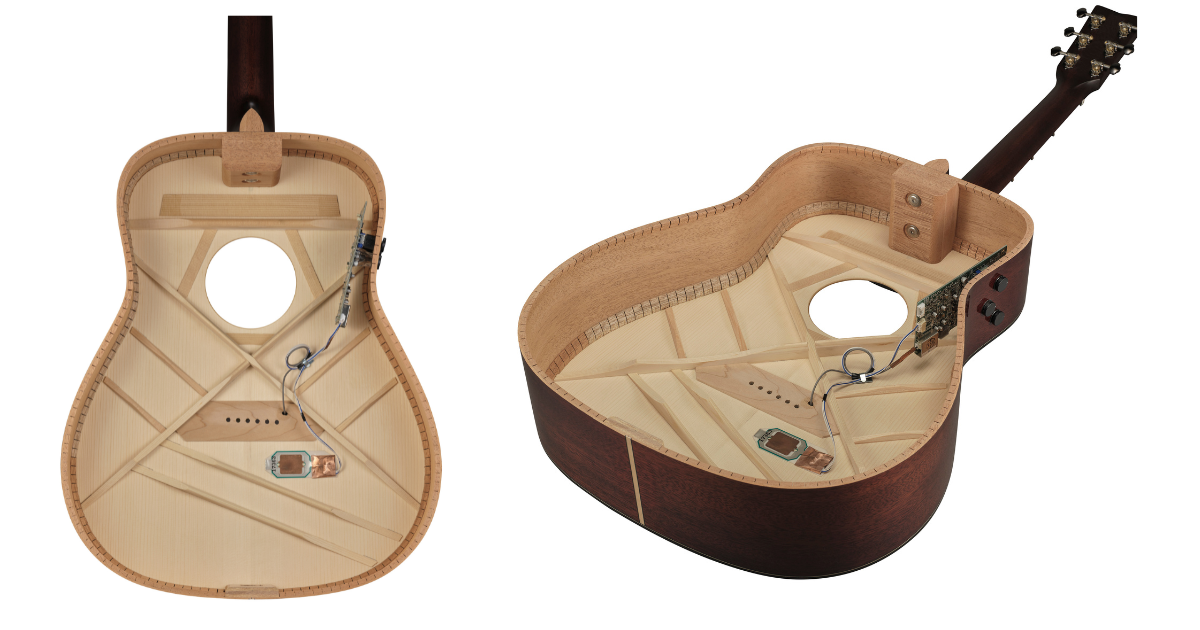
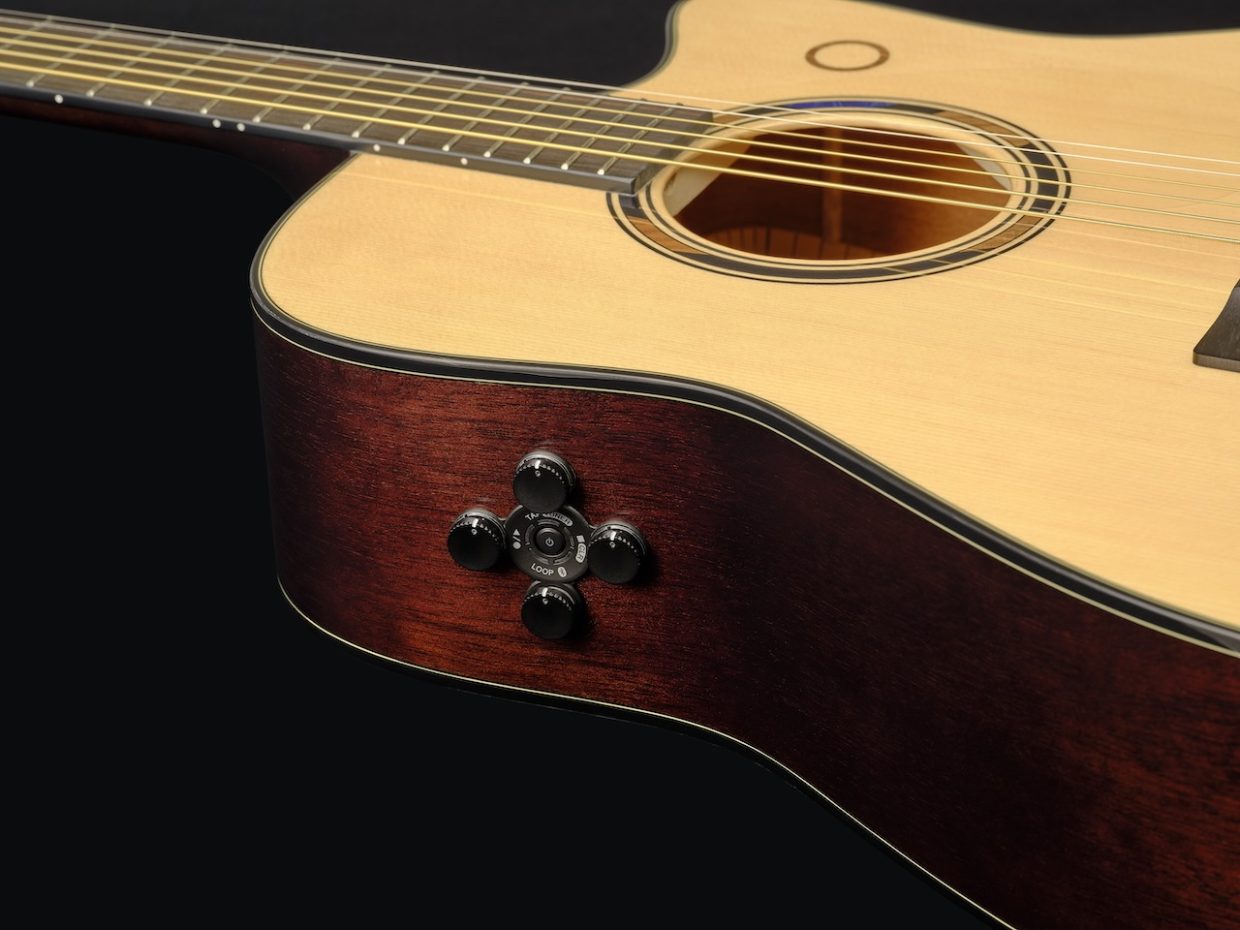
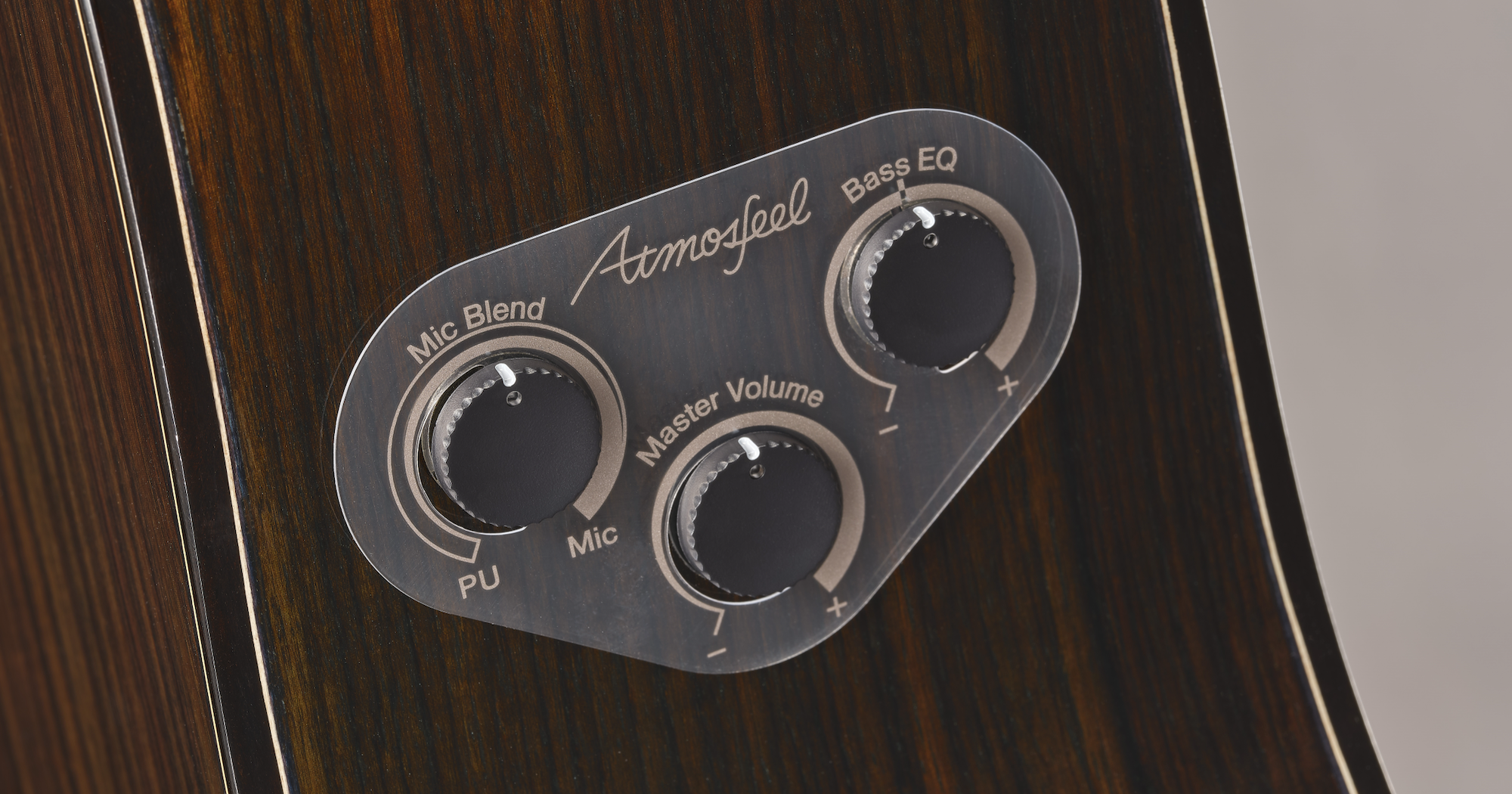
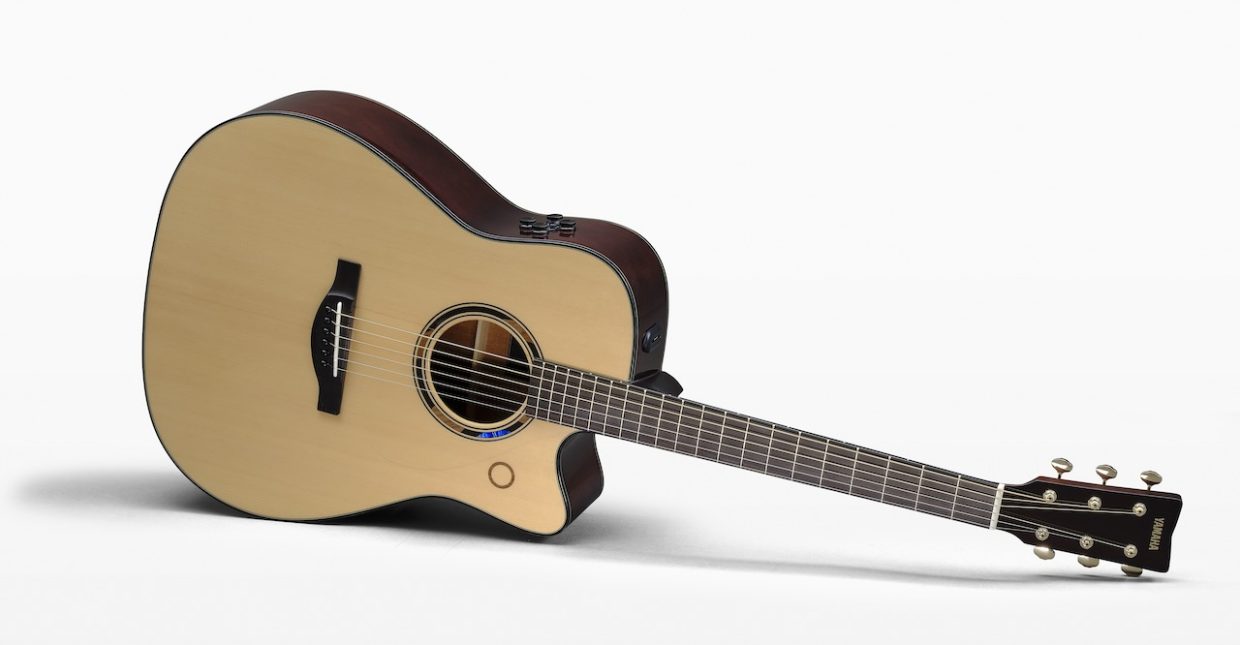
The onboard electronics and Atmosfeel system of a Yamaha FG9 MX guitar.

To further dial in accuracy and ensure that Atmosfeel could deliver anywhere, at any time, the system was thoroughly artist-tested prior to its debut.

“We come up with a voicing we’re really confident in and then we’ll bring in artists to do evaluations,” says Soriano. “In real time, we have the guitar hooked up to a computer, and a person is behind the keys adjusting the voicing based on the feedback the artist is giving us. We do this with a number of artists until we arrive at something that works for them and is the most versatile for all their different styles.”

How does Atmosfeel work, why does it work, and how does something so advanced remain simple and easy to use? This brings us back to the 3×3 concept, which was not a coincidence, says Soriano, but instead a carefully thought-out design balance between “How much is too much?” and “How little is too little?” One knob means few, if any, options, while an assortment of knobs becomes cumbersome and tricky, especially for guitarists who need quick-touch adjustments.

Atmosfeel is comprised of three elements: an under-saddle piezo pickup for low end, miniature condenser mic for mids, and proprietary, whisper-thin but deceptively strong, transducer contact sensor for overtones and clarity.

“Our approach was, first of all, to find out what are the strengths and weaknesses of all three elements,” says Soriano. “The under-saddle piezo pickups do a great job of capturing a bold and consistent low end. The weakness is that the high end has a tendency to sound unnatural to guitar players. That’s where you start to get a different sound than what your guitar is like in the room.

“The contact sheet, which is under the top wood of the guitar, is the inverse of that. It’s a paper-thin sheet that has a positive and a negative, and it captures the vibrations of the top. It’s really good at capturing air, high-end presence, and sparkle, and the low end is not as resonant.

“We’re taking the low end of the under-saddle and the high end of the contact sheet and creating what we consider to be the ideal blend between those two. That was the first step. Of course, neither of those technologies independently are completely new. Under-saddle pickups have been around for a long time. But the combination of the two, and the detail of how we blend them together, is what’s new in this system. That has created a new approach.

“The microphone, aimed at the side wood at the upper bout of the guitar on the low E string side, covers the mid-range character of the guitar, whether you choose mahogany or rosewood. Essentially, the system lets you have an ideal low end, an ideal high end, and you can blend the microphone in so that you get a mid-range to taste. We figured out how to take existing technologies to the next level and optimize them.”

All of this is controlled by three small knobs. “You get a Microphone Blend, which is really effective for shaping your midrange and overall character,” says Soriano. “You get a Master Volume, which is essential, and then the Bass EQ is really interesting.

“When you’re playing live, a lot of feedback can happen in the bass frequencies. The Bass EQ is a cut or boost knob, which can help with controlling feedback or warming up your signal. If you’re playing solo and need to take up more room in the mix, you can crank that Bass EQ knob. Vice versa is true as well. If you’re playing with a band and there’s a bass player, you don’t want to step on their toes, so you’re probably going to want to roll off some of that bass.

“The Microphone Blend can be used to pop in and out of featured parts or solos. If you need a smaller, more compressed sound just to be in the background, you might use less of the Mic Blend. When it’s time for you to step out and take your chorus, you can crank that microphone up, stick out in the mix momentarily, and turn it back down when the time is right.”

Atmosfeel was designed for player flexibility – style, genre, attack, in the studio, onstage, on your own, with a band. Wherever you go, whatever and however you play, the system’s versatility works with you and for you.

“If you’re an arena- or stadium-level act, chances are you have a pretty silent stage,” says Soriano. “Those acts today are using a lot of in-ear monitoring. You can get away with a lot of Microphone Blend in that setting, because you don’t have sound coming back at you with an onstage wedge, and the risk of feedback is probably lower. Also, in a larger space, the sound has more room to dissipate.

“If you’re in a coffee shop, you have a floor wedge aimed at you, and the room is small, your risk for feedback might be pretty high. In that instance, you want to reduce the Microphone Blend and maybe the Bass EQ to accommodate for those things.

“And, of course, everything in-between exists as well – clubs, mid-sized venues, things like that. The system lets you tailor your settings to each of those without being too complicated. It’s just three knobs. If you know how to use them, you can optimize your sound for whatever setting you’re in.”

Yamaha designed Atmosfeel with musicians’ peace of mind foremost, meaning durability on the road and reliability onstage and in the studio. Choose your settings and rest assured they will remain in place, even if you don’t. “The Bass EQ knob has a notch at 50 percent,” says Soriano. “When you get to that spot, it locks you into place. Of course, it’s not too hard to move out of that space, but it certainly will not move on its own.”

Best of all, the 3×3 setup means easy to use, easy to remember. “Even the highest level of professional musicians are human,” says Soriano. “When you’re onstage, you have adrenaline going, and you have to make quick decisions, you don’t want to pause and remember which one of your seven knobs does what. You want to reach down and do what you need to do quickly so you can get on with the performance. The three-knob system is extremely user-friendly for that. You don’t have to spend time thinking about it before making an adjustment.”

Atmosfeel is perfect for recording in a pro studio, home studio, or on the road. “The vast majority of the time, if you’re recording an acoustic guitar, you’re putting a microphone on the guitar,” says Soriano. “Nowadays, especially with the rise in home recording, a lot of people might have trouble getting a clean signal with a microphone in front of their instrument, especially if your room has a lot of reflections in it.”

What does this mean for bluegrass players?

“A lot of artists we work with are primarily bluegrass players,” says Soriano, “so bluegrass was absolutely a primary focus in the development of the FG9X guitars. Bluegrass players most commonly use dreadnought-style guitars, so when we were voicing the pickup system in the FG9’s, we knew they had to be able to use this and be happy with it. That was a big part of our testing.

“Bluegrass tends to be quite guitar-forward, especially if there’s a solo section, for example. Bluegrass players are discerning when choosing their instrument. A lot of players have a strong preference. They want rosewood or mahogany, and there’s a reason behind that. If you’re going to make that decision, and it’s going to show your artistry and your taste, you should be able to have that come through when you’re performing live, even with a pickup system.

In a world of bells and whistles, where everything has to be shiny with lots of buttons and gizmos, Atmosfeel is deliberately stripped-down – no flash, no glitter, just durability and refreshing beauty in its simplicity.

“When you have a minimal setup that’s well dialed in, well executed, and well developed, when you put that work in on the front end, you earn the ability to have a simpler user interface,” says Soriano. “Because we are so confident in the voicing of this system, and in the fidelity and quality of the components, we didn’t have to put a million knobs on the guitar. We could afford to keep it simple and be confident that it’s going to sound great.”


This content is brought to you in partnership with Yamaha Guitars. All images courtesy of Yamaha Guitars.

Technology and Tradition Combine on Sierra Hull’s Signature Gibson Mandolins

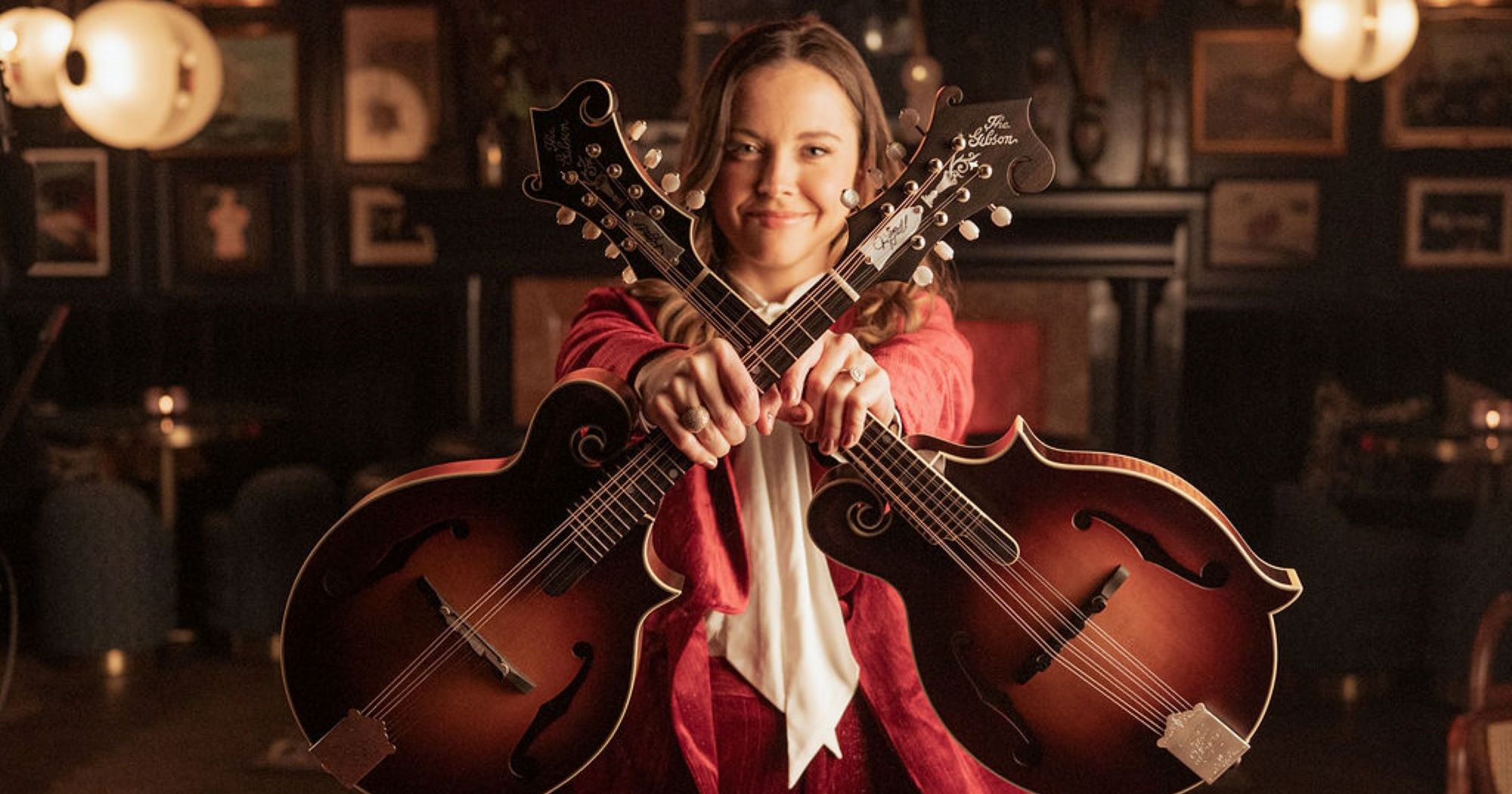
Eyes on the future, heart in the past – it’s the cornerstone of how award-winning mandolin player, guitarist, singer, and songwriter Sierra Hull crafts her music, and how Gibson Master Luthier David Harvey and the Gibson Custom Shop crafted her new signature mandolins: the F-5 Master Model and F-5G.

The F-5 Master Model boasts a red spruce top, eastern curly maple back and custom narrow neck, and ebony fretboard, while the F-5G offers a red maple neck and body, Sitka spruce top, and ebony fretboard. Both models feature the Sierra Burst VOS Varnish finish and come with certificates of authenticity, Sierra Hull/Gibson BlueChip pick, and mandolin cases – vintage replica for the Master Model and hardshell case for the F-5G.

The instruments are the result of Hull’s many years of dedication, hard work, and talent, alongside a working relationship with Gibson that began when she was 12 years old and already a four-year veteran on her instrument. Growing up in Byrdstown, Tennessee, with few if any resources for musicians, the slightest instrument repairs required a two-hour drive to Nashville, where, at the time, Gibson had a shop in the Opry Mills Mall.

Hull had graduated from her first F-style mandolin, “a starter-model Epiphone that was so cool because it said ‘Gibson’ on the truss rod cover,” she says, to a flatiron mandolin she bought used from a local player and still has in her collection. In need of new frets, and in Nashville with family, they went to the mall in hopes of a walk-in or referral. Hull had recently played the Opry with Alison Krauss and upon entering the Gibson Showcase shop, Grascals mandolin player and Gibson staffer Danny Roberts recognized her and put a new, limited edition Adam Steffey signature model in her hands.

“My dad remembers them saying, ‘How would you like to have one of these?’ He’s thinking, ‘Yeah, buddy, I bet she would, but we ain’t got that kind of money to spend on a mandolin,’” Hull recalls. “They gave me that mandolin and it was such an unbelievable moment, as a 12-year-old, to be given this incredible instrument. That was the beginning of my relationship with Gibson. I’ve mostly played a Gibson mandolin ever since.”

Fast-forward to 2009 and Sierra Hull’s main instrument: her Gibson Master Model, built by Gibson Master Luthier David Harvey. “The 2009 was brand new at the time,” she says. “Dave made some modifications to it to suit what I was looking for and it has become my voice.”

That mandolin eventually became the springboard for her signature Master Model and F-5G, in line with her original specifications for the 2009. “I have small hands, so Dave took the neck down a little bit for me,” she says. “We put an aged varnish on it instead of the normal gloss, which makes it a little more unique than one right off the line.

“I’ve always preferred that thin, matte varnish type finish, so we decided to recreate that with the signature line. So many people often ask me about my mandolin; they think I’m playing a Lloyd Loar most of the time. I’ve put a lot of miles on this mandolin since 2009. I’ve played it as my primary instrument since then. When I got it, it didn’t look anything like it does now in terms of being so worn, but it didn’t look brand new and shiny, either. I always loved that about it, that there was a certain aged vibe to it already because of the finish.”

In addition to the aesthetics, the Master Model parallels Hull’s unique sense of blending her deep bluegrass roots with contemporary sounds. It is, she says, the perfect instrument for that mix of past and present. “When I think about the kind of music I play, both these days and throughout my career, I’m so rooted in traditional bluegrass,” she says. “I grew up going to bluegrass jams on the weekends, sitting in a circle – you need a mandolin with volume, something you can dig into, like the Master Model.”

“Part of the reason we all want to play F-5 mandolins is because Bill Monroe, the Father of Bluegrass, played an F-5,” she continues. “I love an A-style mandolin as well, but there’s something that makes you feel legit about playing bluegrass on an F-5 mandolin, because it just feels right – the feel, the look, the sound, the pointedness that those F-style mandolins have. The idea of having a mandolin that you can really channel that traditional thing that as mandolin players we’re born to love in bluegrass music – Gibson is the gold standard for what we think of in terms of every F-style mandolin that you see.

“There’s a lot of great builders out there, so many talented luthiers building beautiful mandolins, so it’s no slight to any of them. But nobody would be doing that if Gibson didn’t exist and build these F-5 mandolins with Lloyd Loar’s stamp of approval on them. When I pick up my Master Model, it feels like the connection to that legacy.

“Even though I tend to think my sound is more progressive and modern – way more so than what you think of when you think of Bill Monroe – that’s the world I come from, so I want a mandolin that feels connected to those roots. But the clarity, the top end, the sparkle that these mandolins have, too – they have a large span on what they can bring to the table. No matter what musical direction I go in, I never find myself lacking from the side of what the instrument can do. It really shows up in all those situations.”

Bringing the Sierra Hull Master Model and F-5G from concept to showroom was a two-year process. Hull, David Harvey, and Gibson worked closely, taking time and care to not rush the work, but instead building the mandolins to her exact specifications.

“As a youngster I couldn’t have dreamed of having my own signature line with Gibson, so it was wild to get the call,” she says. “I’ve learned so much in this process over the past couple of years. Getting to go up-close, help pick out the wood, and see it go from a chunk of wood to mandolins that have my name on them is such an experience. To see it all come to life is a full-circle moment that takes me back to sitting in the Gibson Showcase at 12 years old and playing one of my heroes’ signature lines. To see these mandolins with my name on them is overwhelming. It’s such an honor.”

Mat Koehler, Vice President of Product at Gibson, joined the company almost ten years ago. He says bringing the vision of Sierra Hull signature mandolins to fruition was, in fact, over a decade in the making, beginning with conversations and leading up to the present.

“Even ten years ago, Sierra was one of the best, if not the best, mandolin players in the world,” he says. “When I got here, I was like, ‘Why don’t we have a Sierra signature model?’ The answer, of course, is very complicated. I think everybody’s intention was to make that happen, but we had a restructuring of the company, change of leadership, change of management, a lot of things, a lot of obstacles. So this is really the culmination of a long time spent both ideating what a Sierra signature model would be and then executing it, finally. I am very happy and proud to be involved in some small way. But this is all Sierra and speaks to her incredible talents.

“Her impact [on the instrument] has been huge,” says Koehler. “She represents the next generation of players. She really refreshed the mandolin and offered a completely fresh take. Mandolins are a little bit similar to banjos in that with bluegrass music in the mainstream, if it’s not Mumford & Sons or Nickel Creek, it’s almost ‘out of sight, out of mind.’ Sierra has done an amazing job of taking mandolins into the mainstream in both her music and her collaborations with other amazing musicians. I see a recharging of the bluegrass world right now and Sierra is one of the many leading the charge.”

At the intersection of tradition meets technology, precise replication of Hull’s Master Model in order to build her signature mandolins was done by 3D scanning of the 2009 Master Model, a process Hull describes as “kind of like an ultrasound of your instrument. They run it over the whole instrument, you see it on the screen, and they capture all the specs in a detailed way.

“It gave us a good, strong starting point to mimic the Master Model that I love so much. From there, I got to pick out the wood and watch the process in real time. Essentially they made a replica of my mandolin that Dave Harvey, for fun, distressed to look like my mandolin, and they nailed it on the first try. We used those scans to build the signature line.”

True to her preferences, she selected a thin matte varnish finish on the models, a custom look that Gibson titled “Sierra Burst.” She also opted for the traditional Loar nut width and flat, scalloped fingerboards. “It’s much like I feel my career tries to do – lean into traditional while having some progressive new things as well,” she says.

“We did a custom tailpiece design. I didn’t want a lot of flair on the instrument. I didn’t want crazy inlays or my name spread across the fretboard. But I’m so honored to be the first woman to do a signature mandolin line with Gibson, so part of me did want a little touch of feminine something on there. If you look closely, there’s a little heart dotting the i on my signature on the truss rod. On the tailpiece, the traditional script says ‘The Gibson,’ but where the tailpiece has a curve up top, you’ll see a little heart built into the design, and a little bit of a heart at the bottom and my initials.”

“Sierra has played dozens of original Lloyd Loar 1923 F-5s, so we couldn’t cut any corners with her,” says Koehler. “We wanted to make sure her instrument was on par with any of the amazing mandolins she has played, because she would know right away what looks right, feels right, and sounds right. There are lots of different ways you can spec mandolins, but hers is true to the 2009, which would have been, at the time, a core Master Model F-5.

“That mandolin is her number one instrument to this day, so obviously we had the recipe. … Sierra’s took the very same path as our historic reissue 1923 F-5, which was we scanned her mandolin, we detailed it down to every tiny little nick and ding on it, just so we had a record of the current state of that mandolin, how it looked. The feel of the neck is really unique on hers because it was handmade by Dave Harvey at Custom.

“[3D] scanning has been a complete game-changer for us. Not only has it opened the door to be able to recreate instruments more accurately, it’s rekindled relationships with artists. Customers and fans of Gibson who want the most accurate now can finally have it, knowing it’s mapped identically from the original instrument. … Now, in a matter of maybe twenty minutes, you can do an entire mandolin, just waving a wand over it. That wand is capturing thousands and thousands of points…”

When the mandolins were ready, Hull – still a bit incredulous about having her own signature line – made a special trip to the Gibson shop to test each Master Model. “I guess it’s rare for someone to ask to do that, but I was like, ‘Can I come in and play all these?’” she says. “So we just made a fun day of it. The consistency of the sound, the build, and the playability is all at an insanely high level. All this stuff is done by hand and it’s no small feat to accomplish that. Dave sets them all up. He is the only one to set up my Master Model since 2009, so he knows what I want. Not that I expected anything less, but it was comforting and confirming that this is something I could be proud of.”

“We were overjoyed that she wanted to do it,” says Koehler. “That’s going over and above. She wanted to support this every way she could and obviously she was really excited about it, which makes us really excited. … For her to go the extra mile with us – we were very appreciative. … The fact that the endorsing artist would go to that length of playing it to test it out is amazing.”

It’s been a long, remarkable journey from Opry Mills Mall to seven-time IBMA Mandolin Player of the Year and two GRAMMY nominations, but Sierra Hull hasn’t forgotten the early days. Cognizant that signature edition mandolins are beyond the financial grasp of most players, her next collaboration with Gibson is an Epiphone model, bringing her back to her first instrument.

“I want this to be something that doesn’t price everybody out,” she says. “We’re going to work on an Epiphone model that will be a little bit more affordable for young players and people who are just starting on mandolin, the same way I was when I was a kid. It’s important to me not to have those people feel forgotten. I’m excited to work on it with Gibson as the next part of this story.”


Photo Credit: Courtesy of Gibson Custom Shop.

“Ohana Means Family”
to Ohana Music, Too

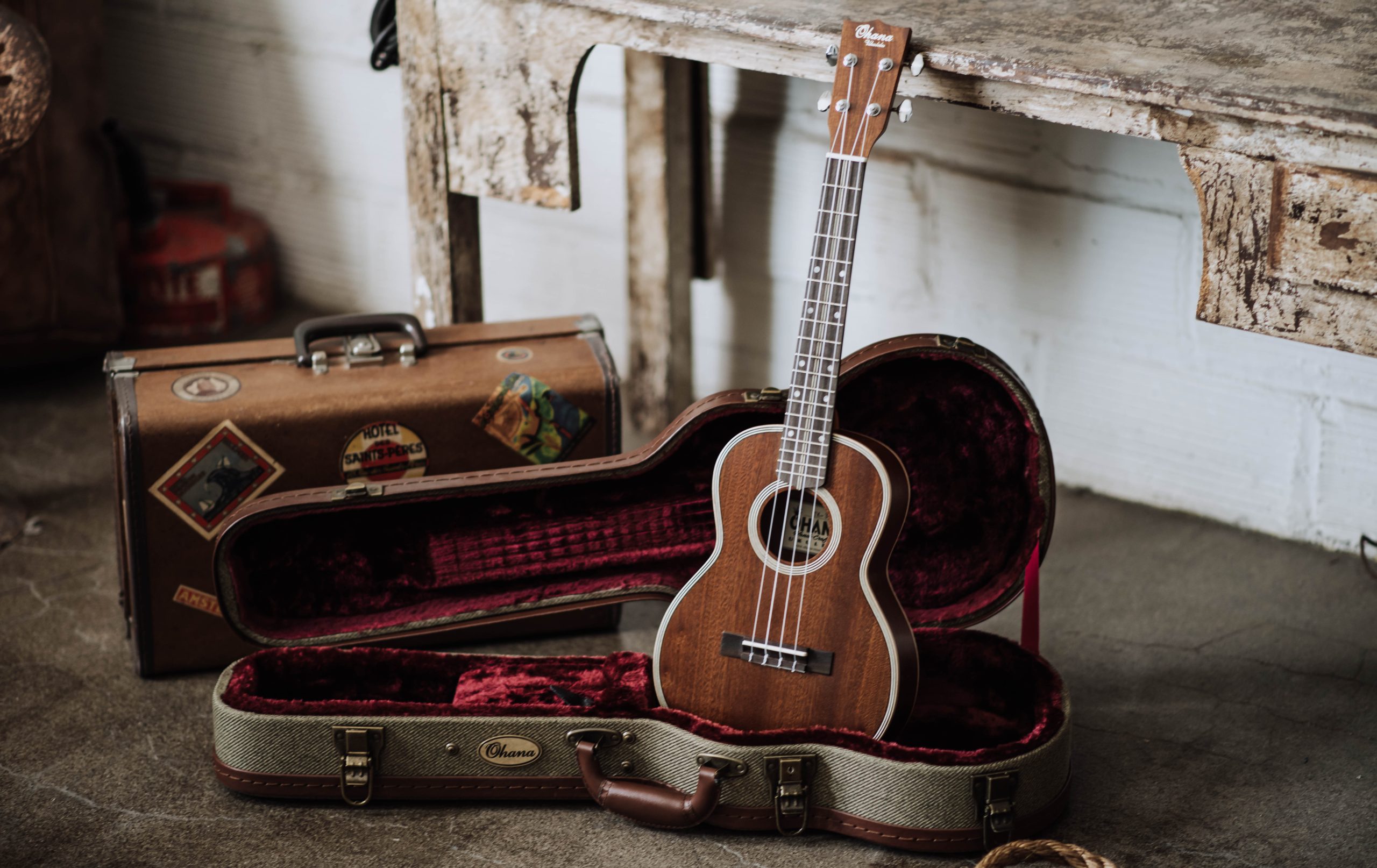
When Ohana Music founder Louis Wu says, “Ohana means family,” it’s not hyperbole; it’s the tenet upon which the company was built.

“On an unspoken level it drives everything, including staff, dealer interactions, customers, and products,” says Chris Wu, who oversees the ukulele company’s operations and product marketing.

The Ohana story, which is also Louis Wu’s story, is an inspiring journey of determination and accomplished goals. Wu grew up in Hong Kong and relocated to the U.S. after high school to study engineering. In 2006, after twenty years in his chosen field, he decided on a career change, primarily to spend more time with his wife and two young children. That priority – family – became and remains the basis of Ohana.

Chris Wu was 10 years old when his father launched Ohana. He spent his teen summers alongside his father “doing a little work here and there.” In 2018, after college and a career in accounting, he says, “Things fell into place where it made sense to come onboard full-time.”

From Louis Wu’s Long Beach, California, garage to a 6000-square-foot warehouse, Ohana’s slow and steady growth has taken them from a small business serving one customer at a time to leaders in their field with both their expansive product line and custom shop.

“I have to give full credit to Louis as the visionary leader of the company since day one,” says Wu. “He knows how a company should and needs to be run. Myself and all the staff are here to support that vision, and that really drives the growth. As a team, we’re improving internally every day, and that has been life-changing. It’s wonderful seeing our employees grow in what they do and in their passion for their jobs.”

Ohana’s international reach stems from the dedication of a surprisingly small workforce. “We’ve never had more than ten people at one time,” says Wu. “It is a small company, but the size helps our operation run smoothly and efficiently.”

Ohana ukuleles are available across a spectrum of styles and price points, from beginner models to pro series. Built overseas, the instruments are individually inspected in Long Beach to ensure flawless playability. “At the core, again, we view our customers as family, and we don’t want family to end up with subpar instruments,” says Wu. “Every instrument is given a full inspection and proper setup before it goes to our worldwide dealers. This does affect our output, our capacity, per day, week, month, or year, but that is the way it should be done. We’ve always been proud to do things that way.

“When you receive your Ohana ukulele, you can rest assured that you can take it out of the box and start playing. At the end of the day, being able to connect people to their instruments and spread the joy of music – it feels like introducing another family member to something we love, something we know they will love, and that will work for them.

“As a disclaimer, I will say that there are manufacturers who offer things that we do not, for example, plastic or carbon fiber instruments. Those materials can take a beating on long journeys or camping trips, if you need an instrument to meet those needs. Those ukuleles have their place, but we stay away from making them.

“We focus on sound, acoustics, wood choice, and the quality of the instrument you’re getting right off the bat. Between our 150 to 200 different models, there’s something for everyone. When you buy an Ohana ukulele, you know there is love behind it. Our team has set it up with you, our family, in mind. We want you to have a good instrument, plain and simple, for the right price and the right value. With our custom shop we’ve expanded that range while still keeping the value, the quality setup. We’re just covering a larger market.”


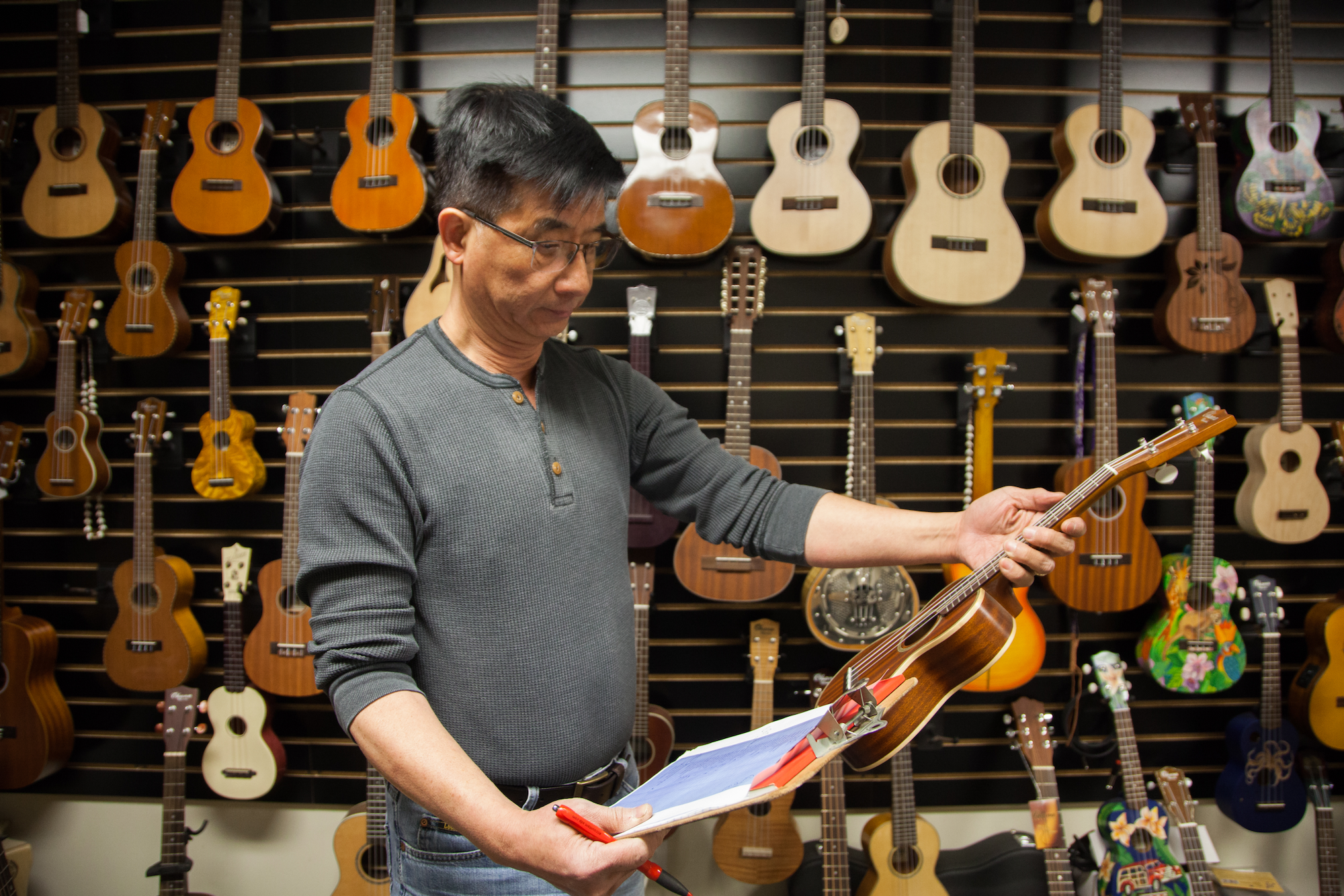
Ohana Music founder Louis Wu peruses the Ohana showroom.

All Ohana tonewoods are sustainably sourced. Most popular, says Wu, are redwood variations from the Pacific Northwest, which feature prominently in limited-edition models. They also source Hawaiian Acacia Koa, Canadian Engelmann spruce, and mahogany, cedar, and other wood sets from local harvesting companies. “We take our time to go through which sets look and sound the best, but are also in compliance with CITES,” he says. “Anything on that list, we won’t touch.”

Ohana Ukuleles will celebrate their twentieth anniversary in 2026. The lead-up to that milestone began unofficially this year at the 2025 NAMM Show with the introduction of their Custom Shop electric tenor and baritone ukuleles.

“Louis and our master luthier, Brad Kahabka, go all out when it comes to planning and executing things that come from the custom shop,” says Wu. “After building acoustic instruments and getting the shop going, it was a question of ‘What’s next?’ We made simple custom instruments, more elaborate custom instruments, and we even built one with wood from The Tree. We had explored the whole range of acoustic instruments and electric was the natural progression. We were excited to enter the market with electric instruments this year. That’s really been our focus for 2025.”

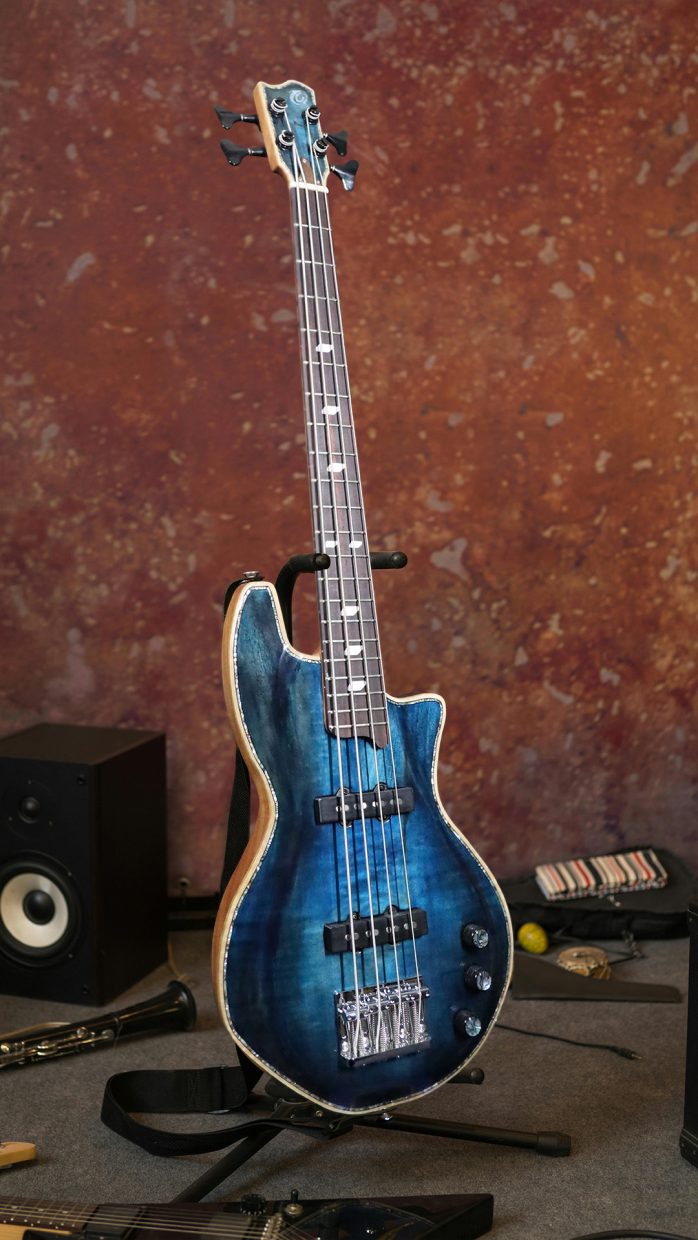
This month, Ohana debuts their Custom Electric Bass, also built by Brad Kahabka. The new instrument, which the company describes as “a counterpart” to their OBU-22 short-scale acoustic-electric bass, features a solid mahogany body, maple top, custom pickups, cutaway design, and 28-inch scale.


The brand new Ohana Custom Shop Electric Bass, which launched this month.

“We’re super excited to bring the first 28-inch-scale bass to market,” says Wu. “There are short-scale basses out there, but after trying different scales, Brad and Louis wanted something portable that we could make here in the shop. We wanted to come to market with this middle ground that still gives you the proper electric bass sound, but is more affordable and still does a lot.”

NAMM 2026 will mark the official kickoff of Ohana’s 20-year celebration, with other events and activities planned for the coming months. “We’ve been thinking about how we want to expand the family brand, ways we can look at to differentiate ourselves,” says Wu. “We’ve been successful in trying that out with our custom electric instruments, which can be additionally customized with different finishes, tuners, and other features. I think the future is in offering options to buyers and customers. We’re looking forward to exploring that more and offering some exciting things for our 20th anniversary.”

Once a wildly popular, then somewhat more niche, instrument – and, to some generations, an accouterment for tiptoeing through tulips – only to regain and increase its “cool factor” during the 2000s, the ukulele continues riding the crest of its popularity. (What could punch the uke’s “hip card” more than Taylor Swift…?)

“They call this the ‘third resurgence,’ this explosion of attention and rise in the number of ukulele players,” says Wu. “The pattern of history is that, in the last century, there were a couple of other rises and falls in popularity and maybe that’s the natural lifecycle of any instrument.

“What really pushed it along this time was the import side – specifically, affordable instruments made overseas, usually in China, but now also in Vietnam and Indonesia. You can pick up a ukulele for anywhere from under a hundred dollars to a few hundred. Making the instrument accessible that way, people took a new interest in ukuleles and stuck with them. There are also companies with longer histories that kept the torch going, and they, too, are part of this resurgence. Ohana began in 2006 and we’re proud to be a part of it.

“It’s been a community effort to get the instrument back on its feet and it’s staying popular. Music is somewhat recession-proof, at least on the stringed instrument side. Throughout COVID, also, people needed music and the ukulele community was able to provide that.”

Ohana keeps eyes and ears on the changing wants and needs of their growing family of customers. “The stereotype of a ukulele player was someone maybe a little older, or retired, or a person with disposable income and the time to play and collect different instruments,” says Wu. “Now, however, we have a younger demographic that is eager to get out there and explore. They see ukuleles all over TikTok, and that’s something we can’t ignore.

“We see patterns, we get feedback from our dealers and customers, and we also see that people of all ages like the baritone ukuleles, the larger instruments. Or they’re developing tastes for certain features: beveled edges, slotted headstocks, armrests, cutaways, different pickups. The options and combinations are endless.

“All of this plays a factor in our innovation, coming up with new combinations and new instruments that people are after. Going back to the baritone, for example, what used to be a one percent demand for that size instrument is now ten percent or more. That number doesn’t sound large on its own, but it is a significant jump. We keep a pulse on what’s out there, what people like or dislike, and we innovate based on that.”

One of Chris Wu’s personal and professional goals is to further expand upon the relationship between bluegrass and ukuleles. “I’ve learned a lot from our bluegrass players, including local players,” he says. “I don’t have a background in bluegrass, but I’ve learned from watching them play bluegrass on ukuleles how much can be created musically from that and in combination with other instruments as well.

“One of our new team members, who helps us with social media, played in a bluegrass band. Watching them go at it was just amazing, and I would really love to explore more of that. Ohana makes banjoleles, and we tried our hands once at a resonator ukulele. It might be time to bring that back. Who knows? As a company, I think bluegrass is something we could tap into.”

@ohanaukuleles @Bernadette from Bernadette Teaches Music demos the Ohana BK-70-8 Baritone from the More Than Four series! #baritone #baritoneukulele #multistring #morethanfour #ukulele ♬ original sound – ohanaukuleles

Integral to Ohana’s legacy and footprint as they enter their third decade is their philanthropic work and community involvement, including ongoing assistance with music programs following the Los Angeles wildfires of 2025.

“As often as we’re able, we love supporting the ukulele community far and wide,” says Wu. “It’s not such a big world, once you’re in it, and it is closely knit. Brands, manufacturers, artists – everyone knows each other, and it becomes even closer when organizations need our support. We do that whenever we can. It’s one of the crucial foundational things that Louis has always worked for with Ohana.

“A lot of times it’s local – schools and, lately, libraries that have started ukulele programs or clubs. We’ve partnered multiple times with the Los Angeles Public Library System as individual libraries have started programs. We provide support and ukuleles.

“A couple of years ago, after the unfortunate wildfires in Maui, one of our music store dealers on the island contacted us about helping rebuild school music programs. We shipped two large pallets of ukuleles to them. We’ve also partnered with Four Strings At A Time, a ukulele nonprofit in Hawaii, to help their local schools. On the continental U.S. side, there’s Ukulele Kids Club, which provides music therapy to children and also instruments to children in hospitals.

“As small as the ukulele community can feel sometimes, especially compared to the guitar community, there are still endless ways that people need support. It’s a blessing and an honor to be able to provide that to them.”

As Ohana moves into the fourth quarter of 2025, prepares for holiday sales, looks ahead to NAMM 2026, and plans its upcoming anniversary, Wu reflects on the year-to-date as “interesting, especially with the tariffs. Everyone has responded a little bit differently, but everyone has also been hanging in there, as much as I can speak for our music stores, our retailers, and the players,” he says.

“We’re looking forward to next year for new things, exciting things. It’s been interesting, but we’ve been getting through it and that’s all we can ask for.”


Ohana Vintage Line, 39 Series.


All images courtesy of Ohana Music. Lead image: Ohana O’Nina and Pineapple models lounge on the beach. 

Sho-Bud Steel Guitars Relaunches, A Family Business Once Again

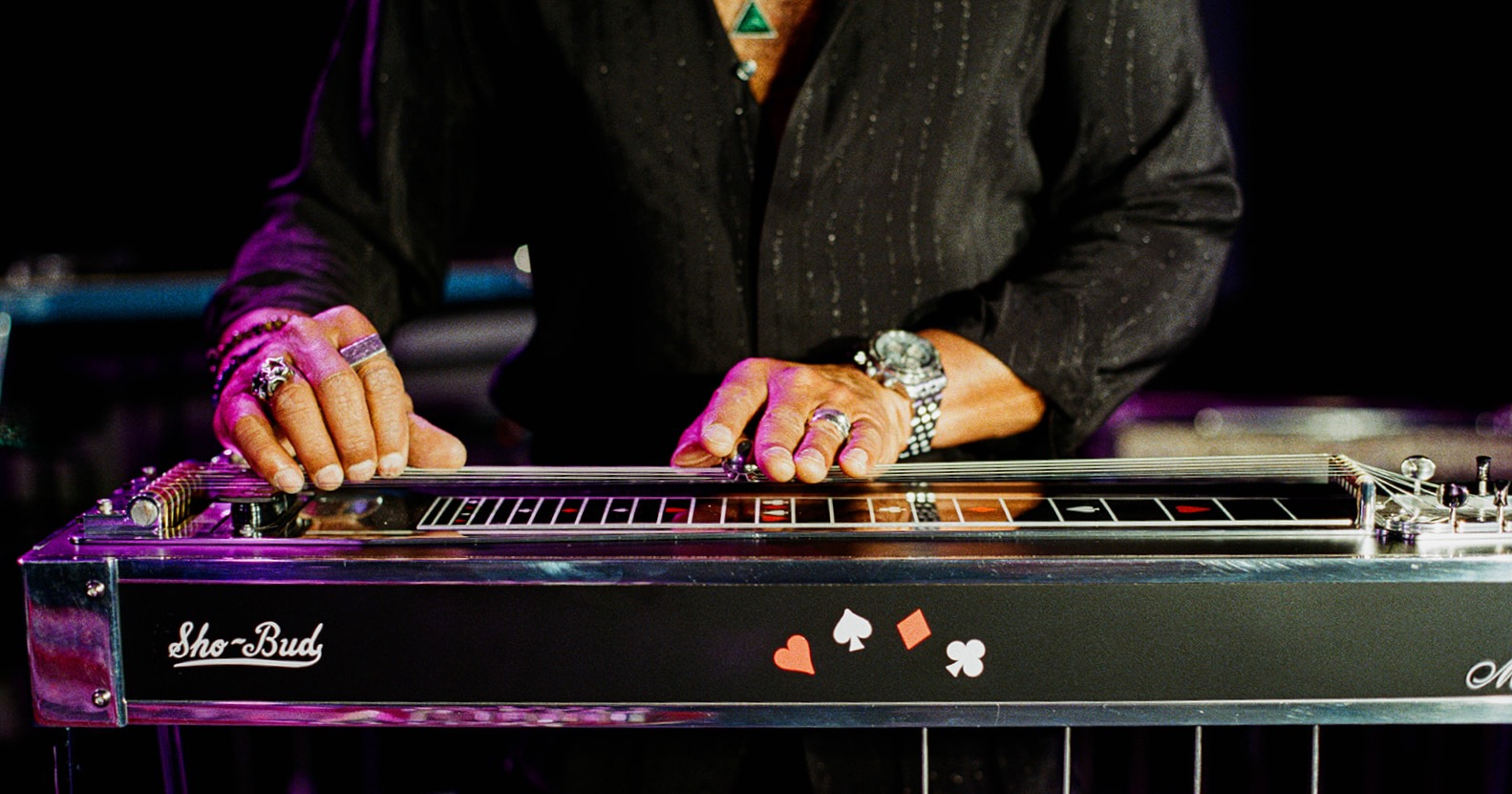
Tone: it’s the Holy Grail for musicians, and it’s the cornerstone of Sho-Bud, the iconic pedal steel guitar company founded in 1955 by Harold “Shot” Jackson and Buddy Emmons. When Emmons moved on, Jackson continued with sons Harry and David, handcrafting instruments integral to the sound of country music.

In the early 1980s, Sho-Bud was acquired by Fred Gretsch. In 2005, after twenty years away from the business, Harry and David Jackson, joined by David’s daughter, Dawn Jackson, resumed building instruments. As Jackson Steel Guitar Company, they introduced new pedal steel, lap steel, resonator, and slide guitars.

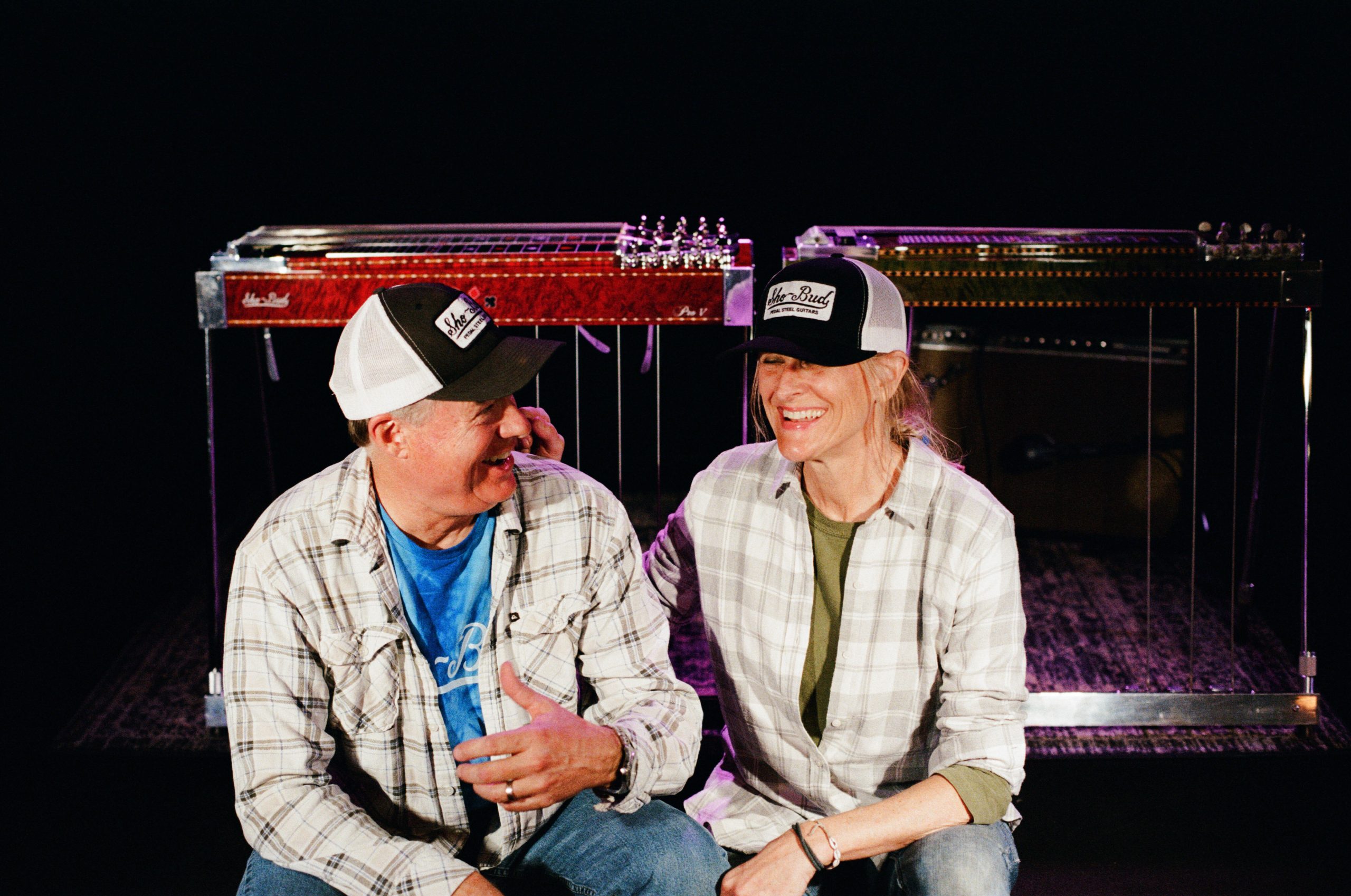
In December 2024, the third generation of Jacksons, siblings and co-CEOs Dawn and Will Jackson, reacquired the company name and family legacy. “We knew that the name carried a lot of weight,” says Dawn Jackson. “It’s our heritage, and we wanted to bring it back while Dad and Harry were still building.”

“I want to acknowledge Fred Gretsch, his wife Dinah, his family, and his team,” says Will Jackson. “A lot of people approached him to acquire the Sho-Bud name over the years, and he didn’t do it. He saved it for us. We very much appreciate what he did in terms of preserving the name, keeping it intact, and not selling it to someone else. We’ll be eternally grateful to him for that.”

Sho-Bud relaunched this year with new and classic gear, plus several projects across platforms and generations. The reach stretches from traditionalists devoted to the classic instruments they saw on the Opry stage, to young musicians incorporating steel in everything from country to metal.

Central to all of this, of course, are the instruments, which include the high-level, traditional, maple cabinet Pro V; bender-equipped, stand-up SlideKing LS lap steel; and best-selling Maverick II.

“It’s not the Maverick of old,” says Will Jackson of the Maverick II. “The original Maverick was designed to be a low-cost, entry-level, beginner guitar. With the Maverick II, our objective was to build one of the sweetest-sounding guitars. We developed a front and rear extruded aluminum panel that has a hard rock maple soundboard that sits between them. On top of that, the one-piece aluminum neck now binds the key head and tail plate together.

“When you sandwich all that together, this particular guitar, as Dawn describes it, cuts through all the other noise. It’s distinctive, it’s clear, it rings and resonates. It has that Nashville sound because we still utilize the exact same pickup design that Shot developed back in the ’50s. When you marry that to this modern design cabinet, it is incredible. The Maverick II definitely stands out in terms of its tonal qualities. It’s pretty much unmatched. It’s quite an advancement in terms of pedal steel guitar technology.”

Sho-Bud plans a reissue of the signature Lloyd Green model, the LDG, which the Jacksons describe as “a continuation of the original classic design,” and a limited-edition LDG, cut with modern components and updated mechanisms, each one signed by Lloyd Green, David Jackson, and Harry Jackson. Other reissues will follow, including Jimmy Day’s Blue Darlin’.

Sho-Bud co-CEOs and siblings Will Jackson and Dawn Jackson.
 

“Relaunch,” in Sho-Bud vernacular, is all about name recognition, product reputation, and upholding a decades-old legacy. “We built steels for the past twenty-five years under the name Jackson Steel Guitars,” says Dawn Jackson. “So the relaunch, for us, circles around the Sho-Bud name.

“What’s happened in the months since we secured the name again, the outpouring of support from the guitar industry in general has been overwhelming,” she says. “That lends itself to the weight this brand carried around the world, and how throughout the years of its ‘dormancy,’ it maintained a true following, and not only from older generations. Younger people love the brand too. When we mention Sho-Bud, every door is open. So that’s really the relaunch. We maintained building these amazing instruments during our Jackson Steel era, but the [Sho-Bud] brand itself has the leverage and momentum behind it.”

“A lot of people have asked, ‘Is this just a rebranding of Jackson Steel Guitars?’ Definitely not,” says Will Jackson. “We’ve been sitting on a few patents that we’ve obtained over the last couple of years. They’ve got about fifteen years or so left on them while we fine-tune these components.”

Those components include a tunable vibrato, on-the-fly D Drop, The EDGE® multi-bending system, and Core-Over™ strings, all of which they’ve introduced to Sho-Bud artists with positive response.

“When a traditional, fretted-instrument guitarist is, say, holding a chord, when they use an old-school vibrato — let’s say a Bigsby, for example — when they hit that thing, all those strings are falling out of tune,” says Will Jackson. “Our tunable vibrato doesn’t destroy the chord. When they’re holding a chord and they go down, all those strings fall in tune now.

“We’ve got a Drop D tuner that allows an artist, again on a fretted instrument, to simply roll their E down to a D while they’re playing. They don’t have to take their fretting hand off and adjust anything on the key head. They don’t have to stop and tinker around with their picking hand to adjust anything. They’re able to use the palm, the heel, of their hand, roll it right down to a D, and roll it right back up to an E. So it’s very novel, very easy to use.

“With our Core-Over strings, we take the winding off up to where it passes the bridge and on the pickup side of the nut, so it’s just the core of the string going across those two touch points. It creates incredible amounts of sustain. The sound profile of the string is much rounder, bigger, fuller. It’s amazing.”

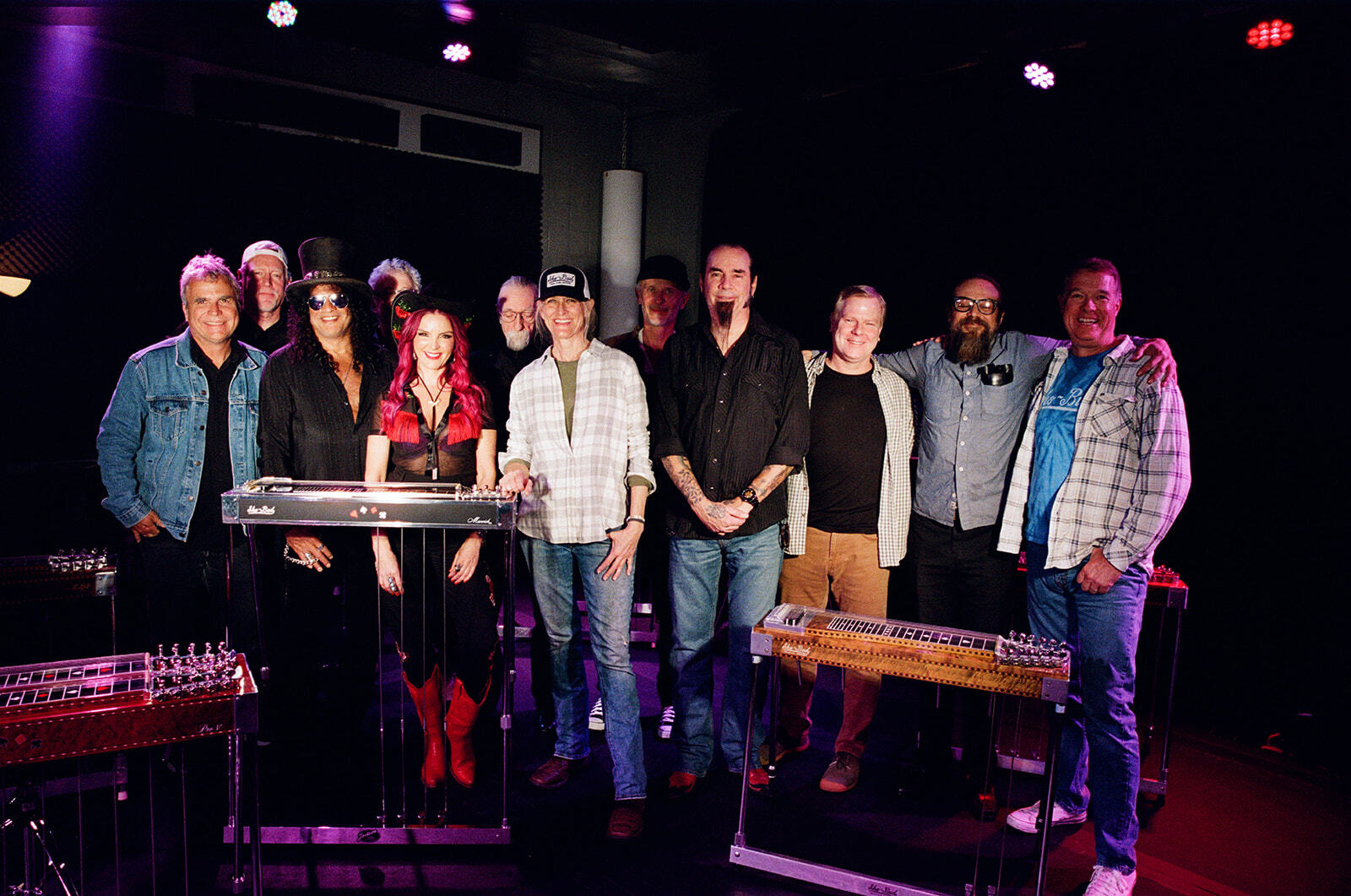
(L to R) Kyle Ince, Bob Sheehan, Slash, Ted Stern, Andrea Whitt, Skunk Baxter, Dawn Jackson, Pavel, Hexx Henderson, Mark Tucker, Rocco DeLuca, and Will Jackson pose for a group photo at the Sho-Bud Showcase Live at the Desert 5 Spot in Los Angeles.
 

On April 24, in Hollywood, the company celebrated the return of Sho-Bud Showcase Live, national concerts spotlighting steel-centric artists in all genres. The series kickoff, Sho-Bud’s first live event in over forty years, included, among its many participants, Jeff “Skunk” Baxter, Robert Randolph,
Andrea Whitt, Rocco DeLuca,
Hexx Henderson, Hatfield Rain, Shooter Jennings, and Slash.

Sho-Bud Music is a record label and publishing company originally established by Dawn Jackson to release an album by her band, the aforementioned Hatfield Rain. “Around that time, I started working with Dad and Harry on Jackson Steel and never did anything with the [album] mixes,” she says. “It’s getting ready to come out after all this time, so I’m super-excited.” Along with that recording, Sho-Bud Music is promoting other Sho-Bud artists.

Coming soon is Shot Jackson’s Sho-Bud Showcase radio program, which will now become a podcast featuring music, interviews, and over 150 digitized reels from the original 1970s and early 1980s WSM broadcasts. “We have all the reels and we’re going to start releasing them,” says Dawn Jackson. “The podcast will also include interviews with today’s Sho-Bud artists and, of course, our dad and Harry.”

Harold “Shot” Jackson built Sho-Bud on a foundation of superior instruments, customer service, customer satisfaction, and customer loyalty. Those values remain at the core of Dawn and Will Jackson’s goals, whether putting instruments in the hands of internationally renowned musicians or newcomers learning their way around pedal steel.

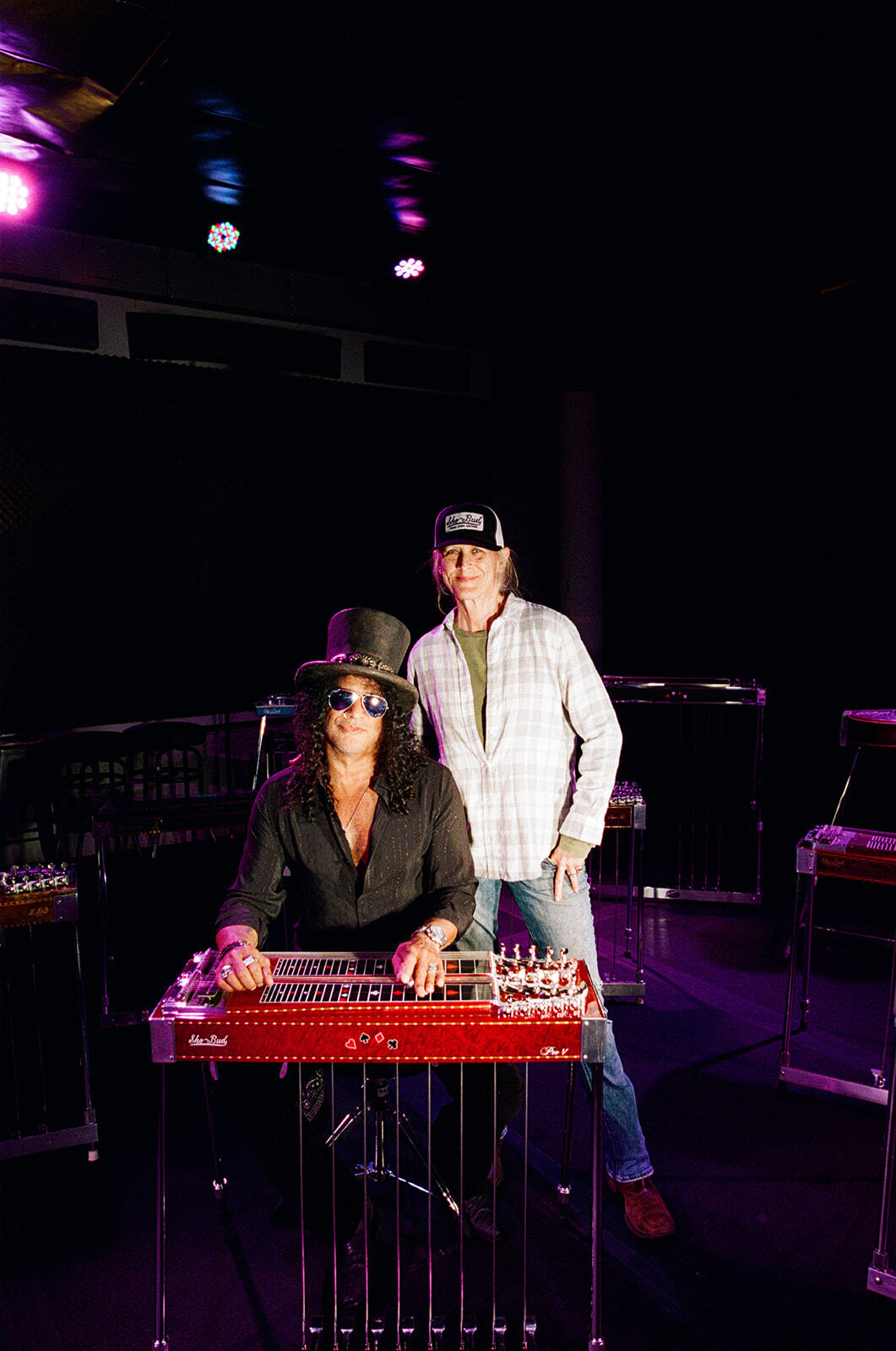
Sho-Bud CEO Dawn Jackson poses with Slash and a Sho-Bud Steel Guitar.
 

“These instruments are not like traditional fretted instruments,” says Will Jackson. “Fretted instruments don’t have moving parts per se. But these do. Because they have those linkages and mechanical pulling mechanisms, as they’re used, they wear. Anytime you make a change to these instruments, you have to be careful, because in the interest of trying to maximize performance or life on one end, you can impact tone on the other end, and that is something we can’t sacrifice.

“Sho-Bud has always been known for that Nashville sound, the tone that we got. The story I recall as a kid was Shot sitting there on a pickup-winding machine, which was made out of an old sewing machine motor. He had apple bushels next to his workbench. He would wind a pickup, plug it in, and if it gave him the tone he was after, performed the way he wanted it to, it went in the keeper bushel. If it didn’t, it went into the discard bushel.

“That is how our family has built these things. There are no Rhodes Scholars over here or MIT graduates in engineering. These guys developed these instruments through pure trial and error and using their ears to develop that tone. Again, we can’t sacrifice mechanical advantages over tone. Some guitar companies do, but we cannot do that. For us, it is about tone, tone, tone. We live and die by that.”

“We’ve always maintained the tradition and look of our guitars — the beautiful cabinets, our certain inlays, the finishes,” says Dawn Jackson, “but aesthetics are second. Tone has always been number one for us.”

“These instruments require maintenance,” says Will Jackson. “If there is a nut, a screw, a bolt, it will get turned by someone. When these things leave the shop, they’re set perfectly. People will start adjusting things, and that’s what they’re for. You need to fine-tune things ergonomically to make it fit. But, because these things can be very sensitive, sometimes they overdo it, or they have trouble chasing the tuning back to where they wanted it.

“We are here to support them in terms of Zoom calls, where they can show us exactly what they’re doing, what the instrument is doing, or what it’s not doing that they would like it to do. We can help walk them through that, using a blend of modern technology to help them fine-tune some of these traditional instruments. We’re always looking for ways to make it easier for them to keep these guitars maintained.”

As a family-owned and operated company, versus a multi-department corporation, the Jacksons are front and center when phones ring, texts chime, and emails arrive – no call centers, AI assistants, or being transferred through a half-dozen departments and hold times. They field calls, walk customers through setups, stay active via social media, keep up with forums, provide instructional videos, and cherish human-to-human relationships.

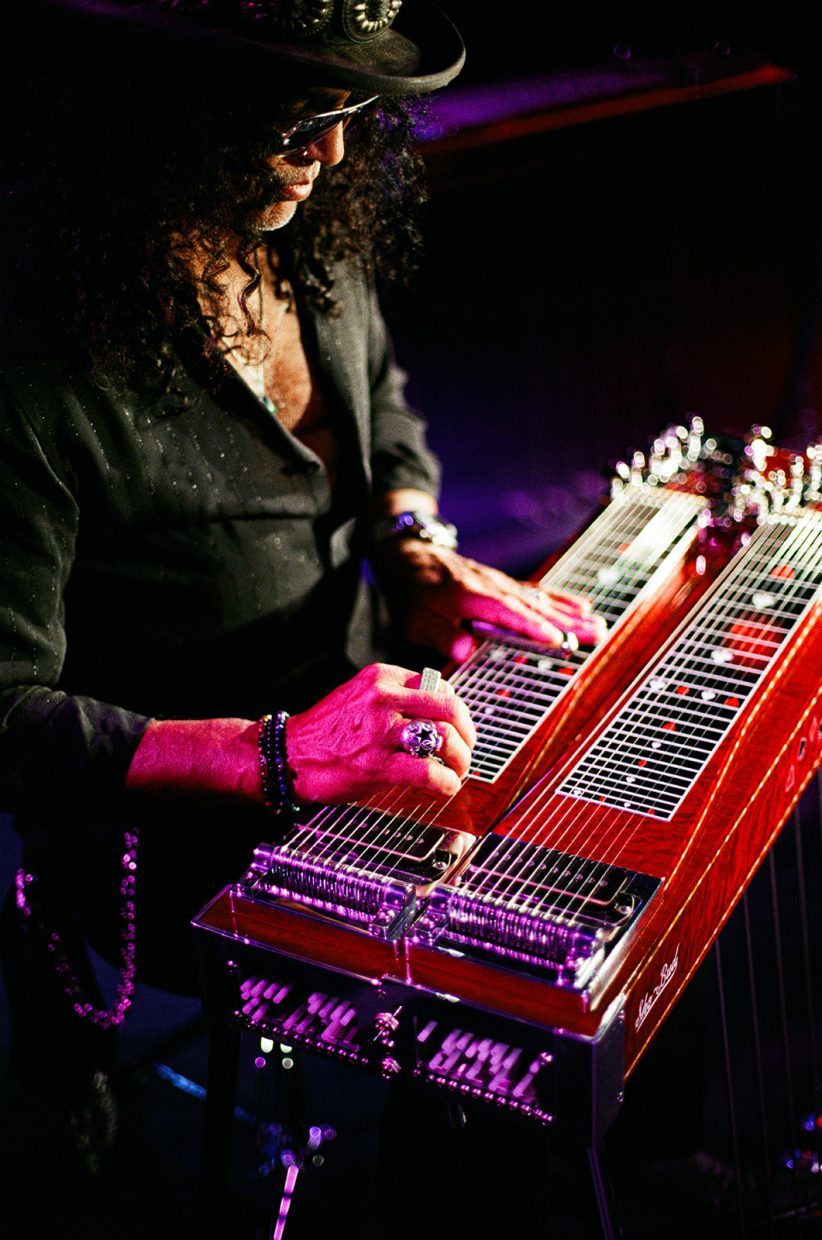
Slash plays a Sho-Bud Steel Guitar.
 

“Will and I have been a team since we were kids playing football in the backyard,” says Dawn Jackson. “We really believe in team efforts, and that’s why we’re so big on using the words ‘Team Sho-Bud.’ The dynamics between us, our father, and our uncle – we’re all creators and passionate about the things we do.

“We have the same objective in mind, which is to maintain our family heritage,” she says. “I am so proud that Sho-Bud is still a family business, and that people love and respect that. We work together, play off of each other, and it just works and works well.”

“I’m proud of my family – our dad, our uncle – for the sacrifices they made over the years to build these instruments, and to deliver the tone and the sounds that everyone enjoys,” says Will Jackson. “I’m very proud of the work they put into this, and of Dawn for rolling up her sleeves and helping them. I’m proud of the way Sho-Bud has evolved. It’s fun to be a part of the rebirth of Sho-Bud. These instruments, these new components, are going to be total game changers. I’m very proud to represent these products and wear the old brand. It’s exciting times.”


All Photos: Ashley Marie Myers, courtesy of Sho-Bud. Lead and alternate images: Slash plays a Sho-Bud pedal steel guitar.

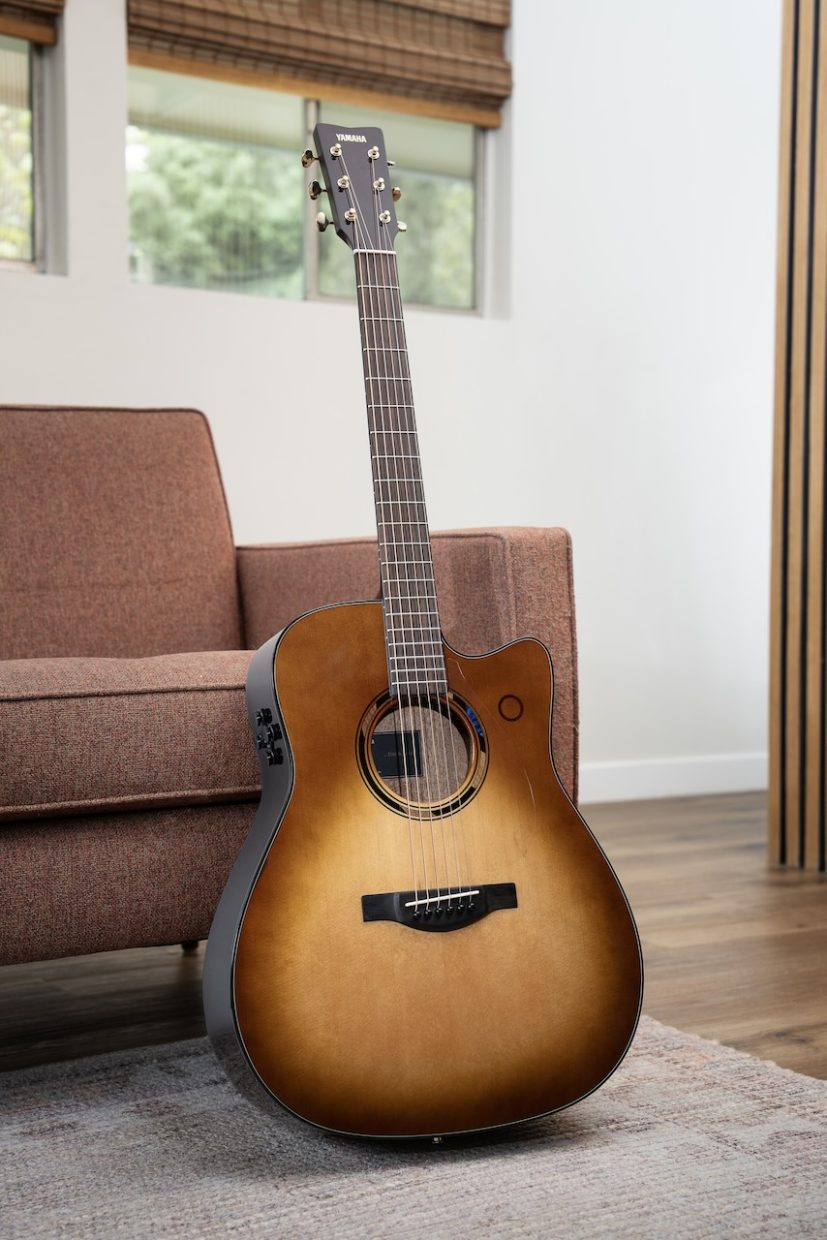
Yamaha’s Groundbreaking Second-Generation TransAcoustic Guitar

Yamaha Guitars knew they were breaking ground – and raising eyebrows – when they debuted their TransAcoustic Guitar at the 2016 winter NAMM and Musikmesse trade shows. The original TransAcoustic Guitar turned heads immediately, thanks to its innovative technology and, of course, the quality acoustic guitar body and sound that musicians have long associated with the Yamaha name.

Fast-forward eight years and Yamaha has introduced the second-generation TAG3 C, a completely new model offering advanced features and more options. With Bluetooth capability, a built-in looper, a rechargeable battery with a five- to eight-year life, iOS and Android compatibility, and a plethora of controls and effects — reverb, chorus, delay, its TAG Remote app, and more — the TAG3 C is a workhorse, opening new avenues for artistry at all levels. It’s also a beauty, with its dreadnought body, solid Sitka spruce top, and solid mahogany back and sides.

The TAG3 C was designed for guitarists and, in a sense, by guitarists. When the first generation entered the marketplace, Yamaha’s Product Manager, Shingo Ekuni, was hands-on with customer reviews and interviews – what they liked, needed, and ultimately wanted. “We concluded that we needed more capabilities for creative players,” he says, “for the person who is proactively doing their practice at home or creating songs at home.”

This presented the challenge of creating a high-tech yet user-friendly guitar that sparks interest in tech-minded musicians without alienating traditionalists. “From my perspective as a player, and with most of my friends also being musicians, guitar players can be very particular about their sound,” says Yamaha’s Marketing Manager, Brandon Soriano. “They want the level of control. One person might prefer a plate reverb while another prefers a hall. They might want a very specific decay time or tone, and the same thing goes for chorus or delay. At the same time, guitar players don’t want a lot of barriers to actually playing the guitar. They don’t want an overly complicated user interface and experience. The way the TAG3 C is structured, you get all of the control over the specific sounds you want in the app, but when it comes to actually using the guitar, it’s a very simple interface.”

A cursory glance at the TAG3 C might cause one to scoff, “Second-generation guitar, TikTok-generation players.” But – curmudgeons rejoice! – this is not the case. No interest in apps? No worries. “You don’t need internet to use the guitar,” says Soriano. “You don’t have to connect it to Wi-Fi. And it doesn’t require the app to run. Straight out of the box, without downloading the app or anything, you can turn the guitar on, effects will already be dialed in, and you can use all the functionality.

“If you want to use the Bluetooth audio, of course you need to connect your phone or another Bluetooth output device. And if you want to get into the parameters of the effects, like changing from a plate reverb to a hall, that’s where you start using the app. But you can fully use the guitar without using the app.”

“Something really great with this guitar is the quality strictly as an acoustic guitar,” he adds. “It’s built to Yamaha standards, which, as we all know, are very solid, rigorous, and high level. Even if you were to take out all the technology, I would still love it just as an acoustic guitar. I think that’s going to add to people wanting to pick it up.”

“Nowadays, with our mobile devices, the ‘smart’ devices, with tools for guitarists, everybody is using the tuner, the metronome, [from] the very basic stuff to more complex and connected devices,” says Ekuni. “Customers are happy to accept new technology for a new type of product. Parallel with that, the TAG3 C is an authentic acoustic guitar, but the technology can expand the possibility of acoustic guitar playing.”

“We are in a technological age, and it’s all around everybody all the time,” Soriano agrees. “There is a little more open-mindedness to innovation, even in commonly traditional circles like bluegrass, for example. Customers also want to know that their money is well spent and that they can be confident in their purchase from a quality standpoint, durability, sound, playability, all those things. Those are some of the main pillars of Yamaha — delivering the best quality for the money at any price point, from the $400 guitars to the $4,000 guitars.”


This content brought to you in partnership with BGS sponsor Yamaha Guitars. Discover more about Yamaha Guitars and the TAG3 C here.

Photos courtesy of Yamaha Guitars. 

Root 66: Blank Range’s Roadside Favorites

Name: Blank Range
Hometown: Nashville, TN
Latest Project: Vista Bent

Pizza: Sally's Apizza in New Haven, Connecticut. We got in right before the original owners sold the place. We can assume the Apizza just wasn't the same after it changed hands. We took down the whole pie at a brisk but not quite shameful pace and, as we were climbing back in the van, several members were heard saying, "That was the best pizza I've ever had." Bold claims, Sally's backed it up.

Truck Stop: Czech Stop. Nothing says SXSW like a 13-hour haul to West, Texas, for Czech Stop's sweet and savory kolaches. We were so excited to fill our empty stomachs with said treats last year that we almost backed our van over John Moreland while trying to peel into a parking spot. Either he failed to notice how close our vehicle came to barreling over him or he was walking through the parking lot high on kolaches and just wasn't phased. Either way, we're really sorry for our reckless behavior and promise to be more cautious next year.

Coffeehouse: Any place in Portland or Seattle that looks like they take coffee real serious. We don't get that thick-ass, syrup-ass mud in Tennessee, so whenever we make it out to the Northwest, we grab everything we can.


Man a #HotShot would get me through this Monday… • • • #HotShot of #HotShots by @wrenneevans

A photo posted by ______ Range (@blankrange) on

Dive Bar: The Brass Rail in Ft. Wayne, Indiana. Where do I even start? The Brass Rail is not only one of the best dive bars, but it's also one of the best venues in America — a real bastion of culture and the center of a scene. From what I can tell, everyone in Ft. Wayne that's artistically inclined will end up at the Brass Rail on any given night of the week. It's just where people go. Whether that be the poet/comedian "Nitwit" who gave us his CD filled with aggressively filthy limericks interspersed with smooth '70s rock and banjo scrags, or Ben, the tambourine-wielding "front man" of Heaven's Gateway drugs, rarely seen without his pinstriped tights on. They're all there, they all want to hang. Because everyone heads there anyway, there's always been an audience for us, even when nobody had any clue who we were. This place sells more PBR than anywhere else in the Midwest. That's not hyperbole; that's what the owner stated as fact. It's probably because they serve it in 32 oz mason jars for $2. We played here on one of our first tours when we could barely get on a house show. Our friend got us on the bill and we had such weird, wonderful time that we've made it a stop ever since. One time, there was a party after the show where he made dozens of pork chop sandwiches nobody ate. One time, Grant pulled on the back door so hard he ripped the handle clean off. When he brought it up to the bar, ashamed, the bartender gave him a smile, a laugh, and another PBR. This place rules. John Ross rules. You should go to the Brass Rail.

Record Store: Ragged Records in Davenport, Iowa. One of the best used collections I've seen. They've got tons of obscure and/or hard to find records in the rock 'n roll, psychedelic, and folk regions. One of the few places I've found that will actually have copies of the classics behind the name placard, not just Kinks '80s records or four copies of Bob Dylan's Saved. There's also a great vintage store in the same building called Trash Can Annie's, great stop all around

Bookstore: There was a spot right next to House of TARG in Ottawa where I found Ficciones by Jorge Luis Borges. I'd been looking for that for a long time and could never find it anywhere in the States. Great used collection, but because they had Borges, it sticks out in my mind.

Gear Shop: Heyday Music in Asheville, North Carolina, has some great stuff. Mostly vintage and weird, great amps and an eclectic guitar and vintage keyboard collection. It’s also right next to a great record store and the Moog Synthesizer factory. You can definitely spend some time on that stretch, especially if any member of your party takes interest in head shops, as they are plentiful in Asheville

Backstage Hang: Saturn in Birmingham, Alabama. We're actually headed to play the Saturn tonight as I write this. Best green room we've ever been seen. There's a pool table, record player, ample sleeping space where bands can crash after the show, stocked fridge, and just all-around great hangs. The owners have toured a lot and they really know how to make a band comfortable on the road.

Highway Stretch: The finger of Idaho a little east of Couer D'Alene on I-90. The road winds around a giant lake passing through beautiful, deciduous tree covered mountains. We love taking time to drive on Highway 1 and going through Snoqualmie Pass in Washington, stick out. Too many to name, we really get into the scenery.

Day Off Activity: We like to play disc golf, when we remember to bring the discs in the van. Camping has also become something we aim for on days off, especially when we're out West. In September, we showed up at a park in the middle of the night and all the campsites were full so we parked at the end of the camping area and laid our sleeping bags out under the stars. We didn't notice the flags and spray paint on the ground, but quickly realized we were sleeping in the middle of a cross country race course when throngs of middle school kids came running by.

Tour Hobby: We always try to hit vintage shops, record shops, and bookstores, if we have time to kill. We also get into going to parks. We spend portions of time coming up with alliterative names for coffee, specific to location (I.e. Montana mud, Seattle syrup, etc.)

Driving Album: Marquee Moon by Television. I feel like this changes a lot. Bookends by Simon and Garfunkel was one for a while.

Root 66: The Congress’s Roadside Favorites

Name: The Congress
Hometown: Richmond, VA
Latest Project: The Game (September 9, 2016)

Tacos: Patzcuaro in Denver, CO and Guisados in Los Angeles, CA

Gear Shop: Music Emporium on Bardstown in Louisville KY. We found this amazing tweed bassman clone amplifier there (built by their repair tech) that has been our main guitar amp, keyboard amp, even a bass amp at times, and it is used on all of our records. Larry Gant, if you're out there, thank you!

Record Store: Wax Trax in Denver, CO. (Half of guitarist Scott Lane’s record collection is from poaching their dollar bin.)


Capping off this PA/DC run at @musikfest tonight.

A photo posted by The Congress (@thecongress) on

Driving Album: Phil Collins — Serious Hits… Live!

Backstage Hang: Red Rocks Amphitheatre in Morrison, CO.

Book Store: Chop Suey in Richmond, VA


Scoping Niagara Falls before we play the Rochester International Jazz Festival tonight

A photo posted by The Congress (@thecongress) on

Highway Stretch: Highway 101 through Redwood National/State Park

Tour Hobby: Making up our own — sometimes offensive — lyrics to famous songs for anything from general communication to show announcements.

Car Game: We have a game we invented called Turd Ferguson. We wrote several pages of very complicated rules (the "Constitution") over the course of a couple years. It's not really worth explaining beyond mentioning that it is played with sets of vintage Trivial Pursuit cards from the '80s, and there's a daily double-esque thing called the "Hot Round." Everyone sings the Hot Round theme song together when it happens. Also, we have to mention our game Kevin Bank'em, which is played by connecting two famous people in the style of the Kevin Bacon game — but you have to "bank" off of Kevin Bacon as a connection on the way.


Just some dudes laughing on a porch, photo @joey_wharton

A photo posted by The Congress (@thecongress) on

Music Festival: High Sierra Music Festival in Quincy, CA

Airport: We've spent enough time at DIA to call it a home.

Day Off Activity: Chris Speasmaker (keys) and Jon Meadows (bass) are avid tour golfers.


Photo credit: William David Lawrence