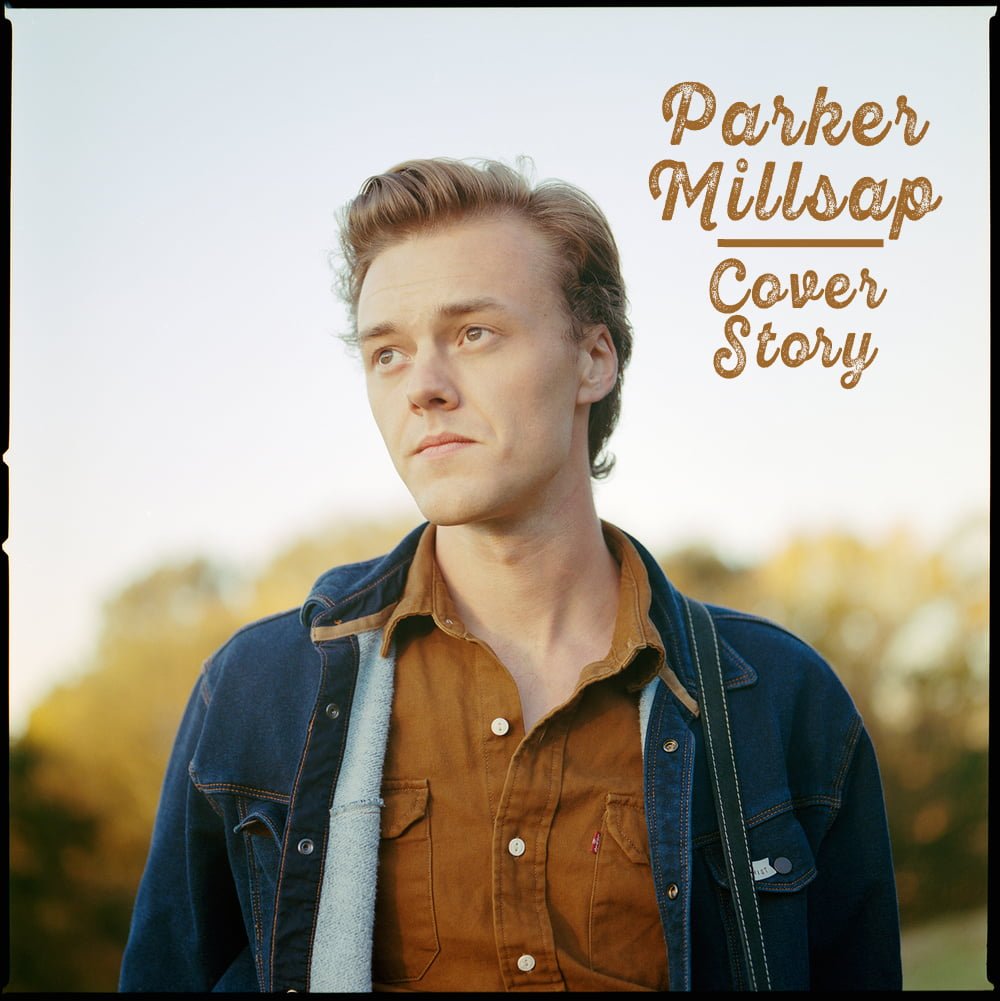
An Apocalyptic Mood: A Conversation with Parker Millsap

When Americana fans met Parker Millsap, he was barely out of high school. He may have been wailing about truckers and God with a fiddle and a formidable backbeat, but the Pentecostal-raised Millsap’s raspy, Isbell-esque vocals on breakout single “Truckstop Gospel” delivered the familiar tropes with a particular wit. That wit, his rich voice, and the performances it yielded were enough to garner a nod for Millsap at the Americana Music Awards in 2014, and his remarkable strength as a poet and writer — coupled with his relatively young career — made his sophomore LP all the more hotly anticipated.

The album itself, entitled The Very Last Day and slated for release on March 25, continues Millsap’s evolution as a storyteller. Tracks like “Heaven Sent,” which narrates a young gay man bargaining with a religious father, or “Hands Up,” a ballad about a convenience store robbery, bring Millsap’s gift for character development to the forefront. One need only glance at the liner notes to know that his words are put to fine use, from the involvement of producer Gary Paczosa — known for his work with Alison Krauss and John Prine — to vocal contributions from contemporaries like Sarah Jarosz. 

So tell me about you growing up – when did you start getting into music?

Well, I grew up singing at church — you know, starting at age four or something like that — and when I was about nine, I started playing guitar. When I was about 13 or 14, I started playing in bands, just around my hometown. Right about then is when I started getting into songwriting because I wanted to have original material to play with the various bands I was in. Also, during high school, I had an English teacher who really got me into words, got me into writing, like a creative writing class. That all happened at about the same time.
I like that. Are you still much of a reader?

Absolutely. Kurt Vonnegut, Tom Robbins, Jon Steinbeck: Those are three of my favorites. They’re all kind of different writers, but they’re all creative in a funny way. Steinbeck’s really subtle, which I like — in a funny and a not-funny way. I think Kurt Vonnegut’s funny in a morbid and kind of existential way. Tom Robbins is kind of crazy.

What about writing this record, specifically?

I wrote these songs over a period of about two years. We were touring a whole lot, leading up to making the record. They just kind of accumulated. I went through a bunch of different phases while writing this record, from Arcade Fire to Roy Orbison to Motown — kind of all over the place, as far as what I was listening to. At the same time, I was watching The Walking Dead and reading a bunch of post-apocalyptic books: Stand by Stephen King, Cormac McCarthy’s The Road. I was kind of in an apocalyptic mood for a minute.

That’s interesting. You definitely have a storytelling angle to your songs.

I grew up listening to a lot of singer/songwriters who did that — who used storytelling as a way to write songs — so it wasn’t very foreign to me. At the same time, I like to read. I love fiction, so I was familiar with the concept that the author isn’t the character in the story. It makes for more options [Laughs] … at least when it comes to songwriting.

Your instrumentation changed up a bit on this album.

Yeah.

Tell me about what that brings to the record for you.

I’ve played electric guitar for about as long as I’ve played acoustic guitar. I just, when I got into songwriting, I started playing acoustic guitar more because that was what all the singer/songwriters that I listened to did. So it didn’t feel unnatural at all. It came down to serving the songs — I had these songs, and we just dressed them up how they needed to be dressed up.
Y’all lived at the studio, right — not just figuratively?

Yeah, for like two weeks. The whole time we were recording, we lived upstairs — above the recording studio. So we just got to go hang out and be a band and record for a week. Gary is kind of an audio wizard on top of being a great producer because he’s very relaxed — he’s not trying to force anything. It makes a big difference.

What makes a song stand out to you?

If it seems sincere … if it’s got mojo … that’s what I listen for.

I really like the new Alabama Shakes record. It’s kind of … I don’t know … it’s a creative record. It doesn’t sound like they’re trying to do anything other than what they do, and I really like that — I appreciate that. It sounds authentic. It’s got mojo.

[Laughs] That, it does. So you said you started out in church, and you see religious references in your songs. Is that intentional? Do you feel like that informs your work?

It just offers a perspective, really. It’s just a perspective I grew up in. It’s easy, when I’m writing a story or a song, to go there. Those references come naturally to me, I think, is all it is.

I didn’t realize growing up that not that many people were raised the way that I was. It was a pretty normal life. I didn’t live in a super strictly religious household — we watched TV, we listened to secular music. I wasn’t that isolated or anything. I did get to see really spirited live music three times a week, people really playing. In church, nobody’s really performing for anybody else — you’re just doing it. There’s a certain thing about that you can only get in that situation.

What about coming from Oklahoma and that music scene?

The music scene in Oklahoma is kind of small, but it’s a pretty dedicated group of people that go see shows and go play shows. Mike [Rose, his bassist] and I, how we kind of turned that into making money, is that we played this place every Tuesday for two years. Before that, we went to this thing called the Tuesday Night Music Club on Tuesday nights. It’s just Cushing, Oklahoma, so it’s just a songwriting circle in this lady’s house, but John Fulbright would show up or other Oklahoma songwriters, and we’d just play music in the living room on Tuesdays. So that’s how I got hooked up with the Oklahoma scene — I got to meet a lot of older songwriters who had been doing it for a while.
But you recently moved to Nashville, right?

Nashville is different. I grew up in a town of less than 10,000 people. [Laughs] And then I moved from there to a town with about 10,000 people, and from there to Nashville. Nashville’s a little faster. I like it. I live in Inglewood. There’s a lot more to do. There’s also a lot more traffic — I’m used to "across town" meaning "about five minutes." [Laughs]

That’s the truth. You have some people who sang with you on the record — Sarah Jarosz, Sara Watkins, Aoife O’Donovan — that’s some pretty lovely company. How did those collaborations happen?

We got in touch with the girls because Gary said, "Hey, this could be some great harmony." I said, "Hell yeah." And he said, "I know some girls." So he got them all over and it worked. It was super-easy — they were all super-easy to work with. Great voices. It’s always fun to bring other people in to work on a song, because you get someone from the outside and they come at it from a different angle. It’s something different that’s usually better than going at it alone.

One of the songs that struck me on the record was “Hands Up.”

That one just started out with the idea of … well, a lot of my songs start out like, "What if there was a song where … blank?" So that one was like, "What if there was a song where there was a guy robbing a convenience store?" From there, it just happened. I just sat down and started working on it. It’s funny, you start with a character and, by the end of writing the song, you know more about him.

On a related note, I’ve seen you talk about nursery rhymes and Bible stories and the varying perspectives in them — the fact that the story you’re taught isn’t necessarily the whole story. Do you ever include that same duality in your songs on purpose?

I just find it interesting to write from the first person. So that’s … I guess actors do it, when the tape’s on: You get to be somebody else for a second. Just like, "What’s it like? What’s that like? What’s it like to be this person or that person?" It keeps it interesting for me.


Photo credit: Laura E. Partain
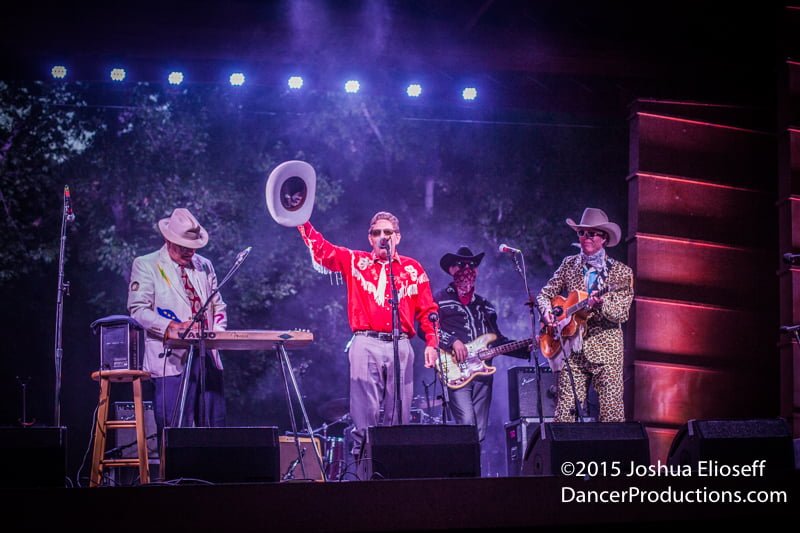
WATCH: Red Knuckles and the Trailblazers at RockyGrass

Artist: Red Knuckles & the Trailblazers (with guests who look like Del McCoury, David Grisman, Billy Strings, Aoife O'Donovan, Sarah Jarosz, bluegrass zombies, and more)
Hometown: Wyoming, Montana
Song: "The Night of the Living Red: How Red Knuckles & the Trailblazers Almost Destroyed RockyGrass"
Label: Ten in Hand

In Their Words: "It was a shock to us members of Hot Rize to be overlooked by our Colorado 'homebase' festival RockyGrass — and have them hire our sidekick band instead. Red Knuckles & the Trailblazers don't even play bluegrass! The Blazers got so excited they invited a lot of surprise guests, including go-go dancers and a bunch of 'bluegrass zombies' … something we didn't even know existed.

The Trailblazers pretty much ruined the festival ambiance, but in this strange Trumped-up world, that seemed just right for the RockyGrass festivarians. Some of the footage may seem faked, but it's all for real … sorry to say!" — Pete Wernick ("Dr. Banjo")


Photo by Josh Elioseff. Video by Tim Benko.

Watch Aoife O’Donovan’s Lyric Video for ‘The King of All Birds’

Aoife O'Donovan took to the Wall Street Journal to share a lyric video for "The King of All Birds," a new tune off her upcoming album, In the Magic Hour. The soothing clip pulls together retro-inspired footage of birds of all feathers, the scenery mimicking the bird imagery O'Donovan uses in the song's lyrics. In the Magic Hour is O'Donovan's second studio album and is due out January 22 via Yep Roc.

Watch "The King of All Birds" below.

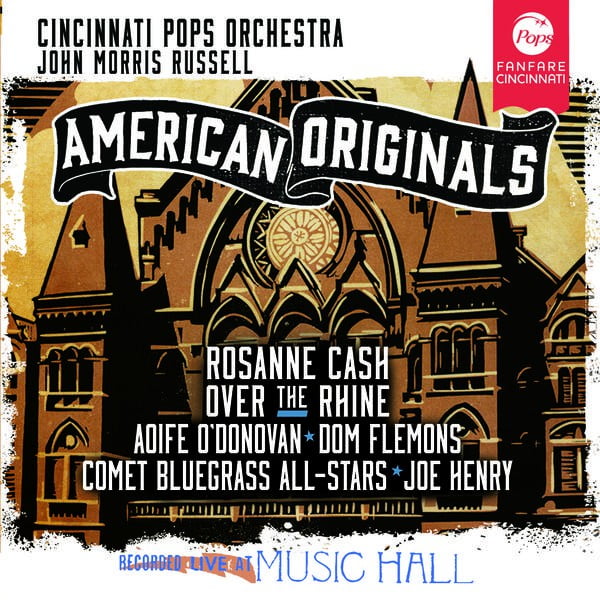
LISTEN: Rosanne Cash and others with the Cincinnati Pops Orchestra, ‘Camptown Races’

What do you get when you combine Rosanne Cash, Joe Henry, Dom Flemons, Aoife O'Donovan, Over the Rhine, the Comet Bluegrass All-Stars, and the Cincinnati Pops Orchestra with the songs Stephen Foster? A performance — and now an album — that celebrates the earliest days of the Great American Songbook in a whole new way. Conducted by John Morris Russell, the Pops and guests worked through 17 of Foster's compositions — including "O! Susannah," "Amazing Grace," "My Old Kentucky Home," and "Camptown Races" — over the course of two nights at Cincinnati's historic Music Hall. The recordings have now been gathered up as the American Originals LP.

Artist: Rosanne Cash with the Cincinnati Pops Orchestra
Song: “Camptown Races”
Album: American Originals
Release Date: August 28

In Their Words: “These live performances with the Cincinnati Pops were, in a way, terrifying. With a rock band, if you miss your cue, the band will just hang out and vamp and wait for you. With an orchestra … not so much. If you miss your cue, you better find a way to get back inside the arrangement or the ship will sail without you. However, it's nice to know I still have the ability to be terrified after 35 years of doing this. As my daughter Chelsea told me, 'Mom, if you're nervous, it means you still care about what you do.' I still care. This finale (in the concerts, as well as on the album) was a culmination of all the nerves, all the adrenaline, and all the energy in that room. When I hit the stage with my dear friends and fellow musicians, the nerves flew away and all 100+ of us on stage just let loose. See you on the ship.” — Rosanne Cash

“The music that [Stephen Foster] heard in Cincinnati, he transposed and created the music of America. And it changed us and brought us together as a nation. And it continues to bring us together — sharing sorrows, joys, hopes, and merriment. He captured both the pathos and tragedy, but also the grandeur, the celebration, and the spirit of America in all of his songs. And there’s one song, in particular, that captures the great merriment that we all feel here. Made famous by Foghorn Leghorn, here is ‘Camptown Races.’” — John Morris Russell, conductor

THE BIG BONNAROO LINEUP ANNOUNCEMENT


Two months ago, we told you the big news:  WE’RE HEADED TO BONNAROO.

But DUH you already knew that.  Now it’s time for the announcement we’re REALLY excited about:  who’s playing the Sitch stage!  For an announcement this big, we have none other than our own ED HELMS to give you the scoop on what’s coming your way June 15 and 16 (black tie optional)


There are plenty of other Bonnaroo-related surprises in store for both those attending and folks who can’t make it to Manchester this year.  But one thing is for sure….

…it’s going to be quite the Situation.

CONVERSATIONS WITH… Aoife O’Donovan

Photo by Sierra Berry

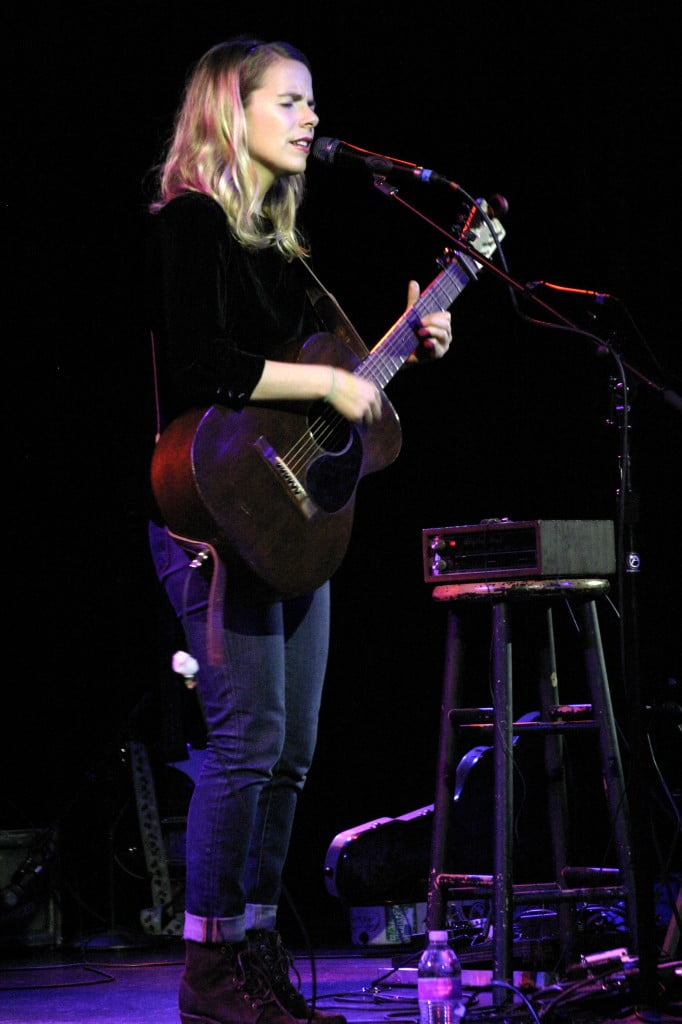
The first word that pops through my head when talking with AOIFE O’DONOVAN is “genuine.” She’s genuinely happy to be here in Seattle, genuinely interested in talking about the music and traditions that have long inspired her, and when she takes the stage later that evening, opening up for Sara Watkins at Seattle’s beautiful Triple Door Theater, she’s genuinely engaged with the audience and with her own songs. This kind of presence is only possible in tandem with a deep sense of confidence, and during our interview I tried to touch at the roots of this confidence. Perhaps it comes from her upbringing in Celtic and American roots music, as her Irish-born father ran and still runs a popular Celtic radio show out of Boston’s WGBH, perhaps it came from the creatively engaged, top-flight talent of Boston itself, where she first nurtured her artistry, and perhaps it comes from the intense energy of a songwriter who’s newly stepped foot off the well-trod footpath of traditional music to embark on a journey to the heart of her own muse. Whatever the case, Aoife’s music these days is doing most of the talking for her, with high-profile guest spots on Yo-Yo Ma’s Goat Rodeo project and appearances on Noam Pikelny and Cathie Ryan’s solo records. Aoife’s fans have long awaited her next solo project, however, and we discussed her plans for the new album, which will be a big step in a new direction.

You grew up and started your musical career in Boston. I wonder what it is about Boston that makes it such a nice scene because you’ve been in Boston for so long, you’re so connected to the scene there and there are all these really amazing artists that are coming out of Boston.  What is it about that scene?

AOIFE: I think it’s like every scene that starts with the right group of right-minded people being in the same place at the same time.  When I was coming up in Boston, 10 or 12 years ago, my mentors were people like Matt Glaser who founded the band The Wayfaring Strangers, John McGann, an amazing mandolin player who tragically passed away this year but who was and continued to be a mentor for a lot of the young musicians coming through Boston like Sierra Hull, Mike Barnett, all those people. When I was going to school back in 2000, I ended up meeting my Crooked Still bandmates in Boston. Hanneke Cassel, a great Scottish fiddle player was there, Casey Driessen and Carrie Rodriguez had just left, both amazing Americana artists.  The scene snowballed on itself; people come and go. But I don’t live there anymore.

Where do you live now? 

AOIFE:  Brooklyn, New York. I haven’t lived in Boston for almost 4 years.

New York has a really good scene as well, of course.

AOIFE:  Yeah, totally.  So, it’s just like any good scene; it’s about the people.

Looking through all the different bands you’ve either formed or been part of, all the artists you’ve toured with, you’re clearly known as a collaborator. I’m wondering… what is it like now to be moving towards going solo? It seems like you’re doing a lot more solo work at this point. 

AOIFE:  Yeah. I am, but I think that I will still continue to be a collaborator and therefore, to be known as a collaborator. In the last couple of years, I’ve done a lot of really fun collaborations that people have noticed, but I was always doing that and I think I’ll definitely continue to do that. As I move towards doing a solo thing, it’s more the chance for me to get out there and play my own songs by myself.  It’s been a really fun way to work on my guitar playing which has always definitely played second fiddle to my primary instrument which is my voice.  That’s been fun– I’ve got a long way to go but I’m trying.  To get to go out on the road and open for people has been amazing.  My first stint was earlier this year, I opened for the Punch Brothers over about three and a half weeks and played an opening set solo and then jumped up on stage with them. I’ve collaborated with everybody in that band over the years in different formations. Those guys are like brothers to me. It’s really fun to be on the road with them and get to play music with them in an informal setting, in their set.  And the same goes for this tour with Sara and Sean [Watkins] and Tyler [Chester]; it’s just such a blast to have Sara and Sean up on my set and then kind of jump on and off stage with them.  That’s what our scene is all about.

I thought collaboration was in your nature but you think maybe it’s more in the scene than in your nature?

AOIFE:  I think it’s in my nature, but I think it’s in everybody’s nature. I think that maybe I’m friends with a lot of people who love to collaborate. That’s their thing–the Watkins Family Hour is all about collaborations–and that’s what I love most about this musical family that I am a part of… how willing people are to lend their voice or their instrument to somebody else’s project even if it’s at a jam or at a show or on a record or for a tour. It’s like give and give. There’s no ego involved; it’s an egoless scene.

I wonder what you’d say your prime influences are. Obviously, you have a ton of musical influences from all over.

AOIFE: Well, as a singer, my prime influences are people like Paul Simon.  People are always shocked when I say that but I feel like the way he sings, his relaxed approach to a melody, is something that I really admire.  Another male singer of that ilk is Chet Baker, a great jazz singer that I listened to a lot of when I was in college.  Joni Mitchell, of course, in every way.  Karan Casey and Kate Rusby, 2 singers that I’ve been able to collaborate with as I’ve gotten older but who I absolutely idolized when I was younger… Those are some pretty big influences of mine.  And then, people like Dirk Powell and Tim O’Brien and as I got more into Americana music, and my peers continue to influence me in every way.

It seemed you started out with a lot of Irish influences. You went to Ireland in the summers and you have family over there, you listened to a lot of Irish music and you also do a lot of Americana and American roots music. It’s not too common to bring the Irish and American roots music together. How have you been able to do this? 

AOIFE:  It’s actually extremely common to bring the two of them together, because they’re basically the same thing if you go back far enough. American roots music comes directly from Irish traditional music. So, to grow up listening to Irish music and to discover the Americanization of Irish music, which is essentially Old-Time and Bluegrass, through the folk process, through the mountains, whatever,  I think it’s a natural thing. There’s a lot of great stuff happening now with people like Bruce Molsky and Jerry Douglas being involved with the Trans-Atlantic sessions… and I think there’s a lot of tunes that are being passed around that may be an Old-Time tune, but originally was a Celtic tune, and now a Celtic band will play it… I try to do a similar thing. I feel very American, I am very American but my dad is from Ireland and I did grow up singing a ton of Irish songs…

Was that coming from your dad’s end of things?  Where you heard about Karan Casey and Kate Rusby? 

AOIFE:  Yeah, I just grew up in that world.  I grew up around a ton of folk music; you hear about all music through your parents when you’re young.

Was there a strong Irish scene in Boston growing up?  Obviously there is but were you part of that scene? 

AOIFE:  My parents had tons of parties and we were always having Irish musicians in town but not really so much involved when I was growing up in that music scene, although I did do Irish step dancing.

With the wigs…

AOIFE:  It was before wigs.  Nobody wore wigs when I was a kid!

The sock glue as well?  Gluing the socks so they don’t fall down. The world of Irish step dancing music have changed since you were a kid…

AOIFE:  [laughing] How do you know so much about this?

It just blew my mind that people would glue their socks to their legs.  I retained that nugget of information.  I don’t understand why someone would do that.  Moving on, I like how your singing has been described as ethereal.  What do you think that means?  Have you noticed that? 

AOIFE:  Yeah.  I think maybe when people hear me they want to close their eyes and feel like they’re being carried away.

Like a forest meadow…  

AOIFE: [laughing] I’m into that, I’m into that.

Do you think it’s the Irish side? I think maybe it’s the Irish side of your music. Irish singing is ethereal.

AOIFE:  I don’t think that my singing sounds very Irish.  I feel like it’s a little more grounded.  I’m going for an earthy sound but also an ethereal sound, the juxtaposition of clouds and earth.

I like that. That’s a good answer. Let’s talk about your new album! I saw a Tumblr pic of you at Flora Records in Portland.  Does that mean that Tucker Martine (Abigail Washburn, The Decemberists, Laura Veirs) produced it?

AOIFE:  Yeah! Tucker Martine produced my new album. It’s official. We can announce it. It’s going to come out on Yep Roc Records. It’s untitled right now but it’s a Tucker Martine produced, 10 track wonder. I’m so excited about it!  I was up there in October in Portland for 3 weeks and it was an incredible experience.

What was it like working with Tucker?

AOIFE:  Amazing.  He’s the best!

Were you familiar with him before getting on-board?

AOIFE:  Of course.  I’ve been a huge fan of his since 2003 when I heard the Sarah Siskind record that he produced, which is out of print now, but is a beautiful record.  I was kind of obsessed with it. Through that I followed Tucker and became a fan of Laura Viers, his wife and frequent collaborator. Abby Washburn’s latest album was produced by him; plus the new album from my great friends Lau who worked with Crooked Still in the past.

I love Lau! What was it like working with Tucker?  He obviously understands folk music but he also brings a lot of electronic and indie influences… He brings different ideas.

AOIFE:  He’s a real musician. It’s really fun to be in the studio with somebody who listens with musician’s ears and has a great respect for who he’s working with… He just treats everybody with such respect.  He’s so kind and so respectful and just really wants to hear people’s ideas and has a way of giving his own ideas, which are always amazing, in this really non-condescending way which really made the record unfold in a beautiful way.

Can you say who was on the album with you? 

AOIFE:  Yeah.  I played a bunch of the tunes with my band from New York: Jake Silver who was in The Mammals for many years, Robin MacMillan, great drummer, Brooklyn’s best kept guitar secret, Ryan Scott,  who’s the best guitar player I know.  That was the core.  And Charlie Rose, my pal on pedal steel, a great Boston musician.  A whole host of guest singers: Sam Amidon sings on a track, Ruth Moody ended up being in Portland, came and sang from The Wailin’ Jennys, Caleb Klauder, Reeb Willms…

Caleb and Reeb, I work with them a lot.  They’re so awesome.

AOIFE:  They’re so amazing.  The last track on the record is kind of a gang vocal and John MacDonald sings on it, my friend from King Wilkie from back in the day, Annalisa Tornfelt of Black Prarie plays fiddle and sings.  My favorite guest of the whole session was my sister, Nuala, who flew out from McGill where she’s a student, and she sang harmony on 6 tracks.  She’s a really incredible singer.

So, on the new record, is it mostly original songs? 

AOIFE: All originals! 10 originals.

So when did you start moving to be a songwriter?

AOIFE:  I was always a songwriter! From when I was in middle school. I wrote songs all through college, but in Crooked Still that wasn’t our thing.  I never wanted to be the band that started off as a traditional band but then moved into being a band where it was all my songs.

Did you have band discussions about that?

AOIFE:  Yeah, kind of…

Band fights?

AOIFE:  Not fights at all.  I never wanted to use that as a vehicle for my own music because it wasn’t really about that.  There were a couple of tunes that we did over the years that I wrote that worked really well in Crooked Still… But we were a traditional band; we wanted to play folk songs; that’s what we wanted to do.

So what does it feel like now to have done all these collaborations and gone with what you were doing and the vibe and the feeling of the band and the spirit of the band but now you’ve got your album of all original songs.

AOIFE:  It feels great.  I made a list of goals when I was 18 and one of them was: make a solo album before you turn 30 and I just snuck it in with 3 weeks to spare!  It’s going to come out after I turn 30 but I did make it. [laughing] It feels great. It feels like these songs have been alive. Maybe half of the tunes are from an earlier batch and then a bunch of them are new but it just feels great to be able to tell my own stories and sing them and I hope that people enjoy it.  I loved making that record and I’m looking forward to playing my songs for people.