The five-string banjo is often associated with Appalachian music, but its reach has always extended beyond one place. In Ireland, the banjo is traditionally heard as the four-string tenor banjo, a cornerstone of Irish folk music. This playlist celebrates the banjo in Ireland and Northern Ireland, but focuses instead on five-string banjo players, highlighting Irish and Northern Irish artists who are bringing bluegrass banjo into folk, Americana, and contemporary acoustic settings. The tracks here feature musicians working across traditions and genres, using the banjo as a bridge rather than a boundary.
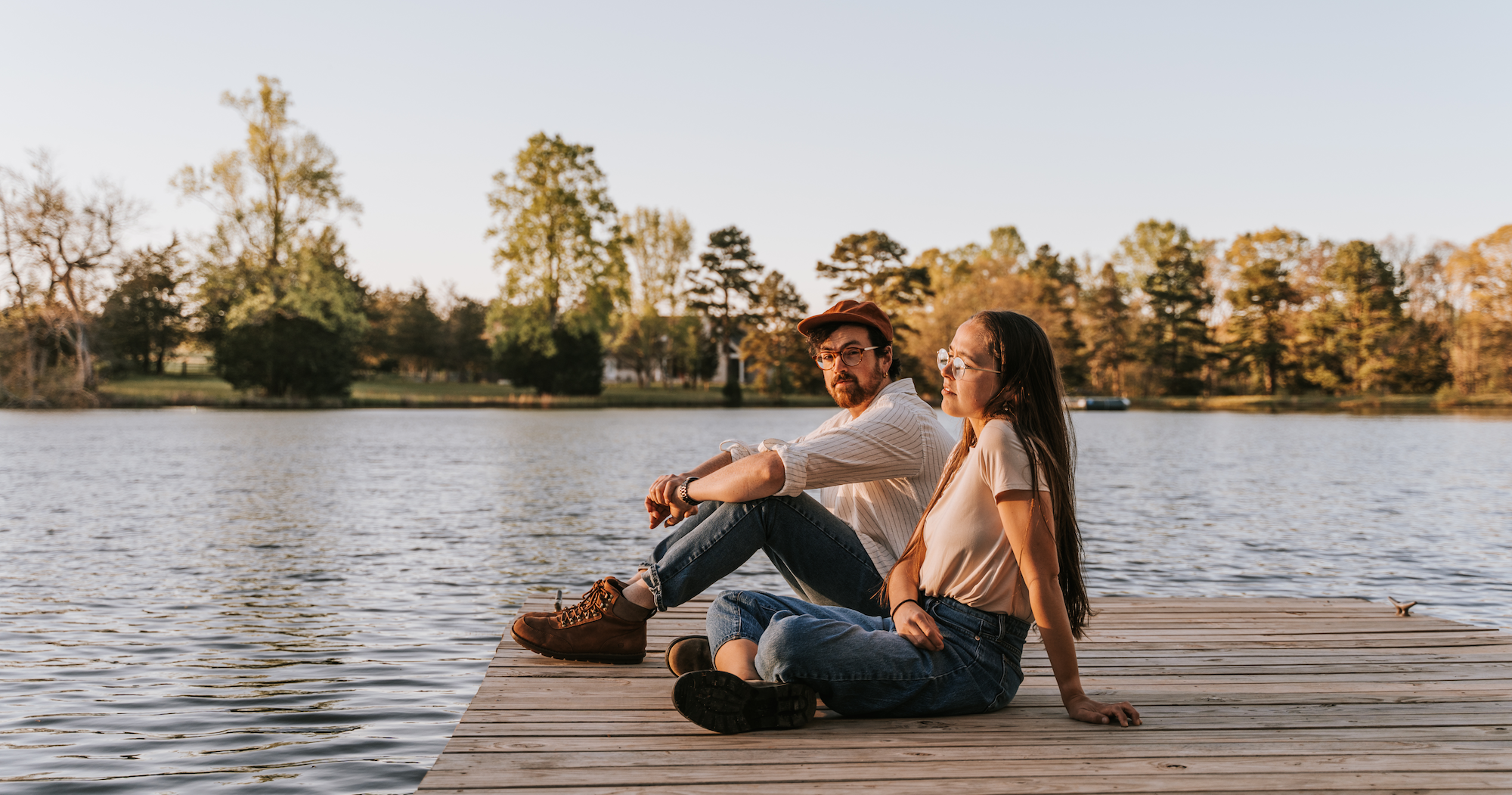
For us, The Foreign Landers, this playlist is closely tied to our own story. Our songs, woven throughout the playlist, reflect life lived between Northern Ireland and the U.S., and the relationships, faith, and sense of distance that shape that experience. In a small way, that mirrors the five-string banjo’s own journey across time and place. Our new album, Made to Wonder, is our expression of these ideas; including our music alongside these other innovative artists helps frame our transatlantic sound within a much larger conversation.
Alongside our music, you’ll hear boundary-pushing banjo work from artists like Flook, JigJam, Damien O’Kane, Ron Block, I Draw Slow, Brian Finnegan, and NÁVA, each offering a different answer to the same question: What does bluegrass banjo become when it’s rooted in Irish soil?
The result is a playlist that honors tradition while continuing to move forward. We hope you enjoy. – The Foreign Landers
“Made to Wonder” – The Foreign Landers
The title track from our new album, this banjo-centric song is about stepping away from noise and busy-ness to find true rest and belonging in Christ, whose yoke is easy and burden light. Featuring Tristan Clarridge (Crooked Still) on cello, adding depth and resonance.
“Road to Errogie” – Flook
There’s something infectious about Flook’s craftsmanship and energy – especially when five-string banjo enters the mix, played by the incredible Leon Hunt of the UK. A major influence on our sound.
“Gold Mine” – I Draw Slow
Irish-based and deeply rooted in both Appalachian and Irish traditions, this clawhammer-driven track blends heritage with heart.
“Johnny’s Peacock / The Red-Tailed Hawk” – The Foreign Landers
Two original tunes deeply informed by Tabitha’s heritage, joined by John Doyle, Brian Finnegan, and Cathal Murphy, bringing Irish tradition and bluegrass energy together.
“John D. McGurk’s (The Heartbeat of St. Louis)” – JigJam
JigJam seamlessly bridge U.S. and Irish folk scenes. Irish banjoist Daithí Melia delivers powerful five-string work on this fun, high-energy track.
“Mario Kart Rides Again” – Ron Block & Damien O’Kane
Two banjos – five-string and four-string – done right. Ron Block of Alison Krauss & Union Station and Damien O’Kane of the Kate Rusby band make for an unxpected delightful pairing. Here is a playful, virtuosic track from their album Banjovial that’s near to Mario Kart-loving hearts.
“Pictures” – The Foreign Landers
Led vocally by David with Tabitha on banjo, this original song draws on our own experience of long-distance dating. “Pictures” captures the quiet weight of distance – and how old photographs can briefly collapse time and place. The unconventional role of banjo on this track is one of our favorite sounds on the new album.
“Marga’s” – Brian Finnegan
A must-include from the County Armagh master himself, featuring Crooked Still with Greg Lizst on five-string banjo. Both four-string and five-string banjo shine in this expansive, genre-blurring piece.
“The Thrifty Wife” – Ron Block & Damien O’Kane
Another Ron and Damien double-banjo banger. Their three collaboration albums are essential listening when talking about banjo in Irish music. Bonus mando moments from Sierra Hull seal the deal.
“Traveler”–The Foreign Landers
Narrated from the perspective of Tabitha’s parents back in Northern Ireland, “Traveler” reflects on growing older, separation, and the tenderness of loving someone from afar. Another unconventional banjo track that we loved making.
“Magic Box” – Nava
Irish Americana and folk meet Persian influences, led by Ireland’s Paddy Kiernan on five-string banjo. A rich example of cross-cultural musical exploration.
“Hope” – Cup O’Joe
Featuring Tabitha’s two brothers (alongside David and Tabitha), this title track from Why Live Without blends Northern Irish roots with progressive Americana.
Aotearoa (New Zealand) doesn’t have a strong history of bluegrass bands – except one. If you mention bluegrass to New Zealanders, some will have at least heard of the Hamilton County Bluegrass Band. New Zealand has produced some great players, notably fiddle player George Jackson, banjo player BB Bowness, guitarist/singer Cy Winstanley, and bassist/singer Vanessa McGowan. (Now that we write this, these four would make a great NZ bluegrass band!) But while these names are well known in American bluegrass circles, it is fair to say they aren’t known (outside of folk circles) in Aotearoa.
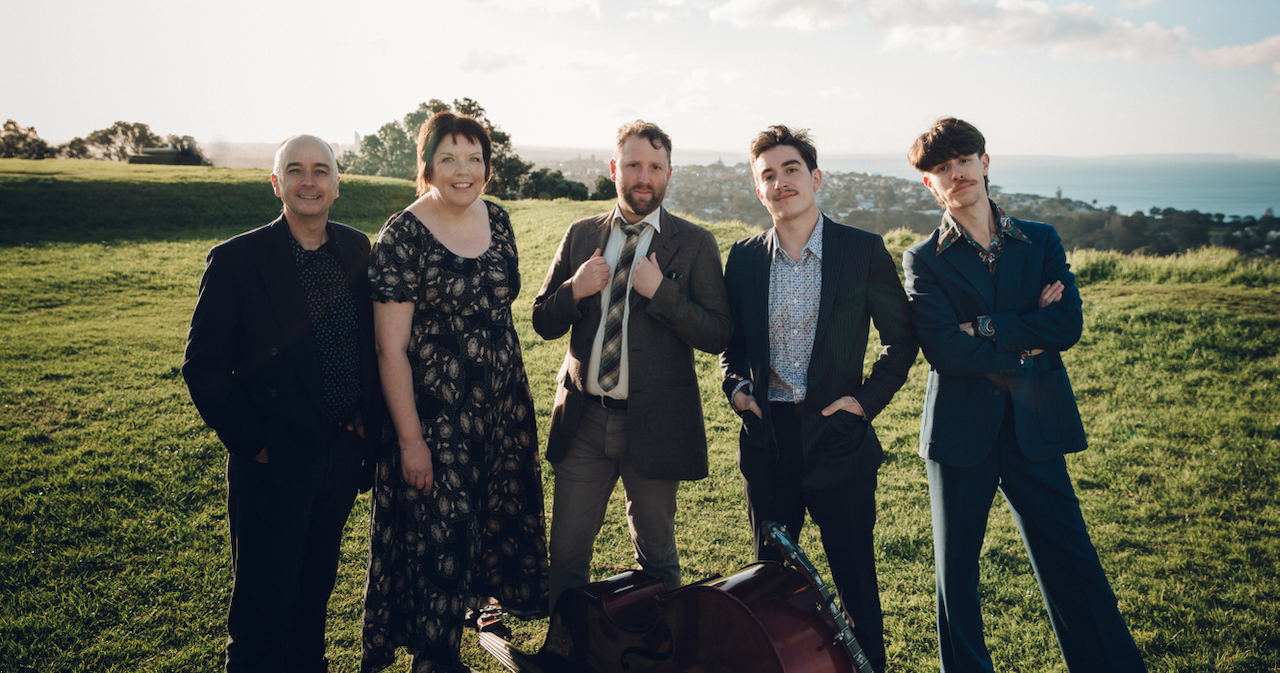
Many of the songs on our new album, Midnight (out January 30, 2026), are situated within a day, or feature characters who are sitting at the cusp of who they have been before delving into something new. That sense of “in-between” also reflects our place within Aotearoa’s musical landscape, where bluegrass arrives without a long local history, but can be shaped in ways that feel natural to how we live and create here.
“Our Kiwi fans know bluegrass from traditional songs and contemporary artists such as Alison Krauss & Union Station, and Billy Strings. But they are more familiar with the other genres that bluegrass sits alongside. We’re also collectively members of the New Zealand folk, country, and jazz communities,” says our bassist, Rob Henderson.
Midnight starts with bluegrass at its core, but gently widens scope, bringing in different genres with their rhythms, broader chord progressions, and influences drawn from our own environment and lives lived in Aotearoa.
Here are the songs and tunes that anchor us in tradition and inspire us to find our own path as the clock strikes twelve. – You, Me, Everybody
“Ain’t No Grave” – Crooked Still
I love groove and the forward motion in all music, so when I heard this tune for the first time I was naturally inspired by the push of the cello part. This feel was a factor in my own bass playing across the album, especially for up-tempo tunes such as “Misdirection.” – Rob Henderson
“Dorrigo” – George Jackson
George Jackson’s tune “Dorrigo” feels friendly and familiar. It’s one of those tunes that will just keep going around and around the jam circle. When the Dorrigo Challenge did the rounds on the internet a couple years ago, it was a reminder of how a tune can bring people together. I had this in mind while writing “Sam’s Tune” on our album. – Sam Frangos-Rhodes
“Wildfire” – Watchhouse
I find when I sit down to write a song, I usually follow the same template or theme. Of course, there is variation in a lot of my songwriting, but I find rhythmically it’s always much of the same thing. A while back I wanted to break that cycle and try to write a more chilled out, slower tempo song, so I wrote “Heart of Stone,” which leads to “Wildfire” by Watchhouse. I enjoy this song because I think it has a very similar vibe to “Heart of Stone.” For me, it captures the same emotion and feeling I was looking for. I find it’s always nice to find what I was looking for in other people’s writing and relate that back to my own music. – LaurenceFrangos-Rhodes
“Heart of Stone” – You, Me, Everybody
Laurence originally wrote this while we were producing our previous album, Southern Sky. I love the backbeat to it, but he also writes great chord progressions; they feel natural and authentic to the song and surprising at the same time. I’ve known Sam and Laurence since they were in their early teens and while our audience love our instrumentation, singing harmonies with them feels like home to me. “Heart of Stone” gives us an opportunity to showcase our vocal blend and milk those beautiful chords Laurence gifts to his songs. – Kim Bonnington
“Railroad” – Béla Fleck & Abigail Washburn
When I try to serve the song with three-finger banjo, I frequently look to Béla Fleck’s work with Abigail Washburn. He plays parts and the two of them fill out the texture of a song so well! Ironically, when we arranged “Silver Spoon,” I was hearing Abigail-like clawhammer behind it, so I did my best to provide that kind of sound with three fingers. – Nat Torkington
“A Hundred and Sixty Acres” – Marty Robbins
Our track, “The Ballad of Bubs and Beautiful,” started when I overheard a conversation between two women shearers in a camp ground in Waipukarau. I knew that I wanted to capture their relationship to each other and their working life, all framed within a day. My Dad’s vinyl collection is 50% Marty Robbins and I remembered the picture that “A Hundred and Sixty Acres” colored of a life well lived. That’s why the first line in “Bubs and Beautiful” is, “Up ‘fore dawn to greet the sun.” There’s a tendency for NZ songwriters to still write about American experiences and places due to an inability to describe ourselves that has been labelled “cultural cringe.” But I knew the description of the women was genuine when I heard someone go, “Oh” as we played the last line live for the first time. – KB
“Orphan Annie” – Tony Rice
As a guitarist, I’ve been heavily influenced by Tony Rice – who hasn’t!? Whenever I listen to the Church Street Blues album it leaves me feeling creative and inspired. I love the minimalism; stripped back to one guitar and vocals telling a story. A lot of the songs on Midnight started in this exact same way, guitar and vocals alone. So it only feels appropriate to give credit to Church Street Blues where credit is due. I cannot pick one track from the album as a favorite because they are all great, but here is “Orphan Annie.” – LFR
“Was It You” – Joy Kills Sorrow
“Was It You” is a song I love for how it drives. That rapid mando chop over a fast rolling banjo held down by a thumping bass is a sure way to make a foot stomper. I took a lot of inspiration from Jacob Jolliff’s mandolin playing in “Was It You” when I put together my part for our song, “Busy Without Me.” – SFR
“Busy Without Me” – You, Me, Everybody
Kim writes wonderful slice-of-life songs. The Midnight album has everything from the plight of an unwed mother to mother/daughter sheep-shearers. “Busy Without Me” is perhaps more #relatable, though: we have a short life with ample temptation for busyness, it says, but it’s important to take moments to “sit and breathe and let the breeze wash over me with nothing in my way.” I love the way the busy-ness of the music reflects the lyrics. – NT
“Caleb Meyer” – Gillian Welch
Country/folk/bluegrass songwriters have always done a great job of writing songs about things we won’t talk about, but make us happy to sing about them. Our song “Silver Spoon” was initially written to an Irish jig. But the joyfulness didn’t eclipse the bleakness of the lyrics. At different times when we were arranging it, different band members would say, “What would Caleb Meyer do?” and our producer Rachel Baiman asked exactly the same question when she arrived for our sessions before we recorded. It’s become the quintessential modern murder ballad. – KB
“Distant Sun” – Crowded House
I grew up in ’90s New Zealand with parents who would play in a country band at the local barn dance while my brother was DJing at the rugby club rooms. So while Marty and Merle would be in one ear, Crowded House was in the other. If you think of great bridges in songwriting, “Distant Sun” has one of them. It also has my favorite line ever in a song: “I don’t pretend to know what you want, but I offer love.” The melody lines in our own track, “The Rest of Us,” hark back to years of admiring Neil Finn as a songwriter. – KB
“The Rest of Us” – You, Me, Everybody
When Kim first brought the concept of “The Rest of Us” to the band I was immediately a fan, and thought it would a great fit on the album. Before we went into the studio we all spent some time together to arrange the new material. As a band I feel like we work uniquely well when it comes to putting a song together and it’s one of our biggest strengths. I think “The Rest of Us” is a great example of Kim’s songwriting and a great example of how we function as a band. – LFR
“Natchez Trace” – Béla Fleck
In my mind, this is the classic G minor banjo instrumental, from Béla Fleck’s landmark album, Drive. Recorded with his B string tuned down to B flat, Fleck often plays it live out without the re-tuning. That was the inspiration for me to write my own Gm instrumental for a banjo tuned to open G major. – NT
“What a Fool Believes” – The Doobie Brothers
I wrote “She’s Alright With Me” a few years ago before I joined You, Me, Everybody. At the time, I had been deep diving into a lot of Doobie Brothers music and the moving parts within their songs. When “She’s Alright With Me” was born, it was originally a heavy keyboard driving tune – having written it on an old 1960s Wurlitizer Piano and styled it on some of the Doobies’ keyboard parts. It’s safe to say it’s transitioned a lot as we don’t have a keyboard part, but you can hear the rhythm now being driven in the same way by Laurence’s guitar. – RH
“Old Train” – Tony Rice Unit
Laurence’s epic album-opening “Misdirection” is a straight-ahead driving bluegrass song, which nonetheless has a few surprise chords in it. For some reason that reminds me of this epic Tony Rice track. – NT
“Misdirection” – You, Me, Everybody
“Misdirection” fits nicely as the opener on our album. It’s a fun example of progressive bluegrass while still staying true to its roots. “Misdirection” is my favorite track on the album and I would like to think the amount of fun we had recording this song is reflected in the final result. – SFR
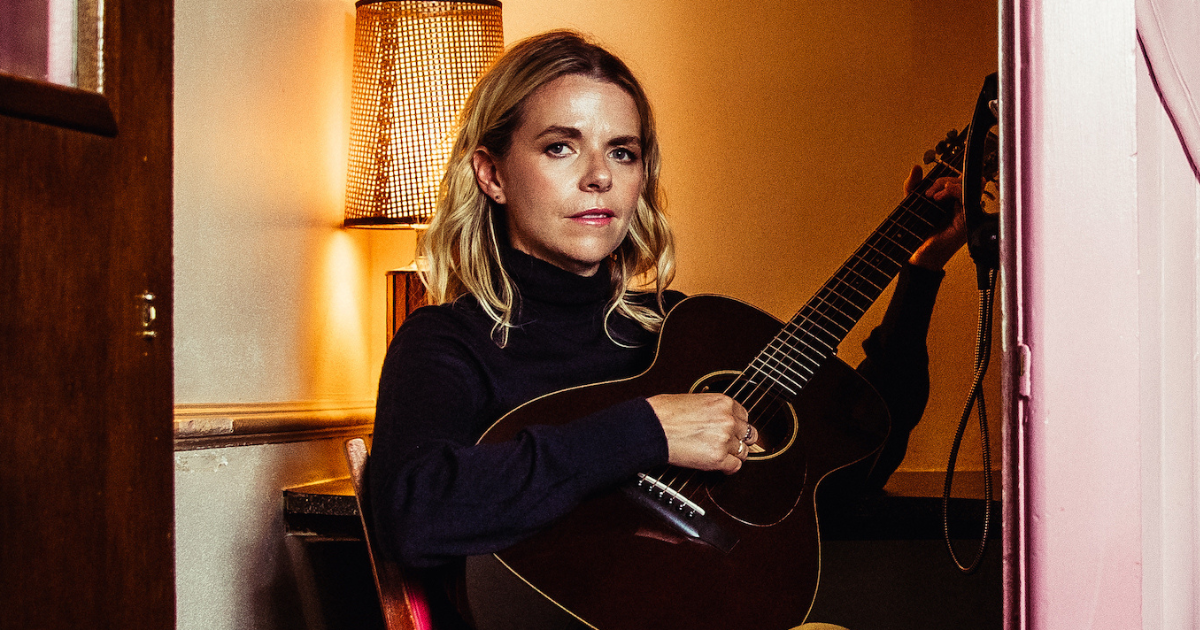
There’s a confidence and ease to Aoife O’Donovan‘s music making, brought forward throughout her career by her languid, tender, and emotive voice. Just as striking and crystalline as it is cozy and comforting, her voice is a truly iconic instrument in Americana, bluegrass, and new acoustic music. Still, as she readies her new solo album, All My Friends (out March 22 on Yep Roc), it feels as though O’Donovan is decidedly stepping into a new era of confidence and self-assuredness, devoid of any sense of desperation or flightiness or unfettered ambitions. There’s a steady, intentional march to the blossoming of her catalog and her artistry and it’s on full display on All My Friends.
The album was conceived as a sort of tribute to or reckoning with the cross-generational struggle for women’s rights, highlighting the passage of the 19th Amendment over 100 years ago and picking up that timeless mantle of ever-striding towards justice. It’s a perfect project to highlight during Women’s History Month; the intellectual and political messages within it are softened – though never outright whitewashed, revised, or sanitized – by O’Donovan’s perspective as a mother of a young daughter. With All My Friends, she is continuing her journey with another timeless tradition in string band music: the role of mother-activist-songwriter-composer.
One of the record’s lead singles, “Daughters,” was heralded in a press releases as “a meditation on the eternal quest for women’s rights and equality.” Meditative qualities might be the most tangible and original through line of O’Donovan’s songwriting, song collection, composition, and her vocal affectations – from as far back as her days with Crooked Still, or evidenced by the songs she brought to her supergroup trio, I’m With Her, with Sara Watkins and Sarah Jarosz. As on “Daughters,” O’Donovan more often than not opts for quiet-and-impassioned, subdued-while-soaring vocals. She’ll wrap you in the gauze and glitter of her one of a kind voice and, in doing so, prepare you ever so gently and kindly to receive the messages in her lyrics – however demonstrative or abstract they may be.
O’Donovan’s latest era of confidence is also well marked by her vast and varied resume of musical collaborations. Besides Crooked Still and I’m With Her, she’s released music with Goat Rodeo (Stuart Duncan, Yo-Yo Ma, Edgar Meyer, Chris Thile), Noam Pikelny, the Milk Carton Kids, Taylor Ashton, Donovan Woods, and so many more. In more recent months and years, she’s featured Allison Russell on a track (on 2022’s Age of Apathy), collaborated with mind-boggling guitarist Yasmin Williams and step-dancer Nic Gareiss on a stunning number entitled “Dawning,” and even “came back” to straight ahead bluegrass with a recent single feature on a Becky Buller track, “Jubilee.”
Her output is ceaseless, her art is prolific, but here – as in the new album, and across her discography – the hallmark of O’Donovan’s work isn’t volume, but intention. This is not breakneck, music industry ladder climbing, this is an artist deliberately expanding the universe of her music bit by bit, voice by voice, collaboration by collaboration. It’s part of why she’s such an effective voice and influence in control rooms, too. (Though her production credits are relatively few, they are mighty.) And it’s part of why, as you scroll through our Essential Aoife O’Donovan playlist, you’ll find as many surprising and eyebrow-raising selections as you will her mighty, familiar modern classics.
All My Friends – with appearances by The Knights, The Westerlies, Anaïs Mitchell, Sierra Hull, Pikelny, and more – is yet another demonstration of O’Donovan’s community, her central role within it, and her confidence in inhabiting that role wholly and completely. This is meditation without stagnation, orchestration without machinations, softness and tenderness, but with a steel spine. These are challenges to the status quo while knowing real progress is made with one foot placed in front of the other – and with many other footsteps following her own.
Throughout the month of March, as we highlight Women’s History Month, we’ll be celebrating the new album, All My Friends, and Aoife O’Donovan as our Artist of the Month. Stay tuned for a special “In Conversation” Artist of the Month feature to come later in March featuring an amazing artist and collaborator of O’Donovan, and we’ll also be dipping back into the BGS archives to resurface so many amazing songs, videos, articles, and stories that highlight the incredible music of Aoife O’Donovan.
Ever since I started making music, it’s been in this sort of folk-infused soundtrack sort of style. When I was little, I would imagine that I was in a film constantly. I would hear music in my head supporting the emotions I may be feeling. It sort of helped me express my feelings to myself and figure out what sort of character I want to be in this life. My brother is famous for his excellent mixtapes and he introduced me to most of my favorite contemporary artists, many of whom make music in this way; fusing together modern attitudes and techniques with personal impressions of roots music.
There’s something about traditional sounds that really resonate with me. I grew up in a rural place and spent my childhood playing the fiddle. Folk music has always been connected to nature and the sounds that go along with it. Nature is where I do my best self-reflection. The hypnotic rhythm of an acoustic guitar line repeated. The rich, molasses drones of the violin.
On my debut album Black Cloud, I intentionally challenged myself to produce in a more edgy, alt-rock style. However, I could not escape many of the musical sensibilities I grew up with. You can hear undertones of trad music in my guitar playing, in the song forms, vocal inflections, and choice of vocabulary. This playlist starts off with the first track on my new record and ends with a song from my folk duo with Emily Mann, Paper Wings. Both are songs I wrote and feel very close to my heart. The songs in between have all been inspirations to me over the years and demonstrate of the cinematic quality realized when folk techniques are fused into modern creations and vice-versa. Hope you enjoy. – Wila Frank
“Tonight” – Wila Frank
I wrote Tonight over a rolling guitar line inspired by traditional banjo techniques. While the rest of the production is quite contemporary, you can hear elements of folk influence in my singing. Especially in the line “It’s a long and lonesome road” — a reference to lyrics you would hear in a bluegrass song.
“Fire Snakes” – Laura Veirs
This has been a favorite song of mine forever. I love the beautiful and unusual contradiction of the acoustic guitar line with the artificial beat. To me, it makes the song feel more emotionally vital and critical. The strings at the end are a luscious bonus.
“Desert Island Disk” – Radiohead
This song reminds me of the trance-like quality of a lot of traditional Malian guitar playing such as Ali Farke Toure who I’m also obsessed with. The simplicity of the production on this song is essential and perfectly supports the beautiful message of the lyrics.
“Walkin’ Boss” – Sam Amidon
This is the only trad American folk song on the playlist. Sam Amidon has a really neat way of taking old Appalachian songs and bringing them into a new contemporary light. The rhythm of the banjo and drums together make you wanna groove and bring out the power of the lyrics.
“Psyche” – Massive Attack
I included this one because the repeating artificial guitar line reminds me of the banjo and is a cool example of the magic achieved when electronic artists sample natural sounds. This particular song was an essential inspiration for me in coming up with the guitar line on my song “Tonight.” When it comes to cinematic music and transporting the listener to a new world, you can’t get any better than Massive Attack.
“Imitosis” – Andrew Bird
I was obsessed with Andrew Bird when I was a kid for his witty lyrical style, use of the violin as a support instrument for his songs, and the unapologetic quirkiness of his music. On this album, he fuses all kinds of music and makes something completely unique.
“Ecstasy” – Crooked Still
I grew up going to a lot of music camps and owe much of my musical development to various members of Crooked Still. Aoife was one of the first singers I learned from and I was lucky enough to spend a lot of time around this music. I love this album in particular and how this song fuses Appalachian fiddle tones with classical string parts.
“The Weekend” – Dave Rawlings Machine
This song features pop chords, but has Dave Rawlings signature guitar style all over it. It’s a fun Americana-style story of a song. I like how the violin parts sound almost like they’re imitating synthetic strings. A cool example of folk music imitating pop music.
“Dog Walkers of the New Age” – Breathe Owl Breathe
One of my favorite albums ever. Completely unique and vibey. The lyrics are quirky and witty, and somehow get at an essential emotion of feeling less alone.
“Grizzly Man” – Rockettothesky
The shimmering acoustic guitar in this track brings this beautiful and spooky song to life. This is the only song I really know from this band, but the haunting, witchy vocal style in this song has stuck with me through the years and has an essence of woodsy appeal.
“Dyin Day” – Anaïs Mitchell
Anaïs Mitchell does a really nice job of innovating within the structure of a song itself. There are elements of traditional call and response in this song, religious references and images of nature, but somehow it still feels relevant and potent.
“Carrie & Lowell” – Sufjan Stevens
This was an incredibly influential album for a lot of people I think. Stevens’ swirling guitar style paired with the vocal effects and simplistic percussive elements make it feel like a pop song without any overly artificial elements. There’s even banjo on this song, but used almost like you would use an arpeggiated synth.
“Middle Distance Runner” – Sea Wolf
To me, this is a perfect pop song with a folk song structure. I love the natural guitar tones and the use of real sounds as percussion.
“The History of a Cheating Heart” – Damon Albarn
One of my favorite artists, producers, and songwriters of all time. Damon Albarn released this solo record in 2014 upon which he plays this song paired down with acoustic guitar. There’s very minimal production featuring dry and stark strings along with a chorus of harmonies on the bridge. It’s rare to hear such a minimal song recorded at such a high level and the result is beautiful.
“Clementine” – Paper Wings
I wrote Clementine on a writing retreat we went on in Big Sur. Emily and I spent the week sitting in the sun amongst the trees and flowers overlooking the ocean. This is really a simple pop love song, but we paired it down and sang it in harmony over fiddle drones. Arranged this way, it became stark and vulnerable and the essence of the song revealed itself. The imagery of nature became more vivid, and the emotions came across as more sincere.
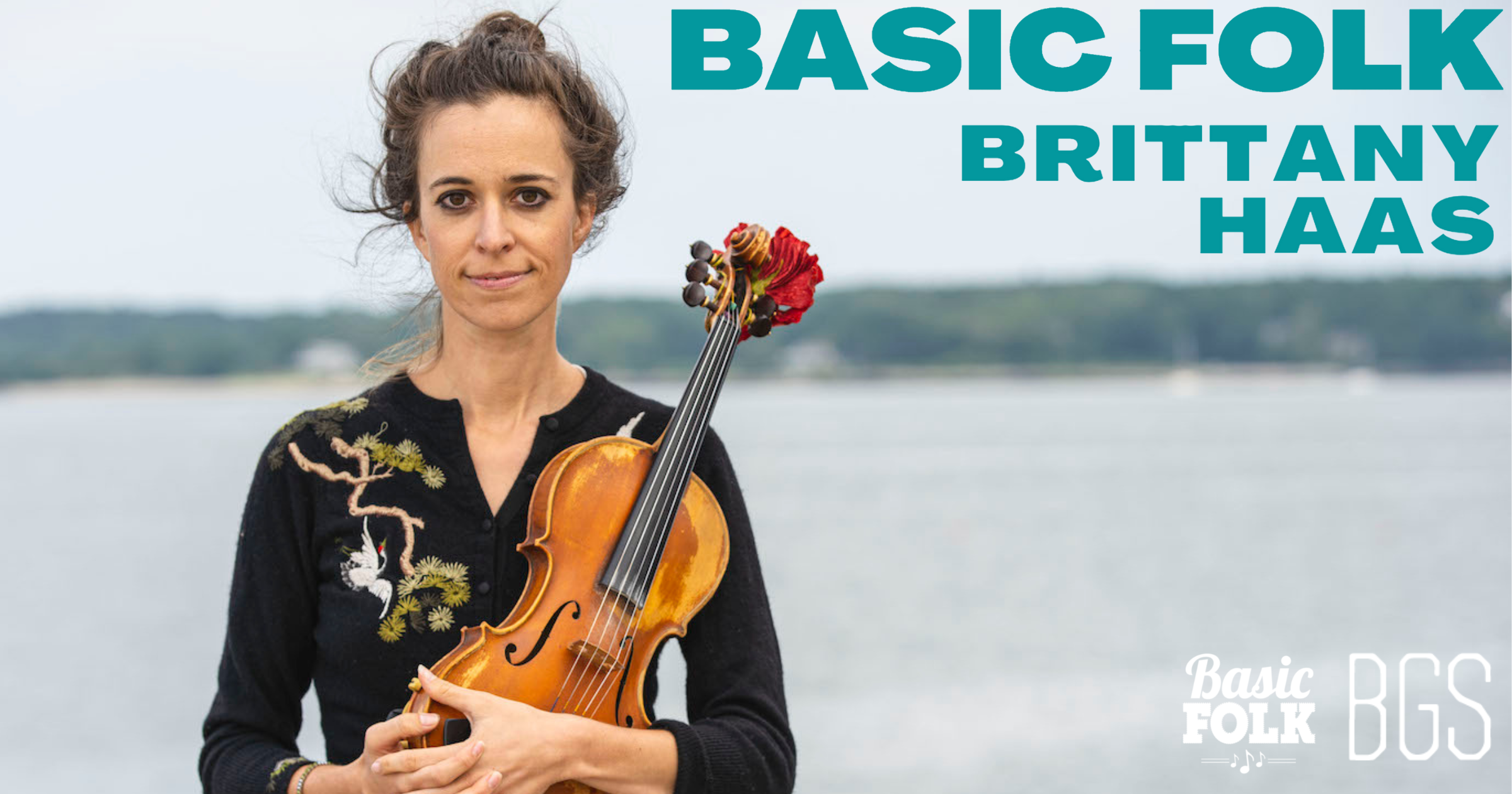
Fiddler Brittany Haas has an impressive resume: she started touring at 14 with Darol Anger, recorded her debut album at 17, started performing with Crooked Still before she finished college, has played on Chris Thile’s radio program Live From Here and done stints in David Rawlings and Gillian Welch’s David Rawlings Machine. Currently, she’s teaching workshops and classes in between working with her band Hawktail along with Paul Kowert, Jordan Tice and Dominick Leslie. Their latest album, Place of Growth, is a song cycle in appreciation to the natural elements, which have always intrigued Brittany.
She’s a trailblazer in fiddling and also has an acute awareness of burnout. The past few years have seen her pursuing and obtaining a masters in social work and teaching classes at East Tennessee State University as their artist-in-residence. Our conversation includes a discussion of balance and awareness when it comes to keeping her music joyful. And then there’s science: she has a degree in Evolutionary Biology at Princeton University. Also, Hawktail’s latest album is a journey through the natural world. We talk about the band giving each other the space to be themselves on the record. Brittany is chill, brilliant and generous. Enjoy and then go listen to Hawktail’s new record all in one sitting.
Editor’s Note: Basic Folk is currently running their annual fall fundraiser! Visit basicfolk.com/donate for a message from hosts Cindy Howes and Lizzie No, and to support this listener-funded podcast.
Artist:Fireside Collective Hometown: Asheville, North Carolina Song: “When You Fall” Album:Across the Divide Release Date: August 5, 2022 Label: Mountain Home Music Company
In Their Words: “‘When You Fall’ is a song about unconditional love. I wrote this song for my daughter, right before her first birthday. Literally catching her as she’s learning to walk and knowing that as she grows older, no matter what roads she chooses to walk along, I will support her and be there for life’s inevitable ups and downs. From a sonic standpoint, I wanted the song to be a gentle yet dynamic musical journey. It moves along like a classic bluegrass song, but has undertones reminiscent of Nickel Creek and Crooked Still. This song serves as a message of comfort to all those who strive to grow each day and when faced with a difficult challenge, push on knowing somebody loves them no matter what.” — Jesse Iaquinto, Fireside Collective
The “bluegrass songbook,” a suitably vague though well-known concept in bluegrass and old-time circles today, is a phrase that references the collective of songs and tunes most popular and most played by the community that makes up bluegrass and old-time music. Most of the melodies included in this informal — though often gatekept and debated — canon have well established origins, from source recordings, legendary writers and composers, famous performances, and so on. Even so, it’s difficult to trace each and every Bluegrass Album Band hit or Del McCoury favorite back to the beginning, when it was first being adopted and popularized among jam circles, as fiddle tunes, by and for laypeople as much as the performing professionals.
With material by forebears like Flatt & Scruggs (“Foggy Mountain Breakdown” to “It Ain’t Me Babe”) or Bill Monroe (“Muleskinner Blues” to “Monroe’s Hornpipe”) or the Stanley Brothers (“Ridin’ that Midnight Train” to “Little Maggie”), the Osborne Brothers, Hazel & Alice, Reno & Smiley, and on down the line, it’s not so much a question of why or how their charming, archetypical songs made it to open mics and festival parking lot jams. But in modern times, as in bluegrass days of yore, just as many new, contemporary tunes, songs, lyrics, and melodies are being translated from professional studio recordings, radio singles, and on-stage hits to sing-alongs, play-alongs, and day-to-day jam fodder. And the process by which this happens is, part and parcel, what bluegrass and old-time are all about.
How did “Rebecca” become an almost meme-level instrumental in the past fifteen years? How did Frank Wakefield know that we needed a “New Camptown Races?” How many millennial and Gen Z pickers learned “Ode to a Butterfly” or “Jessamyn’s Reel” note for note? Each modern adoption into the bluegrass songbook, into that unflappable canon, is an idiosyncratic marvel unto itself — and perhaps no modern, original instrumental tune encapsulates this phenomenon better than John Reischman’s “Salt Spring.”
Being a picker myself, I first learned “Salt Spring” in Nashville in perhaps 2012 or 2013, taught to me by fiddlers who encountered the melody from John himself — and through the bluegrass and old-time camp scene in which he’s pretty much a ubiquitous figure, especially on the West Coast, where he lives and grew up. At that point, the song was regarded as a Colorado-grass staple, transplanted east by a regional genre phenotype that celebrates and capitalizes on timeless, sometimes ancient-sounding aesthetics played with chamber music-level intricacies and techniques. The forlorn, winsome — though simple — chord progression in the A part give way to a longing, pensive, and momentum-building B part — and no matter how “Salt Spring” is rendered, as an “everyone play at once” old-time jam song, or a thoughtful chamber-grass slow burn built to a raucous, defiant end, or as a no-holds-barred SPBGMA style MASH number, it’s a chameleonic composition, allowing itself to fit into every single context in which it’s applied.
“Salt Spring” is truly the instrumental song of the post-Nickel Creek, post-Crooked Still, post-grass generation. As string band genre aesthetics dissolve in the global music marketplace, songs like “Salt Spring” typify this generation’s longing for music that feels honest, true, and real as much as it’s approachable, whimsical, and joyful; songs that celebrate the traditions that became the bedrock of these musics, without being predicated upon militaristic and arbitrary rules to “protect” or propagate those traditions.
And, though modest to a fault, unassuming, and generally pretty subdued as a person and performer, Reischman has felt this phenomena metamorphosing his composition all along. With his first recording of “Salt Spring” available digitally and writ large, he’s communicating to everyone who loves the song that yes, he knows what it means to us, what it’s become, and what it could grow into still. It’s no wonder then, that when putting together the roster for this new recording and iteration of the track, that he didn’t simply call on his band, the Jaybirds, but he looked to the very generation that’s chosen “Salt Spring” as its own with Molly Tuttle on guitar, Alex Hargreaves on fiddle, Allison de Groot on clawhammer banjo, and Max Schwartz on bass.
A veteran of The Good Ol’ Persons, the Tony Rice Unit, and many other seminal acts of his own generation and time, Reischman knows firsthand the value of cross-generational knowledge sharing and his new album, New Time & Old Acoustic demonstrates this ethos in both conscious and subliminal ways. “Salt Spring” is a perfect distillation of these values and it’s truly fitting, as the tune will forever be enshrined and ensconced in the indelible, if not somewhat squirrelly and subjective, bluegrass and old-time songbook and canon.
Each of us having grown up on either side of the Atlantic, our common interests and musical influences could not have been more similar. All of these tracks hold sweet memories in our years of being a couple, and each artist has definitely influenced our sound as The Foreign Landers. David and I thought we’d share some of our transatlantic story together through a few of our favorite songs. — Tabitha Benedict, The Foreign Landers
Paul Brady – “The Lakes of Pontchartrain”
This is one of our favorite tracks of all time. This version of the popular ballad is from Paul’s album Nobody Knows: The Best of Paul Brady rereleased in 2002. With Paul’s flawless storytelling ability and tasteful guitar playing, it makes it a joy to come back for a re-listen.
Crooked Still – “It’ll End Too Soon”
David and I have been big Crooked Still fans for a long time and they will often be our first choice of car music on any long journeys. Here’s a beautiful song written by banjoist Greg Liszt for Aoife O’Donovan that is just so sweet to the ears. This was one of the last songs they recorded before the band stopped touring in 2012 and it appears on their EP Friends of Fall.
Tatiana Hargreaves – “Foreign Lander”
This is where the inspiration for our band name “The Foreign Landers” was drawn from. Aside from having more of a story behind our name than just that, we both love this old song and especially love this version from Tatiana Hargreaves debut album Started to Ramble released back in 2009.
Alison Brown – “Fair Weather”
This title track of Alison Brown’s album Fair Weather released back in 2000 is a common favorite of ours. Vince Gill features on lead vocals and guitar, Alison on banjo, Stuart Duncan on fiddle, mandolin, and vocals and Gene Libbea on Bass and vocals.
Ron Block – “Ivy”
Well, we knew we had to involve some of Ron’s writing and performing in this mixtape. We love this track, “Ivy,” off his album Walking Song. This is a perfect album for all year round, with guest appearances from a host of our favorite players.
The Weepies – “I Was Made for Sunny Days”
I first was introduced to The Weepies through hearing them on the radio back in Northern Ireland many years ago. My family instantly fell in love with their songs and sound, so I was so delighted to introduce David to their catalog when we were dating. Another favorite for long drives and singing along in the car. Here’s a real feel good song of theirs called “I Was Made for Sunny Days” from their album Be My Thrill released back in 2010.
The Boxcars – “You Took All the Ramblin’ Out of Me”
We just had to stick some good bluegrass in this mix of songs, and we’re so glad we chose this one. When David and I started dating, we would sing this to each other, and it has to be one of our favorites from the Boxcars album It’s Just a Road released in 2013.
Hot Rize – “You Were on My Mind This Morning”
At one of our first-ever performances about three years ago at the well-loved Cantab Lounge in Cambridge, Massachussetts, David sang lead vocals on this track written by Hot Rize. They recorded this on their 2014 release When I’m Free.
Dori Freeman – “If I Could Make You My Own”
We are big fans of Virginia-based singer-songwriter Dori Freeman, and especially love this track of hers from her 2017 release Letters Never Read. We recorded a cover of this song on our honeymoon on the Isle of Skye about two years ago now, so it holds a sweet spot in our relationship!
John Reischman – “Little Pine Siskin”
One of our favorite tunes off John’s album Walk Along John! John had been touring with the wonderful Greg Blake in Ireland back in January/February 2018, right when David took his first visit to Northern Ireland, and right when we started dating. We went to see them at a wonderful show at the Red Room in Cookstown. It was just a couple of days prior to making things “official.” I remember David playing this tune on that visit and it brings back happy memories!
The Foreign Landers – “I’m Not Sayin’”
We discovered this Gordon Lightfoot song from the late great Tony Rice on his album Tony Rice Sings Gordon Lightfoot. We have both loved this song for many years, and knew that when he would start a duo we would definitely be covering this one. We recorded this version on our EP Put All Your Troubles Away that we released in May 2021. We’re so thankful we did and hope you enjoy it!
David Benedict – “Colonna & Smalls”
David released this tune on his solo project The Golden Angle in 2018, named after the specialty coffee shop in Bath, England, back when we were dating. He has the amazing David Grier and Mike Barnett playing on this track with him.
Cup O’Joe – “Till I Met You”
David and I also tour and record with my two brothers in Cup O’Joe, our band based out of Northern Ireland. I wrote this song back in 2018, and recorded it on Cup O’Joe’s most recent album, In the Parting. I wrote this one with David in mind, not thinking that he would be playing mandolin on it a few months later!
Artist:Lula Wiles Hometown: Our band sort of has two hometowns: we started the band when we were all living in Boston, but we first played music together as tweens at Maine Fiddle Camp, located in Wabanaki (Penobscot) territory (“Montville, Maine”). New Album:Shame and Sedition Personal nicknames (or rejected band names): Personal nicknames — who’s who should be obvious: Buckles, Burkles, Boms. A rejected bandname that we still joke about… “Monkberry and the Moonlights,” inspired by the Paul McCartney song “Monkberry Moon Delight” off of Mali’s favorite album RAM. We’re so glad we didn’t go with that name… lol.
What was the first moment that you knew you wanted to be a musician?
Eleanor Buckland: I grew up playing music with my family and looking up to my dad, who is a professional musician, so I’ve sort of had a desire to be a musician as long as I’ve known that was a thing I could be. But, I do remember a specific Crooked Still show in Maine during my freshman or sophomore year of high school that made such an impression on me. During the show I felt almost sick with longing and from then on I knew I was doomed (ha!) for professional musicianship!
Mali Obomsawin: As a little kid I always just wanted to make people happy and make people laugh. I think I always was a performer, and I always loved words, and it just ended up being music that those things came through. I sang and improvised little poems and acted out a lot. When we would play games as kids, I would always come up with little songs and dances… and when we would play fairies or whatever I would always choose to wear this potato sack and be the “troll” character. I liked being the goofy one that got to do mischief and be different. Maybe this is telling… haha. My dad’s a musician too and there have been a lot of musicians in my family for generations… it was just normal to express yourself that way.
Which artist has influenced you the most … and how?
Isa Burke: My influences have shifted and cycled in and out constantly throughout my life. I’d say Gillian Welch/Dave Rawlings and Joni Mitchell are probably the most long-lasting influences if I really had to narrow it down. But honestly, I think many of the biggest influences on me have also been my friends, family, bandmates, collaborators, and people I’ve shared musical community with. I also tend to go through phases where I’m really devoted to one artist, and this past year I’ve been really inspired by Fiona Apple. She’s so liberated in the way she creates, it makes me feel more liberated, too. When I listen to her music or read interviews with her, it’s like she’s shaking me by the shoulders and reminding me that I can do whatever the hell I want.
Mali: Like Isa I go through phases… some of my biggest influences that might not be obvious from listening to Lula Wiles are Ornette Coleman and Charles Mingus. I got really into “avant garde” and free music at a young age and I think that has shaped my preferences and tendencies as a musician in so many ways. I also think on this album we were able to lean in a little bit more to those sounds that are exciting to me, harsher or more “raw” sounds juxtaposed with atmospheric/gentle/melancholy ones, leaving room in our arrangements for grit and breathability and improvisation. These are all things I associate with Mingus and Ornette — I especially have always been so inspired by Ornette’s gut-wrenching melodies. Just so human. I think Buffy Sainte-Marie had these piercingly honest sounds/qualities in her music too, but I didn’t really dig into her work until more recently. I dunno. These days I’m just loving indie rock, I’m not too proud to admit it!! Really sardonic or sarcastic songwriters like Rufus Wainwright and Randy Newman have been big influences for me. Aaaand, let’s see… Fleetwood Mac?
What other art forms — literature, film, dance, painting, etc. — inform your music?
Isa: I’d say my songs definitely draw from fiction and film. I love songs that feel like short stories or films — songs with specific, carefully chosen details that expand in the listener’s mind to create a vivid scene, a feeling, a narrative. I also love dialogue in lyrics — Joni Mitchell is a master of that, obviously. Sometimes when I’m writing, I try to imagine the song as a screenplay, or a film, or a novel. Where would this scene take place, what would the characters say to each other, how would it look and sound and feel? That helps me hone in on which of the various elements at my disposal (description, dialogue, details, images, sounds, melodies) can best tell the story and create the feeling I’m looking for. I also think on a more musical (non-lyrical) level, my sense of rhythm is definitely informed by dance. I’ve always loved dancing and a lot of my most formative musical experiences were based in instrumental fiddle music, which at its root is dance music. I move around a lot when I play and I try to write music that feels embodied, that physically feels good to play.
Mali: So many of my songs have been sparked by specific phrases or ideas in fiction novels and poetry. I get obsessed with the beauty or rhythm or texture of a few words juxtaposed against one another, and I adore word-play, and just sonic patterns or complimentary sounds. Language makes me so excited. It’s nerdy maybe. But sometimes when I read a line in a novel that expresses a specific feeling in a poignant or abstract way, it’s really euphoric. James Baldwin is an example pertinent to this album -– the big inspiration behind “In Dreams” … I’m still working my way through Baldwin’s work now, but I’m also pretty deep in listening to speeches by Black Panthers and other civil rights activists from that time. I think it’s odd how we compartmentalize art/genres sometimes, because these speeches are some of the best pieces of American literature ever created. Anyway, I digress. I think in colors and shapes when I play and compose music, but not specifically in the form of paintings or anything.
What’s the toughest time you ever had writing a song?
Eleanor: “Hometown” on our previous record, What Will We Do, was one of my hardest songs to write. I think this was because the story I was trying to tell in the song is so closely connected to my home and the people I love. I found it harder to get to the truth of the song than ever before, because I was so determined to do the story justice. Mali and Isa were both critical co-writers for this song and helped me more deeply understand and stay true to the heart of what I was trying to say.
Isa: I have a song called “Wild Geese” that has been torturing me since April 18th, 2017. On that day, I sat down and wrote a verse and a guitar riff in about five minutes and thought it was one of the best things I’d ever written, but I’ve never been able to finish it. As soon as I wrote it I knew it had to be the last verse of the song, so I’m working backwards. Every so often I’ll pull the song back out and bang my head against the wall for a while, but I can’t seem to write anything that lives up to that one verse. I’ve even finished and scrapped a couple of full drafts (we actually recorded a rough version of one of them during the sessions for What Will We Do). I’ve always ended up getting rid of everything except that one verse. I can’t let that verse go. It haunts me! Maybe it’s just supposed to be a really short song — hopefully you’ll hear it someday.
What’s your favorite memory from being on stage?
Mali: Hmmm… the time Tim O’Brien introduced us as Lula Whales? There was another time we made Ellie eat a hot dog onstage in San Francisco on her birthday.
Eleanor: That was possibly my favorite birthday show ever. Isa and Mali surprised me with a hot dog onstage, since I love hot dogs and I am teased mercilessly for it. That same night, we also got pranked by our drummer, who had the sound guy at the Freight & Salvage play one of our TOP van jams, “Twang” by Mason Ramsey (featured in our playlist) as our walk-on music. It was awesome.
Name: Jim Olsen, President, Signature Sounds Hometown: Northampton, Massachusetts Latest Album:Golden Age: 25 Years of Signature Sounds Personal nicknames (or rejected band names): Molson
What’s your favorite memory from working in the music business?
I’ve been in the music business in one form or another for over 40 years, so it’s pretty hard to break it down to any one memory. Without question my favorite moments are discovering great new artists and watching them perform for the first time in a small club to an intimate audience. I’ve had the good fortune to see amazing performers like Josh Ritter, Eilen Jewell, and Lake Street Dive way before the rest of the world knew them.
What was the first moment that you knew you wanted to work in the music business?
I grew up in the NYC area, a huge fan of music and WNEW and LLIR, the great progressive radio stations of the time. A career in music never occurred to me until I discovered that my Ithaca College roommate had a show on the campus radio station. It seemed inconceivable that anyone who asked could get a radio show. I’ve worked in radio ever since and have hosted The Back Porch, a weekly roots music show on 93.9 The River in Northampton, Massachusetts, since 1992. Working in radio keeps me connected to new artists and the greater music community.
What advice would you give to an artist who’s pursuing a career as a singer-songwriter?
Aim for quality, not quantity. I think many new singer-songwriters are focused on making album-length statements when a few good songs would be more effective. The streaming age has changed the way we listen to music and the sad truth is that no one has the patience for 12 songs from an unknown artist. Take your time, edit and hone your best songs and present them thoughtfully.
Which elements of nature do you spend the most time with and how do those impact your work?
I’m fortunate to live in a beautiful rural area, and I love to run and bike with a musical soundtrack. I can lose myself completely in the music and scenery to the point of not even being aware of time or commitments. The combination of deep listening and fresh air make it a highlight of the day. I also find that some of my best creative ideas happen on the road.
Since food and music go so well together, what is your dream pairing of a meal and a musician?
My dream pairing involves a fried oyster po’boy and an Abita Turbodog while watching a favorite Louisiana band, like the Iguanas, in front of the Fais Do-Do Stage at Jazzfest in New Orleans. It’s number one on my post-pandemic wish list.
Photo credit: Courtesy of Signature Sounds
This website uses cookies to improve your experience. We'll assume you're ok with this, but you can opt-out if you wish.AcceptRejectRead More
Privacy & Cookies Policy
Privacy Overview
This website uses cookies to improve your experience while you navigate through the website. Out of these, the cookies that are categorized as necessary are stored on your browser as they are essential for the working of basic functionalities of the website. We also use third-party cookies that help us analyze and understand how you use this website. These cookies will be stored in your browser only with your consent. You also have the option to opt-out of these cookies. But opting out of some of these cookies may affect your browsing experience.
Necessary cookies are absolutely essential for the website to function properly. This category only includes cookies that ensures basic functionalities and security features of the website. These cookies do not store any personal information.
Any cookies that may not be particularly necessary for the website to function and is used specifically to collect user personal data via analytics, ads, other embedded contents are termed as non-necessary cookies. It is mandatory to procure user consent prior to running these cookies on your website.