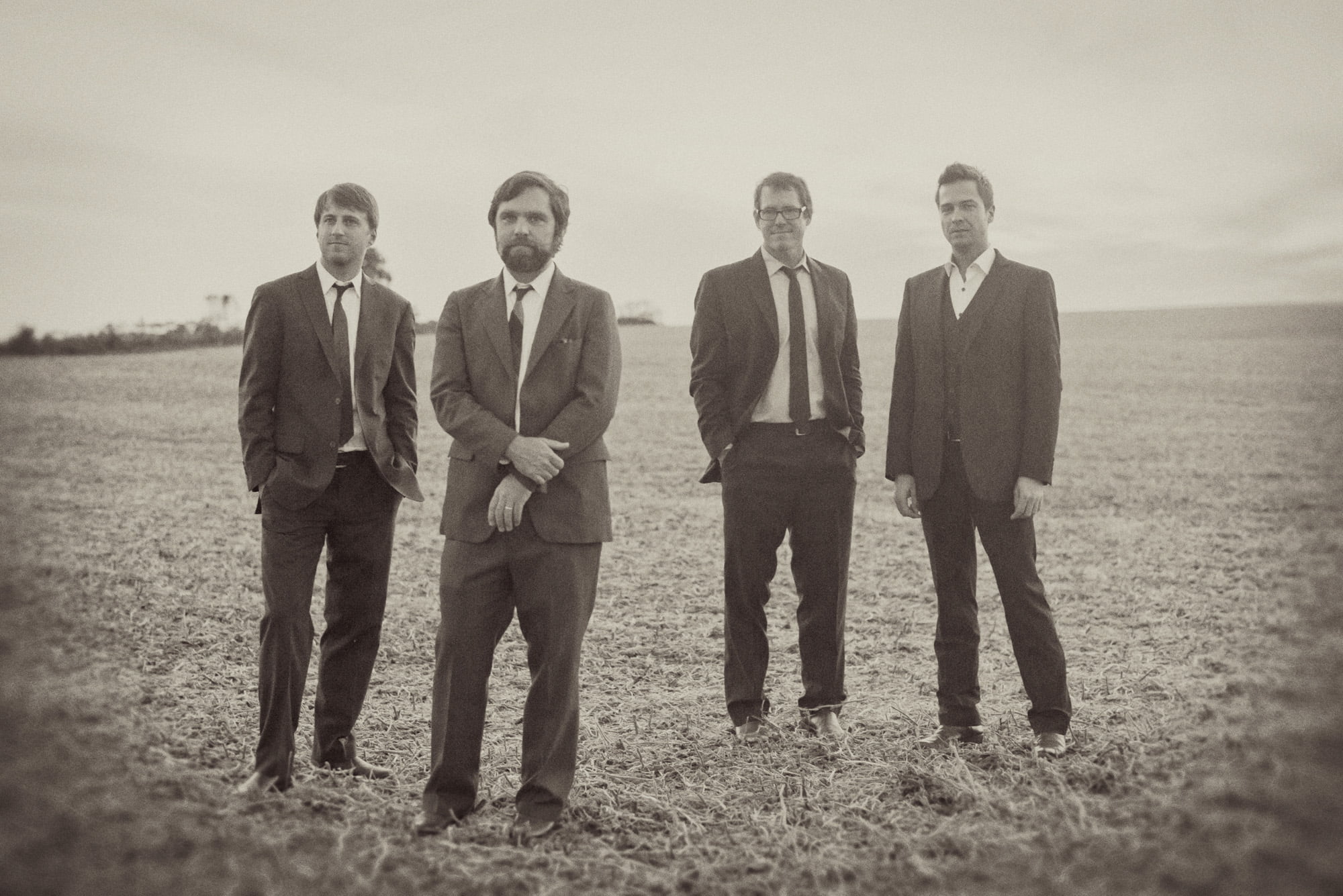
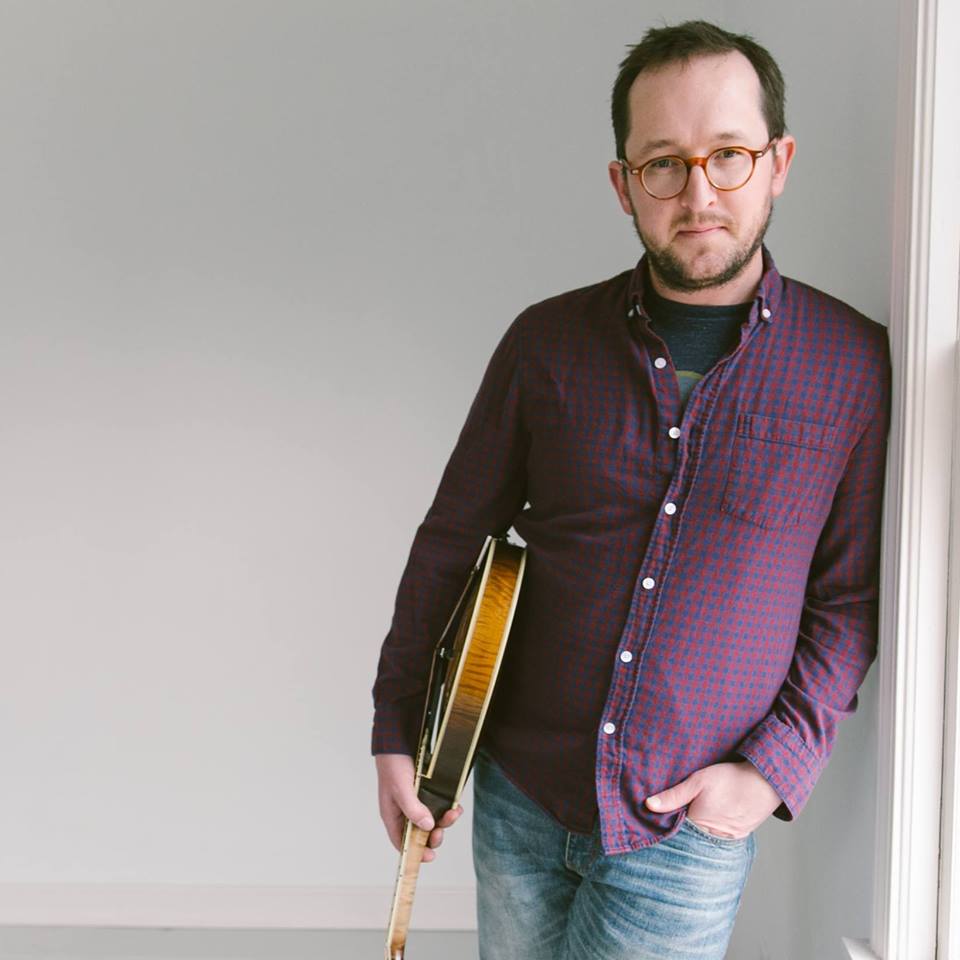
WATCH: Clayton Mathews featuring Handsome Lady Records Club, ‘Courthouse Steps’

Artist: Clayton Mathews featuring Handsome Lady Records Club
Hometown: Boston, MA
Song: "Courthouse Steps"
Album: First Dance
Release Date: March 1, 2017

In Their Words: "This record is centered around falling in love and figuring out life in your 20s. In my experience, there have been some amazing highs paired with intense struggles. 'Courthouse Steps' — written by Alec Gross, Will Knox, and Jake Hill (Handsome Lady Records Club) — stood out immediately, as if specifically written for this project.

My goal for this record is to present a love story and the many stages of that relationship from that first feeling of butterflies to becoming intertwined in another person’s life, while trying to maintain your own identity, and ultimately working as a team to build a life together. The juxtaposition of happiness and strife is what I find the most fascinating about creating the early stages of your adult life and falling in love." — Clayton Mathews


Photo credit: Joanna Chattman

LISTEN: The Company, ‘Six and Five’

Artist: The Company
Hometown: Brisbane, Australia
Song: "Six and Five"
Album: Six and Five
Release Date: November 5

In Their Words: "'Six and Five' refers to working six weeks on and five weeks off. Miners, sailors, and musicians often work in blocks this way, and it's always hard on relationships and family. You wonder why you've spent years chasing a dream, and sometimes lie awake thinking about it, but you have to keep moving, and the life itself keeps pushing you on." — Jamie Clark


Photo credit: David Collins

Writing from the Outside: An Interview with Dave Wilson from Chatham County Line

“This is lucky number seven,” says Dave Wilson. He’s referring to Autumn, the new album by Chatham County Line, and it is in fact the seventh studio album by the Raleigh, North Carolina, blue-ish-grass outfit. For nearly 20 years, they have been touring and recording almost non-stop, combining the dexterous picking of Tarheel acoustic music with the accessibility of pop.

So Autumn serves as a fine point against which to measure their growth, as a band and as individual musicians. Their goal, Wilson says, is not merely to hone their technical skills — to pick more nimbly, to jam more efficiently, to solo more daringly. They continue to strive to play more expressively and to commune more closely with the music of their peers and their forebears alike. In that regard, Autumn shows them at the top of their game, gently updating decades-old traditions and putting their own spin on well-established ideas.

However, Wilson is quick to point out that the album title should not signal the band is slowing down at all. Rather than the winter of their career, they are simply harvesting seeds they planted long ago. “It’s been a great ride for us, all these years,” he says, “and we hope the fans discover us and discover through us other amazing records.”

Tell me about the album title. What made that word, in particular, sound so representative of the album for you?

The two sessions when we recorded it were separated by a year, and they both fell during Autumn months. There was just a feeling in the air and in the songs that really felt like that time of year, and I wanted to listen to it in that time of year. It’s such a great time of year, especially as Al Gore’s global warming tramps down the lane, I think the break from summertime is going to be such a relief. This year, especially — it’s going to be like magic. We really couldn’t wait for that to happen. Also, it’s just an awesome word: Autumn.

Did that idea or that feeling inform how you played or arranged these songs?

The mood was really achieved by where we worked and the time of year. We were up in Kernersville at Mitch Easter’s studio called the Fidelitorium. The leaves were on the ground. When you walked outside, you heard those great notes of feet shuffling on leaves. I think it subconsciously influenced every note that was played, but whether someone will put on this record and feel like it’s Fall remains to be seen. We waited and held on to this record for a long time just so it would come out at this time of year. We’ve put out the majority of our records in the Summer. If you see how we perform, in the suits and crowded around the microphone, it can get very hot and sweaty. We were hoping that Fall would have already broken when the album came out. We go up to the Northeast in November, and we’re already looking forward to that, breaking out the sweaters.

So you recorded the album in two sessions a year apart. Was it hard to pick up the thread with so much time in between?

We spent a lot of time on the road between sessions playing gigs and playing the new songs. We didn’t want to rush anything, even though we really worked über-hard on Tightrope. We recorded that album five separate times in different locations, some of it live, just onstage somewhere or in a studio. It was a grueling process, but it was a joy. As soon as these songs were ready, we wanted to go and record them in the studio. So, for the first session in 2014, for Autumn, we ran the tape and threw some ideas down. The songs were completely put down and mixed down, so you could listen to them in the downtime. It made a lot of sense to go back the next year when our calendar got free. We could go in using what we had learned through the year and, having written some new songs, we felt like we could flesh them out and make a whole album.

Is songwriting a collaborative effort in the group? Or are you bringing songs to the band yourself?

I definitely bring in songs in a pretty realized way, but then we work really hard arranging them and getting everybody on board with what they’re going to be playing on a night-after-night basis. At this stage in our careers, we realize that, if we record a certain song, we could end playing it on stage at every show from now until the end of time. So we really want to put care into what we’re doing. You want to play something that your 50-year-old self won’t mind getting down to.

This band has always had a very long game in our sights. I was in a hippie jam band in college and, one night, I realized that I didn’t want to be 45 years old and still singing those songs. It didn’t make any sense. So when this band got put together and we started working, I was proud of the fact that it felt like an old man could sing any of these songs and feel right at home.

Does that work with the songs you wrote early in your career, when the band was just starting out? Do those older songs still say something to your older self?

There’s definitely some cream-of-the-crop stuff that comes to the top — stuff that I feel still resonates for me and for audiences, as well. But there’s also some stuff that you’re not as proud of or you realize you could have put a little more effort into. It’s like when you’re making love for the first time — it can be very hurried. You look back on it in your later years and realize you could have done things very differently.

There are definitely songs like that you remember and you live with. Maybe when they were first recorded, we didn’t realize their potential or their staying power. It really helps to have an audience react and really fall in love with certain songs. It makes you look at it the way music is supposed to be looked at, which is from the outside — not as the writer or as the performer. It’s so much better to look at things through the eyes of the audience. With that in mind, there are songs that definitely went places we didn’t think they would go. There are songs that were written in five or 10 minutes that we still play every night. It’s a crazy world.

When we recorded “Chip of a Star" for the IV album, we put it first because we really liked the way it sounded. We didn’t think we would be playing this little two-chord song for the rest of our lives, but then people start using it in their personal lives. People got engaged listening to it. They got married and danced to it. It takes on a whole different meaning than the meaning it had when I sat down at the piano one day and wrote the words down. That’s one of the great things about songs: They have their own lives once they’re released into the wild. You never know what’s going to happen to them. That’s one of the most rewarding things about making music. We have no idea if people are going to like it or hate it. We like it. And who knows? Maybe a song will get used in a condom commercial and it will start to mean something completely different than we intended.

Does that change how you write songs, at this stage in your career?

We gave up a long time ago trying to write songs to a purpose or to please a certain faction of the audience. In our early years, it was all about the bluegrass Nazis who would shame the Avett Brothers in an elevator at the IBMAs. That has completely faded away, and people seem to be more accepting of everything. We feel great to be embraced by anyone because what we’re doing is just pure to ourselves. I don’t try to write songs about mom and dad and trains and the bluegrass songbook stuff. I just write what feels right to me for the words that come out of my mouth and the music that gets played on the instruments. Whatever people take and do with that is really their choice. It’s nice to have a career and have people respond to the music, but I know there are other musicians and other writers who don’t have that luxury.

That luxury sounds like something you have to work to achieve, not something that you obtain overnight. Is that part of the long game you were talking about?

A vast majority of music, let’s say 80 percent of huge songs and huge musical moments, are on people’s first or second albums — the stuff they made when they were 18 to 25. It’s crazy to think about what people achieve with such youth. It’s wild. We look at what we do as a crafter and, hopefully, we will get better at it through the years. We didn’t want to just come out in a huge blast and make a mark immediately.

Bluegrass does seem to be a genre that allows artists to develop in that way. On the other hand, the technical aspect of the music can potentially overshadow the aesthetic. Is that something you’re thinking about?

We’ve never really tried to study too hard what bluegrass was in 1946. We’re not trying to re-create that in this day and age because we never felt like that was what we were supposed to do. There are a few rock bands that adhere to the tenets of the Beatles, and they want everything to sound the same. They use the same instruments and have the same sounds, but the strangest thing for us is that we never really felt like we were really a bluegrass band. The longer we do this and the more we’re around, the more the heroes faded away, it does feel more and more like the word “bluegrass” does encompass us, but we didn’t feel like it did in the beginning.

I never really associated Chatham County Line with the bluegrass scene, to be honest. Maybe it’s because you’re on Yep Roc, which isn’t exactly Compass Records. Or maybe it’s because you were getting reviewed on Pitchfork. It just seemed like you were apart from that really traditional scene.

Like I said, we’re really just driven by songs and where they put us. That’s what we follow. I do worship at the feet of bands like the Earls of Leicester and the Del McCoury Band. What the Earls have done recently is amazing, and we’re so glad that they’re doing it. When you talk to those guys at a festival, those dudes are the real deal. We’re not real — at least not the way Charlie Cushman is real. We weren’t born in the mountains and trained in bluegrass from age four. We smoked dope in college and played in jam bands and we heard bluegrass and were like, "What the fig is this?" If you want to hear the traditional stuff, you can. You can go see the Earls or McCoury. We want to create music that reflects the modern times, if there’s a way to do that. I’m not using words like “cell phone” or “Internet” in a song, but it’s modern and filtered through the lens of classical instrumentation, which makes it very easy to travel.

Do you mean travel from one person to the next, the way a song travels? Or do you mean travel from one town to the next?

Going on the road. That’s the ultimate secret of Chatham County Line: We’re just doing this because it all fits in a minivan. No tour bus needed.

Is that something you’re thinking about when you’re recording?

Yes, because that is what we do. Studio albums should sound different from live performances. You can go on YouTube and watch any number of live versions of the tune. We want the record to be a little more fun. We’ve got some weird noises on there and some weird overdubs to make things interesting for posterity. We do realize that every single night we’re going to be up there playing these tunes. We do make a few mistakes along the way. A tune like “Show Me the Door,” the last song on the new album, is driven by the piano. We can’t push a piano up to the microphone. We did talk about it, though. Maybe a keytar or something would work. We’re not sponsored by Conway.


For more on bands who skirt the bluegrass edge, read our interview with the Infamous Stringdusters.


Photo courtesy of the artist

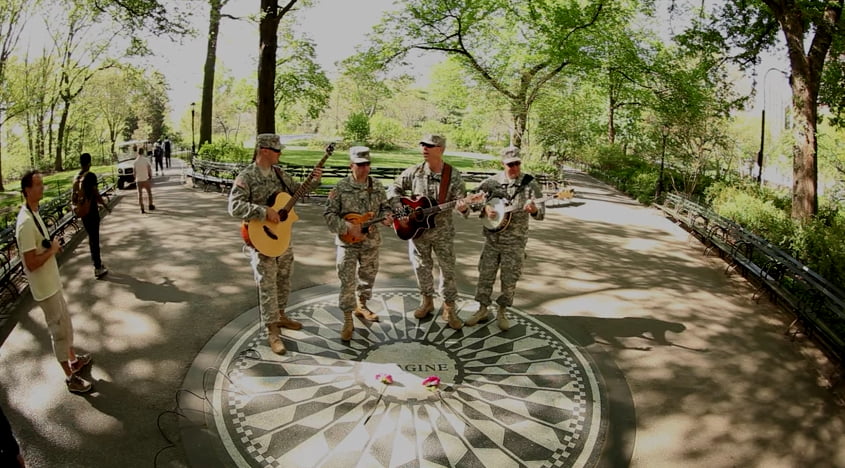
5 of the Best Videos from Six-String Soldiers

Over the Summer, the Six-String Soldiers captured our hearts with their cover of John Denver's classic song "Country Roads," which they performed — complete with banjo, mandolin, guitar, and bass — from the back of a pick-up truck. The four-piece ensemble is part of the United States Army Field Band, a traveling organization known as "the musical ambassadors of the Army." Band members Master Sergeant John Lamirande (mandolin), Sergeant First Class Thomas Lindsey (banjo), Staff Sergeant John Brandon Boron (guitar), and Sergeant First Class Glenn Robertson (bass) have all served in the Army to varying degrees, and have shared stages with major artists like John Mayer, Martina McBride, and Charlie Daniels.

We couldn't help but round up five of our favorite videos from the talented group of soldiers. 

"Strawberry Fields Forever"

The Soldiers worked through a beautiful, acoustic take on the Beatles classic on a sunny morning in Central Park last Summer. We especially love Lamirande's mandolin flourishes on this tune.

"Looking at the World Through a Windshield"

The band caught the attention of late-night host Conan O'Brien and took a trip to play his show last December, regaling the TV audience with their take on a Del Reeves classic.

"Take Me Out to the Ballgame" 

Last year, the band had the opportunity to play at Chicago's historic Wrigley Field and they chose to keep it traditional with a bluegrass-inflected take on baseball's favorite song.

"Wagon Wheel"

They wouldn't be a true modern string band without a cover of Old Crow Medicine show's mega-hit "Wagon Wheel" and, for this number, the guys take the lyrics literally by performing their take of the tune while traveling — with the help of a fellow soldier — down the highway … likely "headed down South."

"Ziggy Stardust"

David Bowie's death in January of this year affected fans of all stripes. While the band was recording their first studio album, they took some time out to record this version of Bowie's "Ziggy Stardust," a studio version of which may make it onto a future LP.

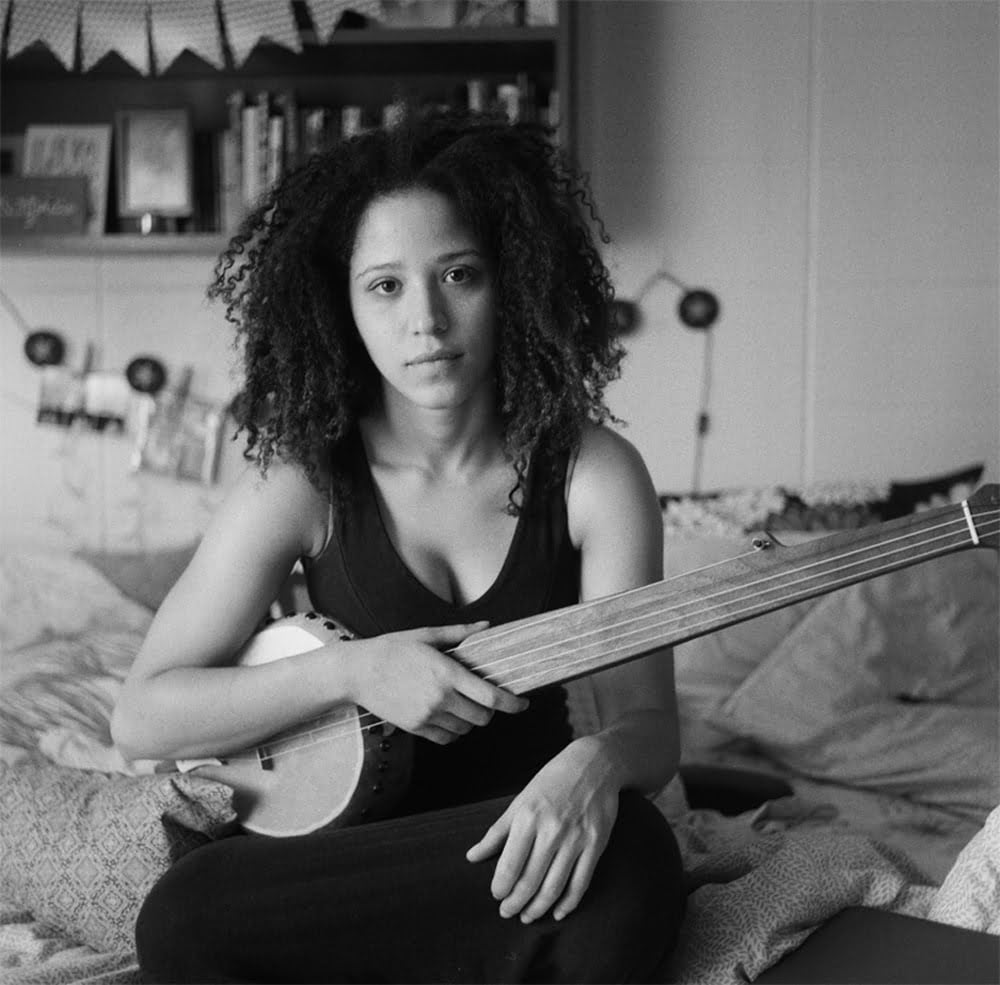
Kaia Kater on Breaking the Wheel of Silence (Op-Ed)

I remember exactly where I was when I first saw Amber Coffman play with the Dirty Projectors. I found myself on a second date with a kind and sweet person; I had ended my serving shift at work and he picked me up right as I finished stacking the last chairs in the restaurant. We exited the subway and promptly walked the wrong way down Saint Catherine Street. He was a foreigner, and I was terrible with directions, though we didn’t panic too much because shows usually start late in Montréal.

When we finally found the venue and walked in, I was transfixed. I loved the show, but it was Amber that caught me in the way she sang and the power with which she moved. We went back to his apartment after the show and listened to Swing Lo Magellan and Bitte Orca again and again and again. The records suddenly had new meaning.

I also remember exactly where I was when I first heard Amber Coffman talk about her abuser, a music publicist who, she stated, “RUBBED my ass and BIT my hair at a bar a couple of years ago.” When she posted to Twitter, I was in Glasgow, Scotland, in frigid January with the same man I had seen the show with so many years ago. When we spoke about it over dinner at a café, I commended Coffman on her bravery for even speaking his name. I fidgeted with a cloth napkin on the table, wishing I had the courage to do the same.

On the walk back that night, Coffman’s statement still preoccupied my mind. She was tired — tired of men getting away with bullsh*t. I felt tired, too.

It’s a type of fatigue that seeps into your bones and threatens to become a part of you.

It’s a type of fatigue that makes you hesitant to walk down streets alone at night in towns that you don’t know — or worse, in towns that you do.

It’s a type of fatigue that renders you permanently quiet, and makes you just want to get through it … whatever it is.

In all of the Hollywood films I’ve seen about boxing — of which there seems to be an infinite amount — the first lesson the coach teaches the hero is to keep moving their feet as soon as they step into the ring. As a young woman, the same authority figures drill you to always carry pepper spray or to never leave a party without a friend.

We internalize and name these coping mechanisms and hold them close like lifelines: a buddy system, a self-defense system, or any system that helps keep us alive.

I’m a musician. I’m also a woman and a young person. My parents led by example, encouraging me to shrug off people who doubted my abilities, my character, or my strength and to aim to prove them wrong through my actions in life rather than through direct confrontation. When uncomfortable situations did arise, I often heard my mom’s voice counseling my more indignant self: “Don’t give them power over you!” Like most women, I was expertly conditioned to keep hustling and moving no matter what.

Throughout most of my teenage years and into my 20s, I was always fighting a proverbial match against somebody. I floated on the surface in order to stay okay. I had quick feet. Any experiences of harassment I endured — of which there were many — I promptly filed away and ignored. That was how it went, day in and day out. Like most women.

Why is today different?

Today is different because one of my close friends, a mentor and someone I look up to, was recently verbally harassed and insulted by a man at a professional music conference. Today is different because the same man exhibited this pattern on me, and several women in the music industry prior to this incident.

Thankfully, my mentor did not stay quiet. She took to the Internet that evening with dizzying quickness: “Tonight, I was reduced (in an introduction) to a f***able vagina by someone trying to sound smart and funny. Someone who knows better … or who I thought knew better (married, father to a daughter). I'm equally shocked and saddened when this happens. I'm also a loud mouth. While I wont shame them online, I am retelling the story to everyone in person here at the [conference name].”

Her post was flooded with supportive comments from both men and women. Most women were appalled but ultimately unsurprised, and most men were equally appalled, yet trying to figure out how best to be allies in the situation.

I was so angry that I couldn’t speak. I had to leave the “well-deserved-margarita-after-a-long-week” bar stool and spend a minute outside to cool my head.

When I had an encounter with the aforementioned abuser, he cornered me alone and made me feel so emotionally unstable that I lost my quick feet. I couldn’t move around him. He stood above me, under me, around me, like an immovable blockade. I couldn’t breathe. He verbally ejaculated the words he had to say to me, words of abuse and discomfort. And then, I had to promptly walk onstage and perform a show, as if nothing had ever happened.

Abuse occurs everywhere all the time. It’s a fear that lives within all of us. We work to deprive it of oxygen, to kill it. We work to bring our better selves forward.

But monsters live among us. And we feed them constantly with our silence. They become gluttonous and greedy. They want everything and they take it. They invade the lives of our mentors, our children, and our friends.

The hidden bruises of sexual, emotional, and psychological abuse are terrifying for anyone to endure — not only because of the incidents themselves, but also because victims are forced to live within a society that is designed to see them fail. There is no coping mechanism, no system to employ after one has been victimized. This rings true for self-employed female musicians, who are often told to put up with it and shut up about it, lest our careers be threatened for raising an honest voice.

It’s “part of the deal” to agree to the ugly underbelly of the music industry.

It’s “part of the deal” to oftentimes not be taken seriously as a businessperson.

It’s “part of the deal” to constantly be sexualized.

And it’s “part of the deal” to accept career success in return for docile behavior — to be the ever-silent and smiling beauty.

Sparring with shadows is one thing, but dragging them into the light is a grueling and upsetting task that takes a lot of bravery. For a long time, I admired and looked up to Amber Coffman, to Ke$ha, to Lucy DeCoutere, and to any woman who dared expose these people for who they really are. I admired them because, most of the time, not many people are on their side. And, most of the time, their careers suffer.

A close friend once pointed out to me that the boxing ring threatens to become a prison if women and men don’t both collectively step away from it and acknowledge its dysfunction. As the self-described black-feminist-lesbian-mother-poet Audre Lorde once wrote, “The master's tools will never dismantle the master's house.”

Amidst the confused realization that this abusive man in my community was placing calculated and cruel psychological landmines on the women around me, I immediately became sure of one thing: I had to say something. And so I did, and I am — here. Now.

We can’t let these women stand without us. We must work together to expose the coyotes that deliberately eat away at our own social circles, at our self-esteem and joy of being human. We stay in the ring to live and get by, but the decision to step out of it is something driven from the gut — a stubborn and validating determination to take off the gloves and free ourselves.

So let’s break the wheel of silence that allows malignant cancers of abuse to spread like wildfire. Let’s stomp on the wheel, and set it on fire, and hold those people accountable for their actions.

What does breaking the wheel of silence mean?

It means refusing to shrink to anyone’s idea of who we should be.

It means choosing to be surrounded by people who respect us both personally and professionally.

It means both men and women making a conscious point to regularly speak up against — and stop — abuse in the workplace, whether that workplace is at a rowdy pub at midnight or a quiet afternoon show in a concert hall or a music conference.

Let’s have slow feet, feet that are planted firmly within the understanding that we are worth more than remarks on appearance, or unsolicited touching, or being moving targets for wolves. Let’s teach our daughters and sons to do the same. Only through these daily acts can we raise each other higher — beyond the reach of monsters — and into the upper pure bright air.

Let’s break the wheel.

The 2016 International Bluegrass Music Awards Winners

The 2016 International Bluegrass Music Association awards were handed out last night. Winners are in bold. Congratulations to all!

Entertainer of the Year
Balsam Range
The Del McCoury Band
The Earls of Leicester
Flatt Lonesome
The Gibson Brothers

Vocal Group of the Year
Balsam Range
Doyle Lawson & Quicksilver
The Earls of Leicester
Flatt Lonesome
The Gibson Brothers

Instrumental Group of the Year
The Earls of Leicester
Frank Solivan & Dirty Kitchen
Punch Brothers
Sam Bush Band
The Travelin’ McCourys

Song of the Year
“Black River” — Sierra Hull (artist and songwriter)
“Long Way Down” — the SteelDrivers (artist), Elizabeth Mala Hengber, Tammy Rogers King, Jerry Salley (songwriters)
“Radio” — Steep Canyon Rangers (artist), Graham Paul Sharp (songwriter)
“Thunder & Lightning” — Lonesome River Band (artist), Adam Wright (songwriter)
“You’re the One” — Flatt Lonesome (artist), Dwight Yoakam (songwriter)

Album of the Year
Bridging the Tradition — Lonesome River Band
It’s About Tyme — Russell Moore & IIIrd Tyme Out
Runaway Train — Flatt Lonesome
The Muscle Shoals Recordings — the SteelDrivers
Weighted Mind — Sierra Hull

Gospel Recorded Performance
“All Dressed Up” — Joe Mullins & the Radio Ramblers
“In The Heat of the Fire” — Flatt Lonesome
“Rocking of the Cradle” — Lonesome River Band
“The Savior Is Born” — Becky Buller
“Won’t You Come and Sing for Me” — Laurie Lewis & the Right Hands

Instrumental Recorded Performance
“Cazenovia Casanova” — Frank Solivan with Sam Bush and Jerry Douglas
“Fireball” — Special Consensus featuring Rob Ickes, Trey Hensley, and Alison Brown
“Hogan’s Goat” — the Boxcars
“Hogan’s House of Music” — Ron Block
“Smartville” — Ron Block

Emerging Artist
Band of Ruhks
The Lonely Heartstring Band
Mountain Faith
Sister Sadie
Steve Gulley & New Pinnacle
Town Mountain

Recorded Event
“Fireball” — Special Consensus featuring Rob Ickes, Trey Hensley, and Alison Brown
“Highway 40 Blues” — Special Consensus with Della Mae
“In the Pines” — Carl Jackson and Brad Paisley
“Longneck Blues” — Junior Sisk and Ronnie Bowman
“Pretty Woman” — Frank Solivan with Del McCoury

Male Vocalist
Shawn Camp
Del McCoury
Buddy Melton
Tim O’Brien
Danny Paisley

Female Vocalist
Becky Buller
Dale Ann Bradley
Claire Lynch
Amanda Smith
Rhonda Vincent

Banjo Player
Charlie Cushman
Jens Kruger
Mike Munford
Noam Pikelny
Sammy Shelor

Bass Player
Barry Bales
Alan Bartram
Mike Bub
Missy Raines
Mark Schatz

Fiddle Player
Becky Buller
Jason Carter
Michael Cleveland
Stuart Duncan
Ron Stewart

Dobro Player
Jerry Douglas
Andy Hall
Rob Ickes
Phil Leadbetter
Josh Swift

Guitar Player
Chris Eldridge
Jim Hurst
Kenny Smith
Bryan Sutton
Josh Williams

Mandolin Player
Jesse Brock
Sam Bush
Sierra Hull
Frank Solivan
Adam Steffey

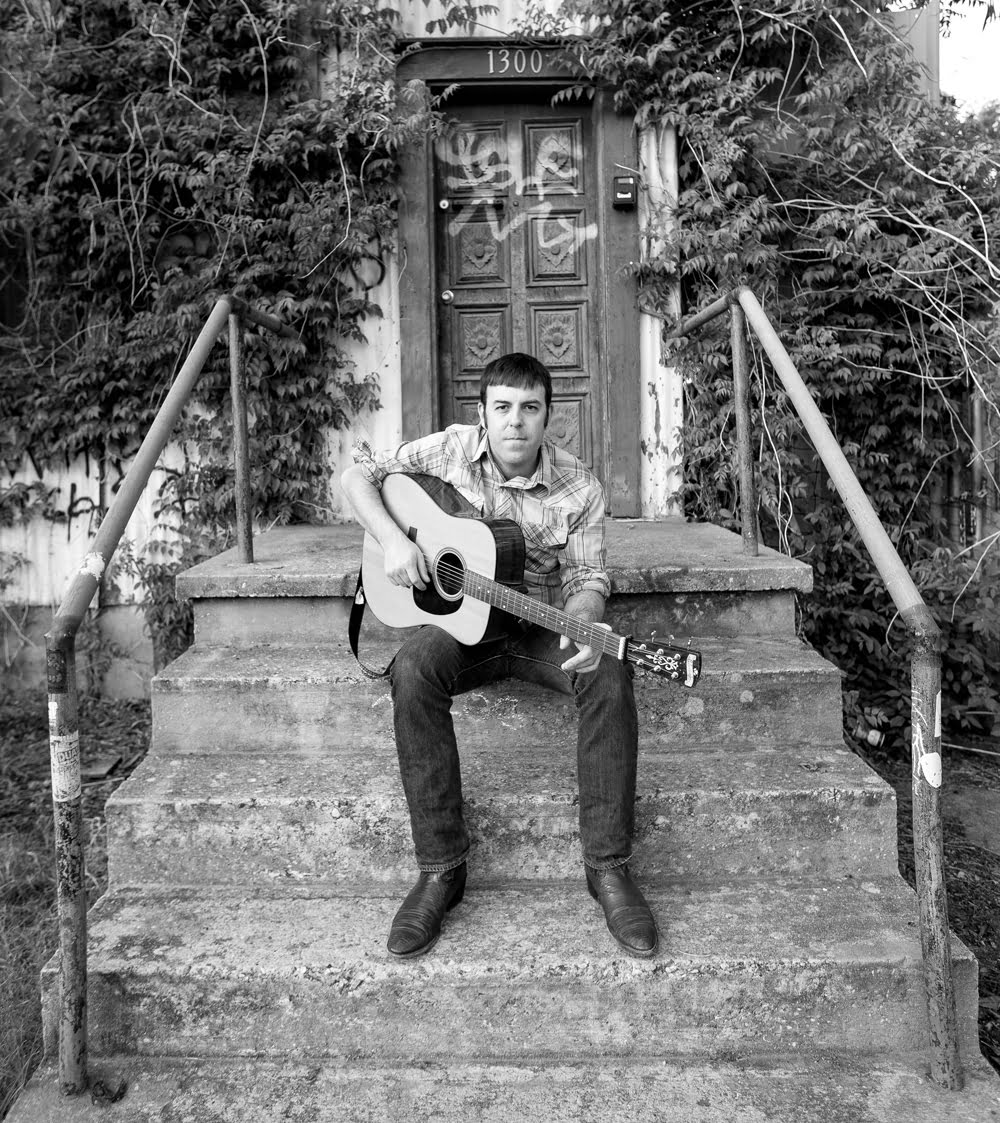
WATCH: Silas Lowe, ‘Death Is the Poor People’s Doctor’

Artist: Silas Lowe
Hometown: Austin, TX
Song: "Death Is the Poor People's Doctor"
Album: Wandering Father, Forgotten Son
Release Date: October 14

In Their Words: "'Poor People’s Doctor' is a critique of how society grants the wealthy disproportionate access to the vital resource of healthcare, while simultaneously judging and punishing low income folks for doing what they must to survive. From a musical standpoint, my favorite bluegrass is when you can hear the old-timey influence — the kind that spans modernity and tradition. I think we did a good job of giving the tune a bluegrass push and the old-time bounce." — Silas Lowe


Photo credit: Tyson Heder

Tony Rice on the Legacy and Impact of Clarence White

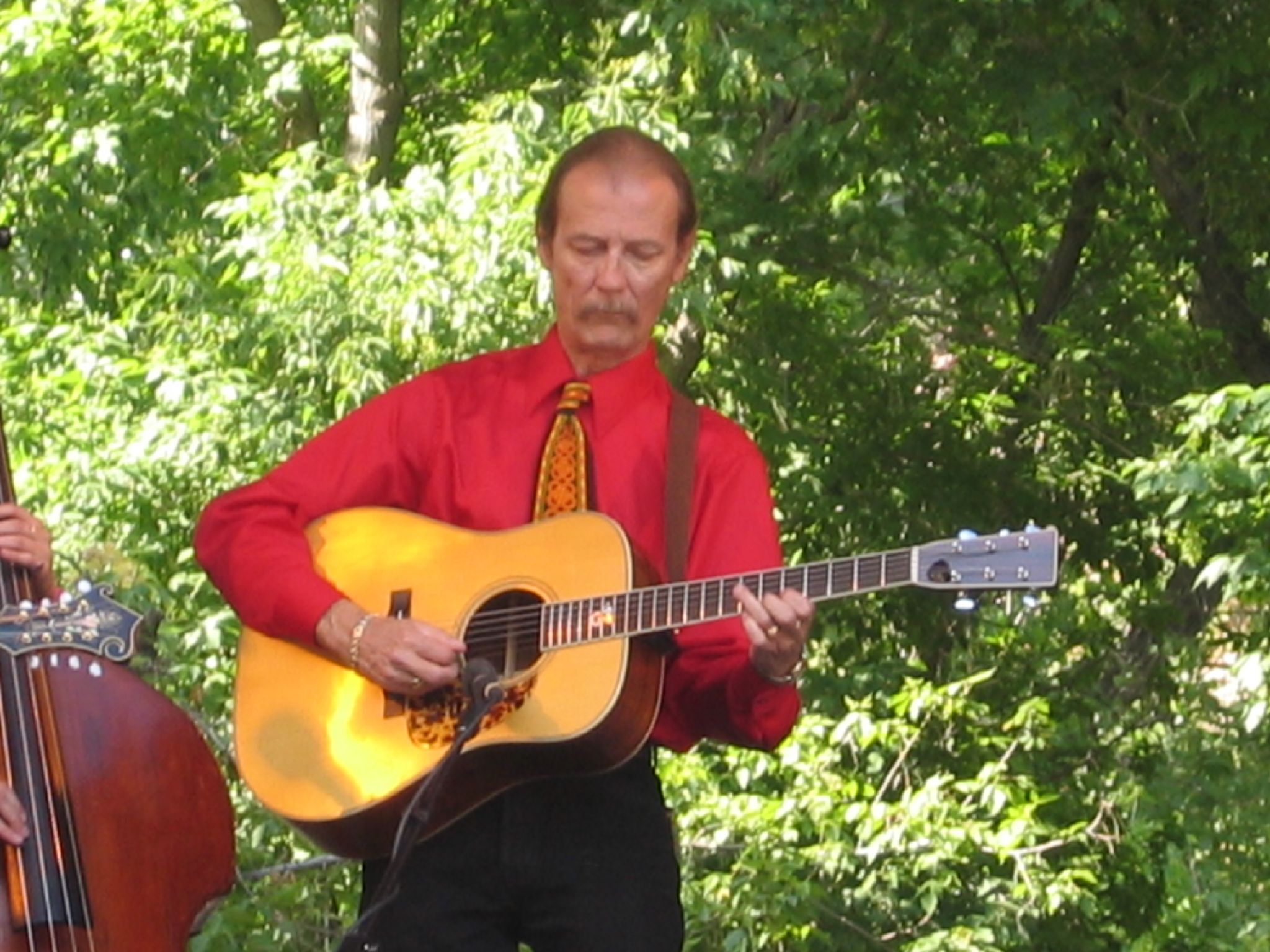
Flatpick guitarist Tony Rice is a legendary figure in the world of bluegrass — one whose story is defined in mythic proportions, with language typically reserved for the hero of a literary epic. His D-28 Martin guitar, which once belonged to Clarence White, has been anointed “The Holy Grail,” and his acceptance speech during his Hall of Fame induction at the 2013 IBMA Awards has come to be known as “The Moment.” For nearly 20 years, Rice had been silenced by a vocal cord condition known as muscle tension dysphonia. Holding his right hand to his chest, he announced, “I am speaking in my real voice,” to a crowd filled with applause and tears.

Now, Rice has lent his voice to another poignant IBMA Awards moment — this time on behalf of his dear friend and personal hero, guitar pioneer Clarence White. White will be inducted into the Bluegrass Hall of Fame at this year’s IBMA Awards in Raleigh.

To kick things off, let's just start at the beginning. Can you tell me about the time that you first met Clarence?

There used to be a radio show in Southern California in Los Angeles where I grew up — it was called Town Hall Party. It would come on every Sunday afternoon; it was a live radio broadcast. Multi-talented, mostly country music, but there was a bluegrass band there, a band called the Country Boys, and my father used to listen to them religiously every Sunday. So one day, it was in 1960, my father got ahold of somebody over there and asked them if they could put me on the air singing a song. And so they agreed to do it and we went out back of the building where the bands could rehearse or do whatever they wanted to do.

But, anyway, my father and I went back there. There was this bluegrass band, the Country Boys — you know Clarence and Roland and Clarence's brother Eric on bass and Billy Ray Latham on banjo and LeRoy Mac was on dobro — and boy, what a sound! But it's like, just to see this 16-year-old guy — and I was nine years old at the time when Clarence was 16 — and he had this old guitar, this old ragged-out guitar … didn't have a name on it. I asked him … it looked to me a little bit like a Martin. And the only Martin I knew anything about, at the time, was a D-18 because my father had given me one. And I remember asking Clarence, "Is that a D-18?" and he said, "No, this is a D-28."

And from that moment on, everything was just fascinating. It was beyond description to see this guy sitting there that young and playing rhythm — that's the only thing he played at the time. He wasn't even playing lead. But to see this guy playing rhythm that precise with that much dedication, it was beyond description. And the rest is history.

We became friends because, at the time, there was only two bands — bluegrass bands — in the whole Los Angeles area, and they were the Country Boys and my father had just started a band called the Golden State Boys. Don Parmley would later on become a full-time member of the band and different people would come and go over the years: Vern Gosdin and Rex Gosdin were part of the band and what not. But there was only two bands there and then, I don't know, it seemed like bluegrass in general started to take off around that time and sort of run a parallel with the revival of the folk boom that was happening — the folk music boom.

And, well, the rest is sort of history. It seemed like everything started to grow and the White family and my own family became friends and, whenever we could see each other or visit or do whatever, we would get together any way we could. Well, then, we always did that.

What was it about Clarence's playing, specifically, that really resonated with you? Why was he such an inspirational figure for you, as a musician and even as a person?

Because he was different from anybody else that I had ever heard in a way that's very hard to describe. I mean, he didn't play rhythm like Jimmy Martin; he didn't play rhythm like Lester Flatt. He just sort of had his own style in a way that he … his own technique. And I don't even think it was something that he practiced. I think it was just Clarence White's musicianship. I tell people I think it was just in his DNA. He just played without guard to thinking about it so much, consciously thinking about it so much as to just be an integrated part of a band and enjoy himself and play rhythm guitar the only way that he knew how to do it.

Right. So obviously he had this profound impact on you. So, as your career developed, what aspect of his playing was always present with you? Was there anything that he did — like you were saying, sort of the way he played without guard — was there ever a part of you that tried to emulate that or sort of any approach that he took that you said, "I wanna incorporate this into my playing"?

Well, from that moment on, to somebody like myself, it's like, and being that young — as young as I was — it just automatically became a situation whereby I saw him and that old ragged-out guitar and I thought, "Okay, well, this is the way it's supposed to be done," because it sounds to me more pleasant than anybody else playing rhythm than I had ever heard.

Is there a particular piece of music that Clarence played that maybe moved you the most?

No, there really wasn't because, like I said, at the time, he wasn't playing lead guitar.

Mmhmm.

I remember this vaguely. It might have been a year or two after — or maybe even three years went by — and Roland got drafted into the Army and that left a void there of another instrumentalist that took solos as an integrated part of the band. And, you know, there were periods of time when they didn't have a mandolin player. Well, Clarence very quickly learned to take up the slack where his brother had left off and it seemed like it happened overnight. It happened so fast that this guy that, you know, I had no idea played any lead at all, it just seemed like, in a matter of weeks, he went from being somebody who didn't play any lead at all to being one of the most incredible, unique guitar players, in terms of his ability to play lead and still have it sound like it was a natural, integrated part of bluegrass music.

And geez, you know, when I think back at the years that went by before anybody else was even known about — and not that many people even knew about Clarence, in terms of his ability to play lead — and then, next, I think around 1963, Doc Watson would come along and a couple of other people people would come and become more familiar with Norman Blake. A lot of this stuff is hard to answer.

I know, it's hard to summarize what someone means to you when they mean so much. Well, we can't talk about Clarence without talking about the guitar a little more. I'm sure it's a story you're always asked to tell. Can you just sort of recap for me the story of how you came to be reunited with his D-28.

How I came to acquire it?

There you go.

Yeah, I can, although it's on the Internet about 500 times.

Clarence White and Roger McGuinn in the Byrds, September 1972. Photo credit: Dan Volonnino

Well, how about we do it this way: Why was it so important to you to acquire this guitar? How about we do it that way?

Because from the time I heard that guitar, there was something about every other guitar — and this exists to this day — that one particular guitar has a sound that's so unique that there's nothing else out there that can compare to it. It was dormant for about nine years, and the subject came up when I was with J.D. Crowe in the early '70s. Well, one of the members of J.D. Crowe's band was Bobby Slone. And Bobby was a fiddle player for a while with the Country Boys, who were then called the Kentucky Colonels. But the subject came up one night and Bobby says, "You know, I think I know where that guitar is." And, as it turned out, Clarence had either sold or pawned the guitar — one or the other, I'm not sure; nobody's sure.

Probably the best story I ever heard about it was from Roland White, that Clarence, around 1965 or '66, had started to take an interest in electric guitar playing. And it was actually discovered how good he was by a very renowned country electric guitar player named James Burton. And James Burton sort of took him under his wing and helped Clarence develop a unique style of electric guitar playing and Clarence went on to play with Ricky Nelson and various, different country bands out in the L.A. and Bakersfield areas. So Clarence didn't have any need for the guitar. And him and his wife, Susie, had not been together for a long time, but they decided that to get married. And there was a very renowned guitar player that played with Buck Owens that had a Fender Telecaster guitar that Clarence wanted. So Clarence sold the guitar so that he would have enough money to buy this guitar from Don Rich, who played with Buck Owens — so he'd have enough money to buy the guitar and an amp from Don Rich and also take him and his wife on a honeymoon.

And then what happened later on … like a sort of conflict happened or I have no idea, even Owens was vague about it to some degree. But nonetheless, it's like not knowing what happened, there's a reason why Clarence never was allowed to get that guitar back from Joe Miller. That's still open for speculation to some degree. But even after Clarence had joined the Byrds and acquired an enormous amount of money, he offered the guy that he sold it to — a guy named Joe Miller — who, Joe Miller was a guy, I think that used to play football for UCLA or something, but his family's very rich. Joe Miller's family owned a chain of liquor stores in Pasadena, California, and were very successful and very wealthy. But this guy Joe Miller was such a fan of the Kentucky Colonels that he followed them around everywhere. So Clarence ended up selling the guitar to Joe Miller and Joe Miller was the one who had it in his possession. In fact, the guitar was not played for about nine years when the subject came up, you know, as to who had the guitar, where it was, because the whole world thought the guitar was just inaccessible to anybody.

But where this story gets real interesting is, I played a very, very, very long shot. The next day after Bobby Slone told me who had the guitar was a guy named Joe Miller and he told me about his family and Joe Miller's family owned a liquor store, you know, called Miller's Liquor. Well, the next day at home, just to play a long shot, I got on the phone. I was living in Kentucky, at the time. So I got on the phone and I called information and asked them do they have a number for Miller's Liquor, and the operator said, "Yeah, we have nine of 'em. Which one you want?" So I said, "Well, give me the first one you got." Well, she give me a number and the first one I got, I called and I said, "Is Joe Miller there?" And the person that answered the phone said, "No, Joe is not here, but he'll be back probably in about an hour."

So I waited and called back: Lo and behold, Joe Miller was there. And I said, "Joe Miller," I said, "I'm in Kentucky. My name is Tony Rice and I play with a guy named J.D. Crowe." And Joe Miller knew all about the J.D. Crowe Band and knew who I was and everything. And I said, "Mr. Miller, I understand that you have the guitar — the old D-28 — that Clarence White used to have." He said, "Yeah, I do." And I said, "Well, would you consider selling it?" And, as best I remember, he said, "I wouldn't sell it to anybody else, but I would sell it to you," or that he would consider it. He said, "Before I do," he said, "I think it's only fair that I have it appraised to see what the value of it might be." And I thought, "Uh-oh. He's gonna come back with some figure that's gonna be off the scale that there's gonna be no way in the world that I could afford it."

But he came back, he called me back and he said he took it to the last place that Clarence had had the guitar worked on. And I can't remember that guy's name, where Clarence had took it. But the guy told Joe Miller, he said, "Well, this guitar is in pretty ragged-out condition," he said, "even though it is a Martin D-28," he said, "I'd say if it was in real good shape, it might be worth around $600, but in the shape that it's in," he said, "I would put it in the $450 to $500 range." And so I told Joe Miller, I said, "Well, Joe, would you be willing to split the difference?" He said, "Yeah," he said, "I think I could do that." I said, "Well how about $550?" And so we agreed on $550. Well, the next day I was on a plane from Kentucky out to meet Joe Miller with a guitar at a Sheraton Hotel at the airport in Los Angeles. And he brought it there and I brought the cash there and give him the cash, you know, got the receipt, walked out of there with that instrument for $550.

Wow, that's an incredible story. Thank you for re-telling that for me. Well, Tony, this has been great. I mean, we covered a lot of ground. I wanna thank you so much for taking the time to speak with me. It's really an honor and a pleasure.

Well, I hope I haven't overtalked myself here.

No, this was great. I don't wanna keep you too long. I could talk to you forever. But to wrap, if we wanted to get one cool, one great sound bite to summarize what Clarence meant to you, what would you say?

You know, I don't know. It's very multi-faceted. It's like if I were to ask you, "Desiré, do you know what a rose smells like?" And you'd say, "Well, of course." And then I would say, "Okay, tell me about it. Tell me what a rose smells like." Well, you wouldn't be able to do it, right?

Exactly.

There's no words, you know, in the English language, or in any other language for that matter where you could describe to me what a rose smells like. And I run into that situation a lot. You know, people ask me, "Well, what did Clarence mean to you?" and, you know, "How did you learn to play rhythm like him?" etcetera, etcetera, etcetera. There's some of those things that are just like the scenario with the rose. And one of my fellow heroes in music is a jazz horn player named Wynton Marsalis. And I seen him doing a lecture one night on a TV program and I never will forget this: Wynton Marsalis was the guy that said, "Well," he said, "Let me simplify this." He said, "There are so many things in all music forms that there is only one word you can use to describe some of the different facets involved in any music forms," and he said, "That word is mysterious." And such as the case, you know, as it is here. It's the same thing with my relationship with Clarence. We became friends and I never took a guitar lesson from Clarence White or anything like that. You know, we would sit down with a guitar whenever we could.

I do remember this very well: Whenever Clarence and the White Brothers and myself and my brothers ended up playing a lot of those places in L.A. — Ash Grove, the Troubadour, you know, so many places that were out there at the time. Whenever I was together with Clarence White and whenever we were at the same show together, I would always ask Clarence, "Clarence, when I do my show, can I play that old D-28?" and he never refused. I think it finally got to the point where, if he saw me coming, he just took it off and handed it to me.

But other than that, I really don't know. So many things that you know them in your conscious mind, but you can't put 'em in words. And you know, I wish there were more definitive ways of being able to answer a lot of the questions that a lot of people wanna know about my own relationship with Clarence White and what he meant and what he means today and you know, etcetera, etcetera. And I did go through a period where I wanted to play like him and would practice that and practice that and practice that and I think I was even into my mid-teens before I figured out I ain't gonna be able to do this.

And, as a result of my inability to play like Clarence White, out of that came my own identity as a separate musician from Clarence White altogether, with the exception of, you know, a few things like rhythm style and some of the techniques he used. The fact that Clarence had no fear of the guitar when it came to playing rhythm and throwing in different board substitutions and syncopations that had never been done in bluegrass before. I mean, he had no fear about throwing those things into a band. And, of course, later on, that's one of the things that I developed, too, is that lack of fear of the instrument. And, you know, the confidence to, whenever you have that confidence to play rhythm guitar as an integrated part of a band and do so in such a different way as to not step on anybody else's toes that are a part of the band, if I'm making any sense here.

Absolutely, you are.

And other than that, I don't know what to say.


Lede image: Tony Rice, 2005 RockyGrass. Photo by Jordan Klein.
Root 66: Joe K. Walsh’s Roadside Favorites

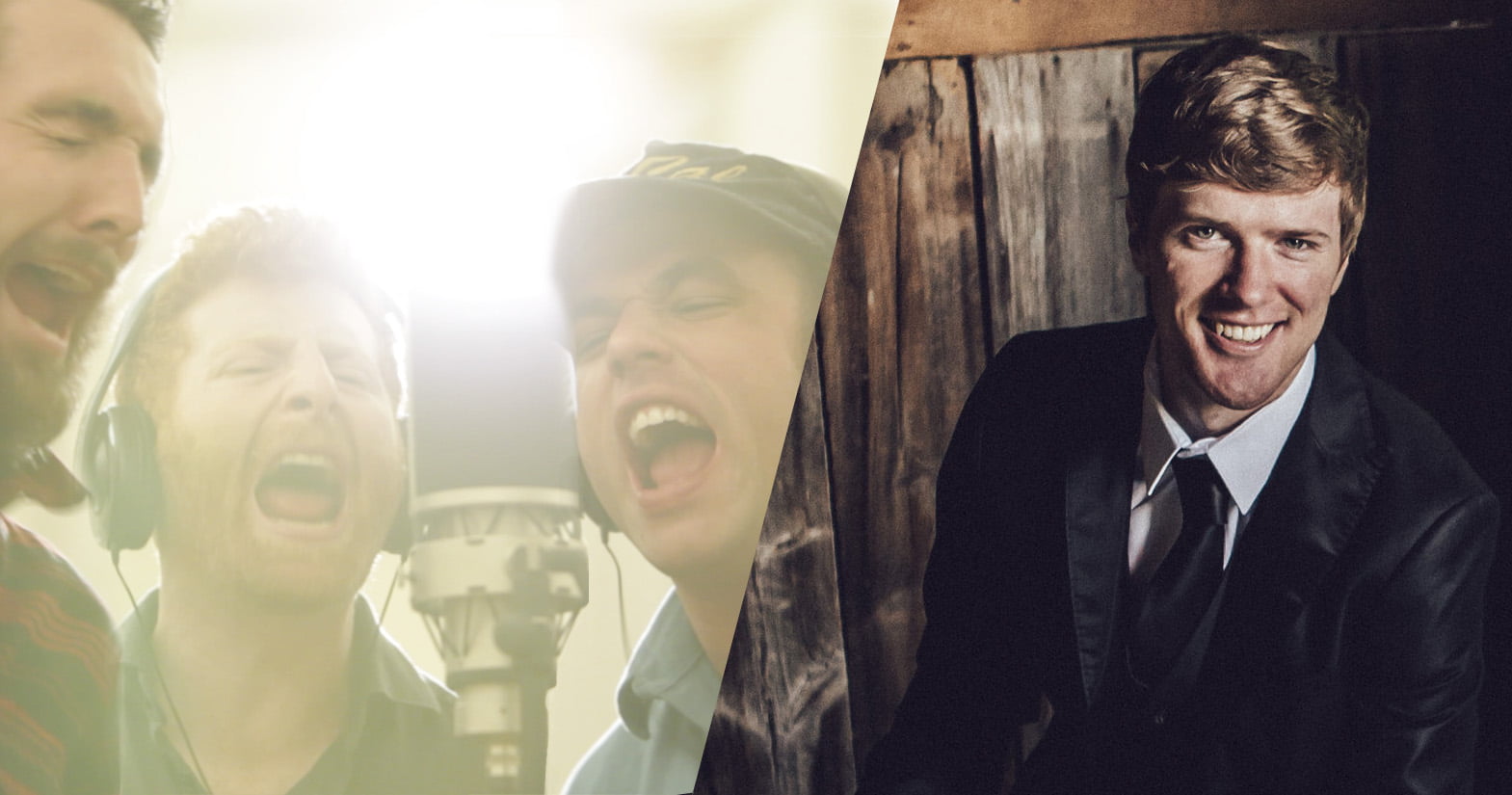
Name: Joe K. Walsh
Hometown: The hometown hometown — Duluth, MN. The adopted hometown — Portland, ME.
Latest Project: Borderland

Tacos: I'm more of a burrito guy — El Farolito, the Mission, San Francisco, CA. First stop after landing at SFO, last stop before flying out.

Roadside Diner: The Palace Diner in Biddeford, ME, is the top of the diner pile for me. Great little spot in a humble town up here in Maine, run by a couple of young chefs who're making some great food.

Truck Stop: Sheetz. It's not great. But it's good.

Coffeehouse: Ninth Street Espresso in New York City. Worth working your way through the crowds at Chelsea Market for a cup of their coffee.

Dive Bar: The Cantab Lounge, Central Square, Cambridge, MA. Bluegrass every Tuesday night, and it's often very, very good. It's a great place to get a read on the always inspiring and evolving Boston acoustic music scene.

Record Store: Val's Halla in Oak Park, IL, was a big deal for me. Val had so many mandolin records there that I couldn't find anywhere else. She had a long-lasting effect on me. These days I can't drive through the East Bay without stopping at Down Home Music.

Backstage Hang: RockyGrass is pretty hard to beat.

Airport: O'Hare, if only for the exceptionally great Tortas Fronteras.

Highway Stretch: The Beartooth Highway coming into Red Lodge from Yellowstone. What a spectacular place.


Blackberry stained hands: the northwest was good to us! @molly_tuttle @shelbass

A photo posted by Joe K. Walsh (@j_k_walsh) on

Radio Station: WERU or WMPG up here in Maine. Two funky, community-run stations with wildly varied programming and community calendars. I dig the way stations like this can plug you into a scene.

Car Game: I recently learned this one on tour with my old Joy Kills Sorrow bandmate Wes — "Who has the shittiest ______?" A real good team-building game.

Day Off Activity: The touring bluegrass life is not a terribly healthy life, what with the long drives and the road food. Any time I get a chance, I like to get outside and get a hike/walk/run in.

STREAM: Jeremy Garrett, ‘The RV Sessions 2’

Artist: Jeremy Garrett
Hometown: Nashville, TN
Album: The RV Sessions 2
Release Date: September 27
In Their Words: "This record is the culmination of the landscape-inspired melodies that were gathered over the last couple of years traveling around the U.S. in an RV. In the bluegrass world, many of the greats have paved the way with all-instrumental records, and I felt the artistic desire to make one, as well. I have always wanted to make a 'fiddle' record and play the other instruments that I have loved and practiced so much over the years such as mandolin and guitar. I really enjoy making my own compositions and I carry around recording gear in the RV so that I can create music when I feel the inspiration strike." — Jeremy Garrett