An Oral History of the Infamous Stringdusters

BGS was founded 14 years ago and from the very beginning, we’ve been covering, collaborating with, and cheering on the Infamous Stringdusters. Our first posts about the group published to our site in 2013 – not even a year after our launch – spotlighting banjoist Chris Pandolfi’s Bluegrass Manifesto, the band’s only-four-years-old marquee event The Festy Experience, and their most recent album at that time, Silver Sky. Now, in 2026, they’re not only our Artist of the Month for the second time, they’ll be headlining our stage at Bourbon & Beyond this September, too. But, our love for the band – and the many partnerships we’ve built together – began, like most, back in 2007 with their now iconic debut album Fork in the Road and a banner year for the group at IBMA’s World of Bluegrass and the IBMA Awards.

Back then, when the Stringdusters took home trophies for Song of the Year (“Fork in the Road”), New Artist of the Year, and Album of the Year, perhaps no one – not even the band themselves – would have predicted the seismic, existential impact they would end up having on bluegrass and the as-yet-unnamed subgenre thereof: jamgrass. Twenty years on, the Stringdusters celebrate their duo of decades with 20/20, an album of 20 songs celebrating 20 years of defining and redefining bluegrass and jamgrass.

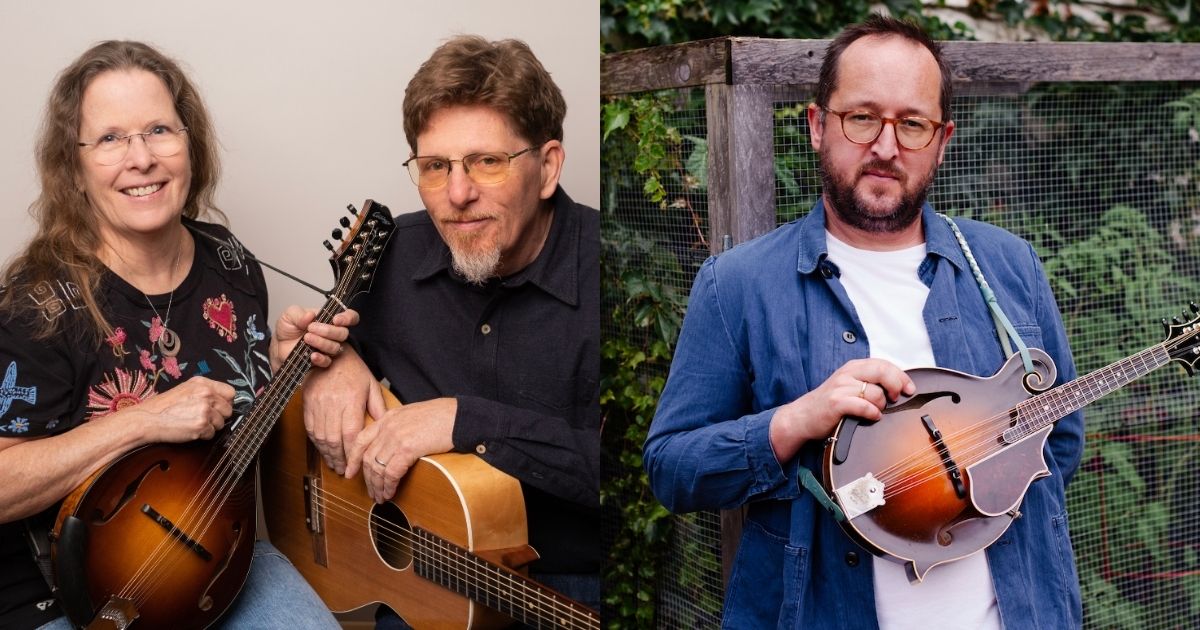
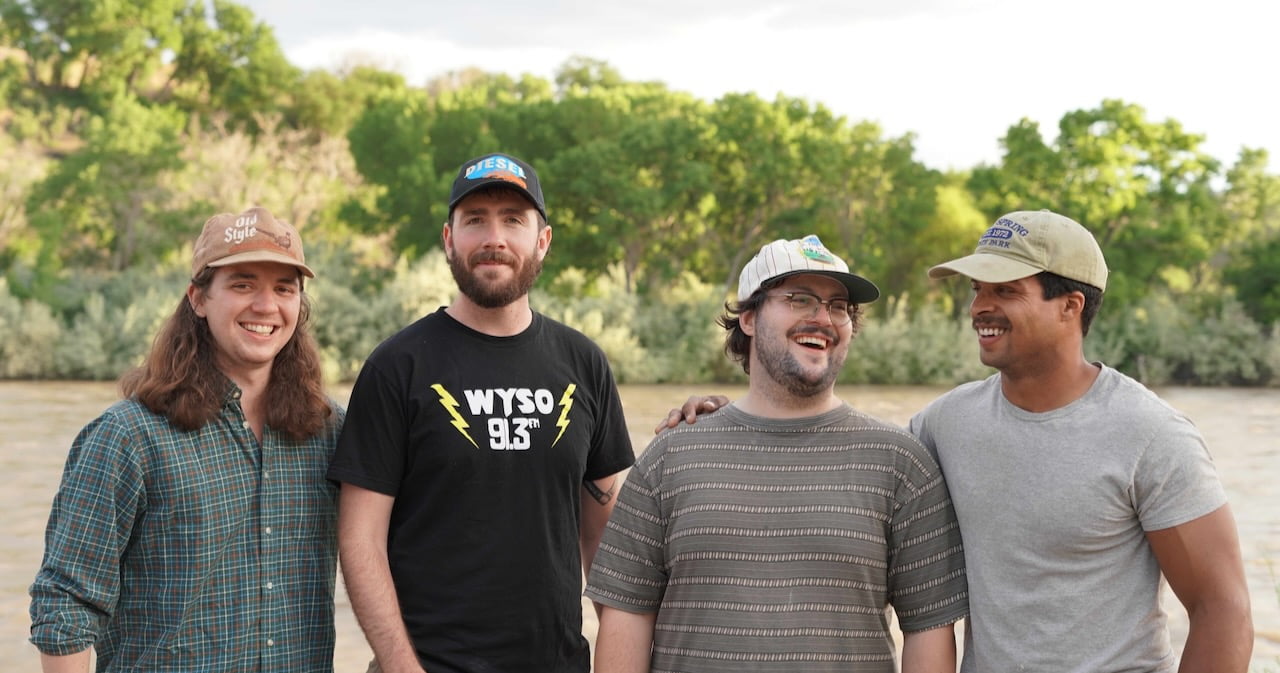
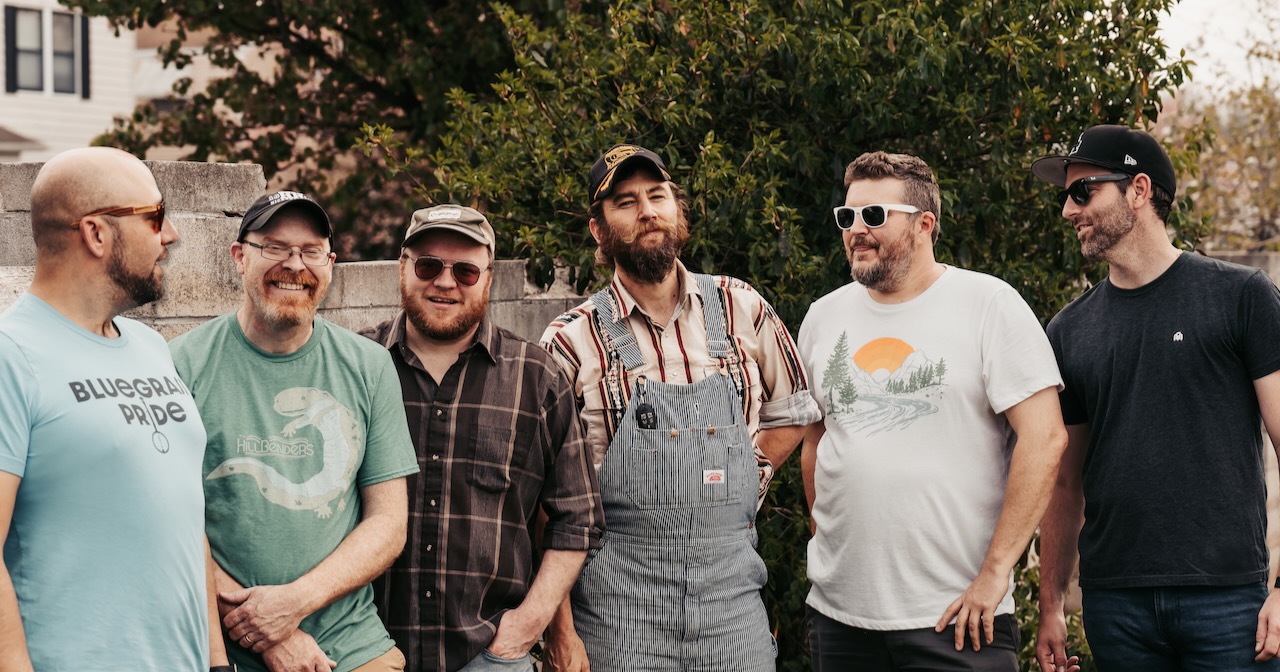
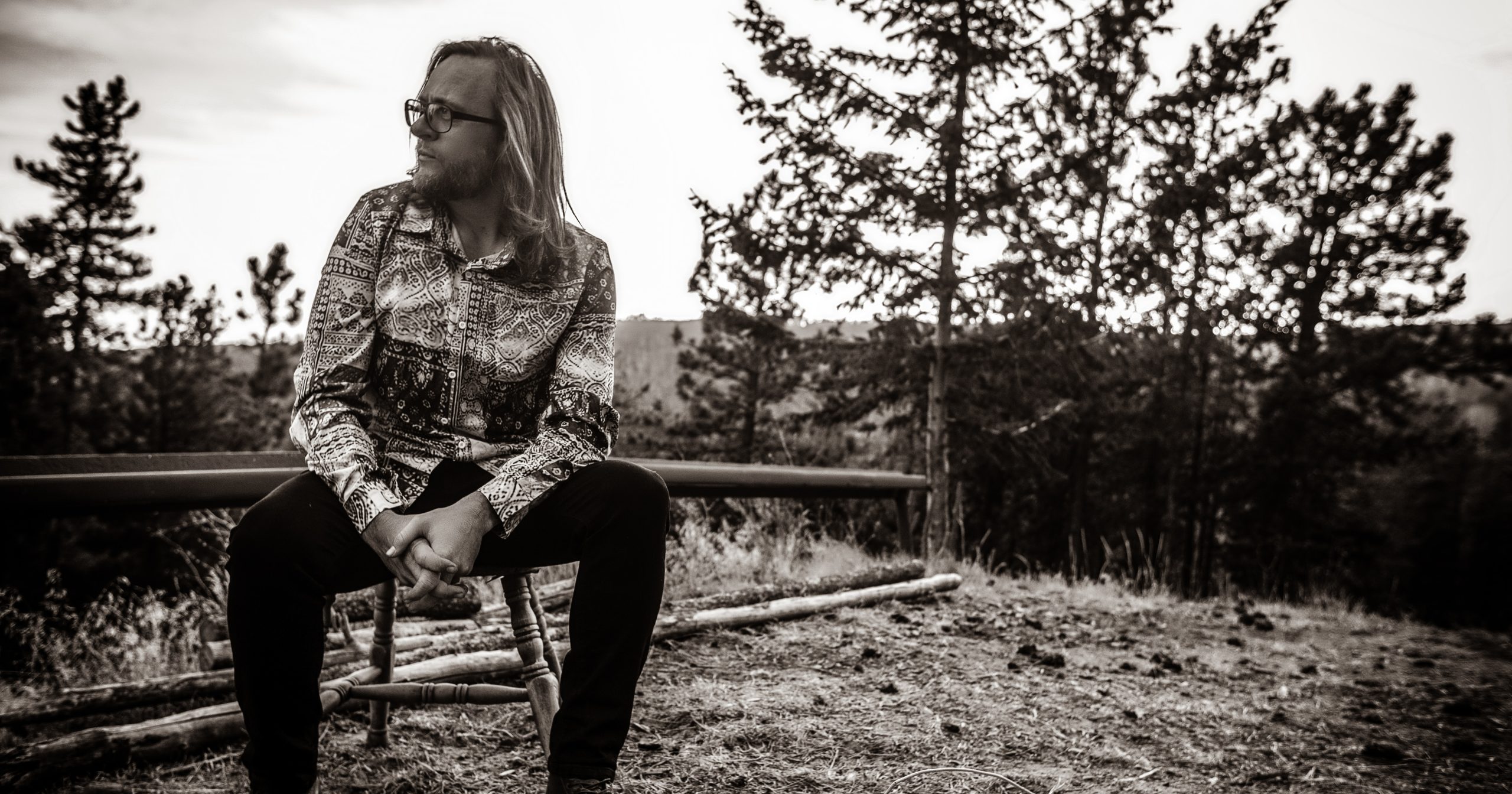
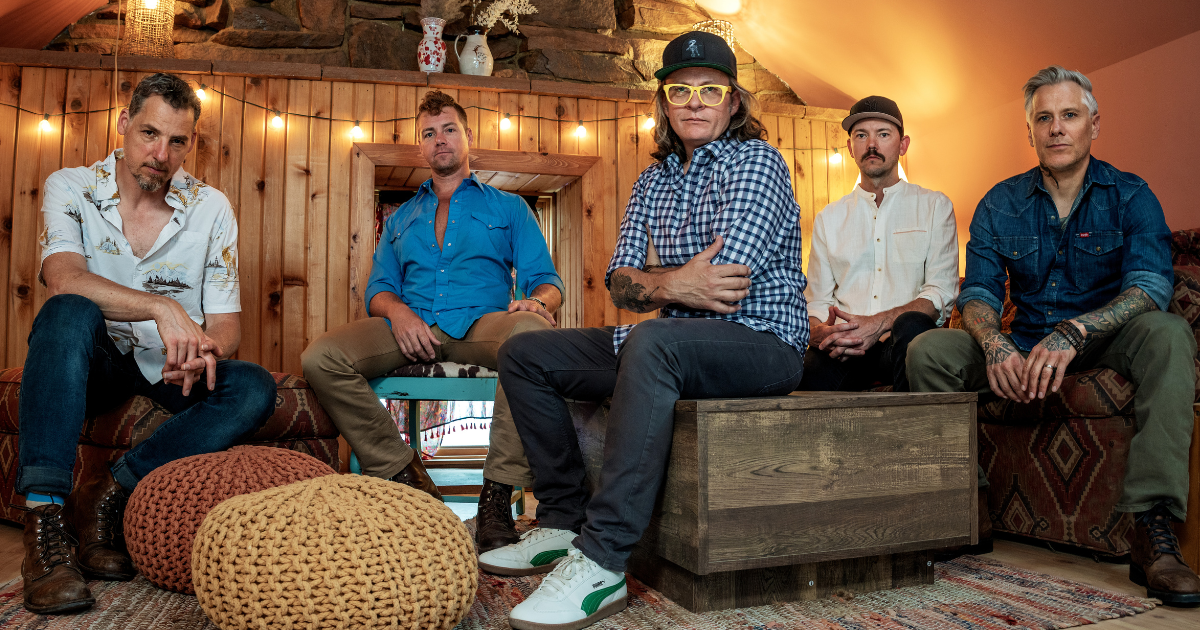
For our Artist of the Month coverage, BGS and Good Country co-founder Amy Reitnouer Jacobs sat down with all five members the Infamous Stringdusters for a wide-ranging conversation of a band that epitomizes bluegrass, jamgrass, and psychedelic string band music in the 2000s.

First of all, again, I wanna just thank you for doing this. We are so thrilled to have you guys as our Artist of the Month and congratulations on 20 years of the ‘Dusters.

I wanna start this with Panda actually, and this is not gonna be just an oral history interview, but I think, looking back on 20 years, it feels appropriate to start from the beginning. So let’s talk about origins and start back at Berklee [College of Music], if that’s cool. Tell us a little bit about the beginning of the band.

Chris Pandolfi: I arrived at Berklee in 2001, which was the year that Andy [Hall] had just left Boston for Nashville. I first met Critter [Chris Eldridge] through Zach Hickman, who was playing in Josh Ritter’s band. He went to Oberlin [University] with Critter. We got together and we were playing, and Zach had some free studio time at a spot in New Hampshire and we were gonna go record some music, just for fun. Our careers were not underway in any way, shape, or form. We didn’t have any grand designs here. We were just gonna go record some music and have some fun.

Then, on the precipice of this recording, we went down to the Cantab Lounge to meet this guy named Andy Hall. We went there and–

Andy Hall: [It was] The Plough and Stars.

CP: The Plough and Stars! Andy was playing–

AH: I don’t remember exactly if I was playing or if you were playing.

CP: And the next day we were in New Hampshire at this recording studio and we made this EP called Stable Horse. Essentially, Andy was already living in Nashville, so around that same time, he had met Jeremy [Garrett] and they were playing together. It was that recording session that got the wheels turning for me. Like, “Oh, we could do this thing with other people our age,” and not fall into the very sort of common thing in bluegrass where you get hired by someone else and you’re essentially a sideman.

We were recording and teeing things up, and we all had other gigs at that time. It was me, Andy, Jesse [Cobb], Critter, and Alan Bartram from the Del McCoury Band. But that was my earliest memory of “We could start a band with our contemporaries.” And Zach Hickman, I give him credit, he facilitated that.

I don’t even think we had the name “Stringdusters” yet. Alan got the offer to go play with Del McCoury and we had met Travis [Book] at IBMA, so we called him up and he came and lived in my driveway for a few months. True story.

Travis Book: You can really get away with a lot if you park your car in someone’s driveway and then try to stay outta the way.

So Andy and Jeremy, what are the origins of you guys starting to play together?

AH: Was it Ronnie Bowman? Was that the first time? I was in Ronnie Bowman’s band and the fiddle player and Ronnie had a bit of a falling out while we were on the road and–

CP: We were all at a festival, so we scooped up Jeremy and he got on the bus with Ronnie Bowman!

Jeremy Garrett: Yeah, I definitely knew about you two beforehand. And, of course, in bluegrass everyone’s a fan of Ronnie Bowman. He’s such a crooner and such a cool cat. I definitely had plenty of experience before, but this was like one of my first major Nashville gigs. And it was eye-opening very quickly that, as a sideman, it’s pretty limiting.

The conversations I remember started happening pretty fast in the back rooms: “Hey, let’s maybe consider doing something of our own. Long-term, how can we make this happen?” But it was just like whispers. I remember going to IBMA – that’s where I met Chris Pandolfi and he blew me away with his melodic banjo playing style and this futuristic sound that he had. I’d really never played with that before, because I came from a very traditional side of bluegrass.

CP: Didn’t I give you a copy of my record? I remember you telling me that.

JG: Yeah. And I listened to that record all the way home from IBMA – I’ll never forget – and my dad was riding with me. I was just like, “This guy’s awesome.” Overall, it felt like all of us coming together through our connection in Nashville and these music parties that used to happen on the reg. I don’t know if they still do. We would have huge jam sessions, especially at Panda’s Pad. There’d be 20-30 people all gathered up in somebody’s backyard, picking. And it was almost every night. So you can’t help but get tight and start seeing the writing on the wall, the possibilities, through those kind of connections.

CP: These days in Nashville are so different. It’s so much “cooler” now. There’s so many young people playing bluegrass and when you hear about a lot of the socializing in Nashville, it’s a lot of young musicians. When we were having these parties, it was a real diverse mix of ages. You had Sam Bush there, you had Scott Vestal, you had Ronnie Bowman, and the McCourys. We were the young cats around and there wasn’t a very vibrant young scene. We were intermingling with a lot of the elder statesmen of bluegrass.

That’s a really special time in Nashville. I can remember that’s when I started hanging out in town and there was like a magic in the air. That intergenerational mix doesn’t organically seem to be happening as much, but maybe it is and I’m just not invited to parties anymore.

So Travis, were you coming to Nashville from Colorado? Where were you before then?

TB: Yeah, I was living in Durango and Anders Beck from Greensky [Bluegrass] and I started playing music together in maybe 2002. There were gigs and we were learning this music and then Andy Thorn and some other friends – that’s Leftover Salmon – they just showed up in a music store one day. Andy was probably 19 on college break and we hung out with him for three days straight. When he went back to North Carolina, we called him up. We’re like, “Dude, you gotta come back! We gotta make a band! We’ll play RockyGrass, you’ll win the banjo contest, we’ll win the band contest.” Anders and I were like, “We can see the future, but we need Andy Thorn,” because he was such a compelling musician and just such a natural. Still is.

We started this band called the Broke Mountain Bluegrass Band with Jon Stickley, who’s also a visionary in our music. We were all picking and almost entering that same path as Leftover Salmon or Yonder [Mountain String Band]. We were already doing this like hippie bro band, just loving playing music and camping and playing festivals and going to hot springs and just fucking around. It was brilliant.

But then we went to IBMA, which at the time was the best way to show off your band and position yourself in the context of the larger [bluegrass] world. Try to get some gigs and go party your absolute brains out for a week. We were pretty rough around the edges, but one night I stepped off an elevator and Chris Eldridge came around the corner. [He] was like, “We need a bass player for this jam. Will you come jam with us?” I went into this little alcove and it was essentially the Stringdusters. It was Critter and Pandolfi and Andy Hall and Jeremy and Jesse Brock. I was just hanging out, holding on for dear life. I’m partying, I have a backpack full of beer, I have no shoes on, and I looked around and all my band mates were just there sitting along the hallway floor listening to the jam.

Andy’s partner at the time, Janice, said, ” Do you ever think about moving to Nashville?” I just laughed. Absolutely not. But I had fixed myself in their mind and once they exhausted all the possibilities of people who could play bass in Nashville – at least this is my understanding – they dug into their collective consciousness and called me up to audition. They’re like, “We think you’re the guy. When can you move to Nashville?” So I went out there to work on Fork in the Road that summer. What was this, 2004? Am I right, guys?

AH: I think that would’ve been 2005.

TB: Yeah, you’re right. 2005. [I] moved out there in September and lived in this guy’s driveway. It was kinda wild.

Falco, I promise we’re getting to you. We’re almost there!

In pretty quick succession though, you’ve got the core crew with Critter and Jesse [Cobb] at that time, you record the album, and get signed to Sugar Hill. And then things just start happening! Can you walk me through the time between recording and the IBMA Awards in ’07?

CP: There’s a lot of extremely disorganized touring. We’re driving around in two cars. I still have the notebook from the gigs – we were getting paid a few hundred bucks a night, maybe a thousand on a good night. Doing everything that we could.

We didn’t have grand designs on anything. The IBMA Awards was a really big moment for our band. Thinking back, it was a moment of legitimacy, of just getting [to] one of the hardest things as a band, which is the collective feeling that this thing is gonna stick together. That’s the peril of starting a band with players who you think are really good: at any time anyone could get hired away for something. But we were playing gigs, we were loving life, we were working on our music, and we were poor as could possibly be. I just remember the IBMA Awards as a big moment of solidity, of that feeling like we could really do this, we could really be in this for a long time.

TB: There was that first summer we had a couple of big anchor gigs, but a lot of it was really just driving around and killing time in between these anchors and hoping that we could reach the right audiences. I think that the big bluegrass scene was ripe for some young pickers who were taking it seriously and committed to each other.

JG: Yeah, getting gas in the tank right off the bat was huge for us, that’s for sure. And we spent a lot of time in between those gigs just going to be in the wilderness and spending time together. I don’t know, for lack of a better way of explaining it, [we were] bonding like a band.

But man, when you’re a real band and you’re not just like a frontman or whatever, you’ve got a real synergy with other guys in a group. It’s special. And I feel like a lot of what brought us together and [what] makes us as tight as we are now was those off times where we were discovering our lives and just doing cool stuff like that. Creating this thing together.

I do need to know who came up with the name. Where did the name come from?

CP: Ben Eldridge.

AH: Yeah!

CP: We were working with a list of pretty mediocre names and Ben came up with “Stringdusters.” After 20 years, I can say there’s a lot of bad band names out there, but the Stringdusters – I think it’s a cool band name and it suits us.

All right. Now we bring Falco into the mix. So how did you get mixed up in all this? Tell us your origin story.

Andy Falco: So, Critter fell off the back of a truck and I got picked up – no! What happened was, I’d known Pandolfi and Andy Hall from the Northeast bluegrass scene. I was playing with this guy, Buddy Miriam, who’s on Long Island, and who actually was friends with Bill Monroe because he got struck by lightning at the Berkshire Mountain Bluegrass Festival, which of course was Grey Fox. And Monroe found out about it and reached out and they became friends. So he learned a lot of mandolin directly from Monroe.

My brother was getting into bluegrass and was like, “You should come to this bluegrass festival.” I went up there and saw Doc Watson and really got into playing bluegrass. ​I moved to Nashville maybe a year after Panda and Critter did. Andy Hall was already playing in Dolly Parton’s band. And I had met Jeremy, actually by accident, at SPBGMA. My first time in Nashville, some guy came up to me and said, “Hey man, how are you doing? How’s everything been?” I was like, “Great. This is my first time in Nashville. Everything’s been great.” Then he stopped and said, “Man, I thought you were someone else.” And he says, “Come meet my son.” That was Jeremy’s dad, and that’s the first time I met Jeremy.

When I moved to Nashville, these guys were starting the band. I was watching them doing their sets at IBMA. It was killer. Then when Critter left, they asked if I’d be in. I wasn’t gonna start until September and one month later was the IBMA Awards. So I just joined the band and here they are, winning all these awards.

JG: I would like to say, I’ll never forget your first gig. You killed it harder than literally anybody I’ve ever worked with to this day. Absolutely stepped into the role and blew it away. And it was very obvious at that moment that he was the right man for the job, for the Stringdusters.

AF: I had big shoes to fill with Critter – and Critter and I were friends. In fact, I knew Critter before I met anybody in the Stringdusters. We met at seven o’clock in the morning on the last day of IBMA, when we’d pick all night and our door was open. And here comes Critter with his guitar.

CP: Critter introduced us.

AF: Yeah.

CP: He said to me, “Do you want to go hear the fastest guitar player alive?” And I said yes.

AF: I worked with Critter, too. Critter was very supportive of coming over when I was preparing to join the band, showing me the parts that he played on the record. So I had a really good foundation, thanks to Critter, of what he had done. Then I was able to put my stamp on it.

So what is that pivot then? You all mentioned the kind of shift that occurred, moving you away from traditional bluegrass and more towards jamgrass. How did you find your own sound? What was the decision to pivot?

AH: I remember a specific show where we decided we were gonna try and extend some [of the] set. I think it was the Animus Theater in Durango and it was a Colorado bluegrass crowd, which was more of a dancing crowd. They were used to more diverse sounds. I don’t remember, we were just like, “Let’s try and put a jam in this one song,” or whatever. So we’re playing, we’re jamming, and we’re extending whatever song it was. The whole crowd was just dancing. The energy was feeding back and forth and it was like, “Whoa! This is so much more exciting,” in contrast to everyone sitting silently and clapping in between songs. We made a choice one night and we saw the crowd just light up and dance and lose themselves in the music, and that fed our energy.

CP: Also, we were into that stuff.

AH: Yeah.

CP: But we hadn’t really made that connection yet. The real moment that I remember is we opened three shows for Railroad Earth. We played the 9:30 Club. We played Theater of the Living Arts and, I think, and we played Burg Williamsburg, when our van broke down and we showed up last minute. Those are the gigs that I referenced in the Bluegrass Manifesto. When I did the IBMA keynote that grew out of that, it really referenced those. I remember a few shows, too, where we would come off stage and we’re like, “Oh my god, that jam. Let’s do that again.”

We played these shows with Railroad Earth and it connected some dots that didn’t connect automatically, even though we had Grateful Dead, Phish, playing all the time. We were really coming from that IBMA buzz and awards. And, like anything, it took some time to discover, [it took] some experience. That was when some real change started happening around our business. Then the music really followed that trend.

JG: I’ll say, you guys, don’t forget about the Zeltfestivals. They were beyond anything that I personally had ever experienced. We went out and these people were going absolutely bonkers for our music – they had barricades out there and stuff. I’d never seen any of that at a bluegrass show. To me, that was fire in the tank.

AF: I think that also a big part of that is just, I know for myself, not growing up playing bluegrass music and then getting turned onto it by Garcia and Grisman and people like that. But I think it was just like when I started learning bluegrass. There’s a way that you have to do it and then, finally, you get to a certain point where all these dots are being connected, where you start to let these other influences come out, because you start to get more comfortable as a band. You start to allow that like, “Yeah, why can’t we do it? Why can’t we mix these things?” Even just as individual players. Why can’t you play this style? Blending these kind of jammy elements and these rock elements and then seeing how it worked.

You all have such varied individual projects and influences. Do you still think that you’re shifting your sound? What are you listening to and is that influencing what you’re doing?

AH: It’s definitely influencing what we’re doing. I think, to Falco’s point, I feel like I’m allowing [in] more and more of my original influences that I grew up with. I was a metal dude in high school. I think the older I get, the more I enjoy letting in who I am.

AF: Getting away from the “that ain’t a part of nothing” bullshit, right? Like, what? Who’s to say, right?

JG: Yeah, at the end of the day it’s art and you gotta let that lead itself, if you’re a true artist. Otherwise, you’re doing a preservation society kind of thing in the bluegrass world. For the longest time, I felt we were all paying homage to this awesome music, but we’re not letting it breathe like it should sometimes. It’s very fun to be an artist and be able to have the permission to just kinda let it flow, which is what we let ourselves do. We let the art dictate what we did, and we were true to ourselves in that way. That was something that served us very well. Still does.

You all live in different places now. I know the band is not as centered in Nashville as it used to be, but you did talk about the off-times and how that bonded the group early on. How do you stay bonded as a band now? How have things shifted? Being a decentralized band, how has the writing recording process changed for y’all over the last 20 years?

JG: I think that’s an important point. Yes, we’ve changed a lot over the years, but we’ve been able to stay tight because of those early formative years when we were all just broke traveling around in a band. I didn’t have any brothers growing up, but these guys are definitely my brothers and they know more about me than anybody else in this world. To allow each one of us to have the freedom to live where we wanna live and come together the way that we want to come together, I think that has been really one of the main things that have kept us together.

Over the years we’ve all developed little side things outside of the band. I think that’s been healthy. For me, I like to do my own solo music, music that I write and I like to perform – and stuff that wouldn’t necessarily fit within the confines of the Stringdusters. But I still want to get that art out there. We continue to challenge each other. Music can be competitive in a not-healthy way. But I feel like we do it in a healthy way, in the sense that we drive each other to just be the best that we can be at what we do.

CP: I got married last fall and in the run up to my wedding, one of my aunts asked me, “Are all your bandmates gonna be there?” In my mind I had this moment where I was like, “Are my band mates gonna be there?” You might as well ask me if my family is gonna be there! It’s just life at this point. After 20 years, it’s cool to observe the level to which you become each other’s family.

That’s the definition of community and you don’t think about these things when you’re going into this life, but there are some incredible unintended consequences. That informs the music and that informs all the life experiences too.

And here we are, 20 years later. That’s pretty cool.


Explore more of our Artist of the Month coverage of the Infamous Stringdusters here.

Photo Credit: Daniel Milchev
Two Decades of ‘Dusters Discography

With over a dozen studio credits and even more EPs and live albums to their name, the Infamous Stringdusters have been one of the most persistent forces in bluegrass and roots music ever since staking their claim with 2007’s Fork In The Road.

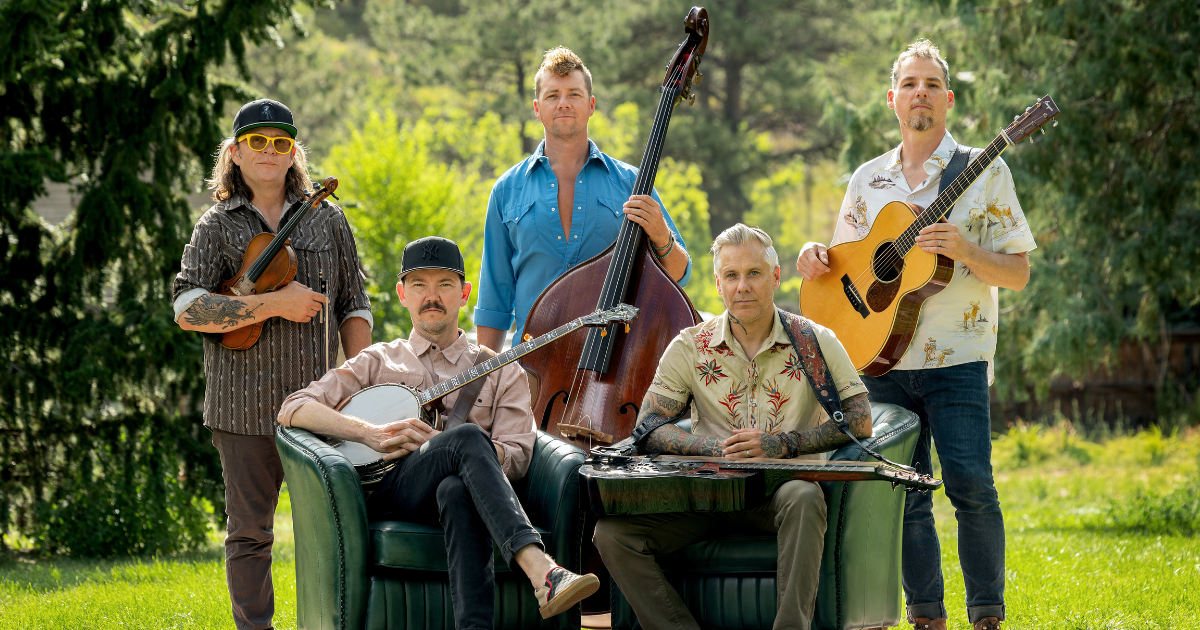
Even as members changed in those early years, the band quickly found its core – Andy Hall (Dobro), Andy Falco (guitar), Jeremy Garrett (fiddle), Chris Pandolfi (banjo) and Travis Book (bass) – and rapidly began homing in on a sound that’s equal parts traditional and progressive bluegrass with a touch of country, jam, and other influences along the way. That variance has led to each of the band’s recordings having a distinctly different flavor than its predecessors, from the harmonious bluegrass symphony of Silver Sky to the feature-rich Ladies & Gentlemen, hope-fueled Laws of Gravity and Rise Sun to the somber Toward the Fray.

“Making a record that sounds like the Stringdusters isn’t the challenge,” Book told me in 2022 for No Depression. “The challenge is seeing just how deep we can get on each song in order to make it the best, most authentic version of itself it can be. This requires us all setting aside our egos, being open to suggestions, and trusting one another to create the best music as possible.”

In celebration of our Artist of the Month, we take a look back on the Stringdusters’ sonic evolution and essential tracks from their two decades in service of bluegrass and the song.

“Fork In The Road” – Fork In The Road (2007)

On their emphatic 2007 debut, Fork In The Road, the band – then comprised of eventual Punch Brother Chris Eldridge (guitar) and Jesse Cobb (mandolin) alongside Book, Garrett, Hall, and Pandolfi – quickly struck a chord with bluegrass aficionados on songs like “No More to Leave You Behind” and the album’s title track. The latter of which positions the band’s fiddle maestro front and center as his high-pitch croon carries the weight of being at a crossroads. Whether it’s a hypothetical take or one rooted in the group’s own musical experiences, it’s safe to say the path the ‘Dusters have taken since has more than paid off with a legacy 20 years strong and counting.

“Magic #9” – Things That Fly (2010)

The band show off their picking prowess on the whimsical “Magic #9,” a track that resulted in their first-ever GRAMMY nomination at the 53rd annual awards in 2011. While the ‘Dusters can thrash and sing bluegrass harmonies with the best of them, songs like this also showcase the group’s knack for crafting their own instrumental compositions. Their tunes pack just as much story and emotion – if not more – into a three-and-a-half minute burst than most of their counterparts with vocalized accompaniment. Coincidentally, the GRAMMY the song was up for was not in a bluegrass category, but rather for Best Country Instrumental Performance. Given the band’s penchant for string music, unreal levels of improvisation, and the consistently inconsistent award nominations process, it’s the least bit surprising, if not even a bit fitting.

“Rockets” – Silver Sky (2012)

The song that first unlocked my captivation for the Infamous Stringdusters (and still my favorite to this day) is “Rockets.” It was around the time the album it’s included on, Silver Sky, dropped that I began seeing the band in concert for the first time and this song was always a staple. The uplifting temperament and optimistic nature of Book’s vocals combined with the meticulous instrumental timing – from Garrett’s fiddle interjections to Pandolfi’s hard-driving banjo backbeat and Hall’s slick Dobro tones – culminate in a joyous, borderline spiritual experience every time I hear it.

Because of this and other tracks on Silver Sky like “Fire,” “Night On The River” and “Walking On The Moon” I consider the record without a doubt their most essential project to date. Although, as you’ll see, the great tunes haven’t slowed down in the years since.

“Still the One” (featuring Nicki Bluhm) – Ladies & Gentlemen (2016)

The ‘Dusters’ 2016 effort Ladies & Gentlemen stood out for many reasons – most notably its more folk-leaning bluegrass numbers and star-studded list of collaborators ranging from Mary Chapin Carpenter and Lee Ann Womack to Sara Watkins and Jennifer Hartswick (Trey Anastasio Band). However, the most frequent collaborator from the record was Nicki Bluhm. Her contribution on “Still The One” blossomed into frequent support songs on the road performing not only that track, but several other cuts from the breakthrough album. It wound up taking the band’s already spectacular knack for partnering with others to another level. As for the song itself, “Still the One” is a powerful rallying cry about a love that persists even when heavy rain, or life’s difficult moments, try to get in between and tear you apart.

“Gravity” – Laws Of Gravity (2017)

After a decade of slinging bluegrass, country, and roots-adjacent bangers, the ‘Dusters finally reached the musical mountaintop with their 2017 album, Laws of Gravity, which earned them their second GRAMMY nomination and first-ever win for Best Bluegrass Album. Central to that accomplishment was the album’s de facto title track “Gravity,” an anthemic adventure.

Similar to the aforementioned “Still the One,” the song focuses on the story of two inseparable lovebirds charting out a future life of memories together, even if they don’t know exactly when, how or why it will all happen. Most important to them though is the memories being made in the current moment, whether that be together, at a Stringdusters show, or something entirely different.

“Rise Sun” – Rise Sun (2019)

With the lead and title track to their 2019 album Rise Sun, the Infamous Stringdusters make a late entry to folk music’s stomp-clap party, combining the early 2010s trend with heated string music like few 2010s contemporaries could muster. The track also features a noticeably hopeful hue set in motion by the metaphor of a rising sun not only spawning a new day, but bringing change and the opportunity for a fresh start, as well. In that sense, the band had no idea how much hope people would need the following year, when COVID shut down the world. The result of which inspired the band’s next original entry to this list. But first, the ‘Dusters pay homage to the father of bluegrass…

“My Sweet Blue Eyed Darling” – A Tribute to Bill Monroe (2021)

The bluegrass ballad in pole position on Bill Monroe’s 1977 album Sings Bluegrass, Body And Soul, was “My Sweet Blue Eyed Darling,” a track that holds the same spot on the Stringdusters’ 2021 recording, A Tribute to Bill Monroe. On it, Pandolfi leads the way with his steady, blistering banjo while Garrett and the others hit home on the signature high and lonesome harmonies that Monroe is legendary for.

Fittingly, this collective album honoring the bluegrass legend wound up earning the ‘Dusters their third GRAMMY nomination in 2022, though they came up short to Béla Fleck’s My Bluegrass Heart. Their foray into recording covers isn’t anything new for the band, who later went on to record a Flatt & Scruggs tribute along with a series of Undercover EPs (more on that later) in addition to weaving other folks’ material into their live sets on a nightly basis.

“Pearl Of Carolina” – Toward the Fray (2022)

While the Stringdusters’ members call many places home, there may not be a more appropriate individual place with which to associate the band than Western North Carolina. Touching on that connection to the Old North State, Book sings about love and longing to return home on “Pearl of Carolina.” The song’s title stems from an intro script he was crafting for his musical talk show podcast, The Travis Book Happy Hour, as a way to describe the region.

In addition to being grounded in a person or place, similar to “Gravity” or “Still the One,” “Pearl of Carolina” is also a reminder to search for the places and small things in life that bring you joy. While much of Toward the Fray takes on a darker tone, “Pearl” stands out as a burst of much-needed normalcy on a project otherwise finding inspiration in a world of disarray.

“Touch Of Grey” – Undercover, Vol. 3 EP (2024)

The band has covered a bevy of artists on their Undercover series of EPs, from Tom Petty to The Highwaymen, The Cure, and ZZ Top, but none fit the band’s style and sound (with the exception of the Monroe and Flatt & Scruggs stuff, perhaps) than their rendition of The Grateful Dead’s “Touch of Grey” on Undercover, Vol. 3. Released in 2024, the ‘Dusters’ take on the Dead’s most commercially successful hit combines the best of both groups, further adding to the song’s timeless nature – a message that, 40 years after its original release, feels just as relatable and relevant as ever.

“Working Man Blues” – 20/20 (2026)

Much of the Infamous Stringdusters’ journey over the past two decades has been inhabiting the role of blue-collar road warriors playing anywhere for anyone who would have them. With that in mind, there’s no more fitting song to kick off their next album, 20/20, than “Working Man Blues.” The band sings about a man clocking in before sunrise and doing hard labor all day before clocking out and heading to the bar in search of fun. It’s a combination of rugged, resistant, and rowdy that embodies the Stringdusters’ entire sound and ethos for 20 years now – and, if we’re lucky, will continue for another 20 more (and then some).


Continue exploring our Artist of the Month coverage of the Infamous Stringdusters here.

Photo Credit: Daniel Milchev
Artist of the Month: The Infamous Stringdusters

During the Infamous Stringdusters’ recent holiday gig at The Orange Peel in Asheville, North Carolina, the storied venue was packed out with jamgrass freaks, the performance itself a kickoff of sorts for the band’s 20th anniversary in 2026. I found myself standing sidestage when show opener Bronwyn Keith-Hynes came up next to me. A smile emerged on her face taking in the band and the audience.

“The Stringdusters made me want to start a band,” the GRAMMY-winning fiddler said, turning to me. “The Fork In The Road album was the most influential modern bluegrass album for me when I was at Berklee.”

Keith Hynes’ sentiment conjured numerous memories and moments I’ve been lucky enough to be a part of when it comes to the ‘Dusters. The first time I ever laid eyes and ears on them, it was the 2008 Targhee Bluegrass Festival in Alta, Wyoming. I was 23 years old and a rookie reporter for the Teton Valley News, based just down the mountain in Driggs, Idaho. By that point in my life, both personally and professionally, I was diving deep into the jamgrass world – the intersection of ancient tones, psychedelia, improvisation, and a collective love of the Grateful Dead.

The initial spark of the modern jamgrass movement was lit by Yonder Mountain String Band, Leftover Salmon, and the String Cheese Incident, all three acts coming into the national spotlight by the end of the 1990s. A musical template had been formed, and the ‘Dusters would emerge in the early 2000s to throw gasoline onto that melodic fire, ultimately becoming a missing link (alongside Greensky Bluegrass) between jamgrass originators, those ‘90s propagators, and folks currently carrying the torch into new, exciting realms: Billy Strings, Sierra Ferrell, Molly Tuttle, Sierra Hull, and more.

“That’s what’s so beautiful about bluegrass music, in particular,” Stringdusters fiddler Jeremy Garrett told me recently. “You pass it on to the next generation and they take it and they do their thing with it. Luckily for us, we were around at a time that [that] was very important, and a transitional time in the industry.”

In 2010, a couple of years after my introduction to the band at Targhee, when I returned to my native North Country of Upstate New York, I found myself covering a show at the intimate Showcase Lounge at Higher Ground in Burlington, Vermont. I was there to see the ‘Dusters once again. Their sound and energy immediately transported me back to the Rocky Mountains that I missed dearly. (Sharing the bill was another rising jamgrass act, Trampled by Turtles.)

I remember walking away from that gig feeling in awe and refreshed with a genuine feeling that something was happening. Something was on the horizon when it came to bluegrass and string band music. This wasn’t a traditional bluegrass band in matching suits, standing like statues. It was a rock show with acoustic instruments. Baseball caps and long hair, grins ear-to-ear. More provocative than standstill, more vibrant than just going through the motions of what past generations were instructed to do.

“Being able to showcase our own songs, in our own way, [our] writing skills, and making the decisions on what was chosen to play and how to play it [were] foremost for most of us at the beginning,” Garrett says. “Over time, we realized that we were actually growing a community. And after all these years, that honestly has become the most important part, the most important thing that we could possibly do.”

What I witnessed in Wyoming and Vermont years ago is what I’ve continued to experience with the Infamous Stringdusters, in person and in method, from Florida to Colorado and beyond. They set the pace then for where we stand with jamgrass right now, built on a full-throttle approach, one which remains sonically elusive as well as paying homage to the architects of bluegrass and those who broke from the pack and made something all their own.

Aside from the talents of the Stringdusters, either as individuals or the sum of their parts, you also have a unique setup. Alongside founding members, banjoist Chris Pandolfi and Dobroist Andy Hall, who emerged from the prestigious Berklee College of Music in Boston, you have the tradgrass pedigree of Garrett, who was born and raised in a traveling family bluegrass band hailing from Idaho. This fusing of road-tested grit and grace with conservatory-style techniques is at the heart of what this group does best: jam.

All of which circles back to the Asheville Orange Peel performance in late 2025. There were tightly knit melodies and freewheelin’ improvisational explorations. They broke down the invisible walls between themselves and the audience, maintaining a two-way street of momentum, energy, and inspiration from both sides of the microphone – a vortex of sound and scope, all revolving around a deep sense of community.

“The band is stronger than ever and making some of the best music we’ve ever made,” Garrett says. “But, the thing I see that is the most important being carried on is that community factor. We certainly didn’t invent that, but we took note and applied the philosophy to our scene, and hopefully the next generation realizes how important that piece is.”

Ultimately, this 20th anniversary celebration for the Infamous Stringdusters is a culmination of a tried-and-true effort to bring this hallowed music into the unknown and unfolding musical landscape of the 21st century. With their upcoming album, 20/20 (out February 13 via Ameriana Vibes) they continue their efforts to break new ground and forge ahead, together, whatever the next 20 years hold for jamgrass and the ‘Dusters.

The Infamous Stringdusters are our Artist of the Month. Below, enjoy our Essential Infamous Stringdusters playlist and stay tuned as we share brand new and archive content on the ‘Dusters throughout the month of February here on BGS – and across our social media channels. Like our exploration of their 20-year discography or our oral history of the band featuring all five members in conversation.


Photo Credit: Daniel Milchev

You Gotta Hear This: The Infamous Stringdusters, Courtney Hartman, and More

Happy Friday! There’s plenty of new music to enjoy this week in our latest edition of You Gotta Hear This, our regular roundup of upcoming and just-released tracks and videos.

Kicking us off, innovative banjoist Wes Corbett (who currently tours with Sam Bush) shares the second single from his upcoming album, Drift. “Eagle Harbor” was inspired by the vibe and structure of Jackson Browne’s music and the picturesque ferry ride to Bainbridge Island in Washington state, where Corbett grew up. Guitarist, poet, and singer-songwriter Courtney Hartman is returning with new music as well; this time it’s a lush and whimsical neo-folk song co-written with Ana Egge about how being a mother and raising a child transformed the way she saw everything around her. It’s set to an intimate and cozy new music video you’ll love to watch.

New Mexico-based artist and songwriter Michael Rudd will release a new track, “Not Today,” next week and below you can find a preview of the number. It contemplates war, history, loss and their legacies; Rudd was spurred to write “Not Today” by the many wars ongoing today, especially in Gaza, and by his recent travel to Germany, Poland, and to visit monuments of the Holocaust.

Lauren Morse is ready to get you dancing with her new track and music video. “Let that Fiddler Fiddle” is a message we can certainly get behind. Inspired by Nashville’s ever-popular Honky Tonk Tuesday, it’s a two-stepping song sonically found where country and bluegrass meet – and perfect for toe-tapping or hip-swaying (or both). Trey Hedrick brings us a very enjoyable bluegrass track as well; “Passing Through” began to come together while Hedrick was out west and longing for the hills of home. With a talented roster of pickers and musicians on the song, Hedrick says it’s “a self reminder to go, to try, and to not leave the important things undone.”

Rounding us out, a group we’ve loved and collaborated with for a very long time, The Infamous Stringdusters, have a brand new single and a video to go with it. “Dead Man Walking” was written by Jeremy Garrett and Larry Keel. Don’t be fooled by the title, this is a song of uplift and positivity, set to the grooving and gritty style of bluegrass we all know and love from the Dusters.

It’s another stellar collection this week, if we do say so ourselves, and You Gotta Hear This!

Wes Corbett, “Eagle Harbor”

Artist: Wes Corbett
Hometown: Nashville, Tennessee
Song: “Eagle Harbor”
Album: Drift
Release Date: September 15, 2025 (single); October 3, 2025 (album)
Label: Adhyâropa Records

In Their Words: “As a kid, Jackson Browne was playing around the house a lot so that music has always filled me with a sense of warm nostalgia. As an adult I’ve realized how gorgeous his music is and how profound of an impact I think it’s had on me as a musician. ‘Eagle Harbor’ is a reflection of this both in vibe and in structure – wide warm sounds, open space, and what I hope is a strong melody. It’s named after the main harbor on Bainbridge Island where I grew up, which looks particularly beautiful during golden hour as you approach on the ferry with the Olympic Mountains as the backdrop. This group of musicians is an absolute dream to make music with! With so much emotional depth and their masterful touches as a bedrock it has become one of my favorites on Drift. I feel so lucky and honored to have the chance to cut this track with them.” – Wes Corbett


Courtney Hartman, “Bright Eye”

Artist: Courtney Hartman
Hometown: Eau Claire, Wisconsin
Song: “Bright Eye”
Album: With You
Release Date: September 17, 2025 (video); August 27, 2025 (single); November 14, 2025 (album)

In Their Words: “I began writing ‘Bright Eye’ the first summer after my daughter was born. Loving her transformed the way I saw everything around me and I found myself surprised by the joy of seeing our life through her eyes. I believe that this is what love does: love of any kind changes how and what we see. It lets the light in.

“Ana Egge is a favorite songwriter of mine, she has a wonderful way of articulating melodies. I sent her an early version of the song and we finished it together. ‘Bright Eye’ also features harmonies from my dear friend and fellow Eau Claire artist and mother, Sarah Elstran (The Nunnery).

“I wanted the video for the song to give a real sense of the spirit behind With You – the community, the care, and the laughter. The album came about during a season of heaviness, but the women who co-wrote the songs with me, along with the friends who recorded them, truly helped to carry me through.” – Courtney Hartman

Track Credits:
Courtney Hartman – Voice, guitars, songwriter
Ana Egge – songwriter
The Nunnery – Harmony vocals
Ben Lester – Synth, pedal steel
S. Carey – Drums, piano, synth
Shane Leonard – Percussion
Zoe Guigueno – Electric bass

Video Credits: Filmed by Kyle Lehman, edited by Erik Elstran.


Trey Hedrick, “Passing Through”

Artist: Trey Hedrick
Hometown: Wilkesville, Ohio
Song: “Passing Through”
Album: Sing, Appalachia
Release Date: September 19, 2025

In Their Words: “‘Passing Through’ started with my time living out West. I went out there looking for adventure, and I found it – mountains, open skies, and a pace to life that felt more open. But even then there was always a pull toward home, toward the hills. The song is about moving through places and seasons, chasing what you need to see while you can. It’s also about how all of us are just passing through in life, and how easy it is to get stuck only talking about the things we want to do. I’ve never wanted to live that way. That’s where the line ‘I ain’t afraid of dying, just the things I never did’ comes from. It’s a self reminder to go, to try, and to not leave the important things undone.” – Trey Hedrick

Track Credits:
Trey Hedrick – Lead vocal, acoustic guitar, songwriter
John Mailander – Fiddle
Ethan Ballinger – Mandolin
Frank Evans – Banjo
Phillipe Bronchtein – Piano
Jamie Dick – Drums
Rhees Williams – Bass
Maya De Vitry – Harmony vocals


The Infamous Stringdusters, “Dead Man Walking”

Artist: The Infamous Stringdusters
Hometown: Nashville, Tennessee and Colorado
Song: “Dead Man Walking”
Album: 20/20
Release Date: September 19, 2025 (single); January 2026 (album)
Label: Americana Vibes

In Their Words: “I had this idea about a pitiful character that needed to snap out of their life and take a bigger view of everything before it was too late. I kept having Larry Keel’s voice in my mind as I worked through the melody of the song a bit, so I sent him a verse or two and he sent me back some. His lyrics were awesome, uplifting, and on the positive side. In a few sessions, we came up with what feels like a powerful chorus and a cool hook. It felt so natural for Dusters to make this one as country as we could and I just hope it resonates with everyone who listens, as it did with Larry and me as the songwriters.” – Jeremy Garrett

Video Credits: Directed and edited by Jack Gould at Ninja Video Production.
Craig Babineau – Second camera


Lauren Morse, “Let That Fiddler Fiddle”

Artist: Lauren Morse
Hometown: Jackson, Michigan
Song: “Let that Fiddler Fiddle”
Album: The Sweetest Sound (EP)
Release Date: September 12, 2025 (video/single); January 2026 (EP)

In Their Words: “I wrote this song after a Nashville Honky Tonk Tuesday. I was being spun around by a man old enough to be my grandpa at the American Legion and I thought, ‘This is so much more fun than my date was the previous night.’ I immediately wanted to write a song folks could two-step to and that’s what I set out to do. Playing it out around Music City, I was always getting compliments on how it felt like nostalgic country music. It is the best feeling in the world to see the intention for the song to be played out in a music video with the same people who inspired it! I think it’s a real special song people get excited about and can’t help but clap or dance along.” – Lauren Morse

Video Credits: Directed by William Gawley.
Produced by Michelle Robertson, Charlotte Avenue Pictures.
Director of Photography – Wayne Taylor with Giovanni Gotay
Drone pilot – Wayne Taylor
Edited/color – Color Synch Visuals


Michael Rudd, “Not Today”

Artist: Michael Rudd
Hometown: Albuquerque, New Mexico
Song: “Not Today”
Album: Ways of the World
Release Date: September 26, 2025 (single), February 27, 2026 (album)
Label: Invisible Road Records

In Their Words: “‘Not Today’ is about the legacy of war, both for the vanquished and the ‘victor.’ In a time when wars seem to be everywhere, the song considers not just the impact on those fighting now, but also on generations to come. ‘Not Today’ is from the perspective of a man who has lost everything – his family, his home, his land – but not the knowledge of who he is. It was most directly inspired by the war in Gaza and settler violence in the West Bank, as well as my visit last year to Berlin, Warsaw, Krakow, and Auschwitz. As an American Jew who grew up with the cornerstones of Israel, Jewish ethics, a knowledge of historical antisemitism, and the specter of the Holocaust, I wonder how future generations will process the current war and the influence it may have on how they see themselves and the world.” – Michael Rudd

Track Credits:
Michael Rudd – Vocals, electric guitar
Pat Malone – Electric guitar
Mark Clark – Drums
Brant Leeper – Hammond organ
Asher Barreras – Electric bass
Kelly Kuhn – Backing vocals


Photo Credit: The Infamous Stringdusters by Daniel Milchev; Courtney Hartman by Michelle Bennett.

You Gotta Hear This: New Music From Tim O’Brien, Joe K Walsh, and More

This week our roundup of premieres and new music is a special, “Oops! All Bluegrass!” edition of the weekly series. But still with plenty of variety herein.

Kicking us off, Infamous Stringdusters fiddler Jeremy Garrett unveils “Fly Away to Your Love,” a driving and bluesy modern take on how love can take command of your life, drawing inspiration from Romeo and Juliet. Garrett’s labelmates, Montana-based bluegrass band the Lil Smokies, continue with the theme of love, romance, and sacrifice with “Lay it Down for Love” – because investing in love always pays off.

Guitarist Cameron Knowler showcases “Mule at the Wagon” an acoustic guitar trio number from his new album CRK, which releases today and text paints the beautiful – and stark – Yuma, Arizona, its surrounding states, deserts, and the plains. Plus, mandolinist and professor Joe K. Walsh launches his new album, Trust and Love, today so we’re highlighting a lovely and vibey instrumental, “Oatmeal,” that he appropriately wrote over breakfast.

Bluegrass legend, multi-instrumentalist picker and singer-songwriter Tim O’Brien announces his upcoming album, Paper Flowers, today as well. The lead track from the project, “Lonesome Armadillo,” was written with folk icon Tom Paxton and O’Brien’s partner Jan Fabricius, who features across the new album. It’s a funny tale of a backyard critter trap and a surprise armored four-legged prisoner. Meanwhile, supergroup Sister Sadie bring us a devastating and heartfelt song, “Let the Circle Be Broken,” about interrupting cycles of generational trauma and finding redemption in ourselves and support systems. Written by Sadies Deanie Richardson and Dani Flowers with in-demand songwriter and artist Erin Enderlin, the track is moving and deeply resonant.

Each week of new music is its own adventure, but this roundup feels particularly superlative. You know what we think– You Gotta Hear This!

Jeremy Garrett, “Fly Away to Your Love”

Artist: Jeremy Garrett
Hometown: Drake, Colorado
Song: “Fly Away to Your Love”
Album: Storm Mountain
Release Date: March 28, 2025 (single); June 27, 2025 (album)
Label: Americana Vibes

In Their Words: “When troubles may come, in any relationship, the idea is to persevere – to overcome with grace. The hope of love eternal, or at least a love that stands the test of time. And in the end, like Shakespeare’s famous Romeo and Juliet, if it can’t be, then there is no hope of anything better. So, will it command your life? Is dying in hopes to be with the one you love better than life itself without that someone? Fly away to your love is a modern take, written in an old-time way, encompassing that passion and story in a song.” – Jeremy Garrett

Track Credits:
Jeremy Garrett – Lead vocal, fiddle
Chris Luquette – Guitar
Ryan Cavanaugh – Banjo
Travis Anderson – Bass


Cameron Knowler, “Mule at the Wagon”

Artist: Cameron Knowler
Hometown: Yuma, Arizona
Song: “Mule at the Wagon”
Album: CRK
Release Date: April 4, 2025
Label: Worried Songs

In Their Words: “‘Bull at the Wagon’ is a fiddle tune I sourced from The Lewis Brothers, a great old New Mexico-via-Texas string band with a sweet tooth for rambunctiousness. I changed ‘bull’ to ‘mule’ because, well, I’ve had a few donkey encounters out in West Texas, not far from where the Lewises cut their four sides for the Victor label in 1929. It’s one of those titles that popped into my life at the damndest times – while playing tunes with Frank Fairfield in Los Angeles, performing at a border crossing party in Terlingua, Texas, and visiting with Norman Blake at his home in Rising Fawn, Georgia. To my ear, its melody moves past some of the stylized landscape found in American traditional music these days; maybe it’s the way the four chord asserts itself in the second part, or the way the five chord lands so starkly and dominantly in the third; this mix of quick and static passages is highly generative for arranging and improvising.

“I wanted to see what this tune would yield in a lilting, sort of pastoral setting, so I called my talented friends Jordan Tice and Robert Bowlin who graciously agreed to record it with me at The Tractor Shed in Goodlettsville, Tennessee. Jordan tuned to open G (capo 2), I played out of standard (capo 2), Robert in standard with no capo. Mr. Bowlin and I are playing our old Gibson J-35s and Jordan is using his Preston Thompson OM. The performance found on CRK is one of the first takes.” – Cameron Knowler

Track Credits:
Robert Bowlin – Guitar
Cameron Knowler – Guitar
Sean Sullivan – Engineer
Jordan Tice – Guitar, producer


The Lil Smokies, “Lay It Down for Love”

Artist: The Lil Smokies
Hometown: Montana
Song: “Lay It Down for Love”
Album: Break of the Tide
Release Date: April 4, 2025
Label: Americana Vibes

In Their Words: “The greatest honor of my life is to have spent it fully immersed in music. That’s not to say it hasn’t come without cost. Words can’t carry the weight of the sacrifices required, though I’ve enjoyed trying to explain. All I know is that the loss and doubt I’ve faced has given me a more beautiful life than I ever imagined when I set out on this path. I wouldn’t change a thing. ‘Lay it Down for Love’ was written in some of the darkest days of my life, when there was no evidence that my wagers would come back to me. Today I hear it as a reminder that those days come and go, but investing in love always pays off.” – “Rev,” Matthew Rieger

Track Credits:
Andy Dunnigan – Dobro, vocals
Matthew Rieger – Guitar, vocals
Jake Simpson – Fiddle, guitar, vocals
Jean Luc Davis – Bass
Sam Armstrong Zickefoose – Banjo


Tim O’Brien & Jan Fabricius, “Lonesome Armadillo”

Artist: Tim O’Brien & Jan Fabricius
Hometown: Nashville, Tennessee
Song: “Lonesome Armadillo”
Album: Paper Flowers
Release Date: June 6, 2025
Label: Howdy Skies

In Their Words: “There’s an awful lot of talk about migrants invading from the south, but nobody’s talking about armadillos. After we started trippin’ over little holes in our yard, Jan baited a raccoon trap, focused the security camera on it, and then we drove to Memphis to play a show. On the set break, we saw we’d caught the hard-shelled offender, but after the show we saw that he’d arched his back, bent the trap, and escaped. We told Tom Paxton about it the next week and he said, ‘Let’s tell his story.’

“Jan and I started weekly co-writing sessions with Tom in the spring of 2023 and twelve of the fifteen songs on our June 6th release, Paper Flowers, come from those Wednesday afternoon Zooms. It’s our first real collaborative project and a narrative of Jan’s and my life together runs through the record – from courtship to growing old together, with a road trip, the armadillo, and a granddaughter’s wedding in between.” – Tim O’Brien

Track Credits:
Larry Atamanuik – Drums
Mike Bub – Bass
Jan Fabricius – Mandolin, vocal, songwriting
Mike Rojas – Accordion
Justin Moses – Resophonic guitar
Tim O’Brien – Guitar, vocal, songwriting
Tom Paxton – Songwriting


Sister Sadie, “Let the Circle Be Broken”

Artist: Sister Sadie
Hometown: Nashville, Tennessee
Song: “Let The Circle Be Broken”
Release Date: April 4, 2025

In Their Words: “Dani Flowers, Erin Enderlin, and myself wrote ‘Let the Circle Be Broken’ right after my Dad passed away. He was an abusive man who verbally, emotionally, and sexually abused me for most of my 18 years living at home with him. When I confronted him as an adult, he said that it had been done to him as a child. This song is about that generational trauma and abuse that keeps getting passed down. The continuing of that trauma and abuse stops with me. It doesn’t go any further. It was such a healing and therapeutic experience to write this with Dani and Erin. The recording session for this was so emotional for me. I felt like I was talking to my Dad at the end during the instrumental fade. He was there and he heard me. That circle is officially now broken.” – Deanie Richardson, fiddle

“Deanie, Erin, and I wrote this song about generational trauma, which each of us have experienced different levels of. This song is about how we’ve decided that these cycles that have been repeated over and over in our families end with us. I was born into a family of some of the worst types of people to ever exist in this world and it is sometimes so hard to sit with the fact that you come from a line of people who are capable of doing such awful things to others — to you. While I can’t say the same for many of my family members, I can say for sure that my children will never experience from me what I experienced from my mother and what she experienced from hers and what she experienced from hers.” – Dani Flowers, vocals

“The song ‘Let The Circle Be Broken’ touches us all within this band because of its very personal nature. We feel it every time we perform it on stage. Deanie, Dani, and Erin wrote an incredible song that touches the audience. It’s not uncommon to look out and see tears streaming down people’s faces. As a creator, it’s very overwhelming.” – Gena Britt, banjo

“I resonate so deeply with the message of ‘Let The Circle Be Broken’ and I find myself a little emotional every time we play it. As someone who is actively working to heal my own generational family trauma, seeing the strong women around me working to do the same makes me feel hopeful, grateful and connected.” – Rainy Miatke, mandolin

“I think ‘Let The Circle Be Broken’ is a beautifully written song that a lot of people need to hear. It has a very important message about stopping generational messes and I cry almost every time we play it. I love Deanie so much and I know this song means so much to her, as it does to all of us. ‘Let The Circle Be Broken’ I think could mean a lot of different things to a lot of different people, too, and that’s the sign of a fantastic song. Dani Flowers, Deanie Richardson, and Erin Enderlin crafted an amazing piece of art.” – Jaelee Roberts, vocals

Track Credits:
Deanie Richardson – Fiddle
Gena Britt – Baritone banjo
Dani Flowers – Lead vocal
Jaelee Roberts – Harmony vocal
Mary Meyer – Mandolin, piano
Maddie Dalton – Upright bass, harmony vocal
Seth Taylor – Acoustic guitar, electric guitar
Dave Racine – Drums, percussion


Joe K. Walsh, “Oatmeal”

Artist: Joe K. Walsh
Hometown: Portland, Maine
Song: “Oatmeal”
Album: Trust and Love
Release Date: April 4, 2025
Label: Adhyâropa Records

In Their Words: “There are so many tunes that I love that are comprised of an entirely (or almost entirely) diatonic melody which has been harmonized with non-diatonic chords. Some favorite examples are ‘Moon River,’ ‘Someone to Watch Over Me,’ David Grisman’s ‘Dawg’s Waltz,’ Pat Metheny’s tune ‘James,’ and Matt Flinner’s tune ‘Fallen Star.’ I’ve taught a tune-writing ensemble at Berklee for many years, with the idea that each of member of the ensemble writes and presents a tune every week, and I like to use this idea as a prompt for the students. This tune was one I wrote over breakfast in response to this prompt one morning before heading to Boston for school.” – Joe K. Walsh

Track Credits:
Joe K. Walsh – Mandolin
Rich Hinman – Pedal steel
Zackariah Hickman – Bass
John Mailander – Fiddle
Dave Brophy – Drums


Photo Credit: Tim O’Brien and Jan Fabricius by Scott Simontacchi; Joe K. Walsh by Natalie Conn.

LISTEN: Armchair Boogie, “Gone in a Day”

Artist: Armchair Boogie
Hometown: Madison, Wisconsin
Song: “Gone in a Day”
Album: Hard Time & Deadlines
Release Date: January 19, 2024 (single); March 15, 2024 (album)

In Their Words: “In my experience, some of the best songs are written to completion (or almost) within a few hours of starting. That’s what happened with ‘Gone in a Day.’ When you feel strongly about the subject matter, ideas tend to flow with far less second guessing. There was no rush, but all the feelings, words, and melodies were at the ready. It also didn’t take long at all to think of adding in our friend Jeremy Garrett on the fiddle to take it to new heights. We think it’ll be just as smooth a listen as it was to put together.” – Ben Majeska

Track Credits: 

Ben Majeska – acoustic guitar, lead vocals & lyrical credits
Denzel Connor – drums, backup vocals
Eli Frieders – electric bass
John ‘Augie’ Dougherty – banjo, backup vocals
Jeremy Garrett – fiddle


Photo Credit: Dan Waterman

LISTEN: The HillBenders, “Take On The World (Give ‘Em Hell!)”

Artist: The HillBenders
Hometown: Springfield, Missouri
Song: “Take On The World (Give ‘Em Hell!)”
Release Date: September 29, 2023

In Their Words: “‘Take On The World (Give ‘Em Hell!)’ embodies the age-old tale of a directionless, troubled soul. We’ve all been there in one way or another. Maybe doing things you ought not be doing just for the excitement of doing it. But then comes along someone that shows you how much more there is to life. It’s almost like you’ve turned into a completely different person after falling in love with them. Like you’re under some sort of spell of theirs. And all of a sudden, all that trouble doesn’t seem as fun anymore. How long it lasts is maybe for another song.” – Mark Cassidy, banjo

“The tune was recorded at Red Rock Studios in Saylorsburg, Pennsylvania, while having a rare day off on tour. Primarily used to record jazz music, the studio had a beautifully organic design nestled in the quiet rural countryside. We asked Jeremey Garrett (of the Infamous Stringdusters) if he would lay some fiddle down on the song and he cut some buttery tracks at his studio, including a twin fiddle part that made the final mix. Jeremy is a great cat and his involvement really elevated the song as a whole. Since adding our new drummer, John Anderson, we have explored all sorts of new musical possibilities — but it was nice to return to our bluegrass roots on this number.” – Jim Rea, guitar


Photo Credit: Robert Crook

LISTEN: Jeremy Garrett, “How Low” (feat. Bonnie Sims)

Artist: Jeremy Garrett
Hometown: Loveland, Colorado
Song: “How Low” (featuring Bonnie Sims)
Release Date: July 7, 2023
Label: Organic Records

In Their Words: “‘How Low’ is a cover of a solo artist named José Gonzalez. He describes the song as being about ‘mindless consumerism.’ I fell in love with the vibe this song encompasses and had a vision to see what it would be like to produce the song as a bluegrass-type ensemble piece. I brought in a couple of special guests for this one — Bonnie Sims of Taylor and Sims, Everybody Loves An Outlaw, and Big Richard is my singing partner (and she tears it up!) I also had Ryan Cavanaugh guest on banjo. I hope you dig it!” – Jeremy Garrett


Photo Credit: George Trent Grogan, Mountain Trout Photography

The Travis Book Happy Hour: Jeremy Garrett (The Infamous Stringdusters)

I know Jeremy Garrett about as well as anyone else, excepting his wife Connie, of course. We’ve traveled together for 17 years as founding members of The Infamous Stringdusters and spent about a decade sharing a room when we traveled. We affectionately referred to each other as our “road wives.” Beyond being a great songwriter, brilliant fiddle player, and vocalist of the highest order, he has a cutting wit and a steadfast dedication to his art and his craft. I’m grateful to call him a friend and look forward to many more years creating music and traveling with this bluegrass titan.

LISTEN: APPLE • SPOTIFY • STITCHERAMAZON • MP3

This podcast is an edited distillation of the full-length happy hour which aired live on April 27, 2021. Huge thanks to Jeremy Garrett and Jon Stickley.

Timestamps:

0:05 – Soundbyte
0:43 – Introduction
1:52 – Live introduction by Bill
2:54 – “Rise Sun”
5:32 – “That’s Someone’s Mother”
8:10 – “Home From the Forest”
12:52 – Introducing Jeremy Garrett
13:50 – Interview 1
19:10 – “I’m Not the Enemy”
23:43 – “I Am Who I Am”
27:15 – Interview 2
45:42 – “Wishing Well”
53:10 – “Windy in Nashville”
56:24 – “A Hard Life Makes a Good Song”
1:00:52 – Outro


Editor’s note: The Travis Book Happy Hour is hosted by Travis Book of the GRAMMY Award-winning band, The Infamous Stringdusters. The show’s focus is musical collaboration and conversation around matters of being. The podcast is the best of the interview and music from the live show recorded in Asheville, NC.

The Travis Book Happy Hour Podcast is brought to you by Thompson Guitars and is presented by Americana Vibes and The Bluegrass Situation as part of the BGS Podcast Network. You can find the Travis Book Happy Hour on Instagram and Facebook and online at thetravisbookhappyhour.com.


Photo Credit: George Trent Grogan, Mountain Trout Photography

TIDAL’s Bluegrass: Dolby Atmos Playlist Is Changing the Listening Game

Ask any fan of bluegrass, and part of what inspires their love is the experience of feeling the music.

The reverberations of wood and string. Thick harmony hanging in the air. That magic interplay of creative spirits trading instrumental breaks back and forth without speaking a word. Until now, you could really only get that in a live setting. But with Dolby Atmos, we’re getting closer than ever to capturing it. 

This new spatial audio format is slowly changing the listening experience – and for once, bluegrass music is at the forefront. Labels like Crossroads Music Group – which includes Mountain Home Music Company and Organic Records – are recording and mastering their music with Dolby Atmos, and platforms like TIDAL are fully onboard, adopting it for their “Bluegrass: Dolby Atmos” playlist.

It’s a win-win, really. Fans get that full-bodied, textured-listening experience – and artists love it, too. According to them, bluegrass is particularly well suited to the spatial-audio revolution.

“It’s perfect because of the organic nature of the music,” says Darren Nicholson (formerly of Balsam Range), who is featured on the TIDAL playlist. “It feels like you are standing in the middle of a jam session in the living room.”

“As a listener of bluegrass music, it feels groundbreaking to listen to the genre in Dolby Atmos,” adds Jesse Iaquinto of Fireside Collective, praising how the Bluegrass: Dolby Atmos playlist highlights bluegrass’s “depth” – with all its tone and timbre included.

In fact, artists like Jeremy Garrett of The Infamous Stringdusters say bluegrass is “prime candidate” for new tech like Dolby audio.

“Bluegrass music in particular is very dynamic and has great sonic separation built in by nature of the instruments usually involved,” he explains. “The extra space gives it the breathing room the music needs to really ‘pop’ for a recorded music listening experience.”

That was the idea for TIDAL’s Editor-in-Chief, Tony Gervino, too. He calls bluegrass “one the most dynamic and vital branches within today’s country music,” and notes that “as the Bluegrass sound itself expands, so do the listening possibilities for its fans.”

He and his team created the Bluegrass: Dolby Atmos playlist to celebrate that very expansion. They ended up with an expert-curated lineup which includes artists from across the bluegrass spectrum, from Lonesome River Band and Balsam Range, to Unspoken Tradition, Benson, The Grascals, The Cleverlys and more. Many of them are also part of Crossroads Music Group.

To them, the magic is in the way Atmos recording makes each listener feel surrounded – even through tiny computer speakers. You don’t just hear the notes, you hear the way each musician and their instrument play off one another, and how it all blends together. 

Before now, that has never really been captured in recorded music – not even bluegrass, with its intricately woven textures and overlapping parts. So for Iaquinto, this new playlist is especially gratifying.

“With no drums or percussion, bluegrass musicians are always playing subtle but intricate parts,” he explains. “These can go unheard on other forms of audio, but with spatial audio, they are brought to the forefront. 

“The vocals are brightened up and colored in a way that finally gives the recorded songs the respect and focus they deserve,” he goes on. “As someone who loves acoustic music, I am extremely happy with the level of quality provided by Dolby audio.”

For artists like Nicholson, the appreciation is perhaps more simple. Calling Dolby Atmos the “ultimate experience,” he praises the way fans can finally sense the attention to detail bluegrass musicians put into their work – a labor of love he likens to crafting “an amazing bouillabaisse.”

You might not know what’s in it, but you know it’s delicious.

“I’m proud of it. I’m proud for listeners to hear it,” Nicholson says, speaking of his music being recorded in Dolby Atmos, and placed on playlists like TIDAL’s Bluegrass: Dolby Atmos. “It is the way to enjoy the music with the utmost clarity. It’s a completely unique listening experience. Whether the average listener knows why, they do know that something is different. And in a good way.”


Editor’s Note: This post is sponsored by Crossroads Label Group.