Coat of Many Covers

Dolly Parton first made herself known in Nashville in 1966 as a young, ambitious songwriter. Within just a few years, the rest of the world would catch on to what Music Row already knew: this talented East Tennessee native really had something to say. She started in television as a kid, then continued on as a “girl singer” with Porter Wagoner. She released some singles on Monument Records early on, but it’s her RCA work that elevated her to a bona fide country star.

Not surprisingly, her fellow luminaries loved her as much as the rest of us. Here is a small sampling of Dolly’s original songs recorded by her peers. Some were big hits, others were deep cuts, but all of them have that special sparkle that made Dolly not just an exceptional songwriter, but as she liked to call herself, a “songteller.”

“Fuel to the Flame,” Skeeter Davis

One of country music’s leading female voices in the 1960s, Skeeter Davis imprints her Nashville Sound stylings onto this early composition by Dolly and her uncle, Bill Owens. Released in 1967, it’s a slow burn, so to speak, about longing for someone who doesn’t seem to be returning the same feelings. Skeeter admired Dolly’s writing for years to come and even released an album of her songs, Skeeter Sings Dolly, in 1972.


“The Golden Streets of Glory,” Connie Smith

Whenever Dolly would sing at the Opry, she loved standing in the wings to watch Connie Smith perform. Who can blame her? There’s a reason esteemed WSM-AM host Eddie Stubbs once called Smith “the Rolls-Royce of country singers.” Dolly recorded a very fine gospel album titled The Golden Streets of Glory in 1971; Connie Smith shines on her own rendition of the title track, released in 1973.


“Just Because I’m a Woman,” Jeannie Seely

For about two years in the mid ’60s, Jeannie Seely and Dolly Parton were labelmates on Monument Records. Jeannie, of course, made an immediate splash in 1966 with “Don’t Touch Me” while Dolly was just starting to get noticed with “Dumb Blonde.” By 1968, Dolly had moved on to RCA and Jeannie was wrapping up her time at Monument – but not before she delivered a wonderful reading of “Just Because I’m a Woman” on her final album for the label. “Just Because I’m a Woman” offers a perspective about double standards that still holds up. Dolly and Jeannie reunited as Opry sisters when Dolly joined the Opry in January 1969.


“Kentucky Gambler,” Merle Haggard

Merle Haggard adored Dolly Parton. Didn’t we all? In many of Dolly’s earliest compositions and albums, she wrote songs that told a story — “Joshua,” “Down From Dover,” “The Bridge,” etc. One of her most successful narratives is “Kentucky Gambler,” which Merle Haggard & the Strangers took to No. 1 on the country chart in 1975. The titular character may have lost it all, but “Kentucky Gambler” hit the jackpot with a perfect mix of Merle’s personality, Dolly’s songwriting, and the Strangers’ exquisite musicianship.


“The Last One to Touch Me,” Porter Wagoner

“The Last One to Touch Me” is especially poignant when you think about Dolly’s devotion to her husband of 58 years, Carl Dean. This one’s been recorded quite a few times by the likes of George Jones, Conway Twitty, and Kitty Wells. But there’s something about Porter Wagoner’s version from 1970 that suits his storytelling mode of singing, not to mention the harmonies and steel guitar playing their parts in wringing out all the emotions.


“Light of a Clear Blue Morning,” Glen Campbell

In 1991, Glen Campbell put his “goodtime” vibe into “Light of a Clear Blue Morning,” one of Dolly’s most inspiring songs. Dolly and Glen were among the biggest country crossover stars of their era, reaching audiences that may not have known much about Nashville. Yet their irrepressible spirit would have charmed anyone. Whenever you need a boost of confidence from Dolly herself, seek out 1977’s New Harvest…First Gathering, her first self-produced album. (Her 1976 rendering of “Rhinestone Cowboy” is quite endearing, too.)


“Most of All, Why,” Holly Dunn

If you enjoy devastating breakup songs, you’re going to love Holly Dunn’s recording of “Most of All, Why,” with harmony from Dolly, who originally released the song on her 1975 album, The Seeker & We Used To. Holly included her version on The Blue Rose of Texas, the album she released in 1989, the same year she joined the Grand Ole Opry. Like Dolly, Holly also wrote her signature song (1986’s “Daddy’s Hands”) and they both grew up immersed in the church. Hearing their voices blend perfectly on “Most of All, Why” is heavenly.


“Put It Off Until Tomorrow,” Loretta Lynn

Dolly received her first BMI Award for songwriting in 1966 for “Put It Off Until Tomorrow,” which she wrote with her uncle, Bill Owens. Decca Records artist Bill Phillips heard Dolly’s demo and decided to record the song–and wanted Dolly to sing on his version, too. Loretta Lynn recorded an especially splendid version in 1966. (Nobody does the “whoa-oh” quite like Loretta.) The heartbreak song got a refresh in 1993 when Loretta, Dolly, and fellow country queen Tammy Wynette traded verses on an album called Honky Tonk Angels.


“The Stranger,” Kenny Rogers

Dolly Parton and Kenny Rogers, a match for the ages. The magnificent duets, the must-have Christmas album, and more chemistry than probably any duo in country music history. One of their most poignant partnerships is tucked away at the end of his 1984 album, What About Me? Dolly, in one of her most overlooked story songs, crafts an entire landscape where a stranger suddenly enters the picture. The narrator, though, knows exactly who he is. The production is totally ’80s but there’s something timeless about how Kenny sings this one.


“To Daddy,” Emmylou Harris

At first, “To Daddy” seems like a sentimental song about fond memories of mother. But the title suggests otherwise when a goodbye letter is found one morning. All the while, the kids had assumed everything was all right because their mother stayed pretty quiet, but they’re just as shocked as their father when she departs in search of the love she never had. Emmylou Harris, one of country music’s most exquisite song interpreters, took this song to #3 in 1978; Dolly would later include it on Heartsongs, a 1994 live album recorded at Dollywood.


“Waltz Me to Heaven,” Waylon Jennings

The Outlaw label still seems to follow Waylon Jennings around, but he should get more attention for showing his softer side to country fans. Songs like “Amanda,” “Dreaming My Dreams With You,” and Dolly’s composition “Waltz Me to Heaven” illustrate a gentle counterpoint to his rowdy ways. He included “Waltz Me to Heaven” on Waylon’s Greatest Hits, Vol. 2 and took the track into the Top 10 in 1985. The sweet song also appeared on the 1984 Rhinestone film soundtrack, with a pleasant version recorded by Dolly’s younger brother Floyd Parton.


“You,” Crystal Gayle

Wait a minute, a love song from Dolly Parton? Nobody’s leaving, nobody’s dying, and nobody’s lost it all? For that alone, “You” deserves a spot on this list. This buried treasure from Crystal Gayle’s 1975 debut album showcases Dolly’s gift for writing melodies, too. A listener could interpret these lyrics as a prayer to God, a love letter to her romantic partner, or a heartfelt appreciation to her millions of fans around the world. Or, perhaps, all three. Thank you, Dolly, for always making us feel like singin’.


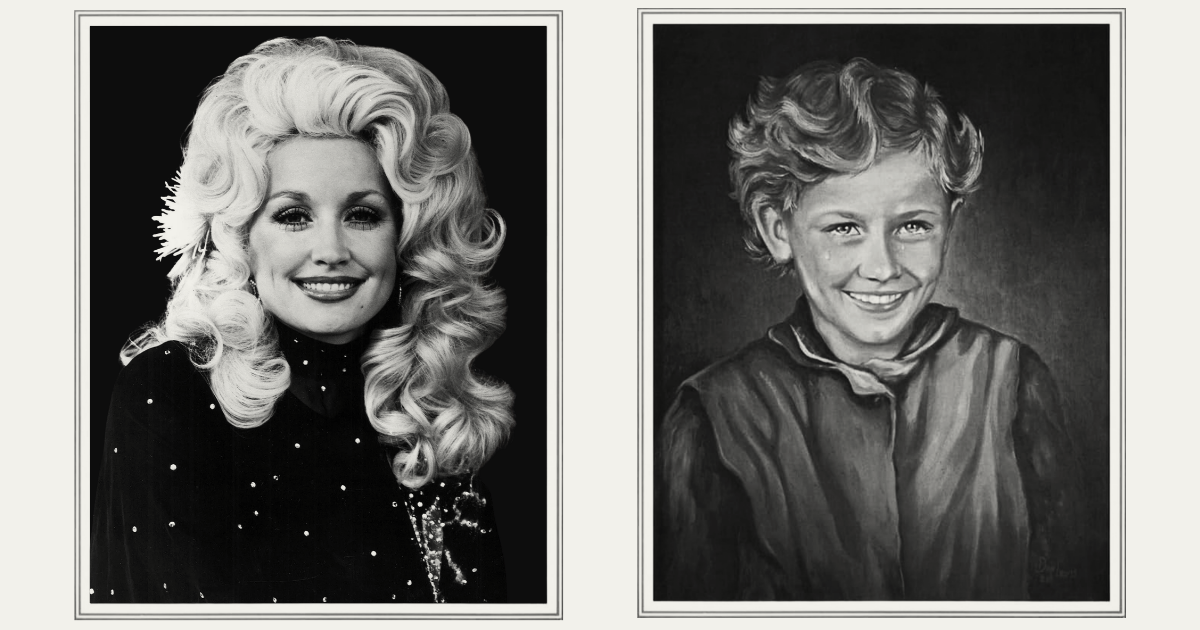
Photo Credit: Dolly Parton courtesy of the Country Music Hall of Fame ® and Museum;Dolly Parton’s Coat of Many Colors album courtesy of Sony Music Entertainment.
Dolly Parton Carries Childhood Memories Throughout Her Career

Back through the years, I go wandering once again
Back to the seasons of my youth…

So begins “Coat of Many Colors,” which Dolly Parton frequently cites as the favorite song she’s written. That 1971 country classic is just one example of Parton’s ability to view the world through a child’s eye, whether she’s writing about her own life, placing a fictional young character in dramatic circumstances, or simply making a connection to a new generation of kids.

The newest example of this gift is Dumplin’ – a Netflix film where an overweight teenager finds solace in Dolly’s music. Leading up to the movie’s release, Parton released a duet version of “Here I Am” with Sia – an ironic choice, as the pop star is famous for singing with her back to the audience. But that anthem of self-declaration sets the tone for the Dumplin’ soundtrack, underscoring one of the reasons that a teenage girl would love Parton’s music in the first place. The heartfelt film is based on a young adult novel by Julie Murphy.

Seeing an early cut of Dumplin’ inspired Parton to write “Girl in the Movies,” a thoughtful song that finds her identifying with that very character — the “girl in the movies.” Parton told NPR that she wrote it for every little boy and girl. The song carries a strong message, she says: “Don’t just live in a fantasy of watching someone else live their lives. You star in your own role. You be the star of your own life.”

Parton has embodied that perspective for 60 years. In fact, 2019 is the 60th anniversary of the first time she released a song she wrote – in this case, “Puppy Love,” composed with her uncle Bill Owens. Parton was 11 years old when she wrote it, 12 when she recorded it, and 13 when it was released as a single on the tiny Goldband Records. She sang locally around Knoxville, Tennessee, and moved to Nashville on the day after she graduated from high school in 1964. Two years later and still chasing her dreams, she married Carl Dean, a lasting union that nonetheless yielded no children of their own.

Yet time and time again she incorporated a child into the storyline of her music. For example, in “Mommie, Ain’t That Daddy,” Parton sings from the perspective of a woman whose kids happen to see their father begging for money. In “Jeannie’s Afraid of the Dark,” Parton describes Jeannie as a child who feared burial; her duet partner Porter Wagoner then reveals that Jeannie dies. “Malena” is another doomed child who dies on the night of her birthday, finally receiving the set of wings she’d asked for.

By 1970, Parton had carved out a solo career in addition to her role on Porter Wagoner’s TV show. Her first No. 1 hit, “Joshua,” tells the story of an orphaned girl who hears about a mysterious man living a good ways down the railroad track. Curious, she seeks him out – and then promptly moves in with him. (“Why, you’re just what I’ve been lookin’ for!” she exclaims.) The poetic “Coat of Many Colors” arrived a year later, serving as a morality tale that still resonates decades later.

Parton employed that same autobiographical approach for “In the Good Old Days (When Times Were Bad),” a gem from My Tennessee Mountain Home. Reflecting on her childhood years, she sings, “No amount of money could buy from me the memories I have of them / No amount of money could pay me to go back and live through it again.” (Merle Haggard identified with the lyrics so much that he recorded a version, too.) Another of the compositions on that album is simply titled “I Remember” and finds her blissfully recalling those seasons of her youth. Of course, as she matured, so did her songwriting, most notably on poignant compositions like “I Will Always Love You,” “Light of a Clear Blue Morning,” and of course, “Jolene.”

Still, if you dig into her albums from this era, you’ll find songs like “Me and Little Andy,” about a poor girl and her dog who wind up on Dolly’s doorstep. She agrees to let them spend the night; by morning, the girl and the dog are both dead. Another one, “Mammie,” is about a midwife who raises a child after the mother dies at birth and then teaches the child to sing and play guitar — but Mammie herself doesn’t live to the end of song. “Silver Sandals” recounts the story of a disabled young girl who couldn’t walk; when she inevitably dies, Dolly and Porter imagine her happily walking up the golden stairs of Heaven.

On a brighter note, Dolly reminisces about a banjo picker she knew as a kid named “Applejack.” Almost like a precursor to Dumplin’, Parton composed “Shattered Image” about sitting on a bridge as a girl and throwing rocks into her reflection in the water. She compares the experience to the way people were shattering her public image as an adult. A 1979 album cut, “Nickels and Dimes,” is a co-write with her brother Floyd Parton, who died in December. While writing it, Dolly thought about how she’d open up her guitar case in downtown Knoxville as a young girl and busk in order to get enough quarters to buy hamburgers. By the time the song ends, she’s a star, but here’s how it begins:

“I used to stand on the corner and sing as a child
And I’d play my guitar and sing as the people went by
The sidewalks were crowded but I’d just sing louder ‘cause I didn’t mind
Spending my time, spinning my rhymes, and singing for nickels and dimes.”

Even beyond her musical output, Parton has kept a strong bond between herself and a younger generation. In 1986, she invested in a theme park in East Tennessee and rebranded it as Dollywood – a gift that keeps on giving, with new attractions added nearly every year. And it’s not all roller coasters. Parton’s mother sewed a replica of the fabled coat of many colors to display in the museum dedicated to Dolly’s life and career.

Nearly a decade later, Parton instituted the Imagination Library, where pre-school children receive a monthly book at no charge. To these lucky kids, Parton is known as “The Book Lady.” Meanwhile, “Coat of Many Colors” has been successfully transformed into a children’s book and an award-winning TV movie, in addition to being recorded by the likes of Eva Cassidy, Emmylou Harris, Joey & Rory, and Alison Krauss & Shania Twain.

When Parton was 70 years old, she secured a No. 1 country album with 2016’s Pure & Simple. One of the most charming songs on it is titled “I’m Sixteen,” where she sings, “It goes to show you’re never old / Unless you choose to be / And I will be sixteen forever / Just as long as you love me.” A year later she released her first-ever children’s album, I Believe in You.

As 2019 begins, Parton is in the spotlight again. On January 6, “Girl in the Movies” will compete for a Golden Globe award in the category of  Best Original Song in a Motion Picture. A month later, she will be recognized as the MusiCares Person of the Year at an all-star concert event, just a day before the Grammy awards. Along with celebrating her magnificent musical achievements, the presentation also acknowledges the fact that the Imagination Library has given out 100 million books since its inception. Parton is the first member of the Nashville music community to be honored at the annual MusiCares gala.

Way down in the fall, Parton will return to the Grand Ole Opry, celebrating the 50th anniversary of her induction in October. But her history to the Opry stretches about a decade before that. When she was 13, Parton and her uncle Bill Owens had lingered outside the Ryman to meet Johnny Cash. When he emerged, a starstruck Parton begged Cash to let her sing on stage – but it would take a while for this dream to be realized. In time, Opry star Jimmy C. Newman gave up his slot for her, although Cash handled the introduction that night. According to Parton’s autobiography, Cash told the audience, “We’ve got a little girl from up here in East Tennessee. Her daddy’s listening to the radio at home, and she’s gonna be in real trouble if she doesn’t sing tonight, so let’s bring her out here!”

Parton wrote about this career milestone in her book: “I know I had never heard a crowd cheer and shout and clap that way. And they were doing it all for me. I got three encores. This time I was prepared for an encore, but not three, not at the Grand Ole Opry. Someone told me later, ‘You looked like you were out there saying, “Here I am, this is me.”’ I was. Not just to that audience but to the whole world.”


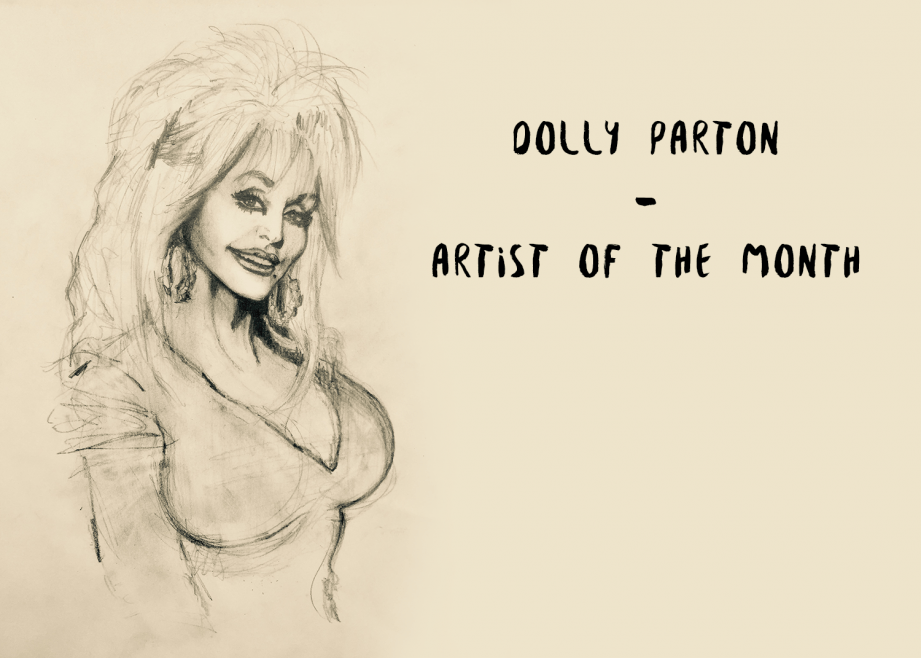
Illustration: Zachary Johnson

Watch a Preview of Dolly Parton’s ‘Coat of Many Colors’ Movie

Ladies and gentlemen, the most wonderful time of the year is nearly upon us: the release day of NBC's television adaptation of Dolly Parton's 1971 hit "Coat of Many Colors." And now, Parton herself has shared a trailer for the autobiographical film, which tells the true story of a coat her mother made for her in the wake of a family tragedy. 

"The great Smoky Mountains, my home … I have so many memories of growing up here," Parton explains in the trailer. "This Christmas, I would love to give a gift to you. My favorite song that I've ever written tells a true story from my childhood about a little coat that my mama made for me." 

In the clips that follow, we see Sugarland's Jennifer Nettles as Parton's mother Avie, scenes from the Parton family's impoverished life in the mountains of East Tennessee, and the pivotal moments that eventually led Parton to become one of the world's most beloved musicians.

Get a first glimpse of Coat of Many Colors below, and be sure to tune into the premiere on December 10 at 9/8 Central.