100 Years of Grand Ole Opry
Makes a Mighty Book

The sheer variety and singularity of the Grand Ole Opry – whether in just one of its shows or in just one of its many eras – would be paralyzing enough, if tasked with telling its complete, unabridged story to a broad audience. The assignment of taking the entire century-long history of the world’s longest running radio show and condensing it between the covers of a book would have to be heart-stopping. How could one ever take such a complex story full of twists, turns – and plenty of the idiosyncrasies found in human beings who make and love country music – put it down in 350+ pages?

It’s hard to imagine, but that’s exactly what writer Craig Shelburne, historian Brenda Colladay, and a host of Opry members have done with the brand new book, 100 Years of Grand Ole Opry. Shelburne – a BGS contributor and former managing editor for our website – worked with Colladay to penetrate the vast, lush archives of the Grand Ole Opry to posit its history decade by decade, chapter by chapter in the new hefty, coffee-table-ready tome. They completed dozens and dozens of interviews with Opry members, artists, musicians, employees, executives, and broadcasters and, as a result, the history book feels remarkably alive and vibrant – just like the show itself.

The book, released in April of 2025, demonstrates and reiterates time and again that the Grand Ole Opry isn’t a relic – nor has it ever been. It’s a living, breathing, adaptive being that’s enacted by a strong community of stakeholders not only from across the company that owns the brand, Ryman Hospitality, but the music industry as a whole, too. 100 Years of Grand Ole Opry showcases a country and cultural icon not waning or winding down after a century of triumphs (and trials and bumps and scrapes, too). No, instead, this book finds the Opry, beloved by all of us, merely at its next transition point, moving purposefully from the last 100 years to the next 100 years.

We sat down with Craig Shelburne on the phone to chat about the immense undertaking of writing this book, the surprises found and lessons learned along the way, and what makes the Grand Ole Opry so special, all for our Artist of the Month celebration of Opry 100.

This is such a gargantuan task, staring down the entire 100-year history of the Opry and being asked to turn it into a book. Where do you even begin? How did you take that first bite? What did it feel like to you to enter this process of creating a book?

Craig Shelburne: Yeah, 100 years is a massive undertaking and we – my co-writer Brenda Colladay and I – spent some time at Frothy Monkey in East Nashville sketching out some of the important Opry milestones in those eras when things really seemed to be shifting. As we did that, we realized that we could probably have each chapter be roughly a decade. At one point, we realized we wanted to have some breakout sections, but we didn’t know how to do that.

I wanted the book to be very readable, [without] a whole bunch of sidebars. So instead of designing sidebars, we have these pages that are interludes in between the decades, in between the chapters. You have the history of bluegrass, or the ways that the Opry has been on television, or what the Opry looked like when it went into the 21st century and a new era of technology. [That] was our chance to expand on one particular theme, rather than try to weave [those themes] into the narrative or take away from the narrative. It could be distracting if you dropped [a sidebar] into the manuscript every time the Opry was on television. Those interludes also gave us a chance to use some of these magnificent color photos [from the Opry archives] just because they’re beautiful photos. We didn’t have to necessarily set them up within the text. …

It was intimidating for a while until one night, late at night, I was writing and I realized that the main character of the story is the Opry itself. There are so many people that have passed across the stage, from Roy Acuff and Minnie Pearl up to the modern era. I wanted the artists and the cast members to be represented well, but really the main figure throughout this 100 years is the show itself. And it’s a show. It’s not a stage, it’s not a building. It’s a show.

Once I could get my head around the fact that this was the leading character in a 100-year story, the narrative started to fall into place. That was a breakthrough for me.

I also love how that format parallels the structure of the show itself. That you have segments, sets of artists performing, you have commercials and announcers and little games with sponsors, and you have talk-back sessions from artists. When you go to a show, it’s not just one thing from start to finish, it’s a bunch of different things – and there are obviously lots of interludes built in. So there’s something about the structure of the book that parallels the show in a nice way.

And telling the story of how the segmented portions of the Opry came to be was one of my favorite parts of writing the book. Basically, the Opry hired their music librarian – who was a very organized individual – to try to reign in some of the chaos from when the Opry was at what is now the Belcourt Theater [in the 1930s]. I think back then it was called the Hillsboro Theater. His name was Vito Pellettieri and he realized if he could wrangle three or four artists within the same timeframe, then these performers would now have a rough idea of when they needed to be standing side stage, instead of disappearing as musicians might have been wont to do.

Then of course, being the Opry, owned by an insurance company, the business people sensed an opportunity there and thought, “Let’s sell those segments to sponsors and advertisers.” And so that’s how the 30-minute segments came to be. Whether it was dog food or condensed milk or tobacco, if there was a sponsor for each segment, the Opry made more money that way, too. The Opry has been pretty creative in how it positions itself and how it can take advantage of good ideas quickly.

I know you spoke to dozens of artists, stakeholders, musicians, executives, broadcasters, and announcers. You and your co-writer Brenda Colladay must have done hours and hours of interviews for this book. Can you tell us a bit about that process and who you most enjoyed or were most excited to sit down with?

On one hand, the general narrative crafting you’re talking about sounds like really grueling work, but on the other hand, it sounds like doing that through these interviews was probably the most fun part of this process.

I would say the interviews were the most fun. I agree with you on that. I have the Opry show schedule as a shortcut on my smartphone now, because I would always try to figure out who was playing and who we needed to talk to.

As it should be, we started our interview series with the one and only Jeannie Seely. We felt like she needed to be first, and she deserved that. She only got about halfway through what she wanted to say [during our first meeting], so we set up another interview. It was wonderful to talk to her. Both of those afternoons were great, because with Jeannie, she’ll tell you the way it actually was. Some of it was very positive and some of it was critical, but it’s her perspective. And she was there! I didn’t get to see the Opry in the ‘60s or ‘70s, and she did. Getting to hear it directly from her was fantastic. She was also hilarious, when you got to sit down and joke around with her a little bit.

It was really important to talk to people firsthand and to go deeper than just, “Hey, what do you think of the Opry? Why is it important?” So the Opry opened up its entire archive to me, which was videos, books, newspaper clippings – pretty much anything that I wanted to look at, read, or watch. When I knew I had an interview coming up, I would spend several hours reading clippings and reading stories in order to come up with questions specific to their Opry experience. Rather than just, “Tell me about when you moved to Nashville. Tell me about this. Tell me about that.” Those aren’t questions, those are just prompts. When the people came in to talk to us, we were usually in pretty much a supply closet for camera equipment. It was a really small room. We didn’t have any cameras. We wanted everybody to be casual and comfortable and not worry about makeup and hair.

Then it became a very comfortable conversation. We started every interview with the same question, which was, “What is going through your mind in those moments before the curtain comes up?” Everybody had a different answer. That put them in the frame of mind of talking about the Opry, I think, more than talking about themselves. They went pretty deep, back in their memories, of how they discovered the Opry and what it’s meant to them. Quite a few of those artists went to the Opry as kids. So then they started talking about their family and what the Opry meant to their family, there were a lot of emotions.

I think some of those artists expected it to be like a 10 or 15 minute interview to grab that [sound] bite that says, “I sure do love the Opry.” But we went really deep and spent more than an hour talking with some of these artists. You don’t get to put everything like that into the book, but suddenly now we have an oral history from these modern contemporary performers that will live forever. When somebody writes about the Opry in 50 years from now, they have it straight from the artists, [speaking] about their path to that stage.

I think that’s one of the best accomplishments of this book, that it tells the story in such a rich, full way that isn’t just the mythology and isn’t just the good parts and the glitzy parts. It sounds like part of how you were able to accomplish that is by having these interviews set up in such a way that you could build trust with folks, so they didn’t feel like they were just giving you that marketing sound bite. They could really tell you those full stories.

I think a lot of that came from the Opry headquarters. They wanted us to tell [it] the way it happened. A woman named Jenn Tressler, she handles a lot of the talent requests there and I think she primed most of these artists about what the interviews would be like and what the goal was. Just [so they would] be comfortable and [know] no topic is off limits. Artists were asked some pretty sensitive questions sometimes about the relationship with the entertainment industry in general, including the Opry and the artists rose to the occasion.

We wanted to tell the actual story. I’ve often felt that nobody wants to read a book where everybody’s happy and there’s no conflict. There’s conflict in this one.

From your interviews or from writing this book, what was a story or two about the Opry that stuck out to you or surprised you? Or, that brought you to learning something new that maybe you wouldn’t have tripped over into if you hadn’t done this book? Is there a story or two that stand out to you?

The first one would be just how young everybody was when they got involved with the Opry. George D. Hay was a young man; Harry Stone, who was one of the early program directors, had just turned 30 when he took on that role. The artists were [in their] 20s and 30s. You had a very young Bill Monroe, Roy Acuff, Minnie Pearl, coming on the stage and changing the game for country music.

Sometimes the Opry is perceived as the elder statesman of country music – and that’s true and they’ll always have a place there, it’s wonderful. But a lot of the shake-ups at the Opry and a lot of the progress that’s been made was because of these young, innovative perspectives. That happened over and over. I think without that viewpoint from people who were younger, the Opry would’ve struggled through the last hundred years. There would’ve been times somebody might’ve said, “I want it to stay the same way, ’cause this is how we’ve always done it.” It’s never the right answer, to do it just because it’s always been done that way. I think that was pretty fascinating to me.

The other thing I didn’t realize was that it was not until I believe 1978 that the Opry was ever aired on television. It was a PBS special. If you wanted to see the Opry, you had to come to Nashville for the first 53 years. After that one night on the PBS special, it didn’t happen again until the following year. Being able to see the Opry, you had to come to Nashville, and I think executives at that time feared that if you put it on television, people would stay away from the show and they wouldn’t sell tickets anymore. But time has proven just the opposite. People saw it on television, how exciting it was and they felt like they needed to be there, myself included. I watched it growing up in Nebraska as a teenager and I just was fascinated by it. By that time, of course, it was on TNN.

I watched it many a Saturday night with my grandparents and I didn’t always know who those legendary figures were that were sharing the stage with Alan Jackson or Clint Black or Alison Krauss. But because of the Opry, I got a country music education as a teenager before I moved to Nashville in 1994. By the time I got here, I feel like I had a leg up on other people who wanted to write about country music that were my age.

You’re pointing out another fact that we often forget about country music, hillbilly music, these traditions that made these musics. It’s that all of them are constantly changing and growing, morphing and adapting to the future – and responding to the present.

Like, the reason the Opry became what it is today was because of technology, because of the “Air Castle of the South.” Because of radio, because there wasn’t a lot of competition on the literal bandwidth, and because the tower was so tall it could reach so many people all across the country. To think that, nowadays, when we view “tradition” in 2025, we think that means not changing something.

Wrong!

But the Opry has always been changing and always been using cutting edge technology to do that. And country wouldn’t exist without technology, without the railroad, without industrialization, without radio, without recording technology becoming portable and handheld.

Oh, absolutely. Well said. It has to change, and the Opry does figure out a way to reach new listeners and engage with people that have never been there. Obviously, when you go to the Grand Ole Opry House for a show now, the emcee will say, “Who’s never been to the Opry before?” And a lot of hands go up. They’re constantly marketing the show – as they should be. They want people to have a seat in the Ryman or the Opry House to see how special the world’s longest running radio show is. I give them a lot of credit for always trying to reach new people and not just looking for what they’ve done already in the past. They take a lot of pride in the fact that no two shows have ever been the same.

I was just listening the other night [on the radio] and I was able to catch the Opry debut of Grupo Frontera. I thought it was such a perfect example of what you’re talking about, that a Spanish-speaking, Spanish first language group that makes country. Of course, it’s Mexican folk and Tejano and Latin folk and all these other things as well – but it’s certainly country & western. [They were] making their debut and you could hear the building shaking through the radio. It felt like one of those iconic ovations we hear about from the old days, with everybody stamping their feet in the balcony of the Ryman. The Opry is still doing that. And not only are they doing it, but this year for Opry 100, they’re doing it over and over again where they’re having these shows with these special moments, reaching new audiences.

And it was a brilliant move, because those fans now have a general idea of what the Grand Ole Opry is, how it is performed, and they got to hear some music from people they maybe hadn’t heard of. I know Frank Ray was on the show that night, he might’ve gained some fans from those who came to see Grupo Frontera. It’s a win for everybody when an artist of that caliber plays the Opry.

There was a great moment, after doing some digging, where I found the full performance of when Porter Wagoner invited James Brown to come play the Opry. It was like a 20-minute segment – there are some things online where you hear bits and pieces of it. But the Opry archive had it from start to finish, so I just sat there and listened to it. There was some screaming and hollering going on that night, too. It was exhilarating to listen to it. Then I found an oral history from Porter Wagoner – I quoted it in the book – that said, when you bring someone of world-renowned stature to the Opry, it benefits the Opry. You want the Opry to be in the news, because it draws attention to the show.

We’ve already talked about Jeannie Seely, but I wrote my concluding question with her in mind, as well. She passed in August of this year and when she did she had performed on the Opry almost 5,400 times. (The number is 5,390-something.) That longevity is incredible. So thinking about longevity, we’re standing here at the milestone of a hundred years of the Grand Ole Opry, looking at potentially another 100 years of the Grand Ole Opry coming up.

Do you see this modern era of the Opry as its golden age? Do you think the golden age of the show is yet to come? And who are you seeing that’s just getting their start “in the circle” nowadays that is gonna be like Jeannie Seely in a few decades, thousands of appearances into their Opry career?

Yeah [the future] looks strong to me, too. Something I never put into context until I wrote the book was that in the 1990s the Opry lost Roy Acuff, Minnie Pearl, Grandpa Jones, Bill Monroe, and Dottie West. And you just think, “How do you recover from that?” They did. They figured out a way to press on.

There were definitely growing pains and bumps, but some of those figures that they picked out in the early 2000s have become advocates for the Opry, champions for the Opry. The ‘90s country stars that I love, like Lorrie Morgan, Pam Tillis, Vince Gill, Steve Wariner, and Marty Stuart are still out there. They still play the Opry – and they’re the elder statesmen now. I do think the cast members that joined in the ‘90s and 2000s are gonna become a foundation for the show.

I think you’ll be seeing Trisha Yearwood out there quite a bit as she settles into the “twilight years” of her career. I sense that she will be out there singing alongside Kathy Mattea and Suzy Bogguss. I think Opry is in really good hands with the young women that they’ve invited to be part of the cast. More than once, without any prompting, artists like Carly Pearce and Lauren Alaina have said they feel the responsibility to be here. And I think Lauren Alaina is very likely to inherit the comic routines of Jeannie Seely – she’s pretty much already there. She had us rolling in laughter in her interviews. She’s got the natural timing of a comedian, but she’s got hit songs, too.

I think the Opry is in really good shape right now. They’ve done a good job of connecting to a younger audience that wants to play it. It’s a career goal now for a lot of inspiring artists. I think when I moved here in the ‘90s it was seen as living history and you had to have some history to get on that stage. But now you just have to have a good story, some musical talent, and an ability to connect with an audience. That’s easier said than done, but if you can have those three things, the Opry will take a chance.

I think they’ve found a recipe for success. They set themselves up to succeed. There are times in the music industry where it seems like things are crumbling or those pillars are not as strong as they used to be. But I think right now the Opry is as strong as it’s ever been. I don’t see it going anywhere anytime soon.


Lead image courtesy of Ryman Hospitality Properties.
How-dee! And Happy 100 to the Grand Ole Opry

In 1925, world leaders were signing the final treaties coming out of WWI; Congress authorized work on Mt. Rushmore as a national memorial; the Scopes Trial was held in Tennessee; and the first patent on radio transmission was only 28 years old.

And, in 1925, WSM first broadcast its barn dance – soon to become the Grand Ole Opry.

One hundred years later, the Grand Ole Opry is the world’s longest-running radio program. After a century that saw changes unparalleled in world history, audiences are still drawn to the Opry. Every week thousands make the pilgrimage to the Grand Ole Opry House in Nashville while others tune in around the world. The show continues to inspire new generations of performers to aspire to step “into the circle” on the Opry House stage.

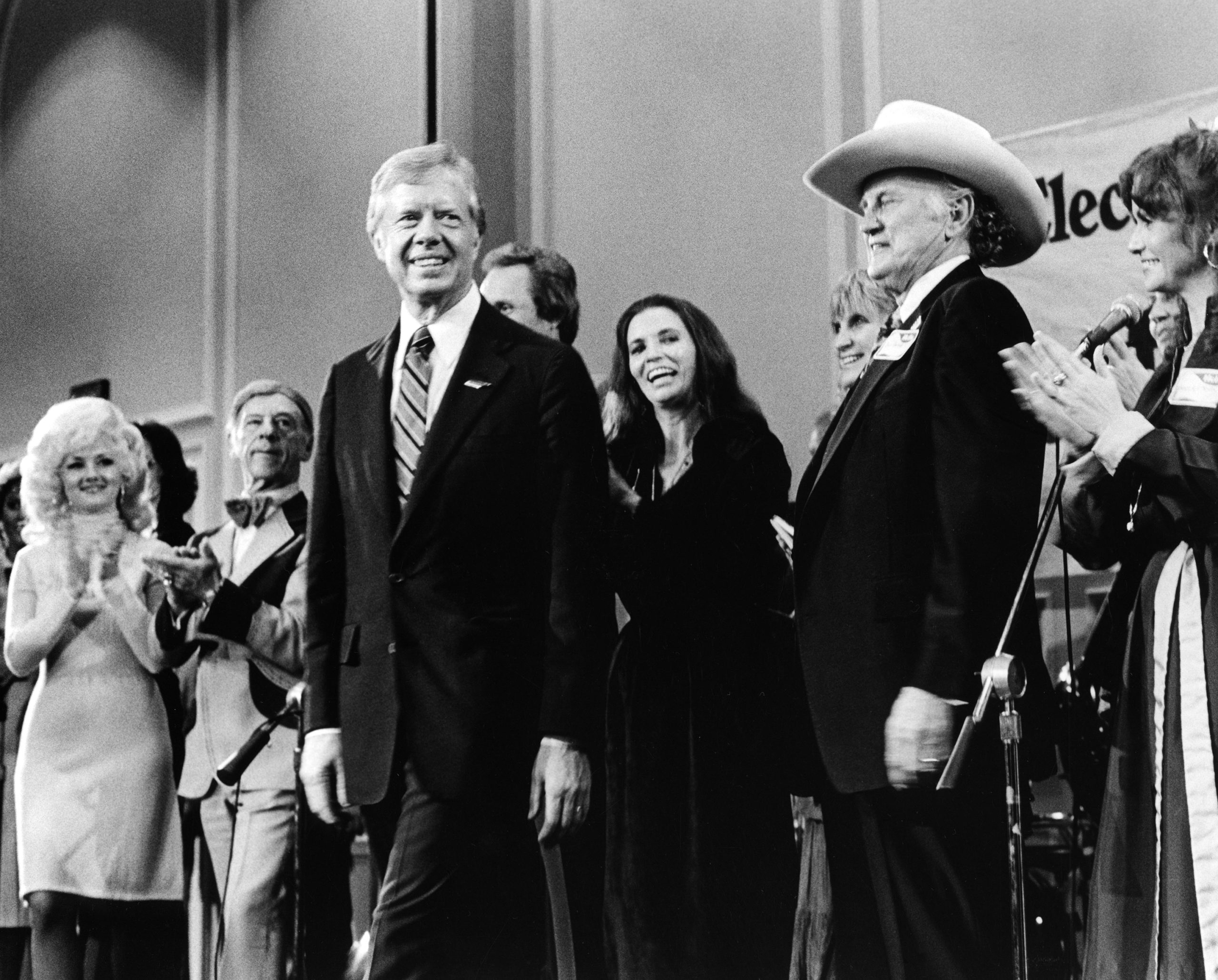
President Jimmy Carter on the Grand Ole Opry stage with Kelly Foxton, Hank Snow, Mel Tillis, June Carter Cash, Skeeter Davis, Bill Monroe, Jeannie C. Riley, and others on October 9, 1980. Photo courtesy of Ryman Hospitality Properties.
In The Beginning Was Insurance

In the 1920s, Edwin Craig was watching radio stations emerge across the nation – and seeing the money-making potential for sponsors and owners. He convinced Cornelius Craig, his father and founder of the National Life and Accident Insurance Company, that a radio station could sell a lot of insurance.

Soon, the fifth floor of the company’s downtown Nashville building held a radio studio. The call letters WSM stood for “We Shield Millions,” the company’s motto. A program that would become the lifeblood of country music started as a way to promote life insurance.

The hiring of George D. Hay away from Chicago’s WLS was the beginning of the WSM Barn Dance. The 30-year-old who called himself The Solemn Old Judge and started every show with a steamboat whistle would set the tone for much of the Opry’s 100 years – including its name.

Which all started with a clash of cultures.

Some upper-crust Nashville residents complained the only radio they could hear on weekends was string band programming from the dominant WSM station. In response, WSM began carrying the syndicated “Music Appreciation Hour.”

The Barn Dance slot followed the classical program, and Hay, not one to pass up a good line, said, “For the past hour, we have been listening to music largely from Grand Opera, but from now on, we will present ‘the Grand Ole Opry.”

George D. Hay is pictured at microphone with a whistle and Uncle Jimmy Thompson is seated in this 1925 photograph from when the Grand Ole Opry was still the WSM Barn Dance. Photo courtesy of Ryman Hospitality Properties.
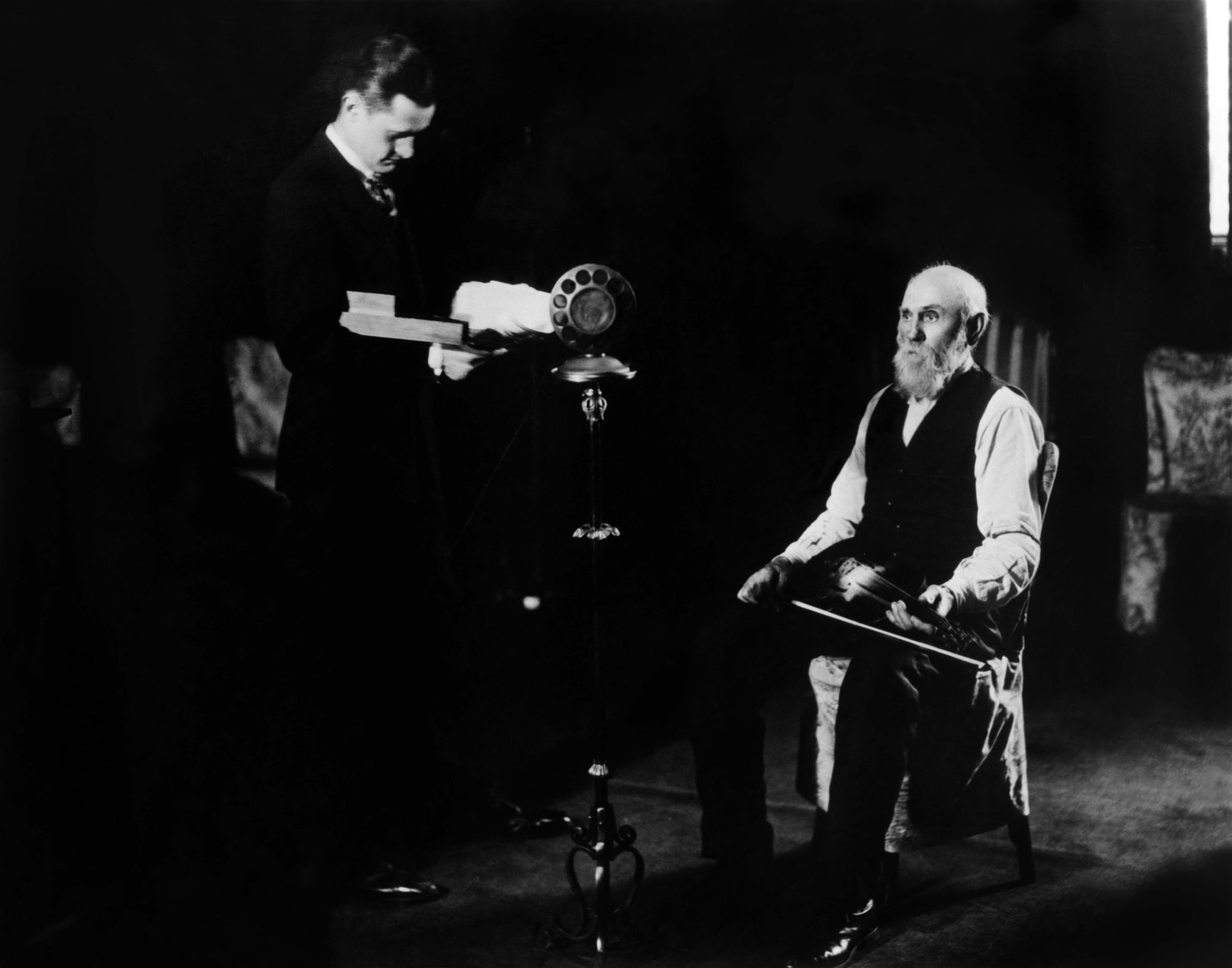
For years, the Shield Men – door-to-door National Life and Accident insurance salesmen carrying the company’s shield logo – introduced themselves as representing the Grand Ole Opry. They would even listen outside windows to see who was tuned in to the Opry – and who would be a likely customer.

The earliest WSM shows relied on local talent, running heavily toward fiddlers and string bands. But Hay would invite whoever he thought the audience would like.

DeFord Bailey, a Black musician grounded in both the blues and old-time string band music, became a regular, wowing audiences with his harmonica. Kitty Cora Cline, the first female soloist, performed on hammered dulcimer, and Fred Shriver played the accordion. Uncle Dave Macon on his banjo with Sid Harkreader on fiddle and guitar set the stage for the comedy that would remain central to the Opry’s success, with songs like, “Keep My Skillet Good and Greasy.”

A Beacon

As the recording industry grew, the variety of musicians available to the Opry grew, as well. The show began featuring brother duets, cowboy music, Western swing and solo crooners. Bill Monroe & the Blue Grass Boys were featured stars for decades.

Opry singers expressed the joys of new romance, the happiness of Sunday dinner on the lawn, the sorrow of lost love, and the loneliness of leaving home. Audiences across America listened – and related. The Opry became a focus of family life.

Dolly Parton, like many rural listeners, grew up without electricity. Her family faithfully listened to the Opry on a battery-powered radio. Waylon Jennings’ dad would hook their radio to the car battery. Jeannie Seely’s family would pile in the car and drive up a hill until they could get the signal. Opry history is filled with stories of musicians who listened as children – and dreamed of growing up to perform, like their idols, on the iconic stage.

Opry member Dierks Bentley, who gracefully moves between country and bluegrass, told BGS, “Being invited to join at all is the biggest honor – especially for me, personally. I grew up listening to all the Opry greats on the radio with my dad, so becoming a member is like having the ultimate backstage pass to see the best musicians in the world. And to be invited by Marty Stuart … hands down, it was one of the coolest nights of my life.”

Dan Rogers, the Opry’s senior vice president and executive producer, said the Opry has always been a place to celebrate the good times and be uplifted during the tough times. “Think about,” he said, “the folks who tuned in on Saturday nights during World War II. That was their only source of entertainment throughout the week.” Minnie Pearl, with her signature “How-dee,” and Roy Acuff gave them respite from war news.

On the first show after the 9-11 attacks in 2001, Rogers said, “Our background singers sang an a cappella version of ‘God Bless America.’ And one by one, the people in the audience stood and sang along. And I remember thinking, I bet everybody tuned in across the country is singing along to ‘God Bless America.’”

The Opry’s response to the COVID-19 crisis created desperately needed connection during a frightening time of isolation.

Just a week after deciding that live audience shows weren’t safe, Opry staff arranged a pared-down streaming production with no audience and a skeleton crew. Longtime cast members Bill Anderson, Jeannie Seely and Connie Smith held down the first night alongside Mandy Barnett, Michael Cleveland & Flamekeeper, and Sam Williams.

For the second weekend of restrictions, veterans Vince Gill, Marty Stuart, and Brad Paisley sat on stools spread out across the stage and pulled off what Rogers called “a beautiful, beautiful show.”

Watching from his office, Rogers started reading comments from grateful listeners. For months, people marked their calendars to tune in. They wrote, “I’m in Europe. I set my alarm. It’s 2 a.m. here, but I wanted to experience this with a community.”

Marty Stuart, Vince Gill, and Brad Paisley perform for an empty Grand Ole Opry House during the COVID-19 lockdowns in 2020. Photo by Chris Hollo, courtesy of Ryman Hospitality Properties.
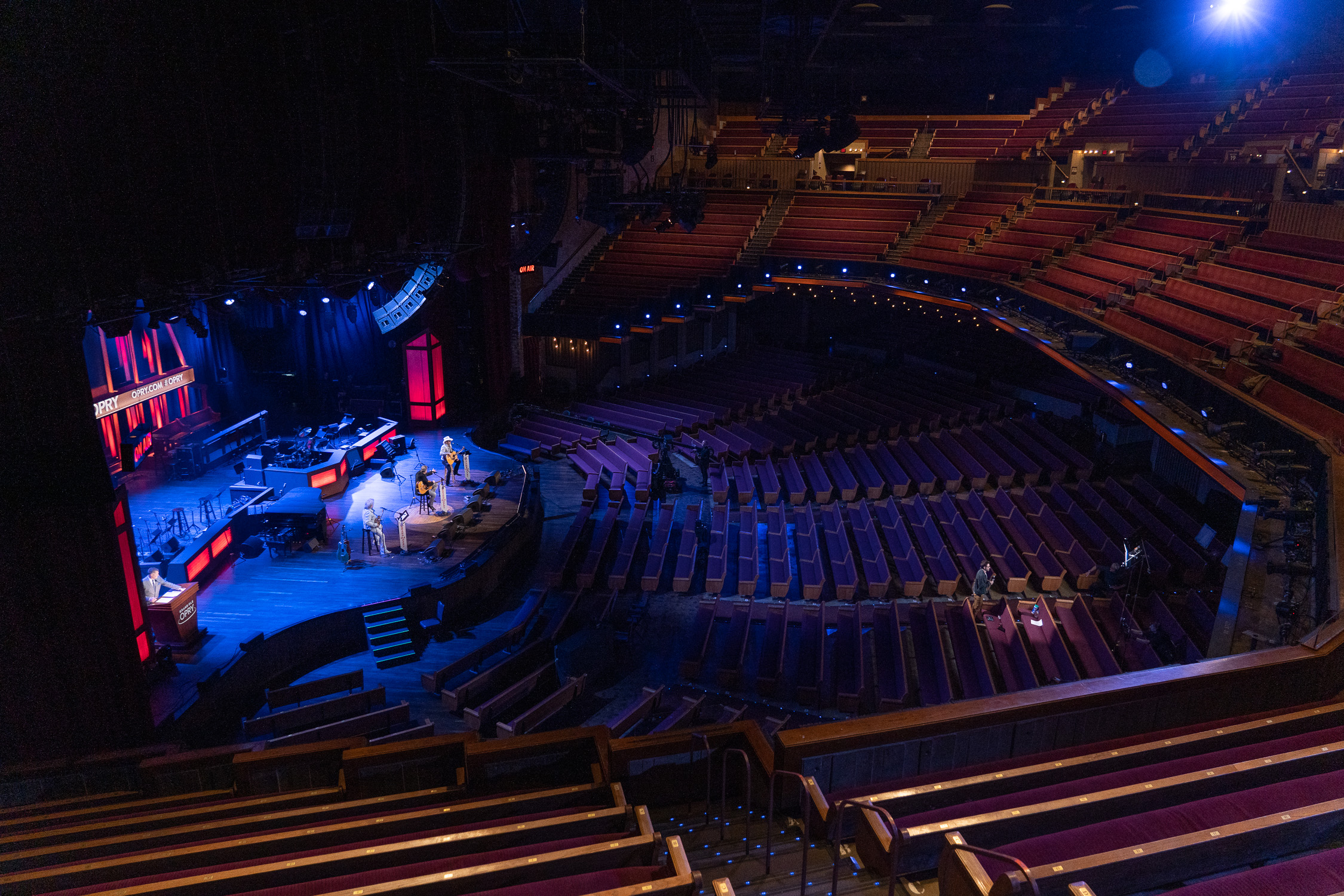
Kathy Mattea, the newest Opry inductee, feels those connections whenever she performs there.

People may have sung along to her hit “18 Wheels and a Dozen Roses” in their car or in the shower, but at the Opry, she says to BGS, “Here’s your chance to sit with an audience and sing this song that everybody knows. Nobody knows who the person next to them voted for and it doesn’t matter at that moment.”

“The Ellis Island of Country Music”

In the early days of radio, what was called hillbilly music was as limitless as the range of a 50,000 watt radio station. And the Opry remains dedicated to maintaining those wide open spaces.

Garth Brooks and Trisha Yearwood, in their forward to the book 100 Years of the Grand Ole Opry, refer to the show as the “Ellis Island of Country Music – a place where all are welcome.”

Contemporary country often has been accused of being homogenous and limited. But despite the factors that have controlled commercial country, the Opry maintains its open-arms attitude. Rogers said, “The two core tenets of an Opry show are celebrating the past, present, and future of country music, and also showcasing multiple genres under the country music umbrella.”

In any show, he said, “You might have something that’s on the top 20 of the country charts today. And you’ll have country classics. You might have a contemporary Christian song, Americana string music, or even something from outside the genre by somebody who just happens to be a country music fan or was influenced by country music.”

In 1974, the R&B-oriented Pointer Sisters included an original country song, “Fairytale,” on their second album. The cross-over hit earned them an invitation to the Opry stage, where they became the first Black group to perform.

Ringo Starr appeared for the first time in 2025 and James Taylor’s debut on November 11 will be remembered as a big part of the 100th anniversary celebration.

And, Rogers said, “Because we can do it, it’s fun to take a chance on a new artist.”

Before his first Opry appearance in July 2022, Zach Top had no hits to his name. But Rogers remembered the programming team saying, “You don’t see an artist like that every day. It sure feels to us like our audience would absolutely eat that guy up!” Today, Top’s music is everywhere.

Bluegrass has been a staple since before it had a name and it has never lost its place on the stage. Bentley and Del McCoury played “Roll on Buddy, Roll On” when the Grand Ole Opry House first reopened after the 2010 flood closed its doors for months.

Charlie Mattos is a 10-year veteran Opry announcer and longtime co-host and producer of WSM’s morning show. He said that on any given night, a portion of the Opry House audience “may truly have never seen a bluegrass band play.”

“And when Del McCoury and the boys finish with an incredible instrumental,” Mattos continued, “or Sister Sadie blisters the stage … the enthusiasm that comes out of that crowd, the immediate standing ovation for the insane musicianship that they have just witnessed …” Mattos said, “it blows their minds.”

Mattea said, “Bluegrass is front porch jazz – the virtuoso playing and the vocals and the harmonies and the trading off of licks. That’s how I fell in love with bluegrass.” And the Opry exposes millions to that brilliance.

A Good-Natured Riot

The Opry show is a complex set of acts and sets requiring precision planning, flexibility, and good nature on the part of the announcers – and commitment on the part of the performers. Rehearsals are brief or non-existent. Timing is everything.

Borrowing a phrase from George D. Hay, the Opry is still sometimes called a “good-natured riot.”

Mattos said, “When you come to see the show live, you see it all. The set changes. The artists leaving as the announcer sends them off. You can see the stage crew out there and usually in 90 seconds they can completely swap things around.”

But while reading a commercial during set changes, Mattos may notice the stage manager giving the “stretch” signal. He might have to keep talking for as long as four minutes – a millennium in radio time.

Sometimes the commercials themselves become the entertainment.

The first time Glad Wags sponsored an Opry segment, Chuck Morgan was announcing. While he stood off-stage reading the dog food commercial, house bassist Bill Linneman came up behind him and started barking. “By my last year there, there were like 20 people behind me going at it,” Morgan said. (The consensus is that Connie Smith does a great chihuahua imitation.)

A Family

Jeannie Seely – who racked up nearly 5,400 performances on the Grand Ole Opry before her passing in August 2025 – remembered it was more than the music that fueled her desire to join the Opry: “That’s hearing these people, like Mr. Acuff and Minnie [Pearl] and Jimmy Dickens and all of them, coming together every week,” she says in 100 Years of the Grand Ole Opry. “They always sounded like they were so glad to be together. They picked on each other and joked, and I thought, that’s just like a family.”

And they were family. When the plane Jim Reeves was aboard crashed in a wooded Nashville suburb, Marty Robbins and Ernest Tubb joined the search party, as did the elegant Nashville socialite Sarah Ophelia Colley Cannon – known as Minnie Pearl.

Opry star Jean Shepard was expecting her second child with husband Harold “Hawkshaw” Hawkins when Hawkins died in the plane crash that also killed Patsy Cline and Cowboy Copas. After months feeling adrift, as Shepard was quoted in the 100 Years book, “I looked down my driveway one day and here come two big black limousines full of the so-called ‘higher-ups’ from the Grand Ole Opry. They said, ‘We want you to come back to the Grand Ole Opry.’ And it really meant a lot to me.”

The family feeling is no accident. In earlier years, Opry members had to perform a specified number of Saturday nights a year. While there’s no set number today, Rogers said they look for a sense of commitment in new members. “It truly is about that relationship,” he said.

Rogers quoted Mattea, upon her invitation to become a member, saying, “These people treat you like family, no matter what.”

One of Mattea’s favorite Opry memories involves a bass player who toured with her. “He was sitting on a stool, playing and singing some old Western swing chestnut, and suddenly Riders in the Sky leaned into the dressing room in full regalia and started singing harmony.

“He was gobsmacked. He felt it was the highlight of his life,” she said.

Bluegrass performer Kody Norris’ music is influenced heavily by first- and second-generation bluegrass. But the band’s preference for flashy suits dates back to a family-friendly welcome Norris received 25 years ago.

His parents took nine-year-old Kody backstage at the Opry, “and I met Bill Anderson. And he had on a red rhinestone suit. That’s the first one I ever saw up close, where I could touch it.”

Later that day, upon meeting his equally rhinestone-clad hero, Porter Wagoner, young Kody got so excited he spit out his chewing gum. Wagoner graciously grabbed two Opry-logoed napkins, one of which the little boy used for his gum. The other one the grown Norris still keeps in perfect condition.

The Circle is Unbroken

In 1974, the Opry left its revered home of decades, the Ryman Auditorium, to move to the deliciously air-conditioned 4,400-seat Grand Ole Opry House.

To honor its longtime home, the Opry crew cut a circle out of the Ryman stage and inset it in the new Opry House stage. The circle symbolizes the Opry’s continuity, respect for the past, and optimism for the future.

Mattea experienced that sense of a completed circle on the day she became an Opry member.

“Suzy [Bogguss] was there. We’ve toured together and sung on each other’s records. She’s my closest artist friend, and she was the only one at the ceremony who was not a member. And I thought how generous it was of her to be there.

“So, while I was overflowing with celebration, to get to invite my friend to the party publicly in the name of the Opry was the sweetest gift. It was a moment I’ll never forget, and I’m going to be there for her induction, too.” Bogguss will officially be inducted as an Opry member in early 2026.

Braid Paisley and Little Jimmy Dickens return the Circle to the Opry stage after the 2010 flood. Photo courtesy of Ryman Hospitality Properties.
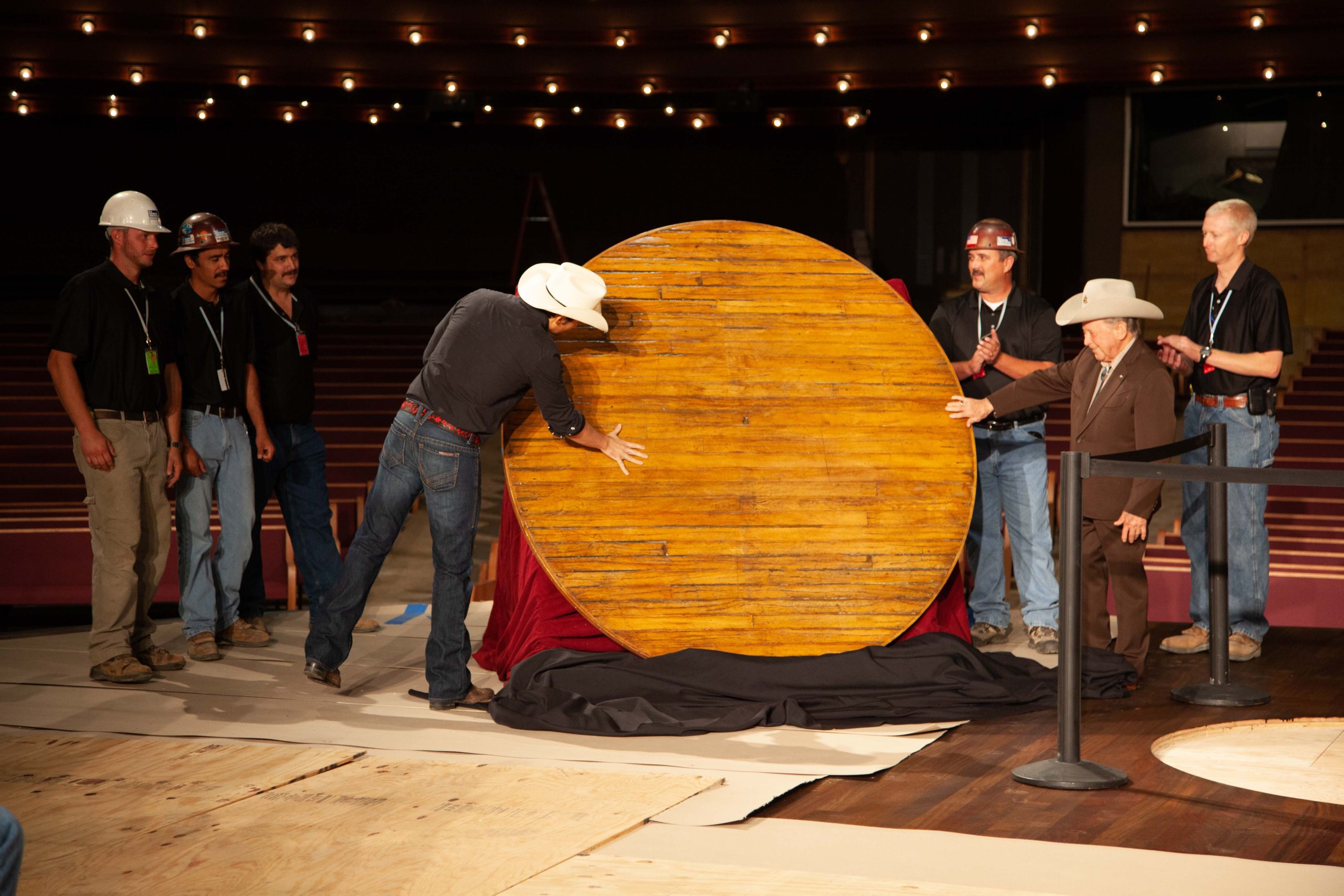
Join The Celebration

There’s nothing low-key about the Grand Ole Opry – so in the classic Opry spirit, fans have had plenty of opportunity to celebrate the centennial all year long.

Earlier this year, NBC broadcast a three-hour anniversary special, with dozens of stars ranging from Reba McEntire to Jelly Roll to The War and Treaty. The Opry also took the show to London’s Royal Albert Hall for the very first time. You can stream clips of these and other Opry events on YouTube and social media.

With the Virgin Music Group, the Opry has produced the album Opry 100, Country’s Greatest Songs (released November 7). Among the unforgettable recordings are Vince Gill singing his heart-rending “Go Rest High on That Mountain,” Dolly Parton singing “I Will Always Love You,” and Ashley McBryde covering the classic “Your Cheatin’ Heart.” You can order the album from the Opry site.

Craig Shelburne, Brenda Colladay, and Opry members and employees collaborated on 100 Years of the Grand Ole Opry, a book filled with anecdotes and photos that vividly illustrate the Opry’s remarkable history. And to teach your children well, there’s also a new childrens’ picture book written by Emily Frans and illustrated by Susanna Chapman. Find them in your local bookstore.

And, on November 28, 2025, the official 100th anniversary of the Grand Ole Opry we all hold dear, the Opry is celebrating with two huge birthday party shows featuring country stars and Opry members like Vince Gill, Ricky Skaggs, Trace Adkins, Dailey & Vincent, Bill Anderson, Jamey Johnson, Marty Stuart, and many, many more. Tickets are available here.

Of course, the celebrations will continue in 2026.

“The Opry is the core and soul of country music,” Bentley said. “It’s a place where the past, present and future of our genre all come together. There isn’t anywhere else like it.”


Continue exploring our Artist of the Month coverage of Opry 100 here.

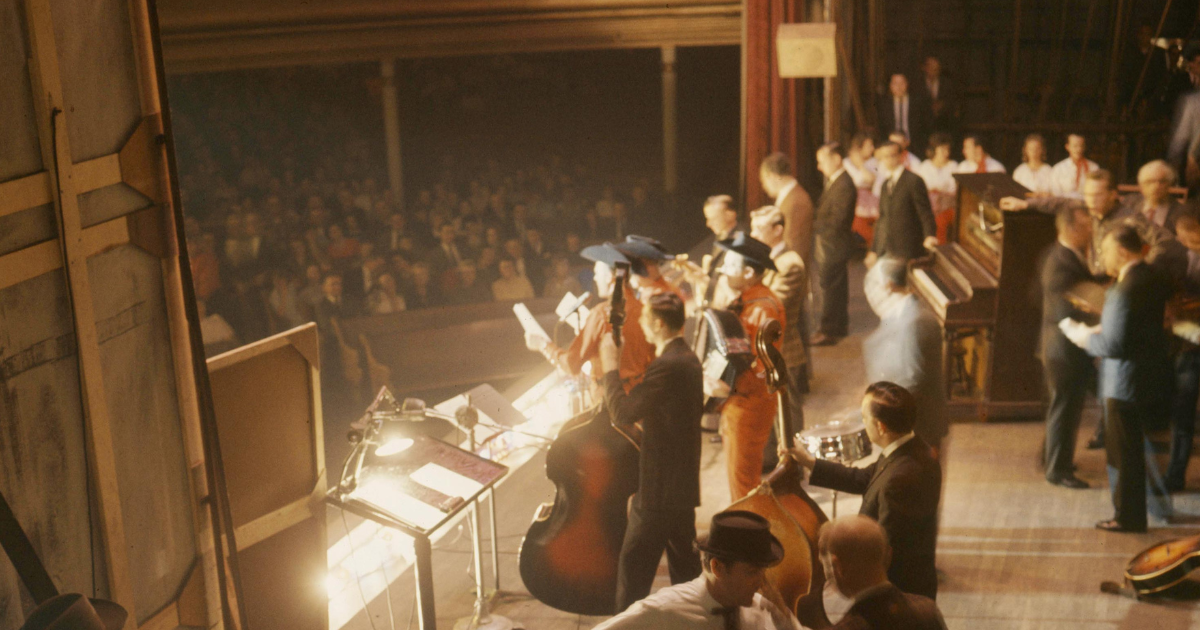
All photos courtesy of Ryman Hospitality Properties, credits and attributions as marked. Lead image: Bill Monroe & the Blue Grass Boys and the Opry Square Dancers take the Opry stage at the Ryman Auditorium in the 1960s.

Celebrating Women’s History Month: Sister Rosetta Tharpe, Laurie Lewis, and More

Our partnership with our friends at Real Roots Radio in Southwestern Ohio concludes as we wind down our weekly celebration of Women’s History Month. We’re proud to have brought you four collections of a variety of powerful women in bluegrass, country, Americana, folk, and elsewhere who have been featured on Real Roots Radio’s airwaves each weekday in March, highlighting the outsized impact women have on American roots music. You can listen to Real Roots Radio online 24/7 or via their FREE app for smartphones or tablets. If you’re based in Ohio, tune in via 100.3 (Xenia, Dayton, Springfield), 106.7 (Wilmington), or 105.5 (Eaton).

American roots music, historically and currently, has often been regarded as a male-dominated space. It’s certainly true of the music industry in general and these more down-home musics are no exception. Thankfully, American roots music and its many offshoots, branches, and associated folkways include hundreds and thousands of women who have greatly impacted these art forms, altering the courses of roots music history. Some are relatively unknown – or underappreciated or unsung – and others are global phenomena or household names.

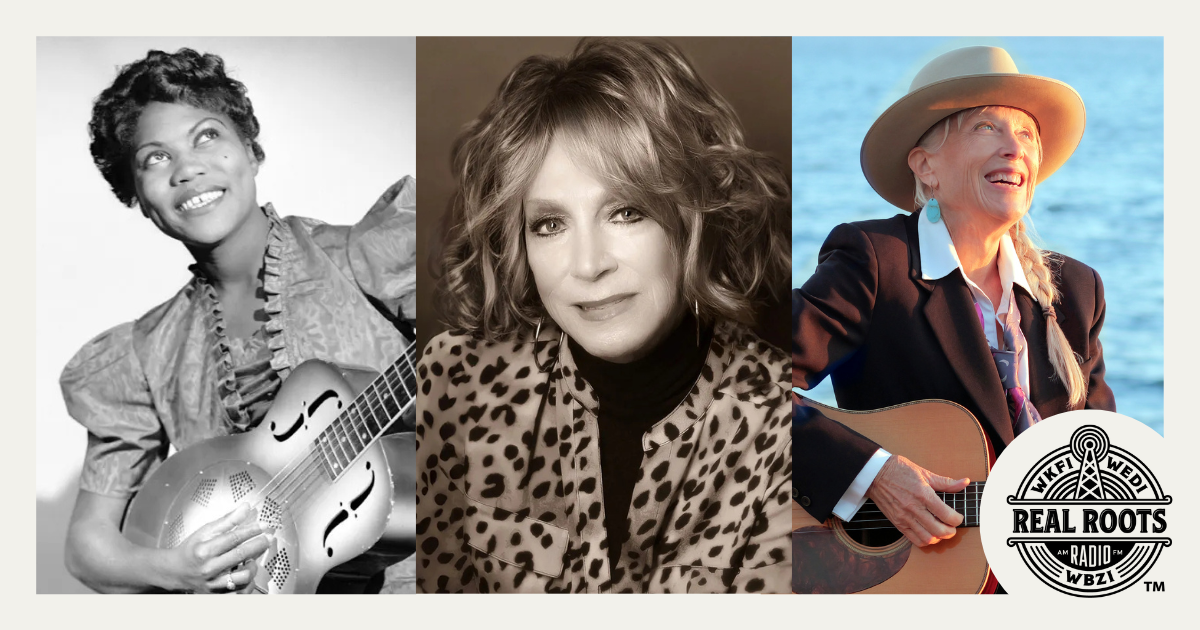
Over the last few weeks, radio host Daniel Mullins, who together with BGS and Good Country staff has curated the series, has brought you just a few examples of women in roots music from all levels of notoriety and stature. Week one featured Dottie West, Gail Davies, and more. Week two shone a spotlight on Big Mama Thornton, Crystal Gayle, Rose Maddox, and more. Week three, paid tribute to Emmylou Harris, Wild Rose, Mother Maybelle, and more. This final installment of the series celebrates Laurie Lewis, the Coon Creek Girls, Amanda Smith, Sister Rosetta Tharpe, Petticoat Junction, and Jeannie Seely.

Plus, you can find two playlists below – one centered on bluegrass, the other on country – with dozens of songs from countless women artists, performers, songwriters, and instrumentalists who effortlessly demonstrate how none of these roots genres would exist without women.

Laurie Lewis (b. 1950)

A GRAMMY-winning singer, songwriter, and fiddler, Laurie Lewis is a California native who has been blazing trails in bluegrass for over four decades. She became enamored with folk music after attending the Berkeley Folk Festival in her youth – she has since made an indelible mark on American roots music with her work in bluegrass and beyond!

Whether leading her band, Laurie Lewis & The Right Hands, performing solo, or collaborating with her pal Kathy Kallick – with whom she helped found the Good Ol’ Persons in 1970s, pushing norms in the process – Laurie’s soulful vocals and skilled fiddle work have made her a standout in bluegrass for a lifetime. Her songwriting paints vivid pictures of love, loss, and the land, while her honest voice pulls at the heartstrings, earning her two IBMA Female Vocalist of the Year awards.

Her recording of “Who Will Watch the Home Place” was named IBMA’s Song of the Year in 1994 and has touched hearts for generations. It’s a certified bluegrass classic and is still a staple on bluegrass radio programs. Another beloved composition, “Love Chooses You,” has been recorded by Laurie, Jeannie Kendall, Kathy Mattea, and more.

Laurie Lewis isn’t just a performer – she’s a mentor, a producer, and a keeper of the bluegrass flame, not only by encouraging the next generation of bluegrass music makers, but also by shining a light on significant voices of the past like Vern & Ray and Hazel & Alice. This West Coast bluegrass leader was honored by the IBMA with their Distinguished Achievement Award in 2024.

Suggested Listening:
Love Chooses You
The Bear Song
I’m Gonna Be the Wind

The Coon Creek Girls (active 1937 – 1957)

We’re heading back to the 1930s with an all-female string band that made history, the one and only Coon Creek Girls! It was 1937 when talent scout and radio pioneer John Lair formed the Coon Creek Girls for the Renfro Valley Barn Dance radio show on the airwaves of Cincinnati’s WLW. Led by the talented Lily May Ledford on banjo alongside her sister Rosie, Esther Koehler, and Evelyn Lange, these ladies brought high-energy mountain music to the masses.

Their popularity on radio brought opportunities to tour around the Midwest and even record in Chicago. They didn’t just play, they broke barriers! In 1939, First Lady Eleanor Roosevelt selected the Coon Creek Girls to perform at the White House for President Franklin D. Roosevelt and the King and Queen of England. A hillbilly band of women? Unheard of at the time! But they proved talent knows no boundaries.

The Coon Creek Girls would be an influence on folks like Cathy Fink, Suzanne Edmondson (of The Hot Mud Family and Dry Branch Fire Squad), and even Pete Seeger. While the historic group would disband in the 1950s, John Lair would revive their legacy decades later by helping pull together another all-female bluegrass band to again perform at the Renfro Valley Barn Dance (which had relocated to Mount Vernon, Kentucky, becoming a popular country music tourist destination for decades). With the blessing of Lily May Ledford, this new act was called The New Coon Creek Girls and would make music consistently for nearly twenty years, helping springboard the careers of Pam Perry and Pamela Gadd (of Wild Rose), Wanda Barnett, Vicki Simmons, Deanie Richardson, Dale Ann Bradley, and more.

The Coon Creek Girls inspired generations, proving women belonged in country and bluegrass. Their legacy lives on in every banjo-pickin’ girl who follows in their footsteps!

Suggested Listening:
Flowers Blooming In The Wildwood
Banjo Pickin’ Girl

Amanda Smith (b. 1975)

Amanda Smith’s voice soars like the mountains of West Virginia from which she comes. She has been a force in the bluegrass world for years. Amanda met her husband Kenny in the mid ’90s at a Lonesome River Band concert (he was playing guitar with LRB at the time). Not only did Kenny fall in love with Amanda, but he fell in love with her voice as well.

Kenny would leave LRB at the turn-of-the-century and he and Amanda would form the renowned Kenny & Amanda Smith Band, a duo celebrated for their tight harmonies and masterful musicianship. They were named Emerging Artist of the Year by the IBMA in 2003 and they haven’t slowed down since. With a sound built on Amanda’s gripping vocals and Kenny’s exquisite guitar work, they have been a staple of the bluegrass world for nearly twenty-five years, racking up many #1 hits on bluegrass radio and frequently seen on stages across the country – both as a duo and with the Kenny & Amanda Smith Band.

Their band has also introduced bluegrass audiences to some of the top pickers of today’s generation, including Jason Davis, Zachary McLamb, Cory Piatt, and Alan Bartram (Amanda’s brother-in-law). Whether delivering beautiful ballads or bluegrass barnburners, Amanda’s voice is one of the most beloved in the genre today, leading to multiple awards, including the IBMA Female Vocalist of the Year honor in 2014. From festival stages to radio waves, Amanda Smith continues to leave a lasting mark on bluegrass.

Suggested Listening:
Feeling of Falling
Mountain Top

Sister Rosetta Tharpe (1915 – 1973)

The Godmother of Rock ‘n’ Roll, Sister Rosetta Tharpe was one of the most influential artists of the 20th century. Born in 1915, Tharpe was shredding on an electric guitar before rock even had a name! With a gospel heart and a rock and roll soul, she fused spirituals with electrifying riffs, paving the way for Chuck Berry, Elvis, and even Jimi Hendrix. Her hit, “Strange Things Happening Every Day,” was one of the first gospel songs to cross over to mainstream charts and is pointed to by many as the first rock and roll record, proving that faith and fiery licks could share the stage.

The juxtaposition of performing her powerful gospel songs in smoky barrooms is the stuff of legend. Her gospel hits like “This Train,” “Down by the Riverside,” “Up Above My Head,” and “The Lonesome Road” are still revered and helped shape the musical identity of artists as diverse as Johnny Cash, Elvis Presley, Tina Turner, Jerry Lee Lewis, Rhiannon Giddens, and more. Despite being a woman in a male-dominated industry, she didn’t just break barriers – she smashed them! Sister Rosetta Tharpe was posthumously inducted into the Rock and Roll Hall of Fame in 2018.

Suggested Listening:
This Train
Up Above My Head

Petticoat Junction (active 1988 – 1998)

A bluegrass festival mainstay of the ’80s and ’90s, Petticoat Junction was a popular all-female traditional bluegrass band that helped open doors for some of today’s “girl groups” like Della Mae and Sister Sadie. In fact, there are several direct connections between Sister Sadie and Petticoat Junction. Not only was Sadie banjoist Gena Britt a member of Petticoat Junction (primarily playing bass), but reigning IBMA Female Vocalist of the Year Jaelee Roberts has followed in her mother’s footsteps. Andrea Mullins Roberts was an anchor of Petticoat Junction’s sound with her rich, traditional voice and strong guitar playing before becoming a respected booking agent, manager, and behind-the-scenes businessperson in today’s bluegrass industry.

One of the most celebrated lineups of Petticoat Junction featured Robin Roller (banjo) and Gail Rudisill-Johnson (fiddle) alongside the aforementioned Andrea and Gena. This particular four-piece ensemble released a pair of great albums for Pinecastle Records in the early ’90s, in addition to touring heavily at festivals from coast-to-coast. Deriving their name from the popular ’60s sitcom (whose theme song would be a hit for Flatt & Scruggs), their heartfelt vocals and instrumental prowess shone brightly, whether on original songs or on material from the likes of Jimmy Martin, Reno & Smiley, Flatt & Scruggs, and more.

In addition to continuing to open avenues for other all-women bands, Petticoat Junction’s influence is still being felt in the 21st century as they’ve influenced acts like Flatt Lonesome and Starlett & Big John.

Suggested Listening:
I’d Miss You
Lift Your Eyes To Jesus

Jeannie Seely (b. 1940)

From the bright lights of the Grand Ole Opry to the heart of country music, today we’re tipping our hats to “Miss Country Soul,”  Jeannie Seely! Born in Pennsylvania, but a Nashville star through and through, Jeannie Seely made history in 1966 with her Grammy-winning hit “Don’t Touch Me,” an envelope-pushing and controversial song due to its featuring a woman expressing sexual desires. With her bold style, unmistakable voice, and trailblazing spirit, she became a beloved icon in country music.

Seely shattered barriers, becoming the first performer to wear a miniskirt on the Opry stage (among other fashion trends she helped bring to country music), being the first woman to host an Opry segment, and fiercely advocating for women in country. Jeannie’s also a respected country music songwriter, writing hits like “Leavin’ and Sayin’ Goodbye” (Faron Young), “He’s All I Need” (Dottie West), “Enough to Lie” (Ray Price), and more; folks like Merle Haggard, Rhonda Vincent, Connie Smith, Ernest Tubb, and Little Jimmy Dickens have recorded her songs over the years.

More than 50 years later, Jeannie is still gracing the Grand Ole Opry stage, holding the record for the most Opry performances ever – 5,200+ appearances and counting! Just as Dottie West encouraged her when she was a young country artist, Jeannie is constantly investing in the future of country as a dear friend and mentor to her Opry sisters, like Carly Pearce and Rhonda Vincent, and even to the young bluegrass band, Cutter & Cash and The Kentucky Grass. She proves that true country never fades. So here’s to Jeannie Seely – an icon, a trailblazer, and a country legend who continues to shine!

Suggested Listening:
Can I Sleep In Your Arms
So Far, So Good” (featuring The Whites)


Photo Credit: Sister Rosetta Tharpe from the Michael Ochs Archives; Jeannie Seely by Cyndi Hornsby; Laurie Lewis by Irene Young.

You Gotta Hear This: New Music From Rhonda Vincent, Joy Clark, and More

Are you enjoying brat summer? We sure are, too, but as Teddy and the Rough Riders declare with their new video dropping today in You Gotta Hear This, “Catfish Summer” is what it’s really all about!

That’s not all our premiere round-up holds this week, either. We’ve got new videos from folks like guitarist-songwriter Joy Clark and Texan-Los Angeleno Silas Nello, and a new track has been unveiled by Americana duo Ocie Elliott, too.

Don’t miss bluegrass offerings from up-and-comers and legends, both. Jaelee Roberts brings a new single, “Between The Two Of Us,” East Nashville mainstays Greenwood Rye premiere “Down to the River,” and the Queen of Bluegrass herself, Rhonda Vincent, pays tribute to her homeland of Missouri with a song co-written by Opry star Jeannie Seely and Music Row stalwart writer Erin Enderlin. Vincent’s new album, Destinations And Fun Places, hits store shelves and digital platforms today.

To round out this edition of our weekly collection of premieres, don’t miss Moira Smiley’s rendition of the classic Jean Ritchie song, “Now Is The Cool Of The Day,” which debuted on the site earlier this week in honor of Farmworker Appreciation Day. It’s all right here on BGS and You Gotta Hear This!

Joy Clark, “Lesson”

Artist: Joy Clark
Hometown: New Orleans, Louisiana
Song: “Lesson”
Album: Tell it to the Wind
Release Date: October 4, 2024
Label: Righteous Babe Records

In Their Words: “My grandma is and was my root and when she passed, I thought about the gems she imparted to me in her 86 years of life. She’d say to me ‘Get your lesson!’ I’d sit at her table and talk to her. I came out to her at that very table. She accepted me. After she died, I sat down with my producer Margaret Becker to write, and the lyrics just rolled out; capturing the way my grandma lived her life. She taught me to treat everyone with kindness and to strive for peace while never backing down from a good fight. It’s a timely ‘Lesson’ for this country as we fight to take our rightful place in the struggle for freedom.” – Joy Clark

Video Credits: Directed and shot by Jared LaReau, Something Human.
AJ Haynes – Creative Assistant 


Ocie Elliott, “Adelina”

Artist: Ocie Elliott
Hometown: Victoria, British Columbia, Canada
Song: Adelina
Release Date: August 9, 2024
Label: Nettwerk Music Group

In Their Words: “‘Adelina’ is about a fictional heroine inspired by a combination of legendary musicians and personal idols –people who hone that extra something inside of them to carve their way through the barriers of the tangible world, prying doors open for others in their wake. In comparison to some of our previous recordings, the final result of ‘Adelina’ reflects the way in which it was put together – with a lot of play, compromise, reinventing, and scrubbing at the built-up grime and loose ideas to make a smooth surface for finer grit to be poured back in. To us, it feels louder, more immediate, and present. It’s a song you play when leaving somewhere – a ‘windows down, future open and ready’ kind of song.” – Sierra Lundy and Jon Middleton, Ocie Elliott


Greenwood Rye, “Down to the River”

Artist: Greenwood Rye
Hometown: Nashville, Tennessee
Song: “Down to the River”
Album: Hideaway
Release Date: August 9, 2024 (single); August 23, 2024 (album)

In Their Words: “‘Down to the River’ was one of the first songs I wrote when I moved to Nashville in 2020 and the first original song we started playing live as we started Greenwood Rye during the pandemic as the house band for Jane’s Hideaway in Nashville. I wanted to write the quintessential song for what we were trying to do as a band. It is a fun, funky groove with a singable chorus, has a jamgrass style instrumental bridge, and plays around lyrically with some bluegrass themes. I was thinking a lot of ‘Old Home Place’ and how the narrator is blaming others for his problems. So, I came up with the idea to have a character who takes responsibility for his actions. He ‘runs off to the vineyards’ rather than the ‘taverns took all his pay.’ But there is also a level of hubris in the narrator, as he feels like he can just go ‘down to the river’ every time he does someone wrong ‘again.’

“The track features Sasha Ostrovsky (Darius Rucker, Bering Strait) on dobro.” – Shawn Spencer, guitar, vocals, songwriter

Track Credits: Written by Shawn Spencer.
Shawn Spencer – Guitar, vocals
Cat McDonald – Fiddle, vocals
David Freeman – Mandolin, vocals
Taylor Shuck – Banjo
Sasha Ostrovsky – Dobro
Larry Cook – Bass

Produced & mixed by Billy Hume.
Mastered by Pete Lyman.
Matt Coles – Additional engineering
Recorded at Compass Records.


Silas Nello, “Holy Ghost Blues”

Artist: Silas Nello
Hometown: Los Angeles, California via Dallas, Texas
Song: “Holy Ghost Blues”
Album: From West Hollywood
Release Date: August 9, 2024 (single); September 13, 2024 (EP)
Label: Blackbird Record Label

In Their Words: “It came to me in a dream – a sort of fantasized crossroads moment of how mankind trades this for that and we don’t realize until the deal is already done. I wrote this song at the wet bar of my then 1980s home just north of Dallas sometime in 2016.” – Silas Nello

“The video was meant as a portrait of Silas Nello. We went around Los Feliz, West Hollywood, and Wild Horizon Sound, documenting his travels like a ‘day in the life.’ We broke the fourth wall with Silas acknowledging the camera and the audience throughout the piece. What this created was an intimate moment where we’re spending time with him but he was also spending time with us.” – Taylor Hungerford, filmmaker, Silverspark Printworks

Track Credits: Written by Silas Nello.
Silas Nello – Lead vocal, background vocal, acoustic guitar, harmonica, tambourine
Produced by Claire Morison & Silas Nello.
Recorded at Wild Horizon Sound.
Recording engineer, mixing engineer, and mastering engineer – Claire Morison

Video Credit: Taylor Hungerford, Silverspark Printworks


Jaelee Roberts, “Between The Two Of Us”

Artist: Jaelee Roberts
Hometown: Nashville, Tennessee
Song: “Between The Two Of Us”
Release Date: August 8, 2024
Label: Mountain Home Music Company

In Their Words: “‘Between The Two Of Us’ was written with my friends Donna Ulisse and Kristen Bearfield. When we got together, we agreed that we’d like to write something up-tempo and happy, and ‘Between The Two Of Us’ is the result of that session. It truly is a happy song about love lasting between two people and what you have to do to achieve that. Getting to hear this song come together in the studio was really amazing, and I am so thrilled with the end result. The musical arrangement provided by Ron Block, Andy Leftwich, Cody Kilby, Byron House, Justin Moses, Stuart Duncan, and John Gardner absolutely made this song even more special than I could have imagined! To top it off, Stephen Mougin and Kelsi Harrigill joined me on harmonies and their voices were the perfect touch to convey the message of the song. I hope y’all enjoy this love song that is filled with words of hope, joy, and encouragement.” – Jaelee Roberts


Teddy and the Rough Riders, “Catfish Summer”

Artist: Teddy and the Rough Riders
Hometown: Nashville, Tennessee
Song: “Catfish Summer”
Album: Down Home
Release Date: October 11, 2024 (album)
Label: Appalachia Record Co.

In Their Words: “This one is about visiting my mom’s side of the family who live in Rockmart, Georgia. I was 12 or so and didn’t really wanna visit my grandma Lou-Lou that summer. But instead, my mom dropped me and my cousin off at my uncle Bubba’s house for a few weeks, and he lived in an amazing hillbilly shack on the side of a catfish pond with about ten dogs, deep in the woods. Greatest summer ever! From childhood bummer to high time.” – Ryan Jennings, Teddy and the Rough Riders


Rhonda Vincent, “I Miss Missouri”

Artist: Rhonda Vincent
Hometown: Greentop, Missouri
Song: “I Miss Missouri”
Album: Destinations And Fun Places
Release Date: August 9, 2024

In Their Words: “My Grand Ole Opry sister Jeannie Seely started writing ‘I Miss Missouri’ for me several years ago. She lost everything, including the lyrics she had written, in the Nashville flood of 2010. Fast forward to February 29, 2020, the night she made my greatest dream come true and invited me to be a member of the Grand Ole Opry. We have since become close friends, and after the Opry invitation she said the lyrics started coming back to her.

“She invited Erin Enderlin and I to join her in writing the song. ‘I Miss Missouri’ was the inspiration for creating a ‘destinations’ project, with all the songs representing a destination.” – Rhonda Vincent

Track Credits: Written by Jeannie Seely, Erin Enderlin, and Rhonda Vincent.
Adam Haynes – Fiddle
Rhonda Vincent – Lead vocal, mandolin
Mickey Harris – Bass
Zack Arnold – Guitar, harmony vocal
Aaron McDaris – Banjo
Jacob Metz – Resophonic guitar


Moira Smiley, “Now Is The Cool Of The Day”

Artist: Moira Smiley
Hometown: New Haven, Vermont
Song: “Now Is The Cool Of The Day”
Album: The Rhizome Project
Release Date: September 6, 2024

In Their Words: “August 6th is Farmworker Appreciation Day, and I didn’t know that until this year. I am writing this as I sit on a hill above the rolling Vermont farmland where I grew up being a young farmworker and musician. In honor of this day, I’m releasing one of my favorite songs of all time – and the best one I know for reminding us to slow down and remember our roles as carers and tenders of this beautiful planet and the people around us. This week, I’m showering appreciation on the people that grow and tend food in my area; buying from small farmers, donating to the Open Door clinic that serves the medical needs of immigrant agricultural laborers. This gentle video hopes to slow your pace, and bring you along with me in acknowledging that farmworkers make our nourishment possible. Let us thank them.” – Moira Smiley

Read more here.


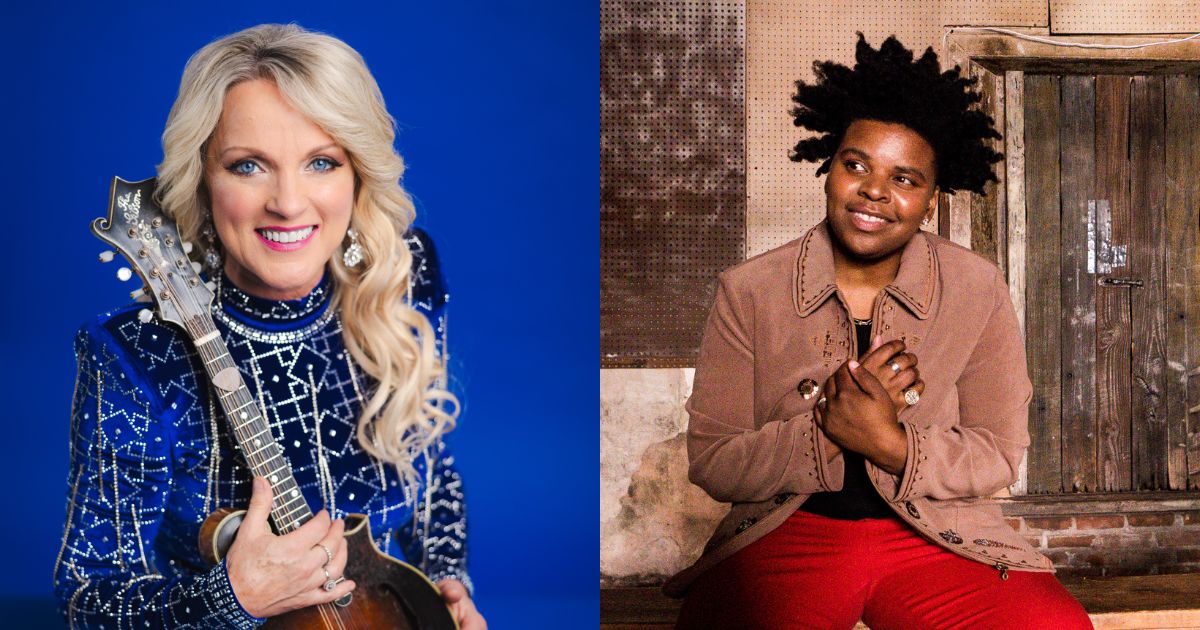
Photo Credit: Joy Clark by Steve Rapport; Rhonda Vincent by Tanner West.

BGS Wraps: Patty Loveless, Darin & Brooke, Brei Carter, and More

How is December already half over? Christmas is merely 10 days away – and in just over six days, Winter Solstice will bring the light back into our lives. We hope your home smells of evergreen and sugar cookies and that a seasonal roots music tune is wrapping you up in wintry coziness. If that isn’t the case, we can help with the rootsy seasonal tunes bit!

For our third week of BGS Wraps, we have celebratory bluegrass alongside loping country, introspective indie and gothic Tim Burton-esque tales, too. Plus, don’t miss Jeannie Seely as Grand Marshal of the Donelson Hermitage Christmas parade in Nashville tomorrow.

Whatever you’re celebrating this season, we’ve got the music, songs, albums, and events to pair with your peace and joy.

Darin & Brooke Aldridge, Hometown Holiday

One of bluegrass’s preeminent couples, Darin & Brooke’s new Christmas album, Hometown Holiday, feels like an afternoon visit in their living room, as they play down a few of their favorite seasonal numbers. The husband and wife duo are known for their covers of non-bluegrass songs, and several among this collection truly shine – like Joni Mitchell’s “River,” rendered beautifully by Brooke. You’ll hear country piano, a modern classic popularized by Amy Grant, “The Chipmunk Song,” and more, all packaged with a neat and tidy bluegrass bow.


Beth // James, Christmas at the Burchills

Friends of BGS will know this team loves a good tiki drink, so including this Beth // James original seemed essential for our holiday Wraps. “Tiki Christmas Land” is one of four originals – joined by a cover of “Blue Christmas” – on Beth // James’ new EP, Christmas at the Burchills. Make yourself a holiday mai tai or painkiller and enjoy your visit with Beth, James, and the Burchills.


Brei Carter, Twinkling Tales of Christmas

Your cheeks may be a bit rosier after listening to Brei Carter’s jazzy, pop country holiday collection, Twinkling Tales of Christmas – and not just because of the chill in the air! “50 Shades of Christmas” will certainly get you in a festive and adventurous mood, and “Santa Wontcha” is for all Christmas season fans who proudly extend the season well prior to Thanksgiving. But “Bow on You” and “Christmas Is You” are certainly the stand out tracks.


38th Annual Donelson Hermitage Christmas Parade December 16, with Grand Marshal Jeannie Seely

If you’re near to Music City USA, head out to Donelson tomorrow afternoon, December 16, to catch country legend Jeannie Seely as she Grand Marshals the 38th Annual Donelson Hermitage Christmas Parade. Seely is standing in for Brenda Lee, who ended up being unable to attend the event – and who better to step into Lee’s Christmas hit-singing shoes? Seely has been involved with the parade many a time before and this year is an especially perfect time for the Grand Ole Opry member to Marshal, as she just released a holiday single with the Flat River Band entitled “Christmas Time.”


Pat McGrath, “Let’s Just Get Past Christmas”

A smooth, swingin’ Christmas song from singer, songwriter, studio musician Pat McGrath that looks forward, willing the new year to come fast and wipe the slate clean. A great tune for anyone who feels the holidays are often bittersweet, with a heavy dose of love and putting one foot in front of the other, you can get past just about anything. Christmas included.


Drake Milligan, “Cowgirl for Christmas”

More Christmas songs need yodeling, right? Right. Drake Milligan’s “Cowgirl for Christmas” is a delight, from the sound stage music video set that feels direct from a ‘50s western to the catchy, yodeled hook, to the danceable, western swing beat. Not a brand new track or video, but one worth remembering each year when December rolls around for sure. You’ll be wishin’ for a cowgirl under your tree, too.


The Nields, “The Darkest Day”

A harmony rich neo-folk song from The Nields, “The Darkest Day” was released earlier this year on their brand new album, Circle of Days. To herald solstice, they’ve brought out a video to highlight the track and ask the titular question, “What do you want on the darkest day?” A timely reflection, as we welcome back the sun and look ahead to spring – however far away it may feel.


Malin Pettersen, “Santa”

Malin Pettersen’s first ever Christmas song is an entire vibe. With a classic R&B back beat and conversational tone with Americana touches, Pettersen lays out her wishes for the holiday – for her longing to end and for some light to brighten the holidays and dark January. Whomever you’re trying to manifest into or out of your life, Pettersen can offer a shortcut to writing your letter to the big man at the North Pole.


Hannah Rose Platt, “The Wendigo Rag”

Wendigos and skinwalkers, oh my! If your TikTok For You Page knows that you love a cryptid tale or the paranormal or other unexplained phenomenon, Hannah Rose Platt has made a wintry, stop motion, Tim Burton-esque video just for you. And if you’d like to continue your rootsy Wendigo songs playlist, we have another selection from back around Halloween by Thunder & Rain you’d enjoy, too.


Larry Sparks, “White Christmas”

Each Christmas we’re reminded of this amazing album by bluegrass legend Larry Sparks and especially of this four-chord version of a holiday classic, “White Christmas.” Only a picker like Sparks could pave over such an iconic chord progression without leaving the listener missing it – at all. “White Christmas” is a jam buster no more, anybody can play along. We put this album on every year around the holidays and are never disappointed.


Sofia Talvik, “Alone for Christmas”

Swedish folk and Americana singer-songwriter Sofia Talvik utilizes jazz touches and dramatic strings to paint a lonesome Christmas portrait that both relishes and abhors the season. Playing around within that paradox – how can lonely holidays feel so bereft of Christmas spirit, while also epitomizing so many of the feelings of the season? The repetition in the song (“Alone for Christmas… Again. Again.”) underlines how being “Alone for Christmas” really isn’t as uncommon or unfamiliar as any of us would hope it is.


The Wildwoods, “Somewhere in the Snow”

Nebraska-based folk trio The Wildwoods offer their first-ever holiday song, “Somewhere in the Snow,” replete with a Peanuts-style animated video. It’s gauzy and sweet with a burnished patina and tone of redemption. Whether you love or hate the snow, it certainly seems like a perfect place to bury your troubles and fears.


Our Classic Holiday Album Recommendation of the Week:
Patty Loveless, Bluegrass & White Snow, A Mountain Christmas

Patty Loveless’s bluegrass bona fides are unassailable, it’s true, but this album might clinch her claims to the genre, if ever challenged by a naysayer or proverbial chair snapper. Bluegrass & White Snow is a perfect combination of classic, sing-along carols and bluegrass staples, plus a couple of bespoke beauties, too, sung as only Patty could sing them. With a big, belty voice that carries with it some of that signature high lonesome grit. Dr. Ralph would be proud. (And he was.)


Photo Credit: Darin & Brooke Aldridge by Kim Brantley; Brei Carter courtesy of the artist; Drake Milligan courtesy of the artist.

The String – Elizabeth Cook

Elizabeth Cook was welcomed with celebration into the Nashville country music fold in the early 2000s, because of her charm, her fascinating story, and her bracing traditional country songs and songwriting.


LISTEN: APPLE PODCASTS

Cook has become an Americana star in the intervening years, but she had some rough times in the 2010s. Now back with an album, Aftermath, she’s on solid ground and reflective about a creative life with ups and downs. While Cook has played the Grand Ole Opry more than 400 times, Jeannie Seely has been on the show steadily since 1967. We catch up with the beloved veteran as she releases An American Classic at 80 years young.

BGS 5+5: Special Consensus

Artist: Greg Cahill of Special Consensus
Hometown: Oak Lawn, Illinois
Latest album: Chicago Barn Dance
Personal nicknames (or rejected band names): Special C

What other art forms — literature, film, dance, painting, etc — inform your music?

I actually enjoy and appreciate all the forms listed here. I have always been a history buff and read a good bit of American history books as well as books about country and bluegrass music. I also enjoyed the Carlos Castenada books of the 1970s, which actually inspired our band name, Special Consensus. I very much enjoy live theater (Hamilton was unbelievably superb) as well as seeing movies in movie theaters and I am a fan of Cirque du Soleil dance troupe. Living in Chicago provides access to fantastic museums and of course the Art Institute, where I thoroughly enjoy spending an afternoon any time.

What was the first moment that you knew you wanted to be a musician?

My mother’s mother was a fabulous piano player who played for silent movies and gave piano lessons throughout my mother’s childhood so my mom also became a great piano player. My father’s father was a great harmonica player who would give me his old harmonicas whenever he got a new one (usually a Christmas present from my grandmother) and he began teaching me to play when I was 5 years old. My father was a great tenor singer in the church choir. By the time I was 7 or 8 I began taking accordion lessons, which I continued until I was about 15.

By senior year of high school I became interested in string instruments and went off to college with guitar and long-neck banjo (a la Pete Seeger and Dave Guard of the Kingston Trio) in hand and played in a folk group until graduation. I first actually heard bluegrass music around junior year of college and dabbled with playing 3-finger style on the banjo, went into the Army for two years after graduation and came back to Chicago after living in Georgia for a bit and seriously began to try and play the five-string (around 1970-71). I have always had music in my heart and in my bones and I still absolutely love to play the banjo!

If you had to write a mission statement for your career, what would it be?

I think the most important thing about playing music professionally is to decide what you really want to do and set some goals. A mission statement might be something like practice your music to hone your skills, decide what type of music you really want to play and set goals for creating musical situations for yourself (like finding other people to play with) and be willing to continually work on improving. One has to create opportunities for oneself in the world of music.

It is vital to attend concerts to hear the music you want to play, to practice a lot and to seek those opportunities to play with others. Audition for bands you would like to play with whenever there is an opening. Once you are in a band or are gigging as a solo or duo/trio artist or in any configuration, take it seriously — it is very enjoyable but it is also now your job. Most importantly, don’t give up if this is what you really want to do. There will always and forever be huge ups and downs — keep the faith, believe in yourself and keep on keepin’ on!

What’s your favorite memory from being on stage?

I would have to say it was the first time Special C ever played the Grand Ole Opry. It was in I think 2003 and the Opryland venue was under renovation so we played at the Ryman Auditorium. My bandmates at the time were Josh Williams, Jamie Clifton, and Tim Dishman. We had been together for a few years and gone through some wonderful times and some difficult times, including being in a bus wreck (fortunately, none of us were seriously injured).

Our individual and collective dream was always to play the Grand Ole Opry and that night we were truly living the dream. After being instructed backstage to play one and only one song, Jeannie Seely introduced us and we went out and played our hearts out. The audience went wild and the whole house was standing and cheering — Jeannie had no choice but to give us an encore. I will never forget that night.

Which artist has influenced you the most … and how?

There are many artists who have influenced me. My parents’ love of music was instilled in me as a young child and they appreciated the “old standards” of the day and Dixieland music — family gatherings always included everyone around the piano singing and then my sisters and I would be asked to play. I was of course influenced by the master Earl Scruggs but then I would say J.D. Crowe became my mentor, even before I ever met him, because I loved his way of creating new licks and ways of playing with the drive and clarity and beauty of Earl’s playing.

Then there are so many great banjo player influences (Munde, Keith, Trischka, Vestal, Bela, Pikelny, Shelor, Shelton, Luberecki, Brown, Kruger, Munford, Benson, etc.). Other musicians whom I admire and listen to include Jethro Burns, Benny Goodman, Louis Armstrong, Buddy Guy, Don Stiernberg and many more. I believe it is the brilliance of these players, this gestalt that has and always will continue to influence me and keep me growing.


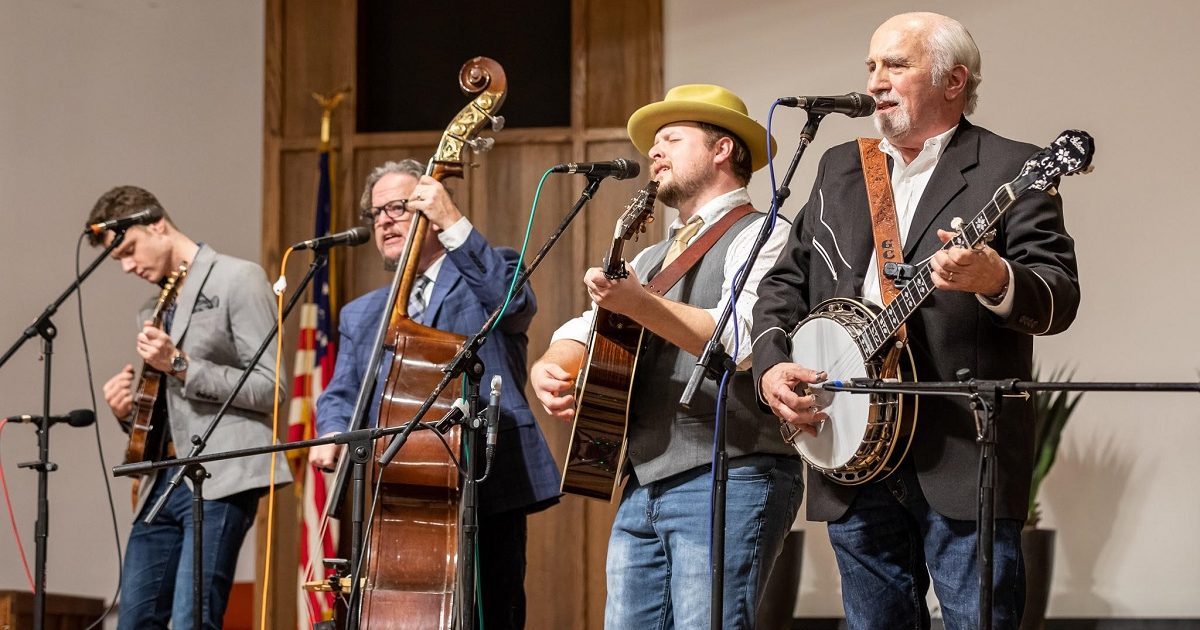
Photo Credit: David K. Cupp

LISTEN: Rhonda Vincent, “Like I Could”

Artist: Rhonda Vincent
Hometown: Greentop, Missouri
Song: “Like I Could”
Release Date: June 19, 2019
Label: Upper Management Music

In Their Words: “As soon as Jeannie Seely started singing ‘Like I Could’ to me, I instantly loved it. It felt like it was written just for me and my vocal style. As we were recording the tracks, it just felt right. You know when you can feel that something is just right for you; like trying on that perfect dress, or pair of shoes. This song was just the right fit.

“The recording session was very impromptu. I had just finished recording a duet for Grand Ole Opry star Jeannie Seely’s new project. There was a cancellation of the afternoon session, and I quickly asked if I could book that time. I called musicians, and it was like it was destiny. The musicians and engineer were there with only an hour’s notice. I sent a message to ask Jeannie for the lyrics and demo. It was really amazing how everything came together.

“I feel that many people will relate to this song and its tremendous heartbreak and sadness. My hope is that there are people who hear this song, namely those in the midst of the devastation of a breakup, who will reconnect and renew their love with each other. It has a very desperate message, asking, ‘What happened, I thought you could see us together forever?’ Maybe this is the perfect song and question they need to hear to bring them back together.” — Rhonda Vincent


Photo Credit: Sharp Images/Rebecca Sharp