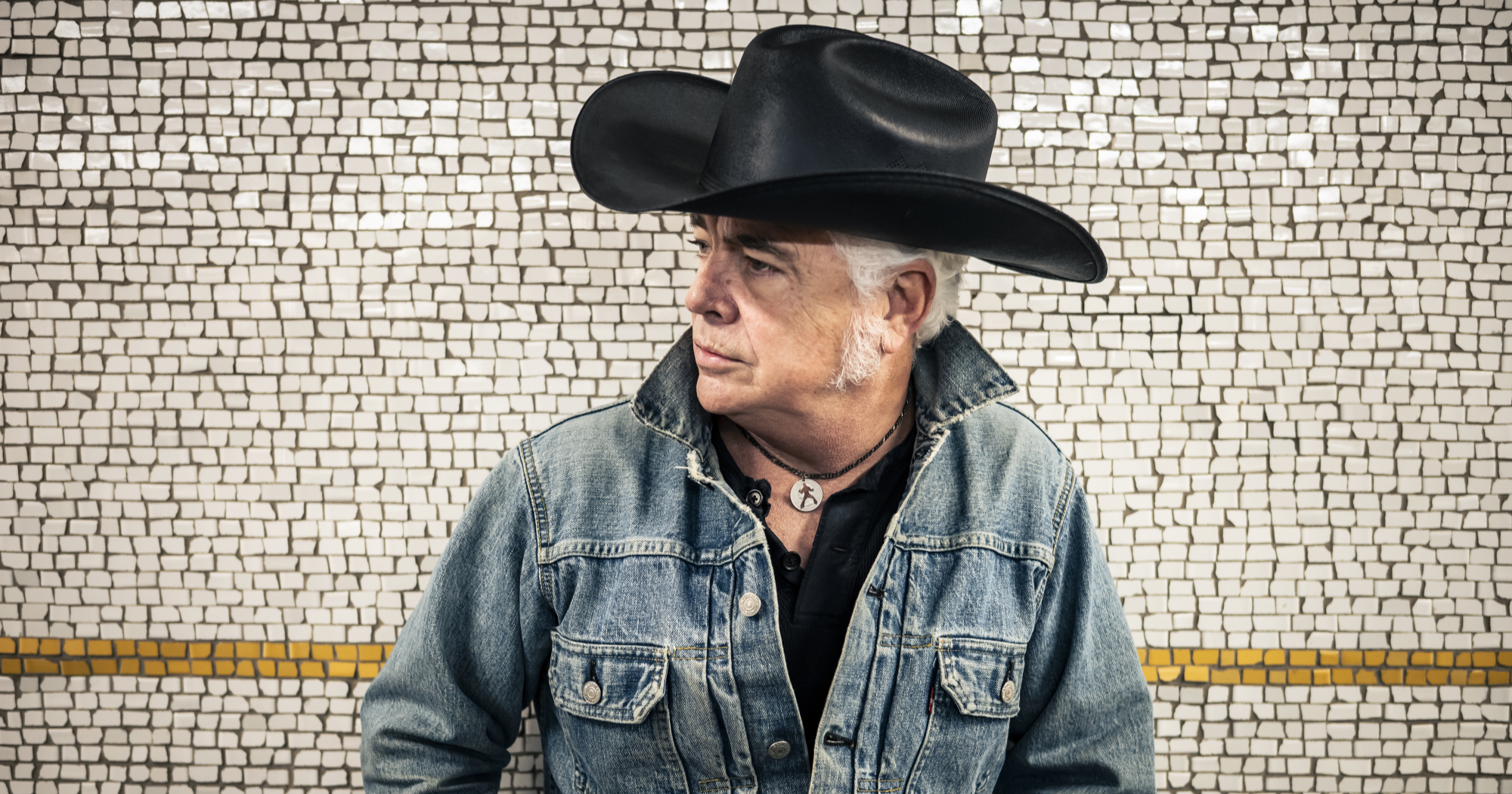
Ameripolitan music can be best defined as original music with prominent roots influence, and it has four categories: honky tonk, Western swing, rockabilly, and outlaw. My Mixtape features a song by an artist that represents the roots and then I’ll play a new artist that directly was influenced by them. You can hear the natural growth of country music when you listen to Lefty Frizzell and Merle Haggard or Kitty Wells and Loretta Lynn back to back. (Many of the roots artists had nicknames, I miss that.)
While some may hear an artist’s influence and say they are copying them, I’m of the opinion that John Lennon shared when asked about The Beatles’ influences. He said, and I paraphrase here, “One’s originality comes out in their inability to imitate their influences.” Very well said. – Dale Watson
“Who’s Gonna Take The Garbage Out” – Loretta Lynn, Ernest Tubb
Ernest Tubb had a distinctive voice as you hear on this song he sings with Loretta Lynn. Here’s the Texas Troubadour with the Coal Miner’s Daughter.
“My Wife Thinks You’re Dead” –Junior Brown
And no one is more evidently influenced by him than Junior Brown.
“Undo the Right” – Johnny Bush
Johnny Bush, otherwise known as the “Country Caruso,” was a drummer for Ray Price, the Cherokee Cowboy, before going out on his own. You would definitely hear that influence if you back-to-back Ray Price to Johnny Bush. Both are huge influences to every singer that grew up in Texas.
“Texas Honky Tonk” – Justin Trevino
This young man from Texas is carrying the Bush torch.
“D-I-V-O-R-C-E” – Tammy Wynette
The First Lady of Country Music, Tammy Wynette was married to the Possum, George Jones. She is easily at the top of women that influenced the newer singers.
“Houston Belongs To Me” – Sunny Sweeney
Singing her own divorce song, here’s Sunny Sweeney!
“Big Balls in Cowtown” – Bob Wills & His Texas Playboys
In the Western swing category this is the master, Bob Wills & His Texas Playboys.
“Riding High in Texas” – Asleep at the Wheel, Billy Strings
Though they’ve been around a while, they still burn up the road and proudly wear Bob Wills as their biggest influence. Ian Stewart sings as guest picker Billy Strings shines.
“Here in Frisco” – Merle Haggard
The Hag has influenced generations and even in death he still does. He once told me he forgot he wrote this song and was glad I brought it up so he can add it to his playlist again.
“This Highway” – Zephaniah OHora
Zephaniah OHora is now based in Nashville and he’s got a lot of great original songs. On this song you can hear the Hag in him.
“Bob Wills Is Still the King” – Waylon Jennings
In the outlaw world there is none more influential than Waylon, and in Texas we were all influenced by Bob Wills.
“Long White Line” – Sturgill Simpson
This particular song draws heavily on Waylon’s influence. And I like it.
“Ramblin’ Man” – Hank Williams
Hank Williams’ voice is one of the most recognizable in music. His songs are timeless and still inspire singers and songwriters alike.
“Thunderstorms and Neon Signs” – Wayne Hancock
You can definitely hear Hank in Wayne Hancock, but his own voice is definitely original, too – as well as his great songwriting.
“Guitars, Cadillacs” – Dwight Yoakam
Dwight Yoakam has influenced many a newcomer. Just as he was obviously influenced by Buck Owens. He came along when Nashville needed reminded of its roots.
“Lost in the City Lights” – Johnny Falstaff
Though not well known as of yet, Johnny Falstaff is picking up Dwight’s hat.
“Blue Kentucky Girl” – Loretta Lynn
The Coal Miner’s Daughter definitely left big shoes to fill, but her sassy songs inspired many women artists.
“Don’t You Ever Give Up On Love” – Brennen Leigh
That inspiration can be traced right to Brennen Leigh.
“Good Hearted Woman” – Waylon Jennings, Willie Nelson
Here’s the quintessential outlaw song by the most famously influential artists, the Red Headed Stranger, Willie Nelson, and Waymore, sometimes called Wautawsha, Waylon Jennings.
“Willie Waylon and Whiskey” – Dale Watson
The last song I’ll put in here’s is mine, because with pride I will state, yes, I am heavily influenced by Willie and Waylon. And sometimes whiskey.
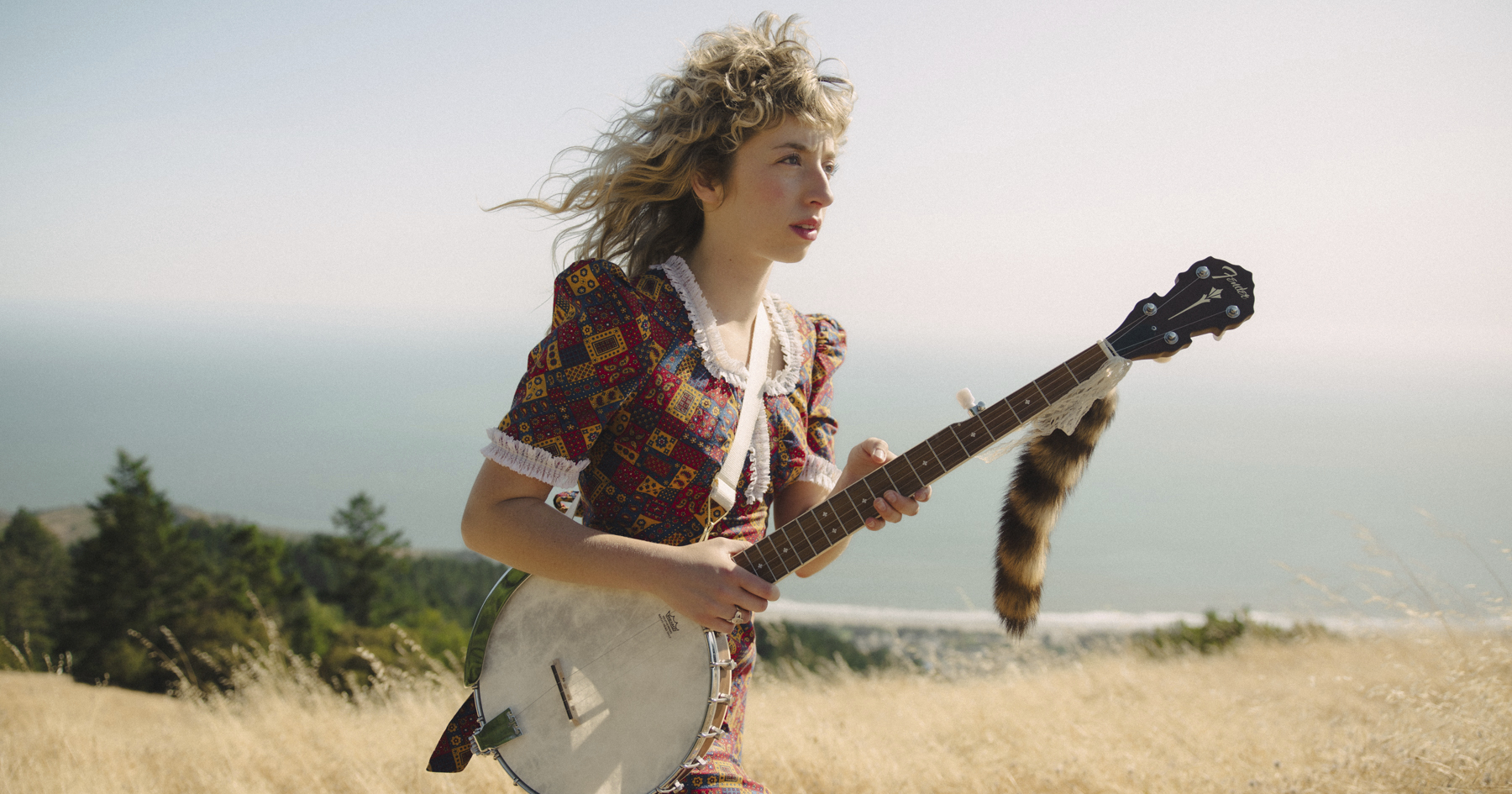
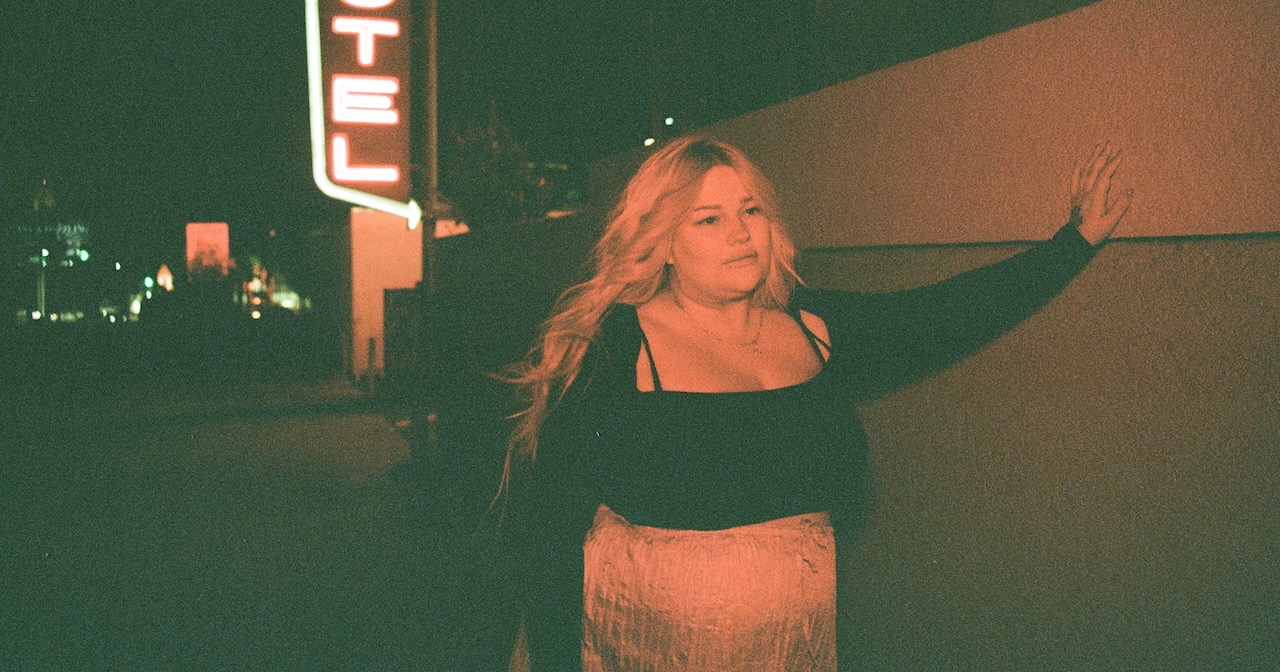
There are plenty of country subgenres out there, but quickly rising up-and-comer Meels has carved out a unique new niche. The California-born singer-songwriter calls her sound “critter country,” a fitting term for her playful but grounded brand of country-leaning roots music, which takes cues from folk of the ‘60s and ‘70s, traditional bluegrass, and classic country a la Loretta Lynn or Willie Nelson.
On her recently released new project, Across the Raccoon Strait, Meels takes listeners on a colorful, far-reaching tour of critter country and in the process announces herself as a fresh, genuinely exciting new voice in the broader roots music ecosystem.
Folks are taking notice – Meels is one of the first handful of artists signed to the newly rebirthed Lost Highway Records, with a legacy of artists like Lucinda Williams, Lyle Lovett, and Johnny Cash, as well as another left-of-center singer-songwriter, Kacey Musgraves, who was announced as the first official signee when the label relaunched last year. Meels has shared stages with artists like Molly Tuttle and Old Crow Medicine Show, and will appear with Margo Price, Carter Faith, and Nitty Gritty Dirt Band this spring.
Below, BGS catches up with Meels about songwriting, “critter country” and signing to Lost Highway.
In the lead-up to releasing Across the Raccoon Strait you shared that this batch of music feels truest, holistically, to who you are as an artist. Can you elaborate on that? What do you think enabled you to express yourself so fully?
Meels: As a writer and a producer and a songwriter and a singer, I really trust my gut and just follow the wave. With these songs, it was just me doing that. A few summers ago, before I made the project, I dove deep into the country classics – like Loretta Lynn and Marty Robbins and Dolly Parton. I got super inspired, the floodgates opened, and I just started writing like crazy. I grew up on a lot of ‘60s and ‘70s folk and my uncle is actually a bluegrass musician. He gigged around town where he lives in upstate New York. So I was already introduced to that world, but I took a deep dive and felt really inspired. The project just kind of poured out of me.
Would it be fair to say you found some unexpected connection points or overlap in those genres – the bluegrass and folk you grew up with, then the classic country you dove into?
Oh, totally. I also was trying out my own take on all of these genres and, again, trusting my gut with production and with the songwriting, to find a space within the genres that felt right for me as an artist.
You describe your music as “critter country,” which I just love. And that seems to encompass more than just your sound, as you’ve developed this really strong visual aesthetic in your videos and artwork, too. How did the concept “critter country” first come to you?
That came naturally, too. I grew up surrounded by a ton of critters in the woods in Northern California and found myself using animals as metaphors for my life. I went to NYU for music, and I took a branding class. I remember all of my peers were coming up with all these cool names for their genre. The teacher was like, “Oh, come up with a name specific to your genre and who you are as an artist.” I was still figuring out who I was as an artist in college and when I was looking through my lyrics and finding all of these “critter” similarities, I was like, “You know what? Critter country, that has such a nice ring to it.”
Take me back to the early days of making Across the Raccoon Strait. Was there a moment or idea that kicked off the creative process for you?
I think it was probably “Out West.” That track, in itself, encompasses the whole idea of the EP. I wrote it in New York when I was still living there and I’d just decided that I was moving back to California, back to my roots. I was just so excited about the idea of moving back out to the West Coast that the song came ripping out of me in my New York apartment. So that was a catalyst for me. I wrote most of these songs – that are about California and about home, actually – in New York when I was in a state of longing for home.
Did having that physical distance from your California home, and maybe the benefit of hindsight, help you write those songs?
I think so. My whole life, I have felt the most creative when I’m in California. New York is very overstimulating and there’s a lot going on all the time. I feel like, when I was living there, I was very much just absorbing everything that I could, but I wasn’t really writing so much until I was like, “Yeah, I’m gonna move back.” Then all of the sudden, I just started writing like crazy.
Something that stands out in your songwriting is how freely you use humor in your lyrics. You tackle some tough subjects, but never shy away from playfulness and to me it makes the stories feel more realistic, because in real life our experiences are often mixed bags. Are you consciously trying to inject some lightheartedness into your writing or does it just happen that way for you?
I don’t know. I do find myself making little jokes in my songs all the time. For example, in “The Wizard” I’m writing about a heavier topic: my struggles with OCD for my whole life. But I’m writing about it in a way that I’m not trying to hide anything. I’m just trying to put it in a way that’s maybe a little more digestible, and a little silly and a little funny, to help myself work through it a little more. And maybe to make it more digestible for my audience, too. Maybe I use humor as a way to cope.
“The Wizard” really does nail that balance of sharing something difficult and vulnerable while giving a little wink and nod to the listener.
I love a wink and a nod.
Speaking of that song, when you do get into vulnerable territory in your writing, do you ever feel fear or hesitation? And if you do, how do you engage with those voices?
To be honest, I feel like when I’m songwriting I’m at my most fearless. Since I was young, it’s been my way to put it all out on the table and not be afraid. I think me writing in these little critter metaphors, or using humor – maybe that’s my fear talking, I don’t know – but when I’m writing I just want to lay it all out on the table. It’s my one true release, so I try to do it without fear.
It sounds like you had a fantastic group of collaborators working with you in the studio. What was your time together like?
It was so wonderful. We recorded at a studio in Oakland called Tiny Telephone [owned by John Vanderslice]. They actually had old telephones that worked all over the studio. And they had everything you could want and more to play with and to get creative with. The space itself was incredible. We had an incredible engineer named Danielle, and she was also so important in the creative process, you know, running the vocal through this weird flanger and making moves that were so creative and so unique and so cool.
I also co-produced it with Peter [Groenwald] and Mark [Campbell], who made my first record with me, so that felt really comfortable and really safe. I knew nothing was off the table. I could bring up any idea, no matter how stupid I thought it was, and we would try it. Sometimes it worked, sometimes it didn’t. But we had such a good, natural flow in the studio. I brought a lot of friends, too, to play in the band, which was just really great.
You can hear the looseness and camaraderie in the music, in a way that I’d assume can’t be replicated without having close relationships with the players.
I’d always wanted to track a whole record live to tape. And we did that with Across the Raccoon Strait. We didn’t use any click [tracks]. It was just like, “Let’s get this next one tight, guys, let’s go.” We were all having a lot of fun with it.
When I’m in the studio, making music is such a collaborative thing. Even if it’s my song, every musician that I bring in is going to bring something unique. I really love to let them loose and let them rip. We can pull back where we want, but everybody in there plays an instrumental – no pun intended – role in making the music great.
This is also the first project you’ve done as one of the initial signees to the newly relaunched Lost Highway Records. How did you get hooked up with them and what does it mean to you to work with such an historic and impactful label?
This record has opened a lot of doors for me. I made it a little over a year ago and I was like, “I’m gonna quit my day job.” I was living with my grandma in Pasadena. She’s 86 and she’s so cool. “Marsha June” was actually written about her. So, I was basically like, “I’m just gonna give this thing a go.”
I sent this record around to literally anybody that would listen to it. I would send it to venues, because I’d just moved to LA. I was like, “Hey, I haven’t played a lot of LA gigs. Here’s my new record. You want to book me?” I was just kind of fearless about that, too. Some artists are so precious with the new stuff and don’t want to send it around. But I was sending these songs around before they were even mastered.
Eventually, I started working with a manager, I started working with an agent, and then I got a lawyer and did the whole thing. I talked to a lot of great labels, but when I met with Lost Highway I knew that it was the right direction. I’m so, so happy that I’m working with them. It really does feel like a family. It’s such a close-knit team and everybody really cares. … So many of my favorite artists have put music out through Lost Highway. Its legacy just runs so deep. I’m the hugest Johnny Cash fan in the world – and a Willie Nelson fan, and Lucinda Williams. It’s kind of absurd to me that my name could be looped in with all of those other names.
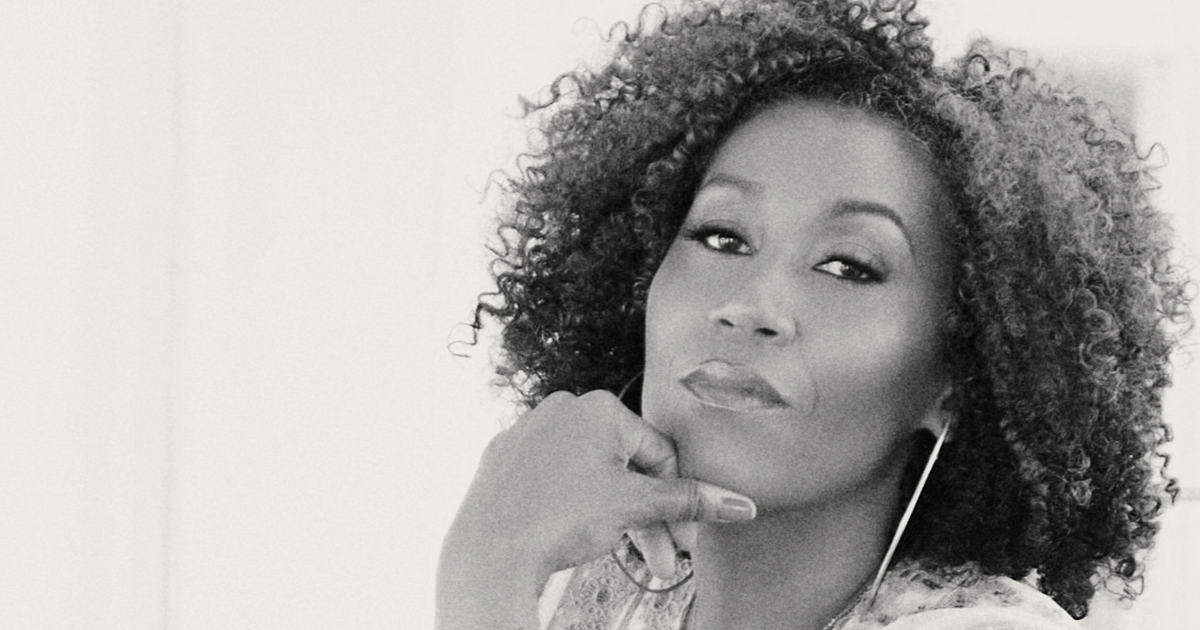
Rissi Palmer is putting her lifelong love of country music into Perspectives, her first project in six years. With three tracks produced by Shannon Sanders and a fourth by Dan Knobler, the new EP places Palmer back in the artist spotlight after a period of time focused on personal and professional evolution.
Palmer also hosts an Apple Music country radio show, Color Me Country, which spotlights original music from artists of color. But there’s even more to the story. She’s collaborated on a children’s book titled Color Me Country: A Celebration of Black Women Who Shaped Country Music and she’s also wrapped a memorable tour called The Trailblazing Women of Country, where she performed some of the best-loved songs from Patsy Cline, Loretta Lynn, and Dolly Parton. Off the stage, she’s devoted more time to her two daughters following her divorce, while still ramping up to the release of Perspectives.
Though she’s based in Durham, North Carolina, Palmer caught up with Good Country in Belfast, Northern Ireland, during the Your Roots Are Showing conference. At the event’s opening night concert, she sang “Old Black Southern Woman,” a heartfelt ballad that touches on the loss of her mother when Palmer was just seven years old. Perspectives also offers a cover of the SteelDrivers’ “Can You Run?” as well as an original song titled “Good For Me” (about diving back into the dating pool) and a rendition of a Loretta Lynn classic, “Somebody Somewhere.”
“All these things came together, and Shannon so graciously decided to be a part of this with me,” Palmer recalls. “He said, ‘Well, two of these songs sound very bluegrassy. What if we just did the whole project like that?’ I was like, ‘That’s kind of dope,’ because I hadn’t done anything like that. And again, perspectives. Two Black musicians, making this very bluegrassy, but still very soulful, project. And I decided midway through that we’re going to call it Perspectives.”
What was on your mind as “Old Black Southern Woman” was taking shape?
Rissi Palmer: I wrote that with Kyshona, and that was our first time writing together. Kyshona has a way of getting straight to the heart of whatever it is that you’re talking about. I had the idea for the chorus, the “ooh-ooooh” thing, in my head, and I hadn’t really started writing anything. So, we sat down and we started talking. When you go to her house, she’s got all these really cool plants from her mom and her grandma. We talked about that, and I wanted to write something that paid homage to my mother but also acknowledged all the other women that came in and helped raise me.
It’s a universal thing, too. Everybody thinks of getting older as really bad, and I don’t know what I thought my 40s were going to be like, when I was in my 20s. I honestly don’t know, but I don’t feel old! [Laughs] I think I thought 40 was going to feel different, but 40 actually feels just like a creakier 25! And I see the blessing in it. I feel really lucky to be here, because I outlived [my mother] and I have babies now. I just wanted to write something that says it’s OK to get old. It’s actually really cool to be able to get old and to see the fruits of your work.
I think the title kind of throws people off because they’re like, “Oh, this is a song about some Black people.” But it’s actually about getting to be old, seeing the blessing and good in that, and making the most of it.
When you sing that song now, it gives you a chance to talk about your mom and share her memory. Is that extra special for you?
Yeah. It was hard, I’ll be honest. The first few times that I sang it were really hard and I would cry. I’m starting not to cry when I sing it. Especially when we get to the lyric, “Every curse my family claimed ends with me.” That’s always where it got hard. You don’t realize how hard it is to overcome and not repeat mistakes.
Was it a dream for you as a kid to become a singer?
I’ve always known. I don’t know how, but I’ve always known that this is what I wanted to do. In that way, I’m very lucky. It was never, “Maybe I should be…” I would say that I was gonna do other stuff, just to make my parents happy, because I figured that they were probably really scared about me wanting to be a singer. So, I was like, “I’ll be a lawyer.” They’ve got a lawyer. My brother is a lawyer, so they got one. So, we’re good. [Laughs]
Now I did not always want to be a country singer. I wanted to be a singer and I wanted to write songs. I knew the kind of songs that I wanted to do, but I didn’t call it that. That didn’t become clear to me until I met my first managers, and then that was when I realized, “Yeah, I guess that is what I want to do.”
Is bluegrass an influence for you?
I like bluegrass! I’m a Rhonda Vincent fan and I’ve always been an Alison Krauss fan. And on Jon Randall’s first record he has this really cool song with Vince Gill called “My Life.” That’s one of my favorite records, by the way. It’s called Walking Among the Living.
I’ve always been a fan. I’ve always listened. I’ve always had those things on my playlist. I just never thought of myself as that, because there’s a very distinct vocal style. There’s a very distinct cadence in which they’re singing. A lot of the people on the show last night [at Your Roots Are Showing] were just brilliant bluegrass singers, and I never thought of myself that way because I can’t do that. Like, that’s not what I do. I didn’t really think of it as something that I could do. I used to write stuff like that all the time and I tried to give it to other people. But it was Shannon – Shannon was the push. Shannon was like, “Let’s do this.”
What was the Trailblazing Women of Country tour like?
It’s one of my favorite things that I’ve ever done. It was an all-female band and it was myself and Kristina Train, who’s a brilliant singer, as the two leads. We split the show in half, usually there was an intermission between Kristina and me, and we sang two songs together. You know how it is to be a fan, but you don’t necessarily know everything by a person? Patsy, I knew. For Patsy, I didn’t even have to study, because I knew all those songs. Most of my Dolly stuff I knew, but there’s a lot of words in “Coat of Many Colors”! And then Loretta, I’ll be perfectly honest, I had not gone super deep into Loretta’s catalog, so that was fun. That was the one that I needed the most work.
And I loved it! We did mostly theaters. I played in places I never went before. I went to Alaska. We did Wyoming – and you haven’t lived until you’ve driven across Wyoming! It’s just space! It’s wild! With the audiences, it was really funny how they varied. Sometimes we would make jokes, and sometimes people would say things to me. Like, someone asked me once, “Where’s your blonde wig?” when we got to the Dolly part. And I was just like, “Did you ask Kristina that?” They didn’t say anything, and I was like, “Girl, why would I cover up my fabulous hair?” and everybody started laughing.
You know, we got some weird comments. There were some people that (gasps) when I walked out. And afterwards, people would say really kind things. I never had anything rude said to me. But I did notice the [look of surprise] at first. It was good for me. It reminded me about why I love country music. I think I needed that, because you spend so much time, like with Color Me Country, talking about what’s wrong with the industry and talking about ways that we’ve been slighted or ignored. Then you lose sight of why you even started this in the first place, and that was why. It’s because of those songs. It’s because of those women. It’s because of the connection that the audience had with that music.
I can’t tell you how many people came up and told me stories. I met one woman who actually saw Patsy Cline performing on the bed of a truck when she was a kid. And I was just like, “That’s the most amazing thing I’ve ever heard before.” That’s country music.
You’ve got a lot of things coming up. Where would you like this new music to take you?
That’s a great question. I put so much into other facets of my career for the last few years. I put a lot into my children, because of our changing family situation, and just wanting to be there for them. At the same time, I was wanting to experience the career wave that I was having and trying to balance that. So, my own music took a backseat. I started feeling like, “I think people forget that I sing.” And really what I’m saying is, “I think I forgot that I sing,”
I was still doing shows, and still doing things in between, but it was like, “I don’t want everybody to forget why I’m here.” Really I’m saying, “I don’t want to forget why I’m here.” The Trailblazing Women of Country really cemented that for me, especially the “country” part. I’ve been experimenting and trying different things – and there is a project that comes later – but I wanted to do this. I felt like this was a really important statement to make, like, “This is why she talks so much shit.” [Laughs] Because this is where I started and this is what I do.
While every country star knows how to tell a good story, it takes a particular strain of excellence to also be able to write one.
Songwriting is the gravitational center around which Good Country orbits. Lyrics that strike at the oceanic spread of human existence, chords that evoke its sprawling underbelly – the songwriter weaves both words and notes together, using each as a tool to explore the other.
Uniquely attuned to the value in lyrical narrative and authenticity, country music self-selects its fair share of multi-hyphenate talents who, beyond their performative prowess or instrumental skills, have a knack for setting pen to paper. From Willie Nelson to Kacey Musgraves, country carries an extensive lineage of talented songsmiths. The following collection merely scrapes the surface of the best country star songwriters. Unsurprisingly, this list is a tangled web with many superb songwriters covering, popularizing, and collaborating on one another’s songs in true communal country fashion.
Willie Nelson
With over 300 songwriting credits to his name, Willie Nelson is indubitably one of the most prolific songwriters of all time – not just in country. Having written his first poem at the age of six, Nelson has nearly nine decades of steadfast dedication to the craft under his belt. Patsy Cline’s 1961 recording of “Crazy” lifted his songwriting further into the limelight. His pen went on to produce such potency that it helped define an entire new subgenre in the ‘70s— “outlaw country.”
Prized for his rebellious and forthright lyrical attitude, Nelson values raw emotion over placative commercial appeal, ironically earning him one of the most successful careers in country history. Over the years, Nelson has delivered a seemingly endless stream of hits performed by both himself and countless other musical giants, including Loretta Lynn, Merle Haggard, and Dolly Parton, just to name a few.
Bobbie Gentry
Bobbie Gentry is the keeper of a robust legacy of composing and performing. Having written her first song at age 7, Gentry taught herself to play a slew of instruments throughout her youth. When she attended college at UCLA, she began performing her songs out at the occasional nightclub, signing to Capitol Records some years later as an aspiring songwriter. In 1967, Capitol Records released “Ode to Billie Joe,” a song that Gentry had written and recorded herself. Gentry told The Washington Post that despite wanting to write songs for other artists, she only sang “Ode to Billie Joe” herself because it was cheaper than hiring another singer.
Despite her previous obscurity and the song’s dark tenor, “Ode” crept up the charts, surpassing the likes of Aretha Franklin and The Doors until it eventually pushed “All You Need is Love” out of the No. 1 spot. This astronomical success marked only the beginning of an industrious career for Gentry; she would go on to write and perform several other smash hits in addition to becoming the first woman to host a variety show on the BBC. She would later produce, choreograph, and write the music for her own nightclub revue in Las Vegas prior to retiring from show business.
Roger Miller
The King of the Road had range! Roger Miller’s songwriting legacy entailed chart-topping hits he wrote and performed himself, such as (of course) “King of the Road,” “Dang Me,” and “England Swings,” in addition to many that he wrote for other artists, such as “Billy Bayou” for Jim Reeves and Ray Price’s “Invitation to the Blues.”
His imaginative impulse made him uniquely qualified for the projects he took on later in life, including writing the music and lyrics for several songs in the 1973 animated Disney film Robin Hood, in which he also voiced Alan-a-Dale, the film’s rooster narrator. His acting career was even furthered by another musical project – Miller wrote the entire score for Big River, a Broadway musical based on Mark Twain’s The Adventures of Huckleberry Finn. The musical premiered in 1985 and earned a total of seven Tony Awards, including Best Score. Miller even played the part of Pap (Huck Finn’s father) onstage for three months following the original cast member’s departure for Hollywood.
Kacey Musgraves
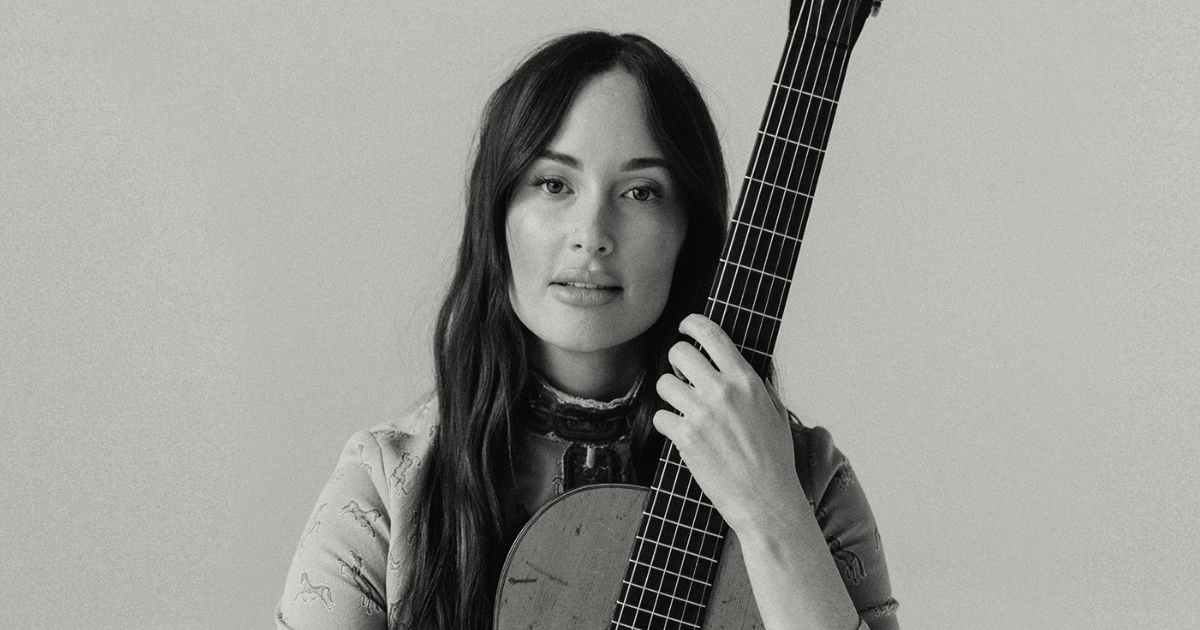
One of the most influential women in today’s country sphere, Kacey Musgraves has sculpted a name for herself for both her instrumental/vocal prowess and her impactful songwriting capabilities. Her solo catalog is chock-full of compelling songs that explore the “nuances of being a human, alive and experiencing consciousness,” as she told The Cut. The thoughtful universality of her songwriting has attracted a distinguished array of performers, with Musgraves contributing her skills to songs performed and recorded by Martina McBride, Miranda Lambert, and Deana Carter, among others.
Kris Kristofferson
This September marked a year since his passing, but Kris Kristofferson’s legacy continues to burn bright. His songs maintain a rugged, raw quality without sacrificing any of their vibrance. Though Kristofferson only landed one No. 1 hit on Billboard’s Hot Country Songs chart performing his own original material, his songs were platformed by many others featured on this list, including “Help Me Through the Night,” which Sammi Smith, Loretta Lynn and Willie Nelson recorded, and “For the Good Times,” a tune made famous by Ray Price that was later recorded by Dolly Parton, Merle Haggard, Willie Nelson, and more. Kristofferson also penned a fair number of tunes for The Highwaymen, the country supergroup composed of Waylon Jennings, Willie Nelson, Johnny Cash, and Kristofferson himself, including their titular hit, “Highwayman.”
Trisha Yearwood
Author, singer, chef, Food Network television show host – just when we thought Trisha Yearwood had done it all, her 16th studio album, The Mirror, arrived this past July to showcase yet another talent you may not know that she held all along: songwriting. In an interview with Billboard, Yearwood recounts that discouragement during her college years largely held her back from incorporating songwriting into her career over the past three-plus decades. “It made me think I wasn’t a songwriter and I just always downplayed it,” she says.
The Mirror boasts powerful co-writes with many songwriters who’ve contributed to Yearwood’s earlier albums, including Rebecca Lynn Howard (“I Don’t Paint Myself into Corners”) and Maia Sharp (“Standing Out in a Crowd”). Of homing in on her songwriting craft, Yearwood shares, “It was really something that clicked a couple of years ago. I started writing and it was really kind of therapeutic and really evolved naturally out of something I felt like I needed to do and I’m so happy with how it came out.”
Merle Haggard
Widely recognized as one of the most legendary singer-songwriters of the country canon, Merle Haggard was a staunch believer in writing from his own experiences – of which he had many worth writing about. After losing his father at age nine, Haggard wound up in all sorts of trouble, from several stints in juvenile detention to developing a strong hitchhiking and train hopping habit. His rambunctious tendencies followed him into adulthood and eventually landed him in prison after an attempted robbery and subsequent failed jailbreak.
In 1960, Haggard’s life changed forever upon attending a Johnny Cash concert while incarcerated at San Quentin State Prison, which deeply inspired him. Upon his release later that year, Haggard set out to forge his own country career, garnering unspeakable success. From “Workin’ Man’s Blues” (co-written with Roy Edward Burris) to “The Bottle Let Me Down,” many of Haggard’s songs have become perennial classics.
Jimmy Buffett
Of all the narrative-focused songwriters, Jimmy Buffet undoubtedly took the premise of “world-building” the most literally. “Margaritaville,” the hit song which Buffett claimed took him only six minutes to write, has a transcendent legacy. From hotels to casinos to Broadway musicals, Buffett’s profoundly popular songwriting grew an empire. Of course, “Margaritaville” was certainly neither the beginning nor the end of Buffett’s extensive songwriting career; having released 30 albums (8 of which are certified gold and 9 of which are certified platinum or multi-platinum by the RIAA), Buffett was credited on upwards of 350 songs over the course of his life.
Don Gibson
Responsible for the songwriting behind some of the most famous songs in country history, Shelby, North Carolina, native Don Gibson was such a force that he, in fact, penned two of his most influential songs in the same day. “Oh Lonesome Me” and “I Can’t Stop Loving You” – which would go on to be recorded over 700 times by other artists including Ray Charles, Kitty Wells, and Loretta Lynn – were both conceived in a trailer park north of Knoxville, Tennessee, in 1957.
Bonnie Raitt
In addition to being the utter powerhouse musician that she is, Bonnie Raitt also knows her way around some lyrics. Having written most of her own music and with artists like Stevie Nicks and The Chicks covering her songs, Raitt’s songwriting has left an indelible mark on the blues, country, and Americana scenes. She’s known for her thoughtful and emotionally dynamic posture; for instance, her song “Down the Road” was inspired by a New York Times article Raitt read about a prison hospice program. Another, “Just Like That,” earned her a GRAMMY for Song of the Year and was inspired by a news segment featuring two families experiencing either end of an organ donation. Written from heartful depths, Raitt’s lyrics are both inspired and inspiring.
Cam
Best-known for her Grammy-nominated 2015 hit, “Burning House,” Cam (AKA Camaron Ochs) is one of the most prominent songwriters in the contemporary country scene. Another star and composer, in addition to her own four studio albums, Cam has writing credits featured on work from some of the largest industry giants in any genres. She has composed material for artists from Sam Smith to Miley Cyrus and 2024 saw her songwriting, backing vocals, and production lending a hand in several songs off of Beyonce’s chart-topping, culture-shifting country release, Cowboy Carter.
John Hartford
John Hartford’s talents truly knew no bounds. In addition to his multi-instrumental expertise, he was a fleet-footed clogger who could tear up a rug while he played. And he sure did know how to write a song. His most successful songwriting credit, “Gentle on My Mind,” (popularized by Glen Campbell and henceforth covered over and over again) earned him three GRAMMY awards and a listing among BMI’s Top 100 Songs of the Century. With covers from folks like Loretta Lynn, Willie Nelson, Dolly Parton, Merle Haggard, and many more, it’s safe to say Hartford was one of the most respected – and most recorded and most covered – roots songwriters of his time. And of our time, too, as evidenced by this I’m With Her performance of “Long Hot Summer Days,” a Hartford original fiddler Sara Watkins once recorded on her own solo project.
Chris Stapleton
A fav of Good Country and our audience alike, Chris Stapleton has had a tremendously successful performing career in both bluegrass (via The SteelDrivers) and country (as a solo artist). His guitar prowess and smoky vocals aren’t his only claims to fame; even before his rise to stardom, Stapleton had written songs for some of the most commercially successful names in country and beyond. He’s been the pen-power behind songs for industry giants such as Luke Bryan, Kenny Chesney, Darius Rucker, George Strait, Lee Ann Womack, and more. Adele even recognized the potency of Stapleton’s powers back in 2011, having recorded a version of his smash hit SteelDrivers song “If It Hadn’t Been for Love” on a deluxe version of her album 21.
Dolly Parton
They don’t call Dolly Parton the queen of country for nothing! Illustrious and industrious, Parton estimates that she’s composed nearly 3,000 songs in her lifetime, with somewhere around 450 of them recorded. Her ability to world-build through dynamic characters and narratives has set the modern country standard for story-songs, with “Coat of Many Colors,” “9 to 5,” and, of course, “Jolene” being just some of her most chart-topping successes. She’s also written plenty for other artists – think Merle Haggard, Kenny Rodgers, Hank Williams Jr., Waylon Jennings, Emmylou Harris, and Tina Turner, just to name a few. And of course, we’d be remiss not to mention that Parton penned the biggest hit of Whitney Houston’s career!
Darrell Scott
In 2007 Darrell Scott was named the Americana Music Association’s Songwriter of the Year, and this year, 2025, he received a Lifetime Achievement Award from the organization, too. In short, Darrell Scott is a songwriting powerhouse – in addition to his status as one of Nashville’s premiere session musicians.
Similarly to many other artists on this list, albeit with his own stylistic flares, Scott champions the narrative song, writing tunes full of dynamic characters and story arcs that mesmerize. Outside of his own successful solo work, songwriting for others is the bedrock of Scott’s career. Among countless other contributions, Scott wrote the Chicks’ “Long Time Gone” (later to be sampled in Beyoncé’s “Daddy Lessons”), Travis Tritt’s hit song, “It’s a Great Day to Be Alive,” and the ever-relevant “You’ll Never Leave Harlan Alive,” which has been covered by Patty Loveless, Brad Paisley, Chris Stapleton, Kathy Mattea, Luke Combs, and many more.
Want more Good Country? Sign up to receive our monthly email newsletter – and much more music! – direct to your inbox.
In the wake of several viral country songs released in 2023 – most notably the ill-conceived pair of Jason Aldean’s “Try That in a Small Town” and Oliver Anthony’s “Rich Men North of Richmond” – renowned author and country journalist David Cantwell penned an essay for TIME magazine with an absolutely stunning (while quite simple) observation included. Cantwell considered place, citizenship, and ownership. To whom does the “small town” belong?
“…For most of today’s country fans that small town isn’t TV’s tiny Mayberry; it’s a suburb or exurb of some decent-or-giant-sized metro,” Cantwell explains. “I wish more country songs would talk about that proximity, how city folk and small-town folk flow back and forth for work and fun – and are very often the same people.”
And are very often the same people. Humans don’t live their lives along strict, black-and-white boundaries and borders – no matter how often society attempts such demarcations. Our lives are lived in the gray, in the blurry in-betweens, as collections of many disparate and often dichotomous parts.
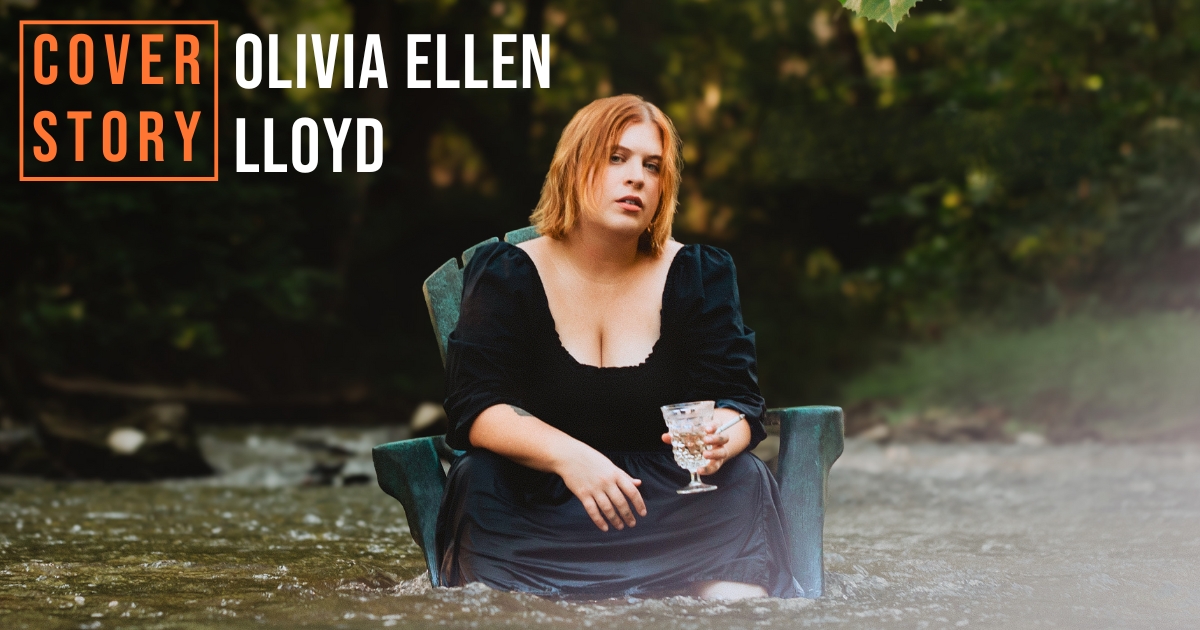
Singer-songwriter Olivia Ellen Lloyd is just such a person, caught up in the nebulous purgatory between rural and urban, city folk and country folk, doing it for herself and doing it for ambition. Her brand new independent album, Do It Myself, finds Lloyd with a sense of confidence that could only be earned through a hard-working, bootstraps approach to making music – a mindset that, whether within or outside the arts, is well known to West Virginians like herself.
After a stint living in Nashville, Lloyd returned to New York City, following up 2021’s fantastic Loose Cannon with the heartfelt, sensitive, and often point-blank songs of Do It Myself. Like Loose Cannon, this material is danceable, country, honky-tonkin’, and bluegrassy while it boasts deft and majestic moments of WV DIY, punk, and rock and roll. After crisscrossing the country proffering her art, Lloyd seems to have realized that being both a city person and a country person is never a drawback, it’s a superpower. Having her feet in NYC, her heart in West Virginia, and her work anywhere and everywhere, Lloyd has clearly determined it’s not a dilution of the “authentic” or roots-music-ready facets of herself to straddle these arbitrary borders and own that duality.
As a result, Do It Myself is remarkably successful. Like Hazel Dickens in D.C. or Dolly Parton in Nashville or Tina Turner in Memphis, Lloyd has found her voice and found herself not by running from who she thinks she can’t be anymore, or editing out the parts of herself that don’t seem to “fit” with country tropes and perceptions of good ol’ American rurality. Instead, she’s reached this current era of music making by resting easy – or not so easy, at times – in the knowledge that the best she can do as a singer-songwriter-artist is to be herself, whoever that is, in the truest format possible at any given time.
We began our BGS Cover Story interview by discussing that ongoing search for herself and how that particular journey shows up throughout Do It Myself – in the lyrics, sonics, and beyond.
It feels like your music in general, whether we’re talking about Loose Cannon or the new album, Do It Myself, you’re most often turning over the idea of finding yourself – and not that that’s a static thing to be found. It’s not that you find it once and you’re done finding it. Your music orbits around these questions of, “Who am I? Is this me?” I feel that really strongly in this record. So, as you’re releasing this album I wondered, who is the self you have found? And how goes the search for yourself?
Olivia Ellen Lloyd: I think what’s really interesting is I don’t know that I would’ve put a finger on that until recently. I’ve also come around to the understanding that that is what my music has done, which is help me come back to myself and find myself. I would say it’s currently going pretty well, but boy it has been a journey to get there.
I think writing this record, I was much closer to her – to me – when I started writing this record, but I wasn’t as close as I thought I was. It’s taken not only writing it and realizing that I wanted to put it out and all that stuff, but also deciding to self release it and deciding to continue to champion my own work where I’ve truly found that. That, “Oh there she is!” [feeling]. I feel very recently like I have arrived at the person that I’ve been looking for and that’s exciting and also really scary, because boy, has most of my work orbited around, “What the fuck happened? How did we get so lost?”
I once was lost, but I’m pretty found lately.
How do you feel about writing songs that are so personal and that are so much about growth, introspection, and questioning and then having to carry them around on your back for a year or two or three on tour – or for the rest of your life! How does that process feel to you or that emotional or mental understanding?
Interestingly, at least with my first record, I think I wrote often with no aim, so there were no expectations. I mean it’s funny, Justin, because you are one of the few people in the music industry and in my music world who knew me when I was writing many of these songs, but not performing often. The process of writing was very much a way to try and tune into this inner voice that I’ve been learning to listen to. It was an attempt to get in touch with myself, which I really have struggled to do for various reasons throughout my life.
I think I’m also quite an impulsive person, historically, and I have a lot of tattoos – a lot of stupid tattoos – and I kind of think of these songs, especially the personal ones that no longer represent [me like tattoos.] I don’t drink anymore really – I wouldn’t say that I’m sober, but drinking is not a big part of my life anymore – and all of Loose Cannon and much of this record involves talking about those moments in my life. But I have this tattoo of a possum drinking a High Life. That’s not who I am anymore, but that was a part of how I got here. When I think about these personal songs that involve a lot of myself and a lot of what’s really going on I think, “Well, that’s a part of the patchwork,” but it doesn’t have to be – luckily – the whole story or the end of the story, either.
The way that you’re utilizing so many different roots styles, it’s disarming of a listener, so you can have a danceable, honky-tonkin’ track that’s still lonesome as fuck, tear in your beer. It feels like it can still be very country, very Americana in the way that it is melodramatic, but it still feels grounded in reality.
I think that playing with genre in the same way that we experiment with different sidemen and co-writers is just another tool that we can use. I see a lot of artists, especially right now, there’s just so much pressure to hit. There’s so much pressure to hit on a vibe, hit on a moment. Part of the joy of this is playing in those in-between spaces and finding something unexpected.
Come on, if we’ve got Dolly and Patsy and Loretta, they did a lot of the groundwork so we should get to play around that space! We’re not gonna outwrite or outsing those women, we simply cannot, so the opportunity we have is to explore. I don’t wanna go back. I don’t wanna go back to any type of past anywhere. The future is scary for me, but I’m really curious about what could come next, after those things, and how we can develop those sounds.
You’ve spoken on social media and on microphone about your approach to genre and how so much of it comes from growing up in West Virginia having this agnostic approach to genre aesthetic, on a practical day-to-day level. You’re doing West Virginia music, you’re bringing in Nashville, you’re bringing in New York City. Can you talk a little bit about that?
For the first record I got the feedback that you can hear the country and the city kind of intermingling together and someone was like, “This [new] record feels like so much more New York.” I think I understand where people are coming from, but actually I think what’s happened is I built a musical community in New York City around bluegrass, which I think is one of the great community music forms. It is a great way to bring people together. I’m so grateful that I knew a bunch of those songs and then I got better with those songs and then I met people who were passionate about that music. But actually, this record was more about digging into the sounds that I grew up with. I grew up going to DIY punk shows, I grew up with my dad listening to the Grateful Dead, the Band, some Jerry Jeff Walker, Nitty Gritty Dirt Band.
I think this record really returns to a landscape that’s more true to how I was raised, which was eclectic, a little bit daring, and a little bit more rock influence. I think I’ve been quoted once and I’ll say it again, I think the reason that the places in West Virginia gravitate more towards that kind of music is because music got gentrified and country became this bizarre fascist, patriotic propaganda wing of the Republicans and of government.
If you are not one of those things, if you were not a kid who could afford to go to Berklee and you were not somebody who was all that proud to be a fucking American in the 2000s, you likely grew up listening to a lot of that. Especially in rural places, you likely grew up listening to a lot of punk, a lot of rock, a lot of indie pop. Like many people do, I walked way far away from that stuff and dug into the roots of country and folk and bluegrass. I swirled around in that stuff for so long, and then I came back to myself; I came back to the first music that really inspired me and felt less academic.
In my opinion, the most interesting part is all of those genres coming together. I do think that I’m very wary of anybody who talks about “good folk music” or “real bluegrass” or anything like that, because typically some very nice man in a fisherman sweater in New England has told them [to think that way]. I learned to like music the way that most normal people learn, I just listened to it and I didn’t worry about whether I was listening correctly or not. I think we gotta return to that.
Community has come up multiple times already in our conversation and I know how important community is to you – how pivotal it’s been in your musical career. How do you balance the “doing it for yourself” with the “doing it with community”? How do you do it for yourself and trust yourself and give yourself permission to be who you are and take up space to do it your own way, while also being a member of a community and doing it for the collective at the same time?
Have you been listening to my therapy conversations? [Laughs] I struggle with deep individualistic tendencies. I have a tendency to be like, “Fuck it.” That can also be bad. Notably, have yet to accomplish a successful relationship, because of this thing I do. “Fuck it, I’ll deal with it myself. I’ll just do everything myself. I will stop relying on you. I don’t need to rely on anybody for anything.”
I hope it comes through in the music that many of my songs, including “Do It Myself,” include enough self-awareness to know that I’m talking about choices that I’m making and things that I’m doing and they are not always the healthiest choice or the best choice. That’s okay. I think there’s a side of this where, yeah, I have been way too [self-reliant]. As I sit here selling shows out, opening for Jeff Tweedy, and unable to get a booking agent or a manager. Yes, I have isolated myself a little bit too much for people to be paying close attention.
Certainly “doing it myself,” in this context, many people told me to wait to put this record out. Maybe that would’ve made sense for a more reasonable person, but I think this is really important: Your community is everything. You need to be able to trust that the people around you are people who are willing to let you show up like however [you are]. In the last two years, I have focused so hard on surrounding myself with people who I know I can trust to both keep me honest and on my shit and love me through mistakes and they will engage in conflict resolution. They will be gentle with me and like I can do the same for them.
It’s not possible to be self-sufficient, emotionally, creatively, if you do not have a community that supports that in you.
I love that on the album you have “Live With It” back-to-back with “Do It Myself.” I think it’s pretty striking, they’re kind of a reaction or a response to the other – and vice versa. That line, “If this don’t kill me…” feels like such a natural lead in to “Do It Myself.” I wanted to ask you about “Live With It” and also about that placement of those, like bookends.
Thank you for asking about “Live With It.” My producer Mike Robinson is gonna be so happy and that’s his favorite song on the record. I mean, that’s my pandemic [song]. The chorus of that song I wrote during the pandemic. Looking back, it was probably also the worst point in my life for my drinking. I was at a point where I was not in control. Things were so bleak that it was like, what’s the point of trying to slow down or get a handle on it? There was no future to look forward to.
But by the time I finished the song, what I really hoped to accomplish is [communicating that] there are many times in our life where we have a pessimistic view on our own personal outcomes. We’re not really convinced that things could get better and yet there is an interesting tendency with human beings, we just keep going anyway most of the time. I find that to be both very curious and also something that is inspirational in its own way. We can continue to live and survive through unsurvivable things, even when we don’t know entirely why or how. That’s what “Live With It” is about. It’s four people experiencing something that they, for whatever reason, don’t see why they have to live through it or how they’re going to, but they do.
I also love the feel change in “Every Good Man.” So good. It’s nasty. That song is a bit like “Stand By Your Man,” playing with country tropes in a really fun way, but that feel change – I think I made a stank face just listening to it. Can you talk about that one a little bit?
Once again I just have to say, I think a lot of what you hear and the really cool musical stuff is owed to the creative partnership that Mike Robinson and I have. I can’t say enough good things about him. I met Mike at a fucking bluegrass jam and he was playing the banjo, which is like his fourth instrument, you know? I think these days he mostly makes money as a pedal steel player. Everyone is sleeping on his ability to play the acoustic guitar. Like, truly.
I met Mike six years ago now and out of the blue he coached me into a music career. He would deny that, but that is 100% what happened. He bullied me into it. And something I really love is that I can bring songs to him and he finds exactly [how it should sound], especially when he’s excited about the songs. Both “Every Good Man” and “Live With It” were definitely high on his list of loves. He finds these like beautiful moments and we have such a similar [approach], we were raised on the same music. For “Every Good Man,” that feel change came from some moment in a John Prine song.
Another song that I really like – it might be my favorite – is “Knotty Wood.” It feels like country. It feels like church. The lyric, “Who says memories can’t be bought? We always sold ours for a song…” grabbed me. You’re talking about how we compare and contrast and measure ourselves against other people and our perceptions of other people’s lives. “Don’t they look good when you paint over the pain and knotty wood?” It’s such a great hook. I love the imagery of it. I love that it takes me to my grandma’s house. But I feel like it begs the question: Do you ever worry that in synthesizing your experiences, putting them into songs, and taking them to the world that there’s any part of that process that is also “painting over the knotty wood”?
Yes, and my mother would definitely say yes. The genesis of that song actually came from my mother and I growing up in the same small town. I grew up a mile from [where she grew up] and from our home to her childhood home it was less than a mile. That house, my grandparents’ house, I spent probably two days a week there and almost every day after school I walked from my elementary school to my grandparents’ house. It was my home, too.
It got sold after he died, we couldn’t hang onto it. It got sold again during the pandemic by an actually really lovely woman. She started renovating it on Instagram and I watched this place that held generational memories be stripped in some cases to the studs and rebuilt. It was pretty public. I felt a sense of ownership of our place – that I do not factually own and never have – that got me. Being curious about place and home made me think about the journey my grandparents went on to become property owners and to become middle class. And about that moment in the height of prosperity in the ‘50s, all the things my grandparents sacrificed.
I think the song is about thinking about those generational ties, thinking about the things my grandparents sacrificed, and did not sacrifice or did not give away. I’m also thinking about how, especially right now in this weird American moment – “Don’t other people’s lives look good when you paint over the pain and knotty wood” – how many people want to talk about their humble, hardscrabble beginnings without having to actually live them.
There are so many other reasons why it’s taken me so long to get here, why it’s taken me so long to put my songs out. But it all revolved around the generational trauma of growing up relatively poor and with people who had to give up everything in order to get anything.
You can’t have it both ways. You can’t have the small-town, Appalachian upbringing and also have the confidence and gumption of [privilege]. I mean, it’s rare. It happens, but you don’t often then also come equipped with the gumption to believe that you have the right to be a fucking artist. All my grandparents wanted was just a nice home in a small town.
I’ve been hustling, self-promoting my own art and music, and in a desire to attain the things that the people I’m criticizing have attained, we get to the third verse. … The crux of that song is, I think, a way more interesting story than “rags to riches.” It’s middle class to rags.
I mean, my grandparents went to war so they could get an education, right? My grandfather’s nickname was “Bones,” because he was so thin he looked like a bag of bones. The trajectory of their lives into middle class comfort is astounding, and the way that his grandchildren and children are sliding back into poverty is much more so. It’s much more true to what is happening in this country than this “rags to riches” bullshit that we are still being asked to sell, but it’s trickier to talk about.
Our partnership with our friends at Real Roots Radio in Southwestern Ohio continues as we move from Black History Month to Women’s History Month! This time, we’ll bring you weekly collections of a variety of powerful women in bluegrass, country, Americana, folk, and elsewhere who have been featured on Real Roots Radio’s airwaves each weekday in March, highlighting the outsized impact women have on American roots music. You can listen to Real Roots Radio online 24/7 or via their FREE app for smartphones or tablets. If you’re based in Ohio, tune in via 100.3 (Xenia, Dayton, Springfield), 106.7 (Wilmington), or 105.5 (Eaton).
American roots music, historically and currently, has often been regarded as a male-dominated space. It’s certainly true of the music industry in general and these more down-home musics are no exception. Thankfully, American roots music and its many offshoots, branches, and associated folkways include hundreds and thousands of women who have greatly impacted these art forms, altering the courses of roots music history. Some are relatively unknown – or under-appreciated or undersung – and others are global phenomena or household names.
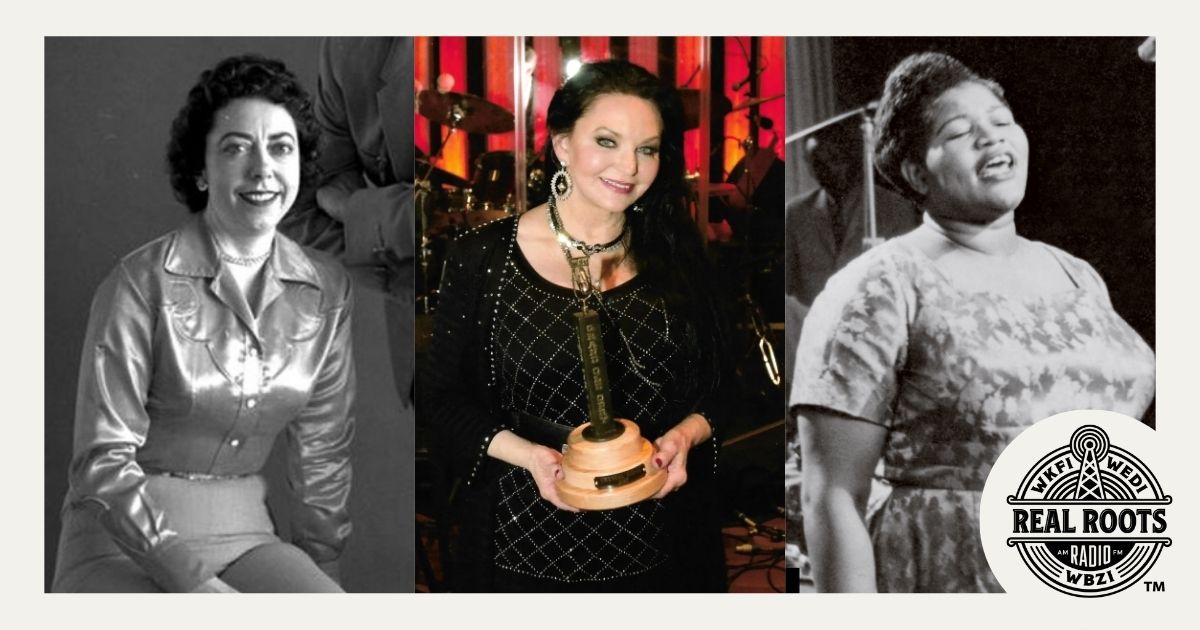
Over the next couple weeks, we and RRR will do our best to bring you more examples of women in roots music from all levels of notoriety and stature. Radio host Daniel Mullins, who together with BGS and Good Country staff has curated the series, kicked us off last week with Dottie West, Gail Davies, and more. This week, we’re shining a spotlight on Kristin Scott Benson, Crystal Gayle, Big Mama Thornton, Reba McEntire, and Rose Maddox. We’ll return next week and each Friday through the end of the month with even more examples of women who blazed a trail in roots music.
Plus, you can find two playlists below – one centered on bluegrass, the other on country – with dozens of songs from countless women artists, performers, songwriters, and instrumentalists who effortlessly demonstrate how none of these roots genres would exist without women.
Crystal Gayle (b. 1951)
She’s a country music icon with signature floor-length hair and a voice as smooth as silk – Crystal Gayle!
Born Brenda Gail Webb in Paintsville, Kentucky, Crystal Gayle stepped out of the shadow of her legendary sister, Loretta Lynn, to carve her own path in country and pop music. She scored her first Top Ten hit in 1975 with “Wrong Road Again.” However, her major breakthrough came in 1977 with the GRAMMY Award-winning “Don’t It Make My Brown Eyes Blue,” a crossover hit that topped the country charts and even made waves on the pop scene. It peaked at Number Two on the overall Hot 100, setting Gayle up to be one of the premiere crossover artists of the era.
With 18 Number One hits, Crystal Gayle has the fourth most chart-topping songs for a female in country music history, even more than her older sister. She became a defining voice of the late ’70s and ’80s, blending country with soft pop for her signature sound. Who could forget those long, flowing locks – almost as famous as her music! A member of the Grand Ole Opry and the Kentucky Music Hall of Fame, she even has a star on the Hollywood Walk of Fame in addition to scores of other awards, honors, and accolades. Crystal Gayle is still shining today, proving that true talent – and great hair – never go out of style!
Before Elvis shook his hips and Janis wailed the blues, there was Big Mama Thornton. Born Willie Mae Thornton in 1926, this powerhouse of a woman changed music forever.
Thornton’s deep, growling voice and raw emotion made her a legend in blues and rock and roll. She recorded “Hound Dog,” which was written specifically for her, in 1952 – years before Elvis made it even more famous. It sold over half a million copies and reached the Top Ten on the Billboard R&B charts. Her recording of “Hound Dog” is regarded as a pivotal recording in the birth of rock and roll, and truthfully, her female perspective makes the song make a lot more sense.
Like many Black artists of her time, she never saw the wealth or credit she deserved. Big Mama wasn’t just a singer – she played drums, harmonica, and wrote music, influencing generations of artists. Janis Joplin’s hit “Ball and Chain” was written by Big Mama.
As a blues icon, she toured the United States and Europe, worked at many prestigious folk, blues, and jazz festivals, and even recorded an album with Muddy Waters. Sadly, her life was cut short after years of alcohol abuse, passing away at the age of 57 in an LA boarding house; Big Mama was buried in a potter’s field.
Big Mama Thornton paved the way for rock and roll, blues, and soul, and was posthumously inducted into the Rock & Roll Hall of Fame in 2024.
A South Carolina native, Kristin Scott Benson is a six-time IBMA Banjo Player of the Year and an absolute force on the five-string. She was a mandolin player as a youngster, but caught the banjo bug at nine years old when she saw Doyle Lawson & Quicksilver in the 1980s with their exciting brand of bluegrass – and a young Scott Vestal on banjo. She joined the all-female bluegrass band Petticoat Junction when she was just a senior in high school, moving to Nashville in 1994 to attend Belmont University.
Unknowingly, she made history during her sophomore year in college when she was hired by The Larry Stephenson Band. She is viewed by many as having “broke the glass ceiling” in bluegrass, by playing in a male-dominated professional bluegrass band, without being married to, dating, or being related to any of the other members – she was simply a powerful picker. Kristin worked two different stints with The Larry Stephenson Band, in addition to working with Larry Cordle & Lonesome Standard Time. She joined The Grascals in 2008, where she has remained for over fifteen years.
Pointing to Sonny Osborne as her banjo mentor, she has fit The Grascals’ sound like a glove with their heavy Osborne Brothers influence. (It was actually Sonny who recommended her to The Grascals for their banjo job.) In addition to kicking tail on stage and in the studio with The Grascals, in recent years Kristin has formed a recording duo with her husband, mandolin master Wayne Benson of Russell Moore & IIIrd Tyme Out. Together they are simply known as Benson.
Kristin Scott Benson received the Steve Martin Prize for Excellence in Banjo & Bluegrass in 2018, and was inducted into the American Banjo Hall of Fame in 2024.
She was bold, she was brash, and she helped shape country as we know it! Rose Maddox wasn’t just another singer, she was a trailblazer.
Born in Alabama and raised in Modesto, California, Rose and her brothers – The Maddox Brothers and Rose – became pioneers of the “hillbilly boogie” sound. Performing on radio as teenagers, their career really took off when Rose’s brothers returned from World War II, anchored by her powerhouse vocals. One of the first hillbilly bands to come from California, The Maddox Brothers & Rose cut a wide swathe, touring across the country, performing on the Louisiana Hayride, and making smash records.
With wild outfits, high energy, and Rose’s infectious laugh, they were country music’s first real rock stars, known as America’s most colorful hillbilly band. In the 1950s, The Maddox Brothers & Rose parted ways and Rose pursued a solo career. She broke barriers as a female country star, scoring over a dozen Top 30 hits like “Sing a Little Song of Heartache” and inspiring legends like Dolly Parton and Emmylou Harris. She also recorded several popular country duets with another legend with ties to southern California – Buck Owens. In 1962, she released the first bluegrass album by a female artist, Rose Maddox Sings Bluegrass, joined by Bill Monroe, Don Reno, Red Smiley, Donna Stoneman, and more.
She would continue to tour and record, even recording an album with Merle Haggard & The Strangers as her backing band. The Hag always pointed to The Maddox Brothers & Rose as one of his influences. Maddox also performed on stage and in studio with California bluegrasser Vern Williams, and even received a bluegrass GRAMMY nomination for her Byron Berline-produced album $35 & A Dream, shortly before her passing in 1998 at the age of 72.
Honky-tonk, bluegrass, rockabilly – Rose did it all and she did it first! So next time you hear a fiery female country singer, tip your hat to Rose Maddox, the original queen of country sass.
From the heart of Oklahoma, one voice has echoed through the decades, captivating fans with her powerhouse vocals and undeniable charm. Reba McEntire, one of the true Queens of Country Music, has been breaking barriers since she first stepped onto the scene in the 1970s.
Her big break came in 1974 when country & western singer Red Steagall saw Reba perform the National Anthem at a rodeo event in Oklahoma. He then helped her land her first record deal. But she was hardly an immediate success, working to find her footing in the music industry and after four years, she scored her first Top Ten hit, “(You Lift Me) Up To Heaven.” After that, she hasn’t looked back!
Reba topped the Billboard country singles chart for the first time in 1983 with “Can’t Even Get The Blues,” the first of her many Number One hits. With over 40 chart toppers and a career spanning more than four decades, she’s done it all. From mega hits to her legendary TV show, Reba, she’s not just a country icon, she’s a cultural force. However, Reba’s most iconic hit only reached #8, from her classic 1990 album, Rumor Has It. A song she learned from Bobbie Gentry, that has been a signature song of Reba’s ever since, it has been certified double-platinum, selling over 2 million copies: everyone loves “Fancy.”
Known for her fierce spirit and down-to-earth personality, Reba’s music continues to inspire generations of fans. Whether she’s singing about love, heartbreak, or resilience, one thing’s for sure – Reba’s voice is timeless. Reba McEntire, a true legend and a voice like no other.
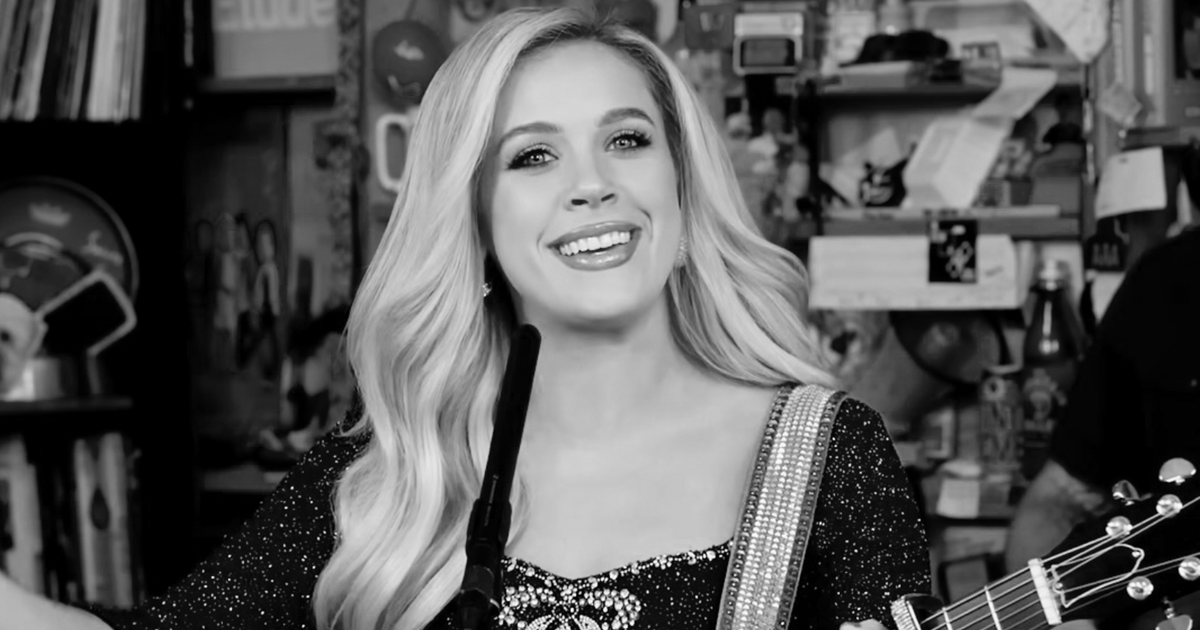
Last week, NPR Music released a brand new Tiny Desk Concert featuring country phenomenon Megan Moroney; it’s the starlet’s first visit to the fabled cubicle concert series. With an acoustic band and her fretboard inlays sparkling with her most recent hit album title, 2024’s Am I Okay?, Moroney plays through a handful of her hits – two selections from her Am I Okay? era and two from her 2023 breakout album, Lucky, which was certified Gold by RIAA.
Moroney’s brand of country is wholly mainstream and ripe for radio love (around ten of her titles have charted so far) and a sound that combines the polish and glamour of artists like Carrie Underwood with the grit, humor, and self-awareness of The Chicks and women country forebears from Loretta Lynn to Gretchen Wilson. It’s all packaged in a familiar brand of rhinestones and gorgeous blonde hair, sly humor, and manicured and idyllic while down-to-earth beauty, yet Moroney’s music ends up consistently striking her listeners as feeling totally brand new. It’s grounded in tradition, yes, but breaking new soil with each and every effort.
Critics and fans agree – what Moroney is doing works. She’s won a CMT Music Award, an ACM Award, and took home a CMA Award in 2024 for New Artist of the Year. Her Am I Okay? Tour kicks off this spring and continues through the fall, with dozens of dates at huge arenas, theaters, festivals, and venues across the country.
Her too-short 17-minute Tiny Desk Concert demonstrates why. “Tennessee Orange,” Moroney’s breakout hit and a viral internet sensation, is quippy, witty, and leverages a mighty Music Row hook. These songs are as sardonic as they are saccharine, a subtle siren plying us through our ears, eyes, and hearts. “I’m Not Pretty,” which leads off both her Tiny Desk appearance and 2023’s Lucky, certainly warrants her middle finger to the mentioned “ex-boyfriend,” leaning into the liberation and comeuppance dripping from the track you can still hear regularly over the airwaves. “No Caller ID” is found in delicious heartbreak that reminds listeners of ’90s and ’00s classics like Lee Ann Womack’s “Last Call,” but with 2025 production values and plenty of Moroney’s own spin. She introduces the final song, “Am I Okay?,” the titular track for her current album, tour, and the inspiration for her signature guitar’s inlays with even more of her biting wit and charm:
“[‘Am I Okay?’ is] proof that a man once made me happy, which is nice in my discography of sad songs. Full transparency, he did screw up, so this song is no longer true, but it was fun while it lasted, right?”
Yes, indeed. All of her music, from the sad to the salacious, is entirely fun, top-to-bottom. Megan Moroney is a mainstream country icon on the rise and her Tiny Desk Concert appearance illustrates why and how she will continue to win hearts and ears with her particular brand of Good Country.
To celebrate Black History Month – and the vital contributions of Black, Afro-, and African American artists and musicians to American roots music – BGS, Good Country, and our friends at Real Roots Radio in Southwestern Ohio have partnered once again. This time, we’ve brought you weekly collections of a variety of Black roots musicians who have been featured on Real Roots Radio’s airwaves. You can listen to Real Roots Radio online 24/7 or via their FREE app for smartphones or tablets. If you’re based in Ohio, tune in via 100.3 (Xenia, Dayton, Springfield), 106.7 (Wilmington), or 105.5 (Eaton).
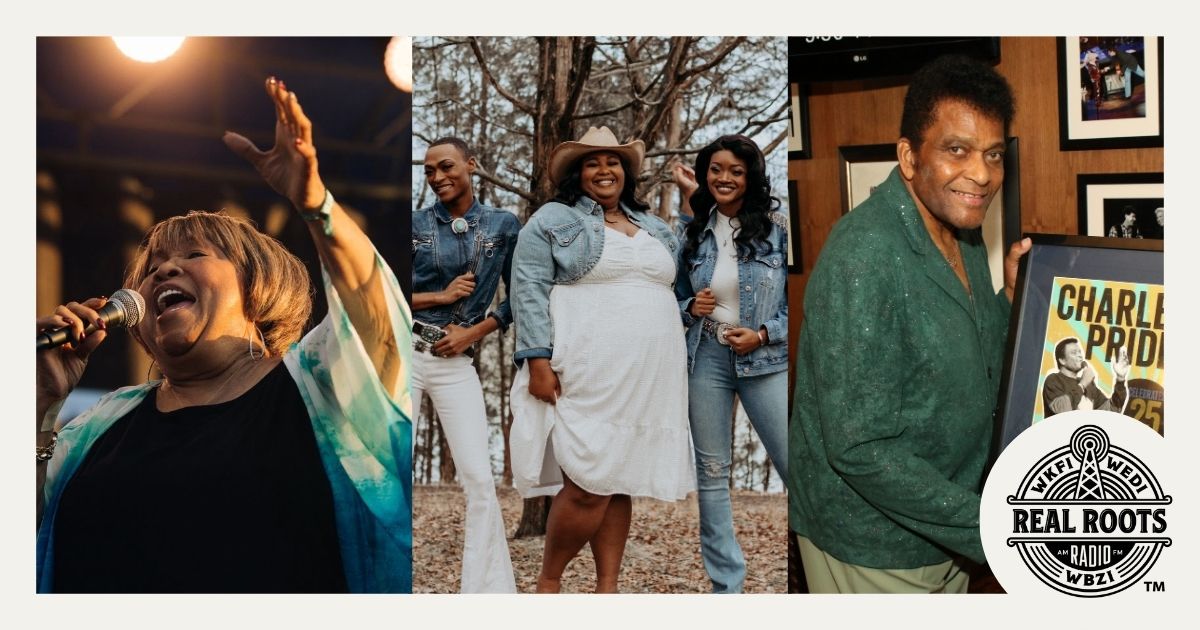
American roots music – in any of its many forms – wouldn’t exist today without the culture, stories, skills, and experiences of Black folks. Each week throughout February, we’ve been spotlighting this simple yet profound fact by diving into the catalogs and careers of some of the most important figures in our genres. For week four of our celebration, RRR host Daniel Mullins shares songs and stories of Charley Pride, Mavis Staples, Chapel Hart, Carolina Chocolate Drops, and Philip Paul. Be sure to check out week 1,week 2, and week 3 of the series, too.
Today is February 28, so sadly this will be the final installment of our Black History Month celebrations this year. But, as always, we’re committed to bringing you even more music celebrating Black History – and the songs and sounds we all hold dear – not just in February, but year-round.
Plus, you can find a full playlist with more than 100 songs below from dozens and dozens of seminal artists, performers, songwriters, and instrumentalists from every corner of folk, country, bluegrass, old-time, blues, and beyond.
Black history is American roots music history; the two are inseparable. As we celebrate Black History Month and its legacy throughout the year, we hope you’ll join us in holding up and appreciating the artists who make country, bluegrass, blues, folk, and Americana the incredible and impactful genres that they are today.
Chapel Hart (est. 2014)
If you haven’t heard of Chapel Hart yet, it’s time to change that! This powerhouse trio – Danica, Devynn, and Trea – are taking the country music world by storm with their soulful harmonies, fiery energy, and a whole lot of heart. Hailing from Poplarville, Mississippi, these ladies bring a fresh and fearless sound to country music with their family harmonies; Danica and Devynn are sisters, while Trea is their cousin.
The group first began their musical journey by busking on the streets of New Orleans. In 2021 they were among CMT’s Next Women of Country, before making their way to America’s Got Talent in 2022. Their unforgettable run on the hit music competition television show is where the nation first heard their breakout hit, “You Can Have Him, Jolene,” an answer song to the Dolly Parton classic.
Since their time on the competition, Chapel Hart have released “Welcome to Fist City” as well, in response to Loretta Lynn’s fiery “Fist City” per Loretta’s request. They have been frequent performers on the Grand Ole Opry, and have recorded collaborations with Darius Rucker, Vince Gill, The Isaacs and more. Chapel Hart are proving that country music is alive and well – and full of girl power!
You know Mavis Staples as the gospel and soul legend, but did you know she’s got deep country connections as well? That’s right, her powerful voice and storytelling fit right into the heart of country music.
Mavis grew up singing gospel with the Staples Singers, even marching with Dr. Martin Luther King, before finding success in R&B and beyond. However, her musical influences also include listening to Hank Williams and the Grand Ole Opry. She once said, “Country music is just another way of telling the truth” – and if anyone knows about truth in music, it’s Mavis Staples.
Over the years, her stellar career has included forays into country that include collaborations with George Jones (“Will The Circle Be Unbroken”), Willie Nelson (“Grandma’s Hands”), and Dolly Parton (“Why”). Staples’ recording of “Touch My Heart” for the 2004 tribute to Johnny Paycheck is a masterpiece. She and Marty Stuart are dear friends and mutual admirers of one another’s music. Together, they have recorded wonderful renditions of “Uncloudy Day,” “Move Along Train,” and “The Weight.”
Staples and Stuart were part of a show-stopping performance on the CMA Awards a few years ago alongside Chris & Morgane Stapleton and Maren Morris, tackling Stapleton’s “Friendship” and the Staple Singers’ classic, “I’ll Take You There” in an awards show mash-up.
Mavis Staples is a member of the Gospel, Blues, and Rock & Roll Halls of Fame. Whether it’s gospel, soul, or country, her voice carries a message of love, hope, and resilience.
Let’s shine a spotlight on a group that revolutionized old-time string music – Carolina Chocolate Drops. Formed in 2005 by young twenty-somethings Rhiannon Giddens, Dom Flemons, and Justin Robinson after attending the first Black Banjo Gathering in Boone, North Carolina, they revived the nearly forgotten Black string band tradition.
Inspired by the legendary Black North Carolinian fiddler Joe Thompson, Carolina Chocolate Drops brought energy, authenticity, and a fresh perspective to Appalachian folk music and were a powerhouse on stage. The first African American string band to perform at the historic Grand Ole Opry, their GRAMMY-winning 2010 album Genuine Negro Jig fused tradition with innovation, blending deep-rooted folk with modern influences and proving that history and rhythm go hand in hand.
Carolina Chocolate Drops didn’t just perform, they educated, too, sparking a renewed appreciation for African American contributions to folk and traditional music. Over the years they would open for Taj Mahal and Bob Dylan, perform at events like MerleFest and ROMP, appear on Prairie Home Companion and BBC Radio, and even contributed to the soundtrack of The Hunger Games. Though they’ve since been on a hiatus for the last decade plus, their impact on American roots music is undeniable. Look for a reunion at Biscuits & Banjos festival in downtown Durham, North Carolina, in April.
He broke barriers and made history. Charley Pride, the son of sharecroppers, a Negro league baseball player, and the Pride of Sledge, Mississippi, became a country music legend.
In the 1960s, when country music was overwhelmingly white, Pride’s rich baritone and heartfelt songs won over audiences. At the urging of Red Sovine and Red Foley, Pride pursued a career as a country recording artist. Cowboy Jack Clement brought some of Charley’s demos to Chet Atkins and he was signed to RCA Records. His first big hit, “Just Between You and Me,” earned him a GRAMMY nomination and soon he was topping the charts with classics like “Kiss an Angel Good Mornin’.” His popularity was undeniable, outselling all of his RCA labelmates except Elvis Presley during his peak.
With over 50 Top-Ten hits and more than 30 Number Ones, Pride became country’s first Black superstar – earning the CMA’s Entertainer of the Year award in 1971. His nationwide popularity was such that in 1974 he became the first recording artist to perform the National Anthem at the Super Bowl.
“Is Anybody Goin’ to San Antone,” “Mississippi Cotton Picking Delta Town,” “All I Have to Offer You (Is Me),” “Roll On Mississippi,” “You’re So Good When You’re Bad,” and dozens of others are essential country listening. Pride would be only the second African American made a member of the Grand Ole Opry and the first Black artist inducted into the Country Music Hall of Fame. His music broke racial barriers, his talent captivated millions, and his legacy? It still inspires artists today.
Charley Pride wasn’t just a country star – he was a pioneer.
Philip Paul was a legendary drummer who made history in Cincinnati for decades, making major contributions to classic recordings in rock, blues, country, jazz, bluegrass, and more. Born in Harlem in New York City, he moved to Cincinnati at the urging of jazz legend of Tiny Bradshaw, to join Tony’s band. Post-WWII, Cincinnati became a hub of various music – including bluegrass – thanks to an influx of people migrating to the area for factory work. While playing in jazz clubs in the Queen City, Paul met Bluegrass Music Hall of Fame member Syd Nathan. For a dozen years, Philip Paul was a member of the house band at Syd Nathan’s King Records, where he appeared on countless classic recordings by Cowboy Copas, Hank Ballard, Freddie King, The Stanley Brothers, and more – over 350 records.
Paul is playing on drums on such American classics recorded in Cincinnati as “Fever” (Little Willie John), “Soft” (Tiny Bradshaw), “Alabam’” (Cowboy Copas), “Please Come Home For Christmas” (Charles Brown), and so many more – including the bulk of Freddie King’s catalog. He is also responsible for laying down the rhythm on the original recording of “The Twist” for Hank Ballard & The Midnighters before it was covered by Chubby Checker. In addition he performed on Hank Ballard’s “Finger Poppin’ Time” and added percussion on the overdubbed version by King recording artists, The Stanley Brothers.
For the ensuing decades, Paul would consistently perform at various jazz nightclubs around the Cincinnati area. He received Ohio Heritage Fellowship honors in 2009, the same year he was recognized for his remarkable career during a special presentation at the Rock & Roll Hall of Fame and Museum. The museum’s president at the time, Terry Stewart, had this to say: “If someone were to try to isolate the single heartbeat of the early days of rock and roll, as it transitions from ‘race music’ to ‘rhythm & blues’ to whatever you want to call what early rock and roll is, that heartbeat is Philip. [He is] the thread that runs through so much of the important music of that period.”
Philip Paul even contributed to the 2021 IBMA Album of the Year, Industrial Strength Bluegrass: Southwestern Ohio’s Musical Legacy, playing drums on “Mountain Strings” (Sierra Hull), “Readin’ ‘Rightin’ Route 23” (Joe Mullins & The Radio Ramblers), and “Are You Missing Me” (Dailey & Vincent). These would be the final recordings of Philip Pauls’ remarkable career in American music. He passed away in January 2022 at the age of 96. Phil Paul played drums on some of the most famous recordings in American history, and he did it all at Cincinnati’s King Records!
It’s Valentine’s Day again, which means we’re all wading through a saccharine sea of pink-and-red grocery store displays, sentimental commercials for overpriced jewelry, and unsolicited reminders of how dreamy love is supposed to feel. But country doesn’t shy away from the gritty, painful sides of love – and neither do we. So, if you need an escape from the nausea-inducing love parade this year, we’ve got you covered.
From classic pleas like Dolly Parton’s “Jolene” to rage-filled revenge ballads like Miranda Lambert’s “Gunpowder & Lead,” this Good Country playlist is packed full of songs about betrayal, heartbreak, regret, and unfaithful partners. Whether you’re recovering from a recent stab in the back or staving off memories of a long-lost love, these songs will ride with you through the pain and see you to the other side of another gruelling Valentine’s Day season.
Check out a few of our favorites and below you’ll find over four hours of cheatin’ songs on our Good Country playlist on Spotify.
“Does My Ring Hurt Your Finger” – Charley Pride
Jerry Crutchfield and Don Robertson mastered the art of the gentle-yet-cutting callout when they wrote this song for Charley Pride back in 1967. Released on Pride’s third album, The Country Way, “Does My Ring Hurt Your Finger” tells the story of a kind and understanding husband whose wife just can’t seem to keep her wedding ring on when she goes out on the town.
Unlike a lot of cheating songs that devolve (understandably) into anger and spite, this one holds a certain gentleness that we can really appreciate. Pride’s voice is booming and rich, but it’s also tender and emotive as he essentially says, “Hey, not to step on any toes here, but would you mind not pretending you’re single every time you go out? Thanks.”
“Whispering Waltz” – Sierra Ferrell
Sierra Ferrell’s “Whispering Waltz” is an earnest and sorrowful song of surrender. Showcasing the clear, subtle qualities of Ferrell’s voice, this short and sweet waltz holds no anger or contempt – just simple sadness and the acceptance of having been betrayed.
While much of Ferrell’s music highlights her skill as a belter and larger-than-life performer, this tune underlines her talent as a songwriter. But the recent four-time GRAMMY winner is no stranger to writing mic-drop-worthy cheating songs. One of her earliest hits, “Rosemary” (which originally garnered attention as a Gems on VHS field recording on YouTube) tells a time-tested and brutal tale of a woman who murders her disloyal partner’s mistress and buries her under a flower bush.
While of course we absolutely do not condone this kind of unhinged behavior, both “Rosemary” and “Whispering Waltz” are some of the best country songs about cheating and betrayal penned and performed in recent decades. And murder ballads, after all, have been a country tradition since time immemorial.
“Your Cheatin’ Heart” – Hank Williams
It may seem like too obvious a choice, but this list just wouldn’t feel complete without a nod to one of Hank Williams’ most famous songs – and one of the most well-known country cheatin’ songs ever recorded.
Written nearly 75 years ago, “Your Cheatin’ Heart” has been resonating with scorned lovers everywhere since its release in 1952. A great example of Williams’ knack for timeless storytelling and a brilliantly simple song structure, this country classic won’t make your heartbreak go away, but it might make it just a little easier to bear (at least for two minutes and 41 seconds).
“Gaslighter” – The Chicks
This fiery 2020 release from country superstars The Chicks is electrifying from its first belted notes to its last. An extremely personal song written by the band’s longtime frontperson, Natalie Maines, “Gaslighter” is direct, confronting, and does not mince words. We won’t name any names, but we wouldn’t have wanted to be in Maines’s ex-husband’s shoes when this banger first dropped.
For anyone out there who’s ever been cheated on, lied to, or misled by a long-term partner, “Gaslighter” offers an empowering boost of righteous redemption and brutal-yet-necessary honesty. In the words of one anonymous commenter on YouTube, “If you can’t afford therapy, listening to this song about 20 times on repeat works.”
“I’m Gonna Sleep with One Eye Open” – Dolly Parton
Written by Lester Flatt and first recorded by Flatt & Scruggs in 1955, “I’m Gonna Sleep With One Eye Open” is an irresistible bluegrass take on the classic cheatin’ song. Dolly Parton’s version, recorded for her 1999 album, The Grass Is Blue, might help cheer you up if you’re feeling down and out this Valentine’s Day. (Because really, who can be in a bad mood while listening to Dolly Parton?)
Of course, Dolly’s better known for a different song about jealousy and the risk of betrayal – her 1973 megahit, “Jolene,” which is quite possibly the most well-loved and well-known country song to ever hit the airwaves. In 2024, Rolling Stone named “Jolene” the greatest country song of all time, calling it “the ultimate country heartbreak song” – and we won’t dare disagree.
“Fist City” – Loretta Lynn
Before Dolly Parton’s “Jolene” there was Loretta Lynn’s “Fist City.” With both dukes up, Lynn wrote this iconic country diss track in 1968, allegedly inspired by her real-life husband’s habit of cavorting with other women. But while the song quickly reached number one on the Billboard Hot Country Singles chart after its release, it was soon banned by most major radio stations for its controversial theme. (That is, Lynn threatening to beat people up for hitting on her husband).
Lynn went on to have upwards of a dozen songs banned from various radio stations throughout her career, because they often addressed feminist themes (though Lynn herself didn’t identify as a feminist). In fact, some radio stations still won’t play Lynn’s song “The Pill,” a single released in 1975 about birth control and sexual freedom. This Valentine’s Day, we’ll be blasting “Fist City” in honor of Lynn, who passed in 2022, and in honor of everyone else who’s ever been wronged by someone who made promises they weren’t prepared to keep.
Want more Good Country? Sign up to receive our monthly email newsletter – and much more music! – direct to your inbox.
Lead Image: Audrey & Hank Williams by Henry Schofield (1951), courtesy of the Country Music Hall of Fame.
I meet Swedish performer and singer-songwriter Sarah Klang in the glorious maximalist backstage area at Nashville’s the Blue Room before her first-ever Music City show in mid-January. She’s cozy on the couch, a tin of pouched nicotine by her side, a hippo skull on the coffee table in front of us, and her brand new album, Beautiful Woman (out February 7) on our minds. The first thing I notice – besides her beautiful tattoos and the shimmering gemstone stud on one of her teeth – is her gaudy and gorgeous red-white-and-blue acrylic nails. Complete with rhinestones and glitter.
To Klang, the country aesthetic is the “coolest,” and in her part of the world she’s seen as something of a country queen. Her work across her discography varies greatly in genres and sonics, including folk, indie, pop, Americana, and so much more. But Beautiful Woman, which was produced by Eric D. Johnson (Fruit Bats, Bonny Light Horseman) doesn’t feel like Klang is just putting on rootsiness because it’s “cool” or “in” or trending. These are sonic spaces she knows well and strides through with ease.
Beautiful Woman boasts bold and brash moments that feel like Adele covering The SteelDrivers alongside tender story songs that could have almost been pulled from the catalogs of country queens this side of the Atlantic like Loretta Lynn and Dolly Parton. Danceable tracks, finger-picked ballads, and honest lyrics speak to impactful issues of motherhood, agency, feminism, embodiment – and so much more – but still feel light and joyful, leaning forward in the beat and finding hope in the melancholic.
Catching her debut Nashville performance at the Blue Room felt a bit momentous, though Klang seemed remarkably chill and relaxed, on and off stage. She and collaborator Theo Stocks (who also helps record and produce her projects) performed in duet, with lush reverbs and simple backing percussion tracks to a rapt audience. An audience who knew they were lucky to have Klang on this “side of the pond.”
Before the show, we dove into Beautiful Woman, speaking about the death of genre, choosing your own joy, always wanting more banjos, and so much more.
Do you see what you do as roots music? How do you place your own music within roots or folk or Americana? Your music has so many things – it’s got moments of grandeur, it’s got moments of subtlety, it’s got indie, it’s got pop, it’s got a little bit of everything. But I wonder how you identify it.
Sarah Klang: That’s sort of a really hard question. I always feel it’s a little bit like I don’t really know the genres. So, mostly when I put out my albums, afterwards people will review them and they will tell me what genre it is and I will be like, “Yeah, yeah! Mhmm, that’s what it is.” Because I don’t really think about it.
I mean, I listen to so much– random indie, folk, Americana, all those things that you mentioned. And I’m introduced to iconic classical things mainly through Theo [Stocks], my guitarist that I make albums with, and also Eric [D. Johnson]. Like a very normal thing in the studio would be that they would say, “Oh, this is very Kris Kristofferson-ish.” And I would be like, “Could you play it for me?” And then they play the song, and I’m like, “Okay!”
I don’t really have a special aim for where I’m going, because I don’t have any roots in anything. Really. I know what I like. I know the feeling [of what] I’m after. I guess the sentimental [and the] bittersweet, those always end up in some sort of Americana thing.
If it’s not the genre, or style, or the aesthetic that you’re going for – or that you’re following – it sounds to me like you’re following the songs themselves and the feeling you’re trying to evoke.
Yes. I mean, it’s just like an imprinted thing in my brain, “What sounds do I like?” It has always been like that, really. I don’t really play any instruments anymore. I used to play the guitar and the piano, but now I don’t. We’ve been here [in Nashville] for seven days and had sessions every day and Theo knows very well how to describe [the sounds]. He’s kind of like my interpreter. How do you say it? My interpreter? When it comes to melodies and shorts [takes], because someone at the session could play me a bit and I’ll be like “Hmmm?” And Theo will say, “It’s the last short. She doesn’t want that last short. Let’s go with that instead.” He understands.
I think I just have quite a small range of melodies that I like. I mean, my songs are kind of similar, how they are made. The aesthetic of country music has always felt like that’s the only way to go. That’s the only aesthetic that really looks cool, you know? When I started to dress up in country-ish things in Sweden, people were like, “Okay, well she makes country music.” That’s how far they would go. So in Sweden I’m often categorized and called the country queen of Sweden. I get a little bit nervous about that, because I know so little about country music and you know that everybody has such strong opinions about it.
What’s funny to me is even with how strong of opinions people have about country and what it is, it’s always in the eye of the beholder.
I’ve obviously been listening a lot – maybe not classic country, whatever that is – but I mean, I’ve been listening to Kurt Vile, Kevin Morby, Sharon Van Etten, you know, those very big country rock people for a long time. I think that is my biggest influence, really. Then we take that and Theo and Eric on this album, who are just very nerdy in music, they put their spin on it.
But for me, it’s not important to me. Where this album lands, in which genre – I couldn’t care less. But, I think that’s why I started having a western aesthetic. ‘Cause it’s the coolest part, I think. I was like, “Okay, I’m gonna start a solo project. Where do I want to be? What’s cool?”
That, probably. [Laughs]
You’re talking about collaborating with Theo and Eric and it sounds like having that trust and having that rapport is really important to getting the music where you wanted to get it. When I listen through and I hear the banjo moments and the really rootsy and Americana moments, trying to connect the dots, how much of that came from Eric producing?
I asked for that specifically! I mean, if it were up to me, I would say, “More banjo! Put banjo on everything!” ‘Cause that makes everything a jam.
But the boys are more tasteful when it comes to that. When [Eric] played, I think I asked him to try and play on like every song – and not because I wanted to be a “diddly doo” out there, but just because that’s my vibe. I mean, when someone plays on a banjo, there is nothing more tearjerking.
Of course, “Last Forever” jumped out at me for that quality. That was the track from Beautiful Woman that we premiered on BGS. I think it’s my favorite song on the record. But there are so many moments that feel like you’re a genre shapeshifter. And I think that that’s the time we’re in too, genre’s dead. Even while we get more and more and more genre names every year, it feels like genre’s dead.
For me, it’s probably a good thing that it is. That I’m not locked in a genre. I don’t think I’m ever gonna have to be like, “Okay guys, I’m breaking free from this [genre.]” I don’t have to do like a Miley Cyrus thing – “look at my new clothes!” – because I wear everything and that’s nice because I think I’m gonna keep on producing albums as long as I can, and I would like to not be stuck if I were to start feeling this [genre] is boring.
I mean, I’m a huge house fan. I love dance music. When I was a teenager, I mostly listened to weird party drinking music from the UK. I always wanted to make a club album. So, hopefully I could just like sneak over there. When the time’s right. [Laughs]
Another song that jumped out at me as feeling really rootsy is “Childhood.” Not only because of the aesthetic of the song, but the storytelling of it and the nostalgia in it. Something about it feels kind of theatrical to me, too, and I think country is so theatrical.
Yeah, it’s very dramatic. I think when I’m making a song, I feel like “more is more” and if you are going in a certain direction, just go all-in and don’t cringe. Because then it’s just going to end up in some halfway world.
For me, with “Childhood” I was like, “Oh, is this song too nice? Is it too sweet?” Like, no! It’s great. It’s a great song. You just have to go all the way with the feelings. Because then if you don’t, I don’t think you’re going to reach the point you wanted to reach.
Many of my melodies, when I write, I ask myself or Theo or Eric, “Is this too pop-y? Does it sound too much like yada yada yada? Is this a rip off?” And they’re, “Let’s go for it!” You just go straight into that vibe and feeling.
Our music goes all the way into the feeling without hesitating if it might be too much. If you are driving your car, you want to listen to Tom Petty. And he wasn’t like, “Oh, I’m gonna write a song that is making people feel free… but it can’t be too much!” [Laughs]
“I want a driving song, but for 35 miles an hour.”
No! [Laughs] Pedal to the metal.
The overarching concepts that the album is talking about, I think what some people, especially in the U.S., would think these are deep topics – feminism, womanhood, gender and gender roles. But I found it interesting that even with these subjects, the music still feels joyful, it feels like it’s looking forward, it feels like it leans forward – in the beat, literally and figuratively. But, it doesn’t feel like cotton candy, and it doesn’t feel like you’re minimizing anything. Can you talk a little bit about that?
I mean, that makes me so happy that you felt that way. I’ve done interviews about this album in Sweden, with women, and they’re like, “Sarah, you do know that you are a beautiful woman now, right? And I’m like, that’s not the fucking point! As if I were singing it, meaning that that was the point. Maybe I thought when I was younger that that was a goal, but it’s not now.
I just want to write whatever comes to mind, and since English is not my first language, I have to write it very straight and simple. Like, “This is what happened, period.” I don’t really have the energy or time to hide the message. That is not my thing. Some people are great with that, leaving clues. I just write words – it’s also like, I’m busy I need to write the lyrics now! [Laughs]
I always ask my friend when I’ve done an album, “What is the catchphrase for this album? What would you say now when you heard it?” So, for VIRGO she was like, “This is your sex album.” And Mercedes, “This is your pregnancy album, obviously.” But this one, she was like, “I think this is a celebration of girlhood, period.” And I was like, “Yep, that’s perfect.” I’ll just use that. Because I obviously just collect songs. Over a period of time, and then I feel, well now it’s done. And I don’t write an album after a theme.
One of the things I love about the album is that it ends on “I Have Everything.” I like that that’s the way that you’re putting a punctuation mark on the album. Right now, I’m really worn out by attention economies, consumption, consumerism, and like, “buying our happiness.” I was really struck by that song. I love having it at the end; it feels like you are not just talking to us, your listeners, but you’re also talking to yourself. So I wanted to ask you about the song and about the placement of it in the sequence.
I think I wrote it to myself. Like, “Listen! Stop being a complete asshole all the time!” It’s annoying, but I’ve learned – and it’s nice, but it’s hard to talk about it without it sounding so cringey and boring – but the only thing that makes you happy is to take walks outside, be with your family, eat right, and take care of yourself. And that is boring, but it’s the truth. I always felt that people who said, “I wake up every morning and tell myself five things that I’m grateful for–” and I’m like, “Okay… that’s weird.” [Laughs]
If you do that, you will probably feel better. If you are nice to people around you, you will probably feel better. If you’re nice to yourself. I mean, grown up people have been telling me [this] all my life. During my 20s, through periods where I was just unhinged and didn’t feel right. They were like, “Well, maybe if you took a little better care of yourself and didn’t party so much and spent time with your family, you would feel better.” And I was like, “Listen, it’s more than that.”
Yeah, like I am so deep. [Laughs] My traumas are so deep! You have no idea! I’m a fuck up. And then, turns out you’re not. That’s a nice thing about getting a little bit older, you just know, “I’m gonna be fine.” And it’s also my responsibility to make that happen.
Every time somebody had ever told me that “joy is a choice” and “happiness is a choice,” I didn’t realize at first that what they meant was joy or happiness that you construct for yourself isn’t fake.
No! And it doesn’t undermine your sad parts. Like, that is always going to be there. Don’t worry. I think so many of us are just melancholic people. I mean, people have had worse experiences than I’ve had and are so chill and so fine.
I think happiness is definitely something you can work on and give to yourself, and it’s not like a miracle.
Photo Credit: Fredrika Eriksson
This website uses cookies to improve your experience. We'll assume you're ok with this, but you can opt-out if you wish.AcceptRejectRead More
Privacy & Cookies Policy
Privacy Overview
This website uses cookies to improve your experience while you navigate through the website. Out of these, the cookies that are categorized as necessary are stored on your browser as they are essential for the working of basic functionalities of the website. We also use third-party cookies that help us analyze and understand how you use this website. These cookies will be stored in your browser only with your consent. You also have the option to opt-out of these cookies. But opting out of some of these cookies may affect your browsing experience.
Necessary cookies are absolutely essential for the website to function properly. This category only includes cookies that ensures basic functionalities and security features of the website. These cookies do not store any personal information.
Any cookies that may not be particularly necessary for the website to function and is used specifically to collect user personal data via analytics, ads, other embedded contents are termed as non-necessary cookies. It is mandatory to procure user consent prior to running these cookies on your website.