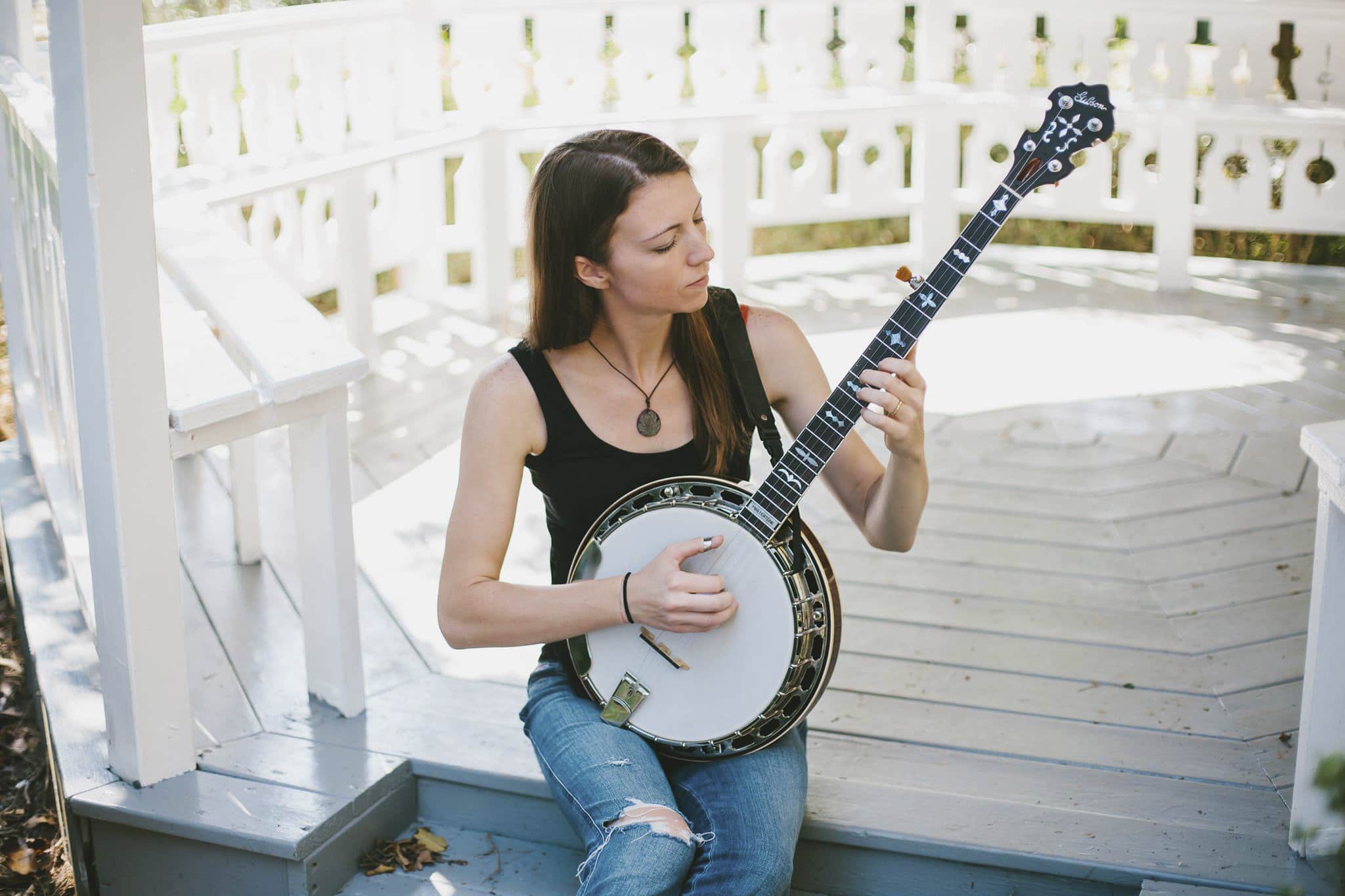
BGS 5+5: Danny Barnes

Artist: Danny Barnes
Hometown: Port Hadlock, Washington
Latest album: Man on Fire
Personal nicknames (or rejected band names): Possum Grunt. Crawfish Ate Your Face. Why Me Lord. The Crumbled Earth. Dirt Is My Witness.

Which artist has influenced you the most … and how?

I’d say Stringbean. I saw him in about 1970 when I was nine. The type of work a man was expected to do where I was from was roofing, something in the farming industry or construction, which were really hard and not fun, and here was this guy traveling around the country making people happy with a banjo, and I thought, “That’s what I’m going to do for the rest of my life,” and that turned out true, at least the traveling and the banjo part.

What other art forms — literature, film, dance, painting, etc — inform your music?

Well I love poetry, especially William Blake, and I read the Bible a lot, and I’ve read lots of classic novels and philosophy. I got the idea from John Hartford and Paul Leary of the Butthole Surfers to make records that were like movies in your head, so I do get quite a few ideas from old movies. I like Westerns and sci-fi, old ones.

If you had to write a mission statement for your career, what would it be?

To uplift people when they are really down, especially when you are of an unmoneyed heritage and things are overwhelming and it seems like the cops, society, the church, your family, God, and everybody has it in for you. And also to show that despite all the conventional wisdom on the subject, if you want to make art you can, especially if you must make it!

Which elements of nature do you spend the most time with and how do those impact your work?

I walk on the beach every day when I’m home. I like the salt water. And I like seeing God’s handiwork in the sky and in the plants and animals.

How often do you hide behind a character in a song or use “you” when it’s actually “me”?

Well, a normal person only has about four songs based on their life, then you run out of life and you have to start making up stuff, or reading an awful lot. So, pretty much never. I write about some horrible characters, ha ha. Though in my defense, it’s not that they are “bad,” they are just trying really hard to figure out a way to lay their burdens down.


Photo credit: Sarah Cass
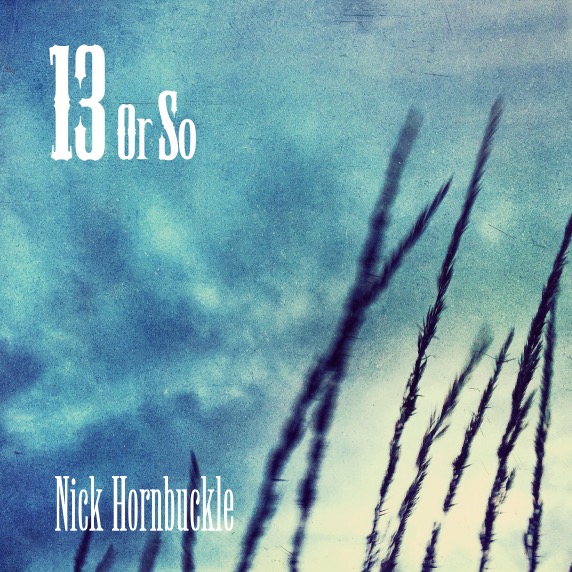
Nick Hornbuckle, “Cleo Belle”

There’s a sort of primitive beauty within the patchwork techniques that have informed and filtered into each individual instrumentalist’s approach to the five-string banjo. Styles rapidly morph and change, aided by the instrument’s relative youth (when compared, in roots music, to all but perhaps the resonator guitar) and its absolute refusal to nestle into any one distinct vein of pedagogy. Scruggs-style, clawhammer and broader frailing, ragtime, picking (i.e. with plectrum), strumming, and even more avant garde approaches such as Greg Liszt’s four-finger banjo all lend themselves to the machine in their own alluring ways. 

Enter Nick Hornbuckle, banjoist at large and member of John Reischman’s Jaybirds, who’s just released his second solo album, 13 or So. Hornbuckle’s right hand method defies categorization even by the rule-eschewing standards mentioned above. His two-finger style is decidedly distinct from the eponymous Appalachian, old-time frailing approach, combining aspects of clawhammer, Scruggs-style, and the ethereal, impossible-to-replicate quirkiness of just making your hands do what the music requires without being exactly sure how that works. I.e., playing the banjo. 

The resulting aesthetic, which anchors each of the twelve original tunes on 13 or So, falls somewhere within an equilateral triangle whose vertices would be Mark Johnson (of clawgrass fame), Steve Martin, and Noam Pikelny (if he had one finger tied behind his back). “Cleo Belle,” as all of Hornbuckle’s compositions, confounds with its combination of sheer musical athleticism and acrobatics — while remaining absolutely intuitive and organic. With his crew — on “Cleo Belle” that would be Trent Freeman (fiddle), John Reischman (mandolin), Darryl Poulsen (guitar), and Patrick Metzger (bass) — Hornbuckle wholly incorporates vernacular musical vocabularies while still pushing string band boundaries into more art music or chamber music spaces. The arrangement reminds that the western-most communities of bluegrass and old-time acolytes in this country have truly, effortlessly combined the best parts of each, while retaining that rustic, back-porch timelessness that makes the banjo beguiling to all of us.

10 Young Banjo Players You Aren’t Paying Enough Attention To

We don’t blame you. Banjo is typically all about praising the masters, mimicking their technique, and playing “it” — whatever tune, song, lick, or fill — exactly the way the heroes did it. Of course it’s easy to overlook up-and-coming pickers who are innovating the instrument and letting their own personalities shine through their playing. Rest assured, we’ve been keeping up with a panoply of younger banjo player virtuosos for you, just in case you’ve overlooked ’em.

Gina Clowes

The most recent addition to Chris Jones and the Night Drivers, Gina Clowes’ debut album, True Colors, is a surprising departure for anyone who might be expecting songs along the lines of the more traditional-leaning material of the Night Drivers, but Gina’s playing refuses to be pigeonholed.

Catherine “BB” Bowness

BB has a chameleon-like ability to deftly shape her playing to fit any number of styles. With her Boston-based bluegrass band, Mile Twelve, she tends to lean into a more traditional approach, hard driving and uncompromising. In other contexts, she demonstrates she’s as progressive and outside-the-box as any Fleck/Pikelny acolytes out there.

Tabitha Agnew

Based in Northern Ireland, Tabitha Agnew and her two brothers tour and perform as Cup O’Joe. The subliminal transatlantic touches through her playing are like Easter eggs, keeping listeners on their toes, never quite sure what’s coming next.

Victor Furtado

Typically on banjo, when your aim is speed and intensity you give up some measure of precision and nuance. Not Victor Furtado. Whether he’s playing an emotive, pensive tune, or a foot-stomper like this, he never sacrifices any of his intricate, unexpected musical ideas. Oh, and remember Gina Clowes? Victor and Gina are siblings. Go figure.

Matthew Davis

There are plenty of young banjoists out there in the world right now who are obsessed with learning and transcribing every note they can from progressive trailblazers like Béla Fleck and Noam Pikelny. (And rightly so!) However, National Banjo Champion Matthew Davis (of new acoustic, bluegrassy string band Circus No. 9) is one of very few whose own imaginative voice on the instrument comes through louder than any of his influences, which gives his playing a remarkable maturity.

Little Nora Brown

This ain’t your usual, “aw this kid is playing an instrument as big as they are!” cutesy sh*t. It is a compelling case for reincarnation, though. It almost sounds like Little Nora Brown has a host of roots music legends pouring out of her fingertips and through her lips. Leave it to the young people to remind all of us that old-time music is relevant in any context, but especially poignant and transformative when it’s allowed to be in the present.

Steven Moore

A two-time National Banjo Champion, Steven Moore is a career biochemist who plays the banjo with downright effortless command, combining modern styles with classic, timeless licks and tricks. The moral of the story here is that when a banjo player plays an utterly stunning Don Reno cover, you oughta pay attention.

Uma Peters

She may be stoic, quiet, and generally shy, but Uma Peters is not one to overlook. At 11 years old, her old-time banjo skill level is already so high we can hardly imagine the heights to which she’ll take it. Again, this music stands for a whole lot more than just cuteness. Uma Peters for President.

Gabe Hirshfeld

More than just a bluegrass meme master, Gabe Hirshfeld is another example of a banjo player who refuses to let his playing style fit neatly into any of the molds already set forth by bluegrass forebears. On the five-string he can be unflinchingly traditional, totally off-the-wall, borderline insane, and/or all of the above all at once.

Alex Leach

Playing an arch-top banjo player in the Clinch Mountain Boys is quite the mantle to take on, but Alex Leach does it with ease and aplomb. The world needs more right hands backed up against bridges, more raised heads, and more playing and filling while singing lead. Just follow Alex’s example.


Lede image: courtesy of Mountain Home Music Company