Lilith Fair Was Its Own Kind of Revolution

The ’90s might be cool again, but there was more to the era than Friends and Seinfeld. In the shadows of the dot-com boom and bust, NAFTA and off-shoring, life wasn’t as slow or quirky as those shows made it seem. American women had more independence than ever before – but they were still waging battles for gender equity from kitchen tables to C-suites to recording studios.

Sarah McLachlan was just reaching the peak of her powers in 1997, enjoying international success but frustrated by radio programmers’ limited ideas of how their audience received women. McLachlan and other women were constantly pitted against each other, told that no one would listen to two songs by women in a row – and certainly no one would want to see women tour together. So, McLachlan set out to prove the world wrong, reshaping popular music in the process.

Lilith Fair: Building a Mystery is a new documentary produced by ABC News and released in September 2025. Available to stream now on Hulu, the project captures the festival’s revolutionary three years with pride and exuberance, encapsulating Lilith Fair’s confident strength and joy. Archival footage of shows and interviews with some of the hundreds of thousands of fans who flocked to the event are resolute testaments to the festival’s enduring impact – if only people remembered it.

The film, directed by Ally Pankiw, premiered at the 2025 Toronto International Film Festival in early September. Dan Levy (of Schitt’s Creek fame) co-produced the film under his Not a Real Production company. The documentary follows the story of Lilith Fair from its genesis, examining the festival’s place in history, the misogyny women artists faced at the time, and the trails it blazed for women artists today. Featuring McLachlan, Sheryl Crow, Erykah Badu, Paula Cole, and more in interviews, the film explores how McLachlan’s forward-thinking vision animated Lilith Fair into something much more than a package tour.

Lilith Fair’s Place in History

“The cultural memory of Lilith is clearly very skewed,” observes co-producer Cassidy Hartmann, who spoke to BGS. “There are a number of reasons for that. Women’s achievements in history have often been overshadowed or skewed in some way and there’s often been backlash against that.”

The documentary opens with a series of TikTok videos featuring half a dozen Gen Z-ers breathlessly recounting the massive package tour devoted solely to women artists of all genres. In 1997, 1998, and 1999, Lilith Fair main stage featured McLachlan, Badu, Cole, Crow, Tracy Chapman, The Indigo Girls, Jewel, Missy Elliot, Bonnie Raitt, and many more – while the “village stages” featured then little known up-and-comers like Christina Aguilera, Dido, and Nelly Furtado.

McLachlan and her team led the massive undertaking with a steady hand and, as the documentary shows, a willingness to learn from critiques. By the festival’s third year in 1999, the event boasted artists of many genres, cultures, and ages – though the sound leaned predominantly folk.

“I don’t think that any genre classified us,” Paula Cole demurred when speaking to BGS.

“I think that everyone was so unique and had their own music, and we fall into different classifications. I personally hate genre classification, because it’s limiting. Great music is usually a blend, anyway.”

Cole, who was nominated for three GRAMMYs for her 1996 album This Fire, would know about great music. Yet, a half hour into Lilith Fair: Building a Mystery, you’d be hard-pressed to miss her twang and carefully crafted lyrics forming the backbone of, well, Good Country.

But Cole has a point. While Lilith is often remembered in pop culture as a collection of (white) folk-inspired dryads, the festival featured an array of talent across all genres of music. As the documentary illustrates, McLachlan received feedback that the tour’s first year was too racially homogeneous, so she sought to build a tour that encompassed the totality of women working in music: Badu, Missy Elliott, and Queen Latifah all played the festival. (The documentary details a hilarious anecdote about Missy Elliott’s ride to the show after her tour bus broke down – we won’t spoil it here, but it’s the kind of thing that simply doesn’t happen in the age of smartphones.)

According to Badu, her time with Lilith Fair inspired her to create the Sugar Water Festival with herself, Queen Latifah, and Jill Scott in 2005 and 2006. Like Lilith, that event brought together community orgs that addressed women’s (and in this case, Black women’s) concerns.

Rippling Energy

Cole was a part of Lilith’s story from the very beginning, joining McLachlan on short, experimental runs to see if an all-woman lineup could indeed draw a crowd.

“It was uncommon for women to open for women. Every night I would tell the audience, I want to thank Sarah for having me here because this is uncommon,” Cole says. “This doesn’t happen. And audiences would erupt into applause when I would tell them that. It felt like a zeitgeist. You could feel the energy ripple.”

But Lilith Fair did not happen in a vacuum. It stands as one chapter in a long-ignored legacy of self-made movements among women in music. In the ’60s and ’70s, there was, in fact, an entire movement-turned-genre known as “women’s music.” The folk-inspired sounds were championed by queer record label Olivia Records and Michigan Womyn’s Music Festival was one of the scene’s organizing forces from 1976 to 2015. MichFest, as it was known, was an annual convergence of feminist women across the sexual and gender spectrum. But, the festival’s refusal to admit trans women in 1991 contributed to its decline. (The silver lining here is the subsequent organizing of trans rights groups and cis allies, but that’s a story for another time.)

While the Indigo Girls and Chapman performed at both Lilith Fair and MichFest, the headlining artists on Lilith’s lineup already had major label backing and widespread commercial success by 1997. Yet, history has collapsed and often conflated the two.

“A lot of people think Ani DiFranco was at Lilith,” executive producer Hartmann observes. “Clearly there is some overlap there. I think all of these women had a righteous anger and were super blunt about it.”

Indeed, while DiFranco has earned her reputation as that decade’s feminist iconoclast, Cole’s This Fire would certainly belong right next to DiFranco’s records on the shelf (likely much to the dismay of ’90s rock critics.)

Lilith Fair received quite a bit of criticism from women critics – certainly, McLachlan’s gentle forcefulness may have been more palatable to record labels than, say, riot grrl, but with time sanding down the edges of the record bins, it’s easy to see how they all form part of a whole.

“Women often don’t get to hear and understand the stories of generations of women before them, because culture has a tendency not to platform those stories. That lineage is often broken,” explains Hartmann. “Another thing that Lilith did really well was it had multi-generational artists. Emmylou Harris and Bonnie Raitt were there, bestowing their own wisdom and experience to these younger women. I think that’s also a really powerful element to keep in mind and hopefully replicate in the future.”

Building a Documentary

According to Hartmann, the documentary was inspired by Jessica Hopper’s Vanity Fair article “Building a Mystery: An Oral History of Lilith Fair.” Co-produced by Dan Levy and directed by Ally Pankiw, the film draws upon footage from MTV News, band members, and festival staff – plus a trove of 600 unreleased tapes gathered by Lilith on Top, a 2001 documentary that was only released in Canada.

There were plenty of reasons to resurface the story.

“Many of these people are at a point in their lives and careers [now] where I think they can reflect on that moment and have some perspective on it as well,” Hartmann says. “Unfortunately, I think the themes of the Lilith story are as relevant as ever, in terms of what’s happening in our society and culture at the moment with women’s rights being rolled back. It’s a moment to be reminded of what’s possible.”

Cole echoes that sentiment.

“Politically, things are so frightening as we’re witnessing the formation of autocracy without checks and balances and a lot of backlash [to liberalism],” she says. “I think Lilith is needed now more than ever. Anytime that someone’s talking about it is important. The conversation must go on, must go on, and we must keep telling people about it. It just gives hope, it gives breath, it opens doors, it lifts the ceiling.”

Indeed, if the film’s archival live footage conveys just a micron of the incredible energy in those venues, then Lilith was a revolution indeed.

Passing the Baton

McLachlan has repeatedly stated that, while the world needs something like Lilith Fair again, she is not the one to lead it – and that it would need to be very different than Lilith Fair was.

“I think Lilith was its own unique entity,” Cole reflects. “There are artists that, you know, sell a lot more tickets than Sarah that could drive this and that could do such a thing. I’m calling on the younger women of today to create their own version of Lilith Fair.”

But one message should still resonate: that quiet defiance Lilith Fair proudly bore – proving conventional wisdom wrong.

“When someone tells you something’s not possible, If you believe in it and you commit yourself to it, look what can happen,” Hartmann observes. “If it comes from a true organic place, the sky’s the limit.”

“Culture change, feminism, fresh thinking, intersectional thinking, it takes time,” says Cole. “It’s like a slow, long, quiet revolution.”


Images courtesy of ABC News Studios; Paula Cole photo by Merri Cyr. 
The Byrds’ Chris Hillman Reflects on ‘Laurel Canyon’ and Why He Had to Leave

Splitting off from Sunset Boulevard in West Hollywood, Laurel Canyon Boulevard runs a circuitous route through unkempt mountain acres, past the Laurel Canyon Country Store, weaving and curving for miles before finally spilling out in Studio City. Along the way small roads split off into the mountains like tributaries from a river.

Up these narrow, twisting mountain byways lived many of the musicians who, in the late 1960s and throughout the 1970s, exerted an incalculable influence on popular music: the Byrds chief among them, but also the Mamas & the Papas, Joni Mitchell, Love, James Taylor, the Monkees, and Crosby Stills & Nash. Together, they transformed folk music into folk rock and singer/songwriter fare, transforming it with new sounds, new ideas, new priorities, and — it can’t be denied — new drugs.

This strange, paradoxical place — a rustic mountain paradise nestled within the purgatory of Los Angeles — is the subject of a two-part documentary on EPIX, directed by Alison Ellwood and produced by Alex Gibney. Across two 90-minute episodes, Laurel Canyon traces the comings and goings of several generations of folk rockers down the boulevard and up into the hills.

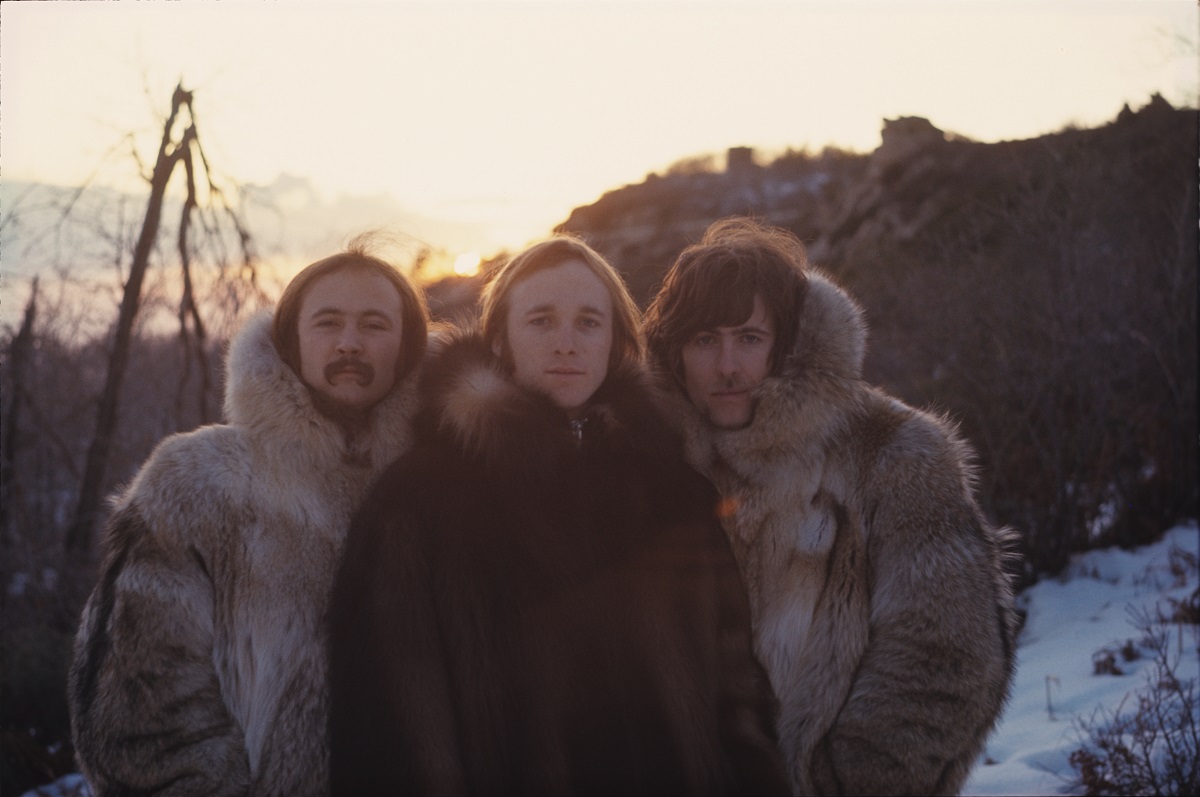
Ellwood depicts this place as something like a bucolic community that enabled and encouraged romantic and musical collaboration among its denizens. A struggling musician named Stephen Stills flubbed an audition for a TV show called The Monkees, but suggested his roommate Peter Tork try out for a role. Mama Cass introduced Stills and David Crosby to a British musician named Graham Nash, and the trio became one of the most successful groups of the 1970s. A band of freaks from Phoenix, Arizona, calling themselves Alice Cooper showed up at Frank Zappa’s cabin at 7 a.m. — about twelve hours early for their audition. The stories go on and on, too much for even a lengthy documentary to contain.

Laurel Canyon didn’t just offer a sense of community along with unobstructed views of the city at night. It also gave these musicians access to the city itself — in particular, the happening Sunset Strip clubs like the Troubadour, Pandora’s Box, Ciro’s Le Disc, and the Hullabaloo Club. It was a neighborhood galvanized by the riots in 1966, when young clubgoers protested a police-imposed curfew — a pivotal moment in ‘60s radicalism and the inspiration for Buffalo Springfield’s “For What It’s Worth.”

The popularity of the music written in the hills above the Strip meant that Laurel Canyon’s most famous residents spent more time away from the canyon, spending weeks in the studio recording their next albums or months on the road playing their songs in front of growing legions of fans. Elwood’s documentary strays from the locale in its title, traveling as far away as Bethel, New York, for the Woodstock music festival in 1969, which demonstrate how deeply these new musical ideas were taking across the country.

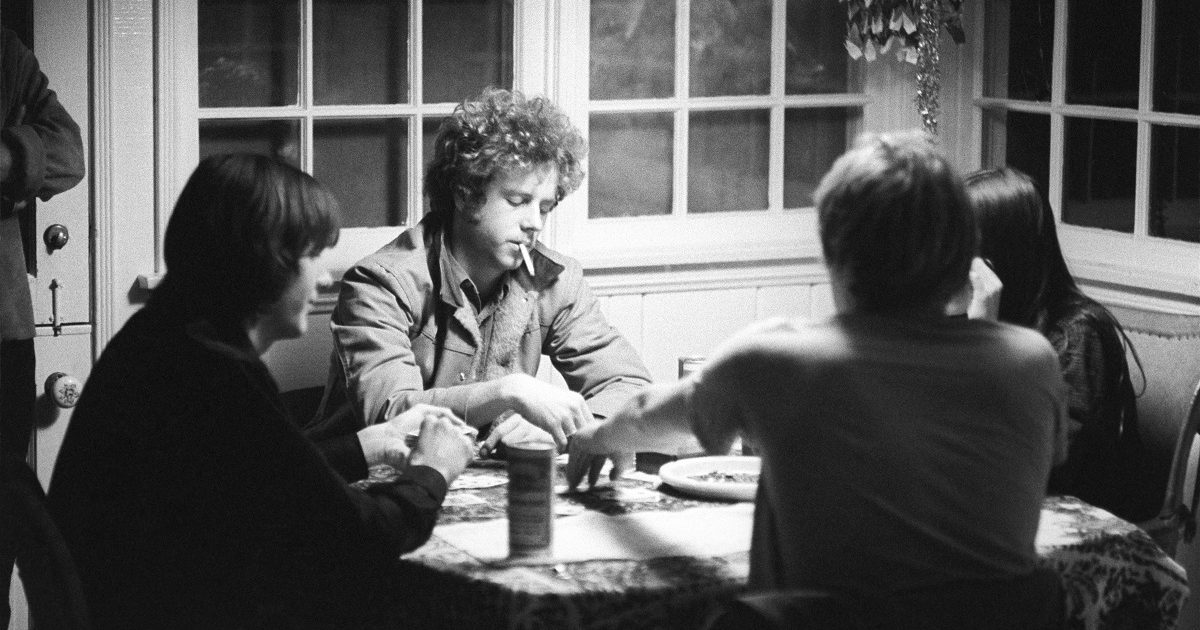
There are, refreshingly, few talking heads in these two episodes. Rather than the usual musicians rhapsodizing about their youth, Ellwood frames the documentary with remembrances by a pair of photographers, Nurit Wilde and Henry Diltz. Their archival images and films make up the bulk of Laurel Canyon, which makes it all seem more immediate, as though fifty years ago was just yesterday. In that regard it’s closer to Tarantino’s Once Upon a Time in Hollywood than Jakob Dylan’s Echo in the Canyon.

But that also makes this historical moment seem more fleeting. Around the time that Charles Manson sent four of his followers to a house he thought belonged to producer Terry Melcher, drugs started to infiltrate Laurel Canyon, puncturing what Graham Nash calls a “beautiful bubble.” Grass and booze are quickly displaced by coke and heroine, and the scene chills a bit in the 1970s, as a new wave of musicians moved in to these houses and crash on these couches.

There are many stories from Laurel Canyon that don’t get told in the documentary, as well as many songs that don’t get played and many artists who don’t get mentioned. There’s no trace of Van Dyke Parks, the eccentric L.A. arranger who affectionately satirized the community on “Laurel Canyon Boulevard,” off his 1968 album Song Cycle. “What is up in Laurel Canyon?” he asks, quixotically, like the most ironic tour guide. “The seat of the beat,” he replies to himself.

On the other hand, the film can only hold so much. And the stories that Ellwood does tell add up to something larger: Laurel Canyon is less about a place and more about an idea. It’s about how different strains of traditional and popular music commingle and mutate, how they point to an infinite set of possibilities for voice and guitar (and drums and bass and amps and keyboards and synthesizers and so on).

On the eve of the documentary’s premiere, BGS spoke with one of Laurel Canyon’s early and most famous residents, Chris Hillman.

BGS: You moved to Laurel Canyon in 1965. What took you there?

Hillman: First thing on the list was, I needed a place to stay. The Byrds were getting going and starting to gain a little ground, and I had already known about Laurel Canyon. It was purely by accident that I’m up there one day by the country store, and I run into a guy who had a place to rent. It was wonderful. It was up on this road overlooking the entire city of L.A. You can imagine how beautiful it was at night, with all the lights on and everything. Shortly thereafter, David Crosby moved up there, and then Roger McGuinn. I’m not sure where Mike [Clarke] and Gene [Clark] were. They were probably up there, too. The Byrds were very early occupants of the area.

To what degree was it like a small town in the middle of this big city?

It sorta was. But it was trying so hard not to be that. We were literally four minutes away from the Sunset Strip. So you went from this incredibly energetic, fast-moving madness of the Sunset Strip clubs, you go up Laurel Canyon Boulevard, and in four minutes you’re up in this pristine, quiet environment with all these beautiful old houses. We weren’t the first ones to discover this place. People were living up there in the ‘40s and ‘50s — some actors and a lot of artists. It already had this reputation as a bohemian beatnik enclave.

There was the famous legend that Houdini had a house up there. People would be driving around and point out a place and say, “That’s where Houdini lived.” They’d point out some old wreck of a place, some ruins of an old structure. There were a lot of good legends to the place. I think that’s where Robert Mitchum got in trouble at a party in 1949 or 1950. He walked into a party and then the police came and arrested people for marijuana. He just happened to walk in at the wrong time. But he had a hell of a career after that, though, so he must have struck a deal. The musicians didn’t start moving up there until the ‘60s, and by then it seemed like a quiet mountain town that just happened to be minutes away from the heart of the city.

I always thought of it as the Woodstock of the West Coast — this retreat from the rigors of the big city.

Well, in Woodstock you’re a good long ways from Manhattan. But in Laurel Canyon you’re minutes from the Sunset Strip and maybe ten minutes from Beverly Hills or Hollywood proper. A lot of people don’t know this, but the Sunset Strip was part of Los Angeles County. It was a mile long, from La Cienega I think to Doheny. It was county instead of city, so it was run completely differently. It was patrolled by the L.A. County sheriff, as opposed to the LAPD.

Is that why they imposed that curfews that led to the riots in ’66?

The whole thing with the kids rioting had to do with the small business owners, whose businesses were being infringed upon by foot traffic. The kids were running around, goofing around, and it was killing business. I didn’t get involved in that. I just saw it on the news. I remember seeing that footage. I still lived in the Canyon then. I was there until ’68, then I moved to Topanga Canyon.

Why did you leave?

Things changed. I was still in the Byrds and I just bought a house in Topanga. No, I’ll tell you why I left. I completely forgot the most important part of the story. I’m getting older. The reason I left was, my house burned down in Laurel Canyon.

I was renting this beautiful house, and you could see the whole city. It was all wood, and I remember it was fall, then the ferocious Santa Ana winds hit. They always come around in the fall. They’re very dangerous. It was real hot that day, and the winds were kicking up, and I had pulled my motorcycle out. I was going to kick it over, but it was leaking gas and the wind blew the fumes into the water heater. It was an open-flame heater and it just ignited. It made the same sound you hear when you light an old-fashioned gas range. I literally caught on fire. Instinctively I rolled on the ground. I think I lost a bit of hair and some eyebrow before I got out of there. I jumped in my car and pulled into the dirt road. I had nothing. I had my car and that was it. I lost everything I owned.

David Crosby had just been visiting me at my house. He’d been there for an hour and left just 20 minutes before my house burned down. I think we can connect the dots! I’m kidding. I love David dearly, but I still poke him about that one. Roger McGuinn lived across the canyon from me and saw the fire. He said it looks like where Chris lives, so he starts filming it. Somehow the footage got on the local NBC affiliate. I was living in a hotel for a few nights, and I remember watching my house burn down on the TV. That was ’66.

Is that why you left for Topanga?

Well, it was starting to be the place to live. More groups were moving up there: the Turtles and Frank Zappa and Mama Cass and Peter Tork. Everything was changing. Drugs entered the picture. I ended up buying a house in Topanga Canyon, which is about 25 miles north of Los Angeles. It’s also very pristine and quiet — a little bit bigger than Laurel Canyon. A lot of people moved there, too, like Neil Young. And it was a very similar scene, with everybody interacting with each other. That should be the next documentary.


Photo of Gram Parsons and Chris Hillman playing cards: Courtesy of Nurit Wilde
Photo of Crosby, Stills & Nash at Big Bear: Henry Diltz