Lilith Fair Was Its Own Kind of Revolution

The ’90s might be cool again, but there was more to the era than Friends and Seinfeld. In the shadows of the dot-com boom and bust, NAFTA and off-shoring, life wasn’t as slow or quirky as those shows made it seem. American women had more independence than ever before – but they were still waging battles for gender equity from kitchen tables to C-suites to recording studios.

Sarah McLachlan was just reaching the peak of her powers in 1997, enjoying international success but frustrated by radio programmers’ limited ideas of how their audience received women. McLachlan and other women were constantly pitted against each other, told that no one would listen to two songs by women in a row – and certainly no one would want to see women tour together. So, McLachlan set out to prove the world wrong, reshaping popular music in the process.

Lilith Fair: Building a Mystery is a new documentary produced by ABC News and released in September 2025. Available to stream now on Hulu, the project captures the festival’s revolutionary three years with pride and exuberance, encapsulating Lilith Fair’s confident strength and joy. Archival footage of shows and interviews with some of the hundreds of thousands of fans who flocked to the event are resolute testaments to the festival’s enduring impact – if only people remembered it.

The film, directed by Ally Pankiw, premiered at the 2025 Toronto International Film Festival in early September. Dan Levy (of Schitt’s Creek fame) co-produced the film under his Not a Real Production company. The documentary follows the story of Lilith Fair from its genesis, examining the festival’s place in history, the misogyny women artists faced at the time, and the trails it blazed for women artists today. Featuring McLachlan, Sheryl Crow, Erykah Badu, Paula Cole, and more in interviews, the film explores how McLachlan’s forward-thinking vision animated Lilith Fair into something much more than a package tour.

Lilith Fair’s Place in History

“The cultural memory of Lilith is clearly very skewed,” observes co-producer Cassidy Hartmann, who spoke to BGS. “There are a number of reasons for that. Women’s achievements in history have often been overshadowed or skewed in some way and there’s often been backlash against that.”

The documentary opens with a series of TikTok videos featuring half a dozen Gen Z-ers breathlessly recounting the massive package tour devoted solely to women artists of all genres. In 1997, 1998, and 1999, Lilith Fair main stage featured McLachlan, Badu, Cole, Crow, Tracy Chapman, The Indigo Girls, Jewel, Missy Elliot, Bonnie Raitt, and many more – while the “village stages” featured then little known up-and-comers like Christina Aguilera, Dido, and Nelly Furtado.

McLachlan and her team led the massive undertaking with a steady hand and, as the documentary shows, a willingness to learn from critiques. By the festival’s third year in 1999, the event boasted artists of many genres, cultures, and ages – though the sound leaned predominantly folk.

“I don’t think that any genre classified us,” Paula Cole demurred when speaking to BGS.

“I think that everyone was so unique and had their own music, and we fall into different classifications. I personally hate genre classification, because it’s limiting. Great music is usually a blend, anyway.”

Cole, who was nominated for three GRAMMYs for her 1996 album This Fire, would know about great music. Yet, a half hour into Lilith Fair: Building a Mystery, you’d be hard-pressed to miss her twang and carefully crafted lyrics forming the backbone of, well, Good Country.

But Cole has a point. While Lilith is often remembered in pop culture as a collection of (white) folk-inspired dryads, the festival featured an array of talent across all genres of music. As the documentary illustrates, McLachlan received feedback that the tour’s first year was too racially homogeneous, so she sought to build a tour that encompassed the totality of women working in music: Badu, Missy Elliott, and Queen Latifah all played the festival. (The documentary details a hilarious anecdote about Missy Elliott’s ride to the show after her tour bus broke down – we won’t spoil it here, but it’s the kind of thing that simply doesn’t happen in the age of smartphones.)

According to Badu, her time with Lilith Fair inspired her to create the Sugar Water Festival with herself, Queen Latifah, and Jill Scott in 2005 and 2006. Like Lilith, that event brought together community orgs that addressed women’s (and in this case, Black women’s) concerns.

Rippling Energy

Cole was a part of Lilith’s story from the very beginning, joining McLachlan on short, experimental runs to see if an all-woman lineup could indeed draw a crowd.

“It was uncommon for women to open for women. Every night I would tell the audience, I want to thank Sarah for having me here because this is uncommon,” Cole says. “This doesn’t happen. And audiences would erupt into applause when I would tell them that. It felt like a zeitgeist. You could feel the energy ripple.”

But Lilith Fair did not happen in a vacuum. It stands as one chapter in a long-ignored legacy of self-made movements among women in music. In the ’60s and ’70s, there was, in fact, an entire movement-turned-genre known as “women’s music.” The folk-inspired sounds were championed by queer record label Olivia Records and Michigan Womyn’s Music Festival was one of the scene’s organizing forces from 1976 to 2015. MichFest, as it was known, was an annual convergence of feminist women across the sexual and gender spectrum. But, the festival’s refusal to admit trans women in 1991 contributed to its decline. (The silver lining here is the subsequent organizing of trans rights groups and cis allies, but that’s a story for another time.)

While the Indigo Girls and Chapman performed at both Lilith Fair and MichFest, the headlining artists on Lilith’s lineup already had major label backing and widespread commercial success by 1997. Yet, history has collapsed and often conflated the two.

“A lot of people think Ani DiFranco was at Lilith,” executive producer Hartmann observes. “Clearly there is some overlap there. I think all of these women had a righteous anger and were super blunt about it.”

Indeed, while DiFranco has earned her reputation as that decade’s feminist iconoclast, Cole’s This Fire would certainly belong right next to DiFranco’s records on the shelf (likely much to the dismay of ’90s rock critics.)

Lilith Fair received quite a bit of criticism from women critics – certainly, McLachlan’s gentle forcefulness may have been more palatable to record labels than, say, riot grrl, but with time sanding down the edges of the record bins, it’s easy to see how they all form part of a whole.

“Women often don’t get to hear and understand the stories of generations of women before them, because culture has a tendency not to platform those stories. That lineage is often broken,” explains Hartmann. “Another thing that Lilith did really well was it had multi-generational artists. Emmylou Harris and Bonnie Raitt were there, bestowing their own wisdom and experience to these younger women. I think that’s also a really powerful element to keep in mind and hopefully replicate in the future.”

Building a Documentary

According to Hartmann, the documentary was inspired by Jessica Hopper’s Vanity Fair article “Building a Mystery: An Oral History of Lilith Fair.” Co-produced by Dan Levy and directed by Ally Pankiw, the film draws upon footage from MTV News, band members, and festival staff – plus a trove of 600 unreleased tapes gathered by Lilith on Top, a 2001 documentary that was only released in Canada.

There were plenty of reasons to resurface the story.

“Many of these people are at a point in their lives and careers [now] where I think they can reflect on that moment and have some perspective on it as well,” Hartmann says. “Unfortunately, I think the themes of the Lilith story are as relevant as ever, in terms of what’s happening in our society and culture at the moment with women’s rights being rolled back. It’s a moment to be reminded of what’s possible.”

Cole echoes that sentiment.

“Politically, things are so frightening as we’re witnessing the formation of autocracy without checks and balances and a lot of backlash [to liberalism],” she says. “I think Lilith is needed now more than ever. Anytime that someone’s talking about it is important. The conversation must go on, must go on, and we must keep telling people about it. It just gives hope, it gives breath, it opens doors, it lifts the ceiling.”

Indeed, if the film’s archival live footage conveys just a micron of the incredible energy in those venues, then Lilith was a revolution indeed.

Passing the Baton

McLachlan has repeatedly stated that, while the world needs something like Lilith Fair again, she is not the one to lead it – and that it would need to be very different than Lilith Fair was.

“I think Lilith was its own unique entity,” Cole reflects. “There are artists that, you know, sell a lot more tickets than Sarah that could drive this and that could do such a thing. I’m calling on the younger women of today to create their own version of Lilith Fair.”

But one message should still resonate: that quiet defiance Lilith Fair proudly bore – proving conventional wisdom wrong.

“When someone tells you something’s not possible, If you believe in it and you commit yourself to it, look what can happen,” Hartmann observes. “If it comes from a true organic place, the sky’s the limit.”

“Culture change, feminism, fresh thinking, intersectional thinking, it takes time,” says Cole. “It’s like a slow, long, quiet revolution.”


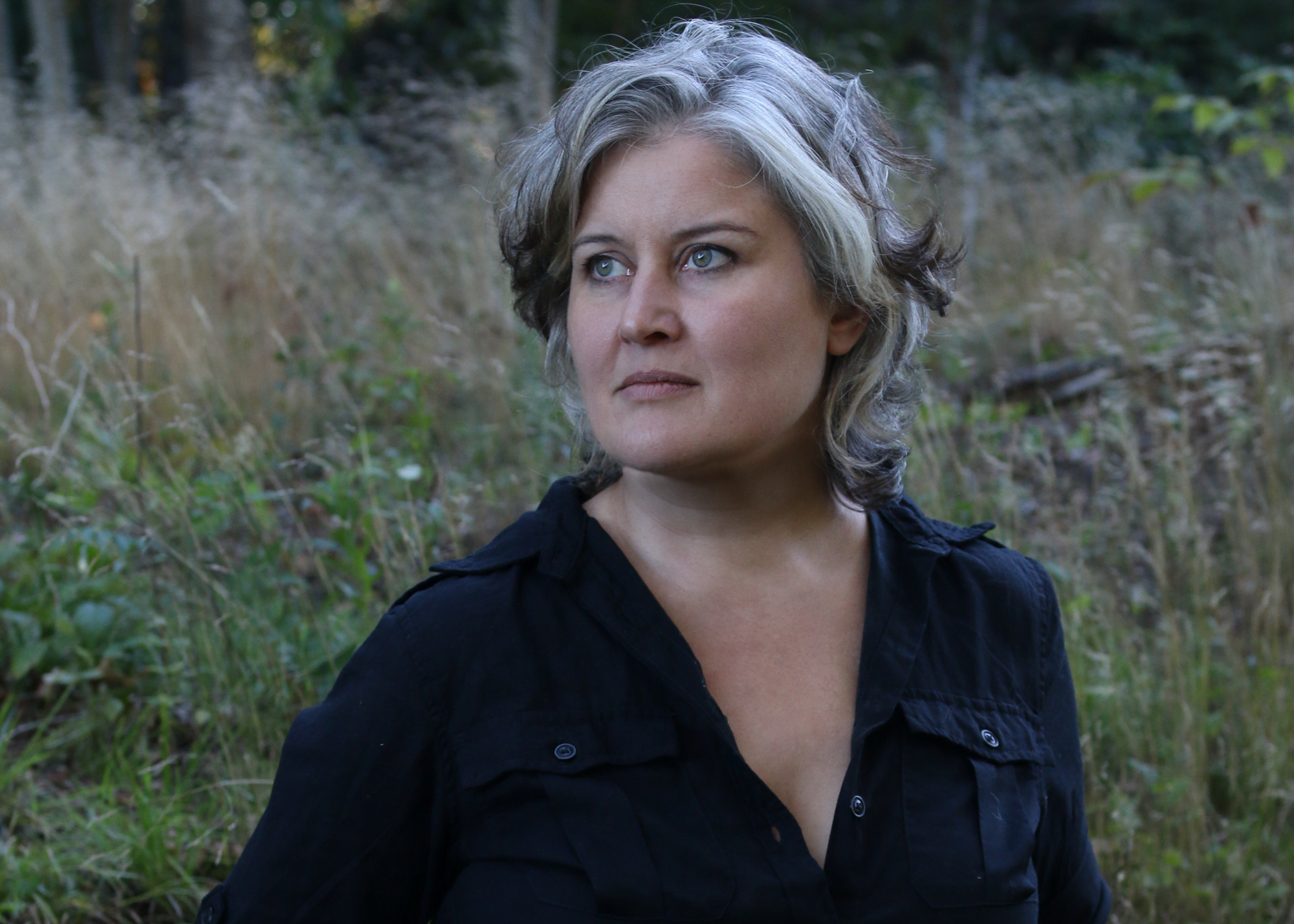
Images courtesy of ABC News Studios; Paula Cole photo by Merri Cyr. 
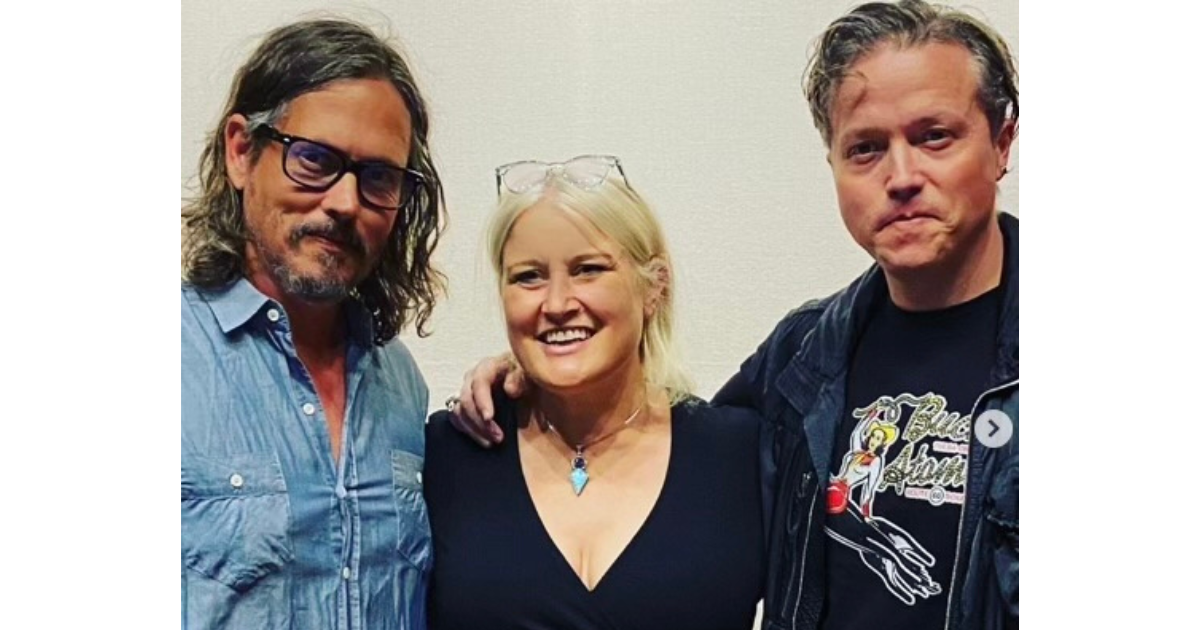
John Paul White, Paula Cole & Jason Isbell Team Up for Two New Songs

Supergroup alert! A trio of top songwriters and musicians have joined forces. The collective is made of Paula Cole, Jason Isbell, and John Paul White, who share their talents to create For The Birds. The release features two tracks, this lead single titled “Mother, Son, and Holy Ghost,” and another, more upbeat track titled “Ricochet.” Both tracks are wrought with heart-melting lyrics and velvety harmonies that provide a glimpse into the alternate plane on which great writers like these operate.

“‘Mother, Son and Holy Ghost’ is about a man who has lost his wife and child,” says Cole, a Grammy Award-winning pop artist who released a roots-oriented album titled American Quilt in 2021. “The song describes his lonely landscape, his attempts to fill the void. Of course, a tight grip is futile. He must come to terms with loss in order to be fully alive.”

John Paul White, formerly of the Civil Wars, observed, “I was beyond thrilled to get the note from Paula to collaborate. She’s an enigmatic performer, a brilliant wordsmith, a riveting singer — and an even better human being. So happy to be a small part of her fantastic career, and to be her friend.”

The mutual admiration continues, as Cole adds, “I wrote a song for Jason, John Paul and myself. I sent them a demo. Thankfully, they liked it well enough, and I booked us some time at Ocean Way Studio in Nashville,” Cole says. “I mused upon the lyrical idea of the holy trinity for us as a trio, except I feminized God. Our meeting felt like a reunion, so natural. I had never met Jason or John Paul before, and yet, we felt kindred. I think our collaboration is beautiful. John Paul plays a gorgeous acoustic guitar part, Jason plays iconic slide guitar. They are both tremendous musicians. I play piano. We all sing. It felt like a band, I loved this experience.”

The BGS Radio Hour – Episode 212

Welcome to the BGS Radio Hour! Since 2017, this weekly radio show and podcast has been a recap of all the great music, new and old, featured on the digital pages of BGS. This week, we bring you new music from John Hiatt and Jerry Douglas, Yola, and more from our Artist of the Month, Chris Thile! Remember to check back every week for a new episode of the BGS Radio Hour.

APPLE PODCASTS, SPOTIFY

Bill and the Belles – “Happy Again (I’ll Never Be)”

To kick things off on the Radio Hour this week is a new release from Johnson City, Tennessee-based Bill and the Belles. We caught up with them recently on our 5+5 series, where they discussed hosting the revived Farm & Fun Time series in Bristol, Virginia, as well as their musical influences and career-based mission statements. Between lead singer Kris’ songs, their great harmonies, and instrumental prowess, Bill and the Belles are just plain enjoyable.


Sam Filiatreau – “Wrecking Ball”

When asked about his musical influences on a recent 5+5, Louisville-based Sam Filiatreau highlighted country greats John Prine and Guy Clark. Those influences combined with his classic twang shine through on “Wrecking Ball.”

Loose Cattle – “He’s Old, She’s High”

Loose Cattle hope they’ve made Porter & Dolly, Johnny & June, and John Doe & Exene all equally proud with this track, written by their longtime friend and songwriter Paul Sanchez.

Miranda Lambert – “Tin Man”

In this new live version of “Tin Man,” Miranda Lambert reminds us how moving a simple performance can be. The solo acoustic version of the track comes from a new album and film that Lambert and fellow songwriters (and proud Texas natives) Jack Ingram and Jon Randall have crafted. Titled The Marfa Tapes, the album features the recordings that are shown in The Marfa Tapes Film.

Chris Thile – “Dionysus”

Our Artist of the Month, Chris Thile, has been the busiest man in bluegrass for a long time. Between hosting Live From Here, shows with the Punch Brothers, or Nickel Creek reunions, Chris didn’t get to slow down much before the pandemic forced him to. Recorded in an old church-turned-studio, his new album Laysongs reflects on his Christian upbringing and community, and how that relates to where he is now. 

Turner Cody and the Soldiers of Love – “Lonely Days in Hollywood”

In the words of Turner Cody and the Soldiers of Love, “Lonely Days in Hollywood” is a “kind of meditation on the transactional nature of our culture of celebrity; how our dreams belie reality and nothing is for free.”

Tray Wellington – “Pond Mountain Breakaway”

Tray Wellington originally wrote the main riff for “Pond Mountain Breakaway” on the electric guitar, but then realized it would be well-suited for an uptempo bluegrass tune.

John Hiatt and the Jerry Douglas Band – “Mississippi Phone Booth”

For his latest record, famed roots singer and songwriter John Hiatt enlisted the help of the Jerry Douglas Band. Recorded in famed RCA Studio B in Nashville, Leftover Feelings returned Hiatt to his earliest days in town when he lived in a $15-a-week rented room on Music Row. Although the space could easily intimidate due to the amount of classics recorded there, Hiatt suggested that you don’t actually think about it, because it’s such a comfortable environment.  

Paula Cole – “What a Wonderful World”

Paula Cole’s new album American Quilt showcases her impressive vocal range as she sings some of her favorite American standards. She chose “What a Wonderful World” to close the album intentionally, stating that the song “unifies people.”

Satsang – “Malachi”

We caught up with Drew McManus of Satsang recently, and he shared with us the touching story of “Malachi,” a song about his son, which he wrote in the hospital the night he was born.

Rhiannon Giddens with Francesco Turrisi – “O Death”

“O Death” is the latest installment in Rhiannon Giddens ongoing collaborations with her partner, Francesco Turrisi, a gifted Italian multi-instrumentalist. Their new record, They’re Calling Me Home, was inspired by the year they spent together in Ireland, amidst the pandemic. They’re Calling Me Home echoes the many ways that a tumultuous 2020 had many of us yearning for the comforts of home, of the past, or of those that were called home from this world.

Yola – “Stand For Myself”

“Stand For Myself” is Yola’s newest single from her upcoming album, set to release in July. The track is a mix of “symphonic soul and classic pop,” and its message is universal — that real change can come from thinking, living, and standing for ourselves. 

Merle Monroe – “Shelby Tell Me”

Tim Raybon & Daniel Grindstaff of Merle Monroe hope listeners will be captured by the classic sound and wonderful story line of “Shelby Tell Me.” In talking to BGS recently, they stated, “our intention is to move the listener emotionally through the lyrics and melody.”

Pilgrim – “Darkness of the Bar”

When BGS spoke with Beau Roberson of Pilgrim about “Darkness of the Bar,” he shared that the song “…is about the dark struggles of life, and trying to see the light in those dark times.”


Photos: (L to R) Miranda Lambert by Jim and Ilde Cook of CookHouseMedia; Yola by Joseph Ross Smith; John Hiatt by David McClister

On ‘American Quilt,’ Paula Cole Wraps Herself in Music That Reflects Her Life

Paula Cole has long explored the musical territories that inform her work, making it nearly impossible to define her. Singer-songwriter? Yes. Pop star? Yes. Interpreter of jazz standards? Yes. She’s collaborated with country legends, toured with internationally acclaimed artists, and occasionally dropped completely out of sight. Because she’s so hard to pin down creatively, Cole has managed to transcend her commercial zenith of the ’90s, when songs like “Where Have All the Cowboys Gone” and “I Don’t Want to Wait” were inescapable.

Twenty-five years later, Cole is in the spotlight again with American Quilt, which sets her impressive vocal range to standards like “Bye Bye Blackbird” and “You Don’t Know What Love Is.” It isn’t quite a jazz album, and although her writing skills are on display in “Steal Away/Hidden in Plain Sight,” it isn’t quite a folk record either. Instead it’s a reflection of the influences that shaped her musical direction early on.

“Even when I explore jazz, I like it to be a little more raggedy and raw and rootsy,” she says. “I just wanted the album to reflect all that I am, and I realized, gosh, all of these songs are different from another. How do I unify it? That’s when I remembered my mom, who is a visual artist and she’s a quilter. And I realized that the quilt is the perfect metaphor for the album, that they’re all patches of an American quilt. That’s how the title was born.”

The metaphor works for the spectrum of songs on the album, yet it’s also appropriate for the warmth and comfort it provides. Some songs are more familiar than others – and her rendition of “Shenandoah” is particularly exquisite – but it’s an album best enjoyed as a whole. By dismissing the expectations of how long a song should be, and by showing reverence without replicating what everybody else has already done, Cole has produced a sweeping and immersive listening experience. She called in to BGS from the music room in her Massachusetts home, with a photo of Dolly Parton smiling over her shoulder.

BGS: Your version of “Wayfaring Stranger” is beautiful. What made you want to record it for this album?

Paula Cole: I learned of it through listening to Emmylou Harris, and loving and adoring her. Her Roses in the Snow album was really important to me developmentally. We were on Lilith Fair together in the ‘90s and would sing on each other’s sets. And I’ve been on a few benefit concerts that she’s asked me to play. I love her so dearly. I think she’s an important American voice and we should all be talking about her much more. She kind of saves music because she brings it back to the traditional aspect of it. She keeps us whole and she keeps us real by bringing integrity back to the music.

The song came to me very intuitively and I thought, “A ha!” I can reveal some of my influences and also bow to someone who was important to me. Also I was so fed up and traumatized by the music business and it was Emmylou who told me, “Don’t quit.” You know, I took a seven-and-a-half year hiatus and thought about leaving the music business, but she was the one who said, “Hang in there.” It just happened too fast. She had this motherly wisdom for me and it made sense, and I’ve thought of her so much over my life. I love her very much.

Roses in the Snow is a familiar bluegrass album for a lot of our readers. Are you a bluegrass fan?

I just love music. So, if you asked me, “Do you like jazz?” I would say, “I love music.” [Laughs] My dad played bass in a polka band on weekends when I was little, then he would go home and play Duke Ellington on the piano or he would play obscure folk songs on banjo in my house growing up. It was always a mixture. I love all music. I love bluegrass. I love acoustic music. I love music where musicians are playing real instruments, so that’s one defining factor to me — real instruments! I’ve been touring with upright bass now for several years and I can’t go back.

Did your dad teach you how to play banjo?

No, darn it! [Laughs] I guess I could have picked it up. I mean, he played everything. He could do hambone and play nose flute and upright bass and guitar and banjo and piano. Just really a renaissance man. He exposed me to all music and there were no classifications. That was something more that non-musicians did. Musicians would fluidly move from music to music and just find the joy in all of it. He taught me that.

When I was listening to “Nobody Knows You (When You’re Down and Out),” I was curious, does that mirror your own experience to some degree? Like, you’re living the good life as a millionaire, then you find that your friends vanish when the circumstances change.

Oh sure, I’ve known that. False friends, false fans, false everybody comes to you when you’re successful. They’re flattering and they’re obsequious. They have ulterior motives, so it’s hard, and of course I’ve experienced that because I’ve been up and down and side to side…. [Laughs] All over the business! And I wanted to come back home and have a personal life and have truth and family and let the trappings fall, and to be honest.

So, I chose to walk away in a sense from that shiny pop world because it wasn’t me. I was introverted and shy. I didn’t feel like this big pop star. I was very much a musician of integrity that wanted to have a long career and a rich catalog. I had to walk away to reset and reinvent myself. So, yes, of course I relate to that song. Also I relate to Bessie Smith, and so many fantastic singers are coming from the river of Bessie Smith. You hear Billie Holiday and Janis Joplin — Bessie Smith was their favorite singer. She combines all of that beautiful roots music. And the songs from the Prohibition era speak to me, those hard times, they speak to me.

Sometimes I will ask musicians about their first guitar, but for you, I’m wondering, do you remember your first piano?

Yeah, I remember the first piano, oh my gosh. It was covered in chipped, baby blue paint. I grew up in Rockport, Massachusetts, and my dad was a teacher at a state college, and we did not have much money. I wore hand-me-downs and we got things at Goodwill. In New England — freezing cold New England — we would really skimp on the heat to save money, and they put the piano in what they called the cold room. It was like a mud room. You walk into that room and take off your coat, and the piano was in the back. And it was cold! It was cold-ass cold! And there’s my first piano.

I was quite dedicated to music, to be playing in a freezing cold room in New England. Literally, we had some fish at one point and they froze! That’s how cold our house was. We had a potbelly stove and it was just hard. We were looking for ways to save money. It wasn’t always that hard. My dad ended up changing jobs and doing better, but my childhood was formative for me. I started working at a really young age. I was waitressing at 14 and I’ve always worked. It’s not nice, struggling like that, but that piano is indelibly etched in my mind with the back of the cold room. The chipped blue piano, out of tune! [Laughs]

Did you grow up with a lot of songbooks around?

Yes, and one of my missions while my father is still alive on the planet is to comb through his fake books and real books, especially of his folk standards. He has some really interesting, cryptic and eclectic, folk books that I would love to go through. That’s on one of my do lists of life.

To me, “Good Morning Heartache” sounds like it could be a sad country song, but it was made famous by jazz singers. How did you learn that one?

It’s in the real book of standards. Those books were around, and I have a real book of standards on my piano now. Even when I was touring, or had hits, or didn’t have hits, or mothering and not being in music, I would go back to the real book just for comfort and learning. I’d let my hands go on the piano and the shapes of the chords and learn songs. I first learned “Good Morning Heartache” by reading it out of a book but then I heard Billie Holiday and even modern singers do it. A lot of people have done it. But I love it because it feels to me like one of those songs that crosses genre, just like you said. It feels to me like it could be a jazz ballad, a country ballad, a soul ballad – and often it’s recorded by R&B singers. I love that it’s universal, and I love sad music. I’m not very good at happy music. [Laughs]

You close this album with “What a Wonderful World,” which offers a lovely and optimistic message. Was that an intentional decision for you to wrap up the album with that song?

Sequence is extremely important to me, so I probably spent at least a month listening to heads and tails of the songs, and all the different possibilities and combinations. And yes, it is the perfect punctuation of the journey of an album format. I love albums – I think in albums. I don’t think I’ll ever be a singles releaser. I’ll always be an album writer and album producer. I love the art of sequence.

Again, this is a song that transpires over genre and it appeals to all audiences. It unifies people. And it was written specifically for Louis Armstrong because he unified Black and white audiences. He was a genius if ever there were one. His ability to improvise within chord changes was profound. He was joyful and elevating. I play it in a somber way, and I hear sadness in my voice, and I think it’s melancholic and ironic in a way, but yeah, we must hold on to hope. We must hold on to that thread of hope for our children and our grandchildren to make this world better.


Photo credit: Ebru Yildiz

MIXTAPE: Paula Cole’s Golden Anniversary Song Celebration

Way back 50 years ago, in 1967, the music was the stuff of legend — full of artists, songs, and culture that begat the Summer Of Love. So many great bands/artists were burgeoning under the surface: Pink Floyd, Joni Mitchell, Rolling Stones, the Who, Janis Joplin/Big Brother and the Holding Company. Tina Turner was preparing to blow away Ike, and Carole King was readying to become her own artist. The Byrds, the Hollies, and Buffalo Springfield birthed CSN(Y), and audiences booed Dylan at Newport Folk Festival for going electric.

It was a time of great social change, a new generation declaring itself in resistance to the Vietnam War and their parents’ conservatism; a time of refuting politics, haircuts, normalcy; a time of experimentation with mind-altering substances, and a quest for peace and love. The late ’60s were a cauldron of cultures and consciousness, and it made for tremendous music.

Let us stand back and appreciate 1967. Let us hope for our cultural renaissance in 2017, in our equally turbulent times. If ever we need a music revolution again, it is now. As Picasso said, “Artists are the politicians of the future.” — Paula Cole (also a product of 1967)

The Beatles — Sgt. Pepper’s Lonely Hearts Club Band

The Beatles were sick and tired of being the Beatles, so they became Sgt. Peppers Lonely Hearts Club Band, creating the first concept album with no singles. Free from touring, they began to live their unique personal lives, then went to the studio to record their masterwork. Psychedelia, innovation in writing/recording, the 1967 London art scene, Yoko, transcendental meditation, brilliance, and irreverence … they made the alter-ego masterwork whose influence is incalculable.

Aretha Franklin — I Never Loved a Man (The Way I Love You)

Newly signed to Atlantic Records, recording with the Muscle Shoals, Alabama, rhythm section featuring Ms. Franklin on gospel rock piano, Aretha stormed the charts and changed music, hearts, and minds forever with fireworks such as “Respect,” “Think,” “Baby, I Love You,” and “You Make Me Feel (Like A Natural Woman).”

Bobbie Gentry — Ode to Billie Joe

My sister from another generation, an introvert, Best New Artist Grammy winner Bobbie Gentry left the patriarchal music business, leaving us with this amazing story. She sang and played her guitar and, importantly, self-produced in a time when women didn’t do that. Her timeless song leaves us wondering what ever happened to Billie Joe, over the course of a Southern American family supper.

Jimi Hendrix — Are You Experienced?

One of the greatest debuts in music history, Jimi marked the sonic marriage of psychedelic UK rock with American blues and R&B.

Dolly Parton — Hello, I’m Dolly

Dolly’s first full-length album introduced her to the world, with two country hit singles — “Dumb Blonde” and “Something Fishy.”

Miles Davis — Live in Europe: 1967

The album celebrated one of the greatest quartets in musical history behind Miles:
Herbie Hancock, Wayne Shorter, Ron Carter, an Tony Williams.

James Brown — “Cold Sweat”

This was possibly the first funk single — with drums breaks, single chord jams, and funky instrumental arrangements.

Otis Redding — “(Sittin’ on) The Dock of the Bay”

He recorded this in December 1967 and died four days later, never knowing the tremendous success achieved on both the R&B and pop charts. It is said that he wrote this song, influenced by listening to Sgt. Pepper’s Lonely Hearts Club Band.

Nina Simone — High Priestess of Soul, Nina Simone Sings the Blues, and Silk & Soul

Enough said! Incredible!

Sly and the Family Stone — A Whole New Thing

Sly and company made their debut with this one, which was lauded by Tony Bennett and Mose Allison, despite no commercial success.

Jefferson Airplane — Surrealistic Pillow

Jefferson Airplane had breakthrough hits with “Somebody to Love” and “White Rabbit,” pioneering the psychedelic era of rock.

Other notable musical moments of 1967:

Grateful Dead — The Grateful Dead
Loretta Lynn — Don’t Come Home A-Drinkin (With Lovin’ on Your Mind)
The Doors — The Doors
Marvin Gaye and Tammi Terrell — “Aint No Mountain High Enough” (off United)
Cream — Disraeli Gears
Simon & Garfunkel — “Mrs. Robinson” (from The Graduate)
Leonard Cohen — Songs of Leonard Cohen
Glen Campbell — Gentle on My Mind
Bob Dylan — “All Along the Watchtower” (off John Wesley Harding)

LISTEN: Mark Erelli, ‘Look Up’


Artist: Mark Erelli
Hometown: Boston, MA
Song: “Look Up"
Album: For a Song
Release Date: April 8

In Their Words: "'Look Up' explores the boundary we often erect between the spiritual and the mundane, and the notion that what we separate into categories might simply be different points along the same continuum. I wrote this song in one, eight-hour marathon with Session Americana’s Dinty Child on an island in New Hampshire’s Lake Winnipesaukee. The first verse is written from the perspective of a janitor working at the Sistine Chapel, the second verse uses Michaelangelo as the protagonist, and the third verse is written in the voice of God who, in turn, brings it all back to the janitor of the first verse.

The central premise was Dinty’s idea, and I can remember nearly every twist and turn we took while writing this — researching stuff on the Internet, walking the trail that loops around the island several times to jumpstart flagging inspiration — but somehow the song still manages to remain very mysterious to me. When it came time to record it, I asked my friend Paula Cole to come up with a harmony part that evoked the 'angels flying low enough to see' line in the chorus, and did she ever. Every time I perform this song in concert, there’s a silence that no one wants to break with applause as the last notes fade." — Mark Erelli


Photo credit: Paul Janovitz