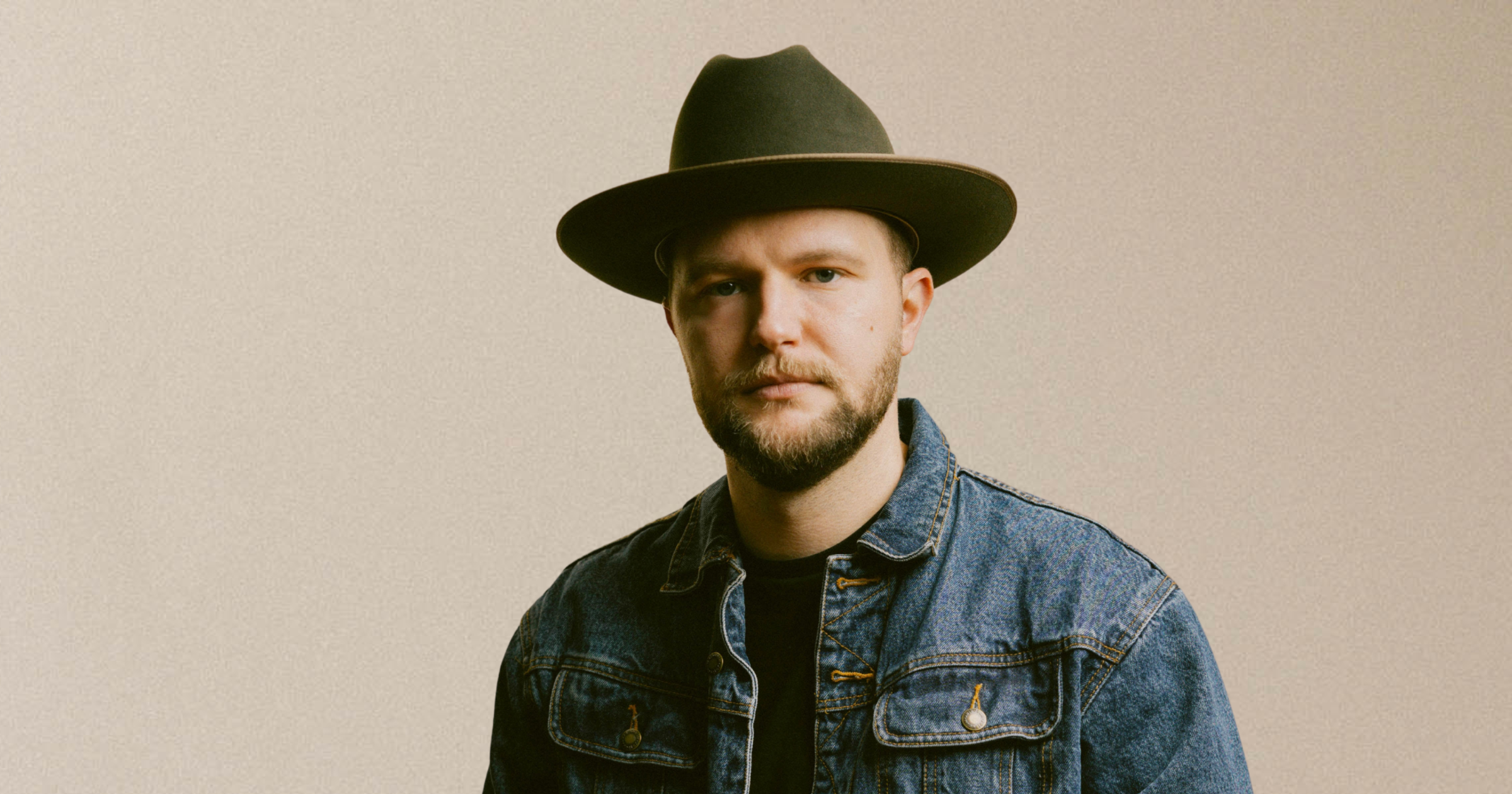
What other art forms – literature, film, dance, painting, etc. – inform your music?
Literature. It has probably helped my writing more than anything besides the act of writing itself. Wendell Berry has had a huge influence on me and he’s far and away my favorite writer. His prose is exceptional. There is a restraint and steadiness to it. He’s extremely prolific and consistent, which isn’t an easy thing to achieve. He says a great deal with very little and I learn from that every time I read a page.
There are many great writers I draw from in the same way: McCarthy, Kingsolver, McMurtry, Leopold, Abbey, Rooney, Hemingway, Faulkner, Burroughs – to name a few. I read widely, but tend to gravitate toward certain styles when I’m working on a project of my own. I’m always reading and if I’m not I make myself feel bad until I do. It’s a big part of the peace my wife and I have built into our days. When I’m in a creative season, I am a bit more intentional about my picks.
Which elements of nature do you spend the most time with and how do they impact your work?
I love the out of doors. I grew up on a cattle farm in Appalachia and was usually either outside or in trouble. I still spend as much time as I can fishing and hiking and – something that is likely unknown about me – I love rock climbing and have traveled the world climbing. I am also a geologist in my straight job, which especially early on kept me working outside.
Nature shows up in almost every one of my songs. It is not something I reach for. It is just part of how I see things. Being outside has always been another place I find peace. If things are bad, going outside almost always makes them better to a varying degree for me
Admittedly, I do get tired of winter and the blues that come with it. That makes its way into the songs, too.
Genre is dead (long live genre!), but how would you describe the genres and styles your music inhabits?
I don’t think much about genre. My songs usually start on an acoustic guitar, so there’s naturally some bluegrass and country in them. That’s the language I grew up around. But I’m not trying to recreate anything. I don’t read music or know much theory and I don’t really know what rules I might be breaking. I’ve always had a good ear and I let that guide me. I’m lucky to have close friends who are incredible musicians, and they’d dress me down if something was off.
If someone needs a label, Americana works fine. Beyond that, I try not to overthink it or limit myself.
What is a genre, album, artist, musician, or song that you adore that would surprise people?
I love hip-hop, R&B, neo-soul type music. I especially love ’90s early 2000s neo-soul. D’Angelo, Erykah Badu, Lauryn Hill, Tevin Campbell, Mario, etc.
I enjoy those genres as much if not more, at times, than bluegrass and country. It’s like reading, I put on the music I need in the moment and I don’t limit myself. I guess that would surprise people, but I think it comes across in my singing some and may present in future sonic choices as well. We’ll see.
Since food and music go so well together, what is your dream pairing of a meal and a musician?
Fried potatoes from a cast iron skillet, greasy beans from Mamaw’s garden, macaroni noodles with tomato sauce, and a chicken fried steak. I could think of a lot of musicians to share that meal with, but the one who keeps coming to mind is Jerry Reed. He was hilarious and super intelligent. A great singer with excellent tone, and he was even a writer for Elvis on a couple tracks.
There’s a story about Elvis asking for Jerry to play on “Guitar Man,” a song Jerry wrote. Folks on Elvis’s team had to go get Jerry from the river where he was fishing to come to the studio and play the guitar part. None of the other session musicians could get it quite right. Legend. He isn’t really revered in modern memory for how brilliant of a technical player he was. He’d be a fun person to share that meal with.
The ’90s might be cool again, but there was more to the era than Friends and Seinfeld. In the shadows of the dot-com boom and bust, NAFTA and off-shoring, life wasn’t as slow or quirky as those shows made it seem. American women had more independence than ever before – but they were still waging battles for gender equity from kitchen tables to C-suites to recording studios.
Sarah McLachlan was just reaching the peak of her powers in 1997, enjoying international success but frustrated by radio programmers’ limited ideas of how their audience received women. McLachlan and other women were constantly pitted against each other, told that no one would listen to two songs by women in a row – and certainly no one would want to see women tour together. So, McLachlan set out to prove the world wrong, reshaping popular music in the process.
Lilith Fair: Building a Mystery is a new documentary produced by ABC News and released in September 2025. Available to stream now on Hulu, the project captures the festival’s revolutionary three years with pride and exuberance, encapsulating Lilith Fair’s confident strength and joy. Archival footage of shows and interviews with some of the hundreds of thousands of fans who flocked to the event are resolute testaments to the festival’s enduring impact – if only people remembered it.
The film, directed by Ally Pankiw, premiered at the 2025 Toronto International Film Festival in early September. Dan Levy (of Schitt’s Creek fame) co-produced the film under his Not a Real Production company. The documentary follows the story of Lilith Fair from its genesis, examining the festival’s place in history, the misogyny women artists faced at the time, and the trails it blazed for women artists today. Featuring McLachlan, Sheryl Crow, Erykah Badu, Paula Cole, and more in interviews, the film explores how McLachlan’s forward-thinking vision animated Lilith Fair into something much more than a package tour.
Lilith Fair’s Place in History
“The cultural memory of Lilith is clearly very skewed,” observes co-producer Cassidy Hartmann, who spoke to BGS. “There are a number of reasons for that. Women’s achievements in history have often been overshadowed or skewed in some way and there’s often been backlash against that.”
The documentary opens with a series of TikTok videos featuring half a dozen Gen Z-ers breathlessly recounting the massive package tour devoted solely to women artists of all genres. In 1997, 1998, and 1999, Lilith Fair main stage featured McLachlan, Badu, Cole, Crow, Tracy Chapman, The Indigo Girls, Jewel, Missy Elliot, Bonnie Raitt, and many more – while the “village stages” featured then little known up-and-comers like Christina Aguilera, Dido, and Nelly Furtado.
McLachlan and her team led the massive undertaking with a steady hand and, as the documentary shows, a willingness to learn from critiques. By the festival’s third year in 1999, the event boasted artists of many genres, cultures, and ages – though the sound leaned predominantly folk.
“I don’t think that any genre classified us,” Paula Cole demurred when speaking to BGS.
“I think that everyone was so unique and had their own music, and we fall into different classifications. I personally hate genre classification, because it’s limiting. Great music is usually a blend, anyway.”
Cole, who was nominated for three GRAMMYs for her 1996 album This Fire, would know about great music. Yet, a half hour into Lilith Fair: Building a Mystery, you’d be hard-pressed to miss her twang and carefully crafted lyrics forming the backbone of, well, Good Country.
But Cole has a point. While Lilith is often remembered in pop culture as a collection of (white) folk-inspired dryads, the festival featured an array of talent across all genres of music. As the documentary illustrates, McLachlan received feedback that the tour’s first year was too racially homogeneous, so she sought to build a tour that encompassed the totality of women working in music: Badu, Missy Elliott, and Queen Latifah all played the festival. (The documentary details a hilarious anecdote about Missy Elliott’s ride to the show after her tour bus broke down – we won’t spoil it here, but it’s the kind of thing that simply doesn’t happen in the age of smartphones.)
According to Badu, her time with Lilith Fair inspired her to create the Sugar Water Festival with herself, Queen Latifah, and Jill Scott in 2005 and 2006. Like Lilith, that event brought together community orgs that addressed women’s (and in this case, Black women’s) concerns.
Rippling Energy
Cole was a part of Lilith’s story from the very beginning, joining McLachlan on short, experimental runs to see if an all-woman lineup could indeed draw a crowd.
“It was uncommon for women to open for women. Every night I would tell the audience, I want to thank Sarah for having me here because this is uncommon,” Cole says. “This doesn’t happen. And audiences would erupt into applause when I would tell them that. It felt like a zeitgeist. You could feel the energy ripple.”
But Lilith Fair did not happen in a vacuum. It stands as one chapter in a long-ignored legacy of self-made movements among women in music. In the ’60s and ’70s, there was, in fact, an entire movement-turned-genre known as “women’s music.” The folk-inspired sounds were championed by queer record label Olivia Records and Michigan Womyn’s Music Festival was one of the scene’s organizing forces from 1976 to 2015. MichFest, as it was known, was an annual convergence of feminist women across the sexual and gender spectrum. But, the festival’s refusal to admit trans women in 1991 contributed to its decline. (The silver lining here is the subsequent organizing of trans rights groups and cis allies, but that’s a story for another time.)
While the Indigo Girls and Chapman performed at both Lilith Fair and MichFest, the headlining artists on Lilith’s lineup already had major label backing and widespread commercial success by 1997. Yet, history has collapsed and often conflated the two.
“A lot of people think Ani DiFranco was at Lilith,” executive producer Hartmann observes. “Clearly there is some overlap there. I think all of these women had a righteous anger and were super blunt about it.”
Indeed, while DiFranco has earned her reputation as that decade’s feminist iconoclast, Cole’s This Fire would certainly belong right next to DiFranco’s records on the shelf (likely much to the dismay of ’90s rock critics.)
Lilith Fair received quite a bit of criticism from women critics – certainly, McLachlan’s gentle forcefulness may have been more palatable to record labels than, say, riot grrl, but with time sanding down the edges of the record bins, it’s easy to see how they all form part of a whole.
“Women often don’t get to hear and understand the stories of generations of women before them, because culture has a tendency not to platform those stories. That lineage is often broken,” explains Hartmann. “Another thing that Lilith did really well was it had multi-generational artists. Emmylou Harris and Bonnie Raitt were there, bestowing their own wisdom and experience to these younger women. I think that’s also a really powerful element to keep in mind and hopefully replicate in the future.”
Building a Documentary
According to Hartmann, the documentary was inspired by Jessica Hopper’s Vanity Fair article “Building a Mystery: An Oral History of Lilith Fair.” Co-produced by Dan Levy and directed by Ally Pankiw, the film draws upon footage from MTV News, band members, and festival staff – plus a trove of 600 unreleased tapes gathered by Lilith on Top, a 2001 documentary that was only released in Canada.
There were plenty of reasons to resurface the story.
“Many of these people are at a point in their lives and careers [now] where I think they can reflect on that moment and have some perspective on it as well,” Hartmann says. “Unfortunately, I think the themes of the Lilith story are as relevant as ever, in terms of what’s happening in our society and culture at the moment with women’s rights being rolled back. It’s a moment to be reminded of what’s possible.”
Cole echoes that sentiment.
“Politically, things are so frightening as we’re witnessing the formation of autocracy without checks and balances and a lot of backlash [to liberalism],” she says. “I think Lilith is needed now more than ever. Anytime that someone’s talking about it is important. The conversation must go on, must go on, and we must keep telling people about it. It just gives hope, it gives breath, it opens doors, it lifts the ceiling.”
Indeed, if the film’s archival live footage conveys just a micron of the incredible energy in those venues, then Lilith was a revolution indeed.
Passing the Baton
McLachlan has repeatedly stated that, while the world needs something like Lilith Fair again, she is not the one to lead it – and that it would need to be very different than Lilith Fair was.
“I think Lilith was its own unique entity,” Cole reflects. “There are artists that, you know, sell a lot more tickets than Sarah that could drive this and that could do such a thing. I’m calling on the younger women of today to create their own version of Lilith Fair.”
But one message should still resonate: that quiet defiance Lilith Fair proudly bore – proving conventional wisdom wrong.
“When someone tells you something’s not possible, If you believe in it and you commit yourself to it, look what can happen,” Hartmann observes. “If it comes from a true organic place, the sky’s the limit.”
“Culture change, feminism, fresh thinking, intersectional thinking, it takes time,” says Cole. “It’s like a slow, long, quiet revolution.”
Images courtesy of ABC News Studios; Paula Cole photo by Merri Cyr.
This is a collection of the BEST love songs in my life, the heartbreakers and the heart menders. The ones that make your heart burst and bloom. Because hey, it’s spring, and who doesn’t want a damn good love song or two in their lives? — Leah Song, Rising Appalachia
John Prine – “Angel From Montgomery”
This song brought me to my knees when I heard it live at the Kate Wolf Music Festival years ago. A hardened kind of love song, a love long changed and still just barely holding. But still, even the love between John Prine and Emmylou Harris is precious…
The Roots, Erykah Badu – “You Got Me”
I have listened to this song since my teenage years and it is rich, passionate, and real amid the throes of what life on the road looks like. What longing feels like. How to show up.
Hozier – “Almost (Sweet Music)”
The most joyful and epic lyricist around. And such a bright and catchy melody, this one is contagious.
Keb’ Mo’ – “Kindhearted Woman Blues”
Such a rich treatment of this classic. Got that salty form of simple, front porch, storytelling love.
Arouna & Biko – “Doubabu”
Nothing sings to the heart like the sweetness of this melodic instrumental by our dear friends, Arouna & Biko.
James Blake – “A Case of You”
I mean, this needs no additional telling. It just SLAYS.
Ray LaMontange – “Shelter”
The tamber of LaMontange’s voice is so insane, it’s another delicate one, but it reaches into the pain and pleasure of love.
Lankum – “What Will We Do When We Have No Money?”
A gentle, Irish look at love and the long haul. How to piece it together with your beloved when times are tough.
Beyoncé – “Drunk in Love”
Riddles with unapologetic passion.
Jorge Cafrune – “La atardecida”
Classic heart strings, plus the guitar just makes you swoon.
Rising Applachia – “Novels of Acquaintance”
Our favorite love song.
Polecat Creek – “That I Should Know Your Face”
A traditional Appalachian love ballad. “That I should know your face,” the depths of loyal love.
Maggie Koerner – “Shades of Grey”
Simple, open-hearted love song from the young vulnerability of the road.
Trevor Hall – “Chapter of the Forest”
A love song to the divine.
Hypnotized – “Ani DiFranco”
The classic bass line of this song plus the simplicity of the imagery. Sometimes, you are just brought to your knees by the wafting breathlessness of love.
“I put together this playlist with a theme of ‘time.’ This theme is wide open, so it has the potential to be vastly vague, or momentarily specific. I’ve chosen some of the former and the latter; seasons changing, or that one chapter of a changing relationship. I’m drawn to songs that lyrically take me not just to a certain space, but a certain time that I understand.” — Mimi Naja, Fruition
Bahamas – “All The Time”
A deep, honest, smooth breath of fresh air. Of presence. I end up using this song to get into a sort of meditation sometimes, when things are moving too fast and I can’t keep up. “I’ve got all the time in the world…”
Erykah Badu – “Next Lifetime”
Anyone that’s been in a committed relationship, met someone new, felt that spark and stayed true understands this theme.
Elephant Revival – “Season Song”
Paints a gentle and weighted picture of the clock ticking and the seasons changing.
Fruition – “Turn Your Love”
This one paints a few different pictures in the verses, but the chorus comes back to the same idea. We have the power to take the time to direct our energy where we choose. “Turn your love to the ones you ain’t had time to take time to think of.”
Bob Marley – “Waiting In Vain”
This is a familiar position — the push and pull of romantic endeavors, being willing to be patient but also wanting to make sure things are moving forward. Waiting in vain. Spot-on.
The Frightnrs – “Gonna Make Time”
When you recognize that being busy had you overlooking the love you’ve already got.
Simon & Garfunkel – “April Come She Will”
Evokes some tender reflection. Seasons turning can always do this. This is one of the most well-known songs of this nature, and it’s incredibly short, which is impressive.
Sade – “In Another Time
A very subtle consolation to a woman’s overlooked feelings that imply hope that her dude might eventually figure it out…
Erykah Badu – “Time’s A Wastin”
An anthem of acknowledging the endless mystery and it being a given to be your best, just because.
Photo credit: Dustin Chambers
This website uses cookies to improve your experience. We'll assume you're ok with this, but you can opt-out if you wish.AcceptRejectRead More
Privacy & Cookies Policy
Privacy Overview
This website uses cookies to improve your experience while you navigate through the website. Out of these, the cookies that are categorized as necessary are stored on your browser as they are essential for the working of basic functionalities of the website. We also use third-party cookies that help us analyze and understand how you use this website. These cookies will be stored in your browser only with your consent. You also have the option to opt-out of these cookies. But opting out of some of these cookies may affect your browsing experience.
Necessary cookies are absolutely essential for the website to function properly. This category only includes cookies that ensures basic functionalities and security features of the website. These cookies do not store any personal information.
Any cookies that may not be particularly necessary for the website to function and is used specifically to collect user personal data via analytics, ads, other embedded contents are termed as non-necessary cookies. It is mandatory to procure user consent prior to running these cookies on your website.