The ’90s might be cool again, but there was more to the era than Friends and Seinfeld. In the shadows of the dot-com boom and bust, NAFTA and off-shoring, life wasn’t as slow or quirky as those shows made it seem. American women had more independence than ever before – but they were still waging battles for gender equity from kitchen tables to C-suites to recording studios.
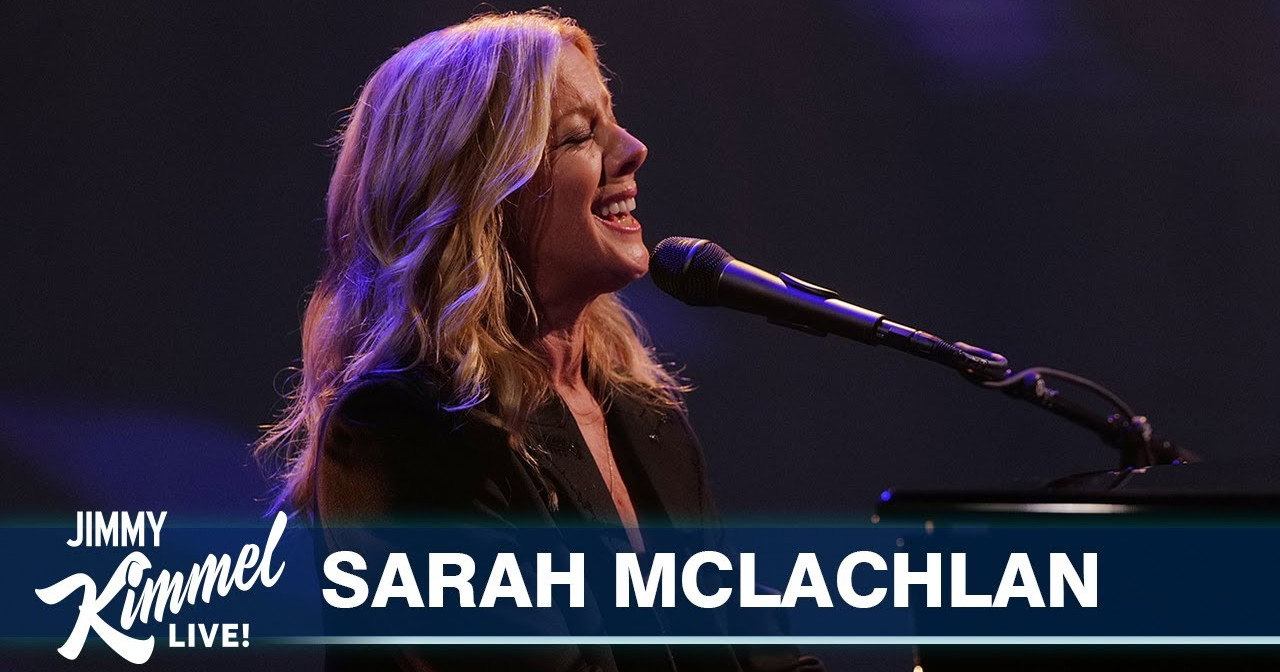
Sarah McLachlan was just reaching the peak of her powers in 1997, enjoying international success but frustrated by radio programmers’ limited ideas of how their audience received women. McLachlan and other women were constantly pitted against each other, told that no one would listen to two songs by women in a row – and certainly no one would want to see women tour together. So, McLachlan set out to prove the world wrong, reshaping popular music in the process.
Lilith Fair: Building a Mystery is a new documentary produced by ABC News and released in September 2025. Available to stream now on Hulu, the project captures the festival’s revolutionary three years with pride and exuberance, encapsulating Lilith Fair’s confident strength and joy. Archival footage of shows and interviews with some of the hundreds of thousands of fans who flocked to the event are resolute testaments to the festival’s enduring impact – if only people remembered it.
The film, directed by Ally Pankiw, premiered at the 2025 Toronto International Film Festival in early September. Dan Levy (of Schitt’s Creek fame) co-produced the film under his Not a Real Production company. The documentary follows the story of Lilith Fair from its genesis, examining the festival’s place in history, the misogyny women artists faced at the time, and the trails it blazed for women artists today. Featuring McLachlan, Sheryl Crow, Erykah Badu, Paula Cole, and more in interviews, the film explores how McLachlan’s forward-thinking vision animated Lilith Fair into something much more than a package tour.
Lilith Fair’s Place in History
“The cultural memory of Lilith is clearly very skewed,” observes co-producer Cassidy Hartmann, who spoke to BGS. “There are a number of reasons for that. Women’s achievements in history have often been overshadowed or skewed in some way and there’s often been backlash against that.”
The documentary opens with a series of TikTok videos featuring half a dozen Gen Z-ers breathlessly recounting the massive package tour devoted solely to women artists of all genres. In 1997, 1998, and 1999, Lilith Fair main stage featured McLachlan, Badu, Cole, Crow, Tracy Chapman, The Indigo Girls, Jewel, Missy Elliot, Bonnie Raitt, and many more – while the “village stages” featured then little known up-and-comers like Christina Aguilera, Dido, and Nelly Furtado.
McLachlan and her team led the massive undertaking with a steady hand and, as the documentary shows, a willingness to learn from critiques. By the festival’s third year in 1999, the event boasted artists of many genres, cultures, and ages – though the sound leaned predominantly folk.
“I don’t think that any genre classified us,” Paula Cole demurred when speaking to BGS.
“I think that everyone was so unique and had their own music, and we fall into different classifications. I personally hate genre classification, because it’s limiting. Great music is usually a blend, anyway.”
Cole, who was nominated for three GRAMMYs for her 1996 album This Fire, would know about great music. Yet, a half hour into Lilith Fair: Building a Mystery, you’d be hard-pressed to miss her twang and carefully crafted lyrics forming the backbone of, well, Good Country.
But Cole has a point. While Lilith is often remembered in pop culture as a collection of (white) folk-inspired dryads, the festival featured an array of talent across all genres of music. As the documentary illustrates, McLachlan received feedback that the tour’s first year was too racially homogeneous, so she sought to build a tour that encompassed the totality of women working in music: Badu, Missy Elliott, and Queen Latifah all played the festival. (The documentary details a hilarious anecdote about Missy Elliott’s ride to the show after her tour bus broke down – we won’t spoil it here, but it’s the kind of thing that simply doesn’t happen in the age of smartphones.)
According to Badu, her time with Lilith Fair inspired her to create the Sugar Water Festival with herself, Queen Latifah, and Jill Scott in 2005 and 2006. Like Lilith, that event brought together community orgs that addressed women’s (and in this case, Black women’s) concerns.
Rippling Energy
Cole was a part of Lilith’s story from the very beginning, joining McLachlan on short, experimental runs to see if an all-woman lineup could indeed draw a crowd.
“It was uncommon for women to open for women. Every night I would tell the audience, I want to thank Sarah for having me here because this is uncommon,” Cole says. “This doesn’t happen. And audiences would erupt into applause when I would tell them that. It felt like a zeitgeist. You could feel the energy ripple.”
But Lilith Fair did not happen in a vacuum. It stands as one chapter in a long-ignored legacy of self-made movements among women in music. In the ’60s and ’70s, there was, in fact, an entire movement-turned-genre known as “women’s music.” The folk-inspired sounds were championed by queer record label Olivia Records and Michigan Womyn’s Music Festival was one of the scene’s organizing forces from 1976 to 2015. MichFest, as it was known, was an annual convergence of feminist women across the sexual and gender spectrum. But, the festival’s refusal to admit trans women in 1991 contributed to its decline. (The silver lining here is the subsequent organizing of trans rights groups and cis allies, but that’s a story for another time.)
While the Indigo Girls and Chapman performed at both Lilith Fair and MichFest, the headlining artists on Lilith’s lineup already had major label backing and widespread commercial success by 1997. Yet, history has collapsed and often conflated the two.
“A lot of people think Ani DiFranco was at Lilith,” executive producer Hartmann observes. “Clearly there is some overlap there. I think all of these women had a righteous anger and were super blunt about it.”
Indeed, while DiFranco has earned her reputation as that decade’s feminist iconoclast, Cole’s This Fire would certainly belong right next to DiFranco’s records on the shelf (likely much to the dismay of ’90s rock critics.)
Lilith Fair received quite a bit of criticism from women critics – certainly, McLachlan’s gentle forcefulness may have been more palatable to record labels than, say, riot grrl, but with time sanding down the edges of the record bins, it’s easy to see how they all form part of a whole.
“Women often don’t get to hear and understand the stories of generations of women before them, because culture has a tendency not to platform those stories. That lineage is often broken,” explains Hartmann. “Another thing that Lilith did really well was it had multi-generational artists. Emmylou Harris and Bonnie Raitt were there, bestowing their own wisdom and experience to these younger women. I think that’s also a really powerful element to keep in mind and hopefully replicate in the future.”
Building a Documentary
According to Hartmann, the documentary was inspired by Jessica Hopper’s Vanity Fair article “Building a Mystery: An Oral History of Lilith Fair.” Co-produced by Dan Levy and directed by Ally Pankiw, the film draws upon footage from MTV News, band members, and festival staff – plus a trove of 600 unreleased tapes gathered by Lilith on Top, a 2001 documentary that was only released in Canada.
There were plenty of reasons to resurface the story.
“Many of these people are at a point in their lives and careers [now] where I think they can reflect on that moment and have some perspective on it as well,” Hartmann says. “Unfortunately, I think the themes of the Lilith story are as relevant as ever, in terms of what’s happening in our society and culture at the moment with women’s rights being rolled back. It’s a moment to be reminded of what’s possible.”
Cole echoes that sentiment.
“Politically, things are so frightening as we’re witnessing the formation of autocracy without checks and balances and a lot of backlash [to liberalism],” she says. “I think Lilith is needed now more than ever. Anytime that someone’s talking about it is important. The conversation must go on, must go on, and we must keep telling people about it. It just gives hope, it gives breath, it opens doors, it lifts the ceiling.”
Indeed, if the film’s archival live footage conveys just a micron of the incredible energy in those venues, then Lilith was a revolution indeed.
Passing the Baton
McLachlan has repeatedly stated that, while the world needs something like Lilith Fair again, she is not the one to lead it – and that it would need to be very different than Lilith Fair was.
“I think Lilith was its own unique entity,” Cole reflects. “There are artists that, you know, sell a lot more tickets than Sarah that could drive this and that could do such a thing. I’m calling on the younger women of today to create their own version of Lilith Fair.”
But one message should still resonate: that quiet defiance Lilith Fair proudly bore – proving conventional wisdom wrong.
“When someone tells you something’s not possible, If you believe in it and you commit yourself to it, look what can happen,” Hartmann observes. “If it comes from a true organic place, the sky’s the limit.”
“Culture change, feminism, fresh thinking, intersectional thinking, it takes time,” says Cole. “It’s like a slow, long, quiet revolution.”
Images courtesy of ABC News Studios; Paula Cole photo by Merri Cyr.