Artist of the Month: Lucinda Williams

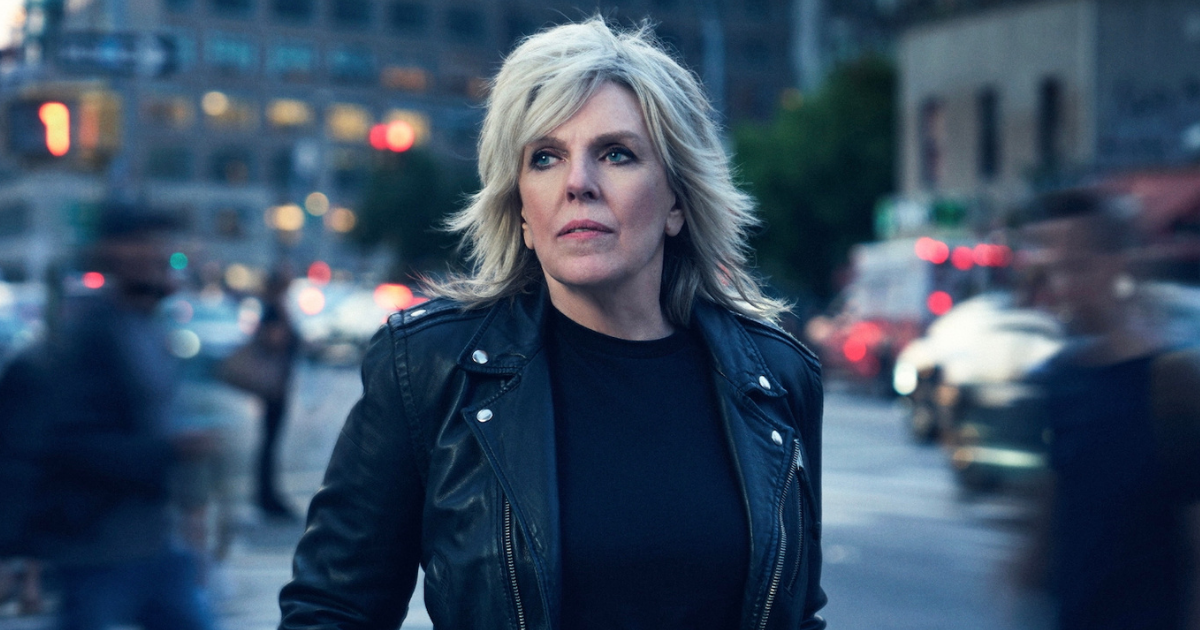
Among the 78 bands performing for thousands of fans at San Francisco’s 25th annual Hardly Strictly Bluegrass, our nation’s foremost Americana festival, in October of 2025, one of the largest audiences had gathered for Lucinda Williams. She took the main stage in the afternoon clad in a leather suit, studs on the hem of her pants. The groove from the band and her lyrics landed with resonant pounding, like the drop of a heavy set of books on a table. After more than 50 years of performing, her sound still hits.

Lucinda Williams grasped brilliance in 1998 with Car Wheels On A Gravel Road, but this was not some isolated incident. She has pursued the craft of album-making expertly for her entire career, and fans flock to her because there is always something more to scratch up. The singularity of her writing rings at a higher frequency today in our shallow digitized world. I see her current position in our culture to be similar to that of poet-songwriter Leonard Cohen in his final chapter. When she sings, we listeners get to grasp at something real, and we crave what Lucinda offers; intimate corporeal love, the palette of Southern backroads alongside broken-down juke joints, honest bewilderment at the state of the world while still loving it.

When I was 26, I set out on a road trip to trace Lucinda’s origins. Being a songwriter, I wanted to determine what I could do to strive and bloom, like she did. So I left California driving my 1995 Ford F-250. From Texas to Tennessee, I dug up characters from Lucinda’s early days. I was most interested in finding people who had worked with her in the beginning of her career.

In Jackson, Mississippi, I spent a day at Malaco Studios where Lucinda made her first record Ramblin’ On My Mind. While listening to outtakes, I happened upon the first-ever originals she recorded but never released. In those reel-to-reel tapes that had been sitting untouched in a concrete vault, I heard a voice from four decades ago that was clear and bold. Wolf Stephenson was the engineer from that session and he told me that in 1978 Lucinda was a resolute and present woman: “[In] day-to-day life, she was just as footloose and like she was on stage. And really there wasn’t much difference in sitting here talking [with her] or being on stage, very natural.”

In Austin, Texas, I was shocked to learn that well-known guitarist Charlie Sexton had played with Lucinda when he was just 11 and she was 26. At the Hole in the Wall where a booker once cancelled Lucinda’s gig because there were “too many girl singers that month,” Charlie and I discussed how he has learned from Lucinda as a writer. He reflected on his early impressions of her and told me, “…There’s no doubt that Lucinda was always going to be unique… I mean, she’s like a regional writer in a way… she’s the Flannery O’Connor of that era of singer-songwriter.”

Lucinda’s parents raised her in an extraordinary community. Her father Miller Williams was a professor, a translator, and a poet. He and his wife were descendants of humble traveling Methodist ministers with meager finances, but by the time their first daughter Lucinda was a teen, the family sat in the company of Nobel Prize-winning authors. Miller’s genuine passion for literature gave him the conviction to invite figures like Charles Bukowski and indeed Flannery O’Connor into his circle of friends and acquaintances. He hosted literary parties in the family’s Arkansas home. After drinks were served, Miller read some of his new poems out loud, and a young Lucinda sat and strummed her latest songs. Writers of the highest caliber listened at attention. Some of these writers gave Lucinda feedback. Perhaps just as important was that these writers also imparted genuine encouragement to Lucinda and told her that in spite of all of the suffering and uncertainties involved in being an artist, it was still a worthwhile pursuit in life.

Along my road trip I also discovered how committed Lucinda has been to her art over the decades. I spoke at length with some of the musicians and engineers that worked on Car Wheels On A Gravel Road. I learned from Lucinda’s recollections that when you have that itching worry that a sound just isn’t right on an album, you have to wrestle with the process to find the right timbre, the right soundscape that will thrill you. I found that a songwriter has to embrace change, even if they’re unsure of the career consequences. I found that artists can’t just make the same album over and over again. Well… they can, but they probably shouldn’t. A songwriter has to keep seeking out that sound, that story that pulls at their soul’s musical corners, like Lucinda did.

Lucinda’s latest release, World’s Gone Wrong, is a continuation of the directness I’ve known her for. She conveys her truth with her language of simplicity. So often in our era, bathed in a slurry of news and trends, opinions from artists can feel glued-on. But that’s not the case with Lucinda. She conveys her frustrations with the state of the world from a genuine and honest place and, when she sings, I believe her. As with so much of her writing, in her latest album I feel like I’m reading a book, inhabiting the imagined place of the viewer and the subject.

The characters in Lucinda’s songs are alive, bleeding, imperfect, and desirously wanting. We benefit from the chance to continue paying attention to the words she writes.

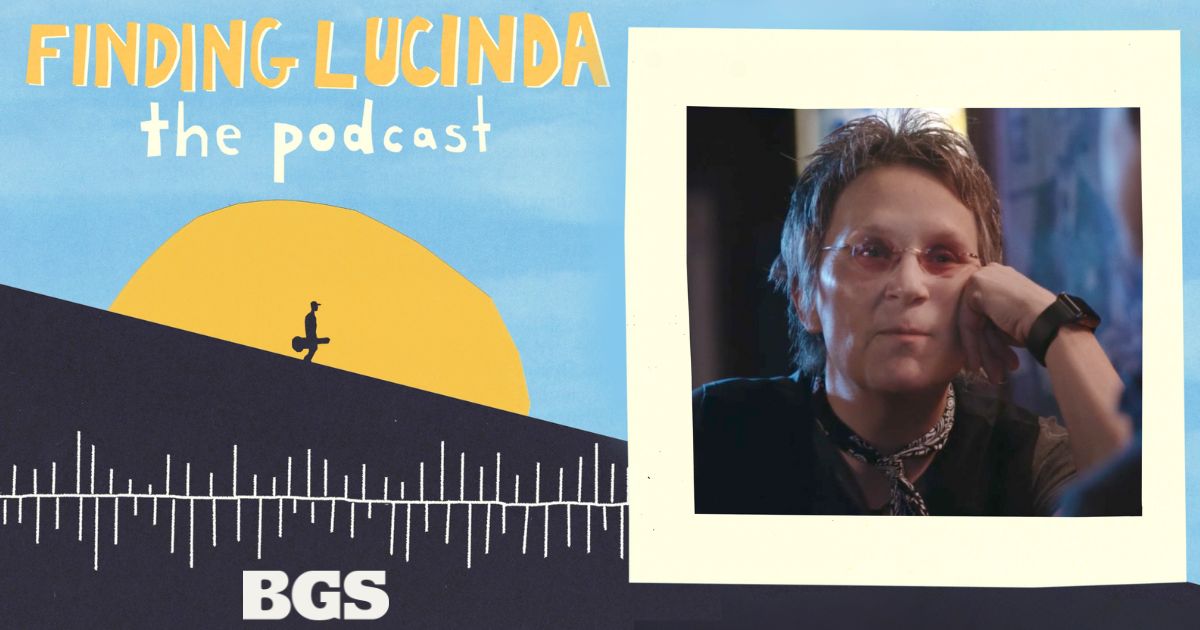
If you’d like to learn all about how I retraced the roots of Lucinda Williams, check out Finding Lucinda, my podcast released in partnership with the BGS Podcast Network. You can also watch the documentary film Finding Lucinda on AppleTV, Youtube and more.

Stay tuned as BGS and Good Country celebrate Lucinda Williams as Artist of the Month throughout March. Enjoy our Essential Lucinda Williams playlist below and check out an exclusive interview with Williams here. Plus, we’ll be diving into the BGS archives for all things Lu and exploring our favorite covers of her songs by other artists, too. Follow along right here on BGS and on social media for more.


Photo Credit: Mark Seliger

Lilith Fair Was Its Own Kind of Revolution

The ’90s might be cool again, but there was more to the era than Friends and Seinfeld. In the shadows of the dot-com boom and bust, NAFTA and off-shoring, life wasn’t as slow or quirky as those shows made it seem. American women had more independence than ever before – but they were still waging battles for gender equity from kitchen tables to C-suites to recording studios.

Sarah McLachlan was just reaching the peak of her powers in 1997, enjoying international success but frustrated by radio programmers’ limited ideas of how their audience received women. McLachlan and other women were constantly pitted against each other, told that no one would listen to two songs by women in a row – and certainly no one would want to see women tour together. So, McLachlan set out to prove the world wrong, reshaping popular music in the process.

Lilith Fair: Building a Mystery is a new documentary produced by ABC News and released in September 2025. Available to stream now on Hulu, the project captures the festival’s revolutionary three years with pride and exuberance, encapsulating Lilith Fair’s confident strength and joy. Archival footage of shows and interviews with some of the hundreds of thousands of fans who flocked to the event are resolute testaments to the festival’s enduring impact – if only people remembered it.

The film, directed by Ally Pankiw, premiered at the 2025 Toronto International Film Festival in early September. Dan Levy (of Schitt’s Creek fame) co-produced the film under his Not a Real Production company. The documentary follows the story of Lilith Fair from its genesis, examining the festival’s place in history, the misogyny women artists faced at the time, and the trails it blazed for women artists today. Featuring McLachlan, Sheryl Crow, Erykah Badu, Paula Cole, and more in interviews, the film explores how McLachlan’s forward-thinking vision animated Lilith Fair into something much more than a package tour.

Lilith Fair’s Place in History

“The cultural memory of Lilith is clearly very skewed,” observes co-producer Cassidy Hartmann, who spoke to BGS. “There are a number of reasons for that. Women’s achievements in history have often been overshadowed or skewed in some way and there’s often been backlash against that.”

The documentary opens with a series of TikTok videos featuring half a dozen Gen Z-ers breathlessly recounting the massive package tour devoted solely to women artists of all genres. In 1997, 1998, and 1999, Lilith Fair main stage featured McLachlan, Badu, Cole, Crow, Tracy Chapman, The Indigo Girls, Jewel, Missy Elliot, Bonnie Raitt, and many more – while the “village stages” featured then little known up-and-comers like Christina Aguilera, Dido, and Nelly Furtado.

McLachlan and her team led the massive undertaking with a steady hand and, as the documentary shows, a willingness to learn from critiques. By the festival’s third year in 1999, the event boasted artists of many genres, cultures, and ages – though the sound leaned predominantly folk.

“I don’t think that any genre classified us,” Paula Cole demurred when speaking to BGS.

“I think that everyone was so unique and had their own music, and we fall into different classifications. I personally hate genre classification, because it’s limiting. Great music is usually a blend, anyway.”

Cole, who was nominated for three GRAMMYs for her 1996 album This Fire, would know about great music. Yet, a half hour into Lilith Fair: Building a Mystery, you’d be hard-pressed to miss her twang and carefully crafted lyrics forming the backbone of, well, Good Country.

But Cole has a point. While Lilith is often remembered in pop culture as a collection of (white) folk-inspired dryads, the festival featured an array of talent across all genres of music. As the documentary illustrates, McLachlan received feedback that the tour’s first year was too racially homogeneous, so she sought to build a tour that encompassed the totality of women working in music: Badu, Missy Elliott, and Queen Latifah all played the festival. (The documentary details a hilarious anecdote about Missy Elliott’s ride to the show after her tour bus broke down – we won’t spoil it here, but it’s the kind of thing that simply doesn’t happen in the age of smartphones.)

According to Badu, her time with Lilith Fair inspired her to create the Sugar Water Festival with herself, Queen Latifah, and Jill Scott in 2005 and 2006. Like Lilith, that event brought together community orgs that addressed women’s (and in this case, Black women’s) concerns.

Rippling Energy

Cole was a part of Lilith’s story from the very beginning, joining McLachlan on short, experimental runs to see if an all-woman lineup could indeed draw a crowd.

“It was uncommon for women to open for women. Every night I would tell the audience, I want to thank Sarah for having me here because this is uncommon,” Cole says. “This doesn’t happen. And audiences would erupt into applause when I would tell them that. It felt like a zeitgeist. You could feel the energy ripple.”

But Lilith Fair did not happen in a vacuum. It stands as one chapter in a long-ignored legacy of self-made movements among women in music. In the ’60s and ’70s, there was, in fact, an entire movement-turned-genre known as “women’s music.” The folk-inspired sounds were championed by queer record label Olivia Records and Michigan Womyn’s Music Festival was one of the scene’s organizing forces from 1976 to 2015. MichFest, as it was known, was an annual convergence of feminist women across the sexual and gender spectrum. But, the festival’s refusal to admit trans women in 1991 contributed to its decline. (The silver lining here is the subsequent organizing of trans rights groups and cis allies, but that’s a story for another time.)

While the Indigo Girls and Chapman performed at both Lilith Fair and MichFest, the headlining artists on Lilith’s lineup already had major label backing and widespread commercial success by 1997. Yet, history has collapsed and often conflated the two.

“A lot of people think Ani DiFranco was at Lilith,” executive producer Hartmann observes. “Clearly there is some overlap there. I think all of these women had a righteous anger and were super blunt about it.”

Indeed, while DiFranco has earned her reputation as that decade’s feminist iconoclast, Cole’s This Fire would certainly belong right next to DiFranco’s records on the shelf (likely much to the dismay of ’90s rock critics.)

Lilith Fair received quite a bit of criticism from women critics – certainly, McLachlan’s gentle forcefulness may have been more palatable to record labels than, say, riot grrl, but with time sanding down the edges of the record bins, it’s easy to see how they all form part of a whole.

“Women often don’t get to hear and understand the stories of generations of women before them, because culture has a tendency not to platform those stories. That lineage is often broken,” explains Hartmann. “Another thing that Lilith did really well was it had multi-generational artists. Emmylou Harris and Bonnie Raitt were there, bestowing their own wisdom and experience to these younger women. I think that’s also a really powerful element to keep in mind and hopefully replicate in the future.”

Building a Documentary

According to Hartmann, the documentary was inspired by Jessica Hopper’s Vanity Fair article “Building a Mystery: An Oral History of Lilith Fair.” Co-produced by Dan Levy and directed by Ally Pankiw, the film draws upon footage from MTV News, band members, and festival staff – plus a trove of 600 unreleased tapes gathered by Lilith on Top, a 2001 documentary that was only released in Canada.

There were plenty of reasons to resurface the story.

“Many of these people are at a point in their lives and careers [now] where I think they can reflect on that moment and have some perspective on it as well,” Hartmann says. “Unfortunately, I think the themes of the Lilith story are as relevant as ever, in terms of what’s happening in our society and culture at the moment with women’s rights being rolled back. It’s a moment to be reminded of what’s possible.”

Cole echoes that sentiment.

“Politically, things are so frightening as we’re witnessing the formation of autocracy without checks and balances and a lot of backlash [to liberalism],” she says. “I think Lilith is needed now more than ever. Anytime that someone’s talking about it is important. The conversation must go on, must go on, and we must keep telling people about it. It just gives hope, it gives breath, it opens doors, it lifts the ceiling.”

Indeed, if the film’s archival live footage conveys just a micron of the incredible energy in those venues, then Lilith was a revolution indeed.

Passing the Baton

McLachlan has repeatedly stated that, while the world needs something like Lilith Fair again, she is not the one to lead it – and that it would need to be very different than Lilith Fair was.

“I think Lilith was its own unique entity,” Cole reflects. “There are artists that, you know, sell a lot more tickets than Sarah that could drive this and that could do such a thing. I’m calling on the younger women of today to create their own version of Lilith Fair.”

But one message should still resonate: that quiet defiance Lilith Fair proudly bore – proving conventional wisdom wrong.

“When someone tells you something’s not possible, If you believe in it and you commit yourself to it, look what can happen,” Hartmann observes. “If it comes from a true organic place, the sky’s the limit.”

“Culture change, feminism, fresh thinking, intersectional thinking, it takes time,” says Cole. “It’s like a slow, long, quiet revolution.”


Images courtesy of ABC News Studios; Paula Cole photo by Merri Cyr. 

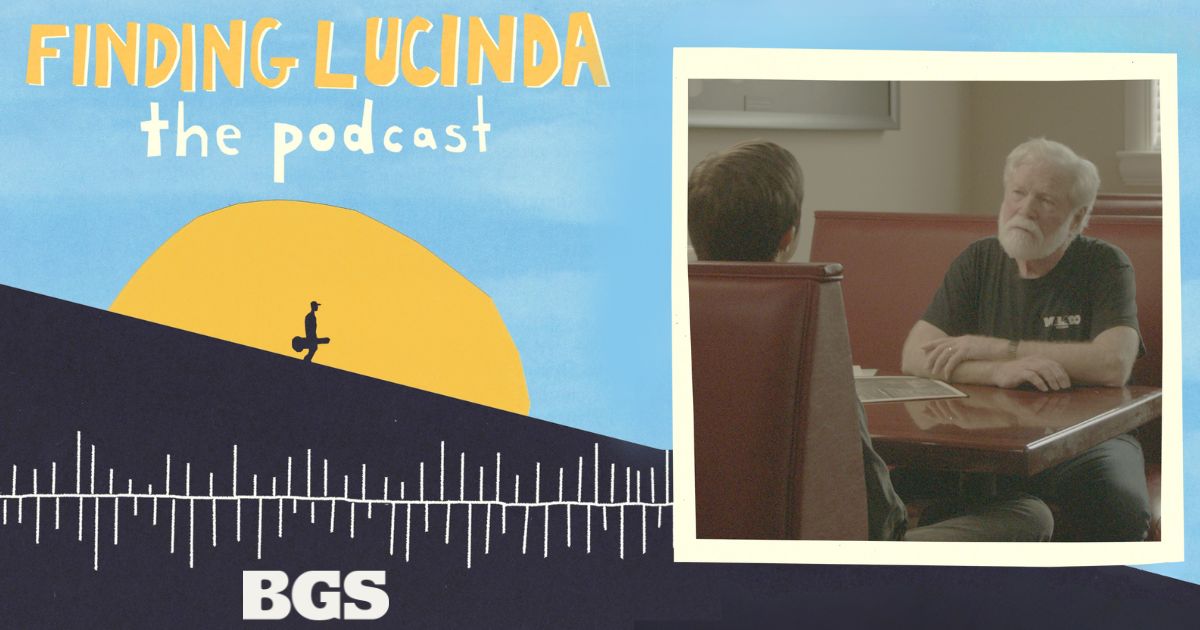
Finding Lucinda: Episode 13

In this episode of the podcast, Ismay sits down with Finding Lucinda director Joel Fendelman. They discuss how Joel approached the making of the documentary and concepts like developing the language of a film to build trust with the audience, the artist’s experience of not being where you thought you should be at a certain age – including how to constructively confront that – and the idea of trusting others in collaborations. They also talk about how there is overlap in the craft of filmmaking and music-making, including ideas like contrasts and consistency.

LISTEN: APPLE • SPOTIFY • AMAZON • MP3

With roots in Miami, Austin, and New York City, Fendelman has written, produced, and directed a number of award-winning narrative and documentary films. An award-winning filmmaker, he is dedicated to telling stories that reveal the underlying connections between us all. His documentary Man on Fire received an IDA Documentary Award and premiered nationally on PBS’s Independent Lens (2018–19 season). He went on to direct North Putnam, which won the Indiana Spotlight Award at the Heartland International Film Festival. In 2016, his short film Game Night premiered at the Tribeca Film Festival and won Best Super Short at the Savannah Film Festival. His second narrative feature, Remittance, earned multiple festival awards, including Best Actress and Best Screenplay at the Brooklyn Film Festival, and is distributed worldwide. His debut feature, David (2011), won the Ecumenical Prize at the Montreal World Film Festival. His most recent short film, The Spiritual Advisor, is premiering at DOC NYC 2025 and is being distributed by Rolling Stone Films.

Produced in partnership with BGS and distributed through the BGS Podcast Network, Finding Lucinda expands on the themes of Ismay’s eponymous documentary film, exploring artistic influence, creative resilience, and the impact of Williams’ music. New episodes are released twice a month. Listen right here on BGS or wherever you get podcasts.

Finding Lucinda, the documentary film that inspired and instigated the podcast, is now available to purchase, rent, or stream via video on demand. (Watch the film, listen to the soundtrack, or find a screening near you here.) Both the film and podcast showcase never-before-heard archival material, intimate conversations, and a visual journey through the literal and figurative landscapes that molded Lucinda’s songwriting.

Credits:
Produced, recorded, and mixed by Avery Hellman for Neanderthal Records, LLC.
Music by Ismay,
Special thanks to: Rose Bush, Liz McBee, Mick Hellman, Jonathan McHugh, Sydney Lane, Jacqueline Sabec, Rosemary Carroll, Lucinda Williams, and Tom Overby


Find more information on Finding Lucinda here. Find our full Finding Lucinda episode archive here.

Watch Finding Lucinda, listen to the soundtrack, or find a screening near you here.

Finding Lucinda: Episode 12

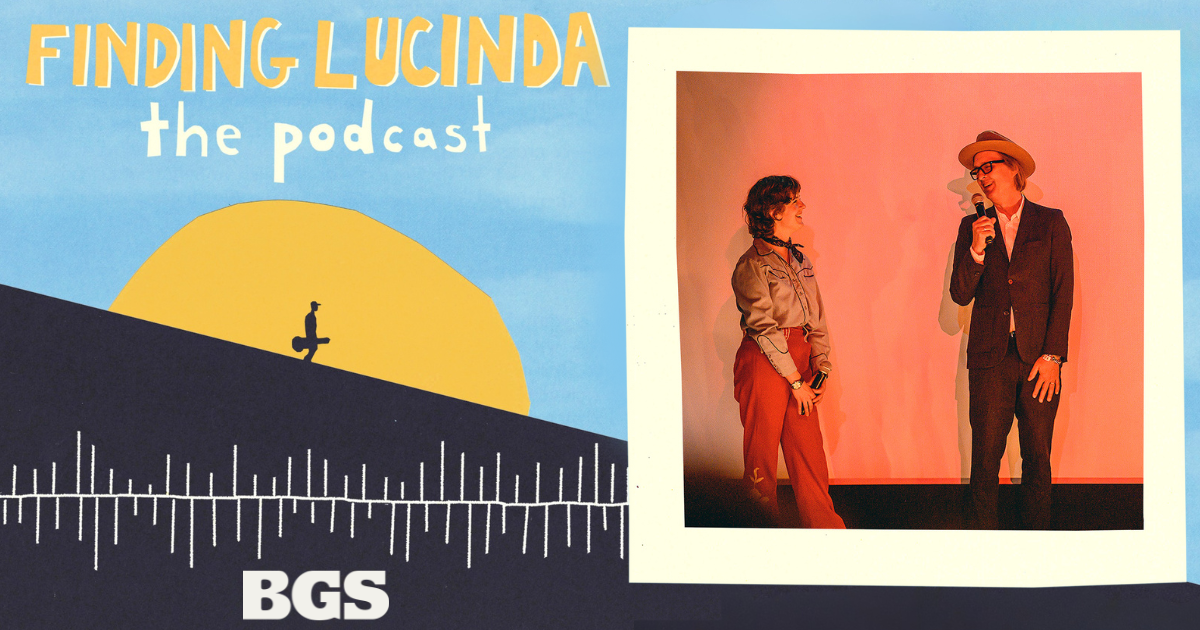
After the conclusion of their journey, Ismay tours the nation with screenings of Finding Lucinda, inviting local artists to play Lucinda Williams songs in the round. Following a show at Chico Women’s Club in California, Ismay interviews Chuck Prophet, a celebrated musician who co-produced the film. The pair discuss the origins of the project, what surprised them about making this documentary, and how Lucinda has influenced their songwriting and careers. They also discuss Chuck’s time opening for Lucinda in the early 2000s.

LISTEN: APPLE • SPOTIFY • AMAZON • MP3

Produced in partnership with BGS and distributed through the BGS Podcast Network, Finding Lucinda expands on the themes of Ismay’s eponymous documentary film, exploring artistic influence, creative resilience, and the impact of Williams’ music. New episodes are released twice a month. Listen right here on BGS or wherever you get podcasts.

Finding Lucinda, the documentary film that inspired and instigated the podcast, is now available to purchase, rent, or stream via video on demand. (Watch the film, listen to the soundtrack, or find a screening near you here.) Both the film and podcast showcase never-before-heard archival material, intimate conversations, and a visual journey through the literal and figurative landscapes that molded Lucinda’s songwriting.

Credits:
Produced, recorded, and mixed by Avery Hellman for Neanderthal Records, LLC.
Special thanks to: Rick Anderson, Gavin Jones, Joel Fendelman, Rose Bush, Liz McBee, Mick Hellman, Chuck Prophet, Jonathan McHugh, Sydney Lane, Jacqueline Sabec, Rosemary Carroll, Lucinda Williams & Tom Overby.


Photo Credit: Peter Dervin

Find more information on Finding Lucinda here. Find our full Finding Lucinda episode archive here.

Watch Finding Lucinda, listen to the soundtrack, or find a screening near you here.

Watch Sarah McLachlan Perform on Jimmy Kimmel Live!

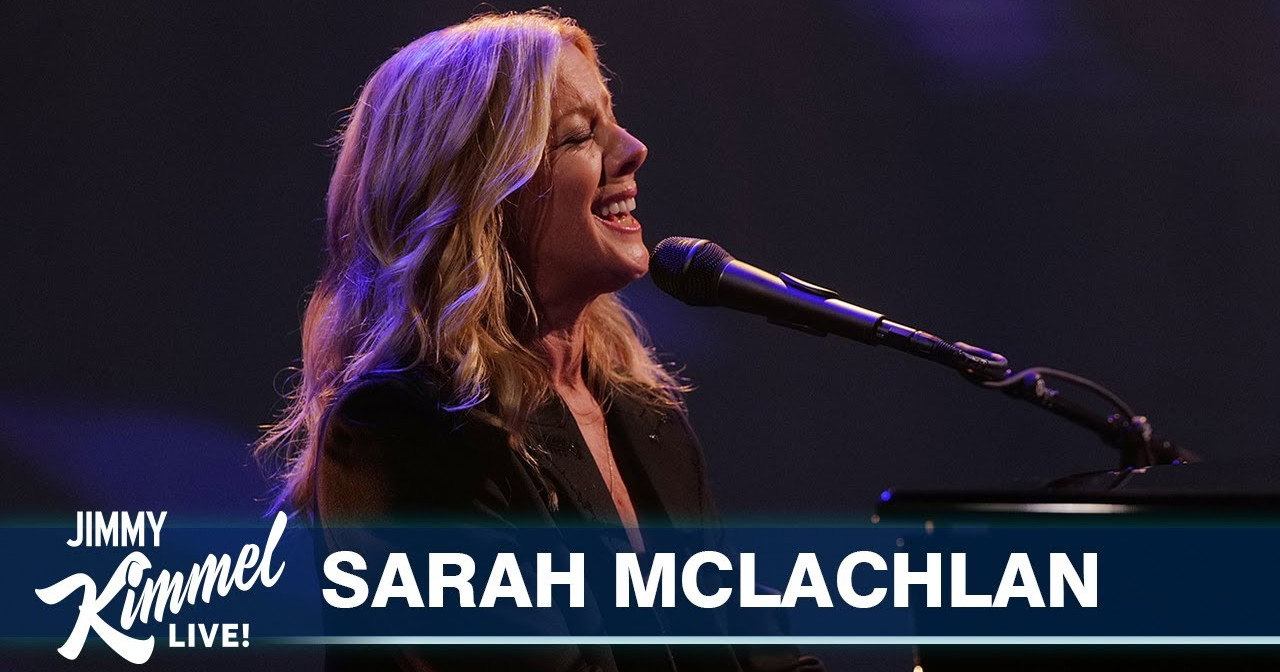
Last week, GRAMMY winner and renowned Canadian singer-songwriter Sarah McLachlan performed on Jimmy Kimmel Live!, the first musical guest on the show after its controversial short-lived suspension and return to the air. McLachlan performed “Better Broken,” the title track from her brand new album – her first in 11 years – which released September 19. In her signature style, simple unadorned piano and vocals in duet, McLachlan reminds the Kimmel audience exactly why she’s so beloved all around the world. Her voice is rich and plaintive, leaning into the sadness and reckoning in the lyric. It’s immediately clear a decade-plus is too long to wait for new music from McLachlan.

Not only was she appearing on late night television to promote Better Broken, but also Lilith Fair: Building A Mystery – The Untold Story, a new documentary directed by Ally Pankiw that celebrates, explores, and canonizes the enormous impact the Lilith Fair all-women festivals had on folk, indie, and popular music in the late ’90s. (Watch the official trailer below.) An excellent and moving documentary, Building A Mystery is available to stream now via Hulua film and television streaming platform that, like Jimmy Kimmel Live!, is owned by ABC / Disney. At the documentary’s Los Angeles premiere, McLachlan and several of her artist colleagues refused to perform music from the film as previously planned, standing in solidarity with Kimmel as he was mid-suspension for his comedic remarks on the murder of Charlie Kirk.

On Kimmel’s historic first night back on the air, just a few days later, it was a perfect full circle moment as McLachlan performed as if honoring a raincheck for her refusing to play at the documentary premiere in protest. With Margo Price as the final musical guest before Kimmel’s suspension and McLachlan the first after its return, it was a mighty pair of activism-minded artist bookends to help reinforce the importance of freedom of speech and expression for creatives who work in any/all media and formats. From Lilith Fair to Jimmy Kimmel Live!, these rights are vital for everyone in this country and around the world – and for the art that they create.


Photo Credit: Randy Holmes for ABC

Finding Lucinda: Episode 11

For the finale of their road trip, Ismay finally gets to meet the center of this entire narrative – Lucinda Williams. Their goal is seeking guidance about what to do with their self-doubt. Ismay discovers that Lucinda had one major difference in her origin story that is the key to understanding why she never gave up herself. Ismay and Lucinda also discuss items from the archives that Ismay has gathered along their route to Nashville. Ismay performs the song, “Spin,” from the archives for her and is surprised by Lucinda’s reaction.

LISTEN: APPLE • SPOTIFY • AMAZON • MP3

Produced in partnership with BGS and distributed through the BGS Podcast Network, Finding Lucinda expands on the themes of Ismay’s eponymous documentary film, exploring artistic influence, creative resilience, and the impact of Williams’ music. New episodes are released twice a month. Listen right here on BGS or wherever you get podcasts.

Finding Lucinda, the documentary film that inspired and instigated the podcast, is now available to purchase, rent, or stream via video on demand. (Find ways to watch here.) Both the film and podcast showcase never-before-heard archival material, intimate conversations, and a visual journey through the literal and figurative landscapes that molded Lucinda’s songwriting.

Credits:
Produced and mixed by Avery Hellman for Neanderthal Records, LLC.
Music by Ismay.
Artwork by Avery Hellman.
Nashville Recording: Recorded at Room & Board Studio.
Sound Recordist: Rodrigo Nino
Producer: Liz McBee
Director: Joel Fendelman
Co-Director & Cinematographer: Rose Bush
Special thanks to: Siobhan Maher Kennedy, Ray Kennedy, Mick Hellman, Chuck Prophet, Jonathan McHugh, Sydney Lane, Don Fierro, Rebecca Jordan Williams, Jacqueline Sabec, Rosemary Carroll, Lucinda Williams, and Tom Overby.


Find more information on Finding Lucinda here. Find our full Finding Lucinda episode archive here.

Finding Lucinda is available to watch via purchase, rental, or video on demand. Find out how to watch here.

Finding Lucinda: Episode 10

Ismay wakes up the day after interviewing Mary Gauthier ready to attend a live performance by Lucinda Williams at the Ryman Auditorium. In order to finish out their journey, Ismay hopes to interview Lucinda right before her show and find a conclusion to their road trip. However, it turns out that due to unforeseen circumstances the interview is no longer possible. So, Ismay attends the show anyway and has to make a decision about whether to continue following Lucinda or to move forward. Plus, they meet up with engineer and producer for Car Wheels On A Gravel Road, Ray Kennedy.

LISTEN: APPLE • SPOTIFY • AMAZON • MP3

Produced in partnership with BGS and distributed through the BGS Podcast Network, Finding Lucinda expands on the themes of Ismay’s eponymous documentary film, exploring artistic influence, creative resilience, and the impact of Williams’ music. New episodes are released twice a month. Listen right here on BGS or wherever you get podcasts.

Finding Lucinda, the documentary film that inspired and instigated the podcast, is slated for release on September 9, 2025. Both the film and podcast showcase never-before-heard archival material, intimate conversations, and a visual journey through the literal and figurative landscapes that molded Lucinda’s songwriting.

Credits:
Produced and mixed by Avery Hellman for Neanderthal Records, LLC.
Music by Ismay.
Artwork by Avery Hellman.
Nashville Recording: Recorded at Room and Board Studio.
Sound Recordist: Rodrigo Nino
Producer: Liz McBee
Director: Joel Fendelman
Co-Director & Cinematographer: Rose Bush
Special thanks to: Mick Hellman, Chuck Prophet, Jonathan McHugh, Sydney Lane, Don Fierro, Jacqueline Sabec, Rosemary Carroll, Lucinda Williams, and Tom Overby


Find more information on Finding Lucinda here. Find our full Finding Lucinda episode archive here.

Pre-order the documentary film via Apple TV here.

Finding Lucinda: Episode 9

Ismay travels across Nashville to the Station Inn to meet with legendary folk singer-songwriter Mary Gauthier. This episode of Finding Lucinda is different from those in the past – rather than interviewing a character from Lucinda Williams’ history, Ismay speaks to Mary because of their shared experiences as fans and devotees of Lucinda’s music.

Mary reveals that her most well known song was in fact directly derived from techniques Lucinda uses in her songwriting. This conversation turns out to be incredibly revelatory, as wisdom Mary imparts allows Ismay to discover that what they initially thought this journey was all about may in fact be completely upended.

LISTEN: APPLE • SPOTIFY • AMAZON • MP3

Produced in partnership with BGS and distributed through the BGS Podcast Network, Finding Lucinda expands on the themes of Ismay’s eponymous documentary film, exploring artistic influence, creative resilience, and the impact of Williams’ music. New episodes are released twice a month. Listen right here on BGS or wherever you get podcasts.

Finding Lucinda, the documentary film that inspired and instigated the podcast, is slated for release on September 9, 2025. Both the film and podcast showcase never-before-heard archival material, intimate conversations, and a visual journey through the literal and figurative landscapes that molded Lucinda’s songwriting.

Credits:
Produced and mixed by Avery Hellman for Neanderthal Records, LLC.
Music by Ismay
Artwork by Avery Hellman.
Nashville Recording: Recorded at The Station Inn.
Sound Recordist: Rodrigo Nino
Producer: Liz McBee
Director: Joel Fendelman
Co-Director & Cinematographer: Rose Bush
Special thanks to: Mick Hellman, Chuck Prophet, Jonathan McHugh, Sydney Lane, Don Fierro, Jacqueline Sabec, Rosemary Carroll, Lucinda Williams, and Tom Overby.


Find more information on Finding Lucinda here. Find our full Finding Lucinda episode archive here. Pre-order the documentary film via Apple TV here.

The Road Home: A Documentary Short About Fiddle, Family, and Kentucky

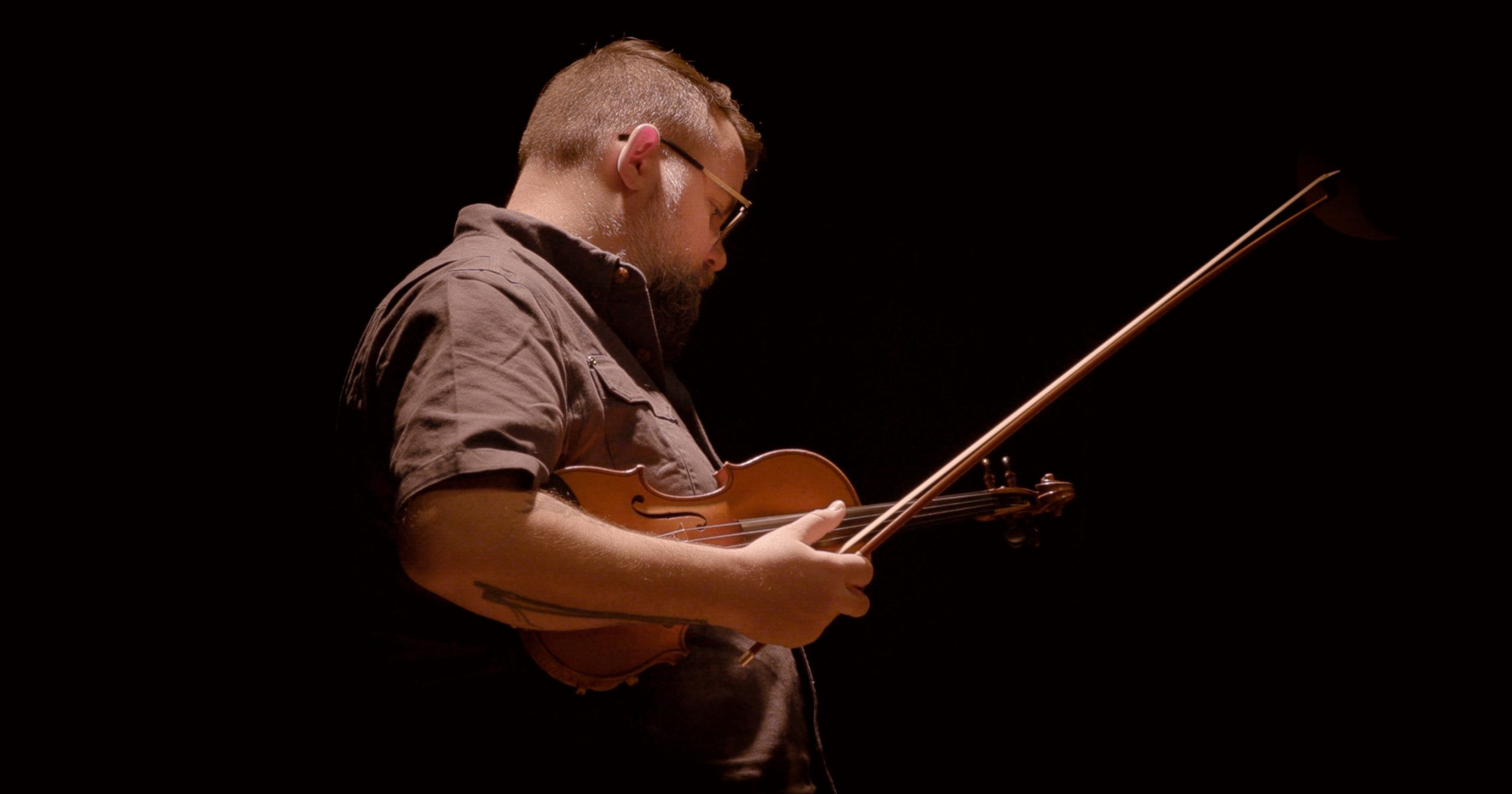
Bluegrass and country fans may recognize Kentucky-born, San Francisco-based fiddler Brandon Godman from touring, recording, and performing with folks like Dale Ann Bradley, Laurie Lewis, Jon Pardi, the Band Perry, the Music City Doughboys, and many more. He’s also an accomplished business owner and luthier, helming two fiddle repair and retail shops based in Nashville (The Violin Shop) and the Bay Area (The Fiddle Mercantile.) In addition, Godman helped found Bluegrass Pride and was instrumental in organizing the non-profit association’s float and marching contingent that won the coveted “Best Overall” ribbon from the 2017 SF Pride Parade.

Godman has played fiddle his entire life, beginning on the instrument as a young child in Northern Kentucky. His skills span old-time, bluegrass, western swing, country, contest fiddle, and beyond, and his career, by necessity often, has been remarkably varied, boasting stories of success, trials, tribulations, and highs and lows beyond his years. Now, filmmaker Bria Light has crafted a remarkable, heartfelt, and stunning documentary short all about Godman and his journey on and with the fiddle.

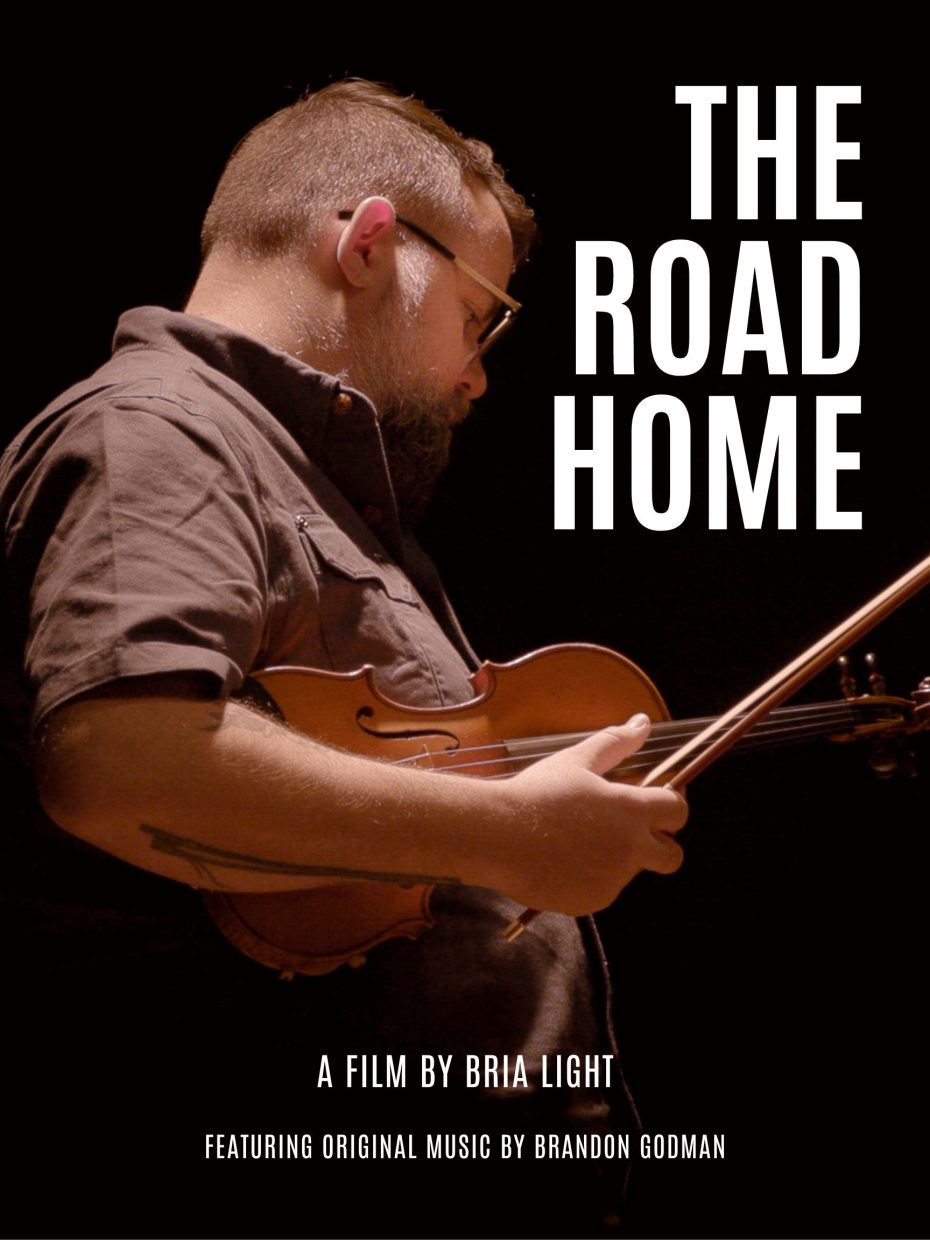
Shot and crafted in 2022 and 2023 as Light’s thesis film at UC Berkeley’s Graduate School of Journalism, The Road Home is an intimate and gorgeous look at Godman and his relationship with his instrument, his career path, and his rural home in Kentucky. The film includes lovely original music – much drawn from Godman’s acclaimed 2024 solo album, I Heard the Morgan Bell – that offers many varied samples of his expansive skillset on fiddle throughout, a perfect score and soundtrack for the 20 minute-plus documentary. Together, Light and Godman travel from California to Kentucky, visit with Godman’s family, share old memories and stories, and examine the complications and intricacies of family and community, the transient, intangible nature of “home,” and the pains and reliefs of leaving and returning.

Now, for the first time, The Road Home is available to screen online, right here on BGS and on YouTube. (Watch below.)

Light has a deft and artful touch as a filmmaker and director, utilizing the fiddle and Godman’s original compositions as an enormous character in these narratives, propelling the story forward and entrancing viewers with the sights, sounds, textures, and mythos of Northern Kentucky – as could only be delivered by a musician and creative like Godman. The end result is moving and illuminating, subverting expectations of the region, the instrument, the genres we associate with the fiddle, and the communities we expect – or don’t expect – to love these traditions and the people who keep them alive.

We spoke to Light via email about the film, its conception and making, and the twists and turns along the way that led Light and Godman to this stellar piece of visual, aural, and narrative storytelling.

Let’s begin by going back to the beginning. Can you tell us a bit of the story of how this film project came to be? What inspired you and how did you get connected with Brandon?

Bria Light: I made this film for my thesis film in the documentary film program at UC Berkeley’s Graduate School of Journalism and when it came time to look for a story that I would be spending all year working on, I knew I wanted a story that was music-related. But I also wanted to find a story that revealed something deeper about how music can help us find our way through the sometimes fraught path of being human. I eventually got connected with Brandon, who agreed to let me into his life and tell me this slice of his story.

This film tells such an expansive story in a relatively short amount of time. What was it like trying to condense such an interesting and often complicated narrative into this short film “package”?

I’ve sometimes used the metaphor that making a film feels like having the vast expanse and depth of the ocean stretching out before you and your job is to chart the best course from continent to continent. It can feel overwhelming! At every turn there are not only creative decisions to be made (What part of this person’s complex life do I focus on? Do I shoot this scene? Do I interview that person?), but also ethical ones (Who is affected by telling this story and how? Should I or should I not reveal someone’s identity? What impact am I hoping for this film to have and how is that best served?).

While you’re finding and crafting the story, it’s not always self-evident what the best, most meaningful storyline is and you want to explore a million different possible paths. You end up with hours and hours of footage (the ocean) that you have to fully explore to find the best course. And the thing is, you have to try things out to see if they work in a movie and until that golden moment where something works, it, well, doesn’t work. So it is a process of months – or years for feature docs – of trial and error, during much of which you suspect you might be terribly lost at sea and had no business becoming a sailor in the first place, to follow the metaphor… until one fine day you’re like, “Land ho!” and things start coming together and you can sleep again at night. [Laughs]

I feel like you let the music itself, and the tradition of fiddle music and roots music, do a lot of the storytelling here. What is it like translating music to a visual media like film in this way and leveraging it to help advance your narrative?

Absolutely. One of the key elements of my vision of the film from the beginning was to leverage the richness of this musical tradition and Brandon’s music within that to assist in telling his personal story. In fact, I pictured the music almost as a character itself. Music, of course, is a storyteller, even when it doesn’t have lyrics. So thinking of the music almost like the narrator of the story felt very natural.

Of course, Brandon creating his album of original tunes, I Heard The Morgan Bell, is part of the film’s narrative as well, so it all tied together organically. Additionally, since part of the film delves into the past and the creation of the album was the part of the story that was unfolding in the present, it helped provide a narrative thread to follow and to tie Brandon’s musical and personal evolution together from his past to his present.

Can you tell us a bit about what it was like traveling to Kentucky with Brandon?

It was very, very cold! Our trip to Kentucky took place over Christmas week and it just so happened to be during a cold snap that swept the entire country. It was in the single digits temperature-wise, in the negatives with wind chill, and the roads were covered in thick ice. I had envisioned going there and shooting scenes on the family farm with golden winter light sparkling in the crisp air, etc., and instead there was roaring wind so bitterly cold that you could barely be outside for two minutes before your fingers were completely numb. At one point, my camera was having some issues because it was so cold! But of course we filmed mostly inside and Brandon’s family was so warm and welcoming. I ate a copious amount of Mamaw’s famous chocolate peanut butter squares!

The music of the film is so stunning, and some of the selections went on to be included on Brandon’s 2024 album, which you mentioned already, I Heard the Morgan Bell – it was one of our favorite bluegrass albums of last year. Was there a “music supervision” process for the film? Did you leave it up to Brandon? What was it like collaborating on what would become the soundtrack and soundbed for your visuals?

Brandon was so generous in granting me permission to select music from his album, which was still in process, to use for the film. Through the course of our many hours of conversation over the year, he told me many of the stories behind the songs, of the inspiration and ideas that led to their creation. So I used that, along with the general feel and mood of the tune, to inform my choices as to which pieces to include where. Normally, you’re right, there would be a music supervision process, but in this case I had the privilege of working directly with Brandon, who was essentially also the film’s composer!

Do you have a favorite moment in the film? Or from the process of crafting it?

Hmm, there are so many memories attached to the creation of this film! I loved filming and editing the “Morgan Bell” scene in the church. The music is so gorgeous and I knew I would love filming in low light with stained glass church windows as the container for that wordless song that expresses so much emotion.

I also loved the moment in the editing process where I found the old footage of Brandon as a young teen on a local TV show. In Kentucky, his parents had given me a paper bag full of photo albums and old VHS tapes of Brandon at fiddling contests and other things to go through and see what I could use. Late one night, after a full day on campus, I headed back to the edit rooms in the journalism school to continue digitizing and going through the old VHS tapes. I got to one tape, began watching it, and it seemed to be all recorded re-runs of Days of Our Lives. After fast-fowarding through so many episodes of Days of Our Lives, I was wondering if that tape had been mistakenly included. I was about to stop when suddenly it cut to the footage of Brandon on the local TV station. It ended up becoming of my favorite scenes in the film, thanks to the very enthusiastic TV show host and a young, guileless Brandon.

Another favorite part of making the film was simply working with Brandon and getting to know him throughout our many conversations together. He’s such an old soul was a joy to work with, which is of course not always the case when making a film about someone’s real life. He was always open and willing to go along for the ride, despite the vulnerability required.

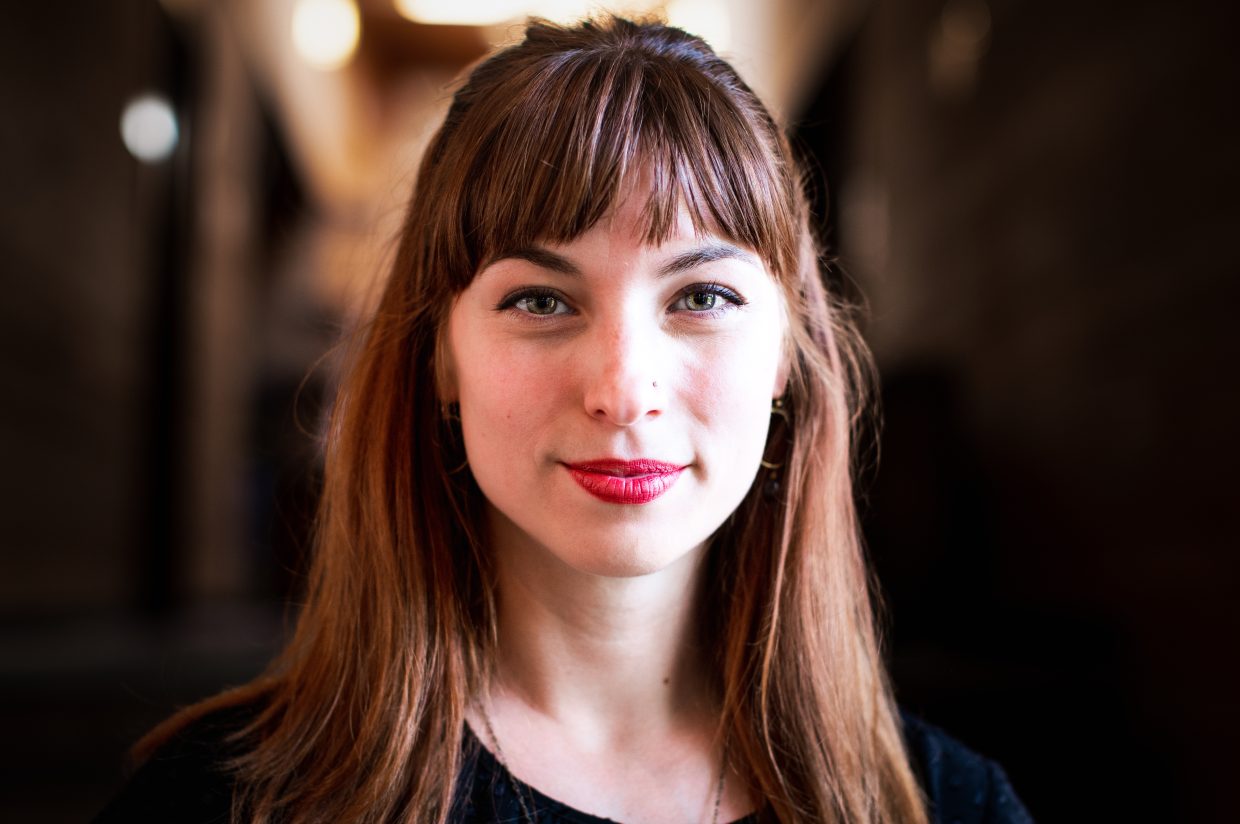
Filmmaker Bria Light, creator and director of ‘The Road Home.’

Maybe it’s an obvious question to ask, but what’s your goal? Making such an incredible and involved piece of art is goal enough, but where do you hope to take this film? How are you thinking about getting it in front of audiences? What’s next for the project?

I had several goals: I hoped some people might see a bit of themselves in the story and feel that they, too – despite having been made to feel othered in the past – belong in bluegrass and country music, that this music can be a home for everyone.

I also hoped that people would see Brandon’s story and say, “Wow, I didn’t realize there were still folks facing this type of persecution in the music industry.” This wasn’t so long ago. And unfortunately, as we all know, we are seeing today the continuation and resurgence of anti-LGBTQ laws and bigotry all over the country and the world. Another hope I have for the film is that by sharing stories that elevate the depth and humanness of the characters onscreen, folks from all sides of the political spectrum might, over time, begin to think about these issues in a new light.

What’s next? Recently the film screened to lovely and engaged audiences at the Sebastopol Documentary Film Festival and next it will play a bit farther from home at the Sound on Screen Film Festival in South Africa. I’m also hoping to show the film at music events or conferences, to continue to share Brandon’s story with audiences around the country.

What did you learn during the making of The Road Home that was unexpected? What will you take with you into future projects – whether in a similar vein or in another space entirely?

I learned so much! I learned the importance of finding that balance of pre-planning and knowing what the story is about while at the same time going with the flow of real-life, nonfiction storytelling – that is to say, you can’t actually predict how life is going to unfold, so you have to hold your preconceived ideas in one hand, while leaving room for the story to reveal itself to you as it unfolds in real time in the other. One thing I “learned” (in quotation marks because I’m still learning it…!) is to trust the creative process, with its highs and lows, self-doubts, rewarding moments, and ultimately, you find that you have gotten to the end of your creative process and survived! There are really too many things I’ve learned that I’ll be taking with me into future projects, so I’ll just leave it there for now.


Film, poster, and images courtesy of Bria Light.

Finding Lucinda: Episode 6

Ismay travels from Texas to Mississippi to visit the studio where Lucinda Williams made her first record. There, Ismay interviews Wolf Stephenson, who was the engineer that day in 1978, to learn about what happened during the session and whether Lucinda was confident through that initial challenge of recording. They discuss what results when artists get rejected and what keeps certain artists moving forward in spite of various roadblocks. Stephenson oversaw the development of Malaco Records, which produced R&B, soul, and gospel hits. Elsewhere in the episode, Ismay also takes time to visit the stretch of country between Austin, Texas, and Jackson, Mississippi, in order to understand the landscape that informed Lucinda’s work.

LISTEN: APPLE • SPOTIFY • AMAZON • MP3

Produced in partnership with BGS and distributed through the BGS Podcast Network, Finding Lucinda expands on the themes of Ismay’s eponymous documentary film, exploring artistic influence, creative resilience, and the impact of Williams’ music. New episodes are released twice a month. Listen right here on BGS or wherever you get podcasts.

Finding Lucinda, the documentary film that inspired and instigated the podcast, is slated for release in the fall. Both the film and podcast showcase never-before-heard archival material, intimate conversations, and a visual journey through the literal and figurative landscapes that molded Lucinda’s songwriting.

Credits:
Produced and mixed by Avery Hellman for Neanderthal Records, LLC.
Music by Ismay.
Artwork by Avery Hellman.
Jackson, MS Recording: Recorded at Malaco Studios.
Sound Recordist: Rodrigo Nino
Producer: Liz McBee
Director: Joel Fendelman
Co-Director & Cinematographer: Rose Bush
Special thanks to: Mick Hellman, Chuck Prophet, Don Fierro, Jacqueline Sabec, Rosemary Carroll, Lucinda Williams, & Tom Overby.


Find more information on Finding Lucinda here. Find our full Finding Lucinda episode archive here.