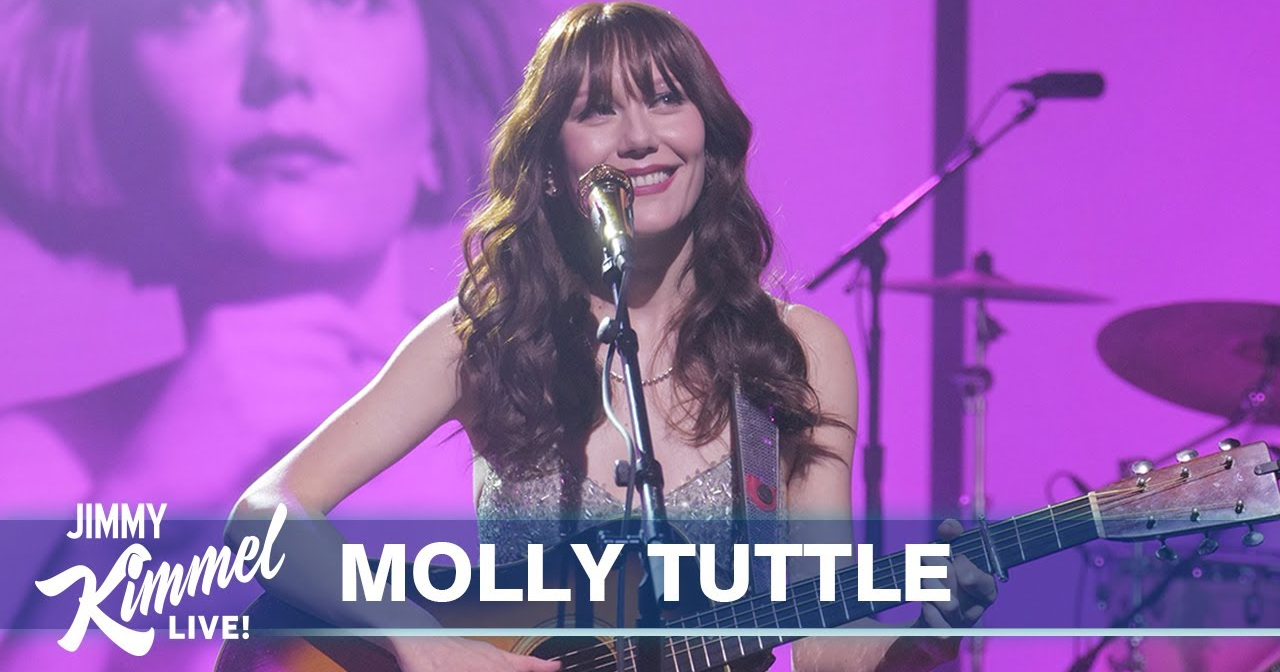
Molly Tuttle kicked off the new year in style, appearing on Jimmy Kimmel Live! on January 5 to perform a GRAMMY-nominated song from her GRAMMY-nominated album. “That’s Gonna Leave a Mark” was released on So Long Little Miss Sunshine in August of 2025. The track was nominated for Best Americana Performance while the LP gained a nomination for Best Americana Album. Featuring her signature clawhammer guitar picking style and impassioned, heart-wrenching vocals, “That’s Gonna Leave a Mark” is a standout track from So Long Little Miss Sunshine, having held the No. 1 slot on the Americana radio charts for four weeks and having climbed to #13 on the AAA charts, as well.
On the Kimmel stage, Tuttle and her band – Ellen Angelico (guitar), Megan Jane (drums), Vanessa McGowan (bass), Mary Meyer (keys) – demonstrate the genre-blending style that’s also a hallmark of her most recent album. Clawhammer guitar builds a rich foundation for pop-steeped Americana, polish and grit combining in intricate and intriguing ways. Tuttle’s percussive right hand reminds of piano key strikes in similar singer-songwriter (but keys-centered), pop and adult contemporary styles. It may be surprising that old-timey and bluegrass textures could fit so well in this musical context, but this is an intersection of styles Tuttle has long been comfortable with.
Molly Tuttle will vie for the Best Americana Performance and Best Americana Album GRAMMYs on February 1, when the awards will be handed out in Los Angeles, before going on tour with Marty Stuart & His Fabulous Superlatives for Molly x Marty: Guitars on Fire — The Cosmic Twang Tour in the South and Northeast in February.
Photo Credit: Lead image courtesy of ABC/Jimmy Kimmel Live!; alternate image courtesy of ABC, shot by Randy Holmes.
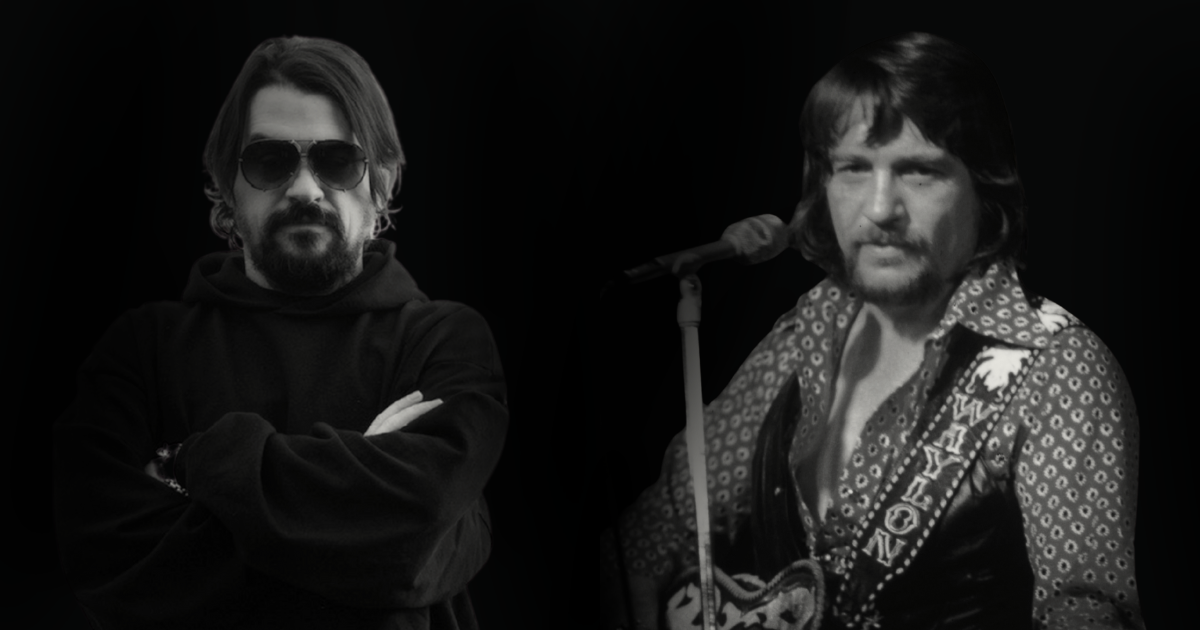
Being the son or daughter of a legendary artist can often cause self-esteem and identity problems, especially if offspring choose their famous parent’s profession. But that clearly hasn’t been the case with Waylon Albright Jennings, much better known to music fans as “Shooter.”
The son of greats Waylon Jennings and Jessi Colter, Shooter Jennings has forged an impressive career as a singer, songwriter, instrumentalist, and producer covering over three decades, while displaying an idiomatic flexibility that’s seen him excel with both country and rock projects. Though he never uses the term “prodigy,” he was playing drums at five, taking piano lessons at eight, and sitting in with his father’s band on guitar at 14, while often spending time riding on his dad’s tour bus. Since then, he’s done an array of projects from heading bands to helming sessions, but he’s also always upheld a mantra of his father’s, which is stressing authenticity and passion in whatever he’s doing, writing, or playing.
Towards that end, Shooter’s newest venture both pays tribute to his famous father and reaffirms the musical values both have always championed. That’s the album Songbird (released October 3 via Son of Jessi/Thirty Tigers), which is the first of a planned posthumous trilogy of releases from the famed vocalist, who was one of the most distinctive and dominant voices to emerge in modern country during the ’70s and ’80s. Waylon’s landmark recordings, both as a solo artist and later in collaborations with Willie Nelson, Johnny Cash, Kris Kristofferson, Tompall Glaser and Jessi Colter, not only ushered in the “outlaw country” movement, they signaled a major step forward for artistic independence and creative freedom that resonated across the popular music spectrum.
Waylon Jennings was an innovative and vital figure not only as a performer, but as a personality. His voice and stature helped give gravitas to an otherwise forgettable TV show (The Dukes of Hazzard) and helped fuel a drive for authenticity within country. Still, despite that quest for freshness and originality, Waylon knew how to make hits. He had 16 number one tunes on Billboard‘s Hot Country Songs chart and 11 number one albums on Billboard‘s Top Country Albums chart during his amazing career, while always being a staunch advocate for his view of what constituted country.
Though Shooter has always called himself “an MTV kid who went down the rabbit hole with rock and roll,” he’s also long held a great reverence and respect for country. He began sorting through hundreds of his father’s personal studio recordings during the summer of 2024. Having just begun an exclusive residency at Hollywood’s historic Sunset Sound Studio 3 (which he redubbed “Snake Mountain”), Shooter began examining the tapes with veteran engineer Nate Haessly. Things moved quickly, his initial goal of finding previously lost Waylon songs he could share with the world morphing into instead deciding the best way to present what turned out to be a rich treasure trove of recordings. The material he was hearing was recorded between 1973 and 1984 and featured such guest stars as Tony Joe White and Jessi Colter.
“I started listening to this material last year and knew right away I had to put it out,” Shooter said during a recent phone interview with Good Country. “Once we began thinking about what we would put out there first, ‘Songbird’ just really kind of took over.
“Everyone that I played the song for heard it and they were really emotionally affected. Many broke out in tears the first time they heard it. It was an example of my father’s philosophy about doing songs from other people. Any song that he chose to record he would turn it into his own type of anthem. I really think that was the case with ‘Songbird,’” Shooter continued. “It gives the album a power and special flavor, and I’m really proud of everything on it.”
Songbird was released the first week of October, with Jennings’ evocative and stirring cover of the Fleetwood Mac tune its lead single. It debuted at number six on Billboard‘s Top Album Sales chart and it’s been in either the Top 10 or 20 on a host of other charts as well, representing the highest any Jennings LP has charted in 35 years. The 10-track release contains several other notable singles, most of them already previously complete. But on a couple of cuts, Shooter utilized the talents of surviving members of The Waylors, including guitarist Gordon Payne, bassist Jerry Bridges, keyboardist Barny Robertson, and backing vocalist Carter Robertson to add some spice. Elizabeth Cook and Ashley Monroe were also enlisted to help propel Songbird to new heights. Shooter mixed the songs in a purely analog fashion on Sunset Sound Studio 3’s custom 1976 DeMedio API mixing board.
Another song that’s quite appropriate in these times of extreme social conflict and division is Waylon’s version of Johnny Rodriguez’s “The Cowboy (Small Texas Town),” which finds him urging both cowboys and hippies to direct their ire away from each other and towards those causing greater structural harm to society. Additional recommended cuts include a sizzling Jennings version of Johnny Cash’s “After The Ball” and “I’d Like To Love You Baby” that features Jessi Colter.
Both “Wrong Road Again” and “I’m Gonna Lay Back With My Woman” are trademark Jennings numbers, while his version of Jesse Winchester’s “Brand New Tennessee Waltz” is also solid. The one criticism that some hardcore Waylon fans might make is Songbird doesn’t offer any previously unissued gems that he penned, feedback that Shooter’s been around long enough to anticipate. “What we went through and chose here were numbers that were made memorable through his treatments,” he continued.
“That’s something that my father always talked about and stressed, that whenever you do a song, make sure that you’re not just replicating something else, you’re making your own statement. That’s why Songbird has such an impact and that’s the case with everything on this album. These are songs that he loved from other people and wanted to perform and put his own stamp on them.”
Though born in Nashville, Shooter made the move to Los Angeles in 2001. Since then, he’s comfortably moved back and forth between rock and country. He’s had a mixed amount of success as a performer, cutting 11 albums and EPs in both genres. His biggest country hit came on the 2005 LP, Put The O Back in Country. That album’s lead single, “Fourth of July,” peaked at No. 22. The album version featured a cameo by George Jones, who sang the chorus to his signature song, “He Stopped Loving Her Today,” at the end. Unfortunately that was purged from the radio version, but Jones was credited on the Billboard charts.
The album also spotlighted Shooter’s then-new band, The .357s, which consisted of Leroy Powell on guitar, Bryan Keeling on drums, Ted Kamp on bass, Robby Turner on steel, and backing vocals by Bonnie Bramlett. Later that year his song “Busted in Baylor County” was featured in the 2005 film version of The Dukes of Hazzard. Furthermore, Jennings portrayed his father in the Johnny Cash biopic Walk The Line alongside Joaquin Phoenix and Reese Witherspoon. His rendition of his father’s song “I’m A Long Way From Home” was featured on the film’s soundtrack.
Still, Shooter’s greatest fame has come as a producer for a wealth of recordings. He was introduced to the studio as a child, his earliest exposure being inside Chips Moman’s studio in Nashville. His rock influences come through in his at times freewheeling use of studio technology that wasn’t in general use during his father’s heyday, but on any of his productions he’s never let the artist’s voice be overwhelmed by layers of excessive production or backdrop.
He’s been nominated for five GRAMMYs in that role and won two. A short list of memorable sessions he’s produced include such artists as Brandi Carlile (Best Americana Album GRAMMY), Tanya Tucker (Best Country Album GRAMMY), and American Aquarium, as well as Jessi Colter, Jamey Johnson, Jaime Wyatt, The White Buffalo, Hellbound Glory, The Mastersons, Julie Roberts, Kelsey Waldon, Yelawolf, Marilyn Manson, Jason Boland, Billy Don Burns, Avi Kaplan, Billy Ray Cyrus, and Angry Grandpa. Just this year alone, Shooter Jennings produced acclaimed releases by the Turnpike Troubadours, Charley Crockett, and Jake Owen.
When asked what he enjoys most or looks for in terms of production collaborations, Jennings says, “The people that I truly enjoy working with the most are the ones who have their own ideas of what they want to do, how they want to sound, or what they want to sing. Then they bring those ideas into the studio and we take it from there. I’m not really quite as good when it comes to just taking someone who doesn’t really have a sense of who they are and saying why don’t you try this or try that.
“With Charley [Crockett], for instance, that guy comes into the studio and he’s already got all these things together and we can just hit the road from there and take it forward. A guy like Duff [McKagan], who can just write their ass off, or a group like American Aquarium, I can get really excited. Brandi [Carlile] came to me and wanted me to work with her and that was a fantastic experience. But in general, if you’re someone who has their concept of what they want to do, then we can sit down and really make it work in the studio.”
Shooter also has amassed some good credits in the worlds of broadcasting, film, and television. As well as getting the chance to portray his father in the 2005 film Walk The Line, he has made celebrity appearances on television shows CSI, Marvel’s The Punisher, and American Revolutions, while also playing a gunslinger in the 2013 film The Other Life.
Back in 2009, Shooter participated in a CMT Crossroads session, paired with close friend and fellow musician Jamey Johnson. The evening’s set list consisted entirely of duets, including a cover of “Outlaw Shit” from the Waylon Forever album, two songs from Jennings’s discography – “God Bless Alabama” and “It Ain’t Easy” – and four songs from Johnson’s album That Lonesome Song including “High Cost Of Living,” “Mowing Down The Roses,” “Between Jennings and Jones,” and “In Color.”
Shooter cites Glenn Danzig and the band Oasis as folks that he hasn’t yet worked with whom he’d like to in the future. But right now, his main focus is on the two remaining Waylon Jennings posthumous recordings – though he’s not sure yet exactly when they will come out or what will be on them.
“One thing I can say for sure is that there’s a lot more great music coming,” Shooter concluded. “I was really amazed at how much great stuff is there, and I think the fans are going to really be thrilled when we get these next two out there. My father did a lot of great music before he passed, and we’re going to get as much of it out there as we can.”
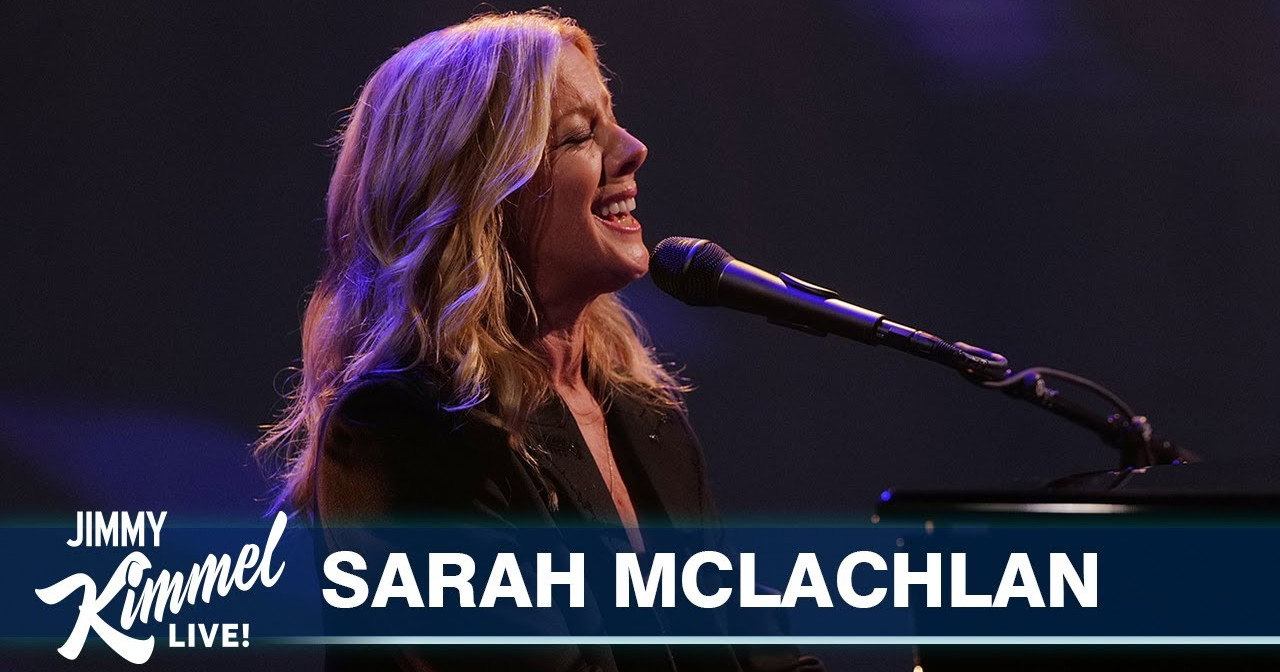
Last week, GRAMMY winner and renowned Canadian singer-songwriter Sarah McLachlan performed on Jimmy Kimmel Live!, the first musical guest on the show after its controversial short-lived suspension and return to the air. McLachlan performed “Better Broken,” the title track from her brand new album – her first in 11 years – which released September 19. In her signature style, simple unadorned piano and vocals in duet, McLachlan reminds the Kimmel audience exactly why she’s so beloved all around the world. Her voice is rich and plaintive, leaning into the sadness and reckoning in the lyric. It’s immediately clear a decade-plus is too long to wait for new music from McLachlan.
Not only was she appearing on late night television to promote Better Broken, but also Lilith Fair: Building A Mystery – The Untold Story, a new documentary directed by Ally Pankiw that celebrates, explores, and canonizes the enormous impact the Lilith Fair all-women festivals had on folk, indie, and popular music in the late ’90s. (Watch the official trailer below.) An excellent and moving documentary, Building A Mystery is available to stream now via Hulu, a film and television streaming platform that, like Jimmy Kimmel Live!, is owned by ABC / Disney. At the documentary’s Los Angeles premiere, McLachlan and several of her artist colleagues refused to perform music from the film as previously planned, standing in solidarity with Kimmel as he was mid-suspension for his comedic remarks on the murder of Charlie Kirk.
On Kimmel’s historic first night back on the air, just a few days later, it was a perfect full circle moment as McLachlan performed as if honoring a raincheck for her refusing to play at the documentary premiere in protest. With Margo Price as the final musical guest before Kimmel’s suspension and McLachlan the first after its return, it was a mighty pair of activism-minded artist bookends to help reinforce the importance of freedom of speech and expression for creatives who work in any/all media and formats. From Lilith Fair to JimmyKimmel Live!, these rights are vital for everyone in this country and around the world – and for the art that they create.
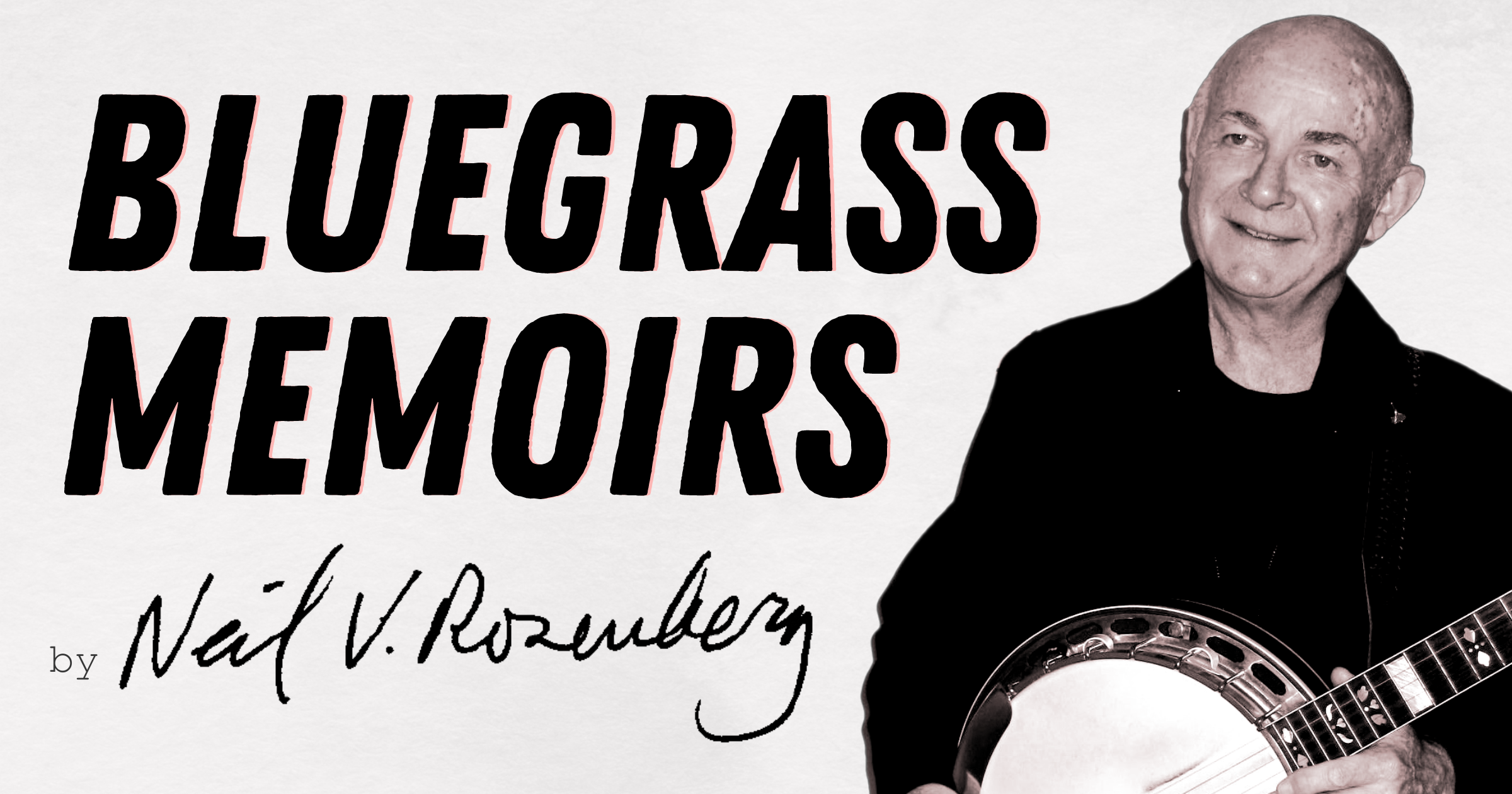
The Earl Scruggs Revue’s only movie soundtrack, Where The Lilies Bloom (1974), is not well known. That’s a pity because in 1973, when it was recorded, the band had been together for four years and was a very solid outfit. At the beginning of 1973 the group included Earl, Randy, and Gary Scruggs, Josh Graves, and Jody Maphis. Steve Scruggs was an occasional member. Vassar Clements’ last credited appearance on record with the Revue was on Earl Scruggs‘ Dueling Banjos (C 32268), released early in 1973, and he was still with them when they recorded the soundtrack.
The movie was filmed between May and August 1972 and released in 1974 through United Artists. The soundtrack album, Columbia KC 32806, is credited to the Revue and their longtime producer, Ron Bledsoe. Movie soundtrack recordings are made after the film has been edited; the musicians perform in a studio setting while the film is rolling. This is a precision business, obviously; I have yet to find accounts of the Revue’s involvement in this process, which must have taken place in early 1973.
Soundtrack albums focus on eliciting memories of the film. Viewing and listening are, in the final analysis, two very different things. The music in Where The Lilies Bloom was, in the first instance, the musicians’ responses to the visuals, shaped by the movie producer and director.
Earl came up with new tunes and restatements of old ones; Randy contributed deft and creative electric and acoustic guitar, both flatpicked and fingerpicked; Vassar performed masterful fiddle from a point in his career when he was doing the old-time tunes brilliantly while developing his new jazz-inflected style; and Josh played the creative and brilliant Dobro that a generation would follow.
The film’s producer, Robert B. Radnitz, based the picture on Vera and Bill Cleaver’s award-winning young adult novel of the same title. It tells the story of the struggle of the Luther family siblings, four young Appalachian country youths – the oldest is 16 – to live at home together following the death of their widower father. They do this by “wildcrafting,” gathering and selling wild herbs as health supplements. The narrative focuses on the two teen daughters’ growth and relationships.
Where The Lilies Bloom was shot on location in Watauga County on North Carolina’s northwestern border. Producer Radnitz strove to employ workers from Appalachia, such as screenplay writer Earl Hamner Jr. and actor Harry Dean Stanton, who had a leading role as the older “Kiser Pease.” The young actress who had the leading role as 14-year-old “Mary Call Luther,” Julie Gohlson, was a Georgia native chosen after a nationwide search. She was nominated for a Golden Globe in 1975. This was her only movie appearance.
Radnitz worked with toymakers Mattel on this co-production, their second. The first was Sounder, released in 1973. That acclaimed film about young teens in Black Mississippi propelled Cicely Tyson to stardom and featured blues star Taj Mahal for its soundtrack. For his second movie’s soundtrack, Radnitz again sought music reflecting the cultural background of the film’s narrative – in this case, the oral traditions of Appalachia. He chose the Earl Scruggs Revue.
The film got a good reception, with prizes and nominations of various sorts. It’s well worth watching – not only is there a DVD with commentary, it’s also available VOD on YouTube and is available to watch via select streaming services. The album, on the other hand, pretty much sank like a stone – no ripples. But if you want to hear what the Earl Scruggs Revue sounded like when they were together just playing by themselves, with no added stars in the studio, this is the album to try. There’s plenty from them to appreciate on the film’s soundtrack, as well. A lot of nice creative moves here!
This was a hard album to find. By the time I finally got it in the ’80s I wasn’t as interested in the band as I’d been earlier. I listened once, filed it away, and only listened again recently. Holding and looking at the album cover during this playback reminded me why I only listened to it once before. The liner notes must have been composed by some 9-to-5er at United Artists. There’s nothing there about the music. Who’s the female vocalist? What’s the band doing? No mentions. The visuals and most of the copy are from the movie. Not much of a musical souvenir!
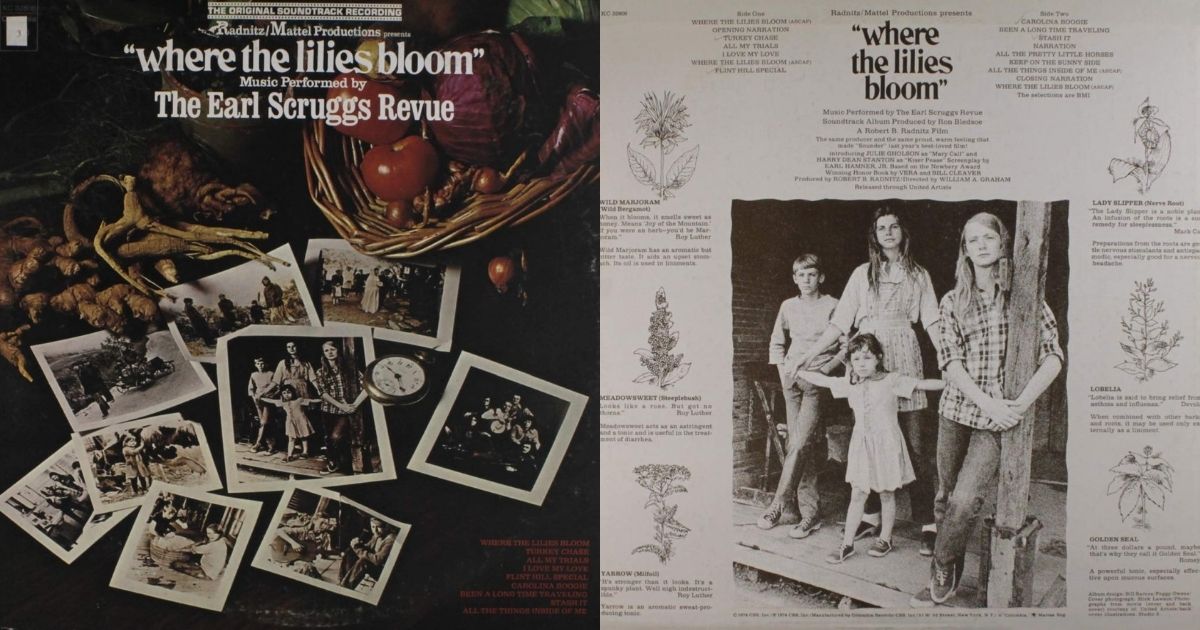
The album cover of Columbia KC 82806 announces at the top: “The Original Soundtrack Recording.” Below that comes “Radnitz /Mattel Productions presents, where the lilies bloom (all in large lowercase), then: “Music Performed by” and finally “The Earl Scruggs Revue.” All this is printed over a collage of color shots of herbs, along with nine little black and white stills from the film – one of which is the Revue.
On back of the album cover, we are told this is a ”Soundtrack Album Produced by Ron Bledsoe [for] A Robert B. Radnitz Film.” Cast members (but not band members) are listed. Next to this info are small columns, left and right, that list the tracks. Filling the center below all this is a large still of the film’s young lead actors; on either side of this are illustrations of wild herbs – three on each side.
In spite of the Revue’s lack of prominence on the album’s notes, I think that the band did a good job of coming up with new compositions and old-time tunes that represent their music in imaginative arrangements relating to the context of the film.
After relistening to the LP, I bought the film’s DVD, which was remastered and released in 2022 with an audio commentary by filmmaker and historian Daniel Kremer. The film opens (as does album track A1) with song “Where The Lillies Bloom” sung by its composer, Barbara Mauritz.
Singer-songwriter Mauritz (1949-2014), originally from Texas, was the vocalist with Lamb, an avant-garde folk-jazz-rock fusion group active in San Francisco in the early ’70s. Her first solo album, Music Box, was released on Columbia in 1972.
How did she end up on this movie’s soundtrack? I wish I knew! Being a Columbia artist was probably not coincidental. As we hear, she’s paired with another Columbia artist, Earl Scruggs, on the theme song at the opening. The Revue is laid-back in the track’s background at the start; eventually Randy’s guitar plays the melody, while Earl’s banjo sneaks up to end with beautiful 6/8 triplets in the background, and a few of Josh’s Dobro licks can be heard.
This is music meant to be heard in accompaniment to the visuals that open the film, aptly demonstrated by its trailer, which opens with the character “Devola Luther” (the oldest sister, played by Jan Smithers) singing “A Long Time Traveling” a cappella. The guitar is very much in the background, as is the banjo, which comes up only at the end.
The album contains three “Narrative” tracks by lead character Mary Call Luther which explicate the dramatic turning points in the film’s story. Following the first narrative track, A2, comes “Turkey Chase”, track A3, which plays beneath a scene in which the Luther children are trying to catch wild turkeys.
The Revue is actually playing the traditional fiddle tune “Chicken Reel,” led by Earl with brief interludes by Randy (lead guitar) and Josh Graves (Dobro). This is two minutes of really good straightforward old-time music, which the Revue knew well but rarely recorded.
The next track (A4) presents slow, moody instrumental music that plays behind scenes pertaining to the father’s death: “All My Trials,” a traditional spiritual with Bahamian connections popularized by Joan Baez in the ’60s. Randy’s lead guitar mixes with some nice piano, probably by Mauritz. It’s a pretty performance.
Track A5, “I Love My Love,” which plays behind a romantic sequence, was also popular in the folk revival. English composer Gustav Holst described it as a “Cornish folksong” in his arrangement of it. It’s sung here by Mauritz, over a finger-picked guitar which could be hers, or maybe that of Randy or Earl.
Track A6 repeats the theme, “Where The Lilies Bloom,” as a slow instrumental piece in 4/4 time. Randy’s finger-picked guitar plays it twice, and then Gary’s bass and Earl’s banjo join for two more verses. It really demonstrates Earl’s artistry – such control, economy, lyricism!
In the film’s soundtrack, The Revue plays Earl’s “Flint Hill Special” behind several action scenes – countryside automotive rambles – as Mary Call and the family are in conflict with Kiser. Here’s what that sounds like as played by Earl, Josh, and Vassar on the soundtrack:
The original pressing of the LP diverges from the movie soundtrack at this point, on Track A7, which is also identified as “Flint Hill Special.” No doubt that garnered Earl some royalties for his composition of that name, but the tune played on the original album is the traditional “Sally Ann,” a piece Earl recorded on his 1961 Foggy Mountain Banjo release. (This seems to have been corrected on digitally distributed versions of the album. Hear the LP’s version of “Sally Ann” below.)
It’s an interesting new version, opening with a couple of fiddle licks and then shifting to the percussive sound of the banjo strings being played with right-hand fingerpicking (a “roll”) while the strings are muted with the heel of the left hand. Then the fiddle steps up while at the same time Dobro, bass, and guitar enter – a powerful old-time bluegrass sound. Earl’s banjo takes over second time through, then the fiddle returns and finally Earl closes as he began, percussively. The “shave and a haircut” ending is dominated by Randy’s fancy guitar.
Side two of the album (track B1) opens with music from a scene in which the four Luthers, who’d been at the grocery store learning about wildcrafting, get a ride home from the store owner “Mr. Connell” (played by Tom Spratley). Here, the Revue is heard playing “Carolina Boogie,” basically an update of Earl’s up-tempo blues in G, “Foggy Mountain Special.” It features the entire Revue with a considerable amount of call-response between Randy and Vassar and a great ending.
The family’s funeral for the mountainside burial of their father includes “Been A Long Time Traveling” (track B2) sung a cappella by oldest daughter character, Devola. It’s heard twice, at the beginning and the close of the burial scene.
Following this, the film’s narrative shifts to wildcrafting, with Mary Call’s next visit to the grocery store to sell herbs backed by the Revue playing (track B3) Earl’s “Stash It,” a catchy banjo tune which starts slowly and speeds up.
Next, Mary Call’s poem about witnessing a starburst is heard on track B4, with subtle guitar and piano backup. It’s followed (track B5) by “All The Pretty Little Horses,” a traditional lullaby of African American origin, performed solo here by Randy’s fingerpicked guitar. In the film this plays behind a tender scene in which the Connells visit the Luther home.
Later, as the Luther children are depicted gathering herbs, the melody of the old Carter Family song “Keep On The Sunny Side” (track B6) is heard. First, it’s finger-picked by Randy on guitar, then Earl’s banjo comes in doing harmony. Neat! This is the ultimate father and son duet; Gary, on bass, is close by.
As the narrative approaches climax, we hear Barbara Mauritz singing her “All The Things Inside of Me” (track B7), accompanied by fingerpicked guitar, probably by Randy but possibly by Mauritz herself.
Mary Call’s final narrative (track B8) leads to the full band playing the theme; it’s heard at length as the film’s credits roll.
The preceding description, based on the album, does not point out all the places where the Revue’s music is heard on the film soundtrack – scenes where Randy’s guitar, Gary’s harmonica, Josh’s Dobro, and Vassar’s fiddle add aural nuances to the screenplay. Throughout the film, music editor Robert Takagi places in the aural background little quotes taken from performances like the final version of the theme. Randy’s guitar, in particular, is heard behind several scenes.
Other musical segments in the film are not heard on the album at all, but play a central role in evoking the film’s cultural milieu. Thus, while rambling in the car, they turn on a local radio station: the Revue is heard playing county-rock. Elsewhere, as they are walking home from wildcrafting, there’s a nice a cappella performance of “Feast Here Tonight” by youngest Luther daughter “Ima Dean” (played by Helen Harmon).
These musical segments remind us that the Revue, while featured on the album, is really playing in support of a story, a visual drama. As such their music here is different from that found on all their other albums. It does not sell the sound of the band – it speaks for images of the region’s atmosphere and its culture that emerge in the film’s narrative.
We know we’re not the only ones constantly clamoring for more bluegrass, string band, and old-time music on television – especially primetime and late night. So last week, on Monday, June 16, we and roots music fans across the country were delighted to find a superlative bluegrass song broadcast on Jimmy Kimmel Live!
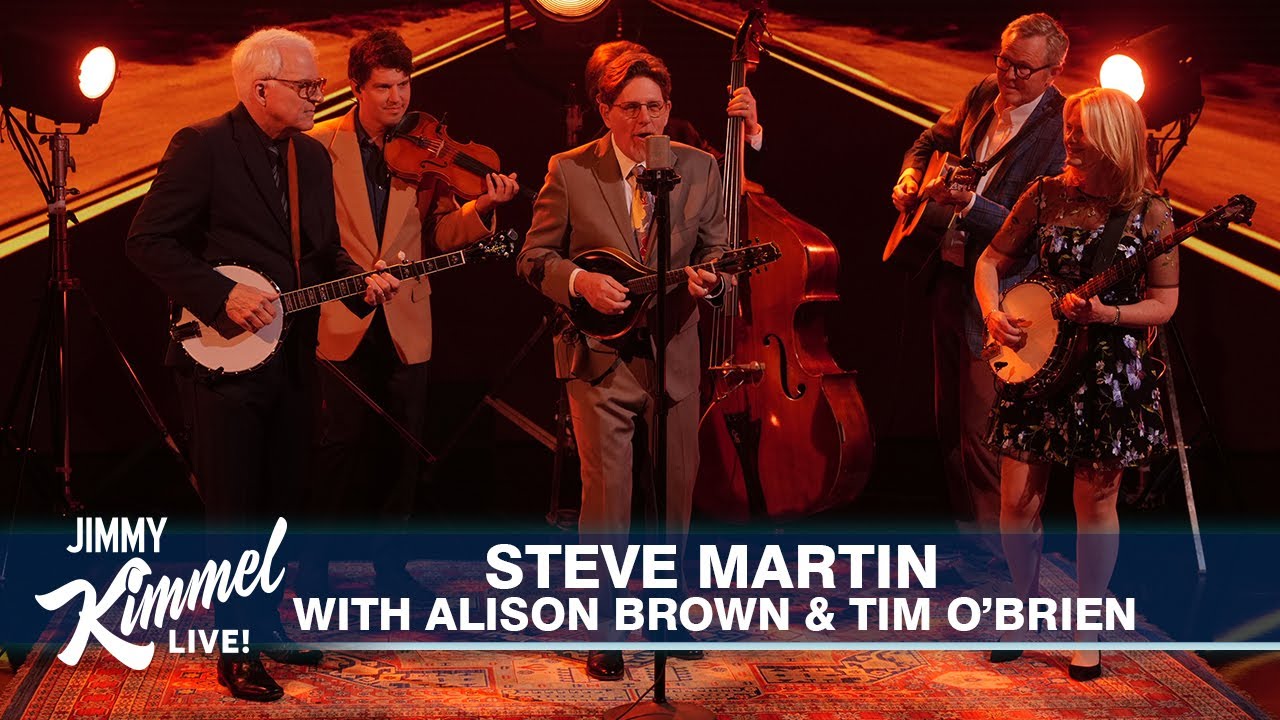
Actor, comedian, and banjo renaissance man Steve Martin and his pal, preeminent five-string picker and record label executive Alison Brown, brought another of their musical collaborations to the world from the Kimmel stage in Hollywood. Joined by Tim O’Brien singing lead and playing mandolin, Robbie Fulks on guitar and harmony vocals, Christian Sedelmyer on fiddle, and Garry West on bass, the sextet performed “5 Days Out, 2 Days Back.” (Watch below.)
Martin and Brown have worked together quite a bit (watch a couple of past BGS posts highlighting their work together here and here) and have a seamless musical rapport, even in this instance pairing his clawhammer with her three-finger style and low-tuned banjo. Their songs are often hilarious, or sweet, or intricate, and always whimsical. “5 Days Out, 2 Days Back” is about the call of the road, the life of an itinerant musician, and the push and pull between longing for the horizon and missing one’s home and loved ones. By the track’s conclusion, we find the singer passing along the life he loves, however bittersweetly, to his own child – whatever the pros and cons. O’Brien offers the lyrics in his classic, laid-back and reedy voice with Fulks lending a sharp, ‘grassy tenor.
The song’s arrangement is intricate and technical at times, but flows easily on down the highway; it’s orchestrated and well-rehearsed for television, but feels down-to-earth and intuitive at the same time. This balance is a hallmark of Martin’s roots music forays, whether with Brown and company, the Steep Canyon Rangers, and beyond. You can sense the intention in each lyric, each note, and the flow of the number. But, ultimately, the result is each of these impeccable musicians getting out of the way of the first-rate song.
Martin, Brown, Fulks, and band (sans O’Brien) appeared just two days after their Kimmel appearance at the Hollywood Bowl for Rhiannon Giddens’ American Tunes (see exclusive BGS photos of the event here), making for a musically lush few days of bluegrass and roots music in Southern California, on the airwaves and wafting on the breeze over the Hollywood hills.
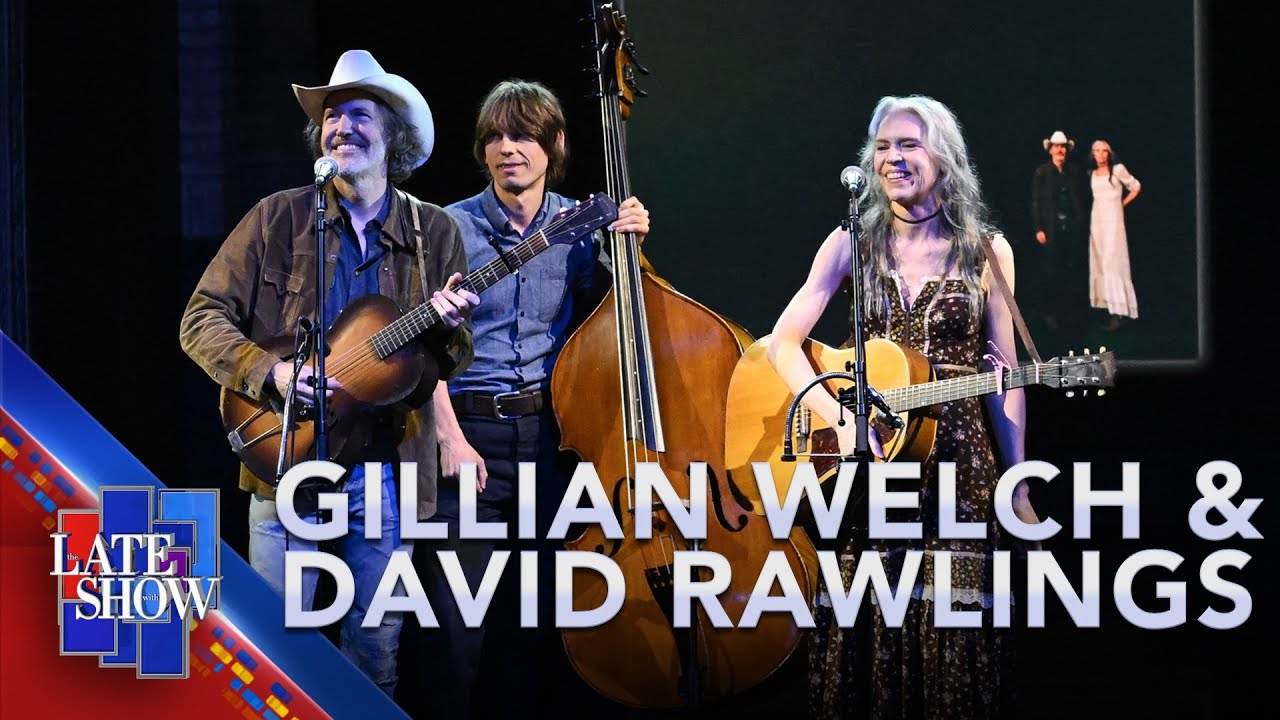
Gillian Welch and David Rawlings – one of the most beloved modern duos in bluegrass and Americana – brought music from their GRAMMY Award winning album, Woodland (2024), to The Late Show with Stephen Colbert earlier this month, performing “Empty Trainload of Sky” live on television. They also performed one of their classic tracks, “Look at Miss Ohio,” a song from Welch’s seminal 2003 project, Soul Journey, for a web-exclusive video. Watch both performances, which feature Punch Brothers and Hawktail bassist Paul Kowert backing up the pair, right here on BGS.
Welch and Rawlings are currently in the middle of a 30+ date headlining tour, with two concerts set for Nashville’s Ryman Auditorium, the Mother Church of country music, on May 22 and May 23. Earlier this month, coinciding with their appearance on The Late Show, they also appeared for two nights at Carnegie Hall before continuing along the East Coast. In June, they’ll be heading out West and concluding their run in the Pacific Northwest.
Between them, they’ve racked up endless awards and accolades, including 14 GRAMMY nominations and five GRAMMY wins collectively. In 2015, they were honored by the Americana Music Association with a Lifetime Achievement Award for Songwriting. But it’s not these well-deserved recognitions, their millions of streams and sales, or even their fantastic contributions to films like O Brother, Where Art Thou? and The Ballad of Buster Scruggs that will be their crowning achievements. Instead, it’s the nearly universal love, admiration, and respect they receive from within and outside the American roots music community that best showcases their far-reaching impact.
That and, of course, the incredible body of work they’ve fashioned together. Whether the timeless and twenty-year-old staples like “Look at Miss Ohio” or the blustery and destructive new work, “Empty Trainload of Sky,” Welch & Rawlings continue to gift us all songs that will stand the test of time – and that we each carry with us wherever we go.
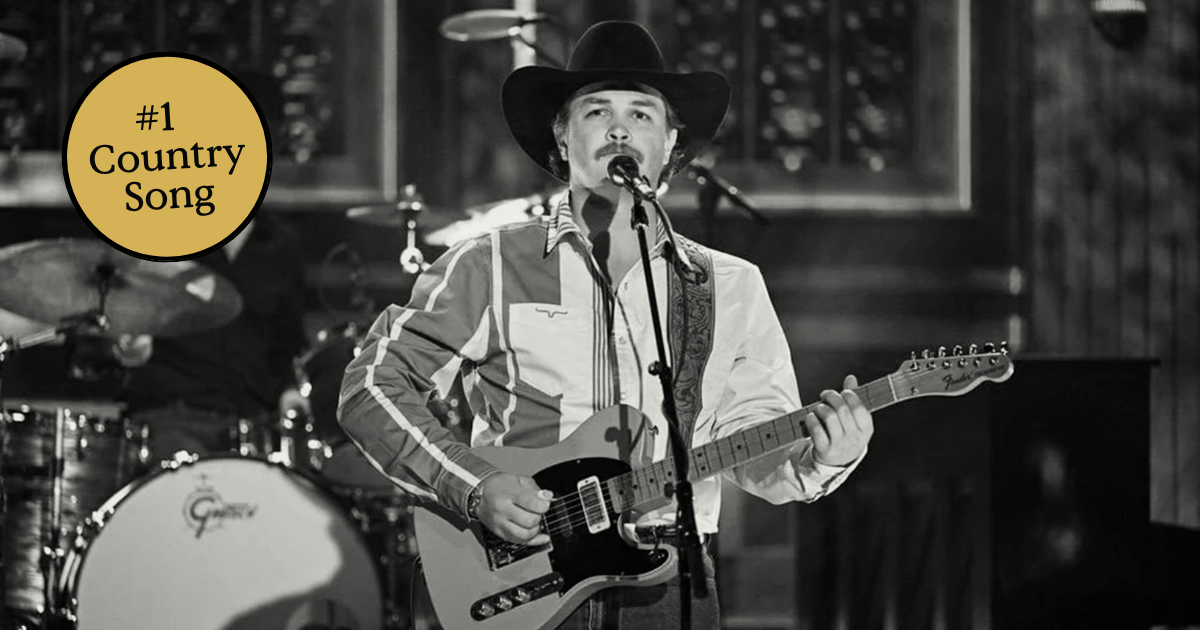
If it seems like Zach Top has been everywhere lately, it’s because he has. Not only because he and his band are staring down a packed summer full of tour dates all across the country, but he’s also coming off of his first Academy of Country Music Award win – snagging the New Male Artist of the Year trophy while also being nominated for Album of the Year – and then immediately turning around to perform on The Tonight Show Starring Jimmy Fallon. The appearance was his late night television debut, after his stunner of a traditional country album, Cold Beer & Country Music, was released to widespread acclaim – from critics and audiences alike – just over a year ago in spring 2024. The project continues to build momentum and gain thousands and thousands of new listeners for the picker-songwriter-upstart.
Top and band performed “I Never Lie” on Fallon, certainly the viral hit sensation of Cold Beer & Country Music. Shortly after his television appearance, the track, which is already RIAA certified Platinum, topped the country charts, becoming the number one country single in the country (and Canada) according to Mediabase. It’s Top’s very first number one.
“I Never Lie” is a classic yet modern take on a well-known country songwriter trope, the “of course I’m not lying” or “opposite day” type of rhetorical device that’s been employed by country artists and songsmiths since the genre began. Top’s spin on this iconic sort of country song setup is almost divine in its execution, as evidenced by his audiences – from humble honky-tonks to packed rodeo arenas – shouting along with the song at the tops of their lungs each and every time it’s performed.
This will surely not be the last television appearance or country award for Top, who leverages his bluegrass family band upbringing and longtime idolization of heroes like Tony Rice and Keith Whitley to craft a style of Good Country that’s forward-looking and timeless at the same time. With a wink, a smile, a first-rate mustache-mullet combo, and a “Zach Top Hop,” this still-fresh country superstar is sure to continue making an impact all across roots music well into the future. From country to bluegrass and back again.
We hope you enjoy Zach Top’s performance of “I Never Lie” on The Tonight Show. Don’t forget to make your plans now to catch Top and his incredible band on their mighty summer tour, too.
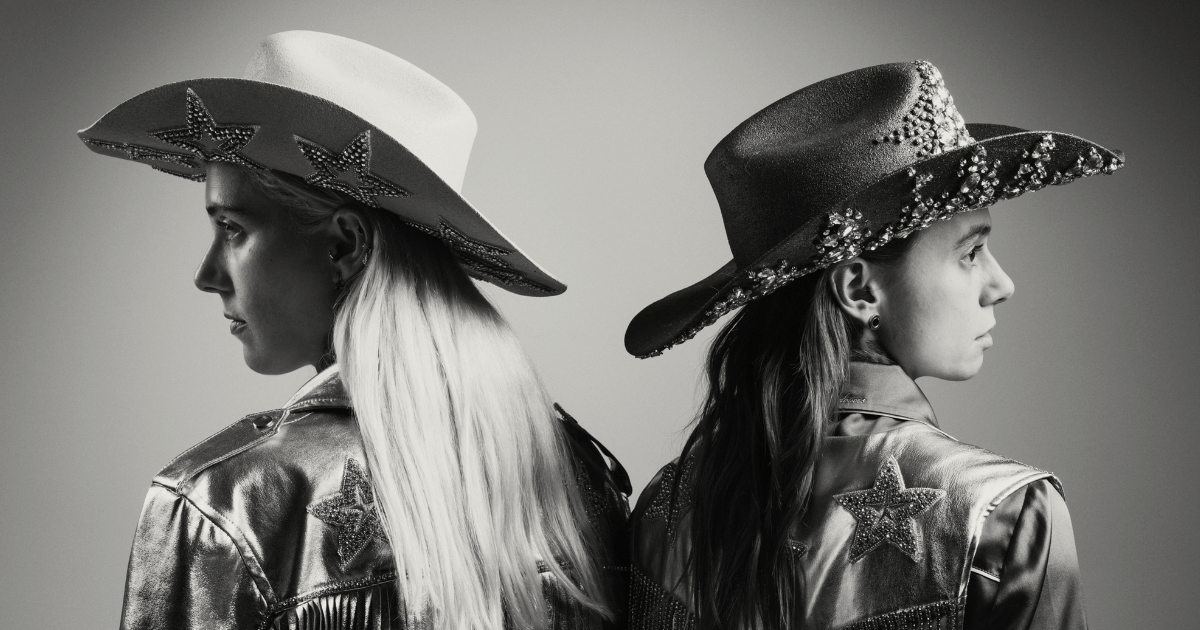
We’re not always promised earnestness and raw talent from musical guests who show up on late night talk shows, but Julien Baker and TORRES brought both during their energizing joint television debut on The Tonight Show Starring Jimmy Fallon last week.
Donning brightly colored western suits embroidered with flowers and wielding an eclectic mix of acoustic and electric instruments, Baker, TORRES, and their sprawling backing band are vital and promising in their four-and-a-half minutes on stage. It feels like stepping into a slightly altered version of reality, one where past and future bleed into one another.
Together, the seasoned songwriters blend elements of ’90s-era alt-country, western, and indie-rock; their energizing harmonies feel so riddled with life they couldn’t possibly be defined by genre. Baker and TORRES are returning to the root of something honest, vulnerable and nostalgic with their sound. But they’re also acting as alchemists, creating a secret third space, almost inexplicably, using familiar, common elements. There’s just something about this performance that words can’t quite capture.
“Sugar in the Tank” starts out slightly subdued. Baker sings in a characteristic restrained-yet-emotive voice as she plucks the banjo. TORRES starts a twangy conversation between their Fender Telecaster, the fiddle and the pedal steel. But as the song builds, the energy of the performance becomes electric and infectious. When TORRES first comes in with their rich vocal harmonies and the band kicks into full gear, the song becomes bigger than the sum of its parts. But even as it becomes raucous and expansive, the performance still manages to feel tender, personal and heartfelt.
At one point, Baker sings, “I love you now, already and not yet,” and this trepidation, this confusion matched by conviction, feels deeply fitting for the energy the musicians bring to this performance.
Baker is best known as the founder of indie/folk-pop supergroup boygenius, while TORRES has been trodding a steady path as a solo artist for over a decade. The two just recently started recording and performing together, and it looks like there’s plenty more to come. While “Sugar in the Tank” is the only single Baker and TORRES have released so far, rumor has it they have a full-length country album in the works. The two will be performing in select cities throughout the U.S. this coming spring and summer, and you can check out their full list of tour dates on their website.
With her signature red hair and easy smile, Reba McEntire has maintained her gilded perch in the hearts of music fans for decades. In fact, 2024 marks the 50-year anniversary of her launch into stardom. The multi-hyphenate talent grew up singing in three-part harmony with her siblings as the local treasures of their small Oklahoma town. When Reba enrolled at Southeastern Oklahoma State University to pursue becoming a schoolteacher, she continued to perform locally on occasion. Serendipitously, her delivery of “The Star Spangled Banner” at the 1974 National Finals Rodeo caught the attention of country artist Red Steagall, who shepherded her through the kindlings of her musical career in Nashville.
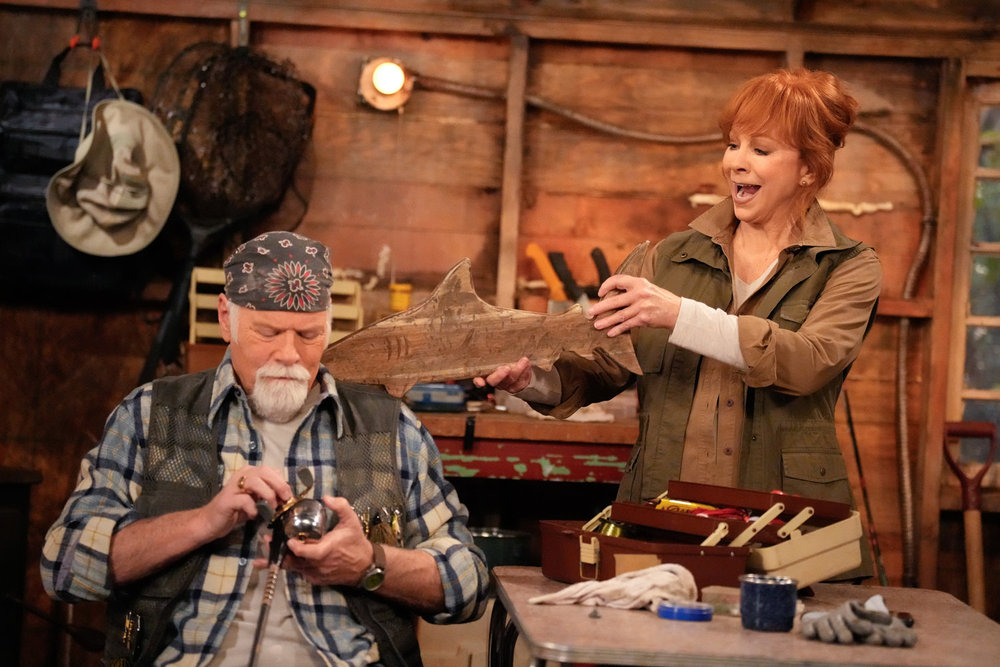
(L-R) Rex Linn as Emmett, Reba McEntire as Bobbie on Happy’s Place, “Fish Fry Monday,” Episode 104. Photo by Casey Durkin/NBC.
After over a decade of soaring success in country music, Reba took her first strut across the silver screen in 1990. The monster movie Tremors was just the first of the star’s rolling list of Hollywood credits. Immediately, Reba ignited a second love and poured herself into building up an acting career.
From her famous self-titled sitcom to serving as a recurring judge on The Voice, Reba’s icon status endures the test of time. For decades, she has masterfully committed to the balancing act of maintaining both her singing and acting endeavors.
Her most recent feat saw her return to the sitcom stage with the launch of her new show Happy’s Place (NBC / Peacock) in October. To honor this beloved country diva’s ever-thriving legacy, we’ve compiled a short list of our favorite on-screen Reba moments.
Tremors (1990)
A canon event for ’90s media, Reba started out strong with Tremors as her inaugural film role. This monster-studded Western cult classic is lauded for its apt casting and ’50s-esque creature feature vibes. Alongside Kevin Bacon, Fred Ward, and Michael Gross, Reba stars as “Heather Gummer,” a woman living in the small desert town of Perfection, Nevada. When Heather and her neighbors find themselves under attack by formidable, underground, carnivorous creatures known as “Graboids,” they must strategically wield their wit and weapons in order to survive.
While many struggle to transition between creative mediums, Reba’s first film appearance earned her the adoration of many. Her charisma and comedic timing accentuate the film’s charm, cementing her status as a versatile star capable of straddling the worlds of both music and acting alike.
Reba (2001 to 2007)
Few have the charisma and mass appeal to headline a sitcom titled in their own name. Even fewer have the charisma and mass appeal to do so for six successful seasons! Reba, the eponymous American sitcom, was a pillar of 2000s TV, running from 2001-2007. For five of its seasons, the feel-good show aired on Friday nights ranked 4th in its time slot, often with over 4 million viewers per episode.
The show follows “Reba Harte,” a middle-aged Houstonian woman whose life is torn asunder by discovery of her husband’s affair with his consequently pregnant dental hygienist mistress. Simultaneously, Reba’s own 17-year-old daughter becomes pregnant, and Reba must flex and pivot with all of her might in order to support her children.
Though the final episode of Reba aired well over a decade ago, the 2020s witnessed a resurgence of the show’s iconic theme song through a viral trend on TikTok. “I’m a Survivor,” performed by Reba and written by Shelby Kennedy and Phillip White, became an ironic anthem perfect for dramatizing even the most mundane of inconveniences.
Happy’s Place (2024)
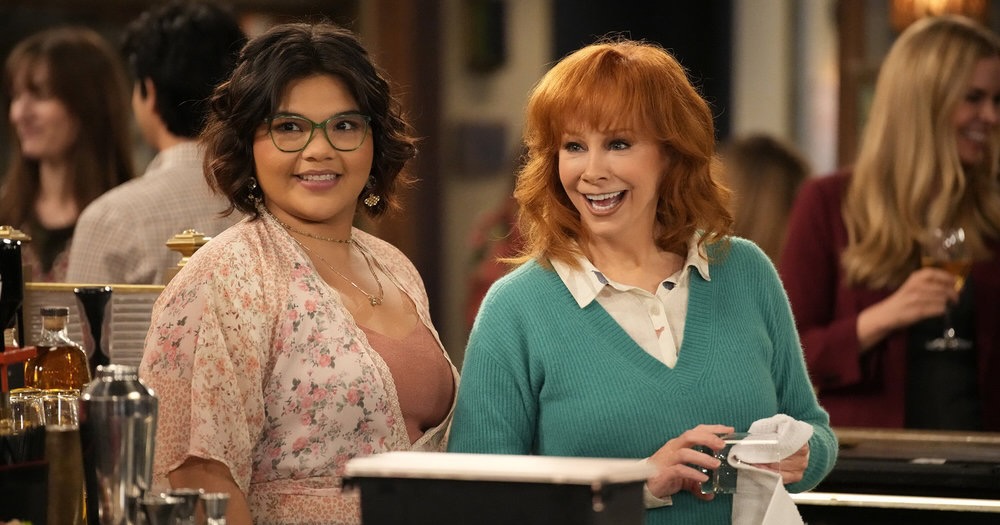
The Queen of Country returned to her sitcom throne again this fall when the first episode of Happy’s Place aired on October 18, 2024. Similarly to her self-titled show, Happy’s Place centers around a woman whose life has been jostled by the discovery of previously unknown, kept-secret family members. In the case of Happy’s Place, Reba portrays Bobbie, a spunky Tennesseean who has been running her late father’s bar – the titular Happy’s Place – since his death several years earlier.
Much to her chagrin, Bobbie is dumbfounded by the news that she must share ownership of the bar with her newly-acquainted half-sister Isabella, the child of her father’s illicit affair. While reckoning with her father’s infidelity and forming a relationship with a sister decades her junior, Reba delivers a performance both comedic and heartwarming. The first season will be six episodes in total and it can be streamed on NBC (Fridays at 8PM ET) or on Peacock the day after airing.
Having made her debut on The Voice during its premiere season as a “Battle Advisor” to Blake Shelton’s team, Reba’s presence has been peppered throughout the show across its entire duration. During Season 24, Reba replaced Shelton as a coach, a position she maintains to this day.
Currently in the midst of its 26th season, Reba has dazzled viewers countless times, but this moment is our favorite. Just a few weeks ago, Gwen Stefani blocked Reba (a tactic judges use to prevent another coach from adding a singer to their own team during blind auditions). In a coy ploy at diverting attention from her made-for-TV snakery, Stefani drapes her body over the “BLOCKED” graphic and begins to do push-ups. As if the moment wasn’t iconic enough, Reba pushes the scene into absurdity when she follows suit, launching into a push-up routine in perfect form, putting Stefani to shame. Reba’s feat begs the question–should she pursue a third career in athletics?
Barb & Star Go to Vista Del Mar (2021)
This uncommon comedy follows the journey of two oddly antiquated 30-somethings Star and Barb (played by Kristen Wiig and Annie Mumolo) as they leave their Nevada home for the first time to venture out on a Florida vacation. The two ultimately must disentangle themselves from an evil woman’s plot to wreak havoc in the fictional Florida town.
The offbeat film’s charm is only augmented by a cameo from Reba, who graces the set as “Trish,” the embodiment of Star and Barb’s playful ideations and daydreams. Trish emerges as a water spirit to guide the two lifelong friends with her wisdom and encouragement – a role Reba, with her natural charm and benevolence, portrays with ease.
Malibu Country (2012)
With “don’t reinvent the wheel” seemingly as their ethos, the visionaries behind Malibu Country did not stray far off the beaten path. In this project, Reba returned to the world of sitcoms in 2012 to depict the role of Reba MacKenzie. Reba’s country star husband has been caught (yep, you guessed it) cheating on her and she must upheave her life. She and her two children move to her ex-husband’s property in Malibu where they start life anew and Reba decides to recommit to the music career she had abandoned in order to start her family. The show only ran for one 18-episode season in 2012/2013, but it did garner a fairly hefty viewership during its short life.
Young Sheldon (2019 to 2022)
In this Big Bang Theory spinoff, Reba guest stars as a hair stylist named June, appearing in a total of six episodes throughout seasons 3-5. June is the eccentric ex-wife of Coach Dale, the new boyfriend of Meemaw, Sheldon’s grandmother. As ever, Reba delights the show with her comedic timing and warm approach; her presence doubly adored given that Young Sheldon brought her and Annie Potts, both beloved Southern talents, onto the same screen.
She even pulled off the gaffe of a career in one scene where she sings karaoke… poorly. In addition to stealing the audience’s heart, Reba also met her current partner, Rex Linn, while filming.
Reba has proven time and time again her status as national treasure. Though just a snapshot of the legend’s perpetually blossoming career, this list demonstrates just how impactful Reba’s life as an actress has been – astonishingly while also maintaining her official title as Queen of Country, recording and releasing albums, co-headlining a residency in Las Vegas, and much more.
At 69 years old and still yet to peak, we look forward to all the Reba roles, songs, and iconicity to come.
Photo Credit: Both photos by Casey Durkin/NBC. Lead Image: (L-R) Belissa Escobedo as Isabella, Reba McEntire as Bobbie on Happy’s Place, “Ladies Night,” Episode 107.
It all began way back, nearly seventy years ago in Memphis, Tennessee, when an almost unremarkable thing happened: A record store opened its doors.
That a record store might exist in the home of the blues in 1957 was itself no remarkable thing. But this store, Satellite Records, was quite literally a sister operation to the recording studio next door. Satellite’s owner, Estelle Axton, was the older sister of the studio’s founder, Jim Stewart.
Stewart was a fiddler with a passion for country music. Long before the dominance of indie labels, Stewart had the idea to start his own studio and label, to get his music out to the masses. As luck would have it, his original country songs were… just fine. Nothing groundbreaking. But his work sparked the imagination of a young musician named David Porter, who strode into the studio one day and asked if he could lay down some tracks.
Long story short, Porter recruited some other artists who became a band known as Booker T. and the M.G.s – eventually the studio’s de facto house band. Suddenly, the label – named STAX as a combination of Jim and Estelle’s last names – was off to the races.
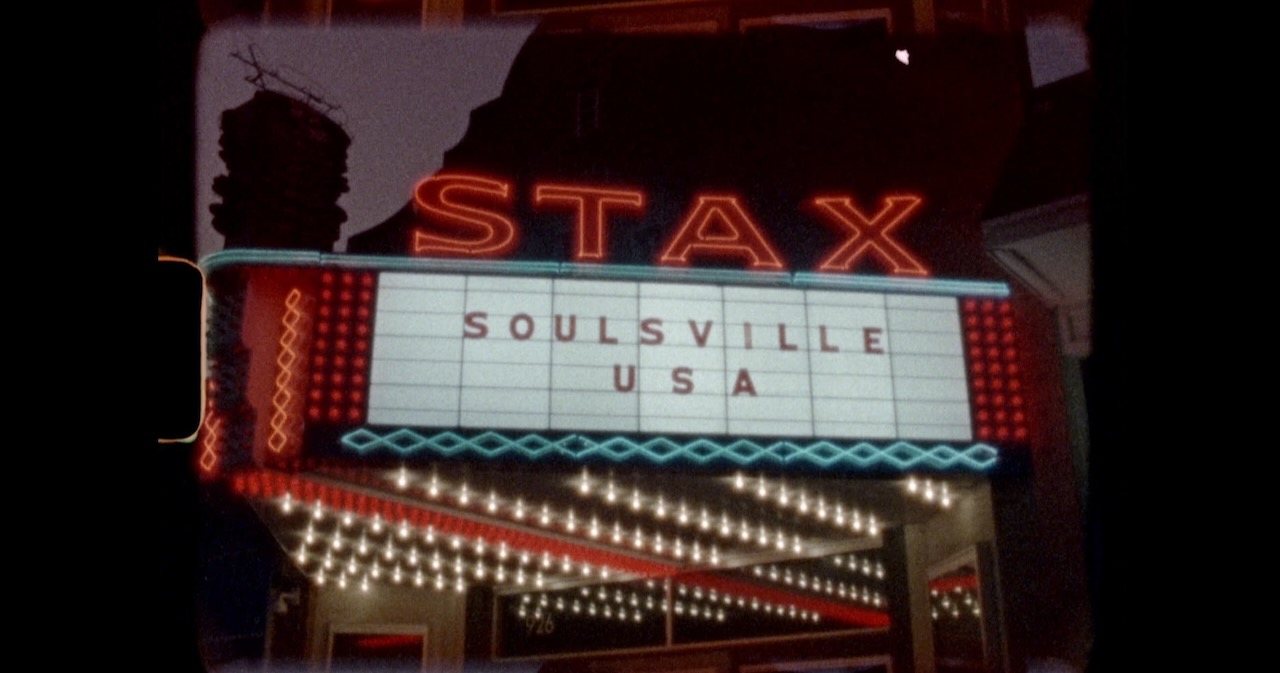
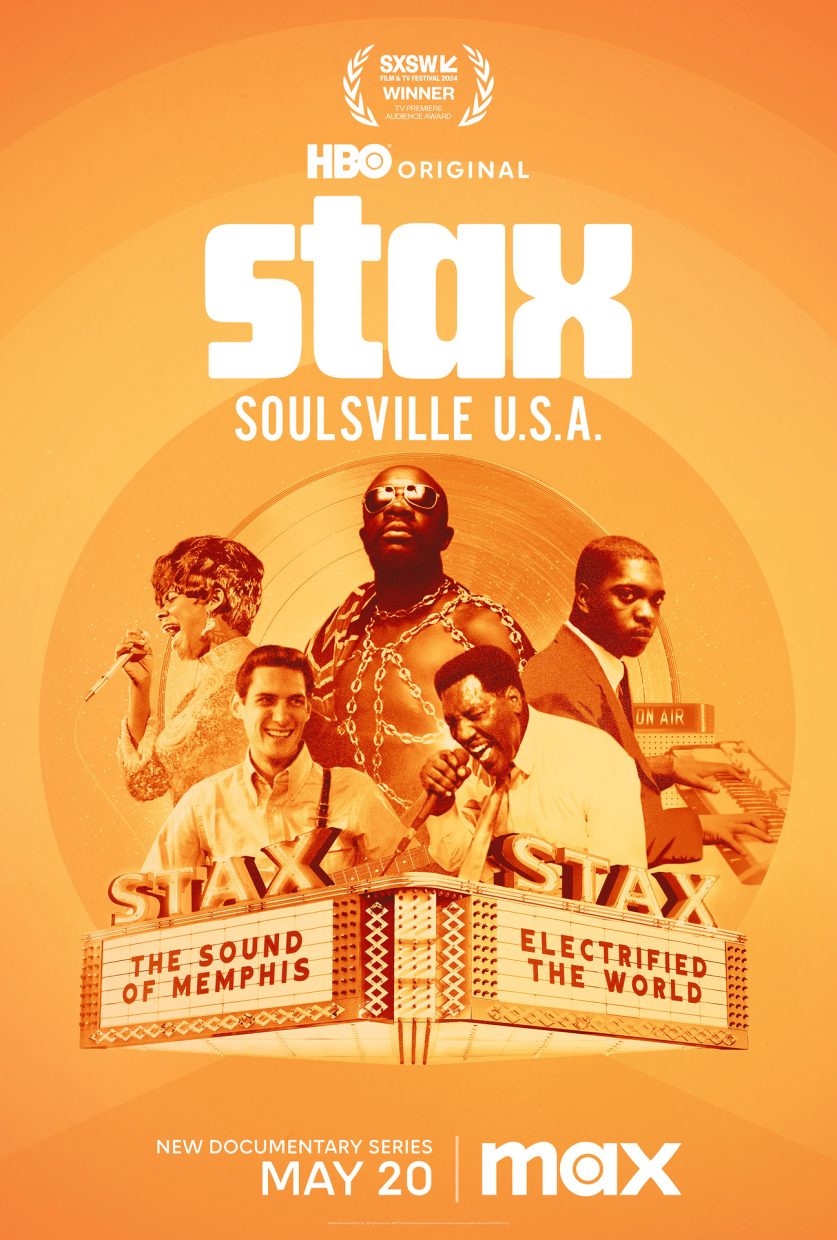
Now, a three-part docuseries from HBO titled STAX: Soulville USA is available for streaming on MAX. The series premiered at South by Southwest earlier this year and earned two Emmy Award nominations (Outstanding Documentary or Nonfiction Series and Outstanding Sound Mixing for a Nonfiction Program). While the series did not prevail in those categories, it is a powerful, thorough, emotional telling of the relationship between music, its makers, and the world in which they live.
The series’ director – Peabody, Emmy, and NAACP award-winner Jamila Wignot – strung together an incredible array of rare and never-before-shared footage of the rise and fall (and rise again) of STAX Records between 1961-1975. But footage isn’t just from inside the studio walls. We see musicians on their first trips to Europe, relaxing in the pool at the Lorraine Hotel – a frequent STAX hangout before it became the scene of Martin Luther King, Jr.’s assassination. There is footage from civil rights protests and speeches and moments of great grief and outrage. There are contemporary interviews with the musicians and staff of STAX and Satellite Records, including Axton and Stewart.
And always, at the heart of it all, there’s the music.
In a For Your Consideration panel also available on MAX, Mignot admitted that, when she was approached to direct the series, she was “really just into it for the music.”
“I thought it was going to be this great-big, beautiful music story,” she adds. “As I started to do more research, and particularly looking into the work that [STAX biographer] Rob Bowman had done, I understood that it was a much bigger story that touched on social issues, history, and [it] really was this beautiful story of these folks who were, I think, led by intuition and desire, and weren’t necessarily trying to do more than the things that they loved. But they were very responsive to the world that was around them.”
Of course, outside the walls of STAX studio and Satellite records, Black people were subject to the cultural and legal realities of living in the Jim Crow South.
“[Jim Crow] was too strong a system to tear down,” bandleader Booker T. notes. “In Memphis, you had to keep your mouth shut and hope for the best. Or fight.”
While that was the rule of the road outside, inside STAX studio, Booker T.’s band had two Black members and two white. Together, they developed an approach to Southern soul music that would become one of the most influential sounds of the 20th Century.
Granted, as the civil rights movement went through its various waves in Memphis and beyond, and STAX players marched on picket lines without their white bandmates beside them, this complicated interpersonal relationships in the studio. But the music continued to compel everyone forward. As a result, music fans got to find solace in some of the greatest roots recordings ever made.
The docuseries’ executive producer Michele Smith commented on the artists’ legacies in a recent phone conversation.
“Those artists were just teenagers who had a love for the music,” she says. “[They] just wanted to be heard. What they did not know at that time was they were forging a path to history. They were working, they did know that what they were doing was technically illegal in the Jim Crow South. … They were young people who just wanted to make music. And they did a whole lot more than that. Their music, to this day, will … outlive all of us. It’s globally renowned and it’s some of the best R&B soul music out there, sampled by young people today.”
Being able to watch this music get made is certainly one major draw of the series. Isaac Hayes and the Bar-Kays developing the “Theme from Shaft”; Sam & Dave rolling out “Soul Man” for a live audience the first time; and Otis Redding onstage at the Monterey Pop Festival.
In interview clips, STAX alumni recall how out-of-place Redding and his band were – sober and polished in their well-pressed suits – among the mostly white hippie, dropped-out crowd. Recognizing the one thread that connected him with his seemingly polar-opposite audience, Redding started his set by asking, “This is the love crowd, right? We all love each other, don’t we?” The crowd roared, so he closed his eyes and lit into “I’ve Been Loving You Too Long” with a passion and emotional clarity that was absolutely intoxicating.
“Otis Redding hit the stage,” recalled trumpet player Wayne Jackson. “All those hippies got quiet. They ain’t seen anything like us.”
Though that was the truth, it often was in those days of STAX artists making the rounds with their groundbreaking sound. But, certainly, nobody present for any of it – no matter if STAX was on its way up or its way down – would ever forget the way the music turned their soul.
This website uses cookies to improve your experience. We'll assume you're ok with this, but you can opt-out if you wish.AcceptRejectRead More
Privacy & Cookies Policy
Privacy Overview
This website uses cookies to improve your experience while you navigate through the website. Out of these, the cookies that are categorized as necessary are stored on your browser as they are essential for the working of basic functionalities of the website. We also use third-party cookies that help us analyze and understand how you use this website. These cookies will be stored in your browser only with your consent. You also have the option to opt-out of these cookies. But opting out of some of these cookies may affect your browsing experience.
Necessary cookies are absolutely essential for the website to function properly. This category only includes cookies that ensures basic functionalities and security features of the website. These cookies do not store any personal information.
Any cookies that may not be particularly necessary for the website to function and is used specifically to collect user personal data via analytics, ads, other embedded contents are termed as non-necessary cookies. It is mandatory to procure user consent prior to running these cookies on your website.