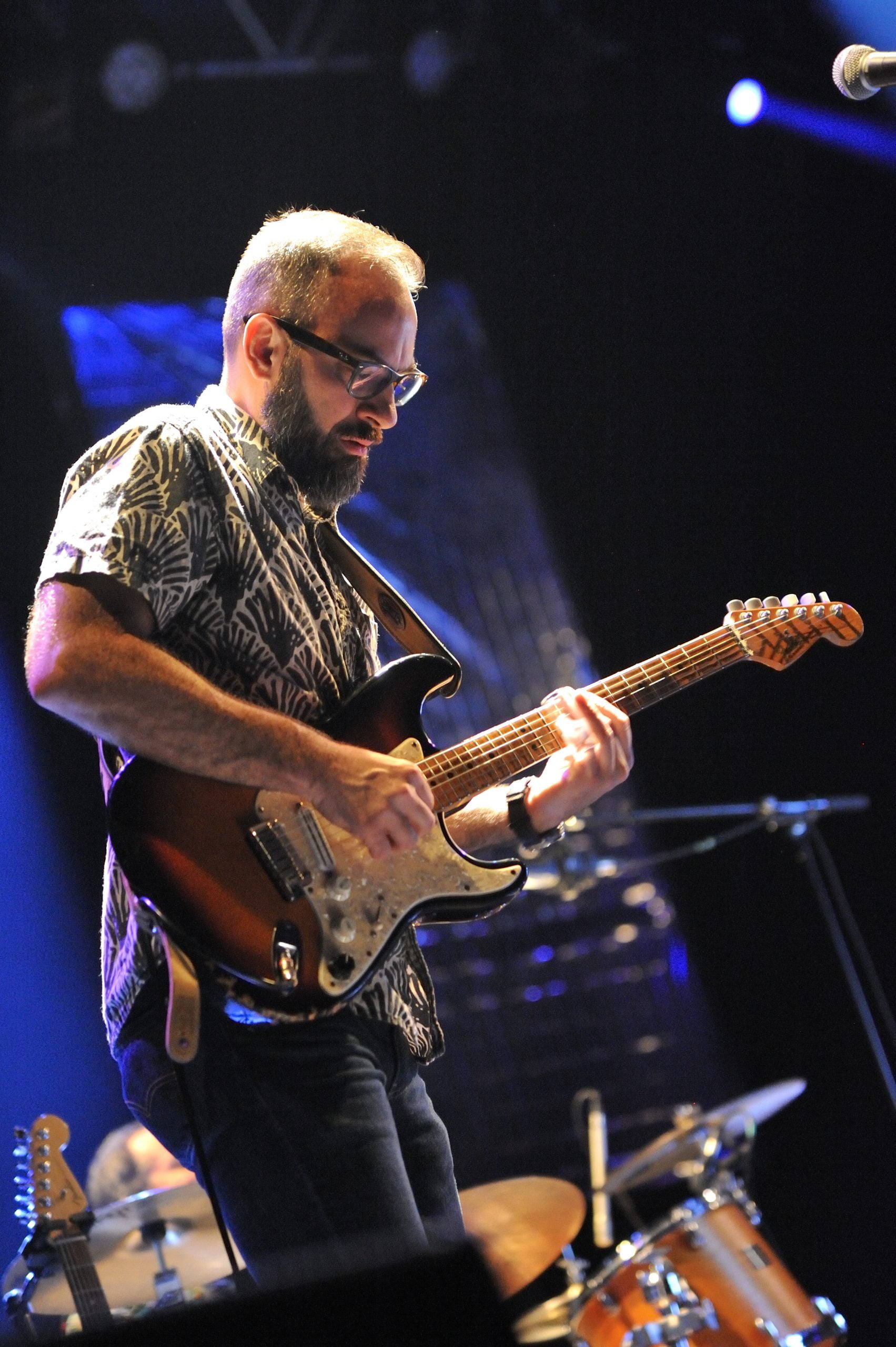
Dawes’ Taylor Goldsmith, The Over-Sharing Songwriter

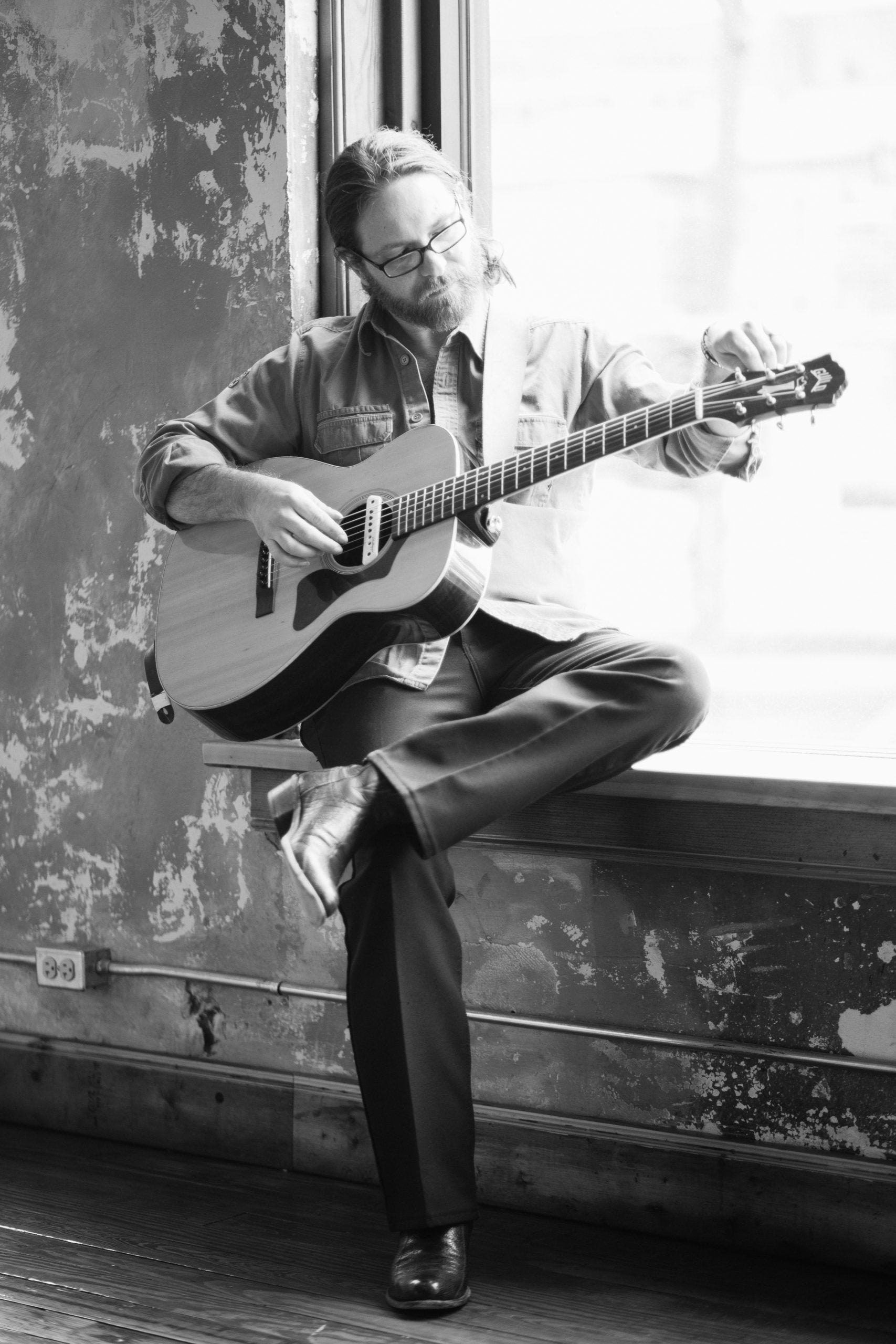
Taylor Goldsmith is done trying to be cool.

“I feel like there’s an aversion to sentimentality in 2018,” the Dawes frontman (pictured far right) says from his home in Los Angeles. “And I think for a long time I wanted to try to figure out a way to play by those rules. I would write the songs in a certain way; I would maybe even carry myself onstage in a certain way because I was aware of that fact. There was a coolness that had always been there I guess to varying degrees, but I feel like now more than ever it’s important that if you’re a guy in a band, you have to not mean what you say, not know what it means, you have to kind of keep your ballcap pulled down as far as it can go and just kind of recede into the shadows of coolness. And as time goes on and when I feel most myself, I find that just not who I am, and I’m never gonna be.”

That self-awareness is evident on Passwords, the band’s sixth record. It’s an outward-looking album, one that deals with modern themes ranging from the current political climate to social media’s effect on our lives, but it also sees Goldsmith stretching his wings as a songwriter by both pushing himself out of his comfort zone and leaning in to an emotionality that has always been a part of Dawes’ oeuvre.

Case in point: the lovely “Never Gonna Say Goodbye,” written for his fiancée, the actress Mandy Moore. That song poured out of him one night while he was on tour in Detroit. (“Songs typically don’t come out that fast for me,” he says. “They take a good month or two sometimes.”) It was meant as a private “I miss you,” and Goldsmith never intended for it to be heard by anyone besides Moore until she and his brother Griffin convinced him it belonged on the record.

“The main thing [I struggled with] really was the sort of lover’s language that’s really nobody’s business, like the way anyone speaks to the person they’re with when they’re going to bed at night or waking up in the morning or the way they look at each other,” Goldsmith says. “That is the most sacred, private world that I would never dream of wanting any access to. So for me, I was like, ‘Man, this is a very vulnerable moment for me, to say “I love you and I miss you.”‘ It was just a quick thing and I didn’t really want everyone to be eavesdropping, you know? But that ended up being what I liked about it. Because it was like, ‘Okay, what is art? What is music supposed to be other than sharing these personal attitudes that can resonate with someone else?'”

Producer Jonathan Wilson, who worked with the band on their first two records and reunited with them on Passwords, helped Goldsmith feel that he made the right choice about “Never Gonna Say Goodbye” when they got into the studio to record it.

“I was talking to Jonathan about it, and I was like ‘Is this song a little too…much?'” he explains. “I feel like we would all love it if Willie Nelson recorded it in 1973 maybe, but in 2018 is that acceptable now? And Jonathan was like, ‘That’s exactly why I like this song so much. That’s exactly why this should be on the record, because people don’t have the guts to go to this more vulnerable and intimate and earnest place.’ And so that’s something that I used to be scared of because I wanted to be this sort of obtuse artist that was impenetrable because that’s what I’ve always admired in songwriters, but the reality is I’m never gonna be that. The more I embrace what comes out naturally, the better it all feels.”

That approach helped him unlock the album’s themes; though Passwords is not a concept record, its songs share a commonality that make it feel cohesive and uniquely tethered to life in 2018. Goldsmith credits “Crack the Case,” a call for empathy in a time when our country is more divided than ever, with helping him find a direction for the rest of the album’s tracks.

“Oftentimes I find that the themes and ideas present themselves,” he says. “‘Most People’ and ‘Things Happen’ are pretty much about the same thing, and I think that’s pretty cool. I think that’s indicative of a certain attitude being consistent, or something that was really on my mind. Or when I listen to ‘Born to Run’ and ‘Thunder Road,’ one’s almost a continuation of the other, but it’s something that I love about those two songs and that time in Bruce Springsteen’s career, where ‘there’s a better world out there and get on my motorcycle and I’m gonna take you there.'”

He laughs. “In every Bruce Springsteen song, it becomes the identifying mark. It becomes the fingerprint. So with this album, after writing ‘Crack the Case’ and then all of a sudden writing ‘Living in the Future,’ in a way it’s like these songs are about the same thing. One of them comes from a much more paranoid place, but it’s still in the chorus like ‘we’re living in the future, so shine a little light.’ That line could be in ‘Crack the Case.’ So the way that certain songs would bleed into each other and kind of play different angles of the same conversation, that’s something I didn’t think about until it was all written.”

But his plea for entertaining other perspectives on “Crack the Case” isn’t just directed at others. As he gets older, he has challenged himself to get out of his own head and try writing more through the eyes of others, whether it’s the fear and resignation of “Stay Down” or the weariness of “Feed the Fire,” where he’s “working for attention I’ll eventually resent.” (“The song is in this mode of ‘I,’ it’s in first person, but it’s not representative of how I feel,” he says.)

“I think that as time goes on, like anything, anyone who does anything for a living, there become things where you feel like, ‘Cool, I did that and I don’t want to do it anymore because I know how to do it now. I wanna do something that I don’t know how to do,'” he explains. “And for a long time certain approaches to songwriting or to song structures became what I would go back to because that’s what I wanted to learn how to do, especially like ‘Coming Back to a Man’ or ‘That Western Skyline,’ songs that I’m very proud of but also songs that were sort of building blocks for me to take those concepts and then follow into the way I speak as an adult rather than a young guy looking to be a songwriter. There’s a lot of talk of like sunsets and mountains and rivers on our first few records.”

He laughs before continuing, “It is very songwriterly. And that’s because I was learning the language, and as time has gone on, I’ve been trying to figure out how to find the lyrical, find the song in something that otherwise wouldn’t seem like one, you know? When I wrote ‘From a Window Seat’ I was really excited, I was like, ‘This is a song about the weird, obscure metaphysical fear of flying, and it should be off-limits from a band like Dawes, but here it is.’ And I try to keep chasing that down, finding things that just seem like they’re not lyrical and they’re not up for discussing through song. But then more than that, the thing that’s important to me is trying to explore the difference—like when I listen to early music that I wrote, it’s a lot of just me, me, me.”

He adds, “And that’s still the case, and that’ll always be the case, but at the same time, I want to make sure I’m coming from a place where I can adopt attitudes that I don’t identify with….certain perspectives that are not my own, certain narratives that I’m not even a part of, that stuff I feel like is newer. That’s how my writing’s changed. I feel like it’s all as indicative to how I view the world as it ever has been, but trying to take it beyond ‘I love you and you love me, let’s not lose each other, blah blah blah.’

“Because that’s part of what it is to be in your early 20s, but now I look at these songwriters that have these long, rich careers, and a lot of it is because they know how to tackle concepts that are bigger than relationships, that are bigger than self-reflection. They might involve those qualities, but they reach for more ambitious concepts. And so that’s something that I try not to think about too much, but I know that when I sit down to write a song, if it’s going to motivate me to finish it, I want to feel like it’s terrain that I haven’t covered before.”

Even when he doesn’t necessarily agree with what he’s singing, there’s a certain sincerity at the heart of Goldsmith’s songs—perhaps stemming from his ability to place himself in someone else’s shoes sans judgment—that he’s learning to take pride in, no matter how unhip that makes him.

“There’s this coolness that exists right now, and when we come across people that stand up against it and just say how they feel and they don’t mind being emotionally available and earnest and clear and proud, it’s an inspiring attitude,” he says. “I mean, that can come from a person like Bruce Springsteen or it can come from a person like The Rock. His attitude and his sense of gratitude and the way he presents himself in this world, I think there’s something very deep and enlightened about it. He has transcended coolness, and that’s amazing because he’s not here to pretend like he’s some impenetrable artist. He’s not here to pretend like he doesn’t care. He definitely cares, and he’s definitely grateful, and he’s definitely proud, and if we all took a bit of a tip from that attitude towards life, I think it would actually edify us. It would motivate us.

“And so I think for me as a songwriter, after all this time of not knowing where I stood, like, ‘Well, how do I be the cool guy? How does David Bowie be David Bowie? How does Father John Misty be this kind of enigmatic Father John Misty?’ And the reality is that’s just who those people are. And I am the person talking to you right now; I’m the over-sharer. And me coming to terms with that has been kind of the best feeling I’ve had as a songwriter in a long time, like the more I embrace myself directly corresponds to how true I feel my music is. It should be a simple enough lesson to learn pretty early on, but it’s not. It’s really hard. There are few things harder than getting to know yourself and then committing to it. So if someone heard this new album and felt like ‘I’m more willing to be myself. I’m more willing to be open and earnest and share the way I feel,’ I dunno, it sounds cheesy saying it out loud, but I feel like if that were to be something that someone was left with, that would mean a lot.”


Photo credit: Magdalena Wosinska
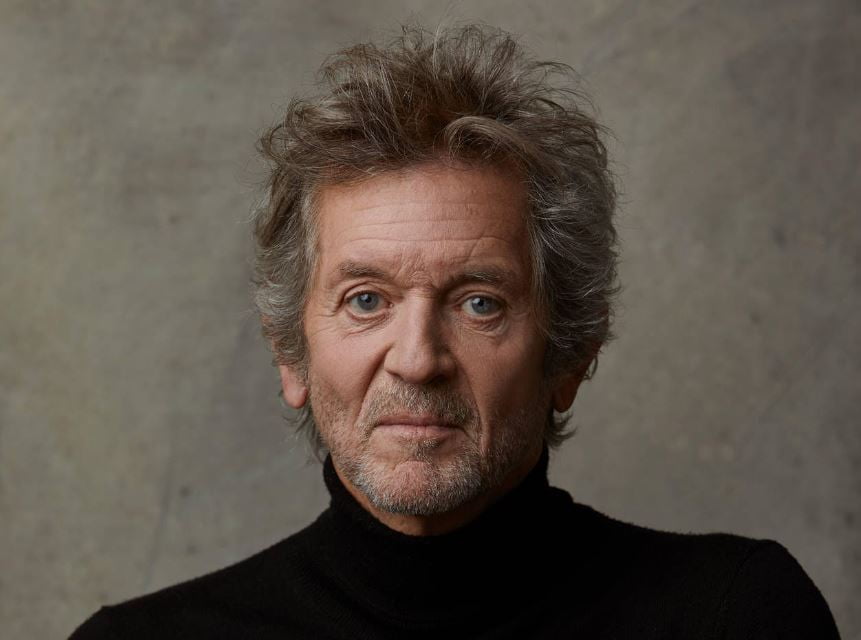
LISTEN: Rodney Crowell, “Lovin’ All Night”

Artist: Rodney Crowell
Hometown: Nashville, TN
Song: “Lovin’ All Night”
Album: Acoustic Classics
Release Date: July 13, 2018

In His Words: “From time to time I am what you’d call lighthearted. The title of the song is, of course, hyperbole. However, I met my wife on the video shoot for the song back in ’92, and the sparks have been flying ever since.” – Rodney Crowell


Photo credit: Austin Lord

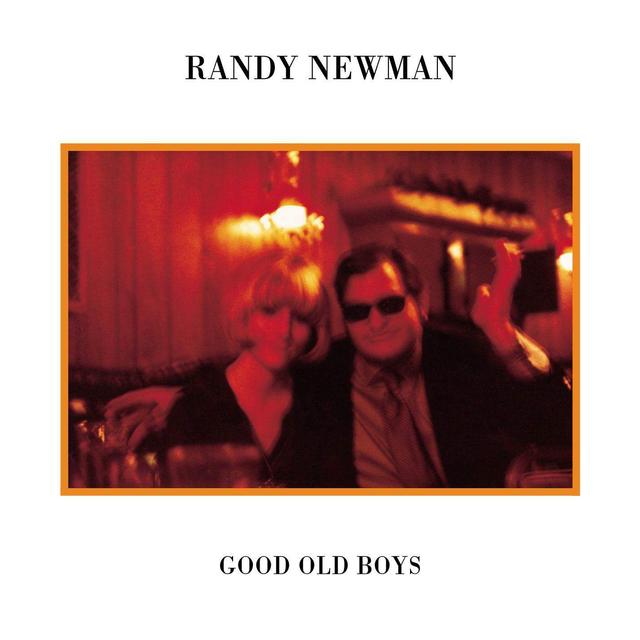
Canon Fodder: Randy Newman, ‘Good Old Boys’

Red Mountain in Birmingham, Alabama, is one of the largest metaphors for race and class in the American South. Part of a range that cuts a diagonal southwest-northeast line through the state, it provided the ore that fed the region’s iron mills in the late 19th and early 20th centuries and more crucially it divided the city into two neat halves: downtown and over the mountain. The former has historically been the province of the poor and in particular the black, while the wealthy and the white lived over the mountain. It became a convenient barrier between the races and the classes, blocking the fumes billowing from the furnaces and largely removing the well-heeled residents of the suburbs from the ugly realities of the city.

At the top of this mountain is Vulcan Park, home of the state’s most famous landmark – a 50-ton, 56-foot statue of the Roman god of the forge, cast in local iron. This is the setting for “Rednecks,” the opening track on Randy Newman’s 1974 album Good Old Boys, a squirrelly collection about race and masculinity in the South that 40 years later still has the power to provoke. The song opens with a 29-year-old millworker named Johnny Cutler sitting on a bench in the shadow of Vulcan and thinking about the governor of Georgia:

Last night I saw Lester Maddox on a TV show
With some smart-ass New York Jew
And the Jew laughed at Lester Maddox
And the audience laughed at Lester Maddox too.

In this short introduction Cutler is referring to an episode of The Dick Cavett Show, which did not have a “New York Jew” as its host but did book a range of guests including politicians, writers, musicians, and sports figures. In December 1970, his guests included actor Jim Brown, author Truman Capote, and Lester Maddox, who had campaigned on a flagrantly segregationist platform. Cavett barely disguised his contempt for the Southern politician and even dismissed Maddox’s constituents as “bigots.” After an argument in which Cavett failed to apologize to his guest’s satisfaction, Maddox walked off the set and refused to return. Because the show was filmed the day before it actually aired, newspapers reported the incident and viewership skyrocketed.

Once the song settles into its breezy ragtime swing, Cutler doesn’t defend Maddox as much as he embraces every insult ever hurled at Southerners. He proclaims himself an ig’nant redneck, a degenerate drunkard, an uneducated rabble-rouser. “We’re too dumb to make it in no Northern town,” he laughs, then gets to the heart of the matter: People like him are oppressing the country’s African American population. Except he doesn’t say “oppress.” He says they’re keeping them down. And of course he doesn’t use “African Americans.”

The word he uses is so blunt and ugly coming from both the narrator and the writer, such a jolt in the song—almost like a punchline, as if the whole point is that Cutler and his brethren are so dub they think other races are below them—that we should take a step back for a minute. Newman of course is singing in character, but still his use of that word teeters on the knife blade of irony: The singer gets some good distance on it, but the narrator wants no distance at all.


By 1974 Newman was well-known for this kind of risky satire, having already raised eyebrows with “Sail Away,” about a slave trader advertising the glories of America. There is purpose to such provocations, and by the time “Rednecks” reaches the bridge, Newman his narrator are holding a mirror up to America. Embracing the worst aspects of the Southern character allows Cutler to turn those accusations back on his accusers. Speaking of African Americans, he sings:

He’s free to be put in a cage in Harlem, New York City
He’s free to be put in a cage in the south side of Chicago and the west side
He’s free to be put in a cage in East St. Louis
And they put him in a cage in Hough in Cleveland
And they put him in a cage in Fillmore in San Francisco
And they put him in a cage in Roxbury in Boston

Listeners may not recognize those neighborhoods—and Newman admits his character wouldn’t have known them either—but in the 1960s and 1970s, they housed segregated ghettos, neighborhoods ravaged by poverty and violence. In 1964, just two weeks after the Civil Rights Act became law, a black teenager was shot by a white cop in Harlem, resulting in six days of riots in Manhattan and Brooklyn. In July 1966, a riot broke out in the Hough neighborhood of Cleveland when a white bar owner began turning away black patrons and patrolling the sidewalk with a shotgun. In September of that same year, San Francisco police shot and killed a black youth suspected of stealing a car, sparking a neighborhood demonstration that soon erupted into a riot. Chicago alone had multiple race riots throughout the 1960s.

The point is clear: Birmingham was no more or less racially segregated than any other American city, but was being scapegoated for the sins of the entire country. It’s a tricky point to make, and Newman reinforces it with the music. Rather than setting the song in a regionally specific style, such as country, blues, hillbilly, or Southern rock, he writes in a more broadly American mode, rooting “Rednecks” in popular jazz, ragtime, and Tin Pan Alley.

No doubt Cutler would have been familiar with these sounds, even if he didn’t claim them as his own. And certainly it reveals the album’s foundation in musical theater and possibly in minstrel shows of the late 19th and early 20th centuries. These flourishes of horns and strings underscore the song’s pointed view on race, refusing to distinguish the South as a place separate from the rest of the nation. Despite its history of thwarted secession, the American South remains American. Its racism, therefore, is America’s racism.


This is the main point of Good Old Boys, and the idea from which nearly every song stems. Newman conceived the album as something like a musical, which he explains in the infamous bootleg Johnny Cutler’s Birthday, a rough outline of the narrative with Newman singing, playing piano, and introducing the songs. (The bootleg was officially released as a bonus disc on the 2002 reissue of Good Old Boys.)

Roughly the first half of the record follows Cutler as he descends Red Mountain. “Birmingham” not only touts his hometown as “the greatest city in Alabam’” but provides Johnny’s working-class backstory, revealing just how thoroughly Newman had sketched out his narrator. Much less satirical, “Marie” and “Guilty” locate the character’s bruised heart through his marriage to a woman, both as gentle in their melody and as tough in their self-loathing as anything Newman has written. “I’m drunk right now, baby, but I’ve got to be,” he sings, “or I could never tell you what you mean to me.”

As the album proceeds, Cutler becomes less and less the main character, but rather one in a full choir of Southern eccentrics and roustabouts, who may not have the most sympathetic politics but earn Newman’s grudging respect for their determined self-definition. “Kingfish” is a barbed stump speech about former Louisiana governor Huey Long, the subject likewise of Robert Penn Warren’s novel All the King’s Men and a figure who recalls a certain you-know-who in his deployment of base racism as a campaign platform. Newman may be too jaded to be horrified by Long’s aggressively divisive politics, but he’s amused that the governor, eventually assassinated in the state capitol, had the chutzpah to keep his promises to the rural voters who elected him: “Who took on the Standard Oil men and whooped their ass?” he asks as the strings trill triumphantly. “Just like he said he’d do.”

“Back on My Feet Again” is a tale of woe presented as a weirdly elaborate complaint to a doctor (“Get me back on my feet again”), and “A Wedding in Cherokee County” is a monologue from a man in love with what he describes as a wild woman: “If she knew how, she’d be unfaithful to me,” he laments… or maybe boasts. “I think she’d kill me if she could.” Newman allows the man his dignity, even as he sullies himself for love, at least until the song’s end, a bridge to nowhere that serves as the album’s culmination despite the fact that there are two songs left to go: Dreaming of his wedding to this woman and then of their wedding night, he confesses, “She will laugh at my mighty sword. Why must everybody laugh at my mighty sword?”

During a decade when pop culture was presenting new exemplars of tough, moralistic Southern masculinity—think Burt Reynolds in Deliverance, Joe Don Baker in Walking Tall, or even Ronnie Van Zant fronting Lynyrd Skynyrd—Newman’s depiction of these sons of the South was subversive in its satire. These characters invite our scorn and laughter, but Newman also provokes something sympathy for them as well. He presents them as relentlessly human, if not always humane, their shortcomings reflecting the worst failings of America in general and the South in particular.

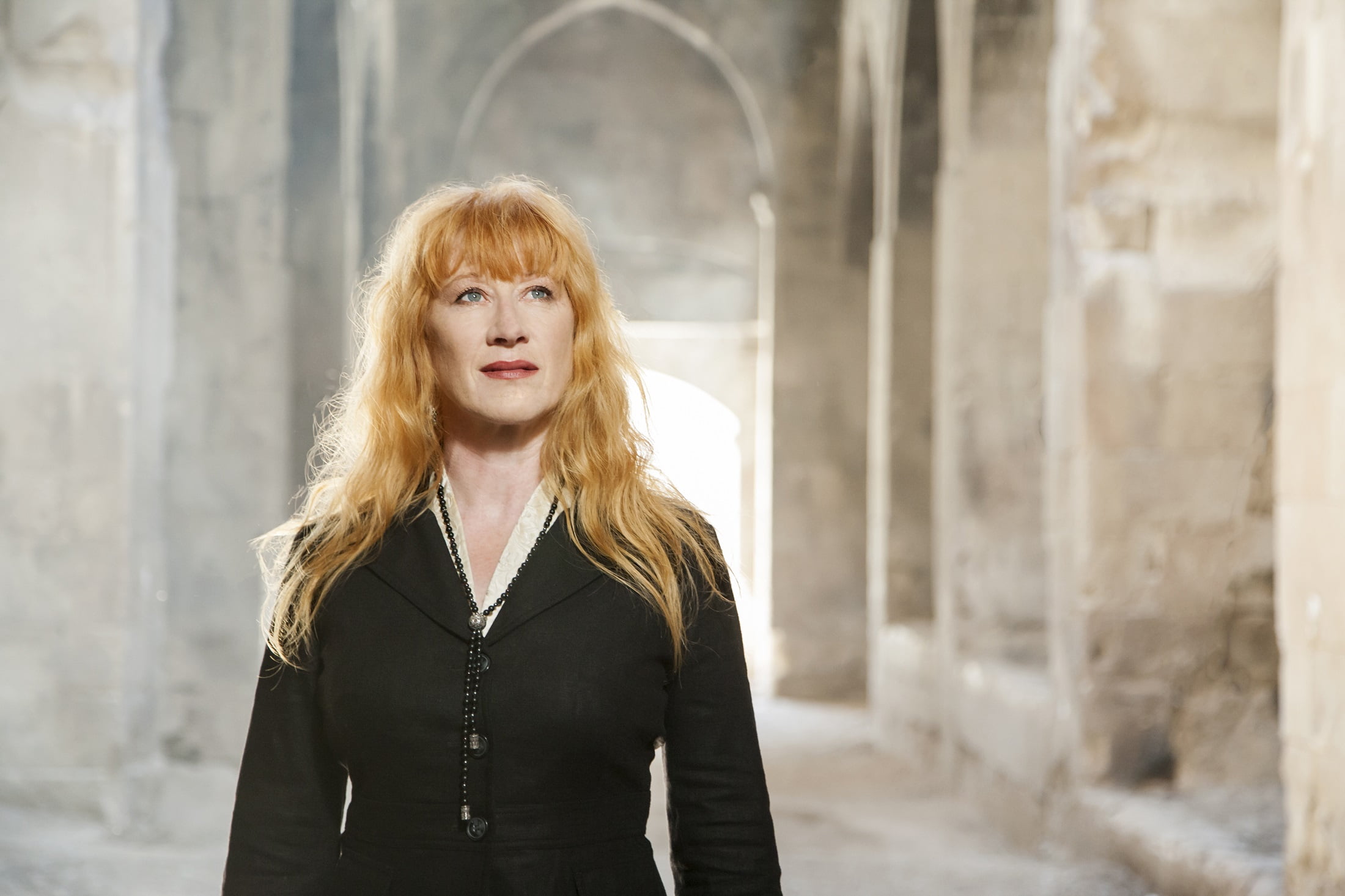
Finding Universals: A Conversation with Loreena McKennitt

Loreena McKennitt is both a Romantic and a pragmatist. During a thirty-year career that began with her busking on the Toronto subway and led to composing a new work for the Royal Canadian Air Force, the Canadian singer-songwriter-producer-historian has dug deep into European musical traditions (the Celts in particular) and has found vivid inspiration in the Romantic poets (Keats and Yeats in particular). Her music strives for a dreamy kind of beauty, often described as ethereal but usually rooted deep in the soil of her native Canada and her ancestral Ireland.

And yet, she admits the impetus behind, Lost Souls, her first album of new material in more than a decade, was largely practical: “The fact that there hadn’t been anything new was becoming a bit conspicuous. We had a number of people writing to ask if I was going to come out with a soothing original ever again.” In addition to writing a handful of new songs, McKennitt pored through her own archives, finding old songs—some written in the late 1980s—that spoke to her. “There were songs I had written along the way that didn’t fit my previous recordings, so I started looking at those songs again. I thought, yes, they’re a bit like lost souls.”

The songs may have disparate origins, but Lost Souls is neither a rarities compilation nor a retrospective. Rather, the album holds together as a larger statement, as one song after another expounds on the implications of its title: loss and yearning, travel and transience both geographic and temporal, even the end of humanity on Earth.

Can you tell me about putting this album together? It doesn’t sound like a bunch of songs you had lying around.

If I look at it objectively, I suppose it makes sense. There are various composers of music who have stayed within a certain realm of their sensibilities. Even if they wrote something years ago, the material itself has the connection to the person who wrote it. Also, we recorded these songs all freshly within the last year, so I was able to bring a lot of the aesthetic and approach of recent recordings to it. And I am blessed with an incredible bank of talented musicians.

What was it like to revisit these songs and engage with them again?

It was interesting going back to previous mindsets. “Ages Past Ages Hence,” I wrote it somewhere around ’89 or ’90. I remember performing it at the Toronto Winter Garden in 1990. It was at a time when I was listening to Kate Bush. I really liked the angular approach she takes on some of her music, so I thought it might be interesting to head in that direction. “The Breaking of the Sword,” I wrote it about a year and a half ago. I was commissioned to write that piece, but I wrote the melody in 2006 or maybe even earlier than that and only put the words to it last year. Those lyrics mean a lot to me and that’s the piece I would say probably connects most to where I am today.

It’s interesting that “Ages Past Ages Hence” is so old. It seems to fulfill the theme of the song to have it waiting around for so long.

When I think of that song, I remember I was living in a rented farmhouse and my writing desk looked out a window into a wooded area. A lot of the trees were quite mature, probably 100 or 150 years old, and I remember many times reflecting on what they had seen during their lives. They were witnesses to whoever lived there and all the human folly in a more general sense over the years. That sentiment connects to my own Celtic history. The Celts had a major connection with trees. They felt that trees perhaps embodied some of their ancestors, as many indigenous people have, and they felt the trees played a special role on this planet. So the fact that I had this Celtic heritage and this connection with trees is probably not surprising. Also, I wanted to be a veterinarian at one point in my life, and if I hadn’t gone into music, I probably would have gone into wildlife conservation or forestry.

These things are all tied together, and then everything comes together in the last song, “Lost Souls,” which was based on a book I read a few years ago by an anthropologist called Ronald Wright. He studied civilizations as one might study the black boxes of aircraft that have gone down, and he observed that over the millennia we as a species have a tendency to get us into progress traps. We might very well be caught in one now. He observed that around the time of the industrial revolution, we went from being concerned about our moral progress to being more interested in our technical progress. He cites the denuding of the landscape on this planet as one of the big progress detriments, because it’s so integral to oxygen and water retention. All of these things go swimming through my mind as I’m stitching together the recording, which becomes a bit like a quilt.

These are songs about travel, which don’t just mention the places but incorporate the music of those places as well. 

I love listening to these various instruments played in their idioms, so part of it is pretty selfish. Secondly, there is the thrill of getting to share that excitement with other people. Bringing in the flamenco player from Málaga gives the music an authenticity that it perhaps wouldn’t have if someone else played that part. So it’s a combination of respect to those cultures and the gratification it gives me to share that with other people as one might share a new recipe with friends.

But it is complex territory. It’s been fresh on my mind because I was listening to an interesting BBC program about the upsides and downsides of selecting music from other cultures and putting it into your own. Some people say, “Hey, that’s our culture. You shouldn’t be taking that.” Other people say, “Wow, I’m going to visit that place and that culture and I’m going to listen to more groups that play flamenco.” I like to think that music is a timeless and international language, and there’s nothing I want to do to damage the distinctiveness of that voice or compromise what I love about, but I love to draw and weave those things into my own music in an honest and meaningful way. I think that manifests itself in “The Breaking of the Sword,” where the military band evokes a very particular feeling, and I felt that nothing but the military band would do.

You debuted that song on Remembrance Day last year. What was the response to it?

There were people who were surprised that I had created a piece like that. But other people were less surprised because they knew my connection to the Canadian military. I’m an honorary colonel of the Royal Canadian Air Force, which in itself is a surprise to people. I was commissioned to write something for the ceremony a year ago, which was at Vimy Ridge in France and commemorates a World War I battle. In the end, the producers decided they wanted me to sing something from [McKennitt’s 1997 album] The Book of Secrets. I was already writing this song, and I thought to myself, if I don’t put it on the recording, it too will become a lost soul. There was a lot of discussion and debate about whether or not it should go on Lost Souls, because it’s not the kind of piece I would have thought to create without being commissioned.

It seems to echo a theme of impossible longing, in particular with this mother wishing for the return of her dead son. It seems like a story that keeps happening and continues to have meaning across every culture.

I think that speaks to what I’m striving for: to come at the concept of lost souls from different directions. “The Breaking of the Sword” is a snapshot of an experience that I think most people who have had someone perish in a military exercise will relate to. I wanted to take great pains not to get trapped in the winning side or the losing side or the right side or the wrong side. Rather, I wanted the song to sit in the simple zone of a family losing a loved one. On one level, it’s about a mother losing a son. But there’s another layer, one that many people may not realize: The military is another kind of family, and it’s a powerful bond amongst those who serve. I’m reminded of that each year when I go down to the cenotaph each year.

I like to think that sense of loss is something that is timeless and universal, which means we shouldn’t get trapped by questions like, “Is it in support of the military? Or is it not?” All of that is another conversation, a very important one for sure, but this was just simply about losing someone who believes they are fighting for the betterment of humanity. It’s about the simplicity of losing someone who defends what they believe in.


Photo credit: Richard Haughton

3×3: Matt Harlan on Good Hair, Highway Wind, and Essential Shoes

Artist: Matt Harlan
Hometown: Houston, TX
Latest Album: In the Dark
Personal Nicknames: Mackie


If Jesus, Buddha, Krishna, and Mohammed were in a band together, who would play what?

Jesus — guitar / vox (He’s “the way,” right? Gotta be front and center.) 
Buddha — bass (b/c “Buddha on bass” would sound awesome as the band is introduced.)
Krishna — flute
Mohammed — drums

If you were a candle, what scent would you be?

Highway Wind

What literary character or story do you most relate to?

These days, not to be dark, but the story of Job is really hitting home for me.


How many pairs of shoes do you own?

Three — boots, sneakers, slip-on shoes

What’s your best physical attribute?

Hair

Which is your favorite Revival — Creedence Clearwater, Dustbowl, Elephant, Jamestown, New Grass, Tent, or -ists?

Creedence Clearwater, for sure


Animal, mineral, or vegetable?

Animal

Rain or shine?

Rain

Mild, medium, or spicy?

Spicy

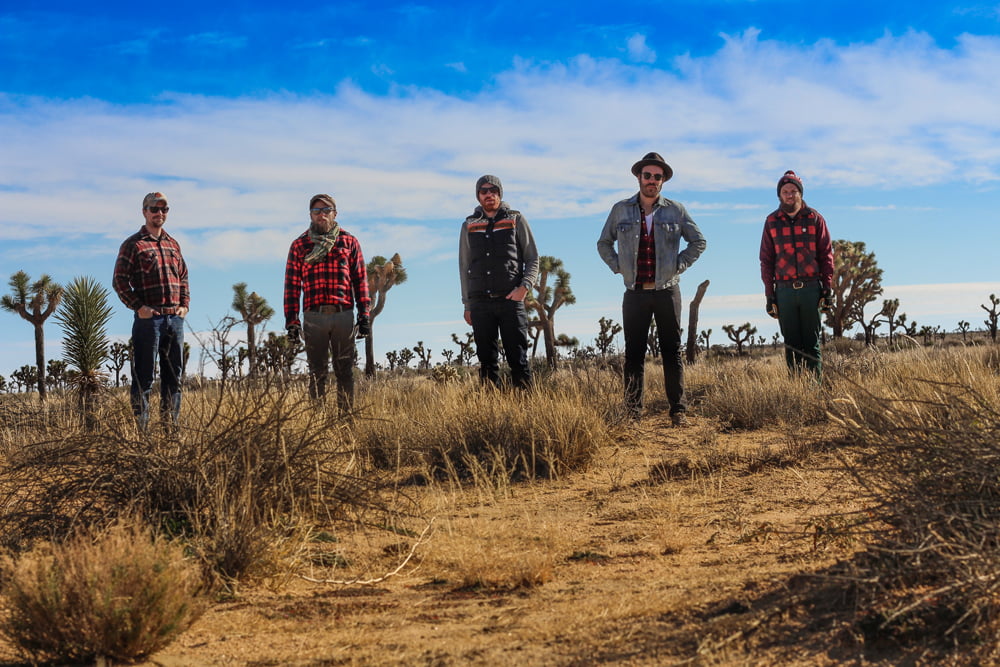
Root 66: Red Wanting Blue’s Roadside Favorites

Name: Red Wanting Blue
Hometown: Columbus, OH
Latest Project: RWB20: Live at Lincoln Theater

Tacos: Grey Eagle — Asheville, NC

Pizza: Juliana’s — Dumbo, Brooklyn

Burger: Yo MaMa — New Orleans, LA

Veggie Burger: Northstar Café — Columbus, OH

Health Food: Green Café — Phoenix, AZ

Roadside Diner: Mickey’s Diner — St.Paul, MN

Truck Stop: Porky’s Truck Stop at South of the Border — Dillon, SC

Coffeehouse: Neat Coffee Shop — Burnstown, ON (R.I.P.)

Dive Bar: Howard’s Club H — Bowling Green, OH

Record Store: Square Records — Akron, OH

Gear Shop: Chicago Music Exchange — Chicago, IL

Listening Room: Eddie’s Attic — Decatur, GA

Backstage Hang: SPACE — Evanston, IL

Highway Stretch: I-90W from Bozeman, MT to Seattle, WA or HWY 101 N (Redwood Hwy) in Northern California

Radio Station: 91.3, The Summit — OHIO

Day Off Activity: Frisbee Golf

Tour Hobby: Hunting for vintage travel stickers and roadside souvenirs at gas stations/general stores

Driving Album: Lost in the Dream by the War on Drugs

Live Studio Recording Session: Historian Sessions — Youngstown, OH

3×3: Roddie Romero on Buckwheat Zydeco, Christoph Waltz, and the Humility of Fatherhood

Artist: Roddie Romero
Hometown: Lafayette, LA
Latest Album: Gulfstream
Personal Nicknames: Rod, bruh, little shit (from my older siblings)

What song do you wish you had written? 
"Forever Young," Bob Dylan. My daughter digs that one, too.

If money were no object, where would you live and what would you do? 
Mmm, I guess I would still be in South Louisiana. Down here is  very much an Old World culture mixing in modern times. My parents still speak French, most bands on any night will play a waltz or two, the food is like no other mixing Spanish, French, German, Creole, African, Native American together in one black pot (la chaudiere). I would [will] continue to pass down our culture as our ancestors that came before us. Plus, we have a great little airport where they know you by name that can get you just about anywhere. 

If the After-Life exists, what song will be playing when you arrive?
“Let the Good Times Roll” — Buckwheat Zydeco has a pretty damn good version of that one.

How often do you do laundry? 
Well, I’d like to think that my momma taught me right, but I do let it pile up every once and a while. We’ve had a busy Summer of traveling, so I’ve been good at washing the stink out of my travel bag after every trip.

What was the last movie that you really loved? 
Inglourious Basterds. Big fan of Christoph Waltz.

If you could re-live one year of your life, which would it be and why? 
That would be 2002, the year that my daughter was born. I’m sure that every parent goes through the same or feels the same things, but for me, it was beautiful and grounding. I learned so much so quickly that year. I learned humility.

What's your favorite culinary spice? 
Fresh Peppers — Habanero, Cayenne, Serrano, Jalapeño. I enjoy growing them and cooking with them, as well.

Morning person or night owl? 
Absolutely a night owl. I’ve played music professionally since I was a kid, so it’s the life I know. That being said, I do love a good strong brew in the morning. 

Mustard or mayo?
Both, and mixing is not out of the question.

3×3: Sadler Vaden on Skunk Baxter, Huck Finn, and Holy Prophets

Artist: Sadler Vaden
Hometown: Charleston, SC
Latest Album: Sadler Vaden
Personal Nicknames:  Sad-hammer, Sad-biscuits, Saddlebags, Jenn, SV, The Vaden, Frampton


A photo posted by Sadler Vaden (@sadlervaden) on

If Jesus, Buddha, Krishna, and Mohammed were in a band together, who would play what?
Well, Jesus would obviously be the lead singer because every singer believes they're the spawn of God. Buddha would hold things down on the bass. Krishna would, without a doubt, be the drummer, and Mohammed would be lead guitar because every guitarist believes they're the Holy Prophet.  

If you were a candle, what scent would you be?
Skunk Baxter

What literary character or story do you most relate to?
Well, I do read a lot of music books, rock bios, and such. I enjoy those quite a bit because I like to know where people came from and the details of their journey.  But I like Huck Finn. He was scrappy.


A photo posted by Sadler Vaden (@sadlervaden) on

How many pairs of shoes do you own?
I own 10 pairs of shoes.

What's your best physical attribute?
My smile — I think I have a good smile. It's genuine.

Who is your favorite Bruce: Willis, Springsteen, or Lee?
Springsteen. He's the Boss.


A photo posted by Sadler Vaden (@sadlervaden) on

Animal, mineral, or vegetable?
Animal. Animals rule!

Rain or shine?
Shine

Mild, medium, or spicy?
I always go for spicy and then realize I'm more a medium person. So, medium.

3×3: Anna Elizabeth Laube on the Woods, the Biebs, and the 1960s

Artist: Anna Elizabeth Laube
Hometown: Seattle, WA
Latest Album: Tree
Personal Nicknames: Anna Banana

Which decade do you think of as the "golden age" of music?
'60s

If you could have a superpower, what would you choose?
I would be magic, hands down.

If you were in a high school marching band, which instrument would you want to play?
Drums, but I'd probably wear earplugs.

What's your go-to road food? 
Chipotle all the way

Who was the best teacher you ever had — and why?
I have a few teachers right now I'm pretty amazed by … Jumana Sophia and Cathy Heller come to mind — they are masters of their domains.

What's your favorite TV show?
Girls

Boots or sneakers?
Both, but not at the same time.

Which brothers do you prefer — Avett, Wood, Landreth, or Osborne?
Wood! I was on my way to see them once in Nashville and my car got totaled by a semi right where highways 40 and 24 merge. I walked away almost totally unscathed, miraculously!

Canada or Mexico?
Canada — I mean, if not for Canada, we wouldn't have the Biebs.

3×3: Chelle Rose on Bougie Hillbillies, Midnight Rambles, and Snow-Capped Smokies

Artist: Chelle Rose (pronounced like "Shelly")
Hometown: Relocating to my native East Tennessee as we speak, Nashville resident since ‘96
Latest Album: Blue Ridge Blood
Personal Nicknames: Chelle is actually short for Rachelle. Friends call me Chel. The Rose side of the family have always called me Rachelle.


A photo posted by Chelle Rose (@chellerose31) on

If you had to live the life of a character in a song, which song would you choose?
"Feel Alright" by Steve Earle. So many barricades on this journey. I've been singing this one pretty loud lately. Nobody gets to dictate my life to me … but they keep trying. I love it … fires me up every time.

Where would you most like to live or visit that you haven't yet? 
Scotland was amazing, but I really wanted to play or at least visit Ireland when we toured the UK. Hopefully we can make that happen next time. I plan to live out the rest of my life in East Tennessee. I wanna be able to see the snow-capped Smokies often and swim in a cold, mountain swimming hole.

What was the last thing that made you really mad?
Showing up for a music video shoot where you’ve paid a pretty penny to secure the room and it’s hotter than dammit on a popsicle stick! Me and my boys look good wet, but getting overheated can put me on the bench pretty fast due to health issues. Then I remembered current world events and rearranged my attitude.   


A photo posted by Chelle Rose (@chellerose31) on

What's the best concert you've ever attended?
Hands down, the Black Crowes at the Ryman in 2005. One of my besties since second grade, Amylou, and I still suspect someone must've put "shroom vapors" in the fog machine. When the show came to an end, everyone just sat there stunned. Nobody wanted to move, much less leave. I’ve searched for a bootleg of that show for years. As far as I know, there isn’t one? Someone tell me different.

Who is your favorite Clinton: Hillary, Bill, or George?
With apologies to the humans, Socks, the First Cat because Socks didn’t take any shit!

What are you reading right now? 
I wish! I’ll throw a book in my bag when traveling, but they come right back home with me without so much as a page turned. However, I have had Keith Richards' audiobook
in the car … and Jack Kerouac's On the Road.


A photo posted by Chelle Rose (@chellerose31) on

Whiskey, water, or wine?
People assume I’m a whiskey girl because of my voice I suppose. But I love red wines, prosecco, and champagne. I’m a bougie hillbilly I guess.

North or South?
South … but fell in love with Woodstock and the Catskills when we went to the Midnight Ramble at Levon’s.

Steve Carell or Ricky Gervais?
Had to crawl out of my rabbit hole and look up those names. Now I understand the question, but still can’t answer. Can I have “Dylan or Townes”? TVZ all day long.


Photo credit: Scarlett Eli