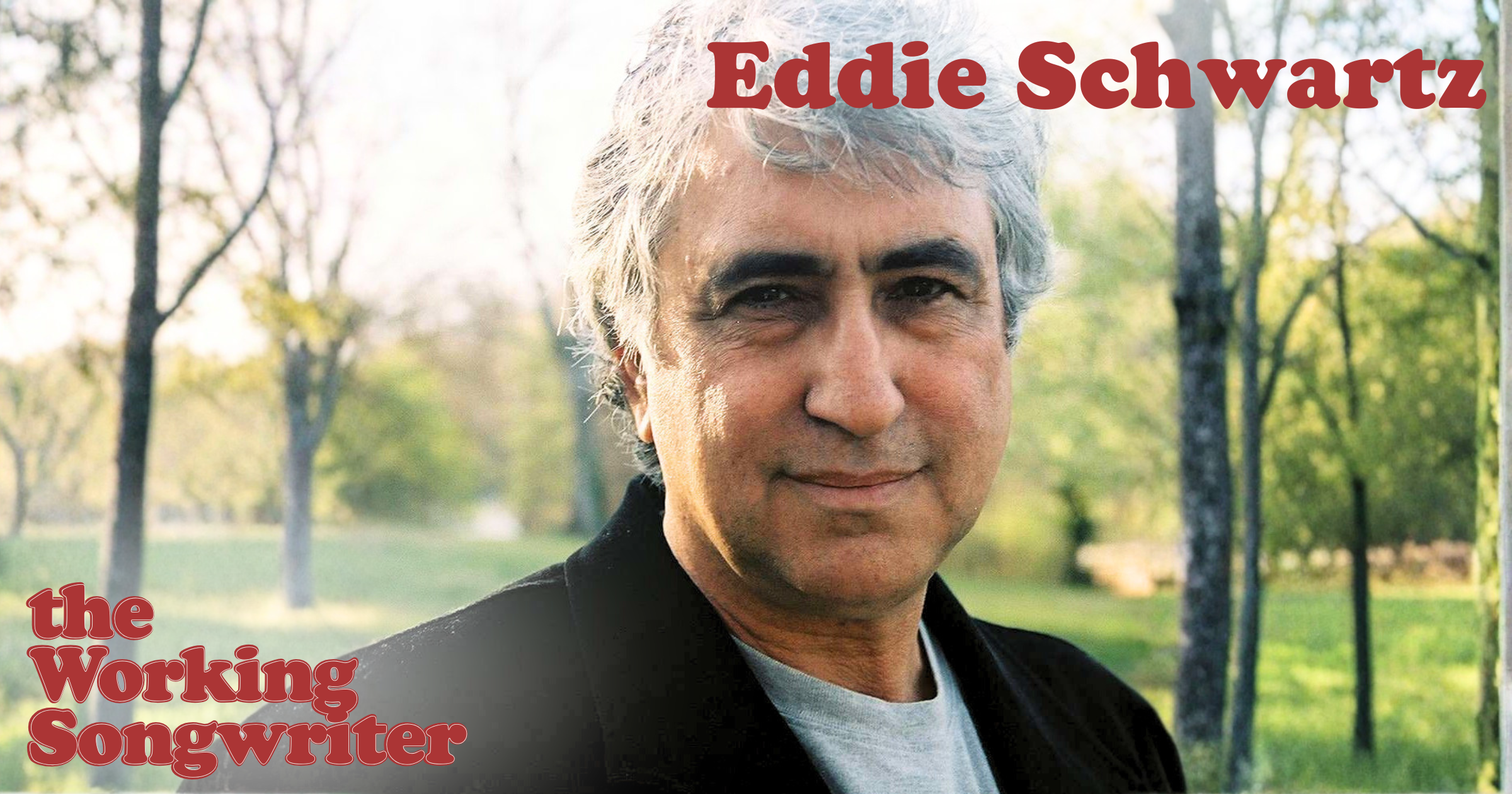
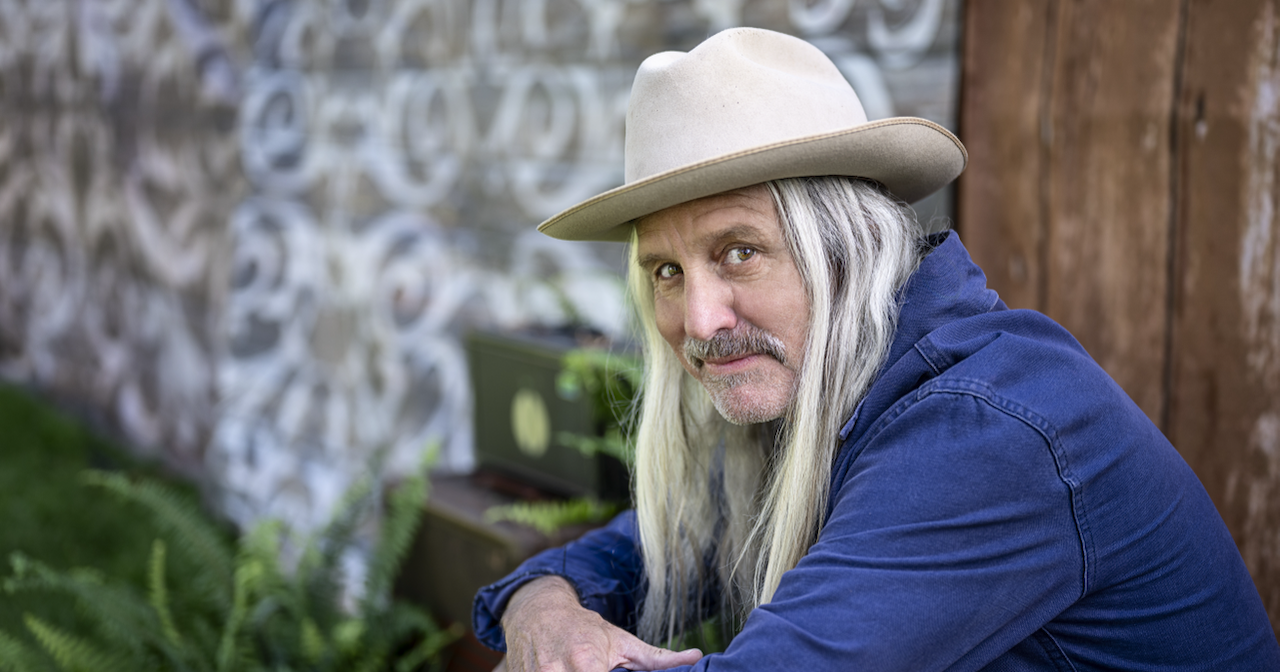
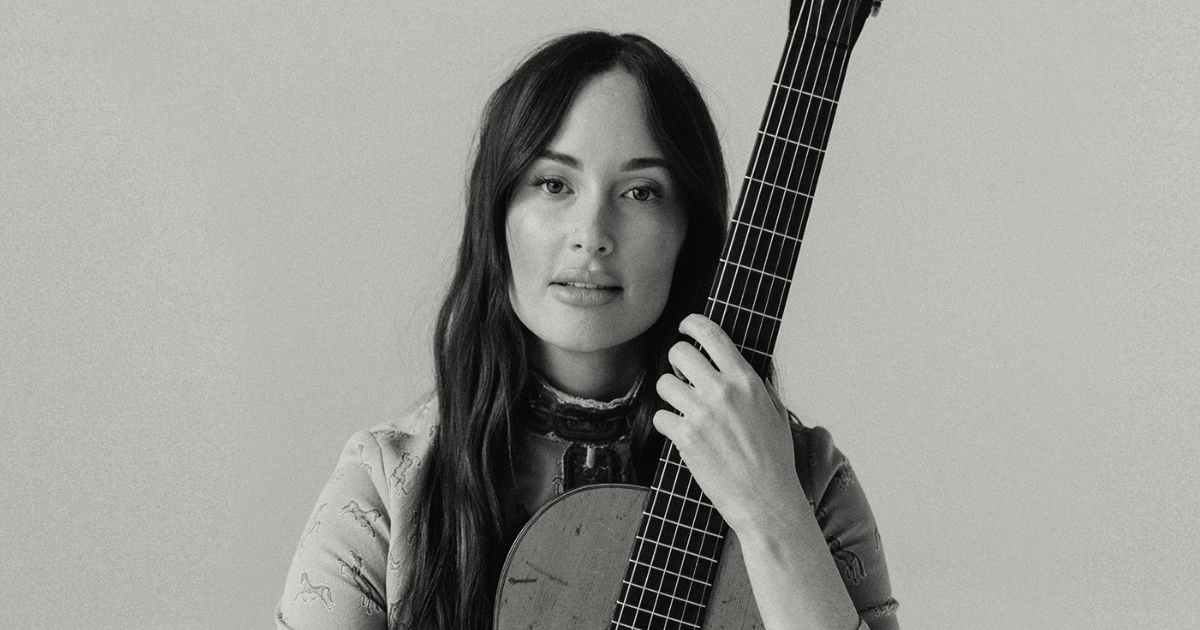
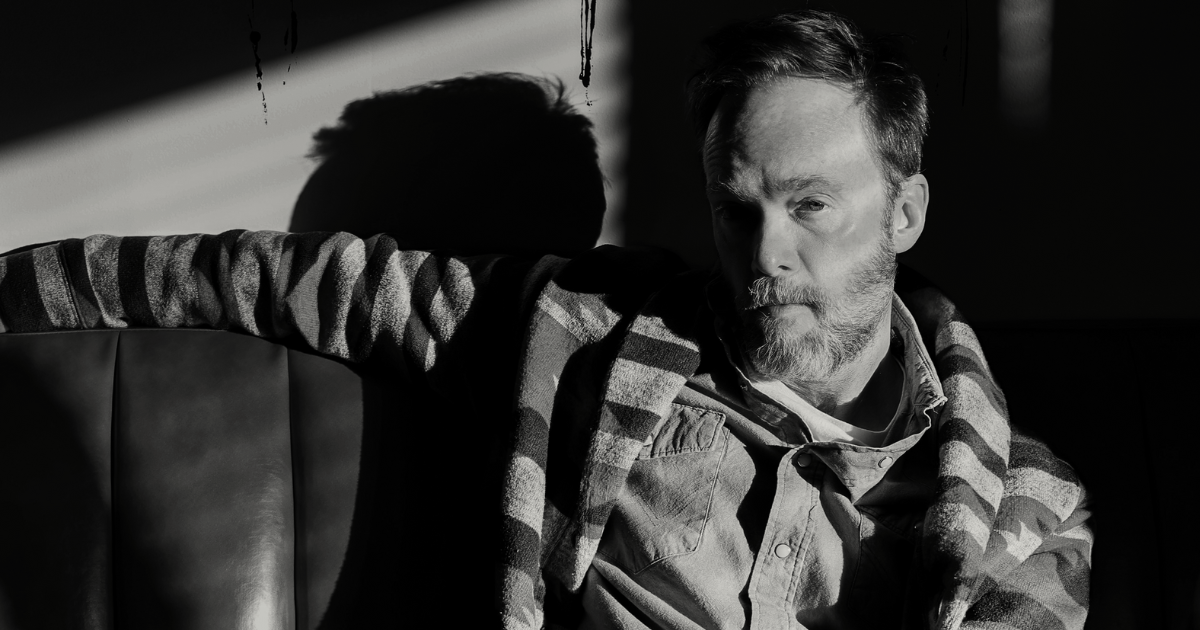
Our guest this week on the Working Songwriter hails from Canada and has spent over four decades writing hit songs. Eddie Schwartz got his start as a solo artist, but has found great success writing for and with other artists. His song “Hit Me With Your Best Shot” was recorded by Pat Benatar and became a certified platinum crossover hit. He went on to pen songs for Donna Summer, the Doobie Brothers, the Pointer Sisters, and many others.
As a former president of the Songwriters Association of Canada and the International Council of Music Creators, Schwartz has been a tireless advocate for songwriters. He’s received multiple BMI, SOCAN, and JUNO Awards. In 2012, he was awarded the Order of Canada, one of the country’s highest civilian honors.
I got a chance to catch up with Mr. Schwartz a few months ago to hear about his musical journey so far.
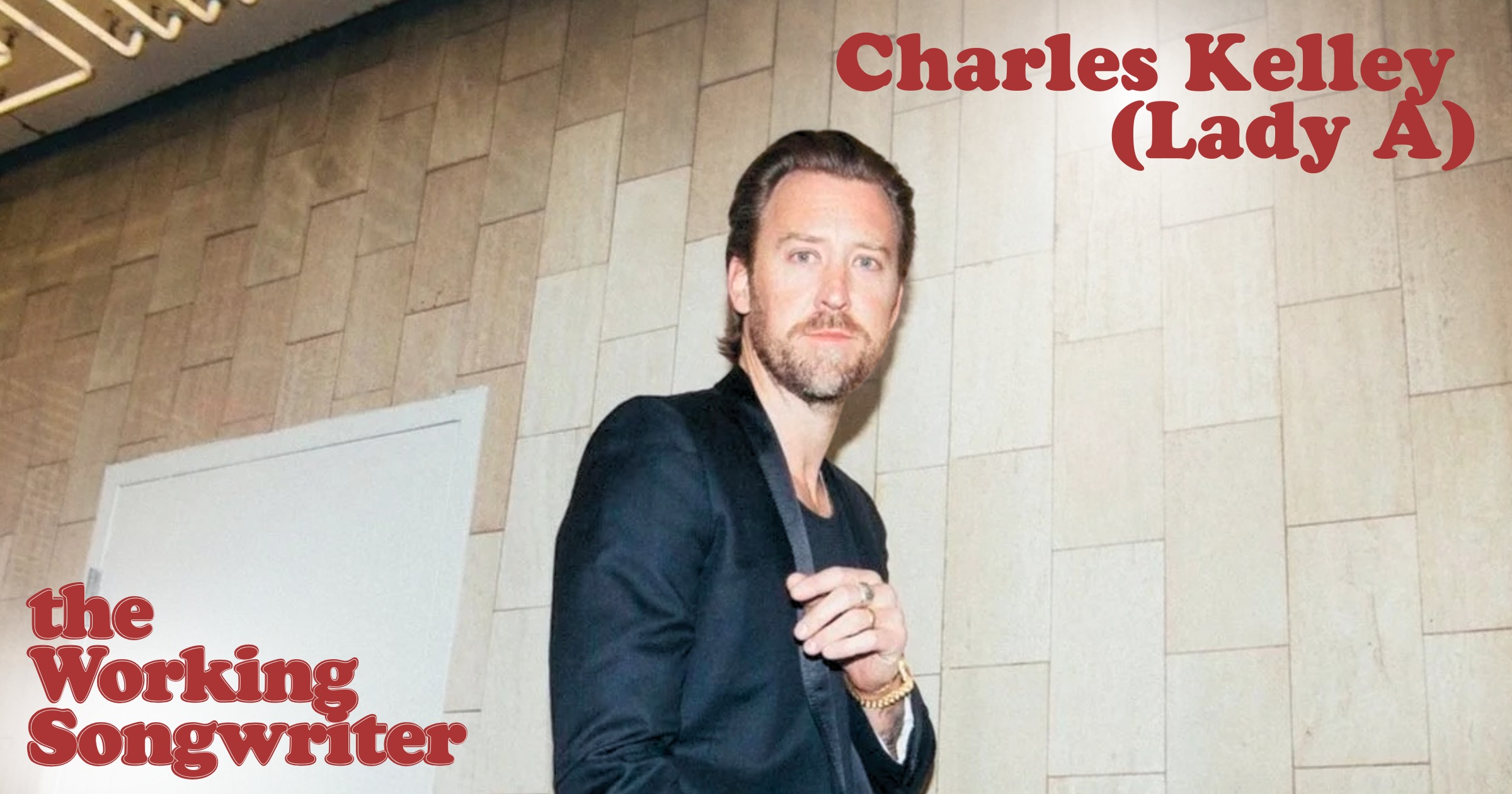
Our guest on the Working Songwriter this week hails from Augusta, Georgia, but has made his professional bones in Music City USA. Charles Kelley was one of the founding members of Lady Antebellum – now known as Lady A – and is one of the group’s principal songwriters. Their crossover hit, “Need You Now,” became one of the defining songs of the 2010s.
Lady A have sold over 18 million albums, won 7 GRAMMY awards, and their songs have been streamed over 5 billion times. Along the way Charles has also released a pair of solo albums, including last year’s Songs for a New Moon. He’s recorded for Capitol Records Nashville and Big Machine and he’s toured with Luke Bryan, Tim McGraw, Keith Urban and many others. He’s also appeared on The Tonight Show and The Late Show with David Letterman.
Rolling Stone has said that Lady A’s “vocal harmonies helped redefine country radio in the 2010s” and Billboard calls them “one of Nashville’s most successful songwriting teams.” I got a chance to catch up with Charles a few months ago to hear about his musical journey so far.
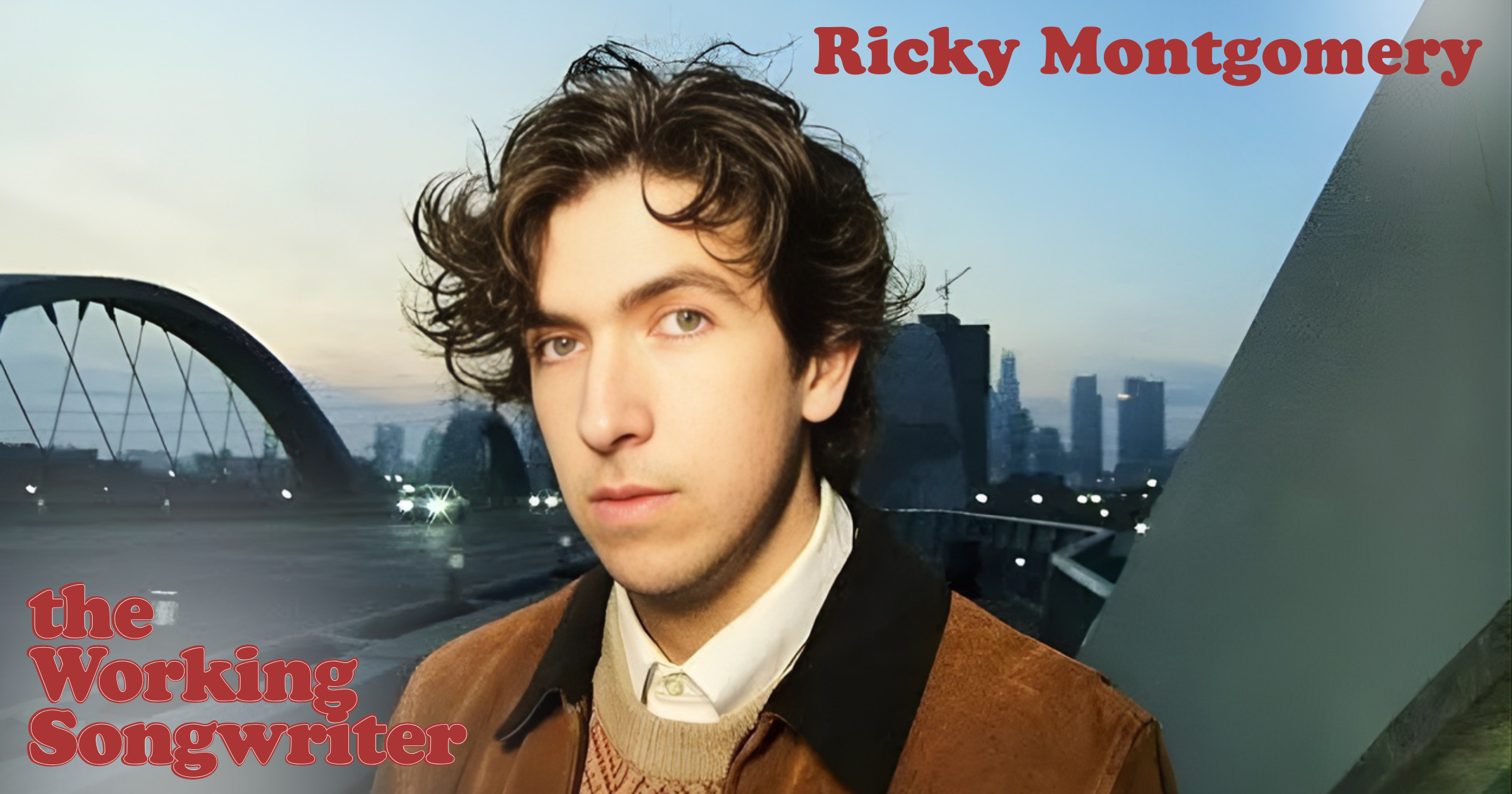
Our guest this week on the Working Songwriter resides in Los Angeles, but spent many of his formative years in St. Louis, Missouri. Ricky Montgomery first built an audience on Vine in his early twenties before releasing his self-titled debut album in 2016. That bedroom pop album was a cult favorite until 2020, when several of its songs exploded on TikTok, leading to a deal with Warner Records.
Montgomery’s singles, “Line Without a Hook” and “Mr. Loverman,” are RIAA-certified platinum and, all told, his catalog has collected more than a billion streams worldwide. That grassroots support has led to headlining tours with stops at the Wiltern in Los Angeles, Irving Plaza in New York City, and the Pageant in St. Louis, to name just a few.
This interview was recorded nearly 18 months ago and has been delayed due to a snafu on my end, but I’m so glad we get to hear it now. I think you’ll very much enjoy hearing about Ricky’s musical journey through his own words.
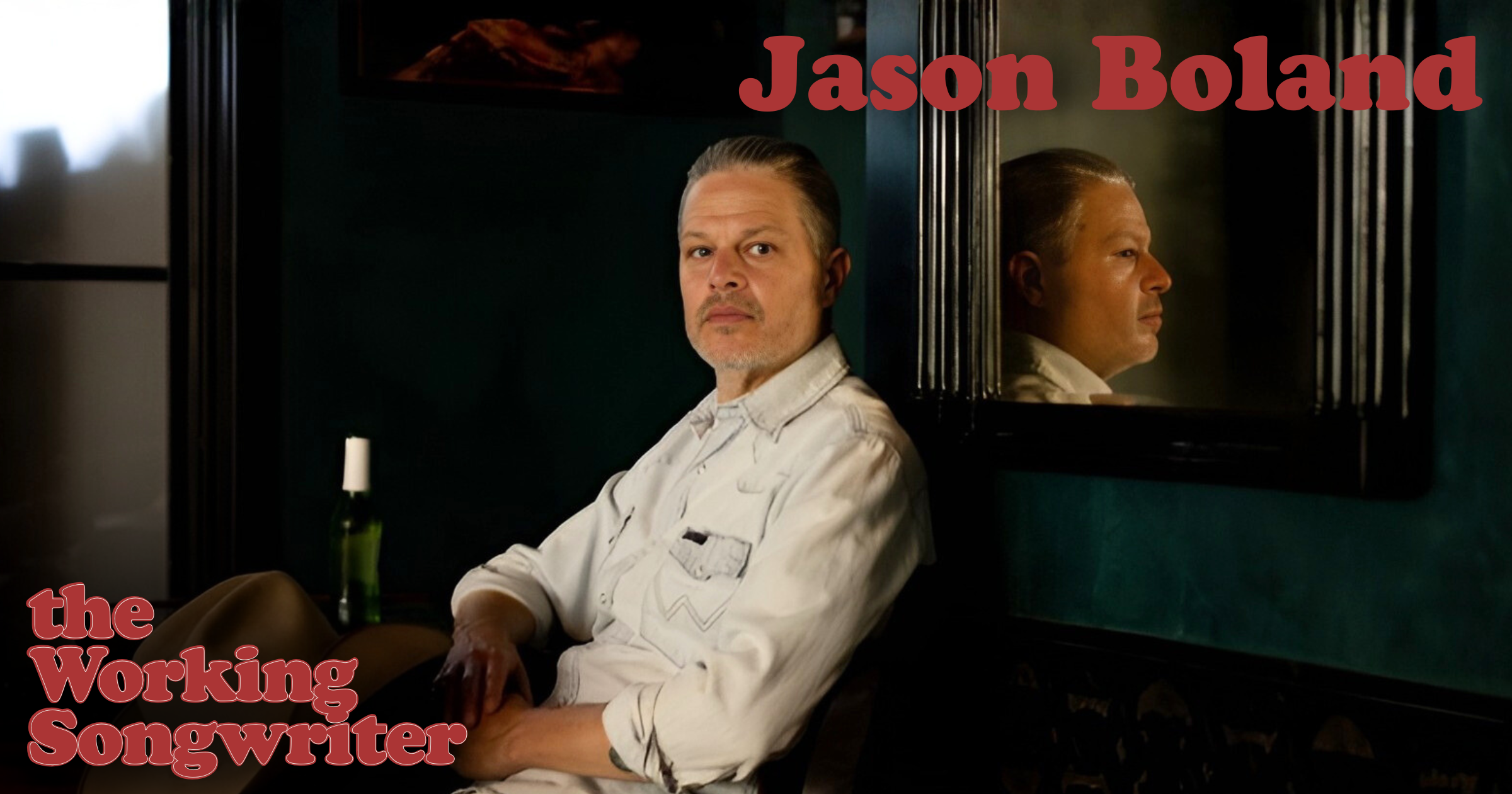
Our guest today on the Working Songwriter hails from Oklahoma and is a foundational contributor to the uniquely American genre of Red Dirt music. Jason Boland released his first album, PearlSnaps, in 1999 and has been on the road ever since. Nightclub by nightclub, fan by fan, he’s built a devoted national audience.
Boland has toured with Turnpike Troubadours, Cross Canadian Ragweed, Reckless Kelly, and a host of others. He’s recorded for Thirty Tigers and Top Hat Records. He’s appeared at Stagecoach, Luck Reunion, and the MusicFest at Steamboat. Texas Monthly called him “equal parts poet, rebel, and road warrior” and Rolling Stone declared his sound “unpolished, unsparing, and deeply human.”
I got a chance a while back to catch up with Jason and hear about his musical journey so far.
Steve Poltz has built a career by following each song wherever it wants to go. Sometimes that means a meticulously fingerpicked melody. Sometimes it means a story that veers off into comedy, confession, or absurdity before circling back to the heart of the matter. That tangential nature – equal parts songwriter, raconteur, and road-tested troubadour – has become his signature, especially onstage, where no two of his shows are ever the same.
Poltz’s new album, JoyRide (released January 30, 2026), reflects that same restless curiosity. Trim, deliberate, and capped at 10 songs, it distills decades of touring, collaboration, and lived experience into a tightly sequenced record designed to be heard in one sitting. From satirical observations about modern life to deeply personal reflections shaped by years on the road, JoyRide captures Poltz at a moment of clarity – still chasing the perfect song, still trusting instinct over plan, and still finding meaning in the long way around.
Long before JoyRide, Poltz earned his reputation the slow way – by logging miles, swapping verses with fellow songwriters, and learning how a room breathes. Founder of the San Diego-based rock band the Rugburns and co-writer of Jewel’s breakthrough “You Were Meant for Me,” he has never been defined by that early success, instead carving out a singular path marked by humor, humility, and an almost reckless openness.
In a conversation with BGS, we spoke with Poltz about the making of JoyRide, the longtime relationships that have sustained him, and the zany, unpredictable ride that has been his career. Whether sharing a bill with old friends or holding a crowd rapt with nothing more than a guitar and an improvised aside, Poltz approaches music less as a performance than as a conversation – one where the destination matters less than the unexpected connections made along the way.
Let’s start with early memories. Was there a moment when music really clicked for you?
Steve Poltz: I remember when I was in second or third grade, I stuttered, had asthma, eczema, and I didn’t hang out with many people. I started playing guitar when I was six. So I brought the guitar to school for show and tell. And I sang the song “Sloop John B” in class. And other kids brought snakes, brought their moms who were nurses or doctors or firemen, and their dads and stuff. I sang a song on guitar. I went out and sat alone. I remember I opened my lunch and I looked up and there were six girls around me. I thought, “This is all I have to do!” That was it. That was the plan.
I had a friend who was a DJ at San Diego State University [radio station] KCR, and she moved in with these roommates. They had brought this record by that had just come out by this woman named Rickie Lee Jones. It was her eponymous debut LP. And, oh my God, I listened to that record nonstop. There was a song called “On Saturday Afternoons in 1963,” which is still one of my favorite songs. It was in the movie Stripes with Bill Murray.
Man, two years ago I played Byron Bay Bluesfest in Australia and Rickie Lee Jones was on after me. Just the way the world works and the universe works, I knew her percussionist who plays the vibes, Mike Dillon. He sees me, and he’s sitting with Rickie Lee Jones, who’s like my hero. She’s one of my favorite lyricists ever. I’m a Dylanologist, and still, Rickie Lee Jones – those first two records especially – her poetry, the way she puts the songs together, I put it at the top of my whole pyramid.
[At Bluesfest] I told her I’d do a cover of “On Saturday Afternoons in 1963” and I segue into it from John Hartford’s “Presbyterian Guitar.” She loved John Hartford, too. She comes out during the song in front of 5,000 people, sings the second verse, and I just started crying. It was one of those full circle moments. These are the people that are my heroes.
You’ve become very deliberate about keeping your albums, like JoyRide, short and sweet. Why?
We’re just in such a quick world, where people don’t have the attention span. I’ve come to this conclusion that 10 songs is the perfect amount of songs to have on a record. Leave all these other ones on the cutting room floor. Put them out later on B-side compilations or something. Keep it under 33 minutes. It fits on vinyl perfectly. It doesn’t lose any of the resolution. If people are into you, it’s not too hard to give 32 minutes of your time. My hope is they go, “Let’s hear it again.” That’s my fantasy. One day I’ll get it right.
You’re known as a road warrior. What still thrills you about touring?
I feel like I’m kind of like the Grateful Dead in that I’m better experienced live than on record. Live, there’s magic. I’m still looking to make the perfect record. Maybe when I’m 80. I can’t believe Bob Weir just died, I mean he’s so young, 78. I’m like, “God, that’s like 12 years older than I am, I better get my shit together.”
I love it when things don’t work on the road. When something goes wrong, when animals attack. It took me a lot of years to get there, but sometimes things are really good when they don’t work. It messes with the audience. It’s like mental jiu jitsu.
Perhaps not surprisingly, you often reference comedy as an influence. How important is humor to your music?
I loved Andy Kaufman. I loved Richard Pryor. The early Steve Martin albums, Cheech and Chong – I memorized all that stuff. When I heard Allan Sherman sing “Hello Muddah, Hello Faddah!” I remember thinking, “Why can’t every song be like this?” Same thing with listening to the Dr. Demento [radio] show. Dr. Demento was huge. He played the Rugburns [on his show]. “Weird Al” Yankovic used to come to our shows and loved [our 1995 record] Dick’s Automotive. Because of that song, he wrote “Albuquerque.”
What are some of your earliest musical memories? You mentioned Rickie Lee Jones earlier. What are some other early prominent memories of being moved or touched by a song? Where were your first performances?
My uncle took me to see Julian Bream at the Hollywood Bowl. Classical guitar. That was it. I wanted to learn classical guitar. You know, with my left foot up on a stool, with a nylon string guitar, the way you hold it all in the proper classical way. I learned to read music. Fernando Sor’s etudes. My first gigs were in Mexican restaurants in San Diego. Four hours of classical guitar. Free meals. One night I got the courage to sing “Time in a Bottle.” The waitress said, “I didn’t know you could sing.” That night ended with me running out a window and leaving my left shoe behind. I never went back to that restaurant.
And then there was another one in El Cajon and it was called El Amigo. The El Amigo Ballroom. Then I got a job at Round Table Pizza in La Mesa. I got fired because I sang on the mic and I sang “The Rodeo Song.” One night, I got really drunk with the manager and I didn’t know the owner was in the audience. That was where I kind of learned mic control, because the manager was like, “Man, you’ve got a good voice for speaking. I want you to be the guy who says, ‘McDonald, party of four, you’ve got a large pepperoni pizza.’”
One night the manager got me really drunk. He was a younger guy. I started singing “The Rodeo Song,” which was this Canadian song that went, “Well, it’s 40 below and I don’t give a fuck, got a heater in my truck and I’m off to the rodeo.” And the chorus goes, “You piss me off, you fucking jerk, you get on my nerves.” It’s like a really juvenile song that was played on the radio in the late ‘70s. They would have all these bleeps where the cuss words were. And I sang it on the mic. Then the next morning I got a call from the manager. He’s like, “You need to come in and pick up your check.” I said, “We’re getting paid early.” And he goes, “No, you’re fired. We need pizza makers, not entertainers.”
Let’s talk about JoyRide. Tell us about the opening song, “If It Bleeds, It Leads.”
It started with a guitar riff. A major seventh chord. Then the melody. Then the words came. And the next morning when I woke up, I was kind of laughing. I always saved ideas, it’s like a junkyard of melodies, words, everything in my iPhone on my notes page, and then also in my voice memos. And I went, “Oh, this fits.” [Quotes:]
I can never watch the news with you because you yell back You scream like they can hear you in the television set What am I to do when all you’re doing is yelling at the top of your lungs? You’re even scaring all the pets. You’re scaring all, you’re scaring all, you’re scaring all the pets.
And it just worked out perfectly. You just kind of shave off syllables and fit it into this sort of Sudoku puzzle or something.
And next thing you know, it’s like you’re fishing and you have this song on the line. Like, where do I want it to go next? You can say, “I remember one time when you went and grabbed your pistol.” And so that harkens back to Elvis Presley, who I was lucky enough to meet when I was nine years old. He put me on his shoulders. I’m like, “I gotta name check Elvis in this.”
The songs comprising JoyRide seem especially quirky, even by your standards. Can you tell us about some of the ones that you have the most affection for?
“Petrichor,” which is track two, I really love because it’s really fast fingerpicking. I wrote that with Gary Nicholson, who wrote a bunch with John Prine and toured with Guy Clark. He’s just a wonderful songwriter. I went over to his house and I was like, “I have this idea for this song called ‘Petrichor.” I showed him the guitar riff, we wrote that song, and it’s a banger. I love playing that live. There’s one called “At It Again” that I wrote with Jim Lauderdale that I love playing live, and I love playing “Love a Little Bigger.”
There’s a song called “Hair Lift,” where I learned a tuning from Richard Thompson. It’s just my E string goes down to C and my A string goes down to G, and everything else is the same. He uses that tuning in “1952 Vincent Black Lightning,” but he capos it up. So I took that tuning and wrote this song called “Hair Lift.” I love singing that song because it’s got lines in it that are just so goofy, they still make me laugh. Stuff that I find funny, not everybody else does, which makes me laugh even harder.
My favorite one to do live is called “The Son of God,” and that’s because I get to play myself and Jesus. I’m having a conversation with Jesus, and that whole song came about because when I was a kid – it’s one of my fondest memories – [there] was this door-to-door salesman [that] came to our house. He was selling Funk & Wagnalls encyclopedias. Dude, it was like a new iPhone. All the answers to everything were in this set of encyclopedias, and I begged my parents to get them. I begged them and they got the Funk & Wagnalls encyclopedias for me.
My mom said, “You gotta read every one of them cover to cover.” And I did. Every day I would just read the encyclopedia, because I found all this knowledge so fascinating about everything. Words I’d never heard of and countries I’d never heard of. Niger! I mean, come on. And I’d want to read everything about it. So I was thinking when I made up this song, “The Son of God,” like, “Hey, whatever happened to all those Funk & Wagnalls encyclopedias?” I had this fantasy that Jesus called me up and he was trying to get rid of them, because you have to have a storage unit in heaven.
What came together perfectly on this record?
It’s hard to get me into the studio, so just that it happened is like a dream. I’m always on the road. But I recorded at this guy’s house in Nashville. The vibe was good. That’s everything to me. I wrote songs with Jim Lauderdale. One with Vince Herman. It all came together naturally.
You spent ten years in Nashville before returning to San Diego. What did that city give you?
From the moment I got there, it was where I was meant to be. Everywhere you go, you’re making contacts. Coffeehouses are where everything happens. People are polite. You don’t know who anyone is. Your Uber driver might get you a record deal. I remember I was at this coffeehouse and I looked over and there was Lisa Loeb, who I hadn’t seen in years because I toured and opened for her back in the ‘90s. I hadn’t seen her since that tour and she just happened to be in town and I was in this coffeehouse and she was like, “Steve?” “Lisa?” And she said, “You know, I always come here to write and hang out.” Then, the same coffeehouse, there is another amazing person just a week later. And then at a different coffeehouse, Jim Lauderdale. Then me and Jim became really close – and must have like 30 songs [written together] – and it just went on and on and on. Like wherever I went, I was just making contacts.
Circling back to where we started our conversation, some people don’t want humor or irony or banter in their music, staples and bedrocks of JoyRide and perhaps your entire career. How do you continue to approach and navigate those variables?
Luckily, there are hundreds and thousands of artists for everything. Some people want to slam dance or listen to really serious bluegrass. Some want to cry. My audience wants stories. They want to laugh and to cry. They want to hear some guitar playing. In today’s world, part of the whole thing is you got to be consistent, you’ve got to get out there, and you got to keep doing it, because nobody’s going to just tap you on the shoulder and say, “Hey, kid, I’m going to make you a star.” It just really doesn’t happen.
I like small rooms. Low ceilings. Shoulder to shoulder. Quiet listening rooms. Tangents. That’s the ultimate job.
Welcome to The Working Songwriter, the show where today’s best songwriters come to talk shop. Each episode we host a distinguished guest and we ask them to go deep on their inspiration, their process, and the general ups and downs of making a life in music. Whether you’re a grizzled veteran picking out custom chrome trim for your tour bus or a scrappy upstart, trying to determine whether your Toyota Tercel can make it through a three thousand mile tour, this is your show. Because, ultimately, it is what every writer seeks most. An ironclad excuse to put off actually writing.
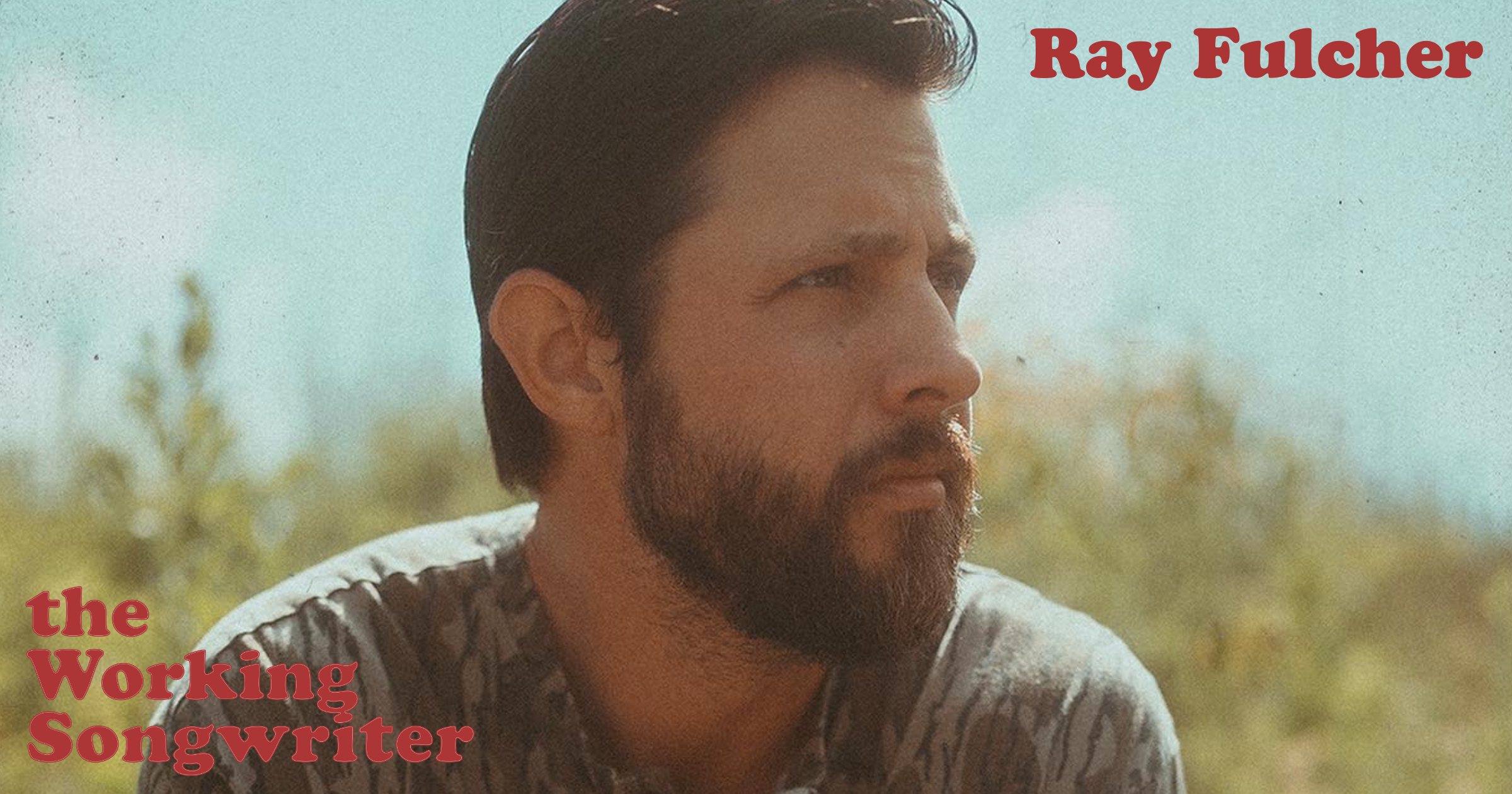
Our guest this week hails from Harlem, Georgia. Ray Fulcher is one of Nashville’s most sought-after modern country songwriters. He first broke through co-writing a string of chart-topping hits for Luke Combs – including the multi-platinum “When It Rains It Pours” – before stepping into the spotlight with his own recordings on his 2022 debut album, Spray Painted Line.
Fulcher has toured extensively, sharing stages with Luke Combs, Ashley McBryde, and Matt Stell, and his songs have been streamed hundreds of millions of times across platforms. He has written for artists like Riley Green and Cody Johnson, including Johnson’s recent hit “The Fall.” Billboard highlights his “unmistakable narrative grit,” while Holler celebrates his “clean-cut melodies and lived-in honesty.” Taste of Country notes his “ability to turn small-town details into widescreen emotion.” I caught up with him recently on The Working Songwriter to hear about his musical journey so far.
Welcome to The Working Songwriter, the show where today’s best songwriters come to talk shop. Each episode we host a distinguished guest and we ask them to go deep on their inspiration, their process, and the general ups and downs of making a life in music. Whether you’re a grizzled veteran picking out custom chrome trim for your tour bus or a scrappy upstart, trying to determine whether your Toyota Tercel can make it through a three thousand mile tour, this is your show. Because, ultimately, it is what every writer seeks most. An ironclad excuse to put off actually writing.
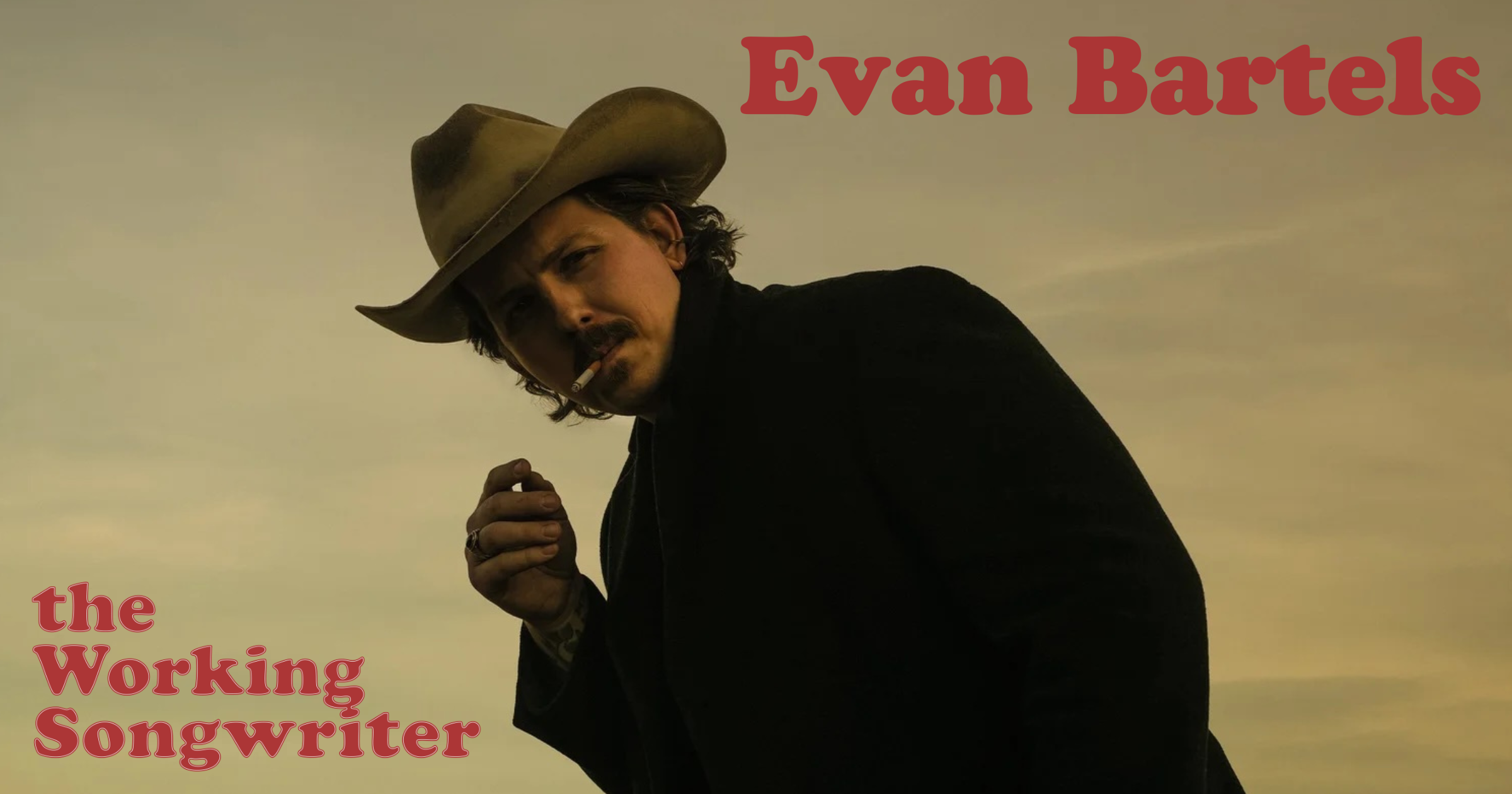
Our guest this week on The Working Songwriter hails from Tobias, Nebraska, a town of about 100 people. Evan Bartels is a singer-songwriter who with his 2017 debut, The Devil, God & Me, burst onto the national scene. More recently, Bartels has expanded his audience with the release of his EP, To Make You Cry, recorded after relocating to Nashville and reflecting on a period of personal upheaval and renewal.
Bartels has toured with American Aquarium, The White Buffalo, and John Moreland; he records for MCA/Universal; and he’s performed at Mile of Music, Americanafest, and the C2C Festival. No Depression calls him “a haunting new presence in Americana,” while Americana Highways praises his “unvarnished, soul-bearing songwriting.” Glide Magazine notes his “ability to turn bruised experience into stark, resonant beauty.”
I caught up with Evan Bartels a few months ago for The Working Songwriter to hear about his musical journey so far.
The BGS Podcast Network is proud to announce our first addition of a new (to us) show in 2026, bringing artist and singer-songwriter Joe Pug‘s hit podcast, The Working Songwriter, on board. Beginning January 9, the Working Songwriter will be distributed exclusively through BGS and available wherever you stream podcasts.
“After ten years and over three hundred episode of doing this podcast independently, we’ve decided to go pro!” Pug says. “[BGS] is the perfect home for our show. They focus on American roots music, but ultimately they celebrate any kind of songwriting as long as it’s of a very high quality. I think that’s pretty similar to the ethos of The Working Songwriter.”
Over a decade of work and hundreds of episodes, Pug has explored songwriting, music-making, artfulness, and creative practices with some of the most thoughtful and entrancing voices in Americana, country, roots music, and songwriting as a whole. Over the years, guests have included such luminaries as Jerry Douglas, Charlie Peacock, John Hiatt, ERNEST, Chuck Prophet, Kim Richey, Bonny Light Horseman, Hunter Hayes, Iris Dement, Del McCoury, Keb’ Mo’, Darrell Scott, and countless others. Alongside these songcraft heavy-hitters are just as many fresh discoveries, newcomers, and essential-yet-underrated voices in the space, too.
The overlap between our rootsy BGS purview and Pug’s roster of guests is vast and varied, illustrating how perfect a fit the show will be for the BGS Podcast Network. “With their network,” Pug continues, “we’re gonna be able to get guests that we’ve never had before. We’re gonna be able to produce more content and we’re gonna be able to lean into video quite a bit more. I’d like to thank Cindy Howes and Amy Reitnouer Jacobs for believing in our show and helping to shepherd it to the next level.”
“The Working Songwriter has set the standard for long-form interviews with our favorite songwriters in the roots music world and beyond,” responded Cindy Howes, director of the BGS Podcast Network. “Joe’s ability to open up his guests in relaxing conversations on the craft of writing is endlessly impressive. The fact that a podcast of this caliber that legitimizes the best working songwriters is joining our roster is an honor. We are beyond excited to work with Joe and his team on this wonderful show.”
The latest season of the Working Songwriter will premiere this Friday, January 9, with guest Evan Bartels. Bartels, a singer-songwriter, burst onto the national scene with his 2017 debut, The Devil, God & Me. He has toured with American Aquarium, The White Buffalo, and John Moreland; he records for MCA/Universal; and he’s performed at Mile of Music, Americanafest, and the C2C Festival. We’re looking forward to beginning this new era for The Working Songwriter with Joe Pug, Evan Bartels, and all of you, right here on BGS.
To celebrate the announcement and the upcoming season premiere, listeners can subscribe to the Working Songwriter wherever they listen to podcasts. While you do, revisit and enjoy all past episodes of The Working Songwriter – including these five of our favorite selections below, chosen from over 10 years of superlative work.
Remembering Todd Snider (March 2020, rereleased November 2025)
Joe originally sat down with The Bard of East Nashville back in March of 2020, but after his untimely passing in November 2025 at the age of 59, TWS reissued this beautiful episode in his honor.
Jerry Douglas (June 2025)
An artist who needs little introduction to BGS audiences, GRAMMY-award winner Jerry Douglas is considered the contemporary master of the Dobro. Joe talks to Jerry about his long and storied career, playing alongside everyone from Ray Charles to Billy Strings.
Ashe (September 2024)
TWS covers songwriters of all backgrounds and genres, as demonstrated in this 2024 episode with Ashe. The Berklee College of Music grad discusses her years writing songs for other artists such as Demi Lovato, only to find her own distinct voice (and a legion of obsessive fans, including the late Diane Keaton) in the last five years.
The Swell Season (October 2025)
The Oscar-winning and decades-spanning musical partnership of Glen Hansard and Marketa Irglová has captivated worldwide audiences, but this conversation with Joe from 2025 celebrated their first album together since 2009 (Forward), and showed their connection and chemistry was as deep as ever.
Bonny Light Horseman(February 2023)
Each member of the folk supergroup trio of Anaïs Mitchell (Hadestown), Eric D. Johnson (Fruit Bats), and Josh Kaufman (The National, Bob Weir, Josh Ritter) could easily deserve their own deep-dive episodes, but put together it’s clear that they are greater than the sum of their parts. Joe digs in with the three GRAMMY nominees to peek behind their magical music-making curtain.
While every country star knows how to tell a good story, it takes a particular strain of excellence to also be able to write one.
Songwriting is the gravitational center around which Good Country orbits. Lyrics that strike at the oceanic spread of human existence, chords that evoke its sprawling underbelly – the songwriter weaves both words and notes together, using each as a tool to explore the other.
Uniquely attuned to the value in lyrical narrative and authenticity, country music self-selects its fair share of multi-hyphenate talents who, beyond their performative prowess or instrumental skills, have a knack for setting pen to paper. From Willie Nelson to Kacey Musgraves, country carries an extensive lineage of talented songsmiths. The following collection merely scrapes the surface of the best country star songwriters. Unsurprisingly, this list is a tangled web with many superb songwriters covering, popularizing, and collaborating on one another’s songs in true communal country fashion.
Willie Nelson
With over 300 songwriting credits to his name, Willie Nelson is indubitably one of the most prolific songwriters of all time – not just in country. Having written his first poem at the age of six, Nelson has nearly nine decades of steadfast dedication to the craft under his belt. Patsy Cline’s 1961 recording of “Crazy” lifted his songwriting further into the limelight. His pen went on to produce such potency that it helped define an entire new subgenre in the ‘70s— “outlaw country.”
Prized for his rebellious and forthright lyrical attitude, Nelson values raw emotion over placative commercial appeal, ironically earning him one of the most successful careers in country history. Over the years, Nelson has delivered a seemingly endless stream of hits performed by both himself and countless other musical giants, including Loretta Lynn, Merle Haggard, and Dolly Parton, just to name a few.
Bobbie Gentry
Bobbie Gentry is the keeper of a robust legacy of composing and performing. Having written her first song at age 7, Gentry taught herself to play a slew of instruments throughout her youth. When she attended college at UCLA, she began performing her songs out at the occasional nightclub, signing to Capitol Records some years later as an aspiring songwriter. In 1967, Capitol Records released “Ode to Billie Joe,” a song that Gentry had written and recorded herself. Gentry told The Washington Post that despite wanting to write songs for other artists, she only sang “Ode to Billie Joe” herself because it was cheaper than hiring another singer.
Despite her previous obscurity and the song’s dark tenor, “Ode” crept up the charts, surpassing the likes of Aretha Franklin and The Doors until it eventually pushed “All You Need is Love” out of the No. 1 spot. This astronomical success marked only the beginning of an industrious career for Gentry; she would go on to write and perform several other smash hits in addition to becoming the first woman to host a variety show on the BBC. She would later produce, choreograph, and write the music for her own nightclub revue in Las Vegas prior to retiring from show business.
Roger Miller
The King of the Road had range! Roger Miller’s songwriting legacy entailed chart-topping hits he wrote and performed himself, such as (of course) “King of the Road,” “Dang Me,” and “England Swings,” in addition to many that he wrote for other artists, such as “Billy Bayou” for Jim Reeves and Ray Price’s “Invitation to the Blues.”
His imaginative impulse made him uniquely qualified for the projects he took on later in life, including writing the music and lyrics for several songs in the 1973 animated Disney film Robin Hood, in which he also voiced Alan-a-Dale, the film’s rooster narrator. His acting career was even furthered by another musical project – Miller wrote the entire score for Big River, a Broadway musical based on Mark Twain’s The Adventures of Huckleberry Finn. The musical premiered in 1985 and earned a total of seven Tony Awards, including Best Score. Miller even played the part of Pap (Huck Finn’s father) onstage for three months following the original cast member’s departure for Hollywood.
Kacey Musgraves
One of the most influential women in today’s country sphere, Kacey Musgraves has sculpted a name for herself for both her instrumental/vocal prowess and her impactful songwriting capabilities. Her solo catalog is chock-full of compelling songs that explore the “nuances of being a human, alive and experiencing consciousness,” as she told The Cut. The thoughtful universality of her songwriting has attracted a distinguished array of performers, with Musgraves contributing her skills to songs performed and recorded by Martina McBride, Miranda Lambert, and Deana Carter, among others.
Kris Kristofferson
This September marked a year since his passing, but Kris Kristofferson’s legacy continues to burn bright. His songs maintain a rugged, raw quality without sacrificing any of their vibrance. Though Kristofferson only landed one No. 1 hit on Billboard’s Hot Country Songs chart performing his own original material, his songs were platformed by many others featured on this list, including “Help Me Through the Night,” which Sammi Smith, Loretta Lynn and Willie Nelson recorded, and “For the Good Times,” a tune made famous by Ray Price that was later recorded by Dolly Parton, Merle Haggard, Willie Nelson, and more. Kristofferson also penned a fair number of tunes for The Highwaymen, the country supergroup composed of Waylon Jennings, Willie Nelson, Johnny Cash, and Kristofferson himself, including their titular hit, “Highwayman.”
Trisha Yearwood
Author, singer, chef, Food Network television show host – just when we thought Trisha Yearwood had done it all, her 16th studio album, The Mirror, arrived this past July to showcase yet another talent you may not know that she held all along: songwriting. In an interview with Billboard, Yearwood recounts that discouragement during her college years largely held her back from incorporating songwriting into her career over the past three-plus decades. “It made me think I wasn’t a songwriter and I just always downplayed it,” she says.
The Mirror boasts powerful co-writes with many songwriters who’ve contributed to Yearwood’s earlier albums, including Rebecca Lynn Howard (“I Don’t Paint Myself into Corners”) and Maia Sharp (“Standing Out in a Crowd”). Of homing in on her songwriting craft, Yearwood shares, “It was really something that clicked a couple of years ago. I started writing and it was really kind of therapeutic and really evolved naturally out of something I felt like I needed to do and I’m so happy with how it came out.”
Merle Haggard
Widely recognized as one of the most legendary singer-songwriters of the country canon, Merle Haggard was a staunch believer in writing from his own experiences – of which he had many worth writing about. After losing his father at age nine, Haggard wound up in all sorts of trouble, from several stints in juvenile detention to developing a strong hitchhiking and train hopping habit. His rambunctious tendencies followed him into adulthood and eventually landed him in prison after an attempted robbery and subsequent failed jailbreak.
In 1960, Haggard’s life changed forever upon attending a Johnny Cash concert while incarcerated at San Quentin State Prison, which deeply inspired him. Upon his release later that year, Haggard set out to forge his own country career, garnering unspeakable success. From “Workin’ Man’s Blues” (co-written with Roy Edward Burris) to “The Bottle Let Me Down,” many of Haggard’s songs have become perennial classics.
Jimmy Buffett
Of all the narrative-focused songwriters, Jimmy Buffet undoubtedly took the premise of “world-building” the most literally. “Margaritaville,” the hit song which Buffett claimed took him only six minutes to write, has a transcendent legacy. From hotels to casinos to Broadway musicals, Buffett’s profoundly popular songwriting grew an empire. Of course, “Margaritaville” was certainly neither the beginning nor the end of Buffett’s extensive songwriting career; having released 30 albums (8 of which are certified gold and 9 of which are certified platinum or multi-platinum by the RIAA), Buffett was credited on upwards of 350 songs over the course of his life.
Don Gibson
Responsible for the songwriting behind some of the most famous songs in country history, Shelby, North Carolina, native Don Gibson was such a force that he, in fact, penned two of his most influential songs in the same day. “Oh Lonesome Me” and “I Can’t Stop Loving You” – which would go on to be recorded over 700 times by other artists including Ray Charles, Kitty Wells, and Loretta Lynn – were both conceived in a trailer park north of Knoxville, Tennessee, in 1957.
Bonnie Raitt
In addition to being the utter powerhouse musician that she is, Bonnie Raitt also knows her way around some lyrics. Having written most of her own music and with artists like Stevie Nicks and The Chicks covering her songs, Raitt’s songwriting has left an indelible mark on the blues, country, and Americana scenes. She’s known for her thoughtful and emotionally dynamic posture; for instance, her song “Down the Road” was inspired by a New York Times article Raitt read about a prison hospice program. Another, “Just Like That,” earned her a GRAMMY for Song of the Year and was inspired by a news segment featuring two families experiencing either end of an organ donation. Written from heartful depths, Raitt’s lyrics are both inspired and inspiring.
Cam
Best-known for her Grammy-nominated 2015 hit, “Burning House,” Cam (AKA Camaron Ochs) is one of the most prominent songwriters in the contemporary country scene. Another star and composer, in addition to her own four studio albums, Cam has writing credits featured on work from some of the largest industry giants in any genres. She has composed material for artists from Sam Smith to Miley Cyrus and 2024 saw her songwriting, backing vocals, and production lending a hand in several songs off of Beyonce’s chart-topping, culture-shifting country release, Cowboy Carter.
John Hartford
John Hartford’s talents truly knew no bounds. In addition to his multi-instrumental expertise, he was a fleet-footed clogger who could tear up a rug while he played. And he sure did know how to write a song. His most successful songwriting credit, “Gentle on My Mind,” (popularized by Glen Campbell and henceforth covered over and over again) earned him three GRAMMY awards and a listing among BMI’s Top 100 Songs of the Century. With covers from folks like Loretta Lynn, Willie Nelson, Dolly Parton, Merle Haggard, and many more, it’s safe to say Hartford was one of the most respected – and most recorded and most covered – roots songwriters of his time. And of our time, too, as evidenced by this I’m With Her performance of “Long Hot Summer Days,” a Hartford original fiddler Sara Watkins once recorded on her own solo project.
Chris Stapleton
A fav of Good Country and our audience alike, Chris Stapleton has had a tremendously successful performing career in both bluegrass (via The SteelDrivers) and country (as a solo artist). His guitar prowess and smoky vocals aren’t his only claims to fame; even before his rise to stardom, Stapleton had written songs for some of the most commercially successful names in country and beyond. He’s been the pen-power behind songs for industry giants such as Luke Bryan, Kenny Chesney, Darius Rucker, George Strait, Lee Ann Womack, and more. Adele even recognized the potency of Stapleton’s powers back in 2011, having recorded a version of his smash hit SteelDrivers song “If It Hadn’t Been for Love” on a deluxe version of her album 21.
Dolly Parton
They don’t call Dolly Parton the queen of country for nothing! Illustrious and industrious, Parton estimates that she’s composed nearly 3,000 songs in her lifetime, with somewhere around 450 of them recorded. Her ability to world-build through dynamic characters and narratives has set the modern country standard for story-songs, with “Coat of Many Colors,” “9 to 5,” and, of course, “Jolene” being just some of her most chart-topping successes. She’s also written plenty for other artists – think Merle Haggard, Kenny Rodgers, Hank Williams Jr., Waylon Jennings, Emmylou Harris, and Tina Turner, just to name a few. And of course, we’d be remiss not to mention that Parton penned the biggest hit of Whitney Houston’s career!
Darrell Scott
In 2007 Darrell Scott was named the Americana Music Association’s Songwriter of the Year, and this year, 2025, he received a Lifetime Achievement Award from the organization, too. In short, Darrell Scott is a songwriting powerhouse – in addition to his status as one of Nashville’s premiere session musicians.
Similarly to many other artists on this list, albeit with his own stylistic flares, Scott champions the narrative song, writing tunes full of dynamic characters and story arcs that mesmerize. Outside of his own successful solo work, songwriting for others is the bedrock of Scott’s career. Among countless other contributions, Scott wrote the Chicks’ “Long Time Gone” (later to be sampled in Beyoncé’s “Daddy Lessons”), Travis Tritt’s hit song, “It’s a Great Day to Be Alive,” and the ever-relevant “You’ll Never Leave Harlan Alive,” which has been covered by Patty Loveless, Brad Paisley, Chris Stapleton, Kathy Mattea, Luke Combs, and many more.
Want more Good Country? Sign up to receive our monthly email newsletter – and much more music! – direct to your inbox.
Adam Wright is a songwriter’s songwriter. An artist’s songwriter. A poet whose medium is best set to music. And not just any music, but the absolute highest echelons of bluegrass and country – radio, real, outlaw, Americana, and everything in between and beside. He writes daily from an office nestled between Music Square East and Music Square West in Nashville – the fabled Music Row.
His songs have been cut by stars like Alan Jackson, Lee Ann Womack, Garth Brooks, Trisha Yearwood, Brandy Clark, and Robert Earl Keen. In bluegrass, bands like Balsam Range and Lonesome River Band have carried his originals high up the charts, and he’s co-written with many players in the genre, like Sierra Hull, for example. His songwriting and its distinct, intentional, and artistic voice has gained him award nominations from the GRAMMYs, the Americana Honors & Awards, and the IBMA Bluegrass Music Awards.
Since early February of this year, Wright has been leaving a trail of musical breadcrumbs online and on streaming platforms, teasing out his brand new album, Nature of Necessity, in four parts, which he calls “sides.” Along with singles peppering the release cycle throughout the following months, the prior three sides of the project finally convene with the fourth today, September 25, as a coalesced and cohesive project of 18 songs. The novel delivery mechanism for Nature of Necessity feels like an extension of the intentionality Wright brings to each of these literary, textural, and fantastic songs. They each stand alone, certainly, but together they sing.
These are not Music Row fodder, or craven attempts at radio hits, or tracks churned out day-in-and-day-out for volume and viral potential. These are passion projects. Ideas and stories that stuck in Wright’s creative craw and demanded much more deliberate treatments. It’s not as though songs written with the bottom line in mind can’t be this successful as works of art – they often are. It’s just that it’s immediately tangible to the listener that these works by Adam Wright aren’t just some of his best, they were clearly written and produced without a single thought towards saleability. Rather, Wright and his creative partners – especially producer Frank Liddell – gave each of these songs the artistic treatment they deserved on their own merits as stories and tableaus, vignettes and pantomimes.
If you remember when Bob Dylan was awarded the Nobel Prize in Literature in 2016, there was a whole lot of “discourse” on the internet as to the actual literary value of songs and lyrics. It’s a painfully on the nose, forest for the trees moment to even have to accept the premise of that debate in order to refute it. But with a writer like Adam Wright – ever so rare in country and roots music and becoming even more endangered still – it’s easy, direct, and demonstrable connecting the dots between literature and songwriting. Nature of Necessity being 18 compelling points on that trail. With this album, Wright should perhaps be offered a term as the poet laureate of Music Row. Let each of its four sides stand as a resumé.
I really love the sonics of the album, the production. I’m a bluegrass banjo player, so when I listen to records I want to hear the pick noise, I want to hear the room, I want to hear the distance between a singer’s lips and the microphone. I want it to sound like music and I want it to sound like a moment in time.
Granted, I listen to a lot of music that doesn’t check any of those boxes and I like it a lot for sure, but the first thing I noticed about this album was that it sounds not just live, but alive. Can you talk about that and can you talk about how you accomplished it? It feels like, having heard so much of Frank [Liddell’s] work as producer that he was probably a perfect partner to accomplish that production style, too.
Adam Wright: Yeah, he absolutely was. And we wanted the same thing. We wanted it to be live and to sound live. With all the flaws inherent in performance, like a full unedited, undoctored performance.
‘Cause I’m like you – I’m a pretty poor listener currently but I have, in my long life of listening, listened to an awful lot of music and studied a lot of it. I know when I’m listening to a song that was gridded and then a singer came in and sang very carefully and then they cut it up and got it right. Because I’ve made records like that, too.
You sound your best that way, you truly do. It is so flattering to have someone do that to you and then listen back and go, “Wow, I sound fantastic.” So what I’ve enjoyed, for some reason, [is] getting used to what I sound like, giving it my best effort on a play down all the way through, one whole take, and go, “That’s what I sound like.”
It’s like looking at yourself like in a hotel mirror. [They] are the worst mirrors in the world. Like you go in the bathroom in the hotel room and you look awful and can’t figure out why. Something about the lighting or the quality of the lighting or where they’re placed. Every time I’m in a hotel mirror, I’m just like, “What am I doing out in the world?”
It’s a little bit like that. You listen back to yourself, play this song, and you go, “Man… that is not perfect.” There are things I just really dislike about the way I sing certain things on this record, the way I played. I hear me failing the whole way through. ‘Cause we did track it live. Me and Matt Chamberlain and Glenn Worf tracked us a three-piece, me on acoustic and singing with bass and drums. The idea was just to keep all of that as it is, intact, which we did.
I told Glenn, I said, “You’re the lead instrument. No one’s coming to save us. If something has to happen, we just have to do it right now.” We recorded it with that philosophy. The meat of it is my playing and singing with Glenn and Matt and we didn’t fiddle with it. The caveat was, “Okay, we can add things, but this has to remain what it is.” Whatever we did has to be live as it happened.
We did it a bunch of times. We did every song like seven times. So if I didn’t get it, is it gonna get better? No. That’s how I sing that line, obviously. There was some freedom in that … I’ve just gotten to enjoy it.
These feel like songs for you and not songs to sell or to get cut or to pitch on Music Row. Like, they feel like songs that, as they came out of you, you may have been squirreling them away, caching them for yourself for the future. I wanted to see if that was true or if that resonated with you. To me, they’re poetic and they’re literary without being “pick me” or “try hard.” They’re really thoughtful. I love your lyricism because it’s not too esoteric. But, these traits aren’t exactly regarded as commercial. So how did this collection end up… collected?
That’s exactly how that went. And thank you for the kind words, too. I do write every day for a publisher. Usually that means co-writing. I co-write almost every day of the week. Whether I want to or not. I’m usually writing with younger artists that want a record deal or have a record deal and they have some ambitions about the commercial music industry – and for some reason they thought I could help them. [Laughs] As misguided as that is, that’s usually what our job is in that moment. I don’t think a lot about, “Hey kid, I got a hit for you.” My brain just doesn’t really work that way. I just try to write a really good song that I think is tailored towards that particular artist.
I do a lot of that, but I would never try to force one of these ideas like [that] are on this record on someone that is trying to do something like that. This is a different endeavor. I do categorize it differently. That co-writing with people for their records or for whatever they would like to do is almost like a day job. And these songs are my night job. So they are very different. It feels like a different writing brain altogether. The process of writing ’em is very different. It’s not two hours of looking at each other. Some took me weeks, just because I couldn’t unlock ’em, but I kept tinkering away. It’s a much different thing.
I want to find out the deepest realization of whatever the story was or the idea or the character that I decided the song was gonna be about. Just follow that rabbit through the woods as deep into it and as dark as it got, that’s what we were gonna do. It’s rewarding! It’s a lot of work and it takes a long time and I’m so busy at the moment. I don’t know if I could write some of those songs right now. If you told me to write a song that had a lot of Latin in it about watching the dawn, I’m not sure I could pull it off. [Laughs]
But you know how it is when you find these things. You get a hold of this little spark, you follow it, and then at some point it dims a little. Then you’re looking for another spark to light up. I’m currently between sparks – I’m writing every day, but I haven’t found a new thread that I just can’t wait to chase yet. But sometimes you get a little hint of it.
Let’s talk about some of the music. On “Dreamer and The Realist,” are you the dreamer? Are you the realist? Is it about you?
I never really decided if I contain enough pragmatism to be both a dreamer and a realist. Like in some ways I am. Like when my wife says, “Hey, we’re going to Disney World,” that’s what we’re doing. I would never decide to go to Disney World [on my own], because I don’t like fun. [Laughs] But once I know I’ve gotta go, then I can get pragmatic about it.
But aside from those types of things, I’m pie in the sky. If I could stare out a window 10 hours a day every day for the rest of my life and not starve to death, I would do it.
Thank you!
All I really want to do is walk around the world and roll around inside my own brain. That sounds fascinating to me forever, endlessly. And not because I have a fascinating brain, just because I think it’s fun to just go, “What if” and then, “What if” and then, “What if.”
I feel like this is a long way of trying to say, I feel like everyone is some combination of a dreamer and a realist. Or you couldn’t function. But certainly nobody’s all dreamer or all realist, I don’t think. I think we all compartmentalize our dreaming and our realism to certain areas of our life and hopefully we each find someone that compensates for, or augments, [ourselves] in ways. And that’s never perfect. There’s always like a dueling going on with all that stuff. But I love the push and pull of it; within myself and within a relationship. There’s music in all of that I’ll always find it very interesting. The song really is within the same person.
With “All the Texas,” which features Patty Griffin, one of the first things I thought when I heard it was of Lyle Lovett’s “That’s Right (You’re Not From Texas).” Plus, I was thinking about this moment in time with Texas and politics and the culture wars. Country music tends to feature this thinking like, “Everyone loves Texas and you should too!” “Don’t we all agree, Texas is great??” And then you look at what’s happening in Texas and you’re like, “Oh my gosh, Texas. What the hell?” I’ve had all the Texas…
Help us help you, please! Exactly.
Can you talk to me a little bit about that song? Because I have a feeling that there’s much more going on than just the way we’re all feeling about Texas these days.
It really was written before Texas got so Texas-y, recently. I don’t remember what year it was, but it was probably four or five years ago. Texas is always pretty Texas-y, but this was before it got super Texas-y. It was just about a night opening for Patty Griffin there at the Moody [Center] in Austin. It was just a whirlwind of a trip; flew in day of show, ran around Austin for half an afternoon, and then played a show.
She’s so supernatural. There’s just something like… sorcery around her. Anytime you’re around her, she doesn’t come off that way. She doesn’t walk around like talking wizard speak or anything; she’s just such a lovely, cute, normal, funny individual. But there’s still something that swirls around her that is just supernatural.
With all of that, I was like jotting things down, like the whole 24 hours that we were there. I just kept getting like little snatches of things and they all started to have this kind of mythical quality to ’em. Some of it’s literal, the Driskill and all of that stuff was true. But it turns into a sort of dream logic, mythical stuff – which is like watching [Patty] perform. It was an exercise in playing with almost like a journal entry of that experience and then distorting it with mythical language or symbolism.
I also love “Weeds” – and not just because Lee Ann [Womack] is on it. But also because I am obsessed with wildflowers, with native gardening, and habitat restoration. Something that struck me about that line, “Heaven is a meadow with no weeds” is perhaps heaven is a place where we finally understand that a “weed” is a social construct, right? A weed is a plant that we’ve decided is in a place where it shouldn’t be, but maybe we’re the ones where we shouldn’t be–
Yeah, that’s right.
Maybe we changed so much of the environment that we look out and we see a weed, but that plant has been here all along. And [the habitat is] probably supposed to be all weeds.
Exactly.
When I heard “Weeds” I also thought of Dolly’s song “Wildflowers” and the idea of, “What is the difference between a wildflower and a weed?” So, in my own mind, I heard that line as maybe you get to heaven and you realize all these weeds were wildflowers the whole time. Maybe I’m projecting. [Laughs]
I don’t know how the farmer’s perspective developed [on that song], I just don’t remember. And I’m not trying to put any sort of romanticism on it, it just didn’t come to me. I don’t remember what the jump was, but I remember why I started the song initially. I was at the library looking for something new to read and I came across this book, it was like a catalog of late-1800s farming equipment and the techniques and things. You could order out of these catalogs in like, 1870-whatever.
It also had articles about how to fix your wagon or what to do about this particular tractor part. How to deal with a stubborn mule or a pig that wouldn’t do what you wanted them to do. I thought it was fascinating, and the language of it – I love lingo so much. I love getting into some endeavor or line of work or character where there’s lots of language that I haven’t heard before. Like specialized language to a particular job or whatever. This book was full of it. I was just fascinated by all of it.
The whole thing about the last verse about the pig, all of that, it’s just outta the catalog. Those were all things [from the book]. Like, “Are you dealing with a hog who’s ill-formed? And unquiet in his mind? Here’s what you can do.” I found it all so interesting.
Then the middle verse about the tramp, to me he was dressed in soldiers’ clothes. I imagined he’d been shot and was laid over this farmer’s fence. It would have been just at the close of the Civil War era stuff. I wanted all of it to hang together, but with all of these strange things going on the overarching thing is this farmer going, “I can’t get rid of these weeds.” Why does he care? I don’t know. I just liked the guy [because] the thing that sort of kept him going was that his eternal reward might be a meadow without all of these weeds in it.
Your career has intersected with bluegrass and has been part of your career in so many ways. You’re a picker – which is one of the first things I noticed about this album, you guys tracking it live means we get to hear you pick the guitar. All these bluegrass folks have cut your songs, you’ve been nominated for an IBMA Award. What does the genre mean to you? And of course, the inseparable community that comes with it. How does that fit into the constellation of how you make music, songwrite, and be creative in general?
That’s interesting. I love the world of bluegrass. Maybe I’m just a little particular. Like, if you looked at all genres of music as slices of a pie, there’s really only a sliver that I really love. Out of any genre. Whether it be jazz or a big band or blues or bluegrass or classic country or rock, there’s really only a little bit of it that I really like and most of it, the rest of it I find I can leave alone. Not quite for me.
But I always said, good bluegrass might be the best music ever. Like, when it’s good and it’s right. I wish I had started trying to play that kind of music when I was younger. I got fascinated with it too late to physically do it at a level that I appreciate. I can distinguish the difference in the nuances of really great players, but I’m not able to do that. I don’t lose a lot of sleep over it, but I’ve probably got carpal tunnel trying to figure out Tony Rice licks a few times in my life. There’s so much of it that I really like and I love.
I’ve never really sat down to try to write bluegrass songs. I just write songs. Like you were talking about this interview going under the Good Country category, I’ve always sat somewhere in the mushy in-between of folk, singer-songwriter, bluegrass, and country. I’ve just always existed somewhere in the middle of all that stuff. Some of my favorite artists have done that, as well.
Some of my favorite bluegrass artists were folkier or bluesy-er. Del McCoury or Doc Watson. Tony Rice was such a genre evader. I always appreciated that about certain bluegrass artists. But writing-wise, I just always wrote songs. And because of the nature of what I’ve ingested, they lend themselves fairly well to more traditional bluegrass arrangements. They always play everything a lot faster than I think they’re going to. [Laughs]
Last night at the Bluebird [Cafe] I did my version of “Thunder and Lightning,” which is a moonshining song of mine that Lonesome River Band cut. I think I’m playing my version fast, like it feels fast to me. And then I hear them do it and it’s about twice as fast as I play mine. It sounds great when they do it, but if I try to play it that fast it sounds ridiculous.
I write some with Sierra Hull, she’s so much fun to write with. It’s funny, she hardly plays when we’re writing, which I had to get used to. ‘Cause the first time I wrote with her I was like, “Oh I can’t wait to just watch her play!” And I don’t even know if she touched the instrument a couple of times, just to check a chord. But I got to like her so much and enjoy writing with her that it didn’t matter. [Laughs] …
My dad was a piano player – and still is. His dad was a piano player, too. So I started on piano when I… I think I was like four. I was kinda tugging on their shirt going, “Hey, I wanna play piano!” And they’re like, “Yeah, okay. Sure.” But they did let me, I started, and I did like classical piano for years. Then I went to saxophone and then I heard a Chuck Berry record and I needed a guitar. Today. Right now. This afternoon.
I was talking to a friend of mine who is a bluegrasser, saying, “I just don’t know how you guys do it, the flatpicking. How are you doing this?” And he goes, “You remember when you were learning Rolling Stones songs on a Stratocaster when you were a teenager? Most of these guys were playing D28s with grown men at festivals then.” When they were that age, that’s what they were doing. Picking with grown men.
Who were having pissing contests with those children. [Laughs]
Yeah! Sorry kid, not today. [Laughs]
Photo Credit: Emily McMannis
This website uses cookies to improve your experience. We'll assume you're ok with this, but you can opt-out if you wish.AcceptRejectRead More
Privacy & Cookies Policy
Privacy Overview
This website uses cookies to improve your experience while you navigate through the website. Out of these, the cookies that are categorized as necessary are stored on your browser as they are essential for the working of basic functionalities of the website. We also use third-party cookies that help us analyze and understand how you use this website. These cookies will be stored in your browser only with your consent. You also have the option to opt-out of these cookies. But opting out of some of these cookies may affect your browsing experience.
Necessary cookies are absolutely essential for the website to function properly. This category only includes cookies that ensures basic functionalities and security features of the website. These cookies do not store any personal information.
Any cookies that may not be particularly necessary for the website to function and is used specifically to collect user personal data via analytics, ads, other embedded contents are termed as non-necessary cookies. It is mandatory to procure user consent prior to running these cookies on your website.