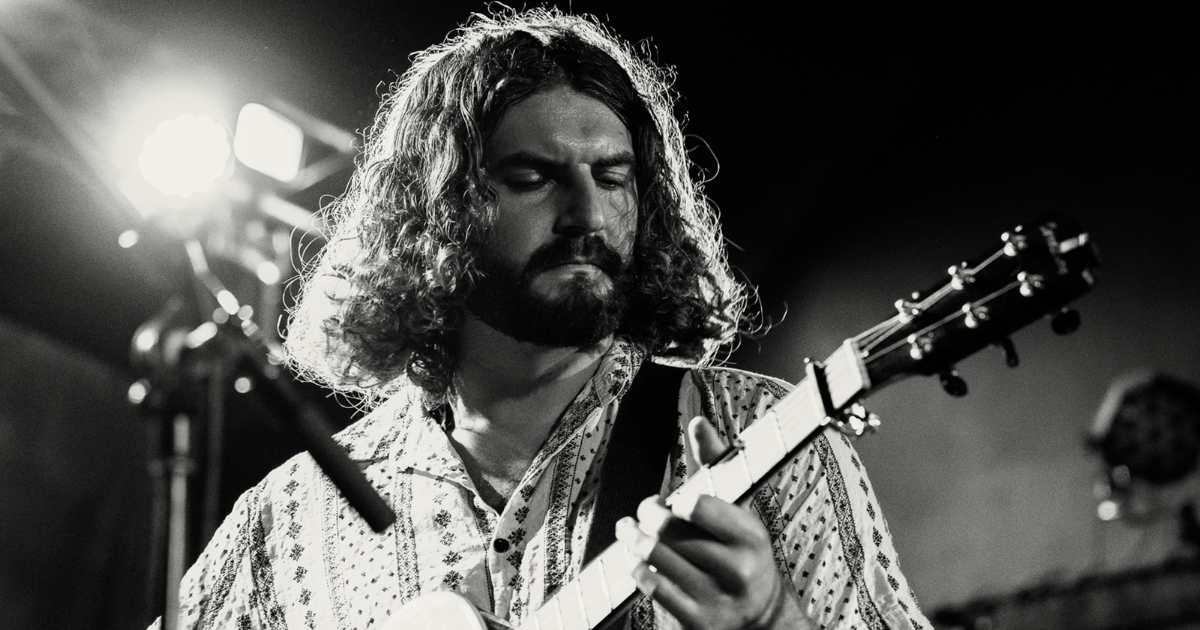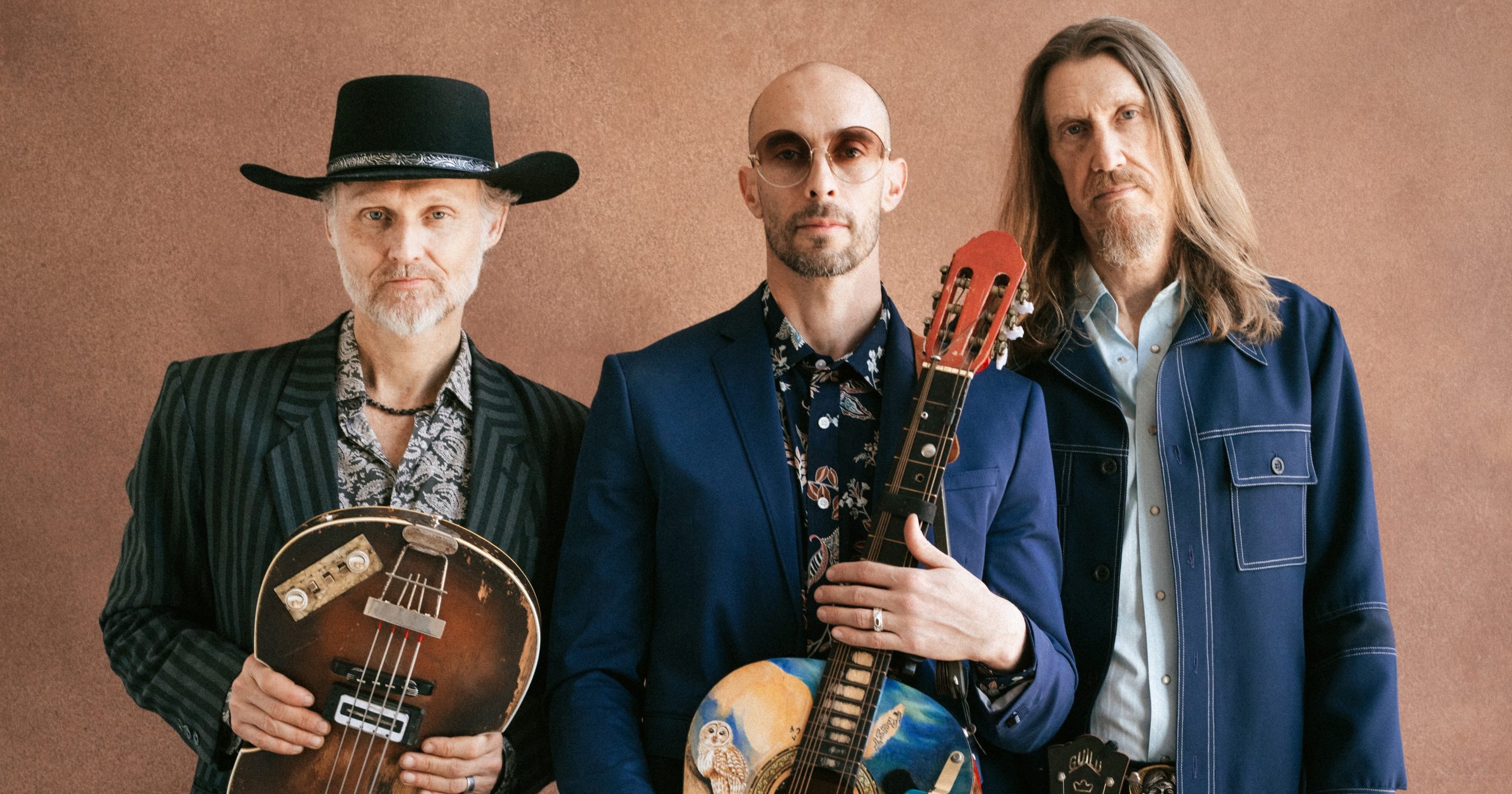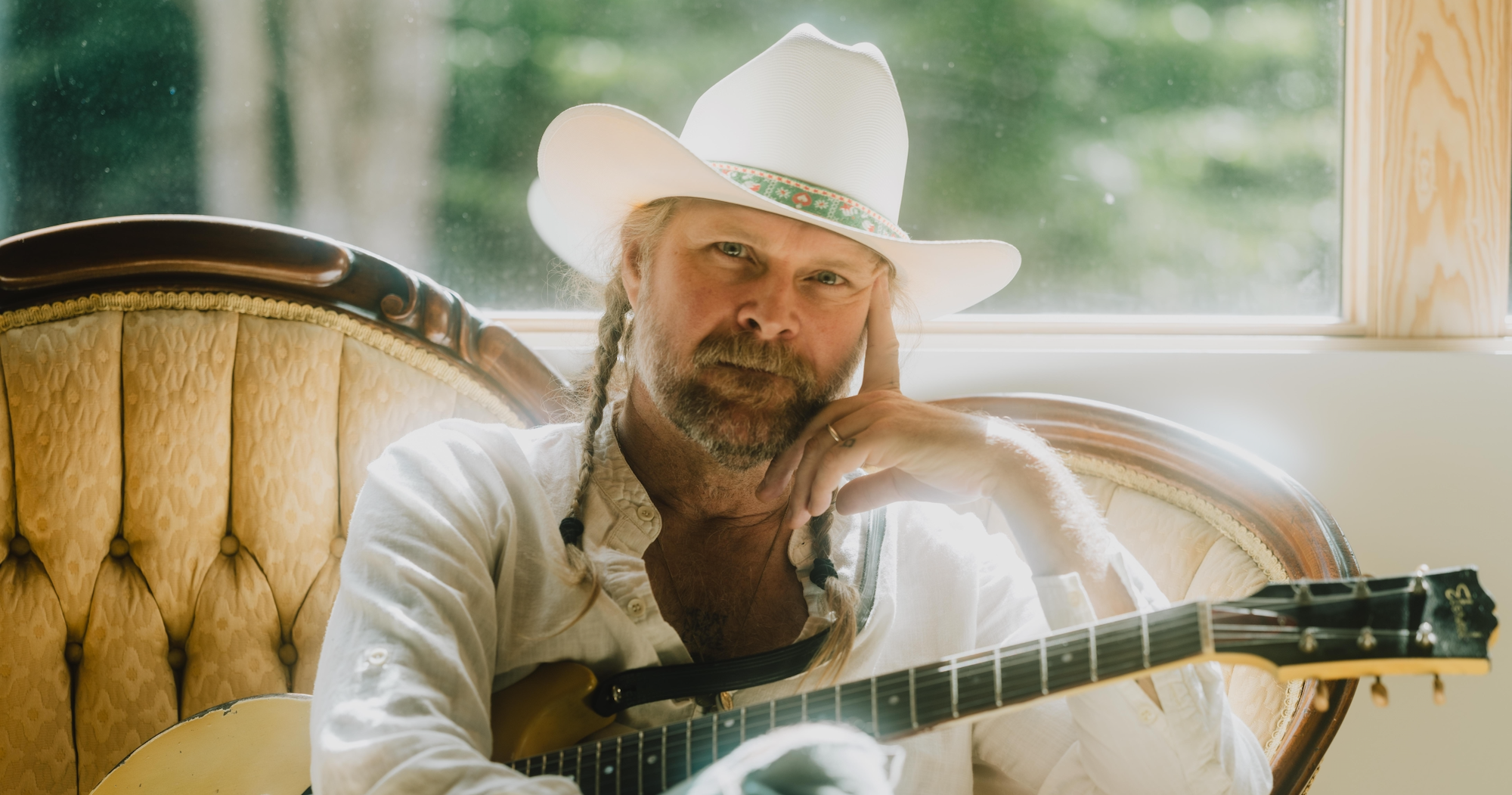
The Expansive Universe of Hiss Golden Messenger

Next year, singer and songwriter MC Taylor will have been leading Hiss Golden Messenger for two decades. For most of that time, critics and listeners have relied on a few familiar narratives about Taylor: that he is a singular figure, for example; or that his move from California to Durham, North Carolina, marked a formal shift from punk to Americana; or even that he thinks slightly more than he feels. Talking to Taylor, from his home in Durham (well, there was a Zoom call involved), I found these cliches about his practices were limiting, factually accurate but emotionally untrue.

Instead of laser-focusing on one narrative, on telling the same stories over and over again, listening to Taylor speak, I encountered a new understanding of his practice, one which placed Taylor in the background and moved his bandmates and genre-play into the foreground – shifting from the centrality of a singular figure to a greater emphasis on generosity and expansiveness.

That the new album is called I’m People is the first clue that Taylor wants to expand the perception of his music; it’s a title that considers mutuality as central to the enterprise of musicmaking. So, how does one expand this thinking – one could consider him geographically or complicate these tales of origin, or think about who is playing on this record, or even refuse the standard narratives of genre.

Instead of focusing on the fact that Taylor began playing in hardcore bands in California, think about the other influences: that he played in a band named after Joni Mitchell’s Court and Spark, an album marked by an urbane distrust of other people’s desires. Or that, around the time he was carefully listening to Mitchell, he was also following that most American portable utopia, the Grateful Dead. Or think about his move to Durham, not strictly to play in a band, but to study folk music academically.

Or, consider how this album was recorded – at least partially – in upstate New York. A more cynical writer would note that Taylor borrows from Dylan’s Nashville Skyline, and that album itself was the foundation of a more isolated, lonely understanding of tradition after abandoning folk music, seeking a slightly more commercial understanding. Recording this in the Hudson Valley could be considered a pilgrimage or homecoming.

I don’t think that it is a homecoming just for Taylor; the record sounds lush, expansive formally, too. Perhaps because the people who sing or play on this record play in a collective of other bands, including Rhett Miller, the Mountain Goats, Bonny Light Horseman, and the Hold Steady.

The expansive nature of the band is not only connected to the history of music they listen to, or the other bands that they play in, but also more unexpected influences like Sade. The idea that Taylor is the band is false, and it is not even that Hiss is the band. Taylor expands the possibility of Hiss, but Hiss itself pushes the possibilities – because of where they come from, their other projects, and even the possibility of geography. Not because Durham is magically a place where music coalesces, but because for a long time it was a college town where rent was relatively cheap and lots of people liked playing music together.

When addressing genres, the promotional material calls the album Americana – but Americana is a useless category, one which might be country or folk or something else entirely. I’m People has a kind of intense richness that is neither of these genres. Listening to the LP, something happens where the expansion or fracturing of those playing on this record becomes its own kind of post-genre.

There are a lot of reasons not to love America right now, but emphasizing the American instead of Americana allows us to consider this album as a consequence of the totality of American music – Taylor addresses the improv nature of jazz as part of this, or traditional folk music, or even 1970s easy-listening. He speaks fondly of the detective novels of Elmore Leonard, and on at least one of his early albums the photography of William Gedney became a powerful totem.

I think of I’m People as a kind of ebbing and flowing for and against tradition, part of that decades-long wrestling with aesthetics and history. Consider the last song, “Depends on the River,” is another of his great songs about waterways. In a 2016 profile of Hiss, New Yorker critic Amanda Petrusich wrote about Hiss’s long tradition of river songs and how it fits into a century of metaphors from blues singer Geeshie Wiley to Joni Mitchell, working this tradition. Petrusich writes: “Taylor frequently evokes river imagery in his work; the river, of course, can be understood as its own kind of road, a direct line to somewhere else, far away.”

I don’t know if that’s wrong, but I also think about rivers as they turn into oxbow lakes, rivers which flow into swamps – literally bogged down – rivers that flow into oceans, and rivers that dry up depending on the season. Hiss’s meandering, deepening quality depends on that river, both the direct line that Petrusich talks about and the larger metaphor, one where Taylor literally talks about whether he dares to cross it. On I’m People, he not only crosses it and crosses it again, but brings along a whole community of other performers. And, an audience who is hungry for the difficulty and ambivalence of so much time playing – and thinking – with him, to the other side.

I know you have a degree in folklore studies, I also noticed that in the last few years there has been a cluster of second- or third-generation performers who have some academic training in folk traditions (see also: Jake Blount, Jake Xerxes Fussell, Willi Carlisle, etc.). Can you talk a little bit about the kind of intersection of formal and informal folk studies and also about your relationship to people who are making this kind of work? I’m thinking about the line on the song “Mercy Avenue” where you talk about the “boys on the corner knowing more than those with PhDs.”

MC Taylor: Well, it’s been a really long time since I was in the academics here. And that universe was one that I feel like I passed through briefly. I wasn’t destined to be in that realm forever. So, I’m not sure that I can totally speak to [that]. Like the place of academic/creative work.

I will say that my time in that space was a really good time for me, when I was restarting my brain and re-centering myself. School was a good way for me to step away from whatever I had been doing previously. I did a lot of field work at that time. I interviewed a lot of people, and I think that it made me a much better listener.

I think that, more than anything else, [that] is what I came away with, this feeling that people really, really like to be heard. So I think I just really tried to develop my listening skills.

Can you talk a little bit about working with a band – especially this band – and about how the bandmates are part of their own creative worlds? Is there a kind of politics there, or a kind of community making?

The basic tracking of the album was done with JT Bates playing drums and percussion, Cameron Ralston playing bass – both electric and upright – and Josh Kaufman, who was producing the record with me, playing guitars, mandolin, piano. My friend Chris Boerner was engineering the record. He plays guitar.

The road version of Hiss Golden Messenger, you know, [are] involved in a whole variety of things. JT, Cameron, and Josh play in Bonny Light Horseman. All three of them have also at various times been members of Hiss and have toured with Hiss. And in fact, that’s where those guys met – playing in Hiss. All of us have known each other for many, many years, so I consider those guys really good friends.

But we’ve never made a Hiss Golden Messenger record before. … They’ve worked on [other] records [together], but we never came together to create a Hiss Golden Messenger record together. It was this funny and unique situation in which we were already old friends, doing something that felt new and fresh. It didn’t feel like a complicated record to make for me. I think Josh Kaufman maybe would say the same thing, but Josh was performing sort of a different task than I was in the situation. It was a complicated record to write, but that was something of the solitary endeavor that took place over probably a year or a year and a half.

I really love those guys and I am delighted that they could be there to play on the record. I think of them as absolute top-tier musicians, every one of them. Cameron is currently playing with the Mountain Goats, he plays all kinds of jazz, he plays in the Spacebomb House Band. JT Bates plays drums with Big Red Machine, which is Aaron Dessner and Justin Vernon. And [he’s] just a legendary drummer in Minneapolis. Josh Galvin plays with everybody.

There are some songs on this album about hope and I wondered about making work about hope in this specific social and political moment? “Shaky Eyes” or “Heavy Worlds,” for example.

[I am interested] in how we [have] the energy to get through the messiness of life. And not only this particular time that we’re living through – although that is the most depressing. But just like life in general. I don’t think that we can do – or I don’t think I can do – life alone. So, in a way this record is me writing to myself. Maybe now [about] how important other people are.

I think I realized that the most important part is moving through, and needs to involve being around [other people]. Over the past few years, just speaking personally, the idea of community has felt like a more and more important part of it.

Thinking about that – and how dense/lush the production here is – though you are marketed as “Americana,” I wonder about how you view genre. And also how your band does – I’m thinking about background vocalist Annie Nero’s bio for radio: “She loves to find the common thread between musical ideas and genres…but also break free of genres because life’s too short to limit ourselves based on perceived taste!”

I listen to lots of different stuff. I think all of that stuff finds its way into what I’m doing. It’s a little tricky. I used to have a stronger stay-in-your-lane [attitude] about the term “Americana,” but I just don’t think that I care very much anymore. It’s not a word that I generally use. But I understand why it exists. Many of my favorite songwriters exist in that world.

What would you call your genre then?

I mean, I wouldn’t. I guess that’s what I’m saying.

Like, if I was at the dog park and I was talking to a stranger, and they said, “Oh, you’re a musician? What kind of music do you play?” I’d probably say, “Kind of rock and roll.” I generally am not describing my music in terms of genre, I guess. If I told someone that I played rock and roll, and they asked me to extrapolate on that, I would say something like, “Rock and roll that’s really swinging.” I try and concentrate on the rhythmic elements. I love singer-songwriter type music from the ’60s and ’70s. I like really oddball stuff. I love Bruce Ruffin reggae; I love free jazz. There’s a lot of music that I have inside of me. There’s a lot of music that Josh, Cameron and Chris – [that] we all have inside of us. I think it’s just a question of how we get it out and put it into use in a way that feels genuine and not forced. …

Thinking about the tension on this album between distinct geographical spaces and a more universal emotions – for example on “Seneca (Time is a Mother, Baby)” or “Mercy Avenue.” And also that becomes a larger theme of your work, thinking about how Amanda Petrusich writes about your decades-long commitment to writing about rivers. There’s even the river song on this album. What do you think your relationship is to the land, to rivers – especially. when you sing “Depends on the River.” Or is there specifically one river?

On previous Hiss records there are specific geographical places like city names mentioned. And not only are those places part of the fabric of the story that I’m trying to tell, but they sort of served as poles, maybe? What I’m trying to accomplish is sort of like a poetic travelog of my life growing up in America. I’ve been traveling as a musician since I was 18. I have been, it seems like, everywhere in this country – more than once or some places 10 times. I’ve been all over every highway. So, maybe the dimension of place names throughout is sort of like carving my name on a tree or something. It’s just kind of like, “I was here.” “This is where we are in this song right now.” “This is where we are in my life.” And then, “Now we’re over here.”

In terms of rivers, a river is always flowing, always changing. A river can kill you if you’re not careful. It can keep you alive and get you to the next place if you treat it with respect and understand its rules. The coda on that song, [“Depends on the River”], the last thing that we hear on the record is “the line depends on the river exactly.” I guess the meaning depends on what river of life we’re talking about. It depends how lucky we get.

I’ve always been impressed by the wide range of your reading, listening, and looking. For example, your careful thoughts on the photos of Gedney. What are you reading, what are you listening to, what are you looking at these days?

Well, you know what I’m reading right now? I’m like about 200 pages into this Gary Stewart biography. Gary Stewart, the country singer. It’s called I Am From the Honky-Tonks. Gary Stewart actually was someone that Chris Smith from [record label] Paradise of Bachelors turned me onto like 15 to 16 years ago. Those of us that are obsessive about him all knew that this book was coming. It’s finally out and yeah, if you’re Gary Stewart fan, it’s kind of like you can’t believe it exists. I’ve been waiting for it.

In terms of what I’m listening to, I’m always listening to all kinds of stuff. I just bought this record [that’s] The Sun Ra Arkestra doing Disney themes. It’s so beautiful, really makes you think about those compositions in a different way, [about] actually how deep they are. I’ve been revisiting some Ted Lucas. I’ve really been liking this McCoy Tyner record called Asante. It’s a 1974 record; might be my current favorite. It’s very deep in the zone with like Alice Coltrane and Pharoah Sanders – that era. Oh, it’s beautiful. [I’ve been listening to] some Paul Brady from ‘78. He’s amazing! I’ve been listening to Welcome Here Kind Stranger. [Also] a record that I was checking out for a while [was] by the Universal Liberation Orchestra. It’s kind of this weird, very minimal– I guess it would be jazz.


Photo Credit: Graham Tolbert
Phillip Phillips’ Songs for Curing (or Wallowing in) Homesickness

This Mixtape sits in that space between where you came from and where life has taken you, full of memories, change, and longing for home. Songs like “Old Friends” by Ben Rector and “Rivers and Roads” by The Head And The Heart reflect on growing up and holding onto the people who shaped you, while “Fast Car” and “Clocks” capture that pull between escape and comfort.

At the center is my song, “Homesick,” written from the tension of chasing a dream while missing the people I love most. It’s about time passing, love deepening, and the quiet ache of being away from home. I’m excited to be touring later this year and releasing more music, and this playlist feels like a piece of that journey I get to share. – Phillip Phillips

“Old Friends” – Ben Rector

I love how this song connects the dots of those friends you grew up with and where you are as you’re older with them. Things change. Life goes on. But the memories and things you shared growing up with someone you’ll always remember. I love the lyric, “But I’ve never seen their parents’ back porch…” Such a real thing.

“Clocks” – Coldplay

Timeless song. You feel as though you need to be somewhere that gives you comfort if things start to feel uneasy or too much.

“Home” – Phillip Phillips

It’s me. Take it as you will and have your own meaning!

“Fast Car” – Tracy Chapman

Such an emotional song about needing to get out of the place that feels like it’s suffocating you. Sometimes the places we come from can feel that way.

“Rivers and Roads” – The Head And The Heart

For me it’s feels like time passing. Longing for the little moments that made life feel slow. I have kids now and it hits that much harder. To go the distance to see the ones you love just one more time.

“To Build a Home” – The Cinematic Orchestra, Patrick Wilson

I cry every time I listen to this song. So pure and raw. “Emotional” is an understatement for this one. It’s hard to listen to sometimes for me.

“Homesick” – Phillip Phillips

This is my newest song. I love it so much. I travel a lot and I get to do something I love, but I also have to sacrifice, spending time away from the people I love more than anything. I wrote this while my son was napping. Knowing that I was going to leave for another trip soon. I love playing music, but I love to be home to change the dirty diapers and take the trash out. Playing in the mud. I hope you love it as much as I do.

“Danny’s Song” – Loggins & Messina

Love over money. Always the goal. I love this classic song. Makes me think about being with my wife before getting married and having kids. How special those times are when you’re building a foundation in a relationship.

“The Book of Love” – The Magnetic Fields

I didn’t hear this song until later in life and it hit me like a train. Gets me emotional every time. Saying that love is boring and long. Which it really can be at times, and that’s okay. Loving someone is difficult. And for me, this song speaks to all relationships. Not just a husband or wife. I have flashbacks of my life when listening to this song.

“Livers and Onions” – Aaron Espe

My good friend wrote this song and when I first heard it, it made me think of growing up and being with my uncle Joey and my dad and thinking about my relationships as a kid with my cousins and family. Such a great song.

“Father and Son” – Yusuf / Cat Stevens

This song is just everything. I can only dream to write a song half as good as this. Makes me cry. Makes me think of being a father to my son and my relationship with my father.


Photo Credit: Sean O’Halloran

Cole Chaney is
“Anti-Machine”

While many young talents, willingly or hesitantly, bow down to music industry boardroom suits who promise stardom if they’ll follow a professionally curated path, Cole Chaney takes a hard pass. He knows exactly who he is, what he does, and how he wants to get there. He creates songs, not content. He’s a career musician, not a brand. And the only thing he hopes to influence, maybe, is someone, somewhere, who wants to make music for all the right reasons.

Chaney grew up in Catlettsburg, Kentucky, surrounded by the legacies and storytelling of his elders. After graduating high school he worked as a welder, uncertain of his career path, but already fueled by his passion for music. Today, he keeps one musical foot in the bluegrass traditions of his Appalachian roots and the other in guitar-centric, amplified bands like Soundgarden, Nirvana, Alice In Chains, and Stone Temple Pilots.

His debut album Mercy and subsequent OurVinyl Sessions reflect his love of acoustic music and showcase his leanings toward introspection and melancholy. In the Shadow of the Mountain, released last fall, takes that darkness to a new place, balances it with moments of light and leans into the aforementioned rock influences, while never losing the origins of his sound. All of this shines at peak level onstage, captured by Western AF on a Live AF Session.

Sitting outside at home on an April morning, drinking coffee and surrounded by the sounds of birds and a breeze, Chaney spent a couple of hours on the phone with Good Country. He spoke candidly about his music, faith, values, mental health, and the intertwining of inner peace and inner turbulence that make all these things uniquely him.

When you were ready to do this professionally, you went to Lexington. Most songwriters would have chosen Nashville. Was yours a deliberate decision or a natural one?

Cole Chaney: To understand that decision, you have to look at who I was looking up to at the time – and still do – and what drove that decision. When I was in high school, probably around my freshman or sophomore year, 2014 or 2015, I started getting into this band called Sundy Best. They’re from Prestonsburg, Kentucky, which is just down the road from me. This was pre-Tyler Childers. At the time, in Eastern Kentucky, these guys were the biggest thing coming and going. They leaned heavily on being from Kentucky, the same way I do, and they moved to Lexington to get a foothold.

That was my early example, watching those guys. I knew they weren’t going about it the traditional way, which was to go to Nashville and pray somebody picks you up. They did it in Lexington. A couple years later, Tyler Childers comes along – another super-influential figure in my musical upbringing. Of course, he’s anti-Nashville – not the city, but the machine, if you will. I’m pretty sure he lived in Lexington, or at least around the area in the scene, for a while. So did Sturgill Simpson. The list goes on.

I was like, “What business model makes more sense to me? Do I go to the place where there’s more songwriters than the rest of the entire planet or somewhere where people will actually understand what I’m saying and I can maybe build myself a little bit of a foundation?”

The way I saw it is if I started building a sort of fan base or if I had enough ticket buyers, places like Nashville or Denver, these big music scene cities, what choice would they have other than to book us? That’s the way I looked at it.

And it worked.

It did work. It’s a simple business model, but the difference between that model and the other is you’re not sitting around waiting for something to happen. It’s on you to go out and make your own connections. It’s a very grassroots and organic way of doing it and that’s the way I like to do things. I’m anti-machine. Even though I work with some bigger companies, I keep it as limited as possible. That’s so I can play pretty much wherever I want, whenever I want, and they understand that.

On the Whiskey Riff Raff Podcast you said, “Music found me.” Would you mind expanding on that just a bit?

It did. I never would have dreamed at 16 years old that I would be doing this as my full-time job at 25. That was never on the horizon for me. I didn’t know what I was going to do. I knew I was going to weld for a little bit, see what happened, and maybe try to start my own business. And I did. But I really didn’t think it was going to end up like this.

I started realizing that people liked to hear me play and sing around the same time that COVID hit really hard. That gave me an opportunity to sit down, write some songs, and think about what I wanted to do with the rest of my life.

I’m very much a subscriber to the Bible, and I think the Lord has a mysterious way of working. He put me on a path without me even realizing it way back then and I do my best to stay on it now. I think my job while I’m here is to create as much good stuff as I can, stuff that means something, get it out to the people, and get out in front of them and play it for them. As somebody who enjoys going to shows in their free time and watching my favorite bands perform live, I know how that feels, and it’s truly a privilege to be able to offer that same service to other people.

There is music in your bloodlines, not professionally, but family members who played in church and at home. You obviously assimilated the sound of the area, and also this wider scope with bands like Alice In Chains and Stone Temple Pilots. When did all of that begin seeping into your songwriting?

We listened to the radio when I was growing up. I didn’t get educated on music or how to play until I started really getting into it. To this day, I’m still being educated and learning how to play on a daily basis. Part of what keeps it so fun to me is how much I don’t know and constantly learning about things.

Mercy was my first album, and I had access to what was around me. I had just moved to Lexington and I was really into bluegrass. There’s a band called the Wooks that, to this day, Glory Bound is one of my top three favorite records of all time. I was infatuated with that sound and that was what I wanted Mercy to sound like, or at least as close to it as I could get. A lot of the Wooks ended up playing on that album, plus Michael Cleveland. It was crazy.

Alice In Chains has been a mainstay in my musical taste since I was probably 15 or 16 years old. Since I first found them, I was very drawn in by the tone of Layne Staley’s voice and the weight of Jerry Cantrell’s guitar. It feels like you could bite it and chew on it. I don’t know how to describe it.

I’ve also always loved bluegrass, so it was [figuring out] how to bridge the gap of what I listen to and where I want to go with my writing without completely abandoning that sound. And bringing the alternative rock sound into the folk realm, where you have mandolin, upright bass, fiddle, acoustic guitars, and drums. The biggest change in the sound has been the addition of drums over the past two years, navigating that and seeing how it fits into the whole equation. It opened up a lot of avenues for me as a songwriter.

You began playing guitar at 13 or 14. Did you always play acoustic?

The thing about electric guitar, for me, is that it’s such a deep realm of gear and a deep dive. I’ve always been attracted to good-sounding acoustic guitars and players like Tony Rice, so I felt my effort was best spent getting really good at playing the acoustic guitar.

That will carry over whenever I decide to pick up an electric guitar, more so than if I only played electric guitar and tried to write some bluegrass-style acoustic lines. It would be a tougher transition to come over from light gauge strings on an electric guitar to .013s on a dreadnought and trying to play “Blue Railroad Train” or something like that.

Do you have an electric guitar?

I have several electric guitars. I’ve got a ’57 reboot Stratocaster, an American Professional Telecaster, my old Paul Reed Smith that I learned how to play electric on, and a nice Vox amp. I don’t know all that much about electric guitars. I still have a lot to learn.

Prior to this interview, you sent over your touring rig: a Gibson J-45 Banner in standard tuning with a K&K Pure Mini pickup, and a Breedlove sitka/rosewood Custom Dreadnought in drop D/double drop D, with an LR Baggs Element VTC pickup. Also two Grace BiX DI’s and a Lampifier Model 711 cardioid mic for lead vocals.

Those are my road guitars. They aren’t the ones I recorded everything with, but those are what you see at the shows.

In addition to the Gibson and Breedlove, do you have other acoustics?

I have two Gary Cotten guitars. [On] OurVinyl [Sessions, that] was my first Cotten I recorded with. On In the Shadow of the Mountain, many of those songs are my newer Cotten, which is sinker mahogany and an Adirondack top. “Alone?,” “In the Shadow of the Mountain,” “Into,” “Feels Like Rain,” and “Spirit” [were all recorded] on the Cotten.

That guitar sounds huge. It’s an outstanding guitar. I don’t tour with it because I’m scared something would happen to it and it’s too special to me. And Gary’s a great dude. He’s always taken really good care of me, and I want that guitar to stick around for a long time.

I don’t have any electronics in it, either. It’s a very traditional style, it’s a dovetail, and I want to keep it as traditional as I can and keep as much weight out of it as I can, because the more weight you add, sometimes it makes them sound worse.

What makes the Gibson and Breedlove right for touring?

They’re super-versatile and they both sound fantastic plugged in. That Breedlove is the longest-standing guitar I have that I’ve consistently played shows with. I got it in 2019 from 4 o’clock Rock Guitar Shop in Ashland [Kentucky]. It’s a custom dreadnought that they shop-ordered and it’s got the LR Baggs VTC Element in it. It has always sounded so good plugged in. I mean, all guitars sound bad plugged in, but it’s a matter of how much of the original sound can you actually preserve when you plug it in.

I’ve gotten to the point where I am almost starting to desire a little bit of that direct input texture. Maybe it’s because I’m listening to too much MTV Unplugged, but I’m starting to desire that kind of cardboard bad sound.

The Gibson, I put a K&K Pure Mini in and it sounds really close to what it sounds like not plugged in. Man, that Gibson is a beast. I love that guitar. It’s been to every show with me since I bought it last year.

I still have a Paul Reed Smith acoustic guitar and it’s a damned good little guitar. I’ll probably end up using it again on some stuff. It’s one of those that you plug in and it sounds great, too. But when I got into the whole bluegrass thing, I knew I needed something with a little more body.

Sometimes you use a pick, sometimes fingers. Either way, your attack is strong. How did your technique develop?

It’s one hundred percent out of necessity. I had a really bad injury in 2015 and I damn near cut my index finger completely off at the knuckle. I can’t wholly bend my index finger and I can’t feel the picking side of that finger. If you watch some of my older videos, my index finger is flailing around all the time. It’s because I’m picking with my thumb and middle finger, and that’s where I’m holding the pick. That took me long enough to learn how to do.

In recent years I’ve learned how to use my middle finger to lock my index in place and be able to hold a pick. It looks normal, but if you could see how the sausage is made, it’s not that pretty. I wish I had that dexterity in my finger. The takeaway message from that is, “Take care of your hands, y’all.”

Let’s talk about the through line from bluegrass to bands like Stone Temple Pilots and Alice In Chains. You blend the genres seamlessly and it all makes sense. Did you always feel that connection?

If you listen to any playlist I’ve had, I’ll go from Ralph Stanley to Chris Cornell in a heartbeat. Obviously the music is different, but there are common themes between the two. Mountain folk music, hard rock, and that era are very dark and brooding, and they can be heavy in their own ways too.

What is heavy? What makes a song heavy? You’ve got people drop-tuning their guitars, but it’s still not as heavy as Pantera or Black Sabbath or something like that. So it’s not necessarily the sound that makes it heavy. It’s the vibe of the song.

I feel like a salesman a little bit, trying to sell this idea that this stuff can be brought together and related in an authentic capacity. Let’s take [Stone Temple Pilots’] “Big Empty,” for example. To do a cover of that and be looked at as a folk artist or an Appalachian artist, or some people will even say country – which I disagree with, but whatever – it always seems like somebody will start into a cover of this great song, but then they’ll get hokey with it and it loses all its purity.

That’s not at all the intended purpose for me. It’s to say, “This is a fantastic song and it fits the vibe that we’re all going for in this realm.” A lot of people probably didn’t know that a mandolin or fiddle sounds great on “Big Empty,” but now they do, because it fits. That’s the way I listen to that kind of stuff. It’s just how to pull that off without being cheesy or coming off in a capitalistic way. More so in a way of, “I love this song and you guys should listen to it.”

Was it challenging to find musicians who understand going from bluegrass to Stone Temple Pilots and back again?

The band, I think through a lot of prayer/manifestation, has come together and, as you hear, they’re fantastic. They can play anything in any style. Ella [Webster] and Kyle [Kleinman] come from a more traditional folk music side of things. Kyle is a bluegrasser and Ella is an old-time fiddle player. Lars [Swanson] and James [Gooding] are jazz cats, so they have infinite vocabulary when it comes to music. If you can play jazz, then you’re going to be all right. If you can pull off that stuff, you don’t have anything to worry about when it comes to my type of music. Stone Temple Pilots is a walk in the park for you.

In our van, the most listened-to bands between us are Soundgarden, Pantera, whatever James’s choice of jazz is, and Alice In Chains MTV Unplugged. That’s a really good piece of music. But yeah, they’re a great band and they can play anything.

Did Lars and James know each other before they joined your band? To lock in a rhythm section…

No, they didn’t. Once you start playing with a jazz drummer, you need somebody who can comprehend the stuff he’s laying out and answer that on the bass. To have those two sit in a room and jam is really something to witness and listen to, because they speak a language to each other that I don’t understand. But I love when they do it, and it’s great to hear.

I’ll be playing onstage, singing and doing my thing, those guys are behind me and I’ll hear them back there, talking to each other while we’re doing this thing, and it’s awesome. They’re special. Those two dudes – they’re incredible. They’re the unsung heroes of music in general. That’s your metaphorical offensive line right there. If you don’t have a Lars and a James, then your quarterback’s getting sacked all the time.

This is you in 2025 on The Western Side, talking about Shadow: “a lot of darkness and an equal amount of joy in other songs. It’s a good depiction of where I’ve been for the past two years. A tumultuous and chaotic time period, but also great. And I’m still here.”

Then, In 2021, on With A View: “I load the pressure on. It’s how I operate. My brain lives in constant turmoil.” In 2020, talking about “Fever Dream,” “a song about trying to keep it all together. … the way I deal with this is isolation. And when you isolate yourself, you don’t have much of a choice but to hash some things out in your head.”

You are no stranger to the dark place.

Hearing those things, I look at that younger version of myself almost as I would look at a younger brother. Part of me wishes I could put an arm around that kid’s shoulders and be like, “You’re going to be all right, buddy.” Times got a little tough, as they probably should for anybody at points in their life. You can’t really enjoy the great parts of your life without having a little bit of adversity to overcome or deal with. The darkest part, for me, was maybe just growing up and gaining a new understanding of the way the world actually operates and how hopeless that can be at times, but also how beautiful it can be in the same stroke.

What I’ve realized is you get out of this world what you pay attention to, because whatever you want to find, you can find it. It’s there and it’s aplenty, whether you want to find the negativity and suffering, or whether you want to find the positive and the good. I don’t have the answer to where folks are supposed to operate and live, but I think it’s good to help people who are in that suffering side of things. But you can’t let that dominate your existence, and for a little while, I was maybe dominated by the darker side of life.

I try to be as empathetic as I can, but with that comes feeling a lot and also accidentally hurting people sometimes. That’s really tough, because then you have this cycle of guilt that you deal with trying to make it right in your head. As I’ve gotten a little older and maybe figured a couple things out, I try to have a lot more grace for myself. What I’ve learned about the pressure is that it’s really just perceived pressure and none of that exists, and you should just care less what people think.

Obviously, music is where you go during those times.

Absolutely. If something is eating at me that I’m having a hard time getting out in a linear fashion, a lot of times I find myself writing about it without even realizing it. My mom is an abstract painter, so I grew up with an understanding of what “abstract” means and abstract concepts. That’s how I materialize a lot of that stuff, because some of it is things I would never come right out and literally write down, for multitudes of reasons, but things you want to indirectly address. That’s when [abstraction] becomes a great tool for addressing those kinds of things. Metaphors.

It seems, when it comes to expressing those things, you’re in the balance between the emotionally open world of Cornell, Cobain, and others and the world of bluegrass, country, hunting, fishing, and those stereotypes of “manly men” – and not so much emotional transparency.

Not necessarily. I don’t know about the whole “alpha male” personality type. It’s always seemed to me that a lot of times the guys who are trying to be perceived as macho are probably the ones who need a hug the most. Now it’s everybody else’s problem because their dad didn’t do it, and that sucks.

As I’ve emotionally developed a little bit, I’ve really started to respect individuals like Chris Cornell. If you look into him as a person and watch some of his interviews, he’s intelligent and seemingly self-aware. I respect the way he conducted himself, especially in interviews, and the way he made sure to pay attention to people and make them feel seen. The only way you can empathize with people like that and make sure of those types of things is if you’ve been on the other end of that stuff and you’ve felt looked over and brushed off.

I may not be the best at answering Instagram DMs, and I definitely don’t stay on the internet because I think it sucks, but if I talk to somebody in person, I always try my best to give them that and be present in the moment. Somebody else that does a fantastic job of that is Nicholas Jamerson, the frontman of Sundy Best, who’s a mentor, friend, and hero of mine.

Have you ever felt any hesitation about publicly ripping off the mental health Band-Aids? Or, conversely, is there a feeling of opening the door to people having these conversations?

Sure, there’s hesitation about a lot of things. There’s a lot of decisions about, “How do you want to portray yourself in a public light?” But my main goal is and has been to just be as authentic as I can, as representative of how I feel about things as I can, and to be accepting of people and understand that they come from different places and have different perspectives.

With that hesitancy, there’s also much more in the way that when we were talking about 20-year-old Cole, the way I want to put my arm around that kid and comfort him, that’s what I want my music to do for people that feel the way I was feeling at that time.

Listening to you, I’m reminded of something Charlie Daniels said to me during an interview years ago: “Music is too precious for me to prostitute it.”

Oh, yeah. Absolutely. And, too, Charlie Daniels is one of the greatest country musicians ever. I want to go on record saying that.

The way I look at it is, could I see my heroes, people I look up to, going online and being like, “Comment what song you think I should release next”? No, I don’t think I could. When I see someone who has musical and artistic integrity, that’s how I’m going to operate. I’m going to try my hardest to uphold my integrity and not do the TikToks and the really cheap stuff.

You absolutely will suffer financially for not playing the game and if you don’t kiss the right ass, but, to me, that suffering is not negative suffering. I’m honored to be able to suffer like this, because if my options are suffer or have to watch Country Central’s “Hot Take Tuesday,” then give me suffering all day long, because I’m not paying attention to that bullshit. It’s ridiculous. I don’t care who’s beefing and I don’t care what dude is playing cowboy this week.

That’s why I’m trying to get out of the country scene. It’s becoming so fake and there’s so many people trying to be carbon copies of other people. There’s no authenticity. Everybody’s full of shit. We went through this period where people like Tyler [Childers] drove the spear through the heart of this mainstream country thing and it was akin to when Nirvana came on the scene and effectively killed hair bands for a while. But then the Nirvana copycats came along and garnered a lot of the same attention.

I’m not saying that just Tyler Childers is responsible for this. People like Sturgill, and a lot of smaller artists in their own scenes, are responsible for the turning over of the dirt, if you will. But it’s getting stale. It’s past getting stale. It is stale and it’s bad. There’s a lot of really shitty music being put out right now and I don’t want any part of that.

If I’ve got to step away and back off and be out of the internet eye, then fantastic. That doesn’t bother me one bit. If it means a few less people know who I am, then so be it. But I hold out hope that people will eventually realize how cheap and bad a lot of the music is that is being promoted right now, and there’ll be another turning of the dirt soon.

Yes, art is subjective, but art is subjective. Not this corporate bullshit that they’re trying to push. That’s not art. That’s six dudes in a room trying to come up with a song that’s going to sell on the radio or sell on the internet, or “We’re going to put thirty tracks on this album” so they can set streaming records. It’s like, “Man, y’all have lost the complete plot of the whole thing.” There’s nothing interesting about that to me. I’m all about authenticity. I want to believe the person on the other side of the microphone from me, and if I don’t believe you, then I’m out.


Photo Credit: David McClister

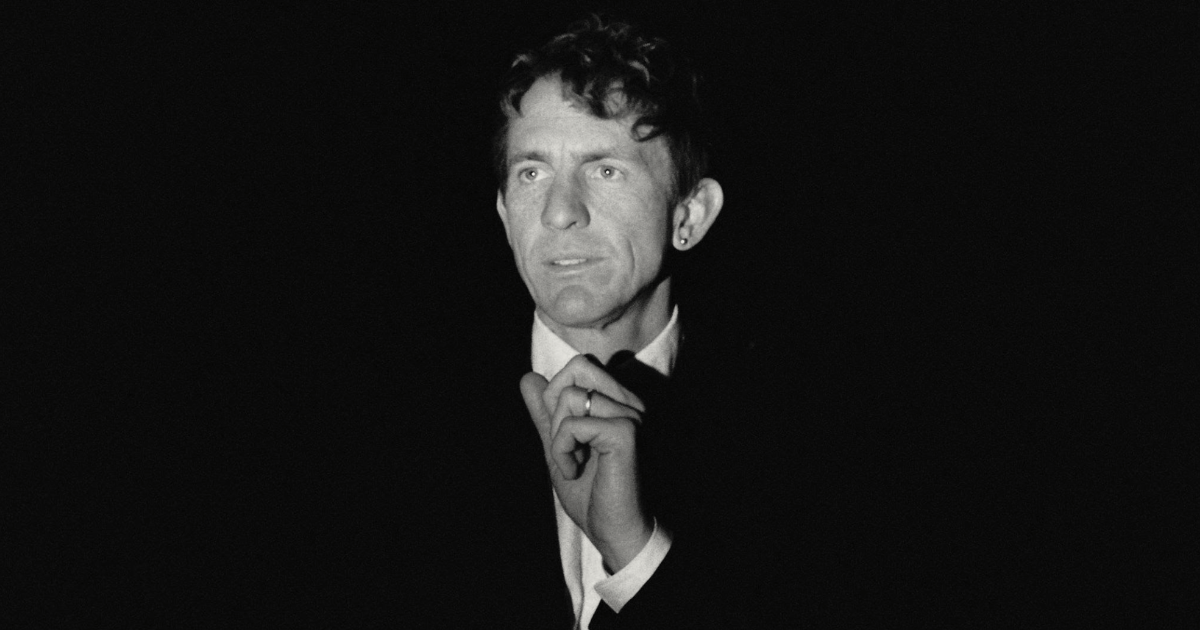
Buck Meek’s Musical Worlds Collide

Buck Meek doesn’t give the whole game away. It’s not guaranteed he’ll tell you exactly what his songs are about. However, he will expound, in detail no less, on how he gets himself in alignment to write them and what the mechanics of his songwriting process look and feel like. After six albums with Big Thief and four solo albums, most recently The Mirror, he has more than earned the right to hold back in some ways while sharing deeply in others.

Born and raised in Wimberley, Texas, Meek grew up playing guitar, singing, and writing songs surrounded by a community of old-guard outlaw songwriters, western swing players, and barrelhouse blues musicians who took him under their wing at a young age, taught him how to play it how he felt it, and gave him his first gigs around the Texas Hill Country. At the same time, annual trips to the nearby Kerrville Folk Festival introduced him to the rich traditions of Texan folk music.

As the grandson of scholars who studied the two Williams – Shakespeare and Faulkner – and the son of a child psychologist and a glass sculptor, it’s easy to surmise he was never short on literature and art. His depth of influence and fluency come through in how he speaks about his musical practice and his commitment to it.

When he was 17, Meek left Texas for Boston, where he studied jazz at Berklee College of Music before finding community with a generation of young musicians who wanted to write their own songs and play sweaty rock shows in basements. Later, he moved to New York, where he began performing with Adrianne Lenker. The two musicians lived in a van, singing their songs across the country before forming Big Thief. Fourteen years later, the East Coast’s long-standing punk and rock traditions are as much a part of his musical DNA as the Americana, country, folk, and blues he was raised on. The eureka moment came when he let his two worlds collide musically.

Produced by Big Thief drummer James Krivchenia, The Mirror features a stunning cast of family and friends turned collaborators, including his brother Dylan, Lenker, the hauntological harpist Mary Lattimore, Adam Brisbane, Germaine Dunes, Staci Foster, and the Avant-Americana icon and former BGS advice columnist Jolie Holland.

Opening with the range-roving rhythms and bittersweetly sung melodies of “Gasoline,” Meek digs into the intricacies of relationships and communication throughout the album, rendering them in a traditionalist alt-country and western style, underpinned by modular synthesis and subtle electronic textures from Krivchenia and engineer Adrian Olsen.

On “Can I Mend It,” he describes a deeply regrettable moment where raw emotions crystallize, before shattering into a million potentially irreparable fragments. As he laments on the chorus, “Can I mend it?/ Can I make it whole?/ Now that you’ve seen into the dark side of my soul.” Later, when Meek looks in the mirror on “Demon,” Olsen’s modular synthesis briefly overpowers the band with a not-so-subtle squelch. As with all parts of the album, there’s a reason for this.

By the time The Mirror closes with the summery, sunset shuffle of “Outta Body,” we’ve lived with Meek for a spell. Although, as he argues in this interview, we never really fully know anyone else, or even ourselves for that matter. Sometimes, when you look at someone from that right angle, or let our communication move beyond words, we achieve brief but precious moments of understanding.

On a Wednesday morning in early March, Meek spoke with Good Country by video call about all of the above and more.

How are you doing? What do your days look like at the moment?

Buck Meek: I just moved to Los Angeles. I got this big old yard, but the fence is kind of patchy. My little dog keeps running away. I’ve just been chasing my dog around every day. She keeps escaping and there are peacocks everywhere in my neighborhood. So my dog is just chasing peacocks all day long. I’ve also been trying to learn how to garden a little bit, planting some plants, and doing lots of interviews.

It’s one thing to be in a band that succeeds, but it’s a whole other thing to be able to have a solo career as well. What’s the difference between how things have played out for you and the future you imagined when you were younger?

I grew up playing blues, ragtime, and jazz manouche with some local cats, Django Porter and Brandon Gist, and playing in icehouses around the Texas Hill Country. I felt really happy when I played the guitar, and that was enough. I didn’t really have any idea what it even meant to be a musician in the world. When you’re a kid, you don’t know how any of that works. Of course, I idolized Jimmy Page and the like, but that felt completely out of reach.

Do you think what you’re describing was a common experience for musicians your age growing up in Texas?

I think the bar bands of the world are the modern folk musicians. Really, the people who are keeping the songs alive are the ones who have never made an album, or nobody’s ever heard of. The people who play in bars around the world in small towns. They’re the ones who keep the spirit of music alive. There is this incredible relationship between the elders at the bars and the little kids coming up as guitar students. Inevitably, the star kid, the kid who works the hardest, gets taken under the wing by the old-timer as their protege. There are these beautiful relationships that pass down knowledge. I think you find that pretty much everywhere.

I’ve gone on to have bands with names and travel around the world, but when I’m on stage playing guitar, it still feels the same as it did back then. It’s just me and my guitar. It’s a very simple form of happiness. It’s very fulfilling, whether people show up or not. There’s a life cycle to attention, but as long as I have my guitar, I don’t care.

At the heart of it, it’s about your relationship with your instruments and the musicians you play with, right?

Totally. In the words of Tom Sachs, the reward for good work is more work. As long as I get to do it again the next day, I’m good.

When you think about your career in Big Thief and as a solo artist, do you feel like you’ve mostly been able to do it on your own terms?

Yes, for the most part, but we’ve done it collectively. Everyone in Big Thief is very uncompromising in our own ways, but we all have blind spots. Because we’re a group of people, we’re able to call each other out on our blind spots, maintain our collective lack of compromise, and never sell out, never sell our souls. I’ve been lucky to be surrounded by people who have a perspective on that. We’ve done it on our own terms. I’ve definitely learned the power of that over the years.

Do you ever feel like you were born in the wrong era?

No, I don’t feel that way. I’m stoked.

What do you think the era you emerged within has afforded you that a previous era might not have?

Of course, it’s a two-headed monster, but access to communication, for example, how we’re talking now, helps so much. Not being beholden to a record label giving you a budget, and being able to record your own music at home is huge as well. Now, people are able to hear that music on Bandcamp or the like, which allows you to go and play shows around the world. That’s a very new phenomenon. It’s been a huge part of building my career.

When we started booking tours, we recorded our first album at our friend’s house. We were burning copies to CD-R, putting them in brown paper bags, and passing them out to anyone we could think of. We basically asked all our friends in Brooklyn if they had friends in other towns and got their email addresses. We’d email them our record and ask if we could play a show in the town where they lived. We just kind of pieced this tour together around the country.

We used the internet as a tool to get started, but we’d drive to these towns, meet these people, shake their hands, and become friends. Eventually, we moved out of our apartments, bought a crappy van, hit the road, and played a lot of shows: parties, basements, whatever. Getting in a room with people was essential.

How do you feel about going on the road by yourself?

Lately, I really enjoy traveling with a band. I’ve had some really good solo tours, especially down in the desert and around the Southwest. My friend Tony Presley, who runs the label Keeled Scales, released my first two solo records. He’s an Austin kid. He’s a booking agent as well, but he primarily books small towns and DIY venues. He booked a few tours for me around the Southwest. Taos in New Mexico, out in the desert, El Paso and Santa Fe. Little towns in Arizona, and out in the Hill Country of Texas, stuff like that. That’s always a lot of fun.

How much impact do you think the people you meet through these experiences have had on your music?

I think they’ve made me who I am, which has a big impact on my music. I mostly think of songwriting as the time I spend away from my guitar and my songs. I really try to put it down and just go out into the world and live my life. That’s the real work, living your life as a person in the world.

How close do you think we can get to truly knowing another person?

We never fully get there. I think the closest we can often get is by looking at them sideways or trying to find oblique solutions to communication. I think language is really powerful, but it’s limited. The space between words and conversations, and unspoken communication, often adds up to more of an understanding. The truth is, we never fully know ourselves either. So how can we know someone else? Often, I feel like it’s easier to understand someone else than to understand yourself. I think it’s just shifting constantly. There are moments of understanding, but there’s never any kind of permanence.

Tell me about the conditions under which your new album came together.

I spent a couple of years just living my life. I was living in a log cabin in Topanga and booked a recording date with my band about six months in advance. I sat on the porch every day for eight hours and wrote these songs. I’m blessed to have the resources to do that thanks to my label, 4AD. I put in the time to write the tunes, and then I brought the band together in the cabin.

We set up the big living room with the drums. I stood on the front porch and recorded the vocals outside with a big window into the living room. So there was enough isolation for the drums. Our producer, James Krivchenia, had this setup of electronic instruments and modular synths in the control room with our engineer, Adrian Olsen. They were using the live band as triggers for modular synths and some electronic synthesis feedback in the mix. The album was made live with my band. We moved pretty quickly. There was about a week and a half of tracking.

The other thing I’m the proudest of is how much fun we had making it. It was a great group of people. We had a blast cooking good meals, playing cards, and running around the woods. The music was just a small part of it. I’m glad I can share it as an artifact, but the experience was really the best part.

I thought it was interesting how subtle the use of modular synthesis was.

The entry point for the idea was to be pretty bold, but in practice, the band held a lot of space for the songs. James wanted to focus on the songs as the primary force. There were certain moments where the modular synth took the lead. At one point in the song “Demon,” it kind of takes over and swallows the band for a second. There’s this battle between the two worlds.

For the most part, it’s pretty subtle. For me, it represents the subconscious. The band is the conscious world – a structured, acoustic-instrument world. The electronic elements represent the subconscious. I speak about this in the lyrics of these songs, this kind of play between the conscious and subconscious, intention and intuition, and all these things. It’s subtle, but if you were to remove the electronics, the impact would be great.

It’s like Ernest Hemingway’s iceberg theory. You only ever see the 20% of the iceberg that floats above the surface.

I think having a nod to this limitless space, this ambient world where there’s no grid, no structure, not as much transient energy, this textural, abstract, liquid aspect of the album, opens up the subconscious a little bit in the listening experience.

While listening to The Mirror, I thought about how no one has a monopoly on interiority. Just because someone doesn’t say much in a conversation doesn’t mean they don’t have a lot going on upstairs.

I like playing with that in songwriting. I feel this pressure to be precise and create a very clear map and logic for people to follow. My ideas have to be very concrete, but that’s a rule I’ve imposed on myself. It’s exciting to be able to, to some degree, reveal an abstract inner world amid structure and logic.

I know that pressure is self-imposed or has been projected onto me by society at large. It’s something I try to push back against, while still honoring the medium. There’s a reason that people want some form of relativity or underlying structure. There is always a need for a starting point in communication, but I think we must know when to depart from that structure to express the full spectrum of our ideas and truth. There’s a balance. It’s important to honor it, because otherwise you’re just isolating yourself.

When did you start thinking about songwriting in the sort of terms you’ve just articulated?

I started writing songs in high school as a confession to my high school crush. I just wrote a love song for love’s sake. It was no more complicated than that. I think that’s really the heart of a song. Ideally, for me, a song has a reason to be. It comes from some form of compulsion, or a need to articulate something or to create an artifact, to be able to pull something out of your body and observe it as some form of catharsis. To me, those are the best songs, but there are no rules for the context.

How did you develop your approach to it all?

As I started writing, my self-education was mining the world for songs that, for lack of a better term, felt good. I was trying to find songs that really moved me. Intuitively, I started trying to understand why a song makes me feel something. I’d unpack every word and learn the song and the melody while trying to understand the relationship between them. I wanted to understand how the melody sanctified the lyric and what the rhythm had to do with it.

Let’s talk about taste. There’s a constructed taste you can use as a tool to help people understand where you are. Then, there are those songs that you might not even think you like, but they make the hairs stand up on your neck.

The older I get, the more willing I am to accept those things for myself and really listen to that intuition. As a young kid, I was obsessed with pop country. In my teenage years, I rejected it. When I listen now, it still hits me in the same way it did when I was six. I’ve learned to embrace that. Sometimes, you’ve got to be able to come home. I think with this album, I was thinking about moments when my body wanted to say something, but my mind would kick in and say, “Oh, the critics won’t think that is cool, hip, or smart enough.” I had to lean into those lines and say them twice, say them louder. If you can do that, no one can touch you.

Have you ever thought about how lakes and streams were the original mirrors?

Yeah, ponds and lakes and puddles and things. Good point. They’re still enough to provide a reflection, but also fluid enough that you can throw a rock in and diffuse them. There’s still a relativity to it, which is more true to what a reflection really is. There’s some form of objectivity, but to some degree, it’s just a construct.


Photo Credit: Germaine van der Sanden

BGS 5+5: Frank Viele

Artist: Frank Viele
Hometown: New Haven, Connecticut
Latest Album: The Silo (EP)
Personal Nicknames (or rejected band names): I have no personal nicknames. Really.

Which artist has influenced you the most – and how?

In my formative years, it was Dave Matthews Band. I saw them live 137 times before I graduated college and basically learned how to play guitar in the parking lots of those shows. That constant-strum acoustic style Dave is known for shaped my right hand as a player from day one and still guides the way I play.

Beyond that, I’ve studied all the great songwriters, but I always lean toward heart-on-the-sleeve emotion – that raw, unfiltered passion you hear in Bruce Springsteen or in old soul records like Percy Sledge and Otis Redding. The kind of singing where it feels like the person might crack open mid-line. That honesty is what I chase every time I write or step up to a mic.

What’s your favorite memory from being on stage?

Almost a decade ago, I got to open for Blues Traveler in front of nearly 5,000 people at a festival in my childhood hometown – on the same field I used to play tee ball on. That was a full-circle, surreal kind of moment.

The only things that might top it are the first time Zach Myers from Shinedown pulled me on stage to sing “The Weight” with his Americana project, Allen Mack Myers Moore. Or when John Waite invited me up on stage in the Boston area to sing backup and play guitar with his band on Led Zeppelin’s “Whole Lotta Love.” Those moments as a growing indie artist where one of the greats treats you like a peer… that stuff sticks with you forever.

What has been the best advice you’ve received in your career so far?

My first run of shows opening for Lee DeWyze back in 2015 had me pretty nervous — I mean, that guy can really sing. I think he could sense it. Before the last show of the run, he came into my green room just to hang out.

He said, “I’m going to give you some advice Joe Cocker gave me before we sang together on American Idol. Remember, everyone out there is rooting for you to be great.” That completely changed how I see a stage. I had an incredible show that night, and I carry that with me every time I walk out.

A close second came from Christine Ohlman, who I perform with each year at the Rhode Island Rhythm & Roots Festival. I was nervous before a set because the crowd kept growing, and she just smiled and said, “Just take ’em to church, Frank.”

So now that’s the mission every time – remember they’re rooting for me, and always take ’em to church.

Does pineapple really belong on pizza?

Being from New Haven, Connecticut – the pizza capital of the world – I feel obligated to answer this one sternly. I respect the idea of using pizza crust as an edible plate and experimenting, but pizza basically reached perfection when Pepe’s put clams on a pie. After that, we were done. We nailed it.

If you want pineapple, call it something else. Flatbread. Dessert bread. A tropical situation.

But the word pizza needs boundaries. As I say this, I also want to stress that I’m joking. And as much as I love pizza my way, I love chefs that treat their meals like art, and art can assuredly be experimental.

Since food and music go so well together, what is your dream pairing of a meal and a musician?

After that last question, you’ve got me in a full Italian food headspace. So give me my mom’s pasta e fagioli, an arugula salad with fresh tomatoes and my dad’s homemade lemon vinaigrette, and a basket of garlic knots from Salerno’s in Stuart, Florida.

All of that on the table, a bottle of red open, and Sinatra’s Songs for Swingin’ Lovers! spinning on the turntable.

That’s home.


Photo Credit: Lisa Sanchez Gonzalez

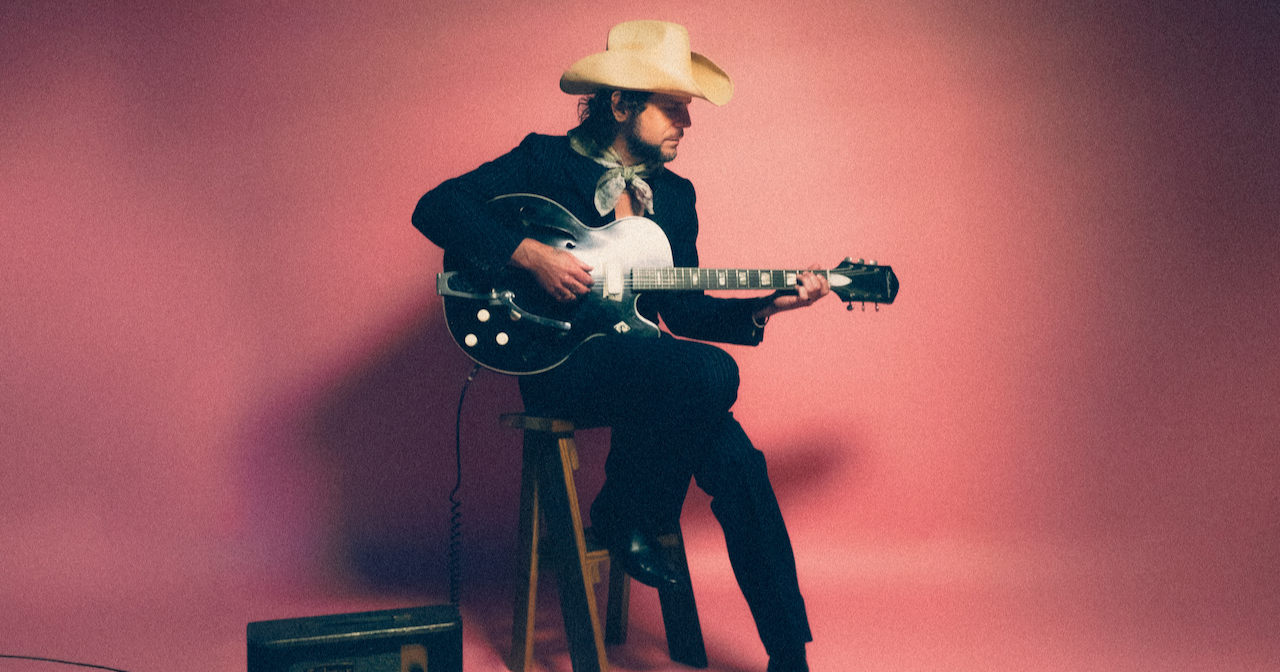
Langhorne Slim Takes Chances and Rocks Out

For more than 20 years, Langhorne Slim’s folk-leaning songs and rebellious nature have captivated crowds across the world. That trend continues on his ninth studio album, The Dreamin’ Kind, which takes a page out of Dolly Parton’s book and pivots toward rock ‘n’ roll in what’s arguably his most eye-opening collection of songs to date.

Out January 16 on Dualtone, the album is something Slim had long desired to make, finally coming to fruition after he had the opportunity to open for Greta Van Fleet at a show in Connecticut in 2021. The moment came mere months after having dropped what would be his debut on the Billboard Hot 200, Strawberry Mansion. But according to Greta’s bassist Sam F. Kiszka – who produced The Dreamin’ Kind – that wasn’t the band’s introduction to Slim. They’d been fans of his long before.

“I remember hearing Lost at Last, Volume 1 for the first time and it absolutely resonated with me,” Kiszka said in a press release. “[Slim] has the conviction of a hundred singers. He puts his entire body and soul into it. I listen to ‘The Way We Move’ and I think, ‘That’s a rock ‘n’ roll song, right there.’ Rock ‘n’ roll isn’t a sound, necessarily. It’s an energy, and he’s got it.”

Although the production takes on a strong Greta Van Fleet flavor on songs like “Haunted Man” and “Loyalty,” The Dreamin’ Kind also mixes in Slim’s folk-fueled identity as well, painting a sonic canvas that shows both where he’s come from and where he’s headed. Others, like “Strange Companion” and “Rickety Ol’ Bridge,” bring stylings together, with fuzzed out guitar licks and backbeats that portray a more folk-oriented stomp and clap mentality.

Ahead of the holiday season and a weekend run of shows opening for comedian Jordan Klepper (more on that below), Slim spoke with BGS about what inspired his foray into rock ‘n’ roll, how a letter inspired one of its songs, and how working with Greta Van Fleet’s Sam Kiszka and Daniel Wagner pushed him creatively.

What was your motivation for making the pivot to rock ‘n’ roll this deep into your career?

Langhorne Slim: It’s been a dream of mine for a long time. Some of the songs are definitely more of a departure from what I’ve previously done than others, but I don’t think that’ll come as a surprise to people who’ve been following me for a while now. Our live performances have always taken a page out of punk rock and rock ‘n’ roll, in addition to soul and folk music – genres be damned. Regardless of what it sounds like, most people just want to be moved by music.

When I first got started, I was playing a certain way, then a record deal followed and before you know it you’re forming an identity. But I eventually reached a point where I still loved my folky songs, but if I met new people or a fresh opportunity came about that would push me creatively, then let’s go for it! As I’ve grown older and built a family I think more and more about the identity I’ve built and what else is there when I start peeling back those layers – what else do I want to express? How might I want to use my voice or the instrument I play differently?

Rock ‘n’ roll was the natural progression of that, so when I became friends with Sam and Daniel from Greta Van Fleet, I think they saw that in me. From then on there was no pressure, we were just in it to have fun.

So this is something you’ve been wanting for a while, you just needed to find the right people to work with for everything to fall into place?

I’d been talking to a couple friends and people I admire about how when I made [2005’s When The Sun’s Gone Down] I wanted something at the crossroads of bluegrass and punk rock, like the Violent Femmes. I didn’t necessarily want to copy their sound, I just felt a kindred thing with their influences. So with [The Dreamin’ Kind], in my mind I was going for a garage rock meets gospel thing. I wouldn’t say that’s what the record actually became, but how I collaborated with Sam and everyone else for this record was so different from how I’ve worked in the past.

I liken it to a pitcher in baseball. As artists we sometimes focus too much on our strengths or “strong arm,” but I’ve only got so much time to live and I’m hungry to create. Before music my first thought ever about creating something had to do with building robots. With that in mind, the possibilities are endless when you think about all the people you could potentially collaborate with and the different creative bursts that could come from each.

That reminds me of something Ketch Secor told me in an interview a few months ago – “I am a container of multitudes.” It sounds like you’re the same way?

Ketch has been doing Old Crow for even longer than I’ve done my thing. I’m not somebody that says I don’t care if it lands, because I do, but most importantly I want my longtime supporters who’ve been so good to me to connect with this record. I’m not the first songwriter or creative person to say you can’t do the same stuff over and over, and I won’t be the last. At the end of the day, the power of music comes from the wonder and awe it provides us, so if what I’m doing doesn’t give me that same feeling then I’m not doing my job for the people, the energy and whatever else provides groove, melody and beauty in the form of music.

Another way you’ve pushed yourself outside your comfort zone lately has been on your gigs opening up shows for comedian Jordan Klepper. How did that connection come about and what have you learned from playing to a comedy show crowd?

I first met Jordan because my best friend Joel is a cameraman for The Daily Show. Jordan went on to officiate his wedding and through that Joel turned him onto my music. From there, we hit it off at the wedding and about a year later I got an email from Jordan about coming out and opening a few shows for him, which I was thrilled to do because, like you said, it’s out of my comfort zone. I knew there’d be a lot of people in the crowd not familiar with who I was.

That mix of excitement and fear reminds me of early in my career living in New York City, when I became friends with Eugene Mirman, a well-known comedian best known right now for his work as Gene Belcher on Bob’s Burgers. He had a comedy show on the Lower East Side that he’d invite me to be a regular musical guest on, so I did have experience playing comedy shows where nobody knew me. [Laughs] At one point Eugene invited me to play on a comedy tour that included him and a few other comedians who went on to make it big, like David Cross. They’d do their sets then I’d come out with my little hat and funny outfit and the entire crowd would start laughing thinking they were in for some musical comedy, but I was just playing my regular songs.

It was a tough place to break through at, but it taught me a lot. Jordan’s crowd is a little different though, because there’s people in the audience who actually know who I am, which is nice. I also try to cater the songs I play to his show to make them more topically relevant. It seems to be resonating so far – the reception I’ve received at the shows has been wonderful and beyond expectation.

It’s such a treat being on tour with a comedian, because when I’m on the road with another band I’ve found that I can’t watch them without analyzing and thinking how I could pull off what they’re doing. It’s hard to not put oneself in it, whereas watching a comedian it’s a lot easier to sit back, because it’s the same monologue and jokes. It’s how they’ve mastered the art of timing to add emphasis and help the joke land. It’s really fun to observe because I’ll just be sitting there laughing rather than wondering how I’d tell that same joke since it’s not the art form I do.

Sounds like a dream come true, which is also the name of one of the album’s songs. Is that a tune about manifesting the vision you have for your future, or are you unpacking something entirely different there?

You’re spot on. I wrote a letter to somebody, because my partner and I were thinking of moving out of the city and getting this country property, but it was way more than we could afford – I didn’t even know if they were gonna let our raggedy butts in there to take a look at it! So I wrote a letter to this woman and at the end I wrote, “It might be a long shot, but without a dream you can’t have a dream come true,” which also pulls a bit from Hammerstein’s “Happy Talk” (“If you don’t have a dream/ How you gonna have a dream come true?”).

On more general terms, it’s a song about casting aside your doubters and anything else in life that tells us to conform or dims the fire burning within us.

Like you said, you might not have gotten the house, but at least you got the song!

I look back now and there’s songs where I may not have gotten the girl (or in this case, house), but I did get the song, and that’s lasted longer than any relationship probably would. [Laughs]

Songs are like little miracles in that way.

While “Dream Come True” is all about looking ahead, you seem to be looking back on “Stealing Time” – which I’ve interpreted as a song about cherishing your moments with others and not taking them for granted. Is that the case?

There’s some reminiscing I’m doing on that one, too. Being a fairly new dad and sober man, I’ve noticed that being present and giving myself to and receiving somebody else’s time or energy is so rewarding. It’s so easy nowadays to run from our emotions and thoughts, which I used to do a lot with alcohol and drugs and all of us do now with our phones. There’s so many different ways that manifests and plays in my mind.

That song is also a phenomenon of love and infatuation and how one’s heart can be so on fire for somebody that closes theirs off to you. It’s like [Gotye’s] song “Somebody That I Used To Know” in that way.

Another song I wanted to ask about is “Haunted Man,” which to me comes off as the most Greta Van Fleet-sounding track on the album. What was the process for bringing it to life?

That song is the most collaborative that I did with those boys. It was also the tune that I fought Sam on the most, as far as not thinking it’d be a good fit [for the album]. Even after recording it, I didn’t think we’d include it as one of the dozen tracks, but Sam insisted I sit on it. Once all the songs were done I remember walking around my neighborhood pushing my son Silver in his stroller, listening to the songs, and making a mixtape of what stuff went well together. It was then when my perspective on the song changed and we decided to include it. Since then, the song has grown to become one of the most-liked tracks among our friends, which made me both happy and sad at first due to my ego. It’s easily the most different song on the record from what anybody’s heard me do before.

You just mentioned not thinking “Haunted Man” would make the cut onto the album. Does that mean you have extra material recorded we might hear more of sometime down the road?

For the basic tracks we spent nearly three weeks in the studio, with the first half with the Greta boys – me, Sam, Daniel, my dear friend Casey McAllister [who plays keys in my band], and multi-instrumentalist Cameron Neal [who mainly played electric guitar]. That portion was supposed to be the “rock” record, then for the second half I brought in my longtime band, The Law, to record a bunch of different stuff.

The plan was for them to be two separate records, but we wound up mix-matching a bit. Because of that, we have a bunch of leftover stuff we captured that I hope will be on my next record.

What has the experience of bringing this rock ‘n’ roll record to life taught you about yourself?

Do what scares you. See what else is there and burning inside you, don’t be afraid to take chances and rock out. I just want to keep making music that moves me and inspires other people. I never want to feel like I’m stagnant or compromising parts of myself.

I want to kiss the spirits in the way I feel they’ve kissed me so that I can give my all to the music.


Photo Credit: Kate LaMendola

BGS 5+5: Jess Jocoy

Artist: Jess Jocoy
Hometown: Bonney Lake, Washington (South Seattle region)
Latest Album: Cul-de-Sac Kid (released October 24, 2025)

What’s your favorite memory from being on stage?

There have been so many cool moments on stage, but the first one that comes to mind would probably have to be the first time I played a Sunday Spotlight show at the Bluebird Cafe here in Nashville. My mom has a picture hanging on the wall of me, almost in this euphoric state, and I think that encapsulates the night perfectly. It was my first time playing the Bluebird and it just so happened to be my birthday. The Sunday Spotlight shows are full band, so I had the privilege of sharing the moment with some dear buddies and my family and friends. It was just really, really special.

What has been the best advice you’ve received in your career so far?

Honestly, the best advice I’ve received hasn’t come from the industry, but rather my family. There are a lot of “best practices” and “you need to do this in order to achieve that” kind of advice that goes around and all of that can get overwhelming. In a time when I was really carrying the weight of anxiety from this (especially in my younger years), it was offered to me that I should “filter in what I need and filter out what doesn’t serve me.” It took a little bit for that notion to sink in, but once it did, I started to enjoy music more in the same way I did before I started chasing it as a career.

Genre is dead (long live genre!), but how would you describe the genres and styles your music inhabits?

I think my music is a collection of what moves me: I have always loved country music – the twang, the storytelling, the fearlessness to be real. And sometimes just the simplicity. I’m also influenced by music that is ambient and ethereal and almost cinematic, often found in post-rock instrumentals or even movie scores. I’ve been leaning into this idea of “cul-de-sac country,” because my music hasn’t really ventured too far into twangy (just yet! but there’s always room to keep exploring), but I so appreciate the depth of a good story in a song and a “swelly” instrumental, so my goal is to find a crossroads somewhere in there.

What is a genre, album, artist, musician, or song that you adore that would surprise people?

I love Irish/Celtic music (instrumental, ballads, jigs/reels) — all of it. One song I love that might surprise people is “The Parting Glass” (ironically enough, though, my favorite version I’ve heard thus far is Abigail Washburn’s). I just love everything about that genre and style of music. It can be fun and dance-y or lilting and heartbreaking. It’s great!

If you were a color, what shade would you be – and why?

I blame my roots in the Pacific Northwest for my love of a deep green! It’s earthy and moody and can go with dang near everything!


Photo Credit: Sam Wiseman

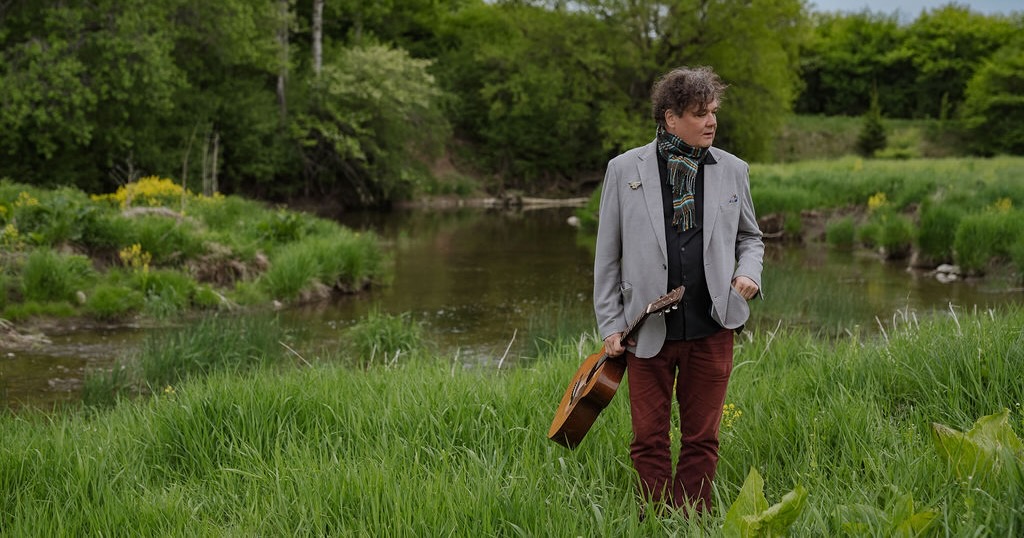
Hangover Terrace Shows There’s an Edge to Ron Sexsmith

Now appearing in the role of nasty Bill Sikes in the musical Oliver!Ron Sexsmith?

Well, not exactly. But Sexsmith had the character of Sikes in mind (specifically as played by Oliver Reed in the movie) when he wrote the original version of “Damn Well Please,” a jaunty, pointed highlight of his new album, Hangover Terrace.

The song was initially intended as part of a musical Sexsmith was creating based on Deer Life, a fairytale book he wrote and illustrated, that was published in 2017.

“There’s this villain character that was going to sing that song,” Sexsmith, a great fan of classic musical theater, says on a video chat with BGS from his home in Stratford, Ontario, Canada. “I just remember thinking how Oliver Reed played Bill Sikes. But he didn’t sing, because the director said as soon as the villain starts singing it takes away from his threatening element. And I thought that was smart.”

So, while he is still looking to bring the musical to the stage, he had put this song in a drawer. Eventually, though, he reworked it as a screed against what he sees as oversensitivity endemic to our era, with everyone so easily offended, and set it to perky Baroque-pop music and a tone bearing more than a shadow of classic Ray Davies.

“I refashioned the lyrics to be more about a kind of grumpy, bickering kind of thing,” he says. “Just because sometimes I’ll get mad or because [he and his wife Colleen Hixenbaugh] will bicker sometimes about my wine consumption. And I’ll be like, ‘I can have wine.’ Or whatever. And I just felt that it was fun to sing. We tried it out in a concert recently and it went over really big.”

Now, just in case you’re confused, yes, this is that Ron Sexsmith – Mr. Sensitive himself, Mr. Melancholy, Mr. “Secret Heart” (the first song on his first real album, 1995’s Ron Sexsmith, and arguably his most enduring and much-covered number). All vulnerable and romantic.

Yes, it’s him, the guy known for wearing his heart on his sleeve, weaving his feelings into stunningly indelible melodies sung with engaging understatement, all endearing him to fans throughout North America and Europe, earning him 15 Juno Awards (including eight as Canadian Songwriter of the Year) and a 2010 documentary, Love Shines. The guy who has been lavishly praised by countless fellow artists, notably among them Elvis Costello, Nick Lowe, Steve Earle, Daniel Lanois, and Feist.

That Ron Sexsmith is here, slinging arrows at people he sees as too sensitive. “I’m intent on poking the bear,” he sings.

“It’s just kind of a song about the culture we’re in now, there were a lot of people tip-toeing around and afraid to offend all the time,” he says of “Damn Well Please.” “And I think maybe we’re coming out of that a bit now. When I played it live, there were some people who came up afterwards and told me they found it really empowering.”

He laughs.

“I don’t want to empower the wrong people, though.”

The fact is, he is feeling empowered to show that edgy side a bit more. While there is plenty of the sensitivity, the romance, the explorations of heart on this, his 17th studio album in three decades, there are several songs that show this trait, lashing out some at matters both cultural and personal.

In “Camelot Towers,” another with a clear nod to his Kinks devotion in its sharp view and Baroque-pop tones, he expresses disgust at the proliferation of fancifully named housing projects that in reality are blights. In “Outside Looking In,” with Hixenbaugh chiming in as something of a Greek chorus, he suggests that “some friends should come with expiry dates.”

Mr. Costello, one of his biggest heroes and biggest fans (as a songwriter he has ranked Sexsmith with Paul McCartney and Tim Hardin), famously arrived in the punk era bearing the tag of “angry young man” before later evolving with great emotional nuance. Has Sexsmith gone the other way, from genteel young balladeer to, at 61, an angry, uh… mature man?

“I guess it’s better late than never,” he says, a wry smile and shrug tilting his country-gentleman hat and large wire-rim glasses.

“I mean, my earlier albums were more melancholy and kind of sad, just based on what was happening. But I had a song on [2004’s] Retriever called ‘Wishing Wells’ that was kind of angry. And I’m sure I could go and find those songs throughout my career. They exist before this. Maybe they don’t all exist in one place like on this album.”

Make no mistake: He still wears his heart on his sleeve. In fact, the opening line of “Easy For You to Say” is “I wear my heart is on my sleeve.” And the very first words of the album’s first song, “Don’t Lose Sight,” are “Hearts get broken,” sung with great vulnerability.

In other places there’s the romance of wistful, poignant nostalgia, as in “Cigarette and Cocktail,” a colorful portrait of the seemingly carefree life of earlier generations with “a cigarette in one hand and a cocktail in the other.”

“I wanted to express the full range of emotions, human emotions. I don’t want to be the master of one emotion, like some people do these days. ‘That’s the guy who writes all the sad songs,’ or ‘that’s the guy who writes all the ironic songs,’ you know. I want to be an actual human being.”

Hence Hangover Terrace spans from pastoral (“House of Love,” a lovely ballad with brass that’s an ode to “a dirty happy home” filled with play and laughter) to perky pop (“It’s Been a While,” his account of a reunion with his old bandmates, with “shades of our yesterdays” and ‘80s-ish Casio-like keyboard lines) to pumping power-chords (“Burgoyne Woods,” with a little spirit of the Who). Produced by Martin Terefe – who has worked with artists from James Blunt to Engelbert Humperdinck and produced three Sexsmith albums in the 2000s – at his bustling London studio complex, it features among its musicians former Pretenders/Paul McCartney guitarist Robbie McIntosh (he provided the Townshend-esque licks to “Burgoyne”) and keyboardist Ed Harcourt (a fine singer-songwriter in his own right). But for the variety, or because of it, there’s a flow, an arc – it’s not a big leap to imagine the album as being the tuneful bones of a musical or narrative song cycle.

“I think I could probably write a story where these songs would fit,” he says, noting that no one had mentioned that before. “In all my albums there is a document of a particular time or phase that I was going through. So definitely with this record it was coming off the heels of the pandemic and all that stuff. You could probably write a story. I don’t know if I’m the guy to do it. But yeah, I’m going to think about that.”

Much of this, he says, reflects the life he and Hixenbaugh have led since moving from Toronto to Stratford seven years ago. Especially the theater orientation.

“Stratford, where I live now, is an internationally renowned theater town,” he says. “People come here from all over to see the plays and musicals. Maggie Smith worked here, and Christopher Plummer. I really love the theater and feel we’ve landed in a kind of oasis. The world is going crazy and we’re going to plays and all. I can’t believe our luck that we ended up here.”

Even outside the theaters, in this Stratford, as that bard from the other Stratford put it, all the world’s a stage. The players there? Superb. And for this Canadian bard?

“It’s been inspiring,” he says. “We have a yard with all these critters running around, like rabbits and things. We had an owl. Didn’t have that in Toronto. I feel like Beatrix Potter or Huckleberry Finn. It’s a whole different way to live.”

That has also brought out a wistfulness that counters, or at least complements, some of the hotter feelings expressed. Take “Burgoyne Woods,” a look back to a time in his life when the world was open and the radio rocked.

“It’s a very nostalgic song for me,” he says. “Every song on this album has its own character and personality. Here, I like rock. I love The Who and all that stuff. I was trying to write that kind of thing they do. It’s about a time in my life with my high school friends and we’d just go on trips through the woods near our house.”

That was his hometown of St. Catherines, down near the Niagara Falls/Buffalo area.

“It was that free-range period where your parents don’t know what you’re doing,” he says. “You’re just out there and just, you know, doing things you shouldn’t do. And drinking.”

So sort of his “Cigarette and Cocktail.”

“Yes,” he says. “Exactly.”

Even in “Camelot Towers” Sexsmith has found himself considering the humanity within the walls of the eyesores. “I’m just noticing, I mean, obviously people live there and they make the most of it,” he says. “And my son [one of two adult children from a previous marriage] lives in a place like that. You walk the halls and you can hear the people or you smell the different foods that everyone’s cooking. I kind of get into that in the last verse. Everybody needs a home and a home is what you make it.”

So yeah. Mr. Sensitive hasn’t gone anywhere.

And how does he bring the curtain down on Hangover Terrace? Well, he’s sensitive there too. Several songs before the album’s close, in “Please Don’t Tell Me Why,” a buoyant folk-rocker reminiscent perhaps of the Beatles’ “I Will,” he lets us know what to expect, or not to expect. He’s all about cherishing the moment, relishing the life and love he’s built with Hixenbaugh, savoring the theater and the wildlife around their home, without looking down the road:

I don’t want to hear
Don’t want to know
The trouble that surrounds
The happiness we’ve found
Don’t want to see
The way our story ends

That might even bring a tear to Bill Sikes’ cold eyes.


Photo courtesy of Cooking Vinyl.

The Wood Brothers Appreciate Their “Slow Rise to the Middle”

Raised by a creative writing teacher and a music-playing biology professor who occasionally picked with Joan Baez, Oliver and Chris Wood were both destined for careers making music. Following time apart in the ‘90s – Oliver in Atlanta playing with King Johnson and Chris in New England staying busy with Medeski Martin & Wood – the Wood Brothers came together in the early 2000s during a co-bill between their bands in Winston-Salem, North Carolina.

And they haven’t looked back.

In 2004 the Wood Brothers – their trio rounded out by multi-instrumentalist Jano Rix – officially arrived. Two years later came their debut record, Ways Not To Lose, and with it signature hits like “Luckiest Man” that over two decades later continue to stand the test of time, even as the trio’s sound shapeshifts. That sonic evolution is front and center throughout the band’s latest effort, Puff of Smoke, which features everything from boisterous horns to slippery synths and a bevy of world influences stretching across multiple continents.

Wrapped up in the 11 songs’ American-rooted and globally influenced aesthetic is a feeling of mindfulness that ranges from serious (“The Trick”) to comedic (“Pray God Listens”) and borderline cynical (“Money Song”). A prime example also lies within “Slow Rise (To The Middle),” an autobiographical ballad about the band’s methodical rise to making and maintaining a stable living from their music – as opposed to an overnight rise to stardom that oftentimes fizzles out in the most dramatic fashion.

“The lyrics are pretty abstract, but they’re pretty specifically about all the people who had the meteoric rise and died because of a plane or motorcycle crash or even an assassination – as was the case with John Lennon,” explains Oliver. “We were thinking of very specific people in rock ‘n’ roll who burned out and died young when they were at the top of their game. With that in mind, it’s almost a song of real gratitude that that didn’t happen to us.”

Ahead of the release of Puff of Smoke Chris and Oliver caught up with BGS to discuss the band’s roots, trajectory, experimental nature, mindfulness, and more.

(Writer’s Note: The following includes two separate conversations combined into one and edited for clarity and brevity.)

What was it that brought [Oliver and Chris] back together after over a decade apart to first form the Wood Brothers?

Oliver Wood: Having lived apart so long and played in different musical circles we were somewhat disconnected – both musically and and just as brothers – but we did stay in touch. In Medeski Martin & Wood’s early days they used to come to Atlanta and sleep on my floor before they blew up. I was always interested in the music [Chris] was making and he was interested in music I was making, but we just weren’t close.

At one point, it just happened that we played a show together where my band, King Johnson, opened for them – I believe it was at a place called Ziggy’s in Winston-Salem, North Carolina. We ended up having the best time and then they asked me to sit in with them on guitar on a few songs. [Medeski Martin & Wood] didn’t have a guitar player and I wound up fitting right in with what was going on [that] night. During it we stood next to each other and felt like we could just read each other’s minds, like we had this uncanny psychic (and obviously genetic) connection, musically.

In spite of the differences in the music that we were playing there was a lot of overlap. Both bands were really into traditional American music like blues and funk and jazz. It was like a musical conversation that went really well, so from then on Chris and I made efforts to play and write music together when we visited our family or had gatherings purely out of joy.

We had this thing in common, were all grown up, and had shed some of that brotherly baggage that family bands who’ve been playing together since they were kids sometimes have a harder time shaking, because they don’t never get a chance to form their own identities and feel like they’re their own person. It made it especially exciting to join forces and see what kind of recipe we could come up with everything we’ve learned over the years.

Chris Wood: One thing that’s not obvious looking from the outside in is how much overlap there was with [Medeski Martin & Wood] and what [Oliver] was doing with King Johnson. MMW formed in New York City in the early ‘90s in a very particular music scene where we were always trying new things and mashing together genres and finding new ways to play instruments. We operated with a fringe set of influences that included field recordings from West Africa and all kinds of other weird things that were out there compared to contemporary classical music, but when King Johnson opened for us in the early 2000s and Oliver sat in with us there was an immediate connection. In a way, it almost felt like I was watching myself playing because I could relate so well to his musical choices and approach to playing. He was a natural fit, leading to a moment that sparked the thought about doing something together that has lasted for over 20 years now.

It sounds like the time you guys spent apart has been critical to the bond you have, both as brothers and as bandmates, now over 20 years into the band’s life.

OW: Exactly! And I would say it also contributed to the unique sound that we were able to create because we were bringing some pretty different things to the table. I was really into blues and roots music and Chris went more of the jazz route, but he always said, “Well, what if you mixed Charles Mingus with Robert Johnson or Willie Nelson?” So the idea was to fuse together some things that you haven’t heard yet.

I feel like Puff of Smoke, with its barrage of horns and synth-heavy moments, is a prime example of that fusing together you speak of. What led you to incorporating more of those sounds on this album?

OW: Well, I think that’s always our goal, trying things we haven’t done yet. And a lot of times the metaphor for me is that we’re just trying different recipes. I’m still going to play guitar, Chris is still going to play bass, Jano is still going to play drums and keyboards. There’s going to be singing, there’s going to be familiar sounds, but we think of all these ingredients. There’s Calypso and African music and Chicago blues and gospel and a bunch of other things. These ingredients aren’t uncommon, so what makes artists unique is what they come up with from those sounds.

Oftentimes when we go in to make a record, it’s not conscious like, “Oh, we’re gonna make this kind of record.” We just know that we’re not going to do what we did last time or what somebody else is already doing, if we can help it. We’re trying to find something new that excites us and what that looks like is sometimes having a song written and ready to play, but going into the studio and saying, “I’m going to use this weird guitar that kind of sucks and see what it does.”

There’s an infinite number of combinations and ideas you can apply in the early stages of recording that really influence how different it ends up being. Our philosophy is to create a new recipe each time, which is why it’s so hard to pigeonhole us. That’s not good for business sometimes, but at the same time that’s what we’re going for because we’re trying not to fit in.

CW: We never know what we’re gonna do. What we end up doing is always based on what we’ve done in the past, which is wanting to push boundaries by continuing to evolve and try things we haven’t done before. Over the years we’ve surrendered to the fact that good things happen with the music when we’re not in control and we’re just paying attention to what’s happening and following each other’s lead instead of having a hardened idea of what things should look like. Usually that’s what kills the creative spirit, so relinquishing that control has always been a big theme for us.

We all have a lot of respect for each other and our opinions. Creating artistic things can be a rabbit hole that you get lost in quickly, so being around people you trust can prevent you from doing that in favor of encouraging you when something is really working that you couldn’t even see yourself. When we bring a song we’ve written into the studio, we have absolutely no idea how it’s going to turn out because even though there’s lyrics (and maybe even a key) we make a lot of very spontaneous decisions about what kind of guitar to use or which drum set should there be. Every little decision like that leads to a new spontaneous reaction to how that instrument is sounding. That in turn makes us play a certain way, then by the time the songs are on tape we’re all blown away at how differently it turned out than we would have ever thought.

A big theme throughout these new songs is mindfulness. Can you tell me about how y’all practice that, both in your daily lives and your musical pursuits?

OW: For any artist, whatever’s going on in your life or the world around you makes appearances when you’re writing music – it just seeps in there and gets baked in you. Over the years, all of us in the band have been trying to live a certain way by learning methods and tricks to finding peace and fighting depression and the scary changes going on in the world while continuing to stay connected with people. I’ve always written like a cheerleader for myself, like “The trick is not to give a damn,” but by no means am I a master of any of that stuff. It’s a reminder to myself and others to always keep that on your radar. But on “The Trick” I follow that line with “Good luck,” so there’s a little bit of cynicism there too. Another song, “Pray God Listens,” is meant to be a little humorous and a little cynical of God, but also hopeful. It’s also about wanting to believe that God is listening and that I’m skeptical, but haven’t given up.

CW: [Mindfulness is] a constant recurring theme for us, even going back to [2023’s Heart Is A Hero] and the idea of remembering to remember. I think the hardest thing about presence and mindfulness and being an agent of your own emotions is just remembering it’s even an option. We get so carried away by the constant churning of our minds that you forget it’s even an option to not take that stuff seriously. There’s lots of references in our music about that – this weird storytelling device that we have between our ears that never shuts up and how to live with it – and the idea of control and surrendering to the fact that the only thing we can control is to be present. A lot of our anxiety stems from not knowing what to do, but if you just pay attention to your environment it tells you what to do.

This becomes really useful for us when we’re on stage in front of a bunch of people and the part of your mind that takes credit for and wants to be good doesn’t want a slow rise to the middle but instead wants a meteoric rise to the top and will start fixating on how to be great at something to the detriment of not paying attention to what’s happening around you. For me to play a good bass line I don’t need to listen to myself, I listen to the drums and guitar and those tell me how to play. That’s what presence is for us – it’s allowing our environment to tell us what to do, not trying to figure it out alone.

Another way of describing the themes on this record is impermanence. Things happen and then they’re gone. We have very little control over most aspects of what happens in the universe, so really all you can do is just sort of pay attention, trust that you’re going to know how to react to all that craziness and surrender to the moment.

What about this record stands out to y’all from the rest of your catalog?

OW: For me personally, I feel like there’s more and more freedom to just do whatever the hell I want. We have our own label, so we’re doing things quite independently without the structure of a label or A&R or anything like that and we’ve been doing that for a long time. We’ve always joked that the band’s career trajectory has been a slow rise to the middle as opposed to a meteoric rise to the top. There’s a song by that name on the record that’s a bit tongue-in-cheek as we make fun of ourselves and how it took us years to land at a sweet spot in our careers where we play to around 1,000 people a night – which isn’t a lot compared to Phish or Springsteen – but enough to feel like we can make a living and be a little weird in what we do rather than always taking the conventional route. We can be a little more subtle and aren’t beholden to any one thing, freeing us up to experiment without the worry of needing to write another hit.

As far as this album goes … we really tried to combine our creative visions to see what we could make and we’re all really proud of the result. It was a very organic thing that took over 20 years of experience to make happen.

CW: Between the three of us, we have a lot of influences. When you first begin as a band you’re trying to find out who you are and what your sound is. With both the Wood Brothers and Medeski Martin & Wood we waited to introduce electric bass to the mix even though I play both because the electric bass signifies certain sounds.

For instance, with MMW in the early ‘90s having electric bass with instrumental music that was danceable made you think of jazz fusion, which wasn’t a category we wanted our music to fall into even though it was instrumental music that was sometimes danceable. Once we established our voice as a band we began to branch out, which is the same thing happening with the Wood Brothers.

We have so many influences that don’t fit into the genre boxes that a lot of people put us in in our early days, which was Americana and roots music. We have influences from all over the world, especially on this record. On this record we explored more of the Caribbean, Cuban, and Latin influences we have. Oliver and I are also into these great African guitar players that there’s a lot of overlap with in his fingerpickin’ blues. Throughout we try to find different ways to introduce those influences to the Great American Songbook-like material on this record. Jano is a very good salsa dancer and obsessed with Latin music of all kinds, and I’ve always been into that music as well. One of my favorite bass players is Cachao, who is like the Duke Ellington of Cuba and invented “the mambo.”

There’s things like that that you’re sometimes hesitant to put into the music you’re putting out, but over time as you establish your voice it’s like “why not?” Let’s have fun using those influences even if it’s not “American,” per se. This is the melting pot – we’re supposed to be able to use it all here.

What’s your biggest joy of getting to make music together?

OW: Both Chris and Jano are like titans of music. They’re both virtuoso musicians who are not only monster players, but very creative too. Medeski Martin & Wood was a very experimental band that made great efforts to do what we’ve been talking about, which is to not sound like anything else and really be themselves and allow their musical identities to come through without trying to. Sometimes in instrumental music and in the jazz world, it’s about technique and technical prowess and those guys were just pure artists. They were really trying to make beautiful sounds and odd sounds and dissonance. Sometimes you could dance to it and sometimes you just had to take it in because it was real trippy. And so Chris brings that spirit of virtuosity and creativity, as well as Jano. We first hired him as a drummer because he was such an amazing drummer and percussionist and had no idea he could play keyboards just as well. He’s like two guys at once.

No matter what I throw at them, they can throw something cool back at me, enhance it and make it better. We’ve been talking about the sort of mindfulness theme in some of the music, and it really is a way that we try to operate as a band and as players. It’s about staying connected with yourself and with other people. If we have a musical disconnect it’s because we’re not listening to each other. Music is always a conversation where you listen and you respond or you hear something and you react to it, so if you’re only listening to yourself you’re missing the point. It’s detrimental to the music, so we make sure that we’re listening to each other, and in doing so, we get into this mindful, sort of meditative trance where we’re just listening and having a conversation and not trying to fill all the spaces. It makes us a very cohesive unit and able to be ourselves.

CW: Learning how to be present – as cliché as it sounds – that’s where the joy is. The joy is finally learning that it’s not me, it’s everything else that tells me what to do. Every time we play music it’s amazing, even a song that we play night after night with that approach feels like it might as well be the first time. The hardest part about this idea is remembering to remember, so my way of practicing that is trying to remember throughout the day to ask myself a simple question.

It’s like a challenge – can you enjoy yourself right now? And sometimes it’s easy, because things are fine and you’re not in pain or there’s no drama going on, but it’s the most fruitful moments when there’s something difficult or boring like doing the dishes and I ask if I can enjoy myself? Do I have the ability? What does it even mean to enjoy myself right now? And the practice is that if I can do it enough in those times, then I should be able to remember to remember to do that on stage too. From that point on everything is obvious – I’m able to relax and listen to the drums play me. All the pressure just goes away because you realize you trust yourself to react to the environment, and that never gets old. It’s useful for both your daily life as well as on stage or in the studio or any time we’re creating music together. We’re always trying to make every experience joyful, which isn’t always easy but can be done with practice. It’s like a game, it’s playful – even if you don’t always have a smile on your face.


Photo Credit: Laura E. Partain

Brent Cobb
Ain’t Rocked In a While

He might be a renowned lyricist and self-proclaimed songwriter-singer (not singer-songwriter). His typical sound may simmer with a supremely chill mix of country, blues, and soul. But Brent Cobb got his start with the crunchy thunder of guitar-driven rock ‘n’ roll and his seventh album takes him back.

Tapping the raw rage of garage rock, the distorted domination of ‘70s proto-metal, and more, Ain’t Rocked In a While finds this GRAMMY-nominated master of phrase returning to a world where the guitar riff is king – his first love as a musician. Co-produced with Oran Thornton and recorded live, 10 songs combine Cobb’s laid-back style with the immortal edge of bands like Black Sabbath, Metallica, and heavier inspirations still. But while old metalheads do tend to get rusty, this project is razor sharp.

Speaking with Good Country, Cobb explains the change of pace, as well as his abiding love for the rock ‘n’ roll spirit and new appreciation for classic-rock lyrics. Plus, the long-haired country boy explains how Ain’t Rocked In a While could fairly be considered “dad rock.”

I want to get the story behind this record. Ain’t Rocked in While is one of those projects that really seems to do what it say it’s going to do. How much of a creative release was this for you?

Brent Cobb: Well, this project was cool because I was focused more on riff and just really digging back into the foundation of what I grew up on. My first band was a rock band with my best friend Justin, who played guitar. He was real into Pink Floyd and AC/DC and Black Sabbath, and had me learning all those songs to sing. So when I was writing riffs and lyrics for this album, I sort of went back and was rediscovering those songs that I grew up learning.

Back then, even though I was learning the lyrics, I was just learning them to sing it. I wasn’t really paying attention to what they were saying and I didn’t think of those songs as very lyrical songs. I just enjoyed the groove. With this go ‘round, it really took all the pressure off of trying to write a lyrical song – which in turn made the lyrics come way easier. It also made me aware of just how lyrical those old classic rock songs were.

Oh, right!

I didn’t notice it or I didn’t appreciate it, but I don’t guess you would as a teenager. So that was the whole process – I was just trying to write a riff album and wanted to rock a little and show the audience a reference for a live show when they came, but wound up writing lyrical songs anyway.

I guess you just can’t help it. You’ve always been known as a storyteller and a songwriter first, and you even did a gospel record just a few cycles ago. Where does hard rock fit into your listening habits?

It all has always coexisted in my little world. My mom’s from Cleveland, Ohio, and my uncles – her brothers – they were all rockers into Led Zeppelin, The Beatles, and just the classic stuff. But then here, my dad was in a band with his brother – my other uncle – and my dad would cover the early ‘50s and ‘60s rock ‘n’ roll and my uncle would do classic country. So I grew up around that, but if you looked at any of my playlists, it’s just always been real eclectic that way for sure. For this album, Master of Reality [by] Black Sabbath was probably the biggest influence and the one that I would keep returning to for inspiration. And not just in riffs, but in the way that they structured that album to ebb and flow.

This might be a hard question to answer, but how heavy do your tastes get? What do you think would be the hardest hitting band in your collection?

Oh man. Well, [for] modern [artists], I’d probably say the band Sleep. Have you ever listened to much of them?

I don’t think so. I’m going to have to check that out right after this.

It’s like stoner metal. That’s probably the hardest stuff that I’ll listen to right now. But I don’t know – I mean, Sabbath is so hard still to this day. Those first five albums are unreal. … With Sleep, that’s some heavy stoner metal.

Yeah, I’m looking on Spotify right now. They’ve got songs like “Marijuanauts’s Theme.” [Laughs] That’s an awesome title.

Dude, I know! But that stuff is like, you can go find sections of old Sabbath songs and it’s kind of like [Sleep] built a whole sound on little sections of Sabbath songs. But then if you go further, it’s all blues – that’s all it is.

For any true rock record, the recording itself is so important – trying to capture the energy. I know you recorded live-to-tape and that seems like the rock ‘n’ roll dream, right? Was that experience different from digital recording?

Well, honestly, each of my albums have always been recorded to tape except Keep ‘Em On They Toes. But with that said, it is a modern world and we still record to tape and then dump all that into Pro Tools to where it’s easier to edit, then take that and dump it all back to tape. You get the original physical, sonic difference that is recording to tape when each tape is completely different, because the needle’s hitting different, the amp was hotter, or whatever. But then we fast forward to the modern world to where we can just really be quicker and more efficient.

I think we had 10 days blocked off to record, and then I got sick on the first two days. And then Oran [Thornton], my co-producer and head engineer, he got sick for two days. And so we wound up recording in seven or eight days.

That is a plus of the modern age for sure. In any case, it came out sounding really tight – you recorded as a band, right?

That’s right. It’s the touring band [The Fixin’s] I’ve had for a while now. … The studio we recorded at in Springfield, Missouri, was this little bitty, almost broom-closet size live room, and they were all in the main live room together. I did want to isolate myself, so I was in an even smaller little isolation booth with a window where we could still see each other. … I obviously am not as experienced in singing those type songs and playing those type riffs at the same time, so I knew I was going to screw up some lyric phrasings and I didn’t want to mess everything else up. So I was the only thing I isolated.

Where’d that title track come from? “Ain’t Rocked In a While” – this definitely has that Black Sabbath feel, stretching out to five minutes.

Straight up. It started because I had bought my son a little drum kit for his fourth birthday a couple years ago. He just loves the drums … and then I would set my amp up and get my guitar out and we’d just be jamming in his room. One day he was like, “Dad, play some rock ‘n’ roll guitar.” And I’d hit a little lick and he’s like, “No, no, rock ‘n’ roll.” I’d play another little lick. And he said, “No, dad, like Mattman” – which is [the Fixin’s guitar player] Matt [McDaniel]. I was doing the best I could, really just trying to prove to him that daddy could rock.

That’s funny!

So I came up with that “Ain’t Rocked In a While” riff and then it turned into me proving to my son, “I have rocked before, boy. It just ain’t been a while.” I thought it would be funny, but I also thought, “Well, all of us are sort of that way.” I’m nearly 40 and a father of two, so you could definitely consider this album Dad Rock, but all our kids don’t know. We all had some rock eras, whether that be in life or musically or whatever it is.

Well, you still got the hair, so I think it’s easier to make that case.

[Laughs] Hell yeah. It’s funny you say that. My mama just yesterday, she used to be a hairdresser and had her own business, and she was like, “You need to let me cut your hair.” And I was like, “Look, I’m going to keep it growing until it don’t grow no more.” I’m barely gray and I ain’t thinning too much yet. Until that happens, I’m going to keep rocking the long hair.

A little earlier you mentioned how [hard rock is] all blues at the bottom, right? I think that really comes through in a song like “Do It All the Time.”

Man, I’m going to have to give my son some co-writing credit on this album, I guess. That riff did come out very Skynyrd-esque, but … I was actually trying to do my best James Gang feel with the riff, the melody, and the double vocals on that chorus. That early James Gang stuff is so badass – but I think Skynyrd also was probably trying to do their best James Gang on some of their stuff.

Anyway, the idea of that song is from when [my son] Tuck was even younger, we’d be like “Oh man. Look dude, you ate all your food!” And he would say, “I did it, and I do it all the time.” So I always had that. I started saying “I do it all the time!” And then I don’t know how much I should say, but sometimes when you’re parents, you and your other half may not be on the same page. … You’re just both sleep-deprived and sometimes it’s hard to see. And so I think we were having a little moment of that and I was going, “I tried then and I try now and I try all the time. I did it and I do it all the time, babe!” So that’s where it came from.

Okay, one more thing here. For fans who come out and see you live, do you think this is going to change the shows? Are you guys going to rock out more or what?

I mean the only way that we’ll rock out more is we just have more songs to rock out to. But no, in every album that I’ve ever put out all the way back to 2006 with No Place Left to Leave, there’ve always been rock leaning songs in my catalog – including songs that others have recorded; some of the Whiskey Myers stuff, or The Steel Woods stuff. For a little bit there seemed like a disconnect, because I don’t think [people at my shows] were aware of that rock stuff, but it’s just a funner show to me and for us especially.

Now we just have more to pull from, and for people who show up, it’s the same show. I try to do songs from every album and I’ll take requests, too. I don’t turn those down. But now, I think people will show up and they won’t be taken by surprise at all if it does drop.


Photo Credit: Jace Kartye