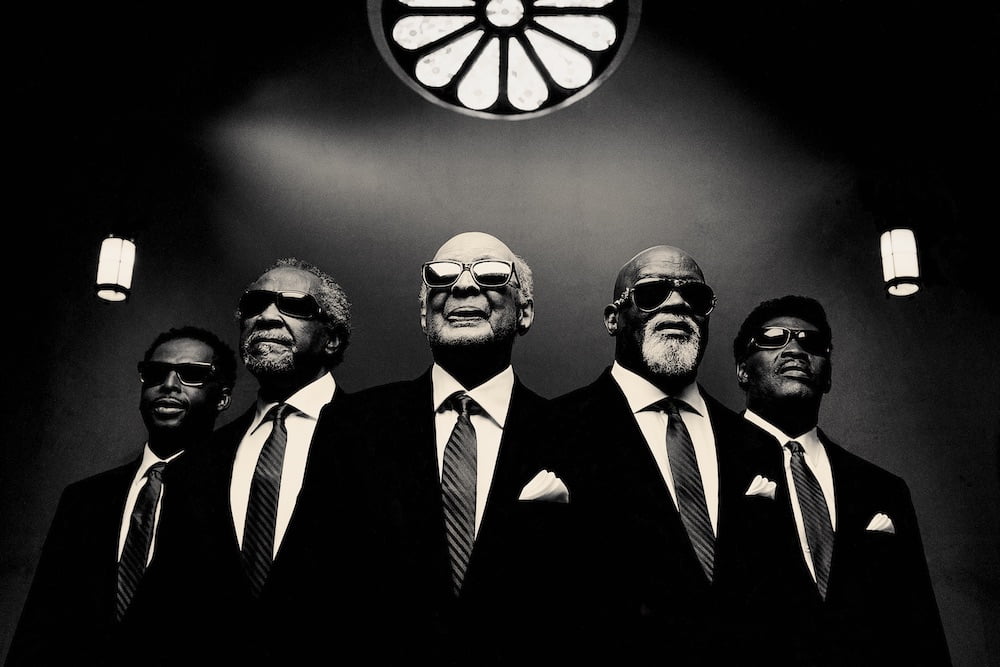
Counsel of Elders: Blind Boys of Alabama’s Jimmy Carter on Singing from Your Spirit

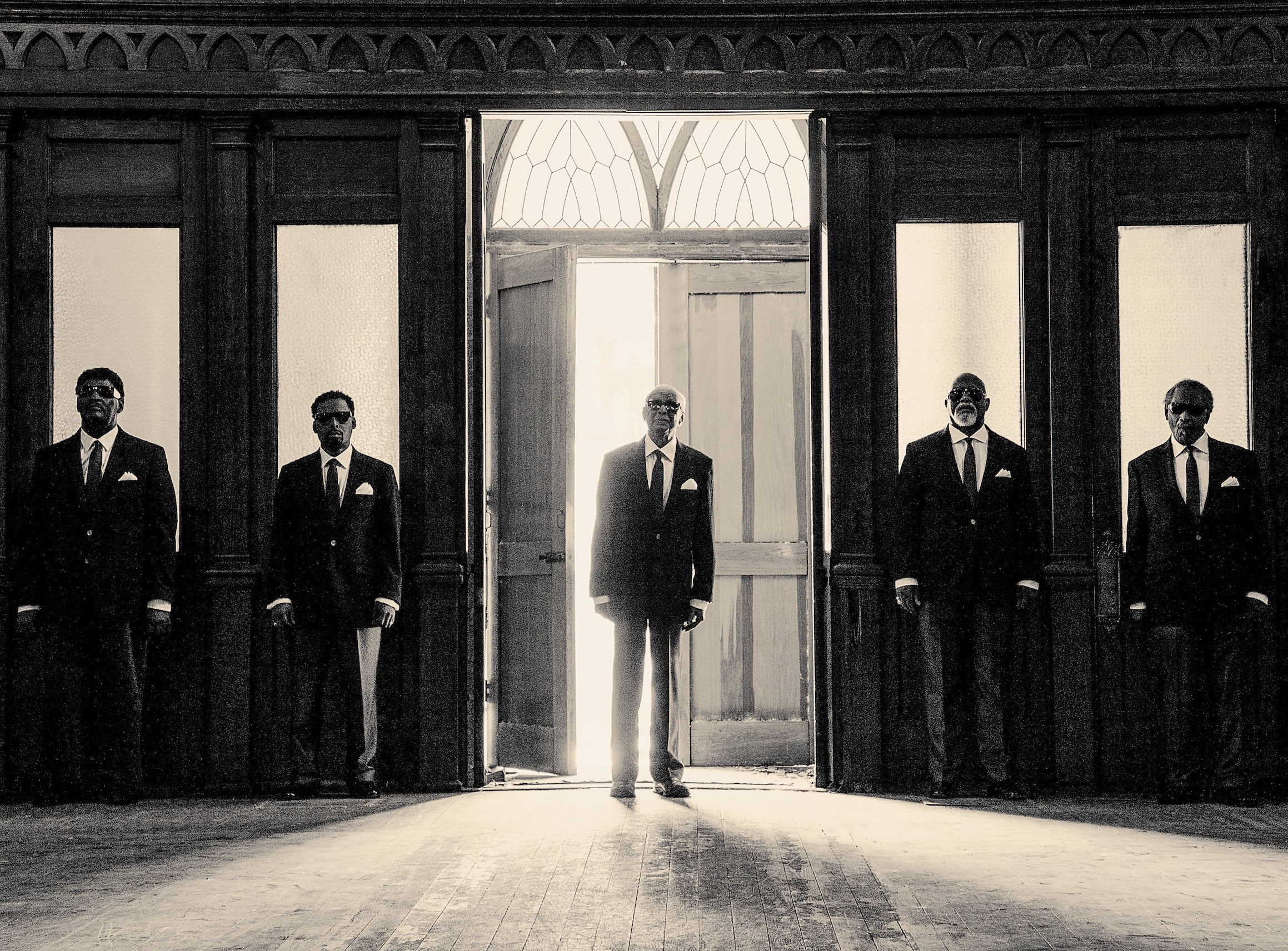
After singing for over 70 years, you’d think the stories wouldn’t come as easily, or the spirit wouldn’t be as willing, or some other facet of life would come to require greater attention. But if you’re talking about the Blind Boys of Alabama — and especially founding member and octogenarian Jimmy Carter — you’d be wrong. Carter makes up one of two remaining original members (along with Clarence Fountain) of the singing group that got its start at the Alabama Institute for the Negro Blind in the early 20th century, and he’s not ready to quit just yet.

The Blind Boys of Alabama’s new album, Almost Home, nods at the impending end to their journey, but their fervent voices raised together in praise signal a different kind of attitude toward death than typically prevails. It’s a celebration, rather than a worry-driven study, about what exists beyond the known world. Thanks to their faith, they don’t have any doubts in that regard. “He’s been there with me all these years. He’s not about to leave me now,” Carter sings on the title track.

To facilitate their latest album, the Boys’ manager, Charles Driebe, recorded interviews with Carter and Fountain, and then sent out a 30-minute video to an array of lauded songwriters. They received 50 options, which touched on what the men had discussed, and eventually culled that down to 12. John Leventhal and Marc Cohn, Phil Cook, Valerie June, the North Mississippi Allstars, and more contributed to Almost Home, penning songs that touched on the spirit the Boys have long exhibited with their voices. June’s “Train Fare” looks at pain from another angle: Any kind of suffering just deposits more “train fare” in your account so you get where you need to go at the end. While Leventhal and Cohn’s “Stay on the Gospel Side” (taken from Fountain’s recollection) focuses on the offer to become soul singers, and the Boys’ choice to do exactly what the title states. Secular music has never been off-limits for the Boys, though. In fact, they cover Bob Dylan’s “I Shall Be Released” and Billy Joe Shaver’s “Live Forever” on their new project. Carter knows it’s a way to reach younger audiences while slipping in that good news they are still so eager to share. He may be “almost home,” but while he has time and health and strength, he still has a message to spread.

What has it meant for you to use your voice in this way?

I’m a firm believer in God. I feel that everything that has happened to me in life is a blessing from Him. Whatever I have accomplished, I owe it to Him.

It does seem as though you’ve been called to deliver a message.

I believe that, too.

How has your faith strengthened your gratitude and vice versa?

Everything that I have asked Him for, I have received. For example, I told God to “Let my mother live until I get grown,” and he did that. He didn’t only let her live — he let her live to get 103 years old, so she just passed in 2009.

Oh my goodness.

Oh yeah, so I have faith, and I am a believer, too.

One of the stories you shared with songwriters eventually became “Let My Mother Live” on the album. What was it like being able to sing that kind of extreme faith?

The guy that wrote the song, John Leventhal, he surprised me! We were talking about it, and he wrote the song just about as I told him. It was a surprise, but a pleasant one. There’s another one on there called “Stay on the Gospel Side.” It talks about how we had some setbacks along the way, but we didn’t deviate and we didn’t turn back. We stayed on the gospel side. [Laughs]

You absolutely could’ve crossed over, as so many others did.

That’s correct. When Sam Cooke crossed over, we were there at the same time.

In the same studio?

In the same studio, and they gave us the same offer, but we told them, “No, we gonna stay on the gospel side.”

It’s so interesting because you’ve found your own way to do that. In recent years, you’ve incorporated more covers from secular artists.

The reason we incorporated and collaborated with secular artists is because we want the young people to know our music, and the secular artists can relate to young people. We collaborated with people like Ben Harper and Aaron Neville, so now, since we did that, we find that we have more young people attending our concerts than ever before.

I’m sure. When you collaborated with Justin Vernon for your 2013 album, that would’ve also opened up a new audience.

That’s true.

And no matter what, you’re still sharing your message: good news.

I say gospel is the good news of God.

If you could distill your many songs, covers, and albums down to one message about faith, what would it be?

Well, we have a signature song that we do every night, “Amazing Grace.” That tells it all because, but for the grace of God, we wouldn’t be here. We sing that song every night; that’s our testimony. If we come to sing for you and you don’t feel anything, then I feel that we’ve failed you because we want you to feel what we feel. If you came to the program and went back the same way you came, then we failed you. We didn’t do you no good, and we don’t like that. That’s the way it is with us.

So it’s your group mission.

We get tremendous response from the crowd, and that keeps us going. People ask me, “You’ve been doing this for almost seven decades, what keeps you going?” I tell them, “When you love what you do — and we love what we’re doing — that keeps you motivated.”

Doesn’t it just, though? It’s so true.

Yeah, so as long God lets us go, we’re going to keep on going.
It’s amazing, too, how your spirit doesn’t always have to come across in words alone. I saw you in 2015 at Justin Vernon’s inaugural Eaux Claires Festival.

Did you?

Yeah, you sang with the Lone Bellow and, at one point, you were all just humming; I felt it deep in my chest. You can’t make that up!

Yeah, that’s what we like to see. That’s our message: We like to touch people’s lives. I’m glad you felt something.

Thank you for it; it was a beautiful moment. So what has been the most surprising moment of your journey with this group?

Let me say this: When the group started out many, many, many years ago [Laughs], we wasn’t expecting anything. We just went out and did this because we loved to sing gospel music, and we loved to tell the world about Jesus Christ. We weren’t looking for no awards, no accolades, no nothing. But I’ll never forget the first Grammy we got. That was a surprise.

A nice one, hopefully.

A good one! And we got five in a row! Oh, that was good. It took a long time.

Isn’t that funny how it happens?

I always say, “Better late than never.” And then another surprise, we got the chance to go to the White House three times. That was a great experience. We had a chance to sing for three presidents.

If Donald Trump were to be the fourth to invite you, what’s the one song you and the Boys would sing to help him understand a more unifying spirit than he’s been displaying?

I don’t think he’s going to invite us.

I don’t think so either, but just in case …

I would say “Amazing Grace.”

If he didn’t feel anything, we’d surely know something’s up, as if we didn’t already. So with the Valerie June-penned song “Train Fare,” I thought that was such a unique way to look at suffering. What was your take when you first heard it?

I didn’t like it! [Laughs] I didn’t like it because I didn’t understand it. I had to listen to it; it had to grow on me.

That is the case sometimes.

Yeah, but as we listened and we talked about it, we began to understand it. My train fare … when I go through trials and tribulations, I’m paying my train fare. It’s a good song.

And with “Singing Brings Us Closer,” I was struck by the sentiment that invoking songs can bring those we’ve lost closer somehow. Do you have a favorite song you like to sing to bring the memory of your mother closer?

Like I said, our favorite song is “Amazing Grace.”

So across the board, that’s the one?

That’s the one.


Photo credit: Jim Herrington

Playing to Her Own Beat: A Conversation with Valerie June

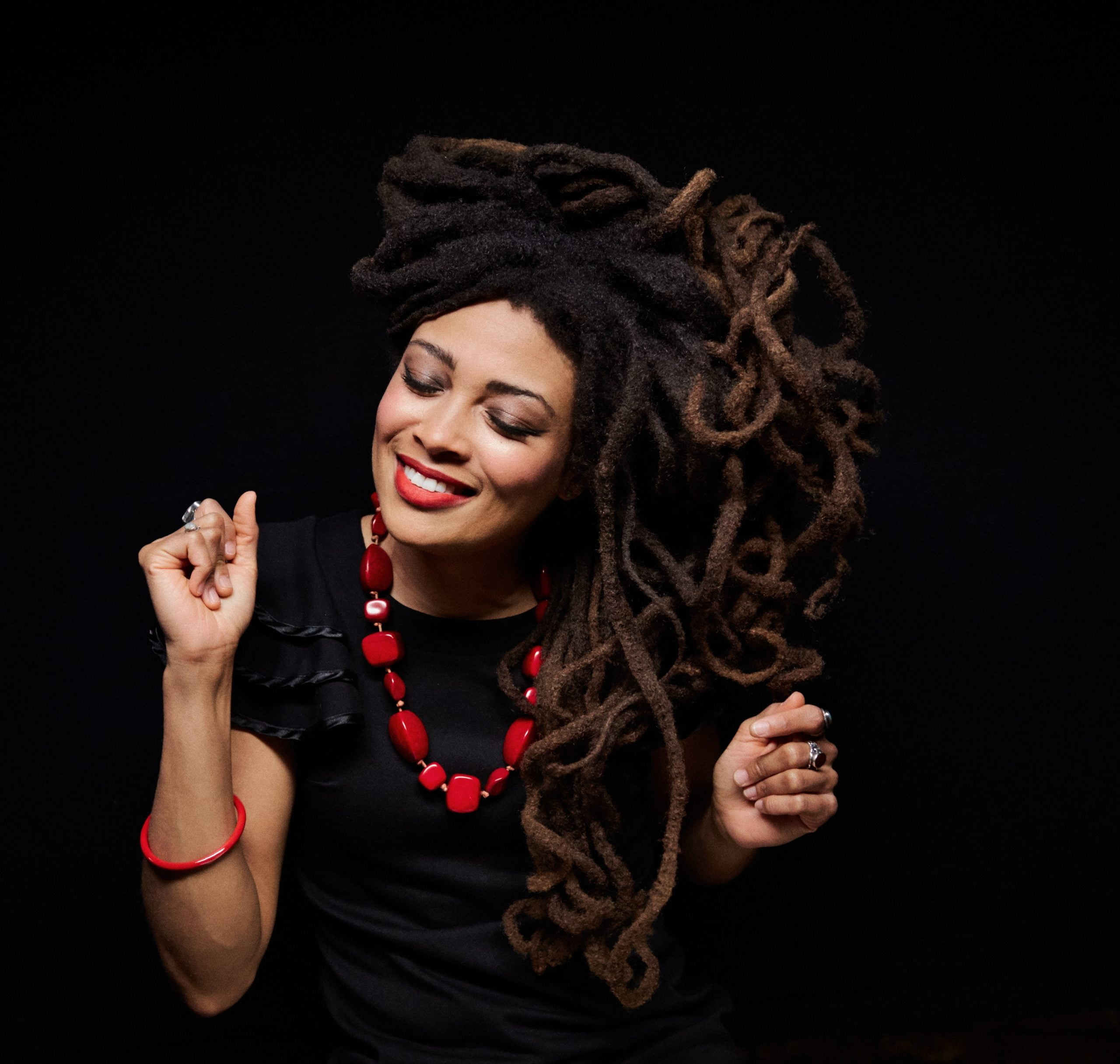
It’s impossible to unhear the sound that issues forth once Valerie June opens her mouth to sing. It’s a voice at once ancient — arisen from some sepia-toned past — and startling modern. From its color to its timbre to its texture, there exists something powerfully original about her primary instrument. But if June were just another singer with a distinct set of pipes, this wouldn’t be an article worth reading, and she wouldn’t be an artist worth covering. It’s how she employs her voice, and the fun she has blending and blurring genres that showcases her pioneering talent.

The multi-instrumentalist and Tennessee native returns this month with her sophomore major label release, The Order of Time. Arriving four years after her debut, Pushin’ Against a Stone, saw her perform at the White House, make countless television appearances, and become a festival staple, the album indeed took some time. June didn’t let her success dictate her writing schedule and rush her back into the studio. Instead, she read poetry, danced, cooked, and languished, allowing the music to unfold on its own schedule rather than hemming and hawing about hers. Thanks to that patience, she’s pushed her own boundaries even further.

The Order of Time spans blues, bluegrass, soul, folk, rock, and more, gathering pieces from each to build a kaleidoscope, of sorts, that showcases the long undercurrent of history running through each. Banjo appears in greater measure throughout the album, calling to its African heritage on “Man Done Wrong” and showing off its rhythmic pacing on “Got Soul,” while “Shake Down” borrows a few branches from June’s family tree. She gathered her brothers and father — who passed away in November — in Tennessee to record the raucous and gritty jam. And then there’s the viscerally thrilling “If And,” which layers an array of heavy tones, including bass saxophone, bass clarinet, and harmonium, to create an almost unholy riff. Have fun not getting chills.

So much of this album deals with time and abiding by its rhythms. How do you cultivate patience?

I don’t have any at all.

That’s fair.

It’s pure torture, honestly. I just want it to happen. It’s like getting a new plant: You’ve been to the nursery, you bought this gardenia, but it’s not flowering yet. You put it in the perfect sun and give it the perfect water and all of that, but it’s still not flowering weeks later, and you’re just like, “Oh my God, I really want the gardenia to flower, because it’s the best smell in the world and I love it. That’s why I bought it — for the flower — not for this green plant.” A lot of patience has to happen, but you don’t have it. You’re forced into it. And then, one day, it does flower and you’re really excited about it. That’s what it’s like.

I love that analogy. Building off it, how much of patience is, perhaps, about distraction?

It has to happen that way.

So what do you distract yourself with?

So many things. Life happens, people call and want me to do something, or it’ll be time to eat. [Laughs] I dance a lot. I have routines for distracting myself, and dancing is a big part of it. You have to have systems set up, you know, to keep you from dwelling in frustration. So whatever your things are that you love to do, you have to do those things. It’s almost like you have to be like, “I’m frustrated! Stop everything. Okay, now it’s time to dance. Nothing matters but dancing right now.”

It’s the physicality of it. It seems that when creatives get too caught up in their mental state, it helps to do something physical to calm that animal side of their brain down.

So true and, once every part of the body is moving, your mind is the last thing. You don’t even think about that part. It does take a minute, though, once the dancing starts. First, you’re still thinking, so your body — you’re moving it — you’re thinking, you’re thinking, and then, by the time you work the neck and the legs and the head and get the whole body going, you’re like, “Whoa!’ You’re gone man!” And it just takes one little moment of being gone to shift some ol’ thing.

So are we ever going to get a Valerie June workout video?

I don’t know. That would be really ’80s and fun. I’d have to get some leg warmers, for sure.

And neon.

I love legwarmers. That seems like a good excuse.

What do you dance to?

So many things. I like dancing to Davie Bowie, and Spoon is a really fun band to dance to — it’s so upbeat and insane. And Fever Ray and Fela Kuti, Cass McCombs … so many things. Sometimes I dance to blues music. It just depends on what I need to shake out.

I can see how these all dancing moments influence your music.

It’s all there.

Turning to the album, “Man Done Wrong” brought to mind the personal lamentations you’d hear in Ma Rainey’s and Bessie Smith’s blues. Can you take me through writing that particular song?

It started on the banjo. I was just playing that riff, again and again, for a few days, and then I heard the chanting, and when I first started to hear the chanting, I thought, “Well, this is very tribal to me.” It’s a different way for the banjo to be, for me. In my own mind, I had certain parameters that the banjo was allowed to go — for it to lean toward old time or bluegrass — and the fact that it was getting outside of its lane and it was doing something that seemed African or tribal to me was like, “What the fuck is this?” [Laughs] When I started to receive that, I was like, “Wow, I can’t fight that.” I can’t fight what comes to me in a song; I have to accept it all because, once I start to fight it, I close the door and I shut off these voices. I have to make them all feel welcome in order to receive the entire song, so I just went with it and got into it, and started to hear the actual singing, and I was like, “Well, okay.”

All these ideas I had about the banjo and the way it was supposed to be played and the way it was supposed to be fit into this box, they had to go out the window. It was like, “I guess it is an African instrument.” I learned a lot trying to play that song, about the banjo being as innocent an instrument as any other instrument and it having a voice that can fit with any style of music. It wants to be free; it doesn’t want to fit within any parameter. It just wants to be an instrument and play around in the playground of music and sound. It opened my mind and it opened my thoughts about what it should do in the world, and how I should feel about it when I see somebody get up in front of me with one. Just because you see a trumpet, do you think, “They’re going to play jazz. They’re going to be Miles Davis”? No. When you see a trumpet, it could be marching band, it could be jazz, it could be anything. A banjo is the same.

It has this strong association with bluegrass, but there is that tradition of Black banjo players who were never recorded and so, in many ways, that history has been erased.

It’s true. It’s such a historical instrument. It keeps getting deeper and deeper, as much as you try to see where it’s going. It’s been a vibrant instrument in the past and going into the future.

Do you think these voices in any way are trying to communicate that lost history with you?

They are communicating so many things. I can’t even get my head wrapped around it because, as soon as I get one thing that they were saying, then it starts to change, like a good poem. You read this poem and when you’re younger — and I read Robert Frost’s “Two Roads” when I was younger — it meant one thing, but as I get older, it means something different. The songs are like that. They change like they are living; they live with you and they change the meaning.

What other poets are you currently quite taken with?

I like Wendell Berry a lot. I could read that all day long, and T.S. Eliot and e.e. cummings, but Wendell Berry is really huge. I don’t even know how to describe what he does to me, but by the time I get to the end of one of his poems, I can be in complete tears and gratitude for all of life, for the earth, for everything. And the short stories are the same way.

He’s one of my favorites, too. I’m always so grateful for Wendell or, really, any poet who articulates the experience of living, especially when you haven’t found the words yourself yet.

That’s the shocking part. The ability to articulate it is like, “Wow!” I felt it, but I just couldn’t put it into words. You did it! You did it! [Laughs]

But you’re tasked with that same hurdle as a songwriter.

I don’t really feel like I have any kind of control over these things. I mean, I wish I could. I wish I wrote that way, where I could have a theme in my head and write something that fits the purpose, but the times I try, it doesn’t hit me as much as when I hear the voice and I just follow it. But I do try sometimes. I’d like to learn to write that way. I feel somebody like Toni Morrison or Zora Neale Hurston, they would have these thoughts going on in their minds about the world, about being a Black woman growing up, or things like that that they wanted to put into their writing, and they were able to articulate them through their craft. But, for me, I can’t do that. I don’t write that way.

There are so many different ways to approach it. Every writer has a different way.

I love writing with other writers because, when I do that, then I steal some of their style. I’m like, “Oh, that’s how you tapped into that.” They’re my teachers.

What a great way to learn. Well, lastly, I was curious about the song “Shake Down” and recording it with your family.

My brothers’ and my dad’s vocals were tracked in Tennessee. It was great because my dad’s not really a singer, but he was in the room and I was like, “You gotta sing.” And now he’s gone and so all I have is him singing that part. I have pictures, but I don’t have his voice anymore and I never will again. That really matters to have somebody’s voice after they’re gone. That really is something, so I really feel fortunate for that song.


Photo credit: Danny Clinch

7 Acts to Catch at SXSW

When we think of SXSW, we’re reminded of that old saying, “It’s a marathon, not a sprint.” Because if ever there were a festival akin to running a marathon, it’s the massive, 10-day festival/conference/gigantic party that descends upon Austin, Texas, like a badge-wearing plague every March. (This year, it’s March 10 – 19, to be exact.) Although we’d head South to see Vice President Joe Biden alone, this year’s massive music lineup is quite the draw, too. 

With pages and pages of showcasing artists to sift through, choosing just who you want to see may be more exhausting than four back-to-back day parties. We’ve done some of the legwork for you and found a few BGS favorites who are slated to perform.

Nicole Atkins

Nicole Atkins is one of the newest signees to Single Lock Records — the Florence, Alabama-based label run by John Paul White and the Alabama Shakes’ Ben Tanner. Her forthcoming album, Goodnight Rhonda Lee, marries ’50s girl group vibes and vintage soul with modern production a a little bit of twang.

Sammy Brue

Sammy Brue is only 15 years old, but the Ogden, Utah, songwriter has already earned a lot more live experience than a good chunk of his older contemporaries. Now signed to New West Records, the precocious folk singer/songwriter and Justin Townes Earle protégé is prepping a new album for release this summer.

The Kernal

Another Single Lock-er, the Kernal cut his teeth as a sideman for left-of-center country arists like Andrew Combs and Jonny Fritz. His recently released album, Light Country, considers his family legacy — his father played the Grand Ole Opry — as well as how it shaped his identity as a musician.

Andrew Combs

We’re always excited to catch Andrew Combs live, but we’re especially stoked on the heels of his announcement of Canyons of Mind, a new album coming out April 7. Combs’s poetic lyrics and haunting vocals make him one of our favorite songwriters around today.

Max Gomez

Taos, New Mexico, songwiter Max Gomez first got attention when he released his debut album, Rule the World, to critical acclaim in 2013. Now, fresh off a run of dates with the inimitiable Chuck Prophet, he’s preparing to release Me & Joe, a new collection that builds on the Western-tinged storytelling of his first.

Sunny Sweeney

Sunny Sweeney is one of our finest working songwriters, country or otherwise. Her new album, Trophy, is her best work yet, a stunning collection of deeply human songs that reminds us just affecting good music can be. She’s an Austinite, too, so don’t miss this chance to catch her on her home turf.

Valerie June

If psych-soul rocker Valerie June’s singular voice isn’t enough of a draw (and it should be), her nine-piece band ought to get your attention. When June hits SX, she’ll be fresh off the release of her new album, The Order of Time, so keep an ear out for new tunes.


Lede photo by Danny Clinch

SaveSaveSaveSave

BGS Class of 2017: Preview

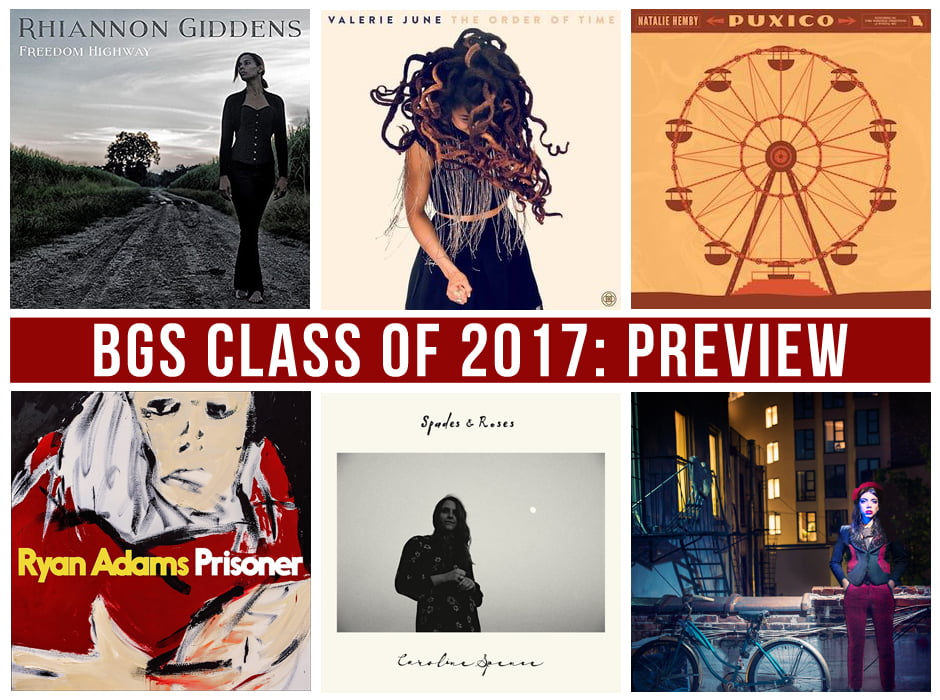
This is going to be an exceptional year in roots music with new releases coming later on from Jason Isbell, Lee Ann Womack, Holly Williams, Chris Stapleton, Chuck Berry, and so many more. Here are some albums we’re excited about dropping in the first half of 2017.

Natalie Hemby: Puxico

Ani DiFranco: Binary

Pieta Brown: Postcards

Rhiannon Giddens: Freedom Highway

Alison Krauss: Windy City

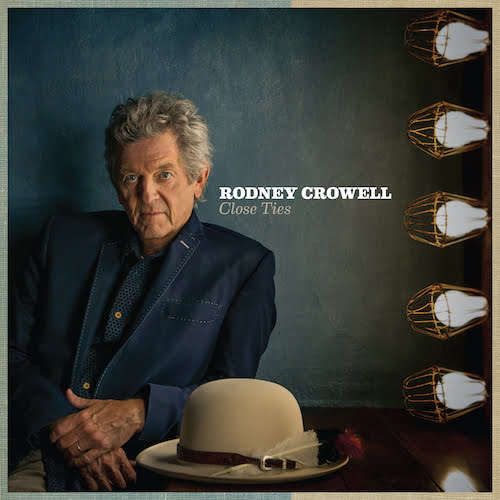
Rodney Crowell: Close Ties

Caroline Spence: Spades & Roses

Valerie June: The Order of Time

Noam Pikelny: Universal Favorite

— Kelly McCartney

* * *

Jaime Wyatt: Felony Blues

Rhiannon Giddens: Freedom Highway

Natalie Hemby: Puxico

Alison Krauss: Windy City

Sunny Sweeney: Trophy

Pieta Brown: Postcards

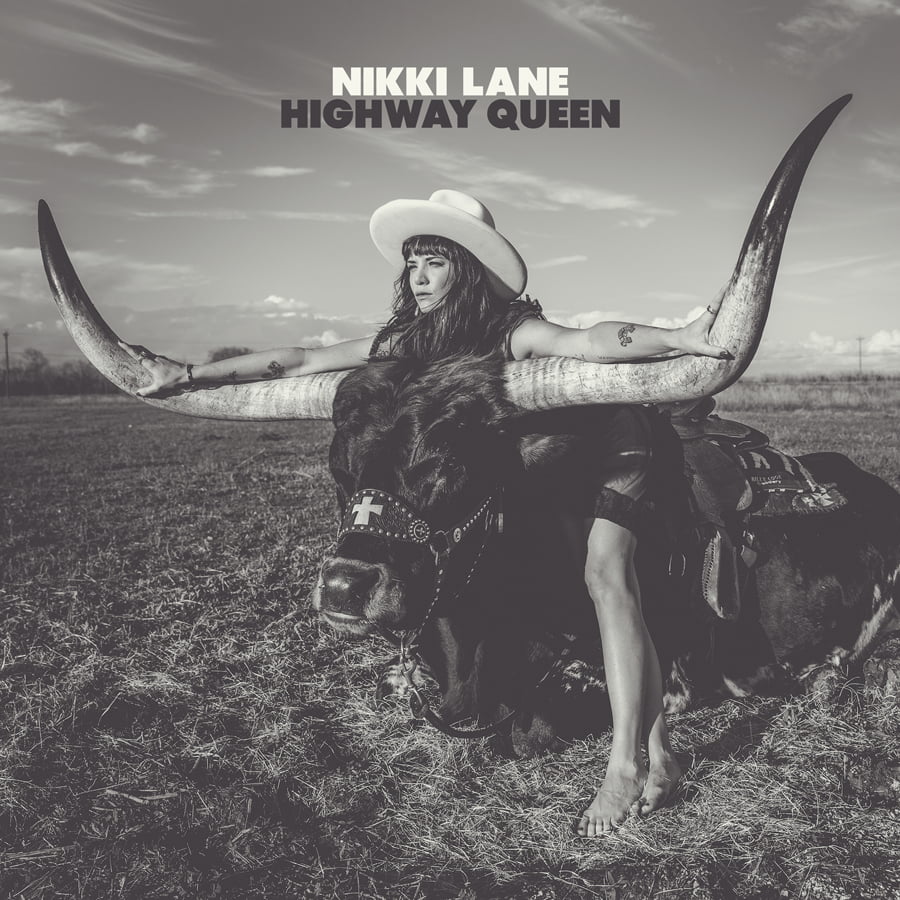
Nikki Lane: Highway Queen

Caroline Spence: Spades & Roses

Rogue + Jaye: Pent Up

— Brittney McKenna

* * *

Mark Eitzel: Hey Mr. Ferryman

Ryan Adams: Prisoner

Alison Krauss: Windy City

Nikki Lane: Highway Queen

Rhiannon Giddens: Freedom Highway

Old 97’s: Graveyard Whistling

Valerie June: The Order of Time

Hurray for the Riff Raff: The Navigator

Various: From Here: English Folk Field Recordings

Bruce Springsteen: TBA

— Stephen Deusner

* * *

Tift Merritt: Stitch of the World

Leif Vollebekk: Twin Solitude

Ryan Adams: Prisoner

Jesca Hoop: Memories Are Now

Rhiannon Giddens: Freedom Highway

Gold Connections: Gold Connections (EP)

Hurray for the Riff Raff: The Navigator

Laura Marling: Semper Femina

Michael Chapman: 50

— Amanda Wicks

* * *

Ryan Adams: Prisoner

Nikki Lane: Highway Queen

Rhiannon Giddens: Freedom Highway

Hurray for the Riff Raff: The Navigator

Valerie June: The Order of Time

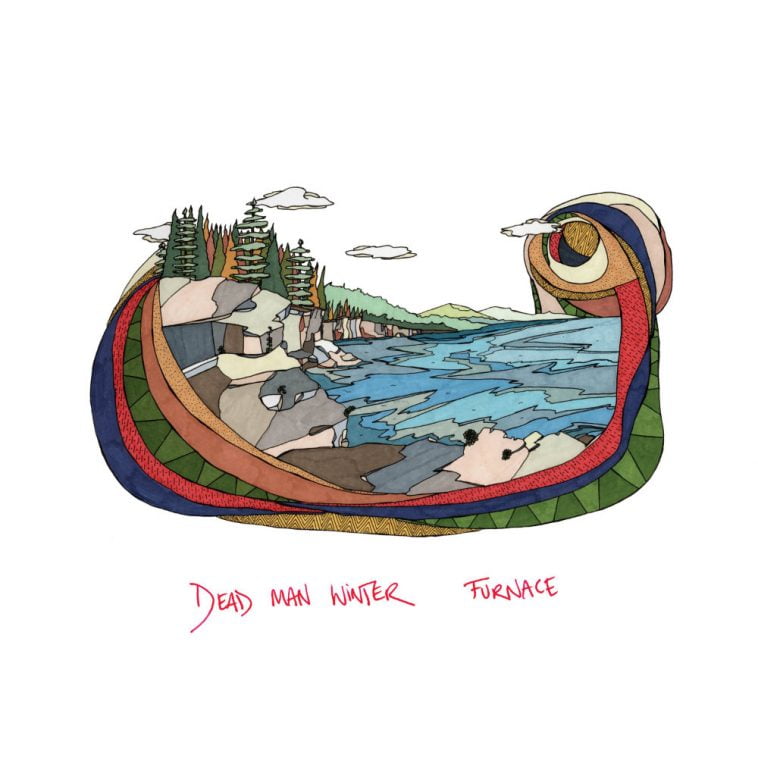
Dead Man Winter: Furnace

Laura Marling: Semper Femina

Son Volt: Notes of Blue

Sera Cahoone: From Where I Started

— Desiré Moses

* * *

John Moreland: TBA

Rogue + Jaye: Pent Up

Rhiannon Giddens: Freedom Highway

Nikki Lane: Highway Queen

Little Bandit: Breakfast Alone

Ryan Adams: Prisoner 

— Marissa Moss
 

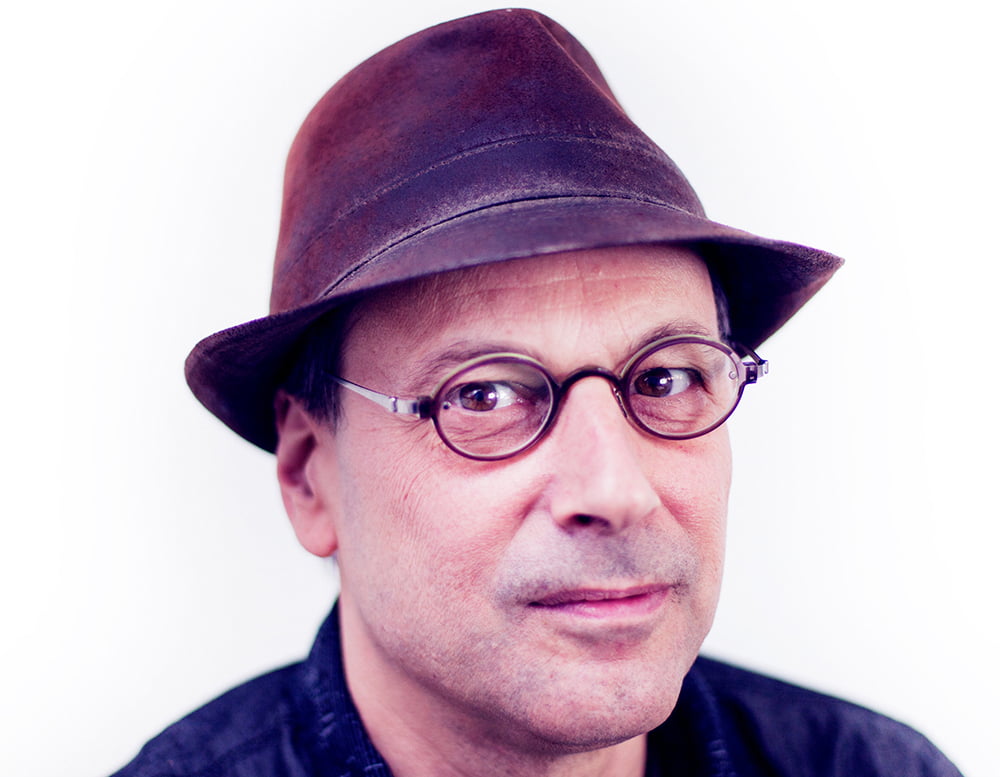
The Passing On of the Experience: An Interview with Bob Boilen

A persistent, young Bob Boilen showed up to the National Public Radio offices every day for a few weeks in 1988 until he was hired on All Things Considered. With his foot in the public radio door, he began to actualize a vision for sharing music in the digital age and, thus, NPR Music was born. Boilen created the Tiny Desk Concerts, started and hosts NPR’s All Songs Considered, and is a musician himself, playing synth in his current band Danger Painters.

Earlier this year, he released his first book, Your Song Changed My Life, in which he tells an oral history of modern music through interviewing artists about the song that altered their career and, ultimately, steered them into musicianship during their formative years. As Boilen puts it, “My job as a writer is to sort of figure out what it is that connected their song choice to their current music. Like, they could tell me they loved it, and they could tell me why they loved it, but what I tried to do in the book is figure out how that connects to the music they now make.”

From Lucinda Williams to Trey Anastasio to Chris Thile, Boilen interviewed artists about their musical inspirations, connecting the dots to their current musical works as he wrote. The book points to an interconnected global music scene, the weight of familial influences, and the undercurrent of poignant songwriting and composition. It also highlights to a few chance meetings with music — like when a box of CDs literally fell off the back of a truck in front of St. Vincent’s Annie Clark’s house, and what those meetings with fate meant for the artist.

How did you choose the lineup of artists in your book, and did you being a musician yourself influence the artists you chose?

Everybody in the book I madly cared about, except for one person. I didn’t feel like spending my time on people I didn’t really love, and that’s true with just about everything I do. When I pick songs on my show, I rarely play songs I don’t like, so I started with people I really liked. And then it was really about availability. Like Jimmy Page happened to be touring — someone I’d always dreamed of talking with — and it just so happened he had a book coming out, a really beautiful photography book. Also Physical Graffiti had just been reissued. As he would say, “The mother of all double albums.” And he’s right. He was very fun to talk to. The music I love and the music I make are all one big ball of the same thing. I look for music with adventure, music that challenges … at least, challenges me.

In terms of Americana music and bluegrass music, it’s not my forté, but I always find things in the genre that I love. Pokey LaFarge’s dedication to that form and that sound is so real and honest. I don’t know anyone like Valerie June. Her voice is incredible and her songwriting is so good, and, as I hint in the book, I think it’s just beginning. The song that changed her life was “Imagine” by John Lennon, which I didn’t really ever imagine would be the case. She aspires to writing something with a deeper meaning, and a bigger reach, and I imagine she’ll do it.

She stops you in your tracks. Is there anyone you didn’t interview that you really wanted to interview?

Let me tell you about the one artist I interviewed who I didn’t really care for instead, and then we’ll do that. Trey Anastasio, of Phish, was the one artist in the book who I didn’t come to the table loving his music, because I don’t. It’s not that I dislike his music, but I’ve just never fallen for it. What I appreciate about him is, when an artist connects with fans, and fans connect with an artist, and there’s this back-and-forth that happens, that’s this little community that just pops up and disappears, and Phish does that almost better than anyone. I’ve really admired it, and I really wanted to explore it, and that conversation was probably one of my very favorites — if not my favorite. It was so surprising.

The book goes through a lot of artists who pick songs and you’ll say, “Oh, I love Josh Ritter. Of course he picked Bob Dylan,” and it goes on like that. But then you get these monster surprises, like Trey, who picked Leonard Bernstein’s piece from West Side Story "Somewhere," and then goes through this reasoning as to what it means to him.

You don’t really think of Phish and Leonard Bernstein, and that was the fun of writing the book. For him, it was just really about understanding music and music theory. That made him a great improviser, and Bernstein helped him understand how music works, and why certain tensions work and certain chords work, and so he tried to understand the theory of music. Once he did, he became really fluent at it, so he could be a great improviser. Chris Thile was not unlike that, either, who I madly love. He came to Bach — this Goldberg variation — but that makes a little more sense, because you hear that in the Punch Brothers.

Through hearing the surprises — and the ones you thought made sense — did it say anything to you about the natural progression of music, or even the global implications, of an Aussie like Courtney Barnett choosing Chicago’s Wilco? Did you come to any realizations or conclusions about the connections you saw?

It made me think a lot, because a lot of the people in the book lean a little bit older, so they grew up in households where there were physical music collections, be it vinyl or CD. But then you get to Ásgeir, who’s very young. There are CDs still, but I start to think about what is next. What does it mean to grow up in a household where everything is digital and there’s nothing to hold onto? How do you, as a parent, pass on your collection? I don’t judge it, but I grew up buying vinyl because that’s all there was. It makes me wonder how that experience becomes as impactful when there's nothing physical. There’s something about the passing on of the experience that feels like the physical means so much. So, Josh Ritter going through and finding records in his parent’s record collection, things like that, made me wonder. I don’t know what the future will be like.

Playlists?

But people are not going to pass on their Spotify playlists. I mean, there won’t be a Spotify! You can almost bet on it. It’s just the nature of the changing world. It really moves so fast.

I was a CD kid, but now I’m a Spotify kid.

Do you like it?

I love Spotify — specifically collaborative playlists. I think they are the coolest thing out there because you can see who contributed what songs. But, like you said, it’s hard to archive a playlist because it’s not physical.

If they unsubscribe or stop paying their subscription, what happens to their participation in the list?

It’s still public, but you can’t control the order. And you have to listen to the horrendous ads. Has the process of you connecting to music in the digital world changed, specifically with singles versus albums? Has that changed for you, as things have migrated to digital?

The thing that I miss most is the artwork. My favorite album this year is probably the Car Seat Headrest record, and I can barely describe the front cover of that record. That’s crazy. I know that you can judge an album by its cover. I’ve done it all my life, and so that process is gone. I no longer can just look through 60 things that I get in a morning, and say, "Oh, these four things …"

Do you think that democratizes the process at all?

No, because you can tell an album by its cover. The decision of the artwork is often made by the artist, so it conveys an aesthetic. It just really was a part of what that album was at that moment in time for an artist. These days, I mostly deal with downloads. I do like listening to music, so to speak, blindfolded. During the day, I’ll listen to a bunch of stuff that even sounds remotely interesting. I’ll rip, and then put it on a playlist. That’s a democratization process that I like a lot.

With All Songs Considered, I try to pick music people will latch onto the first time they hear it, because the odds are they aren’t going to listen to my show twice, so I try to pick songs that work the first time around, right off the bat. That democratized playlist shuffle is helpful there.

You have introduced me to many of my favorite bands, and I’ve never really thought about it like that; I’m specifically thinking of "Coffee" by Sylvan Esso.

Right?!

How could you not love that song? And now I have stalked that band all over this country, but I never really thought of you trying to pick the most available one for the show.

It came to me a couple of years into doing the show … that no one’s going to listen to the show twice.

When I first moved to Nashville, everyone told me not to go to shows every night. They told me, “Pace yourself, or you’ll get jaded by the music because it’s all around.” And I went to a lot of shows and, subsequently, went through a jaded period. Have you ever experienced that?

I find I get overwhelmed. When I was directing All Things Considered in the late '90s, I’d get lots and lots of handmade CDs, with their handwriting on the record, and it really made me connect with the fact that this is somebody’s life and dream. I try to hold onto that and never forget that. I mean, sure, I go to shows where I think, “You’ve got to be kidding me. I cannot imagine how you’ll make it." I certainly don’t care for it, but I also know that getting up on a stage is a brave act. Putting yourself in front of people and singing or playing your heart out is a meaningful act. We’re all humans looking for our place in life. If I keep that grounded thought, it really helps me. But, it doesn’t mean that I’m going to love and embrace all that I hear.

And, if you don’t like it, someone else might. I heard your interview with John Congleton where he talked about, when he hears certain music he doesn’t like, he believes it’s his problem or fault.

Yeah, that’s a really brilliant way to look at music, right?

I know, I thought, “Man, what a genius this dude is.” Do you ever have that issue?

I have huge blind spots in my taste.

We all do.

I’m not a fan of hip hop. I’m not a fan of beat-based music, so that eliminates a lot of music. What I’m careful about saying is, it’s not that it’s not good music — it’s amazing music — it doesn’t speak to me, and that’s okay. I think that what I’ve learned in writing this book is that there are some times in our lives — usually in those hormonal days — when you connect with a kind of music, although you may continue to love all different types of music as you grow up. Much of the Boomer Generation, like myself, thinks that Neil Young and the Beatles and all those other bands from the '60s and '70s are it and that no one's ever done music that good. Well, that’s crazy talk.

Thank you.

But, that said, ingrained in me is the love of a song that has a structure, because I fell in love with that in my hormonal years. I think what we have to do is respect it all. Even as a teen, I would think, “Oh, that’s shitty music,” “That’s really stupid,” and it isn’t that. As Congleton says, it’s kinda your own fault and your own failings, but accept that you can try to fix it.

Did your parents have an influence on your musical taste?

Not in a good way. [Laughs] My mom liked the Barbra Streisands and show music of the world, and I really really really don't like that music. And my dad is a big band enthusiast, of which I didn’t come to until a bit later. I fell really hard for the music of the '20s and '30s. But I grew up in a time that was so fertile for rock music in the '60s and '70s, and it was unfolding so fast. Plus, our generation was a generation that was rebellious against our parents, which I don’t really see anymore — which is amazing, really. And that’s what rock 'n' roll was all about. That was the nature of the beast.

I have one off the wall question: I saw a video that you made in 1988 of the chairs of NPR.

Oh my gah.

Personally, I think the video should have more than 778 views on YouTube. How have the chairs changed at NPR?

[Laughs] Thank you. We have nice chairs now. The fact is, the chairs are wonderful now.


Photo credit: Maggie Starbard/NPR