Emily Scott Robinson Stays Hopeful Through the Thick of It

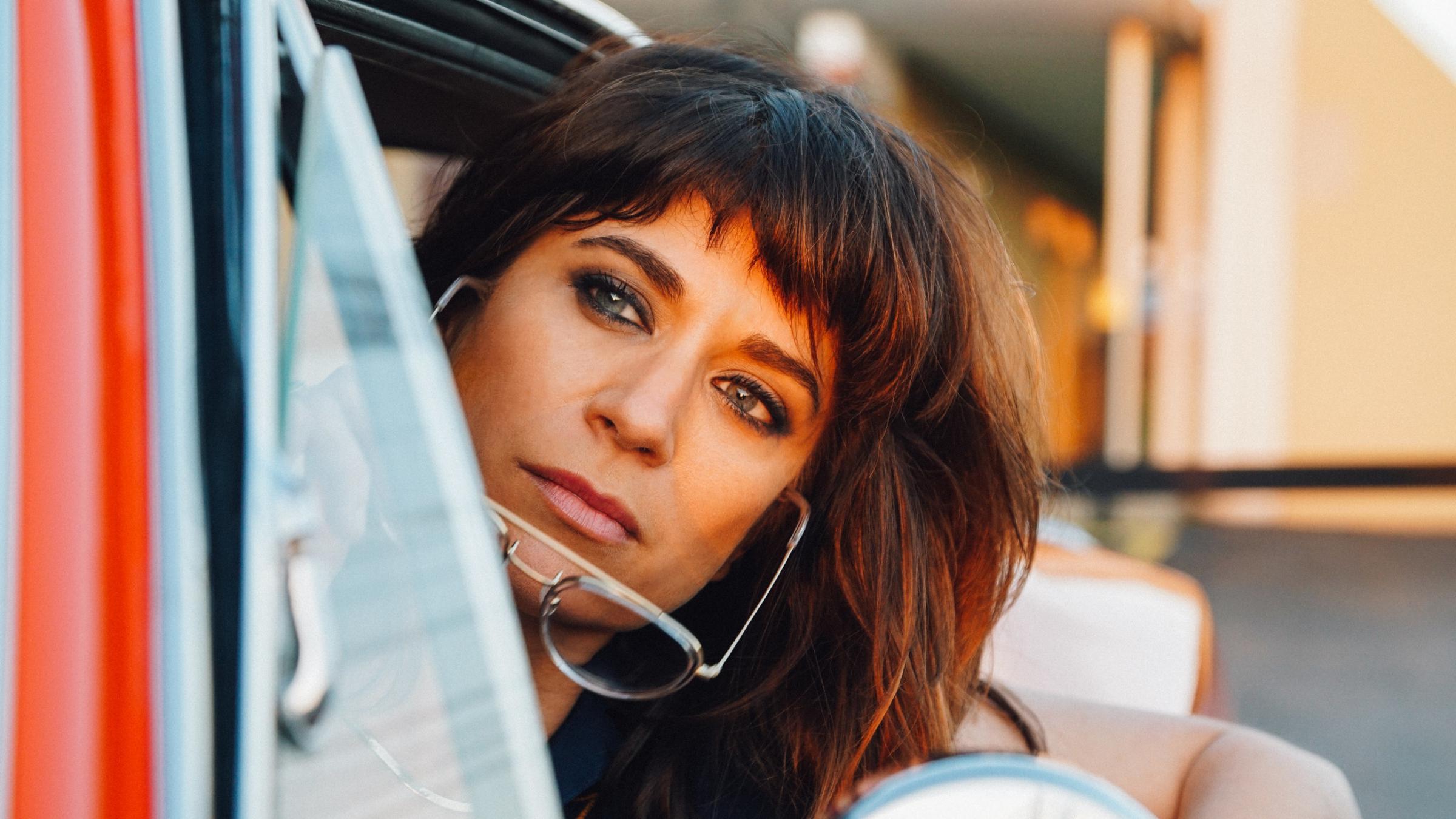
Before embarking on a music career, Emily Scott Robinson worked as a social worker. The two occupations, she says, really overlap with who she is as a person. Talking from her home outside of Telluride, Colorado, Robinson shares that being a performing artist and playing shows has “a similar quality of service to it and connection that being a social worker did…”

“One of the things I loved about being a social worker is being able to help people,” she continues. “[Music] brings me a lot of joy and purpose. I get so much feedback from people that my songs help them. That’s the most important and meaningful thing that my music could do in this lifetime.”

On January 30, Robinson will launch Appalachia, her third release on Oh Boy Records and her fifth album overall. Its 10 tracks reveal her uncanny knack for conveying empathy, comfort, and compassion through a set of songs that explore topics such as a friend’s suicide, a grandparent’s death, her own divorce, and the destructive effects of Hurricane Helene on her home state of North Carolina.

Robinson recorded Appalachia with producer/musician Josh Kaufman (Bonny Light Horsemen, Josh Ritter) in late April and early May of 2025 at his Dreamland Recording Studios, near Woodstock, New York. Having loved his production work on Anaïs Mitchell’s 2022 self-titled album, Robinson wanted to work with him. “I want to make my version of what [Mitchell’s] record is,” she explains. She was thrilled that Kaufman not only was available to produce the album, but was also very excited about working with her.

Robinson’s road to becoming a singer-songwriter began when she was 14, when she went to a “super hippie summer camp,” as she describes it, in northern Michigan. There she fell in love with acoustic music she heard the counselors play at night during “mellow time” – songs by folks like Cat Stevens, Joni Mitchell, Dar Williams, and Ani DiFranco. After camp ended, she learned to play her mother’s old classical Yamaha guitar. Robinson loved to sing, but only played cover tunes whenever she would perform at coffee houses and open mic nights.

Her life changed, in many ways, when she took a Planet Bluegrass Song School workshop in 2014 while working as a social worker in Colorado. Besides learning about the art of songwriting, Robinson also discovered how to make a living as a musician. She quit her social worker job the next year and didn’t look back. “I felt such a strong sense of connection and purpose when I sang for people. Their response was so powerful, and I just thought this really feels like something I should pursue.”

That Robinson has a gift for words feels like a genetic inevitability. Her mother worked as a journalist and her father taught English. As she describes it, Robinson learned how to tell and edit a story from her mother, and how to write in a direct and active style from her father. “My parents taught me how to write… that stuff is burned into my brain,” she states. “I’m my parents’ child.”

2026 represents a significant career moment for Robinson with the new album arriving in January and tours crisscrossing the U.S. throughout the year. She took time out from a snowy winter morning to speak with BGS about Appalachia and the roads she took to make her album.

It has been several years since your last full-length album, 2021’s American Siren. How did this album come into being?

Emily Scott Robinson: It took me about four years to write this record. These are the songs written in the aftermath of a lot of upheaval and change in my life. I went through a divorce in 2021 and then moved away from Telluride the next year. And even though I didn’t move that far – I moved about an hour away – I left the only community that had really been home for me for about a decade.

And there were a lot of endings that felt really sad. Both my grandmothers passed away. [But] I also became a parent. I am now engaged to my partner, who has a nine-year-old son. And that has been amazing. So, my life kind of completely changed. These are all songs written in the thick of that – and [the] surrender and joy and grief all happening at once.

Was there a song that really kickstarted this album?

The first song I wrote for this album – and then it was the only one I had written for like a year and a half – was “Hymn for the Unholy,” which is, of course, the opening track. And that felt like my anthem. I wrote that song [when] I was going through this divorce. It was New Year’s Eve and I just couldn’t even fathom this whole movement of setting plans and goals for the new year when so many things felt like they were ending or becoming really unsure for me. It was the only new song I had for quite a while. And then, in about the last year and a half, I wrote almost all of the rest of the songs.

“Appalachia” I wrote right after Hurricane Helene hit Western Carolina. There were a couple songs that I wrote at a writer’s residency in Texas, [including] “Time Traveler” about my grandmother who passed away. I wrote “Cast Iron Heart” on another songwriting retreat. “And Bless It All” was really one of these songs that emerged that I wrote really quickly, like an homage to this chapter of life [about] raising a kid [and having] parents aging – like my generation is now doing the same.

“The Time For Flowers” is a song that you had for a while. How did that find its way on the album?

“Time For Flowers” is on here because it’s a song that has never lived on a full album. A lot of my fans would come up to me after shows and go, “Which record is ‘Time for Flowers’ on?’” … I released it in 2020 in the summer [during the pandemic as a single] and it grew legs and traveled far and wide. People started to perform it at funerals and with their choral groups and they started to sing it in church and ask for arrangements. It became a song that meant a tremendous amount to a lot of people.

I put a lot of heart and a lot of craft into that song. But the song has taken on its own life and that’s really beautiful for me to be a part of. And it means a lot again in 2025, to people who are living in what feels like an increasingly dark time. I wanted to put that on the album and to sing it in the way that I perform it at my shows, which is just acoustic.

I felt like, on this album, there was a feeling of expressing compassion and forgiveness and reassurance. A message of “finding a sense of strength” not only for yourself, but for listeners as well.

The one cover on the album is “The Water Is Wide” and I was wondering why you chose that old folk song to include.

I love that you wondered that because, to be quite honest, I felt a very strong instinct to put this song on here and I didn’t really know why. Sometimes I just feel a deep sense that needs to happen and so I just trust it and do it. I love that song and I had planned on putting it on there. I think, if I were to explain it on a more logical or grounded level, I would say that I felt that song – as old as it was – still speaks in both a deep and a fresh way. The lyrics strike me as being fresh and a little unusual every time. And it felt very timeless but also fresh, and so I just was drawn to it.

Sometimes I write a song, or I put a song on the record, and I just go, “I will find out later why I had to do this.” But, genuinely, I’ll find out along the way why it is that that song begs to be on this record. Also, Josh Kaufman, my producer, was so excited when I told him I wanted to put that song on there. He loves old folk songs and making them feel a little bit new or breaking them down a little bit and rebuilding them. And so do I, so it just kind of felt like it fit.

“The Fairest View,” which follows “The Water Is Wide,” closes the album. It holds an old folk song vibe although listening to it, you realize that it’s not.

“The Fairest View” was actually not a song that even existed until the last 24 hours that we were in the studio. My friend [songwriter Lizzie Ross] and I have a mutual friend who died before we were in the studio together. He really loved music and had grown up in Western North Carolina. He died by suicide and we were really writing this song for him, and to him. … We finished it the night before the final day. We were in such a great groove of creative flow that this just made total sense

I sent [Josh Kaufman] this voice memo. I think it was like 11:30 at night. I was like, “What do you think about putting this on the album tomorrow?” And he goes, “I dig it. Let’s do it!” He said that there was nothing really like this on the record, but it felt like it still fit sonically, lyrically, and melodically.

What were the important contributions that Josh Kaufman brought to the recording process?

Really the magic of working with Josh – the thing I love the most – is when we first had our first conversation. We were talking about how we work in the studio and he said something along the lines of, “You know, you play the song and we all start just kind of experimenting and playing around on instruments. We’ll know it when we find it, because you can hear it and you can feel it in your body when you have found the thing.” And that for me is exactly how I work creatively and in the studio. I’m comfortable with that kind of workflow and so I was like, “Yep, that’s exactly how I want to work.”

There is a wonderful intimacy to your vocals. I got the feeling I was sitting on a couch and there you were singing from just across the room.

D. James Goodwin, who is the [album’s] recording engineer and who mixed the record, created a specific reverb treatment based on the room in Dreamland, based on the actual recording space. … He started to measure the exact EQ and decay of all these different points in the room and then created his own reverb setting that he calls “the Dreamland reverb setting,” which is just meant to sound exactly how it sounds in the room.

You do a great duet with John Paul White on the track “Cast Iron Heart.” How did he get involved on this project?

John Paul White is a great interpreter of songs, because he doesn’t put too much on them. This is like an acting principle, which is “the more you’re trying to act, the worse it is.” But if you’re allowing the song to come through you, and you’re not getting in the way of that and you’re being honest to that song, then that’s when the powerful performance really happens. And John Paul is experienced enough to really know that.

I knew that I couldn’t have somebody with a fully polished country voice singing this. I wanted it to sound like somebody who had lived. I know John Paul and I know that he has lived and he has a family and he’s been making music for years. He embodies the person singing the song – the actual voice of the narrator of the song – and it was such a gift that he said yes to this. He’s the sweetest, most generous artist and human, so that’s how he got involved.

This is your third release for Oh Boy Records – how did you get involved with them?

I got a message from Jody Whelan [head of Oh Boy Records and John Prine’s son] and he said, “We’re really big fans of yours at Oh Boy and if we can ever help you in any way let us know – we’d love to work with you.” And I was like, “Did I just get offered a record?”

I reached out to Jody and I said, “I would love to talk to you. I have a record that I’m about to make and we should connect.” I’m a huge fan of Oh Boy and John Prine. I signed a fantastically supportive and artist-friendly record deal with Oh Boy. And I go on the record to say that as often [as I can]. … I genuinely hit the jackpot when I signed the deal with Oh Boy. I love working with them. Their heart has been, and always will be, in the right place. I’m really, really lucky.

Are there things you hope listeners take away from the new album, or from your live performances as well?

I hope that people do feel fortified, encouraged, and hopeful when they listen to these songs because this record is about finding those bright spots and finding that hope in the thick of all the other parts of being a human. It’s about leaning on other people and finding that in relationships and in community. I also hope that this record will comfort people who’ve lost somebody they loved recently.

I want this record to be of service to people. I want it to reach them in ways that they need to be reached. I don’t want people to give up hope in this time in history or this time in our country. I don’t want them to give up hope in themselves and each other.

I think we’re increasingly in a corporate media landscape and a very engineered social media landscape that has a lot of voices that say there’s no hope; there’s no reason to fight, it’s too late. And I think the social worker in me and the political activist in me wants to yell, “That’s fucking bullshit!”


Photo Credit: Angelina Castillo
‘Sweet Critters’ Shows a Deepening of Caleb Caudle’s Point of View

On his new album, Sweet Critters, Caleb Caudle has no desire to reinvent himself. The North Carolina native has spent his career trying to move closer and closer to what is already inside of him. “This well is getting deeper… more nuanced,” he explains. “And I really enjoy that. I’m not trying to be repeat myself, I’m trying to be myself.”

Dedicated to friend and former bandmate Alex McKinney, who recently passed after a battle with cancer, the album rings out with appreciation for the everyday experience of life. With gratitude and grit, Caudle explores both his external and internal world as he continues to travel the hardfought and beautiful path of a touring troubadour.

Reaching Caudle by phone during his headline tour in support of Sweet Critters, he explained that on days off from the road his band likes to rent a spot out in the woods somewhere, hunker down, cook meals, and play music and board games to recharge for the shows ahead. It was during one of these recharge days that he caught up with BGS.

This album was produced by John Paul White, former member of The Civil Wars. How did that come about and what did he bring to the record?

Caleb Caudle: John Paul and I have been buddies for a long time and we had always talked about working together. For this record, our schedules finally synced up and we had the chance to do it. I traveled to Alabama with my road band. It was my first time recording with my live band and that brought something special to the record.

With John, he’s such a great singer and he pushed me harder than anyone has pushed me as far as the vocals on this recording. I think there are things he hears that other folks don’t hear, so I trusted him. I liked that atmosphere of being pushed to go further, and I really enjoyed the process.

You’ve been doing this work for a long time. This is your sixth studio album. Is there anything new, thematically, that you see in this collection, or any new places you tried to reach?

It’s kind of in a similar world to my other albums… you know, it’s love, it’s loss, it’s empathy, it’s addiction, it’s anxiety. I think there’s some more character studies than I have done in the past, which is an exercise I kind of started doing more of on my previous record, Forsythia. At this point, I’m not trying to reinvent myself so much as I’m trying to deepen it all. Some of the habits you create end up just being your style and I think that’s what’s kind of happening at this point in my career.

A lot of the record is about endurance, whether about me or through the eyes of another character – which is usually me, anyway. For example “The Devil’s Voice,” it’s an empathetic look at addiction, because I’ve dealt with that. I try not to judge the characters, I try to stay out of it in a way and let them just tell their stories. Another song, “The Brim,” is a love song that I wrote for my wife, which is also about endurance in a certain way, about endurance in a long relationship.

And then there’s career endurance. I think “Heaven Sometimes” is about that. You know you’re going to have an off night here and there, and this song is about trying to recognize that the art that I’m making is more important than any other money I might make from it and just focusing on that concept.

Sonically, where did you and White want to take this record? As far as production, did you have any specific references you were trying to achieve?

I have been trying to figure this thing out for a while where I’m trying to marry traditional instrumentation with less traditional instrumentation and sound. There’s not a lot of stuff going on in the world of music that I listen to which has vibes of fiddle and old-time string instruments blended with other electric sounds. I’m trying to mix it up and blend it to create something new and that was one of the great things about using my live band for this record. I’ve been able to bring that vision out on the road with me.

Generally, when it comes to production, I just try to stay open-minded and completely available in the moment. I try to go where the music is leading me, and stay out of it a little bit.

Speaking of your live shows, you’ve been on a big headline tour in support of this record. How has that felt?

The songs are already starting to feel more lived-in. We’ve all been playing together long enough where we aren’t really thinking about the songs anymore. We really know the material. So we are doing a bunch of different interlude stuff, and we aren’t really putting borders around anything, which feels really nice.

We are doing our Grand Ole Opry debut in November. I can’t remember not knowing what the Opry was, because everyone around me would listen to it when I was growing up. I’ve learned as I’ve gotten older that there is no one moment that can change the trajectory of your career, but I’ve gotten worse calls! And John Paul is going to come up and sing with me, so I’m excited to share that moment with the people I love.

I absolutely love the Allison Russell and Aoife O’Donovan features on this album! “The Brim” is my favorite track. Can you tell me how those guest appearances came about?

Allison came to an in-store performance I did and we talked afterwards. She was so great. I saw her again over in London and I asked if she wanted to sing on on my record and she said yes, so that was a treat.

With Aoife, I didn’t actually know her, but [she and] John Paul are friends and her voice was perfect for that song. I ended up meeting her at the Long Road Festival and got to thank her for making that recording more beautiful.

Before I let you go, I’d love to know what has been inspiring you lately?

Right now I’m kind of at a spot where this record is my entire existence. My days are: focus on the set, drive back to the AirBnb, and then get up, drive, and do it all over again. As far as art, I really like that new Waxahatchee record, and the new Dave and Gil record… there’s been so much great stuff out lately. We just heard the new Jerry Douglas record and really liked that.

But for me, nature is my number one inspiration and I’m always seeking it out. I like going to cities, but when I’m home I really like being home. I really like the land in North Carolina and when I’m there I feel like I’m back on my axis, I feel centered. It’s really nice and I always find my inspiration.

(Author’s Note: Between our interview and its publication, Hurricane Helene devastated Caudle’s beloved home region in North  Carolina and surrounding areas. We reached out to Caudle, who has been at the forefront of rescue and relief efforts, for comment and for folks who are interested in helping, he wanted to encourage donations to BeLoved Asheville. Find more ways to help Hurricane Helene relief here.)


Photo Credit: Joseph Cash

John Paul White, Paula Cole & Jason Isbell Team Up for Two New Songs

Supergroup alert! A trio of top songwriters and musicians have joined forces. The collective is made of Paula Cole, Jason Isbell, and John Paul White, who share their talents to create For The Birds. The release features two tracks, this lead single titled “Mother, Son, and Holy Ghost,” and another, more upbeat track titled “Ricochet.” Both tracks are wrought with heart-melting lyrics and velvety harmonies that provide a glimpse into the alternate plane on which great writers like these operate.

“‘Mother, Son and Holy Ghost’ is about a man who has lost his wife and child,” says Cole, a Grammy Award-winning pop artist who released a roots-oriented album titled American Quilt in 2021. “The song describes his lonely landscape, his attempts to fill the void. Of course, a tight grip is futile. He must come to terms with loss in order to be fully alive.”

John Paul White, formerly of the Civil Wars, observed, “I was beyond thrilled to get the note from Paula to collaborate. She’s an enigmatic performer, a brilliant wordsmith, a riveting singer — and an even better human being. So happy to be a small part of her fantastic career, and to be her friend.”

The mutual admiration continues, as Cole adds, “I wrote a song for Jason, John Paul and myself. I sent them a demo. Thankfully, they liked it well enough, and I booked us some time at Ocean Way Studio in Nashville,” Cole says. “I mused upon the lyrical idea of the holy trinity for us as a trio, except I feminized God. Our meeting felt like a reunion, so natural. I had never met Jason or John Paul before, and yet, we felt kindred. I think our collaboration is beautiful. John Paul plays a gorgeous acoustic guitar part, Jason plays iconic slide guitar. They are both tremendous musicians. I play piano. We all sing. It felt like a band, I loved this experience.”

The Secret Sisters Dust Off a 1940 Woody Guthrie Track on ‘Home in This World’

Eighty-one years ago, an icon of American music released a record that has stood the test of time like few other bodies of work. Legendary storyteller and musician Woody Guthrie’s album, Dust Bowl Ballads, is that record, and now Elektra Records has issued an album that celebrates its musical singularity.

Titled Home in this World: Woody Guthrie’s Dust Bowl Ballads, the collection is far more than a restoration, remix, or remastering. Instead, producer Randall Poster tailored a reimagination of the album and rerecorded it with a slew of carefully curated artists such as John Paul White, Colter Wall, and Chris Thile. One of the highlights is “Dust Cain’t Kill Me,” performed by the Secret Sisters. “One of our COVID lockdown highlights was holing up in a hometown studio to record a tribute song to the great American storyteller, Woody Guthrie,” they said. “We loved swampin’ up his folk tune with a little Alabama mud. Hope y’all like it too!”

With such passion at the heart of it, Home in This World brings new life to music that has shaped American culture in the 20th and 21st centuries. An avid fan as well as an experienced music supervisor, Poster cast the artists by drawing on his keen sensibility for film music. “Woody Guthrie’s Dust Bowl Ballads is as relevant as ever,” he stated. “While profiteers exploit our natural resources, there is a growing sensitivity to the harsh farming practices that put our well-being at risk, and a concerted movement toward regenerative agriculture that can reinvigorate the soil and push back on climate change. I asked some of my favorite artists to help render these songs, hoping that this collection will reinforce the enduring power and prescience of Guthrie’s music and reveal the power of song. I tried to think of these songs as the soundtrack to a movie, building a narrative, a story where the world wakes up to the climate threats and unite to combat it successfully. It’s a great movie.”


Photo credit: Alysse Gafkjen

WATCH: The SteelDrivers Explore the Depths of Sin in “Innocent Man”

One of the musical highlights of 2020, the SteelDriversBad For You is the debut for the group’s newest member, singer and guitarist Kelvin Damrell. A tremendous talent in his own right, Damrell certainly had some big shoes to fill, stepping into the role inhabited first by Chris Stapleton and then Gary Nichols. Fortunately, Damrell’s fresh take on bluegrass — and his background as a rocker — dovetailed perfectly with the hard-edged, “uneasy listening” brand of bluegrass for which the band is known. 

The SteelDrivers’ music video for “Innocent Man” follows the tune’s dark subject matter, coming right out of the band’s wheelhouse. It kicks off with Tammy Rogers’ evocative fiddling over a dark drone; Damrell’s smoky voice rises over Rogers’ melody and tells a story of a man who knows, more than any other, the depth of his own sin. Black-and-white images run through an old film projector, their graininess and imperfection distorting the picture and mirroring the on-brand unrest and turmoil in the story. If you haven’t yet heard the SteelDrivers’ amazing follow-up to their Grammy Award-winning 2015 album, The Muscle Shoals Recordings, check out “Innocent Man” and Bad For You to get a taste of what this hard-hitting band sounds like in 2020 — and don’t miss our interview with the band from earlier this year.


Photo credit: Anthony Scarlatti

The Show On The Road – Nicole Atkins

This week on The Show On The Road, a conversation with Nicole Atkins, a singer/songwriter  out of Neptune City, New Jersey who has become notorious for making her own brand of theatrical boardwalk soul. 

LISTEN: APPLE PODCASTSSTITCHERSPOTIFYMP3

The Show On The Road host Z. Lupetin fell in love with Atkins’ newest, harmony-rich record, Italian Ice, which came out spring 2020 and was recorded in historic Muscle Shoals, Alabama. Both rumblingly ominous and joyously escapist, standout songs like “Domino” make the record a perfectly David Lynch-esque summer soundtrack of an uneasy 2020 scene that vacillates between fits of intense creativity and innovation and deep despair. Toiling below the radar for much of her career, Atkins is finally enjoying nationwide recognition as a sought-after writer and producer; Italian Ice was co-produced by Atkins and Ben Tanner of Alabama Shakes.

While some may try to shoehorn Nicole Atkins into the Americana and roots-rock categories, one could better describe her as a new kind of wild-eyed Springsteen, who also mythologized the decaying beauty of New Jersey’s coastal towns like Asbury Park, or a similarly huge-voiced, peripatetic Linda Ronstadt who isn’t afraid to mix sticky French-pop grooves with AM radio doo-wop, ’70s blaxploitation R&B and airy jazz rock like her heroes in the band Traffic. If you watch her weekly streaming variety show, “Live From The Steel Porch” (which she initially filmed from her parents’ garage in NJ, but now does from her new home in Nashville), you’ll see her many sonic tastes and musical friends gathering in full effect. Italian Ice features a heady collection of collaborators including Britt Daniel of Spoon, Seth Avett, Erin Rae, and John Paul White.

After playing guitar and moving in and out of hard-luck bar bands in Charlotte and New York — many of which that would find any way to get rid of their one female member — Atkins’ bold first solo record Neptune City dropped in 2007 and three more acclaimed LPs followed, including her twangy, oddball breakout, Goodnight Rhonda Lee in 2017 on John Paul White’s Single Lock Records.

Much like the tart and brain-freezing treat sold on boardwalks around the world, Atkins’ newest work is a refreshing and many-flavored thing and demonstrates that, in a lot of ways, the show-stopping performer, producer, and songwriter has finally embraced all the sharp edges of her personality.


Photo credit: Anna Webber

John Paul White Captures the Countrypolitan Era

John Paul White, who rose to prominence as half of The Civil Wars, has just delivered his most fully-realized solo set, The Hurting Kind. When he couldn’t find a modern album that gave him the feeling of his favorite countrypolitan recordings of the ‘50s and ‘60s (think Patsy Cline and early Roy Orbison), White set out to make an album that would capture the aesthetic of that era without going full-on retro. He wrote with some legendary songwriters of those decades still working in Nashville, including Country Music Hall of Fame members Bill Anderson and Bobby Braddock. One of those Braddock collaborations, “This Isn’t Gonna End Well,” is included here as a duet with Lee Ann Womack.

Recorded at his own Sun Drop Sound studio in Florence, Alabama, with producer Ben Tanner (Alabama Shakes) behind the console, The Hurting Kind finds John Paul White going for broke as a vocalist, flexing his creative muscle as a country songwriter, and speaking his mind about what it means to live and work in Alabama in 2019.

BGS: When you were growing up, your father’s record collection contained a lot of classic country albums, but you didn’t gravitate towards those sounds back then?

White: When I was growing up, I hated those records. It was not my cup of tea. I was more of a rock ‘n’ roll guy. I was listening to Black Sabbath and Led Zeppelin and AC/DC — stuff like that that. When I got to college I started listening to Steve Earle and Rosanne Cash and Emmylou Harris. I realized the reason I was digging those records so much is because of all those country records I grew up with. That’s what they grew up with, too, so we had a common DNA. So, I dug back into all those records that I knew by heart and realized how much I loved them. They influenced my decisions musically all the time whether I knew it or not. I finally just fully embraced it.

Over the last few years, you’ve been drawn to music from the countrypolitan era. Why did you want to tap into that for The Hurting Kind?

I think it was just a huge hole in that part of my discography that I was listening to. I was looking for that stuff everywhere. I’d worn those records out, and I knew them backwards and forwards. I was trying to find something in a modern setting that was doing that thing, because that’s just what I craved and what I wanted to listen to.

I then went out and made the record that I was looking for. I decided, “Well, I’m going to find the guys that wrote a lot of those songs.” So I got to write with Whisperin’ Bill Anderson and Bobby Braddock for this album. I got the seal of approval from them that I was on the right track. That’s huge.

You wanted to capture that countrypolitan aesthetic, but you didn’t want The Hurting Kind to sound retro. How did you achieve that?

I didn’t actively do anything to keep it from sounding retro. I wanted it to sound like a modern record, but with those same sensibilities of the string arrangements, vocal harmonies and that country-jazz Chet Atkins-type guitar style. But I wanted to capture it in the way you capture sounds today and not feel like you have to use all old ribbon mics and old RCA microphones that they were forced to use. We have lots more tools at our disposal. If we had finished this record and were just following our guts and it sounded like an old record, then so be it. But I’m glad it sounds like its own thing.

The aesthetic I was going for was really captured in the songwriting process. I arranged all these songs in my head the way that I thought they should sound, and the way they should progress dynamically, before I ever walked into the studio.

“You Lost Me” is such a great cheating song, and one of the most devastating on an album full of heartbreak songs. How are you so good at writing these sad songs?

I’m not meant to write songs to cheer you up. I’d fail miserably because they don’t move me. They don’t make me feel something. My songs aren’t necessarily sad as much as they’ll stir up an emotion. It might be longing or it might be love, but at an angle. Like, “I love you and you’re so horrible for me.” That’s more interesting to me, ‘cause just the straight up love songs, it’s been done. I come at it from a completely different perspective.

Doomed love is also the topic of “This Isn’t Gonna End Well,” a duet with Lee Ann Womack. Why was she the right fit for that song?

I needed a timeless voice — a voice that could straddle genre, but also, I won’t lie, I wanted a voice that would be recognizable. Lee Ann was every one of those boxes checked. She’s really made strides towards creating true, traditional music and sort of separating herself from the typical Music Row stuff. We’ve known each other for a while and have talked about collaborating and never have. I knew, because of Bobby writing it with me, I could be confident enough to walk in the room and ask her out, as it were. She said yes.

You’re singing with a lot of emotion and vulnerability on this album, which isn’t common for a man to do in 2019. Why is that?

Because it’s ain’t cool, I guess. I love Roy Orbison and Marty Robbins — the guys that just put their heart on their sleeve and are not afraid of the drama and bowl you over with it. They make sure you know exactly what they’re feeling with those big notes and the trills and stuff. I think ever since Nirvana came along, so many wonderful things about that whole movement, but it also became so much shoe-gazing. That’s fine, and I like some of that music, but what I really like is a guy up front with confidence putting it all out there and letting you know exactly how he feels and not giving a shit what you think about it.

It’s not easy to pull that singing style off, either. Your voice has really evolved on this album.

I appreciate you saying that. I think it was a confidence thing, too. I think it was a conscious decision to step forward and be counted and give people what I have and not hold back. Not give them 80 or 90 percent. I honestly feel like I’m singing better now than I ever have. I feel like every time I get in front of a microphone or get onstage or am in the studio, I figure something out. I tweak something that makes it a little less hard, a little more comfortable or easier to project — a little better tone, and that’s exciting.

Being an Alabama native like yourself, I’ve found a lot of meaning in the album’s opening song, “The Good Old Days,” with the news coming out of the Alabama state legislature. You’re now performing that song all across the country and overseas and in some ways representing the state to your audience. I have to say, it’s complicated to be from Alabama these days.

It most certainly is. I get it left and right. I’m proud to be known as an Alabamian. I don’t take that lightly. I don’t tend to want to be the preachy guy around here, because I’ve never gravitated towards those sorts of people anyway. The whole proselytizing thing of, “This is what you should believe and this is what you should not believe” does not sit well with me. But at some point around here, it just gets to a fever pitch to where you can’t keep your mouth shut.

That song was definitely a big middle finger to the idea of “Making America Great Again,” because for most people in this country that aren’t white, straight dudes, it wasn’t great. It hasn’t been great. I’m trying every day to teach my children about tolerance and compassion and making sure they know this country was really, really hard on a lot of people that didn’t fit what people considered the norm.

I don’t ever want to see that shit happen again. I don’t want it on their watch. I want to make sure they’ve got their eyes open and that they change things and don’t ever say we should have it back like it used to be. No. I don’t want that for a minute. I want it like it says in the song, “Our best days are in front of us.” I have to believe in that. There are days when I wonder, but I have to have that hope.


Photo credit: Alysse Gafkjen

The Bluegrass Situation Returns to The Long Road

The Bluegrass Situation and BGS-UK return for a second year to The Long Road with the creation of the BGS Songwriters Cafe on Sunday, September 8. The three-day festival, set for September 6-8 in Leicestershire, England, takes place at Stratford Hall. (Ticket information available here.)

Continuing the long tradition of great listening room venues such as The Bluebird Cafe in Nashville, The Troubadour in Los Angeles, and The Gaslight in New York, BGS will bring together some of today’s best roots songwriters from the US, Canada, and the UK, culminating in a one-of-a-kind in-the-round session, swapping stories and songs. Artist lineup and more details will available soon on the BGS-UK Facebook page.

The Long Road Festival will feature performances by Rhiannon Giddens, Asleep at the Wheel (making their first full-band appearance in the UK in more than 10 years), The Cactus Blossoms, Charley Crockett, Sam Outlaw, The Steel Woods, and John Paul White, as well as some of the leading UK country, Americana and roots artists including The Hanging Stars, CoCo and The Butterfields, Jake Morrell and Peter Bruntnell. A number of mainstream country artists will also appear.

The Long Road’s Creative Director, Baylen Leonard stated, “I couldn’t be more excited to share what we have in store for year two of The Long Road. After such a warm embrace by Country and Americana fans in year one, we got straight to work on the line-up and experience for this year and it promises to be even better. Top notch artists, hands on experiences, and great food, all in a world created just for music fans really is something special. I can’t wait for the gates to open.”

In addition to BGS-UK, the following organizations are returning with festival partnerships: The Birthplace of Country Music, which showcases the role that Bristol, Tennessee and Bristol, Virginia played in the birth and development of country music; The Americana Music Association UK; and independent UK label Loose Records. These organizations will bring artists to the festival to showcase the broad array of talent across the global country, Americana and roots music scene.

Learn more about the festival at www.thelongroad.com.

Caleb Elliott Combines ’70s Soul, Strings, and Sad Songs on ‘Forever to Fade’

Caleb Elliott’s Forever to Fade is a truly unique artistic statement, one that combines cinematic string arrangements with Muscle Shoals-inspired grooves. It’s a musical hodgepodge in which you can hear everything from hints of ’70s soul (“Makes Me Wonder”) to what Elliott calls “my little Harry Nilsson moment” (“Try,” a forbidden love song that features some cheeky whistling).

But those sounds weren’t ones he grew up listening to. His parents were followers of The Message, the teachings of evangelical faith healer William Branham, whose 1961 Armageddon prophecy reportedly inspired cult leader Jim Jones to set up his Jonestown settlement the following decade. This strict religious upbringing meant there was no TV in their house and secular music was strongly discouraged.

“I would venture to say no, I was not allowed [to listen to secular music], but the technically right answer was I could do what I want, it was just very frowned upon,” Elliott explains. “And especially like the churches we were going to, it was very frowned upon. We were guided towards the contemporary Christian realm, which was as rock ‘n’ roll as it got for us. Switchfoot was my Beatles, you know, in high school.” He laughs. “Sad to say. I probably shouldn’t be telling you that. I didn’t really get exposed to the good stuff until a little later.”

Raised in Louisiana, Elliott started playing the cello in third grade and “it sort of became my little kid identity because no one else played the cello, and I wasn’t bad at it,” he explains. But his real exposure to pop and rock music didn’t happen until much later in life.

“I remember going off to college and my taste in music was still very, very underdeveloped,” he continues. “I was on a long arc of discovery. I don’t feel like I started listening to really, really good stuff until I was in my twenties, even after college. I mean, I delved a little bit into the Beatles but I dove more into like Neil Young and Bob Dylan when I got more towards my mid-twenties—really when I started hanging out with better songwriters and that’s who they were listening to. And I was like, ‘Wow!’ I started to get it.”

For the past seven years or so, Elliott has made his living as a sideman, touring with the likes of Nicole Atkins, Dylan LeBlanc, and Travis Meadows and becoming a string-section staple at Single Lock Records, the Alabama-based label and studio co-founded by The Civil Wars’ John Paul White and Alabama Shakes’ Ben Tanner, recording with White, Lera Lynn, Donnie Fritts, and more.

Being surrounded by songwriters and spending time with them on the road and in the studio not only helped shape his musical tastes — Elliott says it also informed his own songwriting style.

“I don’t think there’s any way for it not to,” he says. “People ask about influences a lot. It’s a really common question, but I think for some folks, your greatest influences are the people you spend time with, and I think that’s been the case for me. The way I approach songwriting and just everything has changed a ton since I’ve had the opportunity to tour. And then touring led to more studio opportunities, and I’ve been able to be around people who have been doing this at a high level for a long time. And it’s had a huge impact on me in a lot of ways. I don’t think there’s any substitute for it. I’ve always been envious of the cats that grow up in this, you know. It’s a level of understanding of the whole thing that’s innate for them. For the rest of us, we’ve gotta go out there and figure it out.”

One spin of Forever to Fade and you’ll be able to tell he’s already got it figured out. And while the arrangements may be what came to him first (“I’m always thinking about a string line,” he says. “Always.”), the album’s lyrics are equally important to Elliott.

“Get Me Out of Here” tells the story of a love triangle, each of its three verses centered around one of the three characters involved. The title track deals with the feeling of being trapped or stuck in a bad relationship. And while he notes that these situations aren’t necessarily autobiographical, Elliott says much of the record is inspired by unhealthy relationships he’s witnessed.

“A lot of these songs on the record are inspired by dysfunctional relationships or needing to push through to a better place in your life and making hard choices, like whether or not you want to move forward or keep dealing with it,” he explains. “I think the title itself lends itself really well to that because for people who are caught up in those unhealthy relationships, it feels like they’re gonna be there forever and there’s nothing they can do to get out cleanly.”

Ultimately, he hopes that people going through a similar situation in their own lives will be able to hear Forever to Fade and feel understood.

“Recently I did a house concert and I got on this little spiel about how sad songs are better,” he says. “Happy songs are great, but you can’t commiserate with a happy song. There’s just more depth of emotion on the other side of things I think with sad songs, and whenever you find something like that that you can latch onto, it can help you get through what you’re going through a lot better than a happy song could. And so hopefully maybe somebody out there is going through something in their life that this helps them get through.”

He adds, “Dysfunctional relationships can be tough, you know. Letting go of people that you loved, or that it hasn’t been a healthy thing, or standing your ground on things in your life. Coming to terms in those ways can be very difficult, and maybe somebody will be able to find some hope in here. That would be really nice if it helps them get through a hard time.”

Working with Single Lock on the record was always Elliott’s top choice, he says, but he never presumed that a deal with them was a foregone conclusion.

“It was never a given on that level,” he says. “However, I’ve worked with Ben a lot over the past several years as a cellist. I’ve kind of been his go-to guy for the strings, and so when it came time for me to pick someone to record my songs with, he’s always been my favorite engineer and producer to work with, and I feel like he’s one of the best I’ve ever worked with. So that was the obvious choice for me, to ask him if he wanted to help me record my record. Down the line, after we got it kind of going, apparently there was a conversation between a couple of the guys at Single Lock about basically asking Ben what he’s been up to. They had a sit-down listen and they kept coming back to a couple of my songs. That’s when they sat me down and said, ‘Hey, we really like what you’ve been doing. We’d be interested in helping you put this out.’ It was sort of an organic thing.”

Elliott says that connection to his music on that level is his ultimate goal, but for now, he’s focused on getting it out there and in the ears of as many people as possible.

“More than anything my personal goal is to tour my butt off as much as possible,” he says. “I’m hoping this thing gets going. It’d be really cool. I’m a lifer, you know? This is what I do. And I’ve been very fortunate that I play the cello and that’s been able to lead to a lot of sideman work. I’ve played cello and guitar and background harmonies for people, but it’s such a treat to be able to sing my own songs.”


Photo credit: Joshua Black Wilkins