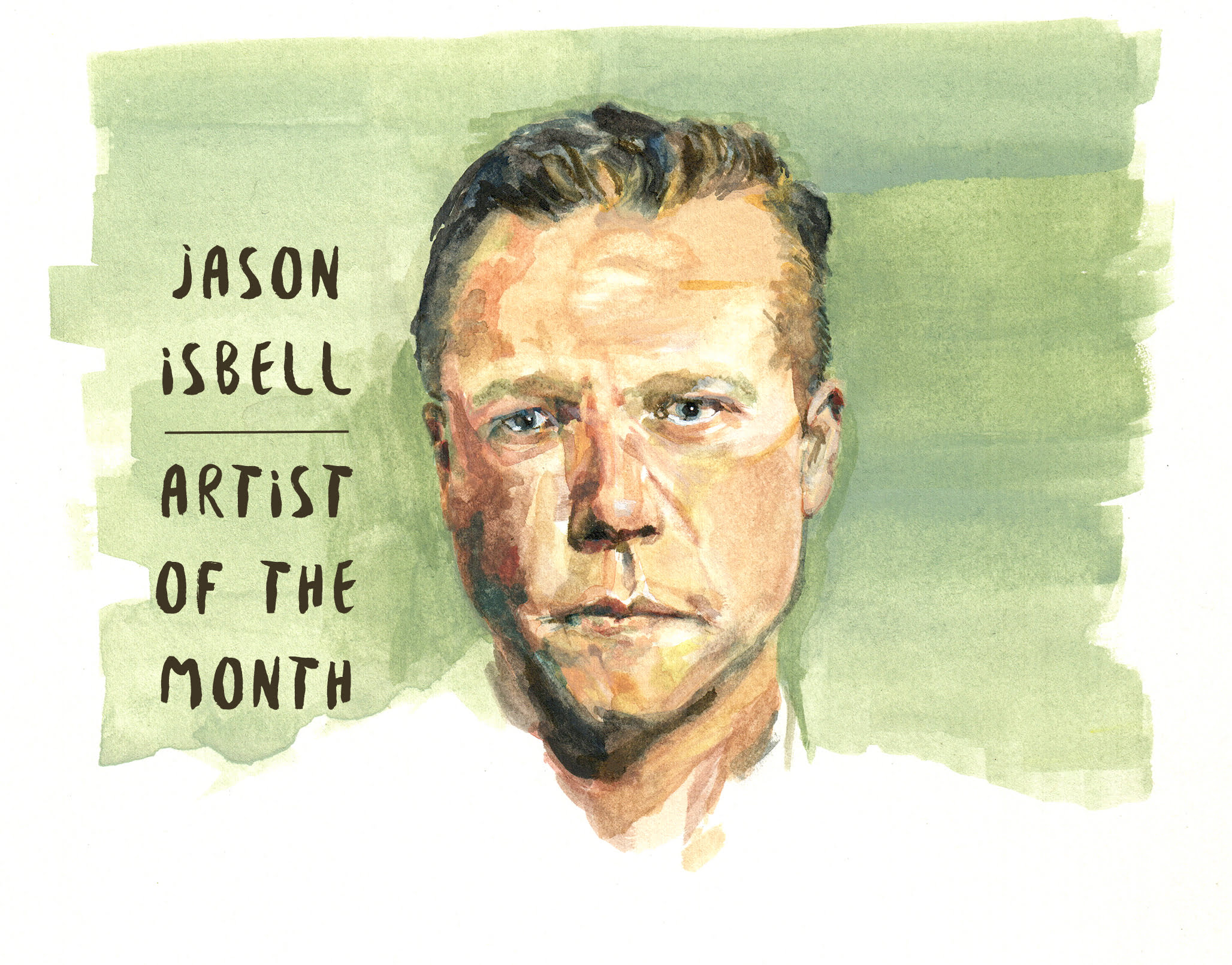
Jason Isbell: Finding the Common Ground

No one really knows who actually watches Today in Nashville, a newsmagazine show that comes on at 11 am and usually includes segments featuring local chefs making seasonal cocktails, barbeque tips, and probably a few cute and/or furry pets. It’s the kind of program that makes Nashville still feel like a small town, full of random snippets and Southern quirk — something nearly prehistoric in the post-Trump, Twitter-rage-filled America, where a quaint five minutes dedicated to, say, an ice cream truck, strikes as indulgent. Who tunes in to that sort of thing? Well, Jason Isbell, for one.

“I get a big kick out of this show,” says Isbell, calling from his home in the country right outside of Nashville, where he’s been watching: This morning, he learned about peanut-free day at the ballpark and squat techniques from Erin Oprea, Carrie Underwood’s trainer. “They just try to fill the space with local Nashville color every day, and it just cracks me up.”

It makes sense, really, that Isbell is drawn to Today in Nashville — there’s perhaps no better working student of local color, in all its permutations, than the Alabama native, who released his most recent album, The Nashville Sound, last month. It’s a collection of songs that don’t take the gifts of humanity at face value: love in the context of death, privilege amongst suffering, hope in a world on a collision course with an irreparable future. Much has been made about this being Isbell at his most “political,” but, really, it’s an LP that studies the causes and not the effects. Isbell is a listener, not a screamer, and as the Trump era has divided the country more than ever, he’s looking to understand why we got here, and not just point fingers. Isbell’s characters might be wanderers in small towns or coal miners looking for peace at the bottom of a glass, but he’s more interested in what he might have in common with them than what he doesn’t.

“This album, I wanted to stay away from a lot of the same type of reflection I did on Southeastern,” Isbell says about his breakthrough LP, which was followed by 2015’s Grammy-winning Something More Than Free. “But I also wanted it to be personal or reveal parts of myself that were frightening and were scary to reveal. And that came across in songs people might describe as having a political slant or agenda. I don’t think political is right: That’s not very interesting to me. What’s interesting to me is belief.”

“Belief,” after all, is a potent potion — especially since beliefs are often digested outside of a moral code. Isbell hasn’t been shy on social media about his stance on Mr. Trump’s policies (Spoiler: He is not in favor of them.), but The Nashville Sound is not the work of just an angry man; it’s the work of one who knows that human beings are complicated, confusing things who don’t always make the right choices, but not always for the reason you think. It’s a challenge to both criticize and empathize at the same time, and that’s what Isbell can do so artfully, by finding freedoms amongst flaws.

“Writing songs about race and gender, that’s a minefield,” says Isbell about tracks like “White Man’s World,” which take an honest stock of the privilege bestowed upon people simply born a certain skin color and sex. “One false move, and I am a laughing stock. One tiny little ignorance of privilege, and I am screwed. So you have to be very, very careful. And careful in a way to represent yourself correctly. You have to start out believing in the right things, and then you have to tell people that in the clearest way. That’s a great exercise, but it’s scary.”

On “White Man’s World,” Isbell doesn’t just try to offer apologies to people of color or to women — he takes it one step further. And that’s by admitting that there are layers that he doesn’t see, bias he might not even realize: “I’m a white man living in a white man’s world,” he sings. “Under our roof is a baby girl. I thought this world could be hers one day, but her mama knew better.”

That baby girl he sings about is Mercy, his daughter with wife and 400 Unit bandmate Amanda Shires. The album, produced by Dave Cobb, isn’t a “dad” record, but it is shaped by Mercy’s existence, and by the litmus test she adds to Isbell’s life. His marriage is also confronted, but, once again, in an unusual context: On “If We Were Vampires,” Isbell looks at love as something that can only exist within the sands of an hourglass. “It occurred to me that it’s a beautiful thing, death, if it happens when it’s supposed to and not a minute sooner,” Isbell says. “There is nothing else that would move us, if we didn’t know it was going to end. I wouldn’t be in a hurry to find somebody to spend my life with, to have a child, or work. I wouldn’t have any motivation to do anything — make art, get up off my ass, whatever. That’s really the point. People call it a sad song. Yeah, it’s a sad song, but sometimes people use the word sad to mean moving.”

There’s no doubt that Isbell’s a lyrical master — like the best songwriters, he blends prose and poetry in the most delicate balance — but part of what makes his work so captivating is that idea of what is “moving” over simply just sad, or any base emotion. The Nashville Sound gets this feeling across often by asking questions as much as it gives answers: Why does happiness breed so much discomfort? Is there any peace in knowing that death will come? What can we do, in this short life, to leave the world a better place than we found it? Rather than get purely political, Isbell aims to move minds, and to challenge beliefs that are held dear, through subtler storytelling and not just through enraged diatribes.

“If you want people to listen, you can’t just yell at them all the time, even if you are right,” he says. “If I am arguing with someone who is a hardcore conservative, I might think this person doesn’t realize how offensive his or her beliefs are, that they are racist or sexist, but you can’t just start screaming ‘You are a racist and you are sexist,’ unless you just want to alienate those people and cause them to move out to the fringes. Once people get alienated, they start throwing fire bombs.”

That sense of alienation is a lot of what built the Trump agenda, and, now, Isbell feels alienated, too. He’s confused by a country that could overlook “deplorable behavior” like Trump’s. “I thought I knew more about Americans that I did,” he says, talking about “White Man’s World.” “Having grown up in a small part of a Southern state and traveled for nearly 20 years, I thought I knew more than I do about American people.”

Of course, Isbell wants to know them as much as he can — it’s whyThe Nashville Sound is the number one country (and rock) record on the Billboard chart. You don’t appeal to both red and blue without reminding the audience that you’re not just preaching to them, you’re hearing them, too. And Isbell is listening to the Nashville sounds, as much as he is making them.


Lede illustration by Cat Ferraz.

STREAM: Jennifer Knapp, ‘Love Comes Back Around’

Artist: Jennifer Knapp
Hometown: Chanute, KS
Album: Love Comes Back Around
Release Date: June 23, 2017
Label: Graylin Records / United For Opportunity

In Their Words: “Perhaps one of the greatest adventures in my life has been the quest for love — how to get it, give it, and keep it going. For me, love’s reward is more bountiful than just passionate romance; it’s rich and worth the labor of keeping it alive. From the most mundane of life’s circumstances to the most arduous, love and its hope is the one ingredient I can’t imagine living without. I’m captivated by it and wanted to focus on that while writing these songs. I wanted to celebrate the luxury of resting in it, as well as the beauty of the work it takes to make it happen.” — Jennifer Knapp

Rewriting the Story, Redrawing the Lines: A Conversation with the Secret Sisters

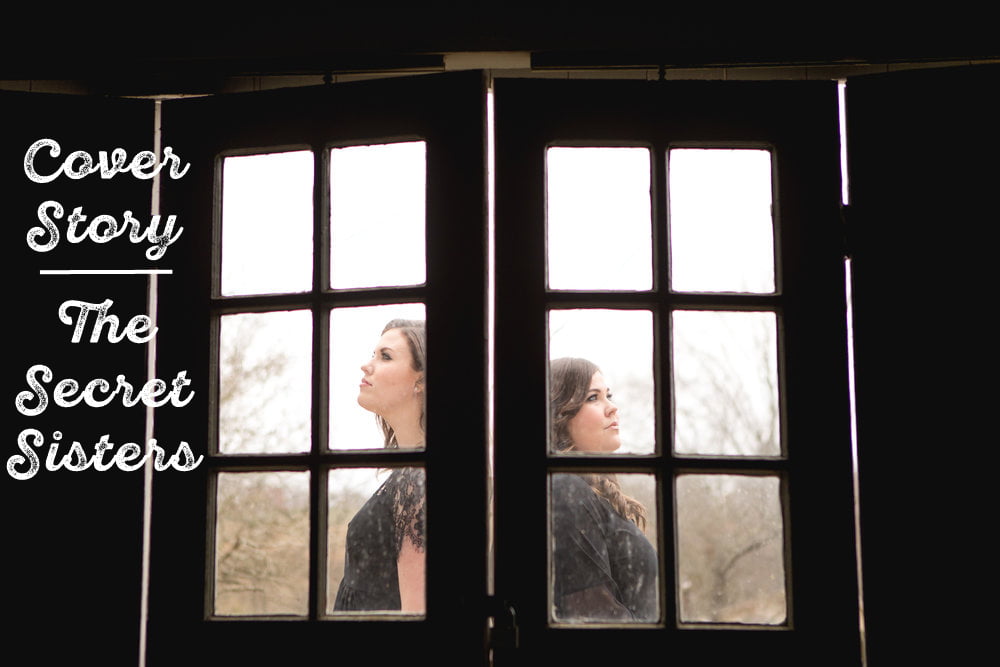
The Secret Sisters had all the markings of instant success. Their first recording contract came attached with producer Dave Cobb and executive producer T Bone Burnett, and they toured with the likes of Brandi Carlile, Ray LaMontagne, and even Bob Dylan. But those factors, while exciting, weren’t a guarantee. Where music’s history is riddled with instances of surprising discoveries that led to shooting star fame, it’s more heavily peppered with the ones who didn’t make it to the finish line. For every Elvis Presley, there’s the Bobbettes. It seemed that the Secret Sisters, Laura and Lydia Rogers, were destined for some version of the former, but no one anticipated the turn things took after they released their second full-length album, Put Your Needle Down, in 2014. Slow sales caused their record label to drop them, and they soon found themselves underwater, financially and emotionally.

Looking back now on their story, it seems evident they would always turn things around; fate, having dealt them such lucky cards before, wouldn’t let that hand go to waste. At the time, though, that was harder to see. The sisters are back after three years, recently signed with New West Records, and raring to go with their third studio album, You Don’t Own Me Anymore. Produced by good friend Brandi Carlile, the album places its finger on the bruise their adverse experience in the music industry caused and doesn’t let up. “It’s about as personal as it gets,” Laura says.

Having learned a lesson or two over the past eight years, the pair are gritting their teeth but not biting their tongue. As with Sara Bareilles’s 2007 hit, “Love Song,” their title track flippantly states their independence from industry expectations. It’s more than being protective of their music; it’s about being protective of the Secret Sisters, themselves. If the business doesn’t take kindly to determined young women — and this trope has certainly fallen by the wayside as the years have produced firecrackers like Dolly Parton, Jessi Colter, and Miranda Lambert — the Secret Sisters now know the rules to the game. Still, that doesn’t mean their relationship with their music is idyllic. Songs like “Carry Me” and “He’s Fine” express the sacrifice that always follows creative success. For every hit single, there’s a home left empty while they worked on it; for every successful tour, there are two hearts left yearning as the road carries them farther away. These are not new burdens for musicians to carry, but Laura and Lydia wrestle with their meaning in invigorating ways, their harmonies speaking to their weighted and contemplative experiences as much as their lyrics do. Some returns are triumphant, others honest, but rare are the ones that exist in the nexus between those two signifiers: something bruised and brave and becoming..

Music, like many creative forms where people are trying to “make it,” involves its fair share of rags-to-riches stories, but yours involves many twists and turns. What have you learned or what are you learning from your own narrative?

Laura: I feel like I could write a book that probably no one would ever want to read. We’ve transformed so many different times. All of a sudden, we land with this larger-than-life situation, where we have a record deal and we’re touring like crazy with all these artists who are so inspirational and so successful compared to the two of us. Then, to go into this dark phase where literally everything has fallen apart and we aren’t really even sure that we’re going to create music again, and then to be where we are now … it’s so insane. If I had known it would be so up and down, I probably would’ve never went with it. But I’m glad. Even though it’s hard to go through the valleys and exhausting to be on the mountaintop, who it has created out of the two of us is pretty special. I think we’re so grateful to be where we are.

I would imagine there was a sense of security when that deal first came through, but nothing in life is a given, even if certain narratives suggest otherwise.

Laura: From the outside looking in, it seemed like this Cinderella story. All of those things were so great and, at the time, they were huge and important, but they don’t mean anything. They can be taken away. They don’t have the weight to carry you through the turmoil you might endure. You can’t get too comfortable and assume those things will sustain you.

Lydia: Also, at the end of the day, we had to rely on those relationships we had developed in the early days to get back on our feet away. We had to rely on our friends, like Brandi [Carlile], and John Paul White. Ultimately, that’s what got us out of it.

It would seem so easy to look back and say, “Of course, we were always going to make it again.” But in the moment, it’s harder to see. Is there a central take-away you can see yourself applying as you move forward?

Laura: With the first two records, we didn’t control any of it. We just showed up and we sang. We went through this phase of being these sweet, submissive, Southern girls, because that’s what we were raised to be. Moving forward, I think we’ve learned the power of saying “No, thank you.” I don’t want to sound like we’re all of a sudden divas, because we’re still the same people, but I think we have a better sense of our power and what we want and where we’re going, and a lot of that just comes with age. Going through the darkness helped us realize that, too.

That comes across in the album. There are moments of anger that shift into determination, or what the South likes to call “grit.” Where did you find your grit?

Lydia: We kinda had to reach down deep into ourselves. Well, I say that, but I guess we didn’t have to reach too deep. It was all there on the surface. We were hurt, and so we got a lot of that determination within ourselves, but also Brandi instilled that into us, too. She would call us every few months and ask us how we were doing, and she’d give us advice. When we were having bad days, she would remind us why we do what we do, and why we had to keep going. She has been such a good friend to us for a long time now, for seven years or so. She was one of the very first tours we ever did. We were on the road with her and Ray LaMontagne. Ever since then, she has been a big sister to us, and stayed in touch.

Especially during a time when a lot of people were turning their backs on you.

Laura: That’s so true, and I think people’s true colors really show; you start to realize what their motivation is all along. We’ve worked with some kind, amazing people, but the people who checked in on us really proved to us how much they believe in us, as humans and as musicians. Those are the relationships that — thank goodness — we had those handed to us in the early days, because they’re what brought us out of the moment that really could’ve been the end of the Secret Sisters. I think one thing that has happened with these records — and we’re not these over-the-top, outspoken feminist activists; I mean, obviously, we think women need to be revered and respected and equal — but I think one thing we really became aware of is what it means to be a female musician in a world dominated by male musicians and male businessmen who make all the decisions for you, as a woman. We really evolved into knowing our power as women. I hate to even talk about that because I feel like it’s such a hot button issue.

But it happens all the time in the industry!

Lydia: It’s so true, and we never realized it, until we had these conversations with Brandi. Just because of the climate that we all live in and exist in and work in now, it became apparent how many times our gender actually does impact how successful we are or how people talk to us. We do not have it nearly as terribly as many women do, and I’m trying to keep all of that in its proper place, but I think that it’s a tiny sentence in a very long conversation that’s happening right now about what it means to be a woman in a man’s world, and what it means to embrace your power and say what you have to say without being angry or …

Laura: Feisty. There’s an added layer because we’re also Southern. I think the main perception of Southern women is to be submissive and quiet and let the men take charge. That’s still very prevalent in the South, and it’s hard to fake that as Southern women, even being millennials. It’s definitely something we still have to overcome ourselves.

There are so many stereotypes associated with proper and improper behavior for women in the South.

Laura: Oh yes, especially in small towns. I think, for us, it’s a delicate balance, because we come from a very Christian environment, and we come from a very family-oriented Southern environment, and we love and revere it so much, but I think the fine line is figuring out how to be kind and respectful and Southern sweet to everyone, but then also realize when someone isn’t doing right by you because of who you are and the gender that you are. Also, I think that Lydia and I have had to figure out that it’s okay to be sweet and Southern and submissive when it’s necessary, but there are moments when you don’t need to be, and you need to stand up for yourself or you’re going to get plowed over.

It reminds me of another Southern stereotype: the firecracker.

Laura: I wish I could be 50 percent firecracker and 50 percent Southern belle, and I wish I could know exactly when to pull out each.

If you ever find out, let us know.

Laura: It’s so funny that you mentioned firecracker because our grandmother is on the cover of our new record. That’s our paternal grandmother who is now 86. She’s the definition of a firecracker. Hopefully we have a little bit of balance on that record.

What were you trying to invoke after your first two album covers?

Lydia: We were kind of, honestly, tired of putting our faces on the covers. We love our first couple of album covers, but we wanted to put something — like you said — gritty and meaningful, and she’s this really incredible woman who is kind of argumentative, but also kind of sweet and, honestly, everything that we aspire to be. We love that picture because it looks like she just came from a street fight.

Laura: She had just gotten her hair permed for the first time in that picture, but she looks like she had just come from a women’s rally.

I was struck by this sense of sacrifice that keeps coming up throughout the album. You love your music, clearly, but it requires you to give up something you hold dear. So what’s your relationship with music now?

Laura: If I’m being completely honest, it’s a love/hate relationship, a lot of the time. I think I get frustrated sometimes just how incredibly hard you have to work to try and get your music out there and respected, and it seems like a continual battle. You may make a little progress, but then you realize, “Oh, but I’ve still got a really long way to go.” I’m 31 now, and, Lydia, how old are you?

Lydia: I’m 28.

Laura: We had a different trajectory for ourselves, and our timeline hasn’t gone exactly like we thought it would, and we’re in this really interesting phase right now where we’re just trying to figure out what it means to be a complete adult who has responsibilities and a marriage and family relationships and things that really matter, more than music even. My husband has a day job and he works really hard to provide for us, and sometimes — and he doesn’t project it on to me, I project it on to myself — I feel like, “Oh, here I am just chasing a dream.” It’s not the same as working an 8-to-5 job. Because I expected a different life for myself, I’m still adjusting to what it means to continually chase that dream of making great records that I’m really proud of. I’ve had to realize that there’s no end goal; it’s just keep making good records and keep playing great shows, and hopefully be able to pay your bills, and really that’s all you can ask for, and even that feels a little bit extravagant.

Lydia: I’m of the same mindset. I think Laura and I had these expectations, in the beginning, because things were handed to us, and I think we expected things to be on a different level than they are now. We’re having to adjust to the reality that it didn’t go that way, and we have to embrace being musicians wholeheartedly and enjoy the ride, as cliché as that sounds. It’s definitely a sacrifice every single day. It’s working all the time for that hour-and-a-half onstage.

It sometimes can feel like a curse — maybe that’s not the best word — but creative individuals always struggle, even when things are going well.

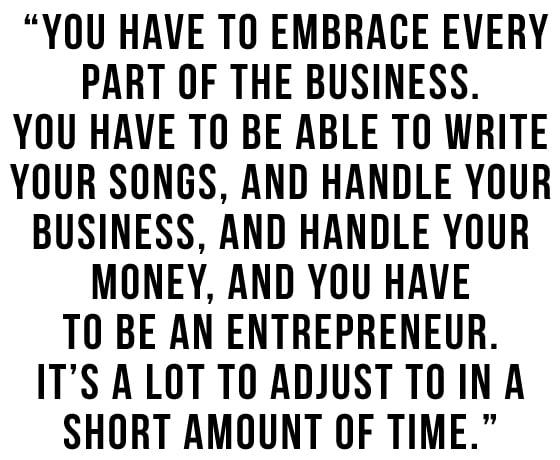
Lydia: You have to embrace every part of the business. You have to be able to write your songs, and handle your business, and handle your money, and you have to be an entrepreneur. It’s a lot to adjust to in a short amount of time. It was so different eight years ago, when we started.

I can’t even imagine. I know many musicians who have quit because they love the music but they hate the business.

Laura: That’s a constant temptation. Even when things are going extremely well and you have a really great timeline of a record release or a tour, it’s still hard because you think of how many hours you’ve put into it, and if I were putting this many hours into a job at McDonald’s, I would make infinitely more money than I do as a musician. Again, if the money is what you’re in it for, you’re going to be so disappointed. You’re going to have months and years where it’s unbelievable, and you’re going to have months and years where you literally have to ask your parents for help with the mortgage. I’m an example of that. Then again, if you love it, it’s part of who you are.

Lydia: Sorry, we just got really honest.

When you say “it’s part of who you are,” a creative life often means your identity is fused with your work.

Lydia: It’s like showing your diary to someone.

Laura: I think that’s why, when we went through the bad spell, it did such a number on our self-esteem and our confidence and our abilities, because we identity as Secret Sisters. It’s who I am, it’s what I do, people know that it matters to me. When all of a sudden that completely falls apart, and people are asking you, “When are you going to make another record?” and you want to tell them, “I literally can’t afford to pay my bills right now. I can’t even think about making a record.” We’ve had to learn not to place so much of our identity in what we do.

That’s smart.

Laura: You live and die by it. If it goes south, your self-esteem goes with it. So, try not to let that happen in the future.


Photo credit: Stephen Jenkins
Reasons to Rock: A Conversation with Rhett Miller

“I only had four hours of sleep last night,” says Rhett Miller of Old 97’s. “I might be more honest than I otherwise would be.”

Truth be told, Miller’s always been honest. Since the early days of Old 97’s — a band that helped define what would come to be known as Americana, something they are arguably not credited with enough — he’s dug deep into his own history to create songs that help unlock the human experience, one story at a time. And for Graveyard Whistling, their 11th album, Old 97’s decided to use a little of their past to help reflect on their own future: They headed back to the West Texas studio, Sonic Ranch, where they made their major-label debut, Too Far to Care, to lay down a collection of tracks that flirt with mortality while still feeling vigorously alive.

“I paid my dues, I paid my debts,” sings Miller on one of the album’s seminal tracks, “Good With God.” “I made a mess, but it’s my bed.” Full of cow-punk fury, it finds God as a woman, with Brandi Carlile playing the role of a maker who doesn’t let her mortals off too easily. Whether 18 or 80, it’s never too early or too late to measure our mistrials and mistakes and see the people we’ve hurt or impacted, not just the gapes in our own conscience.

And while nostalgia can sometimes be a dirty word, Miller and the Old 97’s don’t get mired in it for Graveyard Whistling — old memories and worn-out relics serve as a reminder to keep going and not to just look back. 

You’ve been making records since back when people held up lighters at concerts, not iPhones. Do you find yourself nostalgic for the early days?

The biggest thing that has changed from that era is that we can no longer play a brand-new unreleased song unless we are completely comfortable with whatever shitty version of that song being released. That’s been a bit of a change. But I’ve never minded cameras or recording: You’re trying to put on a good show anyway, and it’s not like the fact that you’re suddenly maybe going to be recorded is going to change the level of performance. There are no shows where I just go out there and think, “Oh, nobody is recording this, so I’ll muddle my way through and just get paid.” I enjoy challenging myself to put on the best show I can every night. People holding up their phones as if this is something worthy of recording for history or posterity is fine with me.

But speaking of nostalgia, going back to the same studio where you made your major label debut, Too Far to Care, must have shook loose so many memories.

That part was crazy, going back to the tiny little down — really a stop on the highway outside of El Paso, near the Mexican border. Since then, the studio itself, in the past 20 years, has grown into a world-class studio with multiple facilities and a lot more lodging. Each of us stayed in the same bedroom where we had stayed 20 years earlier. And that experience was definitely a sweet thing, because it brought back memories of how exciting that time was, and made it feel like there was a full circle component, 11 albums into this band, feeling like we are doing the right thing. Here we are, all these years later, and we are fundamentally the same four people. With added decades and perhaps wisdom, and a lot of gratitude that maybe our younger selves were too inexperienced and green to have discovered yet.

Did you stumble on any particular moments of déjà vu?

When we talk about déjà vu — that sensation of having experienced something before — it’s good luck. It’s an indication that you are on the right track. That was the experience that we had at Sonic Ranch. And I found a note in the bedside table drawer of my bedroom that I had left there 20 years earlier. There was a note in my handwriting: My girlfriend at the time, I wrote down her phone number in New York City. It was yellowed with age and unmoved. It was crazy, since I remember standing in the same exact spot where I had stood when we recorded Too Far to Care and I remember having flashes at the things that would obsessively occupy my brain. I don’t have those kind of fears anymore. I remembered those fears and they seemed quaint to me when, at the time, they were paralyzing.

That note must have felt like a good sign, though.

It felt like a talisman and that the universe was giving me a thumbs up. It also felt like a testament to the shoddy housekeeping.

Old 97’s were at the forefront of what we now generally refer to as Americana. Do you feel like you get credit where credit is due for influencing that genre?

It was “alt-country” then, right? I remember the Bloodshot folks [Old 97’s first label] kept trying to push “insurgent country,” which seems really weird. We’ve always been fueled by this idea that we are underdogs and that we are hungry and that, in some ways, we have been underappreciated and overlooked. As we go on, it’s harder and harder to convince myself of that narrative. I do see more people who point to us as being influential. We wondered if we would ever hit a moment when young bands said they were influenced by us or drew inspiration from us, and now it happens with relative frequency and it’s always a surprise and such an honor.

Anyone in particular?

The Turnpike Troubadours. I’ve gotten to be friends with Evan Felker, and I love his writing, and I discovered him before I became friends with him. They have a song called “7&7,” and I remember thinking, “Either this guy listened to a lot of the same stuff as me and wound up in a very similar place, or maybe he listened to me,” because we are sort of honoring the same principles and finding the same beautiful moments, in terms of turns of phrase and finding little moments in the song to flip it on its head. I just thought he and I were kindred spirits. It turned out, as he explained to me the first time we ever talked, that the whole idea of the Troubadours, according to Evan, is that they wanted to be the Old 97’s with a fiddle. Which is so cool.

Do you remember having moments like that, when you met your idols early in your career?

I remember starting out, the first time I got to meet John Doe, and knowing so much of what I did was from being a fan of X, and trying not to sound like a fanboy. I just think music is a continuum, and one of the reasons I chose music as a profession over other creative endeavors is that it is centered around friendship and a community of musicians. I’ve tried to be something of a mentor to the folks that have presented themselves to me in the way I did to John Doe all those years ago. Getting to work with Waylon Jennings … he was so kind to me, and he could have been a complete asshole, and I still would have cherished the time that we spent with him. I tried to take those lessons from those people I looked up to when I was really young and pass it on.

Do you still think that musical kinship is as strong as it once was? The Internet can make everyone feel a sense of quantity over quality, in terms of interpersonal relationships.

If anything, it is more alive than ever. With the old business models — with the CEOs and the tall buildings you had to pass through — it was a detriment to the music scene. If anything, it created competition where there didn’t need to be, competition and divisiveness. Now, I would be lying if I didn’t watch the Grammys with a level of envy and bafflement, like, “Why? Why are these the people who get the golden or silver ring?” I don’t know what they are; I’ve never gotten one. But I think that we live in a world where the emphasis is less on that and maybe particularly because the prize element has been taken out of it. It’s not so much a lottery to win but music to be made.

Do you ever worry about music becoming too enamored with roots traditions and losing the ability to rock?

Bands with pedal steel can still rock. There is room for everything under the umbrella, and I think kids are always going to like to rock. I like to rock, and I am always grateful when I see a young band that gets out there and shreds. We need more reasons to come together, and live music is such a great reason to come together en masse and celebrate something. Especially when it’s exciting and fun and not everybody has to sit down and be quiet and focus on the performer so he can tell you about his misery. Miserable music and music inspired by misery has fed my children for years. But I personally have found a way to hide it in fun, inclusive sing-along-sounding rock music. And I like it when other people do that.

You definitely address some of the misery of mortality on Graveyard Whistling. Do you think about death a lot?

I think I go through waves of being really aware of mortality. Especially if you have a friend or loved one pass away. [Our last record, 2014’s] Most Messed Up was a record that functioned like a teenager might function: immortal in that teenager sense. You can do anything and get away with anything. The narrator was immune, in his own mind, to repercussions. When I looked at that pile of songs for this record, that narrator was no longer immune and painfully aware of culpability and his own mortality. Sins coming home to roost pervade.

Speaking of sins, asking Brandi Carlile for penance on “Good with God” is pretty genius. She’s a darn good lord and savior.

I grew up going to church a lot. I was in choirs. I was an acolyte. I really liked the music of church and I liked so much of the fundamental message that was conveyed. But I ended up having problems with organized religion. As far as God, I think our society uses that concept more as a tool or a weapon. So when I was writing “Good with God,” I was on tour with Nikki Lane, and Nikki is such a strong female presence to begin with, when I realized that God in this song is a woman. It’s such a fun moment, when this guy in the song realizes that: He realizes he wasn’t going to get away with things he thought he was going to get away with. And Brandi … lyrically, she demanded that he be held accountable, which is important. I’ve got a 10-year-old daughter and I’ve always told her that, throughout history, women have been treated poorly, but it’s a trend I thought was moving in the right direction. Until last year, when suddenly I really started questioning if that was true or not. I didn’t anticipate this song having this darker timeliness that it has wound up having. But I’m certainly proud of it.

But Brandi’s voice is just so huge. She just fills up a room. If you are looking for evidence or proof of God, that kind of voice is just a compelling argument for her existence.

LISTEN: Mink’s Miracle Medicine, ‘Somebody Else by Your Name’

Artist: Mink’s Miracle Medicine
Hometown: Harper’s Ferry, WV
Song: “Somebody Else by Your Name”
Album: House of Candles
Release Date: May 26, 2017

In Their Words: “I wrote this song a few years ago about losing a friend. It took me back a few steps and I often felt like I was stumbling around looking for something. Time would pass and then, suddenly, I would accidentally call out their name and remember again. I’ve always been into the music straight out of old spaghetti westerns, and here I tried to take an iconic theme and use it through the whole song. I love how, when I hear that lick, I get an instant snapshot of the desert landscape in my mind.” — Melissa Elizabeth Wright


Photo credit: Chris Scruggs

LISTEN: Zephaniah OHora, ‘I Do Believe I’ve Had Enough’

Artist: Zephaniah OHora
Hometown: Manchester, NH
Song: “I Do Believe I’ve Had Enough”
Album: This Highway
Release Date: June 9, 2017
Label: Roundup Records

In Their Words: “I’ve lived in New York City for nearly a decade, and it’s a hell of a town to survive in. At the same time, it’s an amazing place filled with amazing people. But like any place or job, you get to the point where you want to get out of town and go some place easy and quiet with more trees. To quote the late great Merle Haggard, ‘If you don’t love it, leave it.’ Sometimes you get the itch to split town. But New York has community, and that’s why I haven’t left.” — Zephaniah OHora


Photo credit: Meredith Jenks

LISTEN: Jason Hawk Harris, “The Smoke and the Stars”

Artist: Jason Hawk Harris
Hometown: Houston, TX
Song: “The Smoke and the Stars”
Album: Single
Release Date: April 28, 2017
Label: Free Man Records

In Their Words: “I’ve been writing music since I was 9. You could say that, all these years, I’ve just been waiting for this song to come out. It finally did. It clawed its way out of me and left me on the floor in a pool of blood, smiling like a lunatic. The lyrics themselves are the best explanation I can give. Explaining the song would be to offer a mediocre paraphrase. In general, I’m a fan of the idea that music is best experienced without pre-conceived notions. And with that, I’m going to shut up so you can listen.” — Jason Hawk Harris

LISTEN: Mary Bragg, ‘Wildfire’

Artist: Mary Bragg
Hometown: Nashville, TN
Song: “Wildfire”
Album: Lucky Strike
Release Date: May 5, 2017

In Their Words: “I’m a believer in all-or-nothing love — the kind that takes over your life and your whole heart, the kind that you’re 100 percent sure is right. When I met my husband Jimmy (who’s also my bass player), it was almost instantly clear to me that we were going to be together; every relationship I’d had before paled in comparison to what I found with him. ‘Wildfire’ is about not settling.” — Mary Bragg


Photo credit: Alex Berger

LISTEN: Wendy Colonna, ‘Every Second’

Artist: Wendy Colonna
Hometown: Austin, TX
Song: “Every Second”
Album: No Moment But Now
Release Date: May 19, 2017

In Their Words: “I feel like we measure time by the seasons, sun, and moon and, yet, it still mysteriously bends and eludes us so strangely when it comes to family, love, and loss. ‘Every Second’ hopefully speaks to that undeniable ache that we all know in that magical and bittersweet space between the moments.” — Wendy Colonna


Photo credit: DeAnn Hoeft

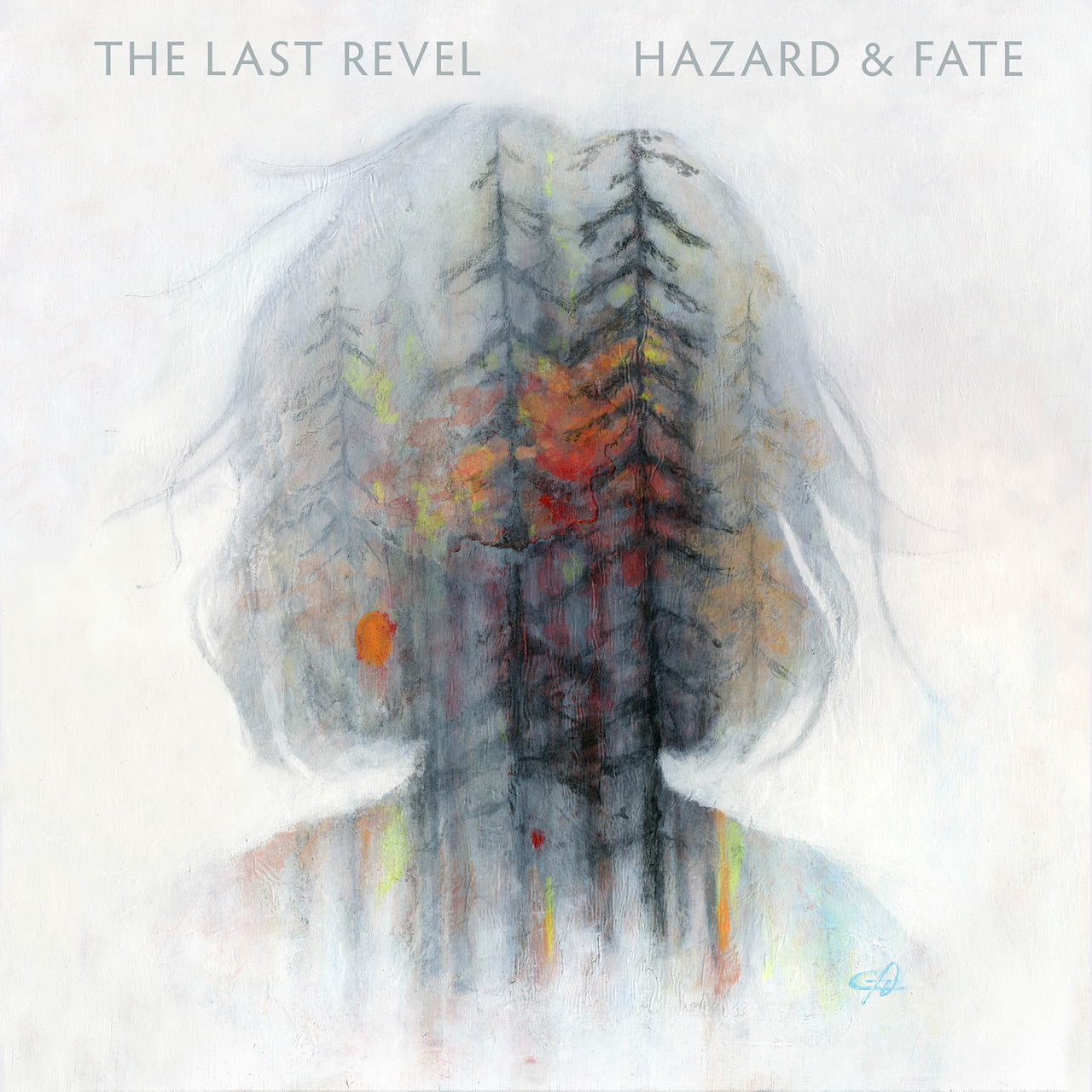
STREAM: The Last Revel, ‘Hazard & Fate’

Artist: The Last Revel
Hometown: Minneapolis, MN
Album: Hazard & Fate
Release Date: April 14, 2017

In Their Words: Hazard & Fate, it is one in the same. The songs that comprise our latest album were created in a time of very intense personal and professional growth. The challenges and growing pains we’ve faced in the past year resonate loudly within our music. Our goal with songwriting has always been to find a common ground that we all share, that the experiences we have are not dissimilar to others. Fleeting moments of joy and hardship — and the decisions we make that follow — can define and shape the course of our lives. Recognizing and accepting all of these moments for what they are as part of the patchwork of our story has been a source of inspiration for us.” — Ryan Acker