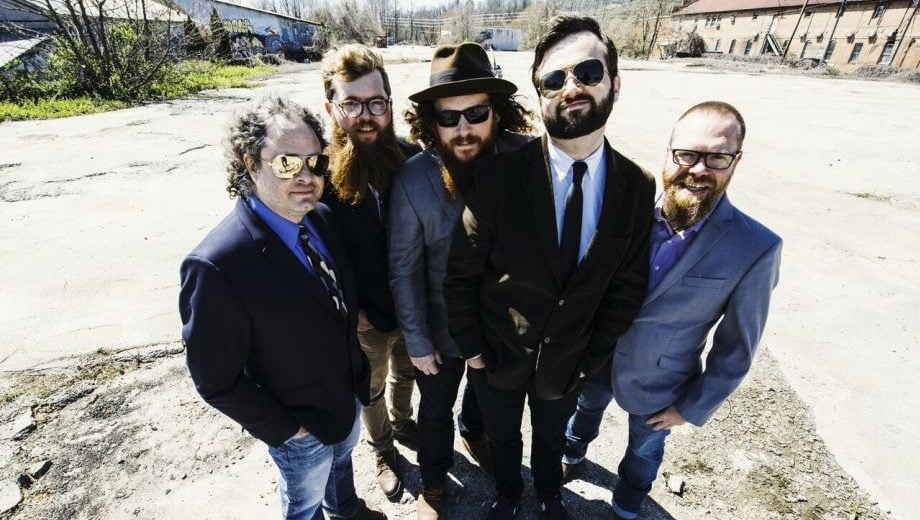
BGS 5+5: The Band of Heathens

Artist Name: The Band of Heathens
Hometown: Austin, Texas
Latest Album: A Message From The People, Revisited

What other art forms — literature, film, dance, painting, etc — inform your music?

Literature has been a strong influence on music and life in general. I really fell in love with reading at a young age, devouring everything from Inside Pro Football 1985 to The Three Investigators series. I had a great 20th century literature course in high school with a teacher named Chuck Wettergreen, who really encouraged me to fuse my love of playing music and writing songs with literature. We tackled everything from Arthur Miller’s The Crucible to As I Lay Dying by William Faulkner. Writers such as Kerouac, Burroughs, and Hunter S. Thompson have been life-long companions that have inspired me in the songwriting process.

What was the first moment that you knew you wanted to be a musician?

I think I always knew that I wanted to play music. The first time I performed in front of an audience was in pre-school. My teacher somehow got Ella Jenkins (The First-Lady of Children’s Folk Songs) to visit our class and play music for us. I somehow ended up with a guitar in my hand at some point during the presentation and performed for my class. I was hooked from that point on!

Since food and music go so well together, what is your dream pairing of a meal and a musician?

Paul McCartney + Lebanese Food in Beirut. I am of Lebanese descent and grew up loving the cuisine. Additionally, I’ve never been to Beirut and I understand that’s it’s a magnificent city. Oh yeah, I’ve also never met or dined with Paul McCartney, so it would probably be cool to talk about The Beatles and some other stuff.

If you had to write a mission statement for your career, what would it be?

Independence. The whole idea of making music and living my life as a creative person is based on an idea of freedom. The freedom to be independent to live a life of your choosing; from the hours you keep, to the friends you have, to the way you look and the clothes you wear. I know we live in a country where we are free to pursue anything we want, but I’ve always felt that this lifestyle was a way for me to manifest that idea and truly live it.

Which elements of nature do you spend the most time with and how do those impact your work?

I’ve been living in Asheville, North Carolina, for about 5 years now and we are sandwiched between two national parks and have access to all sorts of natural wonder and beauty. I really enjoy hiking and exploring in the Pisgah National Forest, it really offers me a great opportunity to deep-breathe some fresh air and escape the everyday sounds of life. I’ve found that it really clears my head and makes room for creating song ideas. So many of my best initial ideas have come while I’ve been walking through and old growth forest, in the morning as the fog is lifting.

WATCH: Songs From The Road Band, “Road to Nowhere”

Artist: Songs From The Road Band
Hometown: Asheville, North Carolina
Song: “Road to Nowhere”
Album: Road to Nowhere
Label: Lucks Dumpy Toad Records

In Their Words: “‘Road To Nowhere’ is a song about reconnecting with humanity. Today’s world is filled with digital distractions and all sorts of hustle, bustle, and worry. ‘Road To Nowhere’ will hopefully encourage the listener to get lost on a back road and spend some face to face time with a real person. The basic theme of the song is ‘unplug’ and reconnect with the natural world and the people in it!” – Charles Humphreys III


Photo credit: Sandlin Gaither

New Freedom Blues: A Conversation with Town Mountain

The very first instrument you hear on “New Freedom Blues,” the new single from Town Mountain, is a kick drum. Wait, what?! As the title track of their upcoming album (out on October 26), it’s a mildly, slyly defiant poke at bluegrass tradition (or, more precisely, one interpretation of that tradition) before the full band piles in behind Robert Greer’s gruff, wry lament from a guy who just can’t win for losin’. (Stream the song below.)

Yet as a conversation with banjoist Jesse Langlais makes clear, the members of Town Mountain are more determined than ever to dish up a different take on the bluegrass legacy—one that hearkens back to some of the greatest work by some of the music’s greatest masters during their times of greatest creativity. That should come as no surprise to those who have followed the independent-minded group since they first attracted attention in and around their hometown of Asheville, North Carolina, more than ten years ago.

For while it’s easy to hear the individual progress they’ve made as players, singers and songwriters, and the collective progress they’ve made as an ever more confident and tightly-knit band, their unrestrained energy and freewheeling approach were there right from the start. Whether you’re talking about their shows or about their growing body of recordings, they’ve always had one foot in the honky-tonk and one foot in the jam band world, all the while following the rambunctious roads paved by the King of Bluegrass, Jimmy Martin, as well as his best-known banjo man, J. D. Crowe.

That’s a powerful combination, and it’s taken Town Mountain on a unique journey—one that’s found them as much at home in muddy festival fields filled with energetic dancers as at ground zero for traditional bluegrass, Nashville’s World Famous Station Inn. Still, they’re like almost everyone else when it comes to trying to figure out the 21st century music business, and that’s where our conversation began.

Twenty years ago, it was clear what making a record would do for you as a band: you’d sell it, and hope to get some airplay, so the writers at least would make some royalties. But there was a much bigger economic component to making records back in the day than there is now. So what motivates you guys to make a record?

You’re completely right about the business. I don’t know, it’s just to get that stuff out. The record sales are not what drives the reasoning behind an album for bands at our level anymore; financially, it doesn’t make a lot of sense. The bulk of the material that gets sold is such a small percentage of the music out there. A lot of independent artists are just trying to get people to come to their shows—and one catalyst to do that is to release music. And personally, it’s also gratifying, just to be able to have that tangible object with which you as an artist can say, this is my material.

You guys pretty much write all your own material?

Yes. Phil Barker and I tackle the bulk of the material, Robert contributes a couple of songs here and there, and then we sprinkle a couple of covers in. But yeah, that’s been the premise of the band from the beginning: let’s utilize the songs. And really, for the longest time, songs would come to the chopping block and we would say, well, how bluegrass is this song? And that would be the parameters for how we would choose our material; we succumbed to the ways of the bluegrass world. That was almost dictating the material that we would choose, and all the while, there was all this other material that you’re turning the page on, so it’s just sitting in song notebooks, which we finally realized. So our last album and previous albums are much more of our brand of bluegrass, while I’d say half of the new one is more of a departure from that, but still maintaining the Town Mountain sound.

That’s funny, because it sounds very much like a bluegrass album to me. What are the ways you feel like these songs are less bluegrass than in the past?

There is some bluegrass material on this album, hands down. But if you sit down and analyze the songs musically, you would probably understand a little more of what I’m saying. I would say one thing is that we’ve got a full drum kit in there, which changes the feel immediately. Adding a snare in a bluegrass band totally works, and sometimes you bury it in the mix and can’t even tell it’s there. But with a full kit, it allows some of these tunes to breathe a little bit. We just said, OK, let’s not chop these songs at the chopping block because they don’t fit the mold; let’s move forward with them. And I guess that still maintains some bluegrass integrity, which is good to hear.

It’s not imitative but it reminds me of what the Osborne Brothers were doing, or what J. D. Crowe was doing, in the 1970s—the Starday album, You Can Share My Blanket, the Keith Whitley stuff. And then I notice you hit that low C note on your banjo more than a lot of other banjo players I hear these days, and that’s kind of a throwback thing to Scruggs, J.D., and Sonny. It sort of skips back a generation.

That’s the highest compliment we could be paid. I don’t think anyone could say anything that would make us feel more proud. If you’re getting that vibe of the Osborne Brothers and J.D., that’s totally what we’re going for. Everybody in Town Mountain just loves that ‘70s music so much; My Home Ain’t in the Hall of Fame, anything that Crowe put his stamp on is like the best stuff ever in my opinion, and I know Robert and Phil and the other guys feel the same. Now, I am a huge Osborne Brothers fan; not everyone else in Town Mountain is a huge Osborne Brothers fan, but I am. I’ve personally always loved the mix of hardcore country and the hardcore grass sound—and yeah, collectively Town Mountain is trying to emulate and bring some of that sound back into the scene.

One of the things about the classic bluegrass band creation pattern was that people played in somebody else’s band, went through an apprenticeship, played with people older and more experienced, and then went off to do their own thing. And around the turn of the century, something new started to happen—bands began more like garage rock bands, where people heard the sound of bluegrass and wanted to do it, but they didn’t go through the apprenticeship. How did Town Mountain get started?

None of us grew up in the ranks of the bluegrass community, doing what you’re describing. None of us have. Did we all play in other projects prior to Town Mountain? For sure. But they weren’t products of that hardcore bluegrass environment. Robert and Phil and I were all in bands based out of Asheville, but they were more like pick-up bands—buddies playing music. I’ll say, there’s nothing wrong with what you describe but it does create parameters when everyone’s coming through the same sounds and is being taught how to play the same way—I’m generalizing—and it creates this precedent and guidelines to adhere to, and all the musicians and bands end up kind of getting into that sound. I dig that sound, I get it for sure, and it’s a lifestyle and a way of music and a genre, and totally cool. But developing in that garage rock kind of way allows for a little more outside influence, a little more of a creative approach to the music. And that is how Town Mountain started, for sure.

One of the implications of that is that you have to be more deliberate about learning the older stuff. How’d you guys find your way through the bluegrass canon? How’d you get into that Crowe stuff?

Digging, lots of digging. Personally, my foot was put in the door through Old & In The Way. But as soon as I found out Old & In The Way, I found out who Flatt & Scruggs were, the Stanley Brothers, Jimmy Martin, Jim & Jesse and Bill Monroe. And I found a banjo teacher who would tell me to check out stuff. So then, for five to seven years, the only thing I would listen to was classic bluegrass, or bluegrass in general. I dug in full force. Because at that time in my life I had no idea what it was. I grew up in Maine; it wasn’t part of my life. So I immediately immersed myself in it. And after that period, I could cover so much of the bluegrass canon; I knew by then who J.D. was, and the sound that I love. And then, when I moved to Asheville and met Robert and Phil, it was like, oh, these guys would love Jimmy Martin, too. You know how everybody loves everybody, but this one’s a Monroe guy, this one’s a Stanley guy? We were all Jimmy Martin guys. So our musical taste in bluegrass was very similar from the beginning of the band.

When I look at the band’s recording career, you self-released, then you signed with Pinecastle—that’s a hardcore bluegrass label—and then you made your way kind of back out of the bluegrass mainstream. I look at the variety of material on the album, but right in the middle there’s a very straightforward bluegrass instrumental. I looked at your schedule – you’re playing a lot of clubs and music festivals, but then you’re playing mainstream bluegrass events like Festival of the Bluegrass or Joe Val. Do you feel like you’re in a balanced place between the bluegrass world and all the other stuff?

That’s something we’ve always toiled with, making sure that we’re maintaining a foot in all these different scenes. But we’ve always kind of been a fringe band within the bluegrass world. I don’t think anyone’s ever looked at Town Mountain and said, “There’s traditional bluegrass.” So we’ve always kind of been right where we are right now. We maybe used to do more bluegrass festivals. We made a conscious decision to balance that out with other, all-around, eclectic music festivals. But we hope to get some play on the bluegrass radio stations, and that that will help to keep us in that scene. We certainly want to be part of that music scene as much as it wants us to be part of it.


Photo credit: Sandlin Gaither
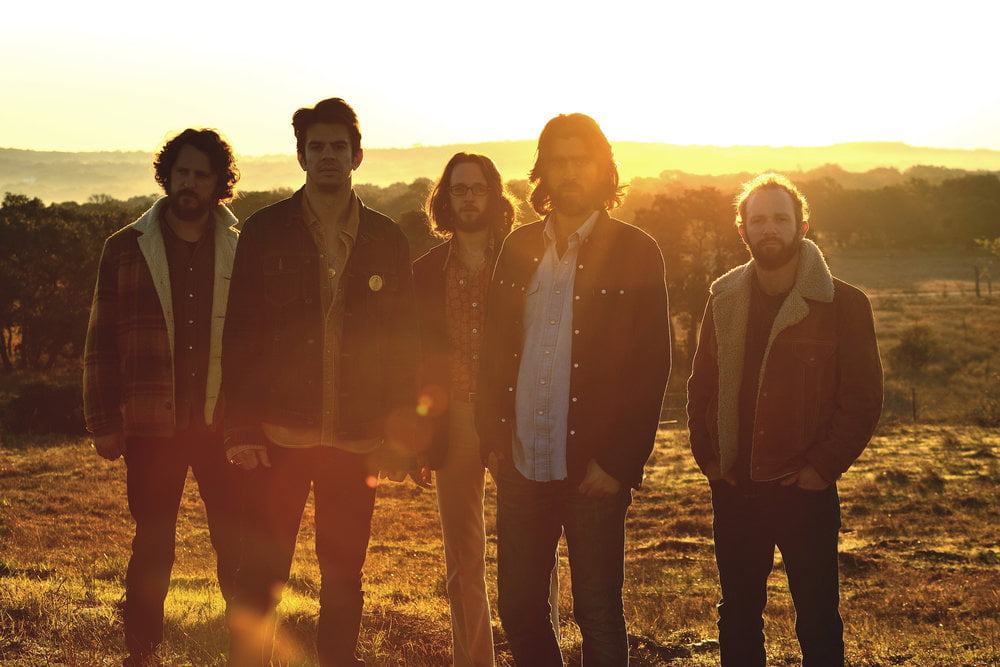
Nomadic Impulses: A Conversation with the Dead Tongues’ Ryan Gustafson

The road has always fueled the troubadour’s imagination, and it’s no different for the Dead Tongues’ Ryan Gustafson. Instead of using the road as inspiration for his eventual return to more stable writing environments, however, he used the ebb and flow of tour life with Hiss Golden Messenger to capture what he saw as he saw it. As such, the Asheville-based singer/songwriter’s new album, Unsung Passage, captures an orchestral folk sound that feels, in some ways, like a fever dream.

Through flutes and banjos, guitars and string sections, the Dead Tongues pay homage to the passage of folk before it. “Ebb and Flow” echoes a ceaseless locomotive quality that calls quietly to Uncle Dave Macon, while “Won’t Be Long” nods to Bob Dylan, in both vocals and rhythm, and “Pale November Dew” tips its hat to Van Morrison’s Astral Weeks.

Unsung Passage is a melodically dense and textually rich portrait of life’s messier moments, those times when expectations fail to achieve reality, or when the business of living feels closer to a Sisyphean task. But it’s not all moody contemplation. “My Other” looks through the shadows to see life as a strange, wondrous gift. “What is life if not a chance to get on that open floor and dance?” Gustafson sings. Since it was written on the road, themes of travel, movement, and change inform Unsung Passage’s overarching scope.

How would you say the rhythm of the road has influenced your musical rhythm?

Especially with the last few years touring almost non-stop, it’s a different pace than previous in my life, where I’d travel a lot but it was kind of random and just on my own beat as opposed to this scheduled momentum. It was really interesting to write within that. I wrote all of Unsung Passage within that period. It’s funny, I actually looked back on that time and tried to figure out when I wrote this album. I’m not sure. It happened in so many different spaces over so many different times that eventually I just had an album. It felt like it came from nowhere.

Almost like a fever dream.

I have memories of writing it in so many different places, but it was definitely at a much more rapid pace. That was a new thing to get in the groove of. Tour life, it does agree with me, but it’s a much different lifestyle than I had experienced before even though I was used to traveling. That is partly getting used to being in hotels and these places that are kind of soulless and try to keep your soul alive.

I follow [Hiss Golden Messenger’s] M.C. Taylor on Instagram, and I saw that to celebrate the end of his tour last year, he invited a tattoo artist into the hotel. Were you part of that?

I was in the room, I was watching them. I have quite a few tattoos and for some reason I just…I hadn’t had one in a couple of years and I was like, “I’ve been feeling good not getting tattoos.”

I was only asking because you mentioned trying to bring a bit of soul to these soulless places, and that struck me as an interesting way to do that.

Yeah, that was a particularly good day off.

Since you wrote this across so many different spaces, what other specific U.S. or worldwide places influenced your sound?

Specifically, like “Giver,” I’ve listened to a lot of music from Laos and I think that influences me. Some of that Southeast Asian traditional music overlaps with old-time music in the States in a really cool way. I haven’t been to Laos yet, so it’s not a personal thing that I’ve picked up, but I’ve picked it up over the years of listening.

As far as all over the States, I definitely find inspiration musically and also within poetry. There’s a quality to the American experience as I can see it or portray it through my lens that I’m trying to capture and let out, and by looking at all things Americana that kind of opens up some different portals. I’ve been really into [poet] Frank Stanford’s writing; he’s a very Arkansas writer from the bayou area. He’d spend time on the river and write about it.

Also I’m trying to learn more about the Appalachian Mountains and spending time in this area has been very influential. I get really influenced by the landscapes and lifestyles that I encounter as much as I do through music, so it maybe filters itself through other things.

The Durham scene is notorious for breeding a certain kind of feel or spirit. Where do you think that comes from, and why do you feel it’s situated itself there specifically?

I’m not sure but there seems to be some connection between humidity and the music just as far as you get into the South and the groove gets funkier and funkier the closer you get to New Orleans. I think that there’s a lot of people in North Carolina who are here because they relate to that type of music and musical traditions, you know the Piedmont Blues. And also, where I am in Asheville, the mountains bring a whole other groove to it with old-time music. It could just be that if you’re really looking for that, you might not land in New York or L.A. It’d be easier to find that in North Carolina. In talks with M.C., that seems to be why he’s there. He was following it from California.

Unsung Passage is quite striking because of all the different textures you’re orchestrating. Once you wrote the album and you set about recording it, why did you want to expand it in that way?

I wanted it all to be really simple, and most of it turned out simple. It’s almost all tracked live, all the vocals and the music.

That’s wild for the sound you get. The layers feel so complex.

I’ve always loved flutes. I’ve been wanting to have an album with lots of flute on it for quite a while. That’s just been a long time coming, and I like having these songs, you know, the core of the song just being a pretty solid traditional song. It feels really at home for me to take that and try and give it some type of mystical mountain air on it. Bring a little bit of that vibe to it. I think that’s what sparked the idea of the instrumentation.

On “Clip Your Wings” some of the images really resonated with me as I’ve been a bit of a nomad these past few years. You sing about a “hungry ghost” and “walking the tightrope.” When does your sense of movement threaten to upend your sense of self?

I think that’s a really interesting way to read into that song. To me, that song is not necessarily written about myself, but oftentimes what I find is that years later I’ll hear them and see it as though I was actually writing about myself. That song is about these ways of movement and change, but in ways that ultimately end you or destroy you. It’s actually a hidden song to some extent about suicide. An old friend of mine…but I’ve found in almost all of my writing it ends up in many ways being a mirror of myself as well. So I’ll think about that. I like that question a lot.


Photo by Shervin Lainez

MIXTAPE: Amanda Anne Platt’s Asheville Assembly

This is a playlist of 12 songs by Asheville artists that have entertained and inspired me in my own little corner of this town. To choose only 12 was a challenge, to say the least, since the music scene keeps growing and it seems that every day there are new songwriters and musicians adding their talents to the pool. I felt a little under-qualified as I started to narrow it down. By no means comprehensive, erring a little on the old school side, this is what I came up with. — Amanda Anne Platt (of the Honeycutters)

Malcolm Holcombe — “Who Carried You”

What better place to start an Asheville list than with Malcolm Holcombe? He’s an incredible songwriter, a captivating performer, and a local legend. This is one of my favorite songs, ever. And if you haven’t had a chance to check out The RCA sessions yet, do it!

Taylor Martin — “Travel Far, Travel Wide”

Taylor Martin may sound like a made up name for a songwriter, but he’s the real deal. This is one of my favorite Taylor songs, from his 2014 release Heartache or Bust.

Moses Atwood — “Garden of Eden”

Moses hasn’t put an album out in a while, but the two he has are still in heavy rotation at our house. I would have put four or five of his tunes on here, if I had more space.

Miriam Allen — “Contrabandista”

She’s got a beautiful voice, is a badass guitar player and songwriter, and she built her own house. I aspire to be a fraction as cool as Miriam Allen.

Floating Action — “To Connect”

This was the first Floating Action song I ever heard, when I found myself stoned and sitting on the old couch at the Grey Eagle for a free show. It still might be my favorite.

Aaron Woody Wood — “Coal Black Hair”

No list of Asheville songs would be complete without a murder ballad. I first heard of Woody Wood as a member of the Blue Rags, and then with his rock band Hollywood Red, but some of my favorite performances of his are solo acoustic.

Jen and the Juice — “The Damnsong” 

I remember someone saying to me, when I was new in town, that I had to meet “Jenny Juice.” “She just writes songs that make you smile,” they said. And she does. Jen also has done many things over the years to unite the music scene here, including starting the Brown Bag Songwriting contest.

Town Mountain – “Long Time Coming” 

Followers of the Bluegrass Situation won’t be strangers to Town Mountain. This is my favorite cut off of their most recent release, Southern Crescent.

Grits & Soul — “Hundred Year Farm”

Though they have technically relocated to Mt Sterling, Kentucky, Grits & Soul will always be an Asheville band in my heart. This album has a lot of great tunes, but this is the one that’s been worn out on my copy. It’s a tear jerker.

Red June — “I Saw You in August”

This is a tune written by my friend Will Straughan, though this album has great songs from all three writers. I love their harmonies.

Laura Blackley & the Wildflowers — “Favorite”

This song should be on a list of the greatest slow dance songs of all time.

Tyler Ramsey — “No One Goes Out”

As a child of the ’90s, I’m a fan of ending a mix with a slow, retrospective song. Love this whole album from Tyler Ramsey.


Photo credit: Eliza Schweizbach

LISTEN: The Honeycutters, ‘Blue Besides’

Artist: The Honeycutters
Hometown: Asheville, NC
Song: “Blue Besides”
Album: On the Ropes
Release Date: May 20
Label: Organic Records

In Their Words: "This is my current favorite song on the album. The lyrics and melody came together very quickly for me as kind of a jab at someone who gives up too easily because they feel sorry for themselves. (Not that I know anyone like that!) I'm proud of the songwriting, but also really pleased with the production and performances from the whole band … it was a collaborative arrangement.

This was actually the first song that we recorded when we went into the studio back in November. We had played it live a few times and were all feeling pretty comfortable with it. I think that really set the tone for the rest of the session, because the groove felt so good and we were all excited and confident. Matt went back and added a guitar track, and added my final rhythm guitar and vocals after the fact, but the rest of the track is from that first hour that we sat down to start on this record. Also, it's fun to sing harmony with myself!" — Amanda Anne Platt


Photo credit: Leah Beilhart

LISTEN: Town Mountain, ‘Comin’ Back to You’

Artist: Town Mountain
Hometown: Asheville, NC
Song: “Comin' Back to You”
Album: Southern Crescent
Release Date: April 1
Label: LoHi Records

In Their Words: "'Comin' Back to You' is a tune about traveling and being away from the one you love. So many of these types of tunes are slow and sad … I thought it appropriate to arrange mine more upbeat boogie woogie, because I love being on the road!” — Robert Greer


Photo credit: Sandlin Gaither
LISTEN: Jane Kramer, ‘Carnival of Hopes’

Artist: Jane Kramer
Hometown: Asheville, NC
Song: "Carnival of Hopes"
Album: Carnival of Hopes
Release Date: February 26

In Their Words: "I wrote 'Carnival of Hopes' when I was living on a little houseboat in the Columbia River in Portland, Oregon, and was missing the Blue Ridge Mountains and the life I lived there. The whole song stemmed from this one line that first popped into my head while I was taking the garbage out one evening:

'This morning there were two crows by the road / They were flying curiously close and swooping dangerously low / and I couldn't tell if they were lovers or if they were fighting foes …'

For me, it's a song about the moment you realize — truly and viscerally — that the love of your life did not last for your whole lifetime and that, although you know that you need to lay down your hammer and quit trying and give yourself over to that truth, your heart will always be looking up at the stars wondering if your person is seeing them in the burning way that you are, right at that moment. Even while you are in someone else's arms. It's a song about coming to grips with getting older and also with the fact that relationships — even the kind made of tattooed-on-your-bones-love — can be so bright and gaudy and beautiful and, most of all, fleeting; they're gone and taken down as quickly as they were built up, just like a carnival. — Jane Kramer


Photo credit: Sandlin Gaither

Traveler: Your Guide to Asheville

Nestled in the Blue Ridge Mountains, Asheville, NC, is one of the most scenic cities in the Southeast. A truly eclectic place, the town of just under 90,000 residents packs in art, food, beer, culture, and, of course, the outdoors, making for weekend trips that leave you saying, "We've gotta come back for more soon."

Getting there

For my trip to Asheville, the drive from Nashville was an easy one — about five hours by car. (That doesn't take into account the time change you encounter going from Central to Eastern.) It's a scenic drive, too, especially as you get closer to Asheville itself. And for the UT fans out there, the drive goes right through Knoxville, so you can make a pit stop for all your DayGlo orange needs, if you feel so inclined.

Accommodations

While there's certainly no shortage of Airbnb's right in town, it's worth your while to check out some of the cabin rentals (also found on Airbnb!) in the surrounding area. Many of them offer beautiful views and hiking access, and are a mere 15-20 minutes from the heart of the city.

Food


[loveandlocal / Foter.com / CC BY-NC-SA]

Asheville is definitely a food town. If you're feeling like a fancy night out, chef John Fleer's Rhubarb won't disappoint with an extensive menu that features lobster corn dogs, to name just one of the many delicious dishes. Check out Tupelo Honey Café and Sunny Point Café, if you're looking for something a little more casual. And, of course, don't forget that many of the breweries around town also have food options that rival the quality of their amazing beers. 

Drink


[jpc.raleigh / Foter.com / CC BY-NC]

If Asheville is a food town, it's most certainly a beer town, as well, with more breweries per capita than any other city in the United States. You can spend your entire trip visiting breweries alone and, luckily, many of the breweries are located so close together that doing so is an easy (and legal!) feat. If you don't know where to start, check out the Asheville Ale Trail, a definitive guide to the 13 breweries located in Asheville. A couple favorites from my trip were Green Man Brewery, One World Brewing, and Asheville Brewing Co, the last of which also provided the perfect pizza lunch to fuel our drive back to Nashville.

Local Flavor


[vlasta2 / Foter.com / CC BY-NC-ND]

If you're into the outdoors, Asheville is the perfect destination. The Blue Ridge Mountains offer a number of hiking options, from easy strolls through the city's Botanical Gardens to more difficult treks, like the Cold Mountain Trails. When your legs need a break, be sure to take advantage of Asheville's art scene which includes the River Arts District, a group of historic buildings by the French Broad River housing a number of artists and studios. And, if you have time to catch a show during your stay, be sure to hit the Orange Peel which, in November alone, features shows from the Milk Carton Kids, the Infamous Stringdusters, and Shakey Graves.


Lede photo courtesy of davidwilson1949 / Foter.com / CC BY