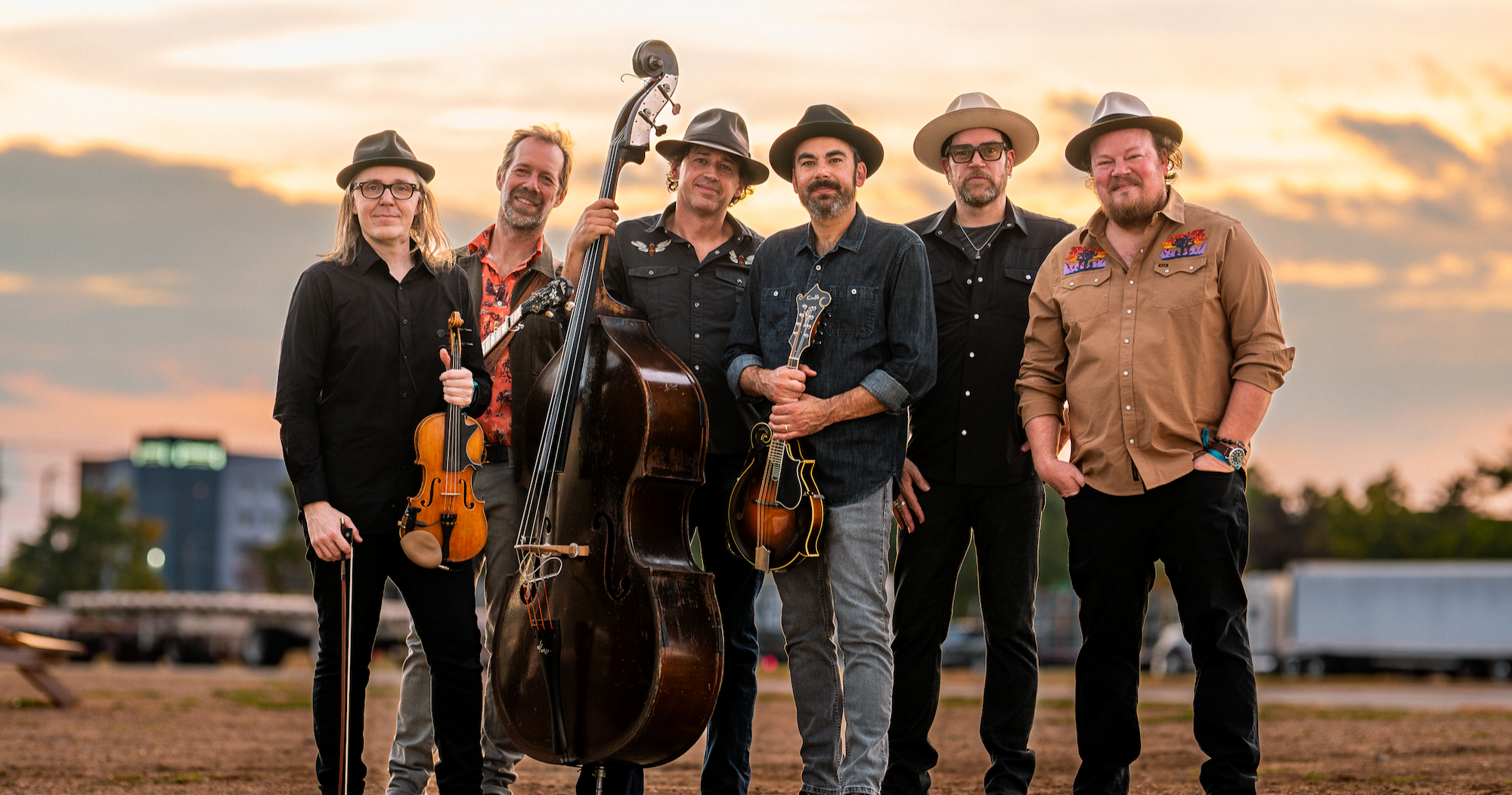
Steep Canyon Rangers Are “A String Band Again”

Twenty-six years into its life as a band, the Steep Canyon Rangers get back to basics on Next Act, unplugging their amps and instruments in favor of an acoustic setup with minimal percussion. It marks a return to the foundations that first set the group up for success.

Releasing May 22, Next Act is the second studio effort to feature guitarist and vocalist Aaron Burdett, who joined the Rangers in 2022 following the departure of founding member Woody Platt. In addition to appearing on their 2023 album, Morning Shift, Burdett is part of the Rangers’ 2024 live record, which features several of his own compositions, too.

Alongside the band’s other members – Graham Sharp (banjo), Mike Guggino (mandolin), Nicky Sanders (fiddle), Mike Ashworth (percussion, Dobro), and Barrett Smith (bass) – Next Act brings Burdett into the fold even more, with six tracks written or co-written by him. “Roll of the Dice” catalogs Burdett’s early days traveling with the band and “Hard Times” finds him reflecting on adversity and how moments that once felt overwhelming can later soften in memories.

According to Ashworth, the growing role of Burdett in the band is simply a carryover of having multiple voices contributing to their songwriting over the past decade, with Sharp being the other primary force of late.

“Aaron came into that role really well with a bunch of his own material while also taking lead on some of the stuff Graham had written as well,” Ashworth explains. “After incorporating more of his own stuff on that live record, the next step was to up the ante even more on this album by bringing even more of his older work into the studio.”

Steep Canyon Rangers’ Mike Ashworth and Barrett Smith caught up with BGS to delve into how books inspired two of the album’s songs, how a road trip instigated “Halfway To Reno” featuring Edie Brickell, what remains on the group’s bucket list, and more.

How did Aaron’s level of involvement on this record grow compared to Morning Shift?

Barrett Smith: It feels like Aaron has always been here – he just fits with us so well. He’s become such a close friend and a great person to work and make art with. We’re just excited with everything having to do with the band right now, and Aaron is a big part of that. Things went well when we worked together on Morning Shift, even though we were considerably less worn-in and stable than we are now on this album. We’re really cooking right now and feel great together as a group.

Mike Ashworth: From a relationship standpoint, things have gelled much further than I’d ever hoped. It does feel like Aaron’s been a member for more like 10 years, not three. On this record you can see the band in more of a way that feels like a group that’s sure of itself. The last time we were in the studio we arranged in more of a rock ‘n’ roll style where everybody reinforces the same rhythms, but on Next Act we gave everyone a lot more room to explore their own parts. It’s indicative of how much we trust each other now and how much growth artistically the band has seen in the last few years.

BS: Another good indicator of the growth is that on Morning Shift we worked with a producer, Darrell Scott, even though we enjoy and produce ourselves really well. But then when Next Act came along, we felt like we had enough chemistry together that we could move forward without an outside producer this time. Doing that allows us more space to bounce ideas around and feed off each other, which we feel like is our greatest superpower as a band.

As well as y’all work together, it’s hard to pass up a collaboration with someone like Darrell Scott when it presents itself!

MA: I imagine it’d be hard to come into a band like this and produce, because oftentimes we have to be careful to not already be done with everything. As a result, we intentionally leave certain things unarranged or on the table to give them something to do or else we’ll just wind up taking everything away from them.

BS: I remember Darrell, a number of times, looking around and saying, “Y’all are pretty weird with how you do things.” One time when we were recording, I remember him stopping and asking us if we always had so many opinions about each song that we communicated to each other. Eventually he started telling us to just “shut up and play” – that was one of the catchphrases of our studio time together. [Laughs] If you have an idea, we want you to be confident that it’s going to be heard. There’s a lot of trust in the whole system.

MA: Another thing Darrell pointed out was, “Y’all really care so much about the story.” He’d never heard an entire band comment on the lyrics and stories behind each song like we do – whether it’s where to punch things up or down or when to add harmonies.

That’s the cool thing about this new record. It delves even more into that exploratory realm of the band trying to sell the story – and the whole band, not just one singer, absorbing what it’s all about.

Tell me about naming the album Next Act. Is that a nod to this full circle journey that’s brought you back to being more of a traditional string band?

MA: The intention was twofold, but that was definitely a part of it. As the title of the song, it’s about picking yourself up, moving into a new phase of life, and embracing change. However, Next Act for the band is us reflecting on our change and growth and the ability to reveal what our potential is at any given moment. Because of that it became a pretty conscious decision to make it the title of the record.

BS: On Arm In Arm [in 2020], it was fun getting to mess around in the studio with organs, electric guitars and all these special guests – it was like our own mini-Brian-Wilson-like experience. But on this record, we wanted to bring it back home and return to being a string band again. Because of that, this new record doesn’t have any electric instruments on it. There is percussion, but it’s not a full drum set. We’ve been doing a lot more stuff around one mic at our live shows recently and feel like these new songs are very representative of that.

MA: We’ve all had amps and drums buzzing around our heads for years, so we wanted to remind ourselves that this thing still starts around a campfire and can always come back to that. I don’t think fans will know what to call what we’re going to do on any given night, because even we won’t [know] until we see the room and start to feel the vibe of the city and people there. Doing this record has allowed us to rediscover the foundation of what we are when you strip everything away. That’s been a really cool and unnerving process to get out from behind all the extra noise and see that when you take those things away, the art is still really good.

There’s a couple songs on this record – “Back of Beyond” and “Circling the Drain” – that were inspired by books, Barbara Kingsolver’s Demon Copperhead and Horace Kephart’s Our Southern Highlanders, respectively. With that in mind, how would you say literature informs the band’s songwriting, not only with this record, but overall as well?

MA: Graham actually wrote both those songs, but I do want to speak about Demon Copperhead, because we all just absolutely loved that book. We’re not just a band, we’re also a close circle of friends, and with that comes shared mutual interests, like books. I’m so glad that Graham is my friend, because he can write things that I wish I had the ability to say. But once something is written, whether it be a book or a song, it doesn’t belong to [the writer] anymore, it belongs to you, [the reader/listener]. That’s the really cool thing about art.
I love that Graham is a voracious reader because we wind up getting a lot of great songs out of it, like these two. Damon [Demon Copperhead’s protagonist] is such a wonderful, resilient character that reminds me so much of people I grew up with – and I’m sure Barrett would agree.
BS: As a writer, artist, and creator, I think it’s a good habit to have different areas you pull inspiration from to keep you out of a rut. For Graham a big one is literature. Demon Copperhead threw all of us for a loop as it was getting passed around the bus. When we found out he was basing a song off it we jumped right on it.

As for “Back of Beyond” and Our Southern Highlanders, I think that book is essential reading for any Western North Carolinian. “Back of Beyond” was simply a term that came from meaning the middle of nowhere out in the country, in a place where you can go for days without seeing anyone or speaking a word.

“Back of Beyond” is a song that’s been lingering with y’all for several albums before finally getting recorded now. What made Next Act the right spot for it to land?

BS: During my time in the band, I would say that “Back of Beyond” is the biggest survivor, in terms of songs that have stuck around and taken on many different forms before finally making it onto a record. We actually wanted to include it on Morning Shift, but Darrell Scott didn’t think it would be a good fit, so we didn’t. We may have even called that album “Back of Beyond” if it had been on it. But when that happened, we knew it would reappear on our next record. After it missed the cut we all really wanted it for this one, which is why we call it a survivor.

I was also curious about the song “Halfway to Reno,” which came from a roadtrip you [Mike] had with Aaron from California to a gig in Reno, Nevada. Is that right?

MA: That’s right. I think Aaron was behind the wheel that day. From my view, he’s someone that is more influenced by an experience or feeling than anything else, which he can then take like putty and mold into a piece of art. That’s the beauty of being in this band, these guys will come up with these nuggets – and if it hits the Steep Canyon grinder and comes out the other end still in one piece, then they’ll take it and finish writing it.

Then when we were mixing that song we kept envisioning a high voice on it, but couldn’t figure out exactly who to ask to fill the role. Then we sent it to our dear friend Edie Brickell and she ended up putting the icing on the cake. The song is about one lover trying to get back to the other and the little things that you carry through your day – especially when you’re separated by distance – that keep you tied to home. She really understood the assignment and put this beautiful piece on top of the tune that I absolutely love.

How did the opportunity to work with Edie on the tune come about?

MA: We first met her over a decade ago through Steve Martin. He would send her banjo ideas and she’d send them back to him with lyrics over them. That quickly evolved into a fantastic record produced by Peter Asher called Love Has Come For You in 2013. But touring together is where we really befriended her, during late nights on the bus and in the dressing room. I remember being drawn in by her spontaneity and creativity and the way that she can write a song in the moment about that moment. It’s almost like a fortune teller.

Since that first encounter we’ve recorded many times together through the years and she’s become not just one of my favorite female artists, but one of my favorite artists, period. She’s just so heartfelt every time she adds to something. It comes from a real place and that’s harder and harder to find these days.

Speaking of Steve, what did it mean to have him featured with you on “Heart’s the Only Compass”? I think this is his first time on an album or single with you since 2020’s “California.”

BS: It’s always a huge honor any time we’re able to work with Steve. He’s an iconic American art figure, so to have the opportunity to create with him is a treat. When we decided we wanted clawhammer banjo on that tune we tossed a few other names around first, but it all came back to Steve, because the prowess he has on the instrument is second to none.

From what I understand, you reconstructed “The Kindest Thing” in the studio at the behest of Nicky. Tell me about that process and how the final song differs from what you were initially going for?

BS: That song took on a bunch of different forms in the studio, as our songs often do. At one point it had this Don Williams, cool country kind of feel and Nicky heard that pretty late in the game, but didn’t care for it. Instead he kept talking about “Going to California” by Led Zeppelin, which led to Mike Guggino kicking off this riff similar to the one in that song that wound up setting the foundation for what the song eventually turned into. Ultimately, it was a good decision on Nicky’s part.

Steep Canyon has been together for 26 years now. With that in mind, is there anything that remains on your musical bucket list?

BS: The band hasn’t won a GRAMMY since I’ve been a part of it, so I’d love to see that happen – maybe even with this album. [Laughs] Aside from that, it’s hard to think of specific venues, not that there aren’t any, but because we’ve gotten to play so many of our dream places already. My bucket list is mainly just keeping on and continuing to discover and hone my role in this band.

What has bringing this album to life taught you about yourselves?

MA: I thought I’d become more patient as I became older, but I actually think I’m becoming less. [Laughs] In all seriousness, this session taught me to slow down again. I kept wanting to schedule and have it done sooner rather than later, but instead, the cycle for this record was one of the longest we’ve ever endured. In the end I think it’s exactly what it wanted and I’m grateful for how it got me to take it easy and be more in the moment.

BS: Even though we’ve been playing together for so long, working on this record brought me a new level of comfort and trust with the band. I have more faith in the people in the band, what we’re doing and my place in it than ever before, which is such a good feeling. I’m really enjoying where we are right now and am excited to see how we keep building upon it.


Photo Credit: Jay Strausser

Our Jamgrass column is brought to you in partnership with Preston Thompson Guitars.

Darren Nicholson Wants His Style of Bluegrass to Sound Different

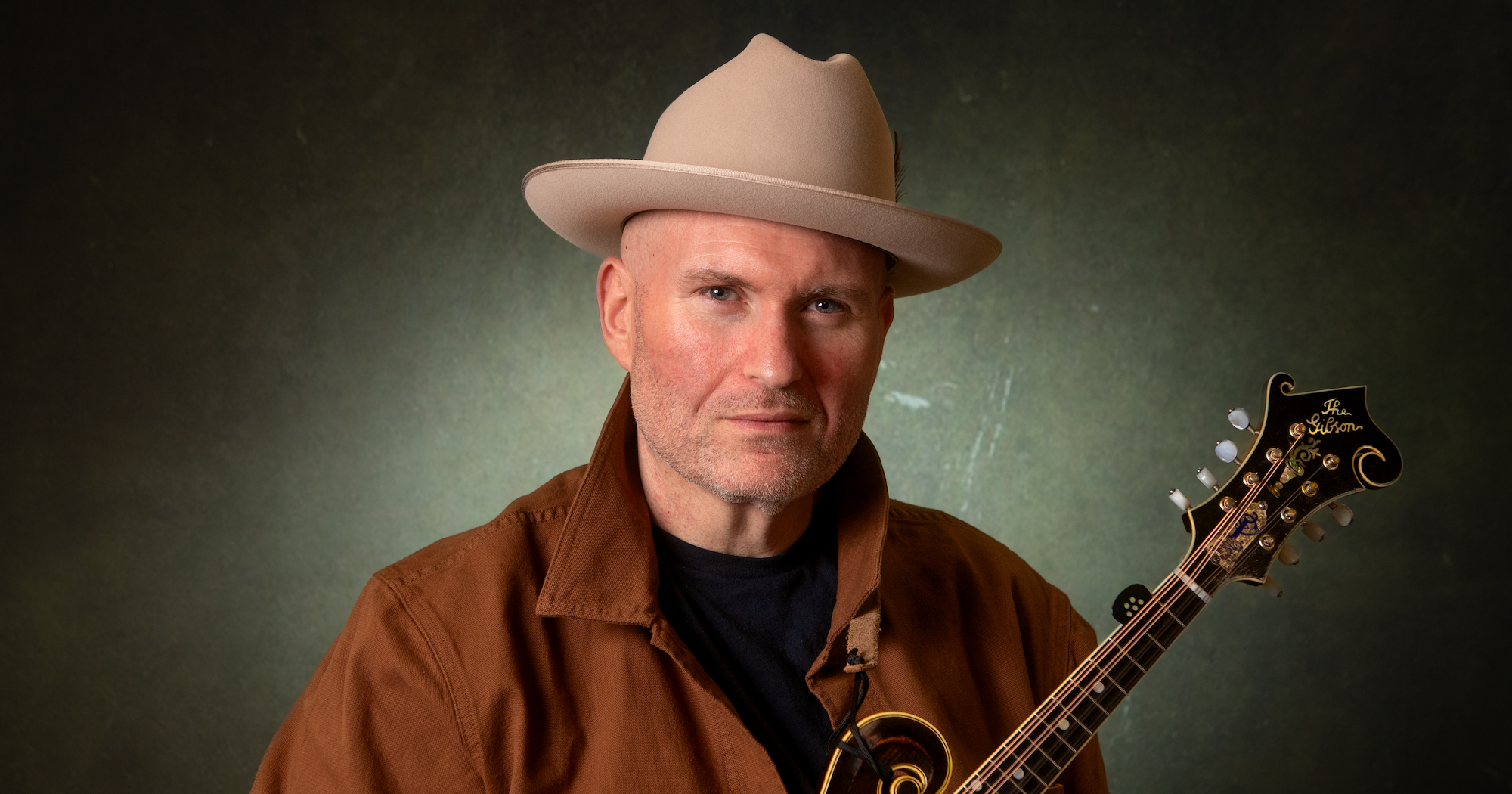
Over the past twenty-some years, Darren Nicholson has played mandolin all over the world – whether with Alecia Nugent, as a member of Balsam Range (a group he co-founded), or on his own (with or without a band). No matter where he traveled, you can be sure that Nicholson was bringing Western North Carolina with him. Nicholson was born, raised, and still lives in the area.

When BGS caught up with Nicholson, he was home in Canton, N.C., a town about 20 miles west of Asheville. It’s a region that he feels has been a bit overlooked in music history. “The oldest folk festival in the country [Mountain Dance and Folk Festival] is held in Asheville,” he shares. “There were recordings that happened in Asheville before the Bristol Sessions.”

The area he pointed out, despite its remoteness, also has been home to many significant musicians – as well as developing a dance-friendly style of bluegrass that drew from many different styles.

Nicholson’s love for the area has led to a rather unique sponsorship for his tour van and trailer. Through a friend he met with representatives of the Avalon Mountain Community, a private mountaintop neighborhood and development in the hills of Western Carolina. Nicholson calls it a “win-win” situation as he receives some financial support for touring expenses while Avalon now has a “rolling billboard.” “I even wrote a jingle for them,” he states.

Nicholson will be traveling around this year touring a fine new album, Lonesome Trails and Tall Tales. He counts it as either his fourth or sixth solo effort, depending on whether you factor in two EPs. Lonesome Trails and Tall Tales arrives after several particularly eventful years for Nicholson, including leaving his longtime band Balsam Range, getting sober, and acquiring a prized 1923 Lloyd Loar mandolin – all among the topics that he was more than willing to talk about with BGS.

How does your new album Lonesome Trails and Tall Tales tie in with your earlier albums?

Darren Nicholson: My records have a sound, you know. I’ve always been pretty much consistent – besides an electric country EP – doing the music that I consider my style of bluegrass or the bluegrass that I grew up on, which is to me the traditional bluegrass of the ’60s. Having a producer like Carl Jackson in the early days influenced how I made records, because Carl had played with Jim & Jesse and he came out of [when] an entire bluegrass movement had almost a country kind of feel to it. I love the sound of those records. And it was partly because I grew up in Western North Carolina and there’s a huge dance element here – the square dance music.

The old-timey driving style of rhythm with that light percussion – like Jimmy Martin, Flatt & Scruggs, the Osbornes – that really fits in with people who danced. And the modern kind of bluegrass – like the Alison Krauss style of bluegrass, which is amazing – does not lend itself to dancing. The modern style of bluegrass that was really kind of heavy on the one and three beat, and then the older style of bluegrass, which was very much more even, rhythmically.

And how does the new album differ from your prior ones?

What separated this particular recording from the others is just my growth as a songwriter… I was picking what I thought were the best songs I had or songs that were different from each other. A lot of times… [with] the way things are being mass produced now, if Nashville finds one song that’s a hit, they’ll write 10 more just like it for all the other artists. So they all start sounding the same.

To me, all the great artists of yesteryear, all their material was different. Their sound was different. Instead of just finding something you could mass produce, make a buck on, and then hop on to the next thing, they were actually creating art and trying to artistically be different. That was what was good about it.

So [in] the same way, I try to pick songs in my set. I don’t want to play five songs in a row that sound the same. Otherwise, it’s boring – I see bands do it all the time. They kick off in [the key of] B and they play five songs that could basically be the same song, you know? I understand why people who are non-bluegrass fans will go, “You know, all bluegrass sounds the same.”

I tried to pick six songs that were completely opposite from each other, so when you go down track by track, it’s a different journey and it doesn’t bore the listener. Every song is a different tempo, it’s a different groove, it’s a different key, it’s a different vibe, and so that’s how I put records together.

Were these songs ones that you’ve accumulated over the last couple years or are they all a recent crop of songs?

A few of them were really old and a few of them were really new. “Big Sky” has been around for a few years and I wrote it with Charles Humphrey. I thought it was “okay,” and this shows you how off-base I can be sometimes.

I’m driving to a gig one day with my buddy Kevin [Sluder]. He plays bass with us. It was a solo gig, but he was just riding with me. We’re listening to songs and Kevin goes, “That song is amazing. You’re an idiot if you don’t cut that song.” I was like, “That song? It’s okay.” He goes, “No, that song’s more than okay. That song is special. You need to cut that.” I took this batch of songs to Jeff Collins, who produced the record, and that was one of the first ones he picked. And sure enough, radio played it. Banjo Radio wore that song out. If it were up to me, I would have probably left that one on the pile of demos.

One of the newer ones was “Eager Overachiever.” I’d just written that song with Andrew Blythe. It was so fun. Every time I would sing it for somebody, they loved it. It’s a funny song about addiction.

It made me laugh, and the song also shows a lot of personality.

That’s the point, you know. That song has personality. One of my favorite artists [growing up] was Roger Miller and he would sometimes do these spoken pieces. Especially in country music, sometimes there would be recitations or things would set up songs. It was interesting and just funny, you know.

Can you talk a little about the music traditions of Western North Carolina where you grew up?

There’s a definite style. If you go across the country, there’s little pockets of bluegrass that have their own sound, for sure. But Western North Carolina and this region was so rural and cut off… If it’s 120 years ago and you’re in the mountains of Western North Carolina, people would walk for 10 miles to get to a barn dance or some place on Saturday night. And the band would be whoever showed up. It might be a banjo and guitar. It might be fiddle and banjo. But it changed the way you played. When Doc Watson plays his leads, he also plays his rhythm; he’s playing lead and rhythm at the same time. Where modern players who have a whole band behind them, they’re like playing rhythm and then when it comes time to take their solo, it’s a whole different mindset.

As [the area] grew and people got together more and more, they still played the same way. They passed it down from generation to generation, that strong sense of rhythm and timing that is a trademark for Western North Carolina. Look at Marc Pruitt and Steve Sutton; you know, Jason Burleson is from Western North Carolina. Doc Watson, Earl Scruggs, Mark Kuykendall, Tom McKinney, Mike Hunter – all of these amazing players are from Western North Carolina. Randy Davis – Bill Monroe introduced him every night for five years: “He’s the man from Asheville, North Carolina; he’s the man with perfect timing.”

At these musical gatherings in Western North Carolina, you’re describing how people frequently would bring whatever instruments they had – acoustic or electric. And it wasn’t doctrinaire about what a bluegrass instrument had to be.

Yeah, it was community. And I’m going to say this, and I don’t care to say this because I’m from here and I’m from generations and generations of people who play this music. It’s always somebody who got into bluegrass in college or they got into it older, and they’re not even from this area. It’s somebody that’s from New York or from California or from Oregon. They write articles, and they become self-proclaimed experts of bluegrass. And they say, “Well, this is bluegrass and this isn’t bluegrass.”

They didn’t come from generations of this music. They don’t know. They’re not at the epicenter of where it came from and how it started, but they’re always the ones who try to dictate. And then most of the time, they don’t even play. But that’s their way of being involved in the music somehow. It really hurts the music because any time you start segregating something, you’re just keeping somebody [out]. That’s not how this music started.

Do you think Earl Scruggs said, “I’m not going to play if there’s an electric bass here”? You know what I mean? Look at the people who created the music: Earl Scruggs, the Osborne Brothers – they had electric bass. They had drums. But there’s somebody, who’s basically a yuppie, who is trying to tell us what the music is. I do take offense to that.

That’s why the Gibson Brothers have that song called “They Called It Music.” That’s great. I love that because that’s what it was. It’s like, they just called it music. We got together and made music and everybody was welcome. And it sounded like bluegrass. It sounded like country. It sounded like old-time. And it’s just sad. It’s like bluegrass has almost tried to put too fine a point on itself. And it’s almost made itself smaller because of that.

To me, sometimes it feels like the more I write or listen to music, the less I know, in a sense – or, the more I learn, to say it another way.

That’s how we all should be. We should remain a green tomato. If we’re red, we’re done, right?

If I moved out to Seattle – I really enjoy grunge. And if after five years, I read about grunge as much as I could, all of a sudden I know more than the people who created it? But I see that happen [with bluegrass], you know. It’s almost like someone is such a fan or likes this so much that they take ownership to a point where they’re hurting it. It’s like a pet. They’re holding it and petting it so much that they’re actually hurting it.

Bluegrass can look like a lot of different things and so there’s different styles depending on the regions, too.

I was wondering who are the main musicians that have influenced your mandolin playing?

Basically, there are four guys who are on my Mount Rushmore of mandolin. Country music or bluegrass or whatever in roots music – and that’s Bill Monroe, Jesse McReynolds, Bobby Osborne, and Jethro Burns.

Every modern style has come out of those four guys or a combination of those guys. That’s where David Grisman, Ricky Skaggs, Doyle Lawson, Sam Bush, [were all] influenced by those. So, there are some songs that I try to sound like Bill Monroe and there’s some songs I cross-pick like Jesse. Then there’re some songs I play more fiddle-note stuff like Bobby and then there’re some songs that get a little swingy and jazzy and I’m channeling my Jethro, you know?

Those guys kind of set the landscape. My big influence, as far as players that I got to see and got close to, is Mike Hunter in Western North Carolina. He was a huge, huge influence. He was an incredible mandolinist.

You have said you tend to let the song guide you and not to impose a style on it. Did this approach come from someone’s advice or was it something you learned along the way?

I had a mentor named Steve Sutton. I started playing with Alecia Nugent in 2004 and Steve was the bandleader. He got me that job. During that time, musicians would come through in little waves, like in five-year clusters. A lot of my peers were Aaron Ramsey, Ashby Frank, Andy Ball, Jesse Cobb, and so there were a bunch of guys during that time. Not all of them are Adam Steffey clones, but a lot of my peers were influenced heavily by Adam Steffey.

It’s like, who can play like Adam Steffey? You can get close, but you’re not going to beat the guy. So, my mentor told me, “All of these other people are in that vein. You would be way ahead to do your own thing and just sound like yourself. You won’t mess up as much either, because instead of thinking about what somebody else did, you’re actually thinking about what you’re doing. So, your brain is actually in the moment with your hands.… Try to play what fits the song and instead of trying to settle into a style – just play what the song or the band needs.”

And, you know, I just never turned back from that. He really helped me with that. Then, all of the sudden, too, if you sound like yourself and everybody else is going after this other thing, then you’re a peacock in a room full of chickens.

A couple years back, you acquired a rare 1923 Lloyd Loar mandolin. How are you enjoying it?

Oh, it sounds incredible. It’s a hundred-year-old wood. You can’t replicate that. Ferdinand [named after the mandolin’s original owner] hadn’t really been played until I got it, but I’ve played it quite a bit. You can play that thing for just a few minutes and it’s just singing. It’s just unreal.

It gets better and better every minute that you play it. It’s balanced. It’s loud, but it’s also got these real pretty, sweet tones in it. It’s just a pretty magical instrument. It’s a life-changing instrument, for sure. It’s a rare bird amongst rare birds.

Early in the pandemic you got sober, which you’ve been quite open about. How has this changed your life?

Getting sober, I had all this time on my hands and I started getting productive. I started recording, writing songs, and all of a sudden, after all these years, I felt my creativity. I started throwing all my time into healthy things… I had my life back. I had my time. I had my energy. I had my mind, my spirit – all that came back because of sobriety.

So, I talk about it because I think talking about it is a great way to maybe touch someone who’s maybe struggling with it out there, you know? Give them a little shot in the arm and say, “You know what? If that poor bastard can do it, I can do it too.”

That was around the time you left Balsam Range too?

When I left that band, people were like, “Why would you leave a high-profile band?” And it’s like, there’s more growth over here [going solo]. The last year I was with them, we went on about 20 dates and I did about 160 dates on my own. I wasn’t stagnant anymore. A band has been together for a long time, people request the same songs and you’re playing the same songs all the time.

The pandemic also resulted in you having something of a revelation about performing music, right?

I found myself doing house concerts for 20 people, and they’re people who saw me on huge stages with Balsam Range. They would cry because they’d never experienced bluegrass like this. I’m like, “Well, this was how it was intended.” This was how it was created in these houses a hundred years ago in the mountains of Western North Carolina — community people entertaining each other.

So, there’s that. Then there’s sobriety. And then there’s like, “Wait a minute, am I doing this for my ego to get famous or am I doing this to be healthy and be part of a community?” It all goes together. Like, I talk about my sobriety to help others. I want to use my music to impact others.

If we do it with a good heart and the right intentions, all that other stuff will fall into place. We want to play anywhere. We’ll go and we’re ready. We’re road ready. We’ve got original music; we can do covers; square dances… I want to be the Bob Wills of Bluegrass.


Photo courtesy of the artist.

The Expansive Universe of Hiss Golden Messenger

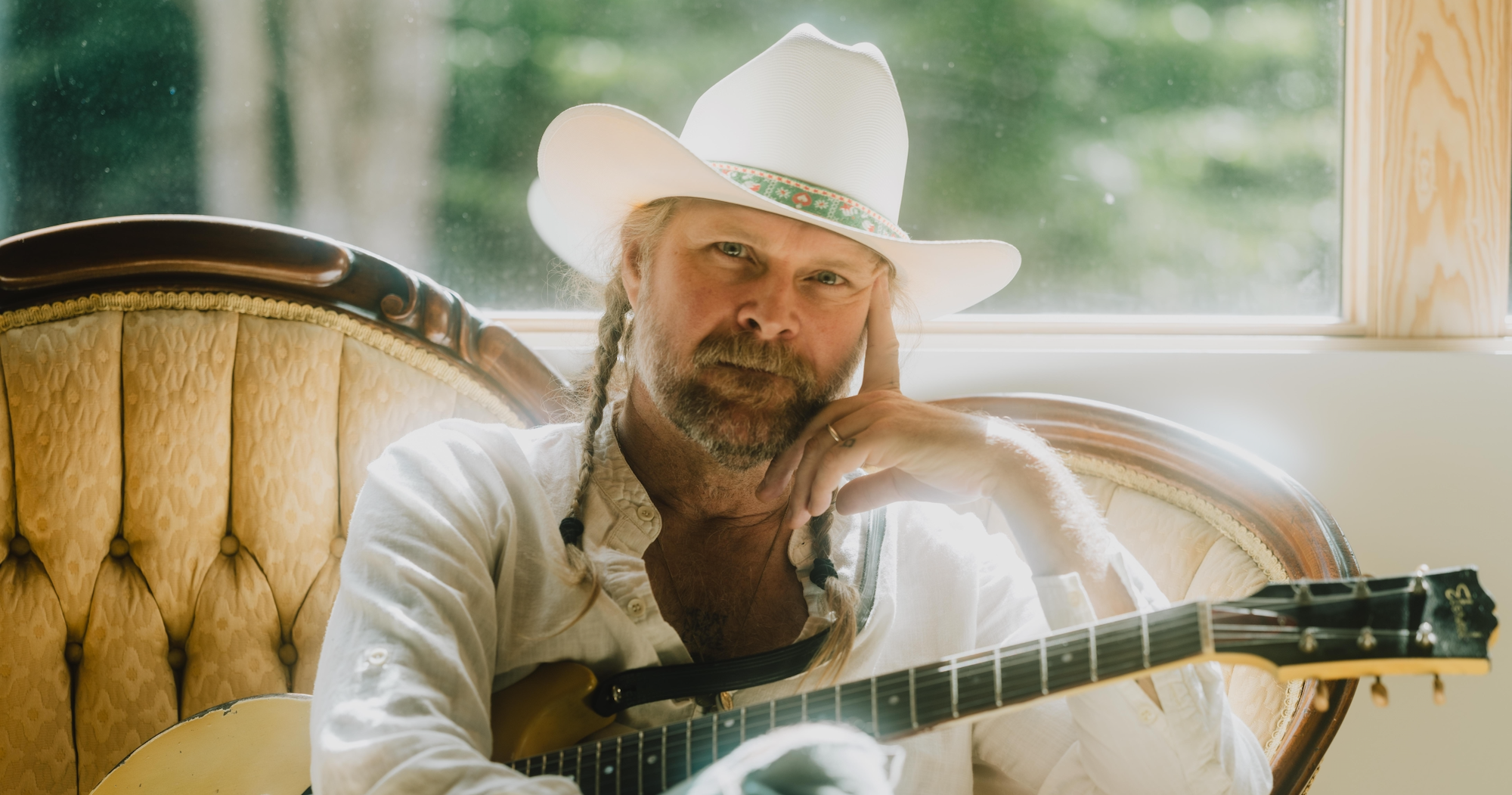
Next year, singer and songwriter MC Taylor will have been leading Hiss Golden Messenger for two decades. For most of that time, critics and listeners have relied on a few familiar narratives about Taylor: that he is a singular figure, for example; or that his move from California to Durham, North Carolina, marked a formal shift from punk to Americana; or even that he thinks slightly more than he feels. Talking to Taylor, from his home in Durham (well, there was a Zoom call involved), I found these cliches about his practices were limiting, factually accurate but emotionally untrue.

Instead of laser-focusing on one narrative, on telling the same stories over and over again, listening to Taylor speak, I encountered a new understanding of his practice, one which placed Taylor in the background and moved his bandmates and genre-play into the foreground – shifting from the centrality of a singular figure to a greater emphasis on generosity and expansiveness.

That the new album is called I’m People is the first clue that Taylor wants to expand the perception of his music; it’s a title that considers mutuality as central to the enterprise of musicmaking. So, how does one expand this thinking – one could consider him geographically or complicate these tales of origin, or think about who is playing on this record, or even refuse the standard narratives of genre.

Instead of focusing on the fact that Taylor began playing in hardcore bands in California, think about the other influences: that he played in a band named after Joni Mitchell’s Court and Spark, an album marked by an urbane distrust of other people’s desires. Or that, around the time he was carefully listening to Mitchell, he was also following that most American portable utopia, the Grateful Dead. Or think about his move to Durham, not strictly to play in a band, but to study folk music academically.

Or, consider how this album was recorded – at least partially – in upstate New York. A more cynical writer would note that Taylor borrows from Dylan’s Nashville Skyline, and that album itself was the foundation of a more isolated, lonely understanding of tradition after abandoning folk music, seeking a slightly more commercial understanding. Recording this in the Hudson Valley could be considered a pilgrimage or homecoming.

I don’t think that it is a homecoming just for Taylor; the record sounds lush, expansive formally, too. Perhaps because the people who sing or play on this record play in a collective of other bands, including Rhett Miller, the Mountain Goats, Bonny Light Horseman, and the Hold Steady.

The expansive nature of the band is not only connected to the history of music they listen to, or the other bands that they play in, but also more unexpected influences like Sade. The idea that Taylor is the band is false, and it is not even that Hiss is the band. Taylor expands the possibility of Hiss, but Hiss itself pushes the possibilities – because of where they come from, their other projects, and even the possibility of geography. Not because Durham is magically a place where music coalesces, but because for a long time it was a college town where rent was relatively cheap and lots of people liked playing music together.

When addressing genres, the promotional material calls the album Americana – but Americana is a useless category, one which might be country or folk or something else entirely. I’m People has a kind of intense richness that is neither of these genres. Listening to the LP, something happens where the expansion or fracturing of those playing on this record becomes its own kind of post-genre.

There are a lot of reasons not to love America right now, but emphasizing the American instead of Americana allows us to consider this album as a consequence of the totality of American music – Taylor addresses the improv nature of jazz as part of this, or traditional folk music, or even 1970s easy-listening. He speaks fondly of the detective novels of Elmore Leonard, and on at least one of his early albums the photography of William Gedney became a powerful totem.

I think of I’m People as a kind of ebbing and flowing for and against tradition, part of that decades-long wrestling with aesthetics and history. Consider the last song, “Depends on the River,” is another of his great songs about waterways. In a 2016 profile of Hiss, New Yorker critic Amanda Petrusich wrote about Hiss’s long tradition of river songs and how it fits into a century of metaphors from blues singer Geeshie Wiley to Joni Mitchell, working this tradition. Petrusich writes: “Taylor frequently evokes river imagery in his work; the river, of course, can be understood as its own kind of road, a direct line to somewhere else, far away.”

I don’t know if that’s wrong, but I also think about rivers as they turn into oxbow lakes, rivers which flow into swamps – literally bogged down – rivers that flow into oceans, and rivers that dry up depending on the season. Hiss’s meandering, deepening quality depends on that river, both the direct line that Petrusich talks about and the larger metaphor, one where Taylor literally talks about whether he dares to cross it. On I’m People, he not only crosses it and crosses it again, but brings along a whole community of other performers. And, an audience who is hungry for the difficulty and ambivalence of so much time playing – and thinking – with him, to the other side.

I know you have a degree in folklore studies, I also noticed that in the last few years there has been a cluster of second- or third-generation performers who have some academic training in folk traditions (see also: Jake Blount, Jake Xerxes Fussell, Willi Carlisle, etc.). Can you talk a little bit about the kind of intersection of formal and informal folk studies and also about your relationship to people who are making this kind of work? I’m thinking about the line on the song “Mercy Avenue” where you talk about the “boys on the corner knowing more than those with PhDs.”

MC Taylor: Well, it’s been a really long time since I was in the academics here. And that universe was one that I feel like I passed through briefly. I wasn’t destined to be in that realm forever. So, I’m not sure that I can totally speak to [that]. Like the place of academic/creative work.

I will say that my time in that space was a really good time for me, when I was restarting my brain and re-centering myself. School was a good way for me to step away from whatever I had been doing previously. I did a lot of field work at that time. I interviewed a lot of people, and I think that it made me a much better listener.

I think that, more than anything else, [that] is what I came away with, this feeling that people really, really like to be heard. So I think I just really tried to develop my listening skills.

Can you talk a little bit about working with a band – especially this band – and about how the bandmates are part of their own creative worlds? Is there a kind of politics there, or a kind of community making?

The basic tracking of the album was done with JT Bates playing drums and percussion, Cameron Ralston playing bass – both electric and upright – and Josh Kaufman, who was producing the record with me, playing guitars, mandolin, piano. My friend Chris Boerner was engineering the record. He plays guitar.

The road version of Hiss Golden Messenger, you know, [are] involved in a whole variety of things. JT, Cameron, and Josh play in Bonny Light Horseman. All three of them have also at various times been members of Hiss and have toured with Hiss. And in fact, that’s where those guys met – playing in Hiss. All of us have known each other for many, many years, so I consider those guys really good friends.

But we’ve never made a Hiss Golden Messenger record before. … They’ve worked on [other] records [together], but we never came together to create a Hiss Golden Messenger record together. It was this funny and unique situation in which we were already old friends, doing something that felt new and fresh. It didn’t feel like a complicated record to make for me. I think Josh Kaufman maybe would say the same thing, but Josh was performing sort of a different task than I was in the situation. It was a complicated record to write, but that was something of the solitary endeavor that took place over probably a year or a year and a half.

I really love those guys and I am delighted that they could be there to play on the record. I think of them as absolute top-tier musicians, every one of them. Cameron is currently playing with the Mountain Goats, he plays all kinds of jazz, he plays in the Spacebomb House Band. JT Bates plays drums with Big Red Machine, which is Aaron Dessner and Justin Vernon. And [he’s] just a legendary drummer in Minneapolis. Josh Galvin plays with everybody.

There are some songs on this album about hope and I wondered about making work about hope in this specific social and political moment? “Shaky Eyes” or “Heavy Worlds,” for example.

[I am interested] in how we [have] the energy to get through the messiness of life. And not only this particular time that we’re living through – although that is the most depressing. But just like life in general. I don’t think that we can do – or I don’t think I can do – life alone. So, in a way this record is me writing to myself. Maybe now [about] how important other people are.

I think I realized that the most important part is moving through, and needs to involve being around [other people]. Over the past few years, just speaking personally, the idea of community has felt like a more and more important part of it.

Thinking about that – and how dense/lush the production here is – though you are marketed as “Americana,” I wonder about how you view genre. And also how your band does – I’m thinking about background vocalist Annie Nero’s bio for radio: “She loves to find the common thread between musical ideas and genres…but also break free of genres because life’s too short to limit ourselves based on perceived taste!”

I listen to lots of different stuff. I think all of that stuff finds its way into what I’m doing. It’s a little tricky. I used to have a stronger stay-in-your-lane [attitude] about the term “Americana,” but I just don’t think that I care very much anymore. It’s not a word that I generally use. But I understand why it exists. Many of my favorite songwriters exist in that world.

What would you call your genre then?

I mean, I wouldn’t. I guess that’s what I’m saying.

Like, if I was at the dog park and I was talking to a stranger, and they said, “Oh, you’re a musician? What kind of music do you play?” I’d probably say, “Kind of rock and roll.” I generally am not describing my music in terms of genre, I guess. If I told someone that I played rock and roll, and they asked me to extrapolate on that, I would say something like, “Rock and roll that’s really swinging.” I try and concentrate on the rhythmic elements. I love singer-songwriter type music from the ’60s and ’70s. I like really oddball stuff. I love Bruce Ruffin reggae; I love free jazz. There’s a lot of music that I have inside of me. There’s a lot of music that Josh, Cameron and Chris – [that] we all have inside of us. I think it’s just a question of how we get it out and put it into use in a way that feels genuine and not forced. …

Thinking about the tension on this album between distinct geographical spaces and a more universal emotions – for example on “Seneca (Time is a Mother, Baby)” or “Mercy Avenue.” And also that becomes a larger theme of your work, thinking about how Amanda Petrusich writes about your decades-long commitment to writing about rivers. There’s even the river song on this album. What do you think your relationship is to the land, to rivers – especially. when you sing “Depends on the River.” Or is there specifically one river?

On previous Hiss records there are specific geographical places like city names mentioned. And not only are those places part of the fabric of the story that I’m trying to tell, but they sort of served as poles, maybe? What I’m trying to accomplish is sort of like a poetic travelog of my life growing up in America. I’ve been traveling as a musician since I was 18. I have been, it seems like, everywhere in this country – more than once or some places 10 times. I’ve been all over every highway. So, maybe the dimension of place names throughout is sort of like carving my name on a tree or something. It’s just kind of like, “I was here.” “This is where we are in this song right now.” “This is where we are in my life.” And then, “Now we’re over here.”

In terms of rivers, a river is always flowing, always changing. A river can kill you if you’re not careful. It can keep you alive and get you to the next place if you treat it with respect and understand its rules. The coda on that song, [“Depends on the River”], the last thing that we hear on the record is “the line depends on the river exactly.” I guess the meaning depends on what river of life we’re talking about. It depends how lucky we get.

I’ve always been impressed by the wide range of your reading, listening, and looking. For example, your careful thoughts on the photos of Gedney. What are you reading, what are you listening to, what are you looking at these days?

Well, you know what I’m reading right now? I’m like about 200 pages into this Gary Stewart biography. Gary Stewart, the country singer. It’s called I Am From the Honky-Tonks. Gary Stewart actually was someone that Chris Smith from [record label] Paradise of Bachelors turned me onto like 15 to 16 years ago. Those of us that are obsessive about him all knew that this book was coming. It’s finally out and yeah, if you’re Gary Stewart fan, it’s kind of like you can’t believe it exists. I’ve been waiting for it.

In terms of what I’m listening to, I’m always listening to all kinds of stuff. I just bought this record [that’s] The Sun Ra Arkestra doing Disney themes. It’s so beautiful, really makes you think about those compositions in a different way, [about] actually how deep they are. I’ve been revisiting some Ted Lucas. I’ve really been liking this McCoy Tyner record called Asante. It’s a 1974 record; might be my current favorite. It’s very deep in the zone with like Alice Coltrane and Pharoah Sanders – that era. Oh, it’s beautiful. [I’ve been listening to] some Paul Brady from ‘78. He’s amazing! I’ve been listening to Welcome Here Kind Stranger. [Also] a record that I was checking out for a while [was] by the Universal Liberation Orchestra. It’s kind of this weird, very minimal– I guess it would be jazz.


Photo Credit: Graham Tolbert

Watch 4 Live Videos From the Carrboro Bluegrass Festival

In 2025, at their inaugural event, the Carrboro Bluegrass Festival attracted bluegrass fans from 13 states to an iconic venue, Cat’s Cradle, in the roots music rich area of North Carolina’s “Triangle.” Attendees enjoyed performances from artists like Jim Lauderdale, the Po’ Ramblin’ Boys, Woody Platt & the Bluegrass Gentlemen, Brownyn Keith-Hynes, Graham Sharp & Friends, Max Wareham & the National Bluegrass Team, and more.

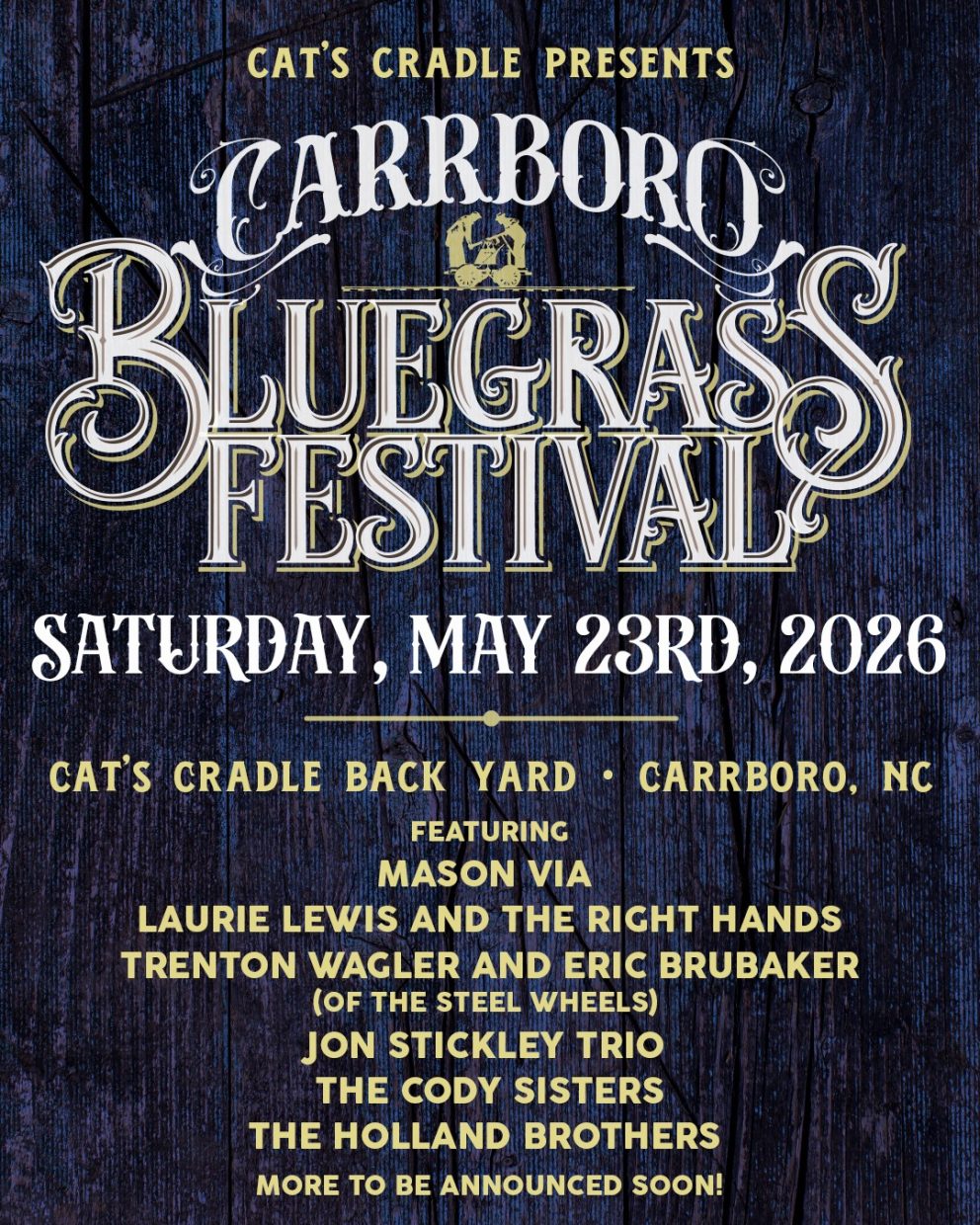
On May 23, 2026, the festival returns once again to the Cat’s Cradle Back Yard for their second annual edition of the tremendously successful event. Tickets are on sale now. This year, the lineup includes string band and bluegrass luminaries like Mason Via, Laurie Lewis & the Right Hands, Trenton Wagler and Eric Brubaker (of the Steel Wheels), Jon Stickley Trio, and more. And, for the first time in 2026, the Carrboro Bluegrass Festival is partnering with the UNC Bluegrass Initiative to support live bluegrass music in the greater Chapel Hill and Carrboro area. Plus, student members of the Carolina Bluegrass Band will open the festival.

As with all roots music events held in the fertile, artful lands of North Carolina, the very first Carrboro Bluegrass Festival wasn’t just about the performers, it was about the spirit of Carrboro itself. Connecting music, place, and communities together with intention and pride. Carrboro is full of great restaurants, shops, art, and community spaces – it’s no wonder the little town is referred to as “one of the most progressive communities in the South.”

To spotlight the town – and the music – last year the festival captured a series of exclusive, stripped-back performances at some of the town’s most historic landmarks. BGS has been proud to partner with Carrboro Bluegrass Festival since its inception, so while we look ahead to this year’s event, we’re sharing a series of four videos shot by the festival, the city of Carrboro, and the Orange County Visitor’s Bureau last year during the proceedings. Enjoy exclusive performances by Jim Lauderdale & the Po’ Ramblin’ Boys, Bronwyn Keith-Hynes, Woody Platt, and Max Wareham below.

Make your plans now to attend the Carrboro Bluegrass Festival at the Cat’s Cradle in Carrboro, North Carolina on May 23, 2026. Tickets available here.

Jim Lauderdale & the Po’ Ramblin’ Boys

Roots music renaissance man Jim Lauderdale has collaborated with hit bluegrass group the Po’ Ramblin’ Boys quite a bit over the last few years and together they’re releasing another album on April 24, 2026, entitled The Birds Know. (We recently premiered the lead single of that project, check it out here.) Last year during the Carrboro Bluegrass Festival, Lauderdale and the Boys performed “Long and Lonesome Letting Go” under an old, shady tree outside of Carrboro Town Hall, just down the street from Cat’s Cradle.

Max Wareham & the National Bluegrass Team

For our second video, Connecticut-based banjo player and singer-songwriter Max Wareham assembles his band, the National Bluegrass Team, just out front of the Cat’s Cradle to perform an original song, “Highway to Your Heart.” You may recognize Wareham from performing in Peter Rowan’s band or from his most recent album, DAGGOMIT!, released in 2025. His approach is modern but rooted deeply in traditional bluegrass, as you can tell from the energy and feel of the song.

Woody Platt & the Bluegrass Gentlemen

A godfather of bluegrass and jamgrass in North Carolina, Woody Platt brought his Bluegrass Gentlemen down from the mountains to Carrboro for last year’s festival. With them they carried along “Like the Rain Does,” the lead track off Platt’s 2024 solo release, Far Away With You. Its minor chords offer a melancholy tinge to match the rain falling in the song’s hook, but the energy and tempo of the track – especially in this live performance captured from the band’s green room trailer – give that cheery bluegrass sheen to the lyrics. Whether local, regional, or national acts the talent on display at the Carrboro Bluegrass Festival is first rate.

Bronwyn Keith-Hynes

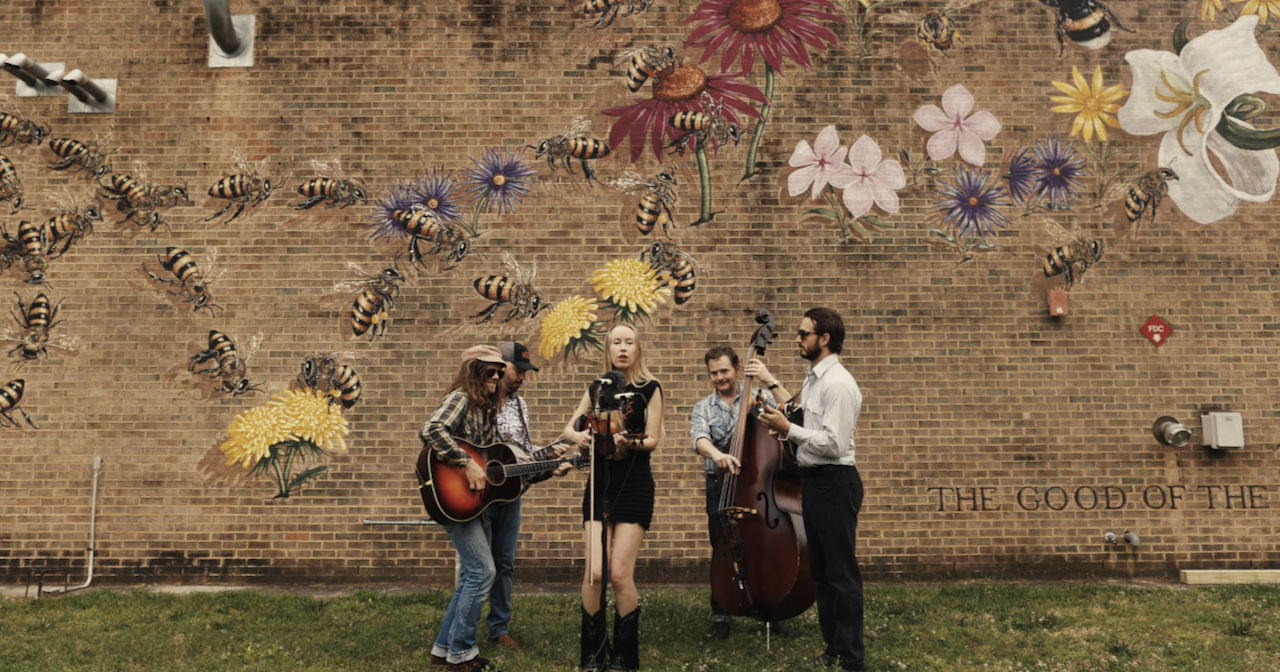
Fiddler and singer-songwriter Bronwyn Keith-Hynes has been building an impressive résumé for herself, especially since departing Molly Tuttle’s Golden Highway. Her 2024 album, I Built A World, was nominated for a GRAMMY for Best Bluegrass Album and if you’ve not had a chance to catch her live touring band recently, you’re missing out. Her groups always boast the best and brightest of young bluegrass pickers – and her lineup at the Carrboro Bluegrass Festival last year was no exception. Backgrounded by a stunning Good for the Hive mural by Matt Willey on the side of the Carrboro Fire Station, Keith-Hynes and her band are certainly impressive as they render “Virginia Gal, She’s Up and Gone” for our final video captured at last year’s festival.

If you’re in the mood for even more excellent bluegrass served up in one of the cutest and most dynamic little towns in North Carolina, don’t miss the second Carrboro Bluegrass Festival on Saturday, May 23, 2026. More information here.


This content brought to you in partnership with the Carrboro Bluegrass Festival.

Headed to Earl Scruggs Music Festival? Here’s What to See and Do

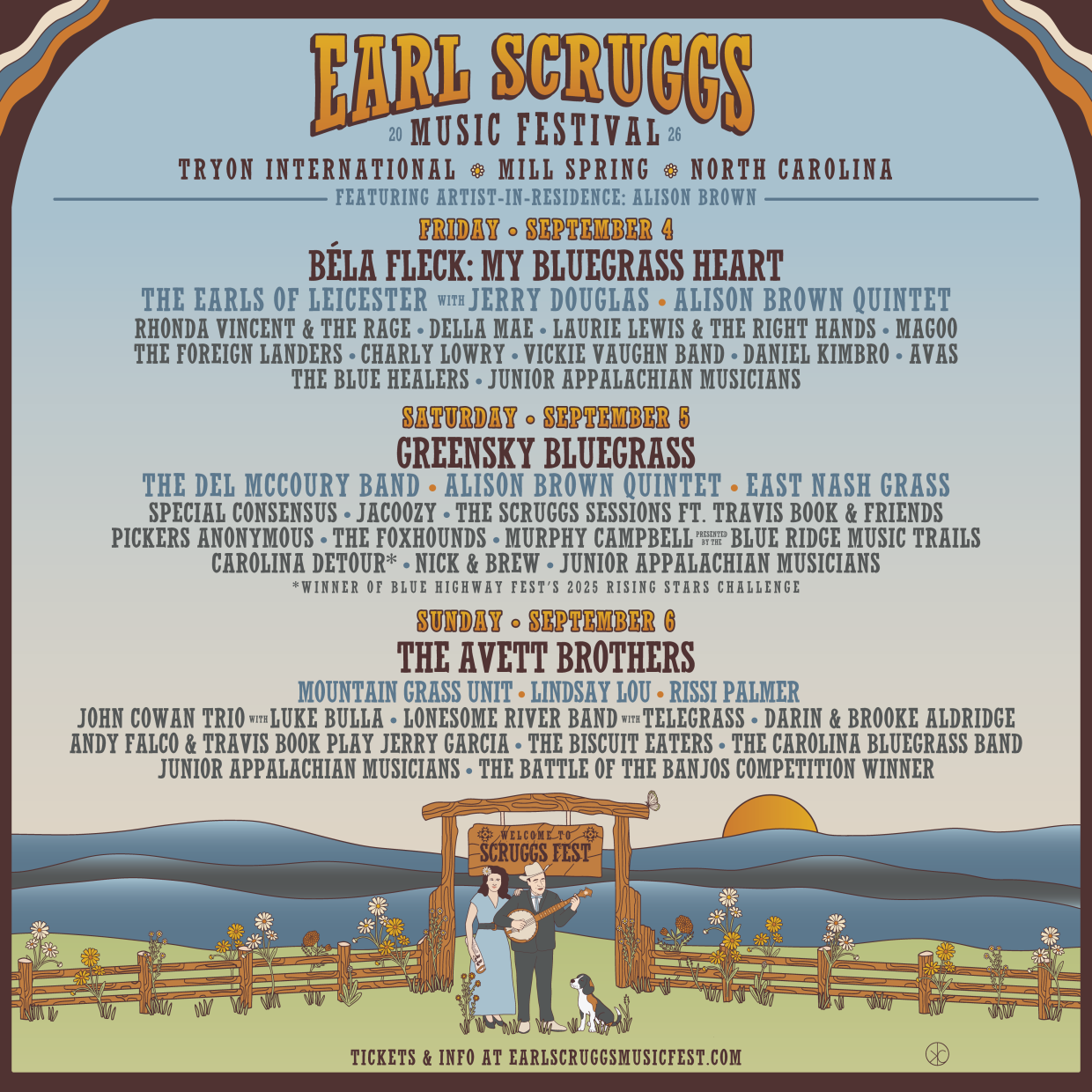
On March 4, 2026, the team behind Earl Scruggs Music Festival announced the lineup for the 5th annual edition of their event, which was recently honored with the 2025 IBMA Award for Event of the Year. Held each year in Mill Spring, North Carolina, at the Tryon International Equestrian Center, the festival will take place September 4 through September 6 with performances from headlining acts Béla Fleck: My Bluegrass Heart, Greensky Bluegrass, and the Avett Brothers as well as many, many more artists and bands. Tickets are on sale now; see the full lineup below.

BGS has been proud to partner with ESMF since the very first year of the festival, presenting special sets of music, doing on-site coverage, and bringing the unique setting and community of the weekend to our audience. This year we’ll be back again for still more of our partnership – and to enjoy some of the best bluegrass, Americana, country, and roots music on offer anywhere in the country.

Get a sampling of Earl Scruggs Music Festival with our photo stories, previews, and recaps from previous years: 2025; 2024; 2023; 2022.

The most striking feature of ESMF each year – besides their superlative lineups, of course – is the grounds and festival footprint. Tryon International is a luxurious, resplendent location for a music festival, featuring brick-and-mortar restaurants (we love Campagna – scratch made Italian and wood-fired pizzas at a bluegrass festival? Yes.), adorable boutiques, horse riding and jumping demonstrations, a shaded grandstand, multiple bars, a general store, posh VIP areas, and much more. There are campsites for RVs and tents, glamping options and tiny homes, and even a just-opened on-site lodge. Tryon International may just be the most amenity-rich site for a bluegrass festival we’ve ever encountered.

Still, it’s worth getting off-site when you can and exploring the foothills of the Blue Ridge Mountains and the many adorable, vibrant communities surrounding Mill Spring and Tryon International. We’ve attended ESMF for five years now and each time we uncover new (to us) hidden gems, restaurants, activities, shops, and highlights around every corner. In 2025, we decided to take our audience – and any potential ESMF attendees who may need extra convincing – along with us for a Camp Snap photo journey as we adventured down the mountains from Asheville, North Carolina, to the festival and beyond. We stopped in Saluda, Tryon, Shelby, and Boiling Springs, North Carolina, getting lunch, shopping for antiques, stopping in adorable boutiques, and visiting the homeplaces of two local legends: Nina Simone (in Tryon) and Earl Scruggs himself (in Boiling Springs). We also hopped just across the border to Landrum and Gaffney, South Carolina, for more markets, horses, and trains – and live music, too.

We’ve only just scratched the surface but if, like us, you’re looking forward to getting back to Earl Scruggs Music Festival this year, we’ve got the list of things to do and see outside of the festival grounds while you’re there. Make your plans to attend ESMF in 2026 here and scroll for more of our tips, tricks, and local favorites.

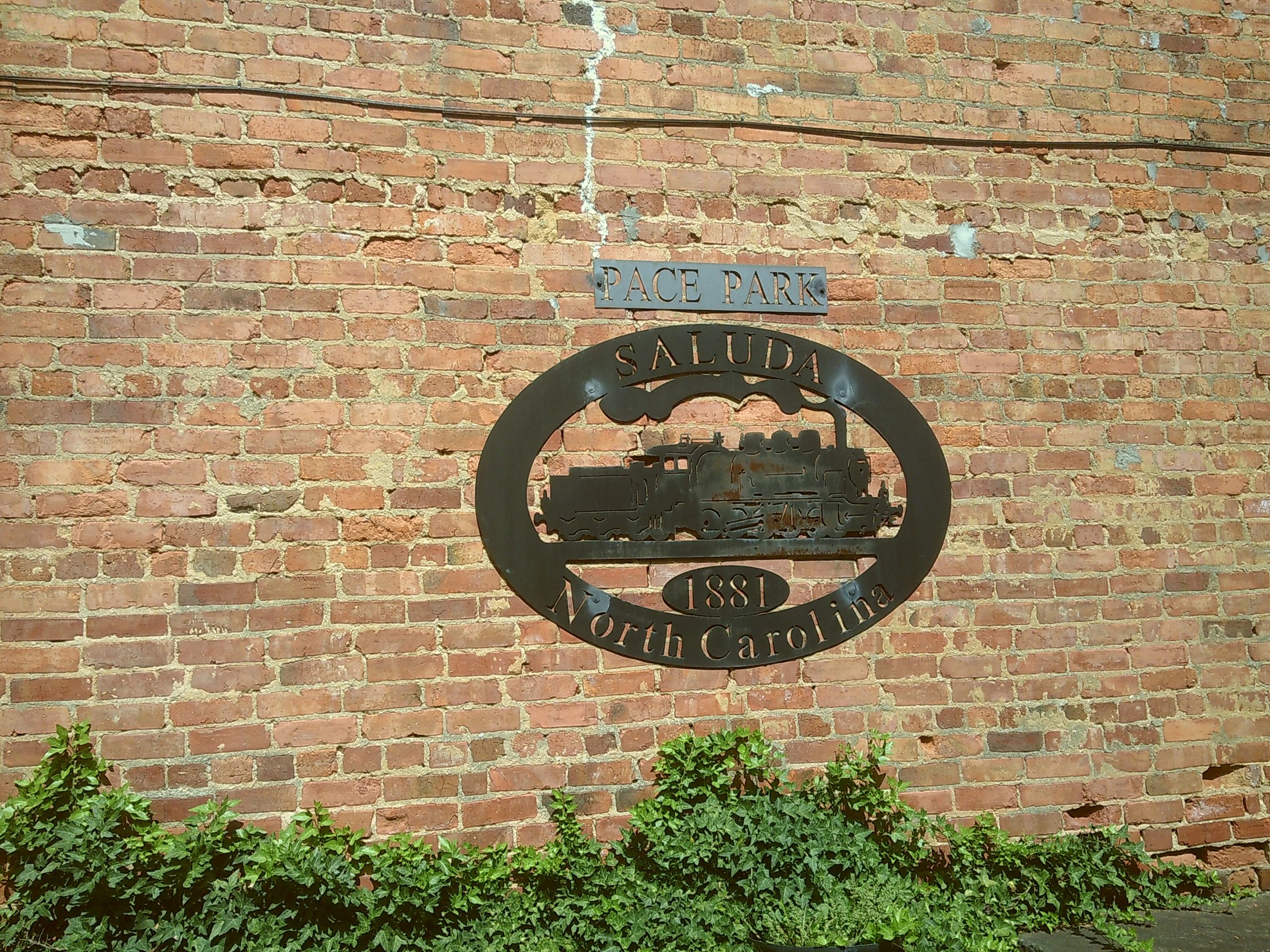
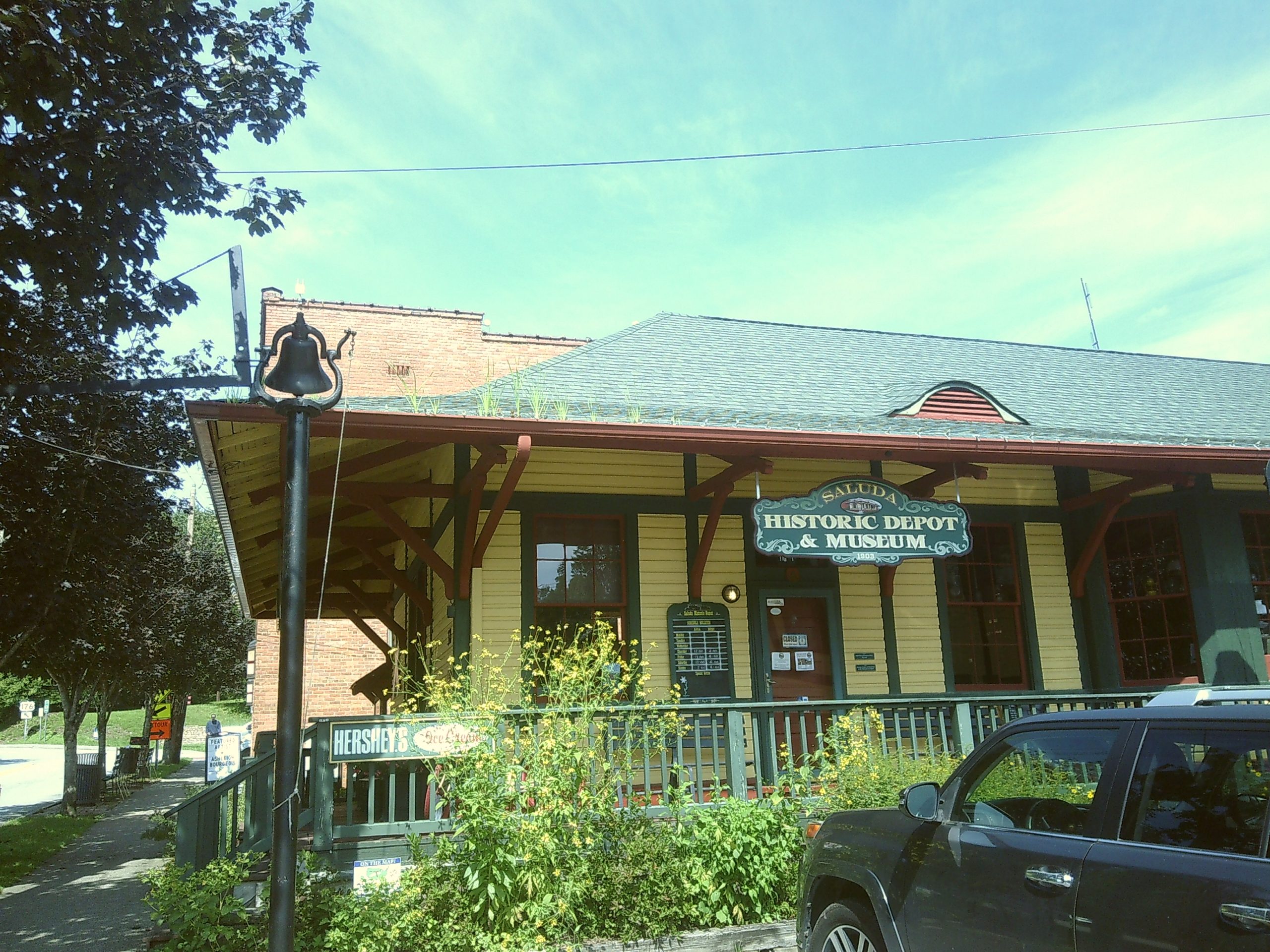
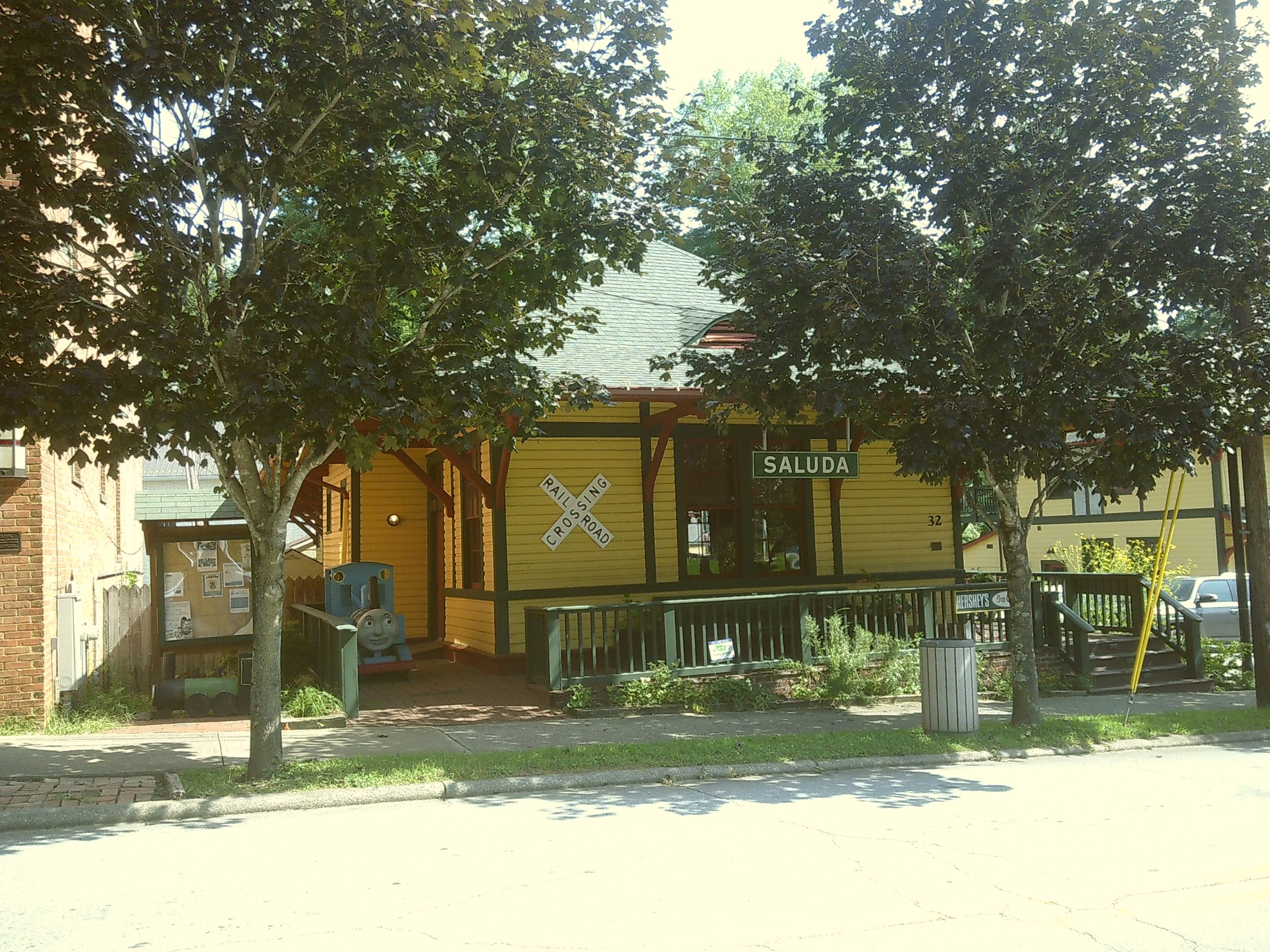
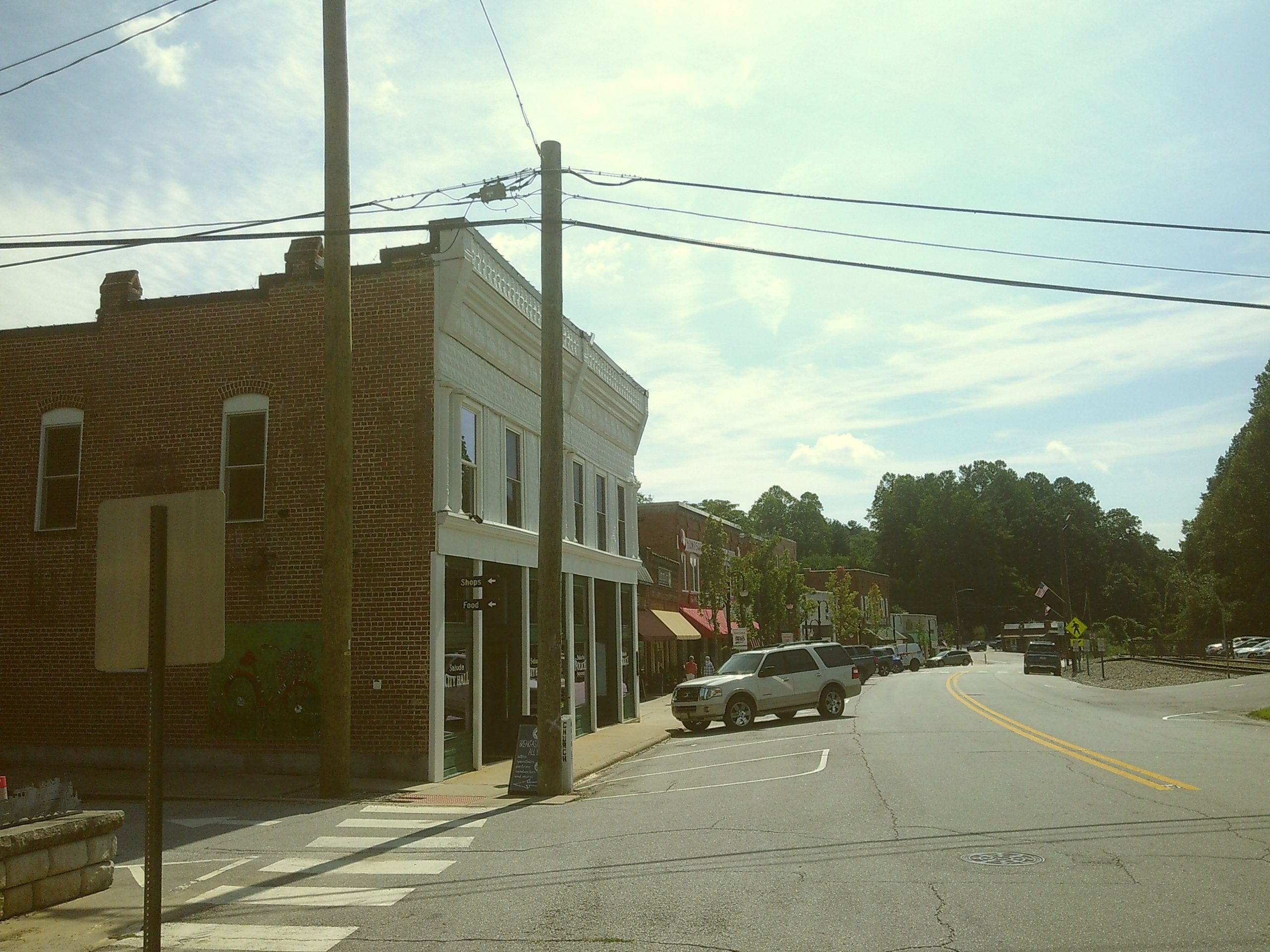
Saluda, North Carolina

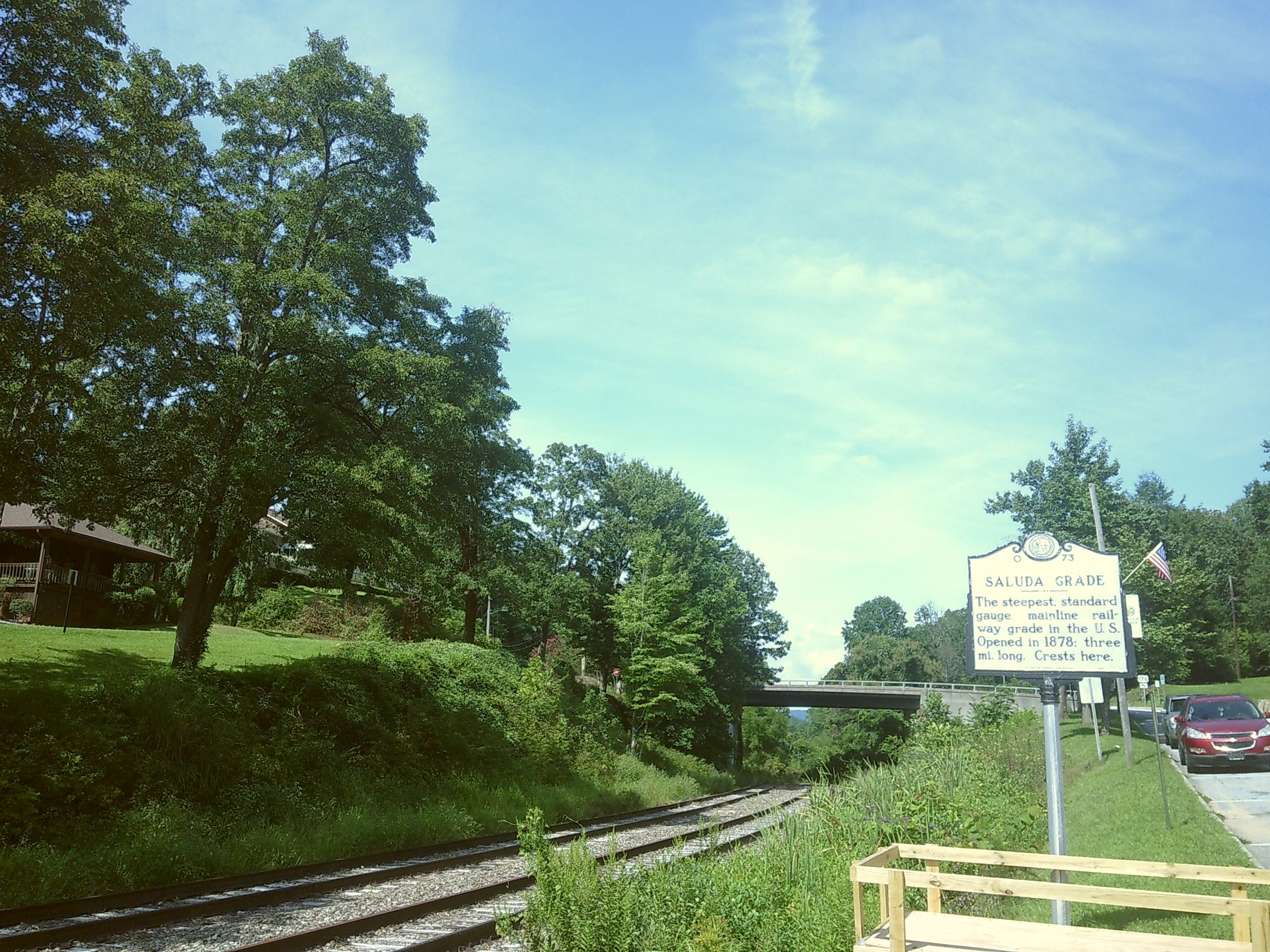
If you’re headed across the Blue Ridge Mountains to ESMF from Asheville, the Asheville Airport, Johnson City, Bristol, TN/VA – or even as far as Knoxville, Nashville, Lexington, or Louisville – a stop in Saluda, North Carolina, is in order before taking on the grade down the mountains to Mill Spring. Here, the United States’ steepest standard gauge railway grade crests in an adorable little music-steeped and outdoor activity-obsessed community.

Stop by the Saluda Historic Depot & Museum and the Saluda Visitor’s Center next door – and snack on some delicious ice cream while you’re there.

Picturesque and adorable downtown Saluda on a bright late summer day.

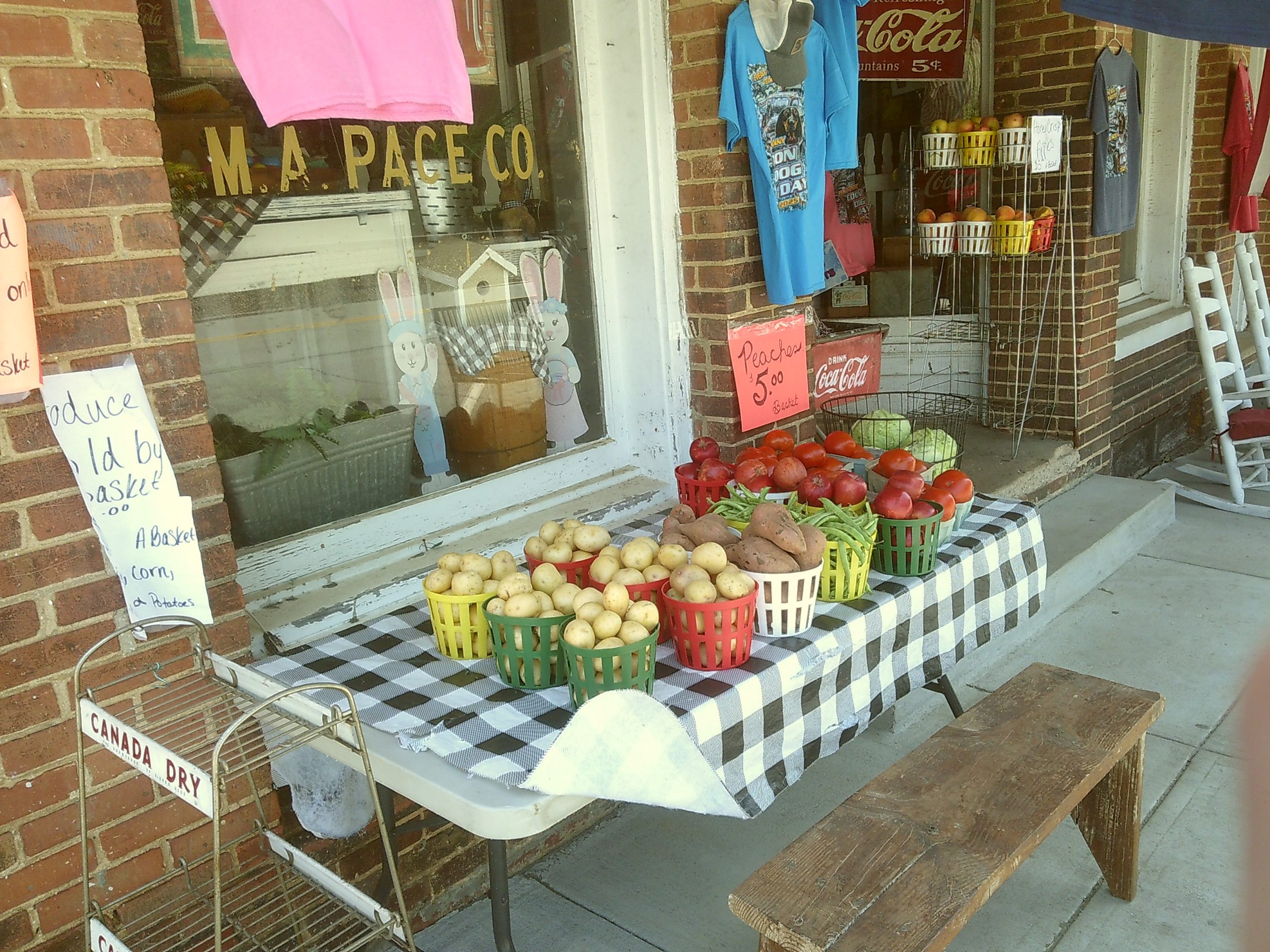
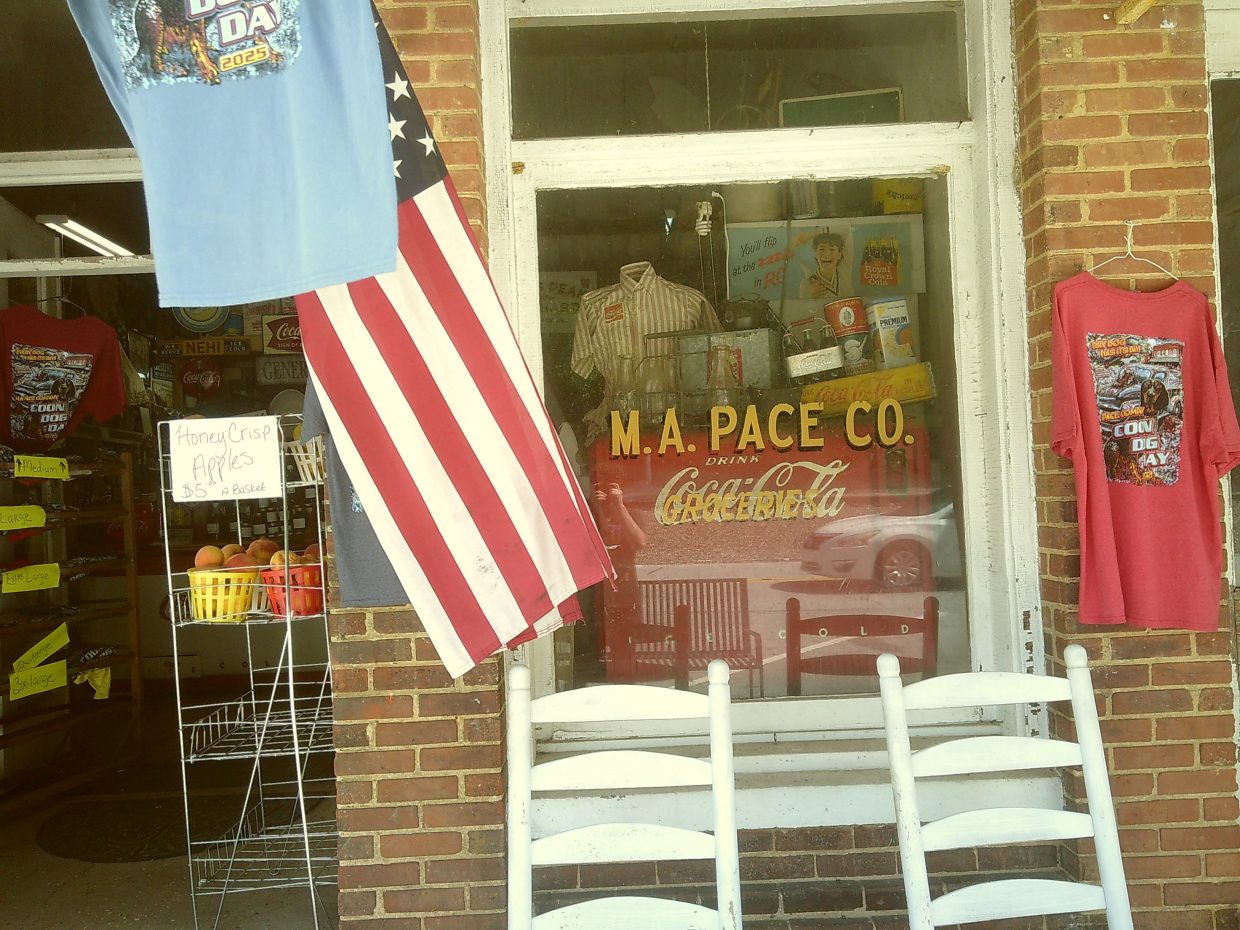
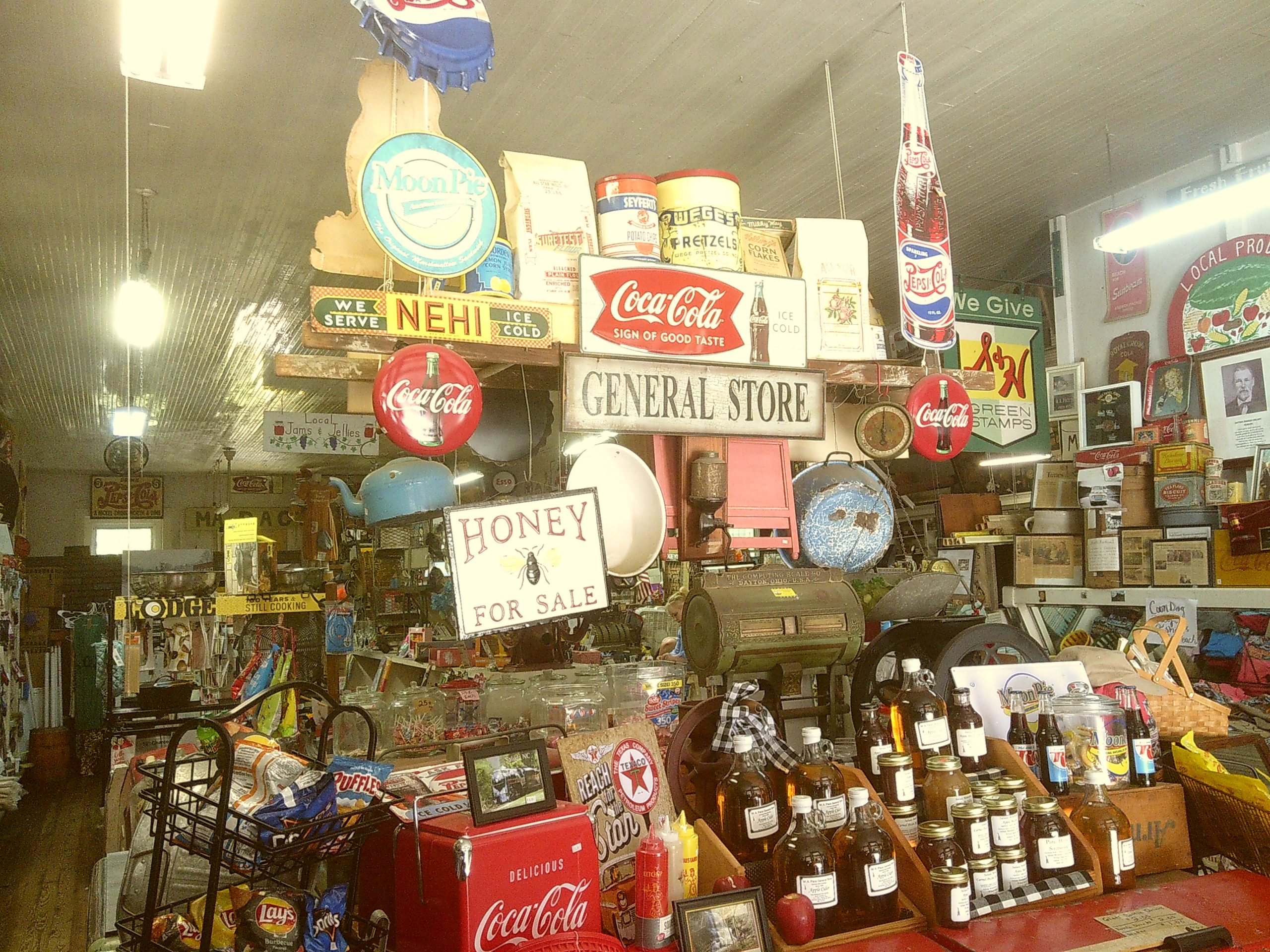
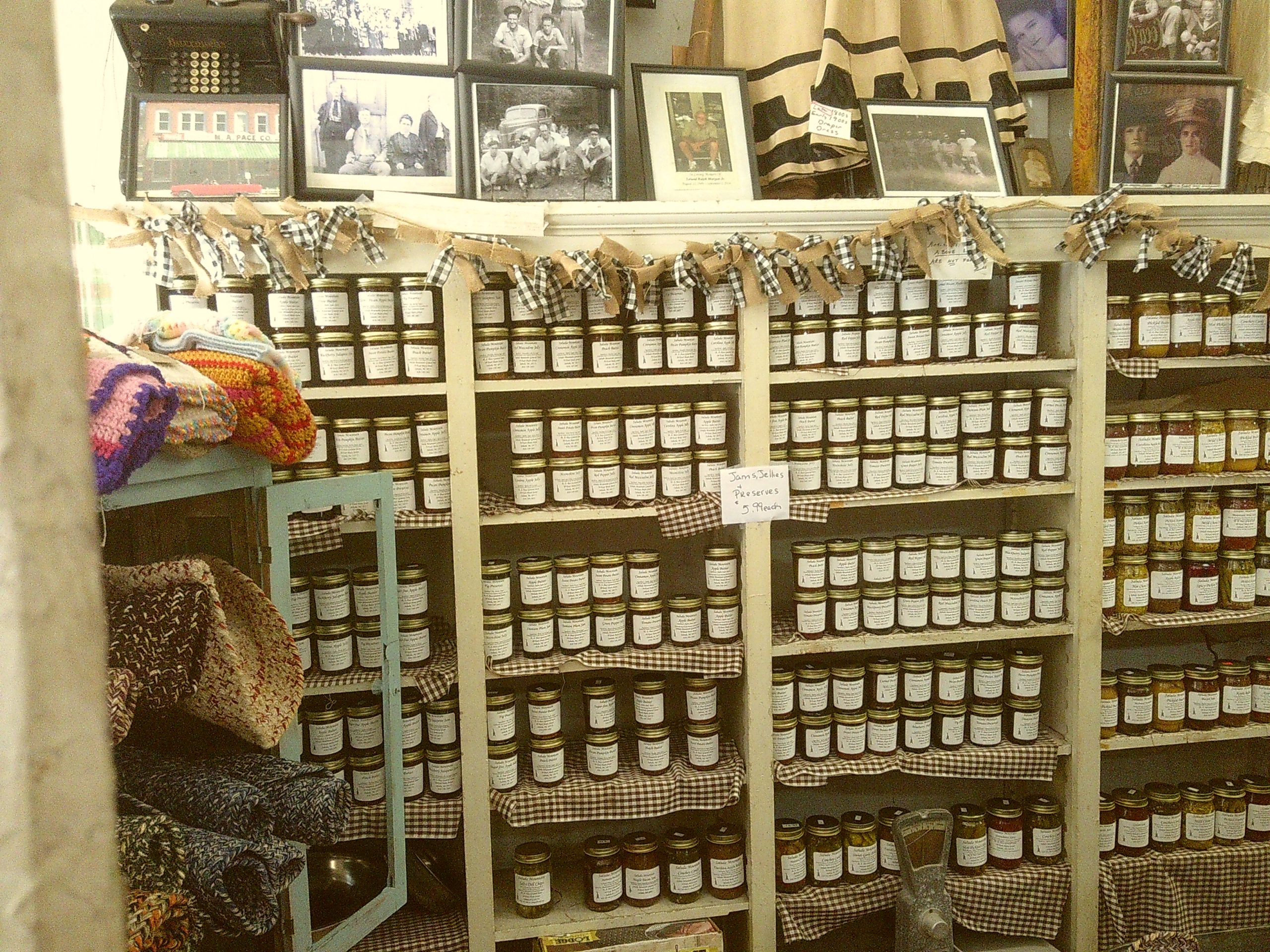
Stop inside a classic, time capsule of a shop, the M.A. Pace Co. General Store, open and in operation since 1899. Refreshing drinks, sundries, souvenirs, local produce, and an array of jams, preserves, sauces, salsas, honey, syrups, and more from local vendors are on sale.

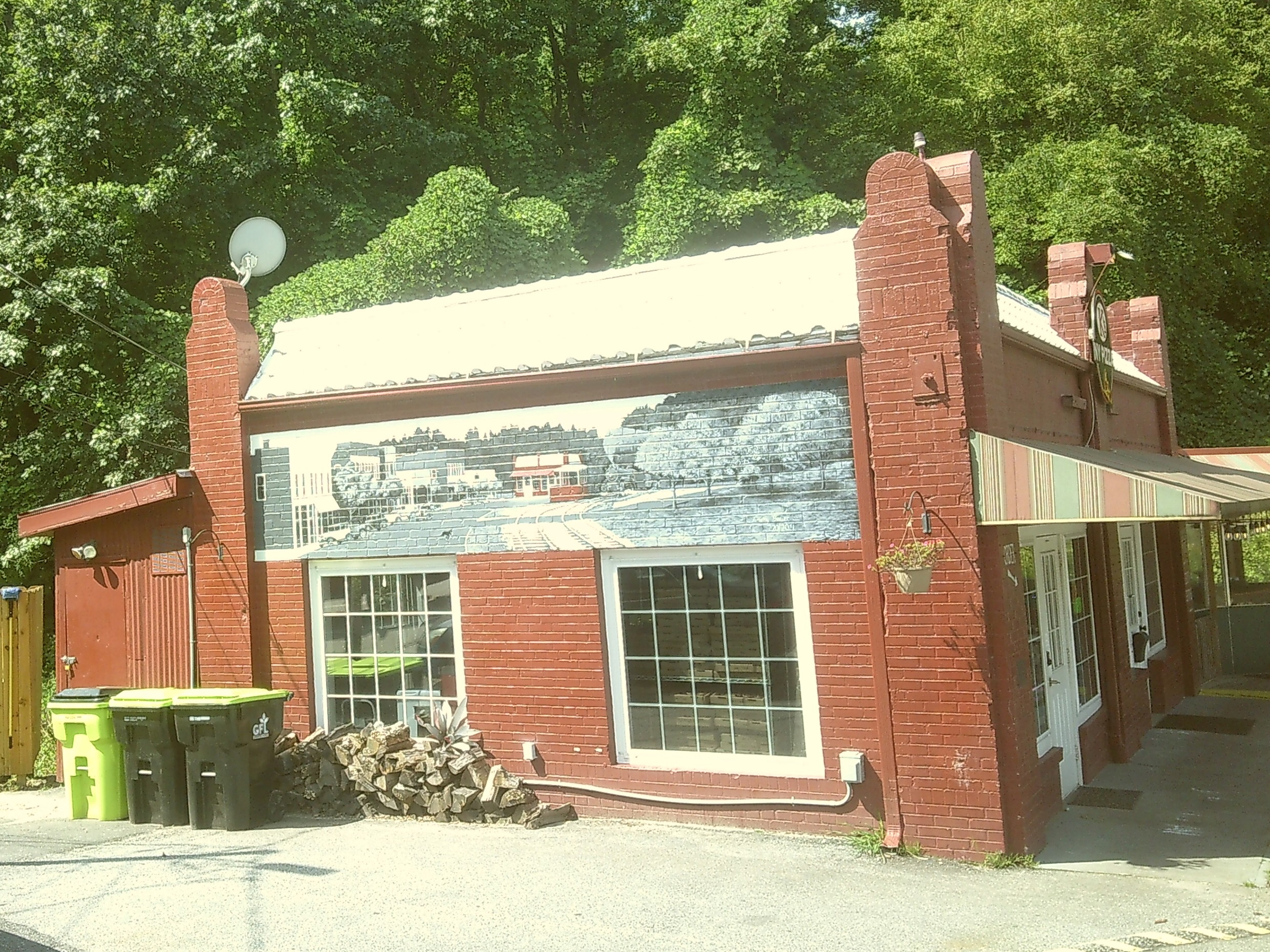
A mural depicting downtown Saluda and the iconic rail lines as seen on side of the building of K’s NY Pizza.

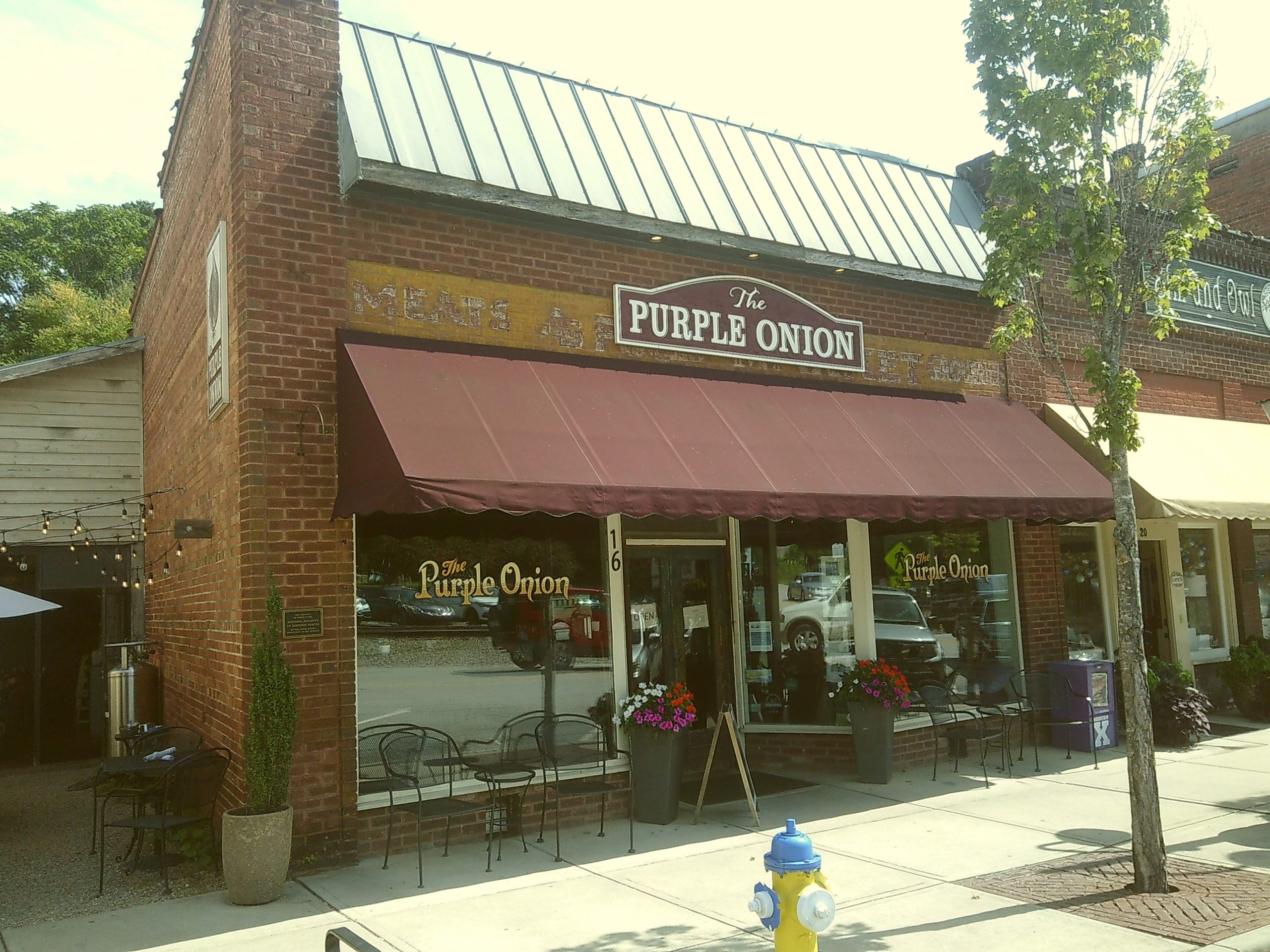
The Purple Onion is an excellent restaurant and cafe and an important community music venue at the heart of Saluda on Main Street. Bluegrass, folk, and Americana artists, bands, and songwriters perform on Thursday and Saturday nights – and select Sundays for their special Sunday Evenings Concert series. It’s intimate, the food is delicious, and the musicians they feature are incredibly talented whether local, regional, or nationally touring acts.

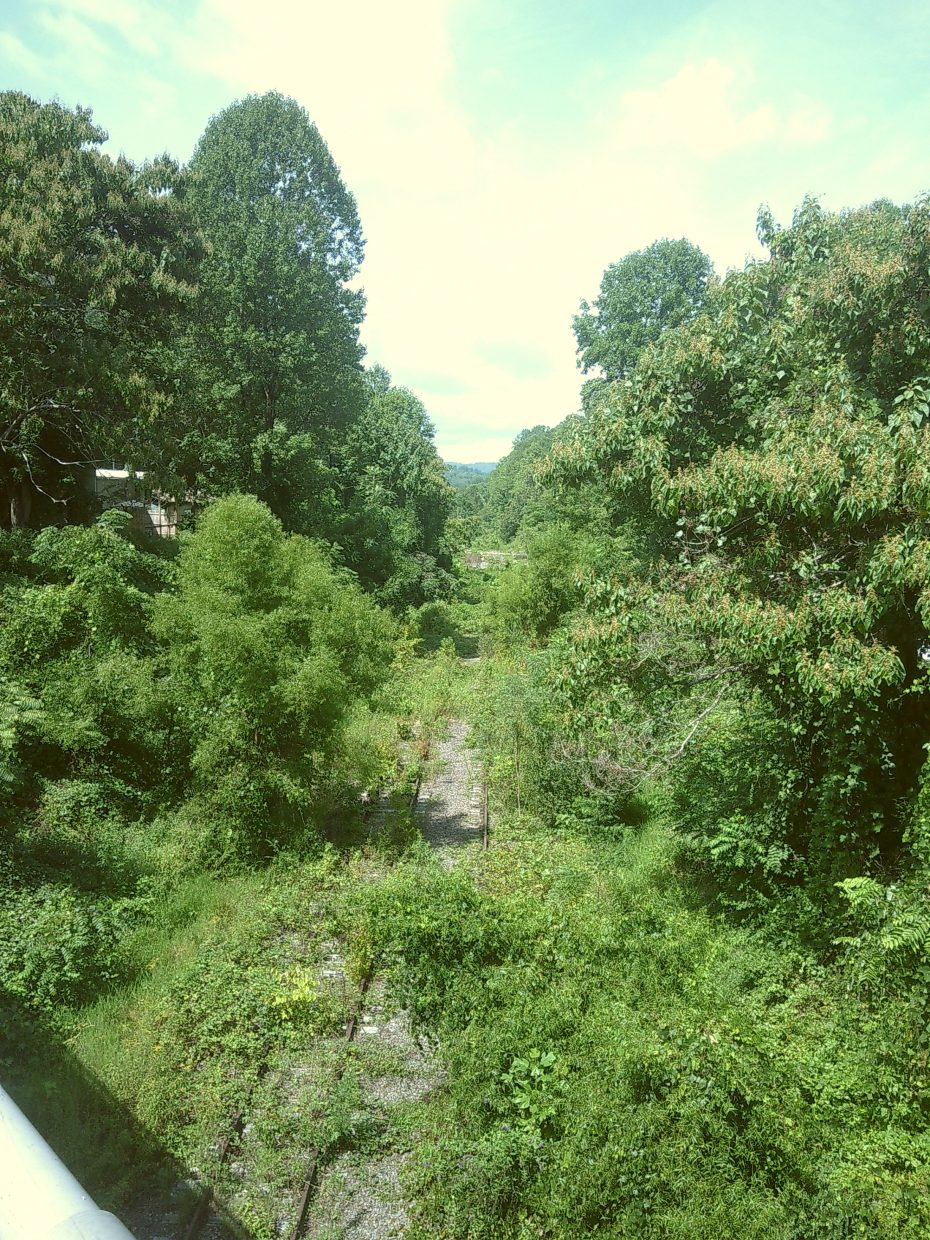
A view of the crest of the now out-of-service rail line topping the Saluda grade.

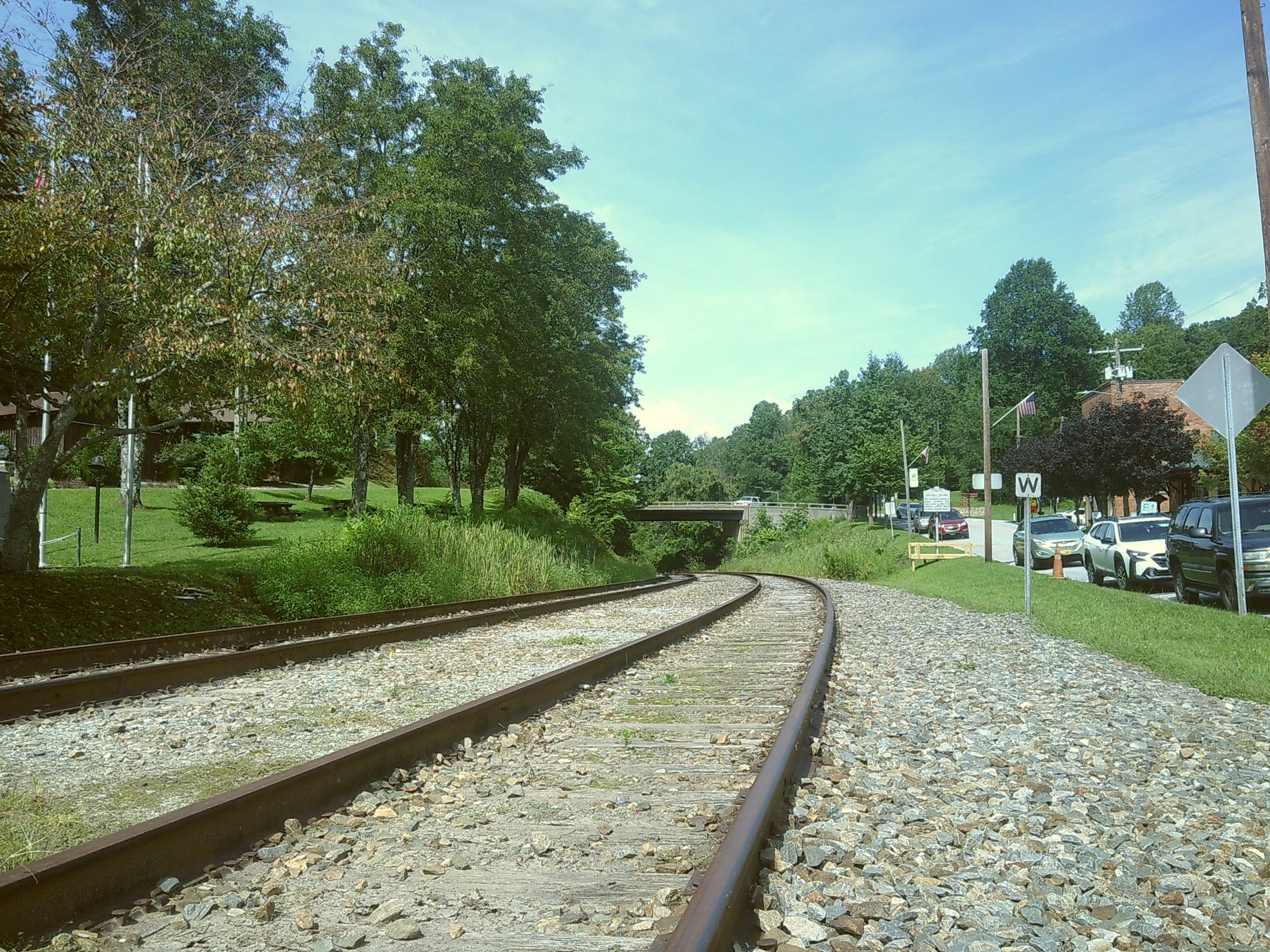
The railroad is clearly an important keystone of the Saluda community, even in the 2020s.

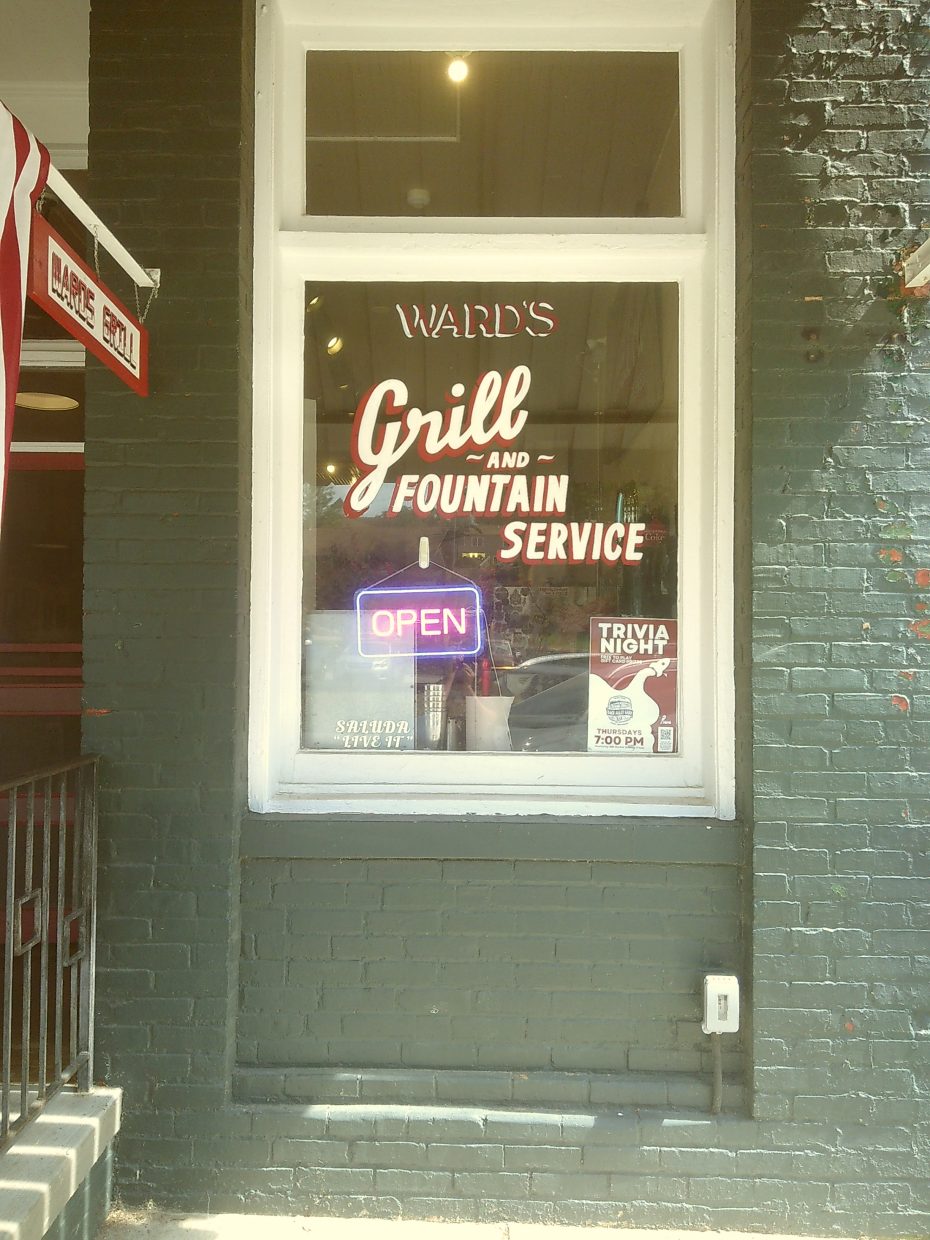
Perhaps stop in for a meal at Ward’s Grill for excellent, down-home Southern cooking and American classics. Wherever you end up in Saluda, there’s plenty to enjoy – and many fine food options for fueling up before heading down the mountains and toward Mill Spring for the festival.


Tryon, North Carolina

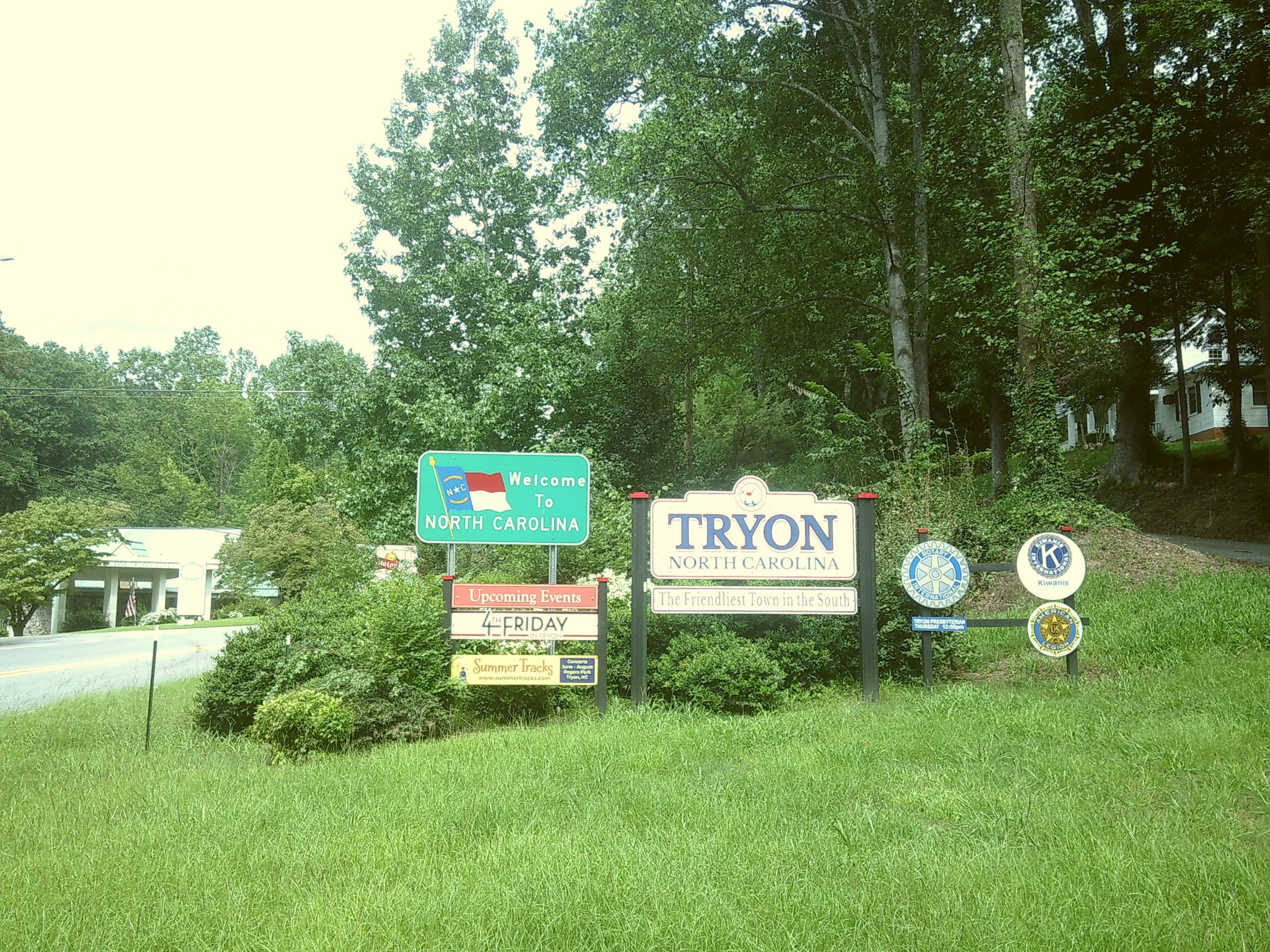
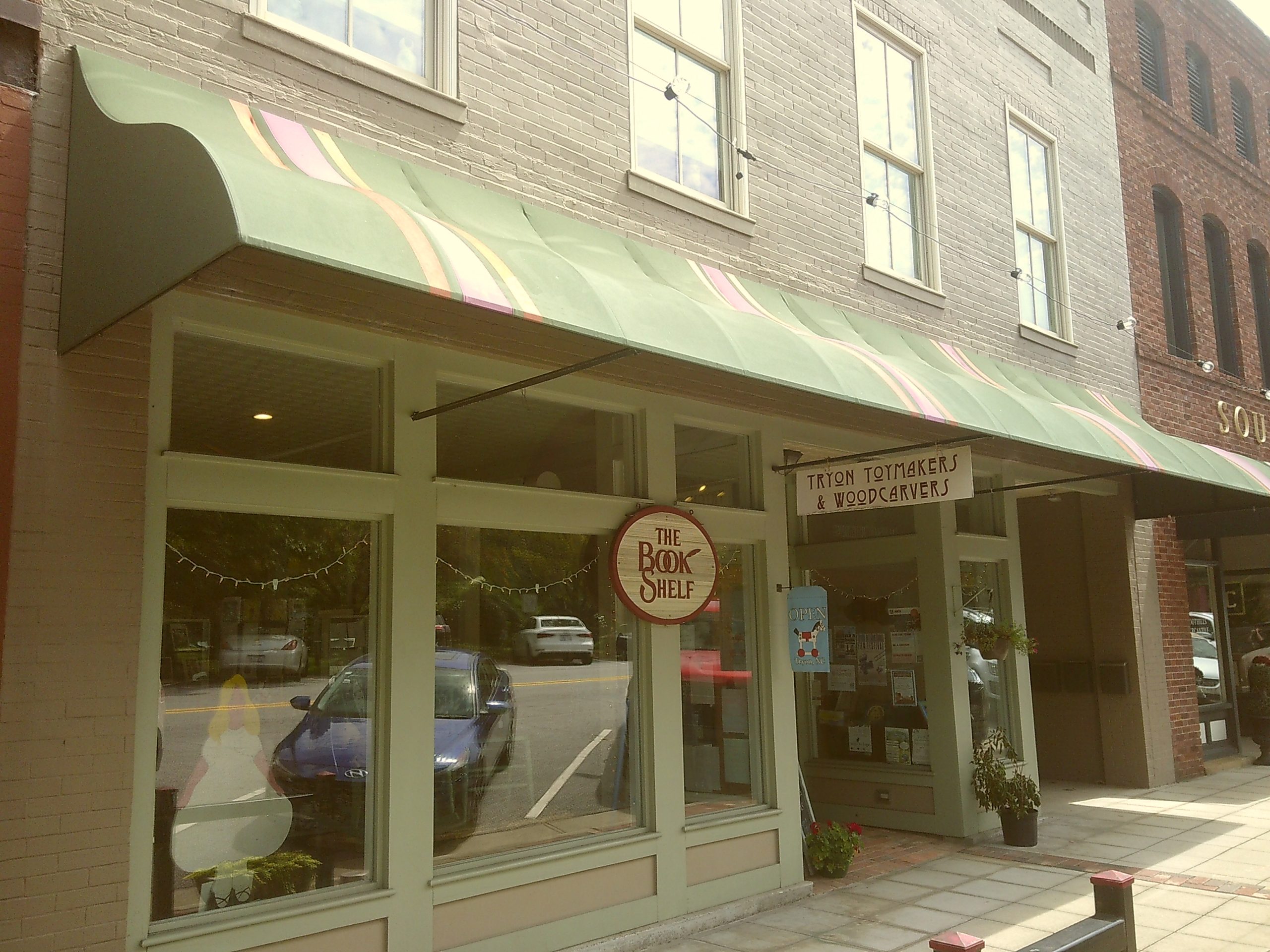
Maybe you’re coming down the grade from Saluda or perhaps you’re driving in from Charlotte, North Carolina, or from Greenville, South Carolina – or beyond! Wherever you’re coming from, Tryon is just a hop, skip, and a jump from the festival grounds at the Tryon International Equestrian Center in Mill Spring. Nestled into a holler in the foothills of the Blue Ridge, it’s a town full of art, music, culture, and heritage. You’ll find that horses and the railroad are important here, too. Stroll down the main drag and enjoy cute shops, tasty food offerings, and more.

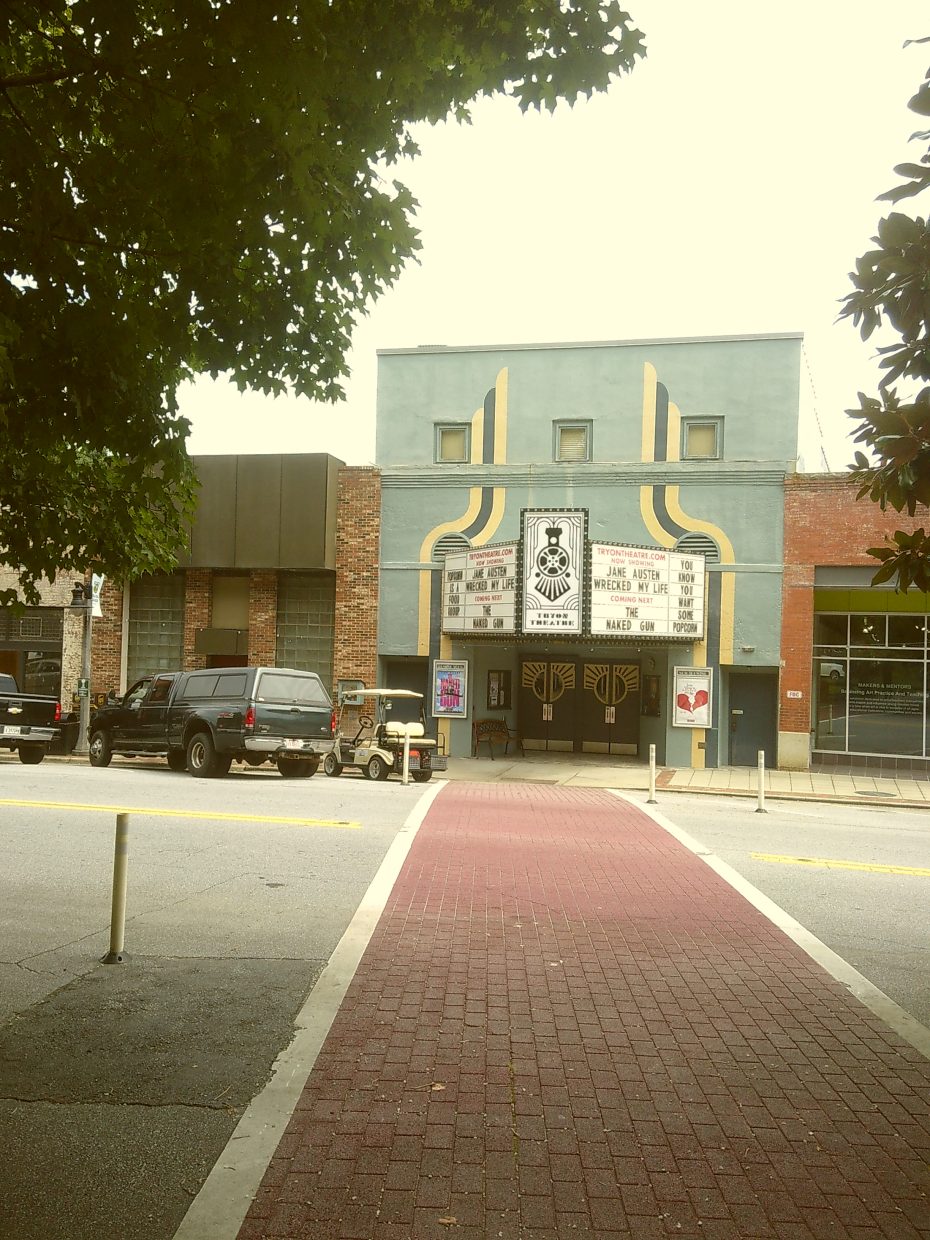
Sometimes it gets hot during the late-August/early-September festival, especially at the lower elevation of the Tryon International grounds, so why not cool off Tryon proper in the cozy dark and air conditioning watching a film at the Tryon Theatre?

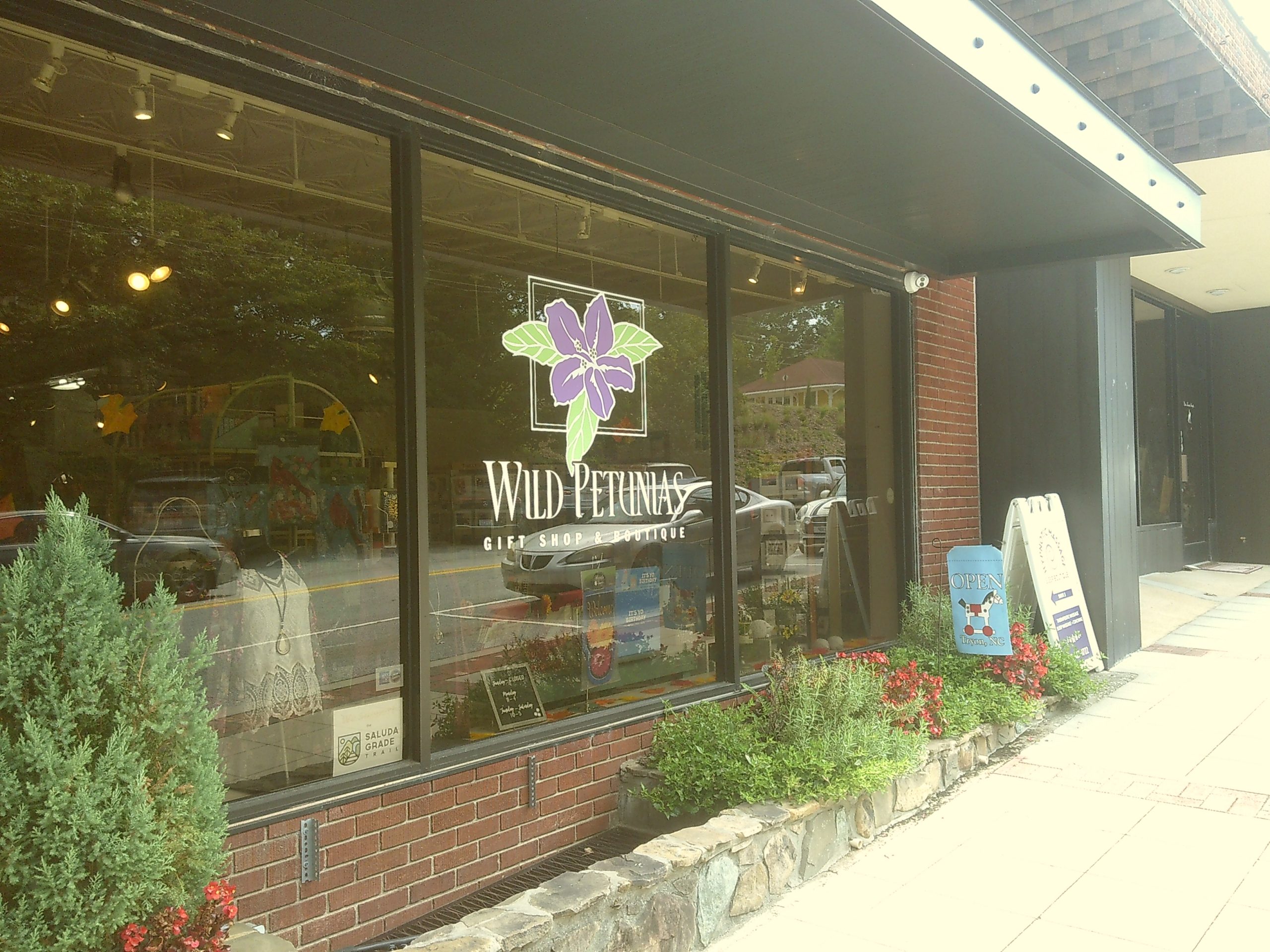
There are plenty of independent shops, boutiques, and retailers in the adorable downtown area offering local and far-flung products.

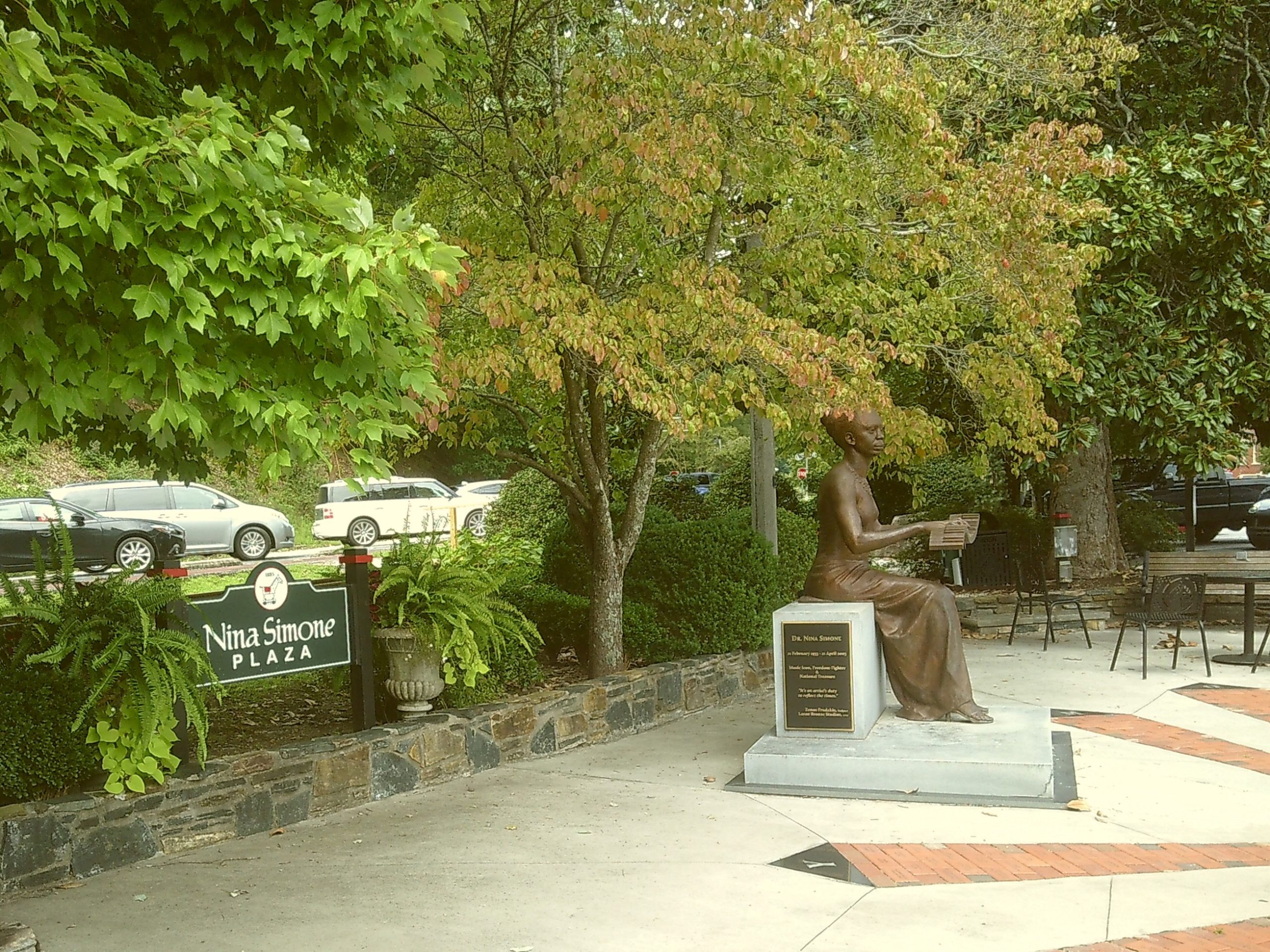
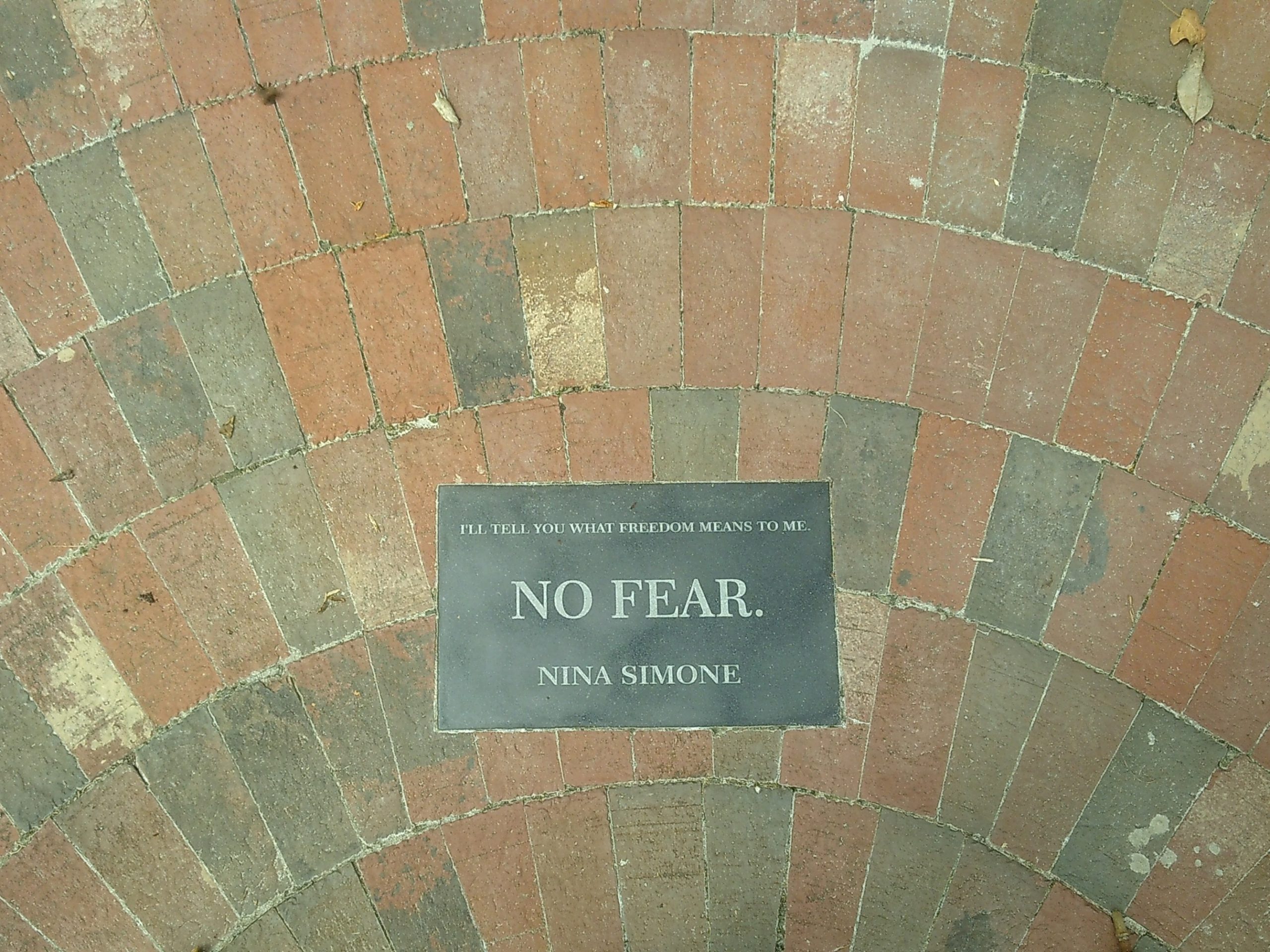
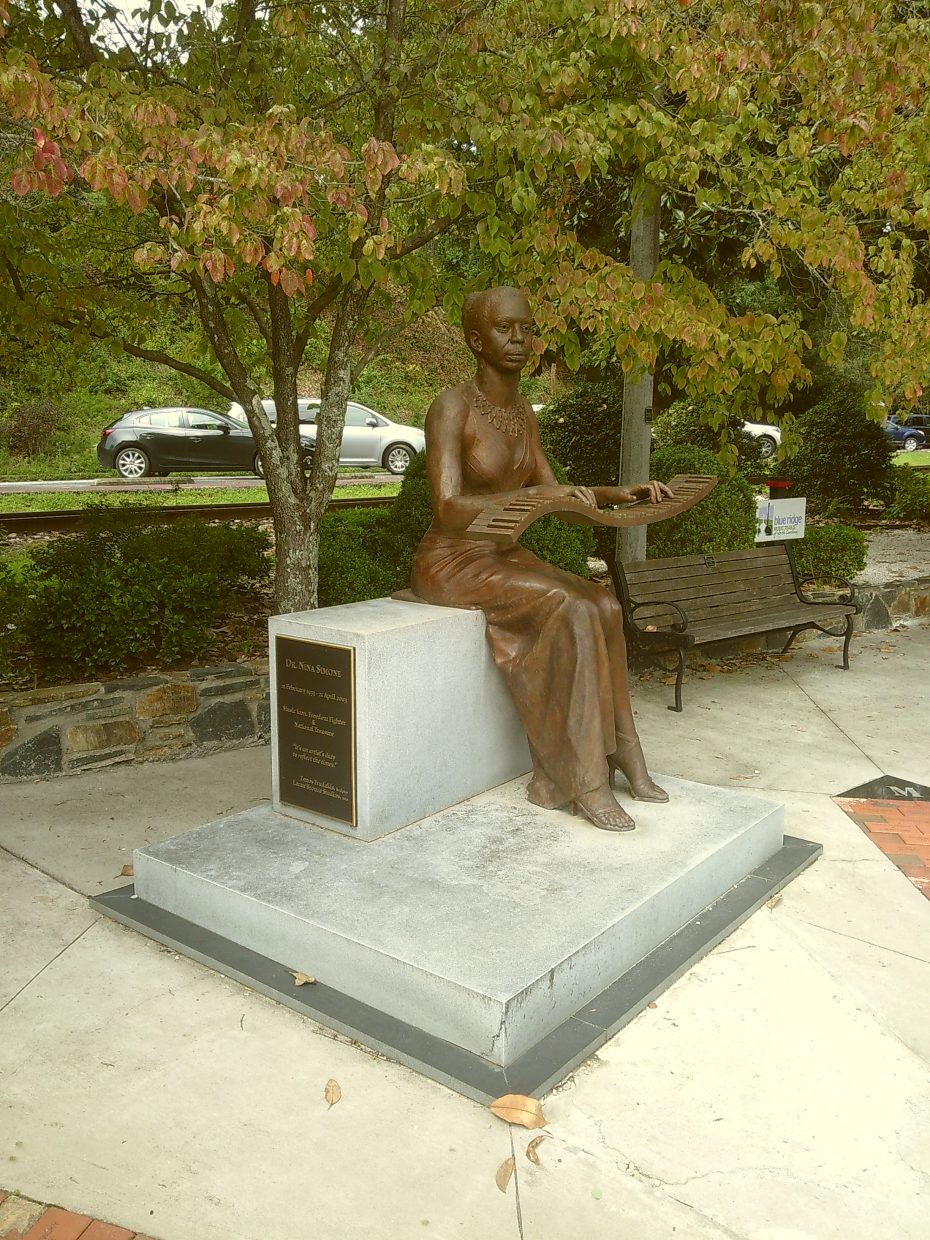
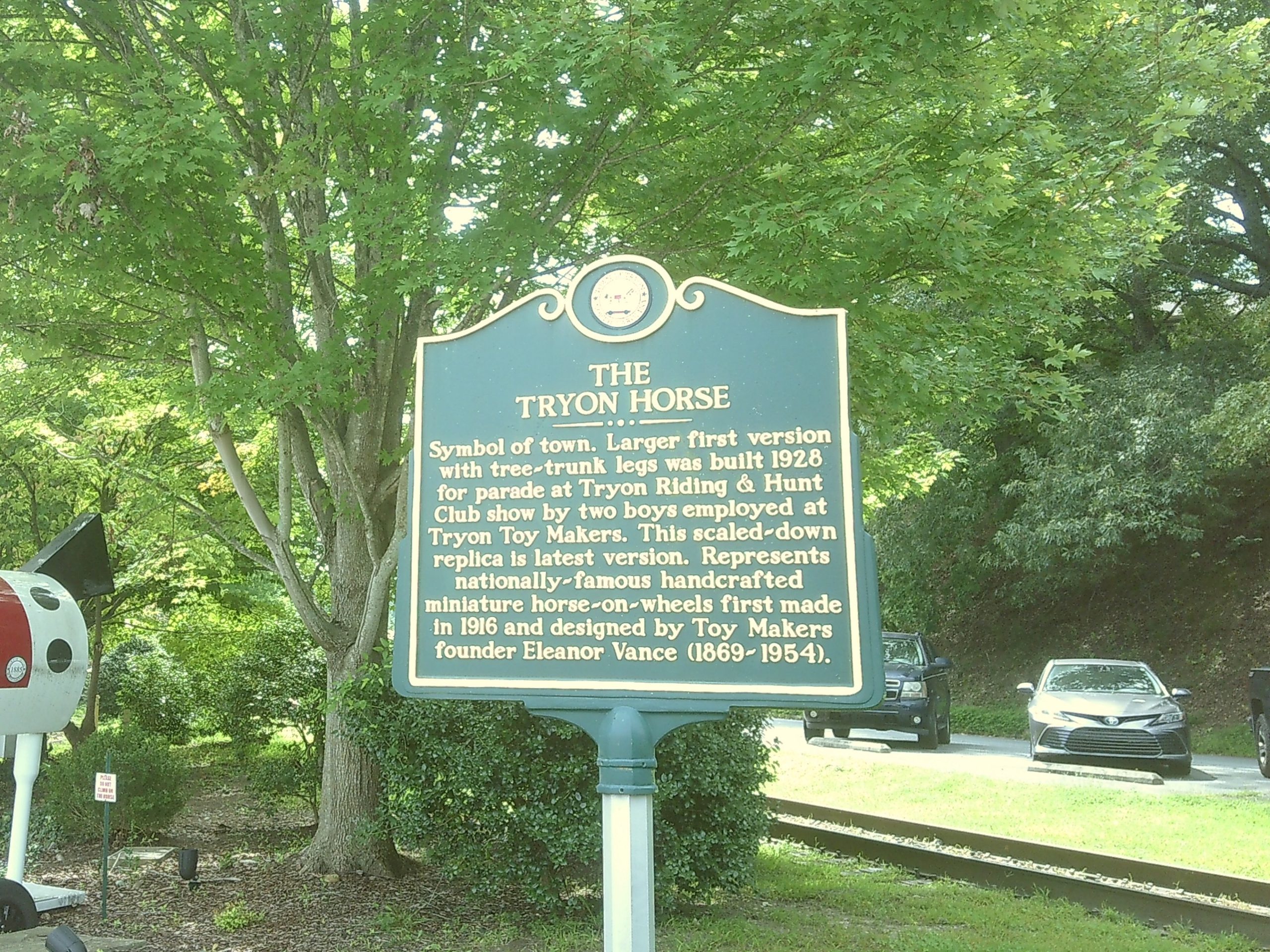
American musical icon Nina Simone was born in Tryon and her presence is felt throughout the little town. Nina Simone Plaza is conveniently located downtown and features a sculpture of Simone by Zenos Frudakis that contains a portion of Simone’s ashes enclosed inside a bronze heart within the gorgeous work of art.

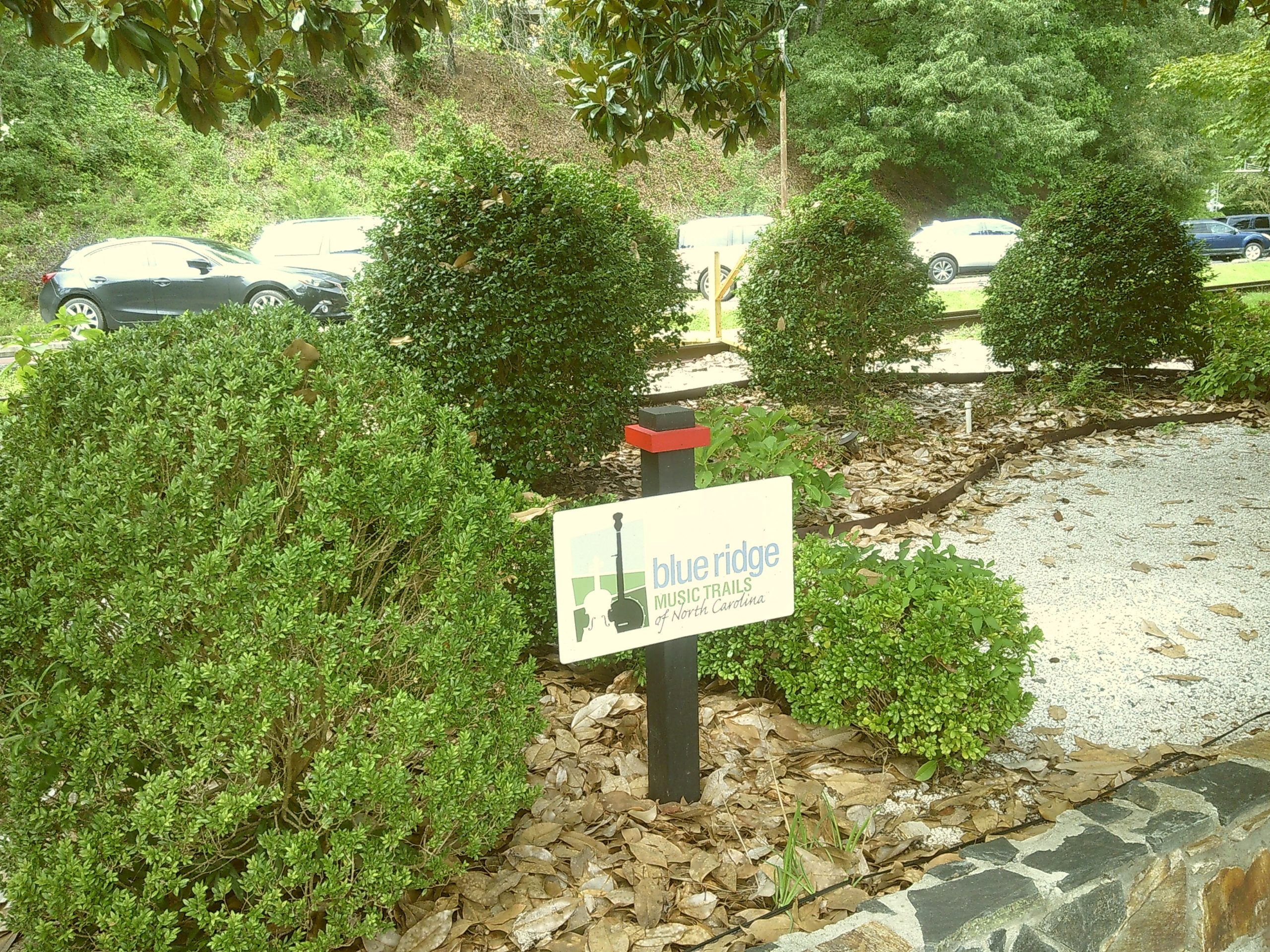
Always a good sign! Blue Ridge Music Trails of North Carolina is such a great resource and community builder in the region, highlighting art and music born in the mountains and made by mountain folk. In 2025, we partnered with Blue Ridge Music Trails, ESMF, and local partners on a special set of music at the festival called “Healing the Hollers,” which raised funds and awareness for the ongoing relief efforts after Hurricane Helene tore through and devastated the area in 2024.

There’s so much more to do, see, and explore via Blue Ridge Music Trails.

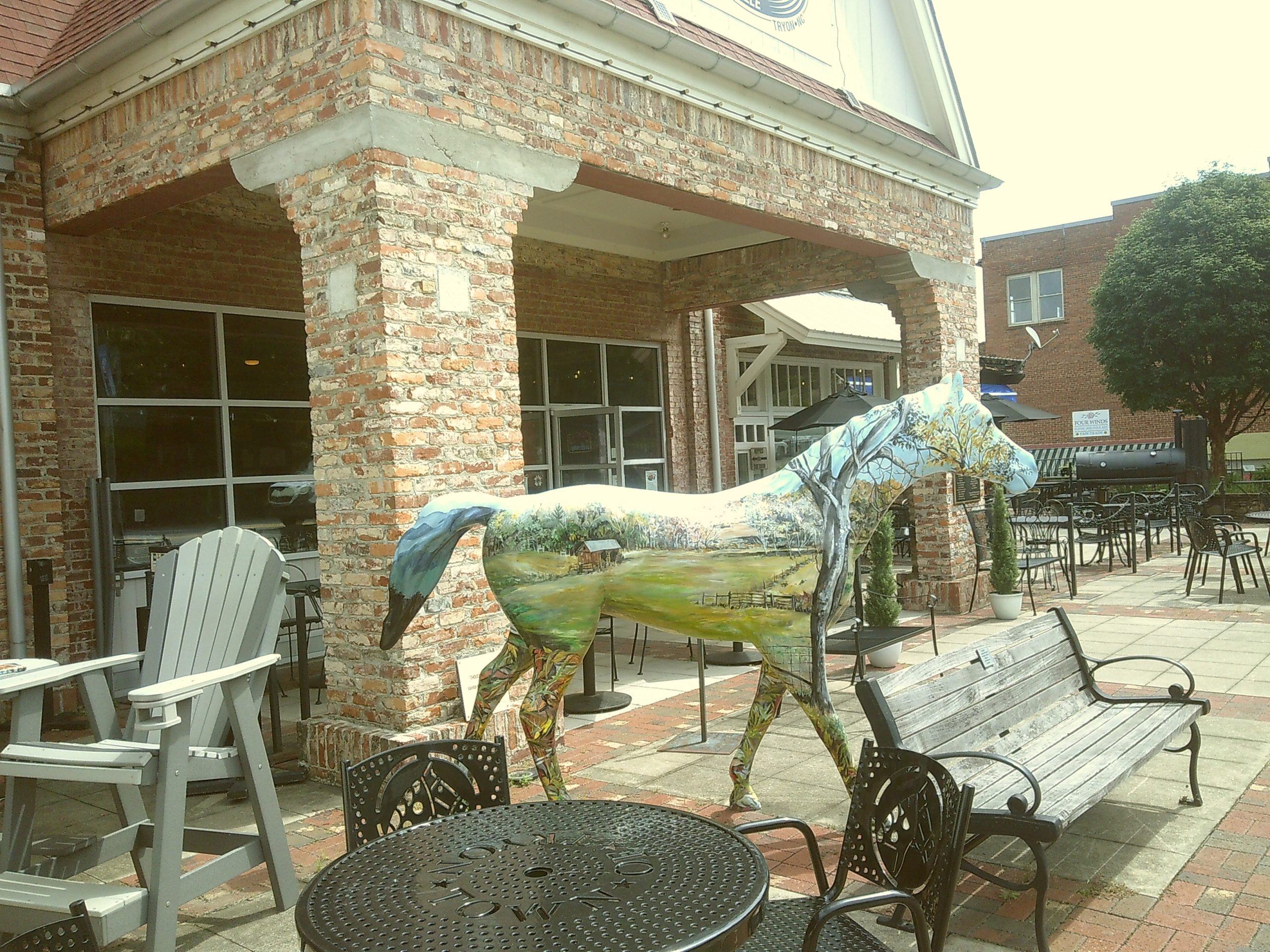
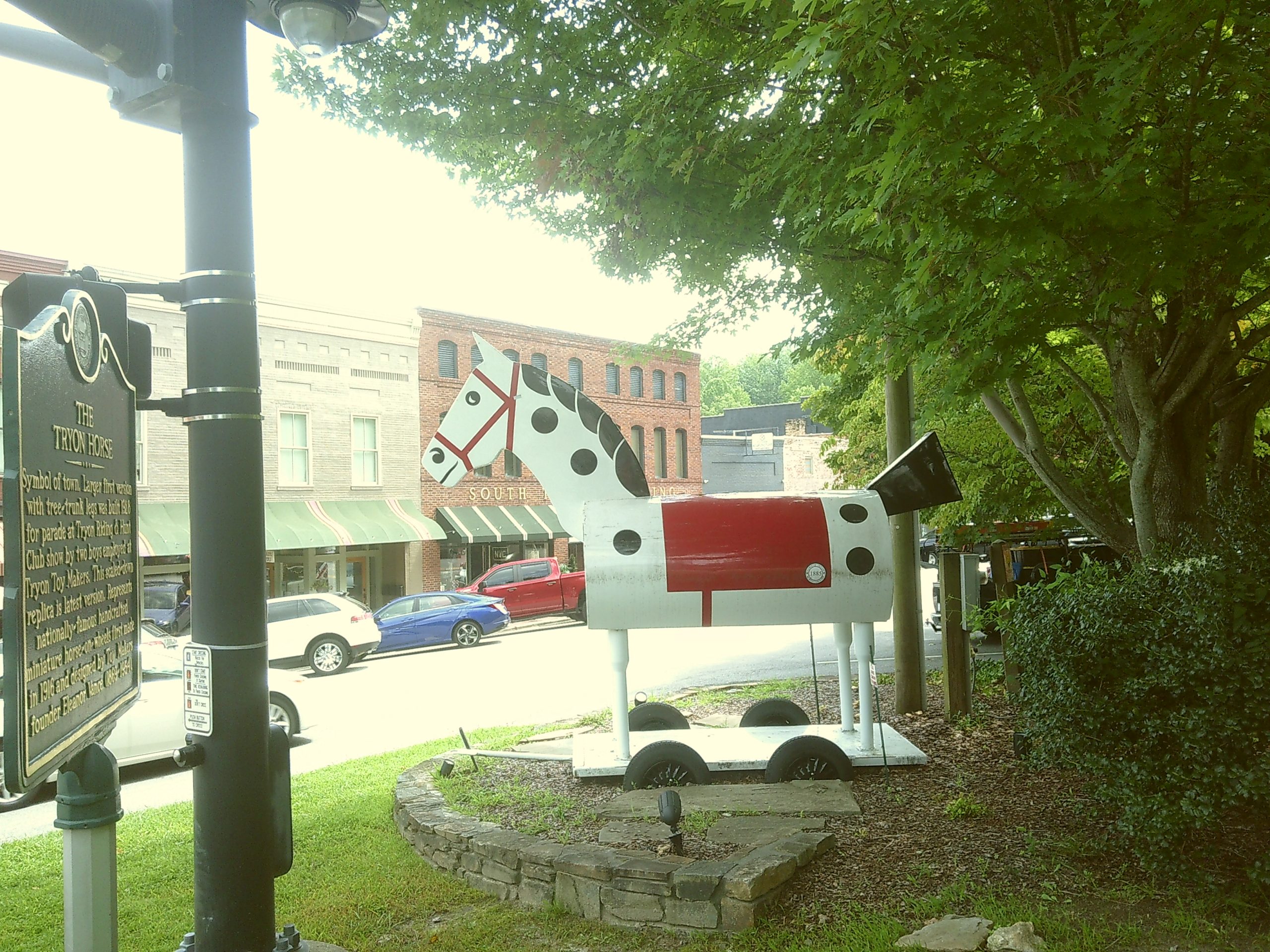
Horses show up in a variety of ways in Tryon – and not just at the equestrian center!

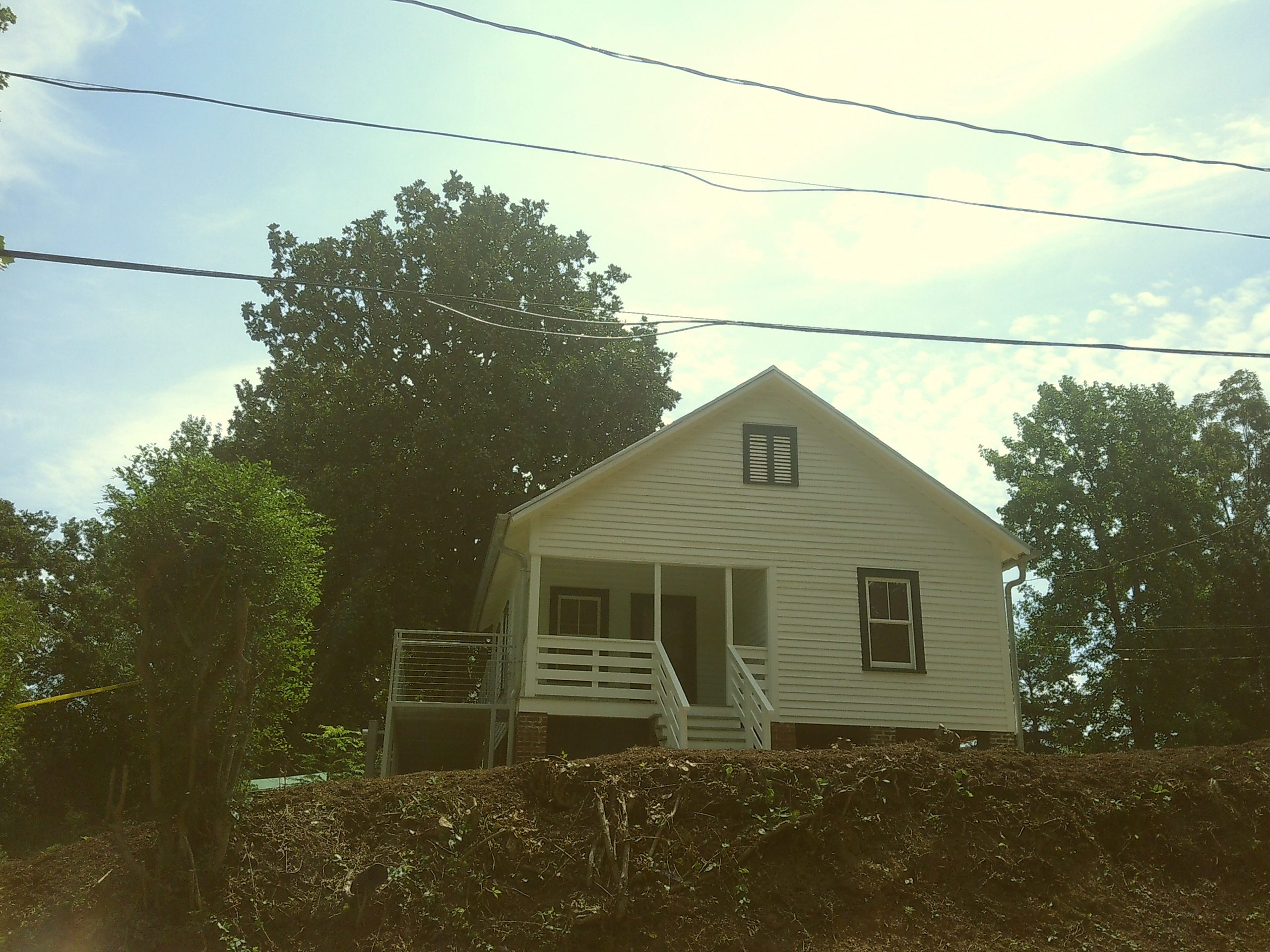
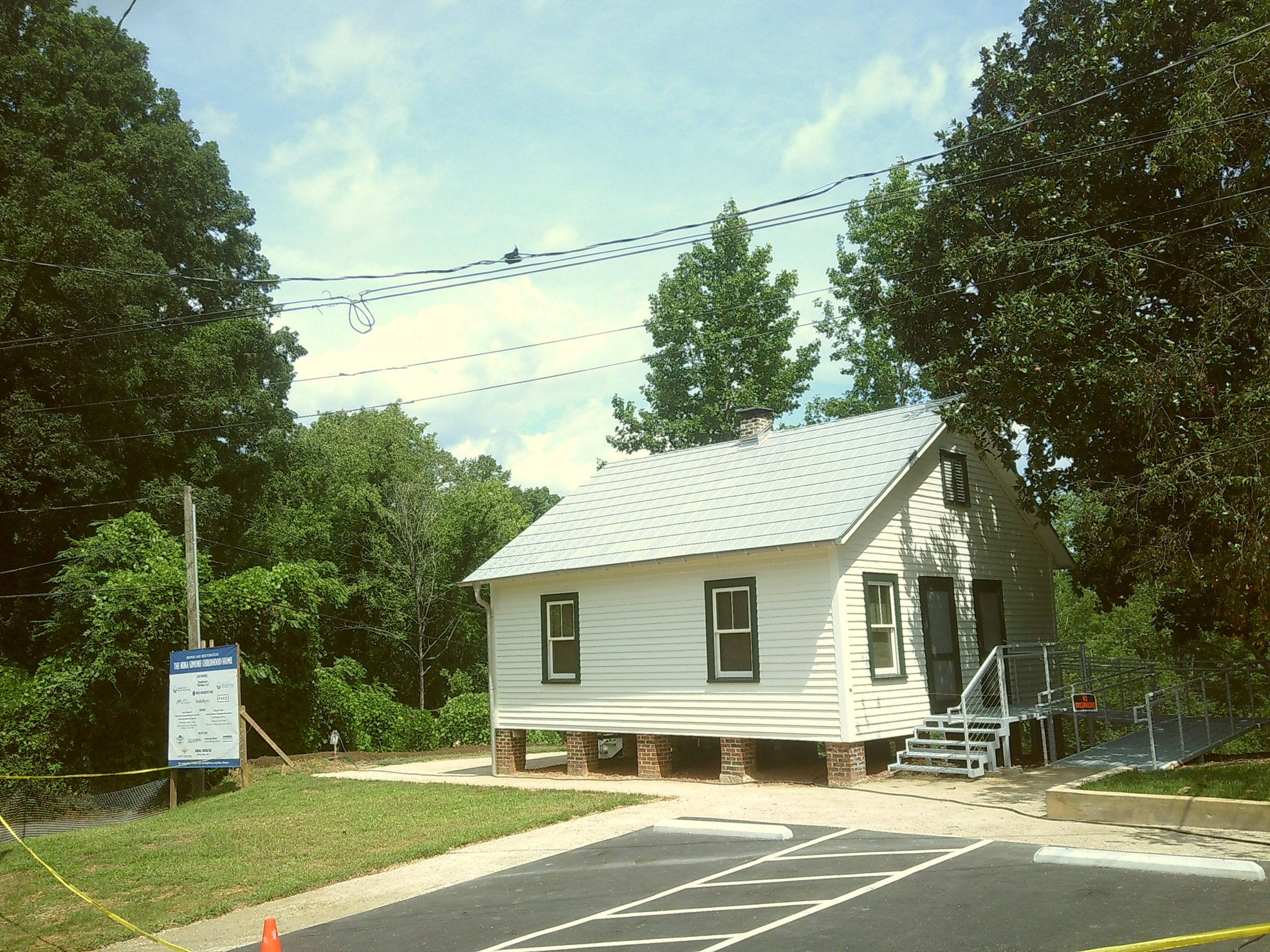
The Nina Simone Childhood Home stands on top of a hill in the middle of Tryon overlooking the village – and with gorgeous views of the surrounding ridge tops. Last year, while traveling to the festival, the humble home was in the final stages of its renovation and preservation by the National Trust for Historic Preservation and many other local, regional, and national partners.

Simone’s impact on American roots music and popular music – nationally and globally – cannot be overstated. Still, she’s rarely placed, understood, or honored as an Appalachian musician, despite where she grew up. A visit to Simone’s homeplace in Tryon is essential for all music fans, especially now that the renovations were completed in fall 2025, just after the festival.

The view of the ridge line of the stunning Blue Ridge Mountains behind St. Luke Christian Methodist Episcopal Church, as seen from the property of Nina Simone’s childhood home.

You can learn more about Tryon and Nina Simone in a bonus episode of our podcast, Carolina Calling, made with Come Hear NC.

Downtown Tryon is full of adorable sights and diverting activities.

Put “Molly & Tenbrooks” or “Goodbye Old Pal” on the speakers and get into the bluegrass and equestrian mindset. No judgment if your horse is on wheels!

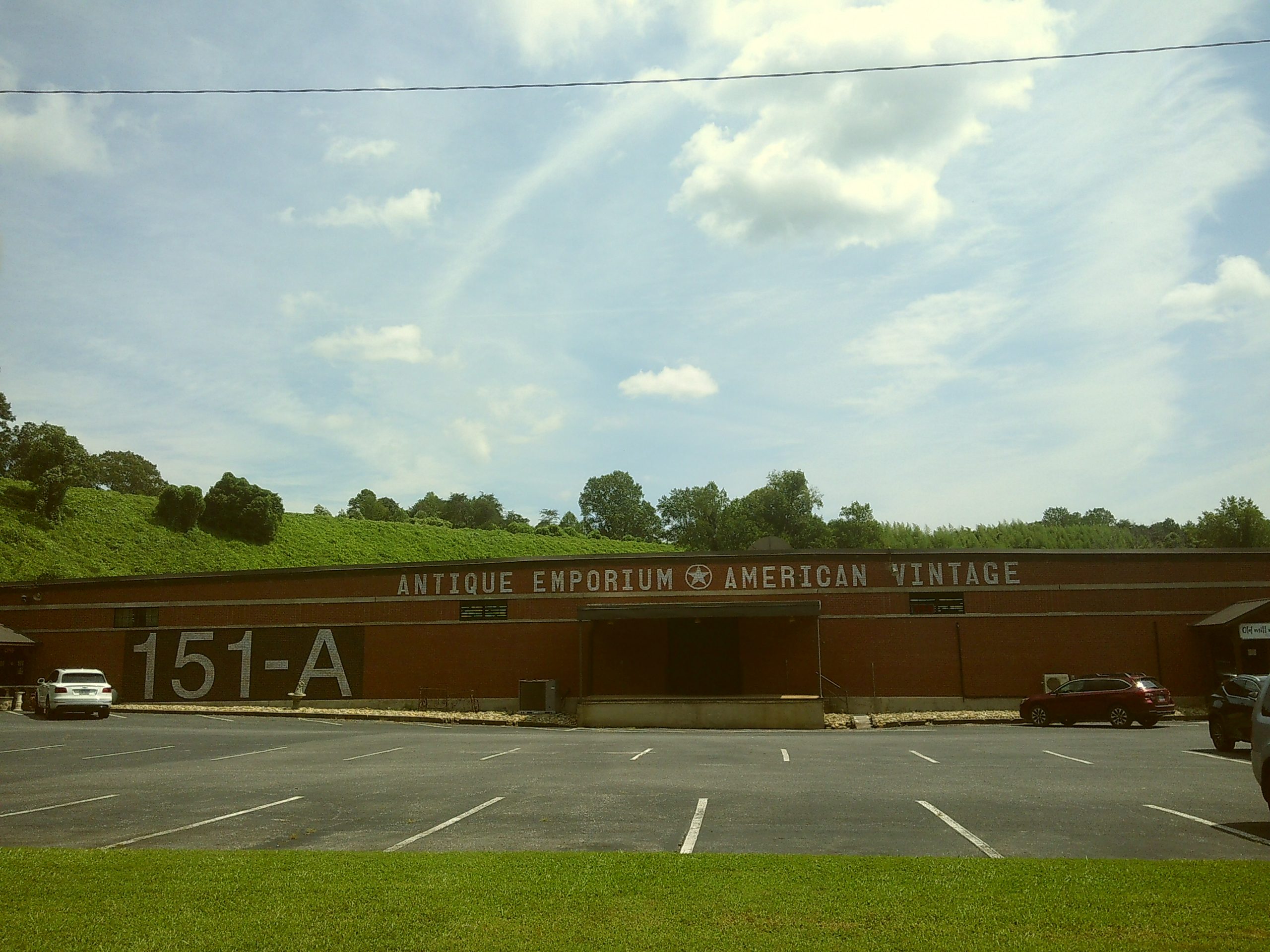
Team BGS always brakes for antique stores, and this area is dripping with excellent shops, flea markets, and antique vendors offering wares at remarkably reasonable prices. On our journey, we traveled from Tryon to Landrum, South Carolina – passing the Antique Emporium & American Vintage, Old Mill Market Square, Tryon Antique Mall & Marketplace, and Dark Horse Antique Market in one fell swoop; all are within a quarter mile of each other and are worth stopping to peruse. Plus, many more antique shops and stands and vintage stores are in the area. Keep your eyes peeled, there are plenty of treasures to find.


Landrum, South Carolina

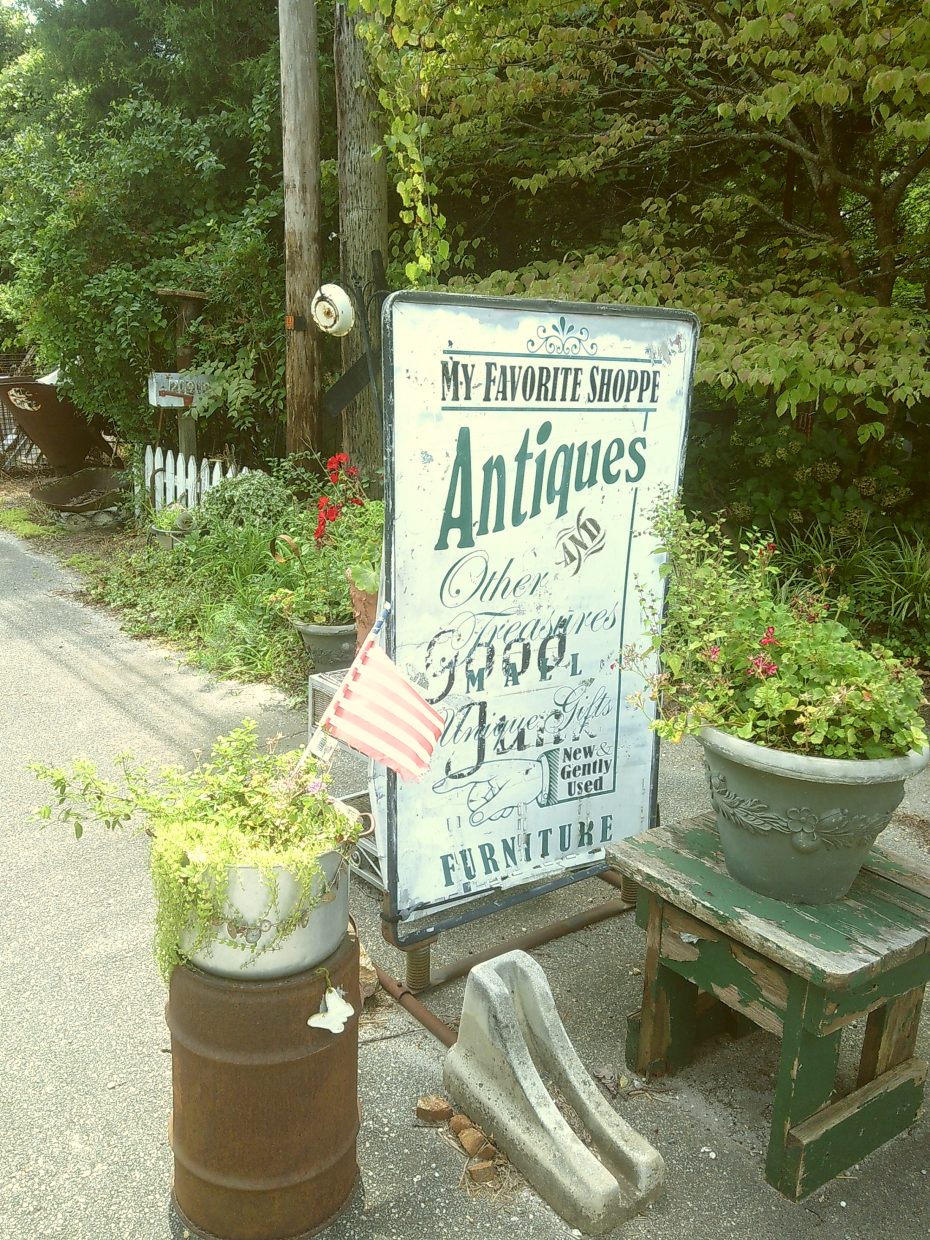
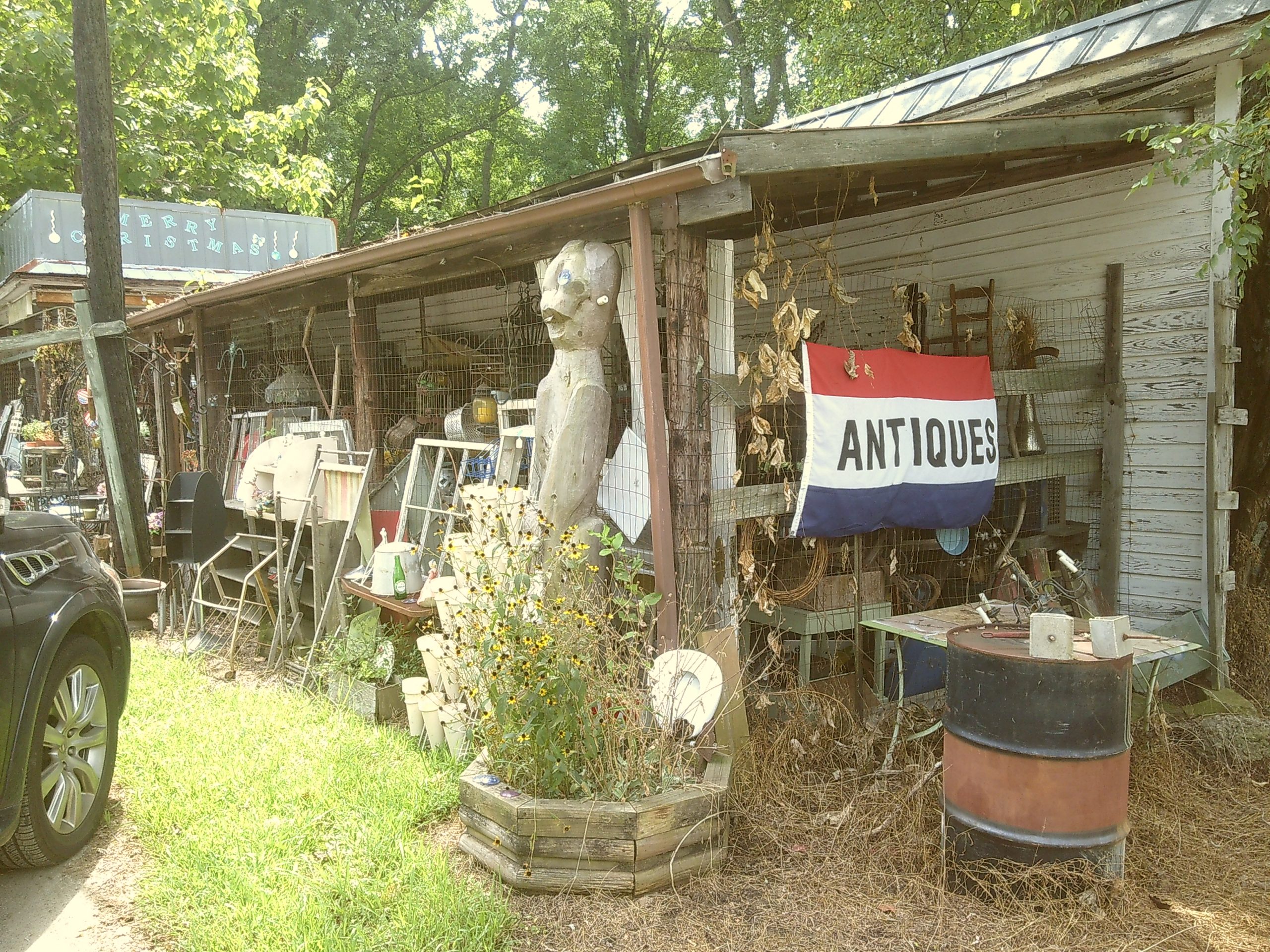
Some of the best little shops and stores we found nearby Earl Scruggs Music Festival, though, were the little holes-in-the-wall or mom-and-pop shops. Our favorite doesn’t have a name, doesn’t have posted hours, doesn’t have a website – or any kind of point on Google Maps at all. Heading out of Tryon toward Landrum, you’ll just cross over the state line on US Highway 176, Asheville Highway, when you come across a couple of small buildings covered in antiques. Stop at the intersection of US 176 and State Rd S-42-183.

Run by a pair of sisters, the shop is only open Thursday through the weekend and takes only cash, but you will find an inventory unlike any other. Sure, they may package your local North Carolina pottery finds in a (clean) reused Burger King bag. It only adds to the charm! The sisters will be happy to give you a tour and show you the historic property. We return every year and strolling through the crowded, historic house full of their collection of finds is a highlight of attending ESMF.

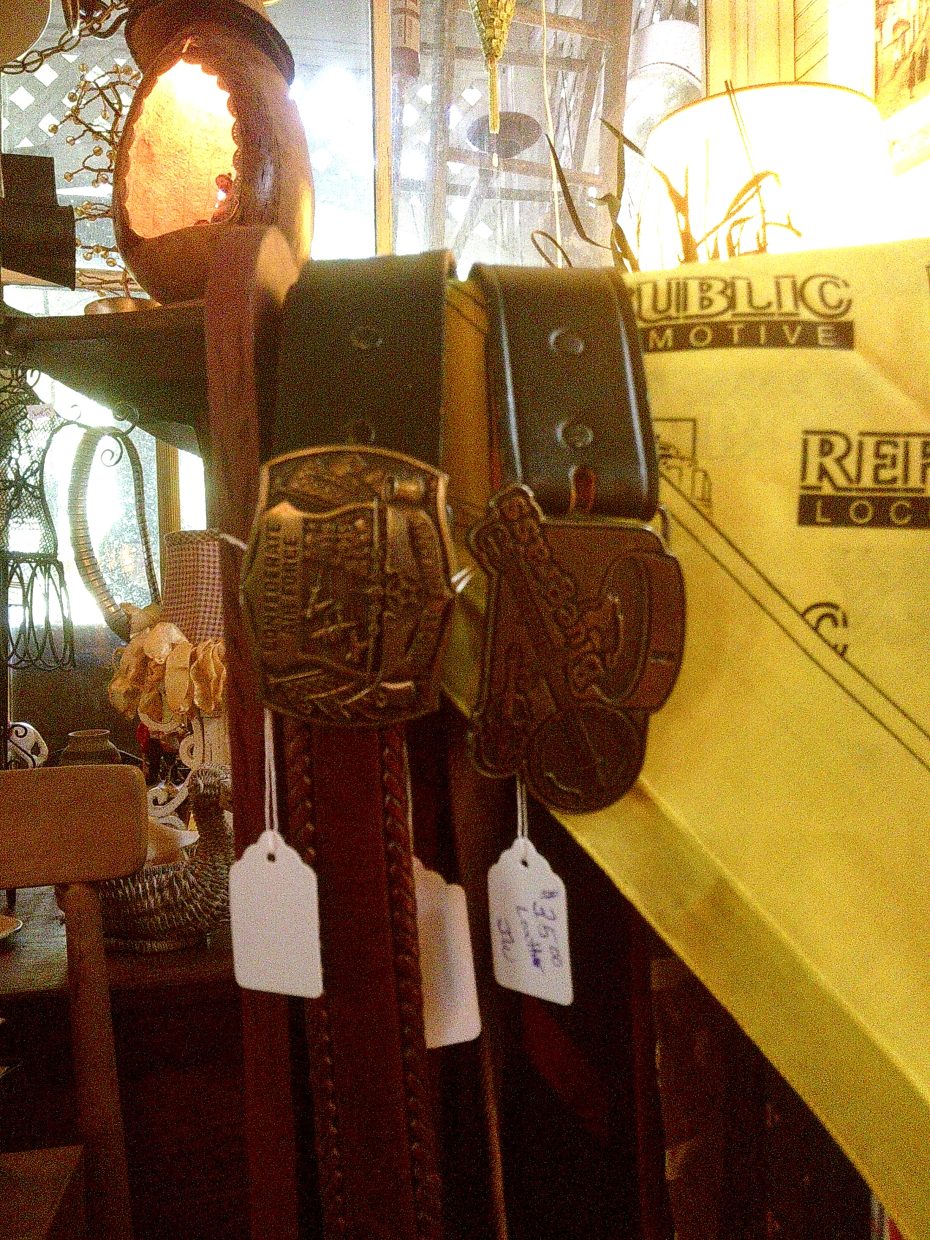
You may even find a bluegrass belt buckle along the way! While we can’t tell you the name of the business or really any more information than what’s included here, we cannot recommend a stop at 21919 Asheville Highway in Landrum enough. It is truly a hidden gem.

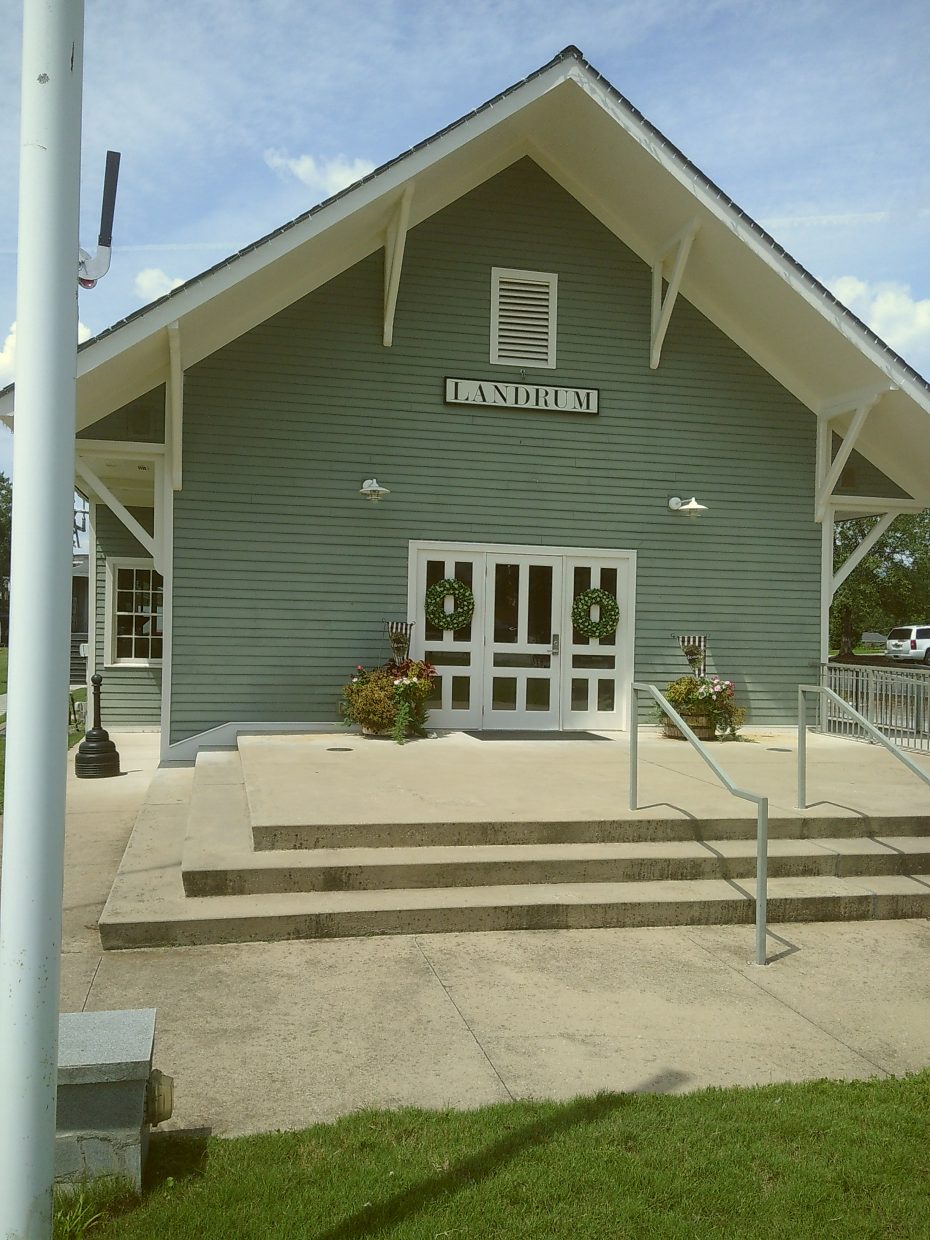
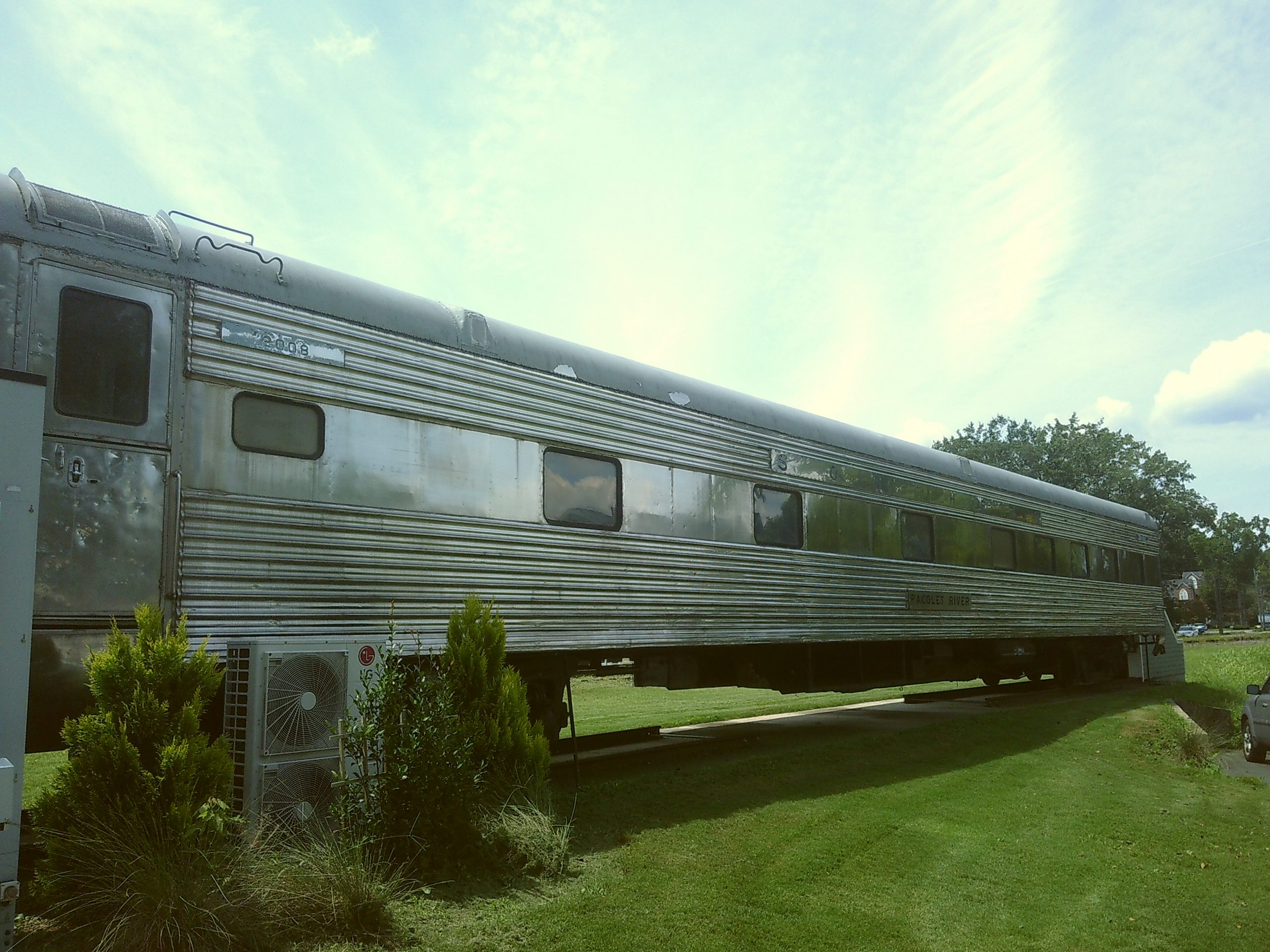
When you get to Landrum, you’ll notice we’ve rolled entirely out of the Appalachian foothills, topographically. Still, horses abound and there’s plenty to do, see, and enjoy. Stop first at the Landrum Depot, a rail and history museum, event venue, and community gathering place – including a refurbished Pullman sleeper car.

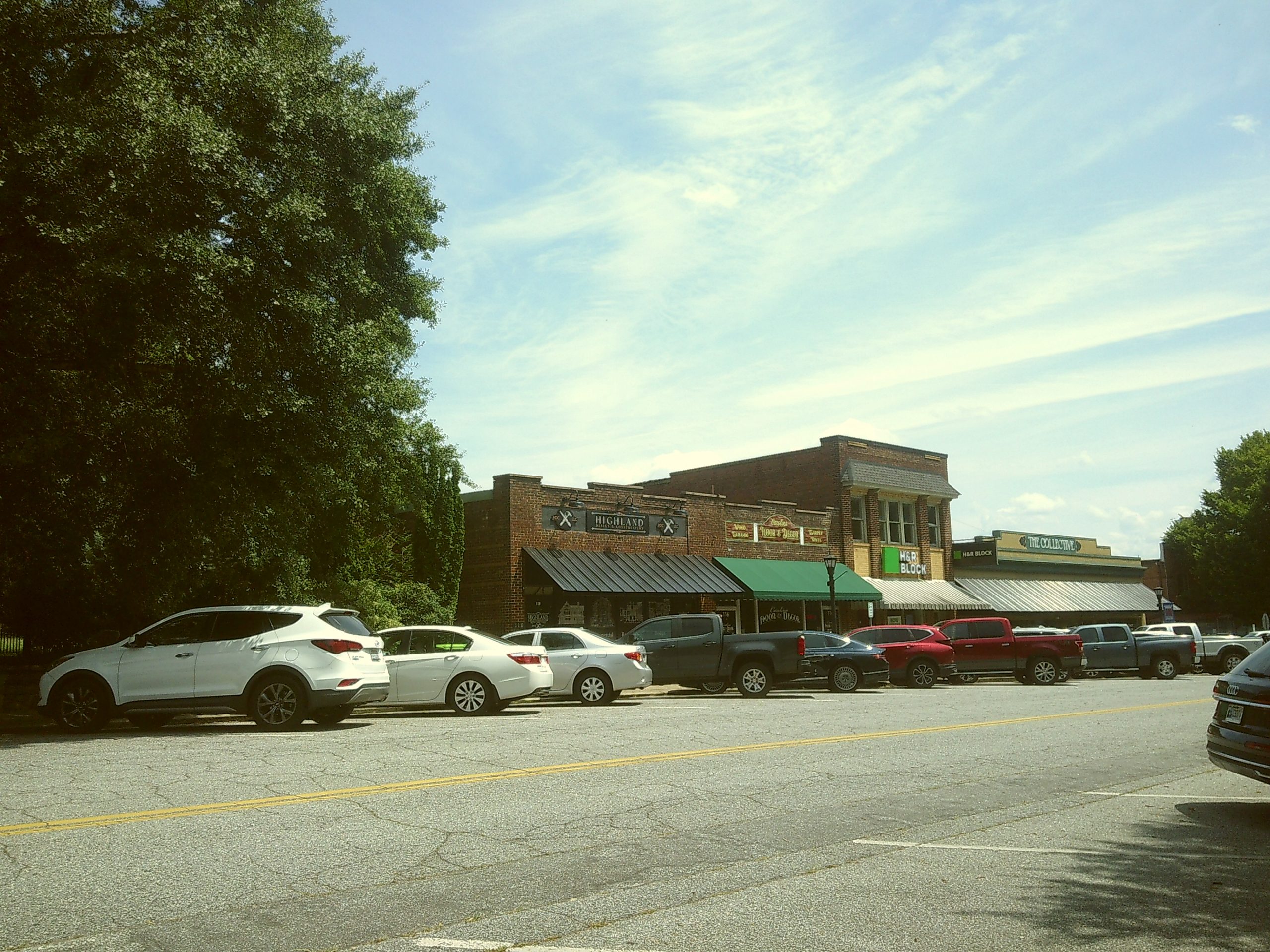
Beautiful and quaint downtown Landrum also includes many restaurants and stores ready for visitors.

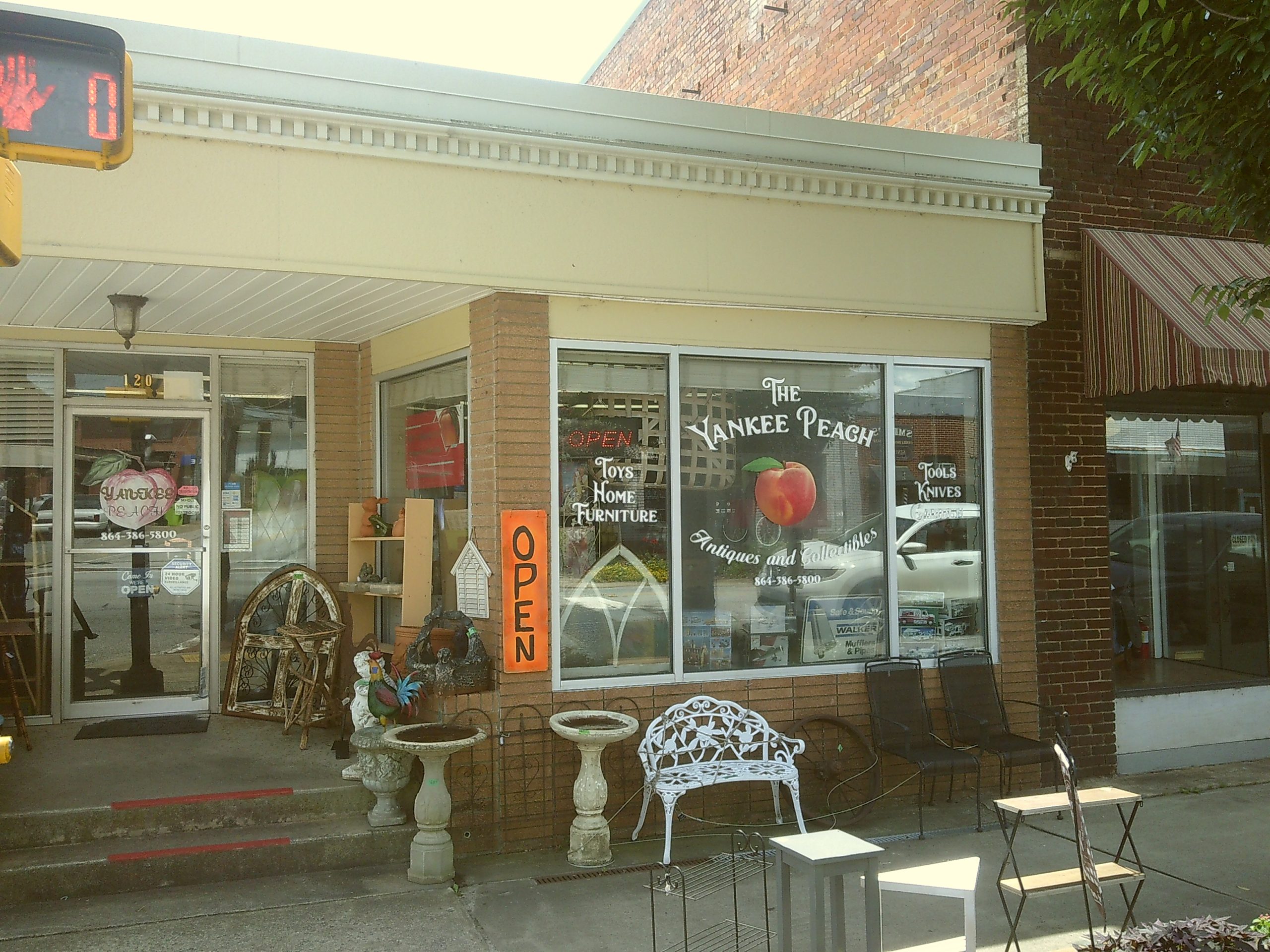
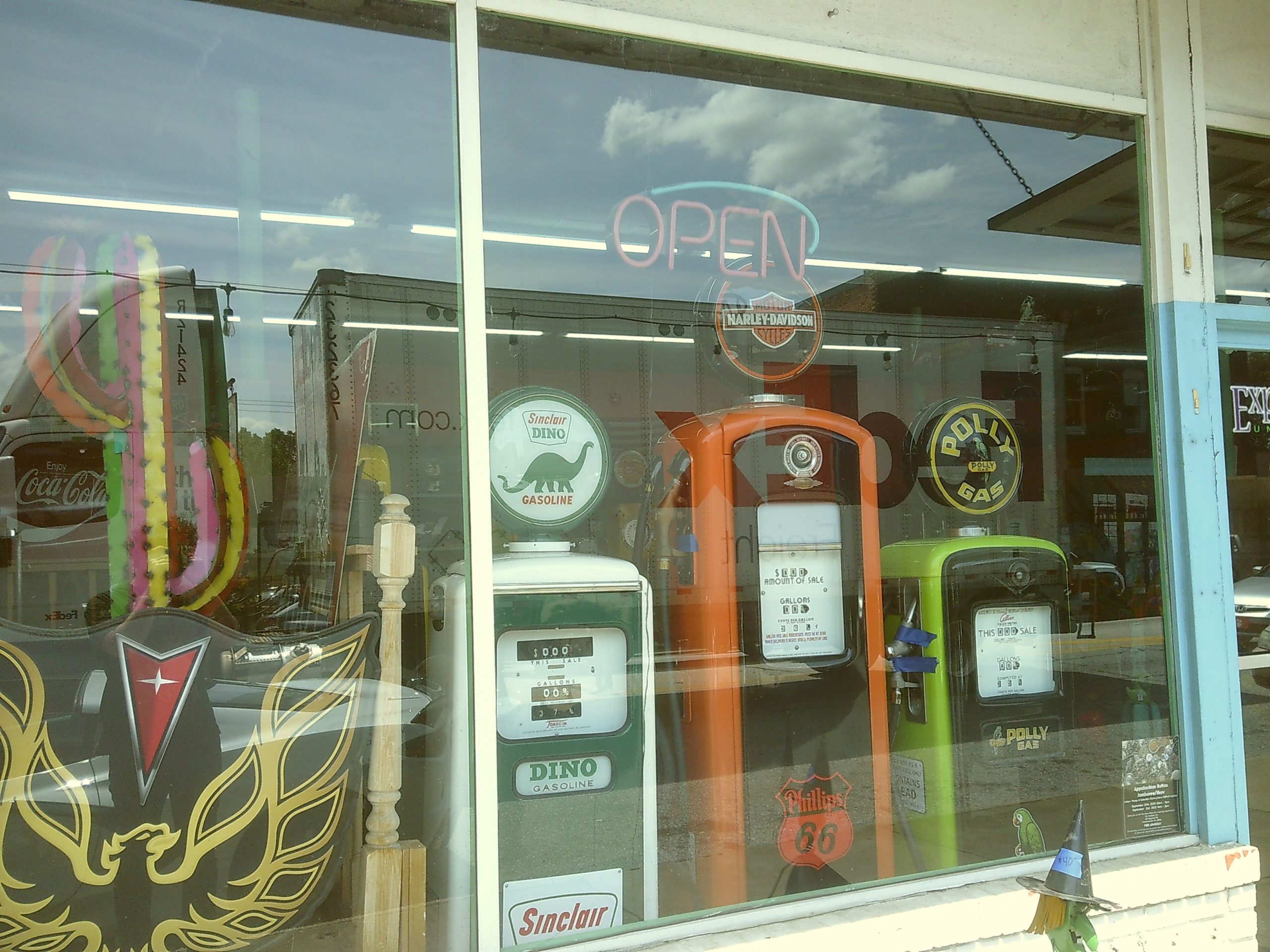
Stop and peruse antiques and goodies at stores like The Yankee Peach (above) or Expressions Antiques (below), just across the street from each other.

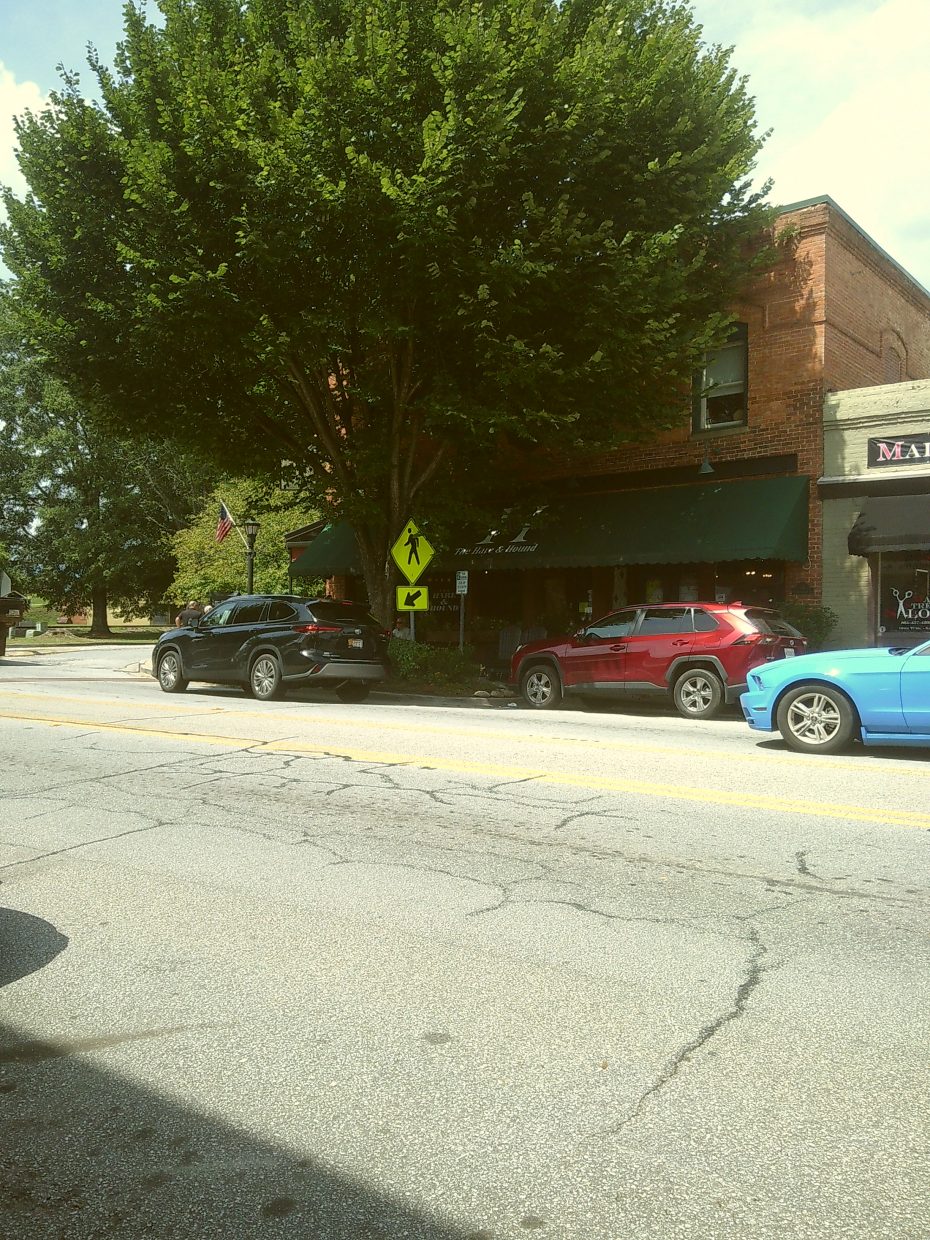
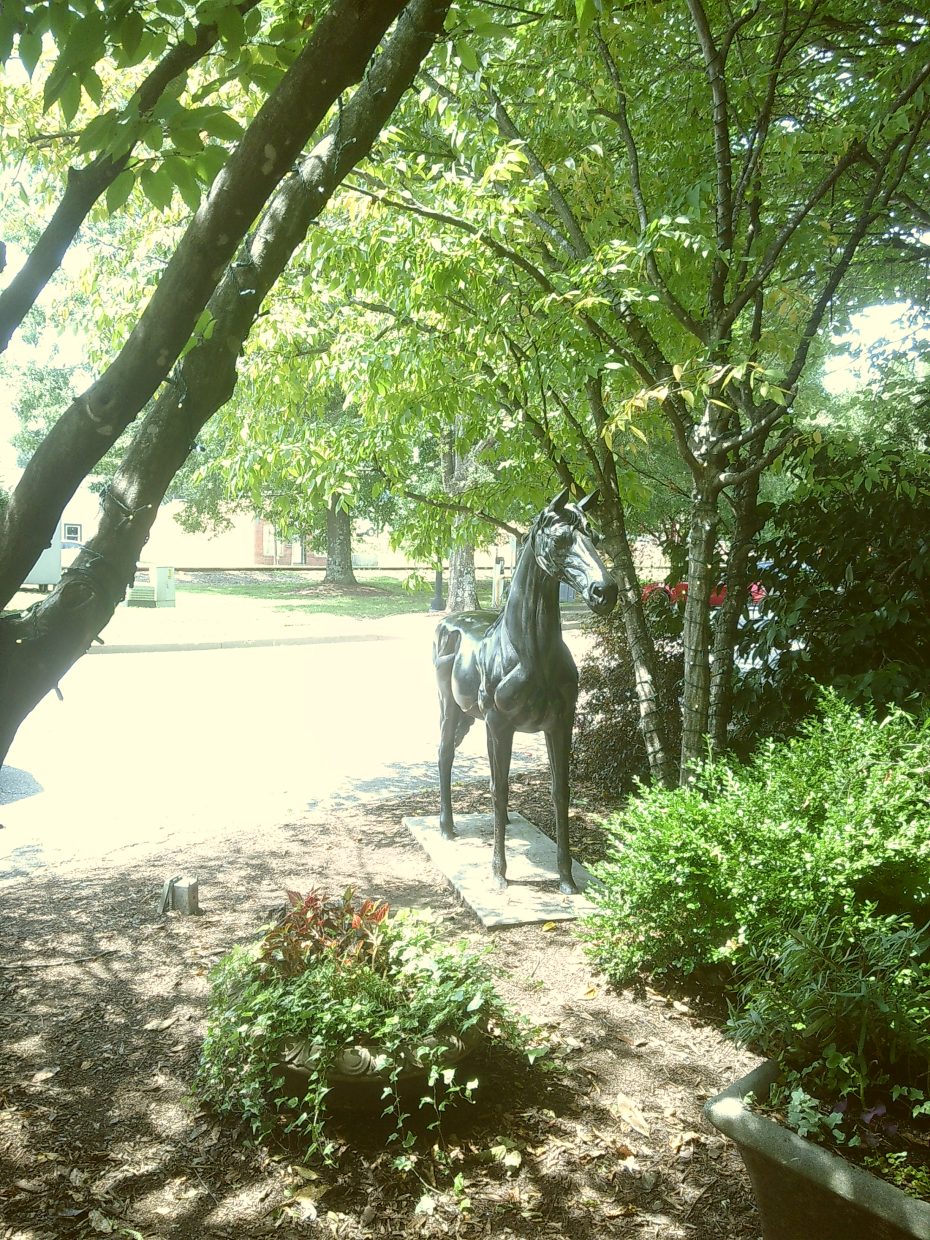
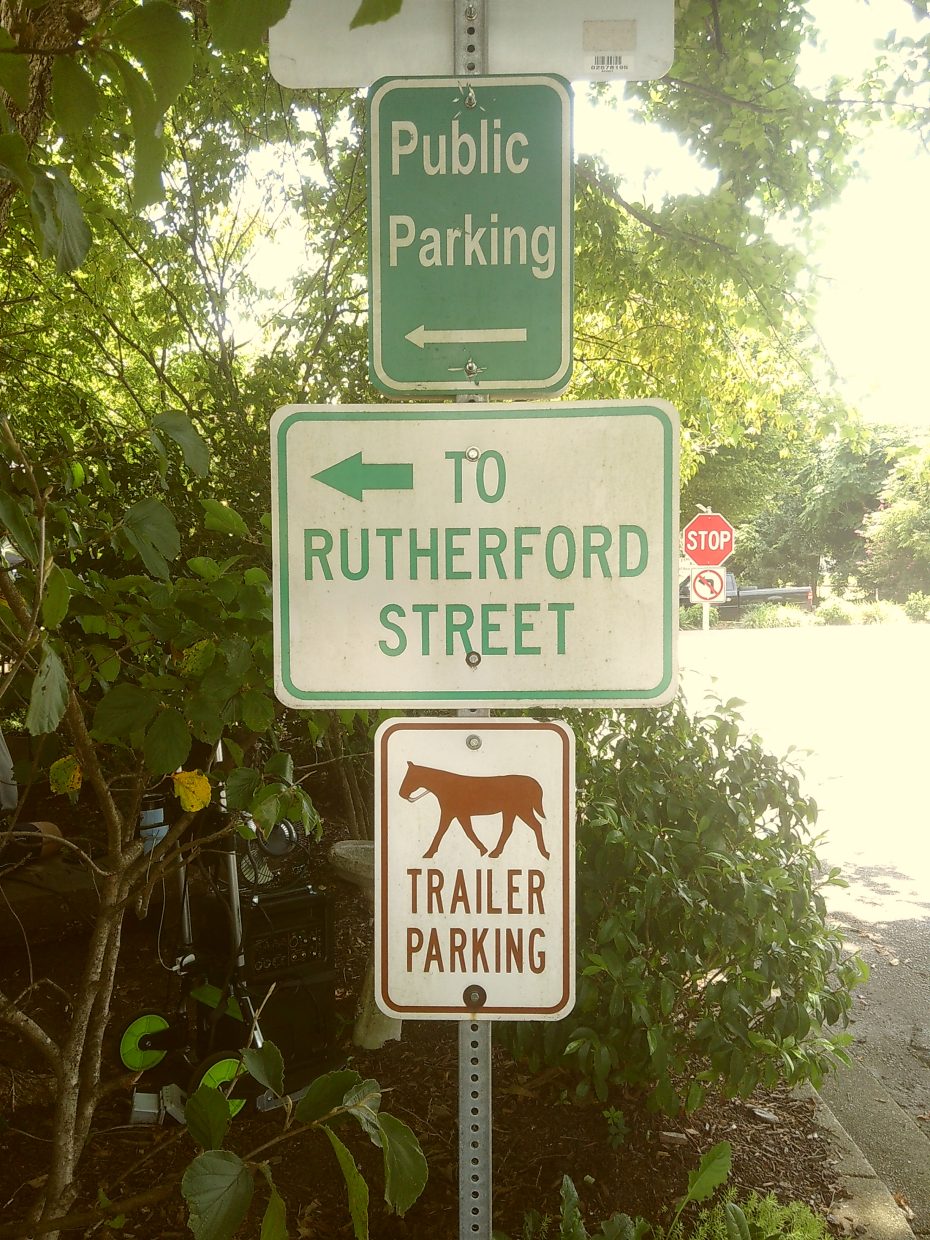
We always enjoy stopping for a drink, lunch, or dinner at The Hare & the Hound in Landrum. They often feature live music and whether you’re sitting in the cozy indoors or outside on the shady street, the vibe is perfect. Need to park your horse trailer? They’ve got that covered in Landrum, too!


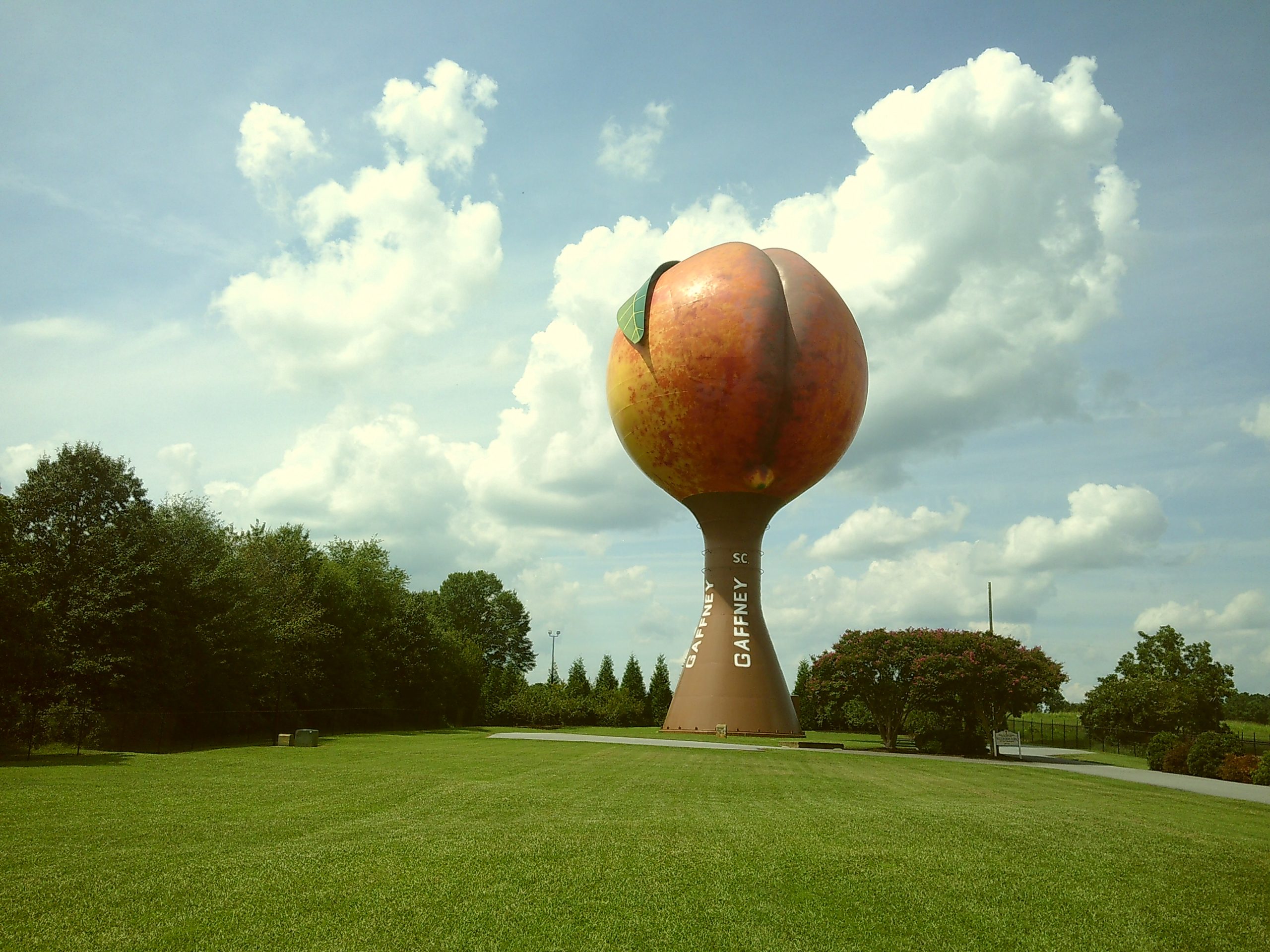
The Peachoid, Gaffney, South Carolina

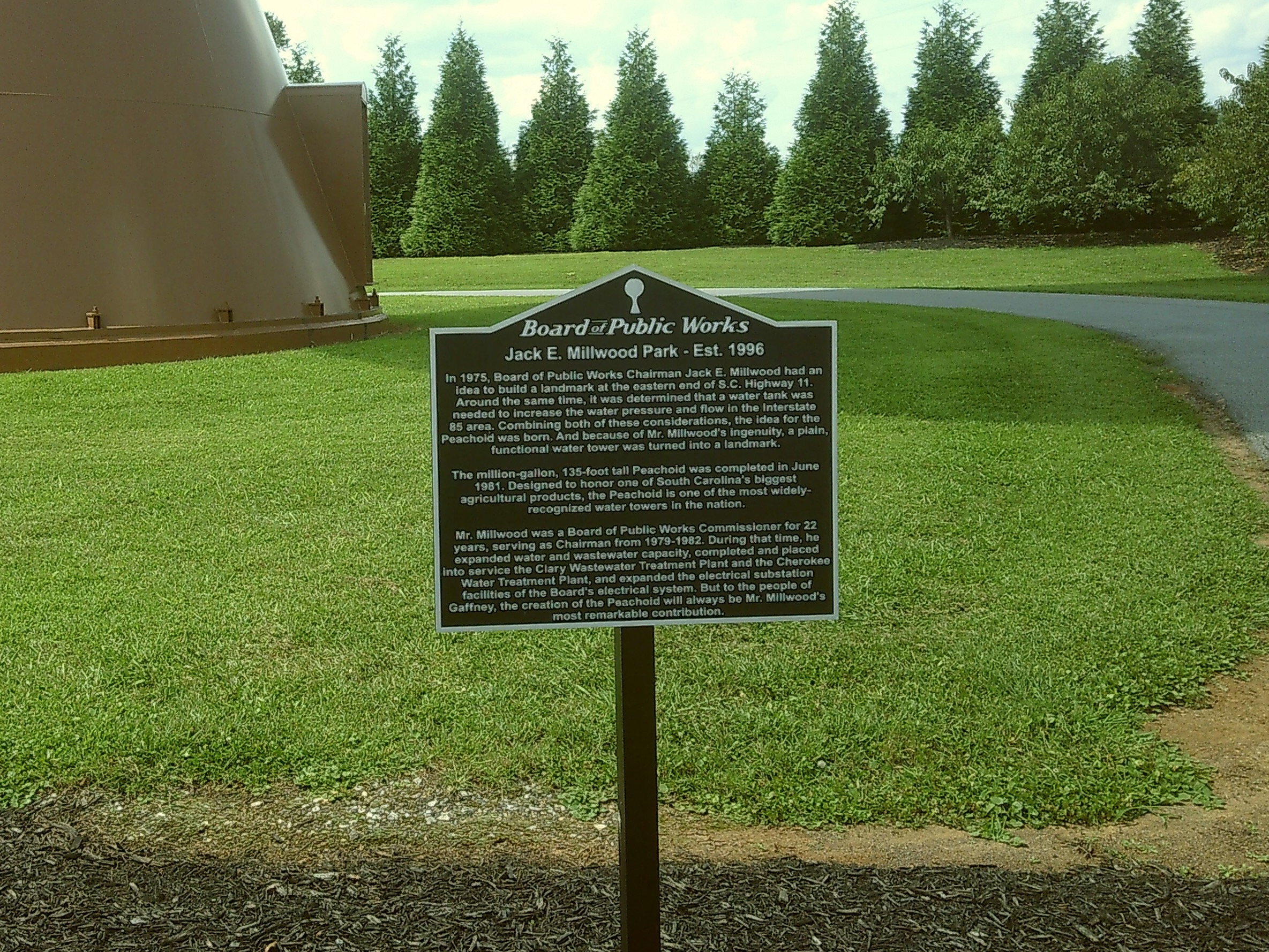
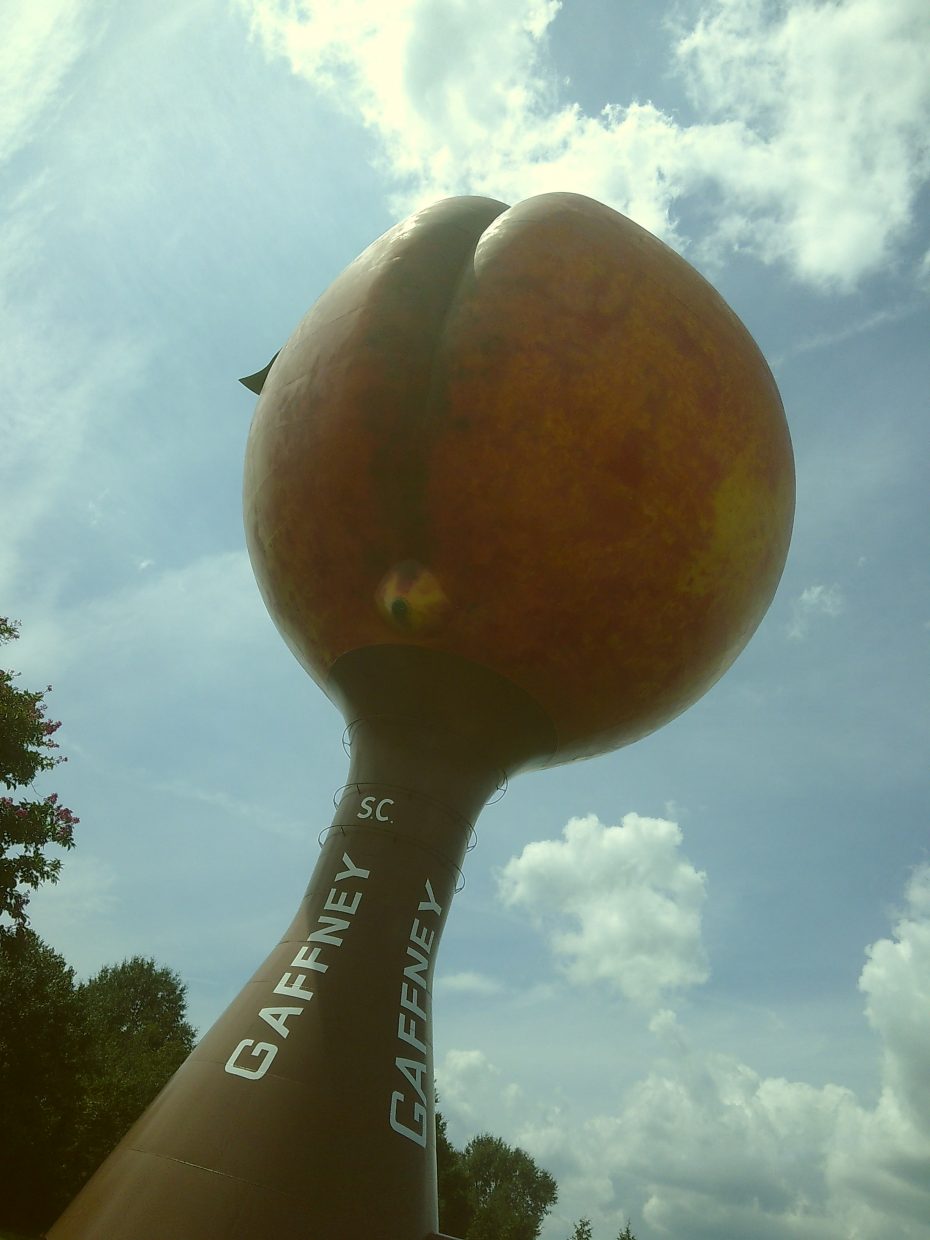
Just around the corner from Landrum and mere minutes from Earl Scruggs’ childhood home near Boiling Springs, North Carolina, is Gaffney, South Carolina, home of the infamous Peachoid. There are lots of prime roadside attractions worth a visit in the area surrounding Earl Scruggs Music Festival, but the Peachoid may top the list.

If you’re heading to or from Scruggs’ homeplace or the Earl Scruggs Center in Shelby, North Carolina, as we were, stop by for a photo opp – and put Netflix’s House of Cards theme song on full blast.


Boiling Springs, North Carolina

Why not take a tour of historic homeplaces while attending ESMF? The musical dichotomy of Nina Simone and Earl Scruggs is perceived as incredibly distant or far-fetched, yet the two were born and raised barely 40 miles from each other. Why do we perceive one of these megaliths of American music as Appalachian, but not the other? (Meanwhile, Scruggs was raised decidedly outside of the mountains in southern Cleveland County, while Simone was raised nestled within them.)

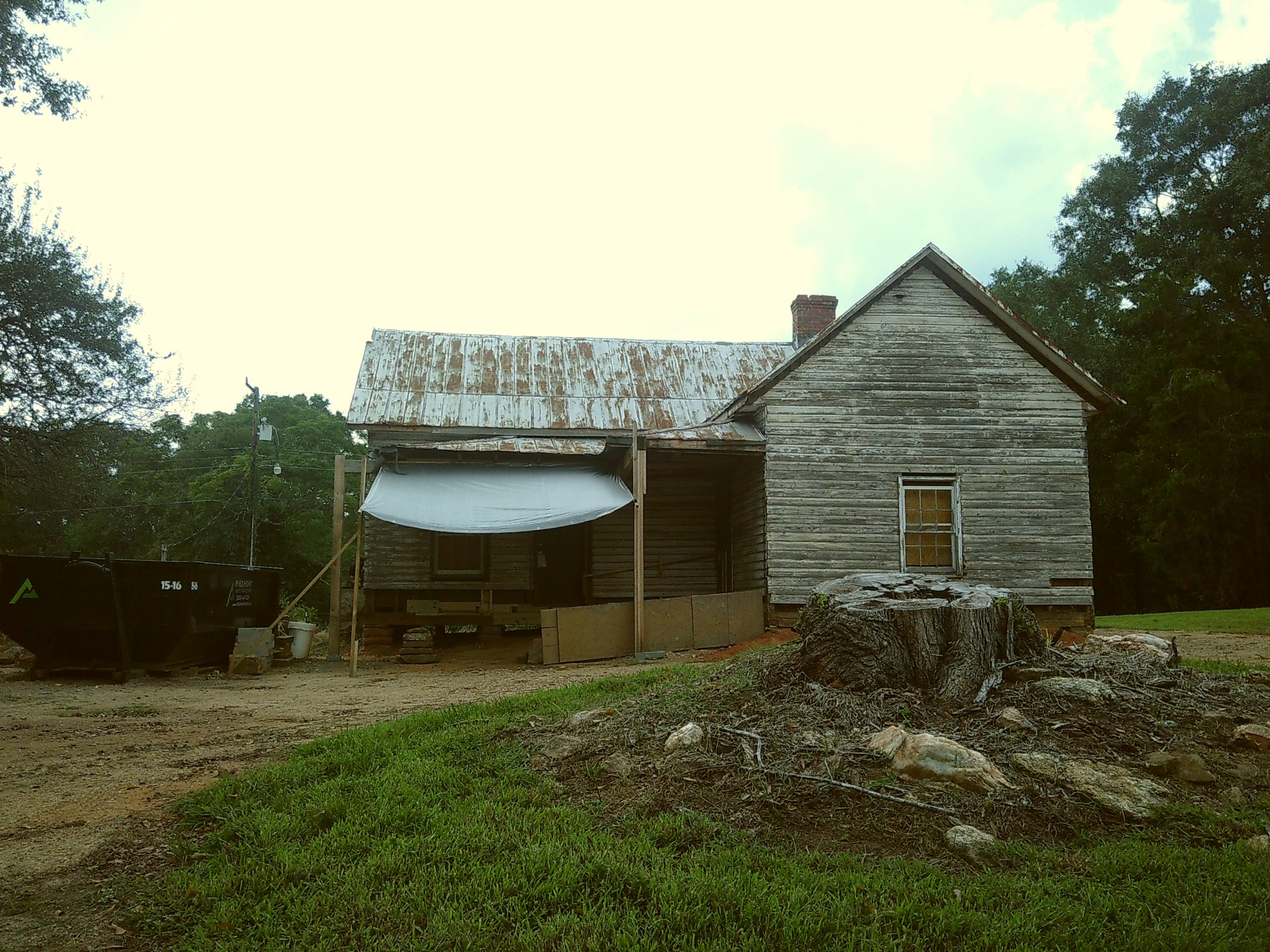
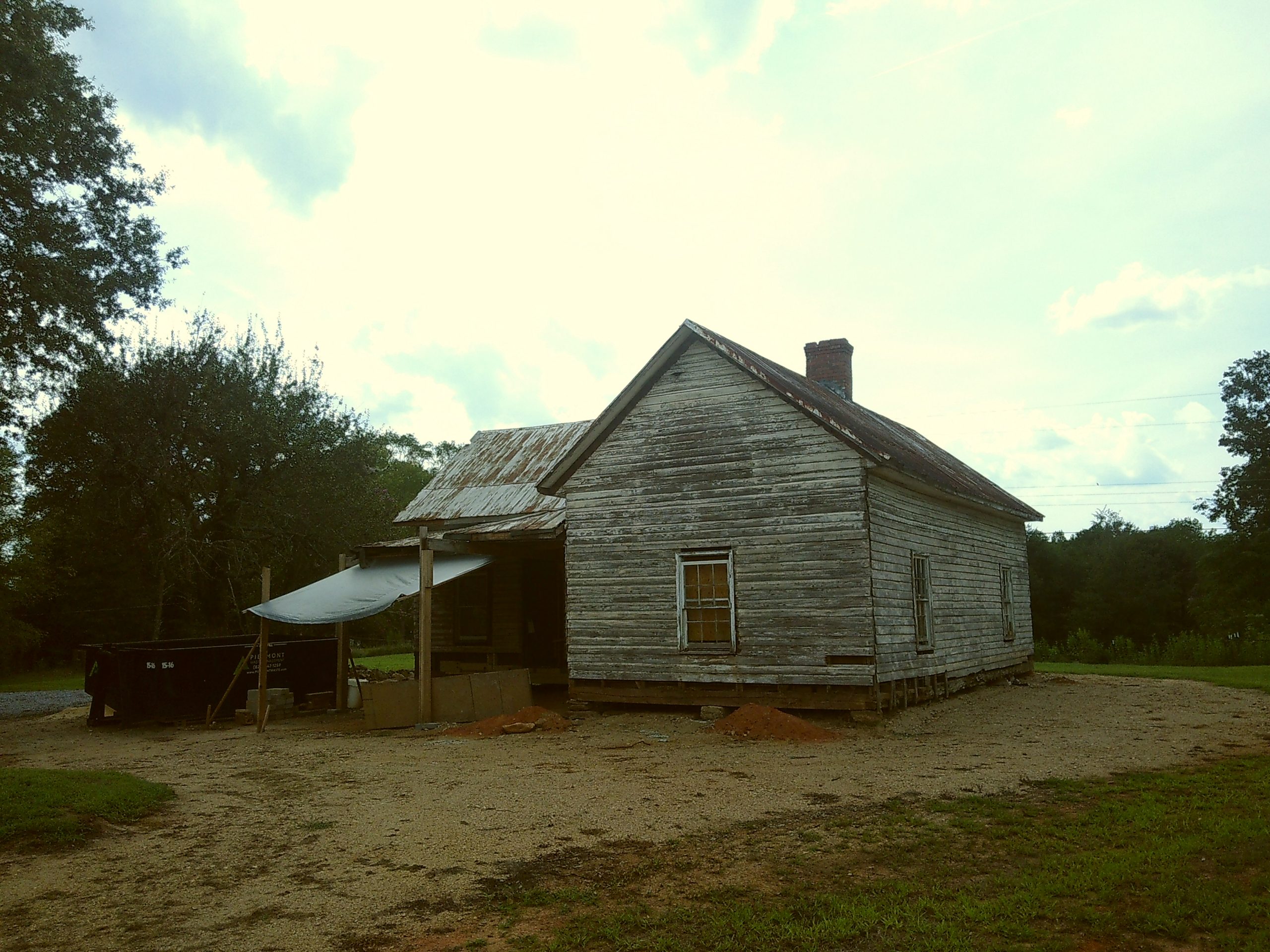
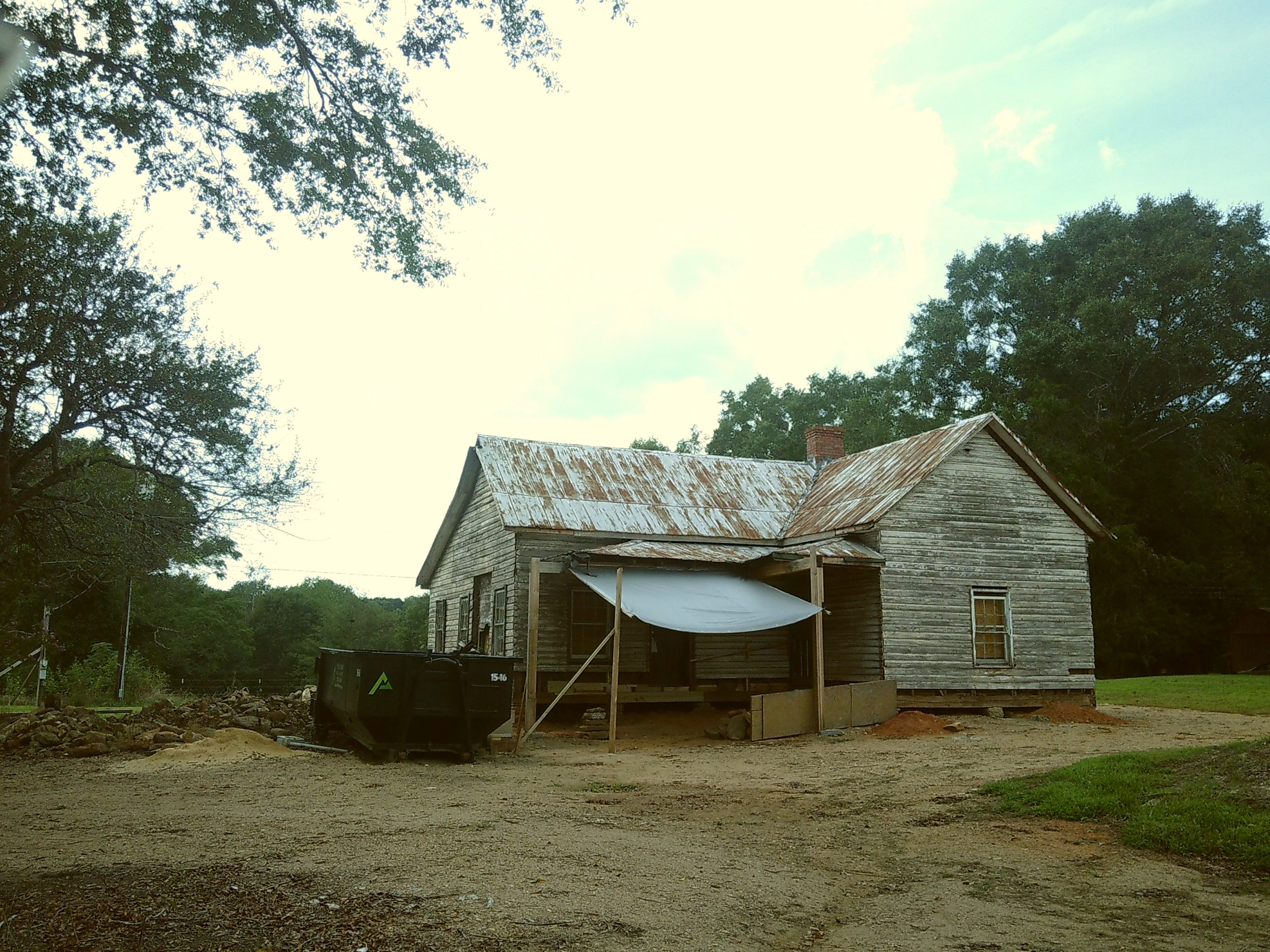
Scruggs’ childhood home was recently purchased by the Earl Scruggs Center and during our visit last year at the time of the festival, preservation and renovation activities had just begun at the property.

Like Simone’s homeplace, the Scruggs property on Riverside Road in the Flint Hill community of Boiling Springs feels sacred, immediately grounding fans, visitors, and passersby while reminding of the humanity of these larger than life musical figures. Hit play on “Reuben” or “Shuckin’ the Corn” and revel in being in the exact place where Scruggs first unlocked three-finger style himself and started a century-long banjo craze that’s still going today, at ESMF and beyond.

Learn more about the Earl Scruggs Center’s plans for Earl’s childhood home here.


Shelby, North Carolina

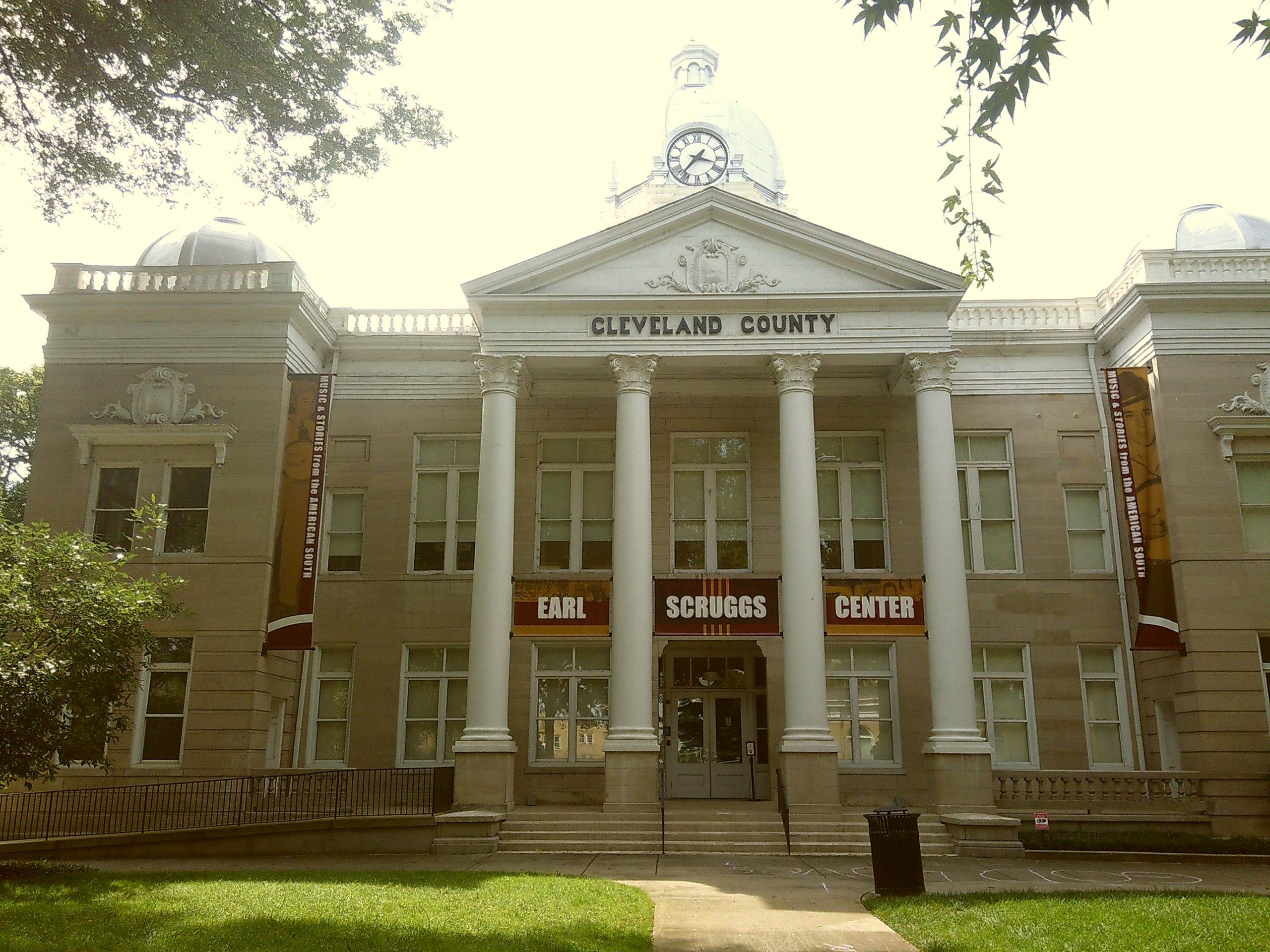
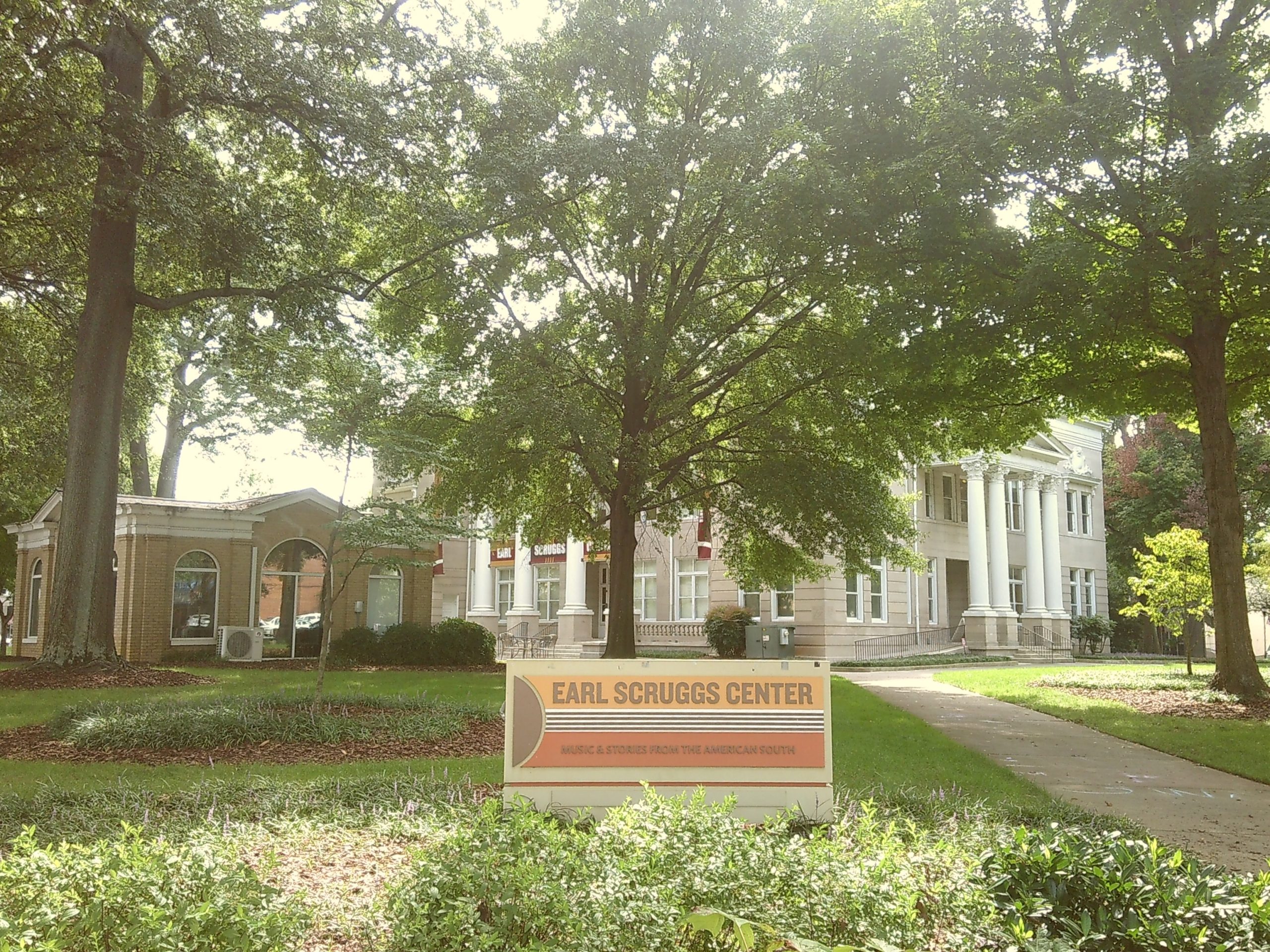
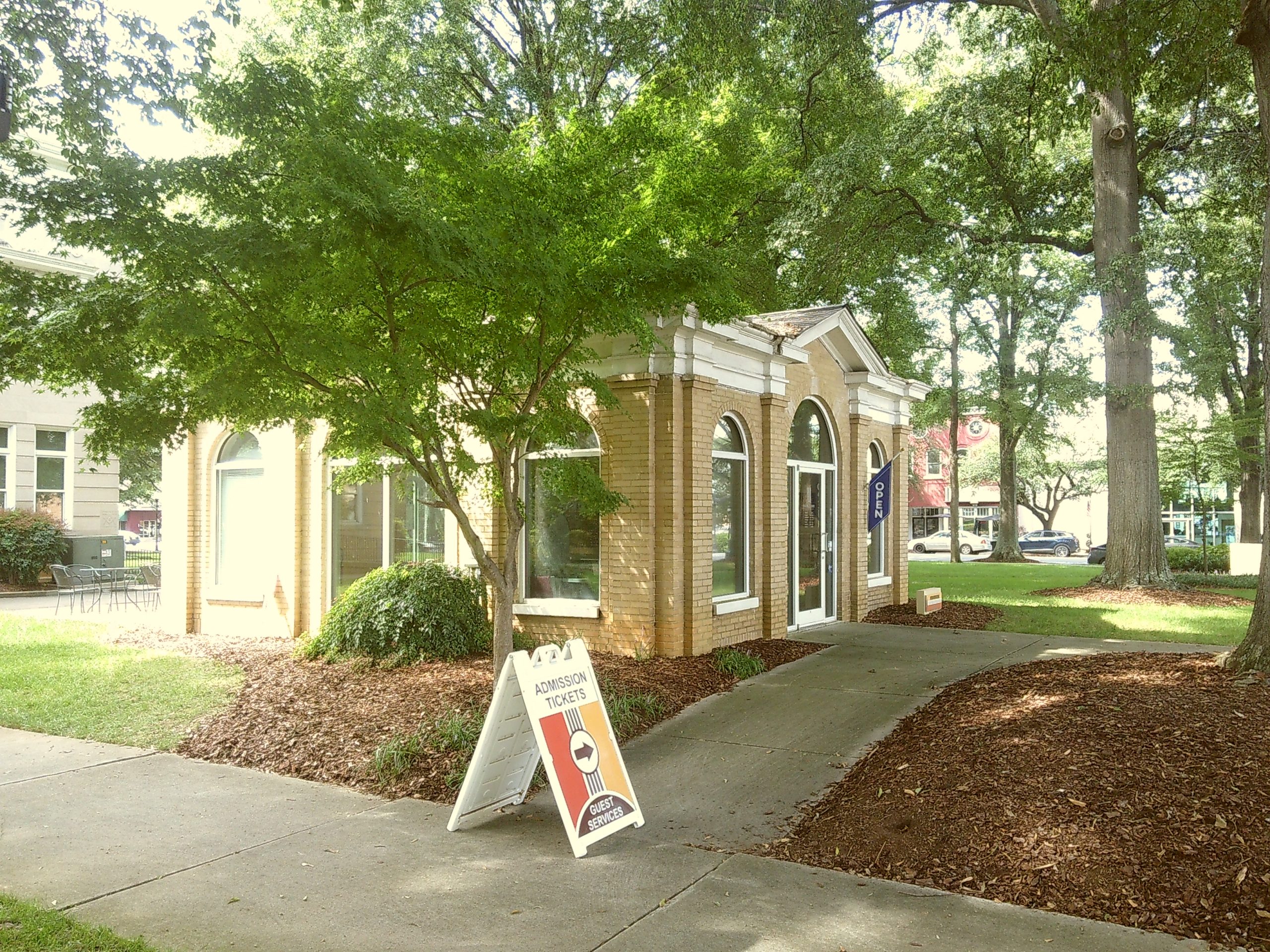
Of course, no visit to Earl Scruggs Music Festival is complete without visiting the Earl Scruggs Center in Shelby, the county seat of Cleveland County, where Scruggs was born and raised. The Center is a host and presenter of ESMF and they offer special events and ticket discounts to ticketholders during the festival.

Over the winter, the Earl Scruggs Center closed for renovations, updates, and new and revitalized exhibits, so it’s worth another visit if you haven’t been in a while. An easy 30 mile drive from the festival grounds, during ESMF there’s plenty of special programming, music, and events worth the field trip. Plus, Shelby boasts great restaurants, breweries, shops, and – of course – antique stores, so there’s something for everyone to enjoy.

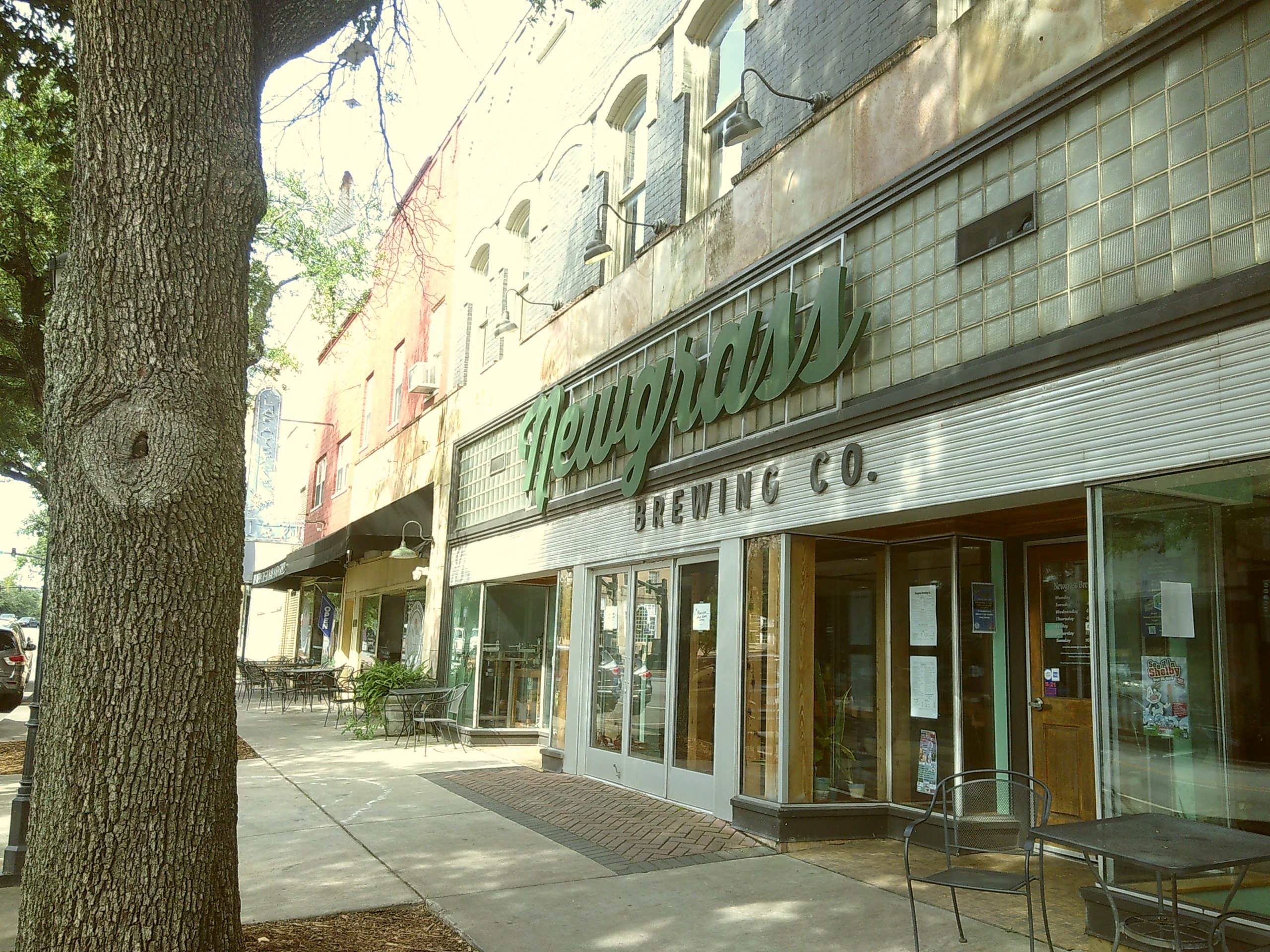
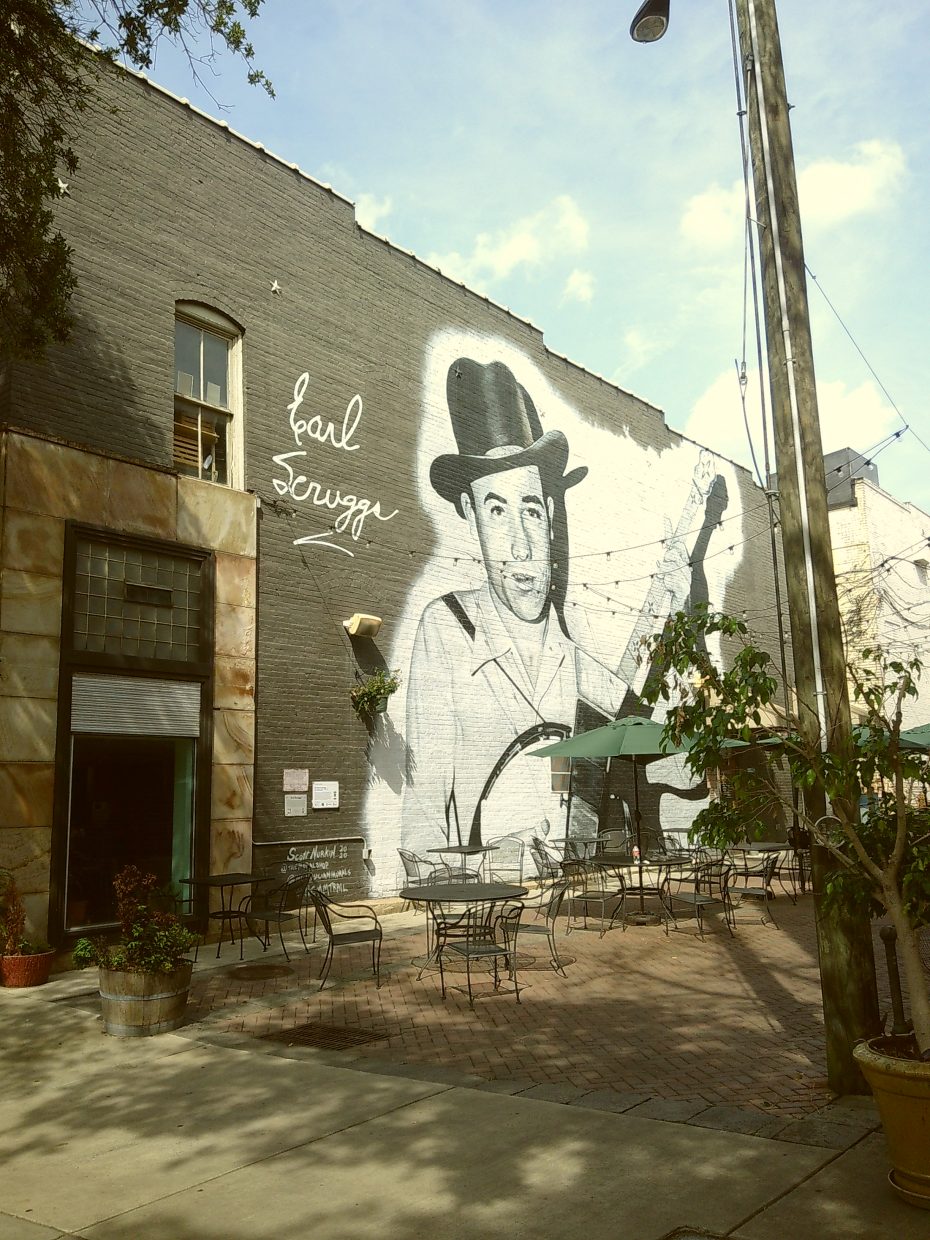
We particularly recommend Newgrass Brewing Co., where the beer is just as good as the name – and the food is excellent, too. Especially the homemade chicken tenders. It’s just around the corner from the Center. Don’t forget to step outside and take a turn into the alley, though, for a superlative mural photo opportunity of the man himself, two stories tall.

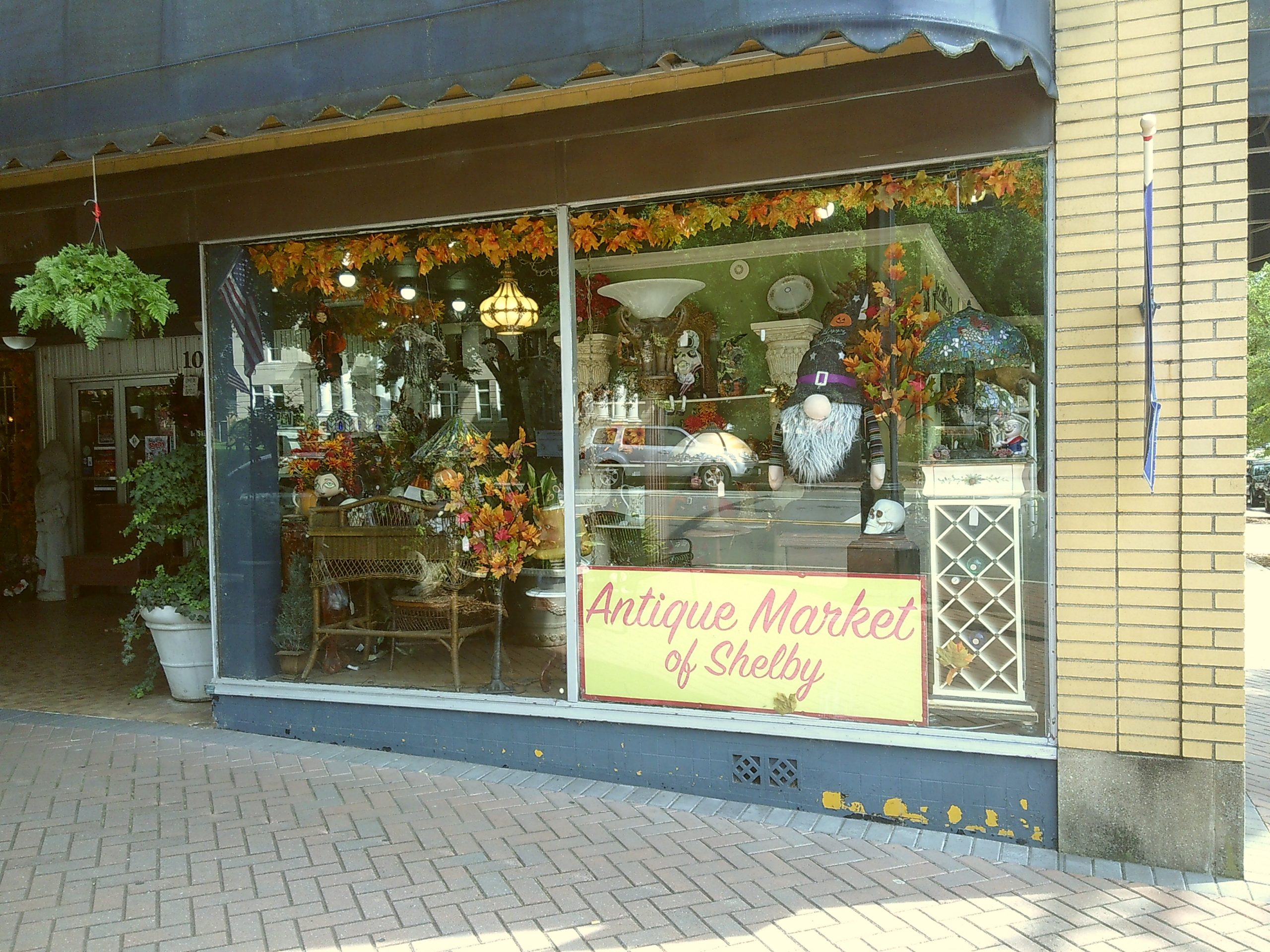
Just across the street from the Earl Scruggs Center on the square you’ll find the Antique Market of Shelby. Because we know, like us, you won’t be sick of antiques yet.

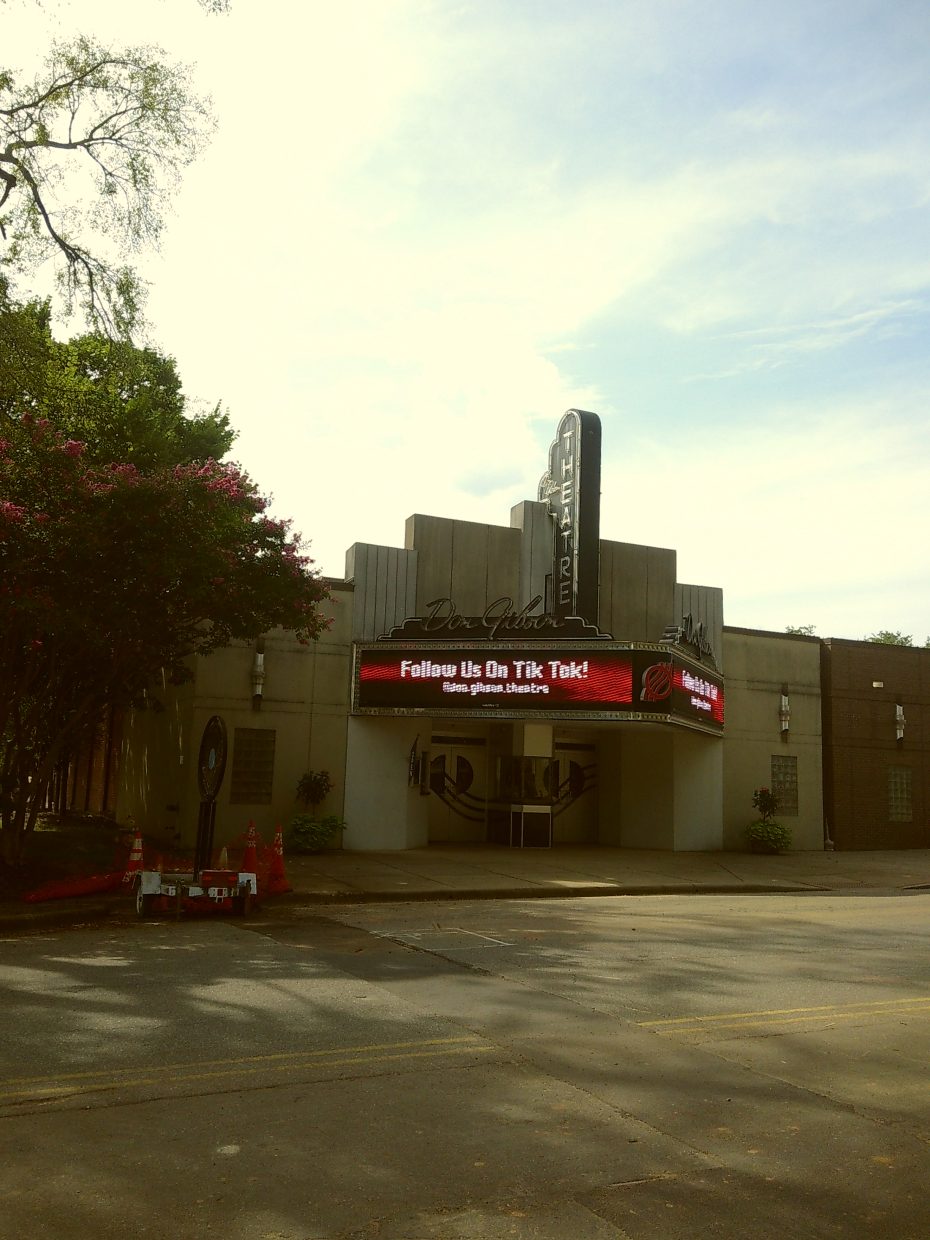
While Scruggs hailed from just down the road in Flint Hill, country star and singer-songwriter Don Gibson was born in Shelby proper. A hitmaker and stalwart of country from the late ’50s through the early ’80s, Gibson’s legacy is on display in Shelby in a variety of ways, chief among them the Don Gibson Theatre. Catch movies, live music, and special events throughout the year – including an incredible slate of bluegrass and country shows. The Don Gibson Theatre is also a stop on Blue Ridge Music Trails.

Learn more about Don Gibson and Shelby in our Carolina Calling episode about the city, featuring Gibson, Scruggs, and more.

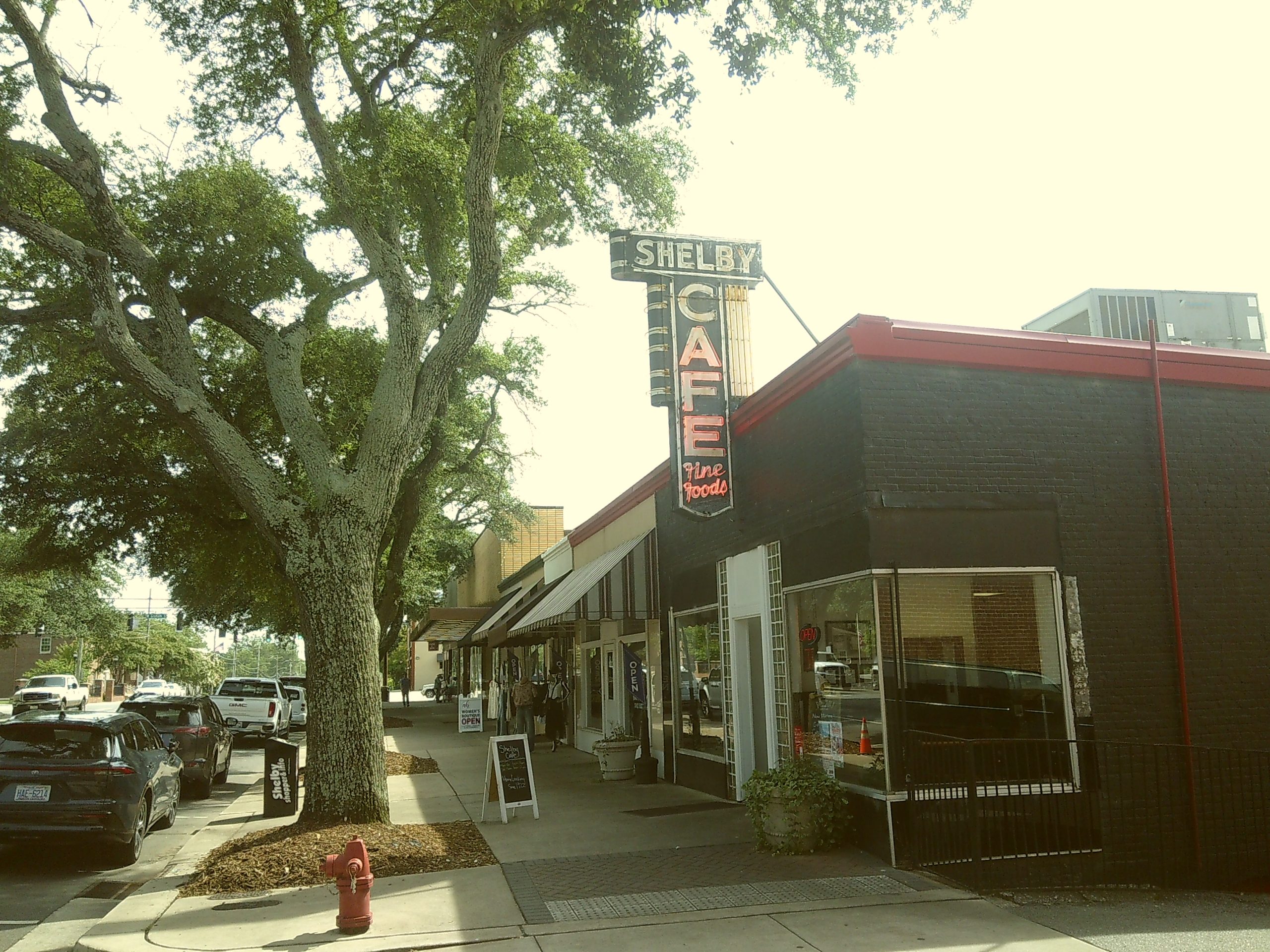
A visit to Cleveland County wouldn’t be complete without a plate of livermush, so head over to the Shelby Cafe for breakfast, lunch, or dinner and a sampling of this local delicacy. Just like Earl would have enjoyed it? Certainly!

There’s so much to see, do, and enjoy at Earl Scruggs Music Festival and the surrounding territory, we know we barely scratched the surface. Hendersonville, Chimney Rock, Gastonia, and Rutherfordton are just up or down the road; so many nature preserves, parks, and trails are nearby; Spartanburg, South Carolina, is a stone’s throw away. While Tryon International is a lush, hospitable location for the festival, we encourage all attendees to get out and enjoy the places that birthed these musical forms we all hold so dear.

We’ll see you in Mill Spring, North Carolina, for Earl Scruggs Music Festival September 4-6, 2026! Tickets are available now. And we hope we run into you out adventuring and antiquing, too. Do you have a favorite local haunt in the area? Let us know on social media.


All photos by Justin Hiltner, shot on Camp Snap. Poster art courtesy of Earl Scruggs Music Festival.

This content brought to you in partnership with Earl Scruggs Music Festival.

The Many Perspectives of Rissi Palmer

Rissi Palmer is putting her lifelong love of country music into Perspectives, her first project in six years. With three tracks produced by Shannon Sanders and a fourth by Dan Knobler, the new EP places Palmer back in the artist spotlight after a period of time focused on personal and professional evolution.

Palmer also hosts an Apple Music country radio show, Color Me Country, which spotlights original music from artists of color. But there’s even more to the story. She’s collaborated on a children’s book titled Color Me Country: A Celebration of Black Women Who Shaped Country Music and she’s also wrapped a memorable tour called The Trailblazing Women of Country, where she performed some of the best-loved songs from Patsy Cline, Loretta Lynn, and Dolly Parton. Off the stage, she’s devoted more time to her two daughters following her divorce, while still ramping up to the release of Perspectives.

Though she’s based in Durham, North Carolina, Palmer caught up with Good Country in Belfast, Northern Ireland, during the Your Roots Are Showing conference. At the event’s opening night concert, she sang “Old Black Southern Woman,” a heartfelt ballad that touches on the loss of her mother when Palmer was just seven years old. Perspectives also offers a cover of the SteelDrivers’ “Can You Run?” as well as an original song titled “Good For Me” (about diving back into the dating pool) and a rendition of a Loretta Lynn classic, “Somebody Somewhere.”

“All these things came together, and Shannon so graciously decided to be a part of this with me,” Palmer recalls. “He said, ‘Well, two of these songs sound very bluegrassy. What if we just did the whole project like that?’ I was like, ‘That’s kind of dope,’ because I hadn’t done anything like that. And again, perspectives. Two Black musicians, making this very bluegrassy, but still very soulful, project. And I decided midway through that we’re going to call it Perspectives.”

What was on your mind as “Old Black Southern Woman” was taking shape?

Rissi Palmer: I wrote that with Kyshona, and that was our first time writing together. Kyshona has a way of getting straight to the heart of whatever it is that you’re talking about. I had the idea for the chorus, the “ooh-ooooh” thing, in my head, and I hadn’t really started writing anything. So, we sat down and we started talking. When you go to her house, she’s got all these really cool plants from her mom and her grandma. We talked about that, and I wanted to write something that paid homage to my mother but also acknowledged all the other women that came in and helped raise me.

It’s a universal thing, too. Everybody thinks of getting older as really bad, and I don’t know what I thought my 40s were going to be like, when I was in my 20s. I honestly don’t know, but I don’t feel old! [Laughs] I think I thought 40 was going to feel different, but 40 actually feels just like a creakier 25! And I see the blessing in it. I feel really lucky to be here, because I outlived [my mother] and I have babies now. I just wanted to write something that says it’s OK to get old. It’s actually really cool to be able to get old and to see the fruits of your work.

I think the title kind of throws people off because they’re like, “Oh, this is a song about some Black people.” But it’s actually about getting to be old, seeing the blessing and good in that, and making the most of it.

When you sing that song now, it gives you a chance to talk about your mom and share her memory. Is that extra special for you?

Yeah. It was hard, I’ll be honest. The first few times that I sang it were really hard and I would cry. I’m starting not to cry when I sing it. Especially when we get to the lyric, “Every curse my family claimed ends with me.” That’s always where it got hard. You don’t realize how hard it is to overcome and not repeat mistakes.

Was it a dream for you as a kid to become a singer?

I’ve always known. I don’t know how, but I’ve always known that this is what I wanted to do. In that way, I’m very lucky. It was never, “Maybe I should be…” I would say that I was gonna do other stuff, just to make my parents happy, because I figured that they were probably really scared about me wanting to be a singer. So, I was like, “I’ll be a lawyer.” They’ve got a lawyer. My brother is a lawyer, so they got one. So, we’re good. [Laughs]

Now I did not always want to be a country singer. I wanted to be a singer and I wanted to write songs. I knew the kind of songs that I wanted to do, but I didn’t call it that. That didn’t become clear to me until I met my first managers, and then that was when I realized, “Yeah, I guess that is what I want to do.”

Is bluegrass an influence for you?

I like bluegrass! I’m a Rhonda Vincent fan and I’ve always been an Alison Krauss fan. And on Jon Randall’s first record he has this really cool song with Vince Gill called “My Life.” That’s one of my favorite records, by the way. It’s called Walking Among the Living.

I’ve always been a fan. I’ve always listened. I’ve always had those things on my playlist. I just never thought of myself as that, because there’s a very distinct vocal style. There’s a very distinct cadence in which they’re singing. A lot of the people on the show last night [at Your Roots Are Showing] were just brilliant bluegrass singers, and I never thought of myself that way because I can’t do that. Like, that’s not what I do. I didn’t really think of it as something that I could do. I used to write stuff like that all the time and I tried to give it to other people. But it was Shannon – Shannon was the push. Shannon was like, “Let’s do this.”

What was the Trailblazing Women of Country tour like?

It’s one of my favorite things that I’ve ever done. It was an all-female band and it was myself and Kristina Train, who’s a brilliant singer, as the two leads. We split the show in half, usually there was an intermission between Kristina and me, and we sang two songs together. You know how it is to be a fan, but you don’t necessarily know everything by a person? Patsy, I knew. For Patsy, I didn’t even have to study, because I knew all those songs. Most of my Dolly stuff I knew, but there’s a lot of words in “Coat of Many Colors”! And then Loretta, I’ll be perfectly honest, I had not gone super deep into Loretta’s catalog, so that was fun. That was the one that I needed the most work.

And I loved it! We did mostly theaters. I played in places I never went before. I went to Alaska. We did Wyoming – and you haven’t lived until you’ve driven across Wyoming! It’s just space! It’s wild! With the audiences, it was really funny how they varied. Sometimes we would make jokes, and sometimes people would say things to me. Like, someone asked me once, “Where’s your blonde wig?” when we got to the Dolly part. And I was just like, “Did you ask Kristina that?” They didn’t say anything, and I was like, “Girl, why would I cover up my fabulous hair?” and everybody started laughing.

You know, we got some weird comments. There were some people that (gasps) when I walked out. And afterwards, people would say really kind things. I never had anything rude said to me. But I did notice the [look of surprise] at first. It was good for me. It reminded me about why I love country music. I think I needed that, because you spend so much time, like with Color Me Country, talking about what’s wrong with the industry and talking about ways that we’ve been slighted or ignored. Then you lose sight of why you even started this in the first place, and that was why. It’s because of those songs. It’s because of those women. It’s because of the connection that the audience had with that music.

I can’t tell you how many people came up and told me stories. I met one woman who actually saw Patsy Cline performing on the bed of a truck when she was a kid. And I was just like, “That’s the most amazing thing I’ve ever heard before.” That’s country music.

You’ve got a lot of things coming up. Where would you like this new music to take you?

That’s a great question. I put so much into other facets of my career for the last few years. I put a lot into my children, because of our changing family situation, and just wanting to be there for them. At the same time, I was wanting to experience the career wave that I was having and trying to balance that. So, my own music took a backseat. I started feeling like, “I think people forget that I sing.” And really what I’m saying is, “I think I forgot that I sing,”

I was still doing shows, and still doing things in between, but it was like, “I don’t want everybody to forget why I’m here.” Really I’m saying, “I don’t want to forget why I’m here.” The Trailblazing Women of Country really cemented that for me, especially the “country” part. I’ve been experimenting and trying different things – and there is a project that comes later – but I wanted to do this. I felt like this was a really important statement to make, like, “This is why she talks so much shit.” [Laughs] Because this is where I started and this is what I do.


Photo Credit: Dire Image

Emily Scott Robinson Stays Hopeful Through the Thick of It

Before embarking on a music career, Emily Scott Robinson worked as a social worker. The two occupations, she says, really overlap with who she is as a person. Talking from her home outside of Telluride, Colorado, Robinson shares that being a performing artist and playing shows has “a similar quality of service to it and connection that being a social worker did…”

“One of the things I loved about being a social worker is being able to help people,” she continues. “[Music] brings me a lot of joy and purpose. I get so much feedback from people that my songs help them. That’s the most important and meaningful thing that my music could do in this lifetime.”

On January 30, Robinson will launch Appalachia, her third release on Oh Boy Records and her fifth album overall. Its 10 tracks reveal her uncanny knack for conveying empathy, comfort, and compassion through a set of songs that explore topics such as a friend’s suicide, a grandparent’s death, her own divorce, and the destructive effects of Hurricane Helene on her home state of North Carolina.

Robinson recorded Appalachia with producer/musician Josh Kaufman (Bonny Light Horsemen, Josh Ritter) in late April and early May of 2025 at his Dreamland Recording Studios, near Woodstock, New York. Having loved his production work on Anaïs Mitchell’s 2022 self-titled album, Robinson wanted to work with him. “I want to make my version of what [Mitchell’s] record is,” she explains. She was thrilled that Kaufman not only was available to produce the album, but was also very excited about working with her.

Robinson’s road to becoming a singer-songwriter began when she was 14, when she went to a “super hippie summer camp,” as she describes it, in northern Michigan. There she fell in love with acoustic music she heard the counselors play at night during “mellow time” – songs by folks like Cat Stevens, Joni Mitchell, Dar Williams, and Ani DiFranco. After camp ended, she learned to play her mother’s old classical Yamaha guitar. Robinson loved to sing, but only played cover tunes whenever she would perform at coffee houses and open mic nights.

Her life changed, in many ways, when she took a Planet Bluegrass Song School workshop in 2014 while working as a social worker in Colorado. Besides learning about the art of songwriting, Robinson also discovered how to make a living as a musician. She quit her social worker job the next year and didn’t look back. “I felt such a strong sense of connection and purpose when I sang for people. Their response was so powerful, and I just thought this really feels like something I should pursue.”

That Robinson has a gift for words feels like a genetic inevitability. Her mother worked as a journalist and her father taught English. As she describes it, Robinson learned how to tell and edit a story from her mother, and how to write in a direct and active style from her father. “My parents taught me how to write… that stuff is burned into my brain,” she states. “I’m my parents’ child.”

2026 represents a significant career moment for Robinson with the new album arriving in January and tours crisscrossing the U.S. throughout the year. She took time out from a snowy winter morning to speak with BGS about Appalachia and the roads she took to make her album.

It has been several years since your last full-length album, 2021’s American Siren. How did this album come into being?

Emily Scott Robinson: It took me about four years to write this record. These are the songs written in the aftermath of a lot of upheaval and change in my life. I went through a divorce in 2021 and then moved away from Telluride the next year. And even though I didn’t move that far – I moved about an hour away – I left the only community that had really been home for me for about a decade.

And there were a lot of endings that felt really sad. Both my grandmothers passed away. [But] I also became a parent. I am now engaged to my partner, who has a nine-year-old son. And that has been amazing. So, my life kind of completely changed. These are all songs written in the thick of that – and [the] surrender and joy and grief all happening at once.

Was there a song that really kickstarted this album?

The first song I wrote for this album – and then it was the only one I had written for like a year and a half – was “Hymn for the Unholy,” which is, of course, the opening track. And that felt like my anthem. I wrote that song [when] I was going through this divorce. It was New Year’s Eve and I just couldn’t even fathom this whole movement of setting plans and goals for the new year when so many things felt like they were ending or becoming really unsure for me. It was the only new song I had for quite a while. And then, in about the last year and a half, I wrote almost all of the rest of the songs.

“Appalachia” I wrote right after Hurricane Helene hit Western Carolina. There were a couple songs that I wrote at a writer’s residency in Texas, [including] “Time Traveler” about my grandmother who passed away. I wrote “Cast Iron Heart” on another songwriting retreat. “And Bless It All” was really one of these songs that emerged that I wrote really quickly, like an homage to this chapter of life [about] raising a kid [and having] parents aging – like my generation is now doing the same.

“The Time For Flowers” is a song that you had for a while. How did that find its way on the album?

“Time For Flowers” is on here because it’s a song that has never lived on a full album. A lot of my fans would come up to me after shows and go, “Which record is ‘Time for Flowers’ on?’” … I released it in 2020 in the summer [during the pandemic as a single] and it grew legs and traveled far and wide. People started to perform it at funerals and with their choral groups and they started to sing it in church and ask for arrangements. It became a song that meant a tremendous amount to a lot of people.

I put a lot of heart and a lot of craft into that song. But the song has taken on its own life and that’s really beautiful for me to be a part of. And it means a lot again in 2025, to people who are living in what feels like an increasingly dark time. I wanted to put that on the album and to sing it in the way that I perform it at my shows, which is just acoustic.

I felt like, on this album, there was a feeling of expressing compassion and forgiveness and reassurance. A message of “finding a sense of strength” not only for yourself, but for listeners as well.

The one cover on the album is “The Water Is Wide” and I was wondering why you chose that old folk song to include.

I love that you wondered that because, to be quite honest, I felt a very strong instinct to put this song on here and I didn’t really know why. Sometimes I just feel a deep sense that needs to happen and so I just trust it and do it. I love that song and I had planned on putting it on there. I think, if I were to explain it on a more logical or grounded level, I would say that I felt that song – as old as it was – still speaks in both a deep and a fresh way. The lyrics strike me as being fresh and a little unusual every time. And it felt very timeless but also fresh, and so I just was drawn to it.

Sometimes I write a song, or I put a song on the record, and I just go, “I will find out later why I had to do this.” But, genuinely, I’ll find out along the way why it is that that song begs to be on this record. Also, Josh Kaufman, my producer, was so excited when I told him I wanted to put that song on there. He loves old folk songs and making them feel a little bit new or breaking them down a little bit and rebuilding them. And so do I, so it just kind of felt like it fit.

“The Fairest View,” which follows “The Water Is Wide,” closes the album. It holds an old folk song vibe although listening to it, you realize that it’s not.

“The Fairest View” was actually not a song that even existed until the last 24 hours that we were in the studio. My friend [songwriter Lizzie Ross] and I have a mutual friend who died before we were in the studio together. He really loved music and had grown up in Western North Carolina. He died by suicide and we were really writing this song for him, and to him. … We finished it the night before the final day. We were in such a great groove of creative flow that this just made total sense

I sent [Josh Kaufman] this voice memo. I think it was like 11:30 at night. I was like, “What do you think about putting this on the album tomorrow?” And he goes, “I dig it. Let’s do it!” He said that there was nothing really like this on the record, but it felt like it still fit sonically, lyrically, and melodically.

What were the important contributions that Josh Kaufman brought to the recording process?

Really the magic of working with Josh – the thing I love the most – is when we first had our first conversation. We were talking about how we work in the studio and he said something along the lines of, “You know, you play the song and we all start just kind of experimenting and playing around on instruments. We’ll know it when we find it, because you can hear it and you can feel it in your body when you have found the thing.” And that for me is exactly how I work creatively and in the studio. I’m comfortable with that kind of workflow and so I was like, “Yep, that’s exactly how I want to work.”

There is a wonderful intimacy to your vocals. I got the feeling I was sitting on a couch and there you were singing from just across the room.

D. James Goodwin, who is the [album’s] recording engineer and who mixed the record, created a specific reverb treatment based on the room in Dreamland, based on the actual recording space. … He started to measure the exact EQ and decay of all these different points in the room and then created his own reverb setting that he calls “the Dreamland reverb setting,” which is just meant to sound exactly how it sounds in the room.

You do a great duet with John Paul White on the track “Cast Iron Heart.” How did he get involved on this project?

John Paul White is a great interpreter of songs, because he doesn’t put too much on them. This is like an acting principle, which is “the more you’re trying to act, the worse it is.” But if you’re allowing the song to come through you, and you’re not getting in the way of that and you’re being honest to that song, then that’s when the powerful performance really happens. And John Paul is experienced enough to really know that.

I knew that I couldn’t have somebody with a fully polished country voice singing this. I wanted it to sound like somebody who had lived. I know John Paul and I know that he has lived and he has a family and he’s been making music for years. He embodies the person singing the song – the actual voice of the narrator of the song – and it was such a gift that he said yes to this. He’s the sweetest, most generous artist and human, so that’s how he got involved.

This is your third release for Oh Boy Records – how did you get involved with them?

I got a message from Jody Whelan [head of Oh Boy Records and John Prine’s son] and he said, “We’re really big fans of yours at Oh Boy and if we can ever help you in any way let us know – we’d love to work with you.” And I was like, “Did I just get offered a record?”

I reached out to Jody and I said, “I would love to talk to you. I have a record that I’m about to make and we should connect.” I’m a huge fan of Oh Boy and John Prine. I signed a fantastically supportive and artist-friendly record deal with Oh Boy. And I go on the record to say that as often [as I can]. … I genuinely hit the jackpot when I signed the deal with Oh Boy. I love working with them. Their heart has been, and always will be, in the right place. I’m really, really lucky.

Are there things you hope listeners take away from the new album, or from your live performances as well?

I hope that people do feel fortified, encouraged, and hopeful when they listen to these songs because this record is about finding those bright spots and finding that hope in the thick of all the other parts of being a human. It’s about leaning on other people and finding that in relationships and in community. I also hope that this record will comfort people who’ve lost somebody they loved recently.

I want this record to be of service to people. I want it to reach them in ways that they need to be reached. I don’t want people to give up hope in this time in history or this time in our country. I don’t want them to give up hope in themselves and each other.

I think we’re increasingly in a corporate media landscape and a very engineered social media landscape that has a lot of voices that say there’s no hope; there’s no reason to fight, it’s too late. And I think the social worker in me and the political activist in me wants to yell, “That’s fucking bullshit!”


Photo Credit: Angelina Castillo

You Gotta Hear This: New Music From Aaron Burdett, Trey Hedrick, and More

Happy New Year! We’re so excited to bring you our first collection of new music and videos for 2026. We’ve missed you over the past few weeks and, well, You Gotta Hear This…

Kicking us off, our old friend Joshua Britt returns with a new artist project, The Boy The Earth Sings To, and an official video for an original song, “Eyes Of God.” Falling on the continuum between gospel, sacred, and contemporary Christian roots music, the lush alt-folk track is built around the inspiration of a new mandola, tying the tone wood used to build the instrument to the forested visuals of the video. Meanwhile, Western North Carolina-based singer-songwriter Aaron Burdett unveils a new single, “Arthur’s Last Dance,” which pays tribute to folk dancer Arthur Grimes and his final performances at MerleFest before his retirement. It’s driving modern bluegrass appropriately perfect for flatfooting, clogging, and polishing those floorboards.

Then, from just up the mountains, Lonesome River Band also bring their first new single of 2026, “Bernadette,” written by Bob and Ginger Minner. Below, Bob offers his perspective on writing the tune, which he and his wife immediately imagined LRB recording, as soon as they had finished writing it. If you like crooked contemporary bluegrass that’s steeped in old-time mountain music – with a slightly dark, modal tinge – you’ll love this one.

Let’s continue up the mountains now, across Virginia and West Virginia to southeastern Ohio, where we’ll find the music of singer-songwriter Trey Hedrick and this new track, “Shoestring,” which features Tim O’Brien. It’s a testament to Hedrick’s grandpa, his relocation of the family to Ohio, and the way life, love, work, and place are passed down generation to generation.

Rounding out our collection this week, it’s a premiere we published elsewhere on the site this morning, as well. Celebrating his upcoming collaborative album, guitarist Bryan Sutton launches a hilarious and entertaining animated music video for “The Devil Went Down to Deep Gap” featuring Billy Strings, Del McCoury, and more. It’s a delightful reimagining of Charlie Daniels’ “The Devil Went Down to Georgia” that tells a fantastic version of Doc Watson’s origin story, pitting Doc’s style of picking against shredding metal electric guitars played by Sutton and Strings. You won’t want to miss this masterpiece of country, bluegrass, and flatpicking storytelling.

What a great way to kick off the year, right? There’s plenty to hear, love, and enjoy below. You Gotta Hear This!

The Boy The Earth Sings To, “Eyes of God”

Artist: The Boy The Earth Sings To
Hometown: Franklin, Kentucky
Song: “Eyes Of God”
Album: The Quiet Voice Of God
Release Date: November 7, 2025

In Their Words: “Years ago, my band played a show with Sierra Hull in Montana and that’s where she introduced me to mandolin builder Bruce Weber. Visiting his shop was unforgettable – an old schoolhouse where one room was filled with raw, uncarved slabs of wood that he would walk across, knocking on each piece, saying, ‘They all sound different, but some of them sing.’ It felt like he was listening for the mandolin already inside the wood, the way Michelangelo spoke about finding David inside the marble. Bruce built an octave mandolin for me that became the backbone of this album and while I was writing it I came across another Weber mandola. The first night I brought it home, I picked it up and wrote ‘Eyes Of God’ in one pass, as if the words and melody were already waiting inside that piece of wood. My favorite art has always felt more like discovery than invention.

“For the video I was inspired by time I spent in Bolzano, Italy, reading about the singing trees in the high altitude mountain forest – God placing the best wood high in the mountains, starved for air instead of down in the village. A reminder to me that making something great always requires adventure.” – Joshua Britt

Track Credits:
Joshua Britt – Vocals, mandola, other instruments, songwriter
Matt Menefee – Banjo
Neilson Hubbard – Drums
Colter Britt – Harmony vocals
Sarah Drake – Harmony vocals

Video Credits: Filmed on location in the Colorado Rockies.
Directed by Joshua Britt and Quincy Britt.


Aaron Burdett, “Arthur’s Last Dance”

Artist: Aaron Burdett
Hometown: Saluda, North Carolina
Song: “Arthur’s Last Dance”
Release Date: January 9, 2026
Label: Organic Records

In Their Words: “I was first introduced to Arthur Grimes when I lived in Boone, NC, in the ’90s. He’d materialize now and then at many shows I was playing or attending over the years. So when I played a set at MerleFest 2024 with Steep Canyon Rangers and heard that Arthur was going to be there with Old Crow Medicine Show – to do his last dance before largely retiring – my interest was piqued. After our set, I was checking out other performances and, sure enough, got to see Arthur doing his thing on the Watson stage one last time. It was an event that deserved a few songwriting notes. Those notes I took that night are what turned into this song commemorating Arthur’s long career dancing with any and every band or performer who came through the High Country of NC over the past 50 years or so.” – Aaron Burdett

Track Credits:
Aaron Burdett – Lead vocal, acoustic guitar
Kristin Scott Benson – Banjo
Carley Arrowood – Fiddle
Tristan Scroggins – Mandolin
Jon Weisberger – Upright bass
Wendy Hickman – Harmony vocal
Travis Book – Harmony vocal


Trey Hedrick, “Shoestring” (featuring Tim O’Brien)

Artist: Trey Hedrick
Hometown: Wilkesville, Ohio
Song: “Shoestring” featuring Tim O’Brien
Album: Sing, Appalachia
Release Date: January 7, 2026 (single); February 18, 2026 (album)

In Their Words: “‘Shoestring’ is a song about my Papaw, who was an incredible singer and multi-instrumentalist and the engine to the musical life of my immediate and extended family. Through him I came to the writers and songs that I still call on frequently in my own writings. Pap grew up in Parsons, West Virginia, and when work dried up or, more likely, after a need to move on after his brother Skip died in a mining accident, he moved north to southern Ohio. A move that anchored the geography of our family to southern Ohio after many generations in West Virginia and Kentucky. I didn’t try and likely couldn’t have written ‘Shoestring’ from any perspective other than reverent grandson, intentionally setting aside any precise detail. ‘Shoestring’ is about place, love, work, and life passed down, intentionally or not. I was honored to have Tim O’Brien sing and play fiddle on the track – Tim’s music has been an inspiration and has long meant a great deal to me.” – Trey Hedrick

Track Credits:
Trey Hedrick – Lead vocals, acoustic guitar, songwriter
Tim O’Brien – Lead and background vocals, fiddle
Maya de Vitry – Background vocals
John Mailander – Fiddle
Ethan Ballinger – Mandolin
Frank Evans – Banjo
Phillipe Bronchtein – Pedal steel
Jamie Dick – Drums
Rhees Williams – Bass


Lonesome River Band, “Bernadette”

Artist: Lonesome River Band
Hometown: Floyd, Virginia
Song: “Bernadette”
Release Date: January 9, 2026
Label: Mountain Home Music Company

In Their Words: “My wife Ginger and I write a lot of songs together and sometimes the ideas come from the strangest of places. ‘Bernadette’ came from when one of Ginger’s favorite authors, Shawn Inmon, who asked his fans to offer up unique women’s names to be used in his next novel. We were driving around and joking about names like Ethel, Maude, Calry, etc., and I just blurted out ‘How ’bout Bernadette?’ And out of nowhere I sang that name and first line. We got home and sat down and we wrote it in no time. It just fell out, so to speak. Plus, I always wanted to use the word ‘trifling’ in a song, so it seemed fitting for a woman like Bernadette in the story. We did a guitar and vocal demo of it and I sent it right to my buddy Jesse Smathers, because LRB was who we heard in our heads doing it as we wrote it. Thanks to LRB for cutting this one, we’re honored.” – Bob Minner, songwriter

Track Credits:
Sammy Shelor – Banjo
Jesse Smathers – Acoustic guitar, lead vocal, harmony vocal
Mike Hartgrove – Fiddle
Adam Miller – Mandolin
Kameron Keller – Upright bass
Rod Riley – Electric guitar
Bob & Ginger Minner – Songwriters


Bryan Sutton, “Devil Went Down to Deep Gap” with Billy Strings

Artist: Bryan Sutton with Billy Strings
Hometown: Nashville, Tennessee
Song: “The Devil Went Down to Deep Gap”
Album: From Roots to Branches
Release Date: January 9, 2026 (single/video)
Label: Mountain Home Music Company

In Their Words: “It was listening to Charlie Daniels’ original ‘The Devil Went Down to Georgia’ with my youngest daughter, Lily. She has very eclectic and broad musical tastes. I’ve loved sharing music with her and checking out what she has discovered. We found some other covers of the original and one that stuck with me was Jerry Reed’s interpretation, where he makes Johnny a guitarist instead of a fiddler. I have been working on a duets record for some time, collecting recordings here and there with my pals, and knew I wanted to do something different with Billy, as he and I have a whole record of duet playing.

“Billy and I also share a love for heavy metal. I was trying to think of a way he and I could do something connected to this duets project that would allow us to play acoustic and electric. It all kind of came together when I realized this song would allow for that. The Doc [Watson] origin story came about thinking how to make this not just a cover, but more personal and fun. It’s also another subtle tribute to Doc, who would oftentimes change or add lyrics to a song in order to make it fit for him. I fashioned the story, made a little demo, and sent it to Billy. He was into it and we were off.” – Bryan Sutton

Read more here. 


Photo Credit: Aaron Burdett by Sandlin Gaither; Trey Hedrick by Chris Heidl.

WATCH: Bryan Sutton, “The Devil Went Down to Deep Gap” with Billy Strings

Artist: Bryan Sutton with Billy Strings
Hometown: Nashville, Tennessee
Song: “The Devil Went Down to Deep Gap”
Album: From Roots to Branches
Release Date: January 9, 2026 (single/video)
Label: Mountain Home Music Company

In Their Words: How do you see Doc’s playing influencing both yours and Billy’s?

“I think beyond the specific influence of Doc’s guitar playing that informs most every note Billy or I may play, I know that we both are students of Doc’s complete artistry. To say Doc is just the most influential flatpicker ever is limiting. He brought so much to the table in his honest and emotional singing, his song choices and writing, banjo and harmonica playing, and Travis-style fingerpicking. He was not comfortable being labeled or limited within a specific genre. His onstage persona was true to him. Without being a ‘showman,’ he was informational when the song needed it and willing to share whatever emotion he might be experiencing. It’s also important to note that Doc and Merle’s duo playing has been a huge part of the overall focus for things Billy and I have done together. I know for both Billy and I, Doc provides a lifetime of inspiration, influence, and learning.”

How do you pay tribute to that in this song and video?

“First and foremost, this is kind of a silly or fun thing, along with being a somewhat serious tribute to Doc Watson. I wanted to use the song to have fun with the guitar shredding and good versus evil battle, but also imagine an origin story of how Arthel Watson could have become the ‘Doc’ we all have loved. Maybe it’s a gospel song in the way that Doc, even and especially in his blindness, can ‘see’ through the Devil’s lies. Ultimately, Doc carries his triumphant message to the world, and influences us all with wonderful and heartfelt music.”

It sounds like you had this concept before talking with Billy about it. How did the concept and song come to be, from start to finish?

“It was listening to Charlie Daniels’ original ‘The Devil Went Down to Georgia’ with my youngest daughter, Lily. She has very eclectic and broad musical tastes. I’ve loved sharing music with her and checking out what she has discovered. We found some other covers of the original and one that stuck with me was Jerry Reed’s interpretation, where he makes Johnny a guitarist instead of a fiddler. I have been working on a duets record for some time, collecting recordings here and there with my pals, and knew I wanted to do something different with Billy, as he and I have a whole record of duet playing.

“Billy and I also share a love for heavy metal. I was trying to think of a way he and I could do something connected to this duets project that would allow us to play acoustic and electric. It all kind of came together when I realized this song would allow for that. The Doc origin story came about thinking how to make this not just a cover, but more personal and fun. It’s also another subtle tribute to Doc, who would oftentimes change or add lyrics to a song in order to make it fit for him. I fashioned the story, made a little demo, and sent it to Billy. He was into it and we were off.

“I feel fortunate that Del was into playing the Devil. I also am so happy to have T. Michael Coleman and Sam Bush on the track, who played many years on the road and studio with Doc. My pal Jerry Roe, who is Jerry Reed’s grandson, plays the drums, connecting to the Reed version that inspired me. Once I had the concept and demo for the song, I knew it had to be an animated video and discovered Pat Bradley of Springshoe Animation. It was wonderful working with him to take what had been in my head and be able to visualize it. Ultimately, all this came about a little piece at a time, and I’m so happy to share it with the world.” – Bryan Sutton

Track Credits:
Bryan Sutton – Acoustic guitar, electric guitar, vocal
Billy Strings – Acoustic guitar, electric guitar, vocal
Del McCoury – Vocal
T. Michael Coleman – Electric bass, harmony vocal
Sam Bush – Mandolin
Jerry Roe – Drums

Video Credits: Animation by Pat Bradley, Springshoe Animation.


Lead image courtesy of the artist.