Headed to Earl Scruggs Music Festival? Here’s What to See and Do

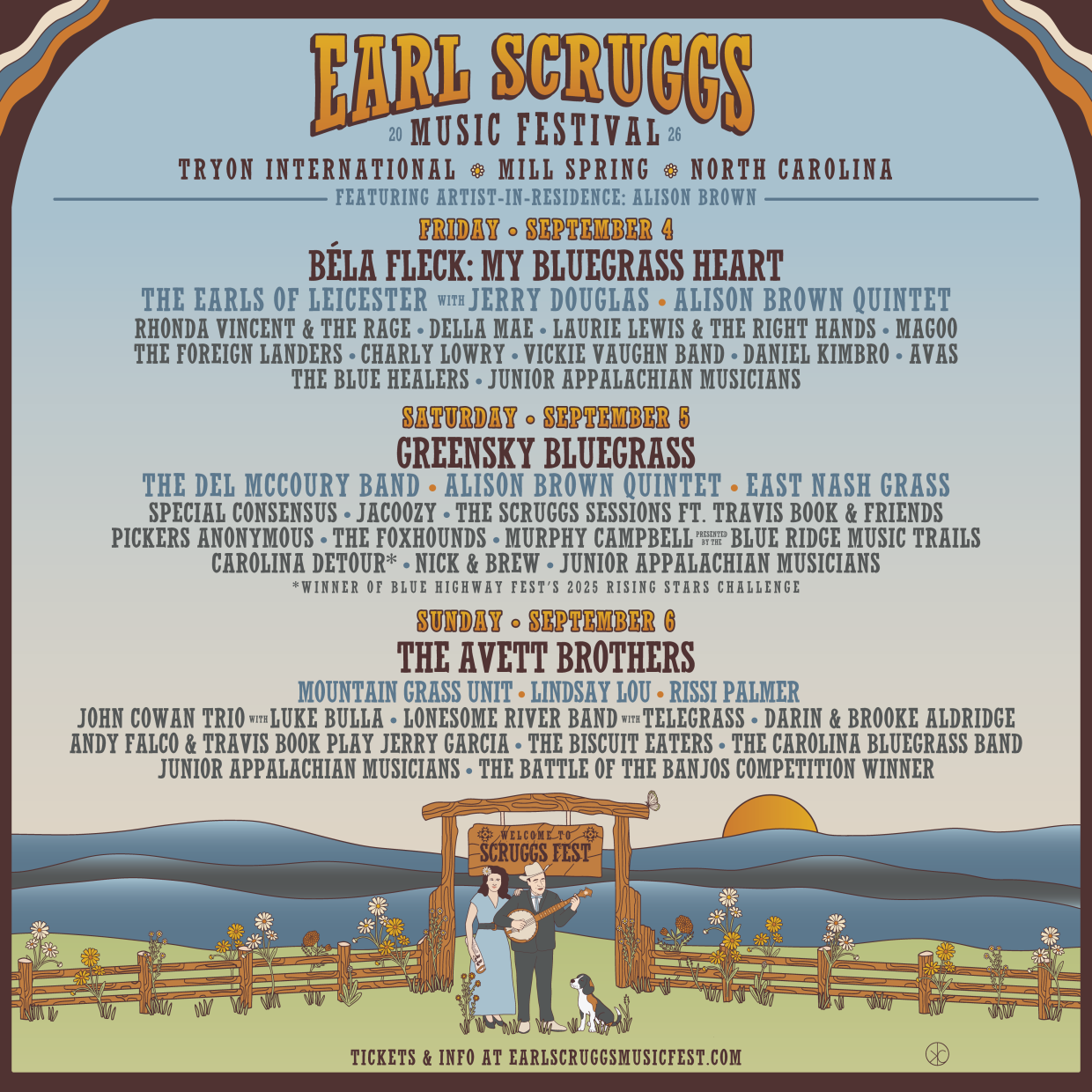
On March 4, 2026, the team behind Earl Scruggs Music Festival announced the lineup for the 5th annual edition of their event, which was recently honored with the 2025 IBMA Award for Event of the Year. Held each year in Mill Spring, North Carolina, at the Tryon International Equestrian Center, the festival will take place September 4 through September 6 with performances from headlining acts Béla Fleck: My Bluegrass Heart, Greensky Bluegrass, and the Avett Brothers as well as many, many more artists and bands. Tickets are on sale now; see the full lineup below.

BGS has been proud to partner with ESMF since the very first year of the festival, presenting special sets of music, doing on-site coverage, and bringing the unique setting and community of the weekend to our audience. This year we’ll be back again for still more of our partnership – and to enjoy some of the best bluegrass, Americana, country, and roots music on offer anywhere in the country.

Get a sampling of Earl Scruggs Music Festival with our photo stories, previews, and recaps from previous years: 2025; 2024; 2023; 2022.
The most striking feature of ESMF each year – besides their superlative lineups, of course – is the grounds and festival footprint. Tryon International is a luxurious, resplendent location for a music festival, featuring brick-and-mortar restaurants (we love Campagna – scratch made Italian and wood-fired pizzas at a bluegrass festival? Yes.), adorable boutiques, horse riding and jumping demonstrations, a shaded grandstand, multiple bars, a general store, posh VIP areas, and much more. There are campsites for RVs and tents, glamping options and tiny homes, and even a just-opened on-site lodge. Tryon International may just be the most amenity-rich site for a bluegrass festival we’ve ever encountered.

Still, it’s worth getting off-site when you can and exploring the foothills of the Blue Ridge Mountains and the many adorable, vibrant communities surrounding Mill Spring and Tryon International. We’ve attended ESMF for five years now and each time we uncover new (to us) hidden gems, restaurants, activities, shops, and highlights around every corner. In 2025, we decided to take our audience – and any potential ESMF attendees who may need extra convincing – along with us for a Camp Snap photo journey as we adventured down the mountains from Asheville, North Carolina, to the festival and beyond. We stopped in Saluda, Tryon, Shelby, and Boiling Springs, North Carolina, getting lunch, shopping for antiques, stopping in adorable boutiques, and visiting the homeplaces of two local legends: Nina Simone (in Tryon) and Earl Scruggs himself (in Boiling Springs). We also hopped just across the border to Landrum and Gaffney, South Carolina, for more markets, horses, and trains – and live music, too.

We’ve only just scratched the surface but if, like us, you’re looking forward to getting back to Earl Scruggs Music Festival this year, we’ve got the list of things to do and see outside of the festival grounds while you’re there. Make your plans to attend ESMF in 2026 here and scroll for more of our tips, tricks, and local favorites.

Saluda, North Carolina
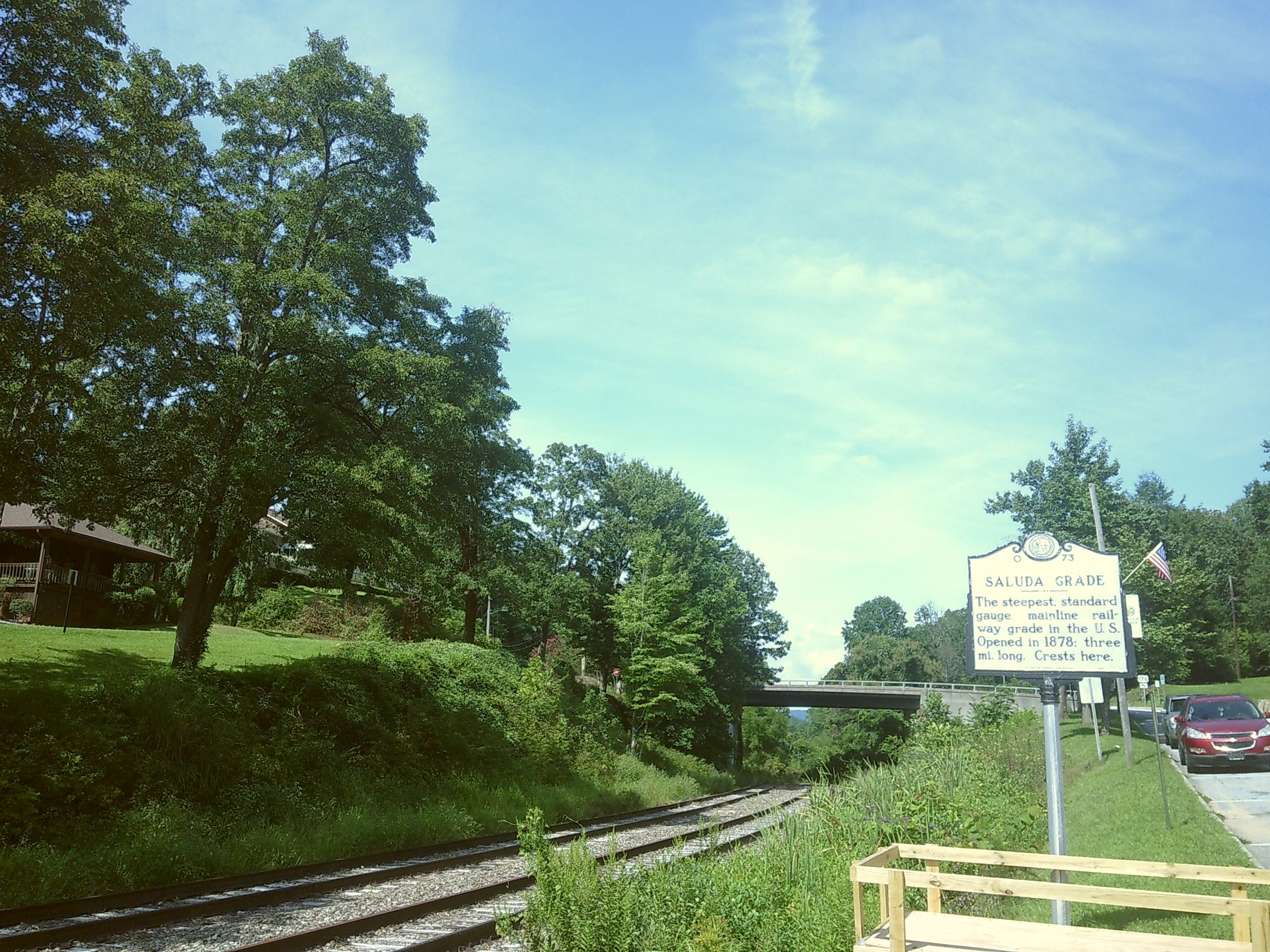
If you’re headed across the Blue Ridge Mountains to ESMF from Asheville, the Asheville Airport, Johnson City, Bristol, TN/VA – or even as far as Knoxville, Nashville, Lexington, or Louisville – a stop in Saluda, North Carolina, is in order before taking on the grade down the mountains to Mill Spring. Here, the United States’ steepest standard gauge railway grade crests in an adorable little music-steeped and outdoor activity-obsessed community.
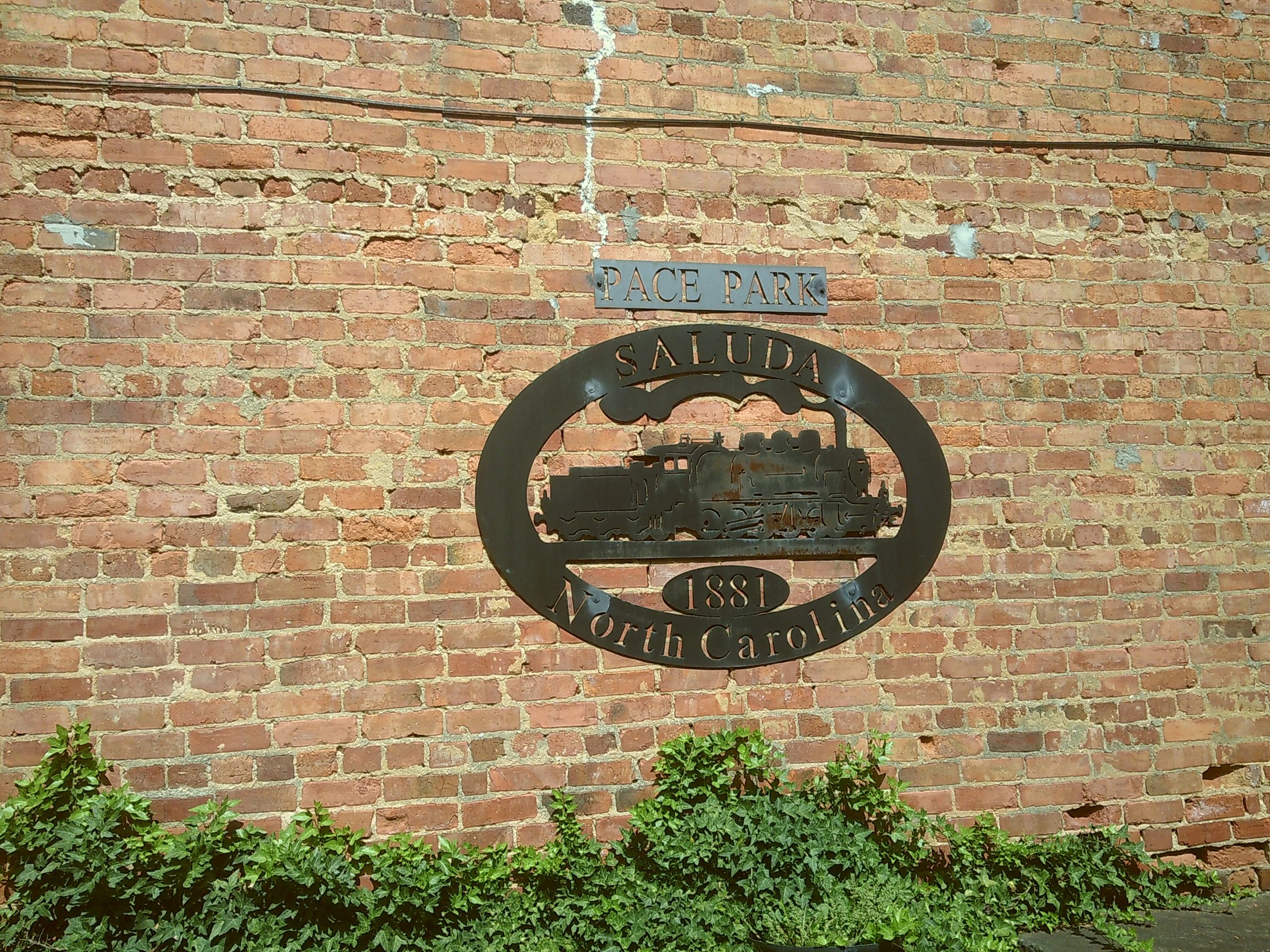
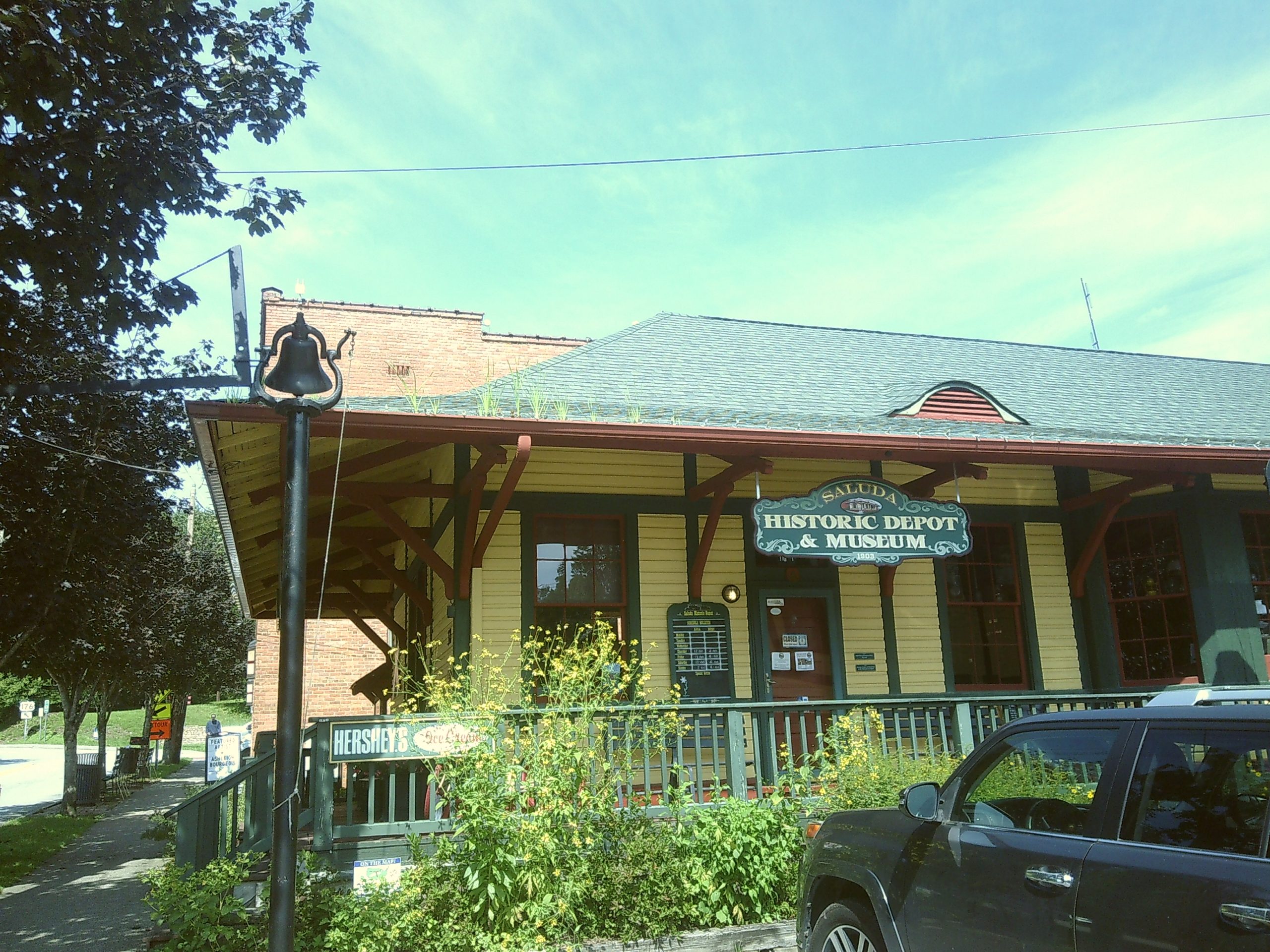
Stop by the Saluda Historic Depot & Museum and the Saluda Visitor’s Center next door – and snack on some delicious ice cream while you’re there.
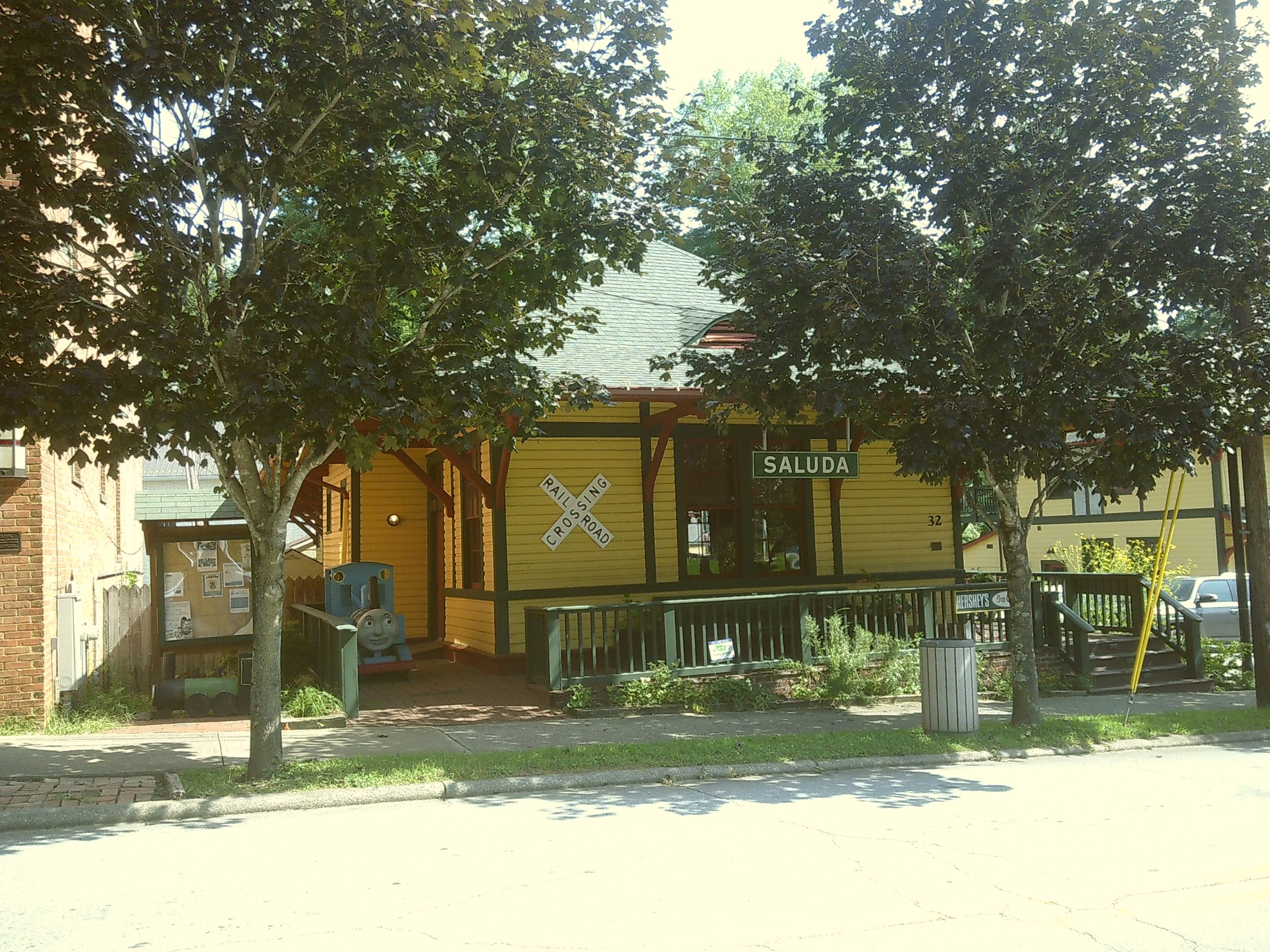
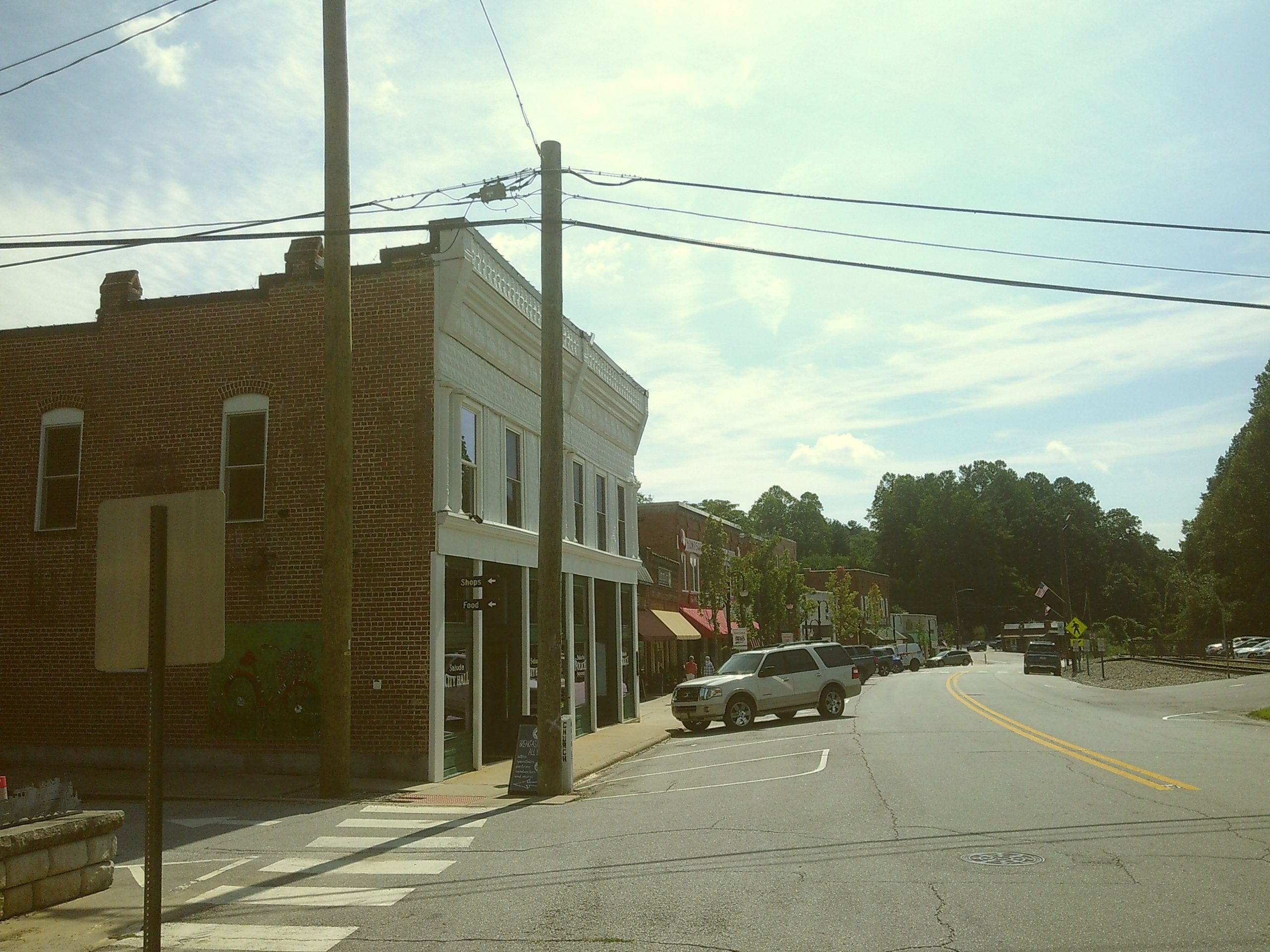
Picturesque and adorable downtown Saluda on a bright late summer day.
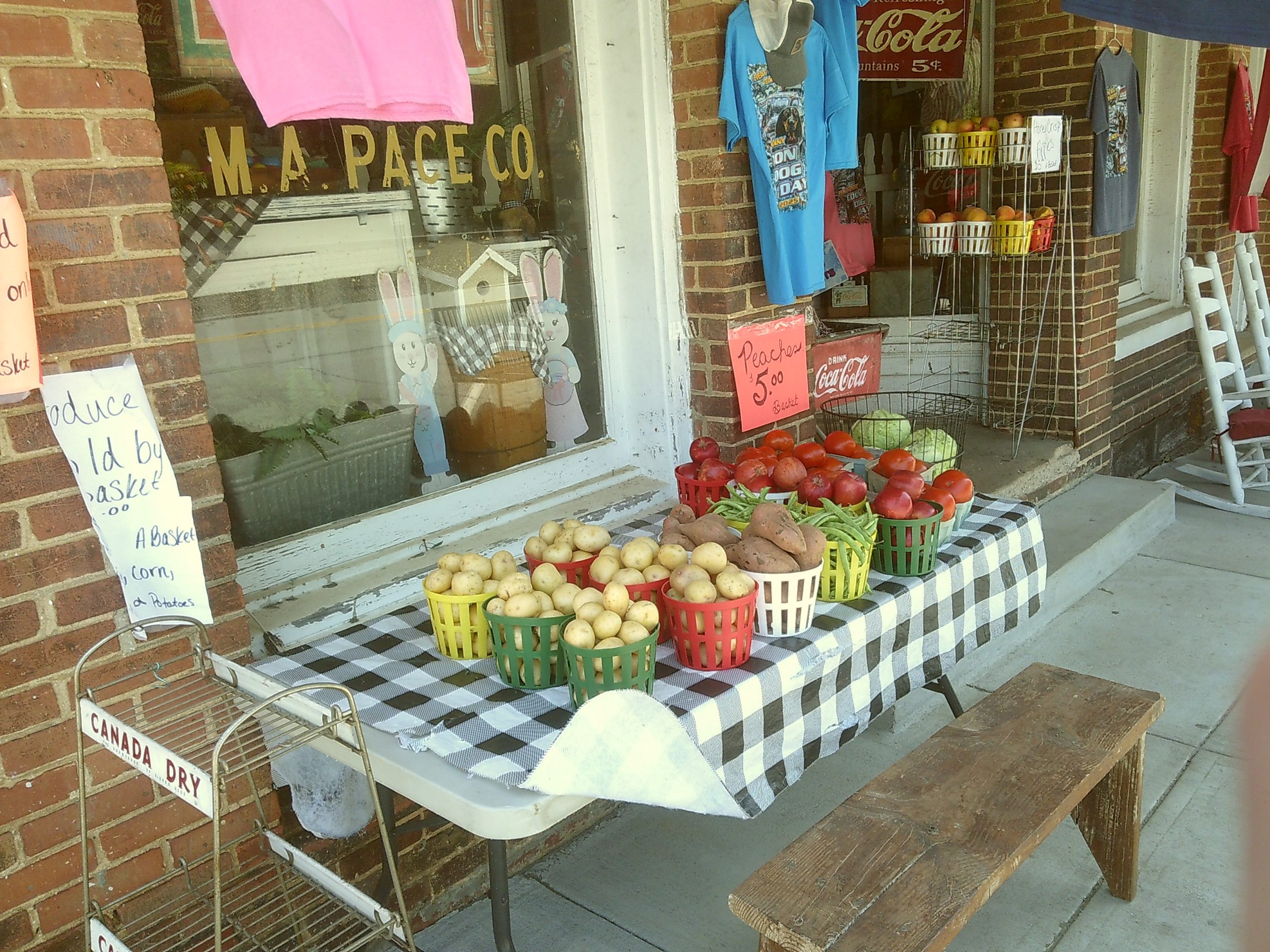
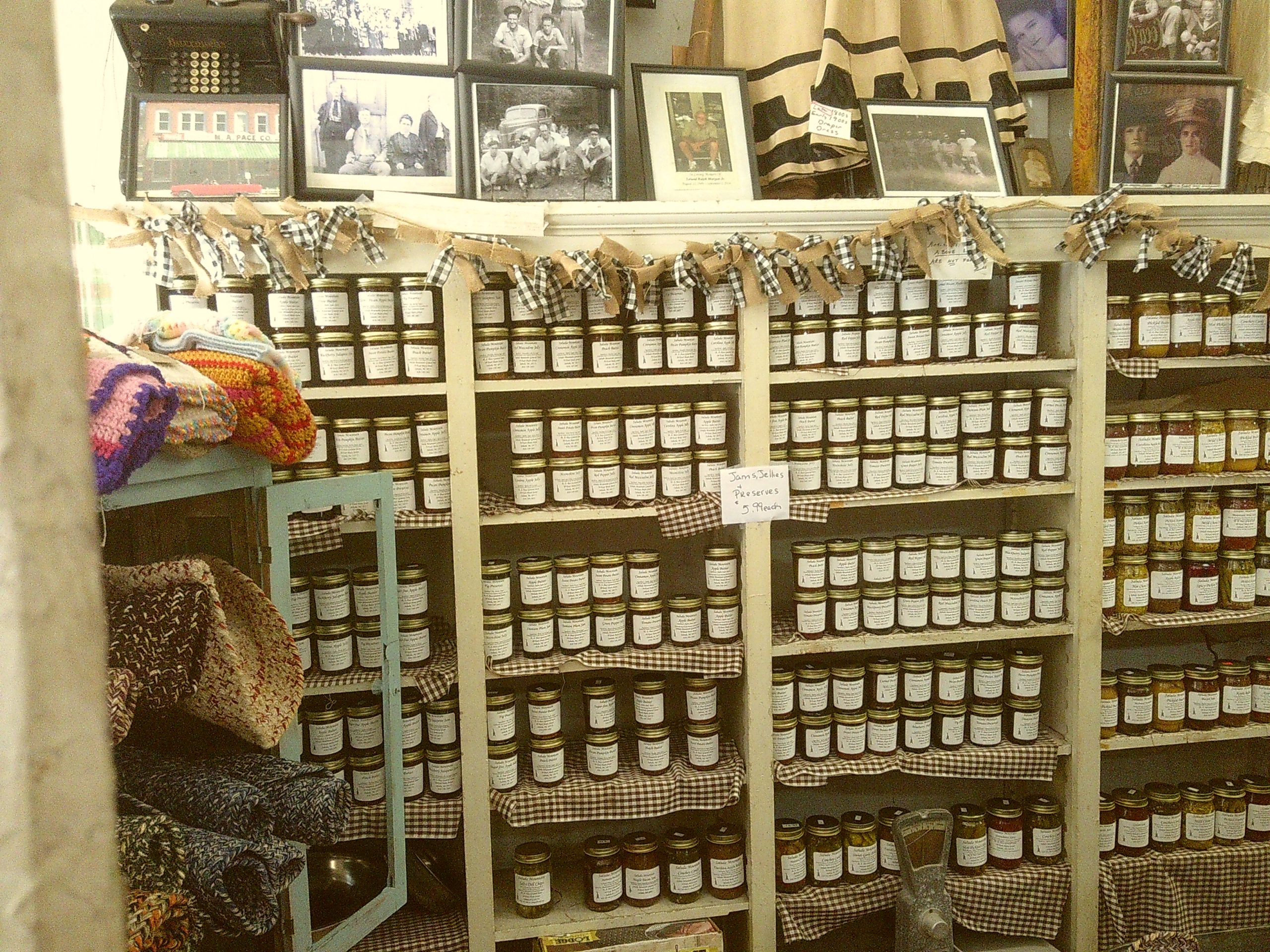
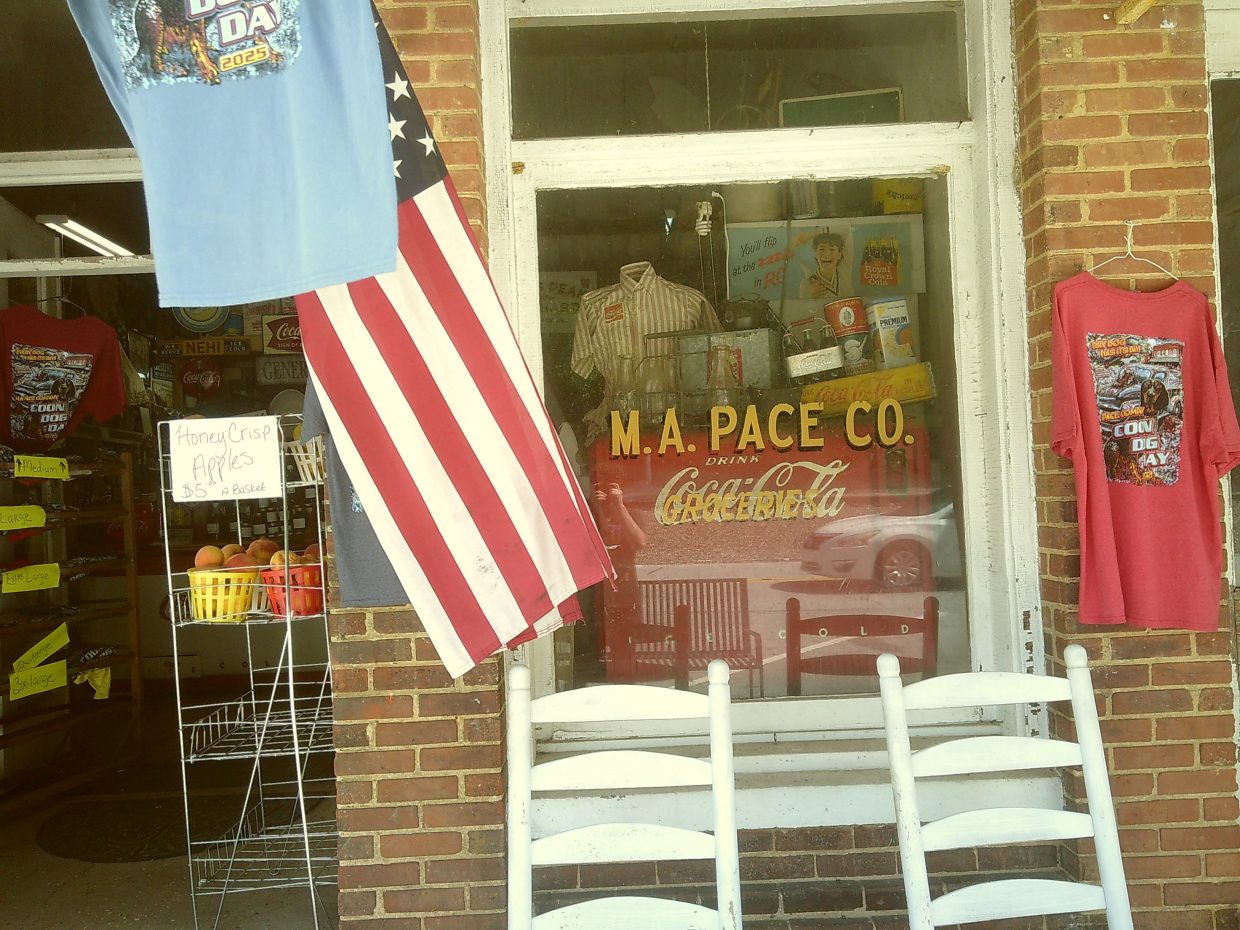
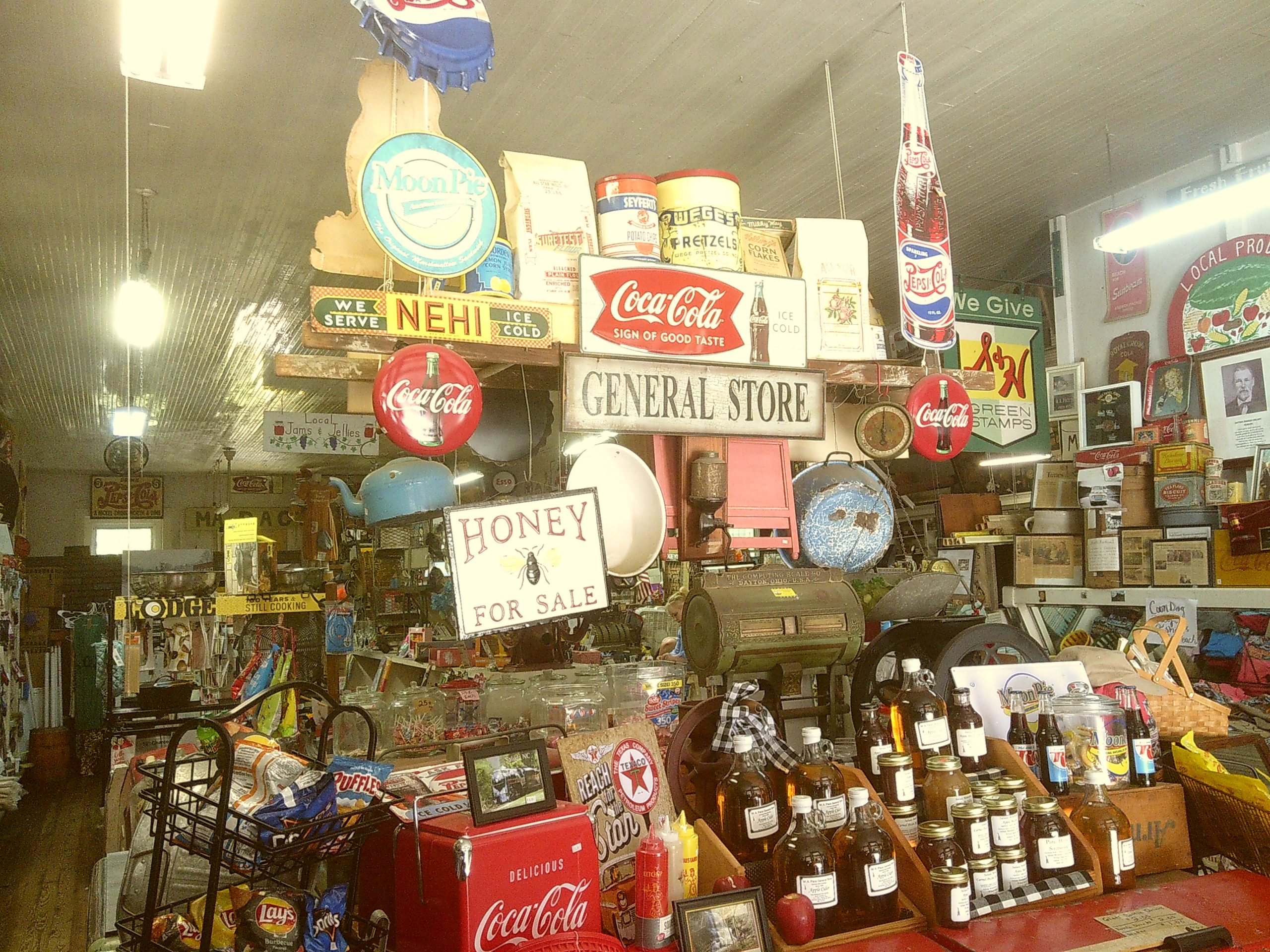
Stop inside a classic, time capsule of a shop, the M.A. Pace Co. General Store, open and in operation since 1899. Refreshing drinks, sundries, souvenirs, local produce, and an array of jams, preserves, sauces, salsas, honey, syrups, and more from local vendors are on sale.
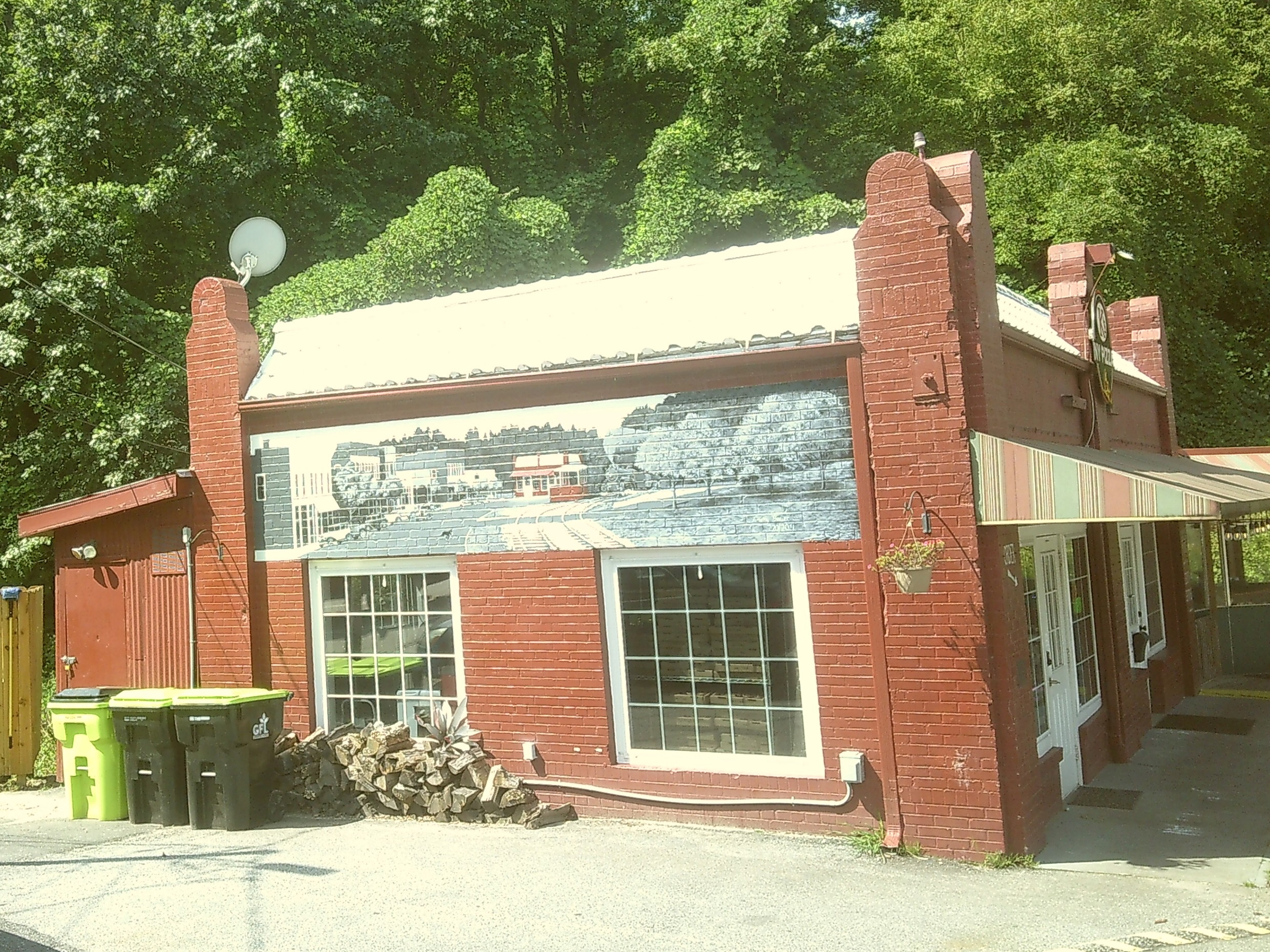
A mural depicting downtown Saluda and the iconic rail lines as seen on side of the building of K’s NY Pizza.
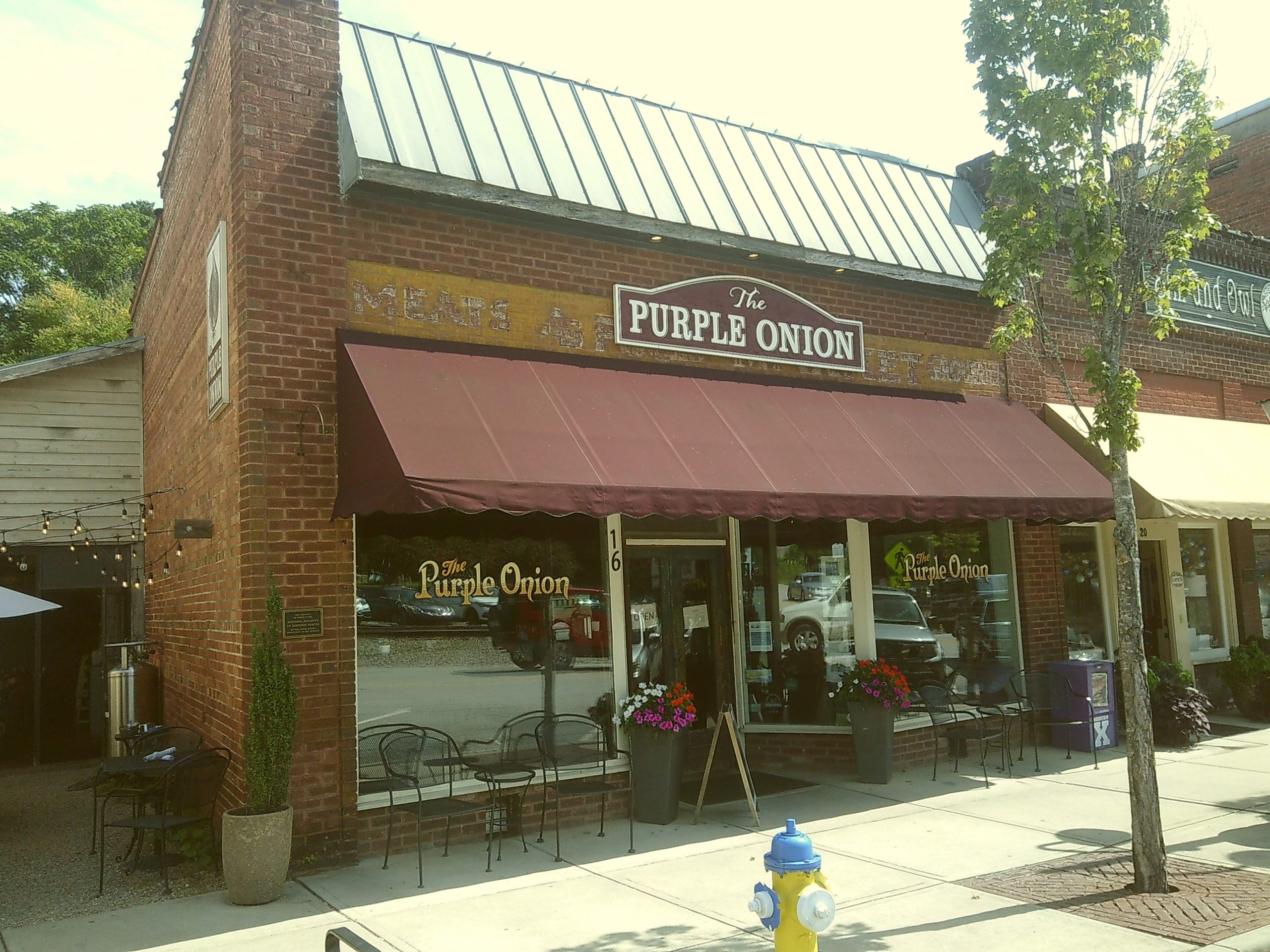
The Purple Onion is an excellent restaurant and cafe and an important community music venue at the heart of Saluda on Main Street. Bluegrass, folk, and Americana artists, bands, and songwriters perform on Thursday and Saturday nights – and select Sundays for their special Sunday Evenings Concert series. It’s intimate, the food is delicious, and the musicians they feature are incredibly talented whether local, regional, or nationally touring acts.
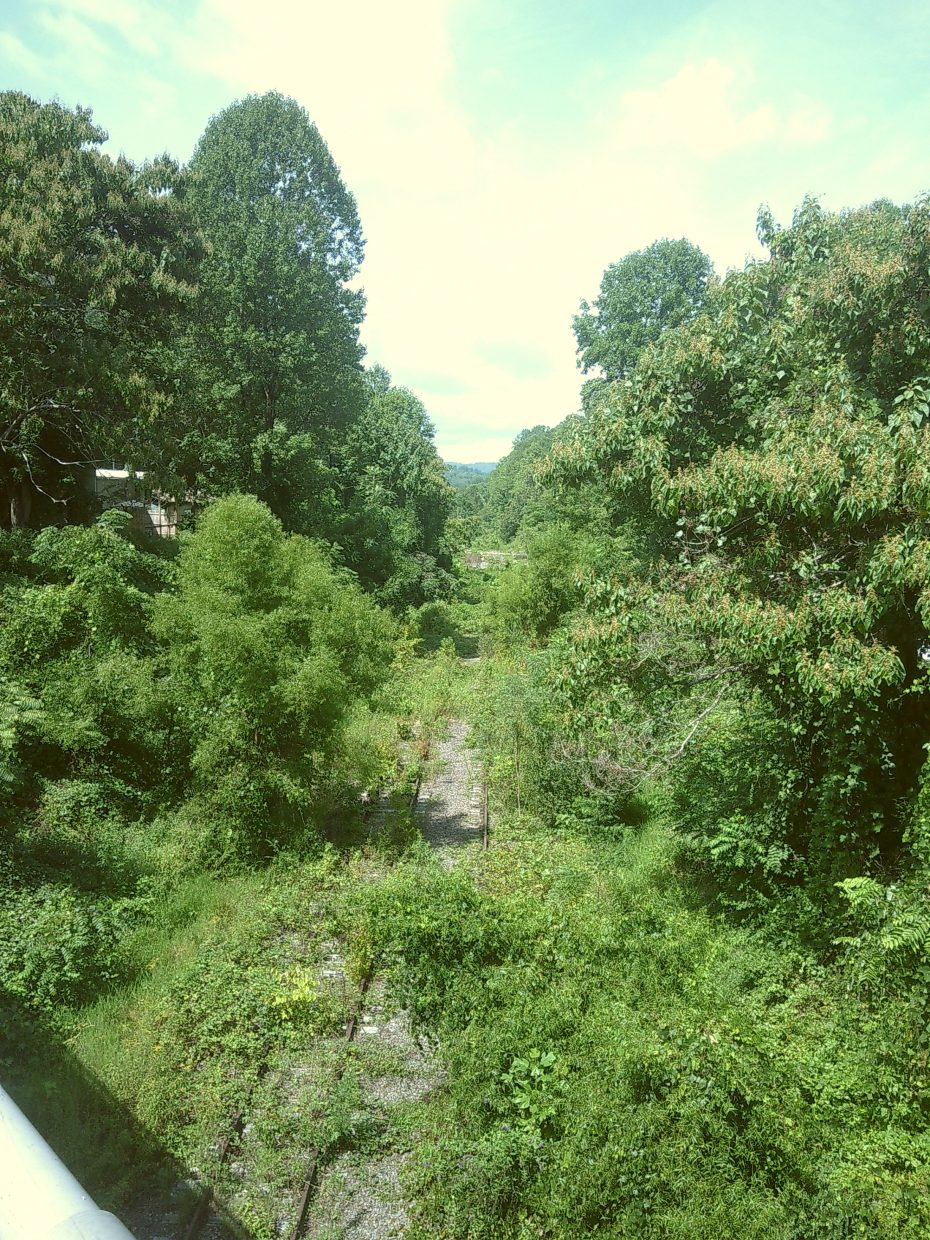
A view of the crest of the now out-of-service rail line topping the Saluda grade.
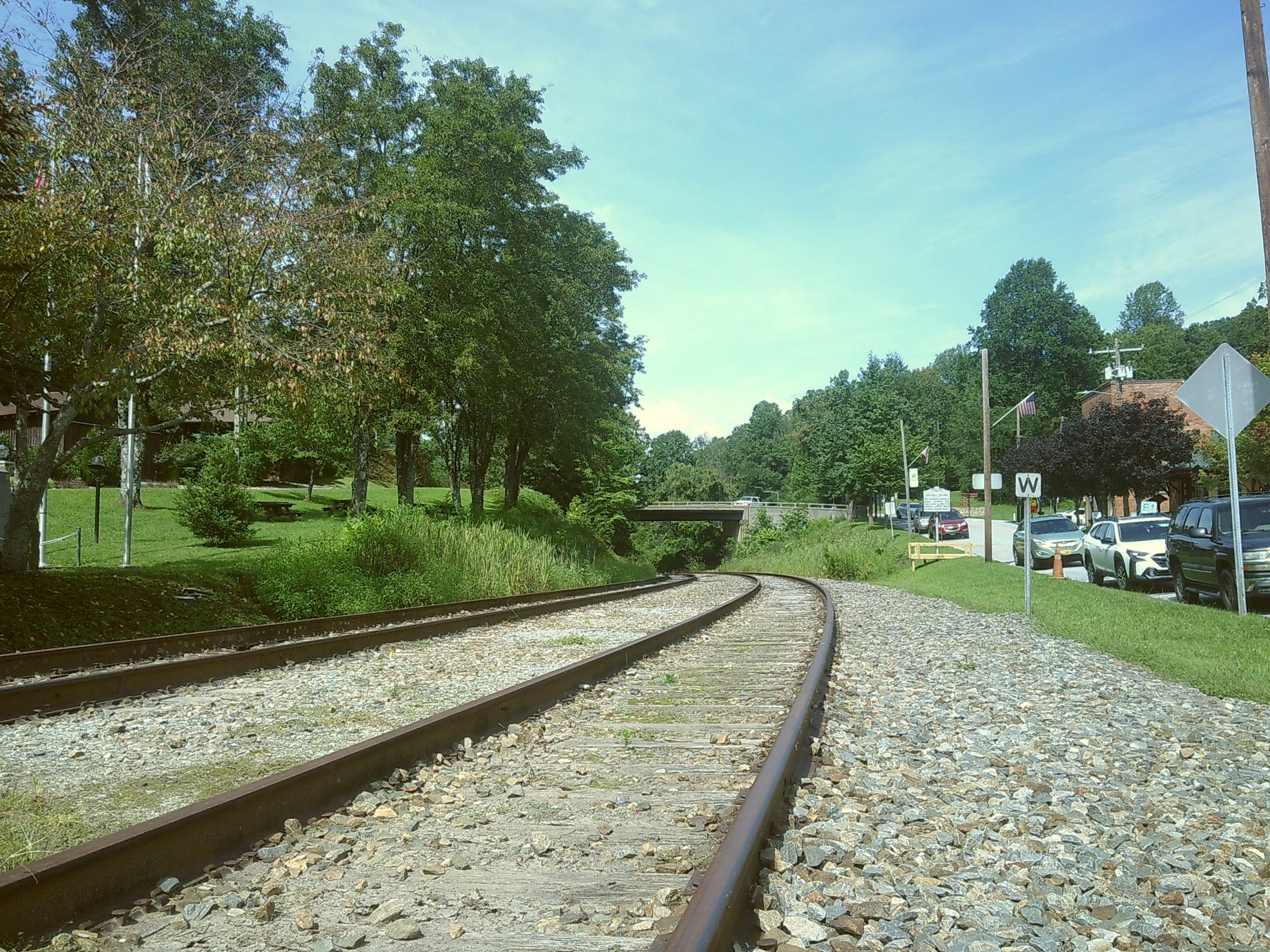
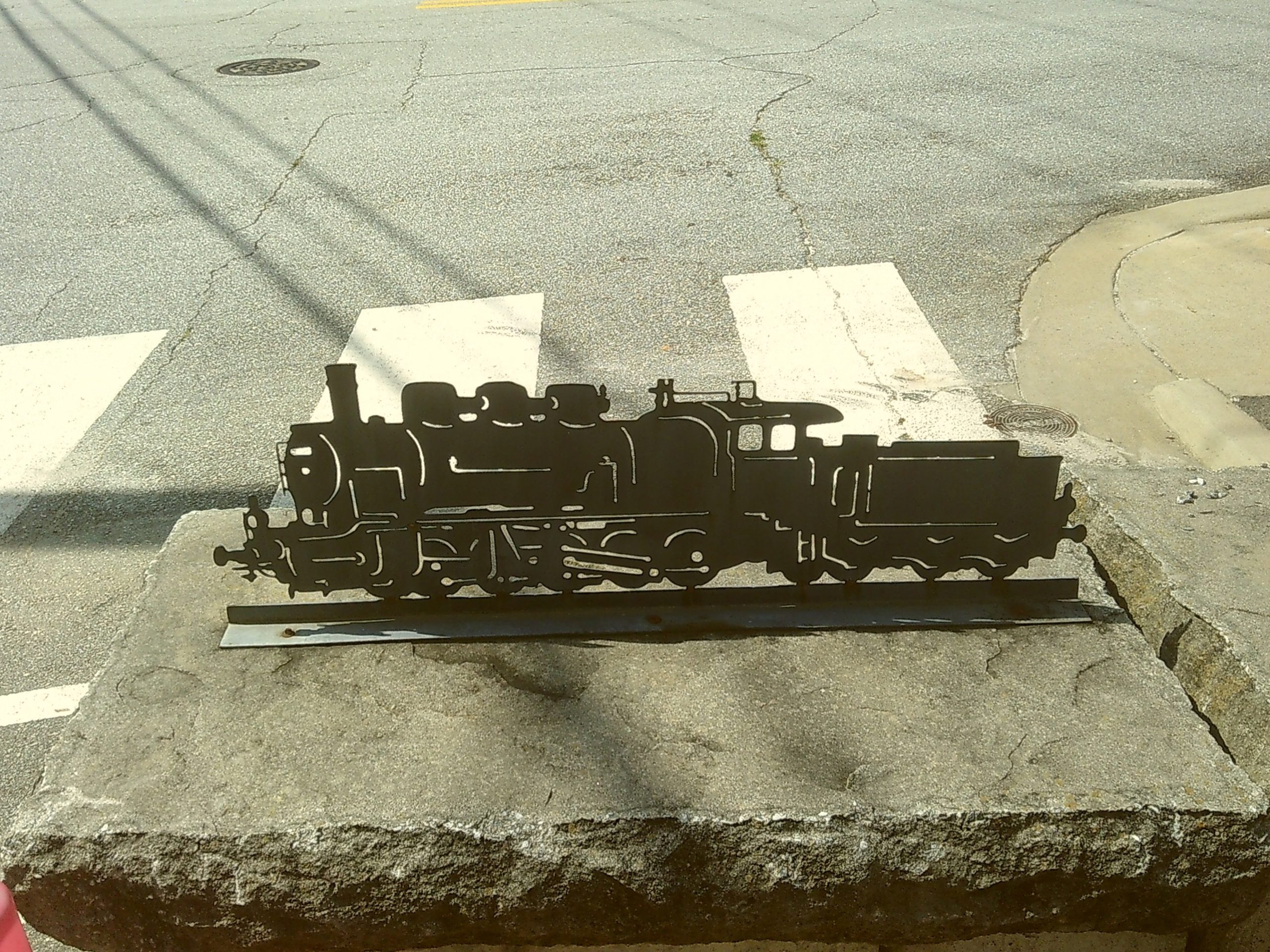
The railroad is clearly an important keystone of the Saluda community, even in the 2020s.
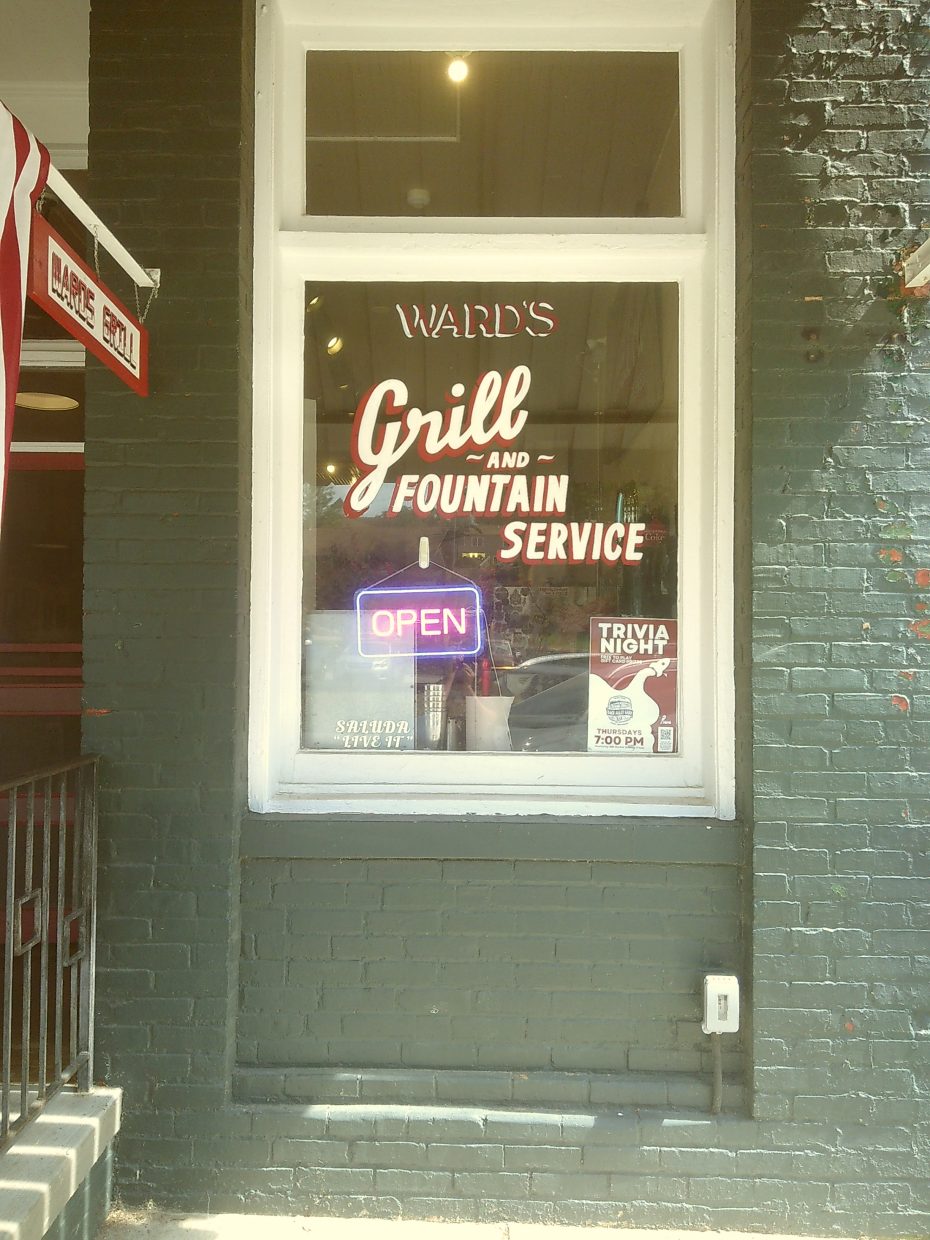
Perhaps stop in for a meal at Ward’s Grill for excellent, down-home Southern cooking and American classics. Wherever you end up in Saluda, there’s plenty to enjoy – and many fine food options for fueling up before heading down the mountains and toward Mill Spring for the festival.


Tryon, North Carolina
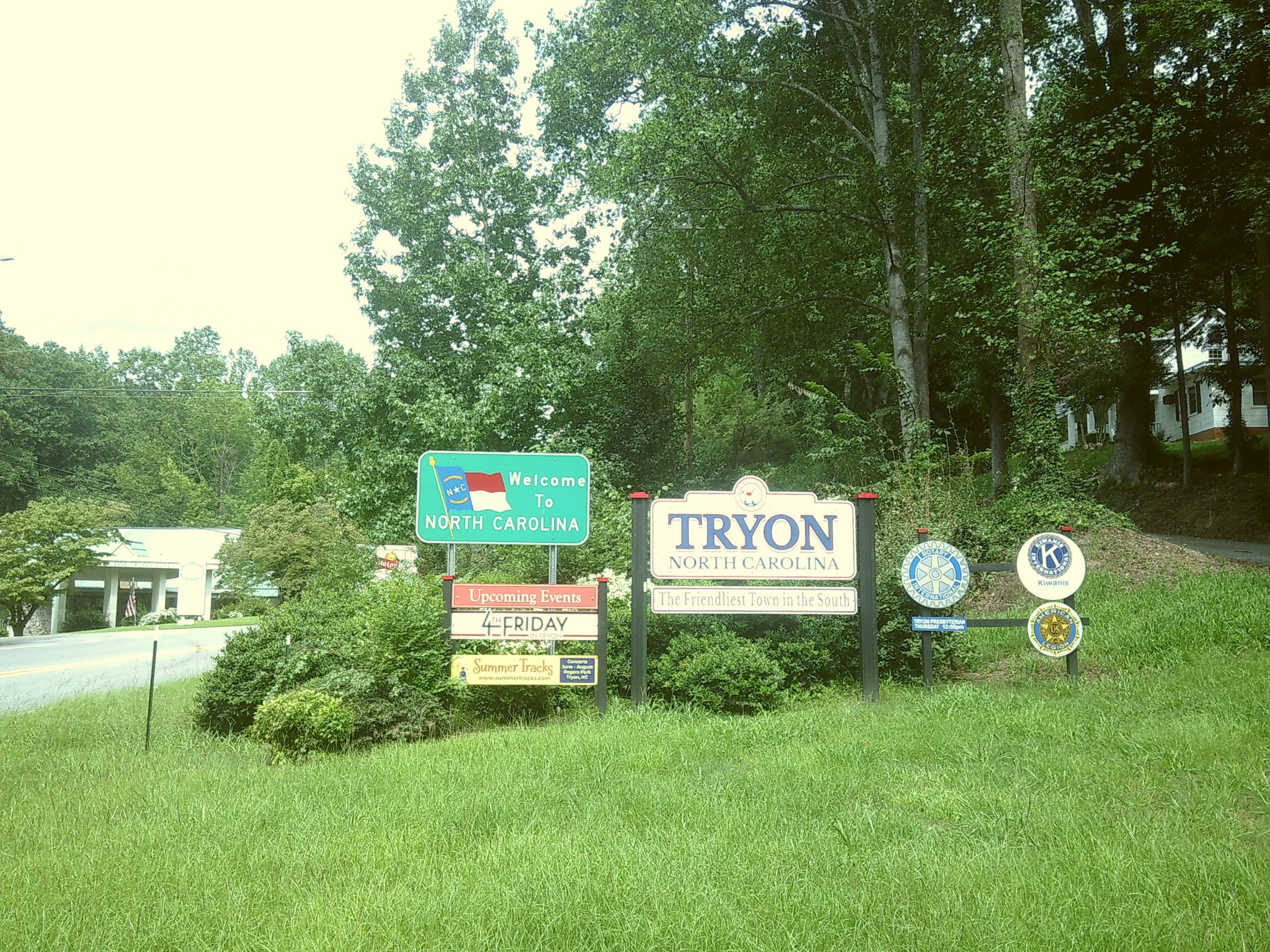
Maybe you’re coming down the grade from Saluda or perhaps you’re driving in from Charlotte, North Carolina, or from Greenville, South Carolina – or beyond! Wherever you’re coming from, Tryon is just a hop, skip, and a jump from the festival grounds at the Tryon International Equestrian Center in Mill Spring. Nestled into a holler in the foothills of the Blue Ridge, it’s a town full of art, music, culture, and heritage. You’ll find that horses and the railroad are important here, too. Stroll down the main drag and enjoy cute shops, tasty food offerings, and more.
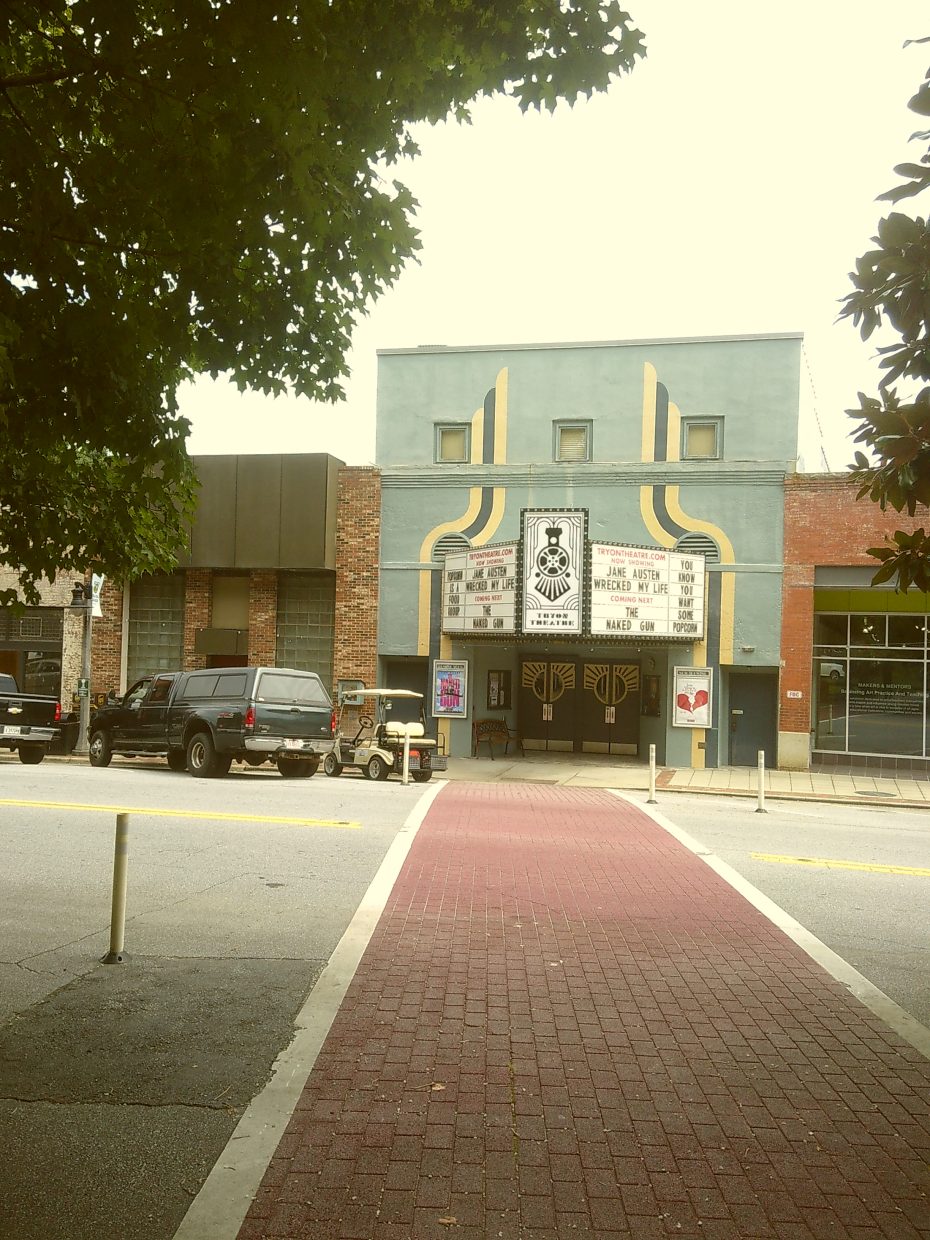
Sometimes it gets hot during the late-August/early-September festival, especially at the lower elevation of the Tryon International grounds, so why not cool off Tryon proper in the cozy dark and air conditioning watching a film at the Tryon Theatre?
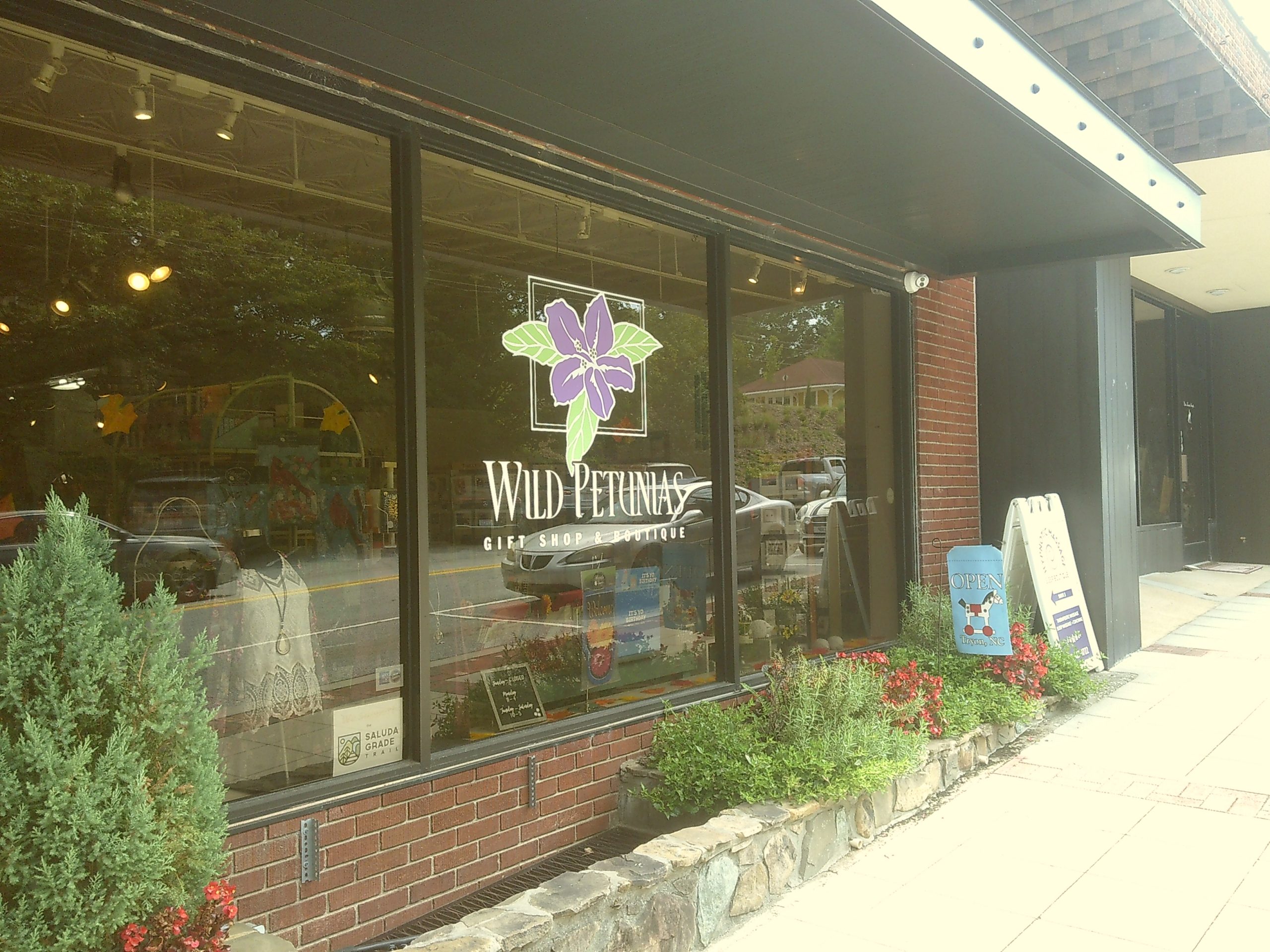
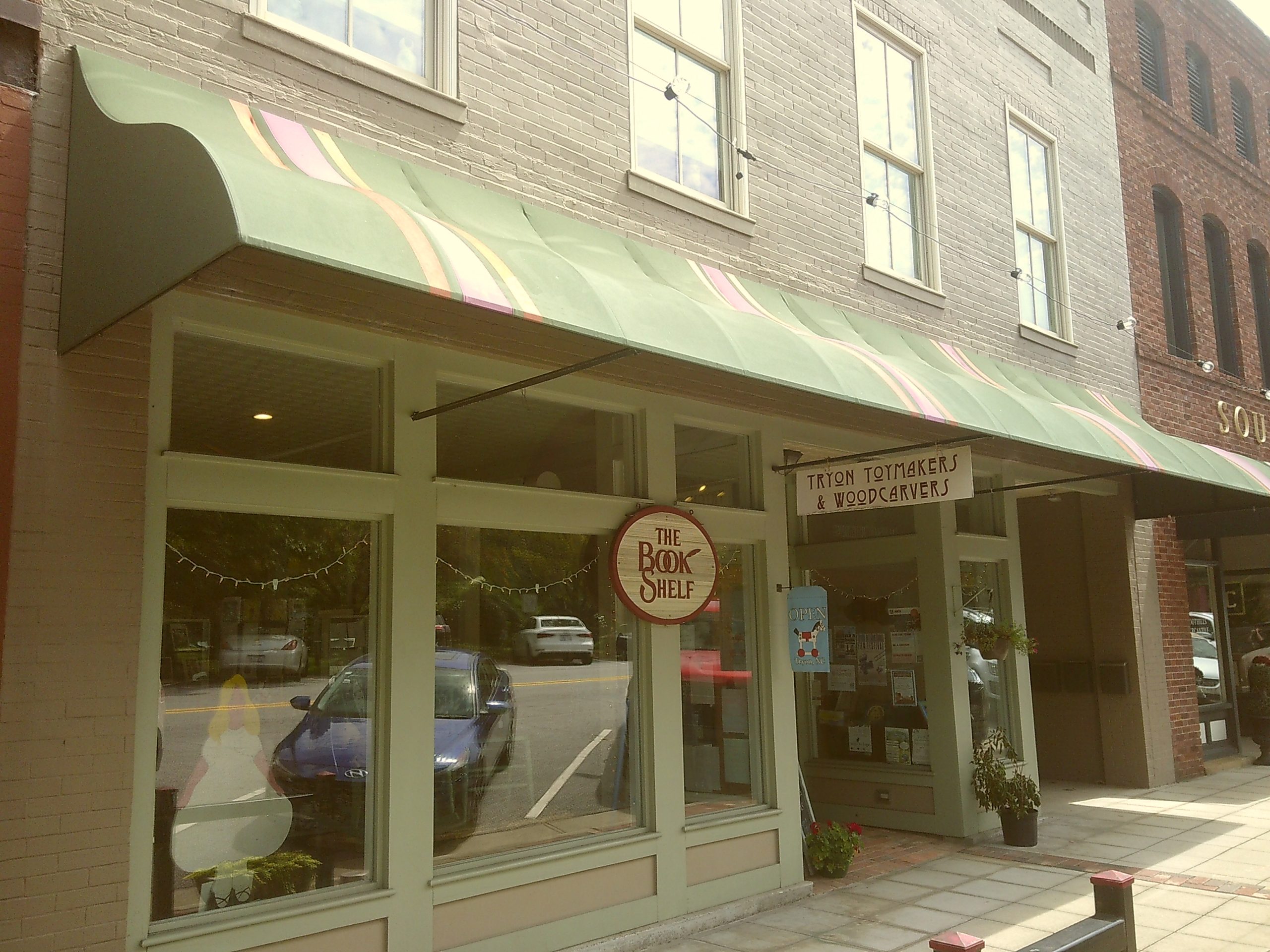
There are plenty of independent shops, boutiques, and retailers in the adorable downtown area offering local and far-flung products.
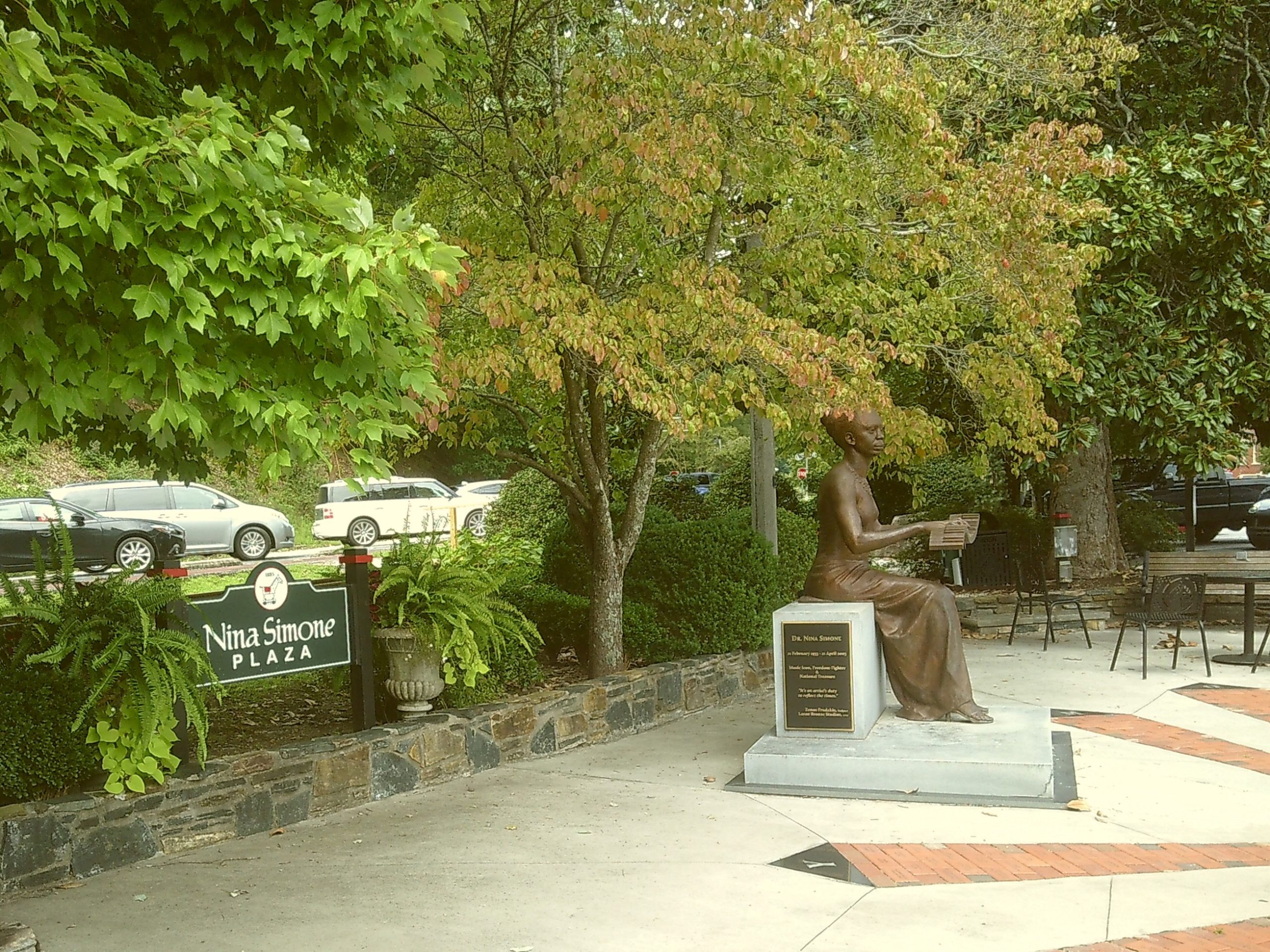
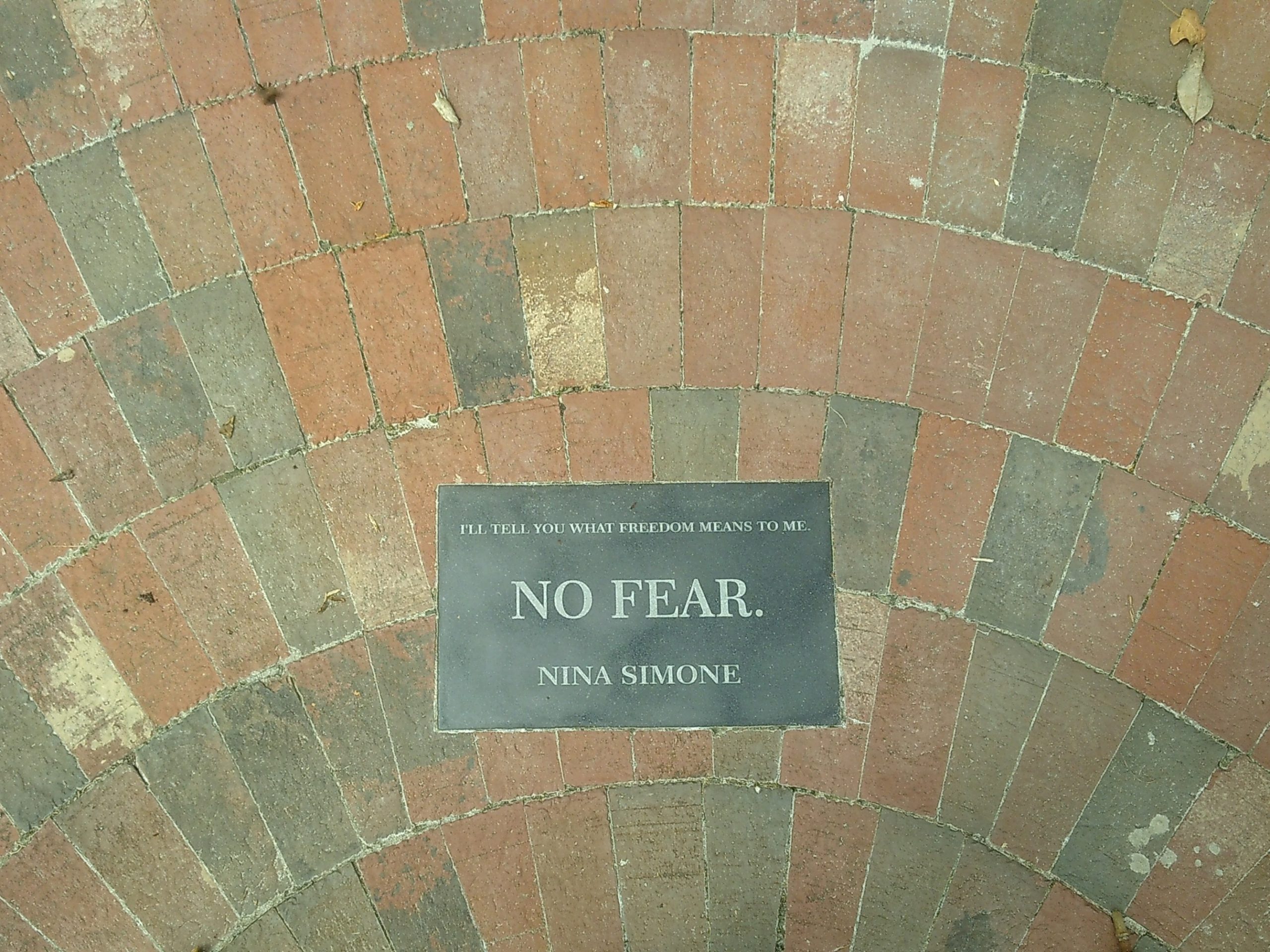
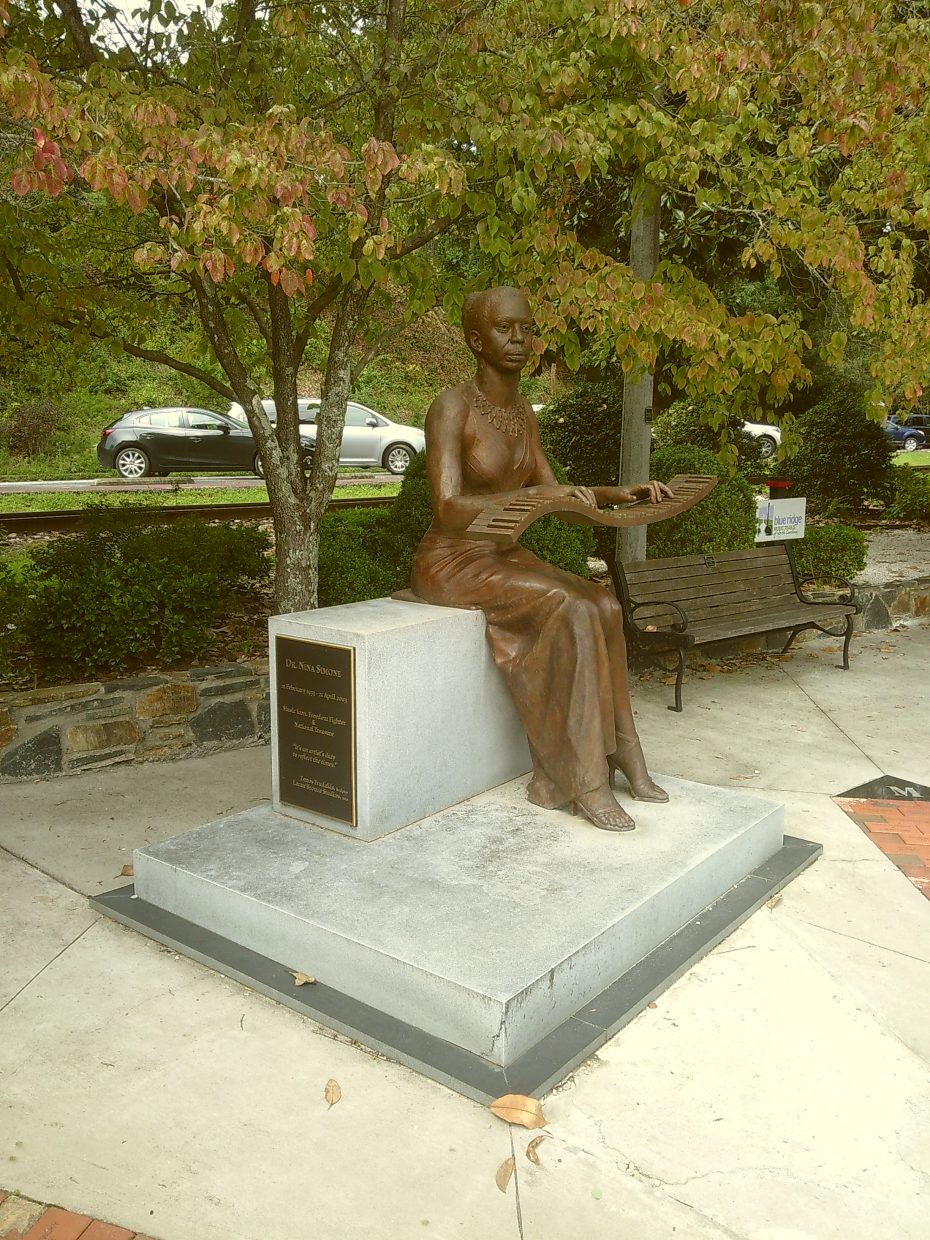
American musical icon Nina Simone was born in Tryon and her presence is felt throughout the little town. Nina Simone Plaza is conveniently located downtown and features a sculpture of Simone by Zenos Frudakis that contains a portion of Simone’s ashes enclosed inside a bronze heart within the gorgeous work of art.
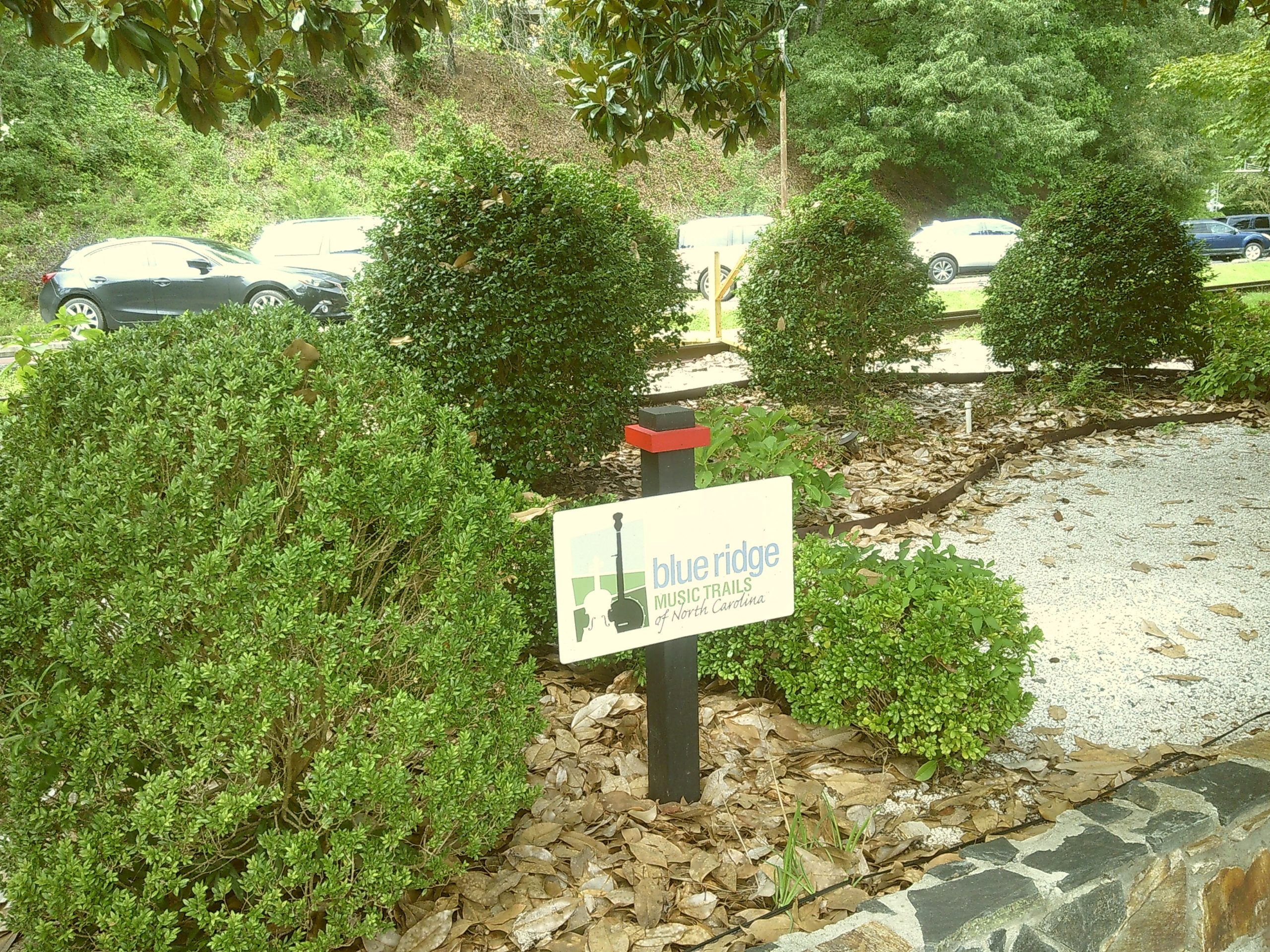
Always a good sign! Blue Ridge Music Trails of North Carolina is such a great resource and community builder in the region, highlighting art and music born in the mountains and made by mountain folk. In 2025, we partnered with Blue Ridge Music Trails, ESMF, and local partners on a special set of music at the festival called “Healing the Hollers,” which raised funds and awareness for the ongoing relief efforts after Hurricane Helene tore through and devastated the area in 2024.

There’s so much more to do, see, and explore via Blue Ridge Music Trails.
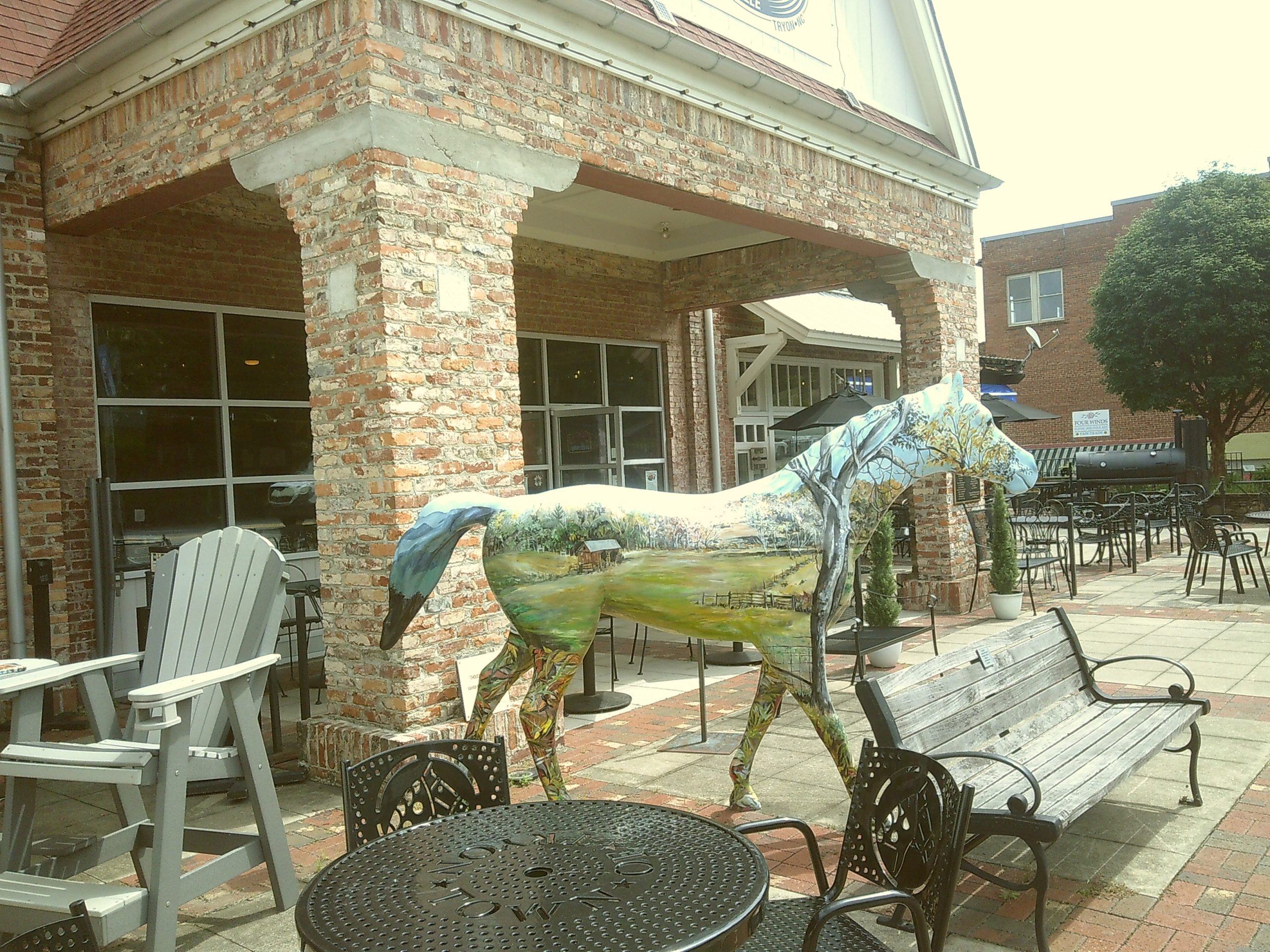
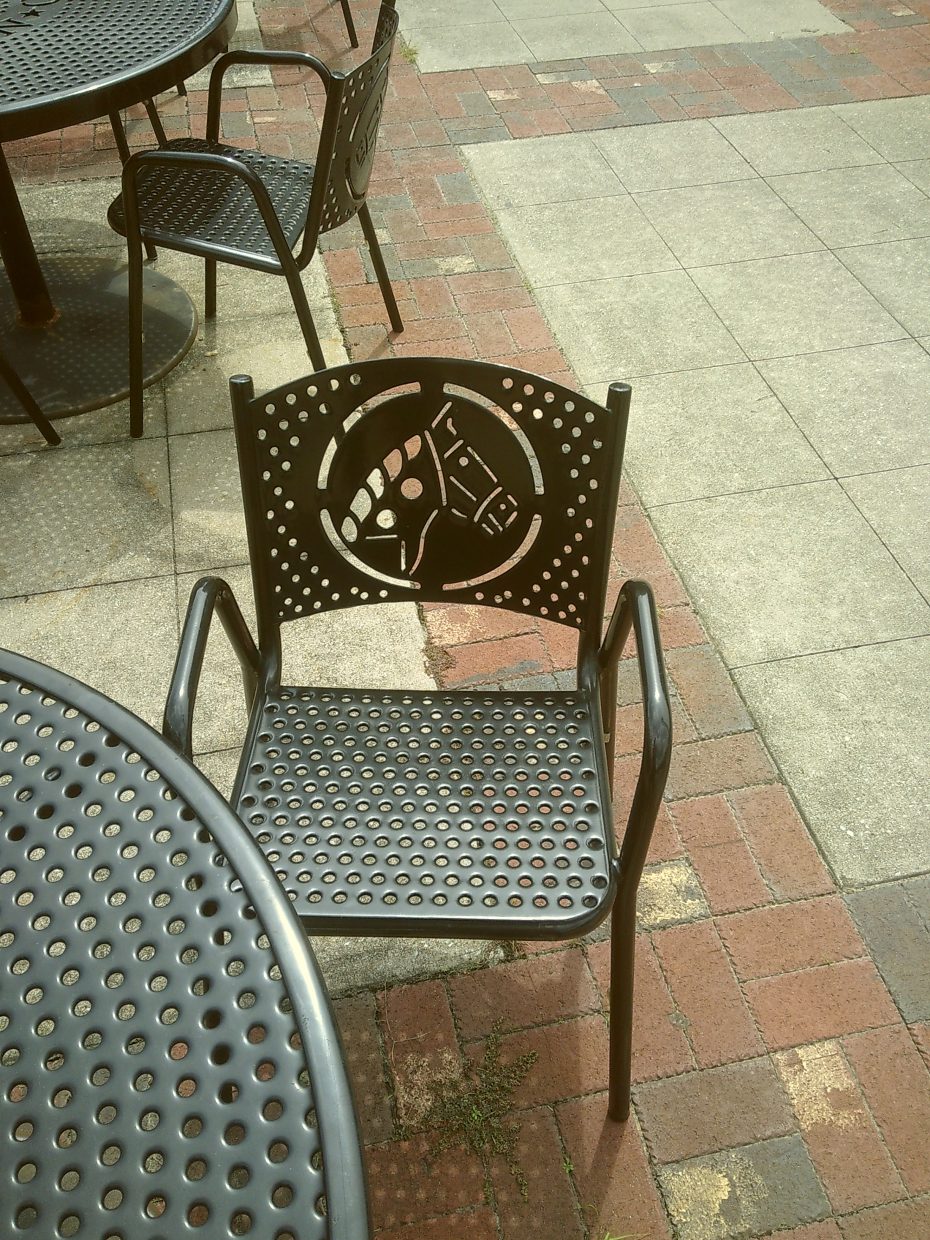
Horses show up in a variety of ways in Tryon – and not just at the equestrian center!
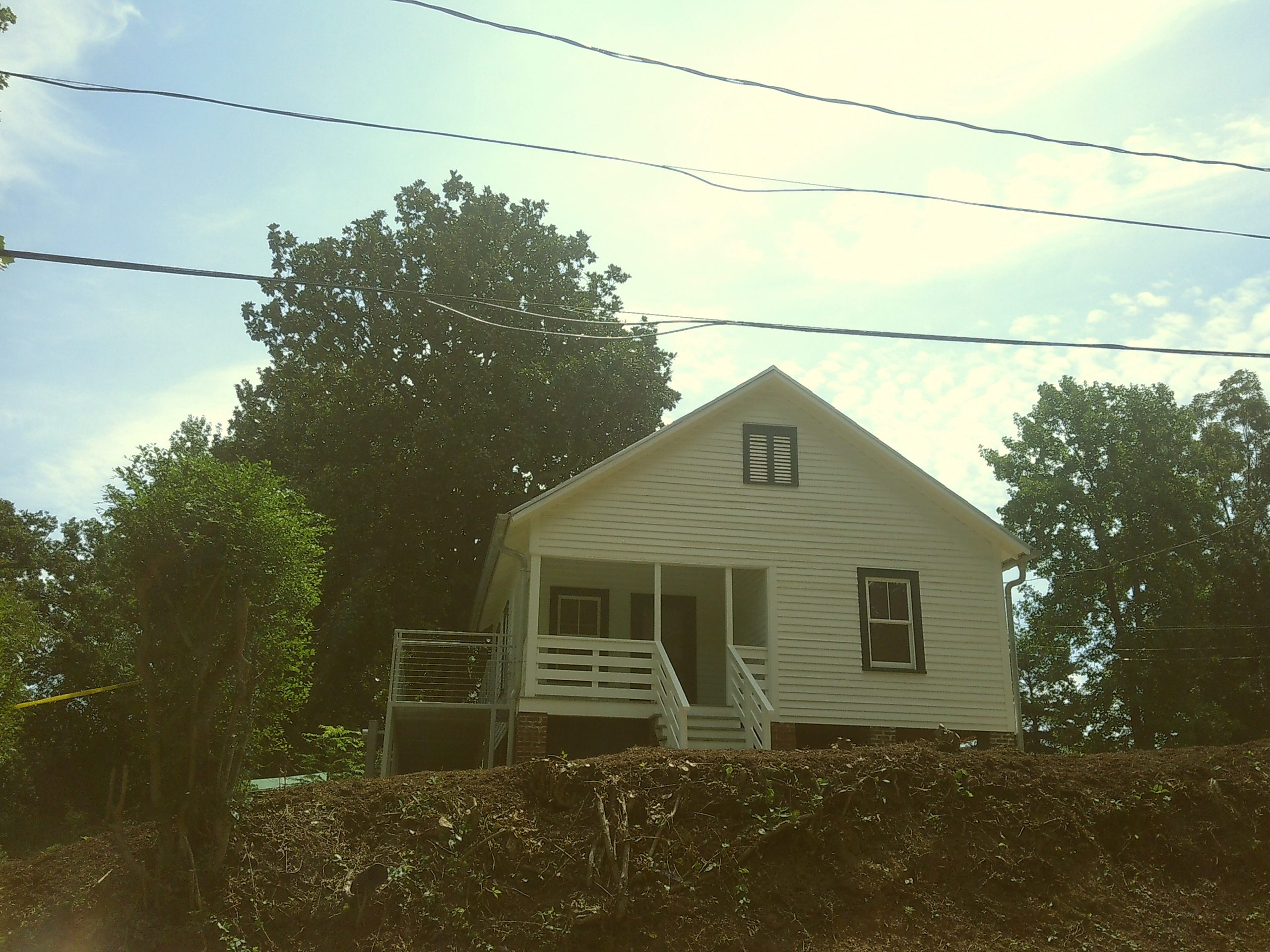
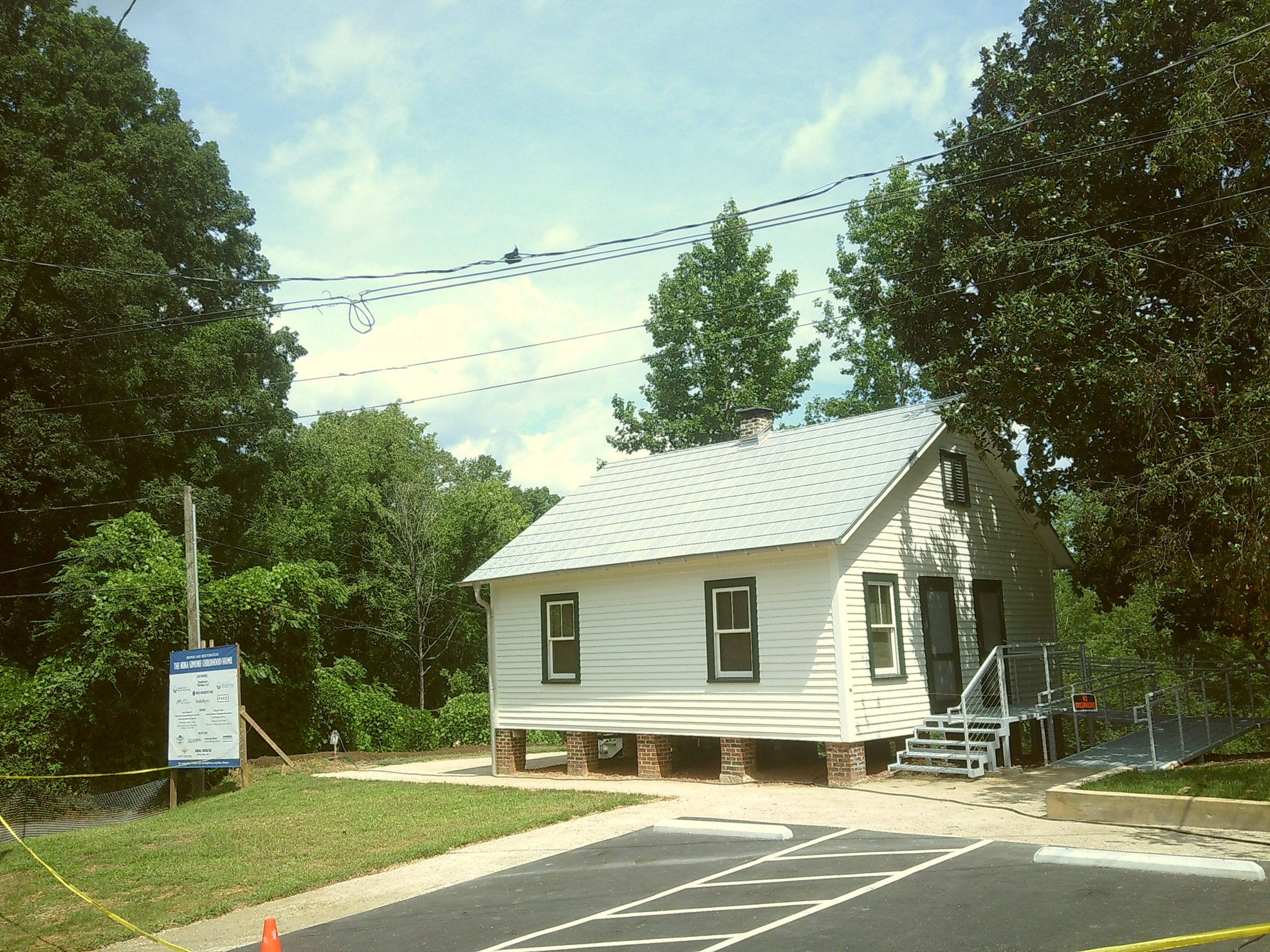
The Nina Simone Childhood Home stands on top of a hill in the middle of Tryon overlooking the village – and with gorgeous views of the surrounding ridge tops. Last year, while traveling to the festival, the humble home was in the final stages of its renovation and preservation by the National Trust for Historic Preservation and many other local, regional, and national partners.

Simone’s impact on American roots music and popular music – nationally and globally – cannot be overstated. Still, she’s rarely placed, understood, or honored as an Appalachian musician, despite where she grew up. A visit to Simone’s homeplace in Tryon is essential for all music fans, especially now that the renovations were completed in fall 2025, just after the festival.
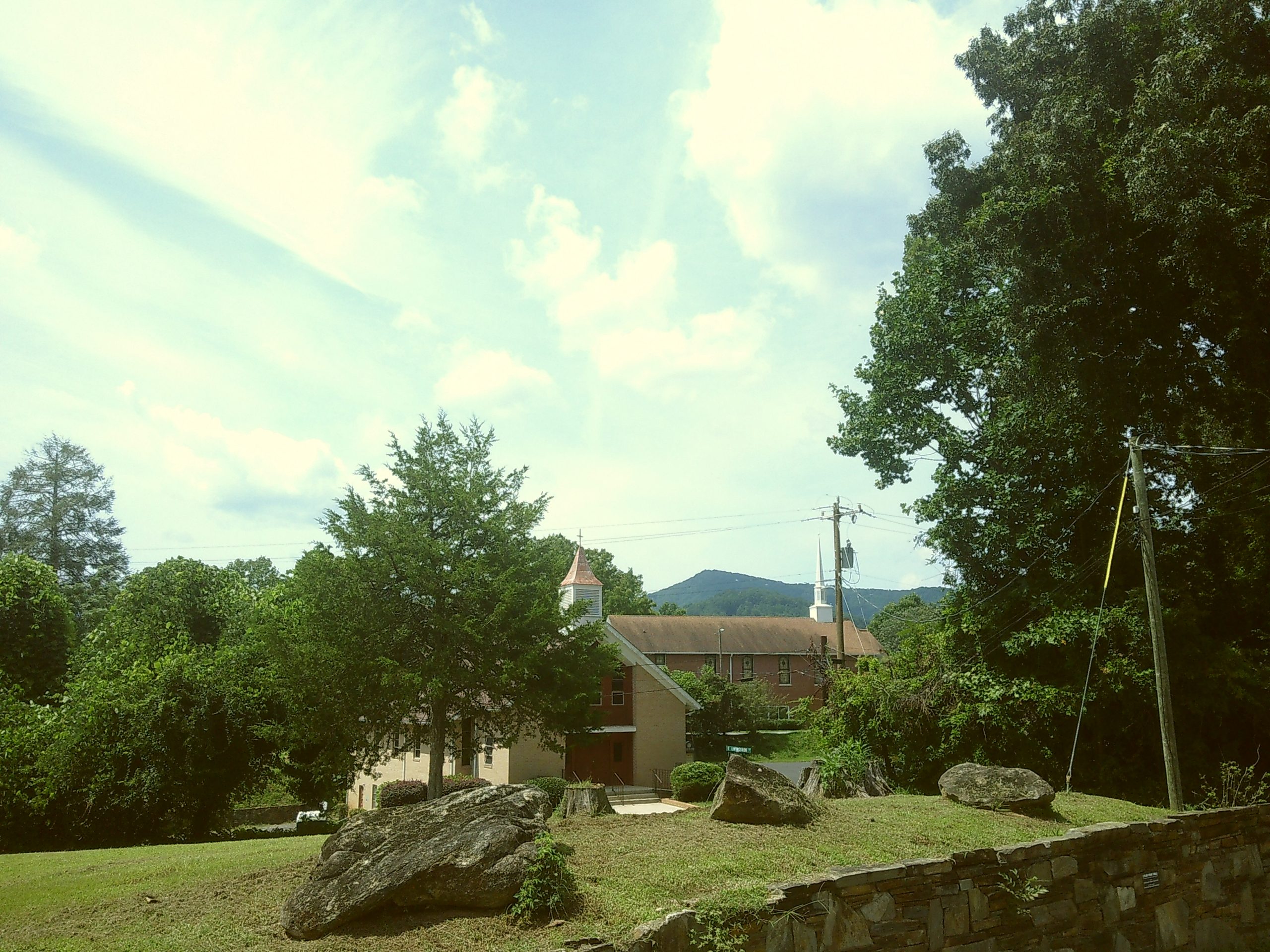
The view of the ridge line of the stunning Blue Ridge Mountains behind St. Luke Christian Methodist Episcopal Church, as seen from the property of Nina Simone’s childhood home.

You can learn more about Tryon and Nina Simone in a bonus episode of our podcast, Carolina Calling, made with Come Hear NC.
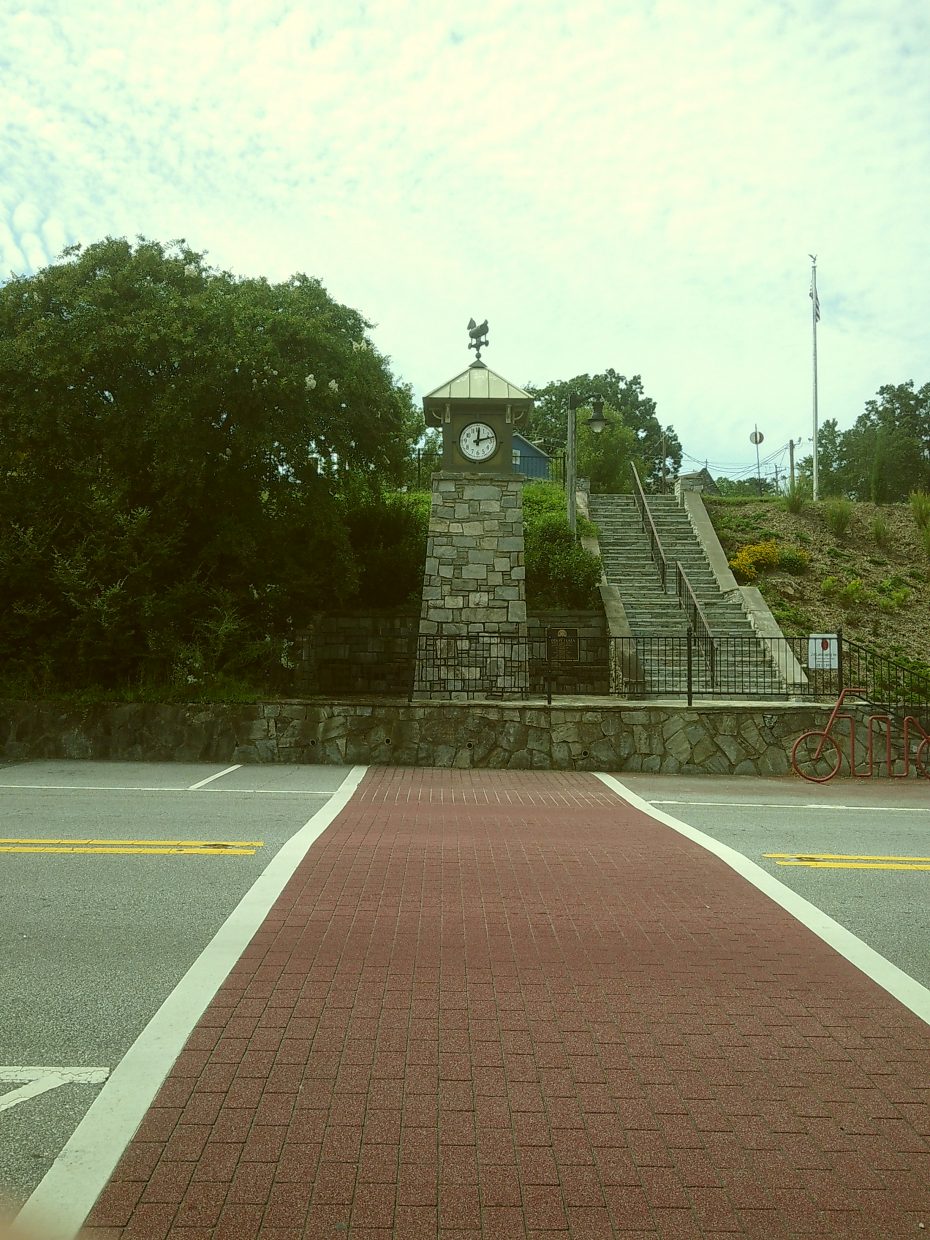
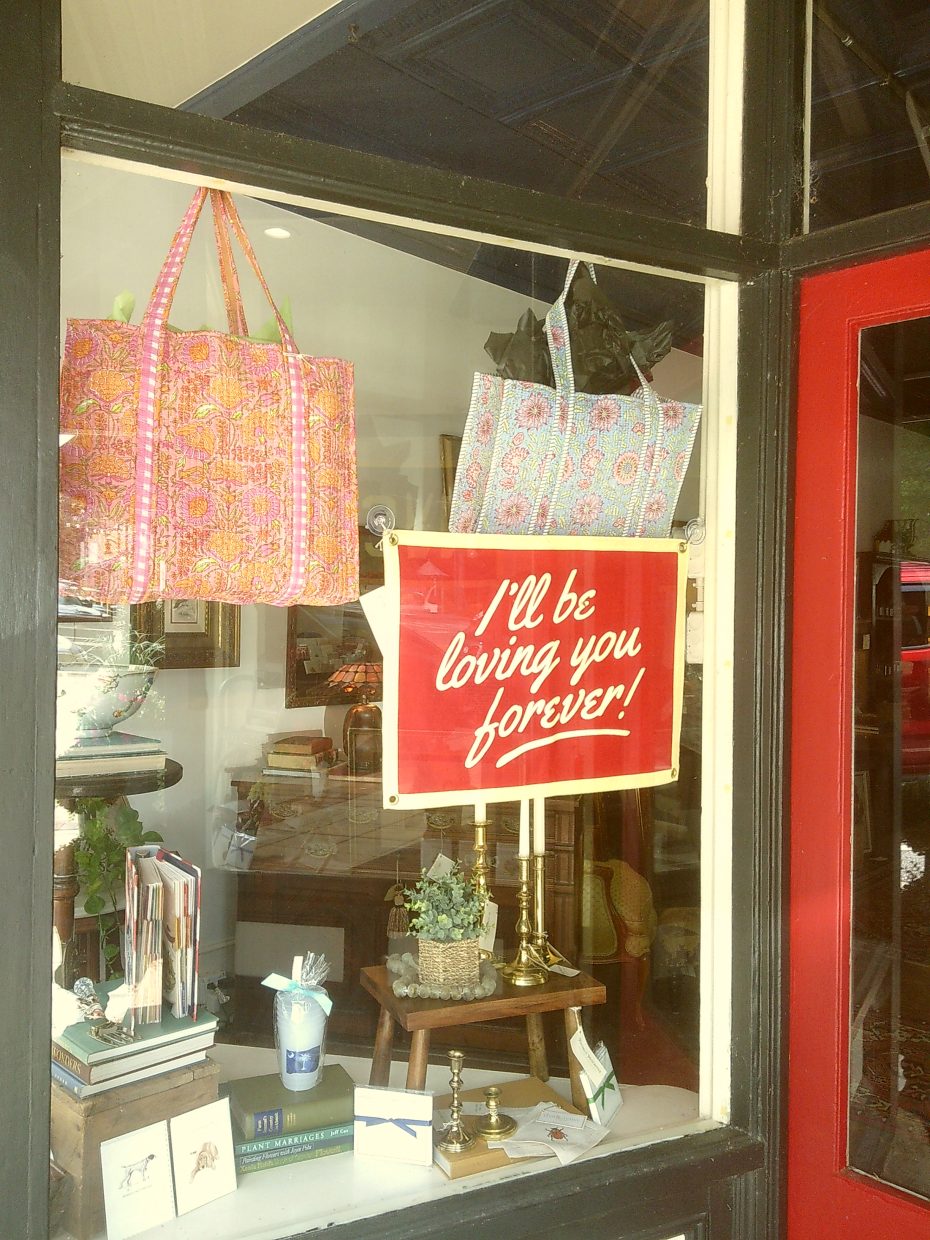
Downtown Tryon is full of adorable sights and diverting activities.
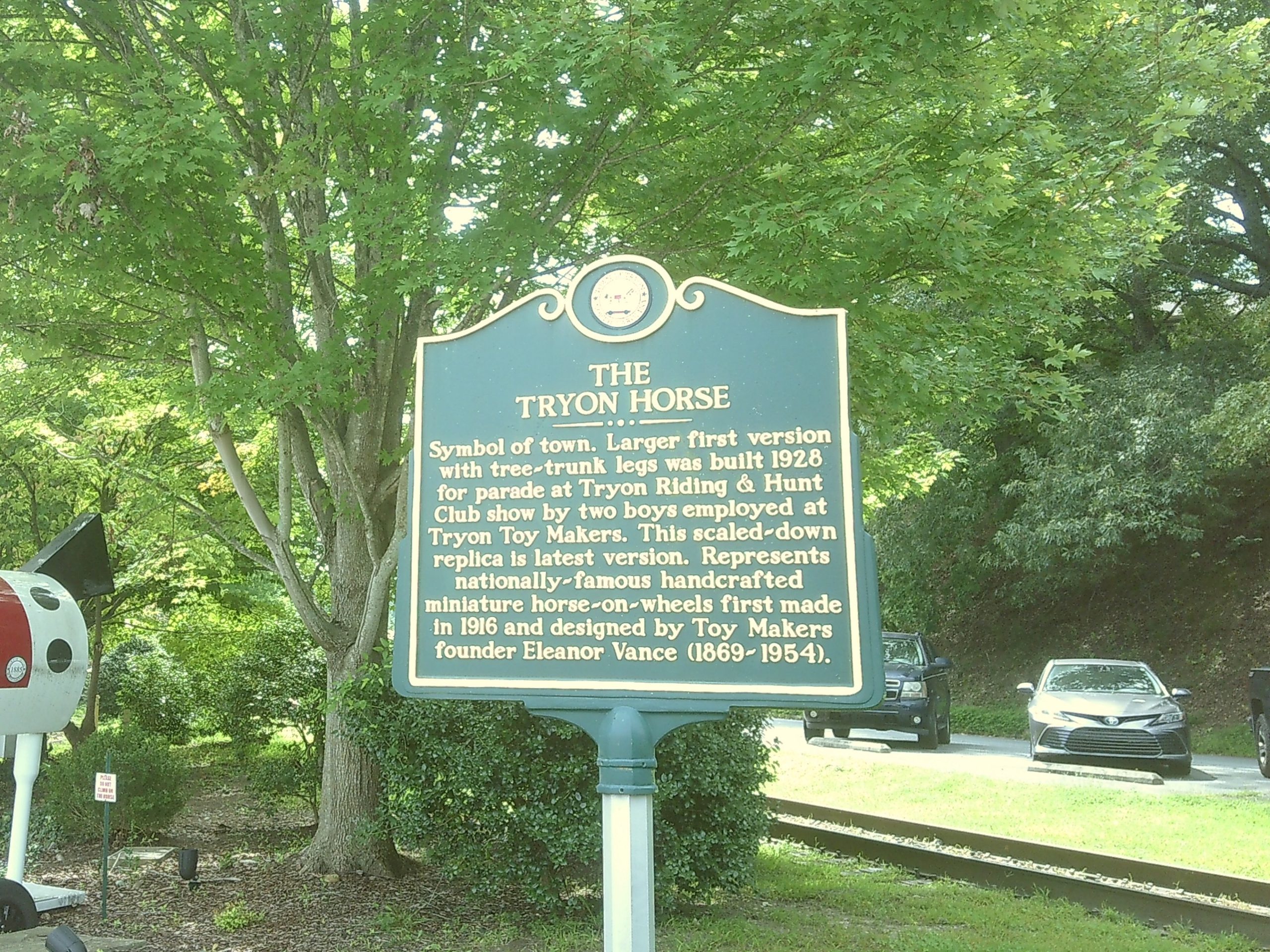
Put “Molly & Tenbrooks” or “Goodbye Old Pal” on the speakers and get into the bluegrass and equestrian mindset. No judgment if your horse is on wheels!
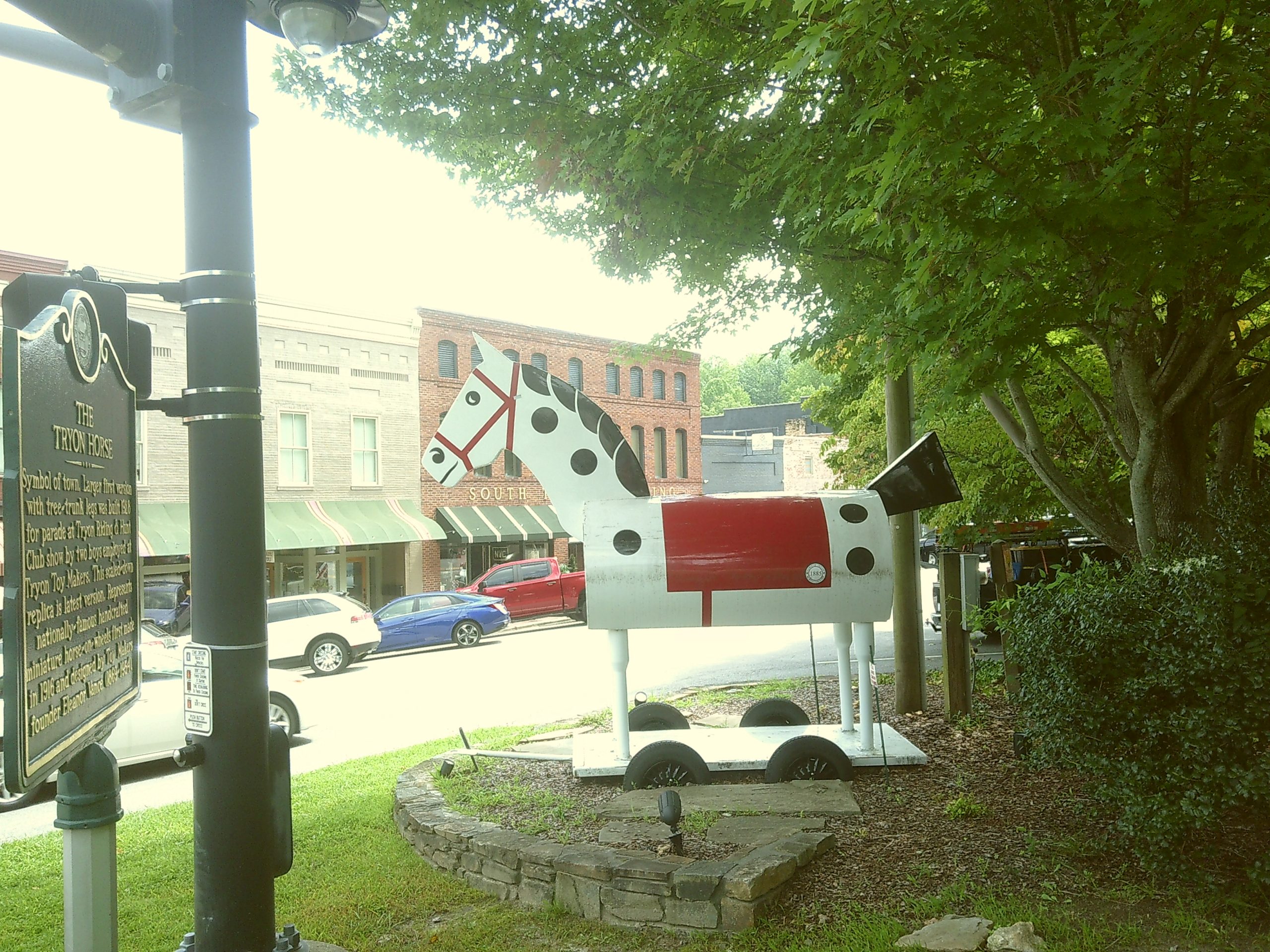
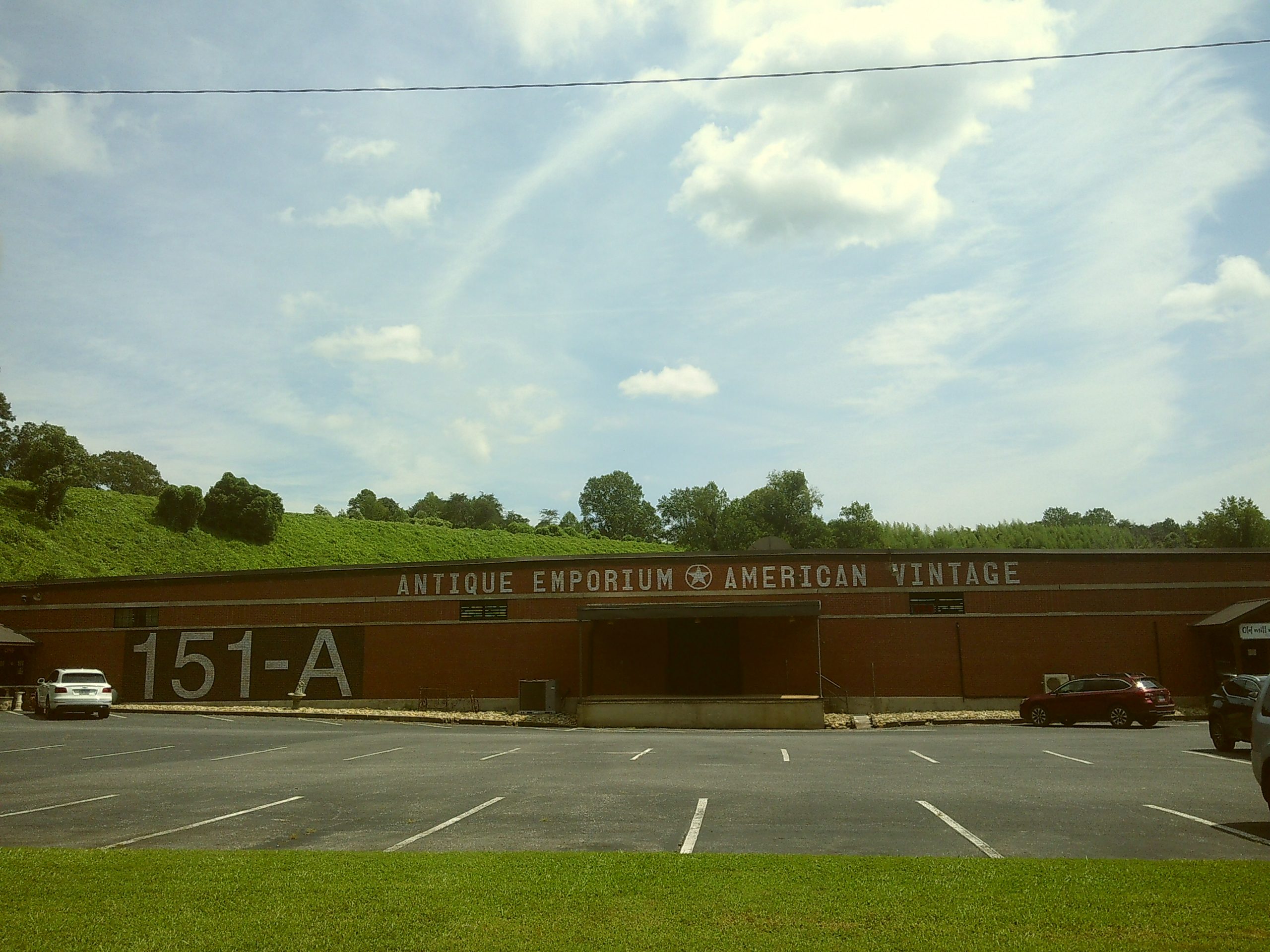
Team BGS always brakes for antique stores, and this area is dripping with excellent shops, flea markets, and antique vendors offering wares at remarkably reasonable prices. On our journey, we traveled from Tryon to Landrum, South Carolina – passing the Antique Emporium & American Vintage, Old Mill Market Square, Tryon Antique Mall & Marketplace, and Dark Horse Antique Market in one fell swoop; all are within a quarter mile of each other and are worth stopping to peruse. Plus, many more antique shops and stands and vintage stores are in the area. Keep your eyes peeled, there are plenty of treasures to find.


Landrum, South Carolina
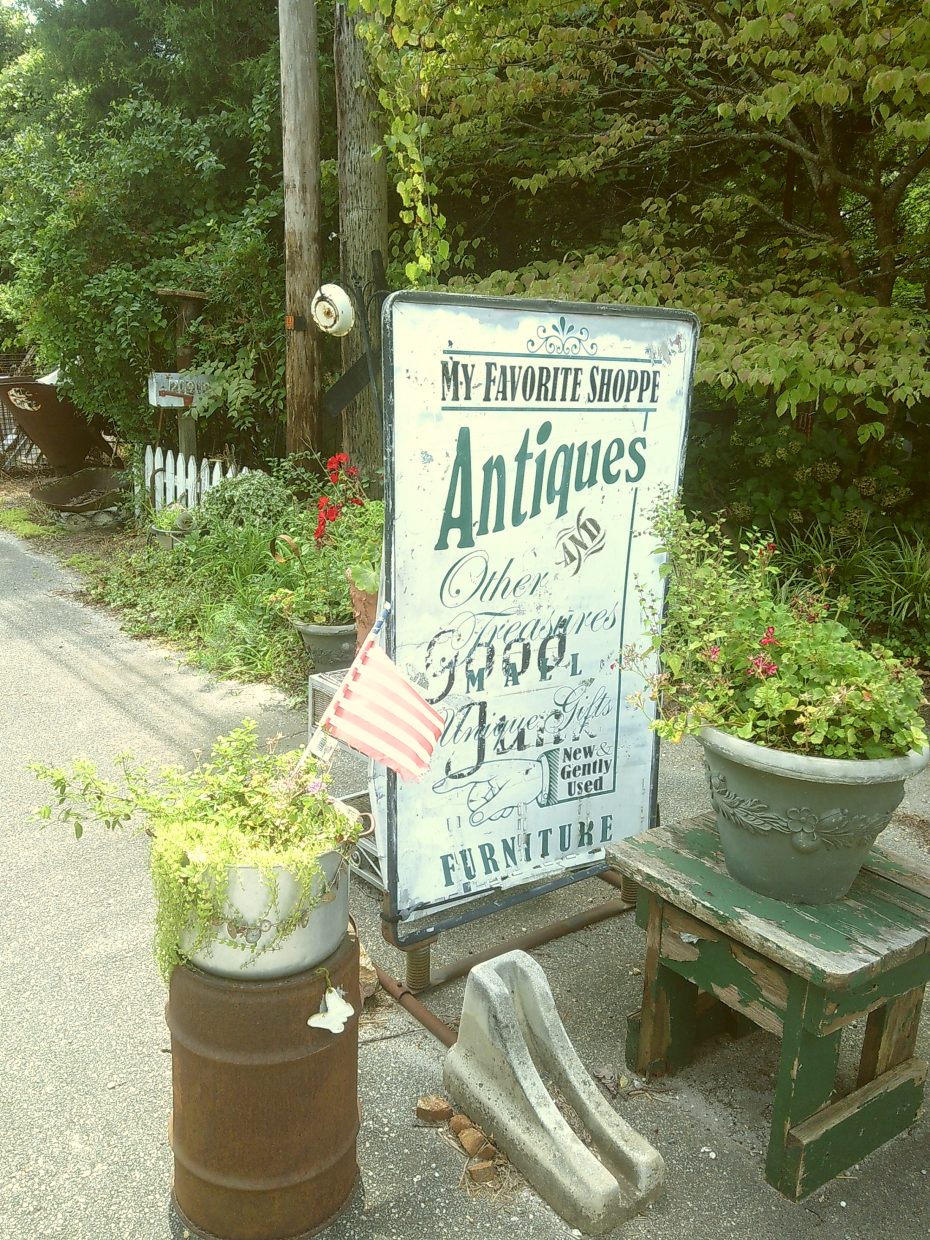
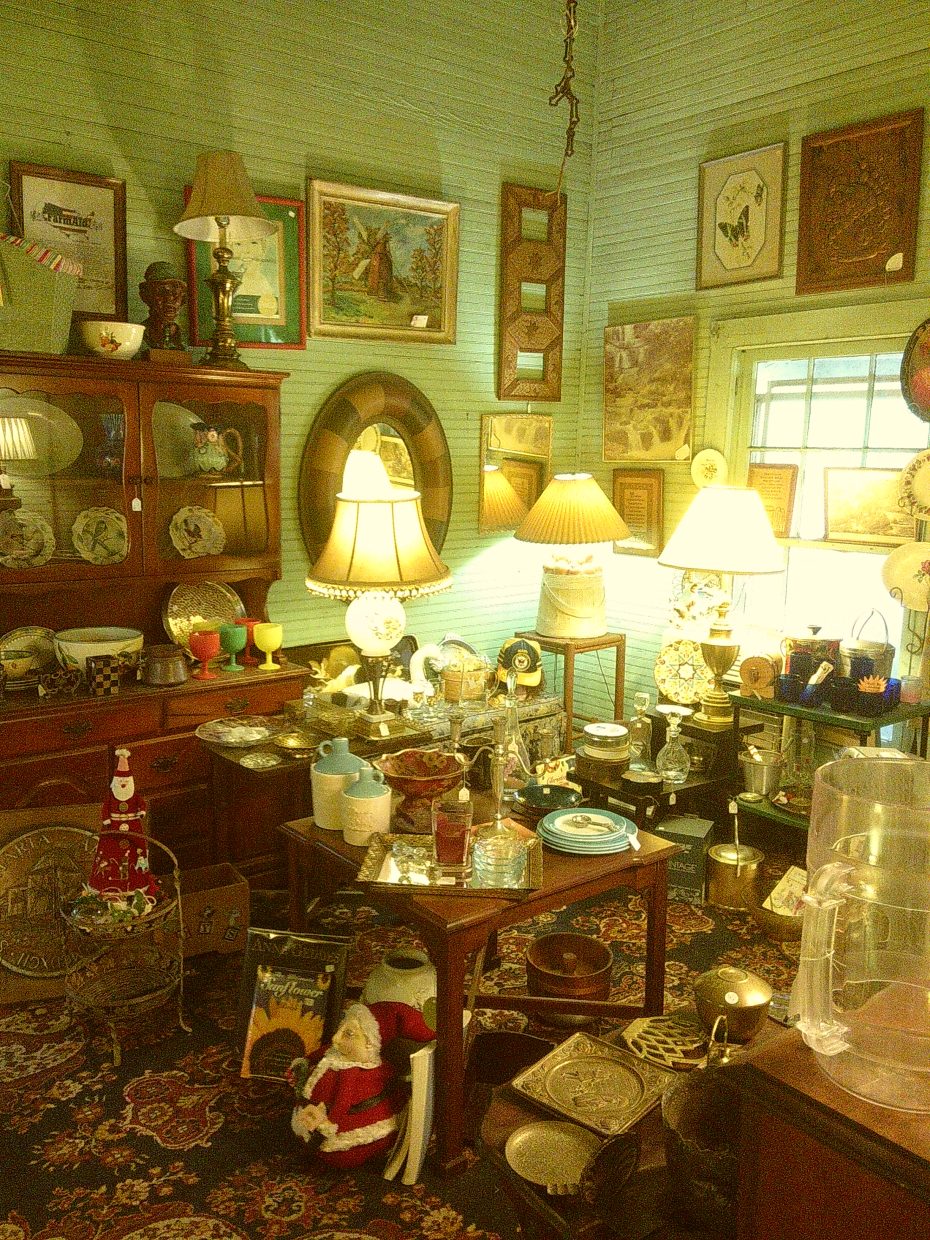
Some of the best little shops and stores we found nearby Earl Scruggs Music Festival, though, were the little holes-in-the-wall or mom-and-pop shops. Our favorite doesn’t have a name, doesn’t have posted hours, doesn’t have a website – or any kind of point on Google Maps at all. Heading out of Tryon toward Landrum, you’ll just cross over the state line on US Highway 176, Asheville Highway, when you come across a couple of small buildings covered in antiques. Stop at the intersection of US 176 and State Rd S-42-183.

Run by a pair of sisters, the shop is only open Thursday through the weekend and takes only cash, but you will find an inventory unlike any other. Sure, they may package your local North Carolina pottery finds in a (clean) reused Burger King bag. It only adds to the charm! The sisters will be happy to give you a tour and show you the historic property. We return every year and strolling through the crowded, historic house full of their collection of finds is a highlight of attending ESMF.
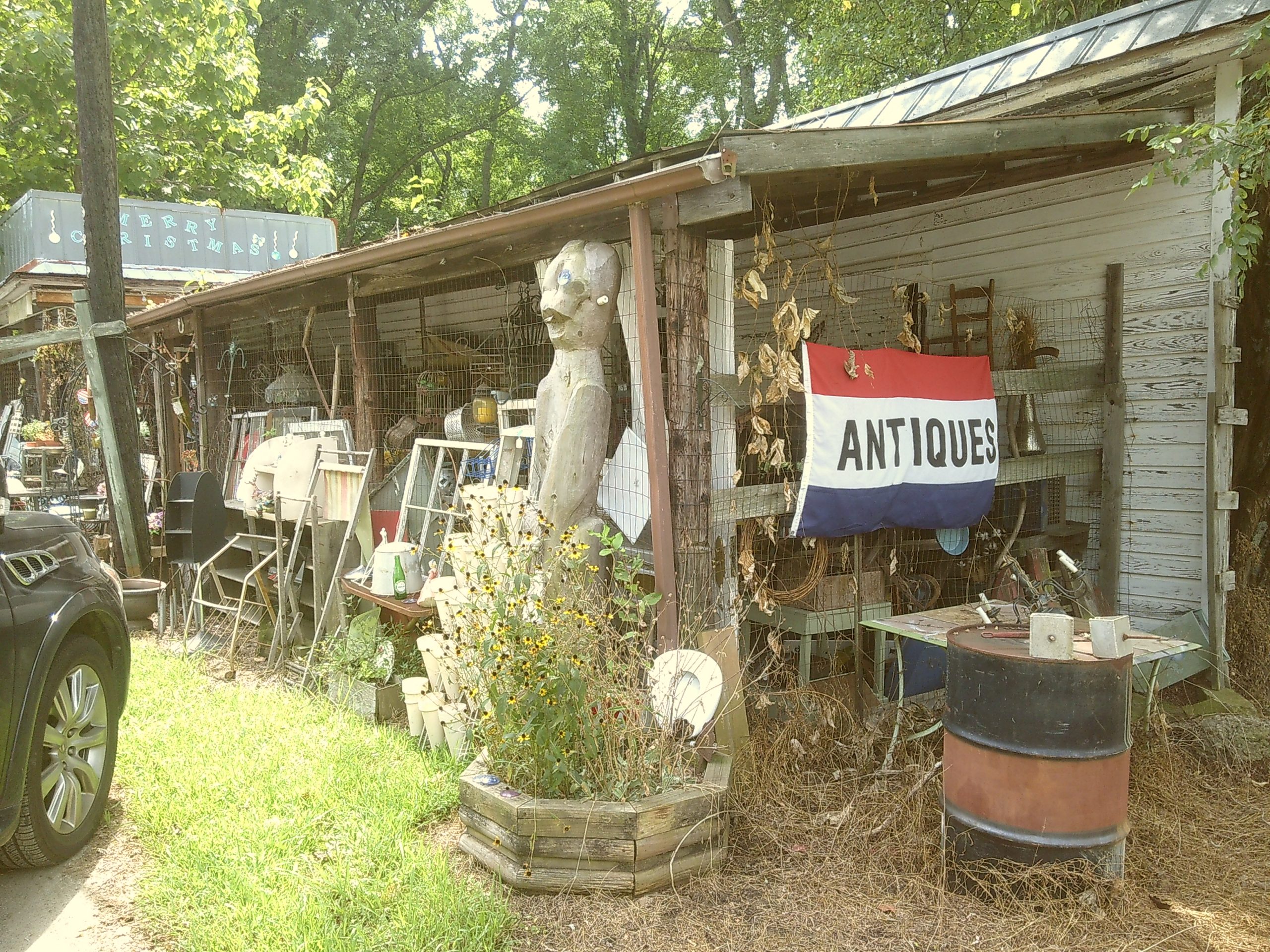
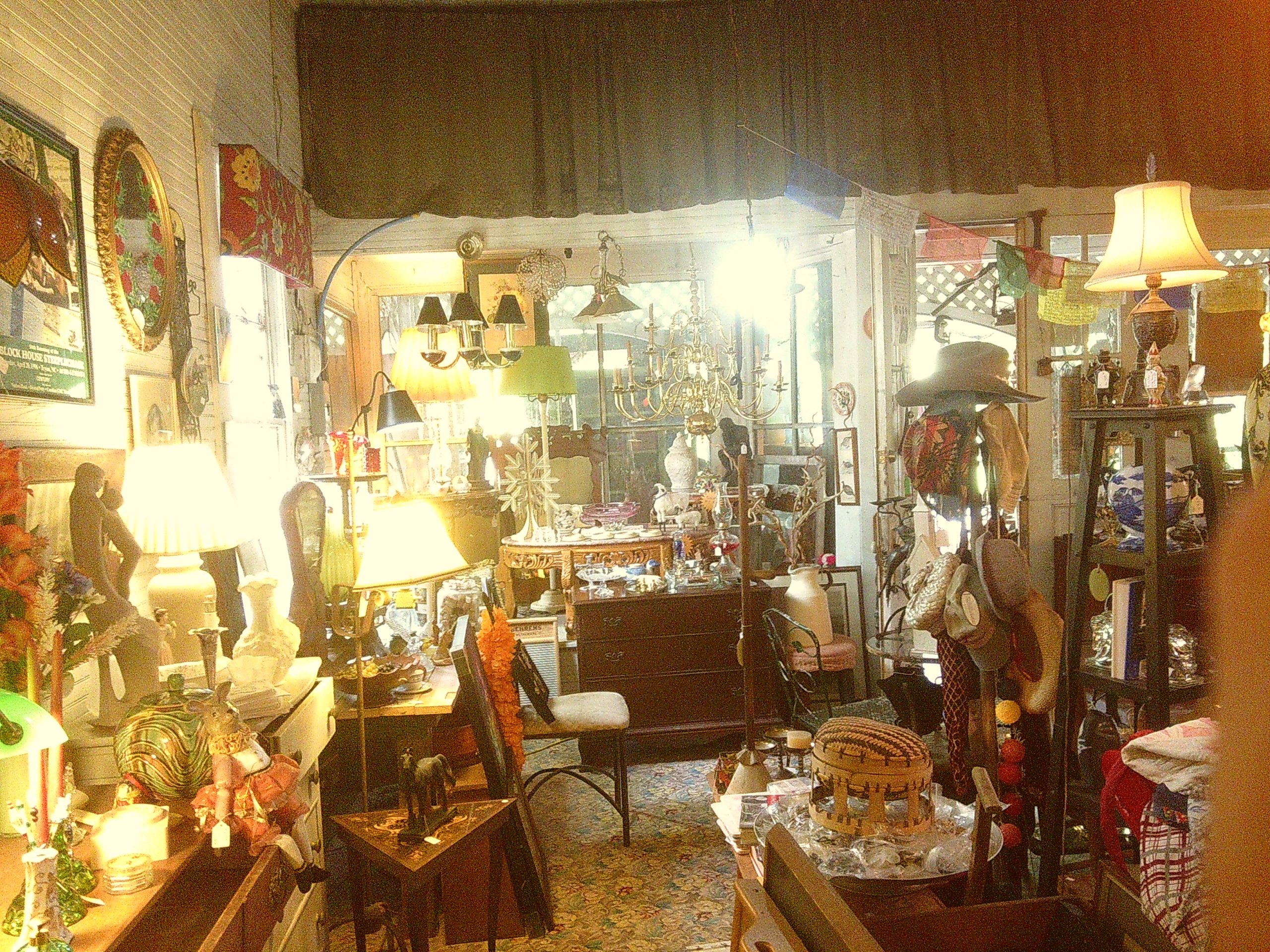
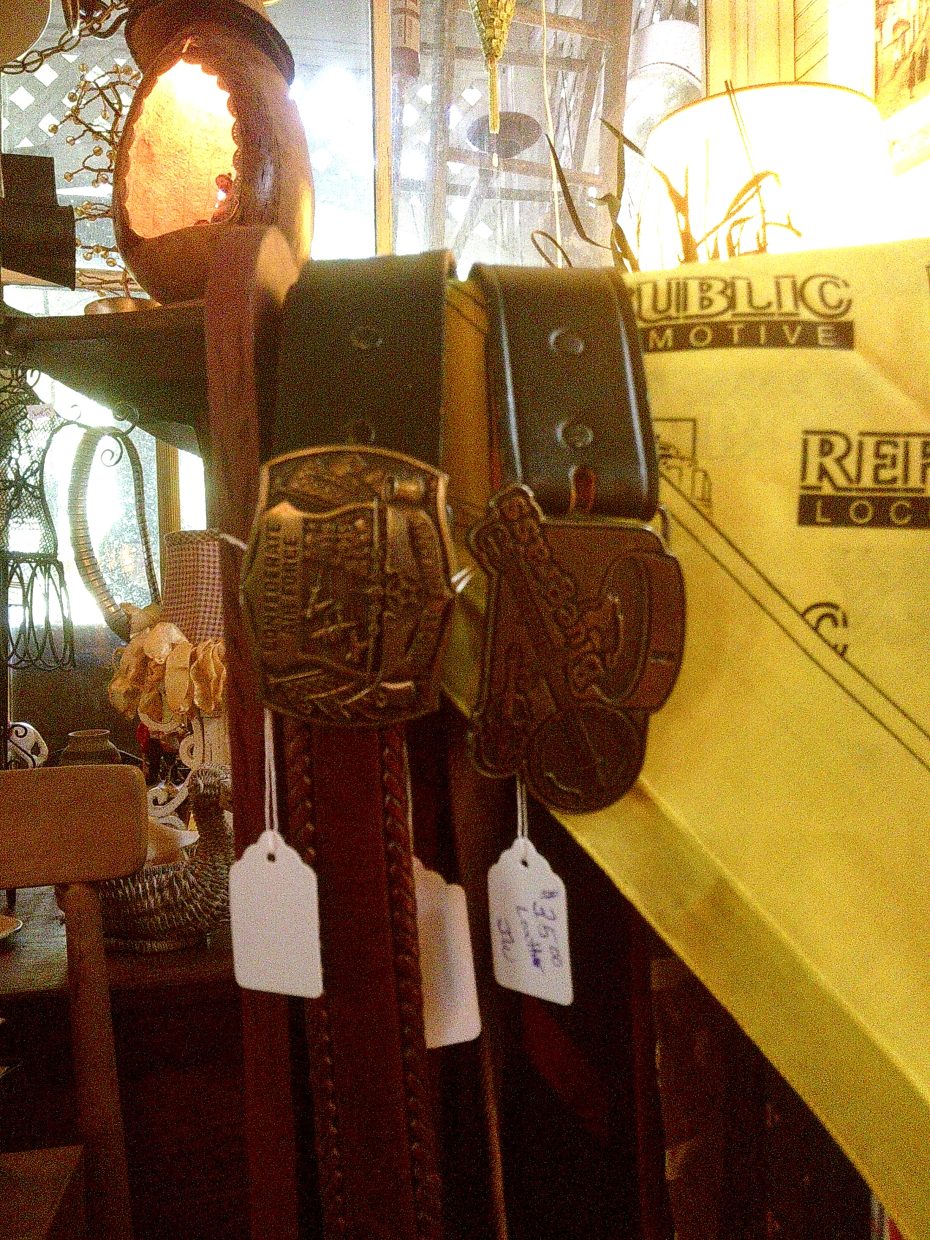
You may even find a bluegrass belt buckle along the way! While we can’t tell you the name of the business or really any more information than what’s included here, we cannot recommend a stop at 21919 Asheville Highway in Landrum enough. It is truly a hidden gem.
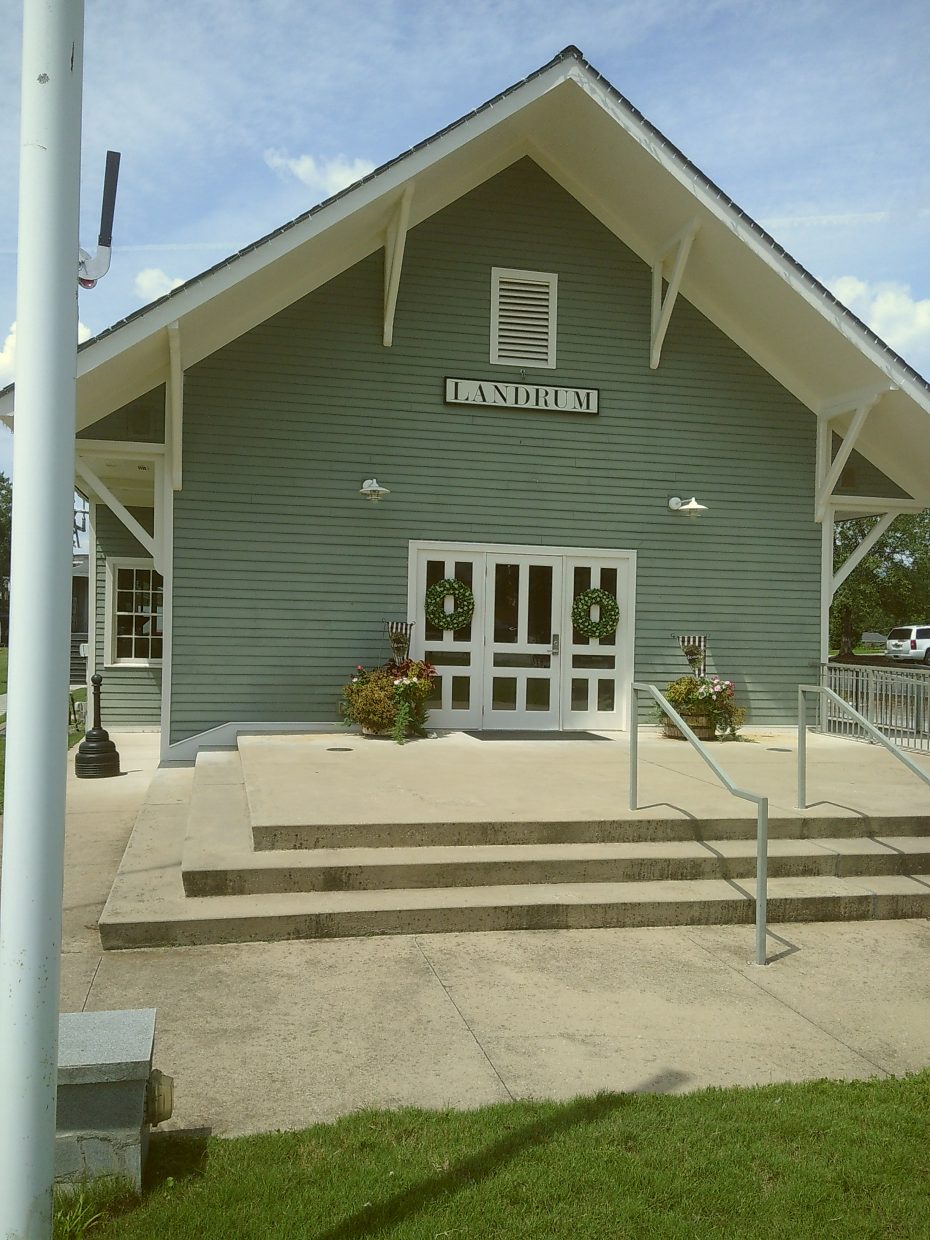
When you get to Landrum, you’ll notice we’ve rolled entirely out of the Appalachian foothills, topographically. Still, horses abound and there’s plenty to do, see, and enjoy. Stop first at the Landrum Depot, a rail and history museum, event venue, and community gathering place – including a refurbished Pullman sleeper car.
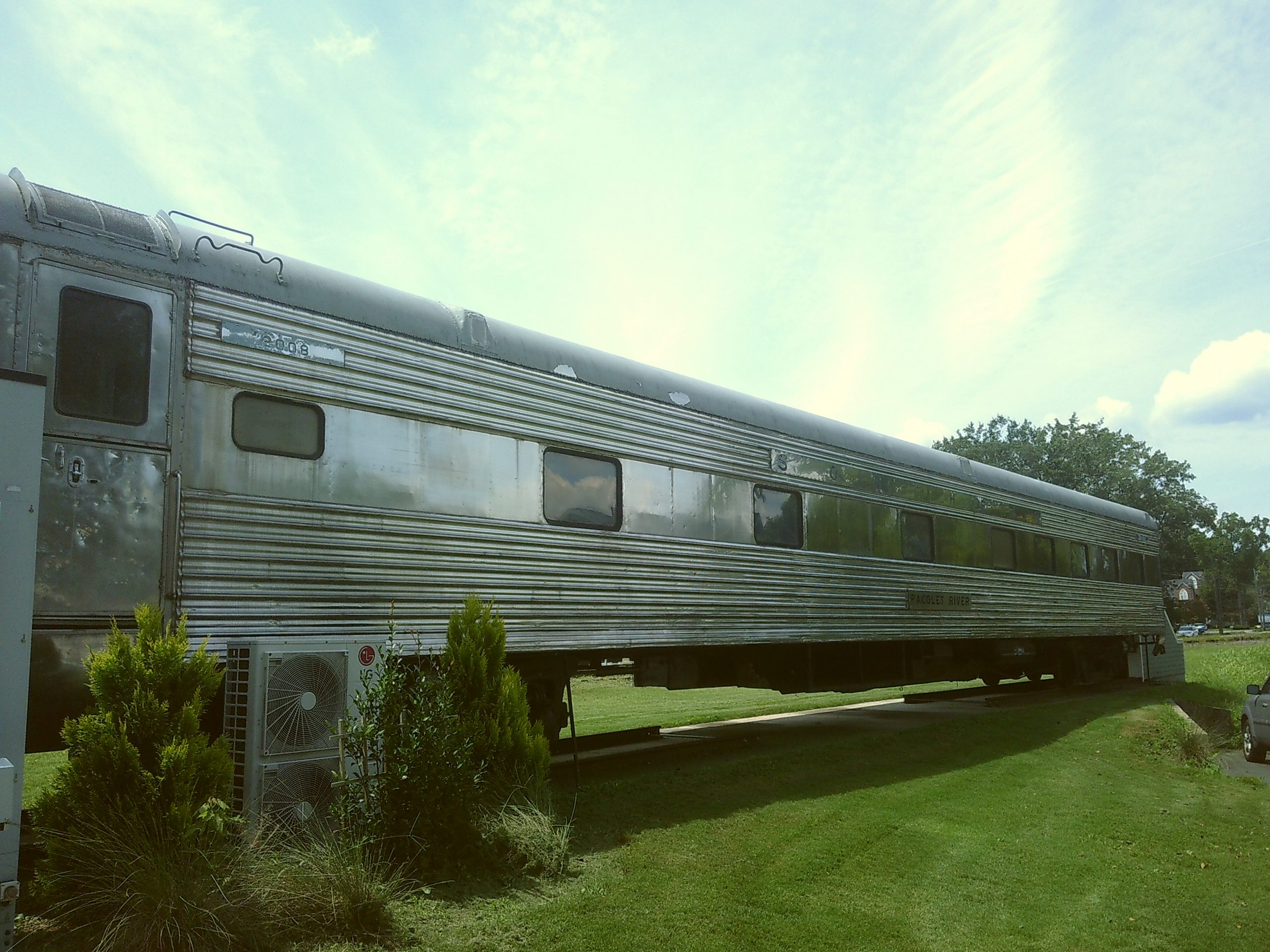
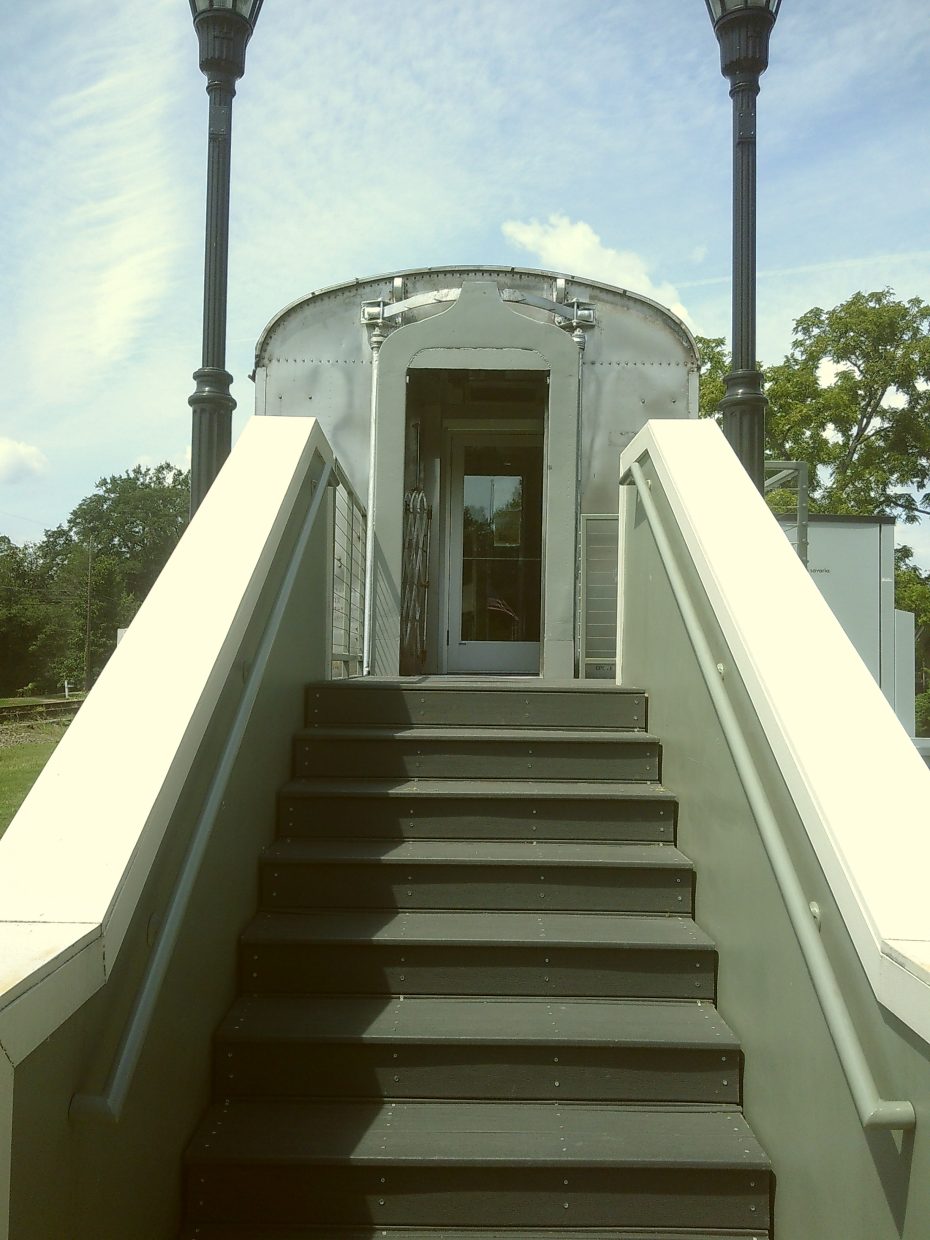
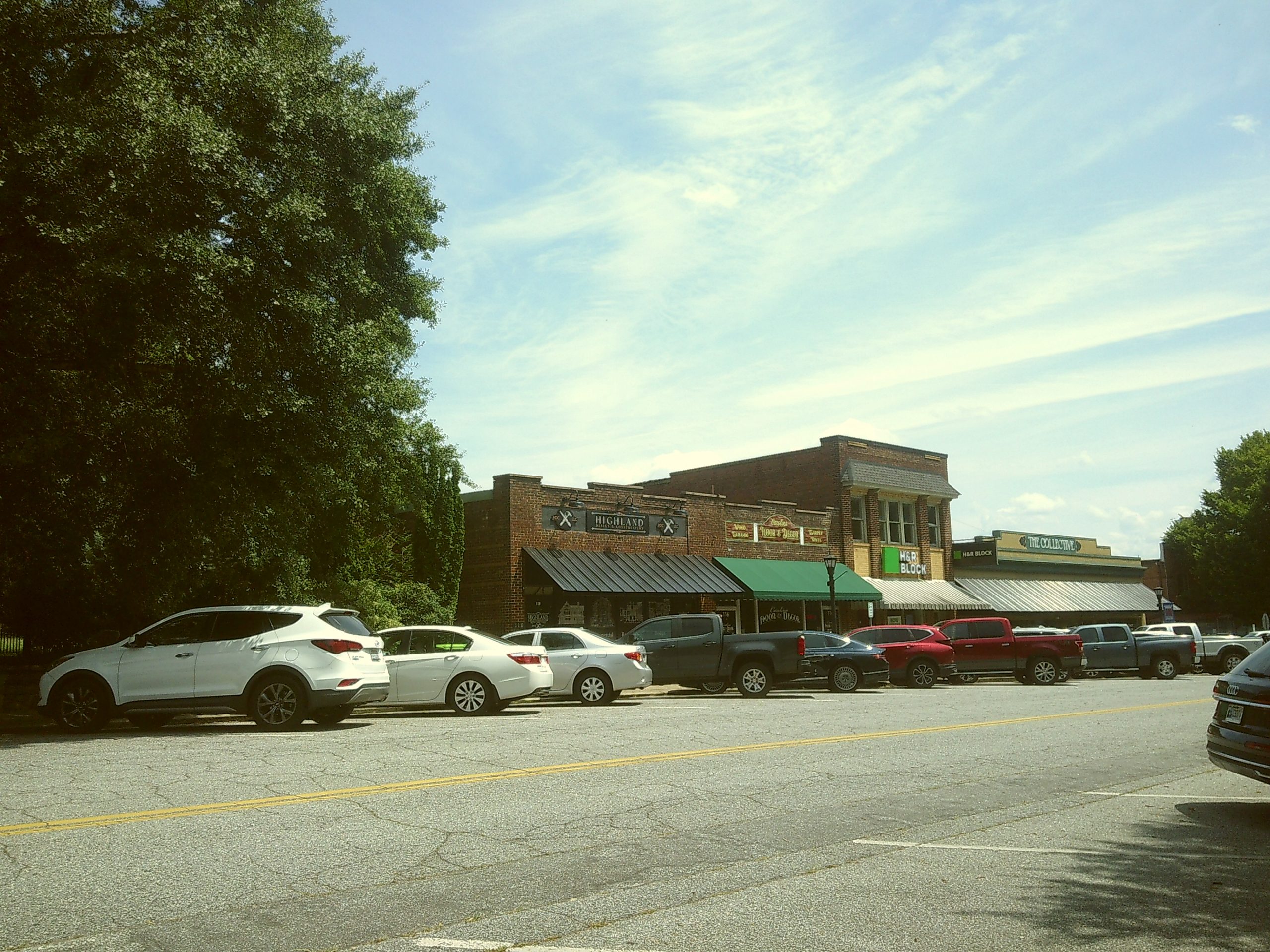
Beautiful and quaint downtown Landrum also includes many restaurants and stores ready for visitors.
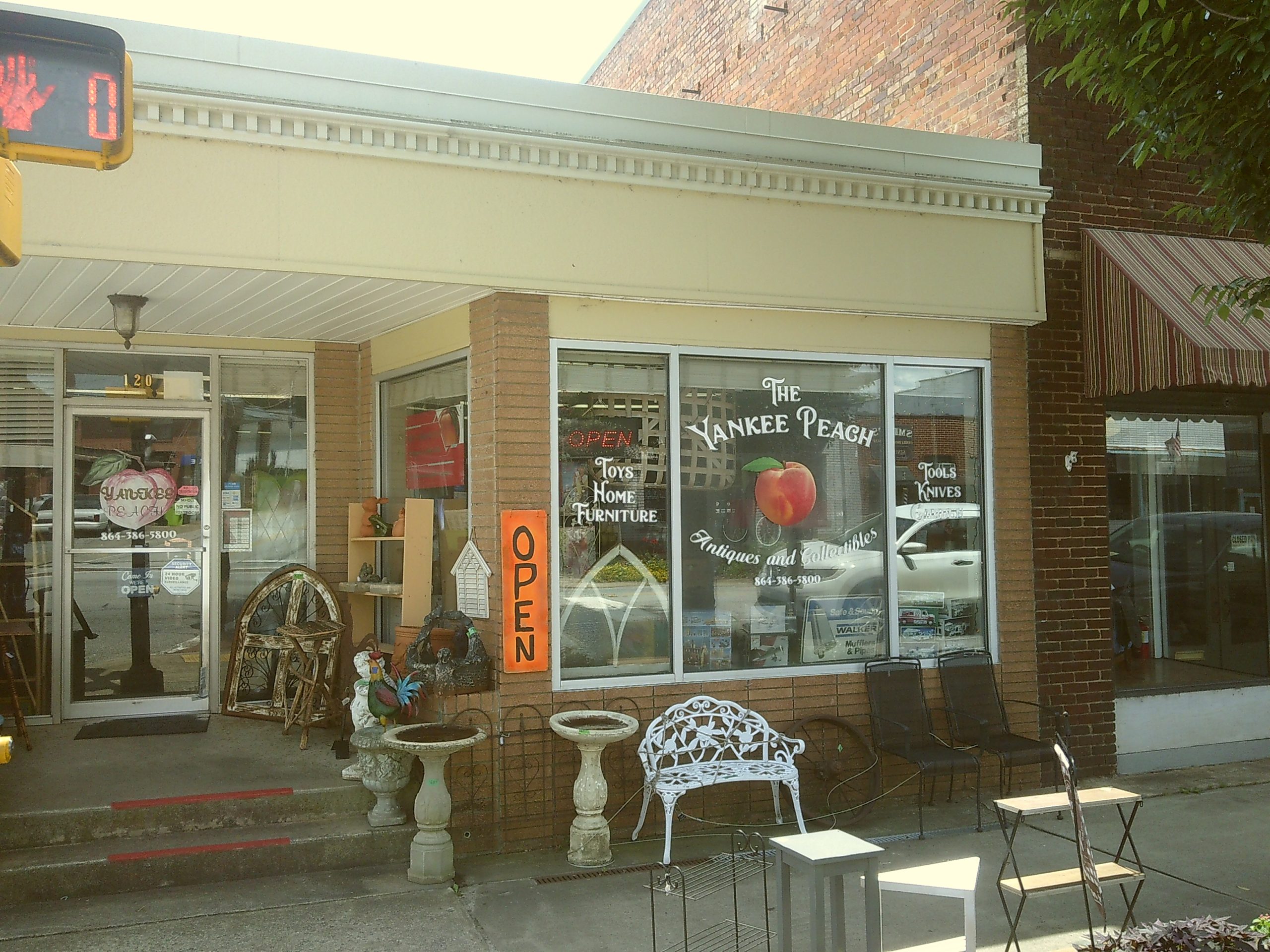
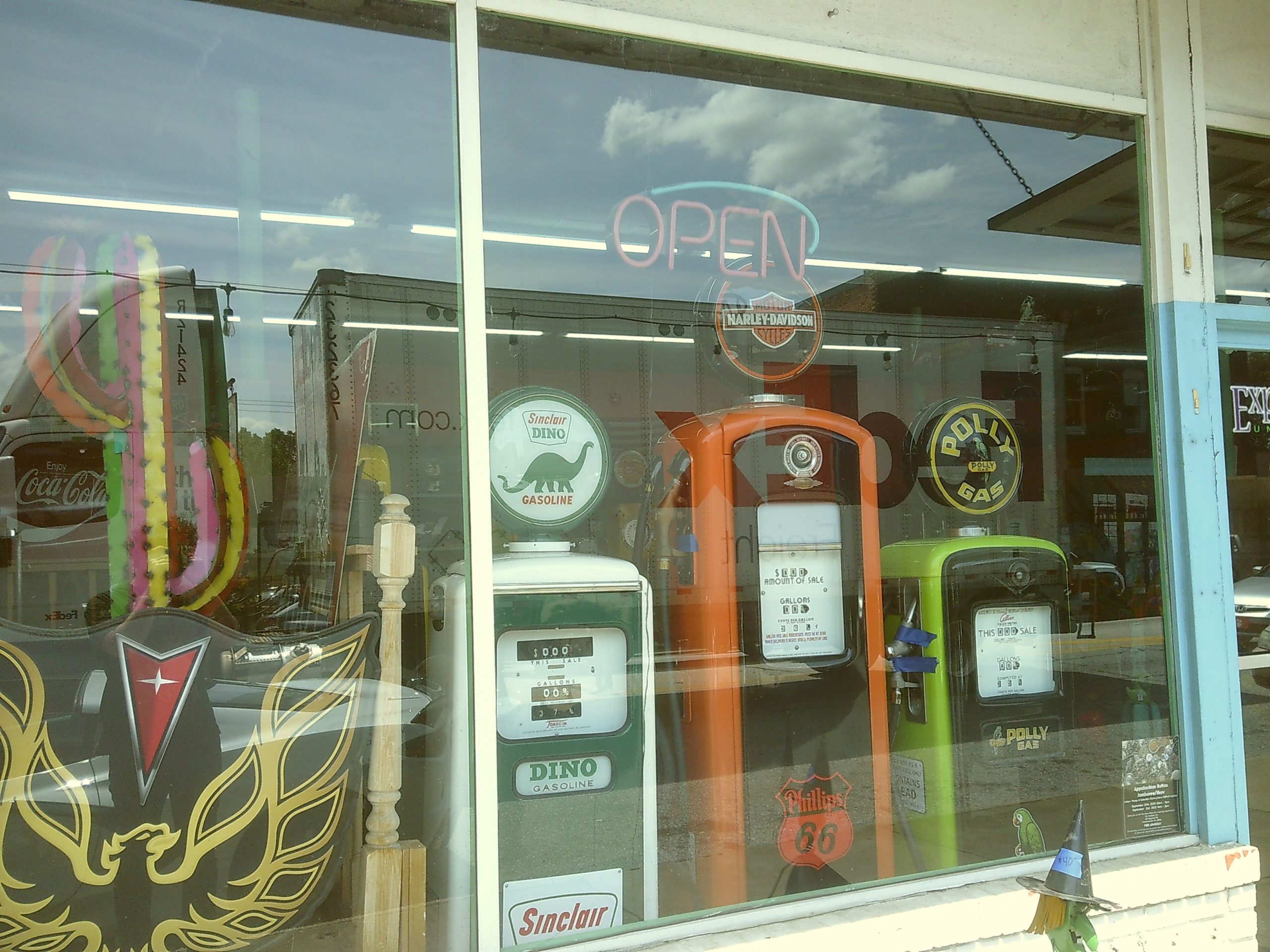
Stop and peruse antiques and goodies at stores like The Yankee Peach (above) or Expressions Antiques (below), just across the street from each other.
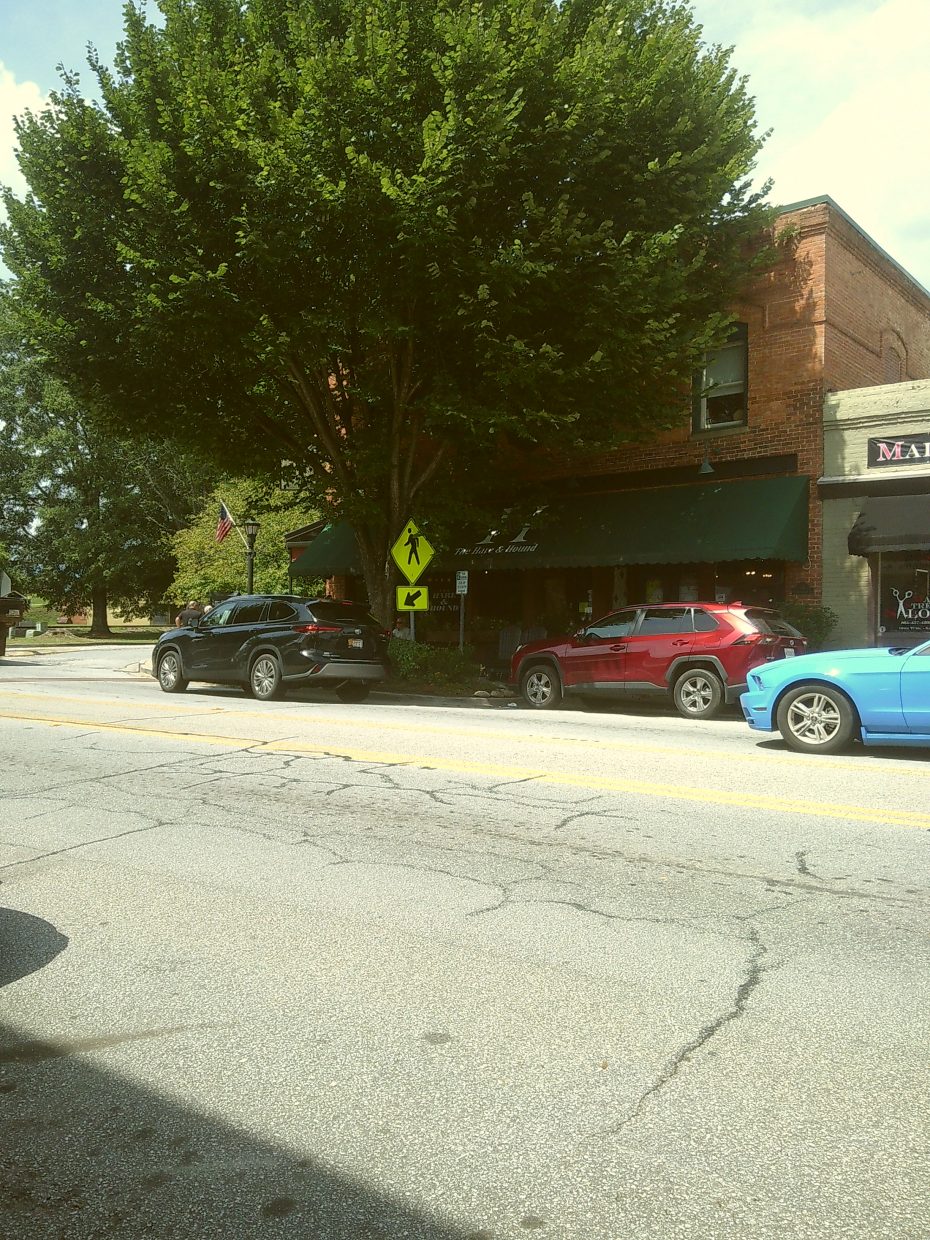
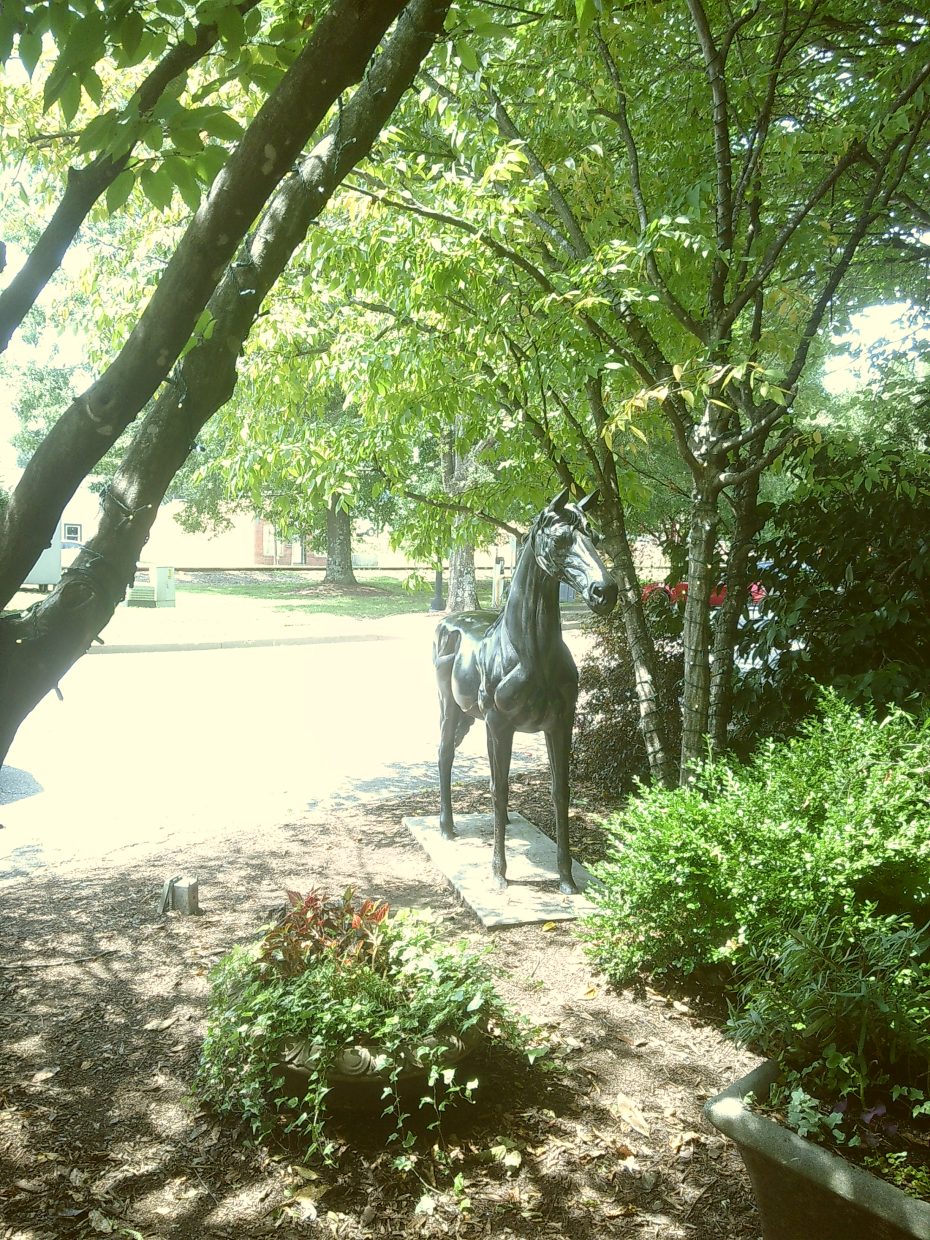
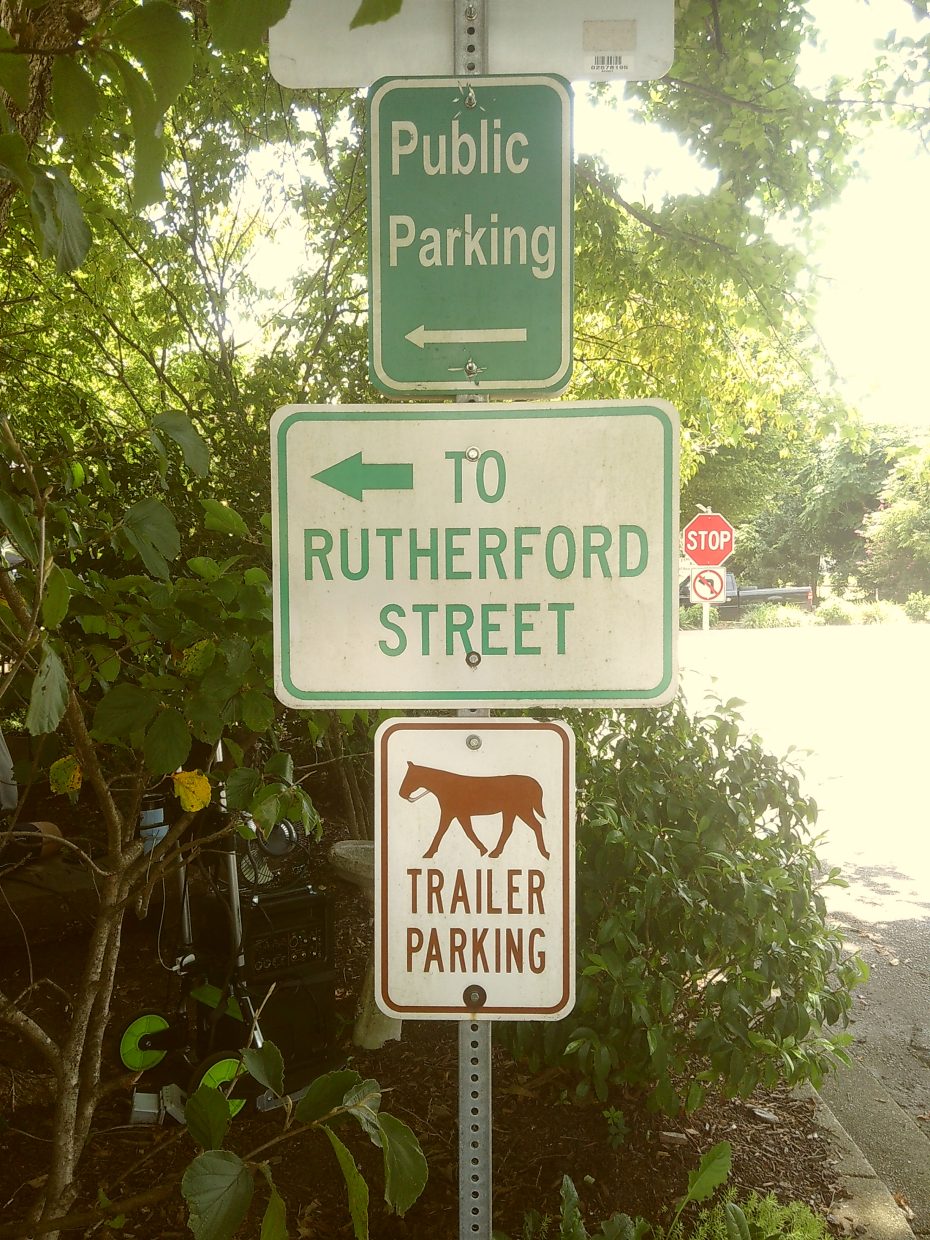
We always enjoy stopping for a drink, lunch, or dinner at The Hare & the Hound in Landrum. They often feature live music and whether you’re sitting in the cozy indoors or outside on the shady street, the vibe is perfect. Need to park your horse trailer? They’ve got that covered in Landrum, too!
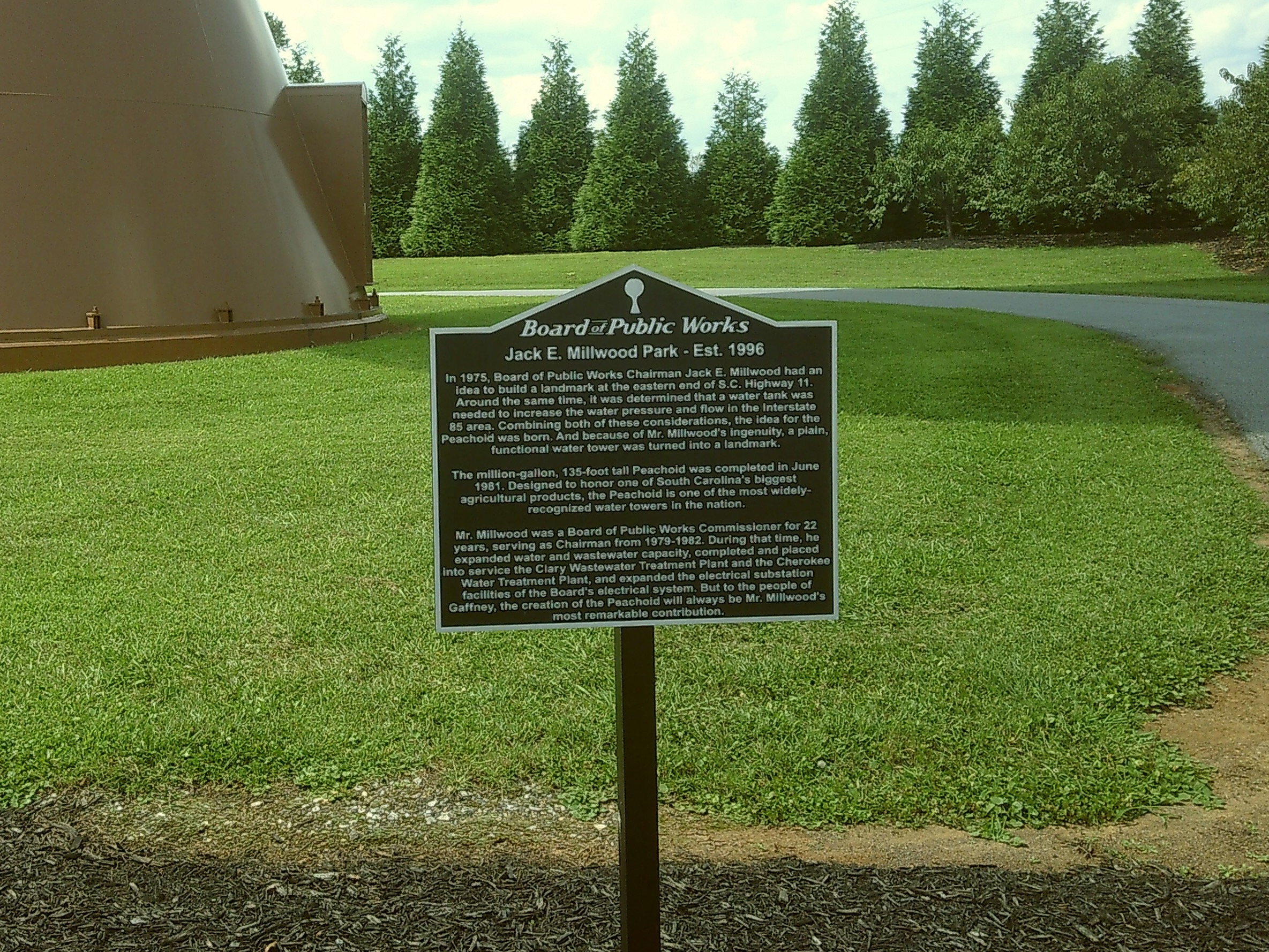
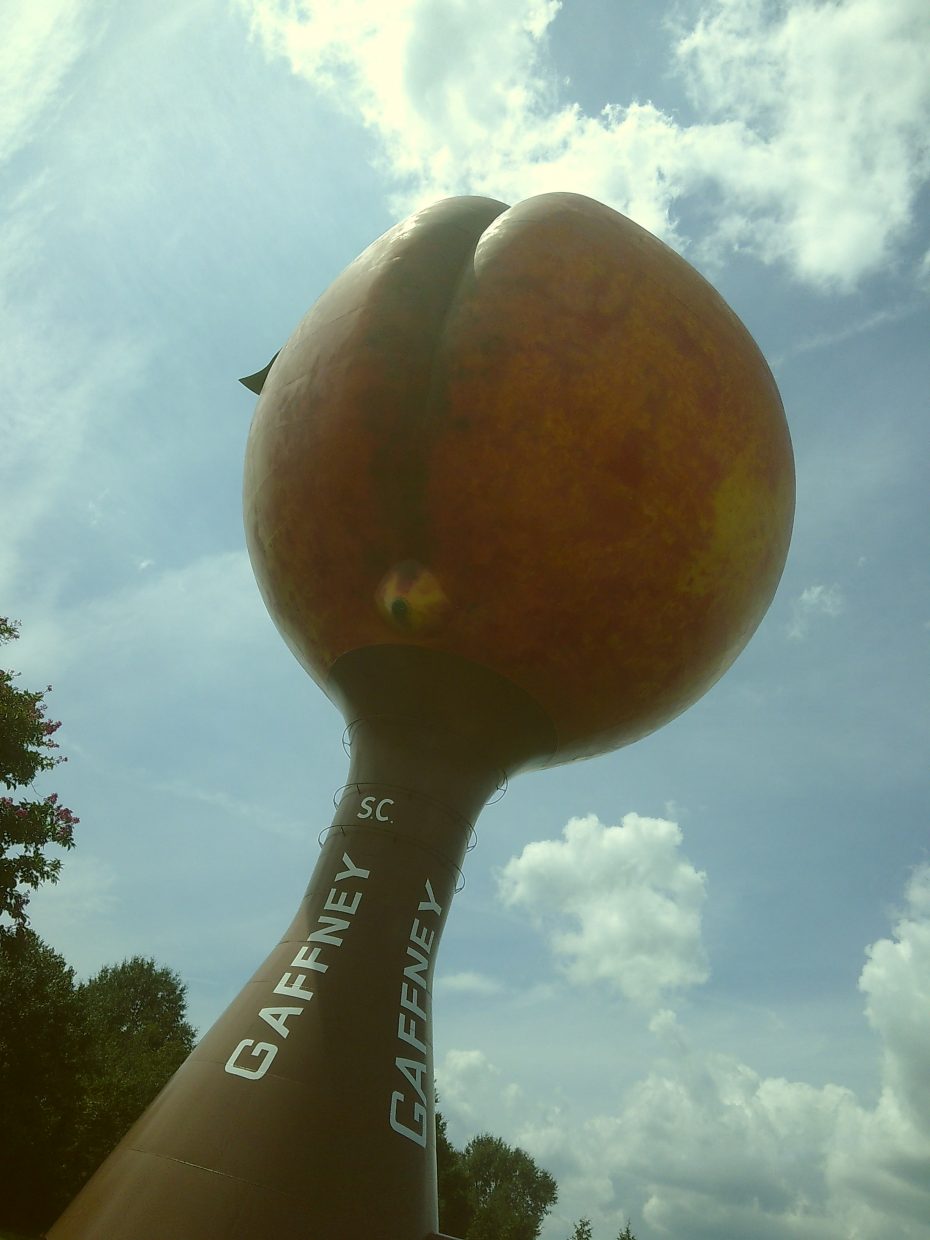
The Peachoid, Gaffney, South Carolina
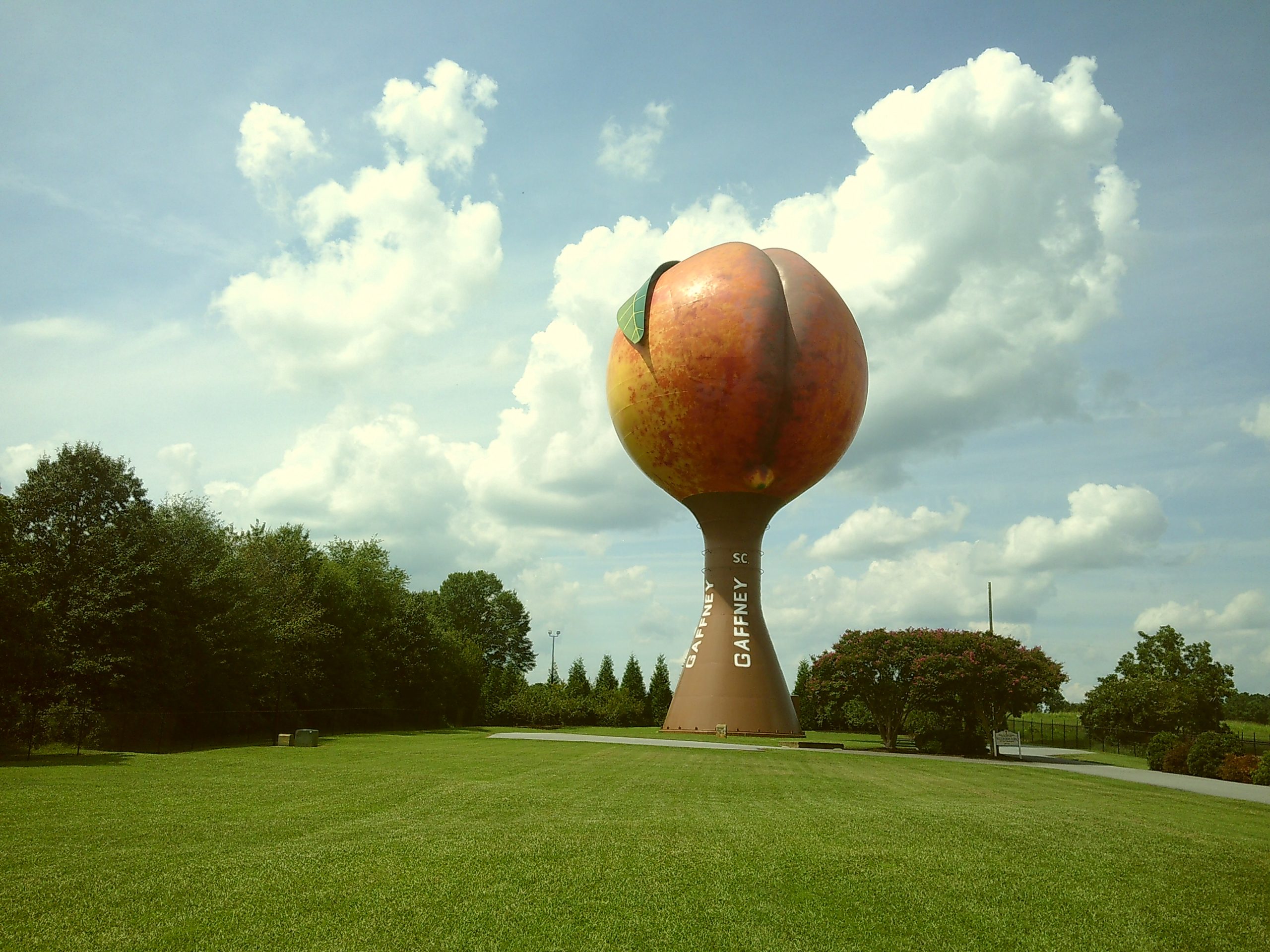
Just around the corner from Landrum and mere minutes from Earl Scruggs’ childhood home near Boiling Springs, North Carolina, is Gaffney, South Carolina, home of the infamous Peachoid. There are lots of prime roadside attractions worth a visit in the area surrounding Earl Scruggs Music Festival, but the Peachoid may top the list.

If you’re heading to or from Scruggs’ homeplace or the Earl Scruggs Center in Shelby, North Carolina, as we were, stop by for a photo opp – and put Netflix’s House of Cards theme song on full blast.
Boiling Springs, North Carolina
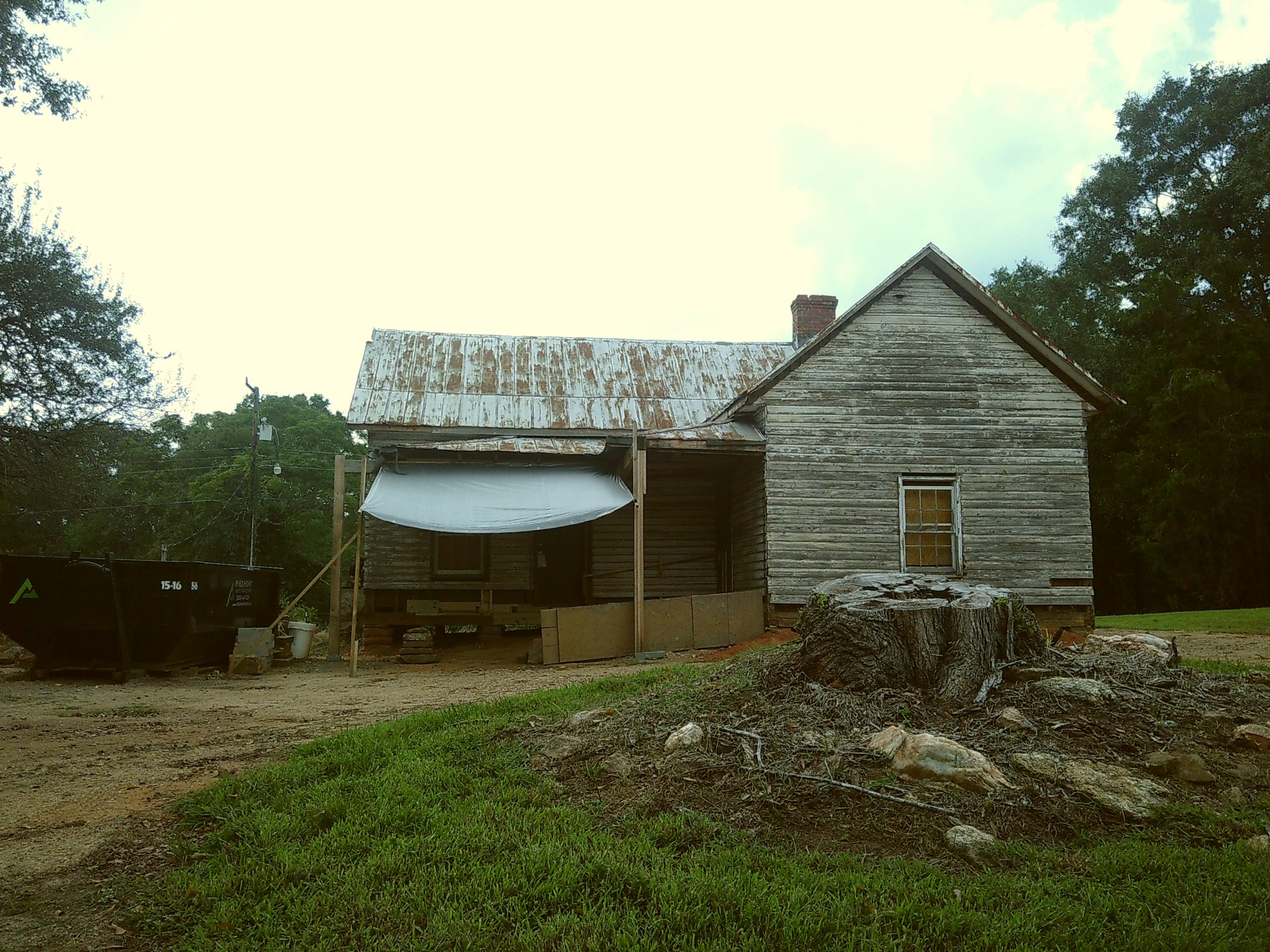
Why not take a tour of historic homeplaces while attending ESMF? The musical dichotomy of Nina Simone and Earl Scruggs is perceived as incredibly distant or far-fetched, yet the two were born and raised barely 40 miles from each other. Why do we perceive one of these megaliths of American music as Appalachian, but not the other? (Meanwhile, Scruggs was raised decidedly outside of the mountains in southern Cleveland County, while Simone was raised nestled within them.)

Scruggs’ childhood home was recently purchased by the Earl Scruggs Center and during our visit last year at the time of the festival, preservation and renovation activities had just begun at the property.
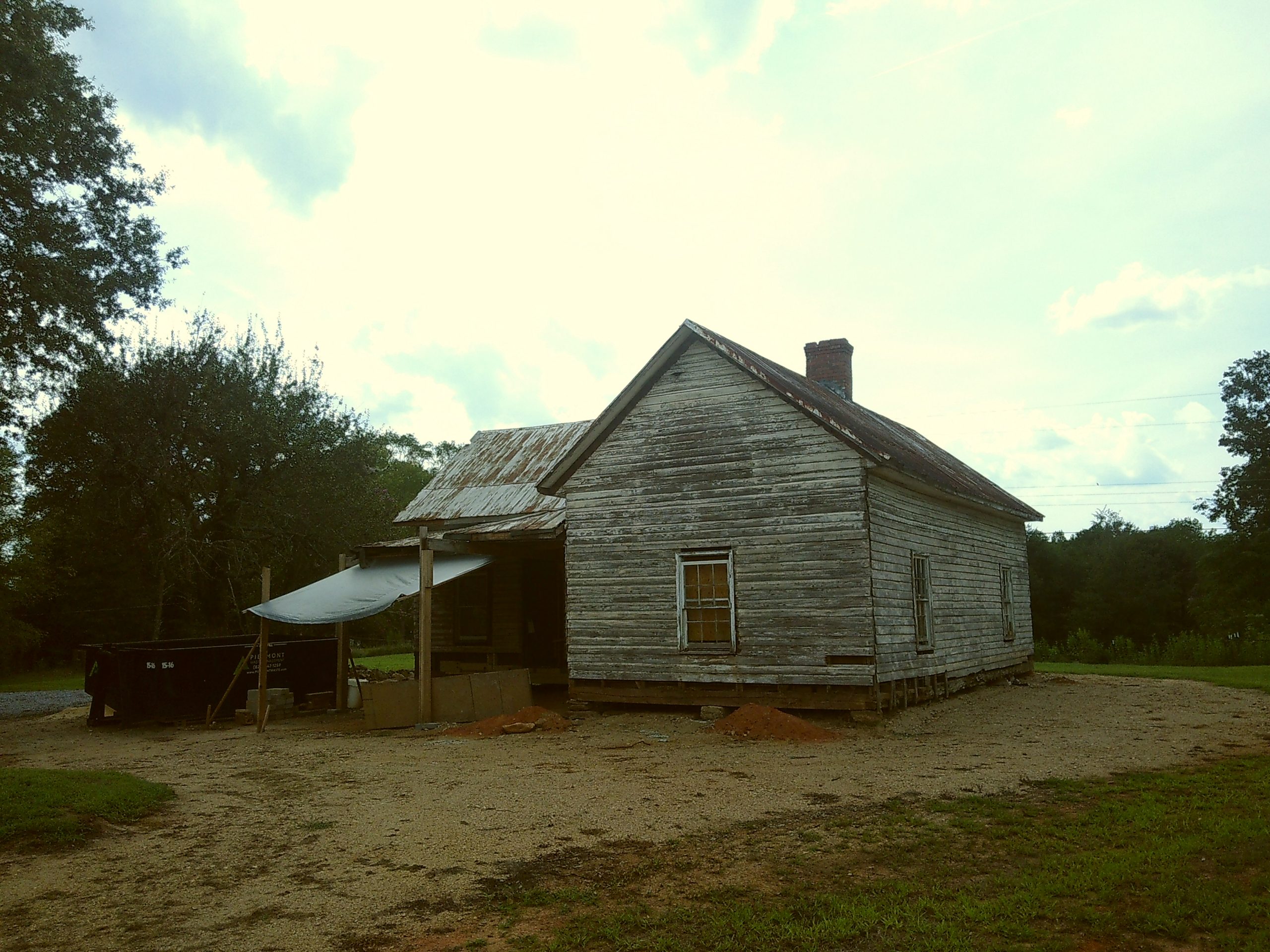
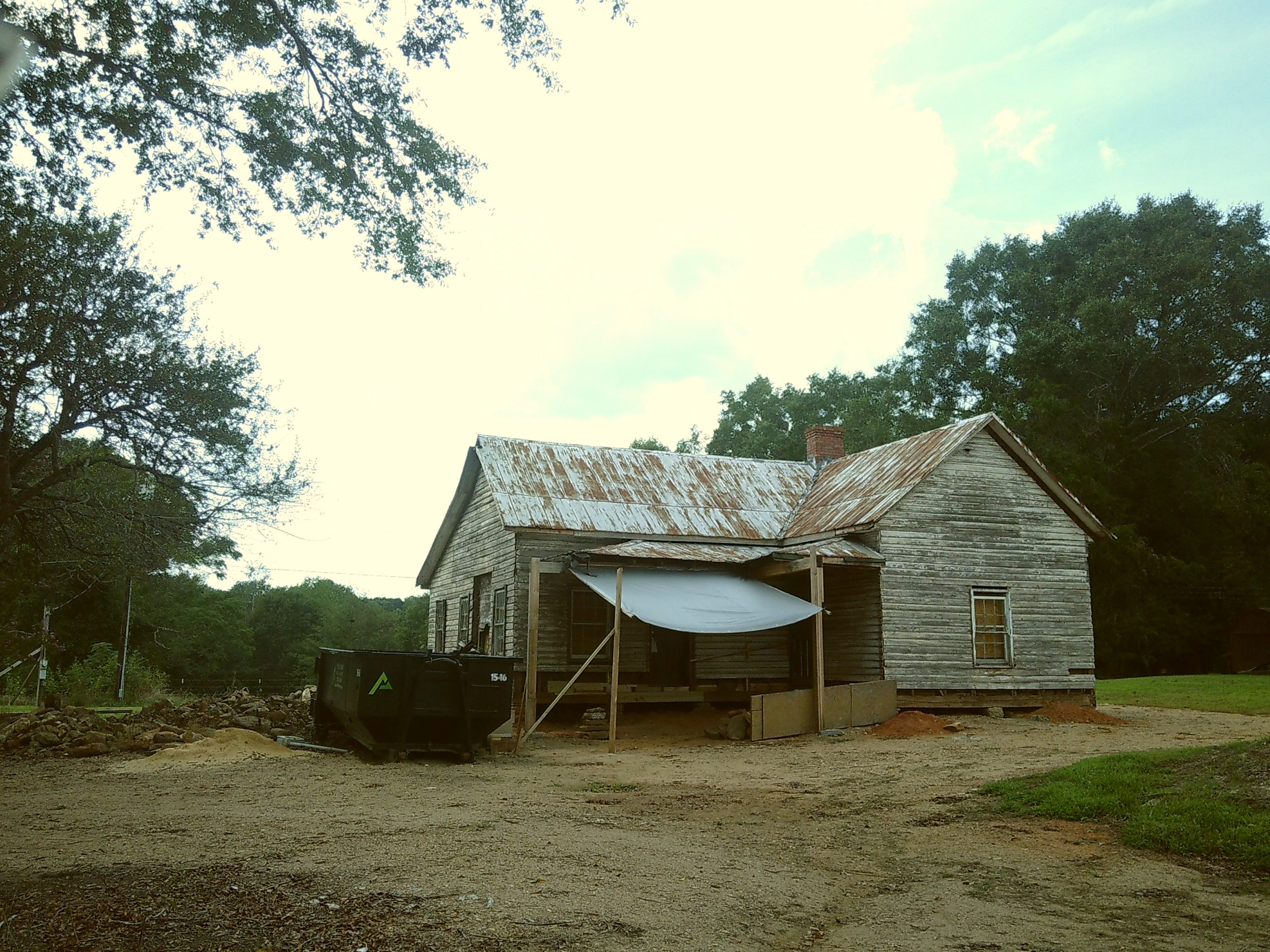
Like Simone’s homeplace, the Scruggs property on Riverside Road in the Flint Hill community of Boiling Springs feels sacred, immediately grounding fans, visitors, and passersby while reminding of the humanity of these larger than life musical figures. Hit play on “Reuben” or “Shuckin’ the Corn” and revel in being in the exact place where Scruggs first unlocked three-finger style himself and started a century-long banjo craze that’s still going today, at ESMF and beyond.

Learn more about the Earl Scruggs Center’s plans for Earl’s childhood home here.


Shelby, North Carolina
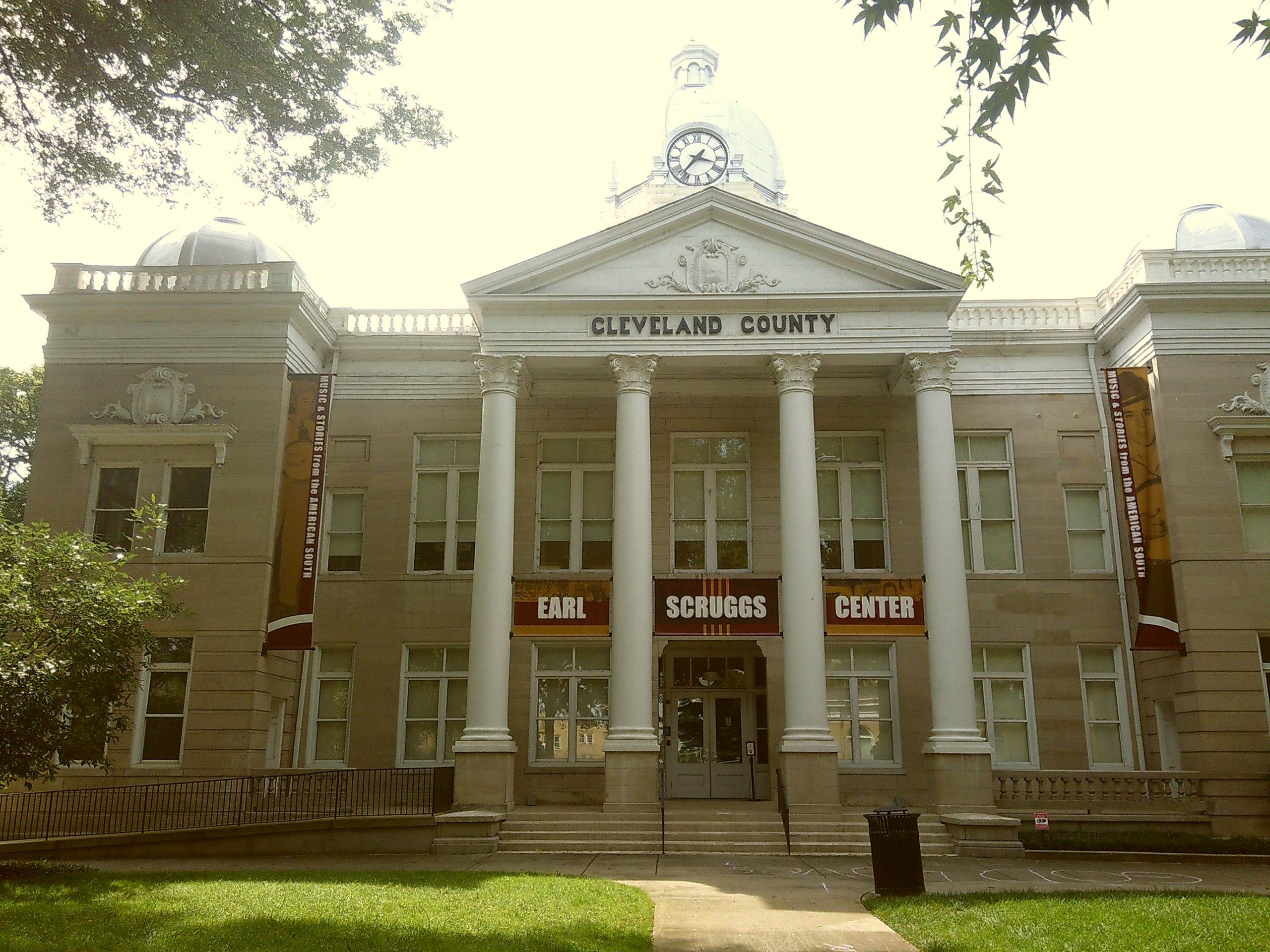
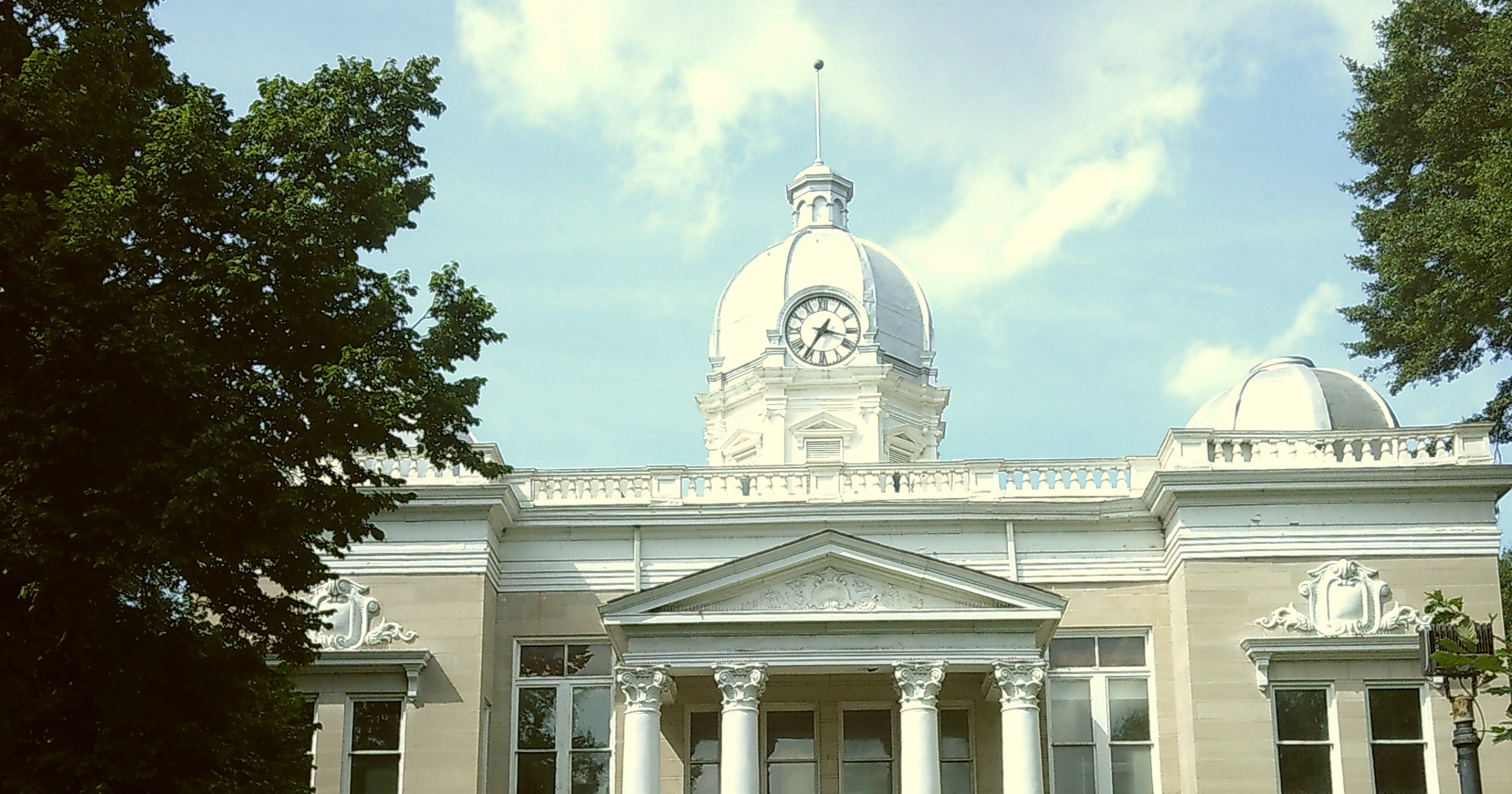
Of course, no visit to Earl Scruggs Music Festival is complete without visiting the Earl Scruggs Center in Shelby, the county seat of Cleveland County, where Scruggs was born and raised. The Center is a host and presenter of ESMF and they offer special events and ticket discounts to ticketholders during the festival.
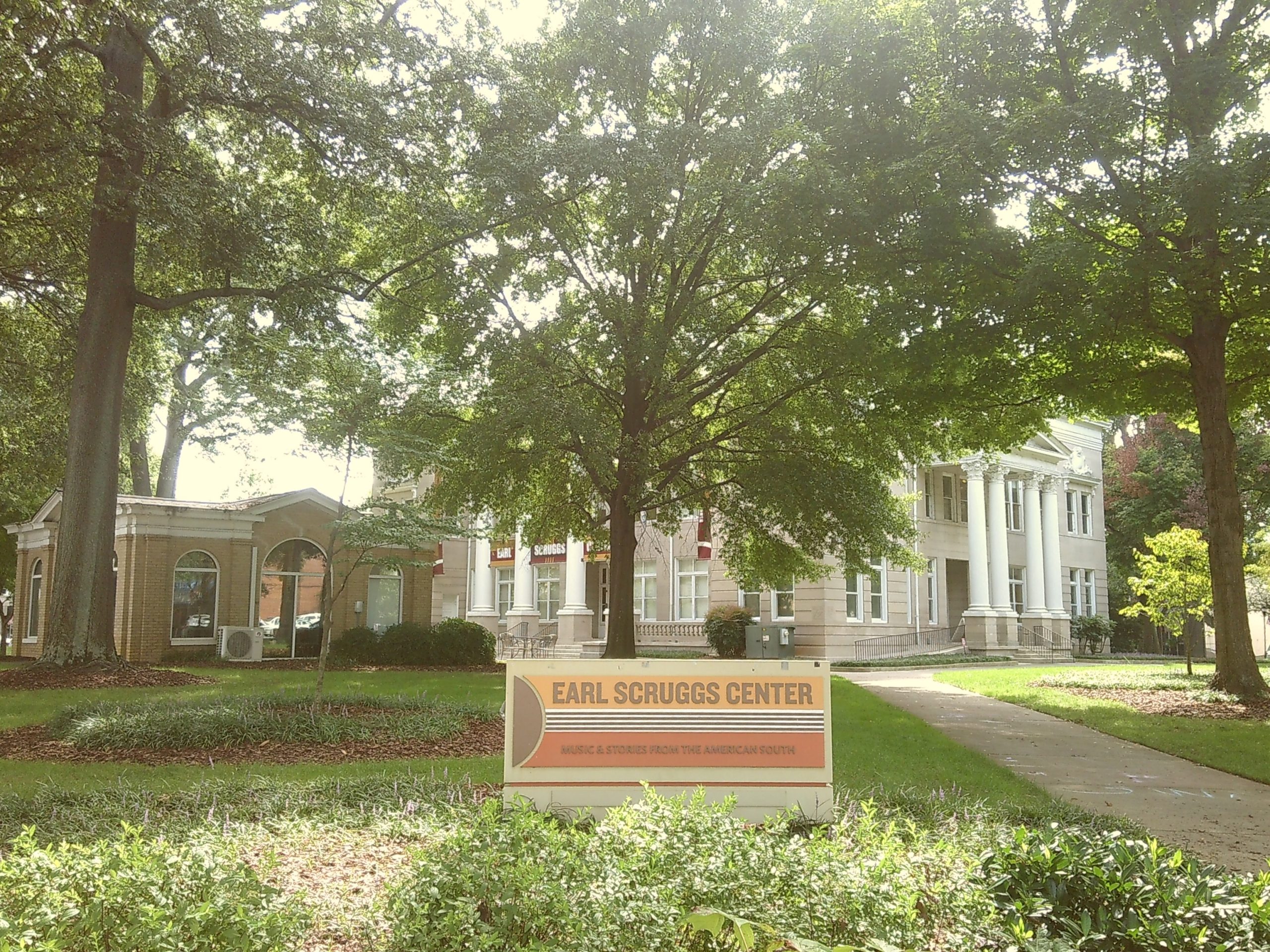
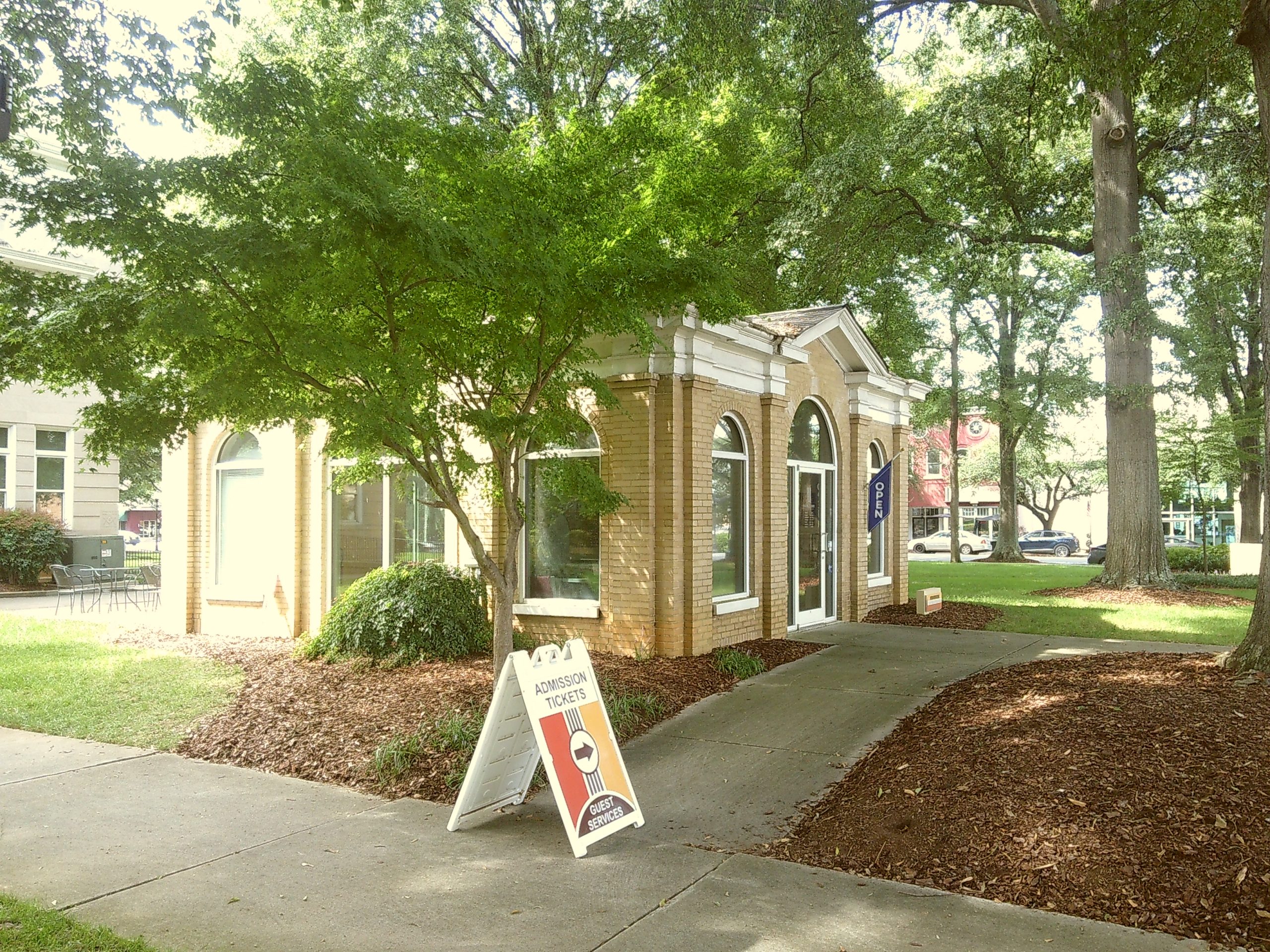
Over the winter, the Earl Scruggs Center closed for renovations, updates, and new and revitalized exhibits, so it’s worth another visit if you haven’t been in a while. An easy 30 mile drive from the festival grounds, during ESMF there’s plenty of special programming, music, and events worth the field trip. Plus, Shelby boasts great restaurants, breweries, shops, and – of course – antique stores, so there’s something for everyone to enjoy.
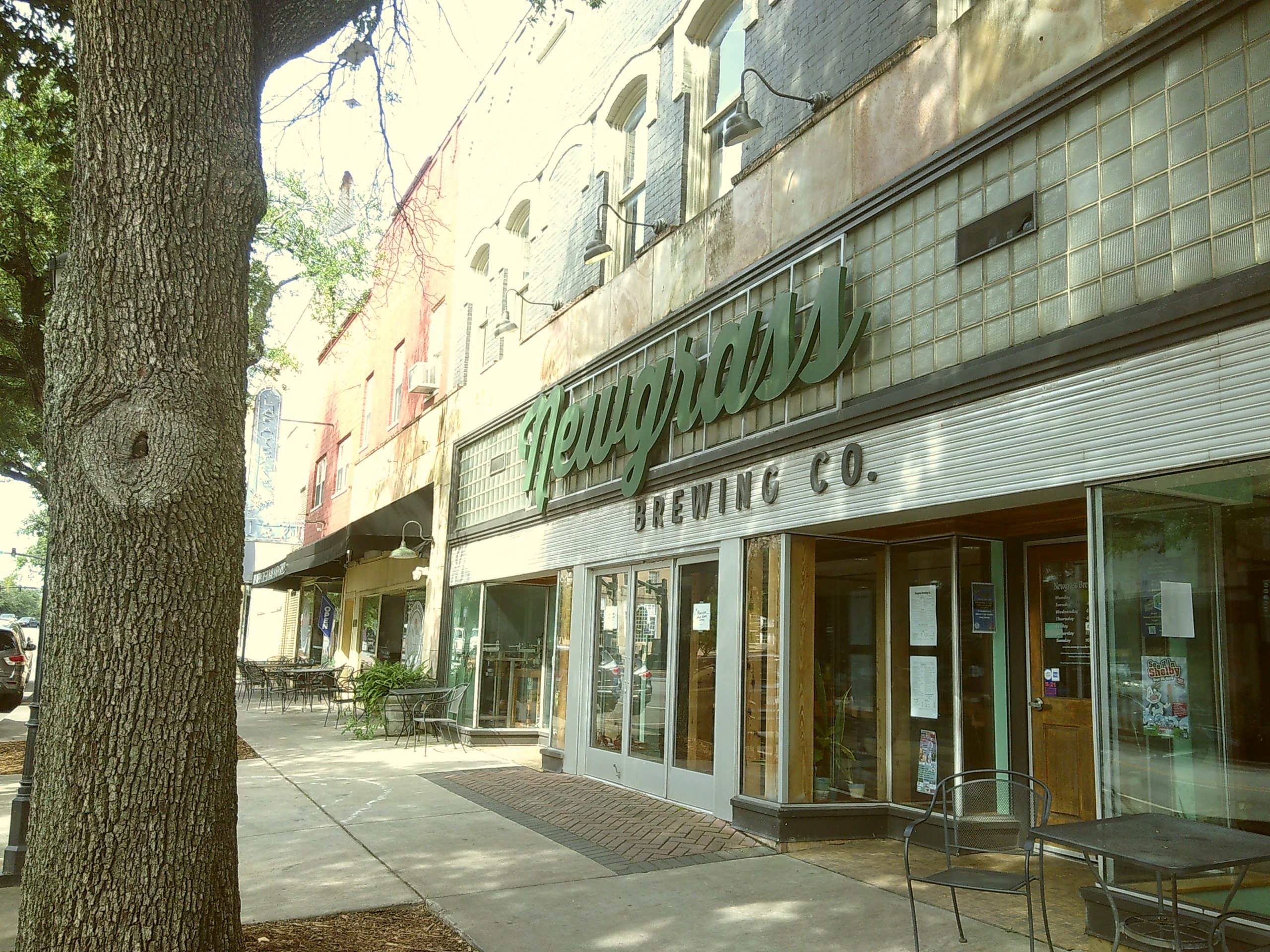
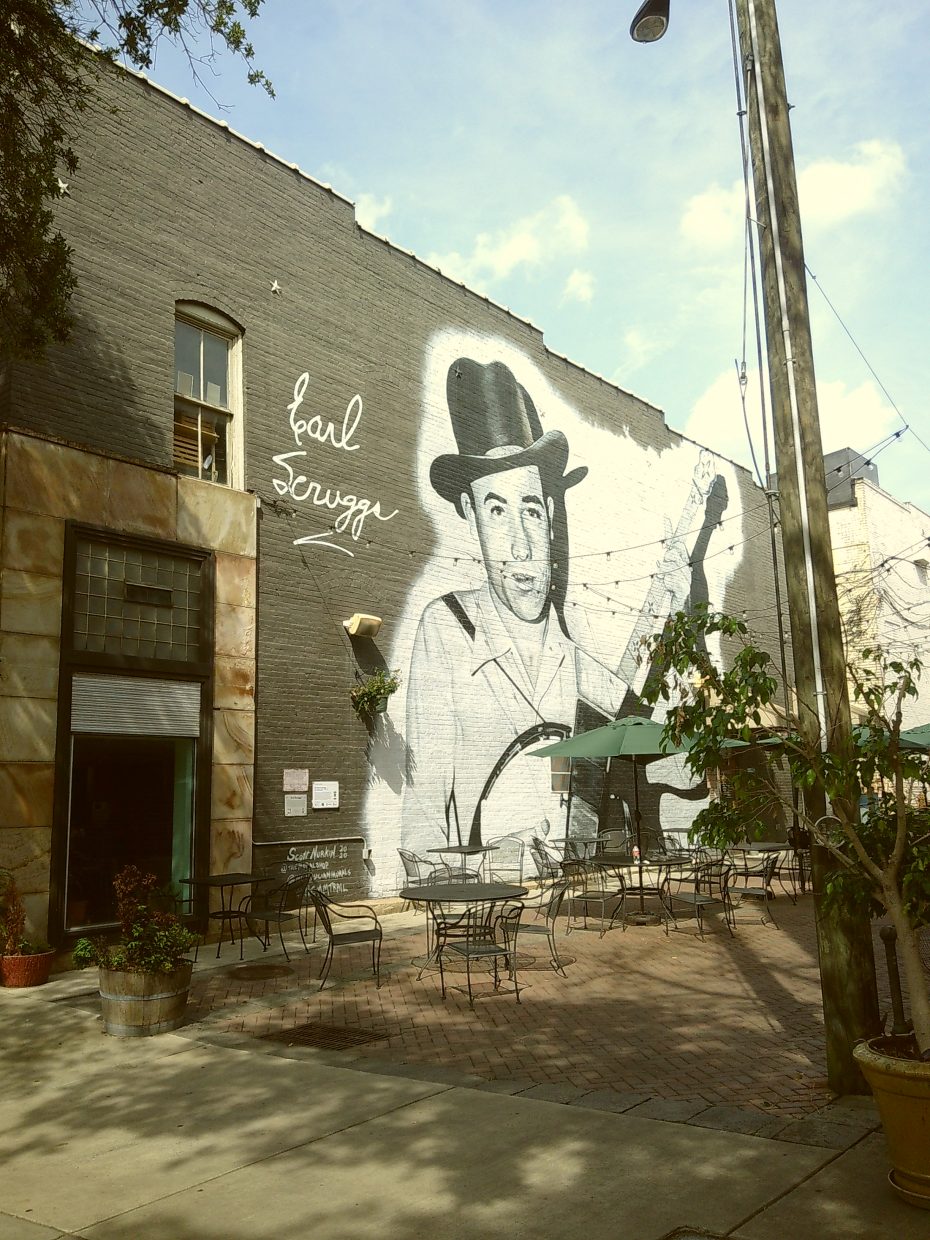
We particularly recommend Newgrass Brewing Co., where the beer is just as good as the name – and the food is excellent, too. Especially the homemade chicken tenders. It’s just around the corner from the Center. Don’t forget to step outside and take a turn into the alley, though, for a superlative mural photo opportunity of the man himself, two stories tall.
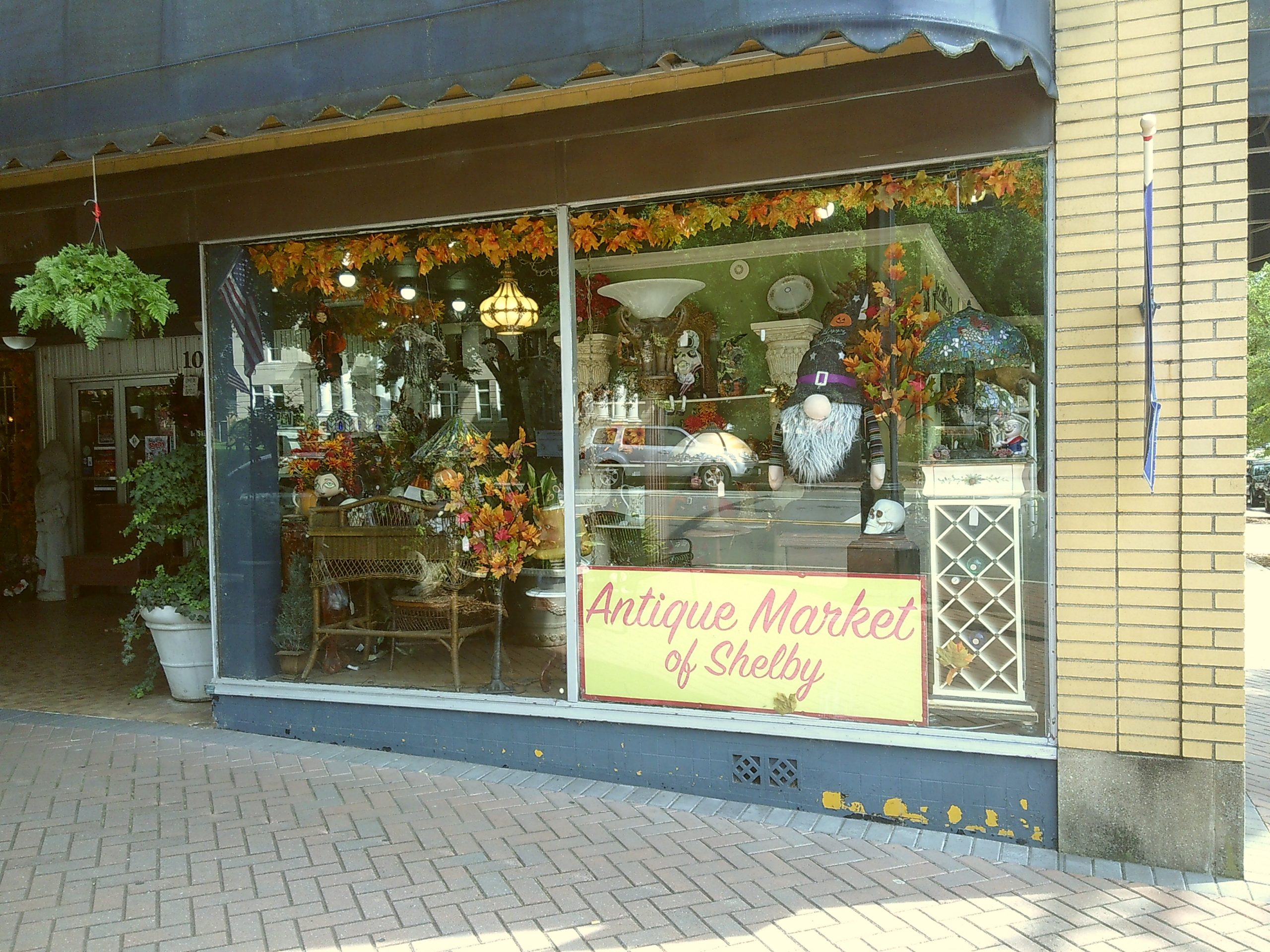
Just across the street from the Earl Scruggs Center on the square you’ll find the Antique Market of Shelby. Because we know, like us, you won’t be sick of antiques yet.
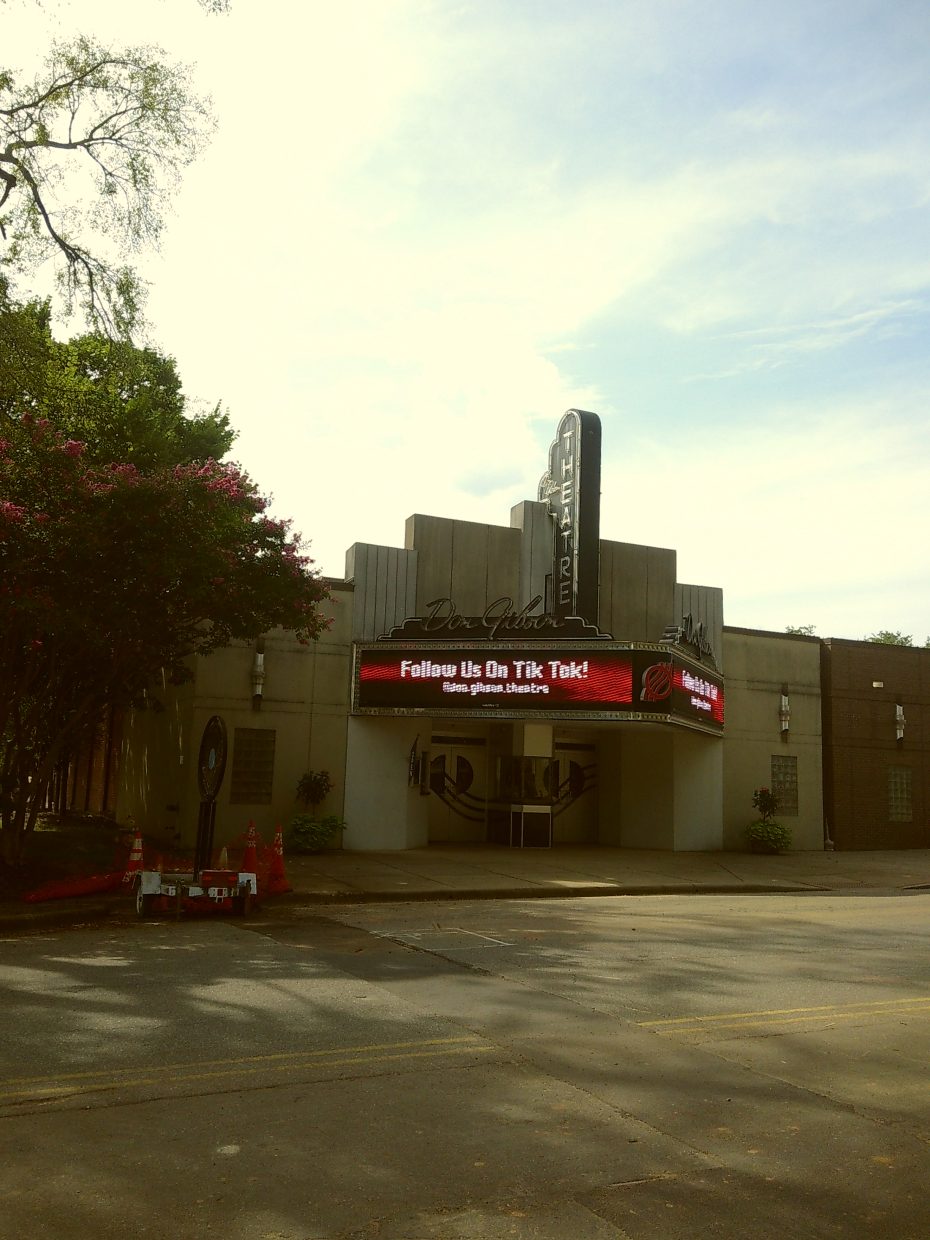
While Scruggs hailed from just down the road in Flint Hill, country star and singer-songwriter Don Gibson was born in Shelby proper. A hitmaker and stalwart of country from the late ’50s through the early ’80s, Gibson’s legacy is on display in Shelby in a variety of ways, chief among them the Don Gibson Theatre. Catch movies, live music, and special events throughout the year – including an incredible slate of bluegrass and country shows. The Don Gibson Theatre is also a stop on Blue Ridge Music Trails.

Learn more about Don Gibson and Shelby in our Carolina Calling episode about the city, featuring Gibson, Scruggs, and more.
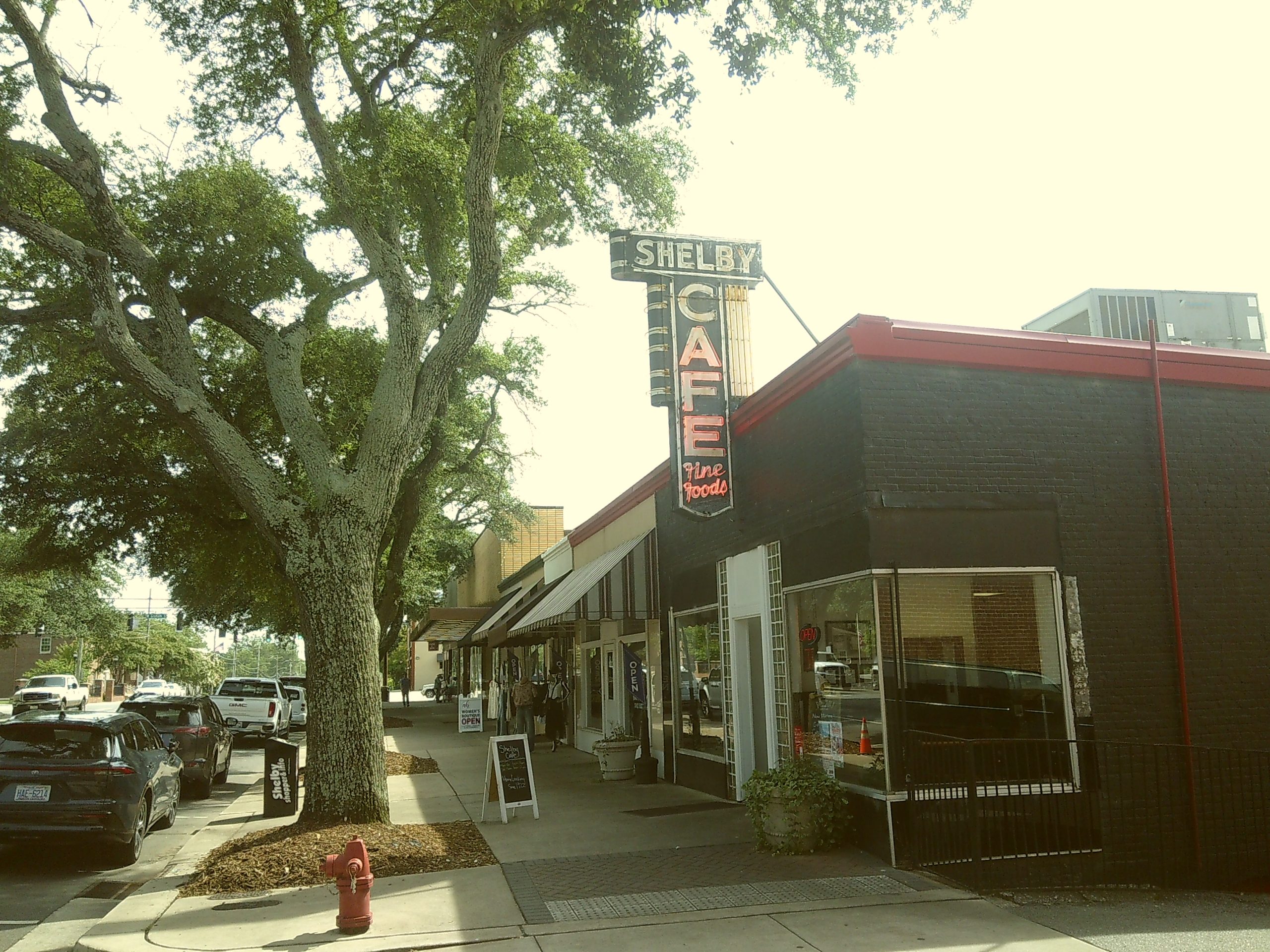
A visit to Cleveland County wouldn’t be complete without a plate of livermush, so head over to the Shelby Cafe for breakfast, lunch, or dinner and a sampling of this local delicacy. Just like Earl would have enjoyed it? Certainly!

There’s so much to see, do, and enjoy at Earl Scruggs Music Festival and the surrounding territory, we know we barely scratched the surface. Hendersonville, Chimney Rock, Gastonia, and Rutherfordton are just up or down the road; so many nature preserves, parks, and trails are nearby; Spartanburg, South Carolina, is a stone’s throw away. While Tryon International is a lush, hospitable location for the festival, we encourage all attendees to get out and enjoy the places that birthed these musical forms we all hold so dear.

We’ll see you in Mill Spring, North Carolina, for Earl Scruggs Music Festival September 4-6, 2026! Tickets are available now. And we hope we run into you out adventuring and antiquing, too. Do you have a favorite local haunt in the area? Let us know on social media.


All photos by Justin Hiltner, shot on Camp Snap. Poster art courtesy of Earl Scruggs Music Festival.

This content brought to you in partnership with Earl Scruggs Music Festival.
Bluegrass Memoirs: The Earl Scruggs Celebration (Part 2)

(Editor’s note: Read part 1 of Neil V. Rosenberg’s series on the 1987 Earl Scruggs Celebration here.)

My diary for Saturday September 26, 1987 — Earl Scruggs Celebration day at Gardner-Webb College in Boiling Springs, North Carolina — begins with an entry on foodways:

I meet Tom (Hanchett) and Carol (Sawyer) at 7:30 and we walk to the Snack Shop. As Joe had predicted the night before there were lots of pickups outside and quite a few people inside having breakfast. I asked the waitress for livermush and she told me they didn’t have it, that sometimes they did but today they were out of it. It wasn’t on the menu. 

After breakfast we walked over to G-W’s Dover Library, Celebration headquarters. Horace Scruggs was there.

Outside Horace took me over to meet his banjo player, and he asked me to play a tune or two. I did “Cumberland Gap” and some other simple tune. The picker then played a lot of fancy stuff and told me about his two banjos. 

Inside, people were setting up displays in preparation for the 10:00 opening. It was part museum, part market.

various people were doing crafts; [an] instrument maker was there with his wife, who played guitar, and his young son (maybe 10) who was a good Scruggs-style banjo picker and played non-stop all afternoon long. They were selling cassettes of him.

Also on sale were books, including my Bluegrass: A History.

Horace had brought in two banjos which Earl had loaned him to be displayed at the Celebration. One was a new Gibson Earl Scruggs model, and the other was the old banjo which had belonged to their father and which Earl had had repaired back in the fifties in Nashville.

Later, Tom would be installing storyboards about the connection between country music and the textiles industry in the Piedmont.

After Horace had set up his display Joe suggested he take us on a tour of the area where the Scruggses grew up. So, Tom, Carol, Joe, and I set out in Horace’s Fury.  

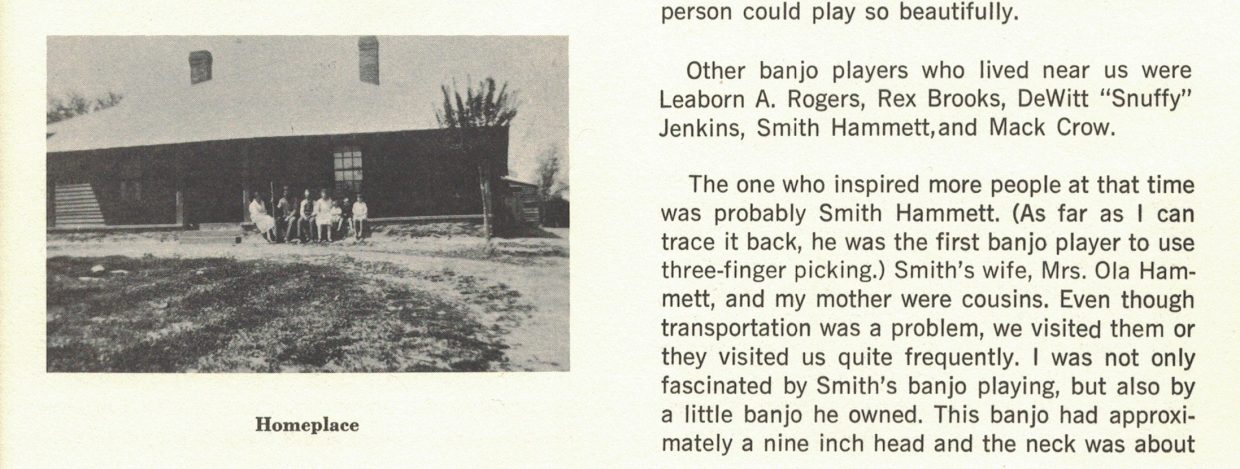
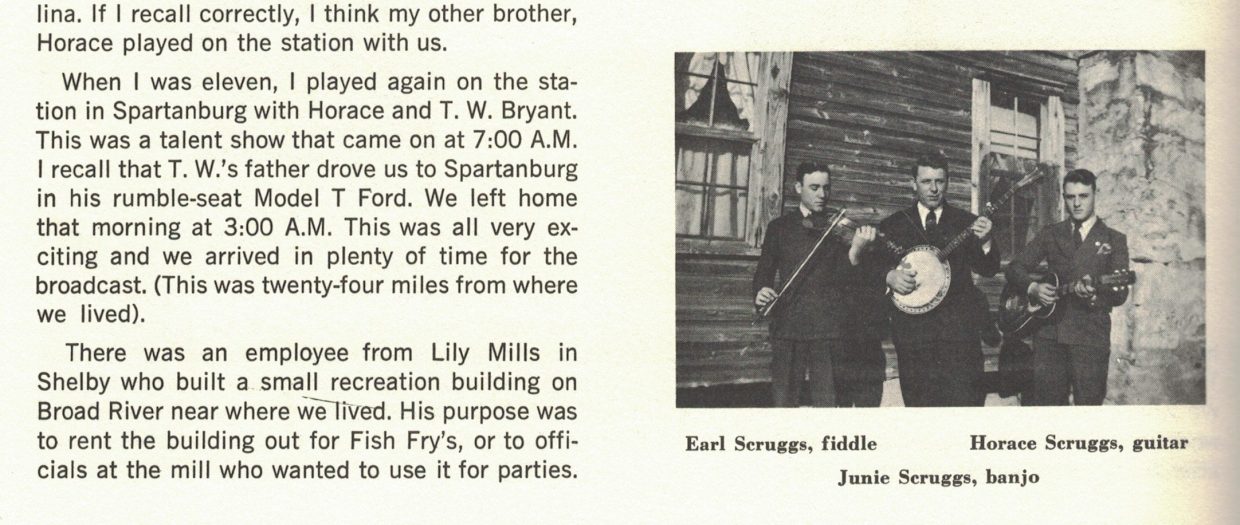
‘Earl Scruggs and the 5-String Banjo’ page 147 shows the Scruggs homeplace

He took us past the Flint Hill Church, their birthplace (depicted in the above photo from p. 147 of Earl Scruggs and the Five-String Banjo), and the house they’d moved to after their father’s death in 1930 (seen below, from p. 150). 

The house has the same chimney as in the picture, but the upper part has been rebuilt with brick. A “beware dogs & keep out” sign was posted. Horace said that the family had decided to get rid of the house, but he wished they had kept it. This is the house he and Earl would walk around when practicing time — they would start a tune and each would walk in a different direction playing softly, to see if they could keep their time so they would be together when they met at the back. The right front room, visible from the road, was the one Earl went in when he figured out how to use the third finger in his banjo style.

‘Earl Scruggs and the 5-String Banjo’ page 150 shows three Scruggs brothers, posing in front of their home

Then Horace took us down to the nearby Broad River to point out the site of Earl’s first professional gig, Ollie Moore’s fish camp.

At 10:00 the Celebration began out in front of the Library. I noted: A beautiful sunny day which was to get up into the low 80s by the feel of it. The president opened the festivities and then Horace and his bandmates in Riverbend performed a few songs. 

At last night’s dinner I’d gotten to know a couple from Raleigh, Margaret and Wayne Martin

Both were old-time musicians. In 1984 they’d joined with two others to found PineCone, the Piedmont Council of Traditional Music, “an organization that would help support traditional roots artists and present their music to the public in a professional and respectful manner.”

An experienced teacher and performer, Margaret was scheduled to workshop with Etta Baker. This was one of the high points of the Celebration.

At 10:30 Margaret Martin set up with Mrs. Etta Baker in the Library lobby and did an hour-long workshop which was very nice. Mrs. B. played banjo some of the time, showing how her daddy picked 2-finger style; then she played the guitar, a D-18 with a built-in pickup, and did her “hits” like “Railroad Bill” and “John Henry” and also some nice Piedmont-style blues like, she said, her sons played. She was low-key but relaxed and effective as a performer, and Martin ran a good workshop, assisting musically but not getting in the way.

In the middle of this Snuffy Jenkins, Pappy Sherrill and the Hired Hands arrived and were standing at the back of the crowd in the lobby. I had a good talk with both of them, trying to give some idea of what I wanted on the workshop. 

Banjoist Jenkins and fiddler Sherrill began their careers in the ’30s playing a blend of old-time and country. Snuffy played 3-finger style even before Earl, who acknowledged his influence. Still active after nearly fifty years, they were living history. They’d watched bluegrass develop. What could they say about that? Also, I was particularly interested in having them demonstrate the kind of shows they’d done in their early years — the radio pitches and Snuffy’s baggy-pants comedy. 

Unfortunately, Snuffy hadn’t brought along his rig for the full comedy routine but they said they would do some comedy.  

I pursued a bit of tune research, wondering about a tune Earl Scruggs had played in his 1945 audition for Monroe. I’d heard that Earl learned it from Snuffy.

I asked Snuffy about “Dear Old Dixie,” which he did play. He told me he learned from a Rutherford County fiddle band, the Barrett Brothers — a group they always beat in contests, he said. 

It was noon; Carol and Tom and I took a lunch break. As the afternoon began: 

We sat out on the campus green, a broad sloping lawn with a stage at the lower end, and listened to Snuffy Jenkins and Pappy Sherrill along with their band. 

The Hired Hands, all younger South Carolinians, included guitarist Harold Lucas; his son Randy, who played banjo and guitar; and Frank Hartley on bass. After a 10-song set, a young guest, Philip Jenkins, was introduced. Philip’s father Hoke was Snuffy’s nephew, a good banjoist who’d recorded with Jim & Jesse in the early ’50s. Philip, playing his dad’s fancy old Gibson, did “Train 45” and “Sally Goodin.” 

Snuffy closed out the show by bringing out his “confounded contraption,” a washboard fitted with cowbell, frying pan, wooden block, and an old bicycle horn, on which he played rhythm with eight sewing thimbles as Pappy fiddled “Chicken Reel” and “Alabama Jubilee.”

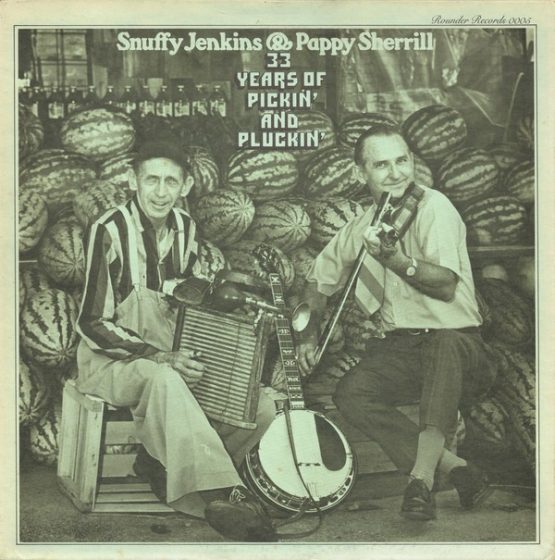
Snuffy Jenkins & Pappy Sherrill on the cover of their Rounder release, ’33 Years of Pickin’ and Pluckin”

Other bands followed. I wandered around at the back of the crowd, taking in the music from different perspectives and meeting fans. Around two I went back to my room, picked up the tape recorder and headed for the seminar room in the library where the workshop was to be held. 

I used the recorder, a Sony Walkman Pro cassette machine with an external mike and a C90 cassette, to record the workshop. What follows is based on a table of contents drafted soon after the event. The tape itself, like most of my research materials, is now in Memorial’s archives, out of reach at the moment. 

We began at 3:00 with an introduction by Dr. Brown and a speech of welcome from G-W’s Vice President for Academic Affairs. The band opened up with their theme tune, the old fiddle tune “Twinkle Little Star.” Dr. Brown introduced me and I began in emcee style to introduce the band, a leisurely process involving a bit of humor and local place names. Although this was a workshop, Pappy and Snuffy treated it as a show, offering comic relief and virtuoso instrumentals at regular intervals.

I spoke briefly about the band as living history, mentioning that Pat Ahrens, a writer from Columbia, South Carolina, their base of operations, had written a nice little book about them, with photos, and a discography. 

I told how the word “bluegrass” had taken on a musical meaning following Earl Scruggs’ years with Bill Monroe and his Blue Grass Boys, and then asked Snuffy to talk about his early history. It was a question he’d been asked before. He and Homer were prepared. Their response was pretty much like the one on this YouTube clip, recorded in 1988 at the Tennessee Banjo Institute:

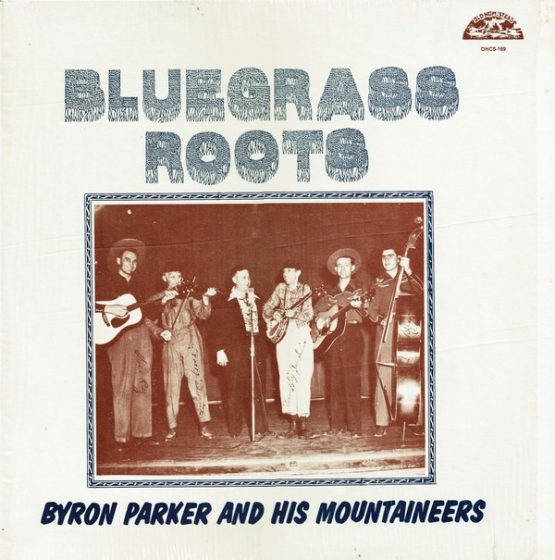
In 1939 Jenkins and Sherrill came together at a radio station in Columbia, South Carolina, as members of the WIS Hillbillies, a band led by Byron Parker, formerly the Monroe Brothers’ emcee and bass singer. 

Byron Parker and His Mountaineers, a lineup that included Pappy and Snuffy.

Their regular radio shows enabled them to make the bookings that sustained their early career at the small rural schools dotting the countryside around Columbia. Sponsored on the radio by Crazy Water Crystals, a laxative, they recorded 16 tunes and songs — eight 78s — for RCA Victor in 1940 as Byron Parker and His Mountaineers, with fiddle, guitars, mandolin, banjo and Parker’s bass vocal on the hymns. Their broad repertoire included “Up Jumped The Devil” on which Snuffy took banjo breaks which today sound very bluegrassy:

After Parker’s death in 1948, Pappy and Snuffy took over the band and changed the name to The Hired Hands.

Pappy Sherrill was the band’s emcee. He told the history of the band, calling their records “old timey stuff, no extra notes.” Many of their songs and tunes would find their way into bluegrass repertoires. I asked Homer for an example; he played “Carroll County Blues,” the fiddle classic from Mississippians Narmour and Smith that they’d recorded in 1940:

After demonstrating Snuffy’s banjo work, the band did several songs. Here’s how they sounded doing “Long Journey Home” in 1990: 

On this song, Snuffy takes all the lead breaks and can also be seen playing clawhammer backup. Regrettably, Homer’s fiddle is in the background here; he usually played lead breaks. Randy Lucas brings in the fingerstyle guitar demonstrated earlier by in the day by Etta Baker. After they’d played four pieces, I posed a question to the band members — what’s the difference between old-time and bluegrass? 

Lead singer Harold Lucas began with a joke: “there’s a fine line between old-time and not being able to play at all.” Then, referring to his son Randy, a master of new styles, he described the interplay between old and new generations. 

Pappy spoke about growing up listening to the radio. To him, old-time is easier. Bluegrass is fast, with high-pitched singing — not the same. He stressed the importance of duets in old-time.

Randy said “it takes old fellows to play old-time music” and that he got his inspiration from Pappy & Snuffy — “they make music fun.”

As far as he was concerned, said Snuffy, “Ain’t no difference — slow and fast.” He joked about his own “mellow voice — over ripe, almost rotten.”

Returning to the question I’d posed, Pappy and Randy Lucas, now playing banjo, demonstrated the differences between old-time and bluegrass. Pappy fiddled the venerable “Leather Britches” as an example of old-time. Then Randy demonstrated bluegrass with a recent, fancy banjo piece, Don Reno’s “Dixie Breakdown.” Fluent in both styles, each took breaks on both tunes.

I asked about comedy. Pappy described the skits that were an integral part of the Hired Hands show. He said they had a writer, Billy F. Jones, who scripted their comedy pieces, making parts for each member of the band. They weren’t set up to do a skit today, but they did an old traditional musical comic dialogue that originated in 19th century theater, “Arkansas Traveler.” In 1960 the Stanley Brothers had a big record hit with a version that combined the traditional dialogue with new music, titled “How Far to Little Rock”:

Afterward Snuffy and Pappy spoke of their comedy work in the early years — making up, getting into costume, pratfalls, and so on. 

Then, after Randy had played “There’s An Old Spinning Wheel in the Parlor” demonstrating his mastery of contemporary banjo styles, Snuffy responded to a request and brought out his “confounded contraption,” the washboard, to play along with Pappy on the popular fiddle favorite, “Down Yonder.” Here’s how Snuffy looked playing washboard on another fiddle favorite, “Alabama Jubilee,” at a festival in 1989:

Pappy reminded the audience that they had mostly played as small local schools with audiences all ages. Their show was for the whole family. “No smut.” 

Nearing the end of the workshop, I called for questions. A number came in from the audience — asking about their sponsor, the history of Snuffy’s washboard, other touring bands, and their Columbia, South Carolina, base. 

Finally, Pappy explained that their shows always included hymns; he had a box full of Stamps-Baxter and Vaughn gospel quartet songbooks, and taught the parts to the group from them. They were complex, responsorial. Here’s an example from their 1940 RCA sessions, “We Shall Rise,” with Byron Parker singing bass.

On this afternoon, Pappy closed with a simpler hymn, “What a Friend We Have in Jesus” played on the fiddle.

Afterwards he thanked the audience. I concluded with remarks about the band’s role in the change from old to new in folk traditions, and the transition from home and neighborhood to stage and radio.

Just before Dr. Brown formally ended the workshop, well-known local banjoist Dan X Padgett presented a gift — a hat — to Snuffy. I did not note what the hat looked like, and that detail has escaped my memory. But there’s more coming about Dan X Padgett and the rest of the Celebration in Part 3 of this memoir.

(Editor’s note: Read part 1 of Neil V. Rosenberg’s series on the 1987 Earl Scruggs Celebration here.)


Neil V. Rosenberg is an author, scholar, historian, banjo player, Bluegrass Music Hall of Fame inductee, and co-chair of the IBMA Foundation’s Arnold Shultz Fund.

Photo of Neil V. Rosenberg: Terri Thomson Rosenberg

Bluegrass Memoirs: The Earl Scruggs Celebration (Part 1)

I first heard the music of Etta Baker on a record in 1957. Not until thirty years later did I see her perform live, in the context of a bluegrass-oriented event, on September 26, 1987 at Gardner-Webb College’s Second Annual Earl Scruggs Music Celebration. 

Gardner-Webb (G-W) is in Boiling Springs, N.C., an hour’s drive south of Baker’s Morganton home and a few miles southwest of Shelby. Scruggs’ birthplace, Flint Hill, is close by.

In 1986 G-W awarded Scruggs an honorary doctorate. Ill health kept him from attending that Celebration, but his long-time friend John Hartford came and led a seminar about him and performed at a concert honoring him. UNC folklorists taped the proceedings. Their recordings are available online at UNC’s Southern Folklife Collection

After the success of the 1986 program a committee, chaired by G-W English professor Dr. Joyce Brown and including Shelby journalist and G-W grad Joe DePriest, began planning the 1987 celebration. They received assistance, a grant, from the Folklife Section of the N.C. Arts Council. 

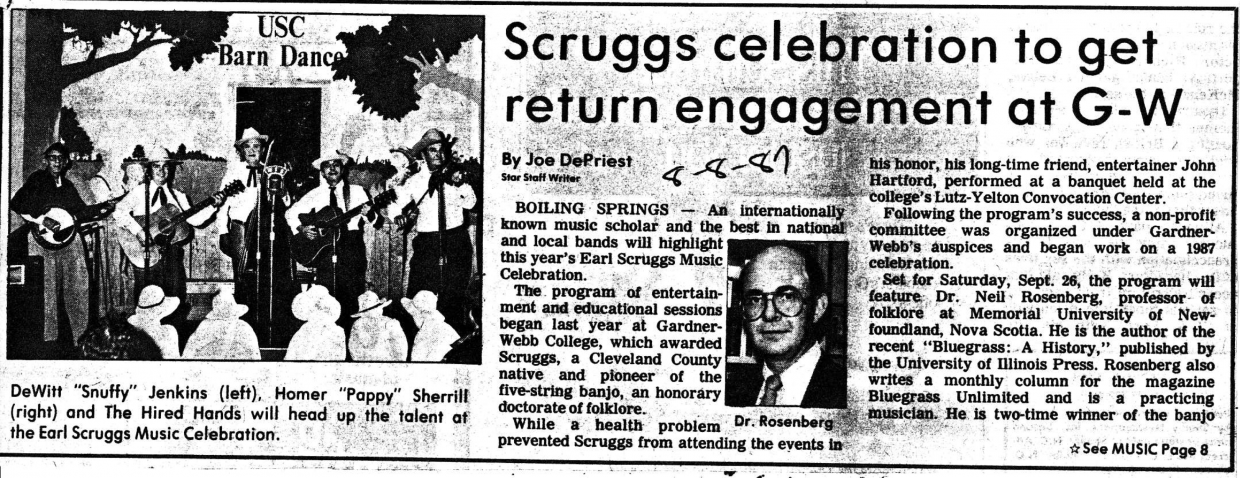
In August, a headline appeared on the front page of the Shelby Star: “Scruggs Celebration to get return engagement at G-W.” An article by DePriest quoted Brown: “We hope to make this an annual event — the most significant bluegrass event in the country. This is the logical place to center a recognition of our musical heritage.” DePriest added: “The program is not limited to bluegrass but will also focus on pre-bluegrass string music along with Afro-American contributions.”

The article described an action-packed day of music, with a morning concert-workshop by Etta Baker; an appearance by Riverbend Grass, the band in which Earl’s brother Horace played guitar; an afternoon of performances by six bands with Snuffy Jenkins, Pappy Sherrill and The Hired Hands opening; and afternoon workshops “on the history of bluegrass, its early radio days, and the Scruggs contributions.” In the evening was a concert by a popular new Nashville-based group, the Doug Dillard Band.

A scan of the first portions of the Earl Scruggs Celebration announcement from the Shelby ‘Star.’

By then Professor Brown had invited me to participate in the Celebration. My name and picture ran with DePriest’s article next to that of Jenkins, Sherrill, and The Hired Hands, who were slated to “head up the talent” of the Celebration. Touted as “an internationally known music scholar,” I was to conduct the workshop on bluegrass history with Jenkins and Sherrill.

I had never been to North Carolina, a formative location for the bluegrass business I began writing about in the ’60s. In 1974 the Country Music Foundation published my illustrated Bill Monroe discography, and in 1981 I began a regular column in Bluegrass Unlimited, “Thirty Years Ago This Month.” Since 1985, when my second book, Bluegrass: A History, was published, I’d been giving public lectures on bluegrass history.

My early bluegrass experience began in the late ’50s as a musician in the Midwest and northern California. Most of the history I wrote about came to me through research. I’d read Billboard from the early ’40s onward, eagerly followed the writing of people like Bill Vernon and Pete Kuykendall in fan magazines, and interviewed key figures.

I first heard of G-W in the early ’80s during one of those interviews. I asked Flatt & Scruggs manager Louise Scruggs when their first bluegrass college concert took place. She paused: “Gardner-Webb, maybe?” But she was tentative, particularly since she didn’t think it would be easy to document — she hadn’t started managing Lester and Earl until 1956. Not until my 1987 trip to Boiling Springs did I learn the full story of Flatt and Scruggs playing the first college bluegrass concert — I’ll say more about that later.

In 1976, when I wrote about my research on folk and country music in Canada’s Maritime provinces, I opened by saying “I attended many events, taking notes in my omnipresent 3 ½ x 5″ notebooks. As soon afterward as possible, a description of the event was written up in a diary-like journal.” Throughout my visit to Boiling Springs I had a notebook in my pocket. Soon after returning home I wrote a detailed diary of the six-day trip based on my notes. Direct quotes (in italics) follow.

Leaving Wednesday September 23rd, I was met at the Raleigh-Durham airport by Dan Patterson, head of UNC’s Folklore Curriculum. The next afternoon I gave a public lecture hosted by the Curriculum: “Reality and Revival in Bluegrass.” After my talk I was introduced to Tom Hanchett who, with his wife Carol Sawyer, was to drive me to Boiling Springs. We made plans for an early start the next day. Here’s what I wrote in my diary:

Tom Hanchett is in his late twenties, grew up in the Blue Ridge of Virginia and in upstate New York. Went to school at Cornell, was introduced to bluegrass by Country Cooking (Trischka, Wernick, etc.), and plays a bit of old-time fiddle. Had, until about five months ago, been working with the Charlotte (N.C.) Mecklenburg Historic Properties Commission as a historian. He had organized “The Charlotte Country Music Story,” a series of concerts there which recognized the town as an early historic center for recording and broadcasting of country music. And he is now working on a Ph.D. in southern urban history at UNC. His wife, Carol Sawyer, is a curator in a Museum of Technological history.

Tom charted our trip from Chapel Hill, in the northeastern Piedmont, to Boiling Springs, in the southwest, with a route that reflected the interest in local history and historic preservation that made him a perfect guide for our trip. 

Tom had warned me beforehand that he was not an interstate man, so we followed a route that paralleled the old main railroad line (The Southern) that still runs from Washington to New Orleans.

Near Asheboro we stopped to visit Mac Whatley, mayor of Franklinville. He took us on a tour of this historic textile-mill region. I noted:

Whatley drove us out of town to the North and West, following Deep River, the source of textile mill power. We located the birthplace of Charlie Poole and looked at it from the road. There was a big “no trespassing, keep out” sign there.

We continued on toward Charlotte. 

Somewhere along here we were passed by a new Toyota 4-wheel drive pickup with a yellow and black bumper sticker that read “Ralph Stanley for President.”

>We were truly in bluegrass country, I thought. Stopping for lunch and errands in Charlotte, Tom pointed out the hotel where RCA Victor had recorded the Monroe Brothers and many others during the thirties.

We reached the Shelby Star office in the early afternoon and met Joe DePriest, who gave us a quick introduction to the local cultural landscape. A leisurely drive took us to the Cleveland County Historical Museum (lots of famous people there, mainly mill owners), the graveyard, and past the old Lily Mills building in the neighborhood where Earl Scruggs lived while working there. Heading south towards Boiling Springs, we drove past Flint Hill Church. Joe promised Horace would give us a tour of this neighborhood, where Earl grew up, later. 

At G-W, I met Dr. Brown, who showed me my room and filled me in on the evening’s itinerary. A group of us involved in tomorrow’s event would be getting acquainted over dinner at Kelly’s Steakhouse, just across the South Carolina line near Blacksburg. At 5:30 we all met outside G-W’s Dover Library to drive there. Here I met Horace Scruggs and his wife Maida. I wrote in my diary:

Earl’s older brother Horace turned out to be a very friendly and easy-going person, not as shy and quiet as Earl, though with (not surprisingly) a very similar voice and accent. His wife, Maida (pronounced May-Ida), is also very friendly. Horace is retired, he worked as a maintenance man for Gardner-Webb and later for the city of Boiling Springs. He is on the Earl Scruggs celebration committee.  

Joe and I rode with the Scruggses that night. We both asked questions. I made notes during our drive and dinner. I began by mentioning that Louise had told me Flatt & Scruggs had once played at G-W.

I asked about that and Horace said, yes, they did, that he thought it was when they were working out of Bristol (May 1948 to March 1949, according to my calculations), around 1950. It was a spur of the moment thing, in midweek, and there was not much advertising and not a full house. The crowd was a mixture of townspeople and local students. 

Over dinner I asked him a bit about his own musical career.  

… he didn’t try music because he didn’t think he could make a living at it. He married in 1941 and went into the army soon after that. His father played clawhammer banjo, and he remembers being awakened in the morning by the sound of his father’s banjo. His father would build a fire in the stove and then play the banjo. Earl and Horace would come in and sit on his knees while he played.

He told me about running the farm after his father died in 1930:

They grew cotton — a crop was 3 bales a year, which they sold at 36 cents a pound (bale is 500 lbs, so that works out to $540.00 a year). They grew corn for feed and meal. Had a mule and a buggy which was originally rubber tired but eventually they ran it on the rims.

He was Earl’s first guitar accompanist, so I asked him if people thought Earl was special as a musician back then.

He said yes, they did, people would come by the house to hear him pick, etc. And when he was still quite young, they entered a banjo contest and Earl beat Snuffy Jenkins. Of course, as Horace was quick to point out, part of this had to do with his age, the youngsters have an advantage in those contests where audience applause decides the issue.

Earl and his mother moved into Shelby when Horace went into the Army, and Earl went to work at Lily Mills. 

Earl had been turned down for the draft because he had a nervous stomach. He worked long hours for the mill but later on in the war he would take time off to play music at various places, and, as Horace recalls, was repeatedly lectured by his boss for wasting his time playing the banjo when he should be working to better himself at the mill. His mother was, Horace said, not happy either about Earl’s musical career and just as he was dropping us off at the Library, he told us that his mother had made a prediction which came true that he, Horace, had never told Earl: she said when he left to play professionally that “when I die, he won’t be able to come to my funeral.” And this happened — Earl and Louise were in an accident rushing to her bedside, she died while they were in hospital recovering.

After dinner Horace spoke of Earl’s adventures on the road:

He told me that Earl roomed with Uncle Dave Macon when he traveled to shows with Monroe and the band, and that Uncle Dave always carried with him an old-fashioned doctor’s satchel in which he kept one of his own country hams. He slept on it, used it as a pillow. And he would take it into restaurants, have it sliced and fried for him. 

Talk turned to local foodways and Maida and Horace told us about livermush.

This local delicacy consists of hog’s liver and lean hog meat ground and fried, with corn meal, salt and pepper added to taste (some people add a lot of pepper, the seasoning is very personalized); left to harden, it is then sliced and fried. They said Earl eats it, and other natives crave it. It’s found on a north/south line from Blacksburg north to the Virginia border. One native son who now lives in Oregon has a special metal suitcase which he fills with frozen livermush and flies it home with him on yearly visits. It is served at the Snack Shop in Boiling Springs, which is where Earl and Lester and the boys used to stop for meals when travelling though this neck of the woods. Joe remembers seeing the bus there when he was a student, it was no big deal at the time.

As I walked home with Tom and Carol after dinner I proposed that we go for breakfast in the morning to the Snack Shop and see about getting livermush.

They thought I was overenthusiastic I think but they agreed to go.

I had a busy day ahead — went to bed early.


Neil V. Rosenberg is an author, scholar, historian, banjo player, Bluegrass Music Hall of Fame inductee, and co-chair of the IBMA Foundation’s Arnold Shultz Fund.

Photo of Neil V. Rosenberg: Terri Thomson Rosenberg