In 1853, a 29-year-old Parisian photographer, Adolphe-Alexandre Martin, delivered a paper to the French Academy of Sciences. In his text, he proposed a process for creating a photographic image on thin, chemically coated metal sheets: the tintype. Between the late 19th and early 20th centuries, his invention became the portrait medium of choice, especially across North America, eventually falling out of fashion in the 1930s. Strikingly evocative, tintypes imbue subjects with a surreal, dreamlike quality, offering an emotional portal into the past.
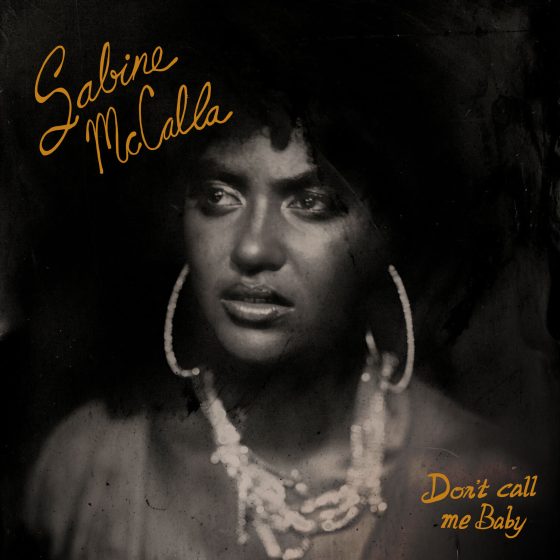
Over a century and a half later, the New Orleans-based Haitian American singer-songwriter Sabine McCalla, younger sister of the influential classical and folk musician Leyla McCalla, asked the tintype revival photographer Meg Turner to take her portrait. For an artist who draws from the past while seeking pathways forward, using an old medium to capture something new was an instinctive choice. Turner’s image became the cover art and a lodestar for the central feelings underpinning McCalla’s debut album, Don’t Call Me Baby, released through Kurt DeLashmet and Nick Shoulders’s Gar Hole Records label.
As we discuss later in this interview, the inspiration for Don’t Call Me Baby wasn’t born from a happy moment. Rather than sinking into sadness, McCalla juxtaposes joy and heartbreak, using narrative storytelling as a vehicle for catharsis across nine haunting, surreal songs. On “Sunshine Kisses” she recalls being lost in liminality after a breakup before letting loose on the classic rock and roll slanted singalong “Louisiana Hound Dog” (a co-write with Dan Auerbach from The Black Keys and Pat McLaughlin). By the time “Two of Hearts” arrives, our protagonist is singing about three different suitors.
Amid the paradisiac instrumentation surrounding her soothing voice, McCalla and her producers, Sam Doores (of The Deslondes) and Ajaï Combelic, collaborate with a cast of more than a dozen musicians from her musical community in New Orleans. Together, they blend rhythm & blues, country, folk, jazz, Tropicália, quiet storm soul, and doo-wop into hypnotic roots music. Song by song, the results reflect a lifetime spent studying traditions from across the Americas, Europe, the Caribbean, and Africa. Equal parts comforting, adventurous, and spicy, she serves up an Americana hotpot that speaks to the world while being informed by it.
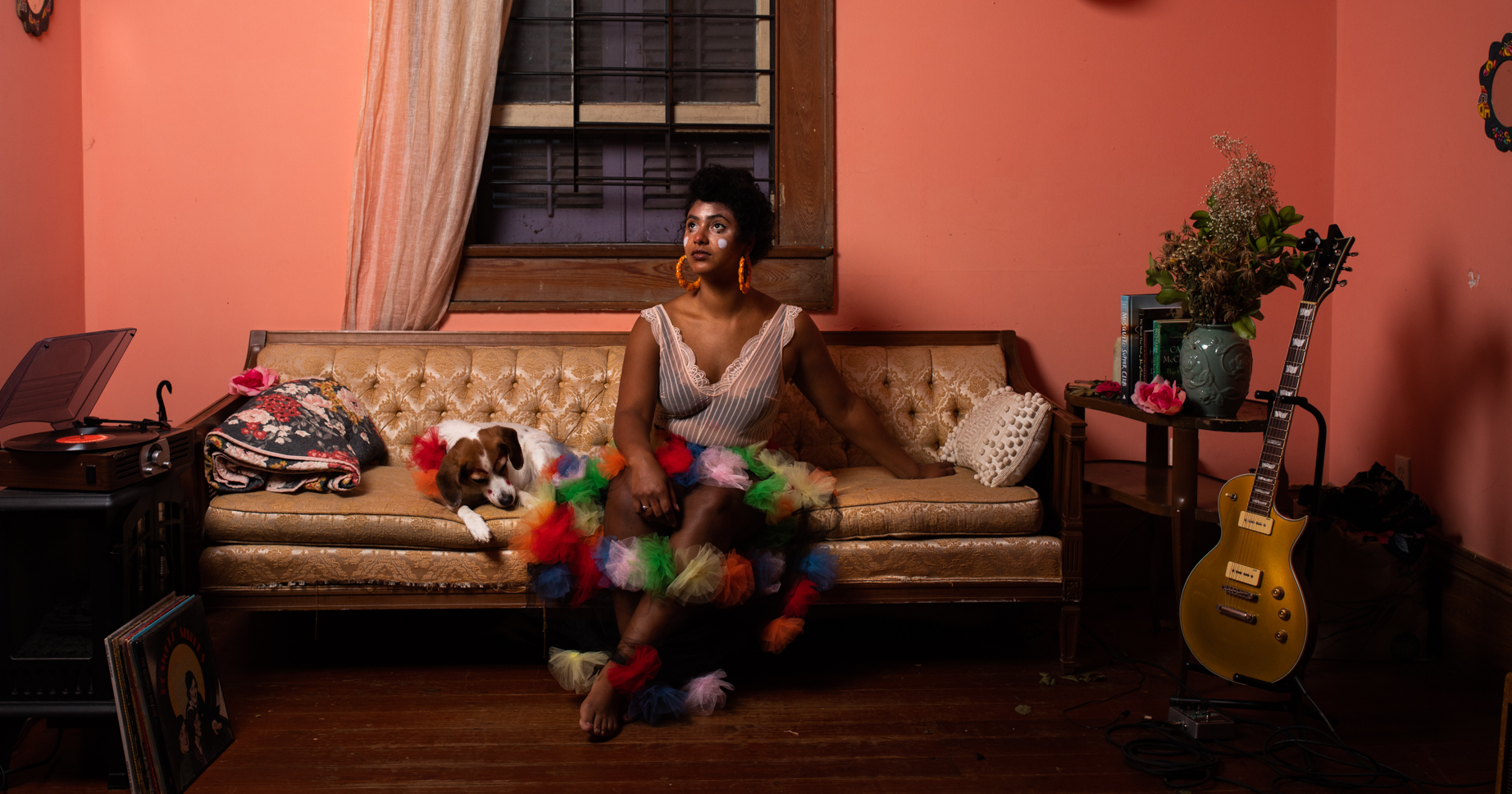
Last month, McCalla joined BGS on a video call. Sitting on a yellow couch surrounded by rosebud-hued walls and framed art, she spent just under an hour with us. In a discursive conversation, we explored the influence of life in Louisiana, her passion for musical history, and, given her background, the inevitability of her worldly confluence of sensibilities. A thoughtful speaker, McCalla isn’t the type to rush her answers. She’s also happy to keep a point simple or, when needed, throw in some extended anecdotes. Sometimes it’s not that deep; other times, it really is.
How important is a sense of place and location to your music?
Sabine McCalla: I don’t know. I mean, it is important. Louisiana and New Orleans have been characters in, or influenced my music a lot. But I’ve certainly written songs outside of New Orleans and Louisiana. I think any land we connect with is important when we’re writing songs.
From the outside looking in, it’s easy to surmise that there is a quality to New Orleans and the musical community that lives there that unlocked something in your artistry.
Yeah, it’s definitely been very inspiring. New Orleans is a very musical city. Nearly everyone you meet is a musician or plays more than one instrument. It’s incredibly culturally rich here. Learning to play music in this environment, you learn certain styles, or you learn with a focus on dancing. There’s a lot of rhythm & blues, soul, and second-line music, and people dancing in the street. I think dancing is something I was thinking of when I thought about how I want these songs to be listened to. Like I’m thinking of a honky-tonk dive bar, hot and steamy, lots of close dancing.
Who says you can’t dance to misery, right?
You certainly can. In fact, you’re probably a better dancer.
There’s something about the juxtaposition between a sad sentiment and a happy rhythm or melody that can be so moving.
I think innately we all want to experience pleasure, and we all have our pains that go with it. I think that’s what people are connecting with.
Unfortunately, or perhaps, fortunately, what is pleasure without pain?
Just a high.
New Orleans looms large in my mind as one of those places where traditions have been kept alive that don’t still exist elsewhere.
Yeah, for sure. There’s a tradition of passing down songs. There’s also so much space to create music here.
Don’t Call Me Baby is an ambitious album, but you succeed in your ambitions. You’ve braided a lot of threads together: different places, genres, periods of time. Was there a specific time in your life when you became interested in musical history, or looking to the past to find new ways to go forward?
I grew up playing classical music. Then I studied some old-time music from Appalachia. I’m interested in learning lots of old songs. I like listening to Harry Smith’s Anthology of American Folk Music. I feel like I’ve dug into a lot of pre-war recordings throughout the South and been inspired by ballad singing.
Like many people, I learned about the Anthology of American Folk Music through Bob Dylan and Joan Baez. There’s something about songwriters who go back and listen to their influences’ influences.
Totally. Shape-note singing is coming back into fashion now. I keep hearing about shape-note festivals around the country. My drummer, Howe Pearson, who also plays in The Deslondes, has been hosting a shape-note singing workshop every Monday.
What was it about the Anthology of American Folk Music that excited you?
They were songs I’d never heard before. I liked the quality of the voices on tape. So emotive and raw. And not just the Harry Smith anthology, Alan Lomax recordings too. I’ve always been interested in ethnomusicology. When I was younger, my sister and I had a mentor who played a lot of blues and jazz. I remember thinking he wrote these songs, until I realized, no, this white man from New Jersey did not write these songs. There’s this beautiful history of Black people in America who sang the blues and jazz and wrote so many songs that have been passed down.
Sometimes I wonder about the impact recorded music had on community singing. I’ve read that after phonograph records turned up, people became more self-conscious about singing at home. They’d hear these great singers and a shyness would set in.
People were keeping the songs they heard alive. They lived when there was no radio, so they were better keepers of songs than we are today. Now everything is so fast. There’s so much music, AI music, the industry pushing constant output, and not reviving songs. But I think a new resurgence of song revivals is happening.
You grew up in a Haitian family in New Jersey. Were your parents encouraging about music?
Yes and no. My sister’s also a musician. My mom was like, “Leyla’s the musician. You need to figure out your own path.” I was like, “No, I think I want to do this.” Both of my parents always encouraged choosing your own path and focusing on it.
It’s not always immediately obvious, but there’s a strong Haitian influence in American music.
Yeah, the Fugees! Lauryn Hill went to my high school. Her album The Miseducation of Lauryn Hill is like a bible to me. It’s a perfect album – the intros, outtakes, transitions. Lyrically empowering. I grew up on her songs. I’m grateful for my high school. We had amazing music teachers.
I graduated with SZA and Dave Authors, and a few others who’ve done great things. My sister Leyla McCalla went there, too. New Jersey is incredibly diverse. A lot of people immigrate to New York and then move into the suburbs, which my family did as well.
Did you grow up on a bit of everything musically?
Classical music. School trips to the opera. My parents played the Haitian groups Boukman Eksperyans and RAM. We listened to The Beatles, Bob Marley, and Rod Stewart.
When I think about Americana, I think about this confluence of cultures and musical traditions that came together in the South. When did it become attractive to you?
It all came together naturally. I was focused on pre-war songs, then going through decades of music. When I moved here, I got interested in The Boswell Sisters and songs collected in New Orleans in the early 1900s. Then I learned about Lonnie Johnson, the godfather of rock ’n’ roll. Through studying songs, I realized that it’s all Americana music. It influenced how I sang and created songs.
In a sense, there’s an inevitability to where you arrived.
I originally wrote and sang songs a cappella. That became my EP, Folk. My friends Leonie Evans and Steph Green helped with backup vocals. There wasn’t much thought about creating a larger sound until I met Eli “Paperboy” Reed. I’d already been listening to New Orleans R&B and soul, and when he put chords to my songs, I was like, “Oh, this is the sound I’ve been looking for.” That changed how I thought about songs. I also grew up listening to [the Tropicália singer-songwriter] Caetano Veloso. I’ve been trying to read his book Tropicalism, but there are so many references to Brazilian artists. It’s going to take forever.
After growing up in New Jersey, you moved to New Orleans, where this was all even more concentrated. There was a weekly jam session you’d go to called the All-Star Covered Dish Country Jamboree.
Yes. The first time I went was in 2014, probably in February. Joy Patterson came up to me – she runs it – and said, “I know who you are.” I was like, “Oh no, this lady…” But I loved it. My sister had been living here, so people were like, “Oh, you’re Leyla’s sister.” I think I saw Sam Doores’ doo-wop group with Casey Jane, Camille Weatherford, Emma Eisenhower, Jon Hatchett, and Max Bien Kahn; they did a little doo-wop show. I thought it was so cute. I wanted to know these people. And I’ve ended up working with all of them.
From there, it became a weekly ritual in your life, right?
Yeah, it was like a church. Going to this country night where I could talk about songs with people and hear a lot of old songs: classic country, classic R&B and soul. Those things lit my soul up.
After all these experiences, what’s your understanding of country music and where you could fit into it in 2025?
I don’t know. Maybe giving voice to other women of color who are interested in country music, not just hip-hop or R&B, but a diversity of sounds. I also lived in Ghana growing up, and lots of people listen to country music in Africa. What surprised me was going to Ghana and someone saying, “Where’s your cowboy hat?” I was like, “I’m from New Jersey, not Texas!”
I get the sense that a lot of your music is therapeutic storytelling.
Yeah, it is. It comes from the heart.
What sort of stories do people tell you about their experiences with your music?
The best one was in London. Someone said their friend’s father passed away and left her a boat. She went sailing for three months. They didn’t listen to music for most of it, then one day she put on my record and that’s all they listened to. That made my heart swell. It’s making me tear up now. Another woman told me she’d separated from her husband and, after hearing my music, reached out to him, saying she was ready to compromise. I was like, damn… Hopefully, this music lets people feel they’re not alone in their feelings.
How much has loneliness driven your music?
It’s been a huge component. I value my alone time, but sometimes it’s a detriment when I’m alone too long or ruminating too long.
You need something to break the feedback loop. Tell me about the backdrop to this album?
I was playing with a lot of ideas. Not everything made it onto the record. A friend visited – she’s an amazing stylist – and I wanted to get a tintype photo done by Meg Turner. We did makeup, hair, clothes, jewelry, so much dazzling stuff, so I’d be shiny in the sun. It was hot in New Orleans. Right before taking the photo, I got a text from someone I was dating, and that’s the true look of shock on my face. After I saw the picture, I was like, “Everything needs to be based around this photo.”
It’s an amazing photo.
Right after that, I wrote “Sunshine Kisses” and then I thought, “What else goes with this?”
What sort of ideas did you have about the threads you wanted to bring together in the music?
I was like: What are all my breakup songs? I wanted it to be haunting, but warm. Some songs I wrote during the pandemic felt too cold for this album. I originally wanted to name it Sudden Blue because I was thinking of a colder feeling. But something transpired while making it; the songs were given a new breath by the people I was working with: Sam Doores, Gina Leslie, Roy Brenc, Howe Pearson, and Ajaï Combelic. It was a warm feeling in the room, lots of laughter. And we were doing it during Mardi Gras, during carnival season, which was wild, because we’d play shows at night and then go into the studio in the morning.
It’s amazing how much other people can make a difference to a creative process.
Yeah. We fed off each other. If there’s negativity or self-consciousness, it’s felt in the music. We were all happy to work out ideas and nerd out about music.
Did you have a heartbreak record, not necessarily one you idolized, but a north star to look towards?
A few albums inspired me. Lauryn Hill’s The Miseducation of Lauryn Hill. Fiona Apple’s When the Pawn… There were also songs: Irma Thomas’s hits, and “Andromeda” by Weyes Blood. It’s such a powerful song about all the emotions we face. Feeling lonely, then liking the loneliness, then changing your mind five times a day.
Photo Credits: Lead image by Camille Lenain; album cover tintype by Meg Turner.