Sabine McCalla Makes a New Orleans Album Out of Global Traditions

In 1853, a 29-year-old Parisian photographer, Adolphe-Alexandre Martin, delivered a paper to the French Academy of Sciences. In his text, he proposed a process for creating a photographic image on thin, chemically coated metal sheets: the tintype. Between the late 19th and early 20th centuries, his invention became the portrait medium of choice, especially across North America, eventually falling out of fashion in the 1930s. Strikingly evocative, tintypes imbue subjects with a surreal, dreamlike quality, offering an emotional portal into the past.

Over a century and a half later, the New Orleans-based Haitian American singer-songwriter Sabine McCalla, younger sister of the influential classical and folk musician Leyla McCalla, asked the tintype revival photographer Meg Turner to take her portrait. For an artist who draws from the past while seeking pathways forward, using an old medium to capture something new was an instinctive choice. Turner’s image became the cover art and a lodestar for the central feelings underpinning McCalla’s debut album, Don’t Call Me Baby, released through Kurt DeLashmet and Nick Shoulders’s Gar Hole Records label.
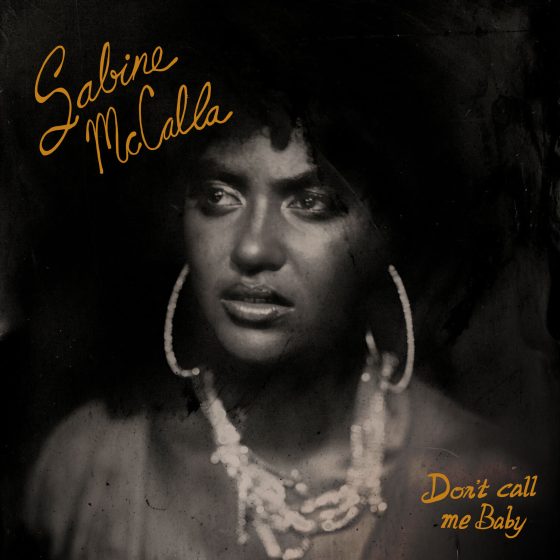
As we discuss later in this interview, the inspiration for Don’t Call Me Baby wasn’t born from a happy moment. Rather than sinking into sadness, McCalla juxtaposes joy and heartbreak, using narrative storytelling as a vehicle for catharsis across nine haunting, surreal songs. On “Sunshine Kisses” she recalls being lost in liminality after a breakup before letting loose on the classic rock and roll slanted singalong “Louisiana Hound Dog” (a co-write with Dan Auerbach from The Black Keys and Pat McLaughlin). By the time “Two of Hearts” arrives, our protagonist is singing about three different suitors.

Amid the paradisiac instrumentation surrounding her soothing voice, McCalla and her producers, Sam Doores (of The Deslondes) and Ajaï Combelic, collaborate with a cast of more than a dozen musicians from her musical community in New Orleans. Together, they blend rhythm & blues, country, folk, jazz, Tropicália, quiet storm soul, and doo-wop into hypnotic roots music. Song by song, the results reflect a lifetime spent studying traditions from across the Americas, Europe, the Caribbean, and Africa. Equal parts comforting, adventurous, and spicy, she serves up an Americana hotpot that speaks to the world while being informed by it.

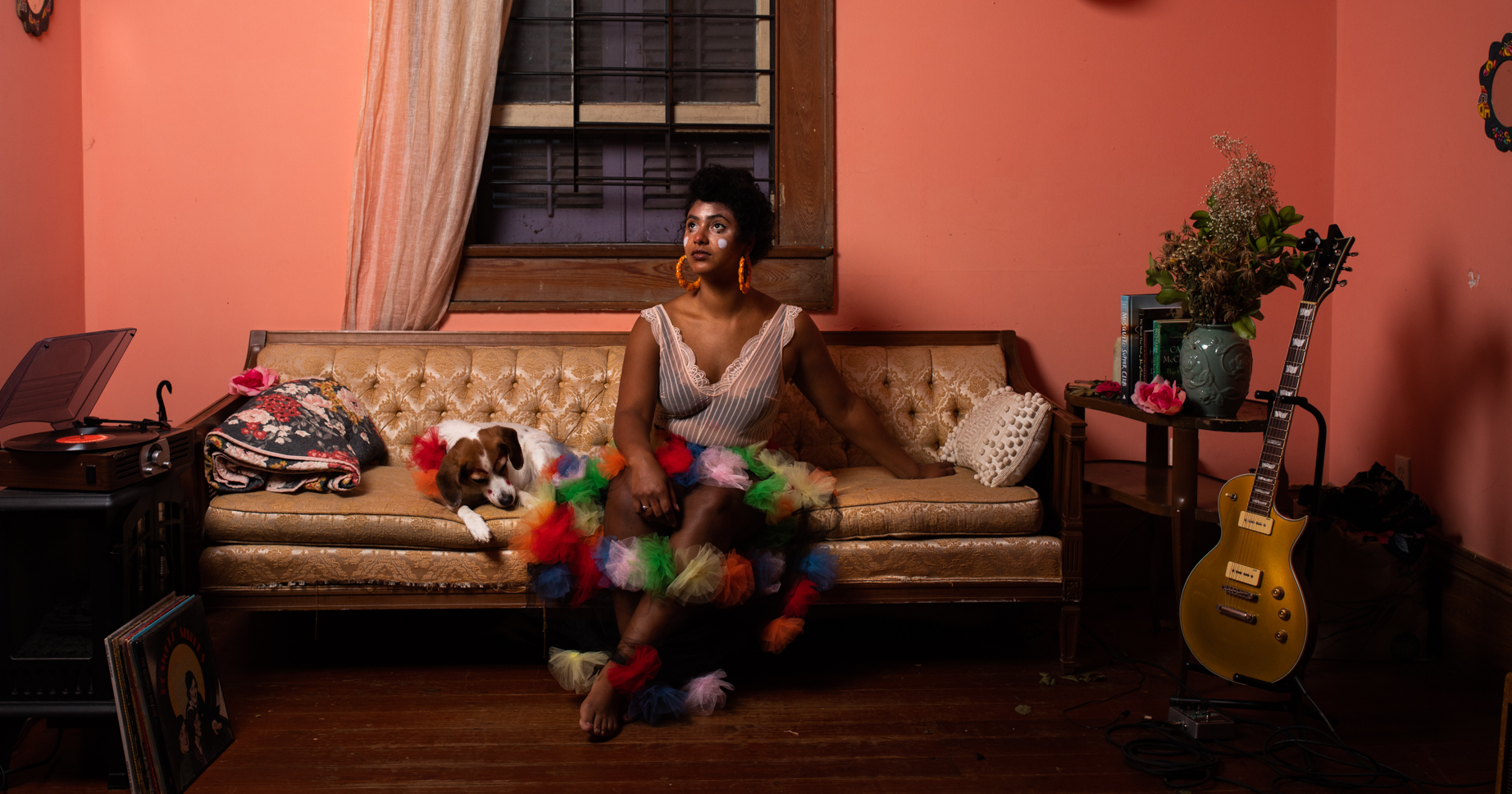
Last month, McCalla joined BGS on a video call. Sitting on a yellow couch surrounded by rosebud-hued walls and framed art, she spent just under an hour with us. In a discursive conversation, we explored the influence of life in Louisiana, her passion for musical history, and, given her background, the inevitability of her worldly confluence of sensibilities. A thoughtful speaker, McCalla isn’t the type to rush her answers. She’s also happy to keep a point simple or, when needed, throw in some extended anecdotes. Sometimes it’s not that deep; other times, it really is.

How important is a sense of place and location to your music?

Sabine McCalla: I don’t know. I mean, it is important. Louisiana and New Orleans have been characters in, or influenced my music a lot. But I’ve certainly written songs outside of New Orleans and Louisiana. I think any land we connect with is important when we’re writing songs.

From the outside looking in, it’s easy to surmise that there is a quality to New Orleans and the musical community that lives there that unlocked something in your artistry.

Yeah, it’s definitely been very inspiring. New Orleans is a very musical city. Nearly everyone you meet is a musician or plays more than one instrument. It’s incredibly culturally rich here. Learning to play music in this environment, you learn certain styles, or you learn with a focus on dancing. There’s a lot of rhythm & blues, soul, and second-line music, and people dancing in the street. I think dancing is something I was thinking of when I thought about how I want these songs to be listened to. Like I’m thinking of a honky-tonk dive bar, hot and steamy, lots of close dancing.

Who says you can’t dance to misery, right?

You certainly can. In fact, you’re probably a better dancer.

There’s something about the juxtaposition between a sad sentiment and a happy rhythm or melody that can be so moving.

I think innately we all want to experience pleasure, and we all have our pains that go with it. I think that’s what people are connecting with.

Unfortunately, or perhaps, fortunately, what is pleasure without pain?

Just a high.

New Orleans looms large in my mind as one of those places where traditions have been kept alive that don’t still exist elsewhere.

Yeah, for sure. There’s a tradition of passing down songs. There’s also so much space to create music here.

Don’t Call Me Baby is an ambitious album, but you succeed in your ambitions. You’ve braided a lot of threads together: different places, genres, periods of time. Was there a specific time in your life when you became interested in musical history, or looking to the past to find new ways to go forward?

I grew up playing classical music. Then I studied some old-time music from Appalachia. I’m interested in learning lots of old songs. I like listening to Harry Smith’s Anthology of American Folk Music. I feel like I’ve dug into a lot of pre-war recordings throughout the South and been inspired by ballad singing.

Like many people, I learned about the Anthology of American Folk Music through Bob Dylan and Joan Baez. There’s something about songwriters who go back and listen to their influences’ influences.

Totally. Shape-note singing is coming back into fashion now. I keep hearing about shape-note festivals around the country. My drummer, Howe Pearson, who also plays in The Deslondes, has been hosting a shape-note singing workshop every Monday.

What was it about the Anthology of American Folk Music that excited you?

They were songs I’d never heard before. I liked the quality of the voices on tape. So emotive and raw. And not just the Harry Smith anthology, Alan Lomax recordings too. I’ve always been interested in ethnomusicology. When I was younger, my sister and I had a mentor who played a lot of blues and jazz. I remember thinking he wrote these songs, until I realized, no, this white man from New Jersey did not write these songs. There’s this beautiful history of Black people in America who sang the blues and jazz and wrote so many songs that have been passed down.

Sometimes I wonder about the impact recorded music had on community singing. I’ve read that after phonograph records turned up, people became more self-conscious about singing at home. They’d hear these great singers and a shyness would set in.

People were keeping the songs they heard alive. They lived when there was no radio, so they were better keepers of songs than we are today. Now everything is so fast. There’s so much music, AI music, the industry pushing constant output, and not reviving songs. But I think a new resurgence of song revivals is happening.

You grew up in a Haitian family in New Jersey. Were your parents encouraging about music?

Yes and no. My sister’s also a musician. My mom was like, “Leyla’s the musician. You need to figure out your own path.” I was like, “No, I think I want to do this.” Both of my parents always encouraged choosing your own path and focusing on it.

It’s not always immediately obvious, but there’s a strong Haitian influence in American music.

Yeah, the Fugees! Lauryn Hill went to my high school. Her album The Miseducation of Lauryn Hill is like a bible to me. It’s a perfect album – the intros, outtakes, transitions. Lyrically empowering. I grew up on her songs. I’m grateful for my high school. We had amazing music teachers.

I graduated with SZA and Dave Authors, and a few others who’ve done great things. My sister Leyla McCalla went there, too. New Jersey is incredibly diverse. A lot of people immigrate to New York and then move into the suburbs, which my family did as well.

Did you grow up on a bit of everything musically?

Classical music. School trips to the opera. My parents played the Haitian groups Boukman Eksperyans and RAM. We listened to The Beatles, Bob Marley, and Rod Stewart.

When I think about Americana, I think about this confluence of cultures and musical traditions that came together in the South. When did it become attractive to you?

It all came together naturally. I was focused on pre-war songs, then going through decades of music. When I moved here, I got interested in The Boswell Sisters and songs collected in New Orleans in the early 1900s. Then I learned about Lonnie Johnson, the godfather of rock ’n’ roll. Through studying songs, I realized that it’s all Americana music. It influenced how I sang and created songs.

In a sense, there’s an inevitability to where you arrived.

I originally wrote and sang songs a cappella. That became my EP, Folk. My friends Leonie Evans and Steph Green helped with backup vocals. There wasn’t much thought about creating a larger sound until I met Eli “Paperboy” Reed. I’d already been listening to New Orleans R&B and soul, and when he put chords to my songs, I was like, “Oh, this is the sound I’ve been looking for.” That changed how I thought about songs. I also grew up listening to [the Tropicália singer-songwriter] Caetano Veloso. I’ve been trying to read his book Tropicalism, but there are so many references to Brazilian artists. It’s going to take forever.

After growing up in New Jersey, you moved to New Orleans, where this was all even more concentrated. There was a weekly jam session you’d go to called the All-Star Covered Dish Country Jamboree.

Yes. The first time I went was in 2014, probably in February. Joy Patterson came up to me – she runs it – and said, “I know who you are.” I was like, “Oh no, this lady…” But I loved it. My sister had been living here, so people were like, “Oh, you’re Leyla’s sister.” I think I saw Sam Doores’ doo-wop group with Casey Jane, Camille Weatherford, Emma Eisenhower, Jon Hatchett, and Max Bien Kahn; they did a little doo-wop show. I thought it was so cute. I wanted to know these people. And I’ve ended up working with all of them.

From there, it became a weekly ritual in your life, right?

Yeah, it was like a church. Going to this country night where I could talk about songs with people and hear a lot of old songs: classic country, classic R&B and soul. Those things lit my soul up.

After all these experiences, what’s your understanding of country music and where you could fit into it in 2025?

I don’t know. Maybe giving voice to other women of color who are interested in country music, not just hip-hop or R&B, but a diversity of sounds. I also lived in Ghana growing up, and lots of people listen to country music in Africa. What surprised me was going to Ghana and someone saying, “Where’s your cowboy hat?” I was like, “I’m from New Jersey, not Texas!”

I get the sense that a lot of your music is therapeutic storytelling.

Yeah, it is. It comes from the heart.

What sort of stories do people tell you about their experiences with your music?

The best one was in London. Someone said their friend’s father passed away and left her a boat. She went sailing for three months. They didn’t listen to music for most of it, then one day she put on my record and that’s all they listened to. That made my heart swell. It’s making me tear up now. Another woman told me she’d separated from her husband and, after hearing my music, reached out to him, saying she was ready to compromise. I was like, damn… Hopefully, this music lets people feel they’re not alone in their feelings.

How much has loneliness driven your music?

It’s been a huge component. I value my alone time, but sometimes it’s a detriment when I’m alone too long or ruminating too long.

You need something to break the feedback loop. Tell me about the backdrop to this album?

I was playing with a lot of ideas. Not everything made it onto the record. A friend visited – she’s an amazing stylist – and I wanted to get a tintype photo done by Meg Turner. We did makeup, hair, clothes, jewelry, so much dazzling stuff, so I’d be shiny in the sun. It was hot in New Orleans. Right before taking the photo, I got a text from someone I was dating, and that’s the true look of shock on my face. After I saw the picture, I was like, “Everything needs to be based around this photo.”

It’s an amazing photo.

Right after that, I wrote “Sunshine Kisses” and then I thought, “What else goes with this?”

What sort of ideas did you have about the threads you wanted to bring together in the music?

I was like: What are all my breakup songs? I wanted it to be haunting, but warm. Some songs I wrote during the pandemic felt too cold for this album. I originally wanted to name it Sudden Blue because I was thinking of a colder feeling. But something transpired while making it; the songs were given a new breath by the people I was working with: Sam Doores, Gina Leslie, Roy Brenc, Howe Pearson, and Ajaï Combelic. It was a warm feeling in the room, lots of laughter. And we were doing it during Mardi Gras, during carnival season, which was wild, because we’d play shows at night and then go into the studio in the morning.

It’s amazing how much other people can make a difference to a creative process.

Yeah. We fed off each other. If there’s negativity or self-consciousness, it’s felt in the music. We were all happy to work out ideas and nerd out about music.

Did you have a heartbreak record, not necessarily one you idolized, but a north star to look towards?

A few albums inspired me. Lauryn Hill’s The Miseducation of Lauryn Hill. Fiona Apple’s When the Pawn… There were also songs: Irma Thomas’s hits, and “Andromeda” by Weyes Blood. It’s such a powerful song about all the emotions we face. Feeling lonely, then liking the loneliness, then changing your mind five times a day.


Photo Credits: Lead image by Camille Lenain; album cover tintype by Meg Turner.
The Many Folk Art Threads of Jake Xerxes Fussell’s ‘When I’m Called’

Two weeks before the release of his new folk album, When I’m Called (available today via Fat Possum), Jake Xerxes Fussell’s sister, Coulter, who is a quilter, had a show of her work in Oxford, Mississippi. In this show, Coulter patchworked 24 small quilts with fabric sourced from her friends and fellow quilters. There was one quilt for every hour of the day.

Though Fussell has said that he and his sister do not talk about her work very much, there are some profound resonances between her quilts and his music – the idea of updating tradition by the use of unusual materials and freer forms, for example, or the idea of using old material to make new texts, but also something deeper. The songs and the quilts mark time, but not in conventional ways. Instead, they track time in a looping, stuttering fashion. Time is both abstracted and made concrete, as a quilt can appear like midnight and a song can be both a work song and a travel song; but also how a quilt or a song can be a mark of a 19th century technique using 21st century material.

The sources for these records and quilts are a network of people. They include those as close as their parents or close family friends, but also as wide as academic song catchers from the 1950s and 1960s, the folk revival of the same era, the careful annotaters of 1990s web forums, or 2020s Instagram accounts. In the time I spent talking to Fussell, he was careful to note these networks, where and who he learned from, the songs he picked up, but also the methods.

These methods were not only adapted from family and friends, but also professional contacts and music legends who pursue a similar ambition to extend what “folk” means. They include Blake Mills, who has been a session musician for everyone from Bob Dylan to the Avett Brothers; or Robin Holcomb, the avant garde vocalist and multi-instrumentalist whose estranging 1992 album, Rockabye, provides a conduit from artists like Bill Frissell and John Fahey to contemporaries like Blake Mills or Daniel Bachman.

For Fussell, the creation of a drawing, painting, quilting, or song-making can come from the same geographical site, the same kinship network, or the same historical records. His parents were academics who painted, sang, wrote, and quilted, but he also had friends like Art Rosenbaum, who painted, gathered songs, taught them in and outside of the University of Georgia, and won the 2008 Historical Recordings Grammy.

Rosenbaum died in 2022 and the songs on this album are in his memory, absorbing captured Scottish songs from the 1970s. The track “Feeling Day” is both bright and mournful, moving in the body of Rosenbaum from Georgia to Scotland and back, where it was taught to Fussell and then captured here. The intermingling of technology, memory, curiosity, professional competence, and ancestor work all made contemporary by skill and memory. (Like the quilts.)

Fussell talks about reclaiming and re-interpreting these songs, versions of versions, updated for contemporary listeners. The album includes the work of Rosenbaum, but it can also be seen on the very first track, about the Mexican painter Maestro Garry Gaxiola, whose decades-long (and most likely one-sided) feud with Andy Warhol centered on questions of what populist art is and what folk art is.

It can also be seen in how Fussell sings “When I’m Called,” a song partially composed from a found paper scrap (again, the quilting) containing a child’s to-do list. It reminds me of the folk anthologist Harry Smith, who spent a long time cataloging paper airplanes he found on the street. It can especially be seen on Fussell’s version of “Gone to Hilo.”

Depending on who you ask, the song’s original title is either “Johnny’s Gone to Hilo” or “Tommy’s Gone to Hilo.” For most versions, those who sing “Tommy” think that the song is about Ilo, Peru and those who sing “Johnny” think it is about Hilo, Hawaii. Fussell sings “Johnny.”

The song is not really a sea shanty, because they require a stronger beat to function as a work song; but it was intended as a song for sailors, a kind of lament, and the gap between forms here has deepened as it has moved further from the sea. The work quality dropped, and the lament quality ratcheted up. It has been sung by dozens of people, one of those tracks that criss-crosses the Atlantic with the folk – Peggy Seeger sang it when she was in England with Ewan McColl, for example.

Perhaps the saddest version of the song is by Paul Clayton. I think maybe three people in the world care about Paul Clayton, and Fussell is one of them. Clayton grew up in New Bedford, Massachusetts, and collected songs about that town’s whaling history since before he was 20. He went to UVA and studied under the legendary song collector Arthur Kyle Davis, traipsing through Appalchia finding songs and then moving to the East Village, integrating himself with Van Ronk and especially Dylan. Fussell claims that his version of “Hilo” is directly in the tradition of Clayton – that how he weaves a song is how Fussell weaves a song.

Between 1954 and his too early death in 1967, Clayton made almost a dozen records of revolutionary war songs, sea shanties, timber shanties, songs of marital discord, songs which Dylan ripped off, and songs which are only remembered by enthusiasts. Fussell is an enthusiast, his version is the lament that Clayton created from the work song and the interweaving of the lament and the work song – the doubling down on the historical memory, the absorbing of a technique renewed in the knowledge of history – is key to the whole enterprise.

Listen to how Clayton emphasizes certain words – for example, “bully boy” – but also listen to how it’s just Clayton; a clarion voice, and a melancholy one. Listening to Fussell’s, with Robyn Holcolmb singing harmony, the sadness is still there, but the tradition is too. The tightness of the version traps tradition, that it is in the middle of the album, that it’s a single, marks a network of relation, an aesthetic about public choices, and a wrestling with tradition.

Folk music asks again and again, “Why are we making these choices?” and, “Whose choices are we making?” Fussell, at his best, makes choices that are smart, open, generous, and mark a time and place – be it Georgia or Hilo or Oxford, Mississippi or a room where Clayton and he can have a conversation with all those 19th century sailors.

Thinking again of Coulter’s quilts, they both mark time in an abstract sense – the idea of what noon or midnight looks like – but they also mark the time it takes to create a work. There is this idea that time is linear, that it marches forward relentlessly. The quilts mark the history of their creation, the actual moments that Coulter made them, but they also weave together the stories of those who gave her their scraps, the interlacing of decades of commercial and domestic enterprises intended to make an object which shows its sources/seams.

Everytime someone sings a traditional song, this kind of citational practice renews the song, the text, the material. Like a quilt, when Jake sings, time bends and loops, inviting other people’s time, other people’s lives. In a worst-case world, this could be greedy, or wolfish, consuming without respect; in Jake’s work, a much better world, this is a kind of kinship network, sharing and consuming mutually.


Photo Credit: Kate Medley

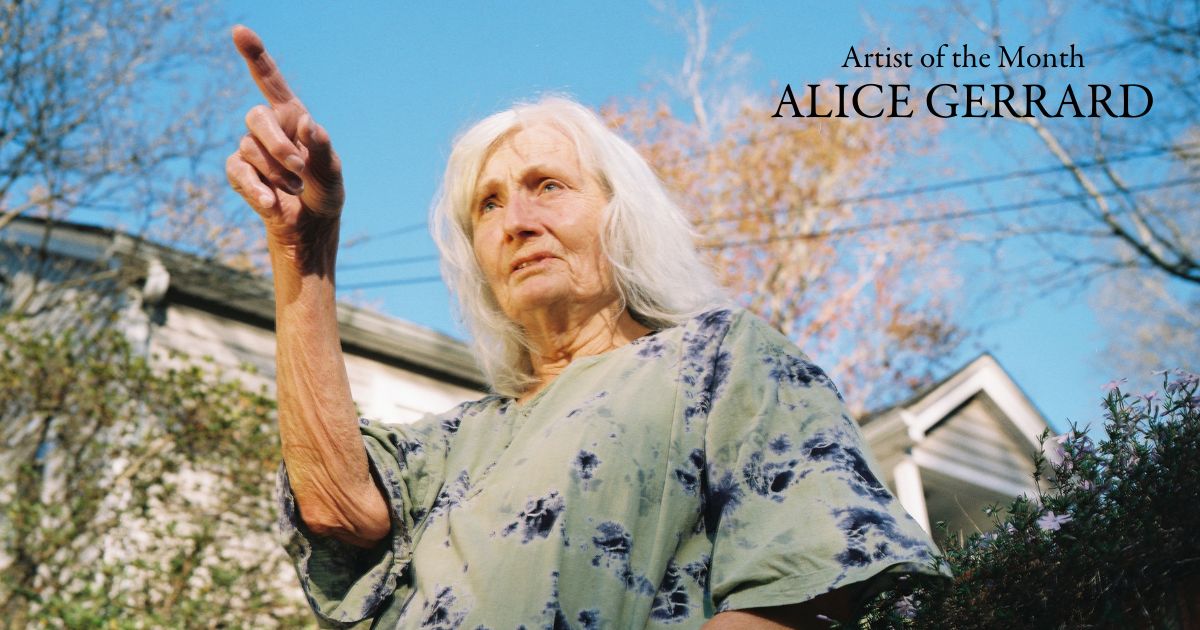
Artist of the Month: Folk Hero Alice Gerrard Is Unafraid to Be a Real Person

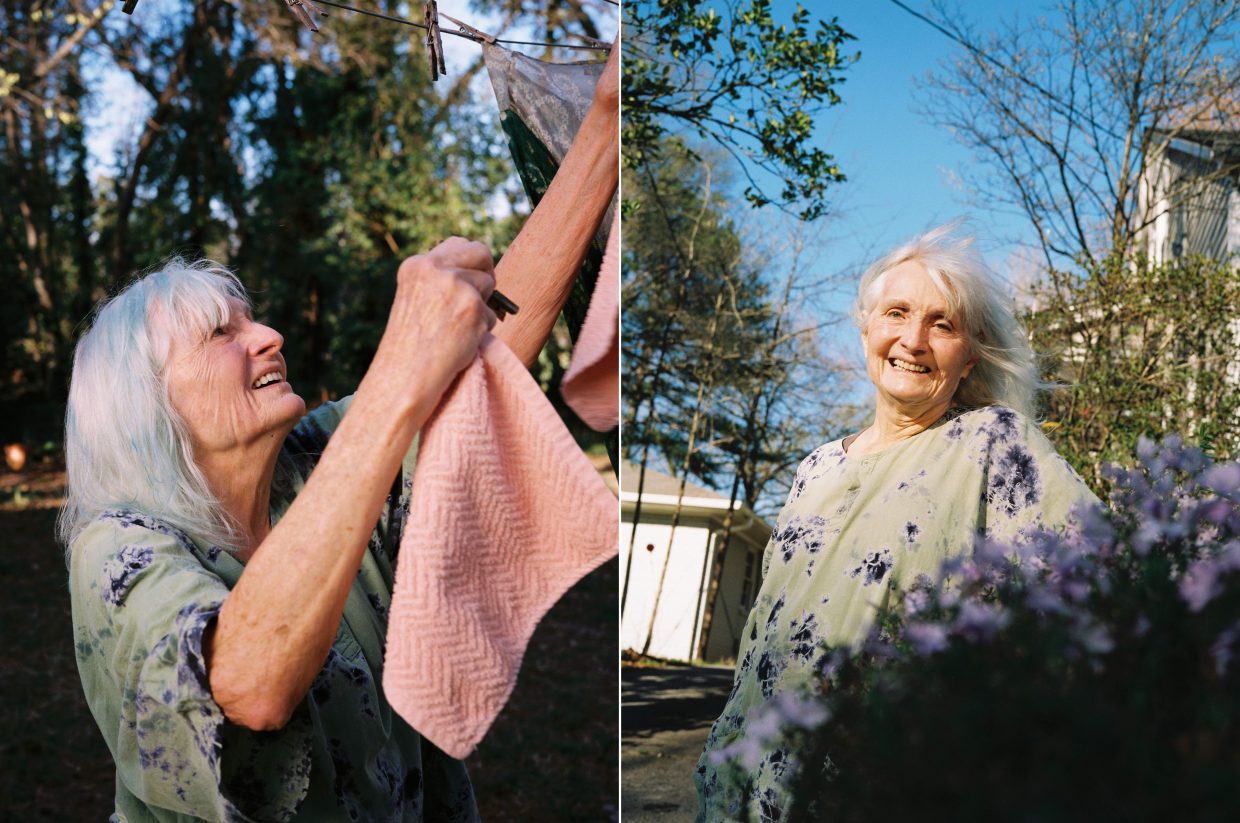
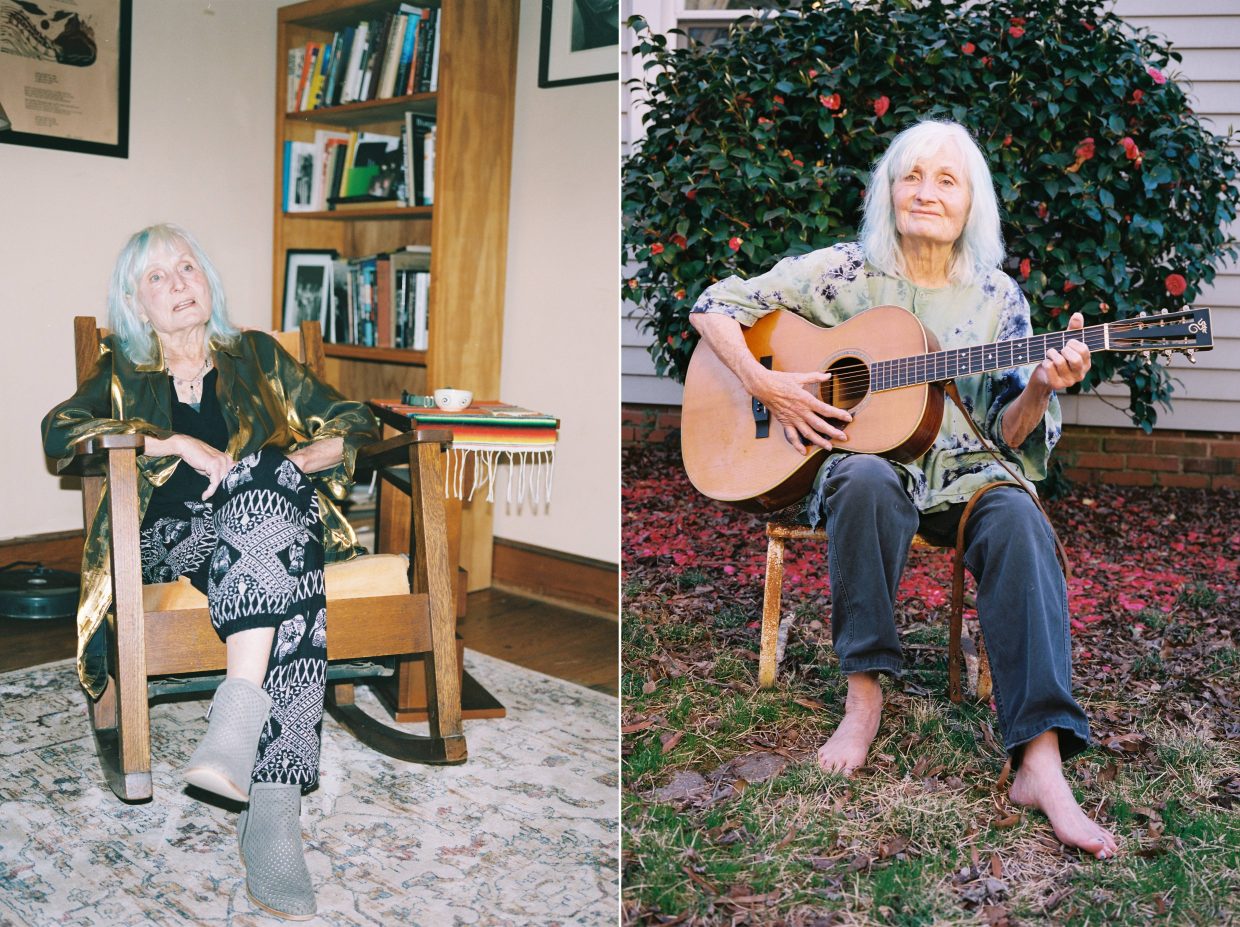
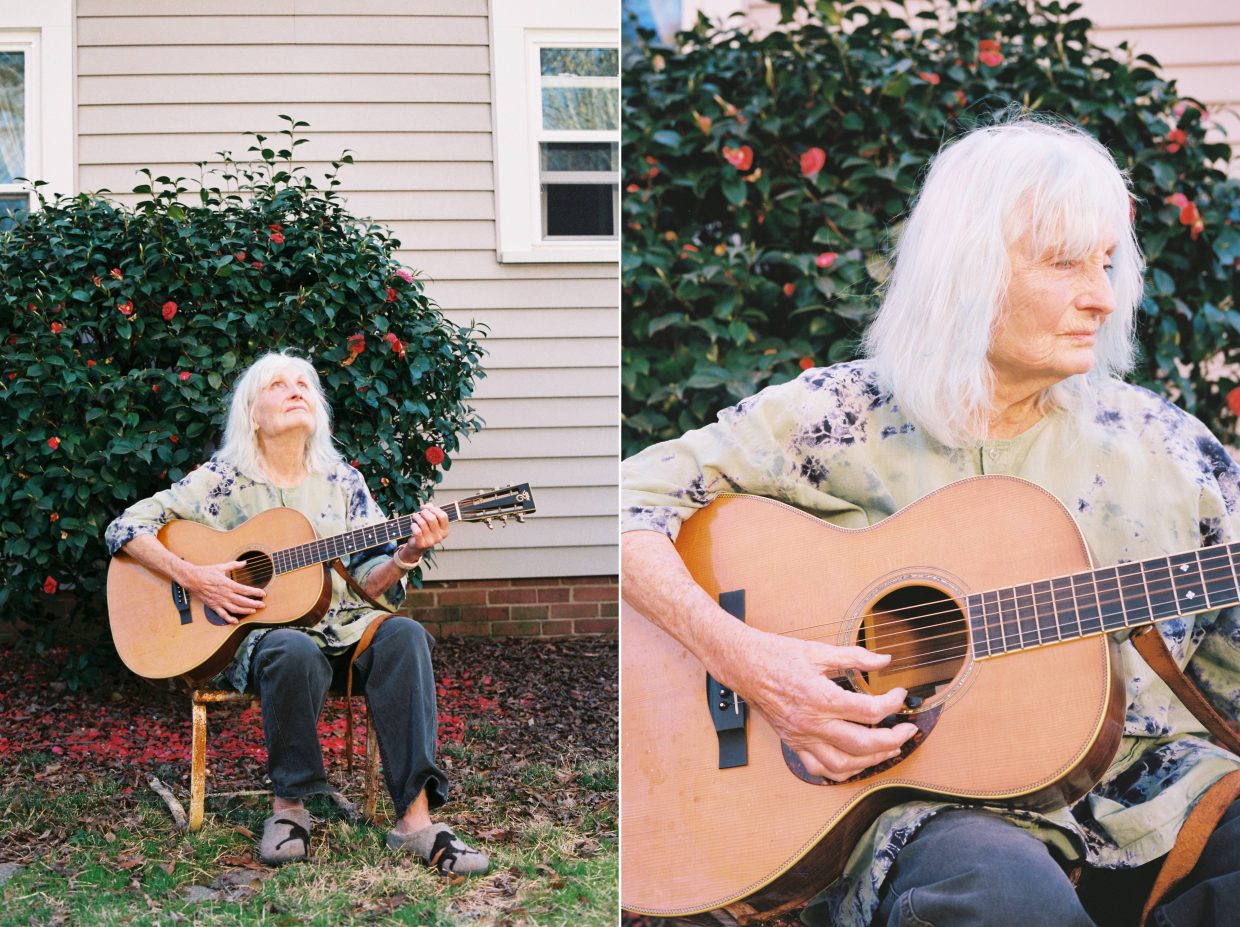
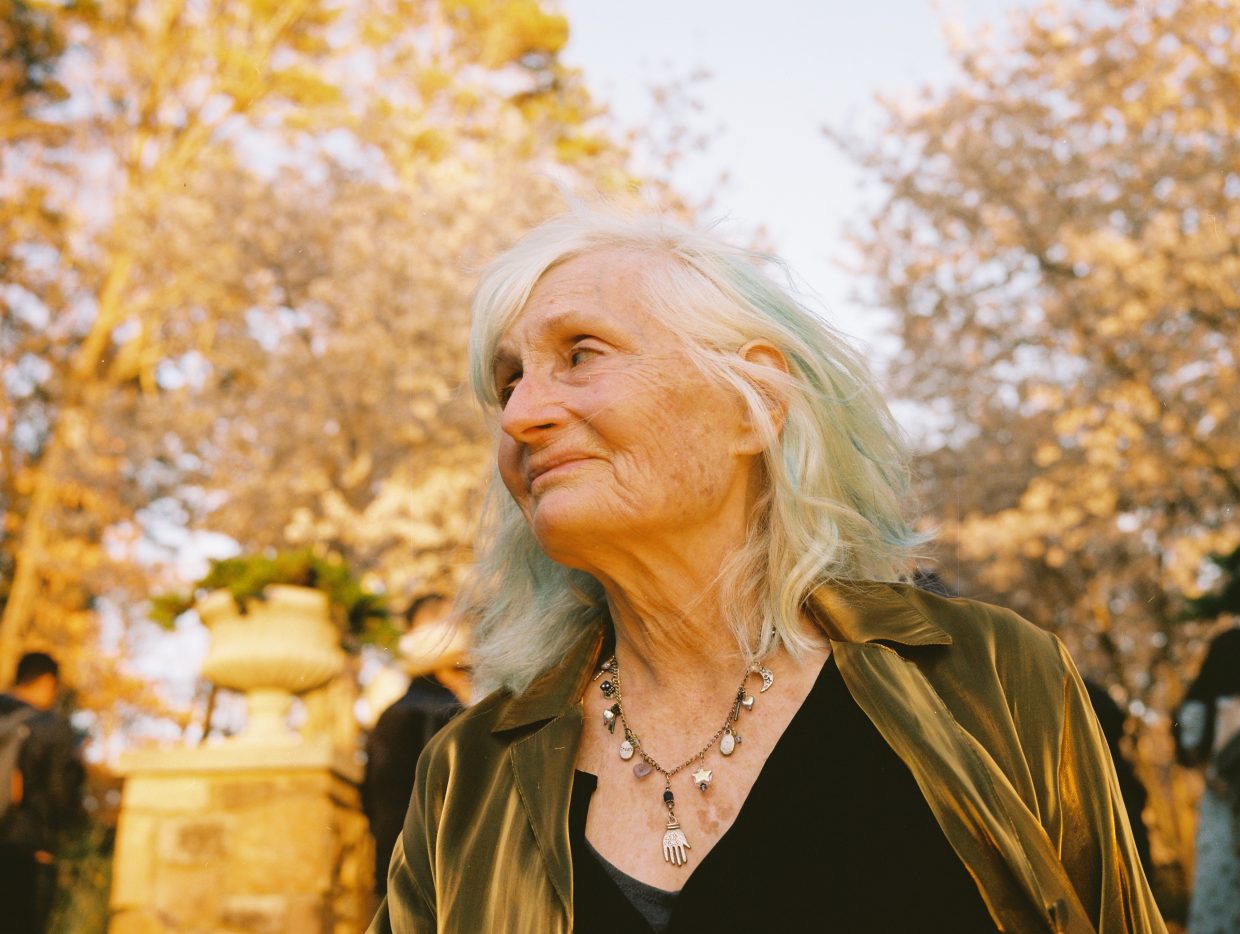
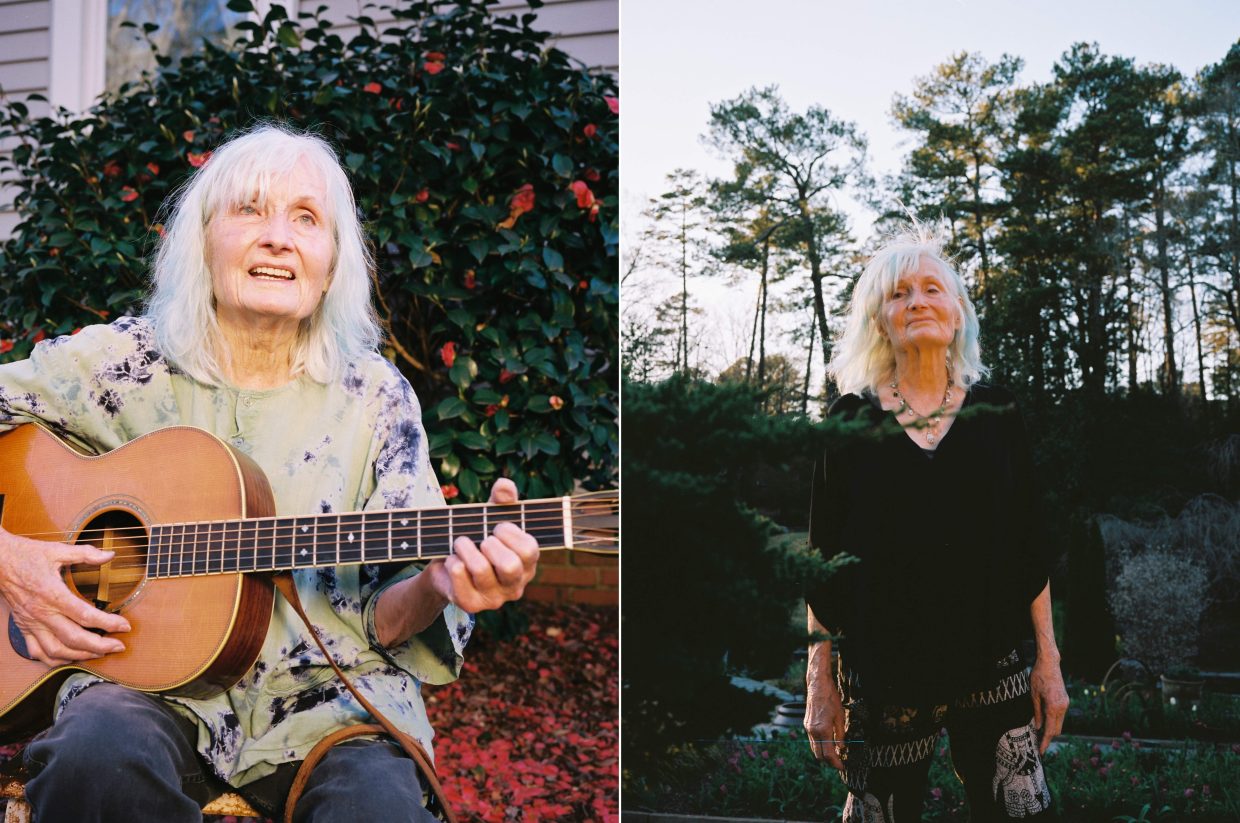
(Editor’s Note: Fiddler, songwriter, and creator Libby Rodenbough writes this personal essay on her friendship with and admiration for BGS Artist of the Month, Alice Gerrard, accompanied by her original photos taken for Gerrard’s new album, Sun to Sun.)

I remember first hearing Ola Belle Reed’s “Undone in Sorrow” when I was 19 or 20. I felt like a portal had been opened unto a world that had existed around me my whole life, unseen and unheard. I grew up in North Carolina going to visit my mom’s family in Madison County, along the Blue Ridge, where any of the graveyards on the mountain sides with their little mounds of clay outside my backseat window might have been the one from Ola Belle’s song.

That portal didn’t open for me in the mountains of North Carolina, though – it was in Chicago, at the Old Town School of Folk Music, an institution that had come out of the ‘50s folk revival. I was big on Pete Seeger and John Prine at that time in my life, and had found out my dad had a cousin with a spare room in Chicago, so I went on a little pilgrimage during a recess from college.

It was there that I learned my first old time fiddle tunes, belting the refrain “down in North Carolina” from “Waterbound” at the school’s open jam while the Chicago winter dumped three feet of snow outside. It was there I first learned the rudiments – very rude in my case – of clawhammer banjo. It was also there that I first heard a left hook of a song called “A Few Old Memories” by Hazel Dickens, which appeared on her 1973 duo record with Alice Gerrard, Hazel & Alice.

I went home from Chicago with new eyes and ears. Places I’d known forever became newly populated with epic figures, recast in the light of 200-year-old narratives. My first semester back in school, I was in an introductory folklore course taught by Mike Taylor (of Hiss Golden Messenger) and he started talking about his friend Alice Gerrard, who lived a town over in Durham. I was fairly well tangled up in time and place at that point – even the deceased people I’d been learning about were brand new to me – so I had to blink a few times to digest that she was the same person singing harmony on “A Few Old Memories.”

Today, 10-ish years later, I sit with Alice in preparation for writing this piece and she tells me about driving Ola Belle Reed in her Dodge van on tours through the South in the late ‘60s. She’s my oldest friend (nearly 90), and all competition lags behind her years pretty pathetically. She also makes a lot of the people I talk to seem boring. We’re in the same business: We sing songs and play shows and make records. She’s been doing it a lot longer, and I think she knows about five times as many songs.

Hanging out with Alice helps me understand why she wanted to be friends with people like Elizabeth Cotten and Luther Davis, who were elderly when she met them. She heard the way they played and sang and had to talk to them about their lives. “They knew exactly who they were,” she says. For a young person who had moved across the country from Oregon to Washington, D.C., without maintaining much contact with home, dropped out of college, and had four children, that self-knowledge was aspirational. Though their rootedness in their communities was part of what drew her to them, she didn’t think of them as avatars of bygone primitive ways of life, or as characters in a play – they were people. Elizabeth Cotten was somewhat guarded, but over years traveling and playing together, she told Alice about indignities she had suffered as a domestic worker and as a Black female folk performer, and about subtle acts of defiance she had worked into both vocations. Luther Davis talked about how lonely it was to get old and run out of witnesses to your own life.

Alice is likewise unafraid of being a person. She’ll tell you straightforwardly that she was unprepared to be a mother, that it was essentially impossible to pursue a music career – which was something she knew she wanted for herself – and still give adequate time to her kids. We commiserate about music industry bullshit and engage in light shit-talking about the idea of showmanship.

She’s usually wearing one of her collection of t-shirts that pertain to her dog Polly’s agility training facility (“Fast and Furryous”). This past March, when I took these photos of her to use for promotion of her new album, Sun to Sun, we went through her closet together and dug out some gems, including a bedazzled commemorative t-shirt from Obama’s inauguration.

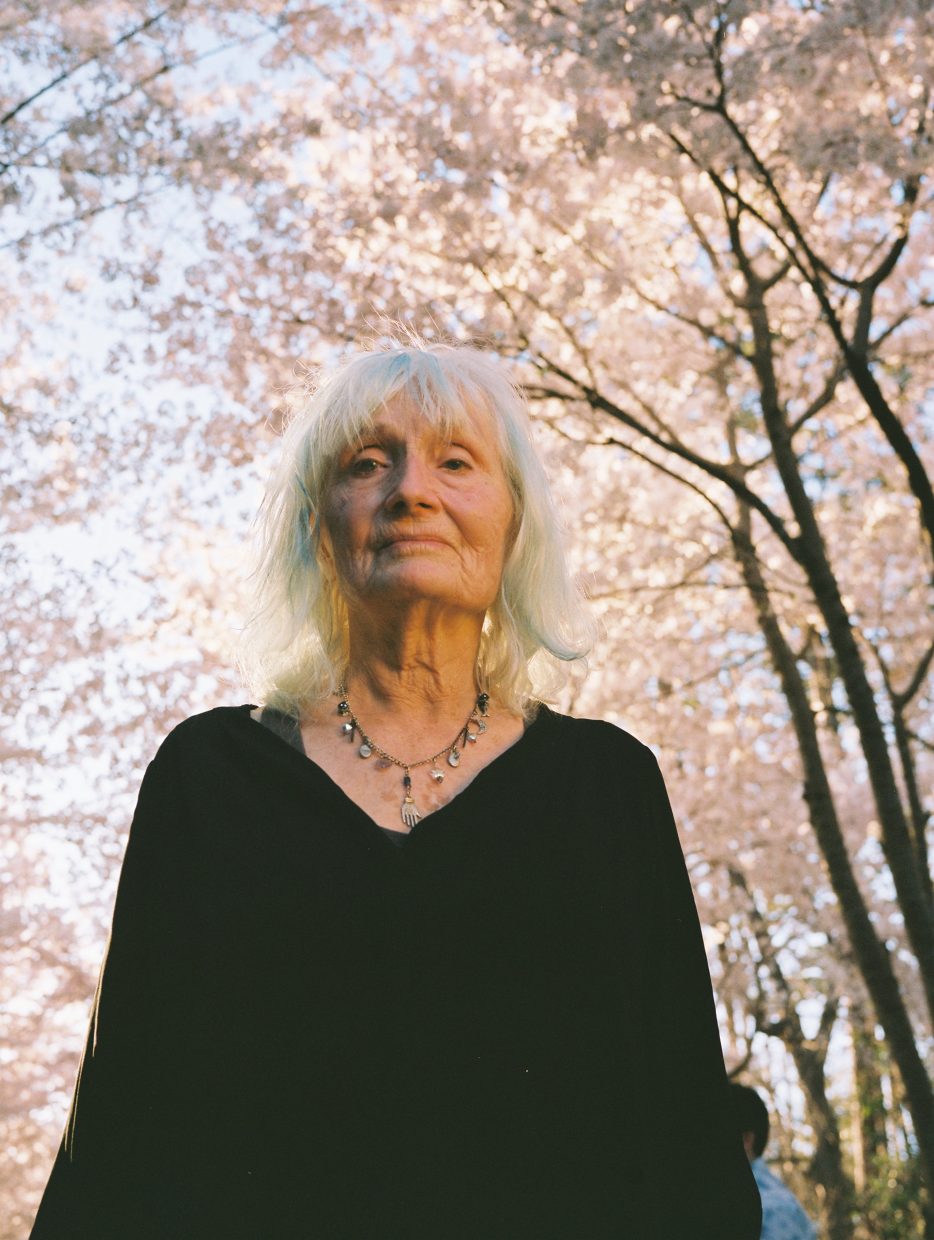
I have no training in photography – I shoot film because I enjoy the feeling of not really knowing how it works. We went to Duke Gardens in Durham, where we both live, on a week when the cherry trees had popcorned into glory. Alice looks radiant in the halo of those glowing blooms. But I also love the photos where she’s at home, standing in front of the brick retaining wall around her front yard, before she realized she still had her Apple Watch on. The sky was so blue that day, her white hair incandescent. She looks like she knows something you don’t, but in a warm way, like she knows you’ll get it eventually.

Alice is unafraid to treat a song like it can handle a little handling. She knows that songs are alive and she’s interested in being a part of their lives, not their memorialization. She smiles talking about how, in an old John Cohen film, the Madison County ballad singer Dillard Chandler starts a song in a key around here (she holds her hand at her waistline) and ends it here (she raises her hand up level with her temple). She’s delighted by the particularity of the human touch. She prefers singing voices with a bit of weirdness over purely pretty ones. Talking about Carter Stanley’s high whine, she says, “Whatever was eating on him from the inside, it was showing up in the way he sang. Nina Simone, the same way.” She tells me what a struggle it is to teach that kind of feeling to people accustomed to singing prettily. “If you’re trying to get somebody out of the soft, breathy voice, you say, ‘Look, your kid is running out into the street and you have to call your kid back.’ You don’t say,” — she coos — “‘Heyyyyy Brian, get back here.’ You say, ‘BRIAN! GET BACK HERE!’”

Whenever I’ve played music with her, Alice seems to lean into what people at the Old Town School liked – actually, loved – to call “the folk process;” she lets arrangements evolve as the spirit of the universe sees fit. I’m lucky she’s not a stickler for tradition, even traditions she could write encyclopedias about, because my fiddling style is distinctly unmoored. I was a half-rate Suzuki classical violin student growing up and then at the Old Town School I learned how to accompany folk singers on songs with three or fewer chords. I came home and started going to the old-time jam at Nightlight Bar & Club in Chapel Hill, where the jam leaders were American Studies PhD candidates who also grew up learning fiddle tunes from their hometown octogenarians. Some of my friends started a band called Mipso that was flirtatious with bluegrass and asked me to join, but I told them up front I didn’t know any licks. (They didn’t seem bothered by that.) I’ve since learned a few licks, and I would rather play an old time tune any day of the week than do almost anything else, but I never could sit still long enough to do what Alice calls “holding the line” — keeping and caring for the tradition.

I’m indebted to, and grateful in my heart for, people who do that work. I may roll my eyes at gatekeeping, but it’s more than wide-eyed would-be fiddle players at the gate; it’s the whole monster of monolithic, capitalist cultural imperialism, chomping down on everything small or strange. Songs can, and do, disappear, like cultures and forests, and not just by inertia but by clear-cutting. A lot of days I feel self-conscious about whatever it is I’m doing instead of holding that line. When I listen to Alice tell stories about the many singers and players she’s known over the years, though, I remind myself that they each have a distinct relationship with tradition – and with what it means to be an artist.

For a long time there’s been a divide, rhetorical and sometimes actual, between “the folk” and “the folkies,” which maybe means country people versus city people, or maybe people who grew up in a given musical tradition versus those who came to it later. Alice and I both fall into the latter category, though she’s had considerably sharper focus since her initiation. I’d rather replay a 10-second clip of a Mark O’Connor fiddle solo at one-quarter speed forty-seven times in a row than try to examine that dichotomy in any more detail at this moment, but I did spend a lot of my undergraduate days thinking about authenticity and who’s entitled to do what with old songs. Alice has often found herself among people who look at it from an academic angle – her ex-husband, Mike Seeger, came from a folklorist family – but her view remains that the compulsion to define and categorize is basically academia trying to justify itself. I don’t take that as bitter or glib, I just think she hasn’t found it necessary, in her personal relationship with the music she loves, to try to determine who gets to claim it. Or maybe, for Alice, the claim is in the singing. Talking about what makes a voice “authentic” (a word that sends a chill down my spine), she paraphrases Supreme Court Justice Potter Stewart from 1967 in his definition of pornography: “I know it when I see it.”

As we clink the ice around our $7 decaf specialty iced lattes, Alice tells me about a song she’d just heard, a haunting falsetto voice with nylon string guitar, in the opening scene of Pedro Almodóvar’s new short film, Strange Way of Life. After some Google sleuthing, she identified it as a recording by the Brazilian artist Caetano Veloso (in fact, the movie is named for it – “Estranha Forma de Vida.”) She’s head over heels for this song, itching to go home and dig into Veloso’s catalog. If they ever meet, I know she will have great questions for him, the type of questions that make a person believe songs must do real work in this world.

I ask her if she thinks of her music as having “a purpose.” “Not really,” she says. But she goes on, “I want people to hear what I hear in this music.”

In my view, that’s an altruistic goal, because it’s clear that whatever it is Alice hears in the music, it gives her life its very marrow. I admire the decades she has devoted to learning and documenting traditional music, but what I aspire to most is the way she still loves a song — viscerally, instinctively, with gusto. That’s what makes a line worth holding.

“There was something about the music, the quality of the voices,” she says, recalling first hearing Harry Smith’s Anthology of American Folk Music. “There’s so much beauty in it, it’s like, God, yeah.”

I had that “yeah” moment when I heard “Undone in Sorrow” and “A Few Old Memories” – and now, Sun to Sun. I hope to be saying “yeah” like that about songs for the rest of my life.


All photos: Libby Rodenbough