Sabine McCalla Makes a New Orleans Album Out of Global Traditions

In 1853, a 29-year-old Parisian photographer, Adolphe-Alexandre Martin, delivered a paper to the French Academy of Sciences. In his text, he proposed a process for creating a photographic image on thin, chemically coated metal sheets: the tintype. Between the late 19th and early 20th centuries, his invention became the portrait medium of choice, especially across North America, eventually falling out of fashion in the 1930s. Strikingly evocative, tintypes imbue subjects with a surreal, dreamlike quality, offering an emotional portal into the past.

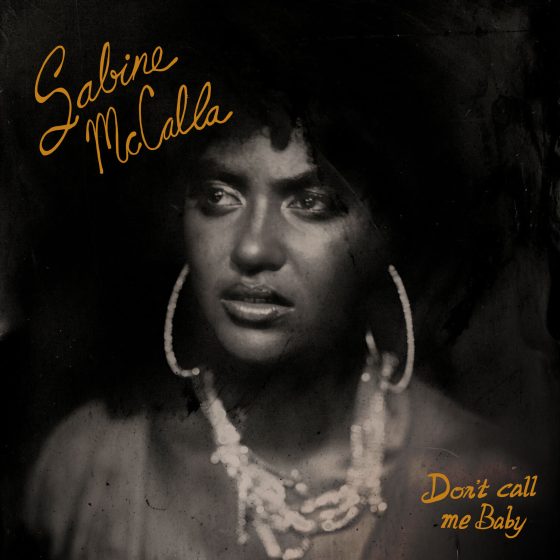
Over a century and a half later, the New Orleans-based Haitian American singer-songwriter Sabine McCalla, younger sister of the influential classical and folk musician Leyla McCalla, asked the tintype revival photographer Meg Turner to take her portrait. For an artist who draws from the past while seeking pathways forward, using an old medium to capture something new was an instinctive choice. Turner’s image became the cover art and a lodestar for the central feelings underpinning McCalla’s debut album, Don’t Call Me Baby, released through Kurt DeLashmet and Nick Shoulders’s Gar Hole Records label.
As we discuss later in this interview, the inspiration for Don’t Call Me Baby wasn’t born from a happy moment. Rather than sinking into sadness, McCalla juxtaposes joy and heartbreak, using narrative storytelling as a vehicle for catharsis across nine haunting, surreal songs. On “Sunshine Kisses” she recalls being lost in liminality after a breakup before letting loose on the classic rock and roll slanted singalong “Louisiana Hound Dog” (a co-write with Dan Auerbach from The Black Keys and Pat McLaughlin). By the time “Two of Hearts” arrives, our protagonist is singing about three different suitors.

Amid the paradisiac instrumentation surrounding her soothing voice, McCalla and her producers, Sam Doores (of The Deslondes) and Ajaï Combelic, collaborate with a cast of more than a dozen musicians from her musical community in New Orleans. Together, they blend rhythm & blues, country, folk, jazz, Tropicália, quiet storm soul, and doo-wop into hypnotic roots music. Song by song, the results reflect a lifetime spent studying traditions from across the Americas, Europe, the Caribbean, and Africa. Equal parts comforting, adventurous, and spicy, she serves up an Americana hotpot that speaks to the world while being informed by it.

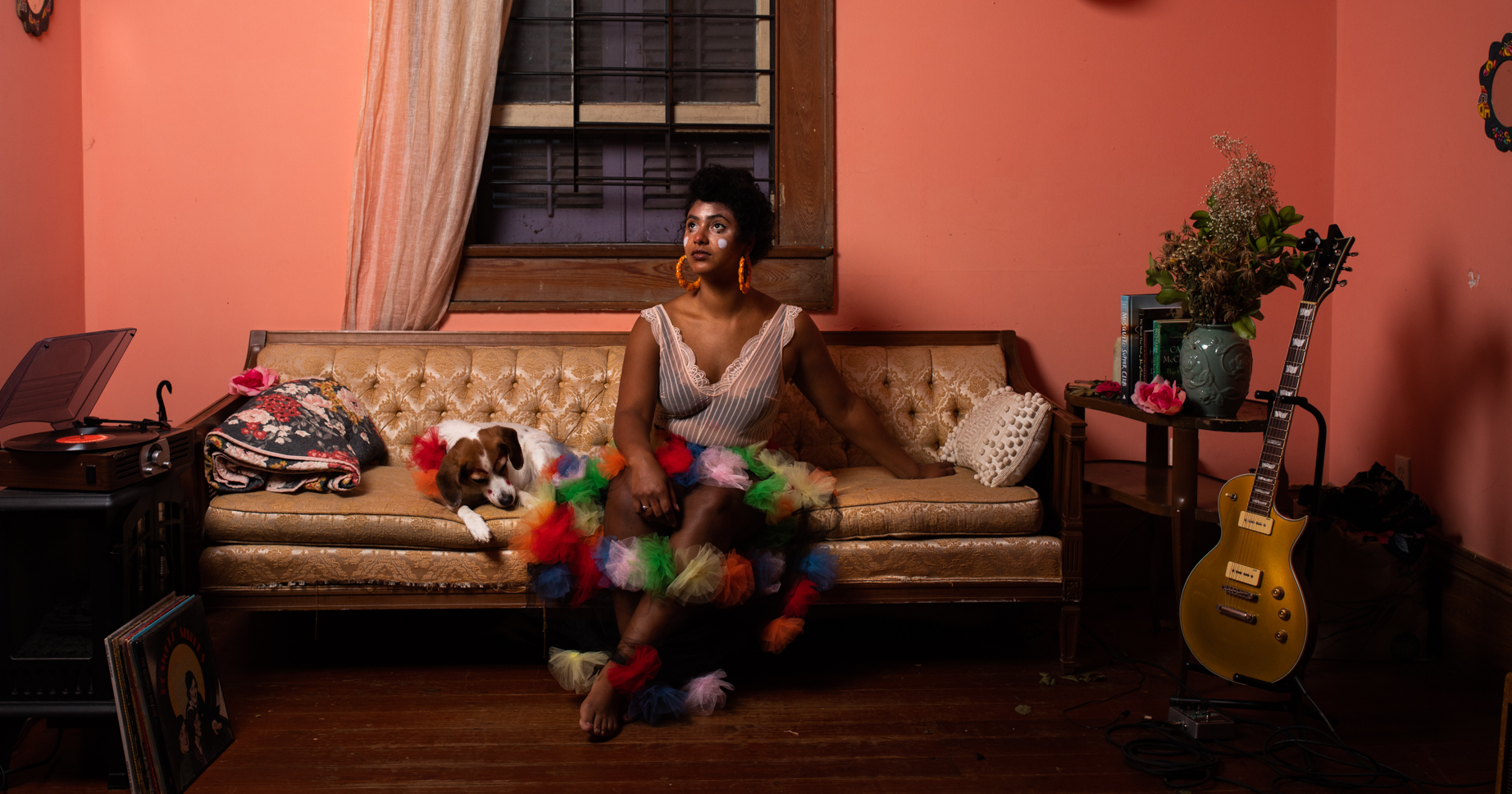
Last month, McCalla joined BGS on a video call. Sitting on a yellow couch surrounded by rosebud-hued walls and framed art, she spent just under an hour with us. In a discursive conversation, we explored the influence of life in Louisiana, her passion for musical history, and, given her background, the inevitability of her worldly confluence of sensibilities. A thoughtful speaker, McCalla isn’t the type to rush her answers. She’s also happy to keep a point simple or, when needed, throw in some extended anecdotes. Sometimes it’s not that deep; other times, it really is.

How important is a sense of place and location to your music?

Sabine McCalla: I don’t know. I mean, it is important. Louisiana and New Orleans have been characters in, or influenced my music a lot. But I’ve certainly written songs outside of New Orleans and Louisiana. I think any land we connect with is important when we’re writing songs.

From the outside looking in, it’s easy to surmise that there is a quality to New Orleans and the musical community that lives there that unlocked something in your artistry.

Yeah, it’s definitely been very inspiring. New Orleans is a very musical city. Nearly everyone you meet is a musician or plays more than one instrument. It’s incredibly culturally rich here. Learning to play music in this environment, you learn certain styles, or you learn with a focus on dancing. There’s a lot of rhythm & blues, soul, and second-line music, and people dancing in the street. I think dancing is something I was thinking of when I thought about how I want these songs to be listened to. Like I’m thinking of a honky-tonk dive bar, hot and steamy, lots of close dancing.

Who says you can’t dance to misery, right?

You certainly can. In fact, you’re probably a better dancer.

There’s something about the juxtaposition between a sad sentiment and a happy rhythm or melody that can be so moving.

I think innately we all want to experience pleasure, and we all have our pains that go with it. I think that’s what people are connecting with.

Unfortunately, or perhaps, fortunately, what is pleasure without pain?

Just a high.

New Orleans looms large in my mind as one of those places where traditions have been kept alive that don’t still exist elsewhere.

Yeah, for sure. There’s a tradition of passing down songs. There’s also so much space to create music here.

Don’t Call Me Baby is an ambitious album, but you succeed in your ambitions. You’ve braided a lot of threads together: different places, genres, periods of time. Was there a specific time in your life when you became interested in musical history, or looking to the past to find new ways to go forward?

I grew up playing classical music. Then I studied some old-time music from Appalachia. I’m interested in learning lots of old songs. I like listening to Harry Smith’s Anthology of American Folk Music. I feel like I’ve dug into a lot of pre-war recordings throughout the South and been inspired by ballad singing.

Like many people, I learned about the Anthology of American Folk Music through Bob Dylan and Joan Baez. There’s something about songwriters who go back and listen to their influences’ influences.

Totally. Shape-note singing is coming back into fashion now. I keep hearing about shape-note festivals around the country. My drummer, Howe Pearson, who also plays in The Deslondes, has been hosting a shape-note singing workshop every Monday.

What was it about the Anthology of American Folk Music that excited you?

They were songs I’d never heard before. I liked the quality of the voices on tape. So emotive and raw. And not just the Harry Smith anthology, Alan Lomax recordings too. I’ve always been interested in ethnomusicology. When I was younger, my sister and I had a mentor who played a lot of blues and jazz. I remember thinking he wrote these songs, until I realized, no, this white man from New Jersey did not write these songs. There’s this beautiful history of Black people in America who sang the blues and jazz and wrote so many songs that have been passed down.

Sometimes I wonder about the impact recorded music had on community singing. I’ve read that after phonograph records turned up, people became more self-conscious about singing at home. They’d hear these great singers and a shyness would set in.

People were keeping the songs they heard alive. They lived when there was no radio, so they were better keepers of songs than we are today. Now everything is so fast. There’s so much music, AI music, the industry pushing constant output, and not reviving songs. But I think a new resurgence of song revivals is happening.

You grew up in a Haitian family in New Jersey. Were your parents encouraging about music?

Yes and no. My sister’s also a musician. My mom was like, “Leyla’s the musician. You need to figure out your own path.” I was like, “No, I think I want to do this.” Both of my parents always encouraged choosing your own path and focusing on it.

It’s not always immediately obvious, but there’s a strong Haitian influence in American music.

Yeah, the Fugees! Lauryn Hill went to my high school. Her album The Miseducation of Lauryn Hill is like a bible to me. It’s a perfect album – the intros, outtakes, transitions. Lyrically empowering. I grew up on her songs. I’m grateful for my high school. We had amazing music teachers.

I graduated with SZA and Dave Authors, and a few others who’ve done great things. My sister Leyla McCalla went there, too. New Jersey is incredibly diverse. A lot of people immigrate to New York and then move into the suburbs, which my family did as well.

Did you grow up on a bit of everything musically?

Classical music. School trips to the opera. My parents played the Haitian groups Boukman Eksperyans and RAM. We listened to The Beatles, Bob Marley, and Rod Stewart.

When I think about Americana, I think about this confluence of cultures and musical traditions that came together in the South. When did it become attractive to you?

It all came together naturally. I was focused on pre-war songs, then going through decades of music. When I moved here, I got interested in The Boswell Sisters and songs collected in New Orleans in the early 1900s. Then I learned about Lonnie Johnson, the godfather of rock ’n’ roll. Through studying songs, I realized that it’s all Americana music. It influenced how I sang and created songs.

In a sense, there’s an inevitability to where you arrived.

I originally wrote and sang songs a cappella. That became my EP, Folk. My friends Leonie Evans and Steph Green helped with backup vocals. There wasn’t much thought about creating a larger sound until I met Eli “Paperboy” Reed. I’d already been listening to New Orleans R&B and soul, and when he put chords to my songs, I was like, “Oh, this is the sound I’ve been looking for.” That changed how I thought about songs. I also grew up listening to [the Tropicália singer-songwriter] Caetano Veloso. I’ve been trying to read his book Tropicalism, but there are so many references to Brazilian artists. It’s going to take forever.

After growing up in New Jersey, you moved to New Orleans, where this was all even more concentrated. There was a weekly jam session you’d go to called the All-Star Covered Dish Country Jamboree.

Yes. The first time I went was in 2014, probably in February. Joy Patterson came up to me – she runs it – and said, “I know who you are.” I was like, “Oh no, this lady…” But I loved it. My sister had been living here, so people were like, “Oh, you’re Leyla’s sister.” I think I saw Sam Doores’ doo-wop group with Casey Jane, Camille Weatherford, Emma Eisenhower, Jon Hatchett, and Max Bien Kahn; they did a little doo-wop show. I thought it was so cute. I wanted to know these people. And I’ve ended up working with all of them.

From there, it became a weekly ritual in your life, right?

Yeah, it was like a church. Going to this country night where I could talk about songs with people and hear a lot of old songs: classic country, classic R&B and soul. Those things lit my soul up.

After all these experiences, what’s your understanding of country music and where you could fit into it in 2025?

I don’t know. Maybe giving voice to other women of color who are interested in country music, not just hip-hop or R&B, but a diversity of sounds. I also lived in Ghana growing up, and lots of people listen to country music in Africa. What surprised me was going to Ghana and someone saying, “Where’s your cowboy hat?” I was like, “I’m from New Jersey, not Texas!”

I get the sense that a lot of your music is therapeutic storytelling.

Yeah, it is. It comes from the heart.

What sort of stories do people tell you about their experiences with your music?

The best one was in London. Someone said their friend’s father passed away and left her a boat. She went sailing for three months. They didn’t listen to music for most of it, then one day she put on my record and that’s all they listened to. That made my heart swell. It’s making me tear up now. Another woman told me she’d separated from her husband and, after hearing my music, reached out to him, saying she was ready to compromise. I was like, damn… Hopefully, this music lets people feel they’re not alone in their feelings.

How much has loneliness driven your music?

It’s been a huge component. I value my alone time, but sometimes it’s a detriment when I’m alone too long or ruminating too long.

You need something to break the feedback loop. Tell me about the backdrop to this album?

I was playing with a lot of ideas. Not everything made it onto the record. A friend visited – she’s an amazing stylist – and I wanted to get a tintype photo done by Meg Turner. We did makeup, hair, clothes, jewelry, so much dazzling stuff, so I’d be shiny in the sun. It was hot in New Orleans. Right before taking the photo, I got a text from someone I was dating, and that’s the true look of shock on my face. After I saw the picture, I was like, “Everything needs to be based around this photo.”

It’s an amazing photo.

Right after that, I wrote “Sunshine Kisses” and then I thought, “What else goes with this?”

What sort of ideas did you have about the threads you wanted to bring together in the music?

I was like: What are all my breakup songs? I wanted it to be haunting, but warm. Some songs I wrote during the pandemic felt too cold for this album. I originally wanted to name it Sudden Blue because I was thinking of a colder feeling. But something transpired while making it; the songs were given a new breath by the people I was working with: Sam Doores, Gina Leslie, Roy Brenc, Howe Pearson, and Ajaï Combelic. It was a warm feeling in the room, lots of laughter. And we were doing it during Mardi Gras, during carnival season, which was wild, because we’d play shows at night and then go into the studio in the morning.

It’s amazing how much other people can make a difference to a creative process.

Yeah. We fed off each other. If there’s negativity or self-consciousness, it’s felt in the music. We were all happy to work out ideas and nerd out about music.

Did you have a heartbreak record, not necessarily one you idolized, but a north star to look towards?

A few albums inspired me. Lauryn Hill’s The Miseducation of Lauryn Hill. Fiona Apple’s When the Pawn… There were also songs: Irma Thomas’s hits, and “Andromeda” by Weyes Blood. It’s such a powerful song about all the emotions we face. Feeling lonely, then liking the loneliness, then changing your mind five times a day.


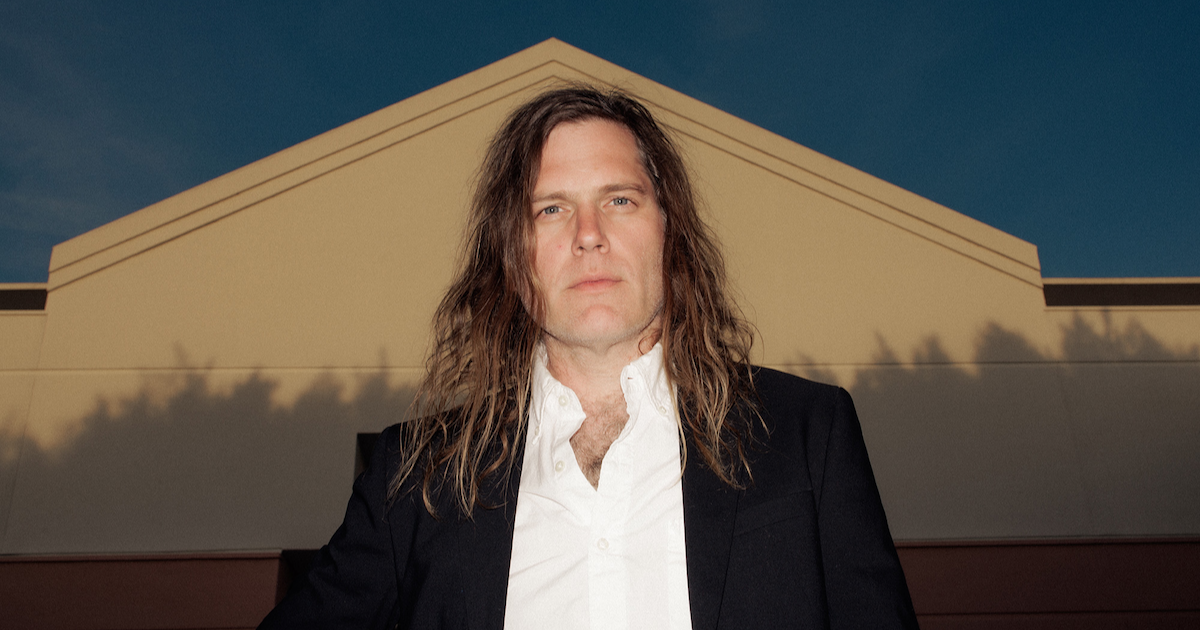
Photo Credits: Lead image by Camille Lenain; album cover tintype by Meg Turner.
Doc Watson’s Legacy in Collaboration:
8 Essential Performances

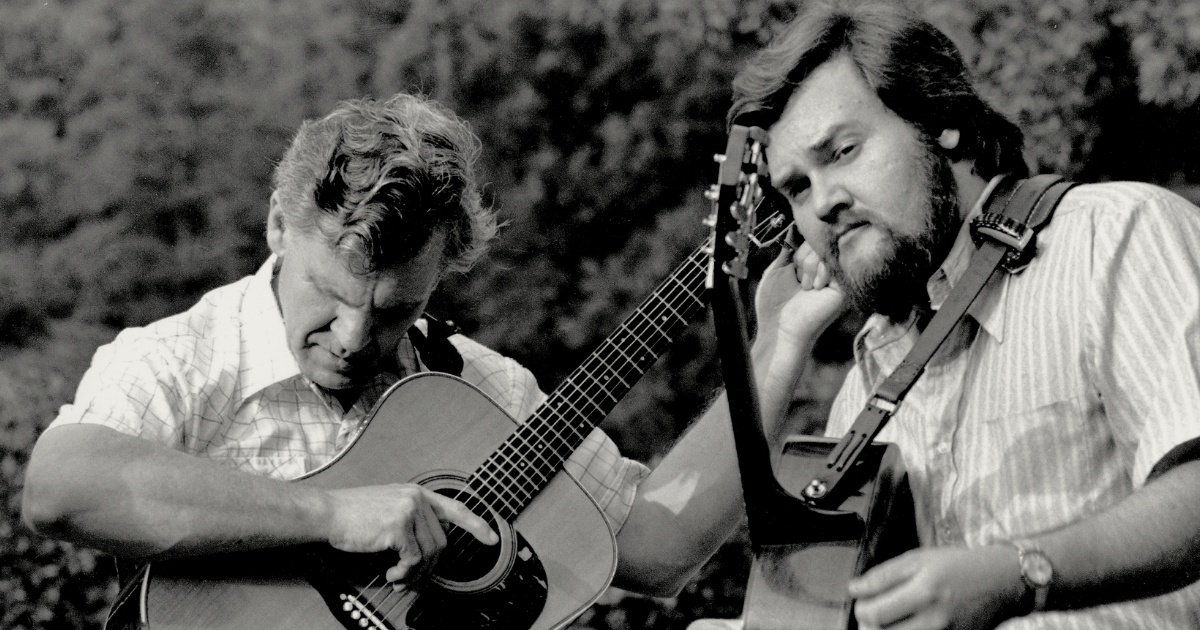
Few musicians have ever moved as fluidly between eras, genres, and generations as Doc Watson. From front-porch duets to grand-stage bluegrass revivals, Watson’s collaborations have a way of dissolving categories entirely.

His flatpicking precision, rhythmic calm, and vocal warmth made him the kind of performer who elevated everyone within earshot – young prodigies, genre pioneers, folk-tradition torch bearers, and musical iconoclasts alike. His reputation as a consummate accompanist was built not on showmanship or flamboyance, but on musical generosity and an intuitive sense of timing, phrasing, and expression that allowed others to shine while retaining his unmistakable voice.

Part of Watson’s power lies in the consistency of his musical identity. He never strained to fit into a new format or trend; instead, others bent gratefully toward his center of gravity. Whether playing an old-time fiddle tune, trading licks with a jazz-influenced mandolinist, or harmonizing with a younger bluegrass singer, he brought a sense of ease and groundedness that anchored every ensemble. That stability gave his collaborators the freedom to explore, improvise, and innovate – knowing Doc would be right there, steady and sure.

This sense of balance between precision and freedom made him a model collaborator for musicians across generations, and his impact can be traced through countless recordings, festival lineups, and mentorships of younger players.

Watson’s influence was not just technical but communal. He could guide a performance without overwhelming it, offering the ideal blend of authority and humility. In his guitar, listeners hear the voice of the North Carolina mountains, the pulse of Appalachian tradition, and the adaptability of a musician able to engage any genre without losing authenticity.

Today, YouTube’s patchwork archive of footage allows us to witness these collaborations anew: small moments of musical connection, sometimes real-time, sometimes reconstructed from archival sources. Below is a curated set of eight standout filmed or recorded collaborations that illustrate Watson’s reach. From storied duets with Chet Atkins or Earl Scruggs to meetings with newer-generation players.

“Roll in My Sweet Baby’s Arms” – Doc Watson, Earl Scruggs & Ricky Skaggs
(The Three Pickers)

This relaxed but virtuosic performance features Watson, Scruggs, and Skaggs playing with the ease of a porch jam made public. Watson’s crisp flatpicking forms a warm foundation, while Scruggs’ banjo drives with characteristic agility and Skaggs adds mandolin flourish and bounce.

The trio exhibits mutual respect and joy, and their lines interweave with natural conversation.
The recorded performance comes from the 2003 album The Three Pickers. The energy and clarity of the musicianship exemplify Watson’s ability to anchor an ensemble while remaining entirely supportive, a model of intergenerational teamwork. It is a performance that displays the combination of technical mastery and intuitive musical empathy that defined Watson’s career.

“Tennessee Stud” – Doc Watson & Nitty Gritty Dirt Band
(Will the Circle Be Unbroken)

Watson’s performance of “Tennessee Stud” on the Will the Circle Be Unbroken project exemplifies his ability to blend seamlessly with both established musicians and a younger ensemble eager to learn from him. His deep, resonant vocals float over understated but fluid flatpicking, supporting the Nitty Gritty Dirt Band’s harmony vocals and rhythmic drive.

Watson’s musical sensitivity allowed for a dialogue that bridged generations, bringing traditional songs into a contemporary context while retaining their original heart and vibrancy. This track also highlights Watson’s ability to adapt to the studio environment, shaping a sound that was both authentic and polished. The 1972 studio album is well-documented, though various YouTube versions may mix studio, rehearsal, or live takes.

“Tennessee Rag / Beaumont Rag” – Doc Watson & Chet Atkins (Reflections)

In this medley, Watson and Chet Atkins engage in a playful, masterful guitar dialogue. Watson’s flatpicking exhibits crisp, percussive articulation, while Atkins’ thumb picking introduces a smooth, jazz-inflected counterpoint. Both artists navigate tempo and dynamics with precision, creating a performance that is both technically dazzling and deeply musical.

The track appears on the Reflections album and while some online performances derive from live shows or reissued audio, the studio recording itself exalts the collaborative interplay. This duet demonstrates Watson’s ability to move effortlessly between folk and jazz guitar traditions, honoring both while creating something uniquely their own. The performance underscores his adaptability, an essential quality in a musician sought after by so many genres and generations.

“Black Mountain Rag” – Doc Watson & Merle Watson

The father-son dynamic between Doc and Merle Watson is in full display in this live rendition of “Black Mountain Rag.” Merle’s nimble, rhythmic energy dances atop Doc’s grounded guitar tempo, producing an interplay that is conversational, playful, and intricate. Their shared history and years of touring allow for spontaneous embellishments and musical commentary woven into the tune.

This performance captures the essence of the Watson family legacy, showing how Doc nurtured both musical skill and expressive interpretation in the next generation. The piece also serves as a lesson in ensemble sensitivity, as Doc balances his playing to give Merle ample space while maintaining rhythmic and harmonic cohesion.

“What Would You Give in Exchange for Your Soul?” – Doc Watson & Bill Monroe

Watson and Monroe’s pairing on this traditional tune combines the latter’s piercing, high-lonesome tenor with the former’s warm baritone, creating a striking emotional contrast. Watson’s guitar provides steady, unobtrusive accompaniment, allowing the vocal interplay to take center stage.

This recording exemplifies Watson’s ability to adapt to any partner, responding in real time to vocal phrasing and tempo shifts. The performance demonstrates his interpretive sensitivity, highlighting how he could honor a song’s emotional core while integrating his own stylistic voice.

“Shady Grove / Summertime” – Doc Watson & David Grisman

Watson’s collaboration with David Grisman blends Appalachian folk with progressive acoustic styling. In this rendition of “Shady Grove,” Watson’s rhythmic guitar backgrounds Grisman’s mandolin flourishes, resulting in a lively, conversational back-and-forth. Improvisation is key, as both musicians respond to each other’s phrasing, demonstrating mutual respect and spontaneity.

This collaboration underscores Watson’s versatility, showing he could navigate between traditional melodies and innovative interpretations, elevating both in the process. It is a reminder of his role in bridging traditional and progressive acoustic music for audiences and colleagues alike.

“Amazing Grace” – Doc Watson & Jean Ritchie

Watson and Jean Ritchie’s collaborations were well-established, including performances at venues like Folk City in the early 1960s. However, the specific attribution of some YouTube uploads titled “Amazing Grace” is ambiguous. The Live at Folk City album recording is the most reliable source, showing their complementary styles: Watson’s gentle, precise guitar lines support Ritchie’s clear, expressive vocals, blending Appalachian tradition with personal interpretation. They represent the transmission of Appalachian folk music to wider audiences and the seamless melding of their similar sensibilities.

“Summertime” – Doc Watson & Mark O’Connor

Watson’s influence on multi-instrumentalist Mark O’Connor is well-known; O’Connor cites him as a formative inspiration and their collaboration remains significant as a symbolic bridge between generations. Watson’s teachings and style informed O’Connor’s fiddle mastery, illustrating Watson’s mentorship and the continuity of American acoustic tradition. Indeed, their shared repertoire speaks to the passing of musical knowledge and the sustaining of tradition through personal and professional interaction.

These eight performances above collectively highlight Doc Watson’s role not only as a primary musician, but as a profoundly generous collaborator. He created space for others to excel, whether alongside legends like Bill Monroe, Earl Scruggs, and Chet Atkins or with younger rising stars such as Alison Krauss and Mark O’Connor. Watson’s approach combined technical mastery with emotional intelligence, allowing him to respond intuitively to fellow musicians in real time.

His collaborations illuminate the breadth of his influence. Watson moved with ease between old-time Appalachian tunes, rag medleys, gospel-inflected ballads, rocking hillbilly sounds, and improvised jam sessions. Across these contexts, he remained unmistakably himself: grounded, warm, and adaptable.

By mentoring younger musicians, bridging generations, and seamlessly adapting to new musical contexts, Doc Watson demonstrated that tradition is not static; it is a living, evolving practice. His legacy continues to teach musicians the art of generosity, the importance of listening, and the beauty of musical dialogue. Perhaps in every collaboration, Watson’s spirit resonates, ensuring that his contribution to music endures across time, space, and audience.


Lead image courtesy of MerleFest.

Fruit Bats’ Eric D. Johnson
Loves a Left Turn

The road less traveled is always the road most traveled by singer-songwriter Eric D. Johnson, better known under the performing name of Fruit Bats. Johnson thrives in a world of creative dichotomy: he loves deadlines as much as he cherishes random twists and turns in his process.

He’s been making music this way for years, since time spent on the Chicago music scene, through his days with Califone, The Shins, and the creation and continuation of Fruit Bats. There’s also Bonny Light Horseman, the indie trio where he partners with renowned musicians and songwriters Josh Kaufman and Anaïs Mitchell. Their most recent album, Keep Me on Your Mind/See You Free, was released last year.

Johnson’s latest Fruit Bats project is Baby Man, a full-length album recorded earlier this year with longtime producer and friend Thom Monahan. The album is a reunion of sorts, after Johnson self-produced 2023’s A River Running To Your Heart.

Baby Man, which is his voice, guitar, piano, and little else, was an unexpected project – another deviation from original blueprint onto the less-traveled road. And one that called for Monahan’s expertise and sonic touch. The outcome, says Johnson, is “intimate and yet big. There wasn’t a lot of fuss over arrangements. Everything you hear came out of my hands or mouth earlier that day or the day before.”

It was early morning on the West Coast when Eric D. Johnson settled in to speak with BGS. “This is my second interview on this,” he noted about Baby Man, “so you’re hearing me work this out in real time in my brain.”

You have detailed this many times: iPhone voice memos, demoing, writing, the studio as a writing tool. You like a deadline, you like mistakes, you like left turns. Was this album true to method?

Eric D. Johnson: Yes. This was the leftiest of all left turns you could possibly take, because the original plan was a very lo-fi hair-metal covers album. [It was] basically a midterm project between album cycles.

During the pandemic I had done this full album cover of Smashing Pumpkins’ Siamese Dream. I had no real expectation for it other than a pandemic exercise/fun sort of bedroom thing and it hit a little bit. Everything I do is ambitious in some way, but this was a “throw something at the wall” idea originally and not a big deal.

I was talking to Thom Monahan, my producer/mentor. We hadn’t worked together in a few albums, although we’re still dear friends. I always talk to him before I make something, which is like, “What microphone do I put on this?” I’m asking all these questions, we ended up chatting for an hour and by the end of the conversation I was like, “I think you should do this record.”

This was all over the course of a very short amount of time in February. I started writing songs and I realized I was starting to do what I do, which is write a diary. Most of my records, songwriter-wise, are what’s happening now.

This record turned into something that was me and Thom working for probably a week and a half. It wasn’t a mandate I laid down, but the whole record was written and recorded in that space, which I almost never do. It’s usually fragments of things I’ve been putting together from notebooks or demos or sketches that are a year or more than a year old. So everything you hear is a week in the life.

When we delivered it to the record label [Merge], again thinking it was a midterm project, they were like, “This is really good. This is a real album.” So the hair-metal covers record will happen someday, but instead you get Baby Man.

How has your working relationship with Thom grown and developed?

If I had a breakthrough album, it’s probably Gold Past Life [2019], which was my last thing with Thom before this. I think that was us at the height of our language with each other in some ways.

I’ve learned everything from him. When we were first starting to work together, on Tripper [2011], I was just learning how to use Pro Tools and how to use the studio as a tool for writing. I would make demos and Thom would come in with a blowtorch on them, because I didn’t really know what I was doing yet.

We made a couple more records, and by the time you hear the stuff on Absolute Loser [2016] and Gold Past Life, if you went back and listened to the original demos, they’re surprisingly not that different. That’s Thom trusting me more, being like, “This sounds pretty good.” Obviously he adds an incredible boost to them. There are songs on that record, too, where Thom completely dismantled them and was like, “This sucks,” because he’s not afraid to tell me he thinks something sucks. Which is good. You need the extra pair of ears. So we kind of have a shared mind when we’re working together.

What have you learned from Thom that applies to your own production work? For example, Sarah Klang’s Beautiful Woman album.

I don’t do tons of it, but when I produce other artists, it comes from that demoing process I learned from Thom, where you go from skeleton of song, to demo, to studio project, to finished product. With Sarah, we worked together as writers first. When you write with me, and this has happened a couple times, we’re making demos and we realize, “We’re making a record now.”

That was what happened with Sarah. It was very similar to what Thom and I do together, which is me building a demo and then giving it to him. But in this case, you build a demo, you keep building it, go into a nice, big studio, and all that. So that was what that was about. It started off as a writing session and it snowballed into a record.

You’re taking Baby Man on the road. Alone. Could you strip it down any more than that?

It’s terrifying. I have no idea what to expect. Fruit Bats concerts have become big, rollicking rock shows. The audiences have grown and people have a good time. I think of it as a very intimate experience, but as much as we’re in the folk-rock realm, they’re big rock shows.

I’m nervous about this. I’ve obviously played solo shows, and I think I know how to do it, but there is a certain contract you have to have with the audience for that. You can’t just close your eyes and push through it. You have an extra responsibility to connect.

I’m always concerned with that, and not in a bad way. But if I’m playing to 1800 people, in my mind I still want to make eye contact with every single one of them, even though I know that’s not possible. So with the solo show, where it’s a little more intimate, you probably are going to make eye contact with however many people are there. It’s going to be very exposing and I don’t know what to expect.

You’ve said before that Fruit Bats is half your life and each album is like a chapter, a piece of an autobiography. Which chapter is this?

This chapter is … I am hesitant to say midlife, because I don’t know. My cliché answer is, “I’ve gotten better at making myself understood, but I care less about ma king myself understood.” When you’re a younger writer, you’re like, “You don’t get this!” Now I’m like, “You’ll get it, or if you don’t, that’s cool.”

I think I’m writing really well now. The very early Fruit Bats records are enigmatic because I didn’t know how to write yet. I came from indie rock. I came from Pavement. I loved Stephen Malkmus, and he wasn’t writing about feelings. And I had played in Califone, and those are impressionistic lyrics, very visual, so I was doing that.

When I accidentally wrote a love song with “When U Love Somebody” [Mouthfuls], in 2003, it kind of hit. I was never emo. Even though I’m from the emo generation and from Illinois, where all the emo dudes came from, I wasn’t doing emo. Maybe this is my emo period, I guess you could say. With Baby Man, there is that kind of feel. I’m writing some pretty direct stuff, but I still have my impressionistic side that gets smeared in.

Where does Bonny Light Horseman fit into that?

My work with them is not unlike my work with Thom, which is to say, it’s been an education. Josh Kaufman, as a producer, has been influential on my production and the way I approach albums, too, because he’s totally different from Thom.

Of course Anaïs, as a writer, has had a massive effect on me because she’s meticulous. She makes you be like, “What did you mean by this line?” So I’ve learned writing from her, and production and writing from Josh because he writes as well. Like with everything, you take things from it as you move along. I’m definitely “the guy in a band” in that band, the professional guy in a band.

On “Creature From The Wild,” you address pet loss and grief, which is too often met with “Just get another one,” as if the can opener stopped working, so just buy a replacement. Tell us about Pinto and the song.

Pinto was my first dog and, obviously, once you get a dog, the joys, the familiarity of it, and the relationship is really special. And Pinto was a unique dog. He was sort of a person, sort of a cat, but also a dog.

You raise pets and it’s such a foolish endeavor for us; it’s such a horrible thing that we do to ourselves, because we raise them like our children, but they have a lifespan of 15 years and so you have to understand that. You’re right – some people are like, “Get another one,” but I do think a lot of people get it, if they get it.

That was a song I wrote completely while on a run, into a voice memo, at about 10 a.m. The recording you hear is at 1 p.m., three hours later. The notion that they save you, the “for a while” part, is that these love relationships are destined to be fleeting.

I also wanted to write directly about him. He was a Mexican street dog, so I wanted to write a hero story and think of him as a little heroic hobo and it was a little bit of a hero’s journey for him. I was just trying to write what I know. It’s a love song. Grief really is love. My publicist Colette and I had a Zoom call over it and we both cried.

A portion of sales from the track and pre-orders are going to the Baja Street Dogs rescue.

Yeah. Pinto was a Baja street dog, not from that rescue, but there’s tons down there. This guy, this rescue, is like a shepherd. He has a flock of dogs. He rescues so many; the breadth of his work is really impressive. It’s his life’s work, which is fascinating to see somebody do something like that.

We have a lot of big problems in the world right now, which I totally get, and there’s probably bigger fish to fry in some ways than rescuing dogs. But there’s a certain eye-level universality to loving a dog, for me. They help us. There’s always the cliché of “We don’t deserve dogs.” And I’m like, “Fuck no, we don’t.”

You have spoken about music and mental health in the past. You’ve said that while you find your music riddled with anxiety, people say they find it comforting.

In the press materials, quoting, “Again and again, Baby Man sees Johnson ask a central question: Is any of this worth it? The album is the answer, a resounding ‘yes.’” But some of the lyrics … in “Let You People Down, ” it’s “days that I’ve wished that I cease to exist.”

I can say, with all honesty, that’s not suicidal ideation I’m writing about necessarily, even though it sounds like it might be butting up right against that and I’m trying to speak to it. If someone wanted to take that as that, I would allow it, but that’s not… my other publicist, Jim, really loved the record, but his first question was, “Are you okay?”

I’ve lost friends who ended their lives – Neal Casal and Richard Swift, who died from alcohol. In many ways it was a slow suicide, when you drink yourself to death in that way. So it’s some big, grownup shit, but that specific line isn’t about that per se. It’s “This world is hard.” It’s more like, “I wish I’d never been born,” but that’s not a direct nod to ending one’s life, either. It’s about the burden of living, which, like I said, certainly could butt up against something like that. I’ll let people take what they want from it. It’s a song about wanting to love and be loved.

Then there’s “That’s why I’m trying so hard not to die.” [“Moon’s Too Bright”]

Yeah. Again, the line, “I’ve never been good with goodbyes,” and death is the biggest goodbye, so I’m not singing about killing oneself. I’m saying, “Wouldn’t it be sad to leave? Isn’t it sad to leave? Isn’t it sad to say goodbye?”

I’ve always written a little bit about this stuff, but usually there’s a disco beat, which I love. I love the happy/sad nexus, like “A Lingering Love” [Gold Past Life], which has become this kind of pop hit. It’s really sad, but it’s got the “Dancing Queen” beat behind it. It’s the total cliché of “I’m laying myself bare lyrically.” I always have, but I think because of the production, you’re hearing it more.

I’m not afraid to answer you on those [questions], nor am I denying that I’m talking about some pretty heavy stuff in there. People can hear what they want to hear from it, but the central song of the record in some ways is “Baby Man,” which is some sort of Buddhist notion where I wasn’t alive before 1976. I was gone. I was dead before 1976. “Where were you during the Renaissance?” Those types of questions. “Baby Man” is this cyclical kind of Buddhist song – not to get too heady about it.

So my sad stuff always has an undercurrent of hope, and this record there’s a little bit of that in there, too. But the hope is sometimes buoyed by disco beats, and this one doesn’t have that.

Let’s end on a high note with a lightning round on a topic that comes up in many of your interviews: The Beatles. A Beatles song that always makes you feel good.

Ooh, this is real lightning round! I’m circling back on early Beatles, so “Please Please Me.” I probably would’ve said a Paul song from the White Album, if you’d asked me that not long ago, but I’m into older Beatles. Smash Hits has been my jam lately.

Most underrated Beatles album.

Is there an underrated one? Once again, I’ll say probably the early ones, like Help, but I don’t know if there’s an underrated one, because people who don’t like The Beatles will say they’re overrated, so you can’t say there’s an underrated one, but probably the early ones. Let’s say Help.

Beatles album you most would have liked to be a fly on the wall in the studio while they recorded it.

I probably would’ve said Let It Be, but then we got to be with that movie, which was one of the most astounding pieces of documentary filmmaking I’ve ever seen in my life. I couldn’t believe it. It was like finding the Dead Sea Scrolls. So I’m going to say White Album, because that’s the one that sounds the most like four solo records and I know it was a really fraught process, too. For a long time, in high school and stuff, that was my most influential Beatles record, so I’m going to say White Album.

The throughline from bluegrass to The Beatles.

Oh, that’s easy! A lot of people don’t realize how young bluegrass is of a genre, but the throughline from early American folk and country music to early rock and roll to The Beatles seems pretty simple to me – bluegrass obviously being its own little split-off in the 1950s… not to get all ethnomusicology on it!


Photo Credit: Chantal Anderson

You Gotta Hear This: New Music From Katie Boeck, Ben Garnett, and More

You’ve reached the end of the week and, for your reward, we’ve collected a superlative handful of brand new videos, visualizers, and songs from roots music spheres.

Kicking us off, actor and indie-folk singer-songwriter Katie Boeck puts yearning “almost-love” in the spotlight with “Dust.” It’s a lovely, contemplative track that showcases that Boeck is equally at home in indie-tinged Americana as she is on a Broadway stage. Continuing in a similar context, with tender harmonies and fingerpicking as a sound bed Canadian folk duo Ocie Elliott also consider the messy, uncertain, shifting sands of loving someone and the circular nature of giving of yourself to another in that most intimate way.

Guitarist and composer Ben Garnett announced his upcoming sophomore album earlier this week. Kite’s Keep arrives in October, heralded here with the first single, “Look Again,” and a live performance video of the bustling, prismatic track featuring Brittany Haas on fiddle and Ethan Jodziewicz on bass. It demonstrates the consistently thoughtful and outside-the-box approach Garnett takes in crafting solo acoustic guitar music that bridges jazz, bluegrass, new acoustic, and more.

The Far West, Los Angeles-based country strutters, tapped Dave Alvin as a guest for their brand new track, “Hope I Don’t Bleed.” Dropping next week on August 22, you can get a sneak preview of the vibing, psychedelic LA-canyons-via-swampy-bottoms tune below. And, wrapping us up, singer-songwriter Jon LaDeau draws inspiration from a long New York City to Bristol, Tennessee, drive with “East Tennessee Wrecker.” He’s joined by Emily Jackson on the new single and performance video, which features a lovely stripped down version of the track, unadorned and shining.

Whatever your favorite flavor of country, folk, and roots music, there’s something for you to enjoy herein. You Gotta Hear This!

Katie Boeck, “Dust”

Artist: Katie Boeck
Hometown: San Luis Obispo, California
Song: “Dust”
Release Date: August 15, 2025

In Their Words: “‘Dust’ came out of the ache of almost-love – the kind where someone lingers near your heart, but never fully arrives. I was thinking of the tortoise and the hare, but as a metaphor for emotional pacing between two people. It began as an ultimatum, but ended as an acceptance of what is – without clinging to what could’ve been. I recorded it with Shane Leonard (Anna Tivel, Humbird), a producer I’ve long admired, at his studio in Eau Claire, Wisconsin, live to tape, which was my first experience in that setting. Creatively, it was also an exercise in letting something be what it was in that moment, without all the modern temptations and expectations of perfection.” – Katie Boeck

Track Credits:
Katie Boeck – Vocals, guitars, songwriter
Joe Westerlund – Drums
Pat Keen – Bass
Paul Brandt – Keys
Shane Leonard – Drums, producer, mixing, mastering

Video Credit: Bella Mazzola, Twin Lantern Productions


Ocie Elliott, “By The Way”

Artist: Ocie Elliott
Hometown: Victoria, British Columbia, Canada
Song: “By The Way”
Album: Bungalow
Release Date: August 15, 2025 (single); October 24, 2025 (album)
Label: Nettwerk Music Group

In Their Words: “‘By The Way’ is a song about the beautiful mess of loving someone – choosing love not just in spite of challenging dynamics, but because of them. It’s a recognition that no matter how fleeting and uncertain the unfolding of a story may be, love is the constant that it always circles back to. The song was written after many months away on tour and it was one of the first melodies and chord progressions that came to me once I delved back into writing. Sometimes songs take a while to come into being, but this was one of those tunes that arrived almost fully formed.” – Jon Middleton


The Far West, “Hope I Don’t Bleed”

Artist: The Far West
Hometown: Los Angeles, California
Song: “Hope I Don’t Bleed” featuring Dave Alvin
Album: Everything We Thought We Wanted
Release Date: August 22, 2025 (single); September 26, 2025 (album)
Label: Blackbird Record Label

In Their Words: “I’d been kicking this one around for years, but could never find the arrangement I wanted to suit the lyrics. Aaron, Robert, and Brian really found the swampy vibe I couldn’t seem to. The bass puts this right in the pocket it needed to be, and having Dave Alvin tear a white-hot solo through it made it complete.

“Dave played this solo though my amp, which is a special little factoid for me. The amp is now blessed. My little Fender only has a volume and tone knob, and I used to tape the volume knob down at shows because the vibration of the amp would cause it to turn itself up as it rattled. I took the tape off in the studio. Dave likes things loud and either the amp turned itself up to 10 or he did, either way each take got louder.

“You can hear the amp being pressed to its absolute limit. I know he’s blown some bigger amps on stage, I was surprised my little amp survived. A few months after he laid down this solo, I saw him at the Astro Diner and mentioned we were listening back and ‘we think the amp turned itself up on you during the session’… he just looked at me and said, ‘No it didn’t.’ Anyway, this one is simply about being afraid of experiencing pain at death.” – Lee Briante


Ben Garnett, “Look Again”

Artist: Ben Garnett
Hometown: Nashville, Tennessee
Song: “Look Again”
Album: Kite’s Keep
Release Date: August 12, 2025 (single); October 10, 2025 (album)
Label: Padiddle Records

In Their Words: “‘Look Again’ is the first track on my sophomore studio album, Kite’s Keep. The album title loosely refers to this idea of a child’s inner world – a dreamscape where each song represents a different vignette of imagination.

“With ‘Look Again,’ I wanted the music to feel prismatic. As if to suggest an imaginative universe emerging from an ordinary one. I was interested in exploring, in musical terms, the idea that perception is never fixed. Like the old saying goes, ‘You never step in the same river twice’ – one also never sees the same thing twice. Any time we return to anything, it’s always different, with all things constantly in motion.

“On top of this, I had the immense joy of working with two musicians I deeply adore: Brittany Haas on fiddle and Ethan Jodziewicz on bass. Their performances brought the track to life in ways I couldn’t have imagined.” – Ben Garnett

Track Credits:
Ben Garnett – Guitar
Brittany Haas – Fiddle
Ethan Jodziewicz – Bass

Video Credits: Tessa Cokkinias – Cinematography
Ben Garnett – Video


Jon LaDeau, “East Tennessee Wrecker”

Artist: Jon LaDeau
Hometown: Brooklyn, New York
Song: “East Tennessee Wrecker” featuring Emily Jackson
Album: Chateau LaDeau
Release Date: August 22, 2025
Label: Adhyâropa Records

In Their Words: “‘East Tennessee Wrecker’ is a song that has been picking at me for a long time. Several years ago, I was traveling with my band from Brooklyn, NY to Bristol, TN to play at the Bristol Rhythm and Roots Reunion. It’s about a 10-hour drive and for some reason our navigation system was counting down the hours until we arrived at East Tennessee Wrecker. We didn’t know what that was, but discovered upon arriving in the area that it was a towing service that I believe has since changed names. For some reason that title got imprinted in my mind and as time went by the structure of a song began to reveal itself.

“I recorded the guitars, bass, and drums in my studio in Brooklyn and when the music felt right, I was lucky to have Emily Jackson come by and sing a duet with me to tie it all together. We sang together live into one mic and that’s what you hear on the album. I brought this version of the song to David Butler and he fleshed out the arrangement by adding a second drum set, a drum machine, and some sparse keyboard stuff. I’m really happy with how this one came out and I feel lucky that D. James Goodwin was available to really bring the performances we captured to their full sonic potential by mixing and mastering.

“At the heart of the song it’s really just acoustic guitar and vocals, so I wanted to capture a stripped down version as well. Aaron Cassara filmed Emily and I singing it at The Scratcher here in the East Village, NYC. I’ve been very fortunate to work out a lot of my songs here over the years during their Sunday night music series so it felt natural to capture a version of the song in the same way you would hear it live in a room that means so much to me. This song seems to reinforce the feelings of connection I have to my community. I hope that it lifts up anyone who gives it a listen.” – Jon LaDeau


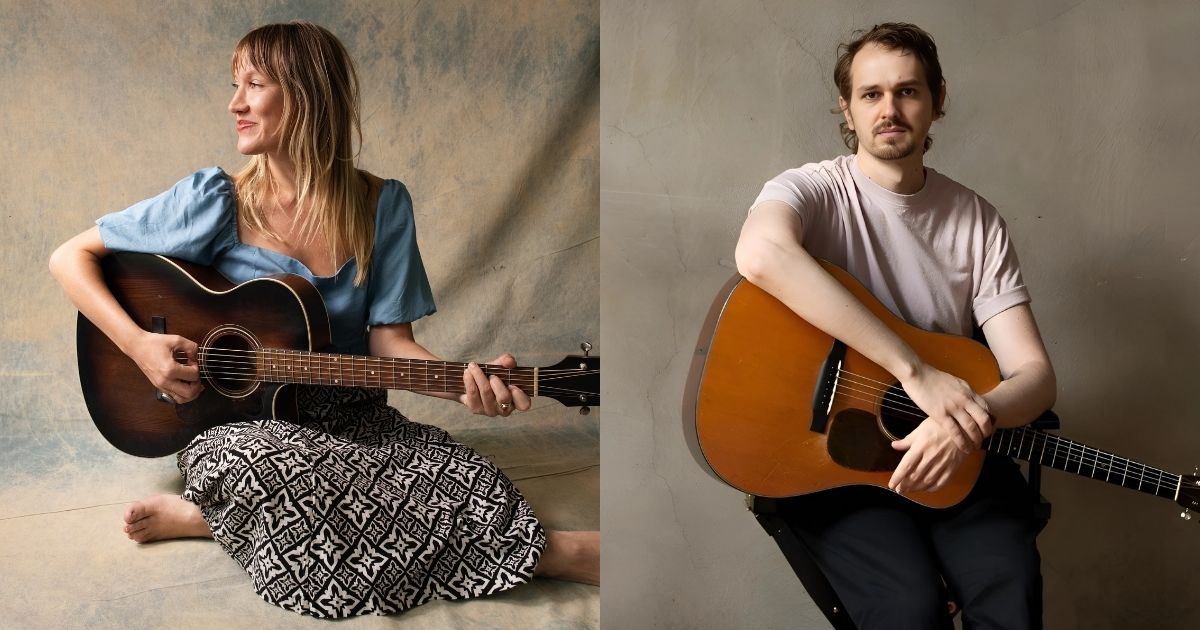
Photo Credit: Katie Boeck by New Norm Studios; Ben Garnett by Natia Cinco.

Mark Erelli Had an Idea for a Special First Live Album: a String Quintet

Just as spring began its soft awakening here in the Northeast, Mark Erelli breathed new life into his vast catalog with the release of Live in Rockport: Mark Erelli & His String Quintet. As if his 13 solo albums, three bluegrass albums, and a considerable list of collaborations weren’t extensive enough, Erelli’s newest album forages entirely novel innovations.

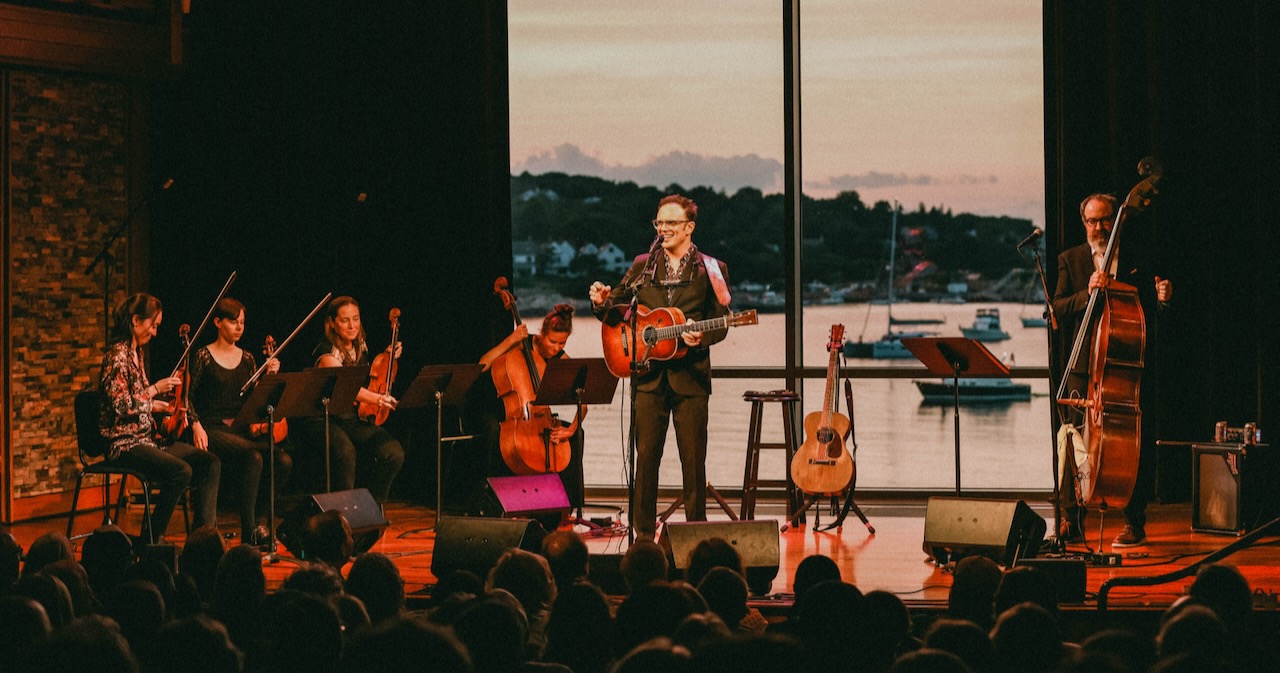
With the help of longtime collaborator Zachariah Hickman (bass, vocals, arrangements), Erelli dispenses a selection of nine songs from throughout his decades-long vault of material with an imaginative twist – each has been delicately rearranged for Erelli, his guitar, and a string quintet. Recorded live in the sonically apt Shalin Liu Performance Center of Rockport, Massachusetts, the painstakingly intricate layers of strings weave a dynamic backdrop for Erelli’s potent songsmanship.

Cinematic and profound, the resulting tracklist examines these illustrious songs through new textures and colors. With deep attunement to both past iterations and new arrangements, listeners are struck by the simultaneously transient and perpetual nature of a good song.

BGS had the pleasure of chatting with Mark Erelli about the musings and process behind his newest creation.

So tell me about what the inception of this project was like – what propelled you to make a live album with a string quintet?

Mark Erelli: I’ve wanted to make a live record for years. And the question for any artist is always, “When do you do it?” If you do it too early in your career, you don’t maybe have as much experience performing live and you’re maybe not at the height of your powers. Yet, if you do it when it’s been a long time between records, it can seem almost like an afterthought. So I’ve always wanted to do it, but I’ve really struggled with the “when” of it. And then I’ve also grappled with what the format should be, because I perform in a lot of different formats, but I think my native performance format is still as a solo acoustic singer-songwriter.

I’ve thought about doing that live since I don’t have any records where it’s just me and my guitar. I’ve actually tried to professionally record live shows, but I never really captured a show that felt magical, and that’s the thing about live performance, right? It’s such an ephemeral thing, that’s the beauty of it, and that’s the frustrating thing if you’re trying to capture it. As I got further and further in my career, I realized I didn’t want to do the kind of live record that is just a snapshot of me on a normal night. I decided if I was going to do it, I wanted to make something really special and I wanted it to be a classic moment that really transforms how you think about an artist.

One of my favorite live albums is At Fillmore East by the Allman Brothers Band – it’s a high bar to measure yourself against, but I really wanted a live album that showcased my work in a new light. That’s where the string quintet came in. I had worked with strings on my most recent three records or so and I started working with strings on my covers record in 2018 called Mixtape. Strings are such a novel, fun, really amazing element to be able to work with – they’re quite the extra color to paint with, but I always had used them in the context of a band performance, tracking the strings after to support and augment the band.

I started wondering, what would it sound like if the strings just were the band? I got the chance to figure this out when I re-released my debut record on its 25th anniversary and I re-recorded one of the songs with a string quintet. That’s when I realized, “Oh yeah, this is gonna work out great, we’ve got to find a way to document this.” We made the live record shortly thereafter.

What do you think changes about the music and the material when you intentionalize the context and the sound like this?

Strings are really unique in that they can support a very wide dynamic range. For example, if you’re playing with a rock band, it’s pretty easy to get and you can only really get so quiet. The drums can only be so quiet. Electric guitars can only be so quiet. But the strings can get as loud and as percussive as stirring as a rock band. There’s this extra part of the dynamic range at the lower end of the spectrum, at the quieter end, that is not really accessible in any other kind of band format. String players are really adept at playing very quietly, because sometimes they have to provide atmosphere and/or introduce tension. But then other times they have to have this totally, totally aggressive, intense kind of energy, like with Psycho. What I love about the string quintet is that they just let me keep the full dynamic range of my music on the table, as far as what kind of songs I can play and how I deliver them, meanwhile I don’t have to sing over a drum kit.

Could you talk a little bit more about that process of arranging with the quintet? And I’m also curious about song selection – what it was like picking and choosing which songs you’d arrange?

I mean, I can’t speak specifically to the arrangement process, because that is pretty much entirely the purview of Zachariah Hickman, who wrote all the arrangements. I’ve worked with Zach basically on every project I’ve done since 2008 in some capacity. He’s produced a lot of them. We do a lot of projects and side projects together, which is to say that we’ve built up almost 20 years of really intense, deep trust. Zach is a far more trained musician than I am and he just always knows what I want to hear or what I’m trying to strive for, even if I can’t quite verbalize it. And he wrote these string parts accordingly.

As far as which songs to do, I think some songs have a more cinematic quality to them for whatever reason, whether it’s the sweep of the imagery and lyrics or the interaction between tempo of the song and the chord changes. Some chord progressions just feel more majestic. Anytime there’s majesty and a big sweep of emotion involved, the strings are a no-brainer. The bigger challenge is to present the strings within the kind of fuller spectrum of what I can do. I didn’t want to just do a whole live record of ballads. I wanted some songs to be able to rock, and I wanted to show that the strings can rock too. “Is it Enough” and “Love Wins in the Long Run” are two songs I specifically commissioned for this record to have some rockers with strings, not just these beautiful ballads. As far as which songs to add strings to from my catalog, I feel like I’m not even done with this yet. I want more.

Yes, same here! What was it like practicing with the strings for this performance?

It’s interesting – when you have a rock band, the parts aren’t always necessarily written out. There might be specific hooks or chord changes that have to happen, but there’s a lot more freedom for improvisation in the performance. You just kind of play the songs together a few times, then you go out and you play them in front of people, and you see what happens. Oftentimes it’s very different with strings. All their parts are written out, so I’m the thing that changes every time. Zach’s bass parts are not written out either, so the two of us can kind of move together as a dynamic unit. If I move to sing something a certain way, or phrase something with a particular feel, he can match my feel and translate between what I’m doing and what the rest of the quintet is doing.

But for the most part, the form is set. If I don’t play the basic structure as their charts are written out, they’re lost and then it comes off the rails. But within the form, there’s a lot of freedom for me to phrase things a certain way. I can phrase behind the beat I can push my phrasing a little bit against how they’re voicing their parts. That’s where I think a lot of the best art comes from. Having complete freedom to create and improvise, unless you’re working with the highest, highest caliber of musicians, is just really tough. Having no rules and no parameters – it’s really hard to make that compelling, unless you’re a band of virtuosos.

To me, it’s the constraints that really let you play around with the other factors. Maybe that’s the scientist in me talking. Everything can change. Something has to stay the same. In the case of these string quintet shows, the structure of the song is the same every time, but the way that you color in those lines – there’s almost endless variations to play with.

I’m curious how your relationship to these songs has evolved throughout the years and then specifically within the creation of this record. How will this process inspire your artistry moving forward?

The first song on Live in Rockport is the last song from my most recent studio record. Then towards the end of the live record is the song “Northern Star,” which is from my debut that I re-recorded 25 years later. So there’s a huge spread there. It tends to be mostly focused on stuff from the last 10 years or so, but having that early song there has helped me see more of a through line within my body of work that I previously was less aware of.

I think of my catalog as falling into either side of a particular line, and that line being parenthood—or at least when I started to really think seriously about becoming a parent. The art that I made before I was a parent, or before I started considering it, that all feels sort of separate from the art I make now. Sometimes it’s been hard for me to relate to the kid that made that work and the kind of man that I am now that’s been changed in so many ways by all that new love in my life – not just marriage, but family. So to reach back across that dividing line and to take a song like “Northern Star” and treat it the same way that we’re treating some of these newer songs and have it come alive so vibrantly really made me think, “Okay, well maybe that was the same person all along.”

I was just growing all along. So in some strange way, the strings have helped me kind of reconnect with some of my earlier material when I would have never thought to even dream of having a string quintet on my records – I wouldn’t have had any idea how to do that. And if you’d asked me if the songs would support it or if it was appropriate for the songs, I would have said, “I don’t think so. “Hearing all the songs side by side like this from such a long period of time has made me connect with the fact that maybe I’ve always been the same kind of artist that I am now and it just took me a while to grow into that realization.

I think when the audience is hearing me with the strings, it can be pretty revelatory – they’re really learning new things about me as an artist. And when I’m on stage performing with the strings, I’m learning new things about myself in real time, too. To me, that’s the beautiful thing that made working with the strings just so amazing – it really was a growth opportunity all around, just like anytime you do something that affords you a new perspective, or a new appreciation of a particular dimension of what you do. You just can’t help but be a better artist on the other side of that. I have a lot to be grateful for, as far as the different configurations that I’ve been able to work with. And this, right now – this is one of my absolute favorites.


Photo Credit: Bri Gately

Folk Trio the Wildwoods’ New Album is a Love Letter to Nebraska

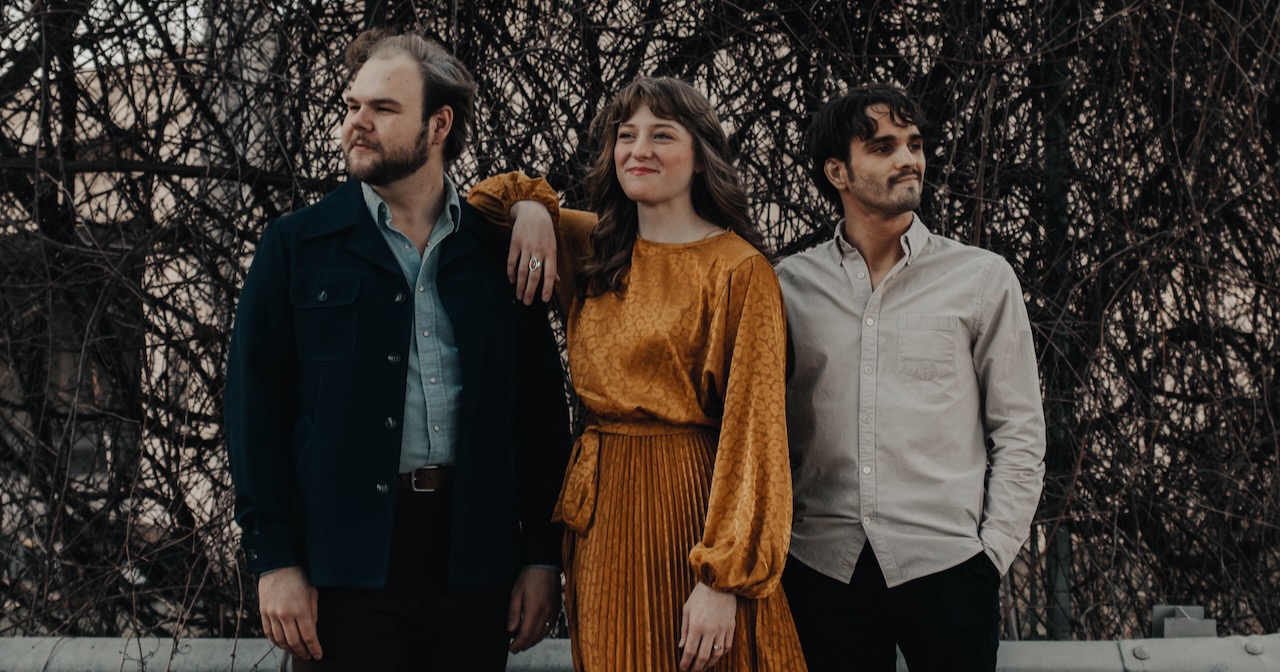
The Wildwoods are not shy about the pride they hold for their home state, Nebraska. The Lincoln-based trio – guitarist/vocalist Noah Gose, violinist/vocalist Chloe Gose, and bassist/vocalist Andy Vaggalis – named their gorgeous new album, Dear Meadowlark (out April 11), after the state bird, while songs like “Sweet Niobrara” and “I Will Follow You To Willow” represent odes to specific Nebraska towns.

“The album really is about our home here in Nebraska,” elaborated Noah, who is the group’s principal songwriter.

The Wildwoods have been together, in one form or another, for over a decade. Noah and Chloe, who are now married, first started performing together as teenagers, while Andy had played in the Wildwoods on and off for several years before officially joining them as a trio in 2022. Dear Meadowlark is their fourth full-length, but the first with Andy as a full-time member, and this album showcases their marvelous vocal chemistry throughout its set of gentle, pastoral acoustic music.

Before heading out on an East Coast tour, the three spoke to BGS about their new album, their growth as a band, and how the pandemic actually helped them become more widely known.

You all have been really upfront with how the new album reflects your deep affection for your home state, Nebraska.

Noah Gose: You know, living in a place like Nebraska, you hear a lot about people wanting to move away. But we’ve just grown to really appreciate our life in Nebraska and appreciate having had the opportunity to grow up in a place like Nebraska.

Chloe Gose: As much as we leave, I think we’ve all always appreciated our home.

Dear Meadowlark also has a very smooth musical flow to it. The title track opens the album like a lovely overture, while the contemplative closer, “Postcards From Somewhere,” bookends it as something like a reflective travelogue-type tune.

CG: It kind of felt like [“Postcards From Somewhere”] was the perfect fit to tie everything all together.

Andy Vaggalis: I think it works super well at the end, too, because [the album] is almost like little stories being written on the postcard with the last song for the postcard to be sent off.

NG: And that song originally wasn’t going to be a part of the album. It was just going to be a single. I wasn’t too keen on adding it to the album, but you know what Chloe says goes, so it was her decision to put it on, but now I’m really happy that we decided to do that.

The album’s music is really rooted in your acoustic instruments; however, drums, keyboards, and cello are used to nicely fill out the arrangements. Was that a conscious choice?

CG: I’m glad that you say that, because with our last album, Foxfield Saint John, I feel like each song is very epic-sounding in the sense that it just has a lot going on in all the arrangements, and we really wanted this album to sound more like us like how we sound live.

NG: All those extra instruments don’t really have the main spotlight at any point throughout the album, but they’re definitely kind of underlying things that brought certain parts of the arrangement out.

Noah, you are the primary songwriter – how did you approach writing the songs for Dear Meadowlark, which sounds like it is a quite personal album?

NG: Yeah, our first two albums, Sweet Nostalgia in 2017 and then Across the Midwest Sky in 2019, were all songs that were music first, lyrics second. And Foxfield was kind of half and half. Most of the songs on Dear Meadowlark were lyrics first. I feel like the songs mean more to me personally when the lyrics are first, because all the lines feel more purposeful.

CG: Things that are happening in our life are inspiring the words. So, all the words are very truthful and mean something in real time… I can tell when certain songs were written.

NG: I don’t like writing songs that just feel like everything’s completely made up. I like to just relate every song I write to things that happened in real life.

Are the vocals something that you think about when you are writing the songs, Noah?

NG: I very rarely have Chloe’s vocal range or Andy’s vocal range in mind when I’m writing the initial bones of the song, because I don’t want anything to get in the way of whatever kind of creativity goes into the initial writing. Most of the songs though, I arrange with Chloe singing the melody. I just don’t feel as confident in my own voice as I do in Chloe’s voice. And just with her being the only female voice, I feel like her voice stands out the most and works the best most of the time as singing the melody.

Your wonderful harmony singing seems to have become central to your sound now.

NG: The whole album of Dear Meadowlark was written around three-part harmony being kind of the main focus of the album.

AV: When I joined the group, I had it in my head – “I’m playing bass.” I wasn’t envisioning doing all these three-part harmony stuff. … When I first came back into the fold, it was like learning the songs and just finding a part in between [their voices] that fit. I remember like one night we were trying to make a fun ad for a show, so we switched around the words to “Teach Your Children” by Crosby, Stills, Nash & Young. And I remember just feeling way easier than I normally would at [how] to put the three-part harmony together, and just like, “Oh, shit, that sounds good!”

Andy, while Dear Meadowlark was your first full album in the band’s trio setup, you have been with Chloe and Noah frequently over the years?

AV: I started playing with these guys in 2017. We were like a six-piece band. So, I was on Sweet Nostalgia and Across the Midwest Sky. Through the years, I’ve been lurking around.

CG: We’ve had different musicians playing with us throughout the years, but Andy has always been like a core member – basically since the beginning. … We were in choir together in high school. I think there’s kind of like an epiphany with Andy still playing with us. We’ve had other members and clearly that wasn’t like their dream to be doing that anymore. I feel like the reason why we are all still together and doing it is because we all have the same appreciation for what we’re doing.

Okay, speaking of beginnings, I must ask about the beginning of your musical partnership, Chloe and Noah. You two have been making music together since you were both teenagers.

CG: Noah and I met in 2012 when we were 14. I was playing music with my brother and we just like played for fun basically at farmers markets and stuff. [Noah] joined my brother and me, and we played all throughout high school [as] the Wildwoods.

NG: If you were to see videos of us playing at 14, you would probably turn your computer off. … I only really ever had this acoustic guitar that was my dad’s. So, I didn’t ever dive into any other kind of music other than songs that I would play on the acoustic guitar. And when I met Chloe and I learned that she played the violin, I think I just immediately felt like we should play music together. We really enjoyed each other’s company. And playing together so much over the past 13 years, I think it’s just there was no kind of epiphany at first; I think it’s been a 13-year-long epiphany

Andy, when you decided to formally join the band, you still hadn’t finished college yet – was that a big decision?

AV: I was going to college for music. When I would think about what I wanted to do after graduating college, it was travel around and play music. So, I figured might as well. I didn’t necessarily need college to do that at the moment. I can always go back, right? We’ve been great friends since before I was even playing with them. And then, after years of playing with them, it was a pretty easy decision to talk myself into it.

When you rebranded as a trio, it was also when your group started to get a lot of attention during the pandemic for the cover song videos you put up online.

NG: When we started posting his videos, the response that we were getting from the trio videos was just far better than anything that we had ever done in the past, and so we just felt, “This is what works best!”

AV: Then when the “Home” video (a cover of the 2010 Edward Sharpe & the Magnetic Zeros hit song) blew up, I think it was Halloween night. All of our phones were just notification after notification after notification, and we’re like “This is insane!” And then the next day, it dawned on us, “Okay, this is exciting, but also this is like a little opportunity here that we need to maximize.” We were trying to still practice together, because we were still kind of in the infancy of playing together as a trio.

CG: Yeah, it was kind of a stressful time during that time, because all three of us were teaching music lessons as well as doing the Wildwoods full time. So, we would meet up early in the morning. We’d start our days at like 8 a.m. and just go until 3 or 4, and then we’d all go and teach lessons. Then we would meet up after lessons to finish what we were working on.

Did the viral success of your cover song videos change what the makeup of the audiences coming to your shows?

CG: We went on tour not really knowing what to expect after our social media blew up. And then [on] our first tour, it was really amazing to see. We started just selling a bunch of tickets in cities that we had never even gone to…

@thewildwoodsband ‘Home’ by Edward Sharpe and the Magnetic Zeros🏠 #edwardsharpe #edwardsharpeandthemagneticzeros #home #folk #folkmusic #trio #folktrio #bass #uprightbass #fiddle #acousticguitar #harmonies #eartrumpetlabs #acousiccover #acousticmusic #vibes #sweatervest #fun #love #nebraska #tambourine #guitar ♬ Home by The Wildwoods – The Wildwoods

Did you fear that your cover of “Home” might become your “Free Bird”?

NG: Yeah, it was definitely a worry at first, just because we usually throw in one cover, maybe two. We’re mainly an originals band.

CG: I think it has evolved, now that it’s been a couple of years, where people are finding our original music. And they’re requesting them at shows more so than the cover songs.

AV: Even some deep cuts, too.

The songs on Dear Meadowlark, besides drawing inspiration from your home state Nebraska, also holds a warm, woodsy vibe that suggest to me about being out in nature. How would you describe your sound?

CG: Yeah, I think that’s the vibe we’re trying to go for, like aesthetically and musically. I feel like our music too is very soothing – even our upbeat songs. I don’t know if that’s just because of the harmonies fitting together. It’s very calming and soothing music.


Photo Credit: Emma Petersen

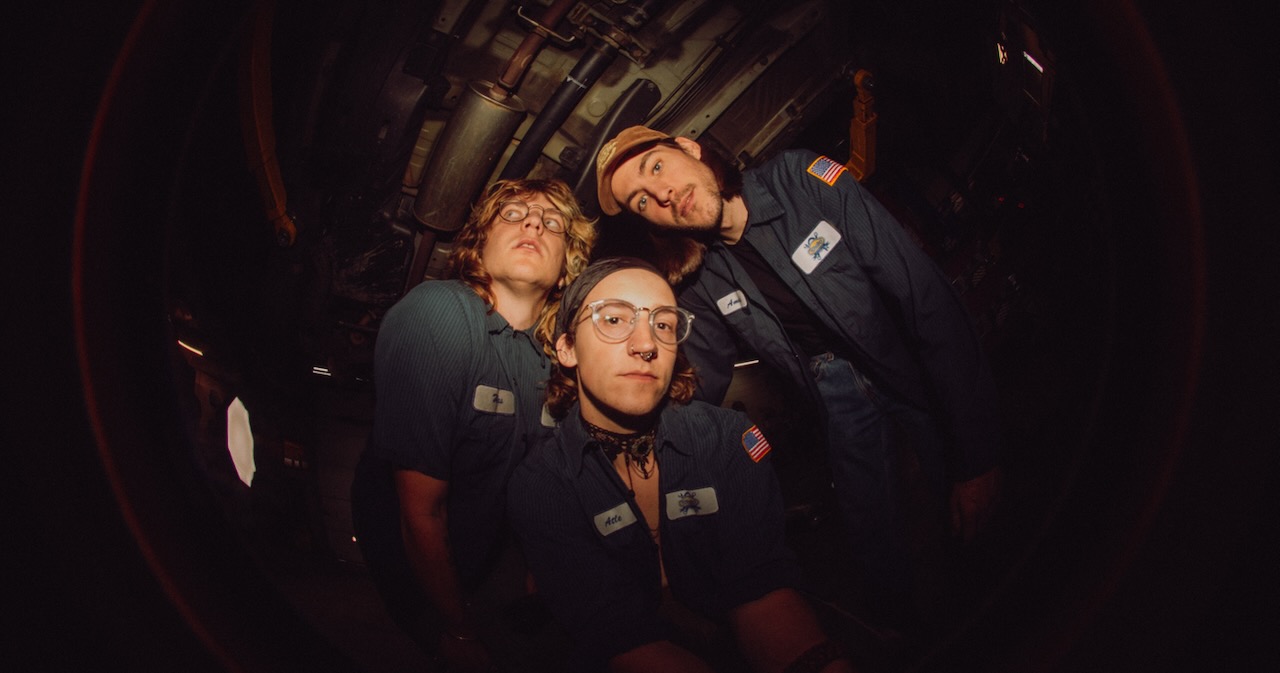
Palmyra Shakes Off Anxieties With Oh Boy Records Debut, ‘Restless’

Palmyra is a bit restless. Their emotions knot into a mangled ball, almost suffocating them.

“Early hours in the morning, tossing and turning/ Everyone else in this house is asleep,” Sasha Landon pours into the microphone. “Palm Readers” emerges integral to the band’s new musical chapter. Aptly titled Restless, this album marks their debut with Oh Boy Records. It’s like reintroducing themselves to the world.

The trio – rounded out with Teddy Chipouras and Mānoa Bell – pounces from the get-go. Similar to The Lone Bellow’s tightly wound vocal work, their harmonies exude a vintage richness throughout as they do on the title track and opener. It’s quite evident that they take their work seriously, down to the lilt of their voices as they glide through the air. Palmyra makes you believe they’ve been singing together for decades, their harmonies are so electric and full of life.

“We definitely put a lot of effort into our harmonies. It’s something that always feels super important when we’re arranging a song,” shares Landon. “The three of us weren’t people who sang with others a lot before this band. When we formed, we learned a lot from old recordings of other bands and all sorts of stuff. We did a lot of transcribing harmony early on in the lockdown. The record needed to start with our voices and we wanted that to set the tone for the album.”

Perfectly performed harmonies underpin the album’s emotional currents. The trio builds guilt, frustration, and hope into the project’s backbone to create a coming-of-age story. “There was a moment when we understood what the album was about. There were separate songs that we found homes together through playing them live,” says Chipouras. “‘Palm Readers’ feels great right after ‘Restless.’ And those songs then became a pair. Their energies matched. The coming-of-age narrative emerged from the time period that the songs were written.”

Restless sprouts from the cracks between each song. Where “No Receipt” meanders through sun-caked uncertainty, the cheeky “Dishes” sees the band accepting domestication and finding peace. Along the way, they agonize over being present while time yanks them this way and that – the pressure that comes from being a working musician crushes their shoulders. The album, based on a “period of leaving college, going out on our own, starting a band, going out on the road, and just trying to figure out what the life of a musician looks like,” captures brutal truths of living, loving, and losing time.

Hopping on a Zoom call, Palmyra spoke to BGS about feeling restless, reenergized creativity, and mortality.

What is it about the title track that made sense to be the opener?

Sasha Landon: It made a lot of sense for us to have this song that starts with the three of our voices kicking off the record. Also, it is a song that has a through line to the record from the jump. The emotional center for this record is pretty heavy. And that’s not to say that there’s not a lot of light in the record. I think there’s a lot of fun on it, as well. But the overall emotional center is pretty heavy and restless, felt like a good way to jump into that.

In “No Receipt,” you lament that there just isn’t enough time. As you’ve gotten older, what’s your relationship with time been like?

Mānoa Bell: That’s the central theme of, not only the record, but questions we’re always asking ourselves. Specifically, the last line there about finding those quieter moments has proven to be such a challenge, to put it all to the side. Being an artist is such a consuming experience. Every moment of your day is a part of that journey and it can be hard to have separation from it, which is a really beautiful thing, but frustrating at times as well. You can’t get away from it.

“Can’t Slow Down” deals with a similar thematic thread. How did this one come together?

Teddy Chipouras: This one was a song that I wrote after a couple of years of not writing songs. I don’t think I wrote hardly any songs during COVID. This tune kind of came out all at once after being fed up with not writing anything for a while, and I think we had just gotten off the road. It was kind of like just throwing words at the page of how I was feeling at the time, just feeling exhausted.

That one’s funny, because it was a really big moment for me and I felt very accomplished that I had written something and finished something. I remember being nervous to send it to the band and then really not thinking anything would come from it. I did not think we would be playing that song every night. It’s one of those tunes that has changed meaning, or it means more to me now than it did when I wrote it.

“Buffalo” roots itself in a phone call during a show in Buffalo after one of your friends had taken their own life. Was this song a necessary cathartic exercise?

MB: There are songs that you try to write and then there are songs that you just have to write. I remember very clearly writing the beginning of it and immediately feeling better. It was a very therapeutic experience, not feeling good but feeling better. It’s a song that’s still hard to play. I feel a responsibility to try to connect emotionally with it every time we play it and not just phone it in. Sometimes, when you’re on stage, you’ve done something so many times, there’s a muscle memory aspect to it. But that song never really feels like muscle memory.

When someone dies, you begin questioning your mortality. Did that happen to you?

MB: I think suicide, specifically, when it’s someone who you see yourself in, and someone who you grew up with, makes you wonder what life would be like without them. It’s not just suicide. It’s just about loss and grief. There was never a point where I was like at such a level of grief that I didn’t want to continue living. But it definitely makes you wonder what life will be like moving forward.

The closing track, “Carolina Wren,” feels like a big sigh to let all the things on the record go. Why does it appear as primarily the demo you recorded?

SL: [Producer] Jake Cochran did such a great job of trying to make sure that the songs sonically matched their emotional core and that the version of the song that we were putting out felt really authentic to the lyrics and our live performance of it. This was a tune that I hadn’t played for anyone in the band yet. I wrote it right before we went to the lakehouse [to record] and played it on a whim. I think Teddy was out getting groceries or something and Jake pressed record. Mānoa is holding the bass and I think plays one note on it, and I am playing guitar and singing. We just felt, after hearing it, there was a consensus that that’s how the song is supposed to exist. It’s how it’s supposed to sound.

And Jake helped us get there, too. With some songs, like “Shape I’m In,” for example, we had to be mindful of how many performances we gave it before we exhausted it and weren’t going to get any more. When you have a song that takes a lot emotionally to perform, you can only do it so many times before it loses its meaning, or becomes muscle memory, or just wears you out from overuse. We had one take that felt earnest. It speaks to the song. It honors the song in a good way and it belongs as it is. Then we decided that it made sense as the last tune on the record. It is a nice little breath at the end.

What have been the biggest realizations you’ve had of being working musicians?

MB: I think maybe for me, I’ve learned that there’s kind of an endless amount of resilience needed. You’re constantly faced with just things you need to get through, to solve. I don’t even know if I would call that a music thing, though. I think that’s just like a growing-up thing.

TC: One thing for me is I didn’t realize how hard it would be to find creative time when you’re a full-time creative. We are full-time musicians, we’re on tour a lot of the time, and then we get home and there’s a lot of work to do. It’s almost harder to schedule the creative time than it is to schedule the work. I never thought it would be hard to find that balance.

Did this album change you in any way?

MB: This record showed all three of us that there was another level to get to and that there are endless places of growth that we will find. I think we dug deep as a band and it has continued to be rewarding for those reasons. The further we dig, the better it is. It does just keep getting better.

With the release, the songs no longer belong to you, but the world. What’s that experience?

TC: It will be interesting to see how this one feels, because this one feels bigger than our previous projects. We talk about this a lot with our songs going through different phases of us letting them go. I think the biggest one for me of letting songs go is starting to play them live. We’ve played all of these songs live before for a while. That moment, for me, is the biggest in terms of feeling like releasing full control of it, and it becoming the world’s and not ours anymore.

MB: We haven’t released something at this level before, so I don’t know. I’m excited to see how it feels releasing the whole project. Last year’s release was an EP. I think that if I’m defining what feels different about an EP versus an album, it’s like Teddy saying that this feels bigger than anything before; it’s the amount of energy we put into creating the music – the amount of energy we’ve put into getting it out to people. It’s just like we’re putting so much behind it.

SL: I’m so excited to see, to know that a listener’s first experience of Palmyra could be Restless, that the first thing that they hear is something that of all of the music we’ve put out, we have been proud of, and has been a really good snapshot of where we are at the present time.


Photo Credit: Rett Rogers

You Gotta Hear This: New Music From Tim O’Brien, Joe K Walsh, and More

This week our roundup of premieres and new music is a special, “Oops! All Bluegrass!” edition of the weekly series. But still with plenty of variety herein.

Kicking us off, Infamous Stringdusters fiddler Jeremy Garrett unveils “Fly Away to Your Love,” a driving and bluesy modern take on how love can take command of your life, drawing inspiration from Romeo and Juliet. Garrett’s labelmates, Montana-based bluegrass band the Lil Smokies, continue with the theme of love, romance, and sacrifice with “Lay it Down for Love” – because investing in love always pays off.

Guitarist Cameron Knowler showcases “Mule at the Wagon” an acoustic guitar trio number from his new album CRK, which releases today and text paints the beautiful – and stark – Yuma, Arizona, its surrounding states, deserts, and the plains. Plus, mandolinist and professor Joe K. Walsh launches his new album, Trust and Love, today so we’re highlighting a lovely and vibey instrumental, “Oatmeal,” that he appropriately wrote over breakfast.

Bluegrass legend, multi-instrumentalist picker and singer-songwriter Tim O’Brien announces his upcoming album, Paper Flowers, today as well. The lead track from the project, “Lonesome Armadillo,” was written with folk icon Tom Paxton and O’Brien’s partner Jan Fabricius, who features across the new album. It’s a funny tale of a backyard critter trap and a surprise armored four-legged prisoner. Meanwhile, supergroup Sister Sadie bring us a devastating and heartfelt song, “Let the Circle Be Broken,” about interrupting cycles of generational trauma and finding redemption in ourselves and support systems. Written by Sadies Deanie Richardson and Dani Flowers with in-demand songwriter and artist Erin Enderlin, the track is moving and deeply resonant.

Each week of new music is its own adventure, but this roundup feels particularly superlative. You know what we think– You Gotta Hear This!

Jeremy Garrett, “Fly Away to Your Love”

Artist: Jeremy Garrett
Hometown: Drake, Colorado
Song: “Fly Away to Your Love”
Album: Storm Mountain
Release Date: March 28, 2025 (single); June 27, 2025 (album)
Label: Americana Vibes

In Their Words: “When troubles may come, in any relationship, the idea is to persevere – to overcome with grace. The hope of love eternal, or at least a love that stands the test of time. And in the end, like Shakespeare’s famous Romeo and Juliet, if it can’t be, then there is no hope of anything better. So, will it command your life? Is dying in hopes to be with the one you love better than life itself without that someone? Fly away to your love is a modern take, written in an old-time way, encompassing that passion and story in a song.” – Jeremy Garrett

Track Credits:
Jeremy Garrett – Lead vocal, fiddle
Chris Luquette – Guitar
Ryan Cavanaugh – Banjo
Travis Anderson – Bass


Cameron Knowler, “Mule at the Wagon”

Artist: Cameron Knowler
Hometown: Yuma, Arizona
Song: “Mule at the Wagon”
Album: CRK
Release Date: April 4, 2025
Label: Worried Songs

In Their Words: “‘Bull at the Wagon’ is a fiddle tune I sourced from The Lewis Brothers, a great old New Mexico-via-Texas string band with a sweet tooth for rambunctiousness. I changed ‘bull’ to ‘mule’ because, well, I’ve had a few donkey encounters out in West Texas, not far from where the Lewises cut their four sides for the Victor label in 1929. It’s one of those titles that popped into my life at the damndest times – while playing tunes with Frank Fairfield in Los Angeles, performing at a border crossing party in Terlingua, Texas, and visiting with Norman Blake at his home in Rising Fawn, Georgia. To my ear, its melody moves past some of the stylized landscape found in American traditional music these days; maybe it’s the way the four chord asserts itself in the second part, or the way the five chord lands so starkly and dominantly in the third; this mix of quick and static passages is highly generative for arranging and improvising.

“I wanted to see what this tune would yield in a lilting, sort of pastoral setting, so I called my talented friends Jordan Tice and Robert Bowlin who graciously agreed to record it with me at The Tractor Shed in Goodlettsville, Tennessee. Jordan tuned to open G (capo 2), I played out of standard (capo 2), Robert in standard with no capo. Mr. Bowlin and I are playing our old Gibson J-35s and Jordan is using his Preston Thompson OM. The performance found on CRK is one of the first takes.” – Cameron Knowler

Track Credits:
Robert Bowlin – Guitar
Cameron Knowler – Guitar
Sean Sullivan – Engineer
Jordan Tice – Guitar, producer


The Lil Smokies, “Lay It Down for Love”

Artist: The Lil Smokies
Hometown: Montana
Song: “Lay It Down for Love”
Album: Break of the Tide
Release Date: April 4, 2025
Label: Americana Vibes

In Their Words: “The greatest honor of my life is to have spent it fully immersed in music. That’s not to say it hasn’t come without cost. Words can’t carry the weight of the sacrifices required, though I’ve enjoyed trying to explain. All I know is that the loss and doubt I’ve faced has given me a more beautiful life than I ever imagined when I set out on this path. I wouldn’t change a thing. ‘Lay it Down for Love’ was written in some of the darkest days of my life, when there was no evidence that my wagers would come back to me. Today I hear it as a reminder that those days come and go, but investing in love always pays off.” – “Rev,” Matthew Rieger

Track Credits:
Andy Dunnigan – Dobro, vocals
Matthew Rieger – Guitar, vocals
Jake Simpson – Fiddle, guitar, vocals
Jean Luc Davis – Bass
Sam Armstrong Zickefoose – Banjo


Tim O’Brien & Jan Fabricius, “Lonesome Armadillo”

Artist: Tim O’Brien & Jan Fabricius
Hometown: Nashville, Tennessee
Song: “Lonesome Armadillo”
Album: Paper Flowers
Release Date: June 6, 2025
Label: Howdy Skies

In Their Words: “There’s an awful lot of talk about migrants invading from the south, but nobody’s talking about armadillos. After we started trippin’ over little holes in our yard, Jan baited a raccoon trap, focused the security camera on it, and then we drove to Memphis to play a show. On the set break, we saw we’d caught the hard-shelled offender, but after the show we saw that he’d arched his back, bent the trap, and escaped. We told Tom Paxton about it the next week and he said, ‘Let’s tell his story.’

“Jan and I started weekly co-writing sessions with Tom in the spring of 2023 and twelve of the fifteen songs on our June 6th release, Paper Flowers, come from those Wednesday afternoon Zooms. It’s our first real collaborative project and a narrative of Jan’s and my life together runs through the record – from courtship to growing old together, with a road trip, the armadillo, and a granddaughter’s wedding in between.” – Tim O’Brien

Track Credits:
Larry Atamanuik – Drums
Mike Bub – Bass
Jan Fabricius – Mandolin, vocal, songwriting
Mike Rojas – Accordion
Justin Moses – Resophonic guitar
Tim O’Brien – Guitar, vocal, songwriting
Tom Paxton – Songwriting


Sister Sadie, “Let the Circle Be Broken”

Artist: Sister Sadie
Hometown: Nashville, Tennessee
Song: “Let The Circle Be Broken”
Release Date: April 4, 2025

In Their Words: “Dani Flowers, Erin Enderlin, and myself wrote ‘Let the Circle Be Broken’ right after my Dad passed away. He was an abusive man who verbally, emotionally, and sexually abused me for most of my 18 years living at home with him. When I confronted him as an adult, he said that it had been done to him as a child. This song is about that generational trauma and abuse that keeps getting passed down. The continuing of that trauma and abuse stops with me. It doesn’t go any further. It was such a healing and therapeutic experience to write this with Dani and Erin. The recording session for this was so emotional for me. I felt like I was talking to my Dad at the end during the instrumental fade. He was there and he heard me. That circle is officially now broken.” – Deanie Richardson, fiddle

“Deanie, Erin, and I wrote this song about generational trauma, which each of us have experienced different levels of. This song is about how we’ve decided that these cycles that have been repeated over and over in our families end with us. I was born into a family of some of the worst types of people to ever exist in this world and it is sometimes so hard to sit with the fact that you come from a line of people who are capable of doing such awful things to others — to you. While I can’t say the same for many of my family members, I can say for sure that my children will never experience from me what I experienced from my mother and what she experienced from hers and what she experienced from hers.” – Dani Flowers, vocals

“The song ‘Let The Circle Be Broken’ touches us all within this band because of its very personal nature. We feel it every time we perform it on stage. Deanie, Dani, and Erin wrote an incredible song that touches the audience. It’s not uncommon to look out and see tears streaming down people’s faces. As a creator, it’s very overwhelming.” – Gena Britt, banjo

“I resonate so deeply with the message of ‘Let The Circle Be Broken’ and I find myself a little emotional every time we play it. As someone who is actively working to heal my own generational family trauma, seeing the strong women around me working to do the same makes me feel hopeful, grateful and connected.” – Rainy Miatke, mandolin

“I think ‘Let The Circle Be Broken’ is a beautifully written song that a lot of people need to hear. It has a very important message about stopping generational messes and I cry almost every time we play it. I love Deanie so much and I know this song means so much to her, as it does to all of us. ‘Let The Circle Be Broken’ I think could mean a lot of different things to a lot of different people, too, and that’s the sign of a fantastic song. Dani Flowers, Deanie Richardson, and Erin Enderlin crafted an amazing piece of art.” – Jaelee Roberts, vocals

Track Credits:
Deanie Richardson – Fiddle
Gena Britt – Baritone banjo
Dani Flowers – Lead vocal
Jaelee Roberts – Harmony vocal
Mary Meyer – Mandolin, piano
Maddie Dalton – Upright bass, harmony vocal
Seth Taylor – Acoustic guitar, electric guitar
Dave Racine – Drums, percussion


Joe K. Walsh, “Oatmeal”

Artist: Joe K. Walsh
Hometown: Portland, Maine
Song: “Oatmeal”
Album: Trust and Love
Release Date: April 4, 2025
Label: Adhyâropa Records

In Their Words: “There are so many tunes that I love that are comprised of an entirely (or almost entirely) diatonic melody which has been harmonized with non-diatonic chords. Some favorite examples are ‘Moon River,’ ‘Someone to Watch Over Me,’ David Grisman’s ‘Dawg’s Waltz,’ Pat Metheny’s tune ‘James,’ and Matt Flinner’s tune ‘Fallen Star.’ I’ve taught a tune-writing ensemble at Berklee for many years, with the idea that each of member of the ensemble writes and presents a tune every week, and I like to use this idea as a prompt for the students. This tune was one I wrote over breakfast in response to this prompt one morning before heading to Boston for school.” – Joe K. Walsh

Track Credits:
Joe K. Walsh – Mandolin
Rich Hinman – Pedal steel
Zackariah Hickman – Bass
John Mailander – Fiddle
Dave Brophy – Drums


Photo Credit: Tim O’Brien and Jan Fabricius by Scott Simontacchi; Joe K. Walsh by Natalie Conn.

Rapt Reflects On Life’s Many Endings With ‘Until the Light Takes Us’

Jacob Ware is a bit of a weirdo. Known onstage these days as Rapt, the singer-songwriter has a way of coming up with an album title and writing the entire record around a central sentiment. His fifth studio album – titled Until the Light Takes Us – serves as a direct response to a 2008 heavy metal documentary of the same name.

“I just thought, Until the Light Takes Us is such an evocative title. A few people have commented on that over the years as being unhinged – that I come up with the album name first and then write the album,” he says, adding that the documentary details “all the horrible shit in the ’90s of the black metal scene in Norway.”

From the gentle trickle of one-minute opener “Over Aged Borders” to the dreamy “Fields of Juniper,” Rapt’s latest album drenches in the notion of endings and existence. Heartbreak. Death. Suffocating blackness. Each song, as heavy as it might be, seems to coat the album with both dark and light – stemming from his confrontation with the end. 

Rapt’s delicately-spun indie-folk is awash in luminescent piano, aching between flaky layers of acoustic guitar. Ware finds himself scattering like a tumble weed, squeezed somewhere between the throaty ache of Carrie Elkin and scratchy pangs of yearning (akin to Bonny Light Horseman in their rawest form). His head swims in thoughts of death, leading his writing to root around in the afterlife. It’s a far cry from his heavy metal days, a sharp red underline to this chapter of his life. “I’m always slightly aware of mortality because I’ve had a lot of health issues, in my teenage years and early twenties, like epilepsy. It’s wild. It pulls the rug out from under your life daily, and you don’t know when the next seizures come in,” he says.

“I haven’t had a seizure for eight years now, so I’m blessed. But that shapes you on a subconscious level,” he adds. “It sets up your foundation to be ready for the next thing to happen. In a way, the next thing that happens is an end of something, so I think my subconscious has always thought about the finality of things. That’s probably where that sort of writing interest has come from. In a way, every single song I’ve ever written is about that. I don’t really know how to move away from that.”

Hopping on a Zoom call, Ware spoke with BGS about the afterlife, how the album grew, and the varied creative fulfillment compared to heavy metal music.

Does writing around a title help you stay focused on what you want the album to be?

Rapt: I think so. I’ve definitely done this where I write that phrase and put it up around wherever I’m living. Even if I’m not listening to music, I’ll walk past the album title a few times a day. The edge of my wardrobe is visible and the title I’m responding to now is written on it. One of the last things I look at at night and one of the first things I wake up to in the morning is… I don’t want to reveal it.

[Until the Light Takes Us] is not a breakup record by any means. I’ve noticed a few bits of press here and there, which may have lent it to being that, but it absolutely isn’t that. I feel like a completely different person to my music. I don’t relate to my own music. I would say it’s an album of endings, really. More so than a sort of breakup album. By the time I’ve finished one thing, something else is usually well on its way. And it’s always been like that for me.

What is your feeling about the afterlife?

I tried to look into religions a few years ago, but I have no faith system. I was brought up in a house without a faith system. It’s very hard for someone to start to believe in something unless it was in their very formative years from a caregiver. I expressed it in the title track. I’ve always thought that the afterlife is a sort of peaceful black. I have a sneaky suspicion that the afterlife is a hell of a lot like what it was like before we were born. I quite like to imagine this sort of sizzle reel, where you hang out with your highlights. That’s what I hope is going on.

Science doesn’t ask, science doesn’t answer everything. There are things that science gets pretty fucking close. But there are things that science can’t touch. I try and be mindful of that; I would call myself an agnostic. I think being 100 percent atheist is actually ignorant. We don’t know – we’re 99.9 percent sure. There’s just that 0.1 percent that I think is worth thinking about sometimes.

That’s touched on in the title track. I don’t know where I’m going, but I know that I’ll see my neighbor and my loved ones. I like to think that there’s a highlight reel. And that’s it, really. I’m talking about this as if I planned to write it. I didn’t. It’s the only successful time I’ve ever managed to just write something without thinking about it and letting my subconscious go. I cannot just open my subconscious.

I find lyric writing takes me months. The title track probably took a year to write. Very occasionally, I can get half a song written in an afternoon, but that happens about once every three years. The song “Until the Light Takes Us” is quite insular, and it’s almost says everything that you could say within a song about the afterlife.

“Until the Light Takes Us” is one of the seven-minute songs on the album. Did you have that intention or did it sort of grow by itself?

I just think I couldn’t make it any shorter. I don’t think I really tried to fight it being seven minutes, but I’m sure that there’s been a longer version of it. I just whittled it down and down, until I couldn’t whittle it down without doing it disservice. And I knew it would suffer for that. I just think that song is destined to be heard when it’s needed.

With endings, there’s always grief. Does that grief still linger with you or has songwriting helped you exorcise that?

That’s hard to answer for me, because I don’t recognize the human that wrote a lot of the songs. I think it might be an epilepsy thing. The medication I take for epilepsy gives me very odd memory and I remember weird little things. I have no memory of so much of my life, and I mean that in the present, as well. The word “remember,” if I really think about that, it’s just like a blur of things. I don’t remember things vividly.

One big thing for me is I cannot paint images in my head. If I shut my eyes and try and picture my best friend’s facial features or a partner’s facial features, or even a fucking apple, at best it’s a Van Gogh-looking painting, so I think it’s quite hard for me to answer that question.

I’m sure it does happen on a subconscious level. I’m sure I do successfully process things through creativity, but it doesn’t help that much. I’ve still got my shit in my head, but a lot of the record is very positive for me. I had depression up until my mid-twenties. I don’t have it anymore. I just don’t. I think life is a beautiful thing. And I think there’s a lot of positive in the record. I think it’s a very odd record in that it’s not… I don’t think it’s depressing and negative. “Until the Light Takes Us” is a positive song. It starts and ends with a letter to myself.

That song is about growing apart from someone because you bonded with them through a shared depression and when one of you isn’t depressed anymore, that bond breaks. That’s what that song is about. But all of this is hindsight. I wrote this in 2022 to 2023. So this all feels very considered and fucking artistic and it’s not. I’m just looking back and trying to work out what the fuck was I was thinking.

Now that you’ve been sitting with the album for a while, what is your takeaway from the creative process?

I guess, just to trust my instincts. I didn’t write it consciously… I think, in a way, I never cared about this record, because I had a lot of stuff going on in my personal life. This was just me keeping the engine going creatively, and then I turned around one day and had a record done. I didn’t know what it was about at the time. I sat on it for a year until I was ready to release it. My biggest takeaway is probably just I don’t fucking care anymore. Just don’t overthink it. If I had to give a tagline to that question: I’m too old to make it as a fucking fresh-faced person and I’m too young to be wise.

I’m right in the middle and when you’re stuck in the middle, you either quit or you just don’t care anymore. And I think I’m in the “don’t care anymore” phase. I’m not going anywhere. The only other takeaway is that I’m not going to do an album for a while. I never thought I’d say that, but I’m going to just do singles for the next two years. I say that, but I’m excited. It feels liberating. When you’re in album land, you’re there at least a year and a half. It’s interesting. I think that might change my writing a bit because I’m not trying to fit a song into a collection of songs.

With your past work being metal, how does the creative fulfillment differ from your current style?

I think metal is very good for connecting with people’s frustrations in life. And it’s good anger management shit. When you’re playing some real heavy fucking music and you slow it right down and you get a groove going, then you look up and the audience are like throwing each other around the room. There’s something cool about that. I think the biggest difference with metal is that the ceiling is a lot lower and reachable with metal. And I think there’s something really special about that.

My biggest thing I enjoy is my audience is far wider in this genre. Metal is very male-dominated and you get used to just looking up mostly at a room full of dudes, beards, and black shirts head banging long hair. And that’s great. That’s a beautiful thing. But I think I slightly prefer the more diverse crowd that I’ve played to. My last thing is also the age thing. There’s a huge age range in the people that turn up at the shows I play now. And that’s a really beautiful thing as well. In France, I had a very elderly lady come up to me and she said, “‘Fields of Juniper’ made me think about something I’ve not thought about in 50 years.” If there’s a reason to keep going, then that’s it.


Photo Credit: David Nix

GC 5+5: HORSEBATH

Artist: HORSEBATH
Hometown: Montréal, Québec and Halifax, Nova Scotia
Latest Album: Another Farewell (released February 7)

What’s your favorite memory from being on stage?

One of our biggest highlights was definitely opening for Sierra Ferrell at Toronto’s legendary Massey Hall. A few of us are from rural Ontario and grew up going to show’s there, and so to have the opportunity to step on that stage in front of our family and friends was quite special. We are extremely grateful that Sierra trusted us and our music, and it’s a memory we will cherish forever. – Etienne Beausoleil

What other art forms – literature, film, dance, painting, etc. – inform your music?

We love to dance – especially swing and two-step. When we’re jamming and that heartbeat kicks in – the pulse, the groove that drives us – we know we’ve got a tune that’ll pull people onto the dance floor and keep them moving all night. – Daniel Connolly

How often do you hide behind a character in a song or use “you” when it’s actually “me”?

I think it’s easier to use a kind of veil, in a way, when it comes to writing a certain type of song. We often write about our own experiences and it’s always an exposing thing to share. A lot of our songs are quite personal. Maybe we focus on the sadder ones, but I’ve always felt they make for a more relatable story. The “character” can be the way you play or sing it. You can easily picture yourself living through all the same experiences but in another time, era or place. When it’s coming from personal experience, playing with those different imaginary versions we all have inside of us can create an entire mood that becomes the song. – Dagen Mutter

If you didn’t work in music, what would you do instead?

Make films. – DC

We’re all artistic people. It’s hard to say what we would be doing if it weren’t music and this band, but it’s safe to say that we would all be interested in the arts. Some of us have backgrounds in filmmaking and acting, so perhaps we would be involved somehow in the filmmaking industry. – EB

What’s one question you wish interviewers would stop asking you?

What colour we would be. – DM

The meaning of our name. – DC

It’s our best kept secret and only very few people in the world know the true meaning of the name. – EB


Photo Credit: Sophia Perras