Put Your Movin’ Shoes on and Dance

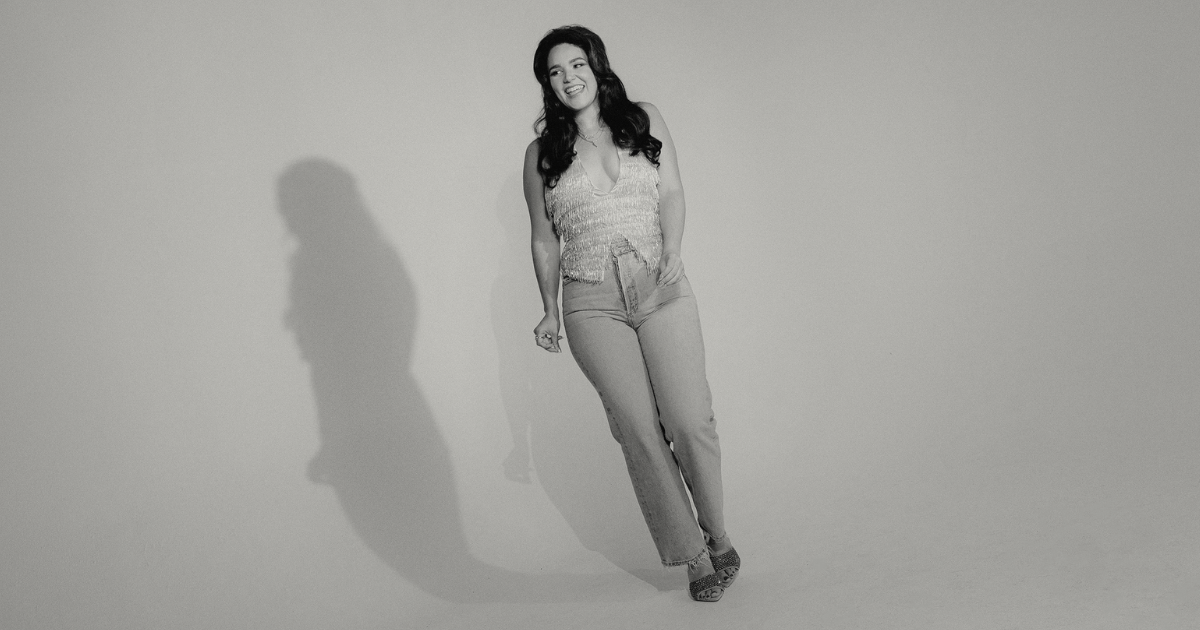
After spending time On The Ranch in 2022 and hopping in the car for 2024’s Drive & Cry, Emily Nenni now finds herself out on the dance floor with her latest record, Movin’ Shoes. Released May 1, the album is the California-born, Nashville-based singer’s third project in collaboration with New West Records.

It’s also her most ambitious and vulnerable to date, with Nenni singing about everything from feeling comfortable in her own skin (“Livin’ In Shame”) to getting caught up in a heated argument (“You Only Said It To Hurt Me”) and doing what makes you happy (“Not A Winner”). All amid a backdrop of Stax horns, pedal steel, and other accompaniments captured in Memphis with producer John James Tourville (of the Deslondes) and engineer Matt Ross-Spang. The two also worked with Nenni on Drive & Cry, but this time around the setting was at Ross-Spang’s new Southern Grooves studio, which offered up new opportunities to stretch out and experiment musically.

The result is a mix of honky-tonk and Southern soul that invokes Booker T & the M.G.’s and B.B. King (“Movin’ Shoes”); William Bell and Aretha Franklin (“What Have I Done Wrong”); Diana Ross (“Not A Winner”) and the Supremes (“Livin’ In Shame”). Even more crossover moments occur with a bluesy rendition of Paul Simon’s “Tenderness” and a reimagining of Cass Elliot’s (of The Mamas & The Papas) “Talkin’ To Your Toothbrush” that illustrate Nenni’s confidence in full bloom.

“This isn’t strictly honky-tonk like my former records, even though it’s still all the same influences,” Nenni explains. “I’m just drawing from more artists and genres than I have in the past.”

Ahead of Movin’ Shoes’ release, Nenni spoke with Good Country about the evolution of her sound, the relationship she has with her dog Edna (whom she sings about on the song “Home With My Dog”), her reverse lip sync video for “Livin’ In Shame,” and more.

One of my favorite songs from Movin’ Shoes that captures your new sound is “Yes It Hurt.” Did you always plan to incorporate horns in it?

Emily Nenni: “Yes It Hurt” was probably the most outside of what I’ve done on any of my past three records. It was a bit nerve-racking, because I initially just planned to record the phrase “yes it hurt” repeated with some harmonies to use as an interlude. I never envisioned it being a full song, but JJ [John James Tourville] came up with a whole thing around it that I added verses to the day before we went in to record. I didn’t really know what I was doing, but I trusted him, and getting to see three horn players shred on my song made it all worth it. I’ve always wanted horns on my record, but didn’t want it to be such a big departure from what I’ve been doing.

What was the timeline for these songs coming together?

Aside from the covers, the entire record was written over the course of a month and a half. I sent JJ voice memos of most songs about a week before heading into the studio, which left him no time for pre-production. We had been talking, though, and had both the musicians and space to record, so I just trusted it would all come together.

The only song I had to build my lyrics around JJ’s production was on “Take My Money.” I had all the lyrics but no melody, because everything I tried didn’t fit right. Then he went and made it into this really cool and funky honky-tonk type song that has become one of my favorites on the entire record.

Was this your first time recording in Memphis?

Yes. We recorded Drive & Cry at the Creative Shop in Nashville, but it was actually mixed in Memphis with Matt Ross-Spang. When JJ and I drove down there for that I could just tell the two of them would work really well together on a full record, so around six months later I emailed them both asking about it. It was bittersweet because this is the first record where I haven’t worked with Jake Davis as an engineer. That being said, we did capture some vocals for “What Have I Done Wrong” at his house, so he still was able to be part of the mix, which was very important for me.

What led to you making “Movin’ Shoes” the album’s title track?

After I wrote the song I began thinking it would be a good name for the record, because I primarily write for the dancers at our shows – it’s my favorite thing! Some of these songs aren’t in that vein as much, but you can dance to anything.

In the end, the idea of moving and the content of that song touching on how you treat others when you’re out in the world is an overarching theme of not just it, but the record as a whole, which made it a natural fit to place as the title track.

You’ve always been an empathetic songwriter. What made you want to lean into that side of yourself even more on this collection of songs?

I spend a lot of time with myself, especially when we’re off the road. I’ve taken time to sort out my thoughts about the world we’re living in and that can get really heavy. It’s starting to affect the way people are interacting with each other, so with every encounter I have I’m thinking nonstop about the best way to handle it. It’s so important to think about and discuss not just how we’re treating each other, but ourselves too. When you’re in a funky headspace it’s nice being able to put on a song as a reminder for how to exist. Sometimes we need encouragement to be ourselves. My hope is that this album can help to remind folks of that.

You just mentioned spending time alone, which I know is at the center of the song “Home With My Dog.” I also love how it directly follows a cover of Delbert McClinton’s “Honky Tonkin’ (Guess I’ve Done Me Some),” a song about wild nights inside Texas dance halls. Did you notice their contrasting messages when you placed them back to back?

They are very much like two sides of the same coin. I’m only 32 now, but in my early 20s I could go out six or seven nights a week and could get up early the next day with no problems, but nowadays I need five nights’ rest for every night I do make it out of the house. [Laughs]. But aside from that, our dog Edna had some health issues while we were on the road in Europe a couple years ago. So now when I’m off the road I just want to be home with her and that’s all that matters. Even though “Honky Tonkin’” is a cover, it got me thinking about my early days in Nashville, hopping around the bars and in and out of conversation, and what those conversations consisted of. It all made me realize what’s most important, which is being here with our sweet little girl, taking care of myself, and not being out past my bedtime.

I can totally relate. I don’t get out anywhere near as often as I do now. However, I also don’t live in Nashville. I imagine the pressure to make appearances is amplified there with everything going on and the industry so close?

Exactly! We also live really close to Skinny Dennis – which I love – but it’s also really easy to go there and have too much fun and [then I] can’t hang around with anyone for a while. [Laughs] It is wonderful though, so I do remind myself to remain involved in our lovely community here. It’s nice being around so many honky-tonk women and checking in to see how they’re doing or sharing stories. The world is a heavy place right now – from what we see in the news to the realities of life on the road – so being home is a good chance to reset. Even if I do it too much. [Laughs]

You also cover Paul Simon’s “Tenderness” and Cass Elliot’s “Talkin’ To My Toothbrush” on Movin’ Shoes. How do you go about deciding which songs from others to tackle?

I often will come up with a list of potential cover songs before going into the studio, because I always like having one to cover. But with this record we wound up doing three. It’s fun to pick a random song that somebody maybe hasn’t heard, to introduce them to a new artist’s catalog. I decided to cover “Honky Tonkin’” because I couldn’t get enough of it and thought it would be a fun one for the dancers, and the riff is really great. Then with “Tenderness,” lyrically it reflects a lot of the message of this record, which is how we’re treating each other. Sonically, I thought Paul Simon’s recording was a nice combination of country and soul and something I could replicate while also making it my own as well. And with “Talkin’ To Your Toothbrush” I just thought it was a great song that would be fun to cover. Cass has such a dreamy voice, and the Dobro on that song was so good too.

How did you get the concept for your reverse lip sync music video of “Livin’ In Shame,” which reminds me of a similar trick you used a few years ago on a video for “On The Ranch”?

Joshua Shoemaker developed and directed both of those videos! “On The Ranch” is a one-take and “Livin’ In Shame” is multi-take and backwards. This was my third music video with him – he also did “Get To Know Ya” [from Drive & Cry]. For “Livin’ In Shame,” Joshua heard the message clear as day, so it was filmed backwards to convey it. Wiping away makeup and left with just me!

The message of “Livin’ In Shame,” feeling comfortable in your own skin, goes hand-in-hand with another of my favorites on the record, “Not a Winner,” and its declaration of realizing your worth. What are your thoughts on those two songs and how they tie together?

The two songs are big on self-reflection. I have put in a lot of work to be more patient and present with myself and my journey. It’s certainly easier some days than others, and that’s okay. I hope these songs help listeners be kinder to themselves too.

Movin’ Shoes is dropping the same day that you celebrate 12 years in Nashville. What’s the biggest thing you’ve learned from your dozen trips around the sun in Music City?

I’ve just learned to be more confident in my own songwriting and the band I have around me. When recording and collaborating, I’ve also gotten more comfortable contributing my own thoughts. When I first moved to town my lack of confidence had me shying away from putting myself out there and sharing what was on my mind. I’ve got everyone I’ve played with these past 12 years to thank for welcoming and embracing me. They’ve all been very non-judgmental, and that’s made all the difference in the world.

What has bringing this record to life taught you about yourself?

That it is okay to step outside of your comfort zone. Trying new things like using different instrumentation, recording outside of Nashville and being more outspoken about asking for what I want have all helped to build my confidence too. I’m more comfortable than ever with the “new” and with myself, which I think will be very helpful to me in all aspects of life, not just music.

Other than releasing Movin’ Shoes, what’s next for you?

I have already started writing a new record and I’m looking forward to getting back to the studio!


Photo Credit: Emilia Pare
Sabine McCalla Makes a New Orleans Album Out of Global Traditions

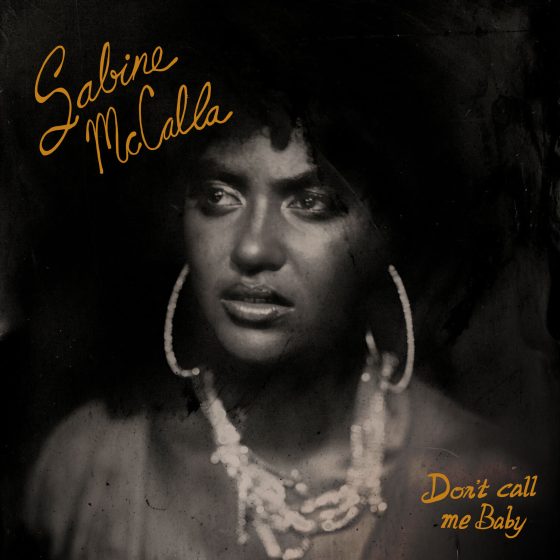
In 1853, a 29-year-old Parisian photographer, Adolphe-Alexandre Martin, delivered a paper to the French Academy of Sciences. In his text, he proposed a process for creating a photographic image on thin, chemically coated metal sheets: the tintype. Between the late 19th and early 20th centuries, his invention became the portrait medium of choice, especially across North America, eventually falling out of fashion in the 1930s. Strikingly evocative, tintypes imbue subjects with a surreal, dreamlike quality, offering an emotional portal into the past.

Over a century and a half later, the New Orleans-based Haitian American singer-songwriter Sabine McCalla, younger sister of the influential classical and folk musician Leyla McCalla, asked the tintype revival photographer Meg Turner to take her portrait. For an artist who draws from the past while seeking pathways forward, using an old medium to capture something new was an instinctive choice. Turner’s image became the cover art and a lodestar for the central feelings underpinning McCalla’s debut album, Don’t Call Me Baby, released through Kurt DeLashmet and Nick Shoulders’s Gar Hole Records label.

As we discuss later in this interview, the inspiration for Don’t Call Me Baby wasn’t born from a happy moment. Rather than sinking into sadness, McCalla juxtaposes joy and heartbreak, using narrative storytelling as a vehicle for catharsis across nine haunting, surreal songs. On “Sunshine Kisses” she recalls being lost in liminality after a breakup before letting loose on the classic rock and roll slanted singalong “Louisiana Hound Dog” (a co-write with Dan Auerbach from The Black Keys and Pat McLaughlin). By the time “Two of Hearts” arrives, our protagonist is singing about three different suitors.

Amid the paradisiac instrumentation surrounding her soothing voice, McCalla and her producers, Sam Doores (of The Deslondes) and Ajaï Combelic, collaborate with a cast of more than a dozen musicians from her musical community in New Orleans. Together, they blend rhythm & blues, country, folk, jazz, Tropicália, quiet storm soul, and doo-wop into hypnotic roots music. Song by song, the results reflect a lifetime spent studying traditions from across the Americas, Europe, the Caribbean, and Africa. Equal parts comforting, adventurous, and spicy, she serves up an Americana hotpot that speaks to the world while being informed by it.

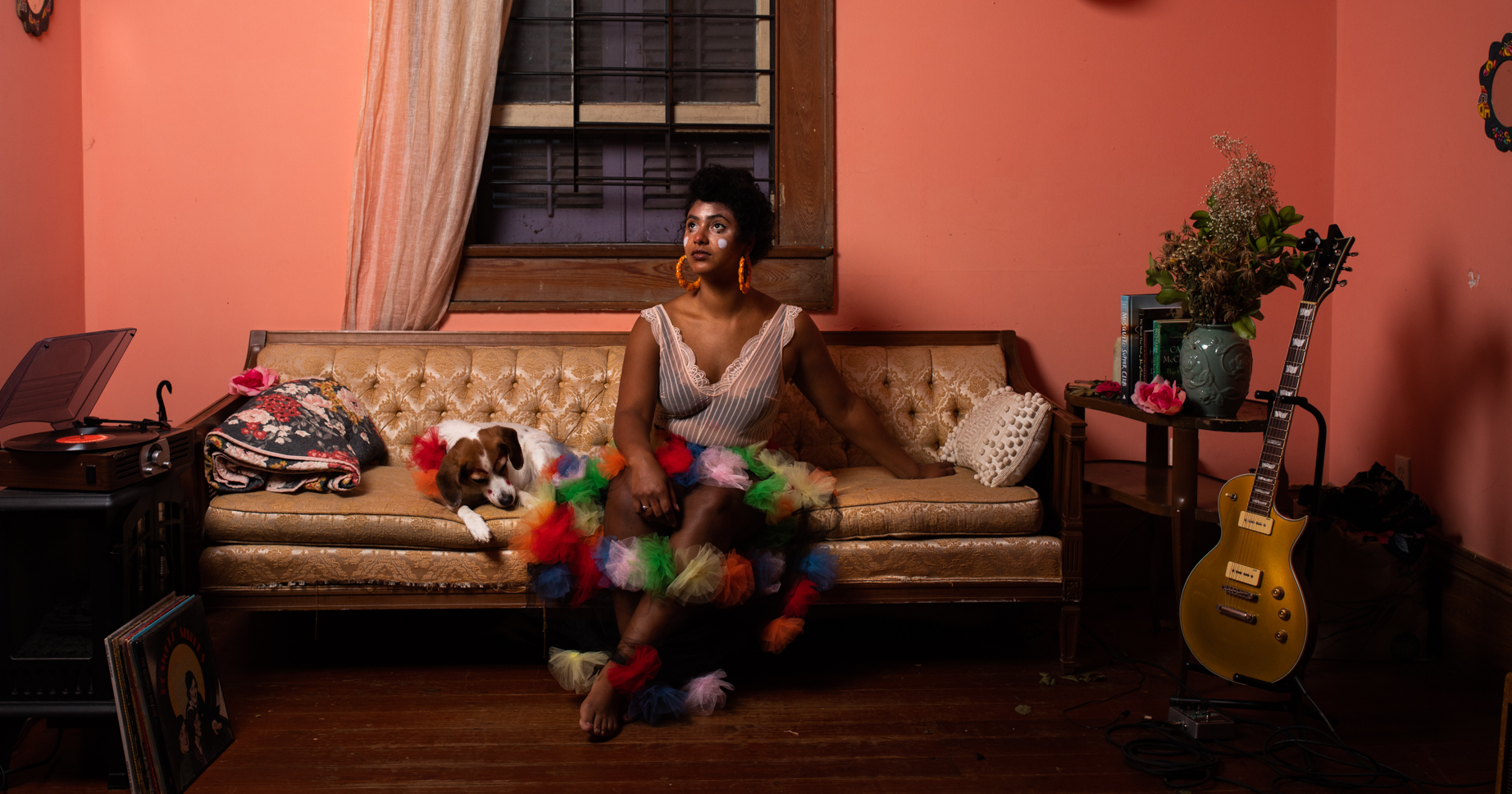
Last month, McCalla joined BGS on a video call. Sitting on a yellow couch surrounded by rosebud-hued walls and framed art, she spent just under an hour with us. In a discursive conversation, we explored the influence of life in Louisiana, her passion for musical history, and, given her background, the inevitability of her worldly confluence of sensibilities. A thoughtful speaker, McCalla isn’t the type to rush her answers. She’s also happy to keep a point simple or, when needed, throw in some extended anecdotes. Sometimes it’s not that deep; other times, it really is.

How important is a sense of place and location to your music?

Sabine McCalla: I don’t know. I mean, it is important. Louisiana and New Orleans have been characters in, or influenced my music a lot. But I’ve certainly written songs outside of New Orleans and Louisiana. I think any land we connect with is important when we’re writing songs.

From the outside looking in, it’s easy to surmise that there is a quality to New Orleans and the musical community that lives there that unlocked something in your artistry.

Yeah, it’s definitely been very inspiring. New Orleans is a very musical city. Nearly everyone you meet is a musician or plays more than one instrument. It’s incredibly culturally rich here. Learning to play music in this environment, you learn certain styles, or you learn with a focus on dancing. There’s a lot of rhythm & blues, soul, and second-line music, and people dancing in the street. I think dancing is something I was thinking of when I thought about how I want these songs to be listened to. Like I’m thinking of a honky-tonk dive bar, hot and steamy, lots of close dancing.

Who says you can’t dance to misery, right?

You certainly can. In fact, you’re probably a better dancer.

There’s something about the juxtaposition between a sad sentiment and a happy rhythm or melody that can be so moving.

I think innately we all want to experience pleasure, and we all have our pains that go with it. I think that’s what people are connecting with.

Unfortunately, or perhaps, fortunately, what is pleasure without pain?

Just a high.

New Orleans looms large in my mind as one of those places where traditions have been kept alive that don’t still exist elsewhere.

Yeah, for sure. There’s a tradition of passing down songs. There’s also so much space to create music here.

Don’t Call Me Baby is an ambitious album, but you succeed in your ambitions. You’ve braided a lot of threads together: different places, genres, periods of time. Was there a specific time in your life when you became interested in musical history, or looking to the past to find new ways to go forward?

I grew up playing classical music. Then I studied some old-time music from Appalachia. I’m interested in learning lots of old songs. I like listening to Harry Smith’s Anthology of American Folk Music. I feel like I’ve dug into a lot of pre-war recordings throughout the South and been inspired by ballad singing.

Like many people, I learned about the Anthology of American Folk Music through Bob Dylan and Joan Baez. There’s something about songwriters who go back and listen to their influences’ influences.

Totally. Shape-note singing is coming back into fashion now. I keep hearing about shape-note festivals around the country. My drummer, Howe Pearson, who also plays in The Deslondes, has been hosting a shape-note singing workshop every Monday.

What was it about the Anthology of American Folk Music that excited you?

They were songs I’d never heard before. I liked the quality of the voices on tape. So emotive and raw. And not just the Harry Smith anthology, Alan Lomax recordings too. I’ve always been interested in ethnomusicology. When I was younger, my sister and I had a mentor who played a lot of blues and jazz. I remember thinking he wrote these songs, until I realized, no, this white man from New Jersey did not write these songs. There’s this beautiful history of Black people in America who sang the blues and jazz and wrote so many songs that have been passed down.

Sometimes I wonder about the impact recorded music had on community singing. I’ve read that after phonograph records turned up, people became more self-conscious about singing at home. They’d hear these great singers and a shyness would set in.

People were keeping the songs they heard alive. They lived when there was no radio, so they were better keepers of songs than we are today. Now everything is so fast. There’s so much music, AI music, the industry pushing constant output, and not reviving songs. But I think a new resurgence of song revivals is happening.

You grew up in a Haitian family in New Jersey. Were your parents encouraging about music?

Yes and no. My sister’s also a musician. My mom was like, “Leyla’s the musician. You need to figure out your own path.” I was like, “No, I think I want to do this.” Both of my parents always encouraged choosing your own path and focusing on it.

It’s not always immediately obvious, but there’s a strong Haitian influence in American music.

Yeah, the Fugees! Lauryn Hill went to my high school. Her album The Miseducation of Lauryn Hill is like a bible to me. It’s a perfect album – the intros, outtakes, transitions. Lyrically empowering. I grew up on her songs. I’m grateful for my high school. We had amazing music teachers.

I graduated with SZA and Dave Authors, and a few others who’ve done great things. My sister Leyla McCalla went there, too. New Jersey is incredibly diverse. A lot of people immigrate to New York and then move into the suburbs, which my family did as well.

Did you grow up on a bit of everything musically?

Classical music. School trips to the opera. My parents played the Haitian groups Boukman Eksperyans and RAM. We listened to The Beatles, Bob Marley, and Rod Stewart.

When I think about Americana, I think about this confluence of cultures and musical traditions that came together in the South. When did it become attractive to you?

It all came together naturally. I was focused on pre-war songs, then going through decades of music. When I moved here, I got interested in The Boswell Sisters and songs collected in New Orleans in the early 1900s. Then I learned about Lonnie Johnson, the godfather of rock ’n’ roll. Through studying songs, I realized that it’s all Americana music. It influenced how I sang and created songs.

In a sense, there’s an inevitability to where you arrived.

I originally wrote and sang songs a cappella. That became my EP, Folk. My friends Leonie Evans and Steph Green helped with backup vocals. There wasn’t much thought about creating a larger sound until I met Eli “Paperboy” Reed. I’d already been listening to New Orleans R&B and soul, and when he put chords to my songs, I was like, “Oh, this is the sound I’ve been looking for.” That changed how I thought about songs. I also grew up listening to [the Tropicália singer-songwriter] Caetano Veloso. I’ve been trying to read his book Tropicalism, but there are so many references to Brazilian artists. It’s going to take forever.

After growing up in New Jersey, you moved to New Orleans, where this was all even more concentrated. There was a weekly jam session you’d go to called the All-Star Covered Dish Country Jamboree.

Yes. The first time I went was in 2014, probably in February. Joy Patterson came up to me – she runs it – and said, “I know who you are.” I was like, “Oh no, this lady…” But I loved it. My sister had been living here, so people were like, “Oh, you’re Leyla’s sister.” I think I saw Sam Doores’ doo-wop group with Casey Jane, Camille Weatherford, Emma Eisenhower, Jon Hatchett, and Max Bien Kahn; they did a little doo-wop show. I thought it was so cute. I wanted to know these people. And I’ve ended up working with all of them.

From there, it became a weekly ritual in your life, right?

Yeah, it was like a church. Going to this country night where I could talk about songs with people and hear a lot of old songs: classic country, classic R&B and soul. Those things lit my soul up.

After all these experiences, what’s your understanding of country music and where you could fit into it in 2025?

I don’t know. Maybe giving voice to other women of color who are interested in country music, not just hip-hop or R&B, but a diversity of sounds. I also lived in Ghana growing up, and lots of people listen to country music in Africa. What surprised me was going to Ghana and someone saying, “Where’s your cowboy hat?” I was like, “I’m from New Jersey, not Texas!”

I get the sense that a lot of your music is therapeutic storytelling.

Yeah, it is. It comes from the heart.

What sort of stories do people tell you about their experiences with your music?

The best one was in London. Someone said their friend’s father passed away and left her a boat. She went sailing for three months. They didn’t listen to music for most of it, then one day she put on my record and that’s all they listened to. That made my heart swell. It’s making me tear up now. Another woman told me she’d separated from her husband and, after hearing my music, reached out to him, saying she was ready to compromise. I was like, damn… Hopefully, this music lets people feel they’re not alone in their feelings.

How much has loneliness driven your music?

It’s been a huge component. I value my alone time, but sometimes it’s a detriment when I’m alone too long or ruminating too long.

You need something to break the feedback loop. Tell me about the backdrop to this album?

I was playing with a lot of ideas. Not everything made it onto the record. A friend visited – she’s an amazing stylist – and I wanted to get a tintype photo done by Meg Turner. We did makeup, hair, clothes, jewelry, so much dazzling stuff, so I’d be shiny in the sun. It was hot in New Orleans. Right before taking the photo, I got a text from someone I was dating, and that’s the true look of shock on my face. After I saw the picture, I was like, “Everything needs to be based around this photo.”

It’s an amazing photo.

Right after that, I wrote “Sunshine Kisses” and then I thought, “What else goes with this?”

What sort of ideas did you have about the threads you wanted to bring together in the music?

I was like: What are all my breakup songs? I wanted it to be haunting, but warm. Some songs I wrote during the pandemic felt too cold for this album. I originally wanted to name it Sudden Blue because I was thinking of a colder feeling. But something transpired while making it; the songs were given a new breath by the people I was working with: Sam Doores, Gina Leslie, Roy Brenc, Howe Pearson, and Ajaï Combelic. It was a warm feeling in the room, lots of laughter. And we were doing it during Mardi Gras, during carnival season, which was wild, because we’d play shows at night and then go into the studio in the morning.

It’s amazing how much other people can make a difference to a creative process.

Yeah. We fed off each other. If there’s negativity or self-consciousness, it’s felt in the music. We were all happy to work out ideas and nerd out about music.

Did you have a heartbreak record, not necessarily one you idolized, but a north star to look towards?

A few albums inspired me. Lauryn Hill’s The Miseducation of Lauryn Hill. Fiona Apple’s When the Pawn… There were also songs: Irma Thomas’s hits, and “Andromeda” by Weyes Blood. It’s such a powerful song about all the emotions we face. Feeling lonely, then liking the loneliness, then changing your mind five times a day.


Photo Credits: Lead image by Camille Lenain; album cover tintype by Meg Turner.

The Stories and the Storyteller Behind ‘Stelth Ulvang and the Tigernips’

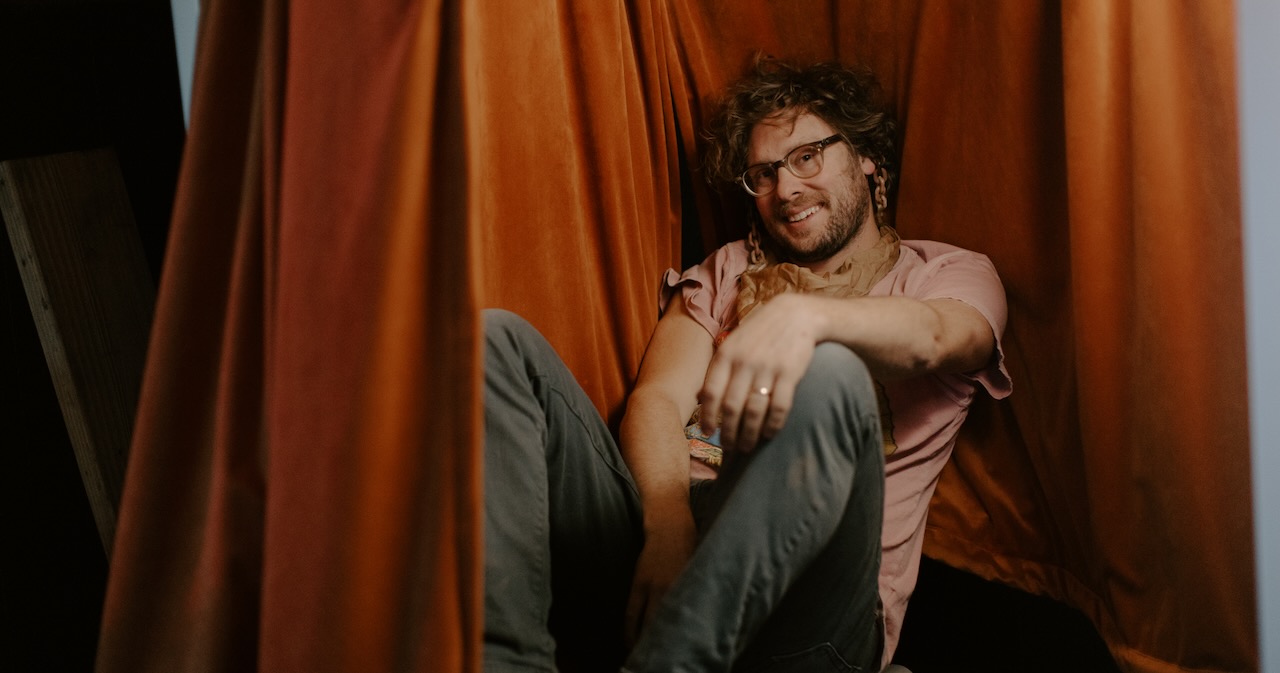
Stelth Ulvang is a storyteller, but as he shares in our conversation, if it hadn’t been for a broken mast on a famous sailboat years ago, his stories might have found a different outlet than music.

Since then, his musical life has unfolded from one wave to the next. From playing with established bands like The Lumineers or his own projects like Heavy Gus to finding pick-up bands in different towns, he is fast and prolific. His latest effort, Stelth Ulvang and the Tigernips, is a ten-song opus, cut in New Orleans by The Deslondes (a band he indeed met through a friend). A self-declared autumnal record, Ulvang grapples with death with a lilting cover of Echo & the Bunnymen’s “Killing Moon” and guides the listener along his travels in “What Three Dogs.” The (mostly) live recordings lend themselves to the raw emotion of the storytelling.

BGS spoke to Stelth Ulvang over Zoom from his home in Bishop, California.

How’s your life?

Stelth Ulvang: Well, we just got back from a family vacation, and our 3-year-old hates us for trying to explain jet lag to him.

It sounds like you were on a real adventure. Where all did you go?

Greece, Turkey, and the Republic of Georgia. We have a friend there that is a wild, wild, Wild West woman.

She won this great horse race, and she’s really into cooking over big fires. She won the Iron Chef competition there. She’s a pretty versatile human, but pretty wild. So it was fun to have a friend in these places. We had friends in Greece and we had friends in Turkey. But we didn’t have instruments. My wife and I play a lot of music together, so we’ve always traveled with instruments, and this time we refused to.

I’ve just been recording all last year. I’m sitting on three records of recordings and trying to just put out one of them right now.

Nice. That’s awesome. Do you write alone, or do you and your wife write together sometimes?

I normally write alone. I have a hard time writing with others. I just haven’t had enough practice with it. With our other project, Heavy Gus, we will bring songs to the table and then we’ll intermingle and edit them together. But for the most part, it always comes from one voice or another. We haven’t sat down and said, ”Let’s write a song.” I find it harder. It’s more vulnerable than the other parts of a relationship, I find. After like sexual or intimate vulnerabilities, I found writing music together was like by far the last tier.

Well, not to make it about me. But I write music with my husband. Co-writing and the kitchen are the only places we fight.

Oh, yeah, totally. It can get really impassioned. You are just opening yourself up on the table in this way, and it can just go so quickly to feeling under attack about this very personal thing.

You’re very prolific. Sounds like you got a lot of stuff in the pipeline to release.

When The Lumineers stopped touring, I kind of just rallied and tried to get everything done. I did a lot of the writing on the road with the band. There was a lot of downtime in hotels. For a long time, I was recording in hotel rooms with my phone on voice memos and stuff like that. But then I got into using Garageband on my cell phone and making more produced tracks. I released a record like that.

Ultimately, I found that my favorite thing to do was to find a band. If we have a few days off in a town, I find a band and go into a studio somewhere and see if we can just record five tracks. So that’s what I kept doing around the States during this Lumineers tour for the past three years. I had written all these songs over COVID. So we’d be in Cincinnati for three days and I’d find a band and record five songs.

When you say “find a band,” what do you mean?

I mean whip a band up. Ideally, find a band that plays together and they’re down to just like learn a song of mine.

Are you meeting them at a show or are these people that you’re like friends of friends with online?

Yeah, sometimes friends of friends, people that I’ve never played with. But for this record, Stelth Ulvang and the Tigernips, this is all people that I had never met. A friend who was going to be on the record but then left for a tour was like, “Well, they’re good people, you’re in good hands.”

It was fun to just use real old gear, old vintage mics and run it all through tape. We recorded everything live. Singing it live, that’s something I’m not as used to. But with this band from New Orleans, the magic was quick to come.

Did you know you wanted to cut it to tape before you headed down there? Or was that circumstantial?

That was circumstantial. It’s funny with tape right now, because obviously, everything just gets digitized. I was trying to think, “Is there a way that we can keep this off of ever touching digital?” And it’s almost impossible. You know it’s possible, but it feels impossible.

With the record I made on my cell phone, I only released it on cassette tape for a while, which was the reverse. So I should have tried to be true to form and release it just on vinyl and tape in analog form. But it’s 2024.

Well, tell me about self-releasing music. What does that feel like in 2024?

It’s like I finally figured out the releasing stuff. I’ve had help through Emily Smith, with the Alt-Country Show. There was a lot of logistical stuff that I was getting new anxieties about – a lot of social media.

You think you have it all figured out and then it’s just all about being a content creator. I feel like an old man. It’s so complex, but it’s true. I finally kind of figured out how to self-release and self-book shows and now that almost feels like an obsolete skill set. I’m doing a whole tour around the Northeast on this record for a few weeks and booked everything myself. Amazing that it like came naturally, just writing people and asking for help. But yeah, the content is a skill set that I forgot to put my 10,000 hours in on.

I feel that. For the tour, is the band that played with you on this album from New Orleans going?

No, they’re all gonna be in Spain at a sick residency that they do every year. The band goes to Spain once a year. They’ve done it for 3 years. Now this will be, I think, their fourth year. And there’s a huge following in Seville of American country and folk.

It’s interesting that country music is getting big. But in Europe right now, it’s getting huge and friends who do country tours in the States are having much more success in Europe right now.

It also feels like the genre is broadening. There’s obviously the stuff at the top of the pyramid that, depending on your ears, can be exhausting. But there’s more room for more kinds of country.

In that realm, I don’t know that I like the song for what it is, but “Old Town Road” by Lil Nas X – to have a gay Black man put out a track at the top of the country charts, I think opened up the the floodgates to be like, “Anything goes.” I think that is an extraordinary gift to any realm of music, to do something so left field and find success for it. So bless Lil Nas X for that and maybe only that.

What’s a Tigernip?

What is a tigernip? I don’t know. I forgot. … I was just trying to think of something that wasn’t a Google trope. But I wanted the combination of very quick, ferocious, and sweet. We recorded half of the album in the space called the Tigerman Den so I was starting to call it “the Tiger Men.” But there were women in the project. I think I said “Tiger Dicks” at some point, and everyone was like, “What the hell is wrong with you?”

But then, something about a tigernip kind of sounded like a tiger lily or catnip.

I wanted it to be clear that the band that recorded on this record was actually a band and it wasn’t me just doing like solo songs. And how much the album was influenced by these relationships that we had over a very short few days. So, that’s why I was really set on trying to find a band name for us.

There’s a frequent revisiting in the songs on this album to the theme of water. And I read that at one point you sailed from Hawaii to Seattle. Since you have this connection to water, I’d like to know about that sail and if you have an everyday connection to water?

It’s funny, I don’t necessarily buy into astrology, but being an Aquarius, I am appalled that it’s not a water sign. I feel completely more watery than airy. [My birthday is] the very last day of Aquarius before Pisces, which is a water sign. So maybe that’s why I’m compelled to lean into the water sign. And my Chinese zodiac is the tiger.

Back to the sailing trip! I did not want to play music before this time in 2008. I met this musician who invited me on this sailing trip and I just wanted to go on an adventure.

Meaning you didn’t want to play music in your life, or you needed a break from it?

I was playing in high school and I tried to go to college for it. I didn’t like it and I dropped out. I just wanted to travel. I had gone on a bike trip, I was hitchhiking a lot, and I was riding trains everywhere. If music could help me travel, I was open to it.

I traveled to Hawaii to pick up this boat that was famous in National Geographic because of this teenager, Robin Lee Graham, trying to sail it around the world in one go. He left his boat in California and it got moved to Hawaii. I had somehow signed up with a buddy that I barely knew to travel with this boat from Hawaii up to Bellingham, Washington, where it was going to sit in a boat museum for its historical significance.

At the time, this was the youngest boy ever to sail around the world alone. The record has since been broken by a young woman. [The boat] had so much repair work that had to be done on it. So we’re in Hawaii for like five weeks, during which I got arrested for shoplifting some food at Sam’s Club, because we’d run out of all of our money that we had saved up to do this journey. I decided, “Screw it. We’re we’re just gonna skip the court date, I’m gonna get on this boat and we’re gonna sail.” So we bail on this court date, establishing a nice bench warrant that I had to deal with much later on. We make it a week out and the mast busts, and we had to get rescued. And I have never sailed extensively since then.

While we’re at sea my buddy had this mandolin. We sit there, and we’re just trading verses back and forth, writing this kind of silly song as this joke idea that we’re these stranded pirates. We’re just coming up with lyrics. We get towed back to Hawaii; I was really nervous about going to jail. We go to the airport and beg these flight attendants to basically put us on standby to get us back to the States. The only flight that they could put us on was one that went up to Seattle. We’re like, well, “We can hitchhike home from there.”

So, we go up to Seattle and we have no money, not even bus fare, to get to my friend’s house that lived in North Seattle. So we sit in the airport and we play this song, making up words on this mandolin with a little hat out [for tips], just for bus fare. As soon as we get the bus fare, we leave and we’re at our friend’s house. We tell him the story and he’s like, “You know, we’re having a show tomorrow night. You guys should play your song at this show that we’re having in our basement.”

That was the first show essentially that I ever played. By the end of the trip, we traveled for another couple of weeks back to Colorado, we’d written an entire album’s worth of stuff. As soon as we got back to Colorado we already had a band name. We had all the songs ready to record and all of a sudden I was a musician again.

Wow! All because of a broken mast. That’s wild.

SU: The boat was called the Dove. And the book that was about the boat is called Dove. So we called our band Dovekins. Never looked back.


Photo Credit: Rachel Deeb

LISTEN: The Deslondes, “Ways & Means” (Ft. Margo Price)

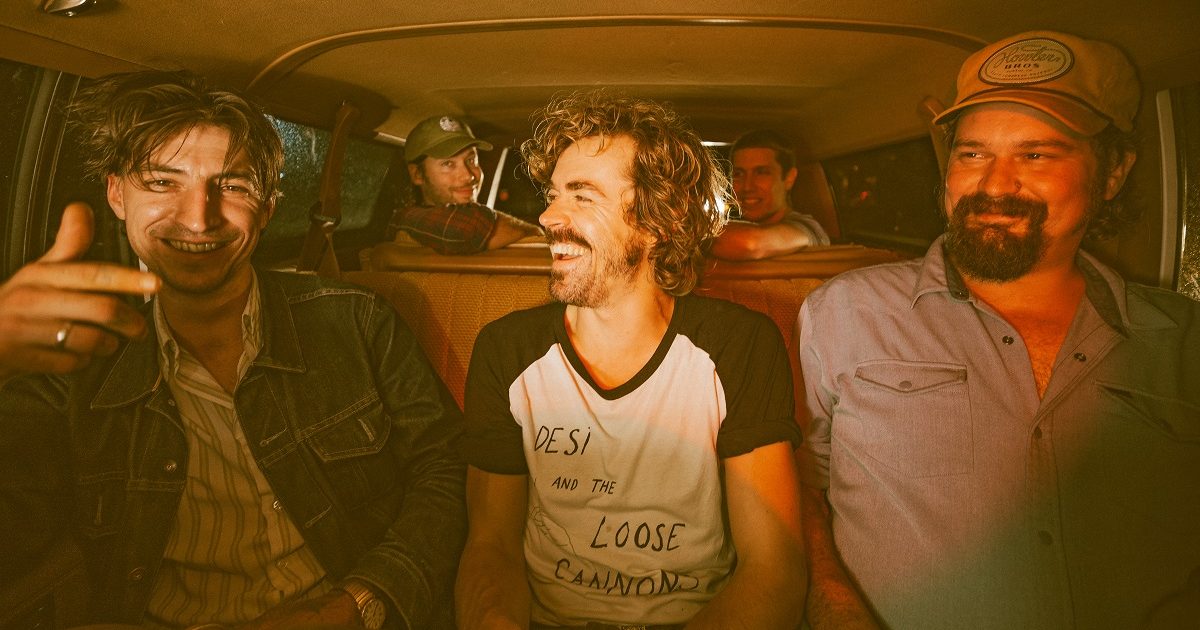
Artist: The Deslondes
Hometown: New Orleans, Louisiana
Song: “Ways & Means” (ft. Margo Price)
Album: Ways & Means
Release Date: July 8, 2022
Label: New West Records

In Their Words: “‘Ways and Means’ is just a bunch of internal monologues I strung together. I guess it’s mostly about a person’s pursuit of happiness and how money can complicate all of that. Musically this song started out pretty different from how it ended up. It was pretty downbeat and chill and had different chord changes when I wrote it, but the rest of the band had other ideas. Margo Price is a friend of the band and was gracious enough to drop in and contribute some vocal harmonies which tied it all together nicely.” — Dan Cutler, The Deslondes


Photo Credit: Bobbi Wernig

BGS 5+5: Riley Downing

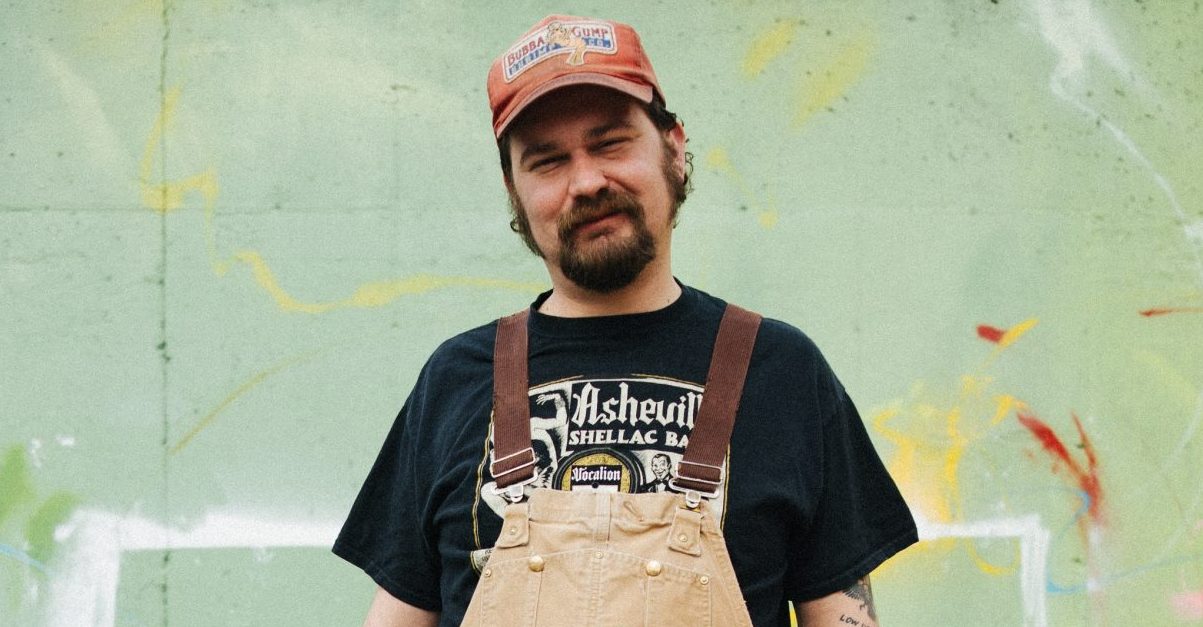
Artist: Riley Downing
Hometown: Kansas City, MO
Latest album: Start It Over

Which artist has influenced you the most … and how?

It is hard to pick just one artist that has influenced me the most. I am a fan of all kinds of music and genres as well as underdog musicians, current and long since lost in time. It might sound cliché, but if I had to pick one who influenced me the most it’s gonna be Woody Guthrie. If it weren’t for finding Woody Guthrie in high school, I never would have started to appreciate folk, blues, and roots music that made me think the same way that punk rock did at the time. I also never would have ventured out to Okemah, Oklahoma for the Woody Guthrie Folk Festival when I was 18 and met the guys that eventually would form the Deslondes. Woody is an American hero who tried to save the world with a song that gave people hope, morals, an education, a good laugh, and thoughts to chew on to get them through lean times. Woody, as simple as some of his music seems, was much, much more than just a musician. I never stop finding more and more meaning and inspiration from his life’s work. I always loved his copyright law, too. He basically said, warning, if you sing these songs you might just be a friend of mine, which I do and I am.

What’s your favorite memory from being on stage?

I have a lot of good memories of being on stage, whether late at night in a small club or a backyard or opening up for and getting to hear some of my favorite musicians every night. But I will never forget the first time we got to play the New Orleans Jazz Festival. That was kind of an epitome of all the hard work and hard traveling the band had done in the previous years all leading up to that one moment. It felt good to be accepted and supported by the New Orleans music community all those years and finally playing the biggest show you can really get down there. It was a surreal honor and never stopped being or feeling like it.

What was the first moment that you knew you wanted to be a musician?

The first moment I knew I wanted to be a musician was probably when I learned how to finally tune the guitar. Ha ha. I got my first electric when I was 13 and would just smash my fingers all over the strings and thought to myself, this almost sounds like I’m shredding. I thought all strings must have different sounds and tried out different kinds until my cousin finally showed me how to tune the guitar. Then came the power chords and once I was able to put a few together, I knew I needed to write words over them and attempt to sing them even though I didn’t know how to do that either. I did it anyway. Then came the buddies who also wanted to play music as well as different instruments and the realization that this is what we really love to do. I have been hooked ever since and honestly the process of doing that and the joy I get from it hasn’t changed much.

Which elements of nature do you spend the most time with and how do those impact your work?

The elements of nature that I spend the most time in that affect my work are in the rolling hills of Missouri. I love small town life, sitting in the sun fishing all day, or on a back deck BBQing and taking my time driving slow through the backroads that I don’t have to look up GPS, or listening to music or just making up songs and singing a line over and over until I have to stop and write it down. It is true, there is no place like home. I traveled all over the US and world, wide-eyed and wondering where I should end up, but Missouri is home and I always feel a great weight lifted off my shoulders when I’m there. Even when I’m not there I can always write a song that takes me back. I am sad I missed morel mushroom season this year though, but hopefully that means there will be more to find next year.

Since food and music go so well together, what is your dream pairing of a meal and a musician?

Food and music do go hand and hand. If I had to make a pairing it would be a small BBQ festival that all my friends bands could come play at and ‘lightheartedly’ compete for who does it right. My Alabama buddies will tell you it’s all about the white sauce and my North Carolina friends will argue that it’s all about the hot pepper vinegar or Carolina Gold sauce. I grew up with a BBQ squirt bottle in my hand and it’s one of my favorite pastimes and meals. Whenever people ask me where to get the best BBQ in Kansas City I have a hard time answering that question because the answer is at my house. I’m not sure who invented the red sauce but I first had it in South Carolina and pick it up any chance I get. I am loyal to KC, but South Carolina definitely gives us a run for our money. KC is spoiled though with wide variety of BBQ sauces and seasoning selections at grocery/hardware stores. I have almost successfully left or sent a bottle of Head Country, an affordable Oklahoma dry rub, to all of my friends’ houses all over the US so when I visit it’s always within reach.


Photo credit: Joshua Black Wilkins

For First Solo Album, Sam Doores Opens the Map of Musical Influences

Sam Doores cut his teeth as a Bay Area-born teen troubadour busking around the U.S. before he got his first real break with a steady gig at an Irish pub in New Orleans. In that same city he co-created some of the last decade’s most arresting socially-conscious anthems with Hurray for the Riff Raff and made sparkling folk- and country-derived excursions with his own band, the Deslondes.

And now he’s got his first solo album, Sam Doores, recorded primarily in Berlin and filled with echoes of everything from Tin Pan Alley to the Mississippi hill country, from French Quarter jazz to California psychedelic-folk-rock.

So, let’s talk about Cambodian rock ’n’ roll. “Cambodian Rock n’ Roll” is, in fact, the title of one of the songs on the album.

“No one’s asked me about that!” he says, excitedly, on the phone from New Orleans, where he’s lived now for 14 years. “Do you know the compilation, Cambodian Rocks?”

It’s a 1996 collection of recordings made by a wealth of artists in Cambodia who embraced American surf, garage-rock and psychedelic styles and gave them scintillating Southeast Asian twists, before the brutal reign of the Khmer Rouge, in which many of those performers were killed or imprisoned.

“A friend played it for me one time on a road trip and I fell in love with the style and sound,” he says, adding that he then watched Never Forget, a documentary about that time. “So heartbreaking, and after watching it the music hits on a deeper level.”

Now to be clear, the song doesn’t sound like Cambodian rock ’n’ roll, but rather is a “tip of the cap” to it, in a somber reminiscence about listening to it with the friend who introduced him to that music. The songs on Sam Doores aren’t tinged with that tragedy, yet there is a wistful, muted melancholy and sadness throughout. “There’s some darkness, for sure,” he says.

Well, there’s going to be. It’s a breakup record, after all, largely coming from the end of a long-term relationship. The album explores various shades of that darkness, of unsettling loss and longing. There’s often light shining through, with residual and resurgent hope and joy. To some extent it all comes together, brutally, midway through the album with the song “Had a Dream,” born out of two losses that happened in his life over the four years in which the material on the album came together.

“That came to me when I knew I was losing someone who had been one of the closest people in my whole life, and I knew I wasn’t going to be able to get that person back,” he says. “And a friend of mine was dying. It’s about eventual letting go. For a long time I thought my friend was going to pull through, beat his sickness, and I thought I was not going to lose my love. Both ended up getting lost. I wrote about that time. Wanted the music to have the frantic, desperate feeling on the verses, but also the melancholy of the choruses.”

The sensibilities tie together seemingly disparate emotions, and disparate musical tones. On one end is the upbeat, generous and genuine “Wish You Well,” one of several songs featuring members of Tuba Skinny, a leader of a vibrant wave of young bands enlivening traditional New Orleans jazz. On the other, the very downcast acoustic guitar “Red Leaf Rag,” evoking a “dark dream world” that he says really should have been called a “drag” rather than a “rag,” or maybe a “dirge.” It’s all no less a factor on songs occupying the middle ground, including “Other Side of Town,” co-written with and featuring lead vocals of Doores’ longtime musical partner, Hurray for the Riff Raff’s dynamic leader, Alynda Segarra.

They also tie together, or perhaps are tied together by, the two cities in which the songs were shaped: New Orleans and Berlin. In many ways the album is the story of his 14 years in the former, having arrived when he was just 19.

“I was hitchhiking on my way [here] when Hurricane Katrina hit [in August 2005] and ended up in Austin for a while” he says. “Met some New Orleans musicians who had relocated there and they talked me into coming to JazzFest in 2006. I felt like I’d left the country. By far the most exciting place I’d been. Been to Havana, Cuba, once before. My high school jazz band went there. Reminded me more of that than anywhere. Was just going to be here one weekend.”

New Orleans has a way of changing people’s plans. That first day he stumbled upon an unannounced small-stage set by Elvis Costello and Allen Toussaint warming up for their later big-stage show, and later saw the incredibly powerful performance in which Bruce Springsteen debuted his folky, New Orleans-esque Seeger Sessions Band, a show that had tens of thousands in the devastated city shedding tears of both sorrow and hope — and turned Doores from a Bruce doubter to a fan. He also had his first encounter with the colorful, beaded-and-feathered Mardi Gras Indian troupes, and he was smitten with it all.

“It totally felt like the beginning of the rest of my life that day,” he says.

Having spent all of his money, he went to busk on Bourbon Street, the owner of the now-gone Kelly’s Irish pub saw him and hired him for a regular gig. “He said, ‘Want to try your luck on a real stage?’” Doores says. “I thought, ‘Wow! Playing inside?’”

Soon he met Segarra and formed a musical partnership that evolved into Hurray for the Riff Raff. As that band took off, he launched the Deslondes (named after the street on which he was living) as a second creative outlet. Through it all, the love and loss captured in Sam Doores took place.

It was in Berlin that he found the environment in which he could shape that into the album; that took place over the course of four years in a studio built by producer Anders Christopherson.

“I actually didn’t know Anders until we started recording,” he says. “He wrote me and Alynda one time out of the blue. Had heard a record of a band we were in together, Sundown Songs. Wrote and said if you are ever coming through Berlin I’d love to record you.”

Not long after, as it happened, the Deslondes were doing the band’s first European tour, so he arranged to spend a week in Berlin and by the end of that time he determined to make a full record there, though it would have to be done in four different stretches over several years. Christopherson put together a “house” band to bring Doores’ ideas to life, primarily himself and a Spanish keyboardist named, yes, Carlos Santana. A lot of experimentation happened with combinations of instruments — vibes, autoharp, an electronic “disc” organ, glockenspiel, and so on. And realizing Doores’ long-standing ambition, strings were added to some songs in arrangements by Manon Parent.

Somehow, it all works as an integrated whole.

“I think there are some core instruments we tended to use in the arrangements that sonically thread the record together,” he says. “In terms of influences, a lot of different tones. Some old New Orleans R&B, some of the opposite — psychedelic folk experimental soundtrack music.”

In some places it might remind of the “vintage” touches associated with such figures as Harry Nilsson and Van Dyke Parks. Doores loves those comparisons, then observes, “We listened to a lot of Nina Simone and early reggae — a lot of Upsetters, early Studio One stuff, early Wailers. Anders has an incredible record collection. Wherever we weren’t recording, we were in his kitchen listening to that stuff. We didn’t do any straight up reggae, but it influenced us in some ways, the bass lines and the organ.”

That was just part of the musical and personal oasis he found there, a space that let him find the full expression for his New Orleans stories. The importance of that is so profound that he wrote an instrumental impression of that environment, “Tempelhofer Dawn,” a gentle, muted, nostalgic waltz — and ultimately chose it to open the album, to serve as a curtain-raiser on the song cycle that follows.

“Tempelhofer is the name of the street the studio is on,” he says. “A lot of moments after late nights going out, or early mornings waking up, I spent a lot of time there with the birds or children playing and that gave a feeling that matched the song.”

He recorded it live in studio, with himself on piano joined by Santana on organ and Parent and Mia Bodet on violins. “It’s a nice way to ease into the record,” he says.

In many ways, given the breakup at the heart of the album, it sounds like both a beginning and an ending.

“It felt like the first track,” he says. “Or the last track.”


Photo credit: Sarrah Danzinger