Sabine McCalla Makes a New Orleans Album Out of Global Traditions

In 1853, a 29-year-old Parisian photographer, Adolphe-Alexandre Martin, delivered a paper to the French Academy of Sciences. In his text, he proposed a process for creating a photographic image on thin, chemically coated metal sheets: the tintype. Between the late 19th and early 20th centuries, his invention became the portrait medium of choice, especially across North America, eventually falling out of fashion in the 1930s. Strikingly evocative, tintypes imbue subjects with a surreal, dreamlike quality, offering an emotional portal into the past.

Over a century and a half later, the New Orleans-based Haitian American singer-songwriter Sabine McCalla, younger sister of the influential classical and folk musician Leyla McCalla, asked the tintype revival photographer Meg Turner to take her portrait. For an artist who draws from the past while seeking pathways forward, using an old medium to capture something new was an instinctive choice. Turner’s image became the cover art and a lodestar for the central feelings underpinning McCalla’s debut album, Don’t Call Me Baby, released through Kurt DeLashmet and Nick Shoulders’s Gar Hole Records label.
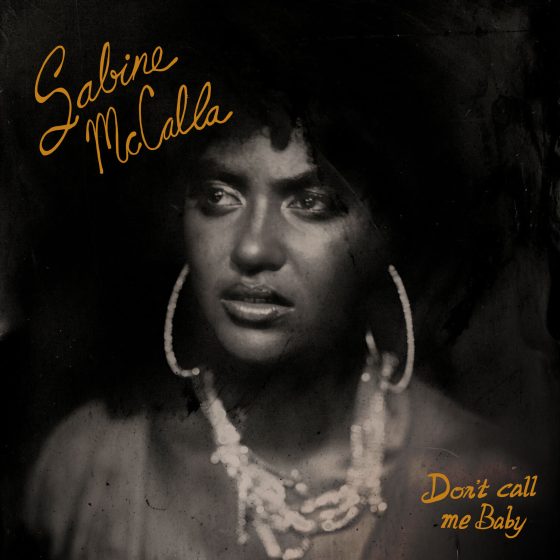
As we discuss later in this interview, the inspiration for Don’t Call Me Baby wasn’t born from a happy moment. Rather than sinking into sadness, McCalla juxtaposes joy and heartbreak, using narrative storytelling as a vehicle for catharsis across nine haunting, surreal songs. On “Sunshine Kisses” she recalls being lost in liminality after a breakup before letting loose on the classic rock and roll slanted singalong “Louisiana Hound Dog” (a co-write with Dan Auerbach from The Black Keys and Pat McLaughlin). By the time “Two of Hearts” arrives, our protagonist is singing about three different suitors.

Amid the paradisiac instrumentation surrounding her soothing voice, McCalla and her producers, Sam Doores (of The Deslondes) and Ajaï Combelic, collaborate with a cast of more than a dozen musicians from her musical community in New Orleans. Together, they blend rhythm & blues, country, folk, jazz, Tropicália, quiet storm soul, and doo-wop into hypnotic roots music. Song by song, the results reflect a lifetime spent studying traditions from across the Americas, Europe, the Caribbean, and Africa. Equal parts comforting, adventurous, and spicy, she serves up an Americana hotpot that speaks to the world while being informed by it.

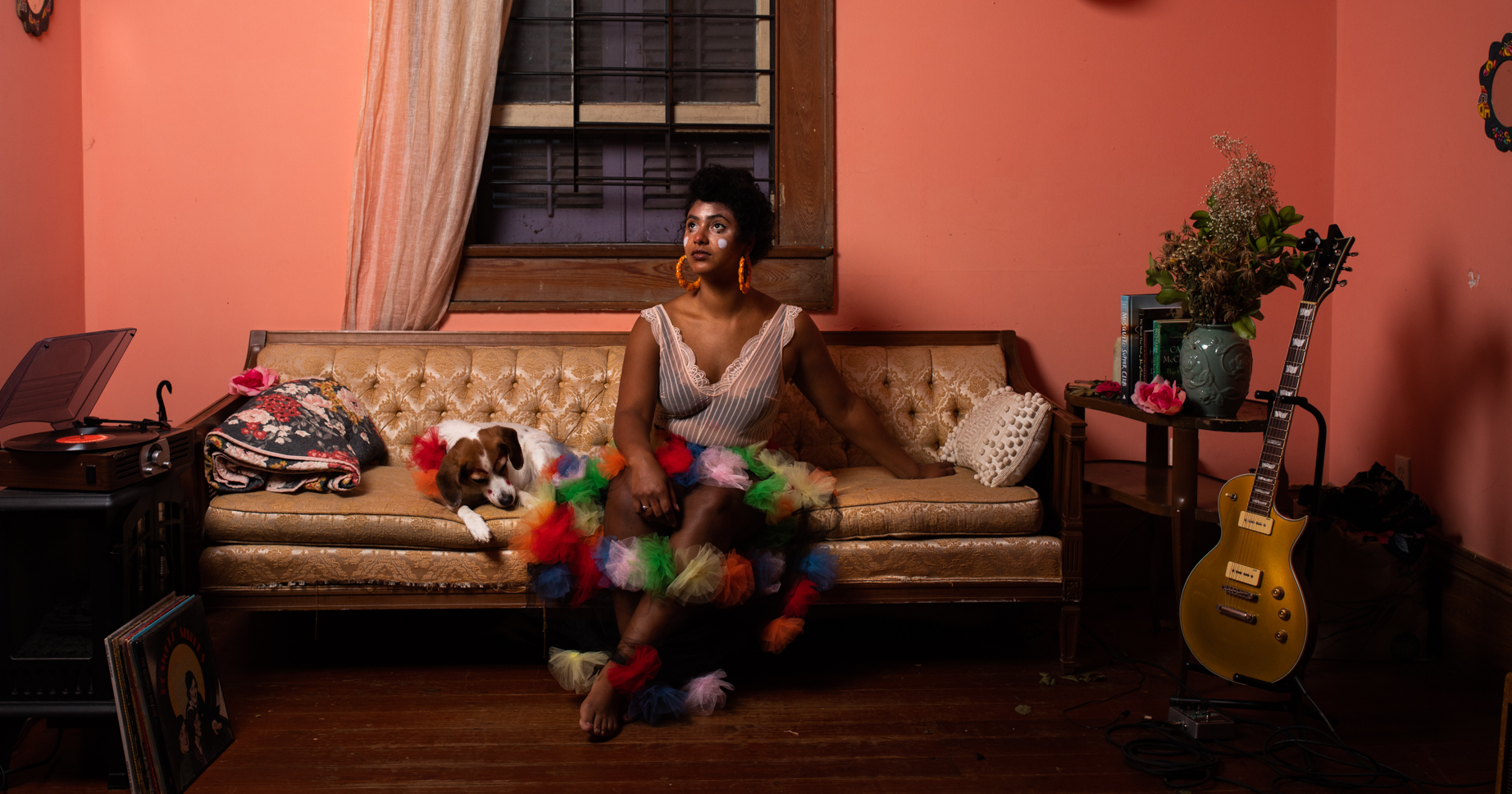
Last month, McCalla joined BGS on a video call. Sitting on a yellow couch surrounded by rosebud-hued walls and framed art, she spent just under an hour with us. In a discursive conversation, we explored the influence of life in Louisiana, her passion for musical history, and, given her background, the inevitability of her worldly confluence of sensibilities. A thoughtful speaker, McCalla isn’t the type to rush her answers. She’s also happy to keep a point simple or, when needed, throw in some extended anecdotes. Sometimes it’s not that deep; other times, it really is.

How important is a sense of place and location to your music?

Sabine McCalla: I don’t know. I mean, it is important. Louisiana and New Orleans have been characters in, or influenced my music a lot. But I’ve certainly written songs outside of New Orleans and Louisiana. I think any land we connect with is important when we’re writing songs.

From the outside looking in, it’s easy to surmise that there is a quality to New Orleans and the musical community that lives there that unlocked something in your artistry.

Yeah, it’s definitely been very inspiring. New Orleans is a very musical city. Nearly everyone you meet is a musician or plays more than one instrument. It’s incredibly culturally rich here. Learning to play music in this environment, you learn certain styles, or you learn with a focus on dancing. There’s a lot of rhythm & blues, soul, and second-line music, and people dancing in the street. I think dancing is something I was thinking of when I thought about how I want these songs to be listened to. Like I’m thinking of a honky-tonk dive bar, hot and steamy, lots of close dancing.

Who says you can’t dance to misery, right?

You certainly can. In fact, you’re probably a better dancer.

There’s something about the juxtaposition between a sad sentiment and a happy rhythm or melody that can be so moving.

I think innately we all want to experience pleasure, and we all have our pains that go with it. I think that’s what people are connecting with.

Unfortunately, or perhaps, fortunately, what is pleasure without pain?

Just a high.

New Orleans looms large in my mind as one of those places where traditions have been kept alive that don’t still exist elsewhere.

Yeah, for sure. There’s a tradition of passing down songs. There’s also so much space to create music here.

Don’t Call Me Baby is an ambitious album, but you succeed in your ambitions. You’ve braided a lot of threads together: different places, genres, periods of time. Was there a specific time in your life when you became interested in musical history, or looking to the past to find new ways to go forward?

I grew up playing classical music. Then I studied some old-time music from Appalachia. I’m interested in learning lots of old songs. I like listening to Harry Smith’s Anthology of American Folk Music. I feel like I’ve dug into a lot of pre-war recordings throughout the South and been inspired by ballad singing.

Like many people, I learned about the Anthology of American Folk Music through Bob Dylan and Joan Baez. There’s something about songwriters who go back and listen to their influences’ influences.

Totally. Shape-note singing is coming back into fashion now. I keep hearing about shape-note festivals around the country. My drummer, Howe Pearson, who also plays in The Deslondes, has been hosting a shape-note singing workshop every Monday.

What was it about the Anthology of American Folk Music that excited you?

They were songs I’d never heard before. I liked the quality of the voices on tape. So emotive and raw. And not just the Harry Smith anthology, Alan Lomax recordings too. I’ve always been interested in ethnomusicology. When I was younger, my sister and I had a mentor who played a lot of blues and jazz. I remember thinking he wrote these songs, until I realized, no, this white man from New Jersey did not write these songs. There’s this beautiful history of Black people in America who sang the blues and jazz and wrote so many songs that have been passed down.

Sometimes I wonder about the impact recorded music had on community singing. I’ve read that after phonograph records turned up, people became more self-conscious about singing at home. They’d hear these great singers and a shyness would set in.

People were keeping the songs they heard alive. They lived when there was no radio, so they were better keepers of songs than we are today. Now everything is so fast. There’s so much music, AI music, the industry pushing constant output, and not reviving songs. But I think a new resurgence of song revivals is happening.

You grew up in a Haitian family in New Jersey. Were your parents encouraging about music?

Yes and no. My sister’s also a musician. My mom was like, “Leyla’s the musician. You need to figure out your own path.” I was like, “No, I think I want to do this.” Both of my parents always encouraged choosing your own path and focusing on it.

It’s not always immediately obvious, but there’s a strong Haitian influence in American music.

Yeah, the Fugees! Lauryn Hill went to my high school. Her album The Miseducation of Lauryn Hill is like a bible to me. It’s a perfect album – the intros, outtakes, transitions. Lyrically empowering. I grew up on her songs. I’m grateful for my high school. We had amazing music teachers.

I graduated with SZA and Dave Authors, and a few others who’ve done great things. My sister Leyla McCalla went there, too. New Jersey is incredibly diverse. A lot of people immigrate to New York and then move into the suburbs, which my family did as well.

Did you grow up on a bit of everything musically?

Classical music. School trips to the opera. My parents played the Haitian groups Boukman Eksperyans and RAM. We listened to The Beatles, Bob Marley, and Rod Stewart.

When I think about Americana, I think about this confluence of cultures and musical traditions that came together in the South. When did it become attractive to you?

It all came together naturally. I was focused on pre-war songs, then going through decades of music. When I moved here, I got interested in The Boswell Sisters and songs collected in New Orleans in the early 1900s. Then I learned about Lonnie Johnson, the godfather of rock ’n’ roll. Through studying songs, I realized that it’s all Americana music. It influenced how I sang and created songs.

In a sense, there’s an inevitability to where you arrived.

I originally wrote and sang songs a cappella. That became my EP, Folk. My friends Leonie Evans and Steph Green helped with backup vocals. There wasn’t much thought about creating a larger sound until I met Eli “Paperboy” Reed. I’d already been listening to New Orleans R&B and soul, and when he put chords to my songs, I was like, “Oh, this is the sound I’ve been looking for.” That changed how I thought about songs. I also grew up listening to [the Tropicália singer-songwriter] Caetano Veloso. I’ve been trying to read his book Tropicalism, but there are so many references to Brazilian artists. It’s going to take forever.

After growing up in New Jersey, you moved to New Orleans, where this was all even more concentrated. There was a weekly jam session you’d go to called the All-Star Covered Dish Country Jamboree.

Yes. The first time I went was in 2014, probably in February. Joy Patterson came up to me – she runs it – and said, “I know who you are.” I was like, “Oh no, this lady…” But I loved it. My sister had been living here, so people were like, “Oh, you’re Leyla’s sister.” I think I saw Sam Doores’ doo-wop group with Casey Jane, Camille Weatherford, Emma Eisenhower, Jon Hatchett, and Max Bien Kahn; they did a little doo-wop show. I thought it was so cute. I wanted to know these people. And I’ve ended up working with all of them.

From there, it became a weekly ritual in your life, right?

Yeah, it was like a church. Going to this country night where I could talk about songs with people and hear a lot of old songs: classic country, classic R&B and soul. Those things lit my soul up.

After all these experiences, what’s your understanding of country music and where you could fit into it in 2025?

I don’t know. Maybe giving voice to other women of color who are interested in country music, not just hip-hop or R&B, but a diversity of sounds. I also lived in Ghana growing up, and lots of people listen to country music in Africa. What surprised me was going to Ghana and someone saying, “Where’s your cowboy hat?” I was like, “I’m from New Jersey, not Texas!”

I get the sense that a lot of your music is therapeutic storytelling.

Yeah, it is. It comes from the heart.

What sort of stories do people tell you about their experiences with your music?

The best one was in London. Someone said their friend’s father passed away and left her a boat. She went sailing for three months. They didn’t listen to music for most of it, then one day she put on my record and that’s all they listened to. That made my heart swell. It’s making me tear up now. Another woman told me she’d separated from her husband and, after hearing my music, reached out to him, saying she was ready to compromise. I was like, damn… Hopefully, this music lets people feel they’re not alone in their feelings.

How much has loneliness driven your music?

It’s been a huge component. I value my alone time, but sometimes it’s a detriment when I’m alone too long or ruminating too long.

You need something to break the feedback loop. Tell me about the backdrop to this album?

I was playing with a lot of ideas. Not everything made it onto the record. A friend visited – she’s an amazing stylist – and I wanted to get a tintype photo done by Meg Turner. We did makeup, hair, clothes, jewelry, so much dazzling stuff, so I’d be shiny in the sun. It was hot in New Orleans. Right before taking the photo, I got a text from someone I was dating, and that’s the true look of shock on my face. After I saw the picture, I was like, “Everything needs to be based around this photo.”

It’s an amazing photo.

Right after that, I wrote “Sunshine Kisses” and then I thought, “What else goes with this?”

What sort of ideas did you have about the threads you wanted to bring together in the music?

I was like: What are all my breakup songs? I wanted it to be haunting, but warm. Some songs I wrote during the pandemic felt too cold for this album. I originally wanted to name it Sudden Blue because I was thinking of a colder feeling. But something transpired while making it; the songs were given a new breath by the people I was working with: Sam Doores, Gina Leslie, Roy Brenc, Howe Pearson, and Ajaï Combelic. It was a warm feeling in the room, lots of laughter. And we were doing it during Mardi Gras, during carnival season, which was wild, because we’d play shows at night and then go into the studio in the morning.

It’s amazing how much other people can make a difference to a creative process.

Yeah. We fed off each other. If there’s negativity or self-consciousness, it’s felt in the music. We were all happy to work out ideas and nerd out about music.

Did you have a heartbreak record, not necessarily one you idolized, but a north star to look towards?

A few albums inspired me. Lauryn Hill’s The Miseducation of Lauryn Hill. Fiona Apple’s When the Pawn… There were also songs: Irma Thomas’s hits, and “Andromeda” by Weyes Blood. It’s such a powerful song about all the emotions we face. Feeling lonely, then liking the loneliness, then changing your mind five times a day.


Photo Credits: Lead image by Camille Lenain; album cover tintype by Meg Turner.
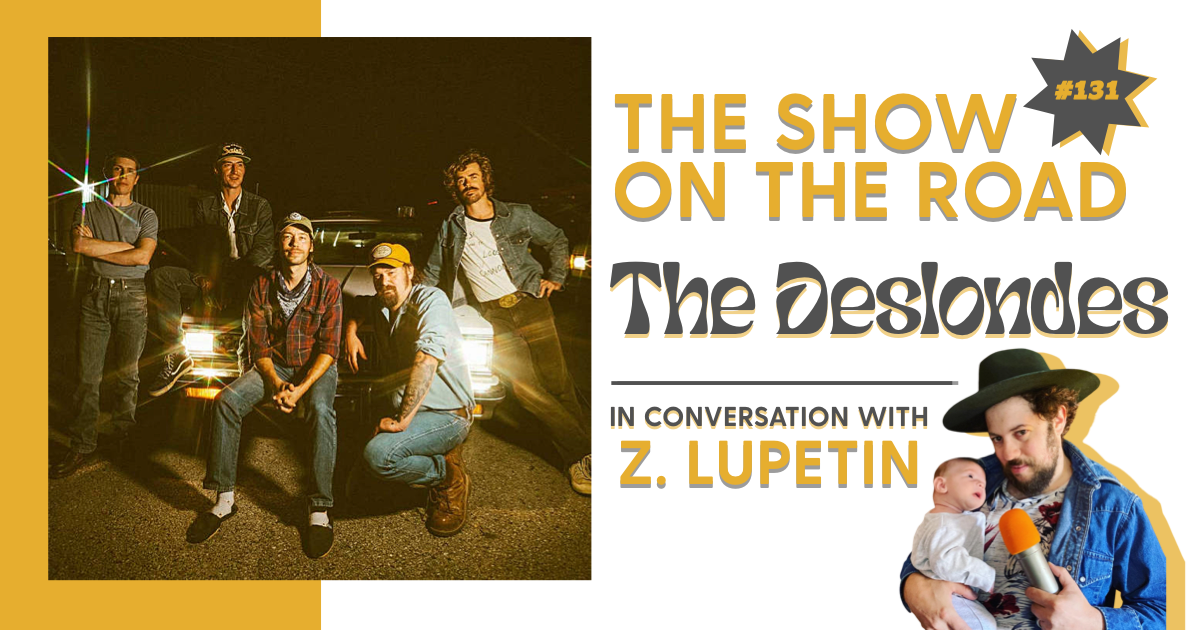
The Show On The Road – The Deslondes

This week, the show is back in New Orleans for a special talk with Sam Doores, one of the talented founders of well-traveled roots-rockers The Deslondes. We dive into their newest LP Ways & Means and how California-born Sam — who plays various instruments from electric guitar to keys, and sings in seven bands and counting throughout the Crescent City — collected many of its slow-burn soul-adjacent songs like “Five Year Plan” while holed up in a storage unit studio squat, questioning his place as an adult with real responsibilities who also happens to be a soul-searching artist criss-crossing our beautiful (or crumbling) almost-post-pandemic world.

LISTEN: APPLE PODCASTSSPOTIFYSTITCHER

Imagine if you will, you walk into a saloon lost somewhere between 1930 and 1975. The band onstage has three distinct lead singers, and the songs feel like hard lived-in tales that could live in a TV western or the soundtrack to Boogie Nights, with vibes that would inspire both Ray Charles and Woody Guthrie, Tom Waits and The Beatles. If you’re confused, good. Algorithms can force music upon you at any time these days and I’ll admit, Spotify wants me to listen to The Deslondes, at all hours. They’re not wrong. If I have one job in this podcast it’s to share the music that lights a fire in me as a fellow songwriter and has me grasping for genre-descriptor straws. I have no idea, clearly, how to describe this band. I will say, songs like “Howl at the Moon” make me feel like I’m somehow still proud to be an American, plying my trade somewhere in the still kind of Wild West.

Starting with their charmingly ramshackle and bluesy self-titled debut in 2015, the band, which formed in New Orleans’ Lower Ninth Ward, has always made a point to write democratically and spread songs around to their singers. Sam for one, Dan Cutler (bass) for another and notably the always compelling Riley Downing, whose ancient deep drawl sounds like it should be its own character in Yellowstone — and all harmonize gorgeously together. Downing and Doores also both have duo and solo albums which are lovely, but what they create here in The Deslondes — especially in timeless story songs like “South Dakota Wild One” about Riley’s wandering youth — are special in the way accidental supergroups make music that somehow shouldn’t exist.

It was a pleasure getting together with Sam for a rare in-person chat just off Frenchmen Street. If there’s one thing I love most about New Orleans, it’s that it creates new artists that seem to follow the beat of their own drummer, genres be-damned. Give Ways & Means a spin — it might transport you somewhere you need to go.


Photo credit: Bobbi Wernig

BGS Long Reads of the Week // June 5

Welcome to another conglomeration of diverting, entertaining, and engaging long reads! The BGS archives never disappoint. As we share our favorite longer, more in-depth articles, stories, and features to help you pass the time, you should follow us on social media [on FacebookTwitter, and Instagram] so you don’t miss a single #longreadoftheday pick! But, as always, we’ll put them all together right here at the end of each week if you happen to let one sneak by you, too.

This week’s long reads are educational, meandering, inspiring, and much more. Read on:

On New Duet Album, Laurie Lewis Gathers Old Friends and Close Companions

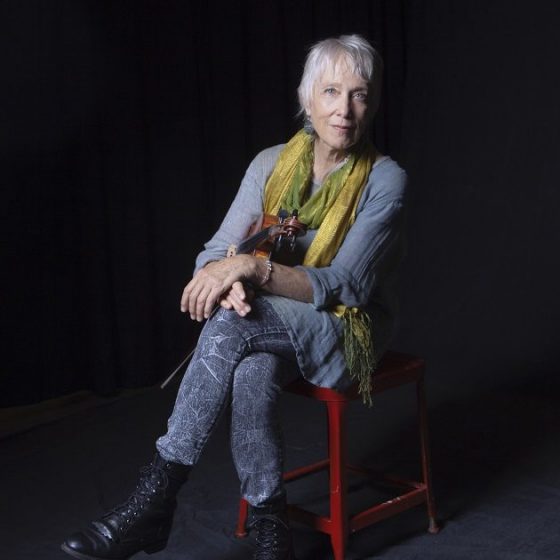
May went by in a blink of an eye (how did this happen!?) and we had to say goodbye to our Artist of the Month, Grammy and IBMA award-winning multi-instrumentalist and songwriter Laurie Lewis. In our two-part May AOTM interview, Lewis gave us insight into the making of her new duet album, and Laurie Lewis, and talks a little bit about wanting to measure up to others’ view that she’s a trailblazer and role model in bluegrass. [Read more]


For First Solo Album, Sam Doores Opens the Map of Musical Influences

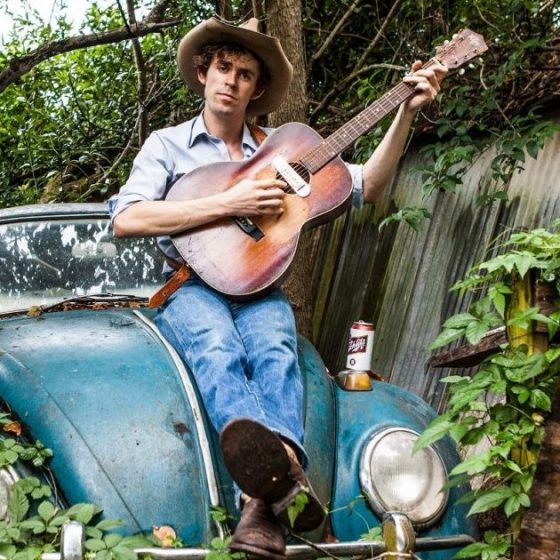
In a meandering feature we follow singer/songwriter and lifelong troubadour Sam Doores from the Bay Area to New Orleans to Berlin to his first solo album, which is filled with echoes of everything from Tin Pan Alley to the Mississippi hill country, from jazz to psychedelic-folk-rock. The Hurray for the Riff Raff alumnus has co-created some of the last decade’s most arresting socially-conscious anthems with HFTRR, and he’s also made sparkling folk- and country-derived excursions with his own band, the Deslondes. [Read more]


The Ebony Hillbillies: Becoming Part of the Music

In 2017, Henrique Prince and Gloria Thomas Gassaway — of the legendary and long-running New York-based, Black string band, the Ebony Hillbillies — gave us an excellent primer on how Black folks ostensibly invented bluegrass music. We could all use a reminder of this fact, given how Black contributions to old-time, bluegrass, and string band musics are more often than not erased — and this true, more fleshed out narrative enables us, the roots music community, to unabashedly lift up Black stories and Black lives in full voice at this current moment of crisis. [Read the interview]


7 Bluegrass Family Bands You Need to Know

Bluegrass Bands

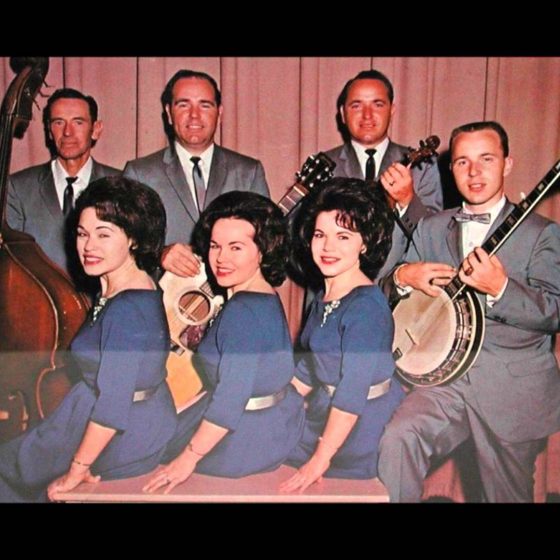
From the Monroe Brothers and the Stanley Brothers to Cherryholmes and Flatt Lonesome, the matching outfits, tight harmonies, and long-lasting careers of family bands are an integral part of what makes bluegrass bluegrass. Here are a few lesser-known, underrated, or too-often-forgotten family bands that you ought to spend some quality time with — a classic from the BGS archives. [See the list]


Canon Fodder: Tracy Chapman, Tracy Chapman

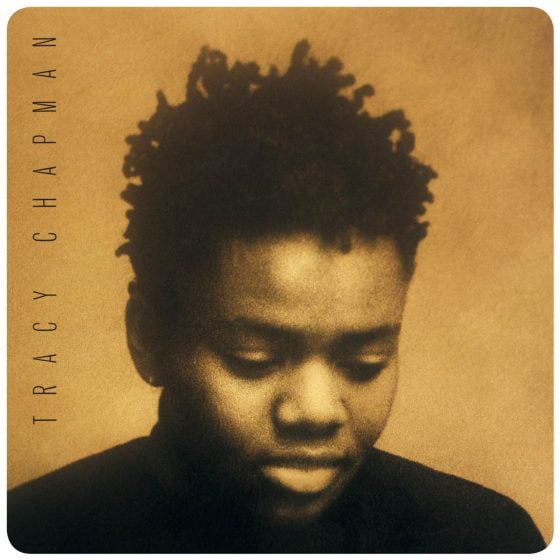
Tracy Chapman’s music is ceaselessly relevant, it’s true. Still, her self-titled, 1988 album has a much more broad, eclectic musical palette than we often give it credit for. Its themes surrounding her Blackness continue to distinguish her from her peers and most common comparisons, demanding a more nuanced approach to considering the ongoing impact of Tracy Chapman. [Read our archived edition of Canon Fodder]


For First Solo Album, Sam Doores Opens the Map of Musical Influences

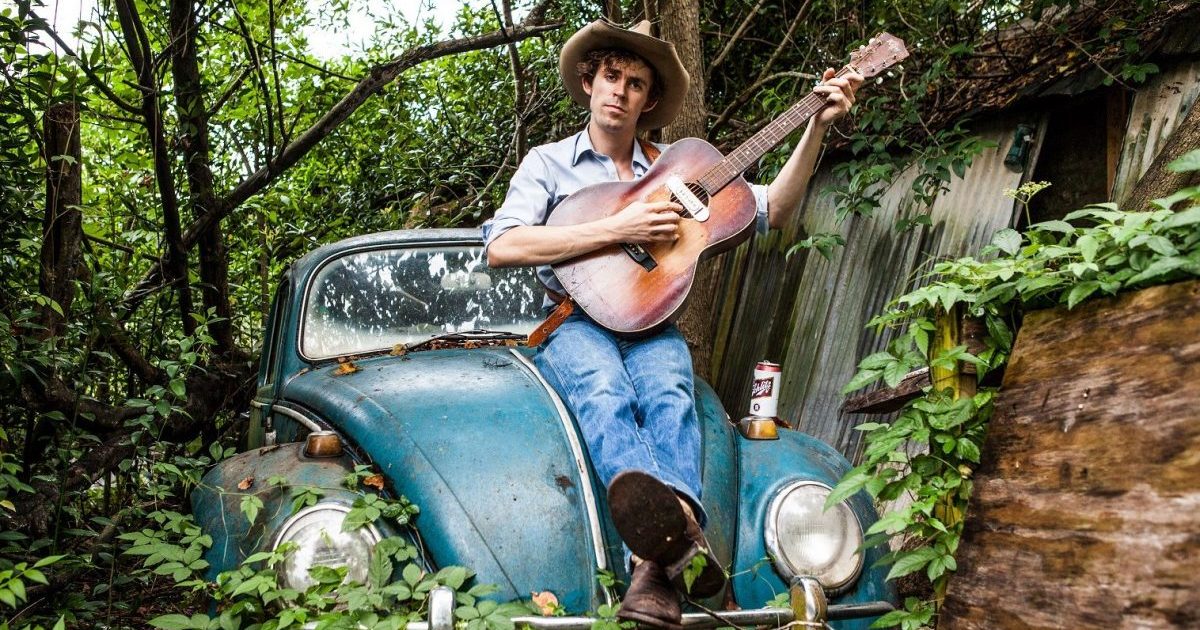
Sam Doores cut his teeth as a Bay Area-born teen troubadour busking around the U.S. before he got his first real break with a steady gig at an Irish pub in New Orleans. In that same city he co-created some of the last decade’s most arresting socially-conscious anthems with Hurray for the Riff Raff and made sparkling folk- and country-derived excursions with his own band, the Deslondes.

And now he’s got his first solo album, Sam Doores, recorded primarily in Berlin and filled with echoes of everything from Tin Pan Alley to the Mississippi hill country, from French Quarter jazz to California psychedelic-folk-rock.

So, let’s talk about Cambodian rock ’n’ roll. “Cambodian Rock n’ Roll” is, in fact, the title of one of the songs on the album.

“No one’s asked me about that!” he says, excitedly, on the phone from New Orleans, where he’s lived now for 14 years. “Do you know the compilation, Cambodian Rocks?”

It’s a 1996 collection of recordings made by a wealth of artists in Cambodia who embraced American surf, garage-rock and psychedelic styles and gave them scintillating Southeast Asian twists, before the brutal reign of the Khmer Rouge, in which many of those performers were killed or imprisoned.

“A friend played it for me one time on a road trip and I fell in love with the style and sound,” he says, adding that he then watched Never Forget, a documentary about that time. “So heartbreaking, and after watching it the music hits on a deeper level.”

Now to be clear, the song doesn’t sound like Cambodian rock ’n’ roll, but rather is a “tip of the cap” to it, in a somber reminiscence about listening to it with the friend who introduced him to that music. The songs on Sam Doores aren’t tinged with that tragedy, yet there is a wistful, muted melancholy and sadness throughout. “There’s some darkness, for sure,” he says.

Well, there’s going to be. It’s a breakup record, after all, largely coming from the end of a long-term relationship. The album explores various shades of that darkness, of unsettling loss and longing. There’s often light shining through, with residual and resurgent hope and joy. To some extent it all comes together, brutally, midway through the album with the song “Had a Dream,” born out of two losses that happened in his life over the four years in which the material on the album came together.

“That came to me when I knew I was losing someone who had been one of the closest people in my whole life, and I knew I wasn’t going to be able to get that person back,” he says. “And a friend of mine was dying. It’s about eventual letting go. For a long time I thought my friend was going to pull through, beat his sickness, and I thought I was not going to lose my love. Both ended up getting lost. I wrote about that time. Wanted the music to have the frantic, desperate feeling on the verses, but also the melancholy of the choruses.”

The sensibilities tie together seemingly disparate emotions, and disparate musical tones. On one end is the upbeat, generous and genuine “Wish You Well,” one of several songs featuring members of Tuba Skinny, a leader of a vibrant wave of young bands enlivening traditional New Orleans jazz. On the other, the very downcast acoustic guitar “Red Leaf Rag,” evoking a “dark dream world” that he says really should have been called a “drag” rather than a “rag,” or maybe a “dirge.” It’s all no less a factor on songs occupying the middle ground, including “Other Side of Town,” co-written with and featuring lead vocals of Doores’ longtime musical partner, Hurray for the Riff Raff’s dynamic leader, Alynda Segarra.

They also tie together, or perhaps are tied together by, the two cities in which the songs were shaped: New Orleans and Berlin. In many ways the album is the story of his 14 years in the former, having arrived when he was just 19.

“I was hitchhiking on my way [here] when Hurricane Katrina hit [in August 2005] and ended up in Austin for a while” he says. “Met some New Orleans musicians who had relocated there and they talked me into coming to JazzFest in 2006. I felt like I’d left the country. By far the most exciting place I’d been. Been to Havana, Cuba, once before. My high school jazz band went there. Reminded me more of that than anywhere. Was just going to be here one weekend.”

New Orleans has a way of changing people’s plans. That first day he stumbled upon an unannounced small-stage set by Elvis Costello and Allen Toussaint warming up for their later big-stage show, and later saw the incredibly powerful performance in which Bruce Springsteen debuted his folky, New Orleans-esque Seeger Sessions Band, a show that had tens of thousands in the devastated city shedding tears of both sorrow and hope — and turned Doores from a Bruce doubter to a fan. He also had his first encounter with the colorful, beaded-and-feathered Mardi Gras Indian troupes, and he was smitten with it all.

“It totally felt like the beginning of the rest of my life that day,” he says.

Having spent all of his money, he went to busk on Bourbon Street, the owner of the now-gone Kelly’s Irish pub saw him and hired him for a regular gig. “He said, ‘Want to try your luck on a real stage?’” Doores says. “I thought, ‘Wow! Playing inside?’”

Soon he met Segarra and formed a musical partnership that evolved into Hurray for the Riff Raff. As that band took off, he launched the Deslondes (named after the street on which he was living) as a second creative outlet. Through it all, the love and loss captured in Sam Doores took place.

It was in Berlin that he found the environment in which he could shape that into the album; that took place over the course of four years in a studio built by producer Anders Christopherson.

“I actually didn’t know Anders until we started recording,” he says. “He wrote me and Alynda one time out of the blue. Had heard a record of a band we were in together, Sundown Songs. Wrote and said if you are ever coming through Berlin I’d love to record you.”

Not long after, as it happened, the Deslondes were doing the band’s first European tour, so he arranged to spend a week in Berlin and by the end of that time he determined to make a full record there, though it would have to be done in four different stretches over several years. Christopherson put together a “house” band to bring Doores’ ideas to life, primarily himself and a Spanish keyboardist named, yes, Carlos Santana. A lot of experimentation happened with combinations of instruments — vibes, autoharp, an electronic “disc” organ, glockenspiel, and so on. And realizing Doores’ long-standing ambition, strings were added to some songs in arrangements by Manon Parent.

Somehow, it all works as an integrated whole.

“I think there are some core instruments we tended to use in the arrangements that sonically thread the record together,” he says. “In terms of influences, a lot of different tones. Some old New Orleans R&B, some of the opposite — psychedelic folk experimental soundtrack music.”

In some places it might remind of the “vintage” touches associated with such figures as Harry Nilsson and Van Dyke Parks. Doores loves those comparisons, then observes, “We listened to a lot of Nina Simone and early reggae — a lot of Upsetters, early Studio One stuff, early Wailers. Anders has an incredible record collection. Wherever we weren’t recording, we were in his kitchen listening to that stuff. We didn’t do any straight up reggae, but it influenced us in some ways, the bass lines and the organ.”

That was just part of the musical and personal oasis he found there, a space that let him find the full expression for his New Orleans stories. The importance of that is so profound that he wrote an instrumental impression of that environment, “Tempelhofer Dawn,” a gentle, muted, nostalgic waltz — and ultimately chose it to open the album, to serve as a curtain-raiser on the song cycle that follows.

“Tempelhofer is the name of the street the studio is on,” he says. “A lot of moments after late nights going out, or early mornings waking up, I spent a lot of time there with the birds or children playing and that gave a feeling that matched the song.”

He recorded it live in studio, with himself on piano joined by Santana on organ and Parent and Mia Bodet on violins. “It’s a nice way to ease into the record,” he says.

In many ways, given the breakup at the heart of the album, it sounds like both a beginning and an ending.

“It felt like the first track,” he says. “Or the last track.”


Photo credit: Sarrah Danzinger