BGS 5+5: Boo Ray

Name: Boo Ray
Hometown: Western Mountains of North Carolina
Latest album: Sea of Lights
Personal nicknames (or rejected band names): “During the few-years span that I just couldn’t seem to stay out of jail, the other incarcerated guys that I gambled with on Spades and Tonk called me ‘Boot-a-rang.’ I didn’t ever bother to correct ‘em. In grade school, my very first band was also called Rhythm & Booze; it was a 4 piece band and Marshall Tucker’s “Can’t You See” was a feature of our set.”

What other art forms — literature, film, dance, painting, etc — inform your music?

Ahh that’s a cool question… Well, it might could be that Southern writers like Harry Crews, Ron Rash, and Mark Twain make me think it’s important to have a writing voice, and that there’s something powerful and magic about the just right combination of words used to tell the truth of our human experience.

I knew this guy everybody called Mr. Jack that ran a sawmill-–an old V-Twin Harley motor bolted to a 12″x12″ post frame and a great big 15-foot 2″ bandsaw blade that pitched and twisted so wildly when it ran that it just seemed impossible it could have ever made a straight cut. But it did cut 18-foot-long, perfectly straight slices off the huge logs he used to run through that mill. He’d cut some 1/4″ thin cedar for me to use as lining on chests. The way Mr. Jack cussed at and about his sawmill, the logs, the lumber and his equipment, expressed his passionate care, deep affection, forgiving humor and humble mastery of his industry. I suppose my affection for the way Mr. Jack carried on about his sawmill might be responsible for my cussin’.

My great buddy, artist James Willis, is constantly teaching me about perspective and how to use detail and lack of detail as creative storytelling devices. Sean Brock’s amazing passion, depth of knowledge, agrarian approach, his wood coal cooking and his completely inclusive use of information, style, technique, perspective and philosophy, have certainly influenced me.

If you had to write a mission statement for your career, what would it be?

The point of the spear is compassion, inspiration and empowerment. I’m compelled to express to my fellow man that the troubles of life are not for nothing. The singer-songwriters that have moved me the most write songs that are part of the classic American songbook. So the purpose of my endeavor as a singer-songwriter is to land some songs, or a song, in the classic American songbook, whatever that is. I think that songbook includes songs by Lowell George, Leon Russell, John Hiatt and Fiona Apple. My favorite Grateful Dead record is the one that Lowell George produced, Shakedown Street. The word “Pop” ain’t necessarily blasphemy to me, unless it’s in front of the word “country”…

After writing the songs my mission is to perform the songs with my badass guitar-slingin’ band and build a dynamic, powerful and unique live sound around the character and nature of each of the songs. Live performance is more important to me than recording records, but I use the records as templates, stylistically, and to suggest possible arrangements. For me, the style itself demands that the records are exciting soundscapes, and experimental in the recording and engineering. If my records sound like someone else I’ve fallen short.

For me the singer-songwriter/guitar band-sound bar is set by acts like: Tom Petty and the Heartbreakers, Little Feat, ZZ Top, Marty Stuart & His Fabulous Superlatives, any of John Hiatt’s bands (from The Goners and Little Village to his Trio), and Jason Isbell & The 400 Unit. So what’s my mission statement? I want to be Jerry Reed.

Boo Ray & Sean Brock

Which elements of nature do you spend the most time with and how do those impact your work?

I don’t spend enough time on/in the water lately. As a kid, I was at the river every week and in the woods all summer long. Sunrises and sunsets are important to me. I really tried to get up to my buddy Sean Minor’s for spring branding and spend some time roping, riding and working cattle this year, but had shows and sessions I couldn’t get out of. I like to do tractor work, eat homegrown tomatoes, negotiate the price of a late ’50s step-side GMC truck or dispute the shape of the taillights on a ’68 Chevelle while cracking pecans against each other, and get caught in a torrential downpour and soaked to the bone after doing some farm work.

Since food and music go so well together, what is your dream pairing of a meal and a musician?

Agreed, and I totally dig a supper club-type show. How about Sean Brock doing some kind of Low Country spread with Ossabaw pork sock-sausage, rice peas, Geechie Boy Grits with a fresh catch, and some kind summer vegetables, with Billy Gibbons giving his take on Hill Country Blues. Billy and Sean are both great historians, passionate technicians and intuitive as hell. That’d be the dream pairing.

How often do you hide behind a character in a song or use “you” when it’s actually “me”?

The artists I like definitely seem to have character-driven numbers in their repertoire: Tom Petty’s “Break Down” and “American Girl,” Eddie Rabbitt’s “I Love a Rainy Night,” and Don Williams “Tulsa Time,” written by Danny Flowers. Those kind of songs hold you up as a performer and don’t require you to emote and be so intimate, at least for three or four minutes at a time anyways. Sometimes I might jokingly introduce “Redneck Rock & Roll” as a song that I wrote first-person as Kenny Powers. But I certainly do keep a few of those songs in my set: “I Got the Jug,” “Johnny’s Tavern,” “Six Weeks in  Motel”, even “Sea of Lights” is that way now, most of the time. There’ve been a few times that singing “Sea of Lights” made me involuntarily weep and cry…

On the “you”/”me’ thing; I saw this Mary J. Blige performance once, she was singing this devastated lovesick number and my heart was just broken for her, you know? Then in the last chorus, nothing left but ashes and pain, she flips the script on the “you”/”me” switch and starts singing “bye bye” and waving as she left, and I realized she was singing my blues, and she was the one that was leaving. I was leveled. It was like a damned magic trick she’d just performed. I’ve tried variations of that writing device in my songs “Constantina,” “Six Weeks in a Motel,” and the “Hard to Tell” collab with Lilly Winwood all have a moment where they pivot or twist like that a little bit.


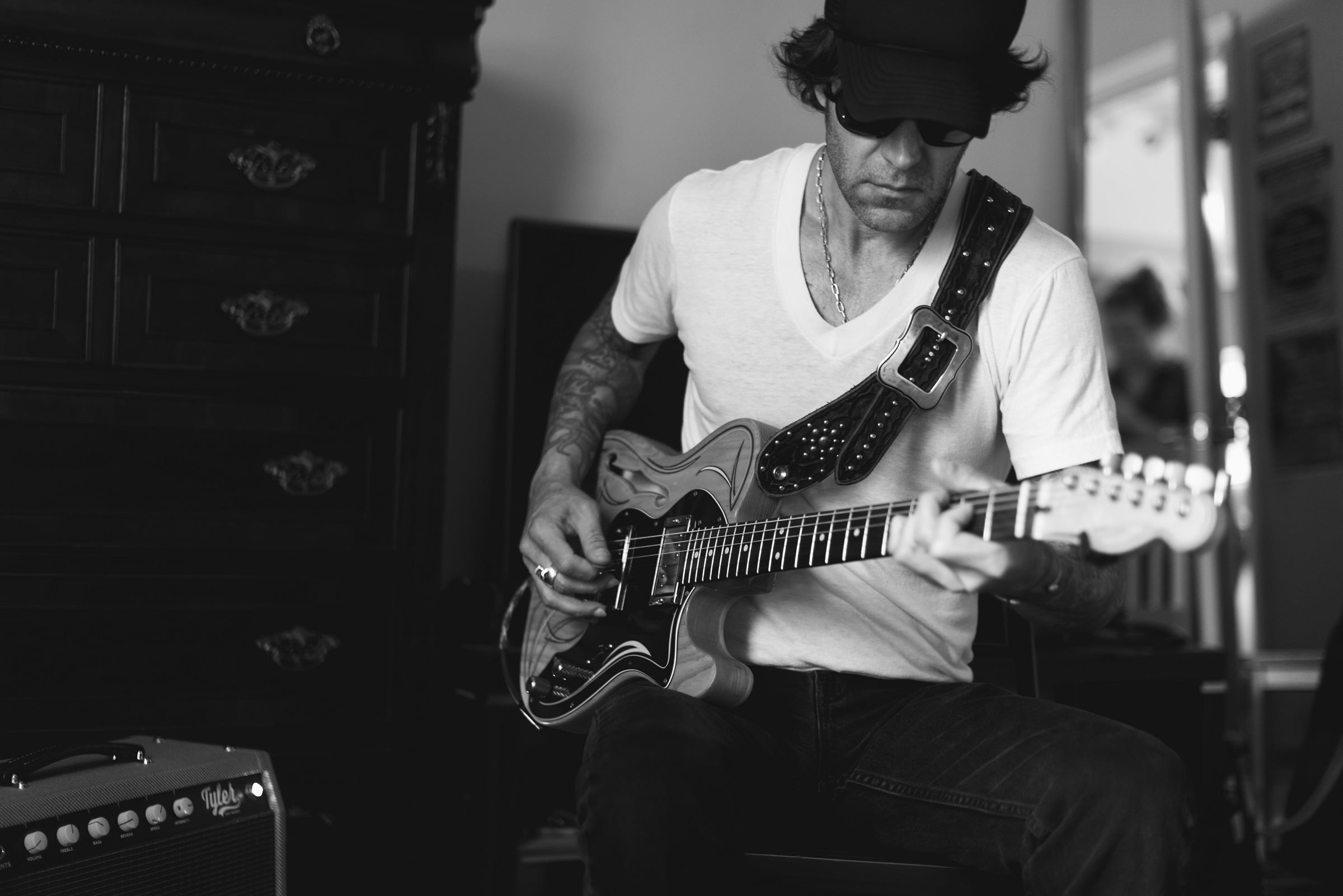
Photo of Boo Ray: Courtesy of Sideways Media
Photo of Boo Ray with Sean Brock: Price Harrison
3×3: Christian Lopez on Marty Stuart, Levon Helm, and Forrest Gump

Artist: Christian Lopez
Hometown: Martinsburg, WV
Latest Album: Red Arrow
Rejected Band Names: The Lix and Joe Taxi


Thanks for putting me up, @sourpatchkids! #HollywoodPatch #Sponsored

A post shared by Christian Lopez (@clopezmusic) on

What’s the best concert you’ve ever attended?

I was booked as the opener for Marty Stuart & His Fabulous Superlatives for a few dates and, honestly, his show blew me away. Greatest show I’ve ever seen in every aspect: musically, visually, and performance.

How many unread emails or texts currently fill your inbox?

Emails: 42,703. I need to work on my digital organization. Texts: 0

How many pillows do you sleep with?

Two, tops. Depends on if I’m alone or not.

How many pairs of shoes do you own?

Around 18 pairs. This is rock ‘n’ roll.

If you were going to buy a famous musician’s pair of dirty socks off of eBay, whose would you buy?

Levon Helm, without a doubt.

What’s your favorite vegetable?

Brussel Sprouts

Fate or free will?

Like Forrest Gump once said, “A little bit of both.”

Sweet or sour?

Sweet AND sour, if I can get it. Sweet, if I had to pick though.

Sunrise or sunset?

Sunrise. I’ve driven the band through the night many times and watching the sunrise is a sacred experience. Plus, I’m a morning person.


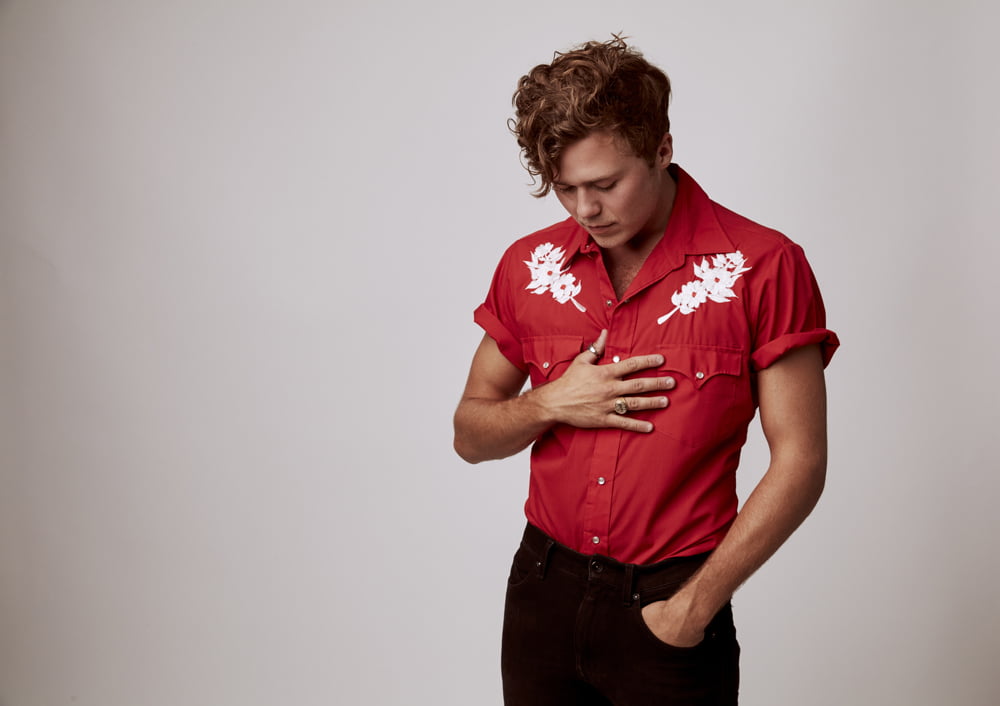
Photo credit: Robby Klein

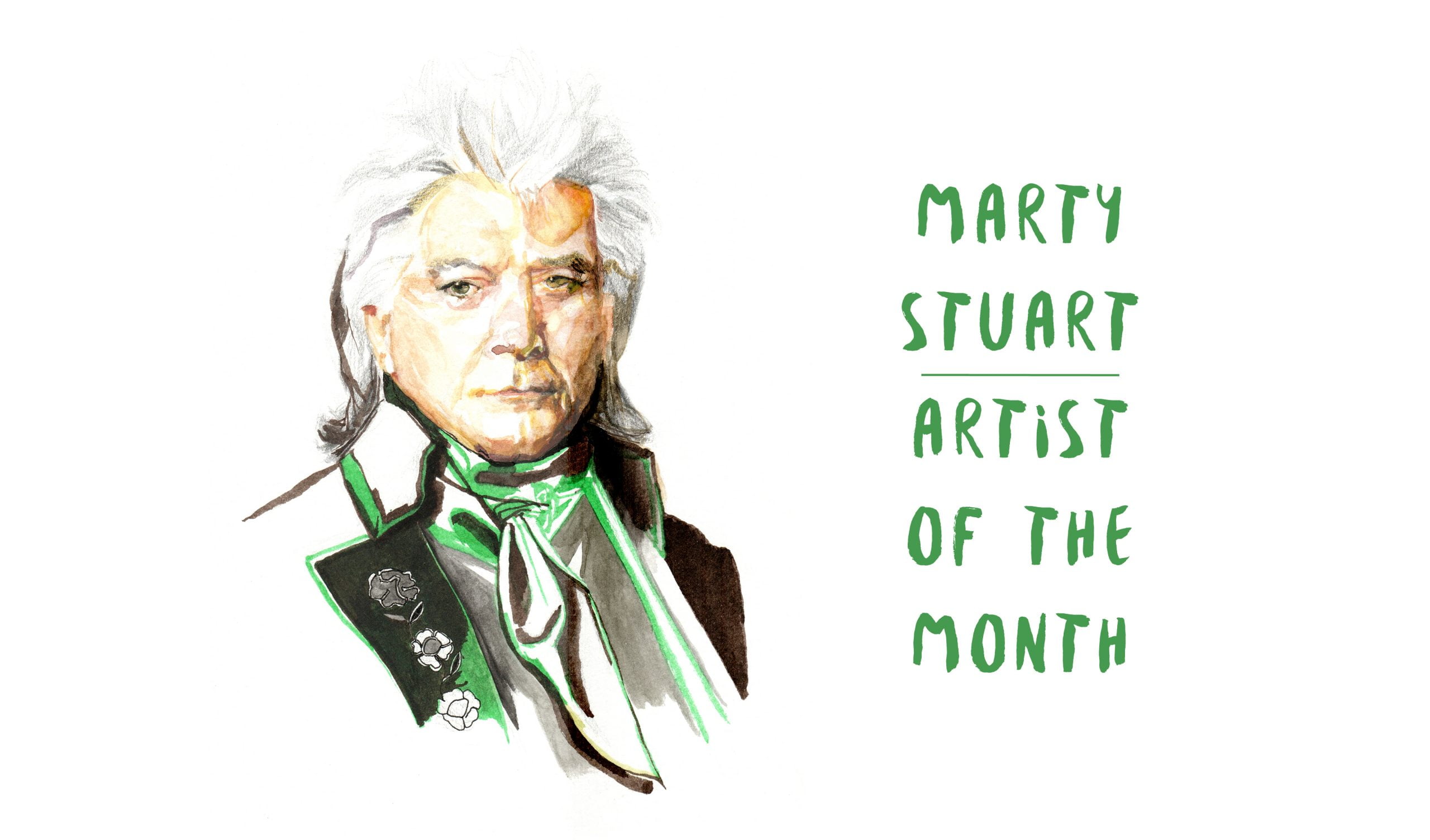
Marty Stuart: Surfing the Desert Waves

Marty Stuart’s catalog reads like an ode to the American landscape, even if that reverence arises more through sound than song title. “You’re talking to somebody who will build around a tree instead of cut it down,” Stuart says about his regard and wonder for nature. “I’ve built decks and porches around them just so they could keep living.” Ever since the early days of hillbilly music, country has been rooted in rural terrains so, for a musician with an inclination toward tradition, Stuart doesn’t have to look any further than the songs themselves to channel the land that shaped them.

His projects call — sometimes subtly, others overtly — to different regions. The styles he has worked to both preserve and play with house geographies as diverse as his native Delta, the rugged Badlands, and now the psychedelic California wilderness. His new album, Way Out West, recorded with longtime band His Fabulous Superlatives, pays homage to the rugged West — to the myths, legends, and lore hovering over that arid atmosphere. “The desert’s a funny place,” he says. To reflect that quirk, Stuart blended the twangy surf rock riffs of the California coast with the shimmering sustain of the wavering desert horizon. He calls the resulting mish-mash “hillbilly surfband” music.

While Stuart holds musical traditions in high regard, he has never treated them as fragile things liable to break at the slightest hint of playfulness. But even he wasn’t sure what to make of the sound he and the Superlatives were fusing together for what would become Way Out West, until he realized every reference fed back into country’s winding history. “If I go back and listen to recordings from the 1960s, and I hear what the Shadows and the Ventures were doing, or Merle Haggard or Buck Owens and the Buckaroos — the kind of instrumentals they were playing — I think everybody was listening to everybody back then,” he explains. “Basically, it was all Fender guitar-driven, twangy music.”

Setting that twang in the Mojave Desert culminated from two earlier projects. First came film: Billy Bob Thornton approached Stuart about scoring All the Pretty Horses (2000), which opened him up to music’s visual properties in an entirely new way. “I learned more about making cinematic songs come to life when we were doing that film,” he says. “I actually called upon Kristen Wilkinson, who was the arranger — we scored that film together — so anytime you hear an orchestral part in [Way Out West], that’s Kris Wilkinson.” Then came his 2006 album Badlands: Ballads of the Lakota. A particular field recording he made for that project stood out and provided the entry point for his new album. “I thought about this prayer that Everett Helper sang and played on his drums. Between that and a sitar and just combining all those sounds, all of a sudden [Way Out West] became a different record.”

Stuart & His Fabulous Superlatives tap into the West’s living spirit — as well as the spirits that have shaped it — from the very start. “Desert Prayer 1” opens Way Out West and epitomizes the blended compositions that follow. Wind howling across the desert floor gives way to a psychedelic guitar calling, as if from the horizon, and eventually segues into Native American drumbeats and chanting. “I wanted the listener to reach out and take my hand at the edge of the Mojave Desert, and I wanted to take them on a cosmic, twangified trip through the desert,” he says. The desert, like his hometown Delta, may seem like “thousands of acres of nothing,” according to Stuart, but he knows there’s a presence in all that supposed absence. “If it’s pitch black and you can’t see anything except what’s in front of you, you start hearing things,” he says. “I’ve done this. I hear things and see things that really aren’t there.” If that sounds like the makings of a Hunter S. Thompson adventure, Stuart insists he’s been “stone cold sober” when such moments have occurred. “There’s a whole spirit world dancing around in those places, and I wanted to tap into that in Way Out West,” he says.

Working with producer and guitarist Mike Campbell (Tom Petty and the Heartbreakers), who Stuart has long admired for his “band” ear, he let the songs breathe. Instrumentals like “Mojave” and instructives like “Time Don’t Wait” reflect the desert’s wide open expanse through their instrumentation and, more importantly, their arrangement. Space is a subject close to Stuart’s heart. “I heard a statistic the other day where there are generally 88 people a day moving into Nashville,” he says, balking at the drain that puts on the natural world. “They keep selling pastures and building houses on what used to be beautiful farmland.” Having recently visited London and New York, he worries about their size and the kind of toll that takes on the earth. What happens to Nashville if it grows in that direction? “As citizens, we have a responsibility to care for what’s in front of us, and we don’t do that very well sometimes, in general, as a people,” he admits.

As much as Way Out West is a love letter to the desert landscape and the music personifying it, it’s also a reminder. Stuart didn’t write a political album, but the timeliness of its arrival takes on greater significance in the current political light. With Donald Trump and his administration proposing budget cuts that would not only affect, but in some cases decimate, departments and programs established to protect the country’s more majestic manifestations, Stuart’s album, in some ways, feels like a panegyric. He brings listeners closer to the grandeur and, in turn, the importance of the land by bringing it to life track after track. “When I walk out into the desert and come in front of a saguaro cactus that’s been there for who knows how long, I respect it because I know that I’m in the presence of something that belongs there and I’m just a visitor,” he says. “I do that everywhere I go. I try to honor the land.” Stuart recalls his deep friendship with illustrator Thomas B. Allen, who drew several album covers for Lester Flatt and Earl Scruggs, and the important lesson Allen taught him. “He was one of my favorite people in this world that I’ve ever known. He said, ‘It’s important, as an artist, to keep something in front of you that knows more about you than you know about it. That keeps you honest, and it keeps you digging.’”

Alongside songs dealing with the natural wonder of the land — in melody, if not always in lyric — Stuart also includes a sonic tip of the hat to truck drivers. “Whole Lotta Highway (With a Million Miles to Go)” finds him waxing poetic about a blue-collar character as much a part of the American landscape’s fabric as the land itself. But with automation threatening to replace so many workers, killing some 1.7 million jobs over the course of the next decade, Stuart’s salute could one day become an artifact detailing a way of life thrown over by industrialization’s endless march forward, like the Carolina Tar Heels’ “Peg and Awl.” “I keep hearing and seeing speculation about driverless cars,” Stuart says. “It’ll be the same thing: There are driverless trains already. Truck drivers are, in my opinion, old American folk heroes. They’re the last of the concrete cowboys and they shouldn’t be forgotten. It’s not an easy job they chose.” The chatter about losing jobs to automation isn’t one to be taken lightly. “You can already say that about a caboose on a train,” he says. “The trains I knew as a kid, they had a red caboose at the end and a guy that sat up in the caboose and took care of business from that perspective. We can already say, ‘I remember the caboose on the train.’ Trucks should be concerned.”

For a historian interested in preserving musical traditions and honoring the past, Stuart’s music encapsulates the landscapes and characters that comprise the American experience. Blurring country, rockabilly, psychedelic rock, and surfer rock into some unruly thing, Stuart & His Fabulous Superlatives have painted a golden- and amber-hued picture of the Wild West. At the end of the day, though, he only cares about music that means something. “I’m addicted to creating, and I’m addicted to projects that matter and say something,” he says. “The hardest thing in this world — I could write songs all day long — but songs that matter, songs that reach out and touch somebody’s heart? I never know when they’re going to come, but I always keep my radar ready for them.”


Lede illustration by Cat Ferraz.

Watch Rad ’80s Bluegrass Documentary ‘That’s Bluegrass’

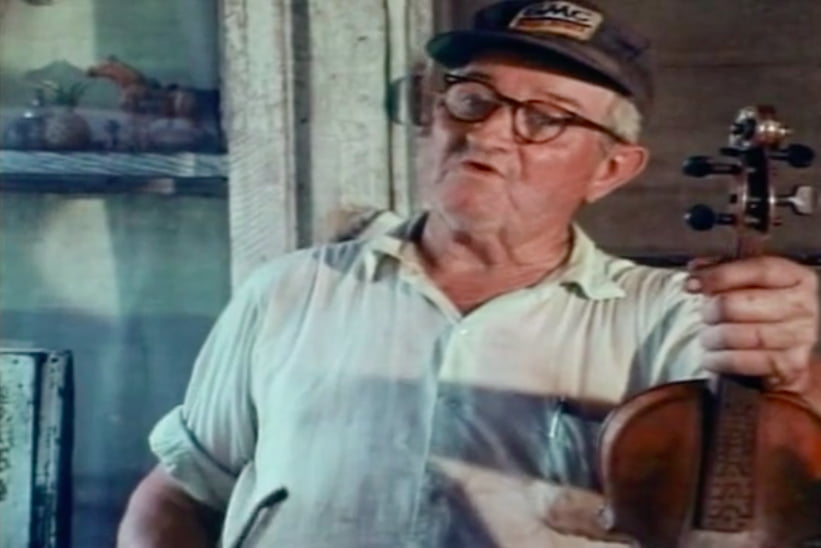
There's nothing quite like a great, vintage documentary. And one about bluegrass? Well, that's documentary gold, in our opinion. So we were pretty excited to find That's Bluegrass, a late '70s/early '80s documentary that explores the genre's front porch origins and features footage of Jimmy Martin, Ralph Stanley, Lester Flatt, and more.

Director John G. Thomas captures the landscape — physically, in beautiful shots of Appalachia, and spirtitually, by showing the deep roots of the genre's community — through 53 minutes of live performances, candid interviews, and behind-the-scenes footage. Highlights include a young Marty Stuart playing mandolin for Lester Flatt, some insider scoop on Earl Scruggs wanting to hire a guy named "Bill" (that's Monroe, for those of you playing along at home), and footage of Dr. Ralph Stanley, now 88, back in his younger years. Performances include "Foggy Mountain Breakdown" and "The Ballad of Jed Clampett," the latter of which you likely recognize from the classic television show The Beverly Hillbillies

It's so good that Rhonda Vincent herself stumbled upon it, posting a link to Facebook and citing one of the film's best moments — Lester Flatt singing the theme song for Martha White baking products. The documentary also contains the last filmed interview with Flatt before his 1979 death from heart failure at the age of 64.

Check out the trailer and watch That's Bluegrass in its entirety over at Vimeo — a couple bucks if you want to rent it, a few more if you'd like to make it yours forever.

That's Bluegrass from Echelon Studios on Vimeo.

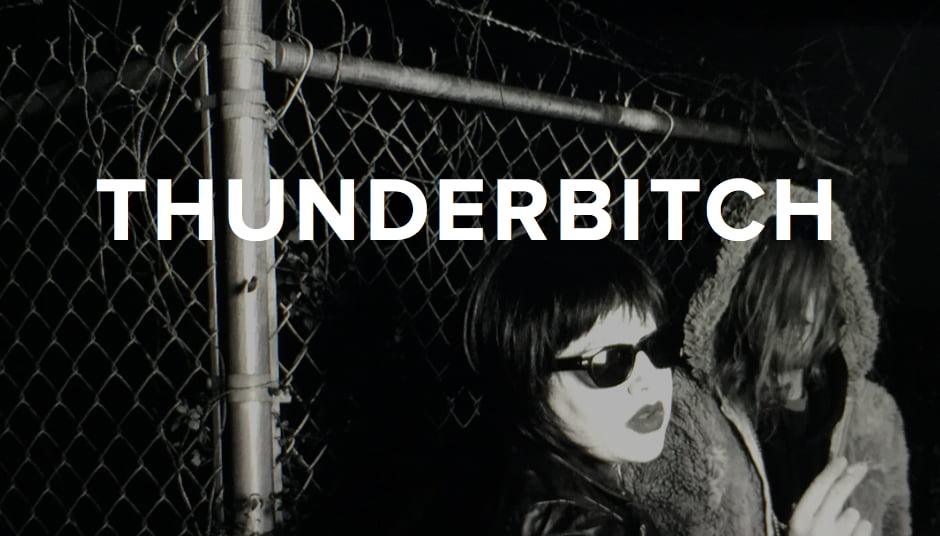
Listen to Brittany Howard’s Debut as Thunderbitch

In case you missed it, Alabama Shakes frontwoman Brittany Howard surprised us all when she dropped the debut album from her new project Thunderbitch. Featuring members of Clear Plastic Masks and Fly Golden Eagle, Thunderbitch is, as the band's bio describes, "Rock and Roll. The end." 

Stream their album at the awesomely named thundabetch.com (you can also purchase your very own copy, should you feel so inclined). You're welcome!

Other Roots Music News:

• Be part of Bela and Abby's banjo mosaic

• Kelly Clarkson performed a pretty stellar cover of "Jolene."

Rolling Stone looks back at Marty Stuart's Badlands

• Jim Lauderdale announced the double album Soul Searching, Vol. 1 (Memphis) and Vol. 2 (Nashville)