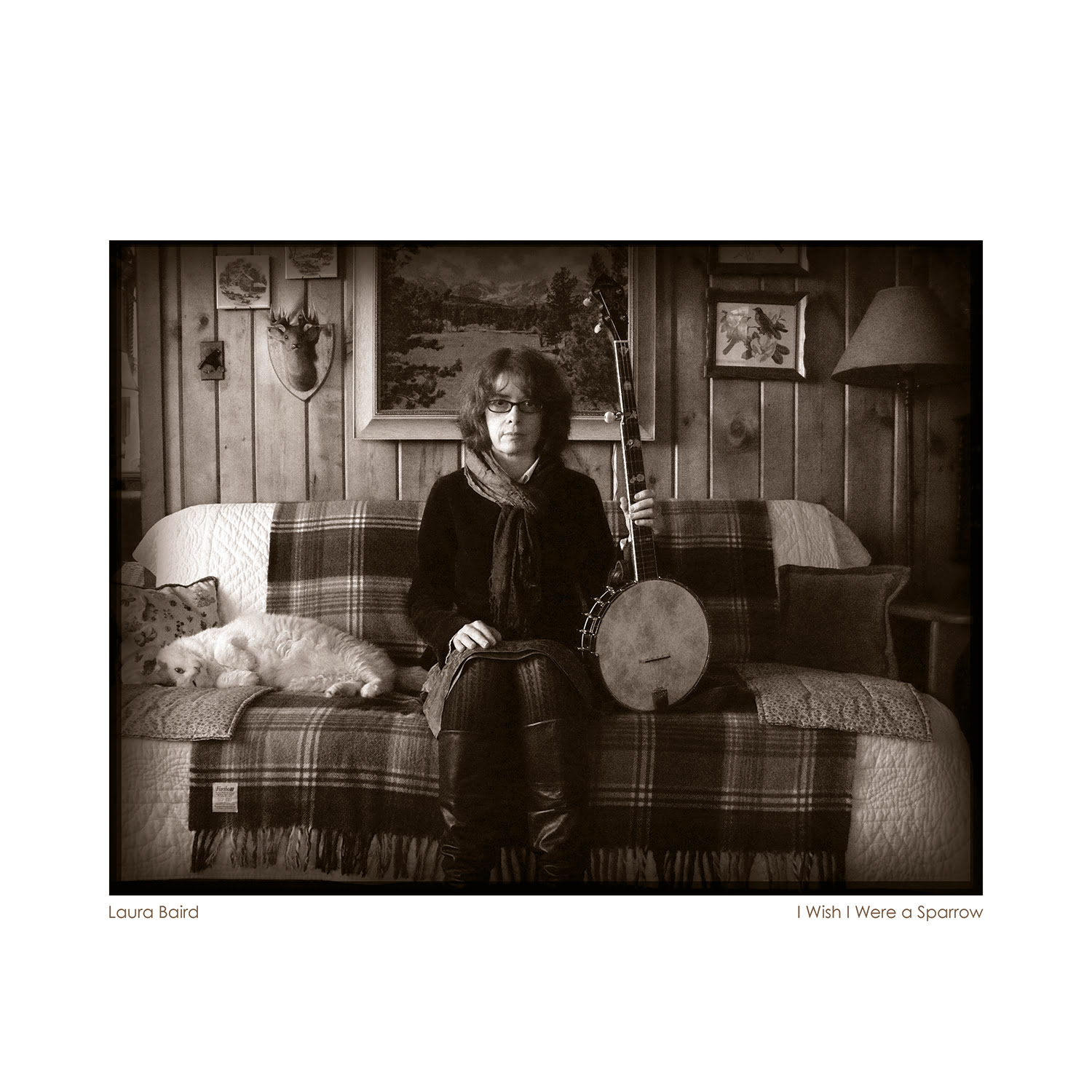
STREAM: Laura Baird, ‘I Wish I Were a Sparrow’

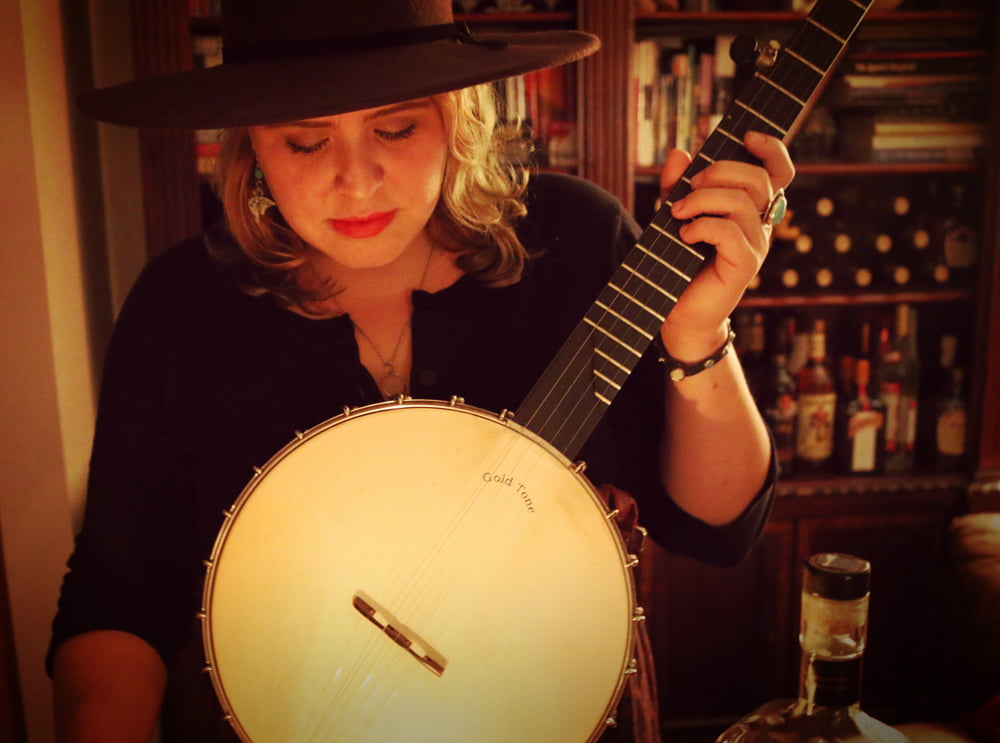
Artist: Laura Baird
Hometown: Philadelphia, PA
Album: I Wish I Were a Sparrow
Release Date: October 20, 2017
Label: Ba Da Bing
In Their Words: “After spending over a decade learning and exploring the banjo, I wanted to document where that journey had taken me. I had been lucky enough to spend some time with some of the best old-time musicians and traditional ballad singers at the Swannanoa Gathering in North Carolina and Allegheny Echoes in West Virginia, and I’ll never forget the joyful feeling of staying up all night playing and listening as one big musical family. I took these experiences and turned them inward, recording alone in an old farmhouse in rural New Jersey. I think of this record as my ode to the banjo and to the old mountain songs.” — Laura Baird


Photo credit: Allen Crawford

From Appalachia with Love: A Conversation with Sam Gleaves and Tyler Hughes

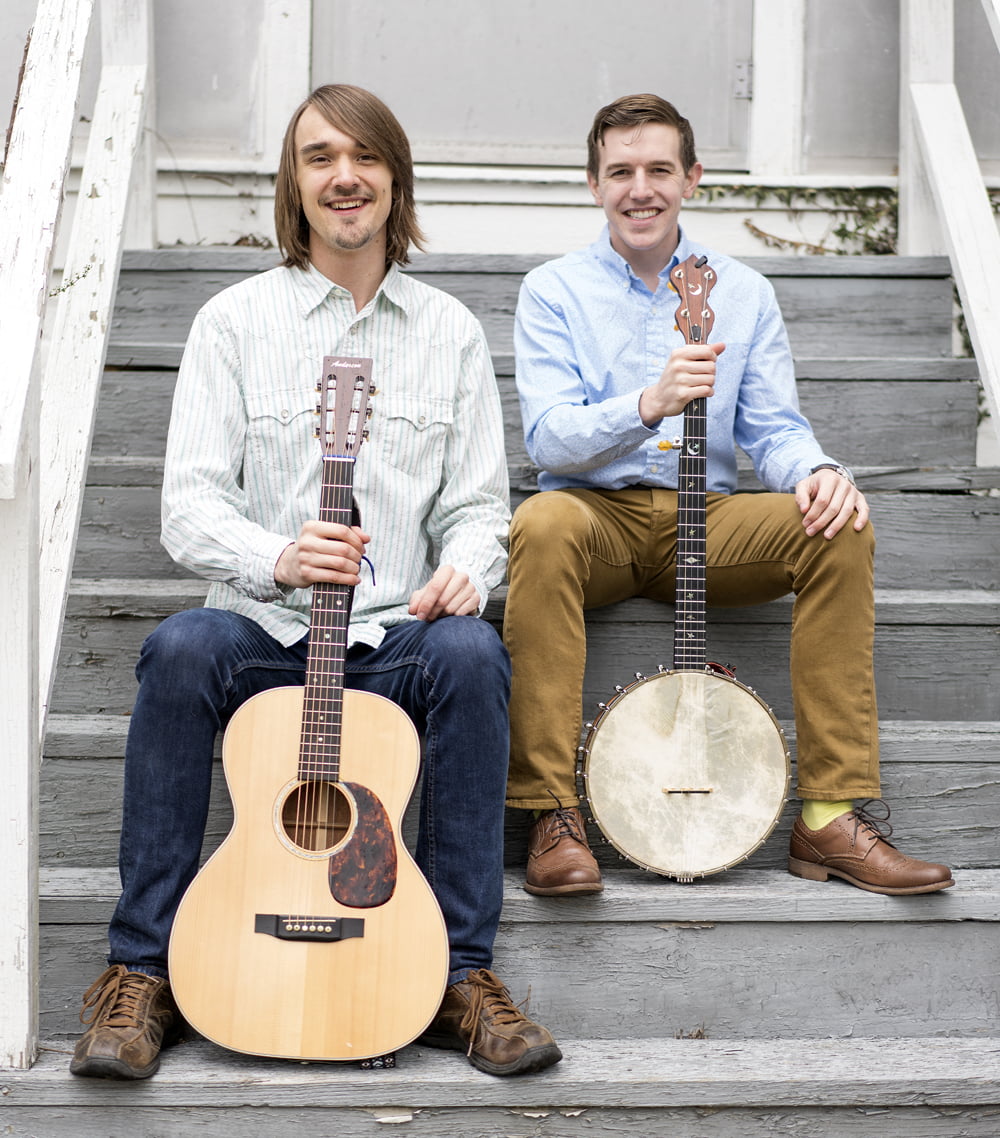
Sam Gleaves and Tyler Hughes are very proud to have grown up in southwestern Virginia, a swathe of Appalachia that birthed the Carter Family, the Stanley Brothers, Jim & Jesse McReynolds, and so many more icons of roots music. Released in June, their self-titled duo album is a collection of old-time, traditional country, and mountain music that, on the surface, feels like an album exhumed from a time capsule of southwest Virginian music from bygone eras. But, when you begin to unpack Sam and Tyler’s perspective — yes, they’re native Virginians steeped in their homeland’s musical heritage, but they’re also young and openly gay — you begin to fully appreciate the subtlety, the thoughtful care, and the love that they’ve put into curating and recording this set of tunes.

Speaking to Sam and Tyler was a welcome reminder that, in a time when phrases like, “middle America,” “silent majority,” and “forgotten middle class,” have become daily buzzwords and when the divisions between urban and rural, rich and poor, right and left are seemingly at their greatest, it’s more important than ever that we have these difficult conversations, that we listen to each other, and that we love one another.

So much of what you guys are doing on the record is simply putting a spotlight on perceptions of and presuppositions about people who come from central Appalachia in general. On “Stockyard Hill,” an original song and the first track on the album, you sing, “I’m proud of the way that I came up …” How did your families inspire this song through watching you grow up in the music and grow up to be who you are, living truly and openly?

Sam Gleaves: I wrote this song based on the words and experiences of my great aunt, Corrine Thompson — my grandmother’s sister. She’s an amazing woman, a real matriarch, a really loving, good presence in my life. I feel like she’s a great example of a really open-minded, intelligent, progressive person from southwest Virginia. She’s a great example of someone who defies a lot of stereotypes about people from central Appalachia. I’ve only ever known her to be loving and accepting of all people. She would think that a lot of the political discourse — this really hateful, divided situation that we have now — is so contrary to who she is as a person, the culture that she comes from, and the culture that I come from.

Tyler Hughes: As far as family influence, I grew up in an average, working/middle-class family. They are real people. I think that’s what influences my music and specifically the music that we put together on this album the most. I come from a strong union family: My grandpa was a union coal miner for over 30 years. My family is much like Sam’s in being very accepting and loving. There’s not really a judgmental side to them. They have a great appreciation for the place we come from, but they also have a wider view of the world beyond just what happens in southwest Virginia. I think that’s what influences me most and what makes me most proud to say that I am from southwest Virginia. Probably the number one thing I want to tell people when I meet them is that I’m from southwest Virginia, because people do have such misconceptions, but there are people out there that don’t fit into these exaggerated beliefs and misconceptions.

SG: I came out when I was in high school and I had a really close community of friends around me between my classmates in school, people that I played music with in the old-time music community, and also my family. When I came out to my family, they all knew other gay people. It wasn’t an unfamiliar or unexpected thing, when I came out. [Laughs] I think my parents gave me permission to be who I am. Not only as a gay man, but as an artist and a human being. A lot of people don’t get that permission from their parents. They never discouraged me from singing professionally, and they never told me my writing wasn’t important, but just the opposite. They wanted me to write and they wanted me to travel, to sing, to get to know musicians.

I definitely have had to think a lot about how I talk about these issues because, when I recorded my first album, Ain’t We Brothers, everyone that interviewed me asked me what it was like to be a gay man living in Kentucky and growing up in southwest Virginia. In rural places all across America, LGBTQ people need a lot of support. There are a lot of needs that aren’t met, in terms of communities not being able to come together and celebrate our identities, and also work for equal rights. There’s a lot of work to be done, but I’ve been very fortunate to have a good, welcoming experience being openly gay, in the old-time community, but also just living in Virginia and Kentucky.

Following on that then … I wonder if either of you considered that this project could potentially be that very permission for a listener? There are a lot of LGBTQ individuals in these spheres — Appalachia, the South, roots music — that aren’t out. Did you think this could be validation for other LGBTQ artists to be out and to lay claim to this music in a more assured way?

TH: I think about that quite often, even just for regular performance, even though we don’t stand on stage and advertise that we are gay musicians — that’s not exactly the shtick of our show. It’s nothing that we try to hide, but it’s not the main focus. I try to keep in mind that, to someone who might be struggling with their identity, it could be a very powerful moment for them to see someone they can relate to doing something that maybe society or someone around them is telling them they can’t do, or that something is only reserved for certain people. Any time that I’m playing music, whether it be working on this record or just being on stage, I think about that. Because I had a similar experience. When I first met other gay musicians, it really empowered me to think about how I could also live an open and full kind of life and still do the thing that I love the most.

As diversity becomes more of a hot-button topic in roots music communities, a lot of bystanders seem to assume that, because more LGBTQ individuals are becoming visible in bluegrass and old-time, we’re coming from the outside in or that we’re “infiltrators” and appropriators of the music. But here you both are, born and bred in this area of Virginia and Appalachia that’s such a hotbed for this music. How do you approach people with this perspective?

SG: I think it’s important that you mentioned that. We love the place that we’re from, but I think we have to acknowledge that there’s a lot of work to be done. I don’t know how else to say it. I see this especially in the bluegrass community, which we’re sort of on the fringes of. We also play old-time country music, which is just a blend of all of these things, so we end up in these environments where genre doesn’t keep us from playing in a wide, wide range of places. We want to represent our communities and the Appalachian region well, but we also have to acknowledge that there are people in these genres of music that do feel that it’s not right for gay people to be out in their performances — like just singing a love song about a same-sex relationship. I’ve never had any negative backlash from anyone at a concert or from any producer or from any person on stage that I’ve ever worked with. I’ve never had anyone say openly, “You shouldn’t sing that song, or you shouldn’t tell that about yourself.” I’ve only ever had like one or two people ever walk out of one of my shows that I knew was because of what I was singing.

I’ve had a lot of conversations about these topics in the past several years and that’s certainly not always the case. Why do you think that is?

TH: I don’t know … luck? [Laughs] No, every audience is different and every situation is different, but the number one thing that I think about, when I first walk out on stage or when I first get to a venue or when I go out to meet an audience after a show, is that, first and foremost, I’m a musician and I’m a performer. I think more about that than anything else. If somebody didn’t want to listen to my music anymore because they suddenly found out that I was gay, it wouldn’t hurt me any more or any less than if they found out that I didn’t like bananas so they didn’t want to listen to my music anymore. To me, it’s their qualm and, even if I feel that it’s a silly thing to let get in the way, they may not. I try to understand that — I would have to disagree with them — but I would at least try to understand their position. I think about the fact that I’m presenting myself more on the level of musician and a performer first. And also just being a person. Being gay is only a tiny sliver of my identity, when it comes to all of the things that make up who I am.

SG: You know, in country music, there’s a tradition and an expectation that performers be friendly, that they engage with audiences. I think that is a big reason why people don’t come up to us and say, in person, “I was upset that you all mentioned the women’s movement before you sang ‘Bread and Roses,” or “I was upset that you wished everyone a happy Pride month.” I think it’s because we really do try to be friendly and welcoming to people. Not that other people who experience discrimination and hatefulness are not being friendly — I’m not saying that. To some degree, what you put out can be what you receive back. We do try to be a part of that tradition of being good to people.

That makes me think of “When We Love” from the record. Tyler, what was it like to write this song and to sing this song while you are faced with this loud, mainstream, idea that a lot of people out there don’t love who you are as a person? How do you espouse this kind of love, when it’s not what everyone else is also putting out into the universe?

TH: I really don’t find it that difficult. That’s not to say that I’m not angry with the situation we find ourselves in or that I don’t get frustrated when there are setbacks. I don’t really know where I align myself religiously on most days, but I do think that, no matter who you’re worshipping or what kind of life mantra you’re following, we are all human and we’re all sharing in the human experience. Part of that, to me, is just loving one another. I still live in a small coal mining town, and I would say that at least a good 70 percent of my friends probably voted for the president. They may not agree with everything he says, but they feel that they are supporters of his. I know them as people and I know they’re not judging me — even if deep down in their hearts they may not really agree with LGBT rights or equality for all people. That’s not a big enough issue for me to let friendships or relationships go. Some of my best friends in the world align themselves with conservative values and conservative movements. It just doesn’t bother me, because I’d want them to look at me in the same way. At the end of the day, we still all need each other. These are differences I can put aside for most people, as long as they put them aside for me.


Photo credit: Susi Lawson

WATCH: Rachel Baiman, ‘I Could’ve Been Your Lover Too’

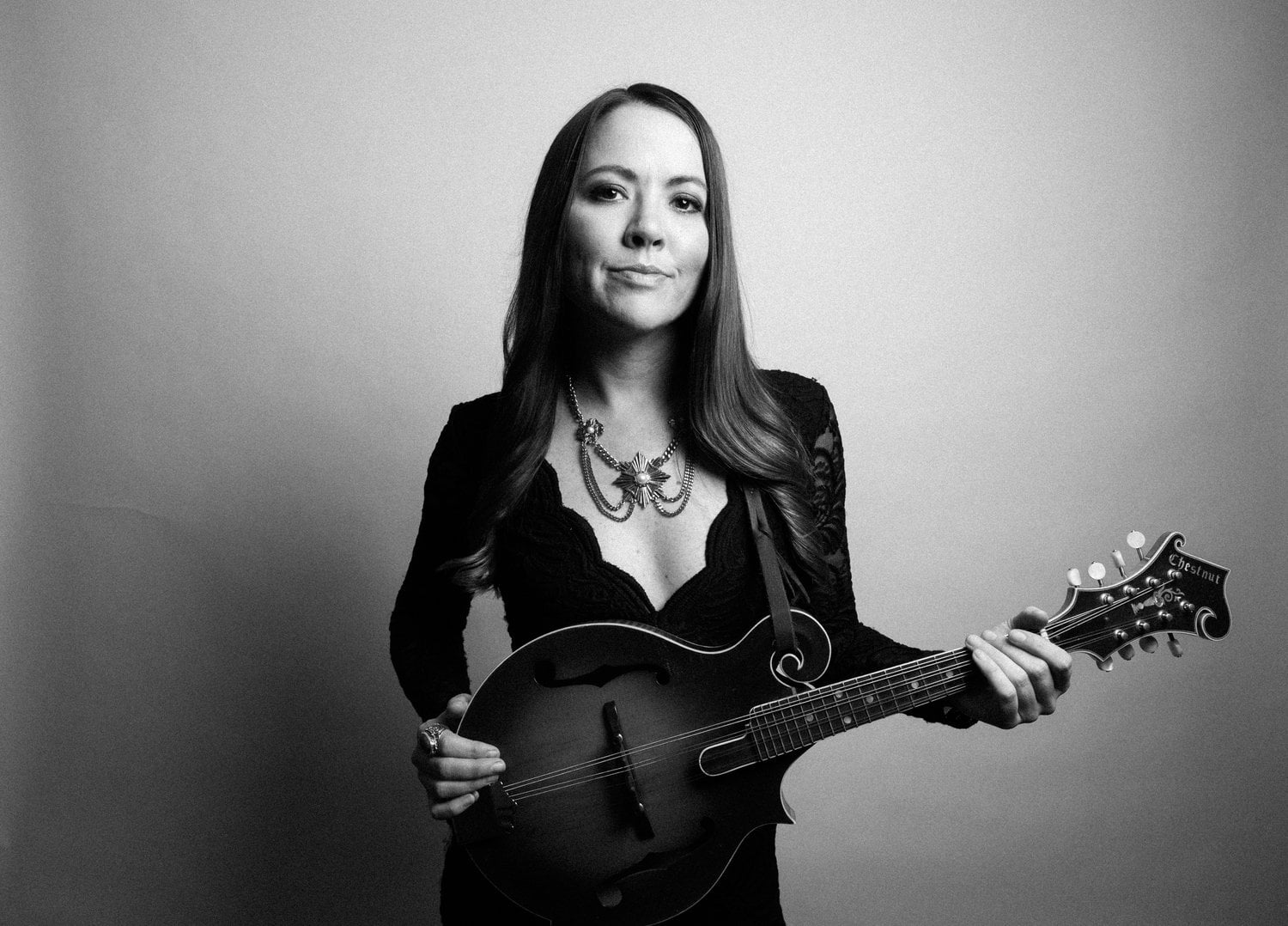
Artist: Rachel Baiman
Hometown: Chicago, IL
Song: “I Could’ve Been Your Lover Too”
Album: Shame
Release Date: June 2, 2017
Label: Free Dirt

In Their Words: “This song is about lust, pure and simple. The feeling of wanting someone you can’t have, and knowing that it’s wrong to feel the way you do. It’s perhaps one of the most powerful feelings in the world and can make you do some crazy things. The lyrics of the chorus are ‘A man in love ain’t mine for the taking, but if he comes my way, Lord, I’m … gonna shake him.’ Although we never discussed the subject matter of the songs, in the studio, Andrew Marlin (who produced the album) kept changing the words of this song to ‘That chicken’s ripe for the pluckin … and if he comes my way, Lord, I’m … gonna …’ which resulted in a lot of takes being interrupted by fits of laughter.” — Rachel Baiman


Photo credit: Gina R. Binkley

LISTEN: Ashleigh Caudill, ‘Polly Andry’

Artist: Ashleigh Caudill
Hometown: Nashville, TN (by way of Montrose, Colorado)
Song: “Polly Andry”
Album: Winter Blues: Songwriter Sessions Volume I
Release Date: June 9, 2017

In Their Words: “I was having a beer with my friend, Jodi Harbin, in Colorado some time ago. Out of nowhere she says to me, ‘Do you know what the opposite of polygamy is?’ I was thinking that, if polygamy is a man with many wives, then the opposite would be a dude with no wives at all — a bachelor. She wasn’t talking about bachelors. She was talking about polyandry. Polyandry is where a woman has multiple husbands. Jodi is great with random facts. I responded, ‘Sounds like a lady’s name in an old-time song.’ And ‘Polly Andry’ was born. We approached the narrative from the whispered gossip of women who were envious of her beauty and bold behavior.” — Ashleigh Caudill


Photo credit: Jess Ross

LISTEN: Scroggins & Rose, ‘Eagle’s Nest’

Artist: Scroggins & Rose
Hometown: Denver, CO / San Francisco, CA
Song: “Eagle’s Nest”
Album: GRANA
Release Date: May 23, 2017

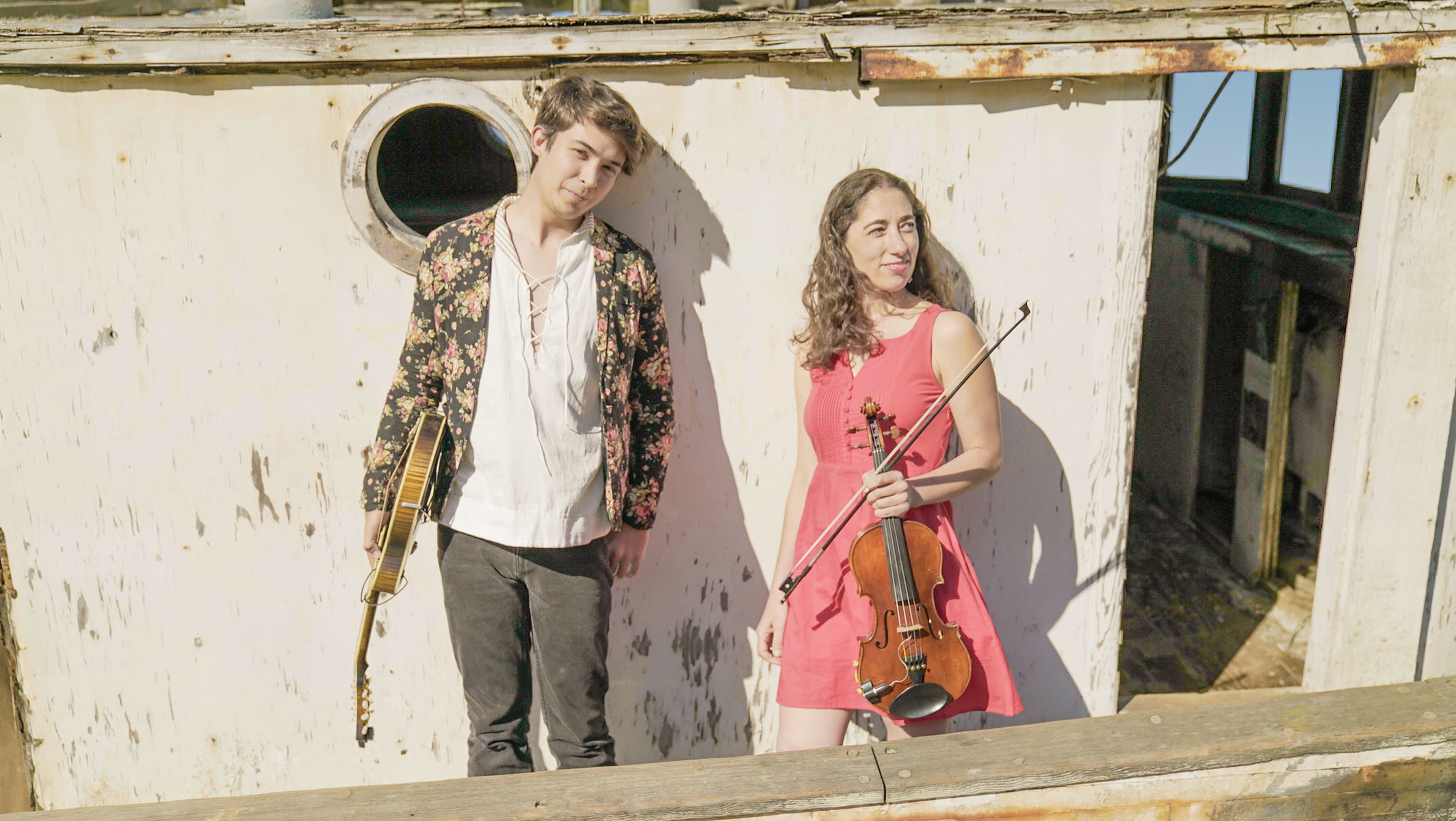
In Their Words: “This was one of the first tunes that Alisa and I worked up as a duo. I had written this long before we started playing together and had a full band in mind for it. After playing it a few times and feeling how easy it was for us to play textures over each other’s interpretations, I knew we’d have no problem filling up the same space, sonically, even without a whole band.” — Tristan Scroggins

WATCH: Jenni Lyn, ‘Are You Ok Alone?’

Artist: Jenni Lyn
Hometown: Nashville, TN
Song: “Are You Ok Alone?”
Album: Burn Another Candle
Release Date: April 7, 2017
Label: Katherine Street Records

In Their Words: “I was watching an episode of Twin Peaks when the idea for the video came to me. There is this scene where a white horse appears in a living room with nothing but a spot light on it. The thought of spotlighting a person alone in a bedroom, trying to get someone off their mind popped in to my head, and I started humming ‘Are You Ok Alone?’ I think most people can relate, especially the ladies. I shared the idea with producer Dycee Wildman and she brought the vision to life.” — Jenni Lyn


Photo credit: Dycee Wildman

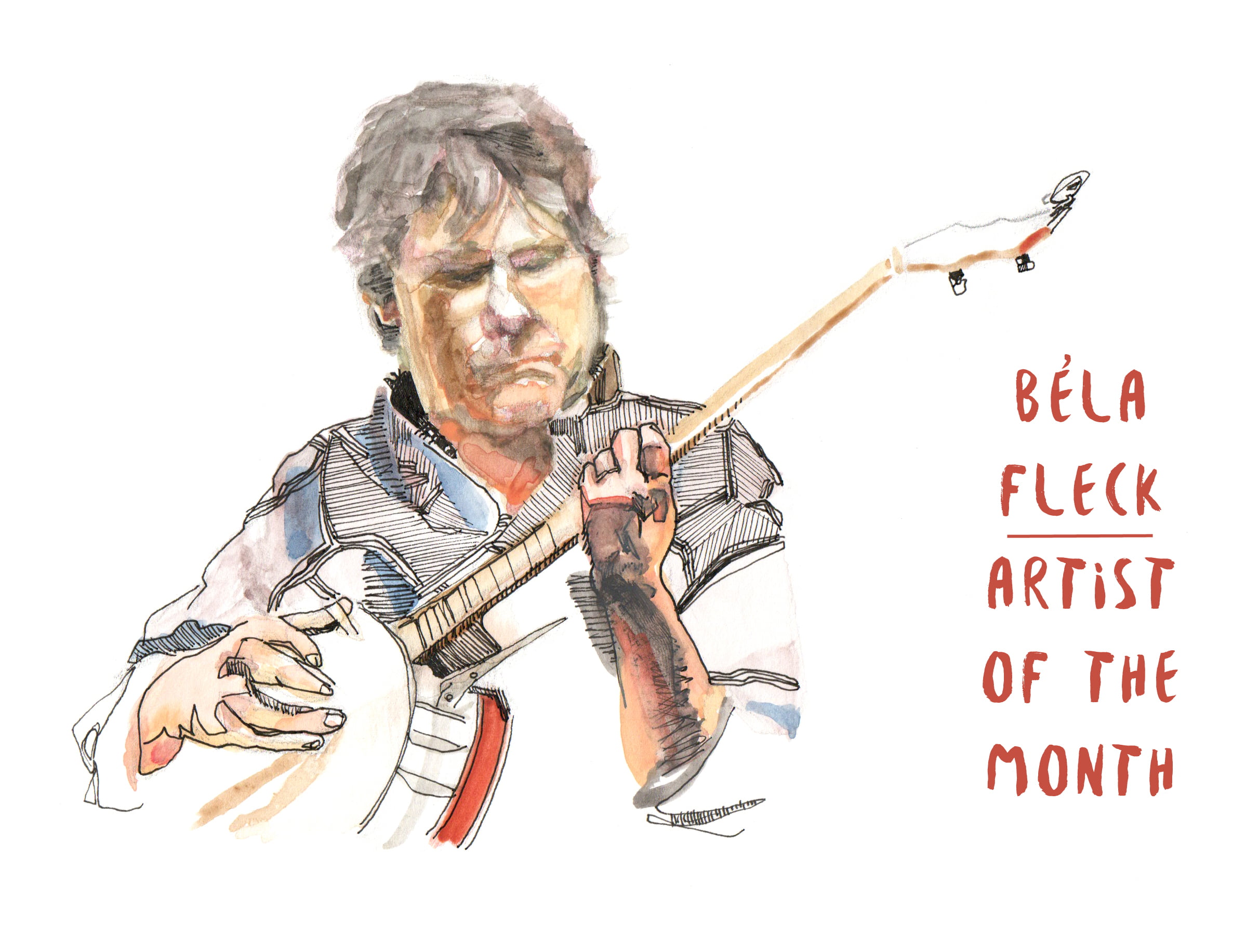
Béla Fleck on Playing His Newest Role

Béla Fleck has explored chapter and verse over the course of his tome-length music career, but there remained one role he had yet to play — father. The world’s most inventive banjo player took on that title over three years ago when he and his wife, clawhammer banjo player Abigail Washburn, welcomed their son Juno. Parenthood inevitably shifted innumerable things for both musicians, not least of which included when and how to write music. “It’s all family-motivated,” Fleck explains about his life now. “How do you find the time to be a musician when you’re trying to be the best parent you can be? It was a new structure that I’ve never experienced before.”

It was especially tough at first. Fleck and Washburn received a standard warning from their doctor about Sudden Infant Death Syndrome (SIDS) prior to taking Juno home from the hospital, which left an indelible mark. “All I could think was, ’I’m not letting him out of my sight. I’m going to have my eyes on him 24/7,’” Fleck recounts. “When he slept, I would sit and watch him all night because we were all so spooked.” Composing at home, as opposed to concentrating on duet or band projects requiring his presence elsewhere, became a way to balance fatherhood with the musical identity he’d long inhabited. “That was the beginning of realizing you can get a lot of work done by yourself when you’re with your family,” he says. Fleck took to using naptime and nighttime to work out ideas he quickly captured on a recorder during other points of his day. “Creativity can be like maple sap coming out of a tree,” he says. “If you don’t collect it for a while, and you go back, there’s a whole bunch waiting for you. It really happens that way sometimes.” As a result of his newfound approach, Juno’s influence is everywhere. “Anybody who has kids knows how that works.”

It’s an influence that extends to Fleck’s latest project and second banjo concerto, Juno Concerto. Besides naming the project after his son, Juno’s thumbprint arises thematically throughout each of the three movements. “As a musician, I was trying to be who I was as a father, and I also wanted the music to express some of the ways I was feeling,” Fleck explains. “Some simpler emotions were coming out that I was not expecting to ever feel before I became a parent. I felt more comfortable with letting them be in the music and encouraging them, while still finding ways to be my complicated self in the middle of it.” The end result is cinematically striking, full of sweeping musical phrases and a seamless conversation between banjo and orchestra. “I didn’t expect to be playing over the full orchestra going crazy, but I had to be very aware of creating textures where the banjo could be heard and then creating places where I was either in support of the orchestra or not playing at all so I could be big and not distracting from the orchestra,” he says. “It’s like a David and Goliath heroic kind of thing, but they’re not competing. At their best, they lift each other up.”

If there’s one singular characteristic to Fleck’s career, it’s his willingness — his inclination — to push boundaries. Having recorded as a solo artist, a collaborative partner, and in an array of bands — including the Béla Fleck and the Flecktones — as well as a variety of styles, Fleck takes pleasure in erasing preconceived notions about where his instrument belongs. “I want it to be on the edge and something that hasn’t been done before,” he says about his approach. “That’s the whole reason to play music: expression and exploration.” Thanks to his boldness, Fleck has done much to quell ideas about high and low art. The banjo may have found its most familiar setting in bluegrass, but over the course of his career, Fleck has helped reveal its historical place in early jazz (bringing it up to speed in the modern era), its African lineage, and now its classical possibilities. “I’d prefer to be a wine that matured and got better than a wine that you need to drink when it’s young, because I’m not young anymore,” he laughs. “I’m trying to say something meaningful and trying to get deeper into honest, pure expression as I play music, whatever music I’m playing.”

Fleck composed his first banjo concerto in 2011 after receiving a commission from the Nashville Symphony Orchestra. “It’s a lot of fun when you’re composing. You’re just sort of ordering everyone around on paper,” he says. Appropriately titled The Impostor, it involved a good deal of posturing; Fleck concentrated — thematically and literally — in asserting the banjo’s place alongside more traditional classical instruments. But he didn’t include a true slow piece for the banjo, following a concerto’s typical fast-slow-fast structure. With Juno Concerto, he set out to answer that challenge. “The banjo tends to do things well that are fast and crisp and clear,” he says. “I made a real point of insisting that the banjo could play slow, as hard as it was to do these gaping spaces. It was a challenge.”

Juno Concerto didn’t fill an entire album’s worth of space, so — as he’d done with The Impostor — Fleck set about adding additional string pieces, recording “Griff” and “Quintet for Banjo and Strings: Movement II” with string quartet Brooklyn Rider. He originally composed “Quintet for Banjo and Strings” with Edgar Meyer in the early 1980s, but never got about to recording it. “It’s so good to have something like that to settle the dust of all the craziness of the pieces I like to write,” he says. And since he’s received one more commission to compose a concerto, he anticipates following suit by combining concerto and string pieces for that next album. “I didn’t intend to do the exact same thing, but then I started to think, ‘Well, if I do it three times, it’ll be a set,’” he says. “Three concertos with three string pieces, that becomes interesting.”

For all his experimentation, it might seem that nothing intimidates Fleck anymore. In fact, the bravery he’s developed by inserting himself into myriad musical conversations only comes about after months and months of hard work. “I’ve done so much stuff that, sometimes, I forget how hard I worked on each thing,” he says. “I have a pretty intense work ethic, and then when I’m done, I forget and I go back and listen to the record and go, ‘Oh that sounds pretty good.’ I don’t hear all the blood and guts that went into getting it to that level. But when I start on a new project, I go, ‘Wow, this doesn’t sound very good. Maybe I just don’t have it anymore. Maybe my good years are behind me.’ But I don’t realize that I spent months and months and months working on those projects that, in hindsight, makes them sound easy.”

If there are ever any doubts about his talent diminishing with age, Fleck’s work ethic seems likely to keep things in check, as well as his son. Growing up in a household with two world-renowned musicians means Juno has developed quite the ear. “He doesn’t realize how much he knows about music from being around it so much,” Fleck says. Still, there’s one point on which they continue to disagree. “He always asks me, when I play instrumental songs, ‘When’s the singing going to come in?’” Fleck jokes. “That kind of bothers me because I’ve made a life of trying to make believe that singing doesn’t have to be there for music to be good. I’ll play him a song and he’ll go, ‘Papa, that’s too long.’”


Lede illustration by Cat Ferraz.

WATCH: Claire Lynch, ‘Black Flowers’

Artist: Claire Lynch
Hometown: Nashville, TN / Toronto, ONT
Song: “Black Flowers”
Album: North by South
Label: Compass Records

In Their Words: “Wouldn’t it be wonderful if, in the process of creating a video for ‘Black Flowers,’ I could collect visual bits and pieces from my musical friends and gather them into one beautiful piece of art? And wouldn’t it be grand if we could capture the soul of this amazing song together? Oh wait … I think that’s what just happened! Thank you ALL!” — Claire Lynch


Photo credit: Ian Gray

Playing to Her Own Beat: A Conversation with Valerie June

It’s impossible to unhear the sound that issues forth once Valerie June opens her mouth to sing. It’s a voice at once ancient — arisen from some sepia-toned past — and startling modern. From its color to its timbre to its texture, there exists something powerfully original about her primary instrument. But if June were just another singer with a distinct set of pipes, this wouldn’t be an article worth reading, and she wouldn’t be an artist worth covering. It’s how she employs her voice, and the fun she has blending and blurring genres that showcases her pioneering talent.

The multi-instrumentalist and Tennessee native returns this month with her sophomore major label release, The Order of Time. Arriving four years after her debut, Pushin’ Against a Stone, saw her perform at the White House, make countless television appearances, and become a festival staple, the album indeed took some time. June didn’t let her success dictate her writing schedule and rush her back into the studio. Instead, she read poetry, danced, cooked, and languished, allowing the music to unfold on its own schedule rather than hemming and hawing about hers. Thanks to that patience, she’s pushed her own boundaries even further.

The Order of Time spans blues, bluegrass, soul, folk, rock, and more, gathering pieces from each to build a kaleidoscope, of sorts, that showcases the long undercurrent of history running through each. Banjo appears in greater measure throughout the album, calling to its African heritage on “Man Done Wrong” and showing off its rhythmic pacing on “Got Soul,” while “Shake Down” borrows a few branches from June’s family tree. She gathered her brothers and father — who passed away in November — in Tennessee to record the raucous and gritty jam. And then there’s the viscerally thrilling “If And,” which layers an array of heavy tones, including bass saxophone, bass clarinet, and harmonium, to create an almost unholy riff. Have fun not getting chills.

So much of this album deals with time and abiding by its rhythms. How do you cultivate patience?

I don’t have any at all.

That’s fair.

It’s pure torture, honestly. I just want it to happen. It’s like getting a new plant: You’ve been to the nursery, you bought this gardenia, but it’s not flowering yet. You put it in the perfect sun and give it the perfect water and all of that, but it’s still not flowering weeks later, and you’re just like, “Oh my God, I really want the gardenia to flower, because it’s the best smell in the world and I love it. That’s why I bought it — for the flower — not for this green plant.” A lot of patience has to happen, but you don’t have it. You’re forced into it. And then, one day, it does flower and you’re really excited about it. That’s what it’s like.

I love that analogy. Building off it, how much of patience is, perhaps, about distraction?

It has to happen that way.

So what do you distract yourself with?

So many things. Life happens, people call and want me to do something, or it’ll be time to eat. [Laughs] I dance a lot. I have routines for distracting myself, and dancing is a big part of it. You have to have systems set up, you know, to keep you from dwelling in frustration. So whatever your things are that you love to do, you have to do those things. It’s almost like you have to be like, “I’m frustrated! Stop everything. Okay, now it’s time to dance. Nothing matters but dancing right now.”

It’s the physicality of it. It seems that when creatives get too caught up in their mental state, it helps to do something physical to calm that animal side of their brain down.

So true and, once every part of the body is moving, your mind is the last thing. You don’t even think about that part. It does take a minute, though, once the dancing starts. First, you’re still thinking, so your body — you’re moving it — you’re thinking, you’re thinking, and then, by the time you work the neck and the legs and the head and get the whole body going, you’re like, “Whoa!’ You’re gone man!” And it just takes one little moment of being gone to shift some ol’ thing.

So are we ever going to get a Valerie June workout video?

I don’t know. That would be really ’80s and fun. I’d have to get some leg warmers, for sure.

And neon.

I love legwarmers. That seems like a good excuse.

What do you dance to?

So many things. I like dancing to Davie Bowie, and Spoon is a really fun band to dance to — it’s so upbeat and insane. And Fever Ray and Fela Kuti, Cass McCombs … so many things. Sometimes I dance to blues music. It just depends on what I need to shake out.

I can see how these all dancing moments influence your music.

It’s all there.

Turning to the album, “Man Done Wrong” brought to mind the personal lamentations you’d hear in Ma Rainey’s and Bessie Smith’s blues. Can you take me through writing that particular song?

It started on the banjo. I was just playing that riff, again and again, for a few days, and then I heard the chanting, and when I first started to hear the chanting, I thought, “Well, this is very tribal to me.” It’s a different way for the banjo to be, for me. In my own mind, I had certain parameters that the banjo was allowed to go — for it to lean toward old time or bluegrass — and the fact that it was getting outside of its lane and it was doing something that seemed African or tribal to me was like, “What the fuck is this?” [Laughs] When I started to receive that, I was like, “Wow, I can’t fight that.” I can’t fight what comes to me in a song; I have to accept it all because, once I start to fight it, I close the door and I shut off these voices. I have to make them all feel welcome in order to receive the entire song, so I just went with it and got into it, and started to hear the actual singing, and I was like, “Well, okay.”

All these ideas I had about the banjo and the way it was supposed to be played and the way it was supposed to be fit into this box, they had to go out the window. It was like, “I guess it is an African instrument.” I learned a lot trying to play that song, about the banjo being as innocent an instrument as any other instrument and it having a voice that can fit with any style of music. It wants to be free; it doesn’t want to fit within any parameter. It just wants to be an instrument and play around in the playground of music and sound. It opened my mind and it opened my thoughts about what it should do in the world, and how I should feel about it when I see somebody get up in front of me with one. Just because you see a trumpet, do you think, “They’re going to play jazz. They’re going to be Miles Davis”? No. When you see a trumpet, it could be marching band, it could be jazz, it could be anything. A banjo is the same.

It has this strong association with bluegrass, but there is that tradition of Black banjo players who were never recorded and so, in many ways, that history has been erased.

It’s true. It’s such a historical instrument. It keeps getting deeper and deeper, as much as you try to see where it’s going. It’s been a vibrant instrument in the past and going into the future.

Do you think these voices in any way are trying to communicate that lost history with you?

They are communicating so many things. I can’t even get my head wrapped around it because, as soon as I get one thing that they were saying, then it starts to change, like a good poem. You read this poem and when you’re younger — and I read Robert Frost’s “Two Roads” when I was younger — it meant one thing, but as I get older, it means something different. The songs are like that. They change like they are living; they live with you and they change the meaning.

What other poets are you currently quite taken with?

I like Wendell Berry a lot. I could read that all day long, and T.S. Eliot and e.e. cummings, but Wendell Berry is really huge. I don’t even know how to describe what he does to me, but by the time I get to the end of one of his poems, I can be in complete tears and gratitude for all of life, for the earth, for everything. And the short stories are the same way.

He’s one of my favorites, too. I’m always so grateful for Wendell or, really, any poet who articulates the experience of living, especially when you haven’t found the words yourself yet.

That’s the shocking part. The ability to articulate it is like, “Wow!” I felt it, but I just couldn’t put it into words. You did it! You did it! [Laughs]

But you’re tasked with that same hurdle as a songwriter.

I don’t really feel like I have any kind of control over these things. I mean, I wish I could. I wish I wrote that way, where I could have a theme in my head and write something that fits the purpose, but the times I try, it doesn’t hit me as much as when I hear the voice and I just follow it. But I do try sometimes. I’d like to learn to write that way. I feel somebody like Toni Morrison or Zora Neale Hurston, they would have these thoughts going on in their minds about the world, about being a Black woman growing up, or things like that that they wanted to put into their writing, and they were able to articulate them through their craft. But, for me, I can’t do that. I don’t write that way.

There are so many different ways to approach it. Every writer has a different way.

I love writing with other writers because, when I do that, then I steal some of their style. I’m like, “Oh, that’s how you tapped into that.” They’re my teachers.

What a great way to learn. Well, lastly, I was curious about the song “Shake Down” and recording it with your family.

My brothers’ and my dad’s vocals were tracked in Tennessee. It was great because my dad’s not really a singer, but he was in the room and I was like, “You gotta sing.” And now he’s gone and so all I have is him singing that part. I have pictures, but I don’t have his voice anymore and I never will again. That really matters to have somebody’s voice after they’re gone. That really is something, so I really feel fortunate for that song.


Photo credit: Danny Clinch

The Producers: Cathy Fink and Marcy Marxer

Cathy Fink and Marcy Marxer have devised a clever game to play when they’re traveling — something to keep their ears sharp, when they’re away from their home studio outside Washington, D.C. “We’ll go into a room,” says Marxer. “Big room or small, it doesn’t matter. We’ll clap our hands and see if we can figure out what reverb setting we would need to copy that sound. It’s geeky all the way.”

The pair have visited a lot of rooms together over the years. For nearly four decades, they’ve been playing and recording and touring together: Fink is one of the best banjo players alive, and Marxer plays nearly everything else. They’ve released 45 albums covering a range of styles and set-ups, mostly folk and old-time, bluegrass and children’s tunes. Their latest, Get Up and Do Right, is their first collection of duets for two voices and two acoustic instruments, featuring a handful of originals and covers of songs penned by Alice Gerrard, Pete Seeger, and Bob Dylan.

Gently political and certainly timely, the album digs into folk’s enormous capacity for dissenting voices combining in beautiful harmony. For Fink and Marxer, making music is a way to get up and do right: an inherently radical act. Their DIY process extends into the studio, where they work as their own producers and, occasionally, their own engineers and mixers. Marxer is the more technical-minded of the two (see below for her favorite piece of equipment), while Fink is the conceptualist — the one who keeps the big picture in perspective. Together and separately, they have produced roughly 150 records, including Sam Gleaves’ 2015 breakout Ain’t We Brothers and Tom Paxton’s new album, Boat in the Water.

What unites this disparate catalog is a warmth of sound and an idea of music as a communal undertaking, a labor and a joy to be shared. “We both do many things and wear many hats,” says Marxer. “Sometimes we produce together and sometimes separately.” Adds Fink: “Even when we have separate projects, we have an open door with each other for what we call continuous consulting. It’s pretty hard for one of us to get involved in something where the other person doesn’t have some influence to make it better.”

How did you move into the role of producer?

Cathy Fink: We’ve both been playing music professionally since the early 1970s and, in the early days, I had the opportunity to work with some really great producers. Two who were very influential on me were David Essig and Ken Whiteley, both from Canada. Ken has produced probably 2,500 albums over the last 40 years. In both cases, I was a musician who was confident in what I wanted to accomplish, but didn’t feel like I had the knowledge to take my dream and get it on tape. By working with lots of producers I really trusted and whose music I enjoyed, I was able to pay attention to how they accomplished things. After a few projects like that, it was time for a transition, so I did an album where I co-produced. Marcy was involved, along with a lot of other people, and I bounced ideas off them. As we continued working together, we really relied on each other to the point where most of these things became co-productions.

Marcy Marxer: I started out very differently. When I was a kid, my dad used to go to the junkyard and collect wires and speakers and thermostats and things like that. He’d come home and give them to me to take apart and look at. When I was in the eighth grade, I built my first tube amp. That really developed the techno-geek side of my brain. Eventually, I got a job with Macmillan/McGraw-Hill producing 120 songs for an educational project. Since then, Cathy and I have been able to join forces, and it just mushroomed. We push each other to get better. We have a bit of a competitive streak, but it works in our favor.

It sounds like together you cover nearly every aspect of the recording process.

CF: You don’t need to be an engineer to be a good producer, but we found it so helpful to get those skills in order to better speak with the engineers we were working with. It really rounded out our abilities, and I’m in a better position to know what I’m looking for, how I might get it, and whether or not we’re getting it. In turn, we try to pass that along to other people. Our Grammys actually say Artist, Engineer, and Producer.

MM: It’s crucial to know every step, but it’s not crucial to do every step. It’s good to have a bigger team, people you trust, people who are fast at certain things, people who are the house painters of their field or the Rembrandts of their field. If we didn’t play and engineer and produce and mix, I don’t think we could efficiently speak with the other team members.

CF: We do lots of projects that we don’t engineer on. The reason we started engineering really had to do with a combination of convenience and health issues a long time ago. We wanted to do these things at home and at our own convenience. When you’re traveling as much as we do, we would sometimes book a date in the studio, and then the day would come and, oh man, we’re just too tired to do that today. So we learned to do our own tracks and our own overdubs at home. It gives us a whole new way of producing our own projects. Time is a big factor, so if we have two weeks to make an album, we’re not going to sit in the studio with all of the crayons and start creating the painting. We’re going to visualize the painting before we go in, and then we’re going to take the right steps to make it happen. When we do it all at home, we have the opportunity to take out all the crayons and try out different colors. We might do a take with different banjos or different harmonies and decide which one works better for a particular track.

Is that how you made Get Up and Do Right?

CF: Most of it was recorded in our home studio. There were two tracks recorded live at AirShow, and there are two tracks recorded at Jim Robeson’s studio. We wanted to do those tracks live, but didn’t want to have to deal with the mechanics of being engineers at the same time. Everything else was done at home, sometimes live, sometimes overdubbed, but always with the feeling of, “This is what it sounds like when we play together.”

MM: The great thing about the studio at home is that all of my instruments are here. When I’m working on other people’s projects, I might be doing some overdubs or filling some holes, and I’ll just fill up the car with instruments and see what I can do to finish it up. If I didn’t bring an instrument with me, then I can’t use it. So it’s much easier having everything in one place.

CF: We don’t have to think ahead to which five guitars we might need. If we’re at home, we can go, “What this song really needs is the electric baritone guitar,” and we can run and get it. But if we’re at someone else’s studio, too bad. We recently produced Tom Paxton’s newest album, and we worked with our engineer Jim Robeson at his studio. Tom did all of his tracks there, and a lot of other people came in, but when it came time to do our own tracks, we decided to do them at home. Another example is the project we did called cELLAbration!, which was a tribute to Ella Jenkins that includes an amazing array of artists, including Sweet Honey in the Rock, Red Grammer, and Riders in the Sky. I’d say about 60 percent of that album was done in a variety of commercial studios and about 40 percent was done at home. It’s a really fun way of filling out the whole puzzle.

Something that strikes me about your new album and Paxton’s new album is how rich and complex the instruments sound.

MM: We mic all the instruments in stereo. We almost never single-mic an acoustic instrument because we want it to sound like we’re listening with both of our ears. Both of those albums are so sparse, and you really want to hear all the detail. If something was going to sound really big, we might be inclined to leave it off. We want you to feel like you’re sitting in a living room with us — a really nice-sounding living room.

CF: We don’t have a giant collection of gear, though. What we’ve found is that we’re very good at using a handful of things, so we stick with a couple of mics that sound fabulous. We know how to deal with them, and sometimes we’ll cart them around, if we go to another studio. What you’re most familiar with is usually what you’re going to sound best with. I just have to give a huge amount of credit to Greg Lukens and Jim Robeson for the incredible tutelage they gave us. There aren’t a lot of female engineers who are well known, and we’ve certainly worked in a lot of studios where it was assumed that we couldn’t possibly know what we were talking about. But Greg and Jim really empowered us to do all of this stuff for ourselves.

MM: Every once in a while, I’ll be working with an engineer that I might not be very familiar with, somebody that I might not have a lot of faith or trust in or just might not know very well. If there’s a man in the room, then all the production questions will be addressed to him instead of me. It seems impossible in this day and age, but it does happen. I’ve stopped working with people like that, people I don’t absolutely trust. I’m not the kind of person who will put my foot down and demand something. Cathy is a little bit better at that, but I just try to avoid those people.

You seem to be at the center of a very large musical community, which reflects in the music itself — not just who’s on the record, but how those people interact.

CF: It is a very large, very close musical community in the D.C. area. One of the advantages of working in a place like this is that, when people think of where the hotbeds of music are in the United States, they may pinpoint New York or Los Angeles or Nashville. But in D.C., there isn’t such a competitive atmosphere. When I moved to town, I was welcomed into the world of session players and there wasn’t really a hierarchy. Musicians are very supportive of each other, and the engineering world, in particular, is not competitive at all. If one person has a problem, everybody’s going to help them out.

The other thing is, we have a pretty active touring schedule both nationally and internationally, so we’ve had a good time making that community even bigger. Twenty-two years ago, we played at the Auckland Folk Festival in New Zealand, where we met a couple of musicians that we’ve remained friends with all these years. One of them is Chris Newman, and the other one is a traditional harp player named Máire Ní Chathasaigh. We’ve played on their records through the magic of the Internet. And we just got back from a UK tour, where we did 10 days with Tom Paxton and then a week in the Orkney Islands in Scotland. Talk about off the beaten track. Our friends Hazel and Jennifer Wrigley have spent 10 or 15 years touring nonstop around the world as a fiddle and guitar duo playing traditional Scottish music. They’re just spectacular. They settled back in their home of Orkney to open up this place called Wrigley and the Reel, which is a music shop, café, venue, and educational facility. We’ve played on their records and, when they come to the States, they stay with us. So the community just gets larger and larger.

MM: We also find that when we meet other producers and engineers, they’re thrilled to discuss equipment and show you their gear. It can get pretty geeky. And if you’re wondering, my favorite preamps are simple and easily accessible. They’re APIs, and we use a full preamp rack mount that would sell online for $2,500 or something like that. They’re absolutely clear, beautiful, pristine sounds.

CF: We do get buried in the geekiness, but we try not to forget that what we’re really doing here is using the medium as a way to share the music that we love. When we produced Get Up and Do Right, we wanted to use all that gear to highlight the music — the feeling of the music and the message of the music. There is always something to discover and that’s what makes it fun.

MM: I’ll tell you two of my favorite recordings. One is Cowboy Calypso by Russ Barenberg. The vinyl sounds absolutely gorgeous. The other, which was done digitally, is John Fogerty’s Blue Moon Swamp. And anything Gary Paczosa produces always sounds beautiful.

There is something very direct about the music on this album, something very refreshing about its optimism during hard times.

CF: We have to stay optimistic. On our tour of the UK, we played to about 4,500 people, and the song “Get Up and Do Right” was a rabble-rouser every single night. It’s a song we loved, when we heard it two years ago and, when we recorded it, no one thought Donald Trump was going to win the election. We just knew that it was a great daily meditation, but we didn’t realize that it could be this ultimate rallying cry. I just finished a down-and-dirty video for the song that’s based on pictures that people sent us from marches all over the world. We went to a march in Kirkwall, in the Orkneys, a very tiny place, and the first night we’re there, there’s a vigil in front of the local church. We were very welcomed. When we got there, Marcy announces, “We’re Americans and we’re with you!” That got a big cheer, and we made a bunch of friends. It feels like our job every day is to get up and do right. Do the best we can to make the Earth a good place to live. Negativity breeds negativity. Action breeds positivity. Rather than get bogged down in the negative stuff, we’re just going to continue to get up and do right.

MM: Cathy and I are old enough to have lived through the civil rights movement, so we’ve done this before and we’ve come out better than we were for it. My parents went to marches, and it was really the music that kept us moving forward. It was the music that brought everyone together and kept us going. This was back when you used to have to dress up in your Sunday clothes and your Sunday shoes for a march. For a little kid, that’s not easy. But music gave us support and energy. Something happens when everybody is singing at the same time. They all take a breath at the same time, and that’s power. It’s real power.

Can you tell me how that sense of social responsibility informs your children’s music, especially the Children of Selma album from 1988?

CF: Children of Selma is a project that I still deeply love. I was brought to that project by Jane Sapp who was, at the time, working with the Highlander Center. That’s the place where Rosa Parks went for a workshop two weeks before she wouldn’t go to the back of the bus. Jane had met a woman named Rose Sanders who had worked with a group of kids after school in Selma. Rose is a civil rights attorney, but her purpose was to give the kids something useful to do after school. She turned out to be quite a prolific and incredible songwriter. I went down there and we went to an old YMCA or community center, where there was an out-of-tune piano, and Rose gathered the kids around to sing a bunch of these songs. I was blown away by the spirit of these songs and by the magic that happened when she engaged the kids who were singing about their real lives. One of the songs that comes back to me every election is “Vote for Me Until I Can.” That project was a big challenge: I had to go to a location where I didn’t know anyone and I didn’t know how to take a group of kids, who had never recorded before, into a studio. But the important part was taking their message to a bigger audience. Even though, commercially, it’s one of the least successful things I’ve done, in my heart, it’s one of the most important projects I’ve ever worked on.


Photo credit: Michael Stewart