Jarrod Walker is Much More Than Just a Sideman

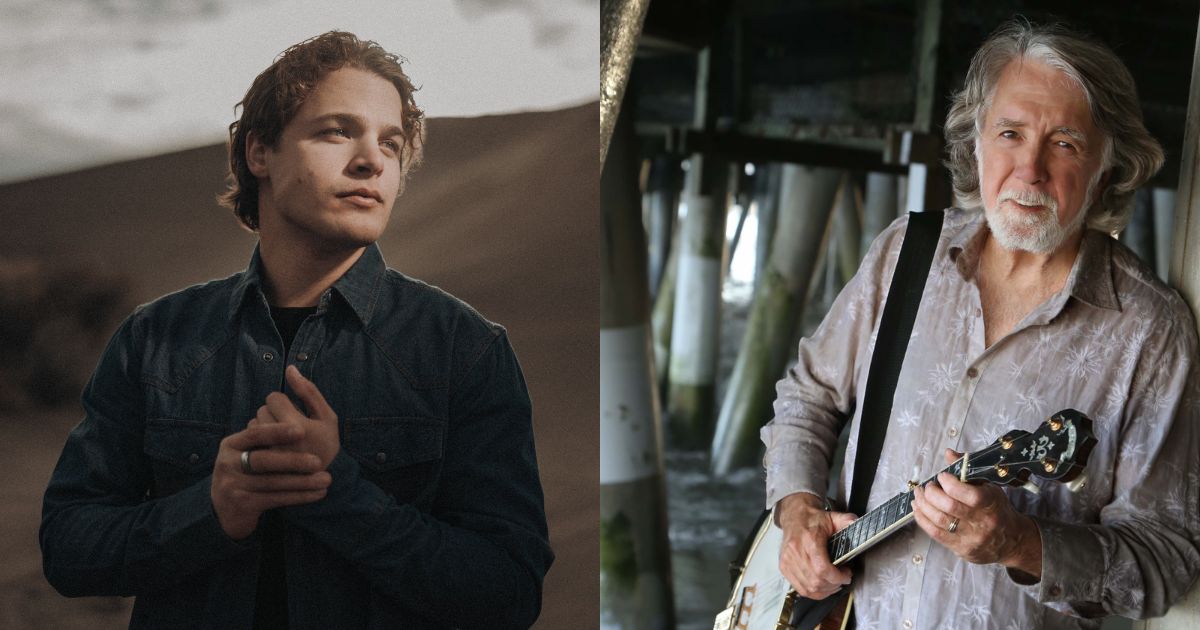
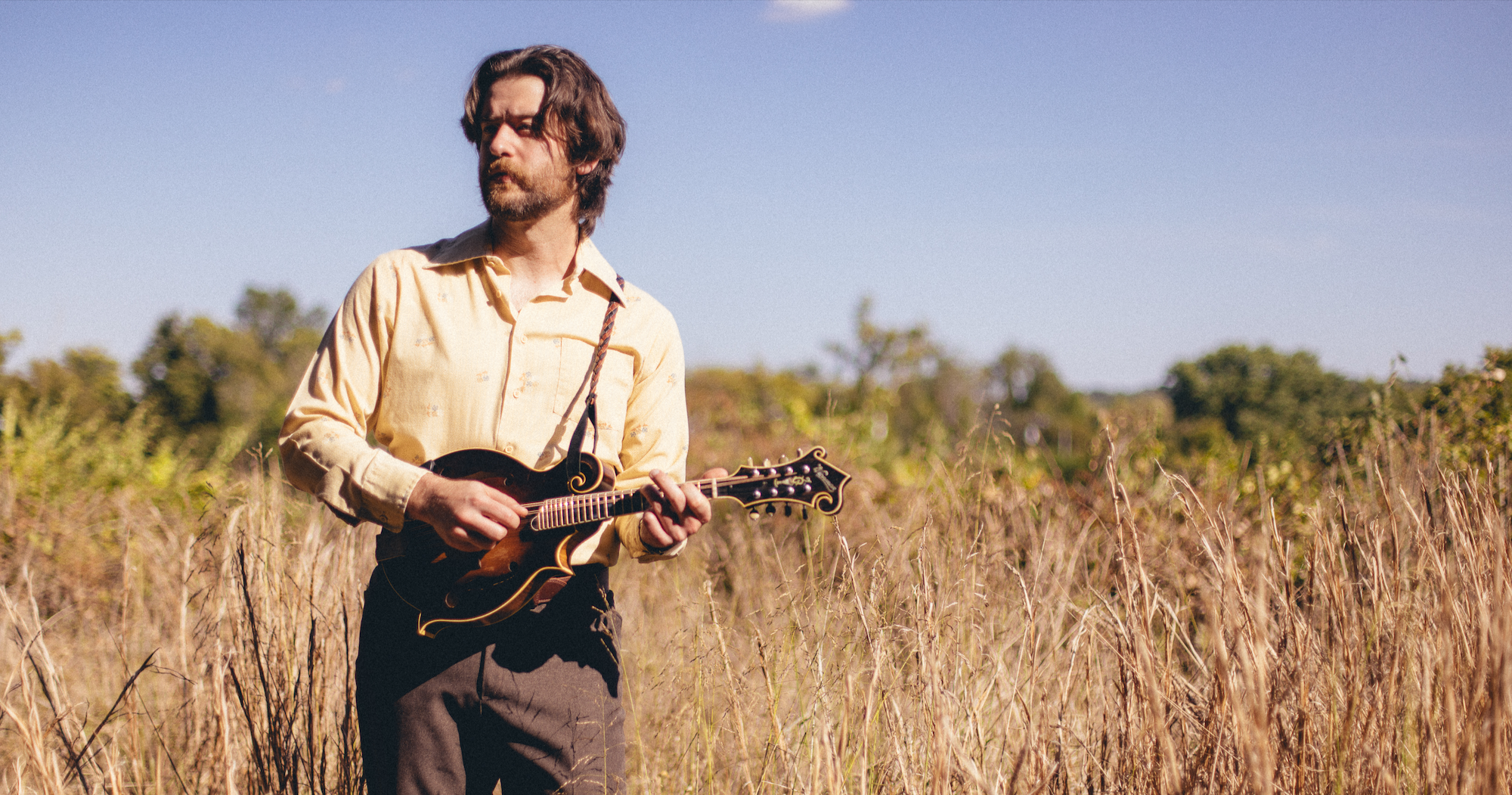
You know Jarrod Walker because for nearly 10 years he’s been Billy Strings’ mandolinist. But within the tight-knit bluegrass community, Walker has been a well-known and sought-after sideman for much longer. Before going on the road with Strings, he did stints touring with Claire Lynch, Missy Raines, Rebecca Frazier, and more, and he got his start in the rich bluegrass landscape of Florida, gigging with his brothers – including East Nash Grass banjoist Cory Walker – in a family band, the Walker Brothers.

Beloved for his taste, virtuosity, and a cleanliness to his picking unparalleled in modern bluegrass mandolin – except perhaps by his childhood friend and peer Sierra Hull – Walker enjoyed a reputation pre-Billy Strings that holds strong now, as he’s gone from being a humble bluegrass sideman and session player to having nearly 50,000 followers on Instagram and a niche fandom of his own within the greater Billy Strings Cinematic Universe. His song “Red Daisy,” recorded and performed by Strings and co-written with longtime friend and fiddler Christian Ward, has garnered more than 10 million streams and was awarded IBMA Song of the Year in 2022. (Though, shockingly, Walker has still never even been nominated for Mandolin Player of the Year by IBMA.)

Earlier this month, Walker took yet another step toward the limelight and away from the increasingly reductive “sideman” title. He released Nighthawk, his debut solo album, a fascinating and artful collection of bluegrass and string band-centered Americana that demonstrates the incredible depth and breadth of skills he has developed since his Lynch and Raines touring days. All but one of the 13 tracks are Walker originals – many co-written with Ward, who also plays fiddle on the project – and all but the two instrumental tracks are sung by Walker, as well. His vocals are thoughtful and intricate; he’s clearly put in plenty of time and energy into crafting an equal level of virtuosity with his voice as an instrument.

For a picker who’s remained booked, busy, blessed, and performing on stage hundreds of times a year on average for the greater part of two decades, it’s notable that Walker has launched Nighthawk and, with it, shown the remarkable level of growth and development he’s undertaken simultaneously, right under our noses. An impeccable sideman has blossomed into a fully-fledged, intentional, and multi-faceted artist. Even if, like me, you’ve been fortunate enough to call Walker your friend and a collaborator over those years, this is a revelatory, infinitely expressive body of work – surprising if not at all unexpected.

This isn’t an album meant to capitalize on Strings’ rabid audiences and pick up some extra spending money at the merch booth. This isn’t a vanity project or simply a mandolin record – or a hobby with which to spend time and keep him occupied when he’s not on the road with his main gig. No, it’s clear that with Nighthawk Jarrod Walker is telling the world exactly who he is, what he does, how he thinks, and what he sounds like. And it sounds damn good.

I wanted to start by talking about how you kick off the album with “Miles on My Shoes” and how the first single released was “Nighthawk,” the title track. Both of those tracks, to me, feel like straight-ahead, traditional bluegrass. I was curious about this being the audio “swatch” that fans and listeners first get of this album and about what you’re trying to communicate to them by the first track and the first single being pretty much straight-down-the-middle trad bluegrass.

Jarrod Walker: It took a long time to decide what to put forth as the first single, and same goes for the first track on the album. But I did feel like there was a certain expectation of me putting out a record and there being bluegrass elements to it. I wanted to reassure people that there would be some bluegrass elements. And, like you said, those two tracks are probably the most straight-ahead bluegrass tracks on the album. But the rest of the album is very different. The second single, [“Cordova Street Blues”] is very different from the first track or the first single. I think it was somewhat a conscious decision, but also just listening to people around me and seeing what they thought.

For no particular reason both of the singles that came out wound up being the two songs that Billy Strings sang background vocals on. It just worked out that way. We decided not to do the whole “featuring Billy Strings” route, because then that puts such an emphasis on [what’s] really just background vocals. But of course you could put “featuring Jake Stargel” or “featuring Christian Ward” [on it] by the same regard, ‘cause it’s not a true feature or whatnot.

But yeah, Cordova Street is a street in St. Augustine, [Florida] where I’ve spent a lot of time. I have some family who still live down there and some deep family roots going back to a store in the main part of town, which is now the historic district, called Denmark Furniture. It was probably very misleading to people, because I don’t think they sold Danish furniture. [Laughs] I think it was just American furniture with my mom’s maiden name, which is Denmark – and it’s my middle name. I’ve spent a lot of time down there and it’s inevitable that some St. Augustine imagery would make it into one of these songs. “Cordova Street Blues” is more of a dreamscape, ethereal kind of track, which is entirely different than the first single, “Nighthawk,” which is more or less just a Stanley Brothers-style bluegrass song.

It’s funny that you say “dreamscape,” because I was already drawing parallels here between single one “Nighthawk” and single two “Cordova Street” and track one “Miles on My Shoes” and track two “Leaving Canaan’s Land.” What I wrote in my notes for “Leaving Canaan’s Land” is “it’s like an Americana dreamscape” – especially with that groove and its pacing. So I see this parallel with the singles and also with the sequence: “here’s what you’re expecting, here’s where we’re going eventually.” Bluegrass, then beyond. You’re immediately showing people the continuum on which you’re creating music, sonically.

The groove differences between “Nighthawk” and “Cordova” or “Miles on My Shoes” and “Leaving Canaan’s Land” are incredible, too. It’s the best kind of whiplash from barn-burning, leaning-forward bluegrass to this sort of languid, lazy river, chill, floating vibes. Can you talk a little bit about that?

I’ve always liked the contrast and the juxtaposition between something, like you said, very bluegrass and something that offsets that. It’s like sometimes I wear camouflage and then I wear a tie-dye T-shirt. “Who the hell is this person?” I like to do that musically sometimes, too.

There are a lot of songs on the record that I wrote with just a guitar. It was more of a folky kind of approach. But then I decided to get drums and percussion and pedal steel on nearly the entire record and that really shaped these songs into something that I hadn’t imagined before – in a very positive way. I think it’s turned out how I would’ve wanted it to, ultimately. But it wasn’t necessarily a conscious decision. I think I just have that mentality throughout a lot of aspects of my daily life.

The variety also makes the album listen by really quickly. You have so many different textures and so many different style points and references. But, when I listen through the whole thing, to me it still feels like a bluegrass album. It reminds me of Jim & Jesse when they had pedal steel and drums in the band. Or a lot of those bluegrass bands from that golden age of bluegrass where they still were calling themselves country – the Osborne Brothers, Ricky Skaggs, J.D. Crowe and the New South.

Oh, for sure. I feel like I have never been afraid to introduce some drums or exterior, non-traditional bluegrass instruments into the mix. Like you said, I think it just adds some texture. And I love the early bluegrass where they were still figuring out and shaping the sound. There’s so much snare drum in Jimmy Martin music. And like you said, the Osborne Brothers, Jim & Jesse – and listen to J.D. Crowe and the New South’s first record. There’s steel, there’s piano, there’s drums and percussion. By that definition a lot of people, on paper, would consider it not a bluegrass record. But of course it’s one of the classics that everybody thinks of.

I think it was the reason that I put drums on nearly everything. But I made the decision after things started shaping up and I heard the songs that were more folk-oriented coming together. They would’ve been incomplete without drums. I wanted to use drums as glue for the record and to offer some cohesion. The pedal steel served that same purpose, too. Spencer Cullum is a fantastic steel player. And Jamie Dick is playing drums on this. They’re both coming from a different musical background, so it kinda makes everybody else think on their toes. Everybody has to adjust a little bit in order to accommodate each other, and I think everybody being a little bit out of their element gives it a certain freshness that it might not have had otherwise.

I was struck by how your voice sounds so good and confident. You’ve always been a singer, but on this record I hear so much more personality in your voice and I hear more of your musical point of view – in your voice as an instrument, instead of your voice just being something you also do. How did you feel in the process of getting to the point where you’re singing on all but two of these tracks? Your voice sounds really dynamic, even when you’re shifting between trad bluegrass and those slower, grooving songs. It doesn’t sound like you’re intimidated by the space that’s left for your voice to inhabit. It really feels confident and self-possessed.

Oh, thank you. I think you’re right, most people see me playing on stage and think of me more or less as a sideman. That’s what I have done for years. But behind the scenes, I have been writing a lot of songs, and when I have written those songs oftentimes they are sung by Billy Strings. So the outlet was not necessarily available to me.

A lot of these were songs that I threw into the mix over the years with Billy and they wound up getting passed on for one reason or another. For some of them that’s the case, others I was holding onto for a record. But this was really just an opportunity to work that muscle. And myself, if I’m going to listen to a record, most of the time I prefer to listen to lyrical music in some shape or form. Having written all these songs, it was like, “I’m not gonna get somebody else to sing these songs.”

So, over the years it has been something that I’ve worked on, and I guess somewhat behind the scenes. This project was very informative. I might have died a thousand ego deaths in the vocal booth. [Laughs] … It’s been just like playing an instrument. You learn things about it over the years. Now I listen to some of the singing [on the record] and I’m like, “Oh, I wish I would’ve done this differently,” but that’s the name of the game. I think, ideally, I will not look back 20 years from now and be like, “This is the best thing I ever did.” ‘Cause hopefully I continue to improve, love it for what it is, and move on from it. …

We tried to leave everything as live as possible, which– emphasis on “live as possible.” Because sometimes you hear something and it’s so wrong you have to change it. There are some moments where I could have probably taken a better mandolin solo than what I left on the record. But you just start going down a very deep, dark rabbit hole when you start chasing the perfect solo. If I can live with what I played in the moment, it’s probably gonna come across as a more real representation anyway. There’s something that you lose when you try to perfect things.

I want to talk about the songwriting, because in a similar way to noticing the development of your vocals I think your songwriting is really great. It doesn’t feel “try-hard” or contrived. So many of these songs are about movement, traveling, covering ground, putting miles underneath your feet. That’s not entirely surprising, given the last eight to 10 years of your life being you doing exactly that. Can you talk a little bit about the songwriting process and the inspirations for the songs? And that sort of overarching theme of movement and traveling – and that sort of loneliness and longing that comes with that?

Most of the songs that I’ve written in the past 10 years have been with Christian Ward, who’s playing fiddle on the album. Early on we would just get together and spend the entire day trying to just come up with a verse. We would work on things maybe to a fault. Extensively. But through doing that I think we found a rhythm where we were able to get things done a little faster. He and I both like and hate many of the same things.

I don’t think it was a conscious decision to write songs that are involving movement, but like you said, it does make sense. That’s how they turned out. Oftentimes I’ll just see a pond and I’ll say, “Oh, I could make a chorus using the word pond.” And then, “What rhymes with pond?” That’s how it takes shape. Generally I don’t start with, “I wanna write a song about leaving home on the next train” and that’s what it turns into. Most of the time when I start writing something it turns into something vastly different than what I originally imagined.

For me at least, I’ve only written one song – as far as I remember – where I wrote the music before I wrote the lyrics. … Almost always it’s just an object or a singular thought that winds up turning into a song. That song that I wrote with Christian called “Red Daisy” was kinda the same way. It’s a very simple song, melodically and lyrically, but it more or less sprung from that.

So maybe you knew this question was coming, but we gotta talk about “Nighthawk,” not just from the perspective of it being a song about longing, existential dread in the middle of the night. But also, to me, nighthawks – as a group of birds – I always equate them with Florida. Florida’s one of the only places you see them during the day when they’re migrating; it’s where I’ve had some of my favorite experiences with whip-poor-wills or chuck-will’s-widows, out in the middle of the Everglades and you hear them booming their song in the middle of the night.

When I saw the lead single/title track come out I immediately drew a line from that song to Florida – I have a feeling I’m making that connection up, but I wanted to ask you about that song, the inspiration of it, and if there is any reference here to all the nightjars – nighthawks – in Florida. [Laughs]

When I lived in Florida, I didn’t know different bird species – other than maybe a Bald Eagle and a turkey. [Laughs] So unfortunately, I probably have seen a bunch of them and didn’t realize that I was looking at them. I probably wrote it off as something else. But the way that I found out about nighthawks was through this book called The Dictionary of Obscure Sorrows. Little did I know these were made-up definitions [in the book]. When I first was thumbing through this book I was just like, “Oh, this could make a good bluegrass song.” Nighthawk – it sounds a little macabre, a little gothic. One of the pillars of my songwriting is that I can’t write a joyful song. So I was like, “This is perfect.”

When I first started writing that song, I was trying to make it more of a vibey song. Eventually, I was just like, “This works better just as a bluegrass song.” Sometimes I want to expand my horizons and try to do something entirely different, but ultimately, the world that I know the best is bluegrass and a lot of times it’s very difficult to write a good bluegrass song. It can be very challenging and there’s also such a precedent and such a box that you seemingly – at least from my experience – have to write within. You can’t talk about modern technology or you have to pretend a little bit. It’s a little bit of cosplay.

With those kinda songs, I try to make them as authentic as I possibly can. Which oftentimes is just being a little bit more ambiguous and not as direct in the songwriting. These lyrics – “nighthawk, just an old memory” – that’s very vague. But I come to find out the word nighthawk was associated more or less with that famous painting. I was writing with somebody one day and I was like, “I just wrote this song called ‘Nighthawk.’” He was like, “Oh yeah, like the painting.” I totally had seen the painting, but didn’t know the name of it. It’s called Nighthawks.

I probably should have done some research before completing the song. [Laughs] Truth be told, I thought it was just a hawk. Which is very logical of me to assume, right? But then I found out it’s its own species of bird. I had to make sure when I was having all the artwork drawn – I was like, “Hey guys, just want you to know a nighthawk is not a hawk. Don’t draw a hawk. Here is the silhouette of a nighthawk. Let’s do something like this.” ‘Cause I knew somebody like you would be out there and would catch it instantaneously!

Oh man, I would’ve been so happy to “Um, actually…” you. It would’ve been the first thing I said on this interview! [Laughs]

That’s what keeps me honest! [Laughs] I just downloaded the Merlin app [for identifying birds by song and call], which I had never heard of. It’s great! …

It’s so hard for me to try to write a song without including either a bird or a flower or trees. I want to get to a point where I can write about any given subject and just talk about that thing. But once you put birds or trees or flowers or mountains into a song, it’s like, “Okay, now we’re getting somewhere.”

I think my favorite track on the album is “Cold Daylight.” I love the groove of it, I love the feel of it. I love the long, extended vocals. But the thing that jumped out at me is that this must really be a bluegrass record, because you reference a bluegrass song in one of the songs!

Which is against the rules. [Laughs]

Since when?! You sing about “True Life Blues” – again you’re talking about lonesomeness and that same sort of existential feeling, sitting around a fire, singing “True Life Blues.” Can you talk to me a little bit about that song and where it came from?

Jarrod Walker: That particular song was maybe the best example of a song that I just wrote in more or less typical, boom-chuck, medium tempo bluegrass, folky, singer-songwriter [style]. It bored me at first, just the way that the chords were, the way that they laid, didn’t resonate with me. I revisited the song and tried to imagine it with drums – this was a couple weeks before actually going into the studio – then I fell in love with that song again.

I think the idea for this was just another example of some word association. Like, daylight is generally warm, but what if you call it cold? That’s where that came from. It was a challenging one to get the groove of [right], but it wound up being one of my favorite tracks on the record, too. It was probably the toughest vocal to lay down.

It feels pretty exposed vocally.

Yeah, it is. Like I said, being in that vocal booth is no joke. Singing the line that’s, “Pass the bottle around the fire and sing those ‘True Life Blues,'” I was a little hesitant to reference another bluegrass song within a bluegrass song – to do the bluegrass inception thing. But I was like… “Gillian Welch does it. I gotta give myself a pass to do that.” It adds another dimension, another layer. If you just said “singing those blues” it wouldn’t have the same effect. And most people don’t even know what the song “True Life Blues” is. It also just works as a phrase. it doesn’t necessarily have to be a song, so it kinda works on a couple levels.


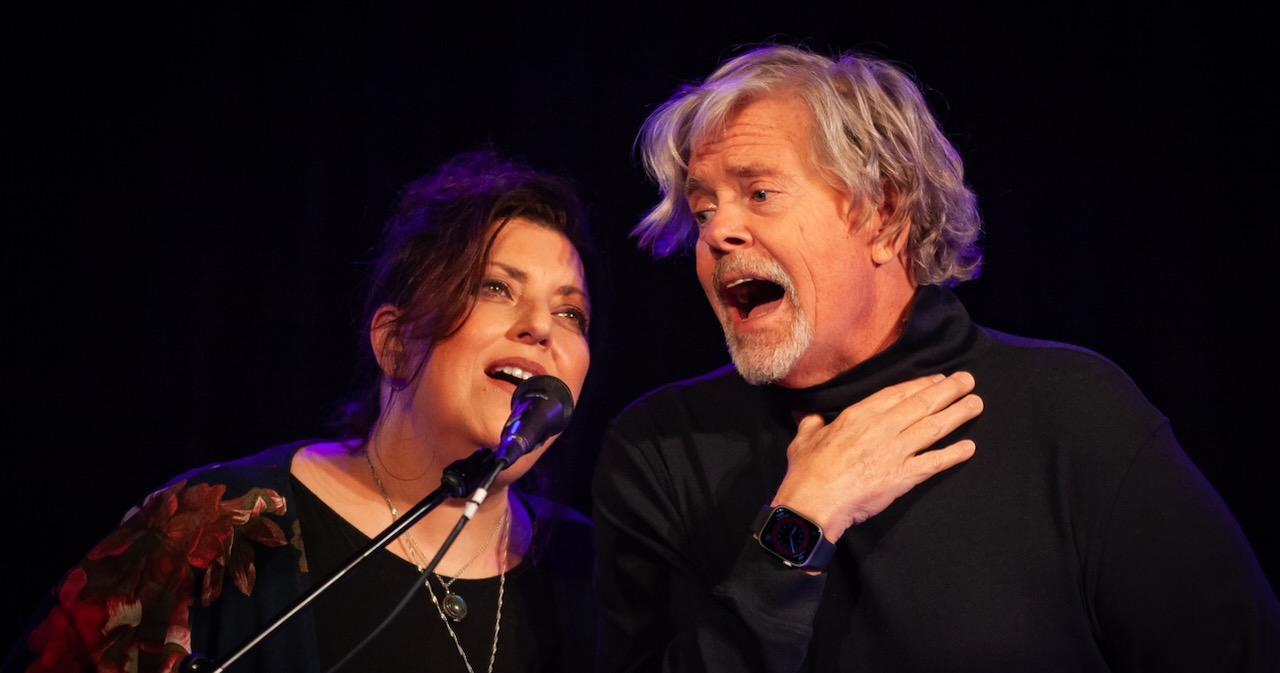
Photo Credit: Jesse Faatz
The Herculean Story Behind Andrea Zonn and John Cowan Becoming The HercuLeons

Andrea Zonn and John Cowan have been among the hardest-working musicians around Nashville for the past few decades. Zonn has done tons of sessions both for her violin and vocal prowess as well as touring with superstars like Vince Gill, Lyle Lovett, and James Taylor. Cowan, a longtime member of the legendary New Grass Revival, also was a founding member of the country-rock supergroup The Sky Kings, has done solo projects, and currently tours as the Doobie Brothers’ bassist. However, they only really started playing together due to the pandemic. Their collaboration resulted in a band called The HercuLeons, whose debut album Andrea Zonn & John Cowan Are The HercuLeons arrives March 21 on True Lonesome Records.

Darrell Scott, Tom Britt, Greg Morrow, Abraham Parker, Gary Prim, and Reese Wynans represent the primary HercuLeons on the album, while Billy Payne, Michael McDonald, Jonell Mosser, John Hall, and John McFee number among the special guests.

Zonn and Cowan spoke separately to BGS for our feature interview all about their unique collaboration, becoming a band, and the debut album.

When did you two first meet?

Andrea Zonn: I moved to Nashville in 1986 and John I think got here two, three, four years before that. I was already a fan of his, but we met and our paths crossed over the years. Then at some point we got called to sing on a session together. I just love singing with him. We became friends and have been great friends. He’s like a brother to me, actually.

John Cowan: Our lives have been continually entwined because of our musical interests, our mutual respect for each other, and because we would get hired to do backing vocal sessions.

How did this particular collaboration come to be?

JC: Right during the pandemic, Andrea and I had gotten solicited to play on a custom project. It was like, “We’ve got three songs for you.” And we’re like, “Okay.” Well, it turns out they had like nine songs for us and we basically just went from the top of the list all the way to the bottom; we were there like 10 hours.

AZ: Then I was just about to call him on my way home, when he called me and we were both about to say the same thing, which is “God, I love singing with you.” We just decided to sort of become each other’s creative bubble during the pandemic. We were thinking we would do something sort of bluegrass-y with [mandolinist] Ashby Frank, [guitarist] Seth Taylor, and [banjo player] Matt Menefee, which was a blast. So, we did a couple of Facebook Live concerts, which is hysterical because we were playing just to the camera.

JC: These kind of young guns guys – Ashby and Seth and Matt – they’re at that time of their lives where they’re just running full speed. They’re just so impassioned and so full of music that you really can’t get somebody like that to commit to, “Hey, let’s be in a band.” By the time we got around to making this record, the personnel had just switched to basically me and Andrea and then we chose the band that we wanted to make the record with.

How did the record come about?

JC: It happened pretty organically. We were talking about making this record. We weren’t even as far as who’s playing on it, or who’s producing or what it is. But I was driving home from my sister’s house in Indiana back to Nashville one day and I heard Claire Lynch doing this song called “Barbed Wire Boys” and I literally pulled my car over because I thought to myself: “Am I hearing what I [think I’m hearing]?” The words were so unbelievably well-written. It was just stunning. I played it for Andrea and I said, “What do you think of this song? Are you just as stunned by the words as I am?” She said, “Absolutely!”

AZ: It just felt like such a timely message in this song, which is that there’s this generation of strong, stoic men who have this really soft underbelly. It feels like there’s not a place for that right now and there’s a real wistful longing for this gentle strength. We were listening to the song going, “What could we do with this?” We were just looking at it as this single standalone thing. Let’s just record this because we love it. We’ve got time on our hands. And the idea just kept growing. It’s like, “Let’s just figure out a way to make a record like this.” Also, with the pandemic [it was] a weird time to make long-term plans

Wendy Waldman produced the album – how did she get involved?

JC: We got a hold of Wendy Waldman, who’s one of my oldest friends and produced many things I’m involved with. Andrea and I made a vocal guitar demo and sent it to her.

AZ: We decided we wanted to slow down [the song], break it down, and make it more of what Wendy calls, “The prairie orchestra sort of thing.”

JC: She worked on it for us – it’s like she went away in a little hobbit in a village of stuff, she came back to us, and she’d written the most beautiful layers of mandolins and acoustic guitar tuned down low.

AZ: She’s like a shaman the way she creates. It’s like you just see glowing aura is coming out of her when she’s in that space.

The idea to do an album grew from there?

JC: That was the beginning of the record. We had that song and we started pursuing it and it would be about sharing tracks and files back and forth from California, which is where Wendy lived, and that was going swimmingly well.

AZ: Exactly. It was like, “Let’s put something beautiful in the world, because I feel like that’s our responsibility as artists.” Especially during these times we’re living in are so full of devastation and difficult things and people need healing. They need beauty. They need that balance. And so that’s where we come in. So, it just started as just this yearning to create something beautiful. And then it was just so much fun, and the chemistry was there.

The album features only 11 songs and those are mainly covers. Was it hard to decide what songs to record?

AZ: It was brutal actually picking songs, because there are so many beautiful and great songs and we weren’t really all that concerned with where the genre markers are. We just were like, let’s just do stuff we love. We’ve just been feeling our way through it. Things that we really felt like we could sing well together were sort of a consideration. It was such an organic process, and it was not a quick process.

JC: I think we got up to 30 songs that we wanted to have a stab at. We kept culling it down. So, this bushel of songs started to reveal itself to us. We opened it up a lot [like] a basket of fruit and you could see which one was going to make it and which ones might get a little too ripe.

One of the things that immediately stands out is the amazing way you two sing together

AZ: We have a lot of the same influences. You know, I call him “The Powerhouse” and I’m sort of a “Powder Puff” so [we] complement each other. He’s just so intuitive and such a great musician, such a beautiful sense of phrasing, and it’s just very easy to fall into place with him

JC: We know each other’s voice, so there’s some kind of internal resonance that’s going on there that you can’t see or feel or touch… You can’t necessarily write it out on a piece of paper. When two singers sing together like that it’s like Baez and Dylan.

The music is remarkably diverse – a vibrant mix of rock, soul, blues, country, funk, and bluegrass – but the album holds a real cohesiveness. There’s a sense of humanism and empathy that flows through the songs you picked.

JC: That’s just who we are. Andrea and I are the same. We’re the perennial man looking for a spirit greater than all of us to bond us to human beings in the world.

That seems to be spotlighted using your single “Face of Appalachia” (an old Lowell George/John Sebastian tune that Valerie Carter had on her 1977 debut album) to raise awareness for victims of Hurricane Helene. It’s a song that has many connections with both of you, right?

JC: Both Andrea and I became or were friends with Valerie before she passed a couple of years, so there’s a huge emotional connection for both of us.

AZ: We just love the song and we wanted to kind of do our little spin on it. Then when the hurricane hit, it’s like we all felt so powerless to help, so we wanted to raise awareness and direct people to organizations that are actually on the ground doing good work. I mean, John and I love the people, the region, the music that comes from there. It’s just such a meaningful place, you know, and your heart just breaks for what people are going through.

If you had to choose a song that’s a good entry point for listeners, what would it be?

AZ: You have to listen to the whole thing. You just have to suck it up and suffer through it, it’s only 11 songs! “Straight Up” would get their attention. Let’s say that it’s short and sweet and it’s just full of a lot of what we do, except for the slow pretty stuff and there’s a great message in that song.

JC: I might say “Face of Appalachia,” because there are two beautiful lead vocals on there, but they don’t appear to be lead vocals. They just appear as these two people singing together. … There’s so much about that track. How the words fit so well with the arrangement. It has shadows and light as well, but a lot of pathos.

The Gregory Porter song we do called “Take Me to the Alley,” I just think it’s a staggering song. It’s basically talking about how people are lining up all these shining things in front of their houses waiting for God to return and then he shows up and he’s like, “I don’t want to see any of this, take me to the alley, take me where the desperate ones are.”


Photo Credit: Courtesy of the HercuLeons.

An All-Star Lineup Salutes Folk Legend Tom Paxton On ‘Bluegrass Sings Paxton’

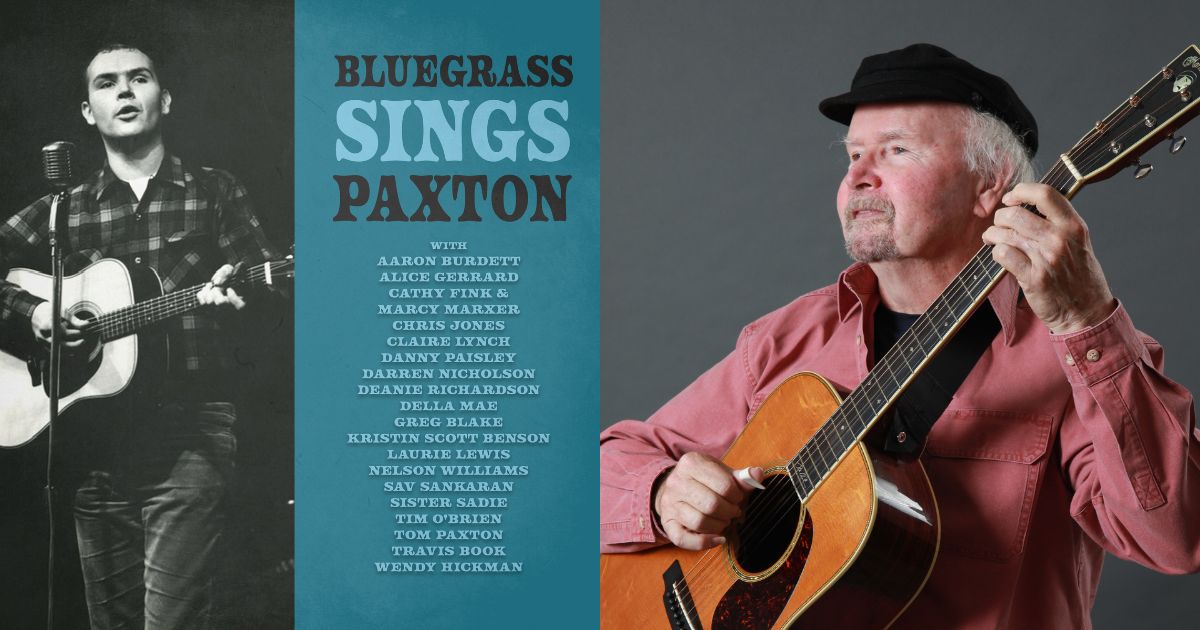
There is no disputing that Tom Paxton is a living music legend. In the early 1960s, he was a major player in the vibrant Greenwich Village folk scene, along with the likes of Bob Dylan, Phil Ochs, and Peter, Paul & Mary. The writer of such classic tunes as “Last Thing On My Mind,” “Bottle Of Wine,” “I Can’t Help To Wonder (Where I’m Bound),” and “Ramblin’ Boy,” Paxton has earned Lifetime Achievement Awards from the GRAMMYs, ASCAP, and the BBC. The beloved songwriter has had his tunes covered by a wide spectrum of acts, ranging from Harry Belafonte and Neil Diamond to the Pogues and Norah Jones. While several fellow singer-songwriters (notably Carolyn Hester and Anne Hills) have devoted entire albums to Paxton music, it took a group of admiring bluegrass musicians to deliver the first multi-artist tribute album of his songs.

Bluegrass Sings Paxton, which came out August 30 on Mountain Home Music Company, offers an impressive lineup of contributors that cuts across several generations of bluegrass musicians. Performers include celebrated acts, such as Alice Gerrard, Claire Lynch, Laurie Lewis, and Tim O’Brien along with younger stars, like Sister Sadie, Della Mae, Steep Canyon Rangers’ singer/guitarist Aaron Burdett, Unspoken Tradition’s Sav Sankaran, and current IBMA Male Vocalist of the Year Greg Blake.

Paxton, speaking to BGS from his home in Virginia, said that he had a mostly hands-off role in the making of Bluegrass Sings Paxton. “I just sat on the sidelines in amazement”; however, he confided, “I was just blown away” after listening to the entire album for the first time. The 86-year-old singer-songwriter was also being a little modest about his own contributions. This collection contains two new Paxton tunes, and he sings on a pair of tracks as well.

The genesis for Bluegrass Sings Paxton started with a conversation that GRAMMY-winning musician/producer Cathy Fink had some years ago with Paxton, who she has worked with since the early 1980s and has known even longer. “I know Tom’s catalog really well and have often thought there was great material there for bluegrass,” she shared with BGS. “I could hear this album before we even began.” The idea further evolved a while later when Fink brought up the idea to award-winning songwriter, producer, and Mountain Home executive Jon Weisberger at IBMA a few years back, and he immediately came aboard.

Several of Paxton’s tunes have been very popular in bluegrass circles over the years. A half century ago, Kentucky Mountain Boys covered “Ramblin Boy” while the Dillards and the Kentucky Colonels were among those who have recorded “The Last Thing On My Mind.” More recently, “I Can’t Help But Wonder (Where I’m Bound)” was a hit for Ashby Frank and “Leavin’ London” is a live staple of Billy Strings’ concerts. However, both Fink and Weisberger thought the project was a terrific way to get Paxton’s deep songbook better known in the bluegrass world. As Weisberger explained, “I had no doubt that there were more [songs] – both already written and yet to be written – that would work well within bluegrass, and that bringing them to light would encourage artists looking for songs to look to his catalog.”

Several acts came into the project with specific songs that they wanted to do. Blake, who fatefully was sitting at the same table with Weisberger and Fink at IBMA, quickly put dibs on “Leaving London.” Danny Paisley, who remembered his dad, ’80s bluegrass star Bob Paisley, taking him to the Philadelphia Folk Festival as a child and seeing Paxton play there, requested “Ramblin’ Boy,” because it was a song his father had performed. “I Can’t Help But Wonder (Where I’m Bound)” was already part of Della Mae’s live repertoire, so doing that tune was a natural fit for them.

When it came to what songs other acts took on, Fink gave the performers a lot of free rein to delve into Paxton’s vast treasury of tunes, a decision that worked out wonderfully. “Each artist made the song their own and it really worked,” she confided. Claire Lynch chose “I Give You The Morning” and Alice Gerrard selected “The Things I Notice Now” from Paxton’s 1969 The Things I Notice Now album. Chris Jones picked “The Last Hobo” from 1986’s And Loving You. Paxton’s 2002 album, Lookin’ for The Moon, was the source for both Aaron Burdett’s selection of and Sav Sankaran’s rendition of the title track. Laurie Lewis, meanwhile, found “Central Square” from 2015’s Redemption Road. In case you haven’t done the math, these songs alone cover nearly 50 years of Paxton’s recordings.

Paxton, too, was thrilled with the selections, proclaiming “I liked every one of the songs that they chose.” While he expected tunes like “Can’t Help But Wonder,” “Ramblin’ Boy,” and “The Last Thing On My Mind” would be part of the set, Paxton said he “was just tickled to death” over the inclusion of such lesser known numbers as “Central Square,” “The Same River Twice,” and “The Last Hobo.”

Chris Jones revealed to BGS that he picked “The Last Hobo” because the tune “felt like a classic Tom Paxton third-person story song, sort of in the spirit of ‘Ramblin’ Boy,’ in a way. It has a kind of tenderness that is so often present in Tom’s songs.”

Jones was also a member of the de facto “house band” that played on the majority of Bluegrass Sings Paxton’s tracks. A secret weapon behind the album, this team of bluegrass all-stars includes IBMA award-winners banjo player Kristin Scott Benson (the Grascals), fiddler Deanie Richardson (Sister Sadie), and Jones on guitar, along with mandolinist Darren Nicholson (formerly of Balsam Range), bassist Nelson Williams (Chris Jones & the Night Drivers, New Dangerfield) and harmony singers Travis Book (The Infamous Stringdusters) and Wendy Hickman.

Jones felt that everyone “clicked well together” and gave the music “a natural sound, which helped give the impression that these were bluegrass songs to begin with, even if they weren’t.” He also credited producers Weisberger and Fink for “coming up with arrangements that really fostered that feeling, too.”

Bluegrass Sings Paxton opens with one of the tunes that Paxton sings on. He was able to join Della Mae on “I Can’t Help But Wonder (Where I’m Bound)” as the band was recording in Maryland, not too far away from Paxton’s home base in Virginia.

“We did it live in the studio. No overdubs or anything,” he revealed. “I had a ball doing that track with them.” Paxton also sang with long-time collaborators Cathy Fink & Marcy Marxer – the three did a double album, All New, together in 2022 – on the up-tempo love tune, “All I Want,” which is also one of the two of new Paxton tunes on the project. The other new number, “You Took Me In” is a co-write with Tim O’Brien and his wife Jan Fabricius. One of the first tunes he wrote with the couple, Paxton said that “it had to be chosen. It’s such a good song.” He described it as “gospel without being gospel,” adding, “I took the literal gospel out of it and kept everything else.”

Fink & Marxer and O’Brien & Fabricius are among the handful of musicians that the still highly-active octogenarian collaborates with via Zoom each week. Folk luminary John McCutcheon, Colorado troubadour Jackson Emmer, and the rising Pittsburgh band Buffalo Rose are also among his regular online songwriting coterie. Paxton says he sometimes writes three to five songs a week. “Lots of folks would retire to the golf course at this point in their lives,” Fink marveled, “but Tom is driven by writing the next song.”

Over the years, Paxton has penned hundreds and hundreds of songs, and more than 60 albums bear his name, beginning with 1962’s I’m the Man That Built the Bridges that was recorded live at New York City’s fabled Gaslight Club. Even from the start, Paxton filled his records predominately with originals, which wasn’t typical at that time. Dylan’s 1962 debut, for example, contained only two originals. Dave Van Ronk, in fact, famously proclaimed in his memoir that it was Paxton who kicked off the folk scene’s “New Song Movement,” not Dylan as often credited.

The best-known songs from his debut, somewhat curiously, are three tunes that might best be described as children’s music: “My Dog Is Bigger Than Your Dog,” “Marvelous Toys,” and “Going To The Zoo.” Writing and performing kids songs was not an isolated occurrence for Paxton, who went on to release several children’s albums, including the GRAMMY-nominated Your Shoes, My Shoes, and to write books for kids. Paxton very much sees himself as continuing the legacy of his heroes, Woody Guthrie, Pete Seeger, and The Weavers – artists who performed all types of songs, from story songs and ballads to children’s tunes and political songs.

“Everything I do is really rooted in traditional music,” Paxton elaborated during his phone interview. “I’m always going back to that well of traditional folk music, Appalachian music, cowboy music. It’s a wonderful tradition – great, great songs, and I just keep trying to write songs that feel the way they felt.”

Paxton cites one specific musician – the late, great Doc Watson – to explains his “best route” to bluegrass music. He saw Watson when Ralph Rinzler first brought him to play in New York City and came away so impressed. “I was very fond of him and adored his music. I think he liked me, too. Doc recorded many of my songs over the years.” He also remembered sharing a bill with Watson once in Tampa and being brought out on stage to perform “Bottle Of Wine.” Paxton was rather intimidated over Watson’s and his guitarist Jack Lawrence’s virtuosity. “Why do I feel like I’m wearing painter’s gloves,” he recalled saying while admitting “it was a lot of fun.”

Weisberger describes Paxton’s place in American music as a unique one. “He was an integral part of the transition from wholly traditional folk music to the more modern conception of the field, with its inclusion of performing songwriters, but where a lot of his contemporaries moved on in one way or another, he went deep rather than broad… I think that’s what makes so many of his songs sound so natural and organic and almost effortless. That is an artistry that is really easy to overlook or under-appreciate, so I’m happy to have put together a collection that will, I hope, bring more attention and appreciation to that still ongoing legacy.”

When asked how his songwriting has changed over the years, Paxton replied that he hopes it’s deeper and more developed, adding rather humbly that “I’m still the same writer I was when I wrote ‘Last Thing On My Mind.’ It’s like a farmer who puts in the same crop every year. It’s the same farmer.”


Photo courtesy of Fleming Artists. Album cover courtesy of Crossroads Label Group.

You Gotta Hear This: New Music From John McEuen, Tom Paxton, and More

This week, banjoist and Nitty Gritty Dirt Band founding member John McEuen kicks off our You Gotta Hear This round up with a track from his brand new album, The Newsman: A Man of Record. Check out his adaptation of a Robert Service poem, “The Cremation of Sam McGee” below.

Plus, we’ve got track premieres from gritty country outfit Tylor & the Train Robbers, from Claire Lynch singing Tom Paxton for an upcoming album, Bluegrass Sings Paxton, from the Stetson Family contemplating mortality, and from the Onlies a rendering of a classic old-time ballad.

Don’t miss our video premiere from Max McNown, too, which posted to BGS just yesterday. It’s all right here and, if we do say so ourselves, You Gotta Hear This!

John McEuen, “The Cremation of Sam McGee”

Artist: John McEuen
Hometown: Oakland, California
Song: “The Cremation of Sam McGee”
Album: The Newsman: A Man of Record
Release Date: April 12, 2024
Label: Compass Records

In Their Words: “Using sound effects, music I composed, and some ‘recording tricks’ with instruments, I concocted the back up for one of my favorite poems, ‘The Cremation of Sam McGee.’ My (late) older sister would sometimes tell her 8-10 year old brother, me, this favorite Robert Service poem from 1906, captivating me with the story of a place unknown. I later found it in my high school English book and fell in love with it again. It takes me away to that strange time in these miners’ lives, and while starting kind of morose, manages (in my opinion, anyway) to reach a ‘happy ending’ with Sam finally getting warm! Trying to make the ‘definitive’ version of this classic was a challenge. It is one of my best ‘works.’ I am hoping each time a listeners hears it they will hear something different show up in the mix, as I planned it to be ‘with surprises’ like that.” – John McEuen


Claire Lynch, “I Give You The Morning” (by Tom Paxton)

Artist: Claire Lynch from Bluegrass Sings Paxton
Hometown: Toronto, Ontario, Canada
Song: “I Give You The Morning”
Album: Bluegrass Sings Paxton
Release Date: April 12, 2024 (Single)
Label: Mountain Home Music Company

In Their Words: “Claire Lynch has one of the most recognizable and expressive voices in bluegrass. We knew we wanted to have that voice on the album and her choice of ‘I Give You The Morning’ was a great call — it’s got an old-fashioned ballad construction, a deliciously unusual yet natural rhythm to the first lines in each verse, a captivating melodic rise in the refrain, and an evocative lyric. And, the band has just the right balance of strength and delicacy to complement those same qualities in her approach. It’s a performance that brings out so many aspects of what makes Tom Paxton’s songs so memorable, and I can’t think of a better way to introduce this project to listeners!” – Jon Weisberger, co-producer

“Since the early 1960s, when bluegrass and the emergent folk revival first crossed paths, arguably no songwriter from the latter world has seen more of their songs adopted by the former than Grammy Lifetime Achievement Award recipient Tom Paxton. From early covers of his epochal ‘The Last Thing On My Mind’ by Bluegrass Hall of Famers, The Dillards and the Kentucky Colonels, to regular performances of ‘Leaving London’ by IBMA Entertainer of the Year Billy Strings, to Ashby Frank’s version of ‘Can’t Help But Wonder Where I’m Bound,’ which landed a place among the 30 most-played tracks on bluegrass radio in 2023, Paxton’s creative visions have echoed in bluegrass studios, on bluegrass stages and in bluegrass jam sessions for generations.

“Now a broad-ranging group of artists in and around bluegrass are paying explicit tribute to this vital legacy in a new Mountain Home Music Company collection — Bluegrass Sings Paxton — that places these classic songs alongside less familiar, but no less finely crafted material from the Tom Paxton songbook, including new songs written especially for the project.” – Mountain Home Music Company

Track Credits:
Claire Lynch – Lead vocal
Darren Nicholson – Mandolin, octave mandolin
Deanie Richardson – Fiddle
Chris Jones – Acoustic guitar
Kristin Scott Benson – Banjo
Nelson Williams – Upright bass


Tylor & the Train Robbers, “Workin Hands”

Artist: Tylor & the Train Robbers
Hometown: Boise, Idaho
Song: “Workin Hands”
Album: Hum of the Road
Release Date: April 12, 2024 (single); May 3, 2024 (album)

In Their Words: “I wrote this one around a guitar riff I had been playing with for a while. The riff is busy, but something about it stuck in my head and I decided to write a song to match it. I wanted to keep the intensity of that guitar part and extend to every instrument in the band, pushing us all musically. Everyone in the band worked to find the right parts that brought it all together. The vibe is inspired by bands like Barefoot Jerry and the Amazing Rhythm Aces, it’s unpredictable and keeps you on your toes. It’s definitely not a song I would ask someone to sit in with us on unless they came prepared, but it’s become a favorite for us to play live. I think it really showcases the musicianship of everyone in the band.” — Tylor Ketchum

Track Credits:

Tylor Ketchum – Lead Vocals and Rhythm Guitar
Jason Bushman – Bass Guitar and Harmony Vocals
Tommy Bushman – Drums and Harmony Vocals
Rider Soran – Lap Steal Guitar
Johnny Pisano – Electric Guitar
Cody Braun – Hand Claps and percussion
Katy Braun – Hand Claps
Jonathan Tyler – Hand Claps and percussion

Recorded at Yellow Dog Studios in Wimberley, Texas.
Producer – Cody Braun
Engineer – Adam Odor
Mixed by Jonathan Tyler.
Mastered by Adam Odor.


The Stetson Family, “Make Me Ashes”

Artist: The Stetson Family
Hometown: Melbourne, Australia
Song: “Make Me Ashes”
Album: The Stars, If You Look Closely
Release Date: April 19, 2024

In Their Words: “‘When it’s time to meet my maker, come the fire or the hole…’ – the words ‘fire or the hole’ come from a conversation I had with a woman who was the owner of a Vietnamese restaurant in Melbourne where my family and I went every Wednesday night for many years. When my mum passed away, Lisa, the lovely Vietnamese owner, asked me in broken English, ‘Does your mum have the fire or the hole?’ Meaning, ‘Will she be cremated or buried?’ I loved her humble way of asking, it was so heartfelt. It got me thinking about when it’s my time, will I have the fire or the hole? This song lets people know I’ve chosen the fire.” – Nadine Budge

Track Credits:
Nadine Budge – Writer, lead vocal, rhythm guitar, resonator guitar
John Bartholomeusz – guitar, harmonies
Colin Swan – banjo, harmonies
Greg Field – fiddle, mandolin, harmonies
Luke Richardson – double bass, harmonies


The Onlies, “Matty Groves”

Artist: The Onlies
Hometown: Nashville, Tennessee; Durham, North Carolina; Whitesburg, Kentucky
Song: “Matty Groves”
Release Date: April 12, 2024

In Their Words: “A couple years ago, our friend Sonya Badigian sent a recording of Doc Watson playing this song and recommended we learn it as a band. Before going into the studio, Leo spent many weeks singing the long, epic poem which tells the story of Matty Groves stealing Lord Daniel’s wife and the dramatic duel that later ensues. This story dates back to 17th century Northern England, closely related to Child ballad #81, ‘Little Musgrave and Lady Barnard.’ When we got together to work up an arrangement, a driving fiddle melody emerged to accompany the lyrics. We recorded it late at night in a small studio in Eunice, Louisiana, with the help of incredible engineer Joel Savoy and the unmistakable bass groove of Nokosee Fields.” – Sami Braman

Track Credits:
Leo Shannon – lead vocal and guitar
Vivian Leva – harmony vocal and guitar
Sami Braman – fiddle
Riley Calcagno – banjo
Nokosee Fields – bass


Max McNown, “Worry ‘Bout My Wandering”

Artist: Max McNown
Hometown: Bend, Oregon
Song: “Worry ‘Bout My Wandering”
Album: Wandering
Release Date: April 12, 2024
Label: Fugitive Recordings x The Orchard

In Their Words: “‘Worry ‘Bout My Wandering’ was probably the most difficult song for me to write as it’s so personal. It came from being far away from my family and thinking about my mom and wondering how she feels about my life and the direction it’s taken. Shooting the video in my beautiful home state of Oregon was very important to me… I just always want to make my family and hometown proud.” – Max McNown

More here.


Photo Credit: John McEuen by Henry Diltz; Max McNown by Benjamin Edwards.

MIXTAPE: Doug Paisley’s Merle Watson Memorial Festival 1994 Playlist

It’s terrifying to imagine now that when I was 18 I got in a station wagon with six other teenagers and drove 12 hours from Toronto to Wilkesboro, North Carolina, to the Merle Watson Memorial Festival. Terrifying because I don’t think any of us had much driving experience, money or sense. I had a big crush on one of the other passengers and would have gotten into the car whichever festival it was going to, but now when I look at the lineup for that year (1994), I’m glad we made it. Over the weekend that crush turned into a romance that lasted for what amounts to a lifetime at age 18, so most of my memories are not of the performers I was listening to who came to dominate my ears for years to come. But the moon-eyed haze I was floating around in tied up my first experience of bluegrass with all the intensity and longing of love and the freedom and excitement of traveling.

I like that bluegrass means such different things to its adherents, but that they all feel it strongly. It can be an exercise in authenticity, an article of faith, a technical jungle gym and an emblem of a time and place in history. It’s a genre that’s small and quirky enough that some people feel they can inhabit, protect and partly own it. Now it’s so embedded in my musical history that I don’t know if I can speak about it intelligibly with anyone who doesn’t already love it as much as I do. Here are some of my favourite songs by some of the artists that were playing at the Merle Watson Memorial Festival in 1994. — Doug Paisley

Alison Krauss – “Endless Highway”

I’m deeply attached to this album and feel that it’s some of the most emotional bluegrass singing. I also love Jeff White’s guitar playing.

Tony Rice – “Walls”

Tony Rice more than anyone else is the reason I am a guitar player and a musician. His many layers of musicality and his broader interests from modern acoustic instrumental music to restoring Accutron watches to his appearance on stage to his insights and comments in interviews make him a fascinating character. I’m so grateful for his time on earth.

Seldom Scene – “Wait a Minute”

When I began to play bluegrass, the high-water mark of what a bluegrass group could be was for me the Seldom Scene. They were such an assemblage of distinct characters. John Starling and John Duffey are two of my favourite singers.

Iris DeMent – “Our Town”

In my daily life I can connect to so much feeling in Iris DeMent’s music, but if I’m going through a hard time I think I’d approach it very carefully because it’s just so powerful.

Peter Rowan – “Moonshiner”

The myriad permutations of Peter Rowan’s music are mind-boggling. On my record shelf he’s the Zelig of great acoustic music.

Emmylou Harris – “Before Believing”

Aside from all the great and probably familiar things we can say about Emmylou Harris, I love her forays into more traditional music — especially on “Roses in the Snow” with Tony Rice on guitar.

Ralph Stanley & The Clinch Mountain Boys – “Sweet Thing” (The Stanley Brothers)

I realize this may not be a landmark tune for the Stanley Brothers, but it always sticks with me and I also love George Shuffler’s guitar playing.

JD Crowe & The New South – “Tennessee Blues”

Once I had finally recovered from the New South lineup with Tony Rice, I then discovered that there was a whole other set of tunes with Keith Whitley on vocals, and my head just about exploded.

Claire Lynch – “Second Wind”

Such a beautiful singer. I heard from dobro player Don Rooke that Claire Lynch may be living up in our neck of the woods now. I hope I get a chance to see her play here.

Tony Rice – “Shadows”

I discovered Gordon Lightfoot’s songs through Tony Rice. He brings out all the power and sadness in this tune.

Doc Watson – “Winter’s Night”

Although I’ve listened to Doc Watson all along I never tried to emulate or learn from his guitar playing the way I did Tony Rice or Norman Blake. There’s something inscrutable and compelling about it for me, and I’d rather take in his music not as a guitar player, but purely as a listener.


Photo Credit: Dave Gillespie

16 Bluegrass Songs for Summer Vacation

It’s summer, our second in the “after times,” where road trips, national parks, and scenic byways are king. As you head off on your COVID-aware vacations this summer, don’t leave all the driving music to indie, easy listening, country & western, or rock ‘n’ roll. The chop of the mandolin, thump of the doghouse bass, and rapid-fire roll of the five-string banjo are just as suited to soundtrack your sunny forays. To prove that point, here are 16 bluegrass songs perfect for inclusion on your summer vacation playlists. (Listen to the full playlist on Spotify below.)

“Highway” – Claire Lynch

Bluegrass being an itinerant livelihood and a nomadic community, traveling songs are just as expected a feature as murder ballads, train tunes (a form of travel song unto themselves!), and moonshine running tales. This modern classic via Claire Lynch — written by Lynch and Irene Kelley — is a perfect example of the form, more ‘90s country offered by a string band than a traditional, four-on-the-F-style grassy track. It’s delightful — and perfectly winsome and longing when you find yourself listening while traveling down the highway.


“Handsome Molly” – Tim O’Brien

Our July 2021 Artist of the Month Tim O’Brien’s rendition of this bluegrass classic is a far cry from, say, a Flatt & Scruggs’ cut. O’Brien’s has a slight transatlantic bent — with a distinct island detour, perhaps through the sunny Caribbean. If you’ve found a craving to set your foot on a steamboat and sail the ocean ‘round deep inside your soul, this one’s for you.


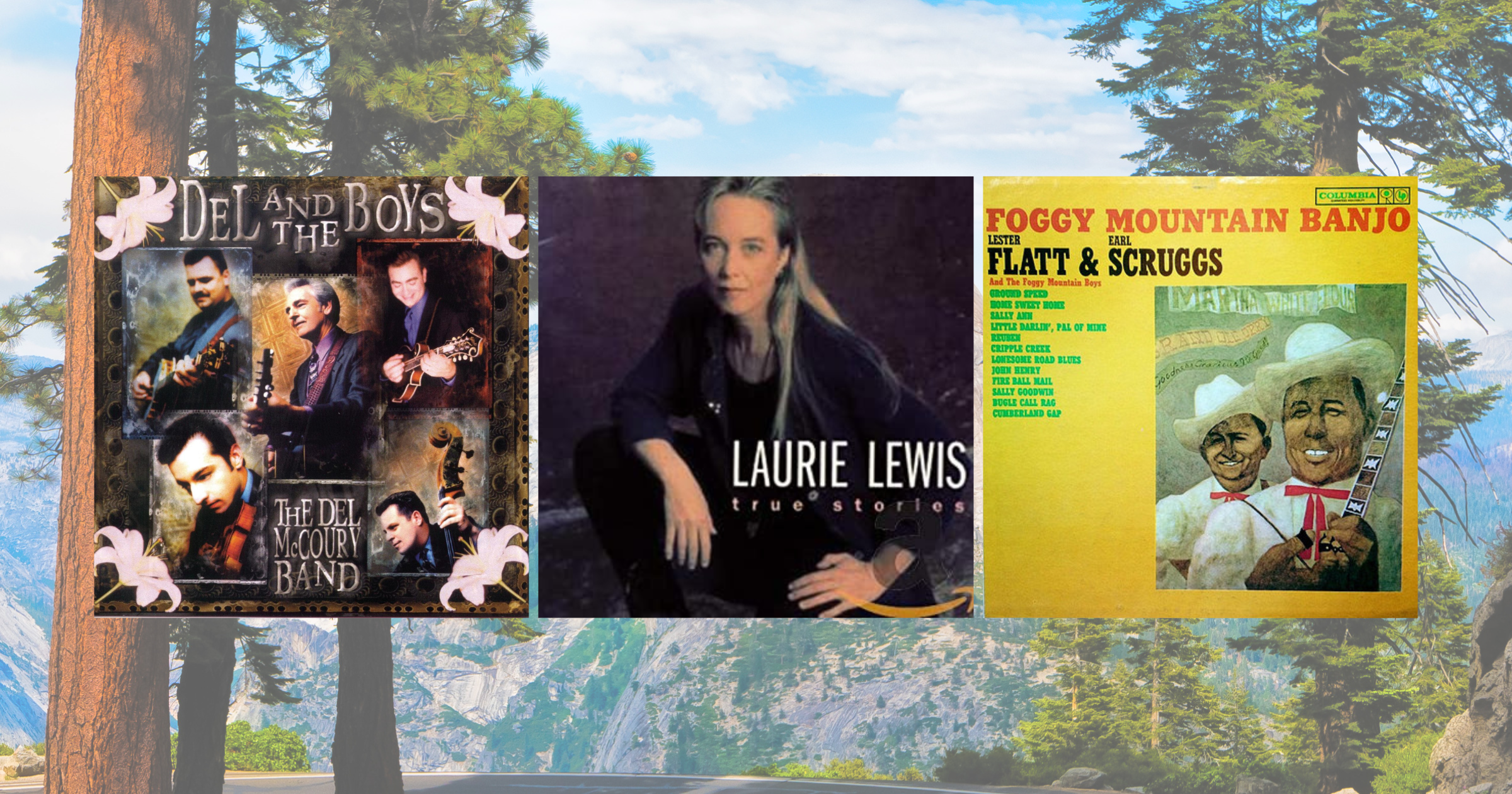
“1952 Vincent Black Lightning” – Del McCoury Band

Another track with a transatlantic story, this ever-popular, most-requested number covered by the Del McCoury Band is a road trip staple — whether you get in or on your vehicle to hit the highway. It would be a sin to make a bluegrass summer vacation playlist and not include “1952 Vincent Black Lightning!”


“Val’s Cabin” – Laurie Lewis

A rare example of a bluegrass song actually about summer vacations, this Laurie Lewis original, “Val’s Cabin,” begins as a simple retelling of childhood memories — nostalgia being a common rhetorical device (and when attempted by many other writers, a well-worn trope) in bluegrass. But Lewis, a veteran through-hiker, wilderness excursioner, and backpacker as well as a Grammy-nominated bluegrass singer and songwriter, tinges the story with melancholy and the existential questions raised by the ever-worsening climate crisis. The song is as evocative as it is gorgeous; though the singer can’t find the way to “Val’s Cabin” any longer, every listener can.


“Paddy on the Turnpike” – Vassar Clements

If you ever happen to find yourself Crossing the Catskills on a summery jaunt, “Paddy on the Turnpike” must be in your listening rotation. Avoid the tolls, but still go for a ride on the turnpike with Vassar Clements’ wild, unpredictable, jaw-dropping, wonky fiddling. “Paddy” is a blank canvas for Clements and a study in bluegrass’ unending affinity for flat seven chords.


“Don’t Give Your Heart to a Rambler” – Tony Rice

A hit in nearly every jam circle that ever circled, “Don’t Give Your Heart to a Rambler” is almost as if “Gentle on My Mind” had been written by a much less kind or compassionate protagonist. Tony’s solo vocal stylings are as iconic as his six-string licks, nearly obliterating any memory of this song ever having been sung by anyone else. What’s more, the titular advice of the track still stands. Just don’t.


“Highway 40 Blues” – Larry Cordle & Lonesome Standard Time

Because “Interstate 70 Blues” just doesn’t roll off the tongue. And that melodic hook should go down in history as one of the best country licks to ever lick! Cordle wrote one built for the long haul with “Highway 40 Blues.” It’ll keep you good company as you go wherever and back.


“Banjo Pickin’ Girl” – Annie Staninec

Is there any better reason to go around this world than being a banjo picker? There are never enough banjo pickin’ girls and this anthem, no matter how many times it’s picked up, studied, and retooled by another banjo pickin’ girl, always SLAPS. (Clawhammer pun intended.) Fiddler and multi-instrumentalist Annie Staninec, who’s traveled around the world making music quite a bit herself, gives an excellent old-time rendition of this favorite.


“A Crooked Road” – Darrell Scott

Darrell Scott turns a literary device pretty common in songwriting on its ear, with a tender eye for detail and emotion that he brings into all of his musicmaking. Life is, after all, about the journey — not the destination. Why not take the crooked, and thereby, the road less traveled? 

Plus, take this song as suggestion: The Crooked Road, Virginia’s Heritage Music Trail, is well worth a visit. Put this song on and take the Crooked Road.


“Up and Down the Mountain” – David Parmley & Continental Divide

Work life doesn’t suit you? Does “paradise” mean a fiddle and the open road? If so, “Up and Down the Mountain” is for you and your road trip playlist. Especially if you’re planning on trekking through the Rockies, Sierras, Ozarks, Applachians, or what-have-you. Turn off cruise control, watch for the runaway truck ramps, and go up and down those mountains! David Parmley & Continental Divide know something about geography and topography, after all…


“Roving Gambler” – The Country Gentlemen


Not sure why you’d be headed to Las Vegas during one of the hottest summers on record, but if you’ve got your sights set on a casino — wherever it may be — crank up “Roving Gambler” and hope your 2 a.m. slot machine binge or your evening “re-learning” blackjack ends more amiably than with gunfire. Speaking of which, perhaps “Blackjack” deserves a slot on this playlist…


“Travelin’ Prayer” – Dolly Parton

The kick-off of one of Dolly Parton’s masterpieces, her 1999 bluegrass album The Grass Is Blue, “Travelin’ Prayer” was actually written by Billy Joel. Yes, that Billy Joel. The original, from 1973’s Piano Man, featured banjo playing by Eric Weissberg and Fred Heilbrun. So of course the tune stands up to the bluegrass treatment and then some, between Stuart Duncan’s haunting fiddle cadenza to begin the track, the rip roarin’ tempo and train whistle harmonies, and the lonesome feeling of being away from your baby while he travels the world. We’re gonna assume Dolly’s blessed pen and ink added the lyric: “And keep him away from planes / cause my baby hates to fly!”


“Road to Columbus” – Kenny Baker

Growing up this writer frequented a bluegrass jam in Granville, Ohio, about 25 miles east of the state’s capital, Columbus. Like clockwork, every week as the jam wound down around noon on Wednesdays, Troy Herdman — a local bluegrass community stalwart, Doc Watson-style flatpicker, and mentor of many who lived in or around Columbus — would call this tune. Everyone would chuckle, and we’d play “Road to Columbus” as everyone, but especially Troy, hit the road to Columbus. 

Herdman passed away last week at the age of 91. I certainly wouldn’t be the musician I was today if it wasn’t for Troy, and I know quite a few others who would say the same. So no matter where I travel, I always keep “Road to Columbus” nearby. Especially when I’m headed home to Ohio.

Many pickers speculate over whether Kenny Baker and Bill Monroe were referencing Columbus, Ohio, or Columbus, Indiana. But, according to Roland White — who introduces the song with an anecdote from his time on the road with Monroe — it’s about Ohio. For this Ohioan, that’s confirmation enough!


“That’s How I Got to Memphis” – Tom T. Hall

His own recording of one of his most popular hits may sound more like straight up and down country than ‘grass, but even the most casual fan of Tom T. Hall knows that this Bluegrass Hall of Famer is bluegrass to his core. If you’re headed down I-40 from Nashville — or, really, towards Memphis from any direction, no matter how direct or circuitous, this song is a must-add for your road trip playlist.


“Where Rainbows Never Die” – The SteelDrivers

This song is about a decidedly different kind of journey, not often referred to as a “vacation,” but even so it’s a poignant, encouraging, and downright delicious song to background any journey. If you’re road weary — or life weary — “Where Rainbows Never Die” is a certified pick-me-up that doesn’t shy away from reality, like the grit and coarseness in Chris Stapleton’s lead vocal wrapping you in its warmth. There’s a comfort in life not being sugar-coated — and in knowing somewhere, west of where the sun sets, rainbows never die.


“Home Sweet Home” – Flatt & Scruggs

Home never feels so sweet as when you’ve just returned after a long, restful, relaxing vacation. So we’ll close our summer vacation playlist with Flatt & Scruggs’ rendition of this tune pulled directly from the American songbook, “Home Sweet Home.” We hope a banjo roll always greets you at your door, and if not, this playlist will at least cover that for you. Wherever you roam, there’s no place like home! And no music like bluegrass.


Editor’s Note: Check out our follow up playlist, Take the Journey: 17 Songs for a Sunny and Warm Summer Vacation

Despite Challenges, Phil Leadbetter Finds Motivation in the All Stars of Bluegrass

There aren’t many people in bluegrass as adored as “Uncle” Phil Leadbetter. From performing for Gerald Ford with the Knoxville Newgrass Boys in 1975 to his work with J.D. Crowe, the formation of bands like Grasstowne, or beating cancer — not once, but five times — Leadbetter has earned his position as one of the most respected and beloved musicians in this familial genre.

His new project, Swing For the Fences, by Phil Leadbetter and the All Stars of Bluegrass, comes out September 25 on Pinecastle Records. While the band lost bassist, vocalist, and songwriter Steve Gulley to cancer between recording and release — as well as their touring schedule, slashed by COVID — Leadbetter is humble proof that we can keep pushing forward and doing what we love.

BGS sat down with Leadbetter to talk about the new release, working with old bandmates, and the dearly-departed Steve Gulley.

BGS: What’s something that ties these all stars of bluegrass together? What qualities were you looking for?

Leadbetter: I put this band together for a show one time, and we had Claire Lynch and Dale Ann Bradley. I was a founder or cofounder of several bands. I founded a band called Wildfire, I was a co-founder of Grasstowne with Steve [Gulley] and Alan [Bibey], which is Alan’s band now, and I was a cofounder of Flashback. With each band, a lot of times people just change directions. Each time I’ve lost the name, so that’s why I put my name out front with the All Stars of Bluegrass. I still kinda scratch my heels a little on it, but as the CD was coming out I had to make a decision. I told the guys, “my name’s out front, but every one of you still has 20% voice.”

On one of these all star shows, I just thought, “man I’m just gonna call ‘em all back together.” I had the chance to put together a show for a radio station, and I called on Alan and called on Steve. I decided that I wanted to do a record. Jason Burleson with Blue Highway, he was automatic. We had Claire Lynch, but she moved to Canada and couldn’t do it anymore. So I go back to Wildfire and I get Robert Hale.

One of our guests, Steve Wariner, he’s a good friend of mine I met during my cancer trip. When I came out of my third remission, he called me and said “listen to your voicemail.” He had written a song about me, my illness, about me and my wife. The song is too personal to record, but maybe one day. I said when Steve Gulley died I probably wouldn’t play again, but I found out I’ve gotta move on and Steve would want me to. With my illness I thought I would be gone first, and I told Steve that if I did, they should keep this band going. I just never expected him to go as quick as he did, like he did.

Steve Gulley, who so sadly passed away last month after a short battle with pancreatic cancer, has worked with you for years. So much in fact that he and his wife Debbie sing a duet (“Yesterday’s Gone”) on the new record. 

We were down to needing one more song. Steve had sung a song on some of his — he and Debbie had a country music show that they would do up in their town of Cumberland Gap — and Steve sung this song a few times. It was a Vern Gosdin tune, and I used to play with Vern a little bit, did a couple of trips with him. Anyway, we were down to one song and I told Steve, “you need to sing this one.” So he sang it, and he did it in one take. 

So anyway, we’re driving home and we’re throwing around names of people we need to call. Claire Lynch, she was with us before Robert Hale came in. So our first thought was to call Claire, but I told Steve I had an idea, “why don’t we get Debbie to sing?” They sent me the tracks and I just got blown away, how good it was. When Steve passed everything just made sense, I called the record company and told them we needed to get this out. 

You’ve been incredibly open with your cancer battles and victories over the last few years, even noting that “5-time cancer survivor” is your greatest achievement, beyond music or awards.

If I was to get twenty IBMA awards, that would still be my greatest achievement. Cause, you can’t get any awards if you’re dead. The very first one was so special because I had my wife and son there. I was pretty sick in 2014, then I got sick again and got well again. Then I got another one in 2019. You know, I just remember all of these so well, because I remember exactly where I was in my health when I got each one of them.

There’s so many good players right now, truthfully I hope the whole ballot will eventually be full with new players. There’s some of these guys out there right now that have moved really far ahead of what I’ve ever done, and so many other players, that it’s time to get some new blood on there, and keep people energized. I’ve had three, and one would have been enough if it meant seeing someone else get the next one.

So many things I would imagine have changed since the recording of this record. What are your thoughts when you listen back to it today?

It means a lot that I got to record with Steve again, and our last thing has been my favorite thing. I’ve done a lot of records, but this went easier than anything I’ve ever played on. I think a lot of it was that me and Alan, we already felt like brothers. And Steve, you add that in and it’s like three brothers. Jason comes in, and Robert Hale I’d worked with in Wildfire and with J.D. Crowe. It was just easy, like working with family. Our plan right now is to announce a new player at some point.

I’m looking forward to the next [record], but not having Steve there will be hard. With our concerts, I’ve made a promise to myself that every show we play will include a Steve Gulley song. So that way we never replace him, we just find somebody for the space.


In the ’80s and ’90s, These 10 Women Made Bluegrass Better

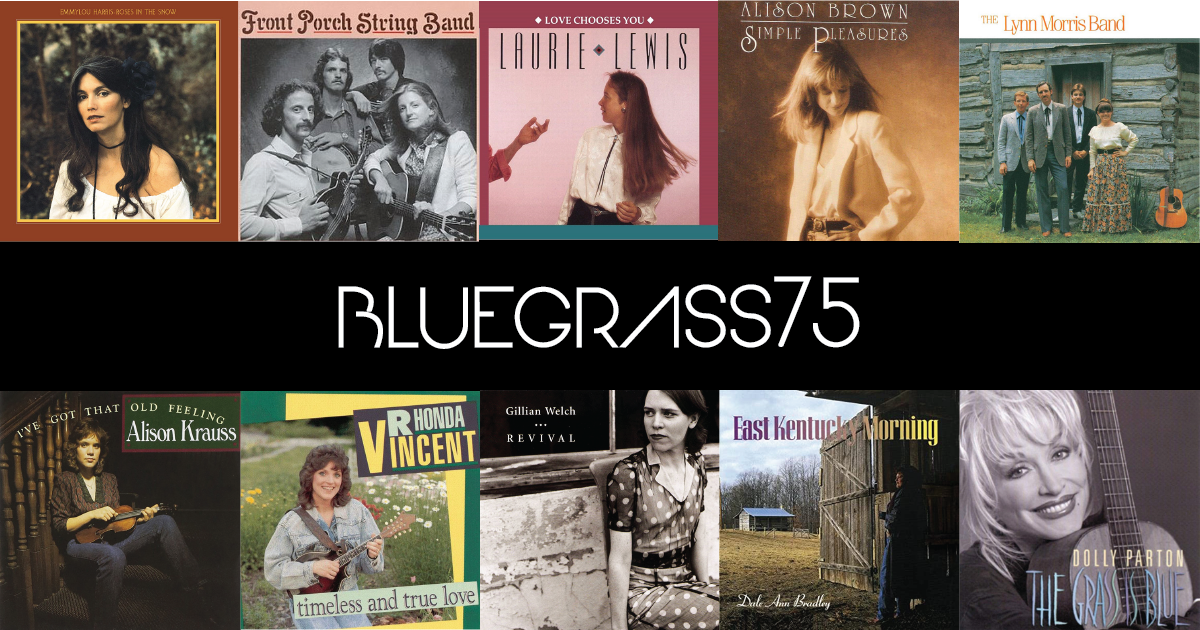
With this year marking the 75th anniversary of bluegrass, it’s remarkable to note that women emerged as a creative force at roughly the halfway point between then and now. Of course, female musicians have been part of the fabric of bluegrass from the start, with Mother Maybelle Carter, Sally Ann Forrester, and Hazel & Alice among those serving as inspirations through the decades.

However, the role of women as bandleaders, rather than in a supporting role, began to change in the ’80s and flourished in the ’90s. As part of our Bluegrass 75 series, BGS commends these 10 women who carried bluegrass forward with a combination of undeniable talent, strong material, and a refreshing new perspective.

Emmylou Harris

One of the most visible country artists of the ’70s turned her attention to bluegrass, with a support team she deserves (Ricky Skaggs, Jerry Douglas, Dolly Parton, etc.) Her material ranges from the Louvin Brothers to Paul Simon, though that exquisite voice makes the album seamless. It’s one of her finest albums in a brilliant catalog.


Claire Lynch

With a crystalline soprano, Claire Lynch first gained notice as a lead vocalist and guitarist with Front Porch String Band, which released an indie album in 1980 that was picked up by Rebel Records in 1983. The poignant track, “Hills of Alabam,” which she co-wrote, shows her gift for melody and her ability to sing with sincerity.


Laurie Lewis

A key figure of the West Coast bluegrass scene, Laurie Lewis can fiddle with the traditionalists, then hush a crowd with a beautiful acoustic ballad like “Love Chooses You.” As the acolyte of a generation before her, Lewis actively takes an interest in the bluegrass scene’s rising talent, as evidenced on her latest work, an album of duets entitled and Laurie Lewis.


Alison Brown

As a picker, Alison Brown has made her mark on countless recordings and won the 1991 IBMA Award for Banjo Player of the Year. She’s also a co-founder of Compass Records, a producer, and a Grammy-winning artist. At times blazing, and other times mellow, Brown consistently finds just the right tone on her albums’ instrumentals.


Lynn Morris

Blessed with a sweet but persuasive voice, Lynn Morris knew how to get the storyline across, whether she’s reminiscing about “Mama’s Hand” or laying down the law in “You’ll Get No More of Me.” As a banjo player, she had incredible chops, and her grace on stage (and off) has made her one of the bluegrass family’s most beloved figures.


Alison Krauss

A gifted vocalist, bandleader, and fiddler, Alison Krauss kept her early career focused on bluegrass, though her material would soon find its way to millions of country listeners, too. Being a former child prodigy herself, she served as a role model for a generation of younger pickers, while showing traditionalists that bluegrass is indeed in good hands.


Rhonda Vincent

Coming up in a family band, singer and mandolin picker Rhonda Vincent has been working in bluegrass for decades, though she’s always finding ways to keep things fresh. Still, her early albums remain some of her most satisfying work. As a bandleader, she keeps the energy up on stage, and her outgoing personality makes her a true entertainer.


Gillian Welch

While few would consider her albums to be bluegrass proper, Gillian Welch has exerted tremendous influence on its community. A 1993 winner of Merlefest’s Chris Austin Songwriting Contest, Welch has seen originals like “By the Mark” and “Caleb Meyer” become standards, and though she didn’t grow up in Appalachia, her songs somehow embody its heritage.


Dale Ann Bradley

A sterling discovery from the New Coon Creek Girls lineup, Dale Ann Bradley launched her solo career by selecting relatable material along with a surprise or two (including a U2 cover). It’s a template that still serves her well. The title track of East Kentucky Morning captures the mood and melancholy that she continues to convey so well.


Dolly Parton

It’s hard to imagine now, but Dolly Parton had dropped off the mainstream radar in the mid ’90s. Then her first bluegrass album proved what her fans knew all along — she represents her mountain people well. A wonderful mix of familiar favorites and new material, The Grass Is Blue solidified her reputation as one of music’s most important voices.

(Editor’s note: Explore more of our Bluegrass 75 Artist of the Month coverage.)


WATCH: Valerie Smith, “From a Distance” (With Claire Lynch and Irene Kelley)

Artist: Valerie Smith (with Claire Lynch and Irene Kelley)
Hometown: Bell Buckle, Tennessee
Song: “From a Distance”
Label: The Single Factory/Bell Buckle Records

From the Artist: “It was an honor to be a part of the recording of ‘From a Distance,’ which sends a powerful message of hope, love, faith, and peace. It was beautifully written by Grammy-winning songwriter Julie Gold. When producer Midnite Mike Pokalsky called me to record this well-known song I was hesitant to do it, because Bette Midler and Nanci Griffith had already established the classic sound and captured the beauty of the lyrics. However, when I was offered the chance to share vocals with dynamic artists Claire Lynch and Irene Kelley in a new acoustic arrangement, I jumped at the chance! The all-acoustic treatment in this fresh new version really captures the meaning in the lyrics because it brings things down to the purest form. True to the song’s purpose, the recording includes a lineup of amazing instrumentalists (Becky Buller, Jim Hurst, Frank Solivan, Mike Munford, Ronald de la Vega, Mike Pokalsky). The world is really hurting right now and we can only hope that a higher power is watching over our big bright blue ball from a distance.” — Valerie Smith

“Wow, I love this beautiful version of ‘From a Distance.’ It is sung with such unadulterated purity. Just straight-ahead honesty. There’s no pretense. Just love. Val Smith gets right to the heart of the song, and right to the heart of the listener. Plain and simple GREAT.” – Julie Gold, songwriter


Photo credit: Lisa Scimeca

Louisa Branscomb: The Songwriter Still Chasing Sunshine Round the Bend

You may not recognize her voice, but you’ve heard her songs.

Louisa Branscomb wrote “Steel Rails,” the song that helped launch Alison Krauss’ career and inspired a new generation of young women to sing bluegrass. She is a talented singer and instrumentalist, with a dozen albums to her name. Yet it’s as a songwriter that she’s had the most influence, both in the industry and among individuals who benefit from her guidance and unique approach to writing.

In Louisa’s words, “The most powerful tool we have to move people, and bring people together, is music. And songwriting is where music begins. The most important skill a songwriter has is not craft or rhyme — it’s empathy, to connect deeply with one’s own soul and to connect to others. Two verses and a little soul can change lives, and when life is changed, the song keeps on going, crossing frontiers in ways we can only imagine.”

Louisa has been writing poetry and stories since she could first hold a pencil. At age 11, she won a composition contest, gaining her a stage performance with the Birmingham Symphony. By the time she finished college, she had written 400 songs and attracted the attention of country star Mel Tillis. He suggested she move to Nashville to work as a songwriter.

But, she told Bluegrass Today, she hated hairspray and couldn’t see herself fitting in with all that 1970s “big hair” in the country music world. Plus, she was “painfully shy.” So, she chose bluegrass over Nashville. In 1971, she played guitar and sang with Bluegrass Liberation, which Murphy Hicks Henry calls “the first modern all-female bluegrass band.” She was one of the earliest women to lead a mixed gender band after switching to banjo. Her band Boot Hill performed her originals, including “Blue Ridge Memories,” a hit in Japan.

Through 1980, Louisa played up to 250 gigs a year. Then a doctorate in psychology, a farm, a passion to teach and later, a daughter, kept her closer to home. She has since become one of the bluegrass industry’s principal advocates for songwriters, a valued mentor and an important contributor to the bluegrass repertoire, having received countless songwriting awards and nominations.

Louisa is as well-known as a teacher as she is for her own writing. She uses her fascination with psychology and her immense compassion to help others express their experiences in words and music. She has founded a number of teaching programs, including the Woodsong Farm Retreat for songwriters on her Georgia farm. Several programs engage elementary school students and foster children. And she has mentored more than a thousand hopeful songwriters.

“Dear Sister,” co-written with Claire Lynch, won Louisa the 2014 IBMA Song of the Year Award. Some of the biggest names in bluegrass have recorded her music. John Denver sang “Steel Rails” on his final album, earning the song’s second Grammy nomination.

A stunning selection of bluegrass musicians joined Louisa for her 2019 album, Gonna Love Anyway. Nearly 50 years after she wrote her most noted song, she recorded a new version of “Steel Rails” on the album. In a tribute to both the enduring appeal of that song and Louisa’s ongoing creativity, Gonna Love Anyway reached #1 on both the bluegrass and folk charts.


Photo courtesy of louisabranscomb.com