Max Allard Wrote a Banjo Concerto

The banjo, a sonic staple of folk and bluegrass, has often been left to its established devices in traditional circles or, more optimistically, among contemporary newgrass like Punch Brothers, the Infamous Stringdusters, and New Grass Revival, which included the genre-bending banjoist himself, Béla Fleck. Still, some musical spaces, like classical performance and composition, remain largely devoid of the banjo despite its lengthy and socially complex history, global presence, and tonal variety. Thankfully, between artists like Fleck, Noam Pikelny, John Bullard, and others, classical compositions have had a chance to shine on the instrument, paving the way for next-generation players to embrace and mix the traditions of classical writing with the distinct sound and musical capabilities of the banjo.

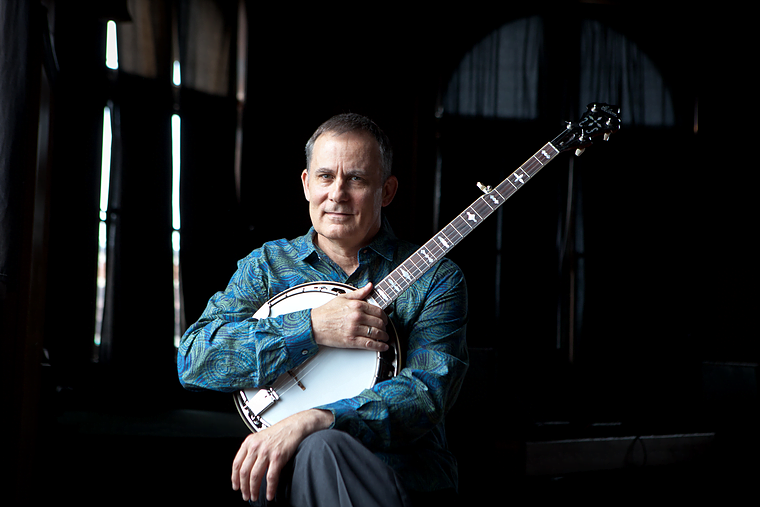
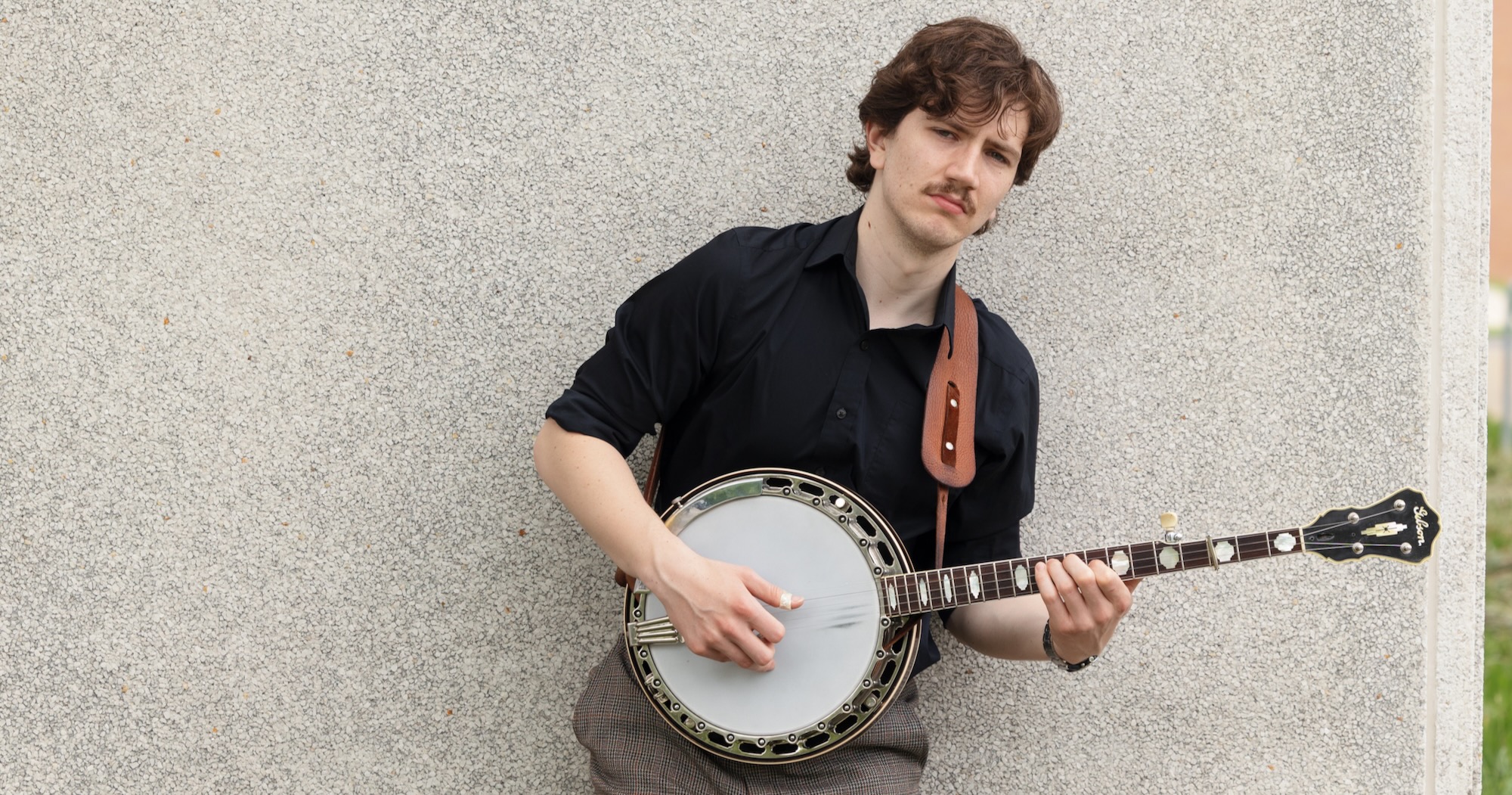
One such figure rising to the occasion is composer and artist Max Allard. A recent graduate of Oberlin College’s Conservatory of Music, the Chicago native is a champion of many cultures and genres in his work, which Allard describes as “an unclassifiable mix of bluegrass, jazz, new acoustic, classical, and pop.”

Allard has brought his stylistic openness to every facet of his artistry, including a duo with his brother Otto Allard; a bluegrass ensemble he co-founded, EZRA, that includes mandolinist Jacob Jolliff, guitarist and composer Jesse Jones, and bassist Craig Butterfield; and his touring support of Michigan-based bands Full Cord and Westbound Situation and Virginia-based band the Hackensaw Boys. Another instance finding him pushing banjo boundaries was his collaborative performance with fellow banjoists Bill Evans, BB Bowness, Cassidy Beentjes, and Matt Flinner in an adventurous arrangement of “In C,” the iconic composition by American minimalist composer Terry Riley, as part of a commissioned work series at the 2025 FreshGrass Festival.

Many of these ambitions grew alongside or after Allard’s studies, giving him several creative contexts in which to nurture his knowledge of classical forms and styles. One of the most impactful of these opportunities was part of Allard’s collegiate work itself: A Concerto for banjo and mixed ensemble. Encouraged by his EZRA bandmate and Oberlin professor Jesse Jones, Allard wrote his single movement work in 2023, giving the world premiere with the Oberlin Contemporary Music Ensemble under conductor Tim Weiss in December 2024. Though the piece has long since debuted, Allard’s vision for what the concerto would accomplish and what the experience of writing it revealed to him along the way remain ongoing sources of inspiration and guidance as Allard continues to write and perform for anyone who wants to listen. (Watch a video of Allard’s Concerto below.)

BGS recently spoke with Allard over the phone, discussing the many branches of his work as an artist and composer. We dive into how each stylistic space blends with his classical training, where he sees the banjo’s place in classical performance, his thoughts on cross-genre efforts by other artists, and more.

How would you describe the journey around your Banjo Concerto and its compositional process?

Max Allard: I had anticipated [the piece] for a while. I had gotten into Oberlin College as a composition major and part of the reason I chose Oberlin is because composition faculty member [Jesse Jones] comes from a background of playing bluegrass. He plays mandolin, some banjo, and guitar so I knew that I would have someone in the faculty on my side to help me, to know where I was coming from and to help guide the path forward in terms of a study and a pedagogy that I had not been taught before. So Jesse told me, “I think it would be great for your work here at Oberlin to culminate into a banjo concerto.”

I had the plan of approaching the banjo as a concert instrument – and as a concert instrument with the supporting ensemble. To do that, I had to get away a little bit from the folk aspects of the banjo in terms of a composition process, while still embracing those same aspects in terms of style.

[The concerto] sort of started as a banjo draft. And something I think is interesting to mention is that people have compared my banjo playing before to piano players and it’s a very valid comparison, because I take a lot of inspiration from piano players like Keith Jarrett, Chilly Gonzales, and many European classical composers like Sergei Rachmaninoff and Frédéric Chopin. I have long thought of the banjo as a very capable instrument to take solo composition very seriously on. I had to find ways to creatively think about which instruments to give various roles to. The nice thing was that I got to pick the makeup of the ensemble. I knew I wanted to have celesta. I wanted to have clarinet, flute with piccolo – there were certain sounds I knew I wanted to include.

I had very specific ideas about which instrument fulfills which role. It’s definitely a string-heavy piece and I’m a huge fan of writing for strings. So I had known that this piece would provide me the depths that the banjo doesn’t always have. I thought, “I can fill out these luscious piano-like chords that I usually like to write on the banjo, with the help of the supporting string section that has a much broader range than the banjo has by itself.” It was actually really liberating for me, because having an ensemble with a very diverse range – not just timbre-ly, but sonically and in terms of highs and lows – I had many options. It was a really great blank canvas for me to further explore creativity without some of the limitations of the banjo, be it physical or range related, or what have-you. I was able to basically apply my banjo knowledge and compositional tendencies to a blank slate, which presented a lot more opportunities.

What are your thoughts on the banjo’s “place” in classical music?

The banjo has a very checkered, problematic history and there’s a lot of moral debate that I’ve witnessed amongst people about what the banjo’s role is. It has had many different roles – a lot of it actually being erased. We talk about the problematic history of the banjo being used for minstrelsy but we actually forget about the banjo’s history of being used in parlor music. For a long time, the banjo actually had a role being played in parlors and social events, and even playing classical music.

I find it funny when people sort of criticize the banjo these days because the reputation has been ruined so much. People tend to think of the banjo with the film Deliverance. That film sort of ruined the reputation of the banjo as being this hillbilly folk instrument that’s not taken seriously. Unfortunately, that stereotype still exists, so people sort of scoff at banjo players who want to elevate the instrument into a certain concert environment.

I think all instruments can be used however people want. It’s like the artist has a final say in how they want to showcase their instrument. But for me, I think I’ll always still want to pay my respects to the traditions of the banjo. And as I said, the banjo has, throughout history, been used in a variety of different contexts. What I try to do is bridge the gap of pedagogic composition and folk music. If we’re talking about my banjo concerto, I want to write well-written concert music but [avoid creating] a totally contrived piece of music that just tries its best to fit the banjo in with an ensemble. I want to at least take my understanding of bluegrass, folk music, and old time music and still amalgamate it with concert music.

What do you find you learn most from other banjo players who have thrived in the classical space like Noam Pikelny, Béla Fleck, John Bullard, and others?

Broadly speaking, if [banjo players] want to put our instruments in the classical space, we need to do our best to understand the way the classic musicians think – really get in the minds of classical musicians. If one, as a banjo player, wants to pursue classical music, it behooves them to get at least a decent understanding of concert music. And I think most banjo players [like Fleck, Pikelny, Bullard] who have attempted that absolutely do have a different understanding. I just think the understanding of how deep it actually goes, what details go into really good concert music – it just takes a long, long time to master. And I am nowhere close to mastering it. But I at least have an understanding of how little I knew before attending [Oberlin].

Are there any aspects of Terry Riley’s “In C” that were especially challenging to capture with this banjo-centric arrangement?

I should give a shout out to Cassidy Beentjes, who did all this arranging – a really good pedagogue of the banjo. In terms of limitations though, the key [was one]. With the banjo’s natural key being G major, we took the piece down to a G-major tuning, so it makes much more sense to play the piece in G, especially since we want to achieve certain overtones. We could have played in C with a C tuning, but a lot of complexity would have arisen from playing in a foreign tuning. We were already uncomfortable in the first place, you know, with a piece of music like this, because banjo players don’t get the opportunity to do something like this very often, so we were careful.

What aspect of your musical identity does EZRA help you to fulfill that you don’t necessarily achieve in the same way with other pursuits?

I’d say it’s a good opportunity to write for a smaller acoustic ensemble where there’s a good understanding of not only folk and bluegrass, but also classical and jazz music.

It makes a big difference when you’re writing for people who you’re friends with – writing for people you know. You want to give people roles that you know they’re going to enjoy doing and that they do well. When I write for EZRA, it’s definitely much more stripped down and basic than if I were writing something like the banjo concerto. Because with the banjo concerto, I give very specific instructions, I supply a whole score with those specific instructions for everyone to read from. And when I’m writing for EZRA, usually I’m just writing lead sheets, just chords with the melody. In terms of arrangements, that can be discussed in the studio.

It’s funny though, because anytime we’ve recorded a record, we’ve had such limited studio time that we have to get our act together in just 72 hours or so and make our arrangements studio-ready. But again, that’s freeing for me, because I can write more vague ideas, stuff that I would not feel as intrepid writing with a big ensemble. When I’m with EZRA, I can just do whatever the heck I want and know that we can get away with it in some way. It’s also definitely a great opportunity for me to write contemporary folk music that is absolutely rooted in folk and bluegrass but also has all these other influences. A lot of Béla Fleck influence, a lot of classical music as influence – all kinds of stuff. It’s definitely a very special opportunity for me.

What’s the most unique aspect about the duo you perform in with your brother? How do you both approach playing together?

I guess the main thing that stands out is just the brotherly synergy. My brother is the easiest musician to play with because we know each other so darn well. Not much has to be planned – there’s almost never any stress. We’ve played plenty of gigs where we haven’t rehearsed at all beforehand and it goes pretty well just because we can glance at each other a certain way and know exactly what we mean musically. We’ve also played gigs where like a half hour has gone by and the whole thing is improvised. We just weave sounds together and it’s great.

It’s great to have a brother who plays music because it’s just that very intense, personal connection that one has with their sibling. You know each other so well that no communication really has to be done verbally. In general, playing with my brother is just very fun because we make crazy, spontaneous decisions and do ridiculous things that we would not do in any other setting.

Do you think the folk and bluegrass communities could better embrace the banjo being a genre-versatile instrument? And do you think that schools or community spaces are the best starting place to initiate that shift?

If I were talking to a banjo player who wants to get into classical music, I would say you can learn just as much by surrounding yourself with the right people. I think the most viable option is to try to meet some people who come from that background. And it can be any background. Like, say you want to get into a certain style – find musicians who can do that and try your best to talk to them, befriend them, whatever you can, and surround yourself with that. I think community is always important in the arts. Definitely, it’s very important to surround yourself with people – not even not necessarily like-minded people – but people who have very different experiences and very different backgrounds. Personally and musically in any way.

I think the bluegrass culture and scene could definitely benefit from opening themselves up a little bit. I think sometimes we forget that bluegrass has a very progressive foundation to it. Even Bill Monroe valued when he heard New Grass Revival. He was supportive of it, supportive of all those people who were taking bluegrass in a different direction. So I think it’s very progressive by nature. And music has always evolved and always will evolve and it has to sort of be accepted.

I think the banjo is actually in a very good place right now, because we’ve never had so many banjo players. It’s very good because the banjo is becoming popular for the right reasons – not necessarily gimmicky reasons, with banjos being used in pop music – but it’s being taken seriously amongst musicians from all different types of backgrounds. Broadly speaking, I don’t have too many complaints. I think it’s in good hands.


Photo Credit: Tanya Rosen-Jones
Maya de Vitry & Ethan Jodziewicz are Seriously Playful on Basic Folk

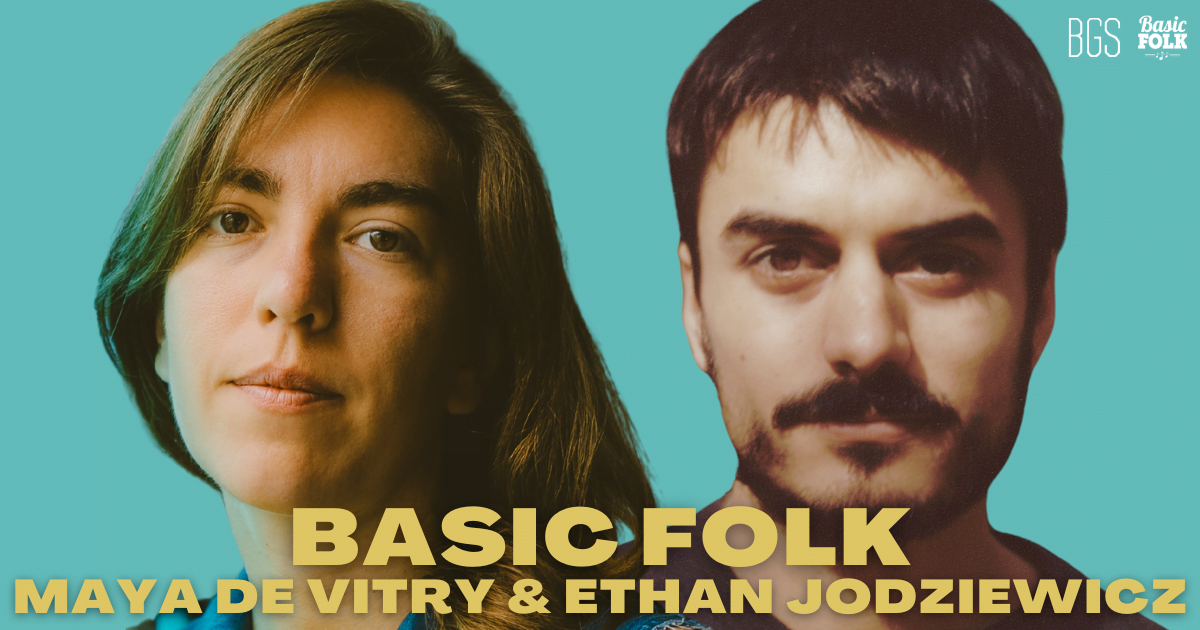
Songwriter Maya de Vitry and bassist Ethan Jodziewicz come to their partnership with an understanding for their chosen lifestyle and a creative playfulness that enhances their connection. While Maya’s roots are firmly planted in folk music, Ethan brings classical music and improvisation to the table. They’ve been collaborating together since Maya’s post-Stray Birds solo career, which launched in early 2019 with her record, Adaptations. Fast forward to 2023, they are back alongside Joel Timmons and Hannah Delynn with the fabulous new EP, Infinite. For the first time in years, Maya is back on the road, while Ethan has been touring basically non-stop with musicians like Aoife O’Donovan, Sierra Hull, and Lindsay Lou. In our conversation, they talk about how it’s helpful to be in a relationship with someone who is also deeply committed to a musician’s lifestyle while understanding when someone needs a break.

LISTEN: APPLE • SPOTIFY • STITCHERAMAZON • MP3

Maya also reflects on her current state of being within her body and how she has trouble recognizing physical pain to the point where she can’t move. She talks of the realization that she had the tendency to tense up when picking up a guitar and how that was because she felt like she didn’t belong. Ethan and Maya share their observations on working within a boundary. Ethan laments that he often works within a boundary with improvisation while Maya speaks of placing limitations around touring and performing live shows. We end this insightful interview with Maya revealing celebrity sightings are her Nashville Starbucks and a very fun Lightning Round called “Which One.”


Photo Credit: Maya de Vitry by Kaitlyn Raitz; Ethan Jodziewicz by Lily Smith

Carolina Calling, Asheville: A Retreat for the Creative Spirit

LISTEN: APPLE • SPOTIFY • STITCHERAMAZON • YOUTUBEMP3


Asheville, North Carolina’s history as a music center goes back to the 1920s and string-band troubadours like Lesley Riddle and Bascom Lamar Lunsford, and country-music pioneer Jimmie Rodgers. But there’s always been a lot more to this town than acoustic music and scenic mountain views. From the experimental Black Mountain College that drew a range of minds as diverse as German artist Josef Albers, composer John Cage, and Albert Einstein, Asheville was also the spiritual home for electronic-music pioneer Bob Moog, who invented the Moog synthesizer first popularized by experimental bands like Kraftwerk to giant disco hits like Donna Summer’s “I Feel Love.”

It’s also a town where busking culture ensures that music flows from every street corner, and it’s the adopted hometown of many modern musicians in a multitude of genres, including Pokey LaFarge, who spent his early career busking in Asheville, and Moses Sumney, a musician who’s sonic palette is so broad, it’s all but unclassifiable.

In this premiere episode of Carolina Calling, we wonder and explore what elements of this place of creative retreat have drawn individualist artists for over a century? Perhaps it’s the fact that whatever your style, Asheville is a place that allows creativity to grow and thrive.

Subscribe to Carolina Calling on any and all podcast platforms to follow along as we journey across the Old North State, visiting towns like Shelby, Greensboro, Durham, Wilmington, and more.


Music featured in this episode:

Bascom Lamar Lunsford – “Dry Bones”

Jimmie Rodgers – “My Carolina Sunshine Girl”

Kraftwerk – “Autobahn”

Donna Summer – “I Feel Love”

Pokey LaFarge – “End Of My Rope”

Moses Sumney – “Virile”

Andrew Marlin – “Erie Fiddler (Carolina Calling Theme)”

Moses Sumney – “Me In 20 Years”

Steep Canyon Rangers – “Honey on My Tongue”

Béla Bartók – “Romanian Folk Dances”

New Order – “Blue Monday”

Quindar – “Twin-Pole Sunshade for Rusty Schweickart”

Pokey LaFarge – “Fine To Me”

Bobby Hicks Feat. Del McCoury – “We’re Steppin’ Out”

Squirrel Nut Zippers – “Put A Lid On It”

Jimmie Rodgers – “Daddy and Home”

Lesley Riddle – “John Henry”

Steep Canyon Rangers – “Graveyard Fields”


BGS is proud to produce Carolina Calling in partnership with Come Hear NC, a campaign from the North Carolina Department of Natural & Cultural Resources designed to celebrate North Carolinians’ contribution to the canon of American music.

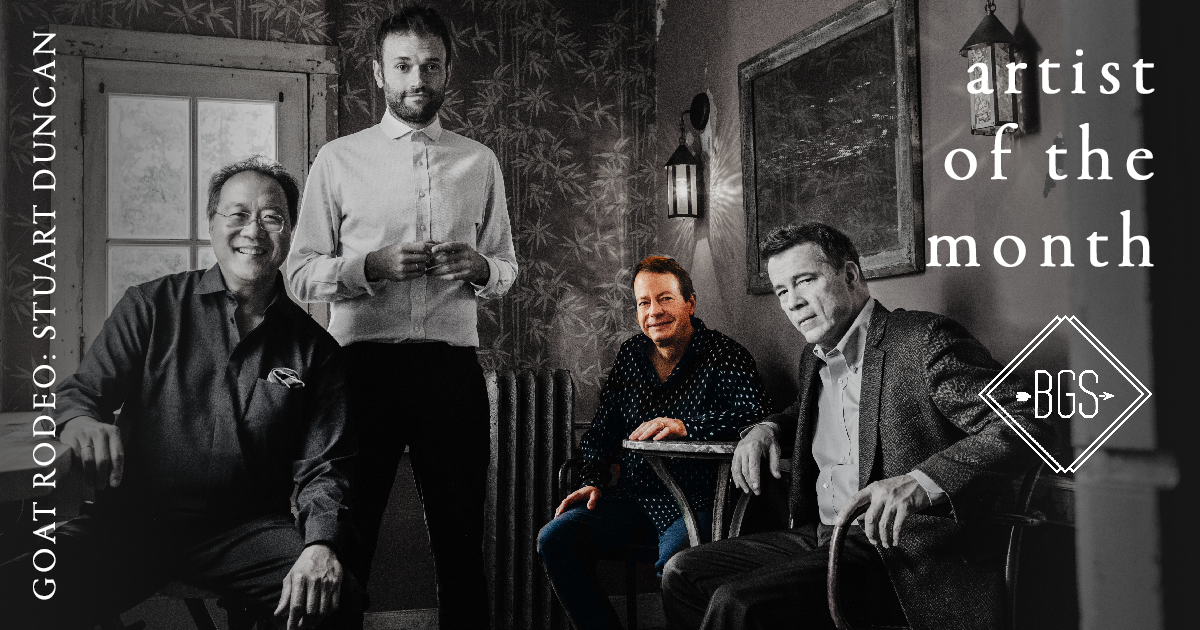
Stuart Duncan’s Coffee Is a Disaster, But His ‘Goat Rodeo’ Fiddling Is Sublime

Stuart Duncan, speaking by phone from his home outside of Nashville, is at a loss over how to describe the beautiful dissonance of the just-released collaborative album, Not Our First Goat Rodeo.

“I think all of us have — even if it is nebulous — some sort of idea in the back of our mind of how we’ll sound performing any given piece of music,” he tells BGS. “As soon as a little bit of rehearsal happens, the glue starts to come together within a very short period of time – 10 minutes, whatever – of rehearsing and talking. ‘Here’s where the emphasis is.’ ‘Make your note a little shorter, Stuart.’ Those things come together really quickly. Then it is just capturing the best performance of those ideas and moving on.”

A multi-instrumentalist who’s perhaps best known for his sublime fiddle playing, Duncan has racked up awards and accolades for his work in the Nashville Bluegrass Band and as a highly sought-after sideman for acts ranging from Garth Brooks and Robert Plant to Diana Krall and Panic at the Disco. The final piece to the Goat Rodeo quartet — which also encompasses Yo-Yo Ma, Chris Thile, and Edgar Meyer — Duncan’s virtuosity contributes crucially to the group’s category-defying sound.

This Artist of the Month interview is the first of four installments as BGS salutes the incredible and iconic musicians of Not Our First Goat Rodeo.

BGS: Your first album together (The Goat Rodeo Sessions from 2011) was described as being partly composed and partly improvised. Was that the same approach this time?

Duncan: I would say even more composed, [although] all the material has some improvisation in it. Certainly for me. But there are things that I have to do the way they are written or else it won’t arrive at the proper conclusion — which is what the whole “goat rodeo” name means. Everything has to go just right or catastrophe happens.

This album’s studio session was only ten days for the ten songs, so there wasn’t a lot of time to fool around.

The writing and the sheet music had to be together before we even arrived at the studio or any kind of first rehearsal. The first album involved at least a day or two of rehearsals, and more time for writing. We had like nine months to get that together. This one was more like nine weeks. It came together fast.

We were staying at a nice home in the Berkshires. We had all of our sheet music laid out. Edgar was taking notes. He was the primary copyist — doing the notations for Yo-Yo’s parts, because he was more familiar that sort of bowing. Last-minute tweaks were happening up until the night, even the day, of the first session.

Were there particular musical pieces you brought to the table?

I arrived with little stabs of things for both projects. The most obvious one this time was the pizzicato hammering on thing in “Your Coffee Is a Disaster.” That’s something I had been working on for a long time. It is something that I sort of arrived on while holding my violin in a recording studio waiting for something to get finished in another room. Just noodling around. Holding the instrument like a mandolin and playing it that way on my lap rather than a bow. It took Edgar hearing that and realizing it was the same tempo — or could be played at the same tempo — as one of his other intros. Playing those together kind of started Edgar thinking: “Hey, what if we sandwiched these two ideas?”

So there was a good deal of puzzle piecing the arrangements?

When Edgar’s bowing his bass, and Yo-Yo’s bowing and I’m bowing, we’ve got a lot of bowing. Lots of sustained possibilities. We like to use this to our maximum potential. Like having the violin go down and the cello go up at the same time — and they cross each other in a moment of dissonance. The bass comes in and provides a counterpoint underneath that strengthens that dissonance and comes to a resolution, we hope, at some point.

The middle part of “Your Coffee Is a Disaster” has some of that — counterpoint of violin and cello not arriving at the same note at the same time but a half a beat staggered from each other.


It sounds like an especially stimulating creative environment.

With the minds of Edgar and Chris on compositions thrown in with what I have to offer, as far as improv, it’s a thick soup — it’s a chowder.

Were there instances of too many ingredients in the chowder?

Oh sure, it’s way easy to go too far. Some folks, even some folks close to me, have said that we should have thrown out a few more things than we did. Other people, you know, are perfectly happy. It is an individual thing. I just want to get comfortable enough with what we did in the studio to perform it again live at some point.

Despite the limited time you four have had together, you all seem to have a great camaraderie.

We had to stop each from telling jokes so we could get some work done, or it would be Story City where we could sit there all day and tell stories. It kept people focused on the job at hand. We were so glad to be together again. It was really great, and we hope for more.

And has some communication shorthand developed too?

There were times when little nuances of translations had to occur between something that Yo-Yo would say to Edgar because Yo-Yo would know Edgar knew what he meant, but maybe wasn’t so sure he knew that Chris would know. Some deep Latin term from the classical world. So, Edgar would then translate the question to Chris, although Chris would probably know a lot about classical music. There were a couple times when Edgar had to reframe the question to ring Chris’s bell, then Chris would have to translate it to me. It would have to go around in a circle before I would understand what was being talking about.

There were some bowing things that happened where I was equally as frustrated at getting it right as Yo-Yo. I remember one time Yo-Yo said, “Why is the bowing so different for this [song]?” It was a piece that I had started writing on the mandolin. And Chris said, “It wouldn’t seem weird to you if you ever wielded a flat pick.”

Is everyone’s very broad musical interests a key factor to Goat Rodeo being such a unique collaboration?

Completely, definitely. Not just because we all have wide interests musically, but also you are dealing with two monster composers who can weave all of that information into something believable, however unlikely the premise might be.

I’ve also heard Yo-Yo say in interviews that he’s listening to everyone else at the same time he is concentrating on playing. His ears are open; he’s not just using his eyes and his musical abilities. That’s a huge important thing for all of us. Because of what other people do, it influences what we do.

We are completely used to that in the bluegrass, jazz, swing worlds where we are trading licks. Someone plays a lick and you echo what they play. Then make it your own and it goes back around. But when you’re dealing with a written piece of music, that is played the same way each time, there are other things you can listen for with each other. Where the note lands. Where someone else is feeling a flourish or a cascade of notes.

Also, you have someone like Edgar, who can write something into a piece of music that sounds like improv. He know to leave a space as if someone was thinking of the next thing to play rather it being right there. He’ll leave a few rests in there as if someone is playing off the top of their head. Leaving space for the listener.

What is one recording that ranks as a G.O.A.T. (greatest of all time) for you?

Apart from all of bluegrass, old-time, jazz, swing, and blues that I grew up playing, loving and still worship, one of my favorite recordings is the Bach: Complete Sonatas & Partitas for Solo Violin by Arthur Grumiaux from the early ‘60s.

You can spend decades appreciating different kinds of music and then you think you don’t like classical music that much or it doesn’t hold your interest. Then somebody hands you something like that and says, “Check this out,” and it blew me away. I’ve been a fan of that recording ever since.

My sensibilities of how to perform a piece of music with Yo-Yo Ma were changed by hearing that recording. I became more sensitive to what was required from a violin to play that kind of music. The more aware, the more you can immerse yourself in what your instrument is capable of doing.

(Editor’s note: Read the remaining installments of our Artist of the Month interview series here.)


Photo credit: Josh Goleman

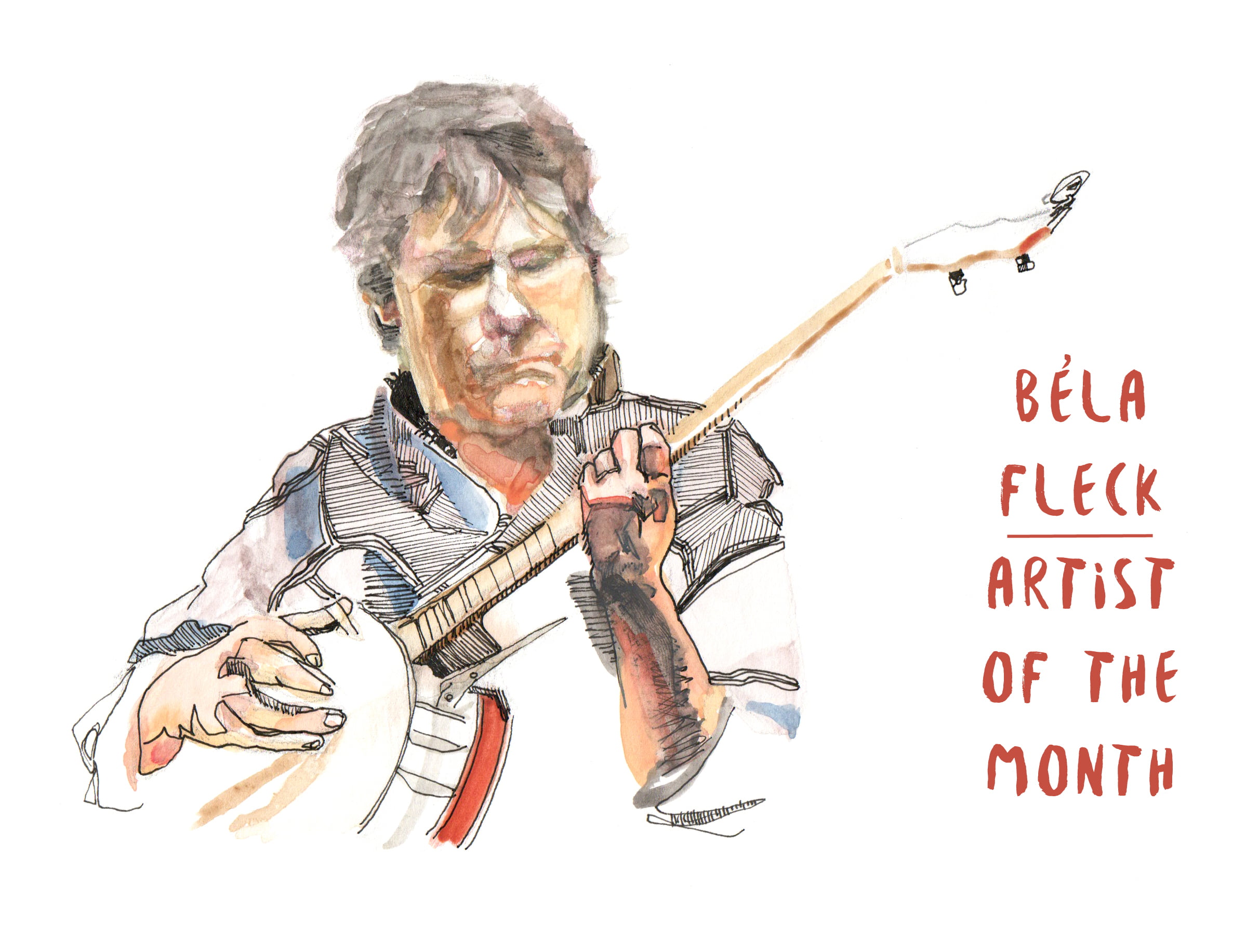
Béla Fleck on Playing His Newest Role

Béla Fleck has explored chapter and verse over the course of his tome-length music career, but there remained one role he had yet to play — father. The world’s most inventive banjo player took on that title over three years ago when he and his wife, clawhammer banjo player Abigail Washburn, welcomed their son Juno. Parenthood inevitably shifted innumerable things for both musicians, not least of which included when and how to write music. “It’s all family-motivated,” Fleck explains about his life now. “How do you find the time to be a musician when you’re trying to be the best parent you can be? It was a new structure that I’ve never experienced before.”

It was especially tough at first. Fleck and Washburn received a standard warning from their doctor about Sudden Infant Death Syndrome (SIDS) prior to taking Juno home from the hospital, which left an indelible mark. “All I could think was, ’I’m not letting him out of my sight. I’m going to have my eyes on him 24/7,’” Fleck recounts. “When he slept, I would sit and watch him all night because we were all so spooked.” Composing at home, as opposed to concentrating on duet or band projects requiring his presence elsewhere, became a way to balance fatherhood with the musical identity he’d long inhabited. “That was the beginning of realizing you can get a lot of work done by yourself when you’re with your family,” he says. Fleck took to using naptime and nighttime to work out ideas he quickly captured on a recorder during other points of his day. “Creativity can be like maple sap coming out of a tree,” he says. “If you don’t collect it for a while, and you go back, there’s a whole bunch waiting for you. It really happens that way sometimes.” As a result of his newfound approach, Juno’s influence is everywhere. “Anybody who has kids knows how that works.”

It’s an influence that extends to Fleck’s latest project and second banjo concerto, Juno Concerto. Besides naming the project after his son, Juno’s thumbprint arises thematically throughout each of the three movements. “As a musician, I was trying to be who I was as a father, and I also wanted the music to express some of the ways I was feeling,” Fleck explains. “Some simpler emotions were coming out that I was not expecting to ever feel before I became a parent. I felt more comfortable with letting them be in the music and encouraging them, while still finding ways to be my complicated self in the middle of it.” The end result is cinematically striking, full of sweeping musical phrases and a seamless conversation between banjo and orchestra. “I didn’t expect to be playing over the full orchestra going crazy, but I had to be very aware of creating textures where the banjo could be heard and then creating places where I was either in support of the orchestra or not playing at all so I could be big and not distracting from the orchestra,” he says. “It’s like a David and Goliath heroic kind of thing, but they’re not competing. At their best, they lift each other up.”

If there’s one singular characteristic to Fleck’s career, it’s his willingness — his inclination — to push boundaries. Having recorded as a solo artist, a collaborative partner, and in an array of bands — including the Béla Fleck and the Flecktones — as well as a variety of styles, Fleck takes pleasure in erasing preconceived notions about where his instrument belongs. “I want it to be on the edge and something that hasn’t been done before,” he says about his approach. “That’s the whole reason to play music: expression and exploration.” Thanks to his boldness, Fleck has done much to quell ideas about high and low art. The banjo may have found its most familiar setting in bluegrass, but over the course of his career, Fleck has helped reveal its historical place in early jazz (bringing it up to speed in the modern era), its African lineage, and now its classical possibilities. “I’d prefer to be a wine that matured and got better than a wine that you need to drink when it’s young, because I’m not young anymore,” he laughs. “I’m trying to say something meaningful and trying to get deeper into honest, pure expression as I play music, whatever music I’m playing.”

Fleck composed his first banjo concerto in 2011 after receiving a commission from the Nashville Symphony Orchestra. “It’s a lot of fun when you’re composing. You’re just sort of ordering everyone around on paper,” he says. Appropriately titled The Impostor, it involved a good deal of posturing; Fleck concentrated — thematically and literally — in asserting the banjo’s place alongside more traditional classical instruments. But he didn’t include a true slow piece for the banjo, following a concerto’s typical fast-slow-fast structure. With Juno Concerto, he set out to answer that challenge. “The banjo tends to do things well that are fast and crisp and clear,” he says. “I made a real point of insisting that the banjo could play slow, as hard as it was to do these gaping spaces. It was a challenge.”

Juno Concerto didn’t fill an entire album’s worth of space, so — as he’d done with The Impostor — Fleck set about adding additional string pieces, recording “Griff” and “Quintet for Banjo and Strings: Movement II” with string quartet Brooklyn Rider. He originally composed “Quintet for Banjo and Strings” with Edgar Meyer in the early 1980s, but never got about to recording it. “It’s so good to have something like that to settle the dust of all the craziness of the pieces I like to write,” he says. And since he’s received one more commission to compose a concerto, he anticipates following suit by combining concerto and string pieces for that next album. “I didn’t intend to do the exact same thing, but then I started to think, ‘Well, if I do it three times, it’ll be a set,’” he says. “Three concertos with three string pieces, that becomes interesting.”

For all his experimentation, it might seem that nothing intimidates Fleck anymore. In fact, the bravery he’s developed by inserting himself into myriad musical conversations only comes about after months and months of hard work. “I’ve done so much stuff that, sometimes, I forget how hard I worked on each thing,” he says. “I have a pretty intense work ethic, and then when I’m done, I forget and I go back and listen to the record and go, ‘Oh that sounds pretty good.’ I don’t hear all the blood and guts that went into getting it to that level. But when I start on a new project, I go, ‘Wow, this doesn’t sound very good. Maybe I just don’t have it anymore. Maybe my good years are behind me.’ But I don’t realize that I spent months and months and months working on those projects that, in hindsight, makes them sound easy.”

If there are ever any doubts about his talent diminishing with age, Fleck’s work ethic seems likely to keep things in check, as well as his son. Growing up in a household with two world-renowned musicians means Juno has developed quite the ear. “He doesn’t realize how much he knows about music from being around it so much,” Fleck says. Still, there’s one point on which they continue to disagree. “He always asks me, when I play instrumental songs, ‘When’s the singing going to come in?’” Fleck jokes. “That kind of bothers me because I’ve made a life of trying to make believe that singing doesn’t have to be there for music to be good. I’ll play him a song and he’ll go, ‘Papa, that’s too long.’”


Lede illustration by Cat Ferraz.

Banjo Man John Bullard Marries Southern and Baroque Influences on Latest Album

The banjo isn’t typically the first image that comes to mind when one considers classical music. For Virginia banjo player and teacher John Bullard, however, the banjo is just as suited to Mozart as it is to mountain music. Last Fall, Bullard released Classical Banjo: The Perfect Southern Art, his third full-length album of banjo interpretations of classical music. The album is an impressively rendered collection of 25 tracks, parts of which Bullard has worked decades to master. 

“[The project] came out of me having a discussion with Jayme Stone, who was the producer and is also a banjo player and has some great albums out,” Bullard says. “He asked, ‘When was the last album you did?’ And it was a long time ago. He ended up being interested in being the producer, so it ended up that we did it together.”

Stone — known for, among many other things, his 2015 Lomax Project — worked on the album with Bullard from its inception, lending a hand with recording, of course, but also with what Bullard considers to be one of the most difficult parts of his musical endeavors: exploring ways to play complex classical pieces on an instrument viewed by many to have limited capabilities. Stone and Bullard found novel approaches to counter such issues, like experimenting with various conversations of backing instruments to make certain arrangements easier to play.

“You’re trying to make the banjo do some things it doesn’t normally do, like sustain a note for a long time,” he explains. “In bluegrass, you pluck a note and it’s a 16th-note and there are a zillion more following it, and it doesn’t matter what happened with that one note so much. But in the classical stuff, sometimes you have a half-note or a whole note, and you have to figure out what you have to do to make this note last and sound okay. It’s really different.”

The pair recruited a number of skilled musicians as well as an eight-person choir to bring Bullard’s vision to life, part of which was for each of the album’s pieces to remain as loyal to their original counterparts as possible. The album also features a solo performance from Bullard, one that was truly decades in the making.

“The fugue, which is the only solo banjo piece on there, which is from Bach’s ‘Sonata No. 1’ for solo violin, is one of my favorite pieces that I’ve ever heard in my whole life,” he says.”I’ve always loved it. I’ve been working on that for, gosh, around 20 years. I initially transcribed it and figured out what key I thought I could play it in — it was written in G-minor and I do it in C-minor on the banjo. I’d done that and, two or three different times, had gotten to where I could play through it very slowly, but it was really hard and I would just say, ‘I think this is too hard,’ and I would put it down and forget about it for a year or so. Then I would pick it back up. I did that a few times. Then it was weird: When Jayme and I decided to work on this project, I picked it back up and finally I could play it. It just, all of the sudden, seemed to come to me. Maybe it needed to percolate for a few years.”

That Bullard was able to pull off playing such intricate pieces on an instrument that has long been excluded from traditional orchestras may seem like a massive stretch to some, but he doesn’t believe that the banjo is that far removed from the sounds of Baroque and Romantic music. “When I first started doing this, what really struck me is that the harpsichord and the lute, to me, sound a lot like the banjo,” he explains. “They’re in a different context, but they’re plucked instruments. So it seemed like a natural thing for me.” 

He also believes classical music has just as large a place in Southern culture as the banjo does — an idea reflected in the album’s matter-of-fact title with hopes of both deterring cultural gatekeepers and inviting new listeners into the fold. “It’s the perfect art form for Virginia gentlemen,” he says. “You’re playing this genteel music, but you’re playing it on the banjo. The banjo puts a different perspective on the standard repertoire of the classical world and lets people get a different perspective on the music. I think and I hope that it will bring some folks into the music that maybe wouldn’t take the time to listen to classical music, and they might decide they like it.”


Photo courtesy of the artist