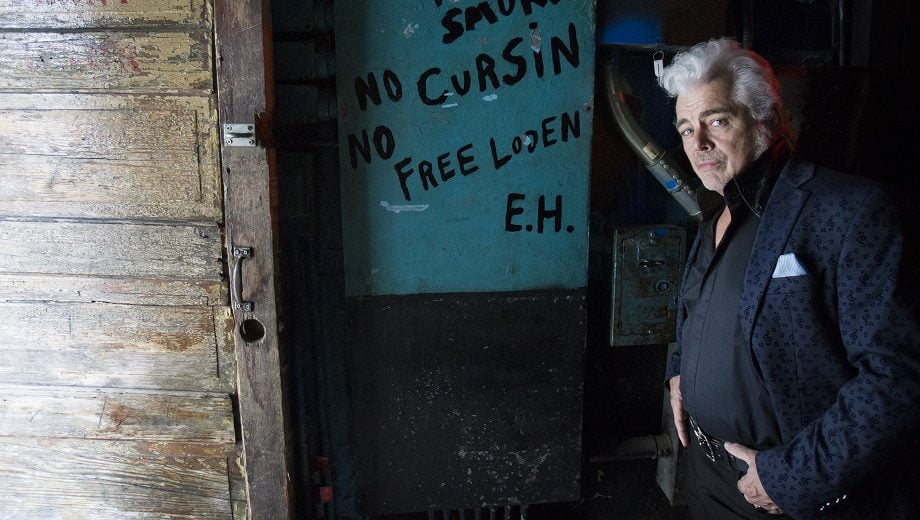
Asleep at the Wheel Navigate ‘New Routes’

For nearly 50 years, Asleep at the Wheel have been anything but that. Since the Western swing outfit formed in 1970, members have come and gone, but bandleader Ray Benson — he of the towering 6’7” frame — has remained the one constant. The Texas institution now boasts musicians from Wisconsin, Washington, and beyond, with influences that inform an ever-widening soundscape. As Benson writes in the prologue to his 2015 book with Dave Menconi, Comin’ Right At Ya: “I’ve always played retro music that’s out of step with the mainstream, but that hasn’t kept me from being ahead of the curve on a lot of things.”

Asleep at the Wheel’s newest album, New Routes, touches on Cajun swamp, Irish traditional music, gypsy folk, and more. Although the band has released multiple tributes to Western Swing star Bob Wills, their new project closes with “Willie Got There First,” a clever tribute to Benson’s longtime friend, Willie Nelson. Written by Seth Avett and recorded with Scott and Seth Avett, the song claims that Nelson has already written and sung practically every feeling that needs to be written and sung.

That may be true, yet one of the band’s sultry new numbers, “Call It a Day Tonight,” marks the first time Benson has written with a member of Asleep at the Wheel since the 1980s. In this case, it’s Katie Shore, an accomplished singer and fiddler who joined Benson for a chat with the Bluegrass Situation.

What was the collaborative process like for “Call It a Day Tonight”?

Ray Benson: It was the first time I had ever co-written with somebody and could use texting and mobile phone.

That would make such a difference.

Benson: Yeah, you didn’t have to be in the same room, or make a tape and send it in the mail.

Katie Shore: For me, one thing that’s hard about writing with someone is I still have to go be alone with it. I think that Ray’s kind of similar. We had time to be apart and we ended up sending ideas back and forth, so the song wrote itself. We were really on the same page. … That’s the thing about this record—it was everybody bringing a piece of yourself and an idea. We recorded close to 30 songs at the end of it, and then had to whittle it down.

Benson: We haven’t been able to do anything more because we’re working: Getting up every day, getting on the bus. It’s been a month-and-a-half tour and a month before that.

That kind of daily grind, for anyone who’s creative, can take that impulse or spark out of the desire to write.

Shore: We spend a lot of time cruising down the road and I’m always trying to write little ideas or jot things down. But we don’t really have any space to get any instruments out, which all of us that write in the band kind of need.

Benson: But then again I wrote a melody today. I was waiting for our hotel room, and it’s like, “Ok, file that away.”

I know that it’s possible to write on the road, but I think there’s a certain kind of mental space you lack too when you’re on a bus.

Benson: Oh yeah. Just energy too. All you want to do is get a little bit of rest, shower, get your clothes on, get something to eat, and then go do the show. [“Call It a Day,”] it’s a good one though.

It is a good one, and I was also dumbstruck by the rhythm and feel you’ve got on “Pass the Bottle Around.” That deep, gritty sound.

Benson: I spent a lot of time in the Cajun world back in the ‘70s. I had this idea — I was listening to Blind Willie Johnson — and I started singing. Suddenly, I realized I had taken inspiration from him. You know, I wrote that for Emily Gimble, who’s Johnny Gimble’s granddaughter. She sang with us for a while. I had this idea for her, then I realized it’s for me. I remember when I brought it to the band, they said, “We’ll put saxophones on it.” I said, “No, no, no, this is swampy.”

It reminded me of Tony Joe White, but I love how you’re taking it in this whole contemporary direction.

Benson: Tony Joe came and played with us on my birthday last year. That’s as high a compliment as you could’ve paid me. I love Tony Joe. He’s the funkiest white man I ever met.

That’s the truth! The album’s title, New Routes, seems to juxtapose the ending song with its suggestion that everything’s been written — at least by Willie Nelson. Do you think there are still new avenues to explore?

Benson: Oh yeah. I started Asleep at the Wheel 48 years ago, and it’s always been a collective. The direction of Asleep at the Wheel is the direction that the personnel are capable of doing. This bunch really have a creative energy that’s going to create a whole lot of cool stuff with the Western swing mode, the gypsy swing mode, rockabilly. That’s what Asleep of the Wheel has always been about—that wide range of Americana music.

What do you look for in terms of your collaborators?

Benson: What we have, which is great talent and contribution. We might be the primary writers, me and Katie, but the other guys write too. Even if they don’t write, the arrangements they do…

Shore: Everybody is such a serious musician in this band. I think that is what’s kept Asleep at the Wheel going for 50 years—a lot of great players have come in and out of this band. What’s cool is a lot of us have been friends for a long time, even some of the younger folks in the band. Everybody comes from a different influence, and yet we all grew up loving the same stuff. It’s cool to see Western swing evolve. Ray hires people for what they can do, and everybody’s really different. We’re kind of a hodgepodge.

Benson: It’s a tapestry, not a hodgepodge. [Laughs]

You said you started off with 30 songs for this album. What was the recording process like?

Benson: Some of them are half-finished and sitting in the can at the studio. I know we’ll use some of them because it was hard to whittle it down to the 10 or so. Then with the Avett Brothers, Seth sent me that song [“Willie Got There First”], and I said to him, “Hey guy, we oughta do this sometime.” He and Scott got together and said, “Alright, we’re going to come down and do it with y’all.”

It is really magic and then to get Bobbie, who is Willie’s sister, and Mickey Raphael, who I’ve known before he joined Willie Nelson. I hadn’t recorded with Mickey since 1974 and it was really neat to have this homage to Willie, and of course Willie being the funny sonabitch that he is, I sent him the song before I recorded it and I said, “What do you think about it?” and he said, “It’s so hard to be humble.” He’s so funny. He’s still got that great quick wit.

I know you have a long history with Willie, but what brought about this tribute? Seth really just came to you with a song?

Benson: I had met them a number of years ago and we were kindred spirits in our love of roots music, so we became friends. [Seth] had read my book with Dave Menconi and we started texting back and forth. He sent me that song because it’s very sweet of him to do that; he knows my relationship with Willie.

In fact, that’s how they met. The Avett Brothers were coming through town and I was putting together that show with George Strait and everybody [an all-star fundraising concert for Texas wildfire relief in 2011]. I said, “Hey, you’re coming through town anyway. You can come up and sing ‘Will the Circle Be Unbroken’ with Willie and us. We became friends. It’s the same thing as the people who drew their inspiration from roots music but create their own modern music.

And they came down to Austin to record the song?

Benson: Yeah, we booked a show with the Avetts and Asleep at the Wheel. That’s how we made it possible for them to come down. They were very generous, and they happened to be coming through Texas in that time period, and it all worked out. As my friend Big Boy Medlin says, “Everything works if you let it.” You have to trust the cosmos is going to come your way when it’s supposed to.

I love that it’s a family reunion in a few different ways.

Benson: Yeah, that’s funny because we cut the track and we were done, and I said, “Seth, I’m going to try and get Bobbie and Mickey to do this.” He said, “Let’s do it. That makes this history as opposed to just another song.” I’m usually against those kinds of songs that mention the name of the song and get so corny, but to me it was poetry. You’ve got poetry, let’s go with it.


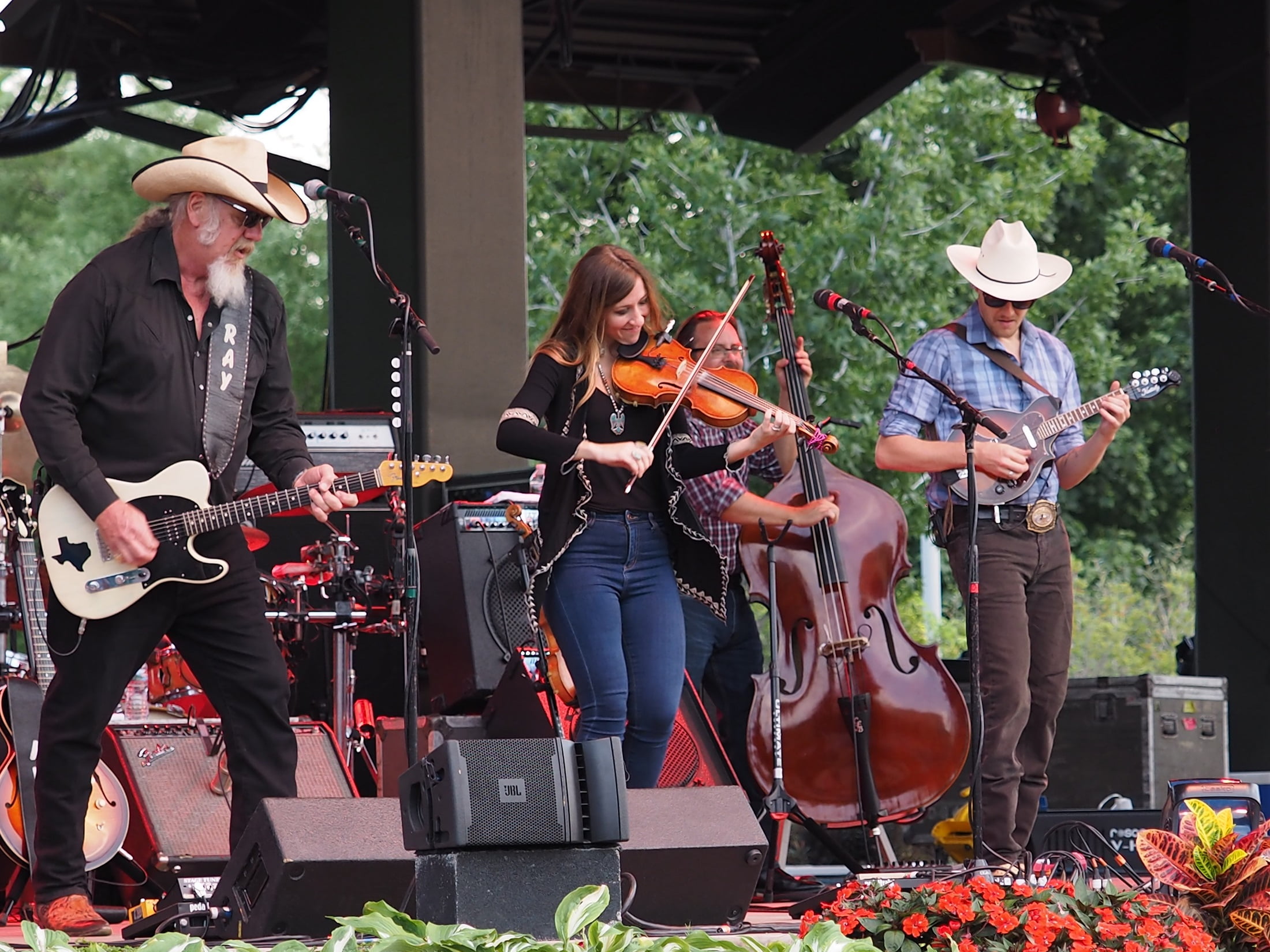
Photo credit (live shot): Patrick Carnahan
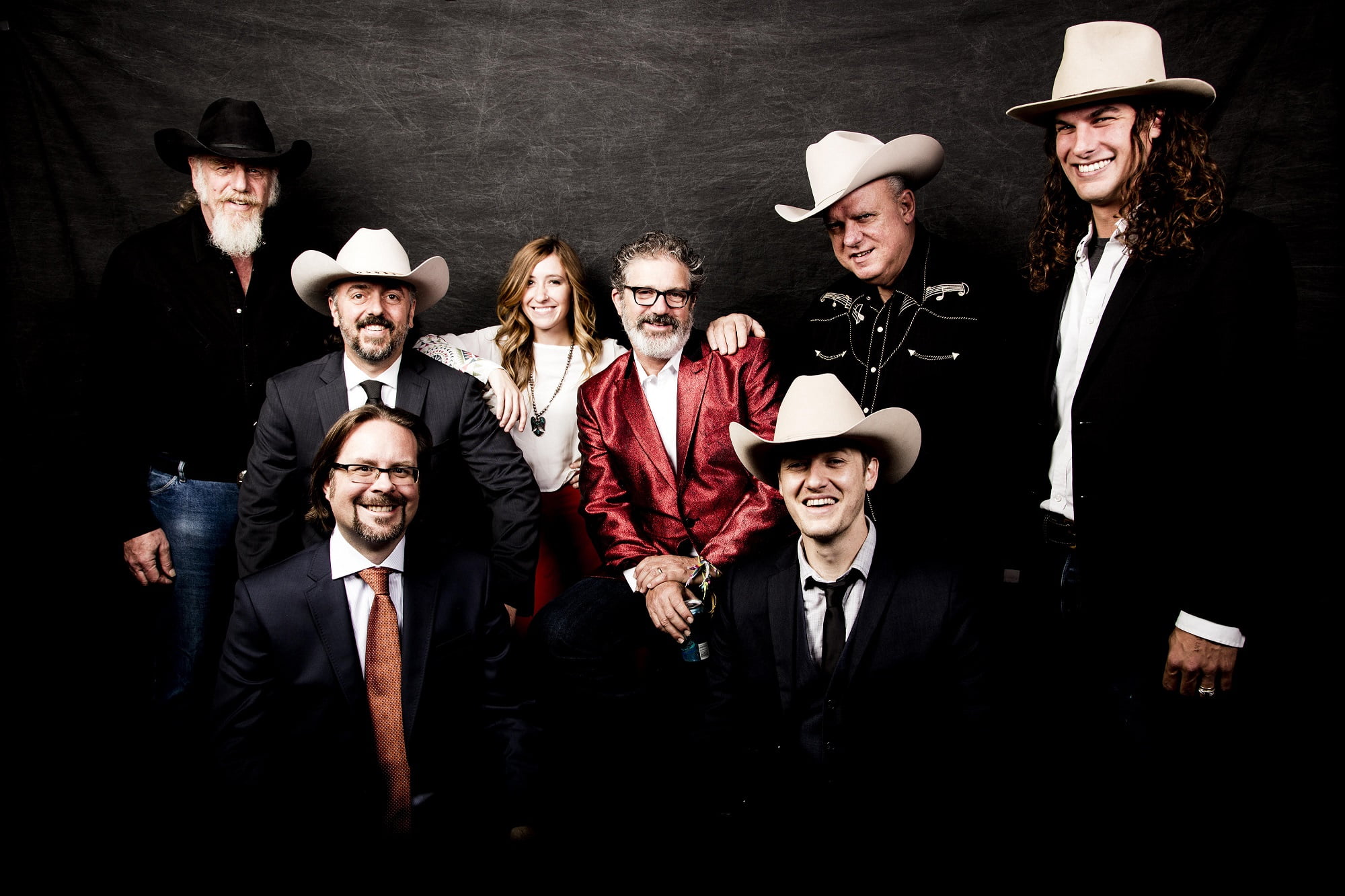
Photo credit (posed shot): Asleep at the Wheel

In Honor of a ‘Savagely Great’ Singer: A Conversation with The Time Jumpers’ Vince Gill & Kenny Sears

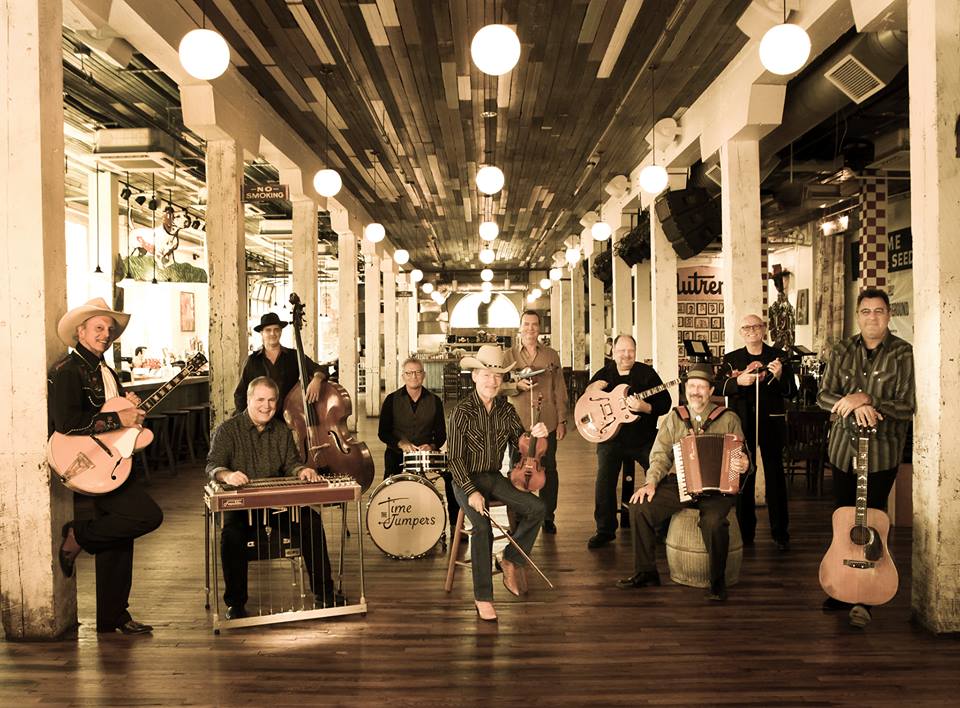
Any fan of roots, country, or Americana music has surely heard the Time Jumpers before — rather, they’ve likely heard at least some portion of the Time Jumpers before. A top-notch collection of session musicians, songwriters, and performers, these star players have made Monday nights in Nashville — first at Station Inn, now at 3rd & Lindsley — an international destination for fans of traditional country and Western swing music. The regular lineup features industry legends like Vince Gill, “Ranger Doug” Green, Jeff Taylor, Billy Thomas, Larry Franklin, Brad Albin, Joe Spivey, Kenny Sears, Paul Franklin, and Andy Reiss, whose names are sprinkled across the liner notes of some of the biggest records in music history — within country’s confines and beyond.

As the Time Jumpers, the group’s standing live gig has led to tours, studio sessions (keep an ear out for the band on Kacey Musgraves’ upcoming Christmas album), and most recently their own original full-length, Kid Sister. The album has been more than two years in the making, finding its meaning in the tragic loss of Time Jumpers’ female vocalist, Dawn Sears, whose husband Kenny remains an integral part of the group.

The Time Jumpers are a bunch of individuals who have plenty of other musical outlets in their lives. Where does this standing gig with the Time Jumpers and the music you make together fit into your life?

Kenny Sears: We actually got started jamming in the dressing room over at the Grand Ole Opry. There were several of us that would get together in the dressing room, and we were playing Western swing and traditional country kind of things. We had such a good time doing that we decided to find us a place to play — play once a week — and just have fun with this.

A former member, Hoot Hester, who just passed, and I were playing fiddles and he found the Station Inn, which had always been closed on Monday night. They had never had a show on Monday. It worked out perfectly, because Monday was a good night for us; it didn't interfere with anything else. That's how we started. We just started getting together to play for fun.

In those days, we outnumbered the audience most of the nights, but we didn't care. We didn't care! It's not why we were there. We were just doing our thing and having fun and people found out about it. The crowds grew and grew. We outgrew the Station Inn and had to find a bigger place because we were turning away so many people. There'd be people coming from other countries — they'd come and plan their vacation around Monday night and then they couldn't get in. So we started playing at 3rd and Lindsley, and now we pack that out every Monday.

Vince, you came along later — what got you into the group?

Vince Gill: It's just a bunch of great musicians that play predominately a lot of Western swing music, which I grew up listening to — being from Oklahoma and immersed in that world. They played every Monday night, and several of my friends were in the band. I found myself down there on a lot of Monday nights just listening and occasionally sitting in.

They started asking me to sub for different people that couldn't make a Monday. One thing led to another and they said, "Would you ever have an interest in being in the band?" I said, “Sure, I could do this,” honestly thinking it was going to be predominately Monday nights. I was never working very often on a Monday, so I said yes. Then everybody wanted to make some records, so we stated making a few records. Then we had the opportunity to maybe go out and do a little bit of traveling and do some gig dates, so that's been fun. It's blossomed into more than I thought it would at the get-go, but it's just always been about trying to play great music with great musicians. Those guys are a great example of that.

More than anything else, these gigs just sound like fun. Do they affect the way you approach your other projects?

VG: I think, at the end of the day, what this really does is make me a better musician. Getting to play with these guys and play more of a bee-bop and swing and jazz spirit than so much country and blues or rock 'n' roll or any other those things that I normally associate myself with. It's a chance for me to become a better musician and a little more well-rounded.

KS: Most of us have made a living recording for other people most of our lives, and that training just conditions you to be somewhat of a chameleon. You have to be able to play any- and everything, if you want to eat. We're all pretty good at adapting, you know.


For

I don't know if Time Jumpers affect other recordings, but all of that experience certainly affects Time Jumpers recordings. When we go in there, we kind of just get together and work out arrangements on the spot. There are no egos involved, so we just choose the best ideas. Everybody throws in an idea and we're all very good at picking what works, and we'll go with that, no matter who came up with the idea. We do that when we're recording for ourselves.

VG: It’s a lot of fun. We all call it therapy — go down there and get to play what we love. All the guys in this band are people that play for other people, or record for other people, travel with other people. It's the one avenue where everybody gets to play what they want and they have their own voice. It's kind of neat to see a band of musicians that had always been hired guns, for the most part, get to do what they want to do.

What do you love most about this kind of music?

VG: I just think it's a fun feeling. Music makes you feel good when you hear this swing beat.

I joined the band and wanted my contribution to be from a songwriter's standpoint. They have plenty of great musicians and I'm chipping in and playing some guitar and all that, but to have this kind of band with original material? I think it makes us more interesting. If we're all just out there rehashing the same songs that everybody else has been doing for the last 60 or 70 years, that's fun, too — but if we could have a presence of our own songs that feel like they're steeped in the history and in the way that kind of music feels …

I've always felt that it was a great task to write a new song and make it feel old. Not all new songs have to sound like new songs. They don't have to sound like what's going on today. On this record there's a song called "True Love Meant for Me" that sounds like an old pop standard from the ‘40s. It is possible to write those kinds of changes and those kinds of melodies, lyrics included. That's what I think is the unique about this band is the material we choose. We have an original presence.

This project, in particular, has been in the works for at least two years. Tell me about how Kid Sister came about.

VG: I had written a bunch of songs I thought suited and fit the band, so we decided to start a new record. Right after we started the record, Dawn [Sears] unfortunately fell ill and was diagnosed with cancer. She kind of lost her voice, so we shelved the record hoping that she would get better and we would just pick it up when she got better.

KS: We put it on hold for a year-and-a-half and during the time, of course, she passed. In the summer this year, we talked about it and decided that she would want us to finish this and continue on. And so we did: We sucked it up, went in, and finished recording the album.

VG: What started as just a normal record, in some ways, became a way to honor her. The first song on the record was a song that was the first thing we cut for the record. We never did get her vocals finished on it — we just had the track vocals when we cut the tracks. I didn't quite have enough to put together a complete vocal that would have passed her litmus test. She was a savagely great singer. So we came up with the idea of maybe making it a duet with Kenny.

KS: It was Vince's idea. He said, "How do you feel about singing this and we can keep the tracks?" So I said, "Okay. Well, let's see what happens." So I did. It wasn't exactly in the best key for me, so there were some lines that weren't very good, but I did. He realized the ones that she had recorded that were good were not the ones that I had, so he was able to put it together and make a duet. That's how that happened.

VG: I actually like it as a duet. So there we had a piece of Dawn singing that we didn't expect to have. The next song on the record is a song called "I Miss You" which was a song that I had written for a record of mine a couple years prior that Dawn had sung with me on. So I had a finished, just splendid vocal of the two of us singing together on this song. I thought, "I've got this song. What can I do here?" So I got the Time Jumpers to come and replace the music, play it in the style that they play in. Then we kind of re-did the song to our vocals.

You originally co-wrote “I Miss You” with with Ashley Monroe, but you re-wrote the lyrics for this album. Tell me more about that — how did it change to fit with the overall theme of Kid Sister?

VG: The original song was a song about a breakup. It started out, "Oh, how I'd wish you'd stay, your sweet love I'd betrayed.” It was in that vein. I needed to make it more about the loss of someone rather than a breakup. Then the lyric changed to "Oh, how I'd wish you'd stay, all the memories we made. I'll always wear your ring for the comfort that it brings." Then the lyric is very pointed and more about the truth of what we were all dealing with …

The last track on the album is a song that I wrote for Dawn the day after she passed. She sang in my band for, gosh, over 20 years, and was a great, wonderful harmony singer with me and sang on many of my records. She entertained live with me for all those years and she felt like my kid sister that I got to sing with.

KS: That's a song that he wrote for her funeral service. That's what she wanted. She wanted Connie Smith to sing and Vince to sing and I said, "Well, what do you want them to sing?" She said, "I don't care. Whatever they want to sing will be fine." Vince wrote one and he wrote that for her.

VG: Therein lies the reason for that song and the name of that record. We all wanted to honor our sweet friend, you know?


For more from Vince Gill, read his conversation with Margo Price.

STREAM: The Western Flyers, ‘Wild Blue Yonder’

Artist: The Western Flyers
Hometown: Fort Worth, TX
Album: Wild Blue Yonder
Release Date: July 29
Label: Versa-Tone

In Their Words: "Wild Blue Yonder is a labor of love for us Western Flyers. This is a recording of three great friends who share the same passion for playing music deemed obsolete by record labels and industry executives all across America. However, we find lots of fine folks everywhere who share our passion and enthusiasm for timeless, well-crafted music.

The songs on Wild Blue Yonder are a collection of the music we love — authentic Bob Wills-inspired Western Swing, hot jazz and swing standards, cowboy tunes, classic country songs, and toe-tapping, old-time fiddle tunes. Great lyrics, great music, and great musicianship never go out of style. Wild Blue Yonder is our tribute to the music and musicians we love from the 1920s to the 1950s. It is our hope that the album inspires folks to jump into their time machine and revisit the wonderful songs from this special period of American music." — Joey McKenzie


Photo credit: Ben Bohorquez