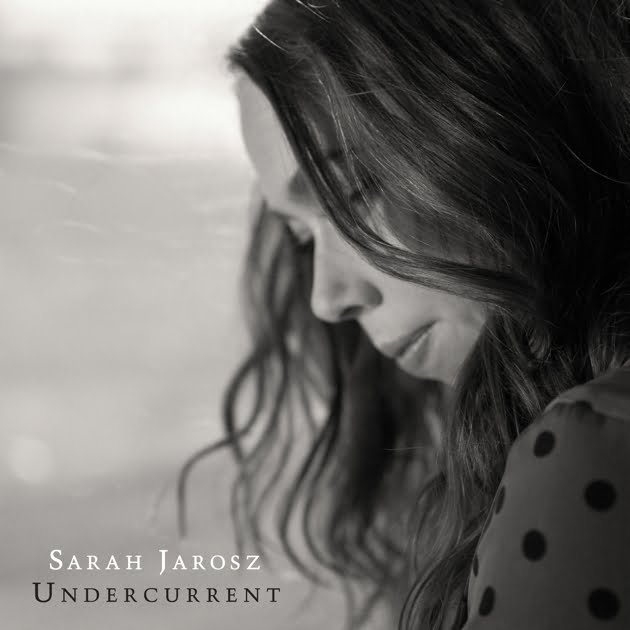
Sarah Jarosz, ‘Everything to Hide’

There's something about Sarah Jarosz that gives the impression that she could — and might — make any or every kind of music known to man. Though a prodigy on the banjo and mandolin, she treats her instruments with the mastery of both a studied, careful hand and what seems to be an infinite amount of natural talent: Together, they are a most precious weapon that she uses to create an atmosphere filled with smoke and mystery on her fourth album, Undercurrent, never resting on her proficiency to showboat away. People who have studied at the New England Conservatory of Music, been nominated for a Grammy, and snagged a record deal at the age of 16 might fall into the trap of wanting to prove how deserving they are of those credentials, but not Jarosz. There is a calm control over her sonic world, a way of treating roots music with a slick sophistication that it so sorely deserves.

On "Everything to Hide," a stark and ethereal track that features Jarosz's vocals and picking alone, nothing is lost in what is near deceptive simplicity: Where some might load a moment like this with orchestral embellishments or punches of percussion, she tells the story with the fewest tools, yet the most power. She virulently pushes and pulls with each note, like the dangerous romance that sits at the backdrop of the song. "When I'm with you baby, we've got everything to hide," she sings, burying those secrets in the music — if we listen carefully enough, they're all ours to discover.

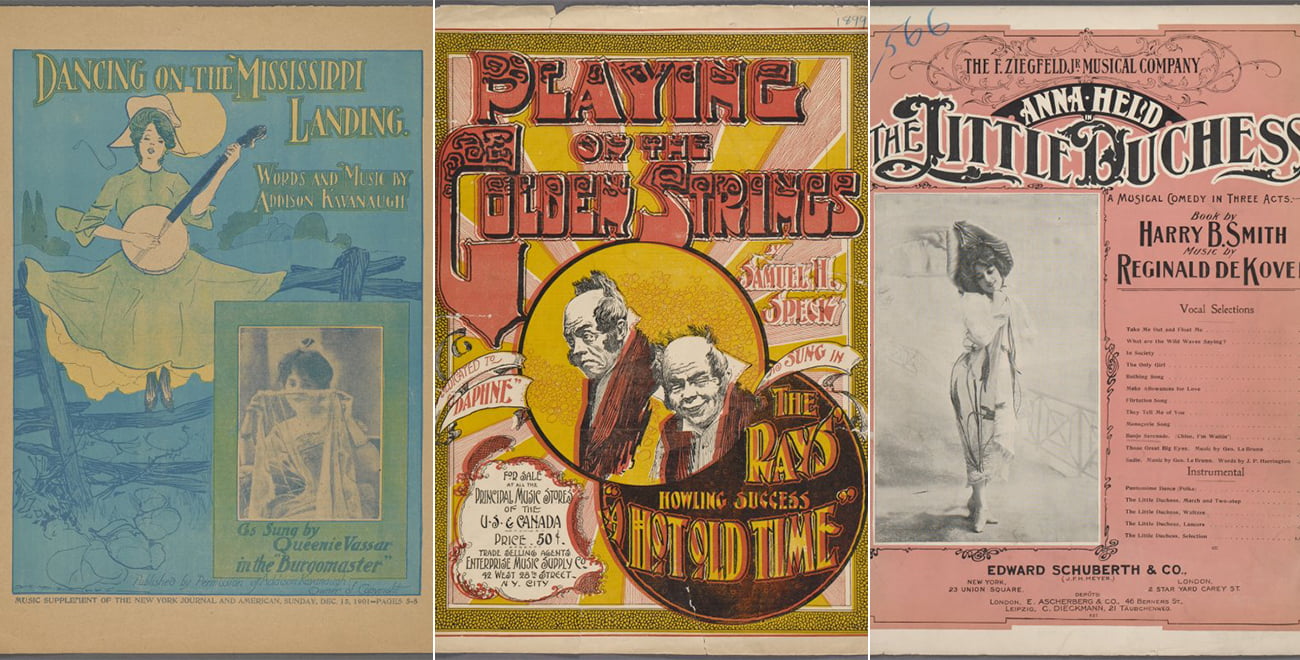
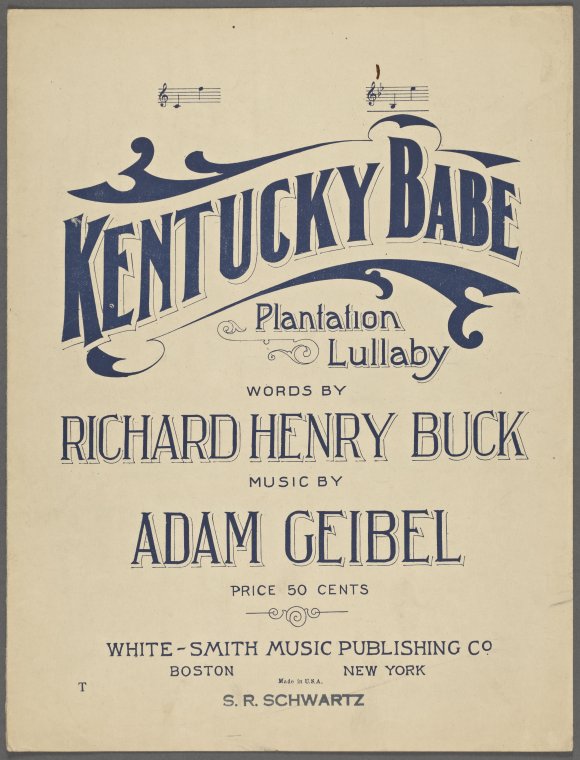
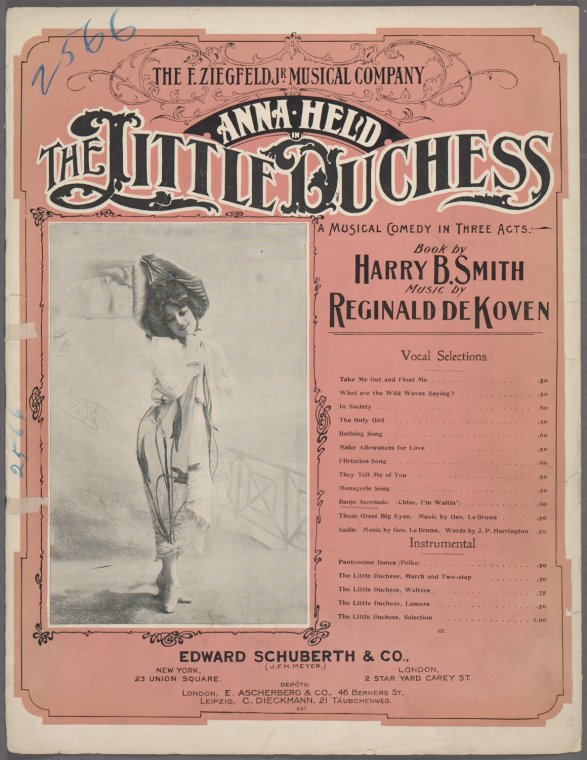
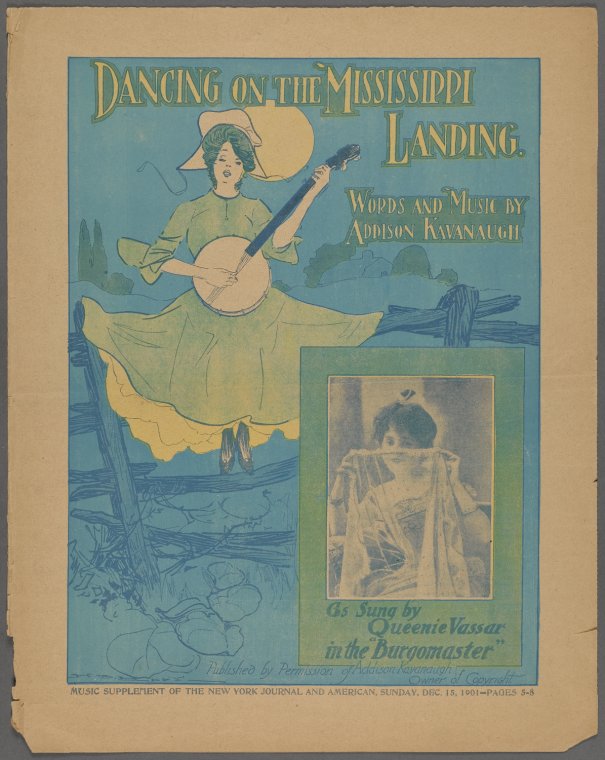
Feast Your Eyes on Vintage Sheet Music from the New York Public Library

There's old-time music, and then there's this: centuries-old sheet music available for your viewing (and playing!) pleasure courtesy of the New York Public Library's Digital Archives. From songs that eventually inspired country artists like Eddy Arnold to the early works of Tin Pan Alley legends, these amazing finds are crucial pieces of musical history, and are all gloriously free to the public. Check out a few of our favorite finds, and click through to see the full pieces of music.

"Kentucky Babe"

Issued in 1896, this sheet music for "Kentucky Babe," with words by Richard Henry Buck and music by Adam Geibel, is an early incarnation of a song that would go on to be recorded and performed by artists ranging from Perry Como to Eddy Arnold. A lullabye, the song implores the "Kentucky Babe" to "fly away, fly away to rest." You can watch Dean Martin perform the tune on a clip from Colgate Comedy Hour, recorded on June 5, 1955, right here.

"Banjo Serenade (Chloe I'm Waitin')"

Harry Bache Smith and Reginald De Koven wrote this tune for the musical comedy The Little Duchess, which explains its reliance on banjo: Banjo was an important part of early 20th-century musical comedy. The song was first performed by Anna Held, a Polish/French singer famed for her stage performances and her relationship with Broadway impressario Florenz Ziegfeld, Jr. Smith, known as one of the most prolific writers of stage lyrics of all time, was no stranger to collaborating with Ziegfeld, writing lyrics for the "Ziegfield Follies" Broadway shows, which eventually inspired a radio program and film. 

"Dancing on the Mississippi Landing" 

This tune's a little on the risqué side, especially considering its copyright date of 1901. "Then the girls they gather up their skirts, just so," the chorus goes, a line that would probably do just fine on today's Top 40 radio. A popular performance of the song is attributed to Queenie Vassar, a late 19th-century musical star from Scotland.

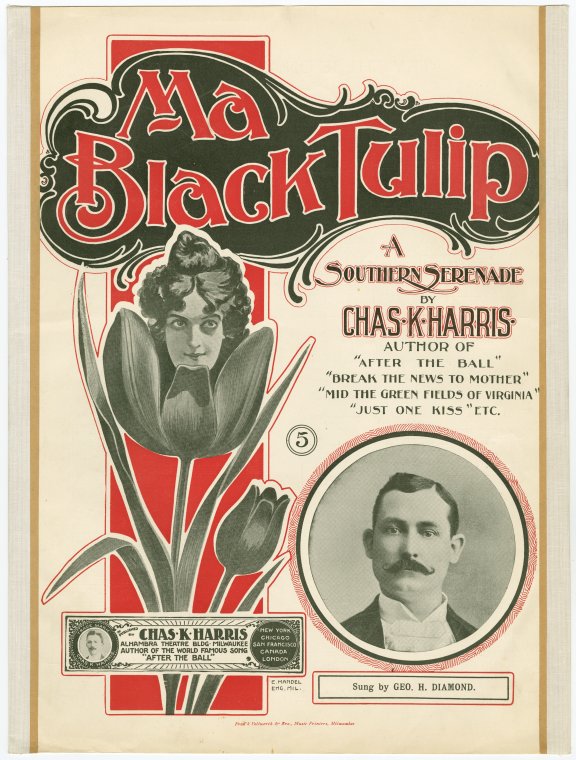
"Ma Black Tulip"

Tin Pan Alley songwriter Charles (Chas) K. Harris penned this 1901 song, which compares the performer's lover to a sweet "mint julep." Known as "The King of the Tearjerker," Harris — the apparent Diane Warren of his time — was known for his love songs which, unsurprisingly, were often dark and sad. He eventually came to work with Oscar Hammerstein, composer, impressario, and patriarch of the legendary theater family.

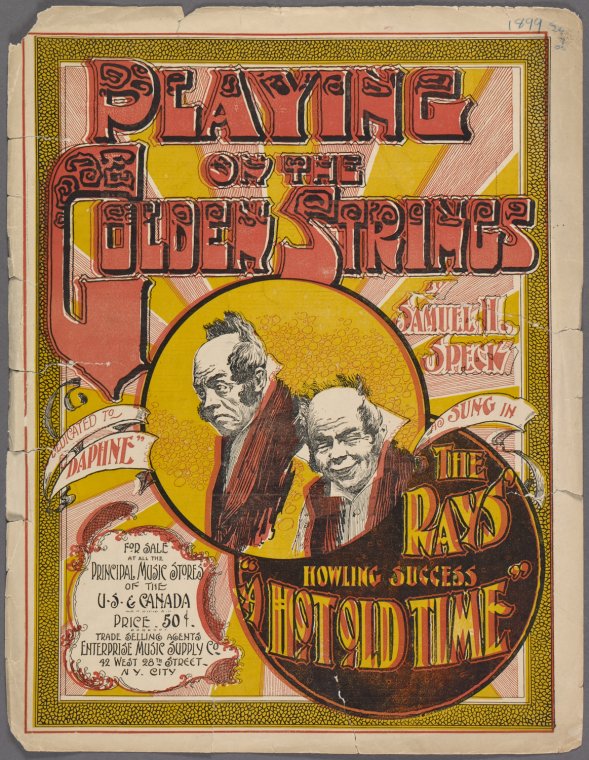
"Playing on the Golden Strings"

Pulled from the early 20th-century stage show A Hot Old Time, described on the music's cover as "a howling success," the first line of this song by Samuel H. Speck is "pick up the banjo." We can get down with that. Apparently critics could, too, as the show's performers, the Rays, were described as providing "scintillating, flashing, sidesplitting merriment."


All images via New York Public Library Digital Collections

3×3: Matt Flinner on Ross Martin, Steve Martin, and Which Schumer Is Which

Artist: Matt Flinner
Hometown: Pueblo, CO
Latest Album: Traveling Roots
Personal Nicknames: For a while when I was growing up, my nickname was "Bob" (my dad's name). In England, where I am right now, it's "Simon" (from a Mike Myers character on Saturday Night Live). I call Ross Martin, our guitar player, "Pollock," and Eric Thorin, our bassist, "Francis Bacon" … for reasons that are maybe best left out of this article.

What was the first record you ever bought with your own money?
A 45 of Steve Martin's "King Tut" when I was about seven years old. I loved that record! I had nothing to do with the banjo or bluegrass at that point (and neither did that record), but when, years later, I played on Steve Martin's The Crow album, I thought it was sort of bringing things around full circle.

How many unread emails or texts currently fill your inbox?
3,792

If your life were a movie, which songs would be on the soundtrack?
I think this changes constantly, but the low D-string on a banjo played over and over again would be my underlying soundtrack. To me, it's sort of a cosmic note that brings well-being to myself and the world around me.

What brand of jeans do you wear?
Levi's

What's your go-to karaoke tune?
"The Chicken Dance"

If you were a liquor, what would you be?
Akvavit

Poehler or Schumer?
Schumer (You mean Chuck, right?)

Chocolate or vanilla?
Chocolate

Blues or bluegrass?
Bluegrass — especially bluesy bluegrass


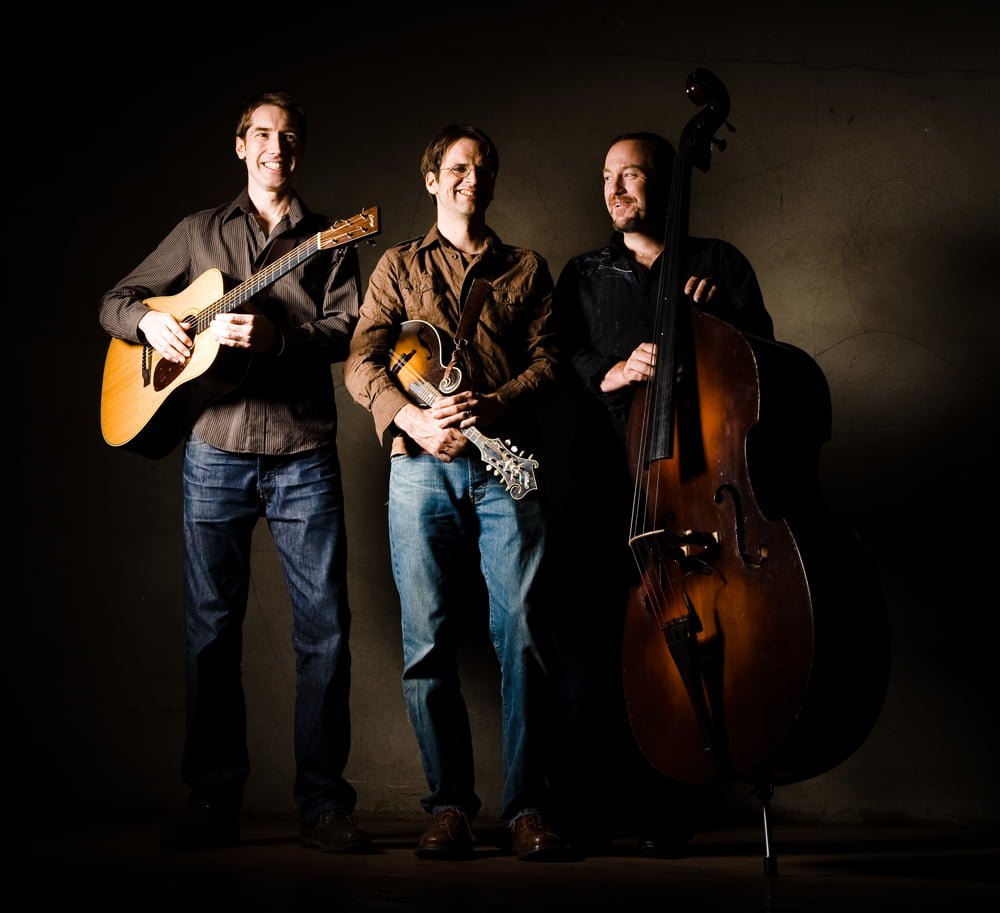
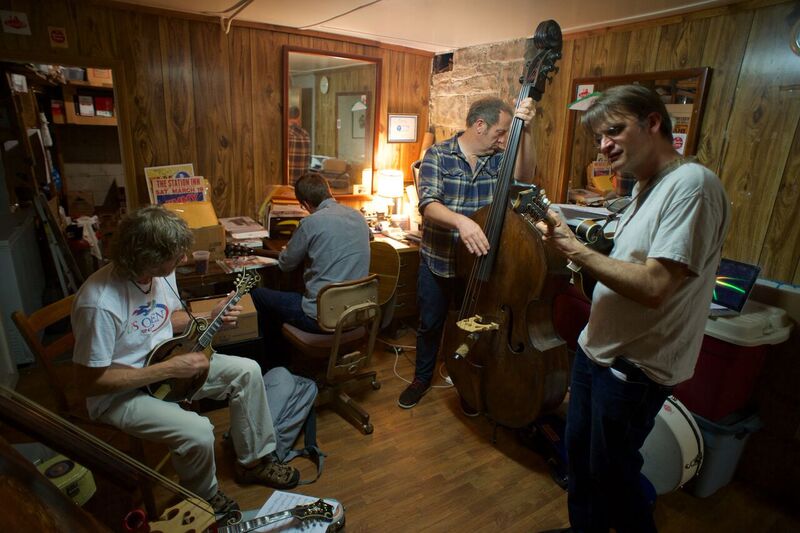
Photos one and three by Mark Woodland and Mike McGrath, respectively, courtesy of the artist.

Ned Luberecki Shares His Banjo Mastering Secrets

The banjo can be an intimidating instrument — listen to an Earl Scruggs tune and you may become convinced you need an extra set of hands to pull off those lightning-fast rolls and leads. Luckily, though, there are a number of resources out there for those of us not blessed with the natural musical ability of our bluegrass forefathers. One of those resources is the Complete 5-String Banjo Method series by Ned Luberecki. 

Luberecki is a renowned banjo player known for his musical work with Chris Jones & the Night Drivers and for his contributions to SiriusXM’s Bluegrass Junction. He’s also a banjo teacher in Nashville, Tennessee, a gig that helped him hone the material that would become the Complete 5-String Banjo Method after he was tapped by Alfred Music Publishing to helm the project a couple years back. The series — which is broken into Beginning, Intermediate, and Mastering levels — is a crash-course in all things banjo, from learning those first rolls in the Beginner book to understanding the intricacies of classical music theory in the Mastering edition. 

“I’ve been teaching banjo since the 1980s,” Luberecki says. “I’ve looked at all the other banjo methods that are out there and I’ve seen most of them. Of course I’m familiar with some of those written by my heroes in the banjo world, Pete Wernick and Tony Trischka and Alan Munde. For a long time, I’d thought about doing it not only because it seemed like another opportunity for me to have something out there, but also, the thing that took me so long was to try to come up with my own take on it. Because, you know, let’s face it, when it comes to beginning banjo, you have to start with the basics, which are how to play some forward rolls, how to play some chords, how to read tablature — the same stuff that’s going to be covered in anybody’s book. So it took years of teaching to come up with my own approach, to tailor things to the way I like to teach, as opposed to making it like everybody else’s."

It took Luberecki an entire year to translate that method to the page (and to the screen and speakers — each book also comes with audio and video components), describing the process as “a lot harder than [he] expected.” 

“I played every single note in the book … and that was a long process,” he laughs.

And there were lots of notes. The series is a comprehensive look at not just banjo techniques, but at music theory and history as it pertains to the most important instrument in bluegrass.

“The Beginning book starts with the very basics for someone who has never picked up a banjo before,” Luberecki explains. Beginners will learn rolls, chords, melodies, reading tablature, and basic banjo maintenance before graduating to the Intermediate book, which prepares players for their very first jams and collaborations with other pickers and players. For the Mastering book, Luberecki looks past bluegrass. “I took the approach that the 5-string banjo is being used and accepted in music other than bluegrass,” he says. With that in mind, he introduces players to classical music theory and more advanced musical languages.

It’s a valuable resource for players of any level, one Luberecki would have enjoyed having access to back when he first picked up the banjo during his youth.

“Yeah, I didn’t have a DVD player, that’s for sure,” he says. “I started by taking lessons. I took from a banjo player from around the Annapolis, Maryland, area named Bob Tice. As a matter of fact, people who are familiar with the guitarist Jordan Tice, it’s his father. So I took banjo lessons from him and he started me out with a couple of different method books. I remember one of them that I used was the Pete Wernick bluegrass banjo book, which has been around for a very long time, and also, of course, the Earl Scruggs book, which is great because it had all of those arrangements of classic Earl Scruggs songs in it. So I started by taking lessons from him and from working through those couple of books.”

So, ready to pick up a banjo yet? Luberecki has a final piece of advice. “My biggest advice for anybody who wants to start learning to play the banjo is listen to lots of banjo music,” he says. “You’re never going to be effective at playing it if you don’t know what it’s supposed to sound like. So listen. Find the players that you really like the sound of, find the bands and music that you really like, and ingest as much of it as you can. And go see people play it. Not only does that give you a clue as to how people work with their hands, but it’s just inspiring to go see great live music."

Check out the Complete 5-String Banjo Method series here. 


Lede photo credit: Me in ME via Foter.com / CC BY
3×3: Kyle Tuttle on Atticus Finch, Jennifer Love-Hewitt, and Prince’s Hot Chicken

Artist: Kyle Tuttle
Hometown: Cumming, GA (Yeah, that's really the name of a place. I usually just say Forsyth County.)
Latest Album: Bobcat
Personal Nicknames: Bobcat


Friends and tunes over a coffee cup. Round two. @theposteast #wildman #killeranski #americano #nashville #bluegrass

A photo posted by Kyle Tuttle (@kyletuttlebanjo) on

If Jesus, Buddha, Krishna, and Mohammed were in a band together, who would play what?
Jesus on five-string electric bass, Buddha on double-bass drum kit, Krishna on sarod, Mohammed on vibraphone. The band would be called AUM-G.

If you were a candle, what scent would you be?
Some type of patchouli/kale blend.

What literary character or story do you most relate to?
Atticus Finch. I think he's a model Southern man, and I would be proud to be like him.


You thinkin what I'm thinkin…? #celebrityendorsement #banjocoldbrew #bobcatlovescoffee @banjocoldbrew

A photo posted by Kyle Tuttle (@kyletuttlebanjo) on

What's your favorite planet — and why?
Earth, because it's the only one I've been to so far, and I've had a lot of fun here.

What's your best physical attribute?
I'm skinny, so I don't take up much room in the van.

Who is your favorite Jennifer: Lawrence, Lopez, or Love-Hewitt?
Definitely Love-Hewitt because I was 13 when Can't Hardly Wait came out.


Two axes, one job. Super fun jams last night with #bawninthemash. #banjo #fourGs #jamband #iandavidsoninstruments

A photo posted by Kyle Tuttle (@kyletuttlebanjo) on

Cat or dog?
Dog

Rain or shine?
Shine

Mild, medium, or spicy?
Prince's Hot Chicken Spicy

Bright Star Does Right by Bluegrass on Broadway

Broadway, lately, has been kind to the chorus it never saw coming, to adventurous works that look beyond traditional theater tropes and highly trained vibratos for a hook that lasts long after that curtain goes up. Hamilton, Lin-Manuel Miranda’s revolutionary hip-hop musical sensation, is the poster child of this: With its explosive performances and Roots-produced, Grammy award-winning soundtrack, it set a new standard for what the modern musical could do in terms of reconnecting theater with popular culture and keeping that life line intact. Waitress, the new musical based on the 2007 film starring Keri Russell, holds that pop connection close, as its music and lyrics were penned by Sara Bareilles of “Love Song” fame.

While shows like Les Misérables, Wicked, and The Lion King continue to draw crowds to their respective spots in Times Square every night, Broadway’s audiences are clearly clamoring for the current hits whose soundtracks make for seamless additions to their Recently Played iTunes playlist. They want an experience that banks on the music before the drama — and that’s how Bright Star gives its audience what it’s looking for.

Bright Star, the musical collaboration of Steve Martin and singer/songwriter Edie Brickell, brings Americana into this conversation. Set in the hilly sprawl of North Carolina in the wake of World War II, its story follows Billy Cane, a newly anointed veteran who’s trying to find his voice as a writer having just returned from the battlefield. Shortly after he makes his way home, he’s off again, heading to Asheville in the hopes of securing a byline at the Asheville Southern Journal. Alice Murphy — the paper’s tough, terse, and hawk-eyed editor — reads one of Billy’s stories and pays him for his work, but doesn’t publish it: She offers Billy the opportunity to pitch her ideas until one sticks, and he spends the majority of Bright Star working toward that goal. Through flashbacks, we learn more about Alice — where she came from, the loves and losses that shaped the bubbly teenager who somehow turns into the stern woman Billy meets at the Journal — and that her life’s story syncs up with Billy’s in a way that neither one of them sees coming.

While the plot of Bright Star bounces between the aspirational journey of Billy’s and Alice’s painful trip down memory lane, the music is what lays a firm foundation for the folklore. With down-home arrangements, plenty of opportunities for its singers to showcase their ability to belt the hell out of a long-held high note, and the steely twang of the bluegrass band onstage throughout the program, the music of Bright Star is the anchoring force of the production — the backbone that keeps the decidedly PG storylines from broaching cheesy, try-hard territory in a venue that’s more than susceptible to that kind of family-friendly fun. This isn’t "Bluegrass by Disney" or anything, either: The arrangements are tight, the vocal lines are tough, and the accents steer clear of caricature territory (for the most part). By treating the band as a living, breathing set piece — and keeping them visible and active throughout the performance — Bright Star makes the importance of the music known, sending the not-so-subliminal message that the pickers and players backing the actors are just as pivotal to the story as Alice and Bobby are themselves. Carmen Cusack, as Alice, can summon hope and warmth (“Sun Is Gonna Shine”) as effortlessly as she can channel grief and despair (“Please, Don’t Take Him”), and the bright banjo riffs and sad bass lows do so in kind.

Bright Star may not break new ground, as far as its story goes, and the music, while lovely, isn’t especially earth-shattering, though it’s great to see an acoustic guitar and mandolin treated so venerably on the Great White Way. But like Hamilton, Waitress, and other musicals that have audiences rethinking the role popular music has to play in storytelling, Bright Star succeeds in working music — in this case, of a folkier, bluegrass ilk — into its fabric while pushing boundaries and expectations for both the genre and the artform. Broadway’s finally down with beats and poppy hooks. It’s about damn time it picked up the banjo, too.


3×3: Danny Barnes on Wet Dirt, Old Cats, and Hot Sauce

Artist: Danny Barnes
Hometown: Port Hadlock, WA
Latest Album: Got Myself Together
Personal Nicknames/Rejected Band Names: My punk rock name is Buzz Autopsy. Blind Banjo Death. Wave of Fury. Cronald Dump. I Left My Kidney in San Francisco. Skate Beirut. Homeschooled Death. Abe the Cop. The Camaro Burden …

If Jesus, Buddha, Krishna, and Mohammed were in a band together, who would play what?
The beloved Meher Baba says these were all incarnations of the same person, so likely a solo act … with banjo … playing to an empty room.

If you were a candle, what scent would you be?
Wet dirt.

What literary character or story do you most relate to?
Jude the Obscure in the Thomas Hardy novel. It's about the music business.

What's your favorite planet — and why?
The earth — the flat earth with the firmament roof over the top as described in the ancient texts.

What's your best physical attribute?
My ability to get the hell out of places quickly without forgetting anything. It's a super power.

Who is your favorite Jennifer: Lawrence, Lopez, or Love-Hewitt?
I don't think I could pick any of these out of a police lineup. So I'd have to go with Lopez just because I knew this guy that had a fake name of Vladimir Lopez. He's in jail now … for a very loooong time.

Cat or dog?
I have an old cat that showed up at my house that I like pretty good. But I've always had dogs. I relate to dogs more than people. Seeing a person get run over by a bus doesn't really affect me, but I can't stand to watch an animal suffer. Here's a poem: Well, I like good dogs even better than people. They don't drive slow in the left hand lane. The dogs and the people got a good thing going. They come when you call, if you know their name. My dog Skillet speaks English.

Rain or shine?
I like the rain and the damp. I feel like music sounds better when the barometer is low and the air is thick and dense with moisture and oxygen. When I first started going to the UK, I fell in love with the weather and the side effects of it — like the way folks tend to read more in that scenario. Hence, I moved to the northwest U.S. because of the maritime climate, in part. For my music, I kinda have to have a fairly educated audience or something, otherwise I'm explaining my references so much it doesn't leave much time for banjo music.

Mild, medium, or spicy?
Spicy all the way. Indian food and Mexican food (vegetarian, of course). My buddy Max makes this green hot sauce that is super hot and awesome, and when I go hang out with him, if he doesn't have any made up, I like to joke that I'm going to split then and come back some other time.


Photo credit: Monica Frissell

LIVE AT LUCKY BARN: Nathan Bowles

We've teamed up with the good people at Pickathon to present a season's worth of archival — and incredible — videos from the Pacific Northwest festival's Lucky Barn Series. Tune in every fourth Tuesday of the month to catch a new clip.

Number five in the Lucky Barn Series comes courtesy of Nathan Bowles and his banjo. On "I Miss My Dog," Bowles sets a slow, sparse pace that does, indeed, mirror longing and loss. A few minutes in, a gentle playfulness emerges and gradually builds to a rousing climax before settling back down after nearly 11 minutes. He goes on to talk about how repetition is "built into the clawhammer style."

Pickathon comes back to the Pendarvis Farm in Happy Valley, Oregon, from August 5-7, 2016. Click here for more, and stay tuned for an exciting season of Lucky Barn videos.


Photo credit: Nehemiah Sliwoski

LISTEN: Laney Jones, ‘Who Could Love’

Artist: Laney Jones
Hometown: Mount Dora, FL
Song: "Who Could Love"
Album: Laney Jones
Release Date: March 11

In Their Words: "This song is a kind of personal revelation. I come from a traditional music background, playing mostly bluegrass and old-time songs when I was just starting out. As I wrote more and worked on my own sound, I found myself drifting away from those genres. At first, I felt really bad, because I didn't want to betray any of my fans who love that music, but at the same time, I knew I needed to evolve. I couldn't keep imitating those great roots artists and legends I had emulated. It would always just be an imitation.

Although its lyrics seem bleak, this song really affirms that you have to be yourself. I think you can still hear the roots influence, even though this new album sounds more modern and indie rock. I'm proud of my clawhammer banjo work on this song, and I just love bringing it into different contexts." — Laney Jones


Photo credit: Darin Back

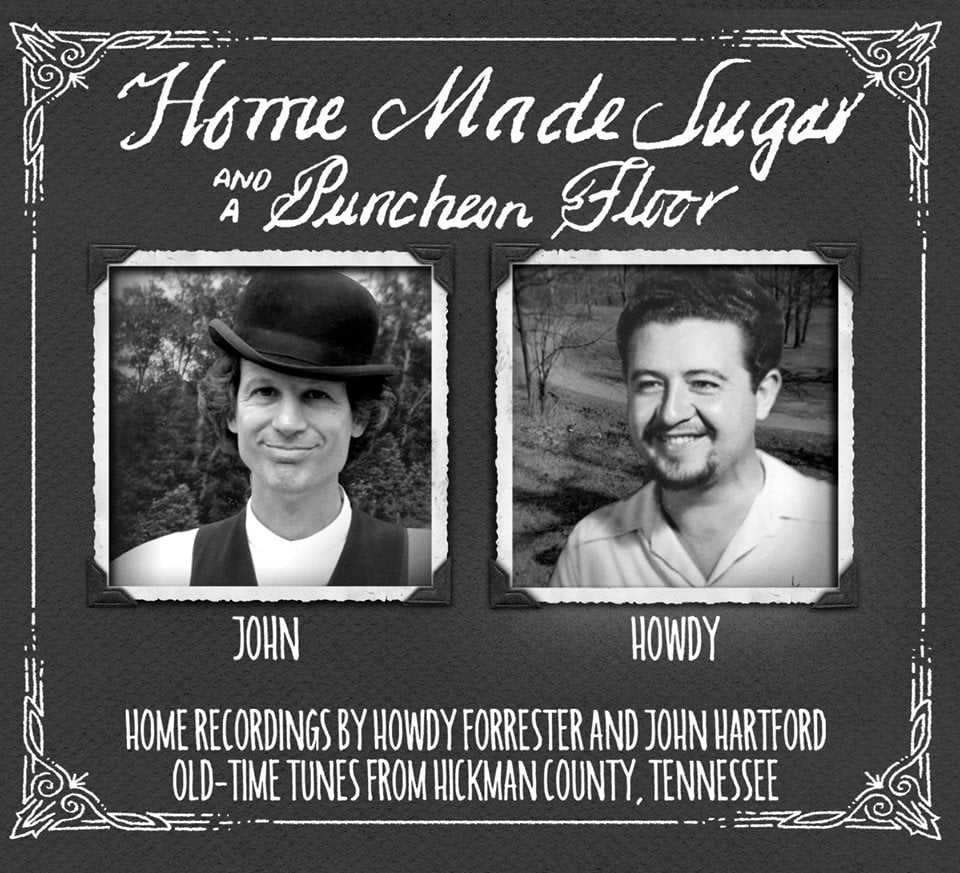
LISTEN: Howdy Forrester and John Hartford, ‘Home Made Sugar and a Puncheon Floor’

Artist: Howdy Forrester and John Hartford
Hometown: Hickman County, TN
Song: "Home Made Sugar and a Puncheon Floor"
Album: Home Made Sugar and a Puncheon Floor
Release Date: January 15
Label: Spring Fed Records

In Their Words: "Brand new release of a set of home recordings made by John Hartford and fiddling legend Howdy Forrester. This recording preserves a repertoire of many rare, old Hickman County, Tennessee, tunes that Howdy had learned as a boy from his Great Uncle, Bob Cates. Hartford plays banjo, Forrester fiddles, and the two share informal discussion about the tunes and their sources." — John Fabke