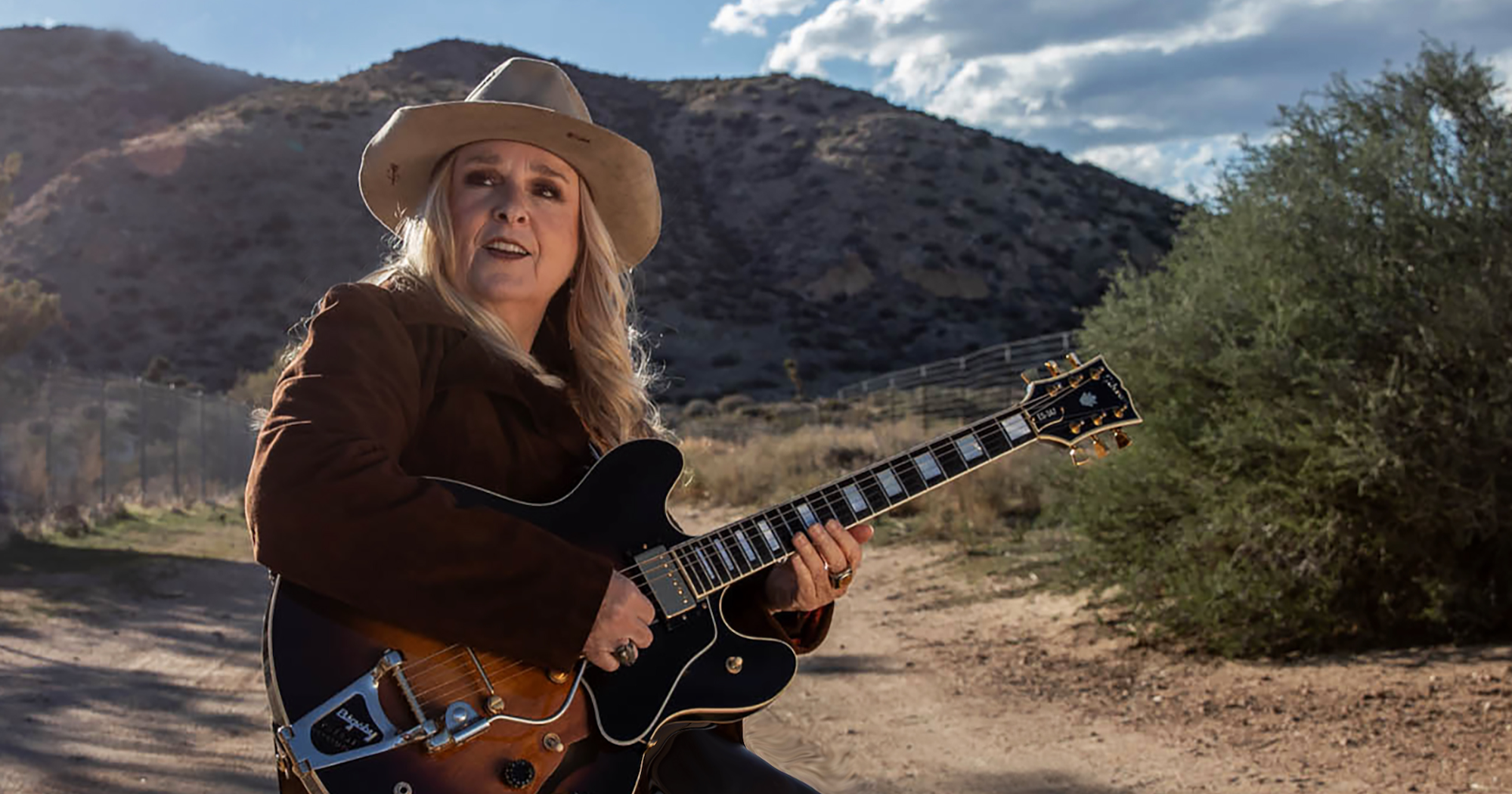
Melissa Etheridge: Rock and Roll and Resilience

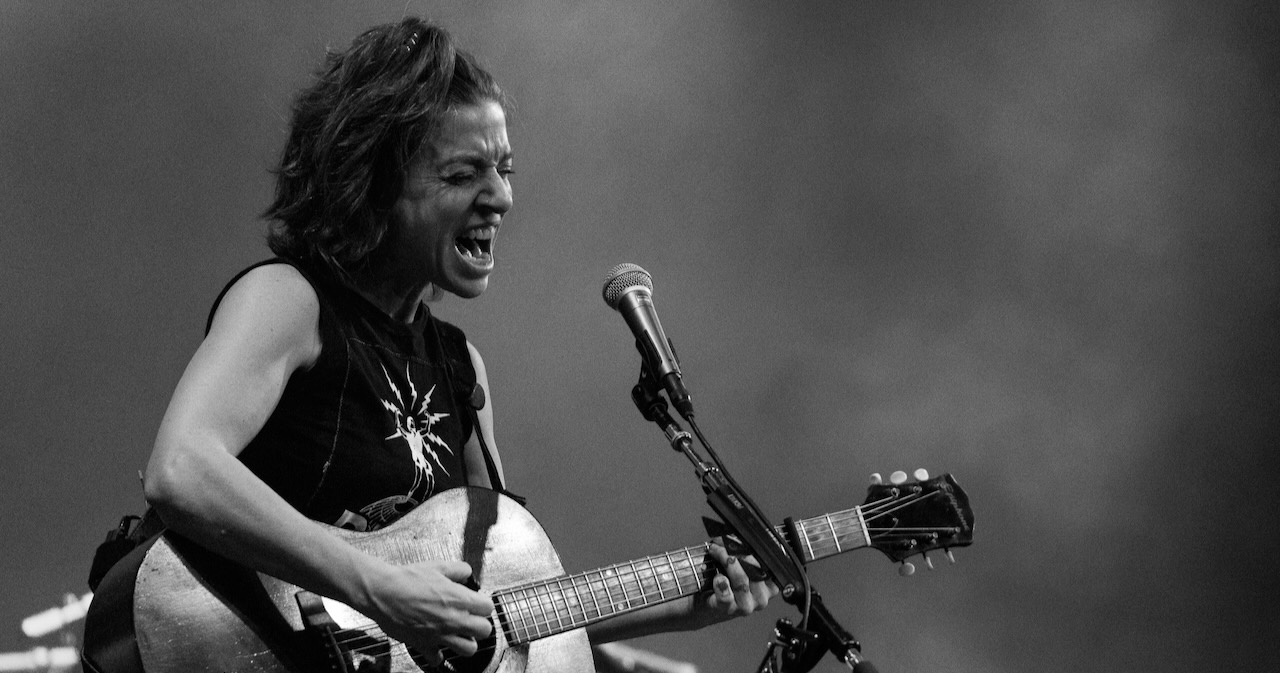
Few people have experienced the highs and lows of the music business to the degree that Melissa Etheridge has. Since releasing her self-titled debut in 1988, she has won two GRAMMYs (and been nominated for many others); been hailed as the second coming of Janis Joplin; won the Gibson Award for Best Female Rock Guitarist; become a mom several times over; been a social activist both for the LGBTQ+ community and for people addicted to opioids; written a memoir; and performed a one woman show on Broadway. Not bad for a kid from Leavenworth, Kansas.

That said, Etheridge has also suffered more than her share of setbacks. She has weathered a couple of high-profile divorces, battled breast cancer – who can forget her duet with Joss Stone at the 2005 GRAMMYs when she took the stage bald after undergoing chemotherapy – and, in 2020, lost her son Beckett to addiction.

The one constant throughout all these ups and downs has been her music, a brand of heartland rock that manages to be personal and universal at the same time. Etheridge is nearly as popular with blue-collar men as she is with lesbians, owing to her raspy vocals, formidable guitar chops, and unpretentious persona. And she’s racked up an impressive list of hits over the years including “Come To My Window,” “If I Wanted To,” “Ain’t It Heavy,” “Similar Features,” “I Want To Come Over,” “Bring Me Some Water,” and “I’m the Only One.”

2026 is shaping up to be a big year for Etheridge. She returned on March 27 with Rise, her first studio album in five years. On the eve of its release, she and her band kicked off a six-week tour in Detroit. And for the first time, Etheridge was nominated for induction into the Rock & Roll Hall of Fame this year.

Rise was recorded in Los Angeles with co-producer Shooter Jennings and includes 11 songs. While they’re diverse musically, the album as a whole feels like a complete statement. It’s a testimony to resilience, to sticking with life through all its ups and downs.

The title track and “Bein’ Alive” (which opens the disc) are both life-affirming rockers. “The Other Side of Blue” is a contemplative duet with Chris Stapleton. The playful “If You Ever Leave Me” puts an Americana spin on Mental As Anything’s ‘80s hit, “If You Leave Me (Can I Come Too).”

The shuffling, midtempo “Matches” was inspired by Johnny Cash’s 1970 concert at the U.S. penitentiary in Etheridge’s hometown. But the two final songs on Rise are also its most personal and poignant. “Call You” is a moving tribute to her son Beckett, while “More Love” was written for her daughter Bailey when she got engaged.

BGS recently had the pleasure of catching up with Melissa Etheridge for a Cover Story interview.

Let’s start with Rise. This is your first new album in five years, which is a significant amount of time. But you’ve been very busy in the last five years; I read your book and saw your show on Broadway. So it’s not like you’ve been sitting around! What do you get out of recording an album that you might not get from doing theater or writing a book?

Melissa Etheridge: Even though I haven’t had an album out in five years, the [last] album I put out, One Way Out, was a previous recording that I’d done seven years before that. So it’s really nine years since I’ve written. And I’ve lived so much of life – from loss to the pandemic to just growth. That’s the part about making a record. I knew that I could create a collection of songs that would make an album.

I love the art form of an album. You know, 45 minutes to be with the listener and take them through an emotional journey. That’s my favorite part; the real crafting of it was the writing. And it was about a year’s worth of pulling things together and then writing [in] December of ’24 and January and February. Then going in the studio [last] March. Going in, it’s so much fun with the road band that I have. It’s like putting on a favorite pair of jeans. Then getting Shooter Jennings to produce it! His studio, Sunset Sound, is so amazing. So it was a pleasure recording there.

It really does flow as an album, but it touches on a lot of different moods. Listening to it as one piece, I felt a sense of renewal and also resilience.

Yeah, that’s something I wanted to get across. There’s so much I experienced through the loss of my son five years ago. That’s about the most devastating thing you can go through. Having gone through that loss, [I] decided that I wasn’t going to drown myself in guilt and shame, I wasn’t going to die – that I was going to experience this, heal with my family, keep loving ourselves, knowing that everyone makes their own choices. I could not save him, he had to make the choices for that. And then making art from that – you know, loving yourself enough to be able to say, “God, I love being alive.”

Writing those songs – especially in this day and age when I find such negativity – if you start believing that, then that’s what you’re gonna see. So I wanted to put [out] positivity without being patronizing or [using] platitudes. You know, lifting people up. Going, “Yeah, you’re gonna fall sometimes. You’re gonna taste the dirt. You’re gonna rise.”

[“Rise”] came after the LA fires. That was something I went through with my family. We had to evacuate. It came right up to our neighborhood. I gotta tell you, LA firefighters are heroes. Every single one of ‘em. They were able to keep it from our neighborhood. But there was a moment, when we were watching the fire reports, where it was like, “Okay. There’s a good possibility that we might lose everything.” I was in a hotel with people who were losing everything. To experience that and then say, “They’re just things. We’ve got our health, our family, our pets.” You know, you’re gonna still rise. There are gonna be these things that knock you down, but man! You’re gonna be stronger and better for it. It’s hard to hear but it’s so true.

I was gonna ask you why “Rise” was the title track but you kind of just told me!

The second to last song on the album is “Call You,” which is really moving and I know you wrote about your son. I don’t have children, but two months ago I lost two of my best friends, one to suicide and one to early onset Alzheimer’s. So I’ve been struggling the last couple of months with a lot of existential stuff and wanting to call my friend Mark – and I can’t. So that song really resonated with me. I guess I wanted to share that with you.

Yeah. Life is full of loss. It really is. You’re not living if you don’t have some loss. And the older you get, the more you’re gonna see it. That’s when the existential stuff [comes in]. I am more than just my body, I am a separate soul here experiencing it. The greater part of me is that non-physical place that I’m connected to – that source that everyone is [connected to].

In “Call You,” I tried to simplify that. Because to me, the times when I miss him the most are the times when it’s like, “I wanna call you!” Even my father who died 30 years ago, you know? When I was nominated for the Rock Hall, I was like “Oh, I just wanna call my dad!”

[“Call You”] was actually the first song I wrote for the album. I knew I had to get that emotional experience down. I had to write that song first.

I also wanted to ask you about “Matches.” When I spoke to you last, you told me about Johnny Cash playing in Kansas when you were just a kid and how one of your thoughts was, “Prisons must be the place where you find entertainers.”

[Melissa laughs]

Tell me more about that and maybe your thoughts about The Man in Black.

Well, growing up in a small town, Leavenworth, we have no places for big artists. Kansas City is 45 minutes away. But our town, in the ‘60s, that just wasn’t a thing. All of a sudden, in 1969, he came to the prison. He came to our town! “Oh my god!” Someone who I’d only seen on his television show or [heard] on the radio and was such a cultural icon – he’s in the same space as me! That really kind of said to me, “Whoa. Maybe I could do that.” It felt close to me. [Cash] always made a big impression on me. I always loved his music, his individuality.

“Matches” was supposed to be a scratch pad song for me. I had just come from the I’m Not Broken [docuseries]. I did a concert in 2023 at the Kansas Women’s Penitentiary. So I was still sort of playing off of that and singing. Scratch songs for me are songs [where] I’m writing for fun and it starts the juices flowing. I kept writing these verses and I played a little bit for my wife, [Linda]. And she said, “You have to put that on! What do you mean that’s a scratch song?”

Can you tell me some wonderful things about Linda?

[Laughs] Yes, I can! That’s easy. For 12 years we’ve been married. We were together four years before that. And before that, we were best friends for 10 years! I married my best friend.

She is… everything I needed or wanted or dreamt about. The only way you really get someone like that in your life is to understand your needs and wants. And to have the love for yourself that you are looking for in other people. The minute I really got in contact with myself and understood what I wanted and loved, I was able to see the best kind of love for me. And she was it.

There’s just a constant partnership that is astounding – a love and desire that never goes away. And it’s because I’m not looking for her to fix me or make everything great. I’m looking for her to be by my side as we both make our choices and walk through this world together.

Tell me a little about “The Other Side of Blue” and what it was like duetting with Chris Stapleton.

Ah! Chris Stapleton is just a national treasure. His soul and his talent and his mind and his heart are so beautiful and so rare. He’s such a unique talent and an incredible man.

I really didn’t know him at all, I just was a big fan. And I didn’t really want to do a duet on this album. But I remember telling my manager, “If I ever did do a duet, I would love it to be with Chris Stapleton. Maybe ask him if he wants to write a song together.” So my manager sent out the request. He said yeah, and that made me so happy. I went down and we wrote the song.

We were writing in RCA Studio A in Nashville, which is where Chet Atkins [recorded]. A massive, huge, historic studio! I just walked in and, “Hello, hello.” We sat down and had guitars in hand. We were just talking and five minutes go by and he asked me about my kids. I said, “Well, I had four but I lost one.” He said, “Oh, I’m sorry.” And I said, “No, no. He was my greatest teacher.” He looked at me and he goes, “You talk in song.”

That was the first line: “Sometimes, I listen when she talks in song.” We were writing within 15 minutes of showing up. It just appeared – every line. It took us maybe an hour and a half to write that song.

You mentioned being nominated for the Rock Hall. Tell me how that feels after all this time.

Well, I was eligible for about 12 years. [Laughs] I was like, “Don’t think about it! It’s not a comment on your music.” I didn’t make my music so that I would be in the Rock & Roll Hall of Fame, that’s not what it’s about. It is lovely and feels really good to be recognized by your peers – by a group of people in the music business who say, “Your contribution to rock and roll has meant something.”

I’ve been on the voting body for exactly 10 years now. Obviously, certain things are subjective, but I thought this year there were a lot of good nominees. More diverse than last year’s group.

Yeah, I love Sade. I love Pink. Lauryn Hill I think is a good one. And then Iron Maiden, come on! It’s time, guys!

I always like to ask you about one older song. My favorite, which I’ve already asked you about, is “Ain’t It Heavy.” Is it okay to ask you about one of the really popular ones? I try not to ask the same things everyone asks. But I am curious about “Bring Me Some Water.”

Oh, that’s good! At least it wasn’t “Come To My Window.” No, “Bring Me Some Water” – that’s fun, that’s an older song.

I’d been playing women’s bars in Los Angeles for five years and a lot of record companies came and turned me down. But Chris Blackwell [finally] comes in and signs me right on the spot, for Island Records. Bam! I’d never made a record and I had no idea [what to do]. So my manager gets this producer, Jim Gaines, from San Francisco. This is 1986. It’s the middle of the ‘80s sound – that sort of Steve Miller, Journey [thing]. We made this record and I play it for Chris Blackwell and he hates it! Because it doesn’t sound like the girl he saw at the bar. It sounds overblown – lots and lots of keyboards and my voice way at the top. He hates it and I’m like, “Oh my God, he hates my album.”

I convinced him to give me four days to try it again in the studio. But in between the time that I finished the first album and went into record again – which became the debut – I wrote “Bring Me Some Water” about this relationship I had with a lovely woman named Kathleen. We lived together and we had this open relationship – which is just a mindfuck! [Laughs] I wouldn’t advise anyone to do that.

This is her being gone and me sitting at home in the middle of September, in Los Angeles. I’m living on Melrose and it’s hot. It’s so hot! So I sit down and I’m like, “Okay. I gotta get back to traditional blues stuff.” I’m just playing [the riff], it’s old Muddy Waters but it’s speeded up. I’m singing about, you know, the foul air. I’m just hot and uncomfortable and I’m mad. So, I wrote this song and Chris Blackwell loved it.


Photo Credit: Candice Lawler
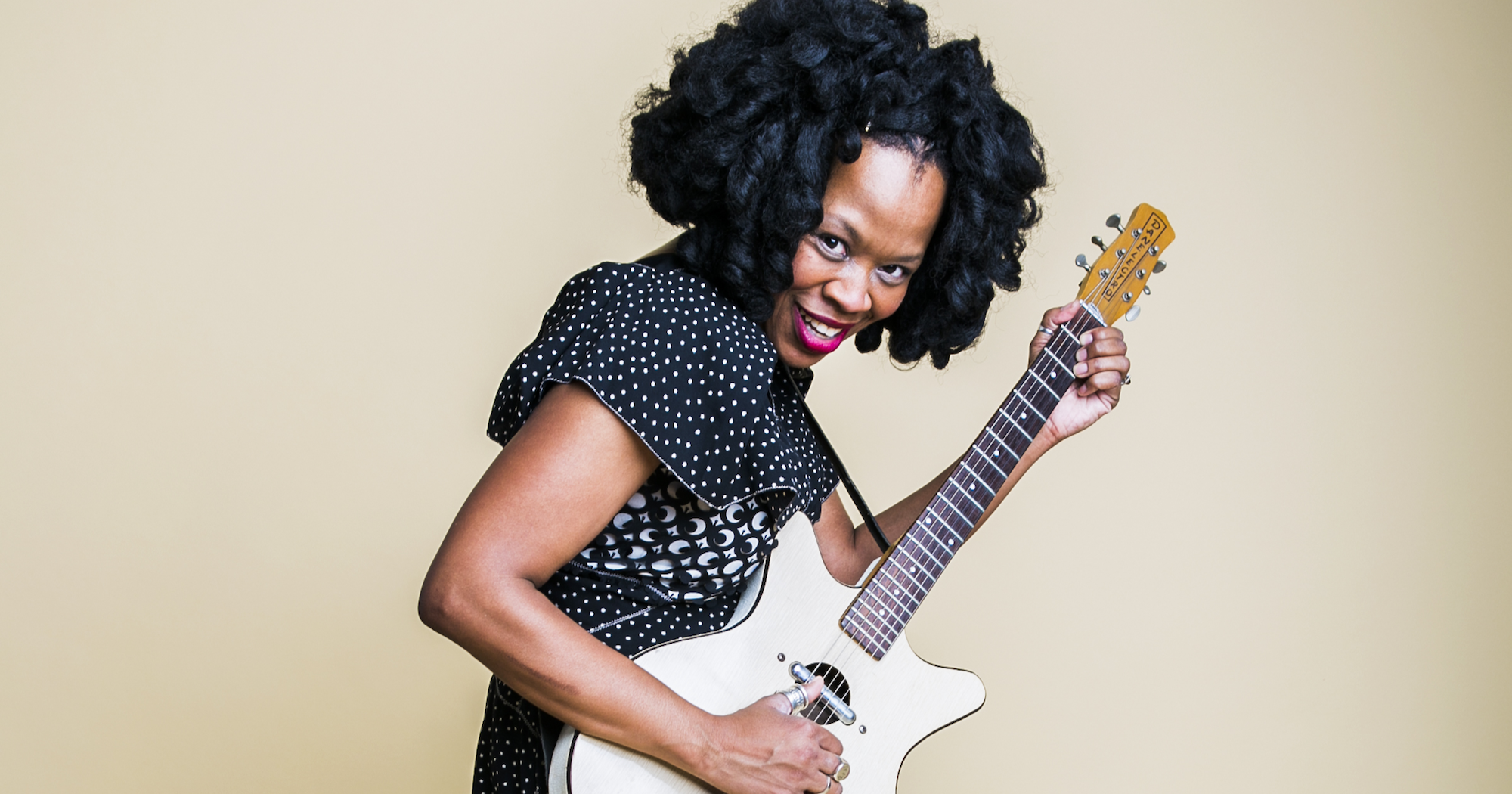
Queen Esther Made a Civil War Album Unlike All the Rest

Civil War albums are all too common in roots music, bluegrass, country, and Americana. Usually, these concept projects romanticize and valorize one of the darkest periods in our nation’s history, while cheerfully and cartoonishly detached from reality and untethered from the nuances of this horrifying and violent period of tumult in the U.S. Revisionism and imperialism are enacted by fiddles and banjos in loose, contrived musical period garb.

Audiences seem to devour this kind of idyllic reimagination of the Civil War and the issues that gave rise to it. Though chattel slavery and its foundational role in our economy were central to the conflict, Civil War concept albums rarely interrogate those facts, instead leaning on listeners’ love for story songs and cursory understanding of “brothers against brothers” narrative paradigms to sell records and tickets. The sketchiness of this practice is overlooked across the board, perhaps due to the sheer ubiquity of such efforts.

On February 6, artist, musician, songwriter, actor, and playwright Queen Esther released a very different sort of Civil War album, Blackbirding. Enabled by a grant from The National Parks Arts Foundation, Queen Esther worked and lived in residence at Gettysburg National Military Park in Gettysburg, Pennsylvania, for a month in 2020. During that time, she communed with the land, the place, and the losses and griefs seeped into the blood-soaked soil, plumbing stories, myths, memory, and feelings to craft her 12-song reckoning with the Civil War. Original songs, songs from that time period, and fascinating covers combine into a work of roots music and theater, dramatization and storytelling interwoven with knowledge-bearing and memory-keeping.

Queen Esther being a Southern Black feminist multi-hyphenate creative is exactly why Blackbirding stands out among its peers in the curséd Civil War concept album space. There is no idealization or revisionism happening in Queen Esther’s songs. Instead, there’s a tangible humanity and an awe-inspiring alchemy of grief, loss, and crimes against humanity into beautiful, redemptive music.

Queen Esther first brought Blackbirding into the world as a piece of performance art with a staged reading in 2024. Even now, in its LP form, these songs lean forward, doing narrative work perceptible whether on stage or off, and coaxing listeners to abandon passive listening and – as all theater asks – inhabit a third, artistic, creative space together in our interaction with these compositions.

The central point of the album is made over and over again across the 12 tracks and throughout our lengthy and in-depth BGS conversation. “Blackbirding,” the 19th-century practice of kidnapping free Black folks and selling them into slavery or back into slavery, never really went away. The Civil War was not won. Reconstruction failed. Slavery itself was not abolished, but rebranded. As such, Blackbirding, whether from the perspective of its content or its genre aesthetics, isn’t a throwback or time capsule album. This is music made in the present, for the present, about the present, and it calls on all of us – again, in the present – to reckon with and consider how we each contribute to or act in defiance of the continuation of racial apartheid and imperialism in the United States.

Do not fear, though, because Queen Esther’s approach to such musicmaking is remarkably joyous, grounded, and compassionate. It’s clear she’s not only ready to engage in the conversations this music evokes, but that is exactly her purpose. And the ultimate culmination of her many talents. In this way, she yet again distinguishes herself from other such concept albums in Americana.

I’ve been a fan of yours for a few years, ever since we discovered your TED Talk. When I first watched it, it was so revelatory. It felt like you supplied vocabulary – and knowledge and expertise – that I wish I would’ve had my whole life to help describe the multi-ethnic origins of roots music and bluegrass and country. If all of this came from “Scotch-Irish tradition,” then why does bluegrass sound like bluegrass? Why does country sound like country? Why doesn’t it sound like Irish music or Scots music or music from the British Isles? It sounds different.

I just wanted to start by saying thank you for that talk – and thank you for all of the insight, feeling, and emotion that you bring to these intellectual topics that people tend to forget are about real humans, real experiences, and real music.

Queen Esther: Absolutely. I really appreciate you saying that. I think more often than not, Black people have these conversations amongst ourselves. We wait until the door is closed and then we talk. I think we should have more conversations with everyone in the room. As long as they’re willing to listen. That’s a tall order. Much more so than you would think.

I’m really happy about this album, especially because people are starting to have conversations around the songs, topics, and everything that I’m bringing up. The fact is that slavery has never ended. It was just modified. The Civil War has never ended. It just evolved. “Blackbirding” has never ended. It just got a lot more inclusive.

Those three things are standing in the way of America being America. There is the America that is on paper – the one that is in the brochure with the Statue of Liberty, the flag behind it, and mom, and apple pie, and all of this stuff. And none of it is true. It’s all a marketing ploy. The actual America that really exists, that’s the one that Black people have had to endure and survive for hundreds of years. That’s the America that turned its back on us.

You know as well as I do that there are so many Civil War albums in bluegrass, folk, string band music, and Americana. So many are built upon the revisionist history that you’re talking about. The manicured, sanitized “picket fence and 2.5 kids” version of the “American Dream.” So, normally when I get a pitch about an album like this, it just goes straight to my email archive. Knowing you and knowing your work – and especially the way that you bring theater and all of your multi-hyphenate titles into crafting and creating – I was so excited to have a chance to talk about approaching the Civil War and approaching Gettysburg as an inspiration for music.

Blackbirding is set in the present. You’re talking about how slavery never went away, how reconstruction failed, and how the Civil War was not won. You’re contextualizing this art in the present sonically, as well. Because, like you’re saying, the Civil War never ended, slavery never ended, blackbirding never ended. Can you talk a little bit about placing all of this discourse in the present and not just in period garb, as it were?

I have to say perspective is a powerful thing. As a Black woman, as a Southerner, as someone that’s two generations removed from slavery, as a creative, I never heard any of this told from a Black perspective. It was always “the lost cause”: “These Yankees came and they just attacked us from out of nowhere. We were living this beautiful life and they just ruined everything.” When nothing could be further from the truth.

They literally terrorized Black people. They tore us apart, they raped our children. They did all manner of evil constantly, under the guise of Christianity. And it was even uglier than anyone would dare to imagine. Which is why they’re struggling to hide Black history, to hide lost history, to make sure that it stays lost. To not have anyone like me turn over the rock to see what’s underneath.

At the same time, these songs from minstrelsy, these songs from not that long ago, they’re important songs. They should be rediscovered. The problem that I’ve always had is that once you have that technical prowess as a musician and once you plumb the depths with that music, no one was bringing that music forward into the present. Not unless they were … putting it in a historical context, and that’s important, but to bring it into the now [is just as important]. …

Having a sense of intellectual curiosity, it’s really important. It doesn’t matter that you’re not the smartest, but that you are curious intellectually and that you are brave enough to explore that curiosity is way more important. That’s really my bedrock. That’s where I’m coming from now.

I’m a generative performing artist. … We are the ones who generate our work and we perform that work. Some people don’t necessarily perform their work. They just write it or they create it and they’re looking for other people to do the work, to perform the work, so that they can get their work out there. Lots of songwriters like that. Lots of lyricists are like that. That’s beautiful. That’s great. …

The songs would come to me, they would just float up in my head. It’s like a patchwork quilt. You take all these different kinds of fabric and all these bits and pieces. But you’re making this mosaic that turns into this overall image that is bigger than whatever bits and pieces you brought to it in the first place.

Talking about that mosaic, it makes me think that of course we would end up at this point, with a project like this, with a conversation like this, and with a body of work that couldn’t have been made if you had tried to step outside of yourself or your own identity to make it.

Exactly. All of that fueled me. I was reaching out in different genres, not just musically, but in the world. I was doing a lot of alternative theater, I was doing cabaret. I was doing performance art, I was doing solo performance. I was doing storytelling. I’d get up on stage and I would do just about anything. That was a world in and of itself.

Now, after a certain point, when you’re a generative performing artist, you’re looking for grants so that you can develop the work in general. It takes seven to nine years to develop a musical. It takes five to seven years to develop a play. When you see someone go, “Oh yeah, my new play, it’s up.” They put in a heavy grind! That’s five years of rewrites and workshops and readings. Some theater taking them on with their theater company and developing that work until it was ready for a test audience, not even necessarily ready [to open]. It’s just a lot of hard work and a lot of heavy lifting. There are certain grants that make that possible, where you just have to go away and you have to write and create.

I found a grant that would let me do that with this album through the National Park Service. The National Parks Arts Foundation has grants to at least a dozen National Parks. You can go to the park, you can live on the park, and they will pay you.

This project is also a work of theater. What jumped out to me first and foremost in that regard is what you’re talking about – the residency, the grant, being on location. Bluegrass, roots music, country music, they all ask us to be in a place together, but not in the same way that theater does. Theater is very much created so the audience are not passive participants. It actively invites listeners and collaborators and bystanders into a space and into a place.

You are doing that with this body of work – and with your residency at Gettysburg. I thought that was one of the most fascinating things about this project. Using theater, with a capital T, to help do that work of transporting all of us to the battlefield, to Gettysburg, to the geographical place that you are evoking with these songs.

I’ve been doing theater ever since I could stand up straight. Think about the cavemen, just standing in front of their brethren and telling a story about what happened to them that day. If my grandmother were here right now and in on this conversation, she’d tell you that I was telling stories ever since I could talk. I would just make things up. She would be sitting there washing dishes and I would try to distract her by making up something wild or crazy or imaginative. I don’t know, I just gotta say something to make her drop that dishcloth or at least laugh or something. [Laughs]

What is fantastic realism? Fantastic realism is when you have ordinary circumstances and then something extraordinary just pops right in. … So the idea of theatricalizing whatever was happening around me as a little kid, [that’s fantastic realism]. If we were sitting here at a table talking, for example, and then an elephant came along and took the hat off your head – that kind of a thing. Just the outrageous Southern tall tale. Bombastic storytelling is always floating just beyond your reach, I think, as a Southerner. It’s just how we do.

And of course, like everything in the South, this is an African tradition. This is an oral tradition handed down from West Africa. West African traditions [are] something else that people have a really hard time saying out loud and acknowledging. It’s not that other cultures didn’t tell stories, but our influence as Africans, as enslaved Africans, of our African ancestors on the South and on America, is seismic. It’s time for people to make the shift however small, however great, and center that and acknowledge it. They can’t even acknowledge it. …

I’m going to tell you a story. I almost always start [performances] with, “You wanna hear a story? I got a story to tell you.” Sometimes I’ll sing it, sometimes I’ll say it with music happening around me or behind me. But this is a story that you’re gonna want to hear. And every single song on [Blackbirding] is wrapped up in a story. There’s a story that’s around it that’s historical. There’s a story that resonates into the now, and there’s a story that I bring to you as an audience when I’m performing the song itself.

I’m thinking about how there’s so much music made in these genre spaces that is also putting on a costume, or telling a story, or doing theater, but that often isn’t grounded in reality at all. It’s all construction. So where some people might interface with your art and think, “Oh, this is a musical, this is theater, this is going to be a play, this is going to be ‘make believe.’” It’s actually so much further from that.

Oh no, it’s reality!

Exactly. And to me, that’s the whole story here. The thing I wanted to talk about most about Blackbirding is the point that you made right at the top – and that you’ve made throughout this conversation. You’re not talking about something that was happening a while ago and isn’t happening today.

Look, the 13th Amendment said slavery’s over “except.” Except? That’s a gigantic loophole. Except for what? Except for incarceration. That means if you’re incarcerated, you’re a slave. What if someone said to you, “You’re fired except on Tuesdays”? Then I’m not fired. You have to come in on Tuesday for four hours. Other than that you’re fired. You don’t work here. How much sense does that make? No one would hear an employer say that and go, “Am I fired or not?” Am I free or not?

You are free. Except they had to make that exception. They had to. Why? Because when the Civil War ended, this country was in absolute shambles. And because Black people were the actual currency. There were 4 million of us and we were basically worth trillions in today’s money.

We went off and we started our own little hamlets and towns, and we started working for ourselves. Suddenly there was this massive tilt. Black people were the money and had all of these resources, energy, and power. And just by sheer force of will, we started building for ourselves, which is why they started tearing us down. Showing up to each and every single community and just murdering people, burning people [alive] in their homes. Coming up with all of these lies built on pseudoscience to justify all of the things that they did. …

But it never ended. Pulling Black people over on the road, out in the middle of nowhere for no reason whatsoever. Beating them up. Maiming them, murdering them in some instances. This has always been the way. This has always been the case.

I’m imagining you on site at Gettysburg. How do you take that sort of emotional devastation or the intrinsic triggering and challenging nature of these topics and turn them into something beautiful? Do you see them as beautiful to begin with? I’m trying to imagine how you take care of yourself emotionally and psychically as you’re doing this important work. Because I think there must be an emotional toll to it, but you clearly are built for it as well. This feels like your wheelhouse – and the way you talk about it and the comfortability you have in having these conversations.

Simple. I am not an atheist. I am not an agnostic. I believe in God. I believe in Jesus. I’m a Christian, and I know that God is with me. I feel God’s presence upon me. I feel God hovering over me, protecting me divinely. I feel that I’m walking in divine purpose and in divine order. I know that I am divinely protected, that the blood of Jesus covers me everywhere I go. …

There’s this point at which inspiration takes over. There’s a point at which you are no longer there, and inspiration is there instead. An actor prepares– the idea is that you have technique, right? Your technique is there whether you’re playing an instrument or singing or washing the dishes or driving the car.

Let’s say driving the car. I don’t know how to drive. So, every time I get behind the wheel and the car is moving, even if it’s moving slightly, I’m screaming like a banshee. I’m so excited. But when I get in a car [with my partner], he just does what he’s been doing. He doesn’t think about it. He adjusts the window here and he readjusts this here, he puts the key in, and he does all of these dozen or more motions. He just does it automatically.

That’s the idea. When you make art, when you’re on stage, when you’re performing, when you’re creating, there has to be something that takes over. Inspiration takes over. Once you’ve got the technique, set the technique, learning how to drive the car, what do you do? Something else takes over. And I’m telling you, that’s something else for me, personally, is not my ego. For me, that’s the Holy Spirit.

I remember when I got to the house [at Gettysburg], everything was explained to me, and they gave me the keys. I’m sitting there in the parlor, I’m arranging everything, and it’s still light outside. I thought, “You know what? Why not?” I took my camera and I walked to Devil’s Den. The first song that I wrote was “The Devil May Care (But Jesus Knows).” I came back and I wrote that down like I was writing someone a letter. It just poured right out of me.

I can’t even begin to explain the process. I wrote it down and I wrote down the chords. I shaped it around everything that I did and I thought, “This is a complete song.” What is that song about? It’s about Devil’s Den, the Valley of Death, which is what they called that area in between Devil’s Den and Little Round Top. These soldiers would climb into Devil’s Den, which is these hulking, gigantic rocks. There was this big snake that lived there. It was huge. They called it the devil. It was so huge, it was as big around in the middle as a grown man’s waist. There were children that liked to play around that rock, so the townspeople got up the courage and killed it.

They would climb inside of that perfect coverage for a sniper and they would shoot Yankee soldiers that they could [see] from Little Round Top and they would fall into the Valley of Death. That was a run, Plum Creek – a run is a creek – and it was so filled with blood they just called it a bloody run. From where the creek started, all the way past the house that I lived in, all the way through that valley of death, was just nothing but human blood.

To be a soldier caught in [Devil’s Den] meant that you could not be saved. Someone would have to come and get you if you were wounded. More often than not, those soldiers died, not because they were shot and they fell down and they died. They died because no one came to get them. They died because they were wounded and the wounds got infected and they just bled out or [succumbed].

That Valley of Death comes for you, not just at the end of your life. It comes for you at any given moment, at any crisis that you have. Over and over and over again.

Can you talk a little bit about how you approached genre on these songs? Because I really love that you didn’t make a “time capsule” record that’s trying to sound like it came from the 1800s. At the same time, you’re collapsing time musically and creatively so that you can draw on those textures and on those sort of old-timey elements to do that storytelling for you, sonically. How did the production process actually look or feel as you were putting this collection together?

I think that when you have a kid or when you give birth to a kid, you just let that kid be the kid. You’re not sitting there going, “I want this kid to be this,” or “I want this kid to be that.”

That’s a really good metaphor. Just let them be themselves.

And what you’re doing, really, is sitting back and waiting to see what that kid turns into. You have no idea how they got so great at math. This kid is a mathematician. You can’t balance your checkbook. This kid is just explosively running in this whole other direction that you can’t even fathom. You have no idea what your children will do, what they will become. And none of it really has anything to do with you.

It’s the same thing. These songs came to me and when they came to me, sometimes fully formed, I literally wrote down what I heard in my head. And that really is it. Each song is its own world. I just let the song be what it is, whatever it is. However it came to me, I just let it be what it is.

I consider myself to be a transcriber of the song. I’m sitting there. The song is in my head and I’m just writing it down as quickly as possible. I’m someone with a butterfly net chasing the butterfly through the jungle. I’m running after the butterfly and I’m hoping that it doesn’t get away. It’s fluttering. It’s right above my head. Sometimes I capture it, sometimes I don’t. My job as a producer is to make sure that song sounds exactly the way it did in my head.

Even the cover songs, the Olivia Newton John song, “Magic.” When Olivia Newton John is singing that, it’s one way. It’s interesting. But I’m a Black woman and I’m singing that about my ancestors, and my family, and all of us in community. It turns into a completely different song.

You have to believe that we’re magic. Nothing can stand in our way. You have to believe that because, ultimately really, Black people never thought we were supposed to survive any of this.
Toni Morrison says that in an infamous speech that she gave, we were not just supposed to survive any of it. …

When the song comes, it comes as it comes. I knew that I had the goods as a producer, because the song sounded in the room the way they did in my head. That’s the best feeling. But moreover, more than anything else, you have to develop your own aesthetic. You have to know what’s good, what’s not good, and why. You have to know your own mind. You have to know your own aesthetic. And you have to have the courage and the willpower to stand on it.


Photo Credit: Whitney Browne

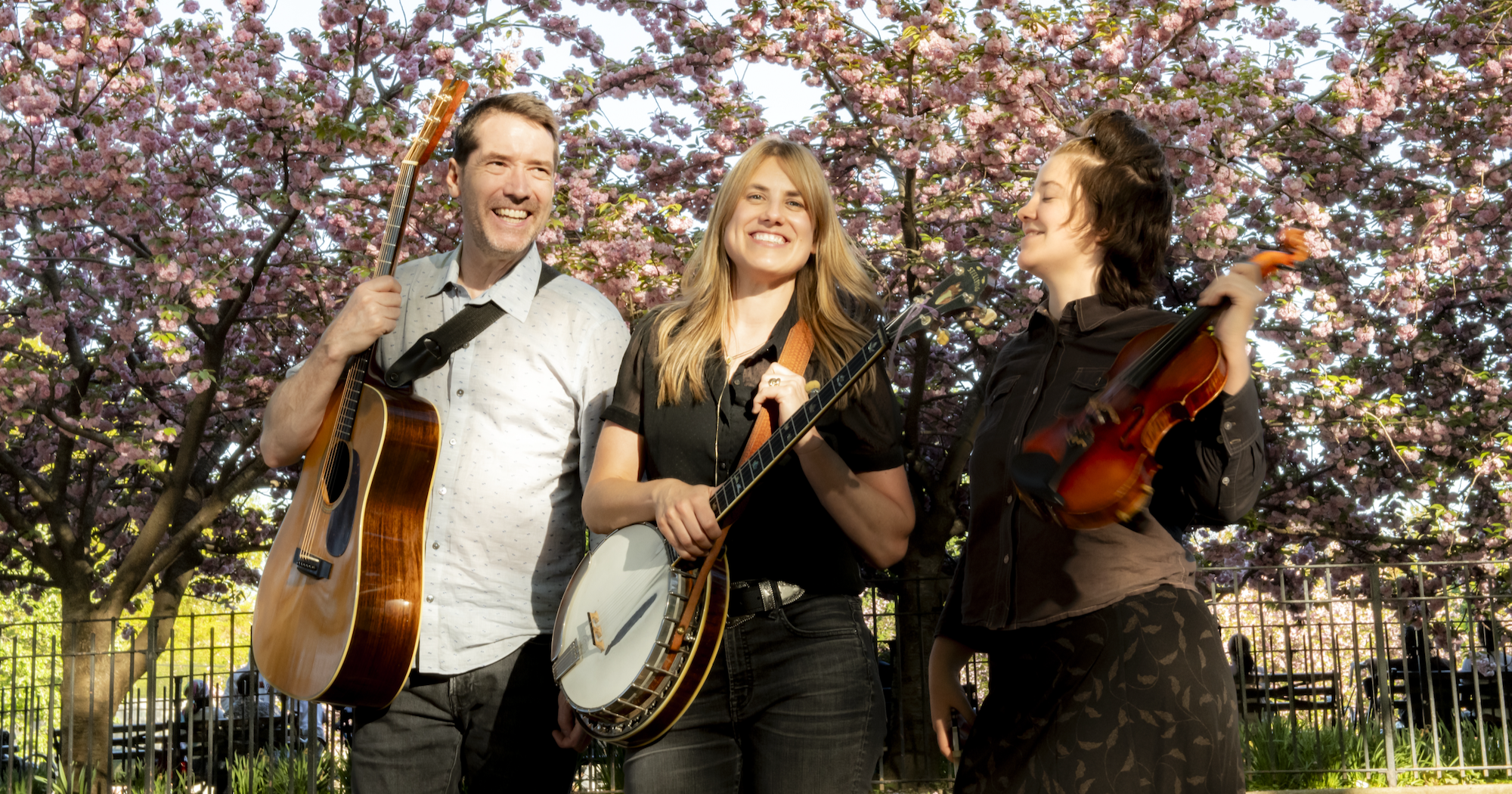
Hilary Hawke is a Banjoist Who Does It All

Banjoist, songwriter, and podcaster Hilary Hawke has had a meandering journey with music, starting with guitar and clarinet before finding her musical home in the banjo and “becoming obsessed with it” during her late teens. Inspired by the storied folk tradition of upstate New York, Hawke now makes her home in New York City, where she leads her own bluegrass band and plays for various other groups as part of a close-knit roots music community.

New York City is uniquely ripe with gigs in theater and Hawke has found herself playing on Broadway for musicals such as Oklahoma! and Bright Star and composing music for puppet shows, among many other diverse projects. She has also started her own podcast, Banjo Chat, where she speaks about the banjo and banjo music with folks that love the instrument as much as she does.

BGS connected with Hilary Hawke to discuss the making of her new album, Lift Up This Old World, her time on Broadway, her new job teaching bluegrass at Columbia University, and more.

Can you tell me a bit about how you got started on the banjo?

Hilary Hawke: I actually went to school for classical music on clarinet and guitar, but I realized I didn’t know how I was going to get a job in music or what kind of job I wanted… composition? Teaching? Music therapy? I got to a point where I was like, “This all seems very serious and I’m not actually having much fun with music.”

During that time, I was writing songs on guitar and I just picked up a banjo for fun, to do something outside of school. I grew up in upstate New York and we have a lot of folk music and a lot of great banjo influences up here like Tony Trischka, Béla Fleck, Pete Seeger, the Gibson Brothers. And, honest to God, it was just the thing I started creating music on all the time. I started playing it nonstop. I ended up moving into New York City just on a whim. There were lots of opportunities to perform and I was able to take some lessons with Tony Trischka. New York is like– you just think you’re going to try it out and then suddenly 5 years have gone by.

Influences like the New Lost City Ramblers, Mike Seeger, Bruce Molsky, and Fred Cockerham seem to be threaded through your old-time and bluegrass style. Do you have a specific moment you can remember that sparked your love for these musicians?

I think that it’s always through popular culture that you get inspired to dive into the deeper stuff. Alison Krauss had a record called Too Late to Cry and I remember I heard the banjo on that and was like “What’s that sound?” It was Tony Trischka playing on her record. Similarly, I heard the banjo on the Dixie Chicks’ albums and wanted to know how it worked. Through those more popular bands, I got interested in banjo. And then I went to the festivals and I heard about the old guys. People would give me rides and we’d be listening to their CDs in the car. It was a lot of word of mouth like, “Oh you gotta hear Fred Cockerham and Tommy Jarrell!”

You started teaching banjo in Brooklyn at the Jalopy Theatre back in 2006. How has that community influenced your growth as a teacher and performer over the last 20 years?

I really cut my teeth at Jalopy. I was there for 10 years or so and I was able to develop a curriculum for teaching. I learned how to tear things apart and break them down, as far as playing the banjo. I gained the skills I’m now using to teach at Columbia University. I think Jalopy is a great breeding ground for performers, artists, and teachers to develop. It’s open-minded and exploratory.

Tell me about your new album, Lift Up This Old World. Where does it fall in the trajectory of your music-making?

This is the third album I’ve released under my own name. The first album I made was more of a singer-songwriter album; writing songs was really my entry point into folk music. Then I released an instrumental old-time album. This one combines songwriting and picking, but it is much more bluegrass-forward.

I noticed that you play both clawhammer and bluegrass-style banjo on the record. How do you relate to the two different styles and where do you feel more at home?

I started with fingerpicking and got into bluegrass first, but I just wanted to do it all. I wanted to be involved with a wide range of music. Sometimes a person would ask, “Do you want to come play with my old-time band?” And I had to say no because I couldn’t play that style. I quickly realized I didn’t like to say no! I wanted to be able to do it. So I started learning clawhammer from some Ken Perlman videos and taught myself. Now I feel like they take up an equal amount of space in my life and I pick the style based on the music.

With my original material, I approach the banjo with the kind of song I want to write in my mind, so if I want to write a honky-tonk song I might use fingerpicking, but if I want to do something with a shout chorus, for example, I’ll approach with clawhammer banjo. I listen to a lot of Tim O’Brien and I feel like he does that, too. Being able to play both styles, I have a little bit more of a tool kit for what I want to do.

Tell me about your approach to songwriting. There are a lot of songs about lost love and relationships on this album, some about relationships with people, but even your relationship with New York City. “NYC Waltz” is a track I particularly love. Is there a common theme that you see that brings these songs together?

I think this record is about overcoming struggles in confidence, specifically struggles in the music industry. I had the realization that you have to be your own cheerleader, you have to believe in yourself, and find that happiness in yourself. If you’re doing what you’re supposed to be doing, things are going to happen. Making this album was me having the belief that I could do this thing, overcoming fears and doubts in myself, striving, and coming out on the other side.

The way you recorded this album, it sounds live in a way that is rare for modern recordings. Can you tell me about how the record was made?

We did it live to save money. We started a year and half ago and I didn’t have the resources to do separate tracking, so we rehearsed it for a couple of days and then just went in and tried to nail it. We recorded pretty much the whole thing live with a full band in Williamsburg, one day with each of two fiddle players, Bobby Hawk and Camille Howes, at Waldon Studios in Williamsburg.

Ross Martin [who plays guitar on the album] and I have been playing together for two years as a duo and we have worked up some of these songs over that time. I felt like these album songs were a good representation of the music we have been making for a good while now. “Dreaming of You,” the last song on the record, is the only one that we arranged and tracked out separately; it has a very different feel than the rest of the album.

Yes, I noticed that! It’s a bit orchestral.

Yes, that was all arranged and written out by me. I produced this album myself and I think going forward, I would like to do more collaboration with visionaries and people I trust in the making of a record. I think I learned that it’s great to have another trusted set of ears for a project. It’s hard to step away and see things for yourself. I have a pretty clear vision about what I want things to sound like, but you also have to be gentle and kind to yourself. It’s hard to find that line.

You also have a podcast about the banjo called Banjo Chat. Can you tell me about how that got started and how you’re enjoying it?

It’s good! It started because I had a lot of questions for banjoists about the way they write songs, form solos, and think about music that I didn’t hear asked or answered on other podcasts. Also, I wanted to amplify the voices of people whose playing I loved who were female identifying, queer, gay, minorities, or just didn’t really fit into a bluegrass or old-time genre with their music.

So I started this podcast. I got some new software for editing and now I do the research, recording, editing, and mixing all by myself.

Before I let you go, I wanted to ask you about your time on Broadway. In 2016 you subbed on Broadway playing banjo for Bright Star – a show that brought bluegrass and old-time to the stage in a major way. Looking back, how did that highly choreographed experience change your approach to live shows?

Bright Star does have a huge regional presence. For me, that was my first Broadway subbing gig, subbing for Bennett Sullivan. Being in that environment made me realize that when you play live shows you need to get out of your own head, you can’t just be standing up there not giving any energy out to the audience. You have to have a lot of love to give out and to have your message clear in your head when you’re performing. Be happy to be there.

That’s what I learned from the theater. All these people bought tickets to see the show, they’re here to see a show and have a good time – not to see you in your head worrying about your performance.


Photo Credit: Aidan Grant

Madeline Combs contributed research and interview prep for this feature.

Daniel Donato Has Many Horizons in Sight, Literal and Metaphorical

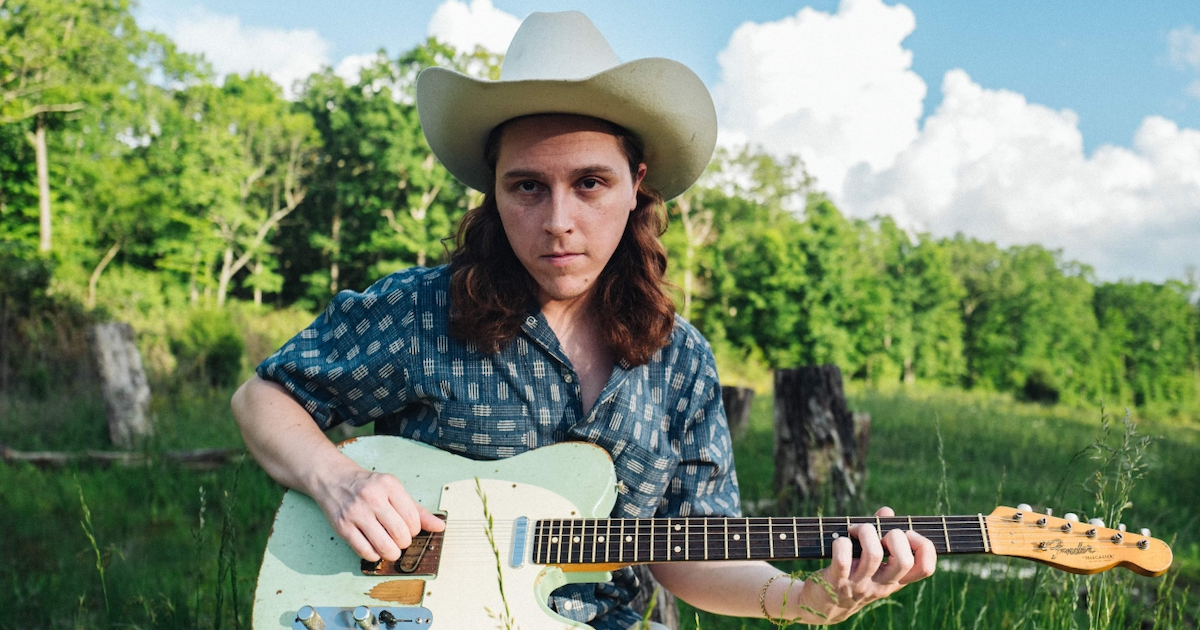
Although names like Billy Strings and Sturgill Simpson currently corner the market at the intersection of country, jam bands, and bluegrass, rising star Daniel Donato has emerged in recent years with an out-of-this-world sound – and his newest project may be his best yet.

On Horizons (which released in August) the prodigy who as a child honed his skills on Guitar Hero and Nashville’s Lower Broadway turns a new page with an 11-song, hour-long compilation that brings his live and studio sounds together with drawn-out jams conjured up by his longtime bandmates from Cosmic Country – a moniker that describes both the group’s sonic and spiritual ethos.

“I want there to be a Cosmic Country sound where you can hear it right away, you can hear the first eight bars of any song and say, ‘That’s it!'” says Donato.

“Some of it is technical, like using the same microphones and the same studio as the last record. And some of it’s just in the way we approach it – and that’s something we get better at every time.”

Sitting on the back of his month-old tour bus affectionately referred to as “The Snowman” prior to a recent show in Lexington, Kentucky, Donato spoke to BGS about his Lower Broadway roots, creative freedom and restraints, and the catalysts for Cosmic Country.

We already touched upon your similarities with Billy Strings, but what about your parents’ influence – I know they played a big role in your musical foundation as well?

Daniel Donato: Everything when I was younger came from my parents. My father had a certain disposition for great rock and roll music like Pink Floyd, Stevie Ray Vaughan, and Led Zeppelin. But to be honest, I really don’t know where all of it comes from, because if you and I listen to a record we’re both going to hear it in different ways. For that reason I think a lot of this just comes from something that’s already dwelling within us and we’re just expressing from within that place.

For example, when I first heard Marty Robbins, I loved all the great guitar on it. And when I heard the Grateful Dead play “Big River” and make it eight minutes long in a really artistic and authentic way, I love that too. They’re all influences, but they start externally and creep inside you to the point that you take them with you everywhere you go and create from that place of soul, which is a combination of the body, the mind and the spirit.

Ever since I started playing guitar, I’ve always felt like I sounded like me and that “me” is constantly changing and revealing itself more and more. It’s like what Bob Dylan said – “I contain multitudes” – and it’s true. There are multitudes of self that just keep getting revealed through this authentic expression.

Was there a specific moment that served as the catalyst for you picking up the guitar and pursuing a career in music?

There have been many, but arguably the biggest was when I first saw the Don Kelley Band at Robert’s Western World and was in a state of shock – I’m getting goosebumps just thinking about it. That moment of hearing them and seeing how they interacted was amazing and was a big motivator in me wanting to do that too. It was a call to adventure and a reminder to believe I’m capable of anything, which is what ties all of these moments together.

That is not a self-assertive belief, that is a belief grounded in an authentic desire to make something beautiful so I can be of service. It was a big turning point in my life when I first started conceptualizing and receiving that, because then you can give it and then it turns into the cosmic circle of all things.

Some might perceive it as arrogance, but I think there’s a lot to be said for having the confidence to know what you’re doing is worthwhile and constantly chipping away to get better and reach your goals, whether that’s in a musical sense or wherever else life takes you.

I had already tried other forms of expression in my life before it, like sports. I also tried skateboarding and really loved video games like RuneScape, World of Warcraft, and chess. Even so, there were so many things I was bad at and I didn’t have beliefs that I could do them. But with music and the guitar, I could intuitively feel the potential I had with it and immediately locked in.

Artistry nowadays is parasocial on a lot of levels because of this immense amount of connectivity that we have on the various social platforms. [They] make it so anyone can get into the business of needing the world to give them permission to say something or express something real, when in reality the world does not need to give you permission for any of that. I’m not saying you should participate in any of the unspeakable, ungodly things we see happening to humans around the world, but if you want to express something artistically and you feel it’s true to you, then why should you need to get someone else’s approval to do that?

That idea to the mind is [like a] letter to the Pony Express – it needs to be delivered and it needs us to exist in flesh so we can externalize these internal values and expressions. It doesn’t need other people, it needs you, but at the same time it does bring people together – it’s so strange. It’s the thing that comes from most within an individual, but it’s also the thing that is the most unifying to an external community. It’s this weird “as above, so below” reflection that is purely righteous, so as I get older I feel I have more grace in relation to that particular part of existence.

The communal element seems to be a huge driving force behind not only your live show and fans, but this new record as well. Whereas some artists opt for a more straightforward studio approach, what made you want to emulate the energy from a gig on Horizons?

Cosmic Country records, to me, are like movies. The most enduring elements of certain movies that I love are the really long ones that have a very dynamic and rich storyline with a lot of drama and comedy in an attempt to scale the human experience. Like in A Fistful of Dollars, Django Unchained, or The Hateful Eight. The art is asking a lot of you during these three hour-long films, but it’ll give you a lot, too. There’s reciprocity there and our community is always willing to take the trip, which is equal parts liberating and terrifying. [Laughs]

If you were asked to write the score for a film, what would you want it to look like?

It would have to be a very truthful opportunity for me. I have always wanted to do that, even when I was really young. I always wondered where music and movies came from. But for now, we put out our records, and we play a lot of shows.

Speaking of the new album, you’ve been playing most of the songs on it live for a while now. What kept you from holding some or all of these songs back until the project’s official release, which it seems more and more singers are doing nowadays?

I like to look at our music as living music. It’s liberating in potential, but it’s also liberating because it gives you a framework to operate and create within. Every day of your life is different, so why wouldn’t the music that accommodates your life every day be different? These new songs are no different than a young child – they do better when they get to go out and be around people so they can grow spiritually.

That’s why it’s also important to share stories that everyone knows, which is why we incorporate a lot of covers into our shows and even recorded a volume called Cosmic Country & Western Songs in 2021. It gives people context and I love doing that. My favorite part of playing at Robert’s was we only played covers all those years so I’ve always loved making other’s songs my own – because if a song is good enough, you can play it with an original feeling.

But with Horizons every song I had my hand to the pen, even “Hangman’s Reel” – a traditional Celtic fiddle tune that the band and I fit into the Cosmic Country framework.

You’ve mentioned Robert’s Western World a couple times now. A couple weeks ago you returned there after making your headlining debut at the Ryman. What was that like?

We’ve done what’s never been done down on Broadway – going from cutting your teeth on the street corners and at places like Robert’s to topping a bill at the Ryman. It’s a common storyline for folks in Nashville to get their starts down here. Some go on to become songwriters, others become singers on stage and some become session musicians, but it all starts down on Broadway.

What I learned down there led me to getting in the door at Robert’s and leaving my blood and sweat on that floor there – like a dojo – before carrying us all the way to the Ryman. It was incredible getting to do a full headlining set up there and then going back home to where it all began at Robert’s and doing another set of music for their fans. We’re actually planning to release both soon as live recordings, so stay tuned!

With Horizons you placed parameters on how many times you’d go back to record and work on each song. With how open-ended so much of your creative process seems to be, what made you opt to place constraints there?

If your personality has a disposition for conscientiousness and open mindedness, it becomes that individual’s responsibility to see the trends of that because it can help optimize the way you engage with human relationships when creating projects. When we went and did Reflector we spent a lot of time on things we didn’t need to because I didn’t know better at the time.

When it came time to record Horizons I knew we could take half the amount of time to make it because we play it every night and shouldn’t need a bunch of tries to get it right. So I decided we’d just aim for three takes of a song to be more efficient. There’s a liberating faith that comes with knowing that’s good enough. If you know you have seven chances, you’re probably going to take seven – but we’re trying to work to ensure it only takes one.

You were talking earlier about creating living music, and stuff like this seems like it helps to keep what you do in the studio just as fresh as what you’re doing out on the road.

They’re two very different things. One’s a picture of a person and the other one’s a person. A picture can do a lot, but it’s not that person, especially when it comes to thinking about a picture of someone that you love who is no longer alive. Even then it’s not the same as them being in the room with you again to hug you.

For instance, I know that there will be a day where I have a gig and I won’t be able to call my dad to debrief – that’s gonna be a tough one. So the live thing is almost like a conveyor belt trying to make it an exact replica of what’s going on on the albums. There are people I see do that and I really respect how they do it because it’s authentic to them, but it was never for me.

How did your approach to bringing Horizons to life differ from how you tackled Reflector and other projects previously?

We had two years of intense experience constantly working on these songs between albums. It made me a different person on some level because I had a better idea of what to aim for and what not to aim that really allowed us to hit the bullseye this time compared to Reflector. And I’ll probably be saying the same thing again when the next record comes around, which will be a lot different than Horizons.

You just alluded to going a different direction with your next album. Someone else known for that who I know has heavily impacted your musical trajectory is Sturgill Simpson. How’d you get sent down the rabbit hole of his music?

Man, I remember when Sturgill Simpson worked at the Turnip Truck in the Gulch in Nashville, I would always see him there and thought nothing of it until one night when I was at The 5 Spot and heard him on stage singing for the first time. Then when Metamodern Sounds In Country Music came out I was in my friend Harrison’s basement. We had gone to Grimey’s to buy the record, we smoked some weed, turned it on, and listened with headphones on. It was and still is a defining moment in my listening experience of music – that record is so special.

Looking back I can see why Sturgill wanted to make a bunch of 180s, because from SOUND & FURY to Sailor’s Guide each album is its own thing. Most successful artists have one signature piece of work, like Tyler Childers’ Purgatory, Chris Stapleton’s Traveller, Tom Petty’s Wildflowers, the Grateful Dead’s Workingman’s Dead, or Neil Young’s Harvest. Unless you’re someone like Bob Dylan or Willie Nelson where you have over 100 albums out. There’s usually one record where you’re like, “that’s the one.” With cosmic country we don’t have that album yet, but I think Horizons could be it.

What has the process of bringing Horizons to life taught you about yourself?

The concept of a Horizons is two-fold. There’s a literal, geographical, physical, material horizon where the land meets the heavens. Then there’s the metaphorical one, and we’re always pushing the cosmic country horizon. But there’s also a psychological horizon where you’re meeting your potential that the sky is symbolic of.

As Alan Watts would say, “there’s a dance to those things,” and I feel that since we put out Horizons that the band and I are on the verge of new horizons. It truly is the dawn of a new day.


Photo Credit: Jason Stoltzfus

Basic Folk: Anaïs Mitchell (Reissue)

(Editor’s Note: Welcome to our Reissue series! For the next several weeks, Basic Folk is digging back into the archives and reposting some of our favorite episodes alongside new introductions commenting on what it’s like to listen back. Enjoy!)

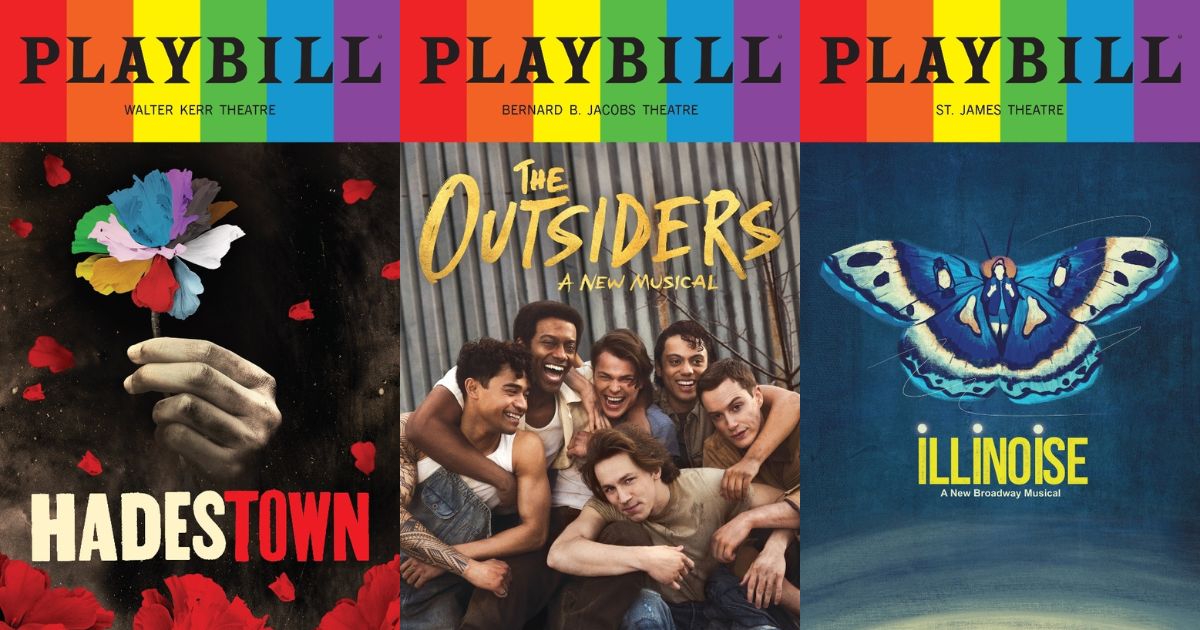
Listening back, I feel like this 2018 interview with Anaïs Mitchell holds up. Originally published on January 10, 2019, Hadestown was about to debut on Broadway, the pandemic was still over a year away, and we were young and full of autumn. Our Basic Folk interview includes a really interesting discussion about feminism (with just one squeamish reference to fourth-wave being about “non-binary” from yours truly. Eeek!). Anaïs talks about her childhood on a sheep farm in Vermont. She unpacks her love for and loyalty in her collaborations and the mystical way she found her visual artist (Peter Nevins) for Hadestown.

LISTEN: APPLE • SPOTIFY • AMAZON • MP3

We also talk about Hadestown receiving some “viral” attention in 2016, thanks to a Tr*mp campaign promise to build a wall on the southern border. People latched onto her 2006-penned song, “Why We Build the Wall,” which is one of the pinnacle tracks from the Tony Award-winning Broadway musical. Anaïs opens up about how she met her husband, Noah Hahn, and her early musical beginnings in Boston at Club Passim.

This episode was recorded just as Hadestown was set to open at the Walter Kerr Theatre on Broadway in March 2019. This was also a year before her band, Bonny Light Horseman, would release their debut album. I’m proud of our conversation, which includes some chiming in from Anaïs’ guitarist Austin Nevins, who was on tour with her at the time of the recording. We three are old friends and we were trying to record the interview and hang out at the same time. I’ll leave it up to you to decide if we succeeded!


Photo Credit: Mitchell Shervin

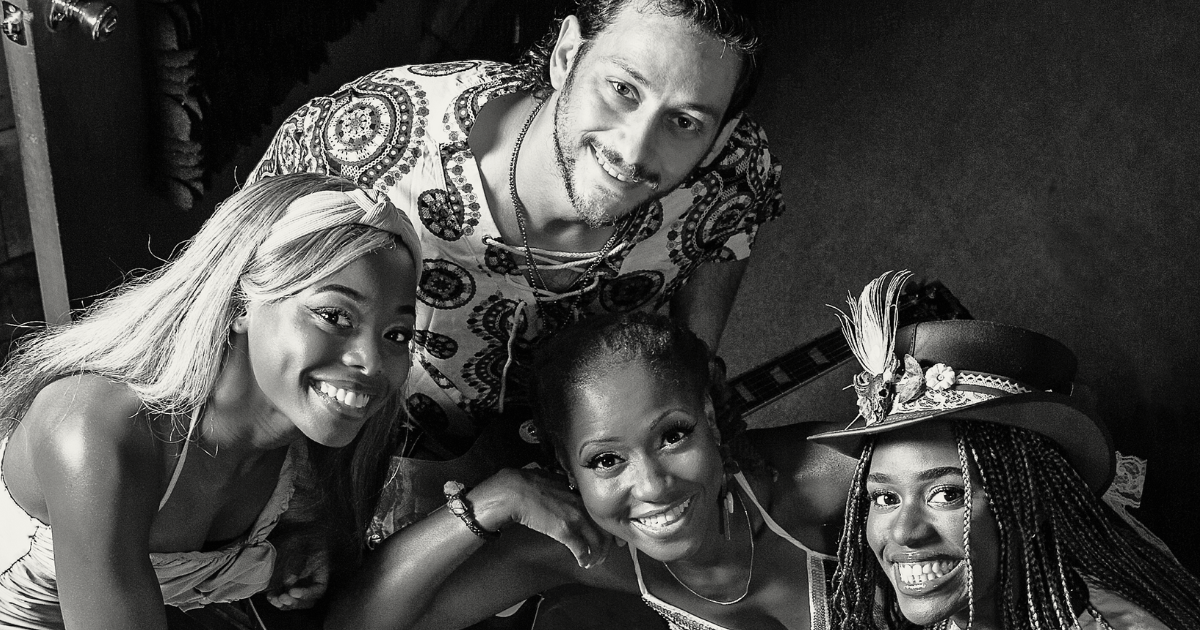
GC 5+5: Southern Avenue

Artist: Southern Avenue
Hometown: Memphis, Tennessee
Latest Album: Family
Personal Nicknames (or rejected band names): We don’t remember any rejected band names, but being from Memphis we definitely call everybody “mane.”

Answers have been provided by Tierinii Jackson, Southern Avenue lead vocalist and songwriter.

What was the first moment that you knew you wanted to be a musician?

It wasn’t one moment, it was the absence of one. I never imagined not being a singer and a songwriter. I grew up singing in church with my sisters and family and even when I ran away from all of that, the music stayed with me. Beale Street gave me my second education. That’s where I chose to be a full-time musician, even if the world didn’t choose it for me.

What is a genre, album, artist, musician, or song that you adore that would surprise people?

I love musical theater. It’s drama, it’s storytelling, it’s emotion on 10. I used to want to be on Broadway. Sometimes I still do. The song “Flying” on our new album is just about that. My mom actually turned the plane around mid-air so I wouldn’t fly to New York to make my dream come true. I do believe that it all connects and I have plenty of time to still do something special in that world.

What’s one question you wish interviewers would stop asking you?

People always ask how we met and how the band started. It’s everywhere online already. We just hope to get asked about new things now, go a little deeper. But it’s all good, no hard feelings at all. We love it when we have an interview where the person in front of us already has an understanding of who is in front of them.

What’s your favorite memory from being on stage?

When we toured with Willie Nelson, Bob Dylan, and John Mellencamp, it was already unbelievable. But then we found ourselves on stage at FarmAid, after two weeks on the road with them for the Outlaw Tour. I remember standing there thinking, “Am I dreaming?” It was one of those moments where everything just hits you, how far we’ve come, and how real it all is.

Genre is dead (long live genre!), but how would you describe the genres and styles your music inhabits?

We like to describe our music real simple. It’s Memphis music. That’s what raised us. We’re a mix of where we come from, how we grew up, and everything we dreamed of becoming. It all comes together in the sound.


Photo Credit: Rory Doyle

Becca Stevens Strips It All Back on ‘Maple to Paper’

In her dynamic, restless career, Becca Stevens plans to never repeat herself, like the proverbial waterway that’s never the same river twice.

Since being noticed by New York Times jazz critic Nate Chinen in 2008 as a 24-year-old “best kept secret,” she’s collaborated with: David Crosby and his Lighthouse Band; jazz orchestra Snarky Puppy; the modernist ensemble Kneebody; pianist Brad Mehldau; harmony genius Jacob Collier; the neo-classical Attacca Quartet; and others. Her five solo studio albums, especially the mind-stretching and richly grooving Regina (2018) and Wonderbloom (2022), have mingled folk-grounded melodies and jazz-deep harmonies with pop dazzle. The common denominator has been her uncommon voice, which is conservatory-trained, but utterly unique and enthralling. She is, in my humble opinion, one of the finest overall musicians making song-based music today, a peer to 21st century savants St. Vincent and Madison Cunningham.

One frontier that remained for Stevens was, ironically, the most obvious for a singer-songwriter – the solo acoustic album. Her version of this venerable format finally arrived in late August with Maple to Paper, a 13-song collection that was shaped at every level by a series of landmark life events. After marrying Nathan Schram, violist in the Attacca Quartet, she gave birth to daughters in 2022 and 2024. Their family moved from New York to Princeton, New Jersey. Her mother died, as did her close collaborator and friend David Crosby.

Stevens alchemizes this season of change, love, and loss through songs that challenge conventional forms with rich and fearless lyrics that play at times like Emily Dickinson set to classical guitar. On the cover, she’s demurely naked behind a guitar. In the grooves, she’s as vulnerable as we’ve ever heard her. As she told me of her emotional multiverse of the past few years, “I felt uncomfortable about sharing it, but I also was like, well, if I’m going to do this, I might as well make it completely exposed.”

It’s easy to suppose that the changes of the past few years – moving, having children, losing your mom – made a solo acoustic record sound more appealing at both artistic and practical levels?

Becca Stevens: Absolutely, yeah. You’re spot on. Two things can be true. So the choice to do this album completely solo and from home both served the concept and integrity of the album. But it also was maybe the only way that I could have gotten it done during that time.

Just to put that into perspective, you know, there was the logistics of the grieving. The loss of my mom was super fresh, and I had a six-month-old who was part-time in daycare. And then towards the end of the recording and writing process, I was pregnant again. So there was the logistics of being a new mom, of having morning sickness, of being in a new place, of grieving my mom, and all of that was so much more possible to do from home. But I resisted it.

For a long time, I had the idea of recording the demos at home and then going into the studio. But I went back and forth a lot with Nic Hard, who mixed it with me. He also did Wonderbloom. And the deeper that we got into the material, the more crystal clear it was that the songs were best served if performed live – guitar and singing at the same time – and performed at home, where I was really in the character and in the feelings.

Did writing and making art feel like what you wanted to do under all those cross-cutting pressures and changes, or did you have to force yourself a bit through the work?

“Want” is maybe the wrong word. I felt like, at least for the grieving part, I had to do it because it was like I was going to explode if I didn’t do something. And it was a confusing loss – something that left me with a lot of questions. Ever since I was a kid, I’ve been somebody who processes confusing emotions through writing songs or stories, or art in some way.

I felt like I needed to do it. But also, yes, there were times where I just absolutely did not want to and just wanted to lie on the floor. And I had to find a way to incorporate that as part of the process, so that I could forgive myself. I literally had a futon on the floor of my workspace, where I told that part of my brain, “You are invited to lay down there whenever you need to. You’re not at a studio. The clock’s not ticking. You’re not paying for this.” I called it my Womb Room. And I would put on salt lamps and put the lights down really low and lay down. And then some of the songs came from that space.

Some of these feel more like classical art songs than folk songs, in that they’re not shaped around a set number of measures or predictable beats. Did they feel a bit like that to you?

Yeah, the song “Payin’ to be Apart” comes to mind. It definitely felt that way; a little less folky, more like poetry that just happens to be on a wave of music. It’s interesting to hear you say that, because in the writing process – harmonically and in the accompaniment – I took a much simpler approach than what I have done before, on Regina or Wonderbloom, on everything really. Because I put so much intention and honesty and, like, blood, sweat, and tears into the lyric, I gave myself permission to let the waters that it was floating on be a little less turbulent artistically, a little less complex and a little more like I was trying to cradle them and deliver them in a way that takes care of them and makes it easier to metabolize – or something.

Was your mindset different, knowing there’s not going to be the grid of the drum beat? Can drums be a bit of a cage sometimes?

Yeah, they can be a cage. But they can also be like something that’s really cozy to lean on in the arrangement. Like, I can drop everything and have it just be drums and vocals for a verse and it feels really good. But for this album, I set a goal that the songs are meant to be performed as just me and the guitar, because that’s how they were recorded. That means that whatever break that I gave you in Wonderbloom by stripping down the arrangement and going to drums now needs to be created with whatever tools I have by myself, whether that’s narrative, or a right hand finger pattern, or fill in the blank.

This made me wonder how much you have performed solo acoustically in your career, given the emphasis on arrangement on a lot of your records.

Quite a bit, yeah. I have a lot of respect for my bandmates. And if there were ever gigs that we were offered where I felt like I couldn’t cover their fee and treat them well, I would just take it solo. I’ve done that a lot. I’ve done a lot of solo tours. A lot of my writing has started out solo, and I have solo versions – for example, “You Didn’t Know,” the song from Wonderbloom that was inspired from watching the documentary about R. Kelly. That song, I poured my heart out solo and then stripped the solo version back when I was in the studio turning it into the Wonderbloom version.

Solo feels like a home base to me, and it’s something that I think I’ve resisted, because maybe I felt like it wouldn’t be enough. There’s this narrative, especially in the booking world, that they don’t want to book you unless you have more than one or two people on stage, because it’s not enough to create the energy to get the focus of the audience. And maybe it’s not loud enough, you know? I also had that in mind. This might not be very marketable, but I’ve got to do my best to just serve these songs to the best of my ability. And it’s got to get done anyway, because this is how I’m processing this part of my life,

Meanwhile, your tempo of collaborative work never seems to let up. I have my personal favorites, but can you address some of your favorite partnerships here in the last few years?

We haven’t mentioned this yet as part of the story of this record, but knee-deep in the writing and recording stages of this album, we also lost David Crosby. I’d already gotten punched in the face and then I was like, kicked on the ground. Not that it’s about me. The whole world grieved that loss. As I mentioned, when I lost my mom, it was a very complicated grieving process. I took a lot of inspiration from listening to albums like Sufjan Stevens’s Carrie & Lowell, where it’s okay for grief to be ugly and complicated and to show that. But with Croz, it was so sad, because I loved him so much, and I loved being in his band, and I loved writing music with him. But the presence that he held in my life didn’t diminish. I couldn’t hug him, but there was this sort of heavenly presence when I was writing the songs for this album, where I could hear him and see him in my mind, kind of rooting me along.

And tell me about Michael League of Snarky Puppy and the universe that he inhabits with the GroundUP record label, which has been supportive of you all this time. It’s such a fascinating record company. I feel like they’ve got a lot to teach the music industry about curation and cultivation of a tribe, and I’d love for you to remark on how that model has served you.

I like the word tribe. I often think of it as family, but I think tribe is even stronger. I feel safe with that label in a way that I’ve never felt safe with labels before, especially major ones, where, if you’re not performing exactly the way that they want you to, you get kind of put on a shelf, and then your art doesn’t get heard because, because you’re not pleasing the corporation.

With GroundUP, I’ve always felt like whatever I’m getting into is what they want me to do. They’re like, “Your health and happiness and artistry come first and if that’s what you need to make right now, we’re behind it.” And I can’t tell you how liberating and comforting that is as an artist to know that the people that are helping you put your music out have your back. And we all love each other too. We all play together and love each other too.

And speaking of Sufjan Stevens, you got to be on Broadway in his Illinoise musical. What did that add to your world?

Yeah, it was a limited run on Broadway and I did half of the run. So I had Isla, my second daughter, on February 24 of this year. And then I got a call from Timo Andres, who did the orchestrations, saying, “I know you’re on maternity leave. This is crazy. I shouldn’t even be calling you, but I can’t not think of you for this role. Is there a world where you would ever audition for this?” I was like, “Yeah, I could audition and see what happens…” and didn’t expect to get it. I came in with my newborn baby. I handed her to my manager, did the audition, and they called me within a day and said they’d love for me to do it.

Initially I thought, “There’s no way.” I’m giving you all of this extra detail because a huge part of the experience for me was the chaos and the balance of the life that I was living at home for the first half of that day in Princeton – nursing my baby and being a new mama – and then handing her to my husband and jumping on the train for two hours, going into the city just in time to perform, and then coming back home and doing it all again and nursing through the night. It was this superhuman thing that initially I thought, “Oh, there’s no way this is going to work.”

The whole experience was like a dream state – being on stage and singing that music, which I’ve loved for so long. And also, having it not be about me was very refreshing. I’m not the band leader and I’m singing someone else’s music as a narrative that’s coming from the bodies of the dancers. We can lean on the coziness of the production, and just enjoy it.

I would say coming out of that helped me to be less self-absorbed. The headspace that I was in for Maple to Paper was very me, me, me, me, me, me. And then Illinoise was like, “No, it’s not about you. It’s about being in service to something greater than you.” Whether you’re writing a song about your feelings or singing somebody else’s, that’s always what it’s been.


Editor’s Note: Need more Becca Stevens? Check out our recent Basic Folk conversation with Stevens here.

Photo Credit: Shervin Lainez

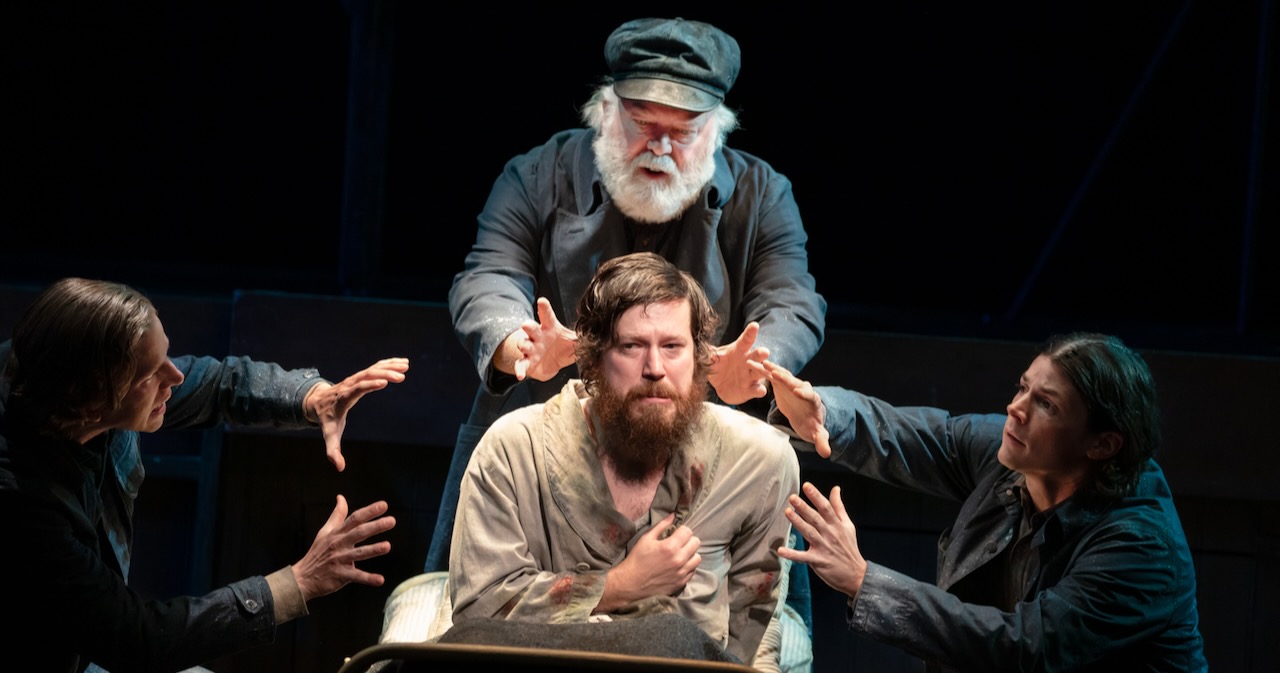
The Avett Brothers’ Musical, ‘Swept Away,’ Heads to Broadway

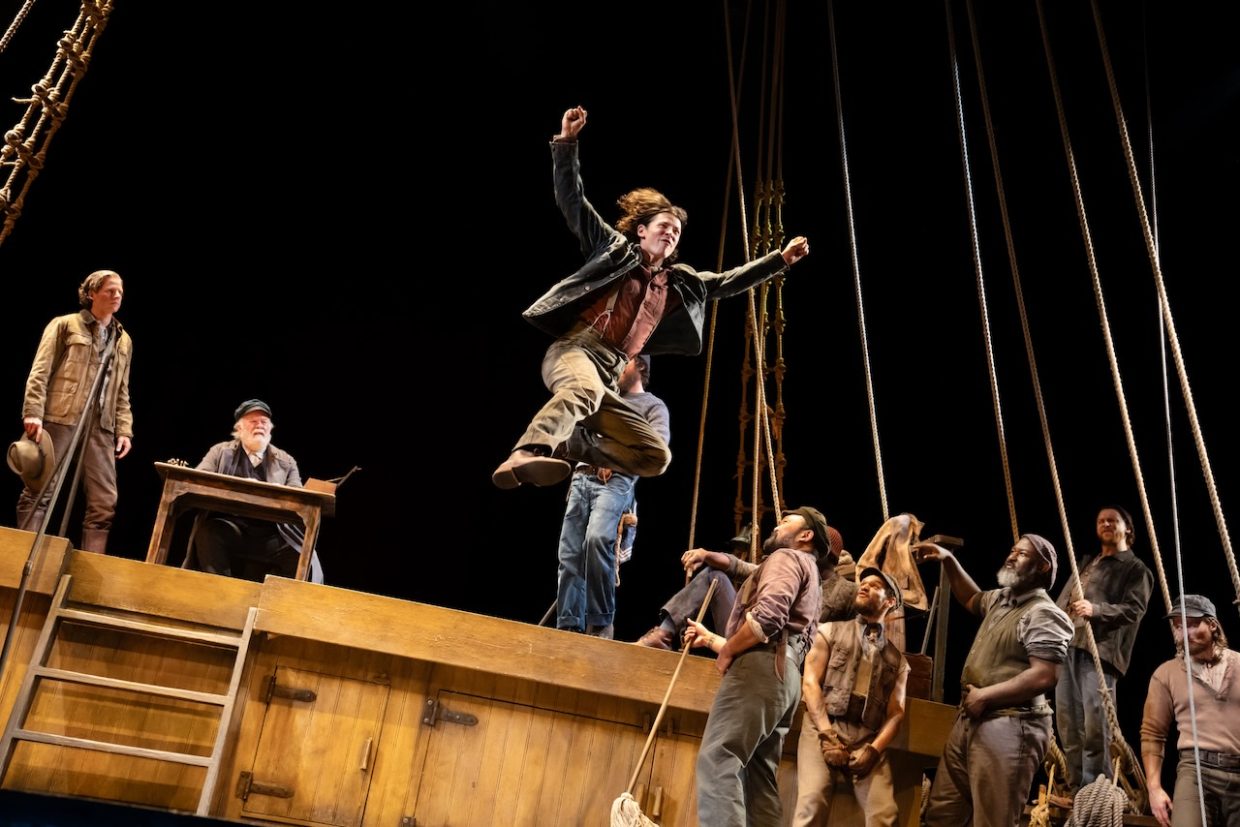
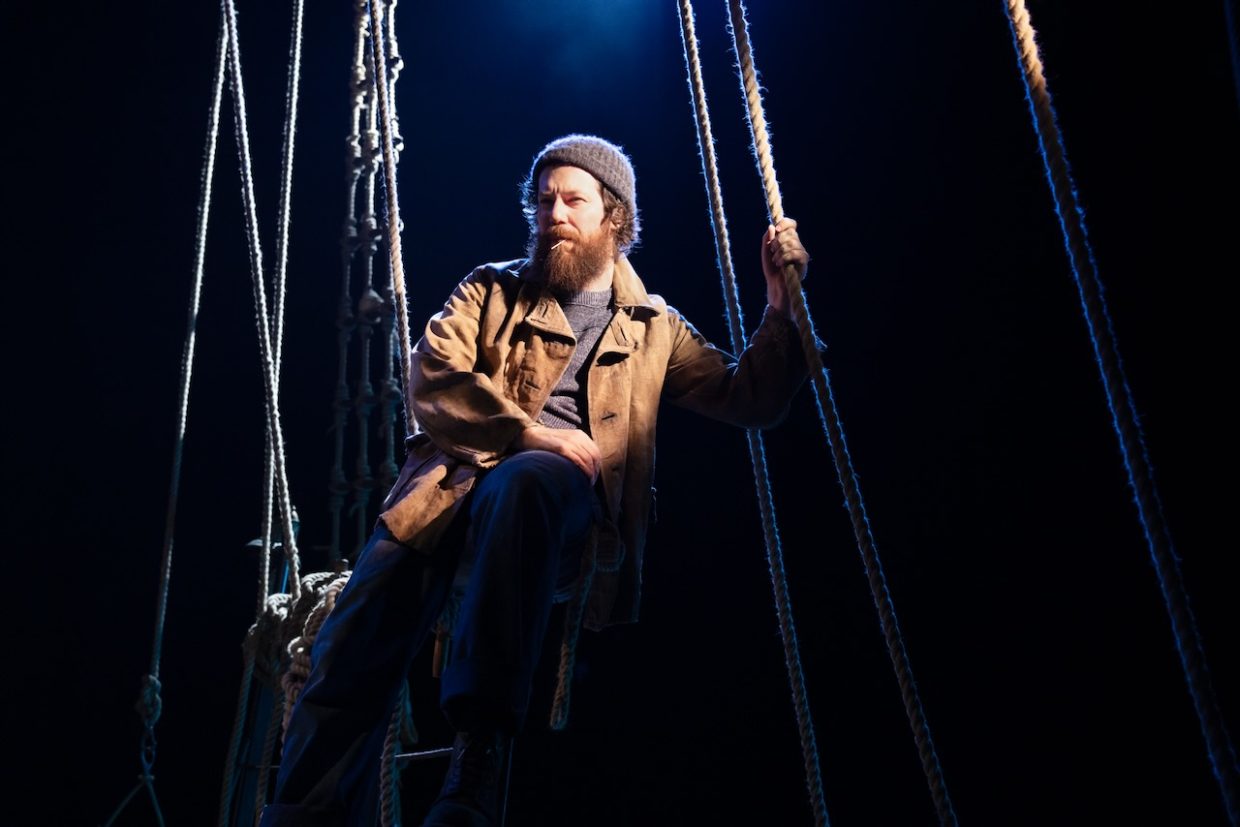
It has been two decades since the Avett Brothers released their shipwreck-themed concept album Mignonette. This fall, the musical Swept Away, based on the album’s story, will premiere on Broadway as the latest in a bevy of roots-based musicals lighting up those storied theaters.

Swept Away is presented in 90 minutes without intermission. During previews in San Francisco and Washington, D.C., the cast and creative team received high praise from theater critics and Avett Brothers fans alike.

The Avetts’ original song cycle was based on the story of a shipwreck near the Cape of Good Hope that left four survivors in a lifeboat. To survive, three of them killed the fourth and ate him for sustenance. When they were finally rescued, the three stood trial, breaking a tradition of maritime law that up to that point had carried the spirit of, “What happens at sea remains at sea.”

It’s quite a story for a band of brothers who have become known for their stirring sincerity. But, Scott Avett told Broadway.com, “We were driving around to places that seemed unknown, in a van. We seemed to have nothing but this belief that we were doing something that was true. … It was easy to see that van as our vessel.”

“It was scary,” adds Seth. “We felt very driven to survive.”

Adrian Blake Enscoe and the Company of the Washington, D.C. Arena Stage production of ‘Swept Away.’ Photo by Julieta Cervantes.

The Avetts discovered the story via their father, Jim Avett, who had a special affection for stories of shipwrecks and handed them a book about its history, The Custom of the Sea: A Shocking True Tale of Shipwreck, Murder, and the Last Taboo. When they wrote Mignonette, the brothers Seth and Scott were 23 and 27, respectively, and just beginning to rise from the clubs. But the disc pointed the way toward a bright future for the Avetts, which then included only the brothers with bassist Bob Crawford.

It was that trio which caught the eyes, ears, and imagination of a young John Gallagher, Jr. Gallagher spent a summer day in 2005 at the Philadelphia Folk Festival, aimlessly checking out bands he’d never heard of before.

Folk audiences were a handful of years out from the release of O Brother, Where Art Thou? – the film that ignited a wildfire of interest in bluegrass and old-time music for a new generation. Plenty of bands in their 20s were throwing their flat caps into the ring. But, Gallagher recalled recently over Zoom, “The thing that struck me … about the Avetts is that they were feeling it, you know. You can’t fake that. You can’t deny that. When you see someone bring that to the stage or put that on a record, it’s totally undeniable.”

That night, while driving back to Delaware with his sister and friends in their mom’s minivan, Gallagher commandeered the discman attached to the cassette adapter that fit into the car’s tape deck to insist everyone listen to the CD he bought after the Avett Brothers’ set.

Mignonette was the only one they had on offer that summer. They’d released it a year earlier on Ramseur Records. Gallagher played its first two tracks – “Swept Away” and “Nothing Short of Thankful” – before moving on to Green Day’s American Idiot, which had also just released.

Fast forward a handful of years and Gallagher was developing a new musical for Broadway based on the very same Green Day album. In his dressing room at the St. James Theater, he’d hung a small poster that showed Seth Avett handing his guitar off to a tech at a live show.

Mignonette had long since turned the young actor into a self-described “fanboy.” Even as he sang eight shows a week of Green Day tunes, he couldn’t have possibly known he’d eventually be cast for another Broadway show, this time based on the Avett Brothers album he’d played in that minivan back in Philly.

John Gallagher, Jr. in the Washington, D.C. Arena Stage production of ‘Swept Away.’ Photo by Julieta Cervantes.

When it dropped in 2004, Mignonette was lauded by the roots music press of the day. Paste extolled the band’s “James Brown precision (in a bluegrass context of course).” No Depression, then still in its original print run, applauded tracks from the album that harnessed “palpable yearning and hope.”

The playwright and filmmaker John Logan (Moulin Rouge) recalls how, in 2017, he received an email from producer Matthew Masten, asking if he’d ever heard Mignonette. After listening to the album for a day, Logan was sold.

He flew to North Carolina, where he pitched his vision for the musical to the Avett Brothers, asking them to open their entire catalog and to write a new song only for the stage. Once they agreed, Swept Away was set in motion. Michael Mayer, who was directing Gallagher in American Idiot at the time – a very different show with a score written by a very different band – was tapped to direct.

The show these men and their team would create would be titled after the album’s opening song, “Swept Away.” It would be somewhat of a jukebox musical, but not really. Somewhere between Jagged Little Pill (which told a new story with Alanis Morisette’s breakthrough album) and Hadestown (whose Tony-winning set designer Rachael Hauck joined Swept Away’s creative team). Plus maybe a little Come From Away. On a ship. In the 1880s.

In recent years, Broadway producers have been more and more interested in revivals (Merrily We Roll Along, Cabaret) and movies-turned-musicals (The Notebook, Moulin Rouge). True originality is more rare on the Broadway stage. Swept Away may be adapted from a 20-year-old folk album, but its songs pull from across the Avetts’ catalog and its book is entirely new.

Like Gallagher, Adrian Blake Enscoe, who is originating the Little Brother character, is a musician away from Broadway. His band, Bandits on the Run, has the scrappy busking energy of early Avetts and he especially appreciates the way the show incorporates the “rough and spontaneous” elements of the Avetts’ music into a score that can resonate with the theater crowd.

“It’s really hard to capture the magic of the little things [about folk music] and translate it to other people,” he acknowledges. Then adds that the music supervisors and arrangers, Chris Miller and Brian Usifer, “did an incredible job of recreating the magic.”

Swept Away is set to open on Broadway October 29, 2024, at the Longacre Theatre on 48th Street.


All production photos courtesy of DKC/O&M. Shot at the Washington, D.C. Arena Stage production of Swept Away by Julieta Cervantes.

Lead Image: Stark Sands, John Gallagher, Jr., Wayne Duvall, and Adrian Blake Enscoe in the Washington, D.C. Arena Stage production of ‘Swept Away.’ Photo by Julieta Cervantes.

The Value of Letting Go: Ani DiFranco Steps Out of Her Comfort Zone

Releasing a new album is stressful enough for most artists, but releasing an album, a documentary, and a book almost simultaneously – while singing and dancing in a Broadway musical? That sounds crazy even to Ani DiFranco, who released her 23rd album, Unprecedented Sh!t, in May, while performing as Persephone in Hadestown, reprising the role she sang on the same-titled Anais Mitchell album that became the folk opera. (The album was released in 2010 on DiFranco’s Righteous Babe Records label; the show opened on Broadway in 2019 and won eight Tony Awards, including Best Musical and Best Original Score.) DiFranco wrapped her nearly five-month acting debut on June 30, just after performing at the Tribeca Film Festival premiere of director Dana Flora’s documentary, 1-800-ON-HER-OWN, filmed as DiFranco recorded her 2021 album, Revolutionary Love.

On August 27, DiFranco will release her second children’s book, the timely and inspiring lyrical narrative, Show Up and Vote, illustrated by Rachelle Baker. (Her first, The Knowing, was released in 2023.) For most of these endeavors, including Unprecedented Sh!t – only her second album produced by someone else (BJ Burton) – DiFranco did something she’s not used to: giving up control.

Who decides to be in a play, release an album and a book and have a documentary premiere at the same time?

Ani DiFranco: No one would decide that. That’s fate just laughing at me, just fucking with me. But it’s exciting. It’s exhausting. And my hamstrings may or may not hold me up through it all. [Laughs] But I wouldn’t be anywhere else.

Obviously, you’ve spent time in front of audiences. What’s different about doing it in a musical?

I’ve realized that performance has, at least for me, two big components. One is improvisational; it’s of the moment. It’s interactive. The other is putting on the show. I’ve always leaned into the interaction and improvisation. This is very much leaning in the other direction. Doing the same shit every night, eight times a week, for months, is a whole other approach. … What I think I love most about this super unique experience, besides the work itself – Hadestown is such an epic work, and I couldn’t think more highly of it – I’ve never done something where it’s such a group effort. I really have been amazed by [the] collective experience. Like we all became one organism, sort of this collective energy field.

Do you think you would get involved in another production like this?

I’m pretty open to anything. I’m most enamored by the new and terrifying, so I have no idea.

I would think a documentary is exciting, too.

Yeah. Yes …

You don’t sound so sure.

I’m just going with exciting as the adjective. [Laughs] For me, it’s very disconcerting.

In what way?

I actually haven’t seen it and I’m not sure if I will. It’s a lot, to show yourself.

That’s got to be a challenge. But you have led what I consider to be a singular life and have had a really impactful career. It seems like it would make sense to put that onscreen.

It’s not a career-defining, expansive retrospective. Of course, there’s some historical context. But it’s just a walk in the shoes of a woman who’s trying to be an artist in the world, and also a mother and have a relationship and be accountable to everyone that wants her to be at any given moment.

Let’s talk about the voting book. I’m so charmed by the concept, because it’s such an important one to teach. What inspired you to do that?

Exactly what you said. I feel like young people being inspired to vote in this country, in this moment, is the difference between having a democracy tomorrow and not. So when I was invited to make a book for children, I thought, “Hey, maybe I’ll try to talk to some future voters.” It’s from a kid’s point of view about going to vote with her mom. The book is a tool with which parents can engage their kids about voting.

I’m somebody who takes my kids with me to vote so that they see it modeled, so that they understand it as a part of being grown and a member of a society. But even more than a teaching tool, I hope that it will inspire kids, that it will get them excited about this thing that they get to do when they’re grown up, because they’re part of a democracy. It’s a really important, empowering, profound thing that connects them to everybody else, and is a way that we take care of each other, a way that we express our love for each other, and all of these really cool things. I guess I most hope that it lights a fire in a kid.

That brings me to the album. I noticed that “The Thing at Hand” and “The Knowing” seem to share similar concepts, but the latter one apparently was describing the ideas to a child. Is there a connection?

They are very related, but “The Knowing,” I wrote specifically to a child. When I was faced with making my first children’s book, I was having a hard time, and the only way I made it through was to pick up my guitar and make a song that was also a book. And “The Thing at Hand,” those themes of identity and ego, and the vast realms that exist beneath that or beyond it, are themes that run through the record.

I totally caught that, and I loved the lyric, “I defy being defined”; that sums up a lot of your career – and your life. How hard has it been to maintain that stance in a society and music industry that seem to be all about definitions, and judging based on them?

It’s been really hard, every step of the way. People want to define and describe you in very finite terms, and they’re often very reductive. Holding onto a sense of myself as this ever-changing field of infinite possibility, so to speak, is a hard thing to do. There are pressures from every direction to be something very concrete, that thing that this person or that person or the other wants you to be or insists that you are. It’s been a real dance of negotiating that all the way along.

What do you do when it gets really frustrating?

I’ve had to just develop this – I mean, I’m as thin-skinned as the next guy, when it comes right down to it. I am as lost in seeking affirmation from the world around me instead of from inside myself as the next guy, so it’s a constant challenge to go beyond all of that and to keep yourself at a distance, no matter what the world is saying about you. I’ve learned that you can’t rely on the world to tell you that you’re worthy and you’re good and you’re great and you’re wonderful, which sometimes it does, because then when it turns around and says you’re unworthy, you’re terrible, you’re horrible, you’re a sham, your whole premise of yourself comes crumbling down. So it’s still a challenge that I am trying to rise to, to self-love. The older I get, the more I believe that the ways that we harm each other all come home to our lack of self-love. So it’s not some kind of trite endeavor; it’s not self-centered or indulgent. It is extremely important to peace on earth that we learn to find our inherent worthiness within ourselves in order that we not turn our self-hatred on each other.

Back to the concepts you address in these songs. “New Bible” sounds almost like a manifesto; there’s so much to unpack there. In other songs, you just allude to an idea; for instance, in “Baby Roe,” you say, “I think we might be wrong about all of that,” which raises the question, wrong about what?

That’s another song that is interrelated on the theme of ego and identity; it’s … stepping back from this debate about abortion and reproductive freedom and going, this is ridiculous. Like, projecting your ego onto a potential human; it’s like, I am a being of light. I am consciousness and that’s what you are. And this is one of many, many lives and manifestations of this unified field of consciousness that unites us all, that we are coming from and returning to infinitely, that we are all one within. This idea that consciousness need be born right now, into this exact body, in order to be manifesting, is really silly. The whole premise of forced reproduction is based in this very stunted understanding of what we are and what life is and what death is. I think a lot of the traps that we fall into that are entrapping us more and more, sociopolitically, environmentally – it’s all ego-based delusion.

In many of these songs, you sing so sweetly, and yet there’s these undertones, like in “More or Less Free.” I was surprised to read that was about somebody in prison; I thought of it as possibly directed to oppressors.

“More or Less Free” is intentionally open-ended, but yes, it’s written from within prison walls, as a free person inside a prison, visiting and having very human moments and connections with people who live in cages all the time. But it’s a tricky business to talk about songs and what is this about and what is that about? I hate doing that, because songs are supposed to reach you the way they reach you and you’re supposed to hear what you hear, or not. And that’s not for me to say, really. They’re about what you decide they are.

But you know what I’m saying. Technically, that’s where it comes from, but it is very much about being born into a society, that dichotomy of – we are all born free, as my friend Utah Phillips would say, and then you wait for somebody to come along and try to take away that freedom. He always said the degree to which you resist is the degree to which you are free. So yeah, we are all born free, and yet, we’re not. That’s all that it’s about.

What was different about doing an album with somebody else calling the shots?

Everything of this particular record and process was unique. The remote thing, for one, which is just how it worked out. He and I would have loved to have spent endless hours in a room together vibing off each other, but we did it interacting through many levels of machines. In retrospect, that’s maybe exactly apropos for a record where I was really trying to bring the machines in. BJ, of course, is the one with the machines and the facility to be intuitive and creative with them, but we sort of worked vicariously with each other.

Because I was not in the room with him, I couldn’t say, “Ooh, a little to the left. Oh, a little louder.” It was like, I record the songs, he fucks with them royally, and what comes back is – I mean, we had a little back and forth, but really, it was overwhelmingly a process of giving over. Just saying yes to his artistry, like he was saying yes to mine. I was not prepared to do [that] at 20 or 30 or 40, and with album one or six or 10. But this is album 23. I’m 53 years old, and I’m more than ready to say yes and really delegate.

People have gone back and redone previous albums. Maybe 10 years from now, you might decide that you want to redo it.

Well, I’ve been in this music game and song-making game for 30-plus years, and one thing that I’ve learned from experience is that songs have long lives. And, that even when I was in charge and doing everything “the way I thought it should be done,” which was most of those other records, I don’t necessarily “get it right,” or the album version is not the definitive version of any song of mine, necessarily. In fact, I have no memory of making any of them. And sometimes when I hear them, I’m like, “Whoa, what?” because the song as it’s lived onstage and in the world is not necessarily that moment. When I had misgivings about BJ’s tendency to turn my guitar into some other sound, or eliminate it altogether, or sort of deconstruct what I sent him or something, I would think, “Whoa, is this cool?” And then I was thinking, “Well, who cares? That’s just how it sounds on this little piece of vinyl.” The song, it’s like a snapshot of a human; the human has many faces.

I love the line in “Unprecedented Sh!t,” “the bigger the heart, the more it bleeds.” But it also sounds like there’s an attempt to ignore that [i.e., “I got a lot of heart/ But I can’t afford to let it bleed”]. Sometimes, for example, with animal rescue, I have to stop myself from reading another story about this poor …

Oh, yeah. Dude. That’s all I’m talking about there, is how much we have to numb ourselves to survive being surrounded by pain and suffering and feeling helpless, if not being helpless, to stop it.

It’s a shame that we have to numb ourselves, but on the other hand, do you ever feel like that character in The Green Mile, where it’s just all going into you, and it’s too much to hold sometimes?

Yes, very much. I think anybody whose heart is not dead inside their chest is trying to deal with that.

That’s what I got from “New Bible,” too. There are some really pessimistic statements in there, but there’s also some real optimistic ones, a sense of, yeah, you can let this stuff overwhelm you, or you can look for ways to do something. That, to me, is a really good thing to put out there.

Yeah. Which brings us back around to the children’s book. The tools of nonviolent revolution are right there in our pocket, actually. What do you know? What do you know?


Photo Credit: Anthony Mulcahy

It’s a Great Time for Roots Music on Broadway

Utter the phrase “Broadway musical” and most folks are likely to assume you’re referring to the jazz-hands-inspiring works of Richard Rodgers and Oscar Hammerstein; the emotionally manipulative drama of Andrew Lloyd Weber; or the inventive playfulness of Steven Sondheim. But folk and roots music have a long legacy on the great white way — and a bit of a folk boom has been happening in those storied theaters lately.

Granted, Broadway producers have long presented shows that pull in the music of roots-informed artists. Folk-pop singer-songwriter Duncan Sheik delivered a stunning musical score for the groundbreaking Spring Awakening, cementing the careers of Broadway stars Lea Michelle and Jonathan Groff back in 2006. Let’s not forget brief runs of musicals that pulled from the catalogs of Dolly Parton (2009’s stage adaptation of 9 to 5) and Bob Dylan (Girl from the North Country, which debuted in 2020).

Of the shows currently occupying midtown theaters, Anaïs Mitchell’s Hadestown has run the longest, having just passed its five-year mark. With eight Tony Awards from its 2019 debut, the musical pairs the Greek myth of Orpheus and Eurydice with that of Hades and Persephone. Though its original cast has scattered to other projects, beloved folksinger Ani DiFranco spent a bit of her winter and spring this year offering a stunning run as Persephone.

Ani DiFranco and Anaïs Mitchell outside the Walter Kerr Theater in New York City. Photo by Matthew Murphy.

Fans may know DiFranco trained for many years as a dancer, even as she was building her singer-songwriter street cred. She proves to be a triple threat in the role, embodying the storied arbiter of summertime with a deeply rooted, empathic swagger. And though her June 30 departure feels like the end of an era for the musical, her latest album Unprecedented Sh!t (released May 17 on Righteous Babe Records) charts some new sonic territory via her political POVs.

Further, it’s hard to mourn DiFranco moving on when it was recently announced that British country favorite Yola will replace her in the role of Persephone, beginning July 2.

Hadestown was briefly joined last year by fellow roots musical Shucked, which came and went too soon. Awash in silly corn puns and Tampa-centric storyline, its earworm score was penned by Nashville mainstays — and Grammy darlings — Brandy Clark and Shane McAnally.

Last month, Illinoise opened at the St. James Theater on 44th St. Pulling tracks from Sufjan Stevens’s sprawling, ambitious 2006 album of the same name, the show reorders the songs to depict a group of friends sharing stories around a campfire. There is no dialogue. Instead, a 12-piece band and a trio of vocalists in magical butterfly wings perform the music in the background.

Upstage, Illinoise tells its stories through exquisite choreography that runs the gambit from lyrical contemporary to hip-hop, some sweet Broadway jazz, and even one number (“Jacksonville”) with a lightning-fast tapper in pinstripes. Dancers touch on love and loss, fear and transcendence.

“Zombies” becomes a scene about the immigrant experience, as dancer Jeanette Delgado (“Jo”) tries to outrun the ghosts of America’s founders, whose complex legacies still haunt the present day. “The Man of Metropolis” becomes a comical superhero-themed character romp. And former Billy Elliot star Ben Cook (“Carl”) delivers a heartbreaking and inspired series in Act II to track an emotionally complex love triangle.

By show’s end, there is a pervasive sense of the opportunity art grants us to transcend our selves and build a better world together. It’s no wonder the show was nominated for four Tony Awards, including Best Musical. If it wins, it will be the first time a dance musical has won the prestigious award.

The Outsiders, meanwhile, is running now just one block away, at the Bernard B. Jacobs Theater. It sets to music the novel by S.E. Hinton, which was immortalized in a 1980s film by Francis Ford Coppola. Produced in part by Angelina Jolie, with a book by New York theater fixture Adam Rapp (Wolf in the River, The Sound Outside) and music by Americana mainstays Jamestown Revival, this musical version unfortunately doesn’t measure up to the other two roots musicals in the neighborhood.

Granted, perhaps it doesn’t have to. The Broadway League and American Theater Wing don’t seem to be anything less than impressed, having nominated the musical for a whopping 12 Tonys this year. It may not translate seamlessly to the Broadway stage, but The Outsiders is a story that has been beloved by numerous generations. It was a treat to witness members of Generation Alpha giddy with excitement to take in the narrative arc of Ponyboy and the other Curtis brothers — a story that feels to this writer as though it’s rooted in Gen X sensibilities, despite being set in the 1960s.

Choreography by Rick and Jeff Kuperman was athletic and stunning — plenty of leaps and jumps and long, denim-clad legs spinning in the air like human helicopters. The Kuperman brothers’ martial arts background comes through even beyond the inventive dance-fight scenes. There is water on the stage, somehow, and it splashes up from time to time, for some reason. It doesn’t matter why. The effect is properly dramatic.

Brent Comer, who plays “Darryl,” steals the show with his powerful Zac Brown-reminiscent twang. He has some of the most compelling solos, embodying the exhaustion of a stay-at-home-mom as he folds clothes and laments his lot in life, “somewhere between brother and father” since their parents died. Jason Schmidt as “Sodapop” matched his rootsy musicality with the second-act heart grabber, “Throw in the Towel.”

But it is Joshua Boone’s “Dallas” who is perhaps the show’s greatest revelation, with his Bill Withers-esque vocals on solos like “Little Brother.” Brody Grant as Ponyboy seemed a bit lacking during the matinee performance this writer recently caught, but it could have been an off moment. Eight shows a week requires almost superhuman amounts of energy reserve.

Or perhaps it was a side effect of Grant being in his 20s while his character is supposed to be 14. Indeed, despite the electricity of The Outsiders’ score and choreography, the script doesn’t feel as authentic as its emotional realities demand. Hinton’s book offered readers a revolutionary view of teen struggles, written by a teenager. Perhaps the Broadway show should have brought in some teenagers to consult.

Regardless, both Grant and Boone were nominated for Tonys (as was Sky Lakota-Lynch, who delivers a haunting performance as Johnny). For folks just interested in what Jamestown Revival did for the show’s score, an Original Broadway Cast Recording is available now.

All told, there is no indication Broadway is going to break its love affair with roots music anytime soon. The Avett Brothers are set to make their Broadway debut with shipwreck-themed musical Swept Away this fall. The show has previewed in California and Washington, D.C., and has received critical praise already. Swept Away’s score is drawn from the Avetts’ 2004 album, Mignonette, plus four other songs from their canon — a treat for the band’s incredibly loyal fanbase and Broadway subscribers alike.

Further on the horizon is an adaptation of the classic labor movement-inspired film Norma Rae, with music by Rosanne Cash. In an email, her manager indicated a possible 2025 opening. One can only hope. And, just last week, Dolly Parton announced an upcoming original musicalHello, I’m Dolly, set to arrive on Broadway in 2026.


The 77th Tony Awards will be held on Sunday, June 16, 2024 and will air on CBS. Find out how to watch here.

Playbill images courtesy of Playbill.com