Mary Chapin Carpenter Walks Us Through ‘The Dirt and the Stars’

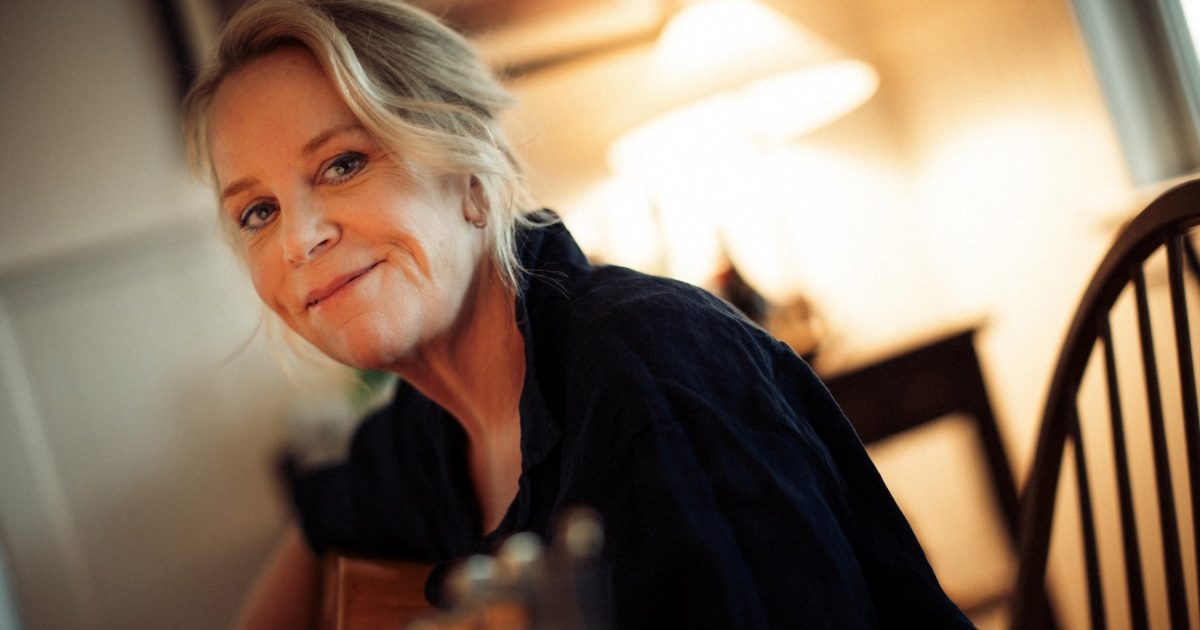
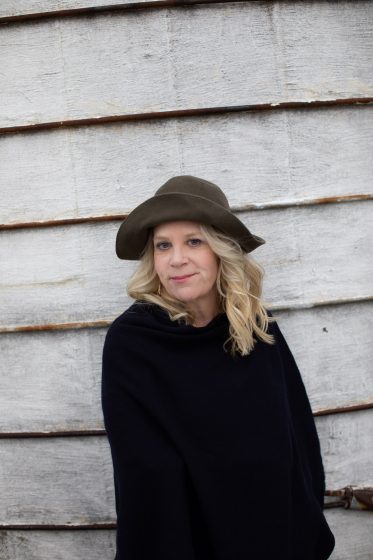
Mary Chapin Carpenter’s fans have got to know her kitchen well since the start of lockdown. It is a beautiful space, often ornamented with bright, round peonies from her garden. It makes you long to be as tidy, and as tasteful, as Mary Chapin Carpenter.

It’s in this kitchen that she records her Songs from Home series. She greets us with the tender familiarity of a family member on a weekly Zoom call. Guitar slung around her neck, she’ll share some snippet of news or wisdom before singing to us from a back catalogue so deep that there’s always something appropriate to the mood of the day. Often there’s an unscripted appearance, even an added harmony, from Angus, her golden retriever, or her cat, White Kitty. It’s less a house concert than a singalong with an old friend.

She’s in her kitchen again as we talk, this time making chicken stock. “I’ve got two enormous pots of chicken bones and carrots and celery boiling on the stove,” she says, and for a moment, it’s like an audience with Julia Child. “I get it started just before noon and then it simmers for about five hours. Just before dinner time I take it off and put it in jars. Then it’s there for whenever I need it.”

I tell her that I’d been wondering, from seeing the immaculate state of her kitchen on her lockdown videos, if she ever cooked at all. “Well, I make sure I clean the dishes out of the sink!” she laughs. “I love to cook. This kitchen is a place where I’m so happy. I wish everybody could come over and hang out!”

She pauses, as the thought strikes her. “These are things that you didn’t even think about, when this all started, about half the things you’d miss. It’s one of the pleasures of my life, feeding people around a table. I miss it so much.”

Carpenter was supposed to have continued her nationwide tour alongside Shawn Colvin this spring, playing songs from her new album, The Dirt and the Stars. With all gigs cancelled, and the travel that usually “balances” her introvert tendencies curtailed, lockdown has been challenging for Carpenter, who lives alone in the Blue Ridge Mountains.

“I’ve been very, very isolated for many months now,” she admits. “It’s a remote rural area, and I don’t need to leave the farm very often except to pick up groceries curbside and use the drive-through drug store. And just like everyone it can be tremendously lonesome and at times very hard, but my reality check at that moment is to remember that so many people are struggling so much more than I am. The minute I start feeling sorry for myself, that’s all I have to think about and I stand up a little straighter.”

After all, Carpenter quickly reminds herself, she is not completely alone — there’s Angus and White Kitty. “And here I am in this beautiful part of the world and I walk every morning for miles, I’m out in nature as much as possible and I really do try to use those elements of my life as meditation and medicine and inspiration.”

Her songwriting walks are a long-established part of her process, although she’s trying not to put pressure on herself to be creative during these extraordinary times. A friend recently phoned her and told her how the various things she’d hoped to accomplish while stuck at home were coming to nought, and how bad it made her feel.

“I said to her, and I think I was saying it to myself at the same time, who among us is going to be accomplished during this time? It’s asking too much. The best you can do in that moment of frustration is to be still and inhale and be kind to yourself.” She catches herself. “I know, it sounds very woo-woo and Oprah-like.”

Carpenter’s new album, recorded in January and February of this year, is arguably the most intimate and autobiographical of her career. But what’s particularly noticeable is the powerful thread of empathy that runs through it, along with a repeated message of tolerance for our fellow humans, all of us carrying our private burdens and flaws.
It’s there in the titles: “It’s OK to Be Sad,” “Secret Keepers,” “Everybody’s Got Something.” In “Where the Beauty Is,” she takes the image of kintsugi pottery — “the shattered pieces of a bowl/ Filled and fused with dust and gold” — to illustrate that our brokenness is what makes us beautiful.

The final song of the album, “Farther Along and Further In,” suggests that these discoveries are ones that Carpenter has been making herself: “There’s a crack in the armor, an opening/ My heart seeing out and my eyes see in/ Where they’ve never seen before.” She agrees with the analysis. “It’s like I’m writing about my own experience, but talking to myself at the same moment. And that new reckoning with self has everything to do with growing older, it’s directly connected to that. The wisdom that comes to you with growing older is the sense that you don’t care as much anymore about little things that used to nag at you. You’re able to let them go. You’re able to realise you can find sustenance and comfort and meaning in things you never did before.”

So much of life, she says, is struggling with oneself — wanting to be better, smarter, more accomplished. “It’s as if as you grow older you’re able to shed that somehow and not care as much. That’s the gift of growing older.” Even still, there are things that are hard to share, even in song. In her excellent three-part podcast, recorded with poet Sarah Kay, Carpenter shared the inspiration behind the song, “Secret Keepers” — born of a #MeToo experience in her past — and admitted to Kay that she found it difficult to reveal too much of herself in her work.

There are other difficult, poignant subjects, not least the death of her friend John Jennings, to whom she pays moving tribute in “Old D 35.” Her fellow songwriter and longtime producer passed away five years ago from cancer, aged 61. “We weren’t just musical partners — he was my best friend,” says Carpenter. “He had been my boyfriend years ago and we’d evolved into being oldest friends. I miss him every day — there’s a hole in my life that’s always going to be there.”

The talk of loss brings us to John Prine, who died of Covid-19 in April. “People are experiencing these losses and have been unable in many instances to even be there with their loved one when they pass away. There’s probably nothing crueller. I may be wrong, I’m just guessing, but I think this terrible disease and catastrophe became a lot more real when someone like John died of it. Sometimes things don’t seem quite real until they touch you directly.”

The scale of the pandemic was only just becoming apparent as Carpenter finished mixing the album. She had chosen to return to England, in order to work once again with Ethan Johns, who produced her last album, Sometimes Just the Sky. The West Country, where Johns’ studio is based, is one of the parts of the world Carpenter loves most, and she finds a beautiful symmetry with her own Virginia countryside. “I live in the northern part of the Blue Ridge, where the mountains aren’t so dramatic as North Carolina. It’s gentler hills and pastures and valleys and whenever I’ve spent time in that area in England near Bath, it’s real similar.”

She performed in a show in London before heading home to the growing crisis. “Someone said to me since, ‘You’ll be one of the few people who can say you had a gig in London in 2020!’” Even now, she can’t bear to ponder when her next live gig might be. “If I think about it too much I get really sad.”

It is no surprise to hear her vent her fury with the Trump White House. “This country is burning up because of the absolute abdication of responsibility of the current administration,” she says. “It’s a debacle, and I feel equal parts rage and sadness.” Her political outspokenness has often caused a backlash among parts of her audience — what she calls the “shut up and sing brigade” — and she says she’s still “incredulous” to hear it. “They’re saying that by deciding to be a songwriter or a singer you’re not permitted to have a conscience. I would direct them to Nina Simone, who said it’s an artist’s duty to reflect the times in which we live.”

Her passion for justice, both in her songs and through her support of organizations like the Women’s Refugee Commission, stems partly from the unusually global worldview she received during her childhood. Her father, an executive for the Asian edition of Life magazine, took his family to live in Japan for a couple of years when Carpenter was 11 years old. Her parents, prescient enough to know that they might never have the chance again, brought the children back to the US the long way, travelling through India, Hong Kong, Greece, Italy, and France.

It was, she says, a magical and eye-opening experience, and gave her “an understanding of what is necessary to be a contributing citizen of the world.” She notes, “My parents raised us to always speak out on behalf of people who have less than we do. That’s why it’s such an insult when people condemn artists for speaking out. I always think it’s a great loss when people feel they’re not able to speak their conscience.”

Still, a seam of hope for the future runs through this record, whatever present trials we face. “It’s disappointing to me when people think it’s a sad record – it’s almost as if they hear it and say, ‘There’s a lot of slow songs on here.’ Inherently it’s a record of looking toward the unknown future and believing that’s the best part.”

It’s certainly something she believes, as she return to the “solace and serenity” of the quiet farmland — to Angus, to White Kitty, and to her bubbling chicken stock.


Photo credit: Aaron Farrington

BGS 5+5: The Dead Tongues

Artist: The Dead Tongues
Hometown: Asheville, North Carolina
Latest album: Transmigration Blues

Answers by Ryan Gustafson

What other art forms — literature, film, dance, painting, etc — inform your music?

All of the above. Seems like that’s really a conversation about inspiration. A big part of my writing process is about connecting to moments that have moved me and letting those feelings resurface and become a shape of some sort. For instance last year I went up to NYC to go to Hilma af Klint show and was standing in front of her painting “The Dove, No. 1.” I was teary-eyed and moved to the core. In that moment something about love and regeneration made emotional sense to me. I found myself saying out loud “the world doesn’t make sense, but this does.” I don’t think I’ve ever tried to directly write about that experience but it surely has worked its way into my music because it’s something that lives in me.

What was the first moment that you knew you wanted to be a musician?

Since I can remember I’ve wanted to be a musician. Some of my earliest memories are ones of making noise and gaining an awareness of how to play with sound. I remember making rhythms and resonant sounds on kitchenware probably before I could really talk. It’s always been fascinating and endless to me. At some point in my childhood I started daydreaming of music and sounds and tones and could hear it all in my head. I think that was the moment I started to become a songwriter.

What rituals do you have, either in the studio or before a show?

When I’m in the studio I have a pretty tight routine and ritual practice. I’m usually up around sunrise, do yoga right away, meditate, then go for a run. I like to spend some time alone in the studio, even if it’s just like 5 or 10 minutes to sit in the space while it’s silent. While in the studio I’m usually working 15 hour days deeply immersed in production, performance and emotion. Really it’s those intentional moments that make it possible for me to stay present and make decisions during the making of an album.

Which elements of nature do you spend the most time with and how do those impact your work?

Currently I live in a cabin pretty deep into the Blue Ridge Mountains. I’m more immersed in nature than I’ve ever been. It’s stunning and dynamic with big sunsets, old growth trees and wild storms, bears and coyote packs, but the more time I spend out here, the more apparent the subtle changes in environment become. It’s always in transition and conversation. I feel like my music and writing is entirely affected by the environment I’m in and trying to understand my experience within it. Sometimes that comes out in story, imagery or just a sound. Without a doubt there’s a magic and spirit out here I’m reaching out to.

Since food and music go so well together, what is your dream pairing of a meal and a musician?

Ohhh, I would love to eat an artichoke with Alabaster DePlume. Artichokes are such a transformative food; it’s primal but as you get closer to the heart it’s like opening a lotus flower and becomes surprising and complex. There’s so much room for conversation with an artichoke, so who knows what would come up. I’ve been playing the album To Cy & Lee a bunch through the quarantine times, just a truly beautiful record.


Photo credit: Hunter Savoy Jaffe

Traveler: Your Guide to Western North Carolina

Western North Carolina is a vast landscape of blue mountains, peppered with small and charismatic towns. From Boone to Wilkesboro to Asheville, most of western North Carolina is a blue bubble in a red state. The Blue Ridge Mountain communities defy Appalachian stereotypes in some towns and feed them in others. Doc Watson started MerleFest — a holy ground for traditional bluegrass — on the campus of Wilkesboro Community College 31 years ago. Wilkesboro is a small town which intermingles with Boone, so we’re covering Boone, too. (This guide is not comprehensive of all of western North Carolina, but is intended to help those making the pilgrimage to the east coast for the grandfather of bluegrass festivals.)

Getting There

Getting to the Boone/Wilkesboro area is a beautiful trek, especially in the spring. If you’re flying, Charlotte Douglas International Airport (CLT) is closest at one-and-a-half hours. Asheville’s regional airport (AVL) is two hours away and Raleigh’s airport (RDU) is two-and-a-half hours. Any drive you take will be scenic.

Where to Stay

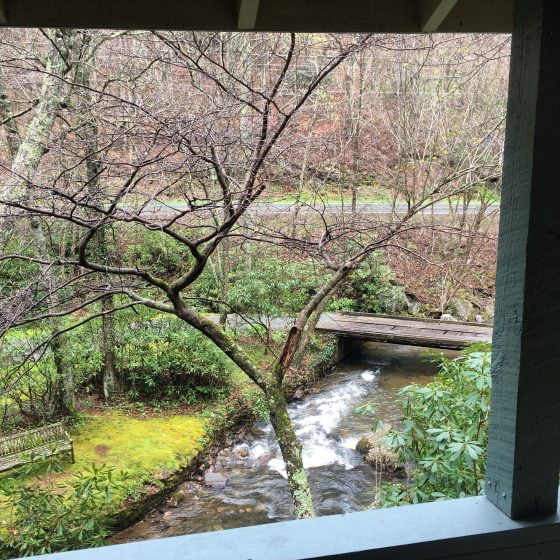
Troutsong

There are a few hotels in Wilkesboro which get booked pretty quickly, so your best bet is to camp, bring your RV, or book accommodations in Boone. Wilkesboro is nearly bone dry for places to stay during MerleFest. Boone is a 40-minute drive from Wilkesboro (beware of cops along the way, as this area is notorious for doling out tickets). Airbnb and VRBO have options in both areas, plus Asheville is two hours away.

What to Do

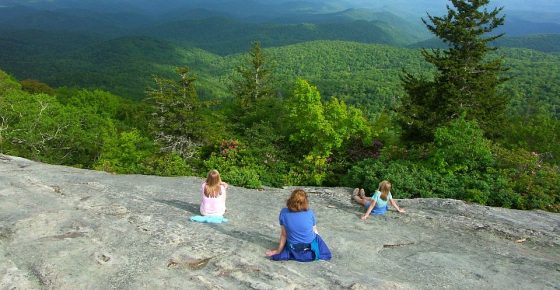
Beacon Heights. Photo credit: Randy Johnson

Bluegrass abounds in the Appalachian high country. In fact, legend has it that Old Crow Medicine Show got discovered by Doc Watson while they were busking on King Street in downtown Boone. From festivals like MerleFest to buskers to impromptu jam sessions at local bars, bluegrass is abundant. Boone Saloon hosts everything from string to jazz to punk shows in the heart of downtown. Legends (an on-campus venue at Appalachian State in Boone) hosts musicians from Mipso to Dr. Dog and beyond, and musical greats like the Punch Brothers are known to have visited the Schaefer Performing Arts Center in Boone.

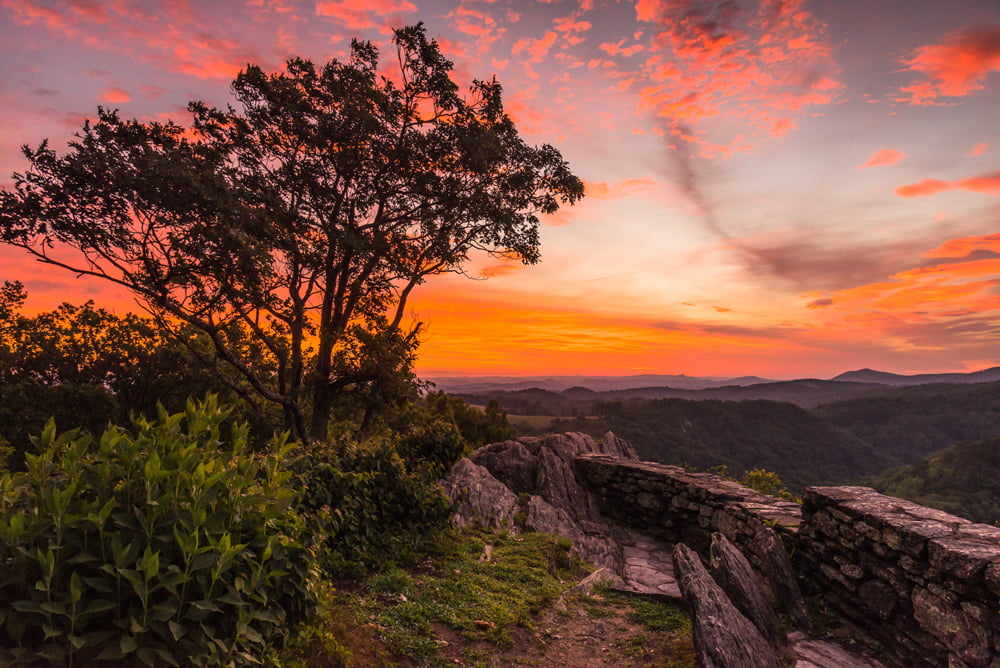
Besides it’s rich musical history, Boone and Wilkesboro’s vast, rolling landscapes make them a playground. The Blue Ridge Parkway intersects the highway between the two mountain towns, and getting lost on the parkway is encouraged. Along the BRP, we suggest hiking Rough Ridge, Beacon Heights, and the loop trail around Julian Price Lake — a beautiful mountain lake.

In Wilkes County, Stone Mountain State Park features a giant granite dome, trout fishing, and advanced level rock climbing. Some of the best mountain biking in the Southeast can be found along the shores of the W. Kerr Scott Reservoir, outside of Wilkesboro. This lake is home to more than 35 miles of single track trails.

Eat & Drink

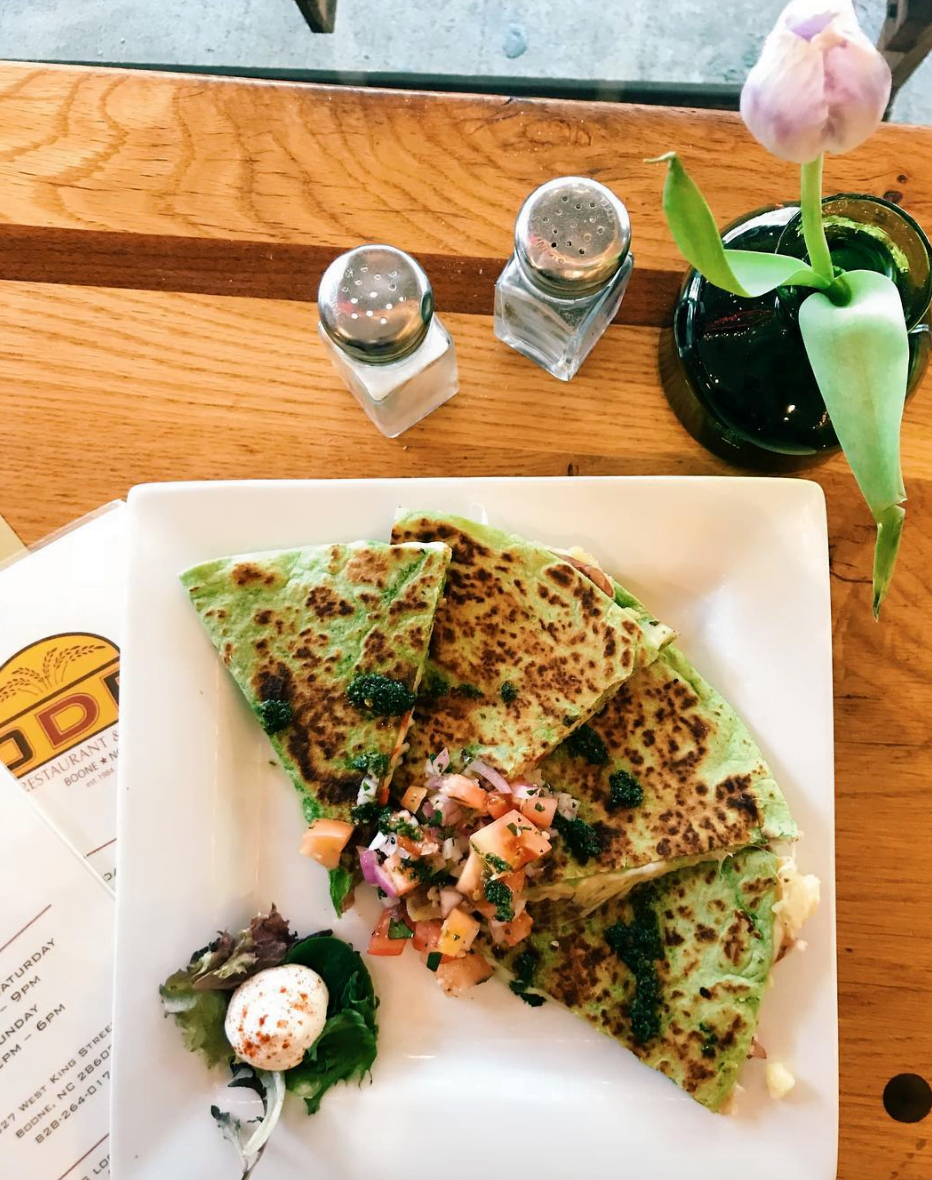
Our Daily Bread

Rich with veggie options, Boone’s food scene leans toward healthy and fresh. Stroll down King Street and you’ll hit the best sandwich shop in town, Our Daily Bread. Try their chipotle turkey press washed down by one of their many local brews.

Hidden behind King Street in a back parking lot is Espresso News, simply known as “e-news” to locals. You can’t go wrong with their organic drip coffee or a dirty chai latte, and it’s a quirky, quiet hang. The star of the show in Boone’s food scene, according to us, is Wild Craft Eatery (formerly Hob Knob Café). Their flavorful Buddha-style bowls, unexpected flavor combinations and plantains with mango sauce are crave-worthy, and made us go back twice the first trip we visited.

Appalachian Mountain Brewery. Photo credit: Watauga TDA

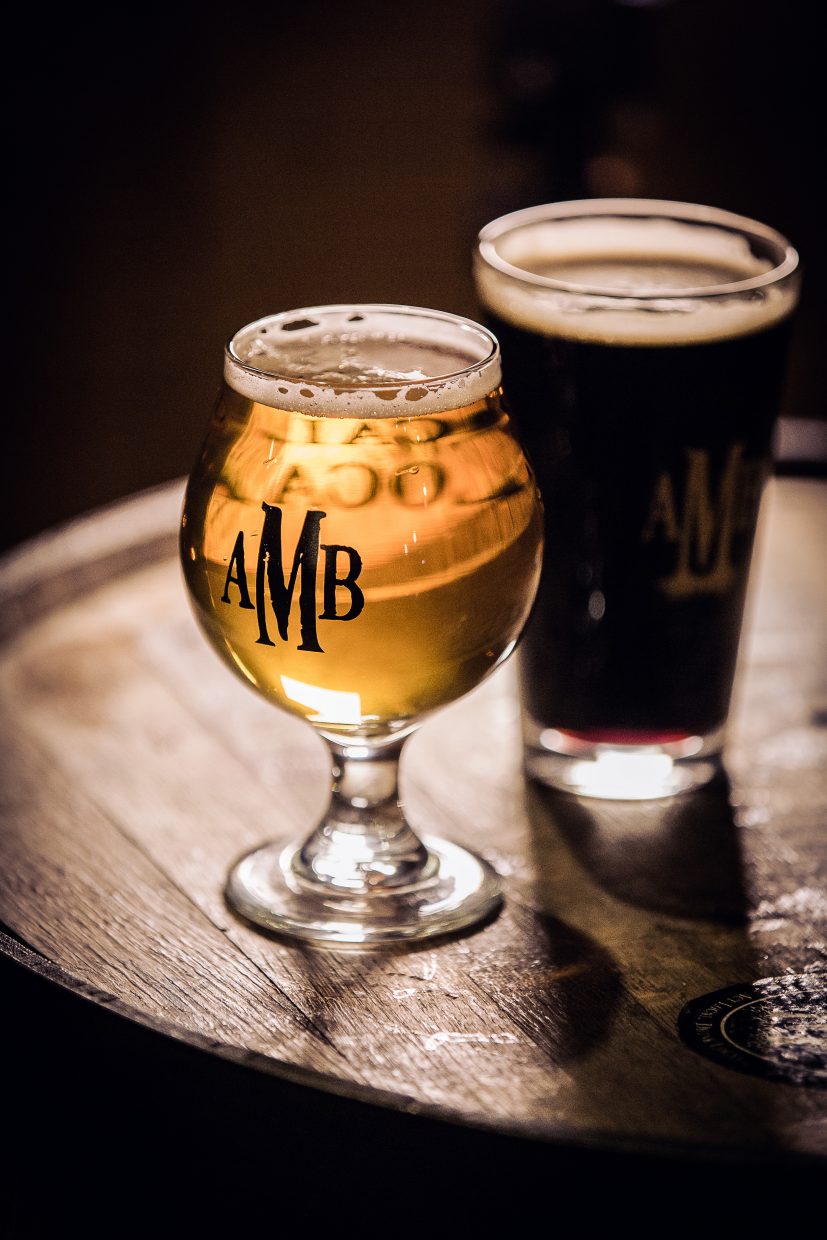
Coyote Kitchen is in the same creative vein as Wild Craft, specializing in southwestern bowls featuring ingredients like sweet potatoes, black beans, sautéed tempeh, plantains, and chipotle sauce. To find local hops, head to Appalachian Mountain Brewery, Boone’s first brewery, and a locally loved spot for beer, music and trivia.

MerleFest Tips

Americana Stage. Photo credit: MerleFest

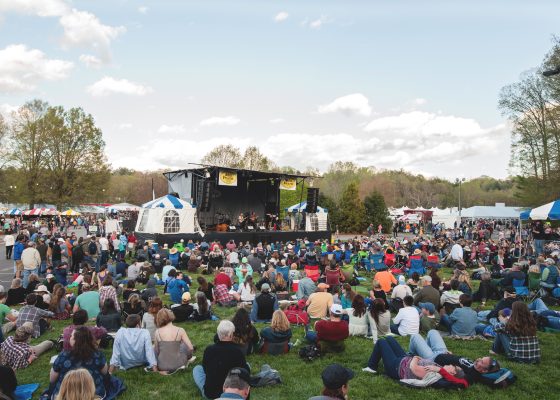
MerleFest, nestled at the base of the Blue Ridge Mountains, is one of the grandfathers of bluegrass festivals. This isn’t your hip, old weed-smoking alternative grandfather. (We’re looking at you, Telluride.) It’s your traditional, ball cap-wearing, newspaper-reading, fisherman grandfather who likes the music audible, but not blaring loud.

MerleFest is a microcosm of the bluegrass community, getting back to the roots and getting rid of distractions from the banjo pickin’. It’s a straight-edge festival with all of the raw, seasoned, and unseasoned bluegrass talent of your dreams. Not only is the music center stage, but classic Appalachian traditions like clogging and songwriting are also featured at the fest.

Midnight Jam. Photo credit: MerleFest

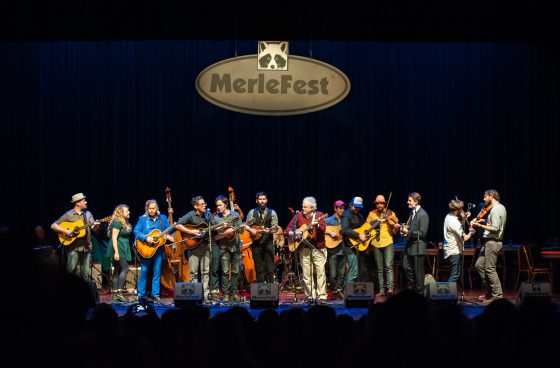
Parking is free and shuttles are provided to the front gates of the festival. April is a tricky month in the mountains, so bring layers and rain gear. MerleFest starts early and ends late, so pace yourself. One of the highlights of the festival is the MerleFest Midnight Jam on Saturday night, which the BGS just so happens to host. Stay tuned for artists we’ll be hosting for this late-night jam you don’t want to miss.


Lede photo credit: DJANDYW.COM on Foter.com / CC BY-SA

A Minute In Wilkesboro with the Kruger Brothers

Welcome to “A Minute In …” — a BGS feature that turns our favorite artists into hometown reporters. In our latest column, the Kruger Brothers take us on a tour of Wilkesboro, North Carolina, from a courthouse to a courtyard.

We make our home in Wilkesboro, the county seat of Wilkes County, North Carolina. This county is known as “the heart of American folk music.” Wilkes County lies the northern area of the Yadkin Valley, on the eastern slope of the Blue Ridge Mountains. We were drawn here by the music, and then fell in love with the people and the beautiful landscape.

Blue Ridge Parkway. Photo credit: RD Hill Photography

BLUE RIDGE PARKWAY: This is a very diverse region of the Blue Ridge. Of course, we love the sounds of roots music and the many festivals in the area. When we’re not playing music, we enjoy the apple orchards and vineyards in the area. There are so many recreational opportunities, such as W. Kerr Scott Reservoir’s camping, boating, bird watching, hiking, and mountain biking trails. The Yadkin River runs between the towns of Wilkesboro and North Wilkesboro, offering miles of rippling water for kayaking and canoeing. This area is also popular for trout fishing.

Carolina in the Fall. Photo credit: Wilkes Chamber of Commerce

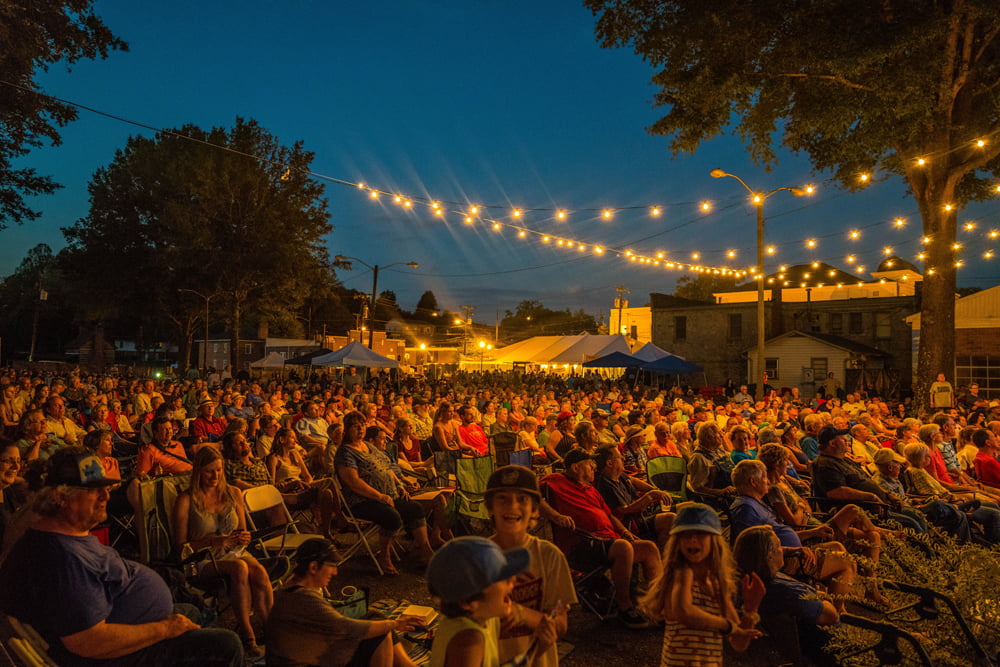
CAROLINA IN THE FALL MUSIC AND FOOD FESTIVAL: We are proud to host this annual event which features some of the world’s best folk, bluegrass, and roots artists. As Uwe sings in his song, “… in the hills of Carolina, folks have opened up the door and, for the first time in my life, I’m not a stranger anymore.” There are no strangers here as we get together for two days of food, music, and more. Food trucks from around the region bring their unique offerings and compete for the Food Truck Championship trophy. Regional vineyards and craft breweries provide a taste of the area’s best beverages. Also included are the North Carolina Banjo Championship (a favorite for Jens, of course), the Chad Lovetts Memorial Trail Run and Ride which supports the American Cancer Society, and a silent auction supporting an afterschool music program. The festival also includes Contra and clogging dance classes, artist workshops, and nightly jam sessions at the Yadkin Valley Event Center.

Doc Watson Mural. Photo credit: Kruger Brothers

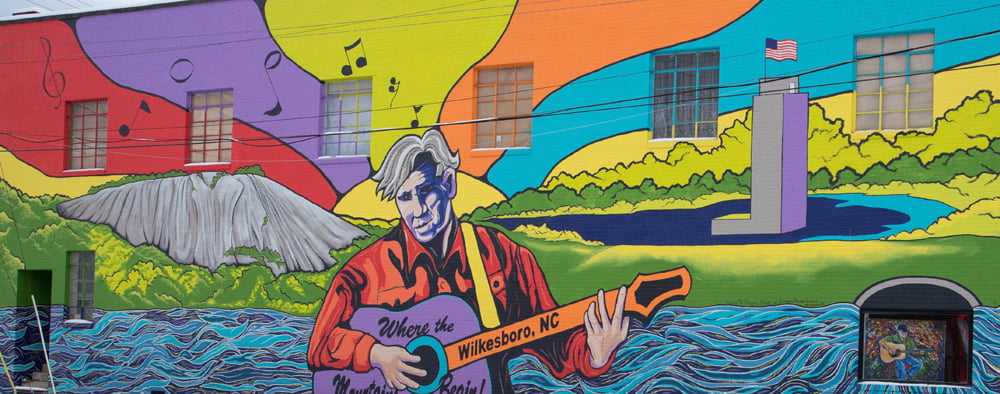
DOC WATSON MURAL: When Doc Watson passed unexpectedly in 2012, the world lost an amazing and inspiring talent, our community lost a hero, and we lost a treasured personal friend. We were pleased when students in the Wilkes Art Gallery’s annual Summer Honors Art Program participated in the creation of this mural depicting Doc along with Stone Mountain, the Yadkin River, and W. Kerr Scott Lake. Doc would’ve loved this program which pairs professional artists with talented, local high school students to create works of public art. The brightly colored mural was designed by local artist Wes Gregory and covers the entire east façade of Royall Custom Framing, a building located at the corner of Main and Bridge Streets.

Early morning MerleFest main stage. Photo credit: Kruger Brothers

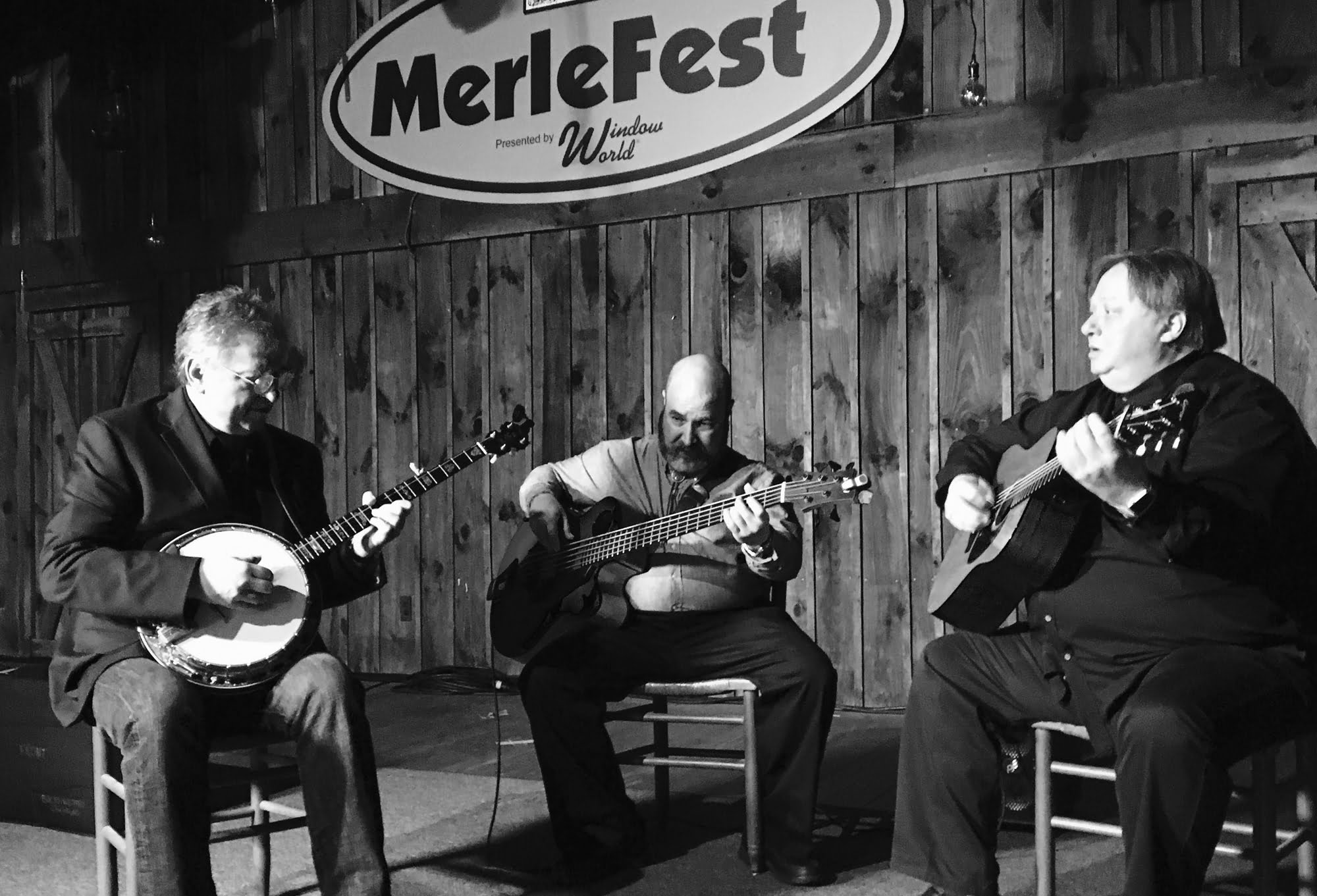
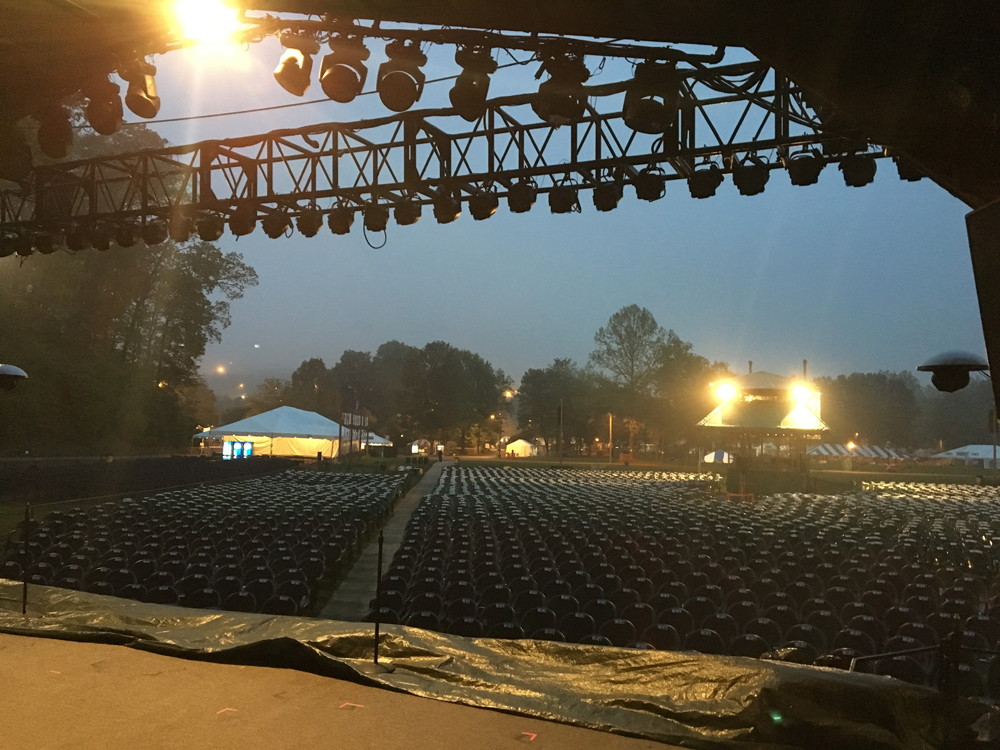
MERLEFEST: And speaking of Doc … ! Our friend continues to be honored annually on the last weekend of April at the festival created to remember Doc’s son, Merle. The four-day MerleFest, on the campus of Wilkes Community College, features music from all over the world, and we are always honored to play this special festival. It was, after all, playing MerleFest that first introduced us to this town that we now so proudly call home. The history of performers since 1988 reads like a “who’s who” of the entire world of music. Uwe took the early morning photo on the first day of MerleFest this year, hours before the gates opened. There was an air of anticipation in the misty morning light, with rows of chairs so neatly placed in expectation of the crowds to come. It is one of the premier music festivals in the country, yet MerleFest still retains that special feeling of a family reunion for fans and for those of us who perform.

Wilkes Heritage Museum. Photo credit: Kruger Brothers

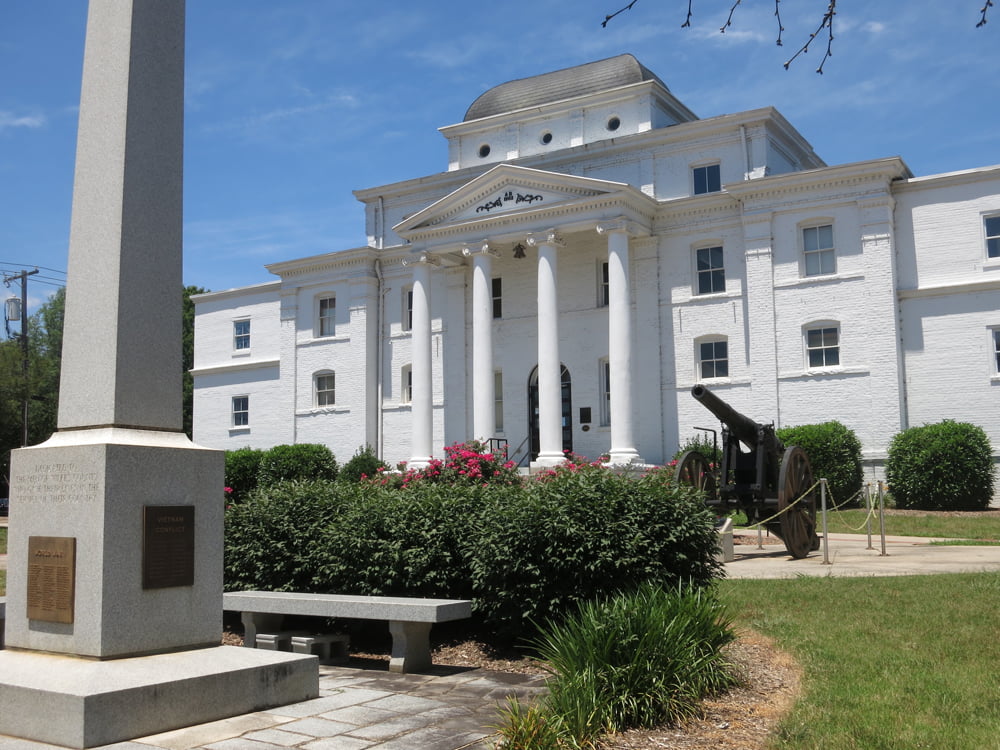
WILKES HERITAGE MUSEUM: The Old Wilkes County Courthouse, built in 1902, has been restored and houses the Heritage Museum for Wilkes County History. It is a beautiful example of classical revival structures. Inside is a rare collection of artifacts and images that tell stories of early settlers, military history, industry, agriculture, and so much more about the history of our town and county. Behind this building is the old Wilkes County Jail, now a museum, as well. It is one of the few remaining mid-19th century jails. One of its inmates was Tom Dula or Dooley, famous for the 1866 murder of Laura Foster, and made more famous by the old North Carolina folk song “Tom Dooley.”

Open air market. Photo credit: Kruger Brothers

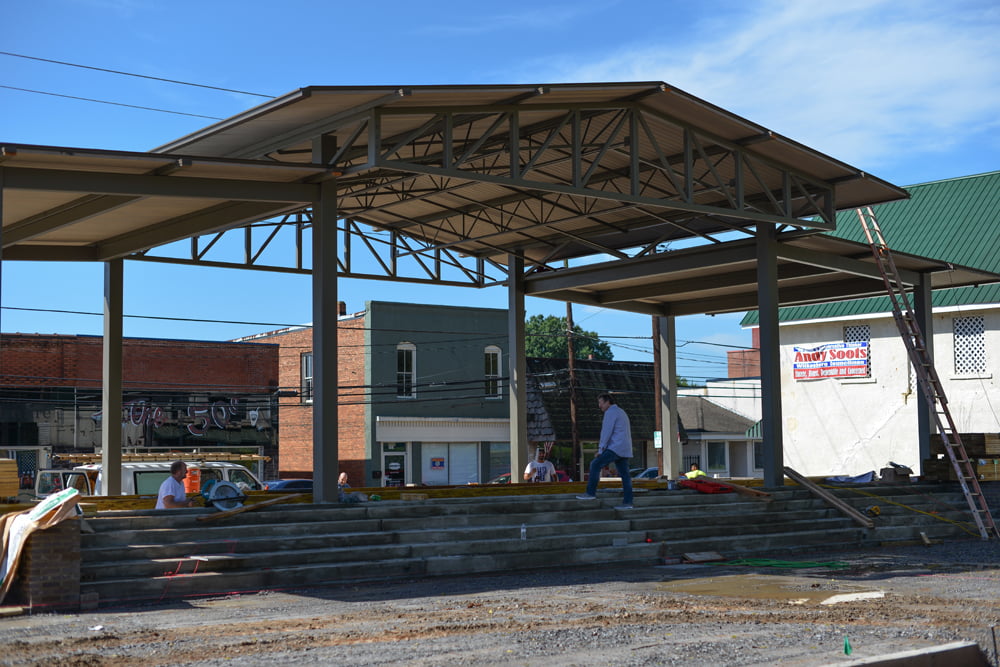
OPEN AIR MARKET: Downtown Wilkesboro is enjoying a revitalization project that includes a new performance stage in the Open Air Market. The Wilkesboro Open Air Market is held on Fridays, from May through September, providing local and regional farmers and artisans the opportunity to sell fresh farm products and handcrafted items. There is also live music throughout the market season. The stage will be used for many of the festivals and events in town, and we’re looking forward to playing here.

Raffaldini Vineyards. Photo credit: Wilkes Chamber of Commerce

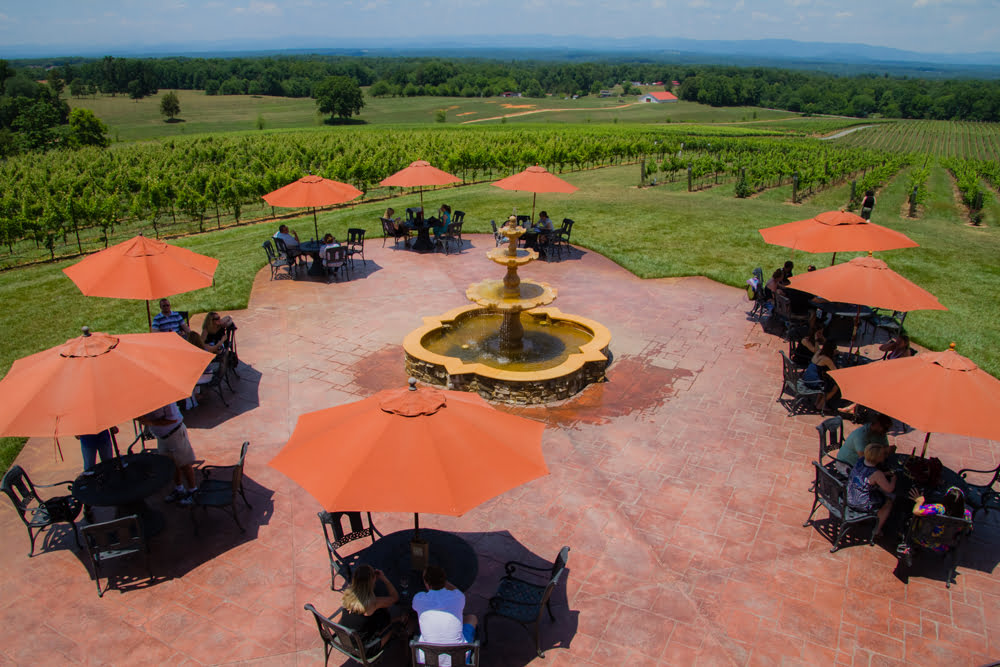
RAFFALDINI VINEYARDS: This is a favorite escape just outside of Wilkesboro in Rondo, North Carolina. Raffaldini Vineyards & Winery is a surprising winery that will make you feel as if you’ve stepped out of the Yadkin Valley and right into Tuscany. They have delicious wines made from authentic Italian varietals. The 102-acre estate is surrounded by the serenity of the Yadkin Valley and the Blue Ridge Mountains. The patio is a perfect place to enjoy lunch, a glass of wine, and the picturesque countryside. It is also an ideal place to relax and reconnect with our lovely wives when we are not on the road.