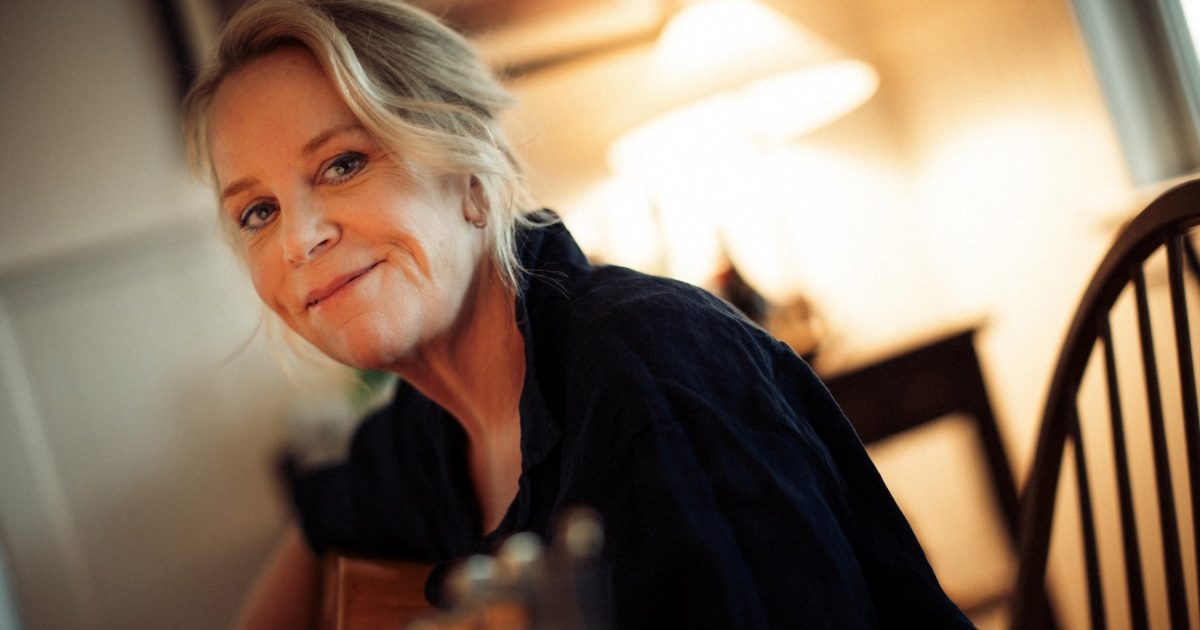
Foy Vance’s The Wake Is Really a Celebration

The second track on Foy Vance’s new album, The Wake, is simply titled, “Hi, I’m The Preacher’s Son.” Among a beautifully intricate and incredibly serene record dealing with overcoming deep grief and prolonged sorrow, the tune hits at the core theme and genuine emotion offered up within the entire body of work – learning to love yourself as you grow older.

“I am no fortunate son/ I am no favoured one/ I am but a loaded gun/ Fired into a world gone wrong,” the Northern Ireland-raised singer-songwriter rumbles through the song. “Face down in the dirt I learned/ You don’t always get what you deserve/ I can hide, I can try to run/ But I am what I have become.”

Captured by acclaimed British producer Ethan Johns, The Wake closes the door on the artist’s 26-year trek, both physically and emotionally, in dealing with the death of his father – what it means for Vance to let go of the pain and finally set his parent free, and himself, as well, within that process.

This journey began in January 1999 on the Spanish island of Lanzarote. Vance was in the midst of a performance when he slipped into this surreal, overwhelming trance, one that felt like the line was being blurred between reality and the cosmos above. The following day, Vance was informed of his father’s passing from a heart attack the previous evening.

“Only time will tell if I know you well/ Or if I did not know you at all,” Vance ascends on “I Think I Preferred the Question,” a selection from the album that squarely aims to put Vance’s past behind him. “It’s heaven, it’s hell/ It is well/ The spell dispels the more that I talk about it.”

The key to The Wake is the number seven. There’s a reason this chapter of Vance’s existence concludes on the seventh of his albums, all of which were inspired by his father. It’s directly linked to an ancient saying often used by Vance’s father, a traveling preacher, which eventually soaked into his son’s heart and soul: “Give me the boy to the age of seven, and I will give you the man.”

“You’ll be up high on the mountain’s peak/ Seeing everything that you just might seek,” Vance rolls through the final track, “Bathed in Light,” an uplifting tent revival number of redemption and closure. “When it gets time for town again/ I’m gonna tell you how you’ll feel right then/ Like nothing will ever bring you down.”

What Foy Vance has presented with The Wake is a raw and real album of sheer vulnerability and human strength, all wrapped up in melodies of such creative depth and sonic splendor. It’s a ceremonial, hallowed shedding of spiritual skin by one of the great songwriters of our day.

Where’s your head space at right now?

Foy Vance: Very good, the field is open. I feel like I walked a narrow road for 26 years, pretty single-minded and focused on one thing. And I don’t think I was even as aware of that at the time I was coming up on the seventh album, realizing that I’d set out on that journey and that was it. So, as you can imagine, finishing a journey that you self-imposed came with a sense of pleasure. Completing something feels good, but there was a bit of dread also, if I’m honest pretty straightaway. But, as is always the way, the end always reveals the new beginning, you know?

You talk about 26 years since your father passed away. What was that heaviness? Was it the relationship you had with him? Things that weren’t said? Things that could’ve been?

I came out [of the womb] singing. There were tapes of me singing at three years old, shutting my brothers up ‘cause they were singing it wrong, saying “No, I’m doing it well.” Music was huge in my life [growing up]. I had just turned 24 when my dad died. I was already playing music and trying to sing a career in it and trying to write songs. And I moved to Lanzarote to try and get away from the humdrum, the comfort zone of life. At home, it was just too easy to become comfortable. I wanted to go and find some time away from all that to seek songs.

And boy, did I find them, but I didn’t expect to find them the way I did. I think it was all the stars aligned at that moment. The moment my dad died, I’d already begun the song the night before as he was dying, and I didn’t even know that bit until the next day. But, the second I found out, I went back and I wrote the first song that mattered to me, the first song that was healing.

It’s like when those musicians were on the Titanic and they played “Amazing Grace” as it was going down. They weren’t playing that for a fee or for applause. Why were they doing that, Garret? You know what I mean? Therein lies something inherent in music that we’ve all but forgotten for the most part. And I think I had that moment [when my dad died] – everything became clear. I realized I’ve been sort of conning music into trying to make it fit my regime. And the whole time, it’s quietly beckoning me to grow and learn and glean. I’m glad I can pay my rent with [music], but that’s not what this is about. It’s not what music is. It’s not what it means.

Did you know that when your dad died or was it this revelation that came in later years?

No, I think I realized immediately, the second that song came and you realize it can come that way. It was like my antenna was out. A thin space was created between me and my dad. And obviously there’s a lot of things going on when you have that shock of grief, a monumental figure like a parent. I’m sure there are a lot of similarities between bouts of great creative inspiration and bouts of mental instability. Like an episode, if you will. So, I was making all kinds of connections that day. I guess I was grasping at anything to make sense of something and give myself something to hold onto and stick to and walk a narrow road with, and just stay focused. My dad was a big figure, and without him it was sink or swim – music was a vehicle for that.

Was he a tough love, hard to read kind of guy?

No. Tough love with three older brothers, for sure. But not so much with me. I think they wore him down by the time I came along. He was very soft and gentle, but he was a rough man. He was from East Belfast, born in 1945. He came from a tough background.

What is it you’re letting go of this far down the road since his departure?

The fact [the album] is called The Wake, it’s the end of it. Where I come from, [at a wake] you go to celebrate the life of someone, not to commiserate the death. You go and tell stories and you laugh your hole off. You raise pints and you sing songs and you have a wake. I realize it’s not the end of “the grief journey,” it’s the end of a grief journey – it’s never going to go away. I hope it doesn’t, because he’s been my co-writer, and I hope it remains that way. But, it just changed. It’s hard to put my finger on what lifted. Something lifted.

You know, I never went to college, I never even passed my school exams. I just left and got a job, didn’t even show up for the exams. I think this is as close as I’ll feel to walking [at graduation]. Like, setting out on a journey and then completing it and there’s your certificate.

In a short documentary about the album, one of the things you mentioned that really struck me was what your father would say to you, “Give me the boy to the age of seven, and I will give you the man.” How has that statement affected you as you’ve gotten older?

Well, because I have two boys. One of ‘em is still under five and I know that by the age of seven, that’s him – he’s locked and dialed. Whoever he is, it’s in there. I’m aware of that and I want to put as much good information in there as you possibly can, all the strong stuff that will be core beliefs when he grows up. [And] being very careful about how you speak to them, the tone you take, making sure that when they hear your voice in their head and you’re not around, it’s a comforting one, it’s a welcoming one. That all takes time and attention to detail and nuance.

I think it’s the same in work in art, like making those seven albums. It was like the making of me as an artist, I guess in my mind. Give me the artist of the age of seven albums and I’ll give you whoever he is. I guess I was making those sorts of connections in my mind. Like, I will have become whatever I am probably by then, I’ll be settled into something.

I have a lot of solidarity with that statement because it plays into another statement that “you learn most everything you need to know in life in the sandbox.” When you look back at who you were at seven, how much of that person is still who you are?

Garret, I’m 51 now. It’s taken me a long time to wander through some wild places, but I finally got back to [myself]. I was right at seven. You can trust your seven-year-old self.

One of the things I’ve noticed as I’ve gotten older is how much, in certain ways, I’m turning into my father. Do you notice anything like that?

Well, I think that’s what I got caught up with on “Hi, I’m the Preacher’s Son.” No matter how much you get away, try to run away from what your dad did. What I do is not a million miles away. Let’s face it, I’m just not preaching any truth of any sort, just talking about what’s happening, reflecting my own experience here or whatever. But, it’s not a million miles away [from what he did], that you go off and you dig for details and you articulate them. He always spoke in parables and riddles, so it’s not surprising that I became a songwriter.

Well, whether you perform onstage or you’re in a pulpit, you have everyone in that room facing the same direction, and everyone’s in there for a different reason. In the church or at a live concert, they’re focused on what you have to say and hopefully walk away with a better feeling of themselves.

Yeah. I guess the main difference is I’m not trying to sell them anything. I’m there having an experience, too. I’m caught up in the music. I, too, get lost in those two hours that we’re onstage. I go there. You can’t take anyone anywhere you’re not willing to go yourself.

Do you look at The Wake as maybe a death of an ego?

I’ve never really thought about it like that, but yeah.

It’s also a shedding of your own skin.

Yeah. Perhaps every album is a bit of a death of an ego. Putting to bed, marking the end of that journey and heading out into the next one. At the end of The Wake, I genuinely didn’t know if I was just going to take a few years off or what was going to happen. And then, I exploded, just absolutely exploded. By the time I got into the car [at the recording studio] in Bath, [England], and got home, I just wrote for the next two weeks. Endless ideas. What I thought was going to be the end was very quickly becoming a beginning.

It became fuel on the fire.

It really did.

What would your dad think about where you’re at right now?

It’s hard to gauge, because my dad applauded anything I did. If I boiled rice, he’d be calling my mom in to see how well I boiled the rice. He was very proud, so I don’t know if he could handle this. And I think it’s sort of sad that he doesn’t get to see it. But, at the same time, I wouldn’t have it without his passing – it’s the strangest gift I’ve ever been given.

There’s a lot of heaviness with the album. But, it does feel like, at the same token, there’s a big sense of release. It sounds like you’re in a good place right now.

Yes, I am. I’m done commiserating. I’m ready to celebrate. It’s the wake, you know what I mean?


Photo Credit: Gregg Houston
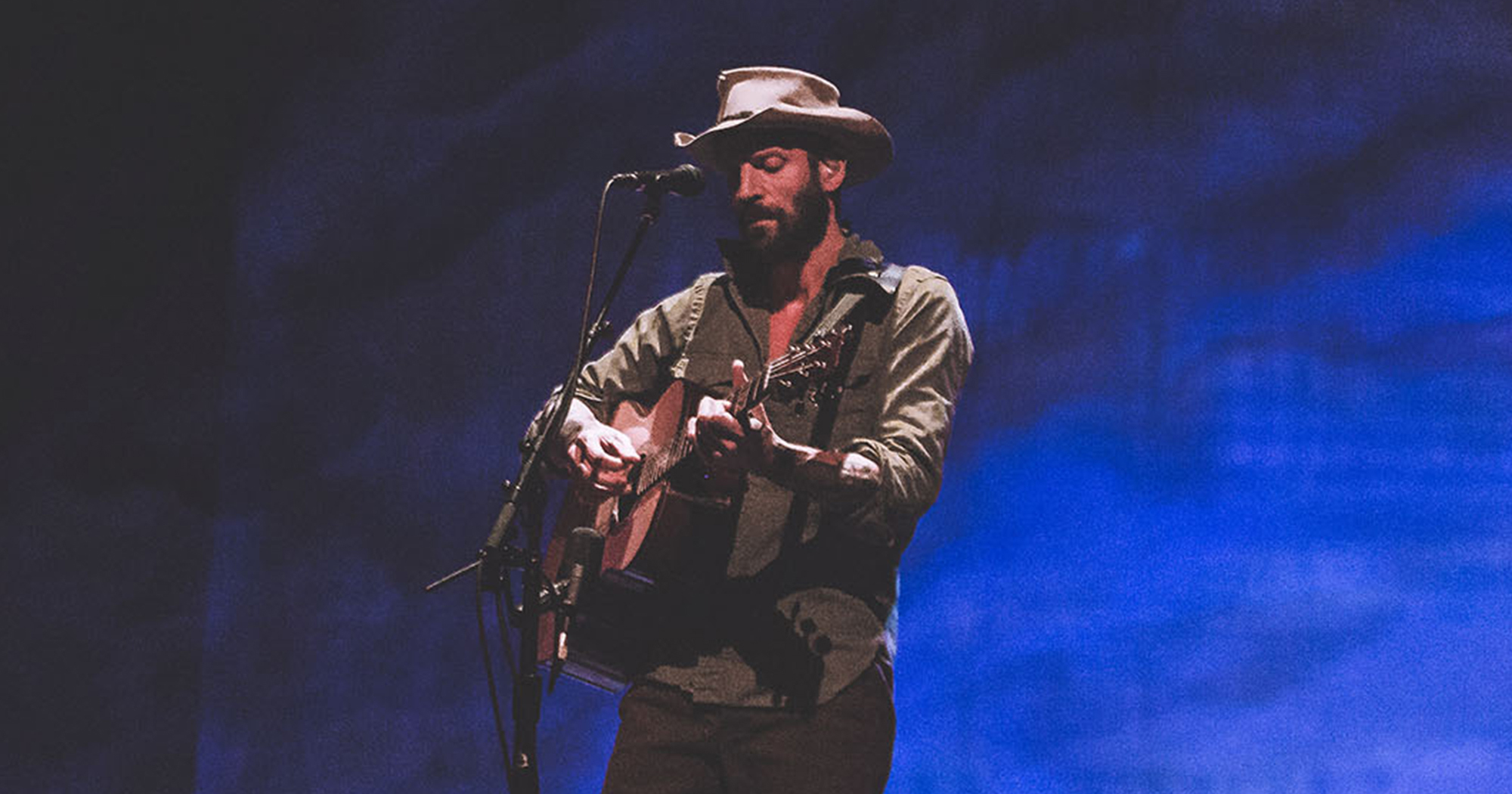
Ray LaMontagne After 20 Years of Trouble

In the fall of 2004, it seemed like everybody was getting into Trouble. Even with that major label debut album, Ray LaMontagne managed to keep a low personal profile while maintaining the rigorous pace of a promising new artist. Meanwhile, the title track of Trouble got covered by that season’s winner of American Idol and ended up in an inescapable but kinda cute insurance commercial. Other cuts on the album ended up in films such as The Devil Wears Prada, Prime, and She’s the Man. In addition, Zac Brown Band recorded “Jolene” and Kelly Clarkson often performed “Shelter” in her shows (and recently revived it for Kellyoke.)

Now, LaMontagne is bringing Trouble back around for a 20th anniversary remaster and re-release (which dropped this summer) and North American and European tour dates set for 2026. He’ll be singing every song on the record to commemorate the collection two decades after its release.

“It’ll be interesting to see how my spirit reacts to learning these songs again, to going back and listening to them again in that way, to bring it to people again,” LaMontagne tells BGS. “I’m looking forward to it. And I feel like it’s important to do to mark this moment, because these are the songs that brought people to my music in the first place.

“Listening to it again now after all these years, I’m very proud of my younger self, for having the strength of will amidst all the pressures of the music business at the time, and about my writing and the way I wrote, to make the record that I did, and to leave the songs the way I wrote them and not take any advice.”

What was your day-to-day life like before Trouble was released?

Ray LaMontagne: Well, we lived off the grid. I was already married for six or seven years at that point. My two boys were five and three and we lived on a piece of land I bought in Maine. I had built a small cabin on it and we had a hand-dug well that we used for water. We had an outhouse. It was back-to-the-land living and that was just because I couldn’t stand renting. I wanted to have my own piece of ground. But it was really hand to mouth, and we were broke. And that’s putting it mildly. I mean, we were broke, broke, broke. I was working carpentry, sometimes seven days a week, because I would take anything I could get on the weekends just to get a little extra money, because I constantly was trying to improve the cabin. And I never had a car that ran.

You’d made some independent records before Trouble and I’ve read a couple of accounts of how you got your music in front of Chrysalis Music. How did that actually happen?

Someone heard me at a festival and they gave a disc to a college friend who was in the music business. Then he brought it to his boss. I went out and met with Hollywood Records first. I felt that I was in a room with a bunch of cynical people who made me feel kind of gross. I went back home and that guy called and said, “I think they’re gonna offer you a record deal.” And I said, “I don’t want to do it.” He said, “Are you crazy? What do you mean, you don’t want to do it? They’re gonna give you a record deal!” And I was like, “I didn’t like them. They made me feel gross.” So I went back to being a carpenter again, as I was, and went back to my life.

Then it was close to a year later when that guy called me again and said he had gone to a different company. Now he was with a publisher and that was Chrysalis. He said, “I played your stuff for my boss and he really likes your songs and is interested in you as a songwriter. Would you come out and meet my boss?” I talked to my wife about it and then I said, “Okay, I’ll come out.” I went out and I met his boss and played a couple songs in the office. We talked about songwriting and he said, “We want to help you as a songwriter.”

So, they were looking at you as a songwriter rather than as an artist.

And that’s how I got into the studio to make this record, because I was supposed to go in and make demos. What happened was, Ethan [Johns, who produced Trouble] and I met each other for the first time. We’re very different people and we couldn’t quite read each other. Especially at that time, I was very much a closed book, very much an observer. And he’s a type A personality, big ego, big presence, loves to talk – mostly about himself. And I don’t say that critically, I say it with humor! Anyone who knows Ethan will agree with me!

So anyway, it was this strange thing, but I began to realize as we were starting to record demos or talk about songs, that they didn’t really feel like these songs were finished. They thought they were promising. But I was getting a lot of input coming at me very quickly about, “This song doesn’t have a bridge. This song is just two verses. Is that even a song? This song just has four verses and then it ends. Is that a song?” And it was like that right down the line.

The first demo we recorded was “Hold You in My Arms.” We got to a point in the song where Ethan stopped me and said, “This song is just not finished. It needs a bridge.” He started throwing lyrics at me for this bridge and my shield started to go up. I thought, “These lyrics, first of all, aren’t right…” I was resisting and resisting, and he was getting more frustrated with me. He said, “I’m gonna go make a cup of tea. You write a bridge.” So, he went to make a cup of tea and I wrote an instrumental bridge by the time he got back. I said, “It’s just gonna go into an instrumental bridge and then back into the chorus again.” And he said, “OK. I’ve always been told you gotta do this in the moment. So how many points do you think that’s worth?”

I knew nothing about the way these things happen, but in that moment I knew what was going on and I knew why I was there. From that moment on, I was a brick wall. Nothing was changing. I was changing nothing. I’m recording the songs exactly as I had written them and then I’m going home. If you like them and you want to shop them around, great. If you don’t like them, I’m still going home. It doesn’t matter to me, but I’m not playing this game. So that’s what we did. We recorded this record, which is basically the demos the way I wrote them.

How did the recordings go from demos into becoming the Trouble album?

Six months easily passed and the publisher called me and said, “You know, the songs are just… no one wants to sing the songs. No other artists are gravitating towards the songs, but weirdly, record labels are coming forward because they like your voice and they like what they’re hearing, but they like it delivered by you. It works when you sing it, but it’s not working for any other artist.” And that led to the next step of going back and meeting record labels and talking to people about me as a performer, which was not even on my radar.

So it was a whole other challenge. It was like me against my biggest fear. I was much more interested in being a songwriter at that time. So, that’s how it happened. Slowly, and one step at a time, and one thing led to another, and led to another. But again, that’s why, when I hear these songs at this point in my life, listening to it again for the first time, it really hits me, just where that 28- or 29-year-old guy had that strength of will to know at a gut level that what I was doing had value. Just me being me had some value and I wanted to protect that. And it just makes me very proud of him.

It’s interesting to hear that no other artists wanted to record your songs, because when this record came out, a lot of people were singing these songs. What’s the personal reward for you as a songwriter when someone does take one of these songs from the album and makes it their own?

I really like that. It always makes me happy. I think any songwriter would be happy if even one song gets covered by someone else. You feel lucky if one song you wrote even makes it into people’s lives in some meaningful way. If you’re a songwriter and that happens to you once, you’re grateful. I mean, it’s just the truth of it. It’s like any other art form. It’s not easy, and it either will work or it won’t work, because music is a complex language. … It’s probably the same with painters, with dancers, with writers. You just don’t know if it’s going to connect to people, or if people are going to understand what you’re saying, or if it’s going to speak to them in a real way, speak to their spirit in some way. So I’m very grateful. I’m so glad that there are people in the world, all over the world, who understand my language.

Something that struck me about this record, then and now, is that dynamic in your voice. At what point did you become aware of that range, that you could go loud when it when you needed to?

I don’t really know. I feel like I learned to sing just by doing it. There’s some truth to this, that I really didn’t know how to sing even when I went in to make the record. But I was learning by doing it. I had gotten to a certain point where I knew when I was singing incorrectly because I would be uncomfortable or something would hurt in my throat. And I knew that that wasn’t the right way to do it. At some point, I realized you had to really breathe and sing from your gut.

In 2004, before streaming and social media, how did you find an audience?

It was just live shows. I mean, I toured a lot. A lot. And in the beginning, even being signed, I was still just like anyone. I was in a rental car, just me and my guitar, a box of harmonicas, and getting myself from one gate to the next. Those early shows, again, it’s no different than anyone. It’s two or three people and the next year you go back and there’s 20 people and the next year you go back, there’s a hundred people. When people connect to what you’re doing, they will tell their friends about it, and they’ll bring them the next time you come around. But there’s nothing anyone can do outside of yourself to make that happen. It either works – people connect to what you’re doing, to your performance, to the music, and then they’ll tell their friends – or it doesn’t work. But being signed to a record label doesn’t mean anything. It just means they’re investing and they’re gambling. And if you build a career for yourself, then they win that bet, and if you don’t, then they move on.

I’ve read that you saw Townes Van Zandt play a show in the mid ‘90s and I wondered how much of an influence did he have on your writing and your musical direction for Trouble?

I don’t think he had a real heavy influence. I wouldn’t say that, especially at that time. It was too early. I just remember being really moved by watching him play, for a few different reasons. It’s kind of tragic in some ways. He was right at the end, but I could hear the poetry in the songs. That’s what moved me the most, to hear a song and be so close to somebody, eight feet away from him, and hear “Pancho and Lefty.” That story was completely immersive and took me somewhere else. That was really the most powerful thing I took from that particular night. He transported me. That’s powerful. Music can be really powerful if you’re receptive.

To me, your song “Narrow Escape” feels like a spiritual brother to “Pancho and Lefty.”

Yeah, I’m sure it is. I mean, it’s my take on a story song of this kind. They’re very different stories, but I’m sure that’s my “Pancho and Lefty.”

There’s a reference to “Liula” in that song and I noticed that fictional town shows up again, now, as the name of your own record company. So, are you fully independent these days?

I am, yeah. I still have all my same team around me, but I’m making records on my own and releasing them on my own. That’s a natural progression, too, in the way the music business has changed. It was a very different business when I entered it and at this point, especially for me, there’s no reason to be with a publisher or a record label at all. I left my publisher a long time ago, 10 years ago probably, and the record label followed.

I did want to ask about the illustration on the cover of Trouble. It’s not a picture of you. It’s this beautiful image from Jason Holley. What was it about that image that worked for you?

I just thought it was poetic. I saw the poetry in it. You can take lots of different things from that image, but it’s also just a powerful image. And of course, I have always been reticent to have my photograph taken, or to use my photos anywhere. Which, you know, we all have these things. If you’re comfortable doing it, that’s great. If you’re not comfortable, you should feel you have the right to say no.

Other than seeing you in concert, I don’t know that I really saw your face that much back then, when Trouble was out.

I remember telling my manager, “I want to be like the Lone Ranger. I don’t need to be seen and to be known. Just leave them with the music. And that’s it.” You can imagine how that went over. It was really, really difficult, and there were a lot of frustrated people, I’m sure, at the record label and with management. It frustrated a lot of people because they felt like I missed a lot of opportunities that I could have otherwise had. I knew that at the time as well.

But I’ve always felt like I know who I am. I could say no to a magazine cover back then because I know that that’s going to be a day out of my life where I’m going to be miserable, and it’s going to make me uncomfortable. … I’ve never felt like anyone in the press or who had a camera really cares about you as a person. They’re not sensitive to you, and your well-being doesn’t matter to them. They’re just doing their job. And whatever they capture there, they choose what they want. If you have your head in your hands, if you’re doing this, if you’re looking miserable. That’s power and they’re going to use it.

So, I turned down all of that stuff. You lose that opportunity, but I felt, well, I’ll lose that opportunity, true, but you know what? I’ve got a show tomorrow night, and I’m going to sing my ass off, and people are going to feel it. And if they feel it, they’ll come back next time. That’s what’s important, to build a career that is sustainable. And to do that, you need people to fill the seats. If they don’t come out to see you live, you have no career. That’s all there is to it. So that’s the most important thing. And that was then, and it still is.


Photo Credit: Brian Stowell

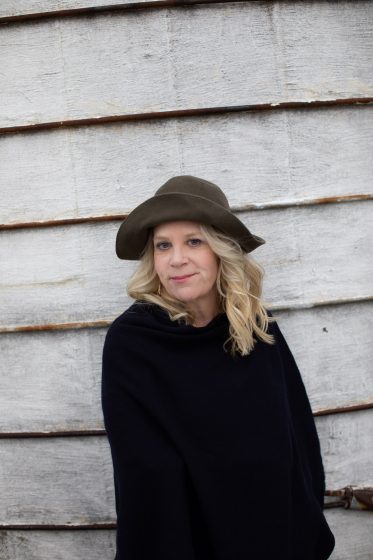
Mary Chapin Carpenter Walks Us Through ‘The Dirt and the Stars’

Mary Chapin Carpenter’s fans have got to know her kitchen well since the start of lockdown. It is a beautiful space, often ornamented with bright, round peonies from her garden. It makes you long to be as tidy, and as tasteful, as Mary Chapin Carpenter.

It’s in this kitchen that she records her Songs from Home series. She greets us with the tender familiarity of a family member on a weekly Zoom call. Guitar slung around her neck, she’ll share some snippet of news or wisdom before singing to us from a back catalogue so deep that there’s always something appropriate to the mood of the day. Often there’s an unscripted appearance, even an added harmony, from Angus, her golden retriever, or her cat, White Kitty. It’s less a house concert than a singalong with an old friend.

She’s in her kitchen again as we talk, this time making chicken stock. “I’ve got two enormous pots of chicken bones and carrots and celery boiling on the stove,” she says, and for a moment, it’s like an audience with Julia Child. “I get it started just before noon and then it simmers for about five hours. Just before dinner time I take it off and put it in jars. Then it’s there for whenever I need it.”

I tell her that I’d been wondering, from seeing the immaculate state of her kitchen on her lockdown videos, if she ever cooked at all. “Well, I make sure I clean the dishes out of the sink!” she laughs. “I love to cook. This kitchen is a place where I’m so happy. I wish everybody could come over and hang out!”

She pauses, as the thought strikes her. “These are things that you didn’t even think about, when this all started, about half the things you’d miss. It’s one of the pleasures of my life, feeding people around a table. I miss it so much.”

Carpenter was supposed to have continued her nationwide tour alongside Shawn Colvin this spring, playing songs from her new album, The Dirt and the Stars. With all gigs cancelled, and the travel that usually “balances” her introvert tendencies curtailed, lockdown has been challenging for Carpenter, who lives alone in the Blue Ridge Mountains.

“I’ve been very, very isolated for many months now,” she admits. “It’s a remote rural area, and I don’t need to leave the farm very often except to pick up groceries curbside and use the drive-through drug store. And just like everyone it can be tremendously lonesome and at times very hard, but my reality check at that moment is to remember that so many people are struggling so much more than I am. The minute I start feeling sorry for myself, that’s all I have to think about and I stand up a little straighter.”

After all, Carpenter quickly reminds herself, she is not completely alone — there’s Angus and White Kitty. “And here I am in this beautiful part of the world and I walk every morning for miles, I’m out in nature as much as possible and I really do try to use those elements of my life as meditation and medicine and inspiration.”

Her songwriting walks are a long-established part of her process, although she’s trying not to put pressure on herself to be creative during these extraordinary times. A friend recently phoned her and told her how the various things she’d hoped to accomplish while stuck at home were coming to nought, and how bad it made her feel.

“I said to her, and I think I was saying it to myself at the same time, who among us is going to be accomplished during this time? It’s asking too much. The best you can do in that moment of frustration is to be still and inhale and be kind to yourself.” She catches herself. “I know, it sounds very woo-woo and Oprah-like.”

Carpenter’s new album, recorded in January and February of this year, is arguably the most intimate and autobiographical of her career. But what’s particularly noticeable is the powerful thread of empathy that runs through it, along with a repeated message of tolerance for our fellow humans, all of us carrying our private burdens and flaws.

It’s there in the titles: “It’s OK to Be Sad,” “Secret Keepers,” “Everybody’s Got Something.” In “Where the Beauty Is,” she takes the image of kintsugi pottery — “the shattered pieces of a bowl/ Filled and fused with dust and gold” — to illustrate that our brokenness is what makes us beautiful.

The final song of the album, “Farther Along and Further In,” suggests that these discoveries are ones that Carpenter has been making herself: “There’s a crack in the armor, an opening/ My heart seeing out and my eyes see in/ Where they’ve never seen before.” She agrees with the analysis. “It’s like I’m writing about my own experience, but talking to myself at the same moment. And that new reckoning with self has everything to do with growing older, it’s directly connected to that. The wisdom that comes to you with growing older is the sense that you don’t care as much anymore about little things that used to nag at you. You’re able to let them go. You’re able to realise you can find sustenance and comfort and meaning in things you never did before.”

So much of life, she says, is struggling with oneself — wanting to be better, smarter, more accomplished. “It’s as if as you grow older you’re able to shed that somehow and not care as much. That’s the gift of growing older.” Even still, there are things that are hard to share, even in song. In her excellent three-part podcast, recorded with poet Sarah Kay, Carpenter shared the inspiration behind the song, “Secret Keepers” — born of a #MeToo experience in her past — and admitted to Kay that she found it difficult to reveal too much of herself in her work.

There are other difficult, poignant subjects, not least the death of her friend John Jennings, to whom she pays moving tribute in “Old D 35.” Her fellow songwriter and longtime producer passed away five years ago from cancer, aged 61. “We weren’t just musical partners — he was my best friend,” says Carpenter. “He had been my boyfriend years ago and we’d evolved into being oldest friends. I miss him every day — there’s a hole in my life that’s always going to be there.”

The talk of loss brings us to John Prine, who died of Covid-19 in April. “People are experiencing these losses and have been unable in many instances to even be there with their loved one when they pass away. There’s probably nothing crueller. I may be wrong, I’m just guessing, but I think this terrible disease and catastrophe became a lot more real when someone like John died of it. Sometimes things don’t seem quite real until they touch you directly.”

The scale of the pandemic was only just becoming apparent as Carpenter finished mixing the album. She had chosen to return to England, in order to work once again with Ethan Johns, who produced her last album, Sometimes Just the Sky. The West Country, where Johns’ studio is based, is one of the parts of the world Carpenter loves most, and she finds a beautiful symmetry with her own Virginia countryside. “I live in the northern part of the Blue Ridge, where the mountains aren’t so dramatic as North Carolina. It’s gentler hills and pastures and valleys and whenever I’ve spent time in that area in England near Bath, it’s real similar.”

She performed in a show in London before heading home to the growing crisis. “Someone said to me since, ‘You’ll be one of the few people who can say you had a gig in London in 2020!’” Even now, she can’t bear to ponder when her next live gig might be. “If I think about it too much I get really sad.”

It is no surprise to hear her vent her fury with the Trump White House. “This country is burning up because of the absolute abdication of responsibility of the current administration,” she says. “It’s a debacle, and I feel equal parts rage and sadness.” Her political outspokenness has often caused a backlash among parts of her audience — what she calls the “shut up and sing brigade” — and she says she’s still “incredulous” to hear it. “They’re saying that by deciding to be a songwriter or a singer you’re not permitted to have a conscience. I would direct them to Nina Simone, who said it’s an artist’s duty to reflect the times in which we live.”

Her passion for justice, both in her songs and through her support of organizations like the Women’s Refugee Commission, stems partly from the unusually global worldview she received during her childhood. Her father, an executive for the Asian edition of Life magazine, took his family to live in Japan for a couple of years when Carpenter was 11 years old. Her parents, prescient enough to know that they might never have the chance again, brought the children back to the US the long way, travelling through India, Hong Kong, Greece, Italy, and France.

It was, she says, a magical and eye-opening experience, and gave her “an understanding of what is necessary to be a contributing citizen of the world.” She notes, “My parents raised us to always speak out on behalf of people who have less than we do. That’s why it’s such an insult when people condemn artists for speaking out. I always think it’s a great loss when people feel they’re not able to speak their conscience.”

Still, a seam of hope for the future runs through this record, whatever present trials we face. “It’s disappointing to me when people think it’s a sad record – it’s almost as if they hear it and say, ‘There’s a lot of slow songs on here.’ Inherently it’s a record of looking toward the unknown future and believing that’s the best part.”

It’s certainly something she believes, as she return to the “solace and serenity” of the quiet farmland — to Angus, to White Kitty, and to her bubbling chicken stock.


Photo credit: Aaron Farrington

UK Americana Awards Nominations Revealed

The Americana Music Association UK (AMA-UK) has announced its nominees and special award recipients for the fourth annual UK Americana Awards, taking place January 29-31 during AmericanaFest UK 2019 in London.

The following are special award recipients that will be honored during the prestigious ceremony at London’s Hackney Empire on January 31.

Lifetime Achievement Award: Graham Nash
Selected by the AMA-UK board members, their highest honor is awarded to a UK artist, duo or group in recognition of their outstanding contribution to the Americana genre over the span of their career and life in music.

Trailblazer Award: Joe Boyd
Selected by the AMA-UK board members, this special award celebrates a UK artist, duo or group that has taken an exceptional path, inspiring others to follow in their footsteps in developing the Americana umbrella.

Bob Harris Emerging Artist Award: Curse of Lono
Selected by Bob Harris OBE, this special award celebrates the breakthrough artist, duo or group that has particularly impressed the legendary music broadcaster throughout the year.

Grass Roots Award: Immy Doman and Risa Tabatznik of The Green Note
Selected by the AMA-UK board members, this special award celebrates the sometimes unsung heroes of the UK Americana scene. It is presented to individuals working in the industry (in a capacity other than as artists) who have made outstanding efforts to support Americana music from the grass roots up.

Additional nominations include:

UK Album of the Year
Shorebound by Ben Glover (produced by Neilson Hubbard and Ben Glover)
All On Red by Orphan Colours (produced by Steve Llewellyn, Fred Abbott and Rupert Christie)
Bennett Wilson Poole by Bennett Wilson Poole (produced by Tony Poole)
Treetop Flyers by Treetop Flyers (produced by Reid Morrison, Sam Beer and Laurie Sherman)

International Album of the Year
May Your Kindness Remain by Courtney Marie Andrews (produced by Mark Howard and Courtney Marie Andrews)
By The Way, I Forgive You by Brandi Carlile (produced by Dave Cobb and Shooter Jennings)
Ruins by First Aid Kit (produced by Tucker Martine)
The Tree of Forgiveness by John Prine (produced by Dave Cobb)

UK Song of the Year
“Uh-Huh” by Jade Bird (written by Jade Bird)
“Chicago” by Josienne Clarke and Ben Walker (written by Josienne Clarke)
“Southern Wind” by Dean Owens (written by Dean Owens and Will Kimbrough)
“Be More Kind” by Frank Turner (written by Frank Turner)

International Song of the Year
“The Joke” by Brandi Carlile (written by Brandi Carlile, Dave Cobb, Phil Hanseroth and Tim Hanseroth)
“Hold Your Head Up High” by Darlingside (written by Auyon Mukharji, Caitlin Canty and Donald Mitchell)
“Mockingbird” by Ruston Kelly (written by Ruston Kelly)
“Rolling On” by Israel Nash (written by Israel Nash)

UK Artist of the Year
Ethan Johns
Robert Plant
Bennett Wilson Poole
The Wandering Hearts

International Artist of the Year
Mary Gauthier
Lukas Nelson & Promise of the Real
John Prine
Nathaniel Rateliff & The Night Sweats

UK Instrumentalist of the Year
Martin Harley
CJ Hillman
Seth Lakeman
Gwenifer Raymond