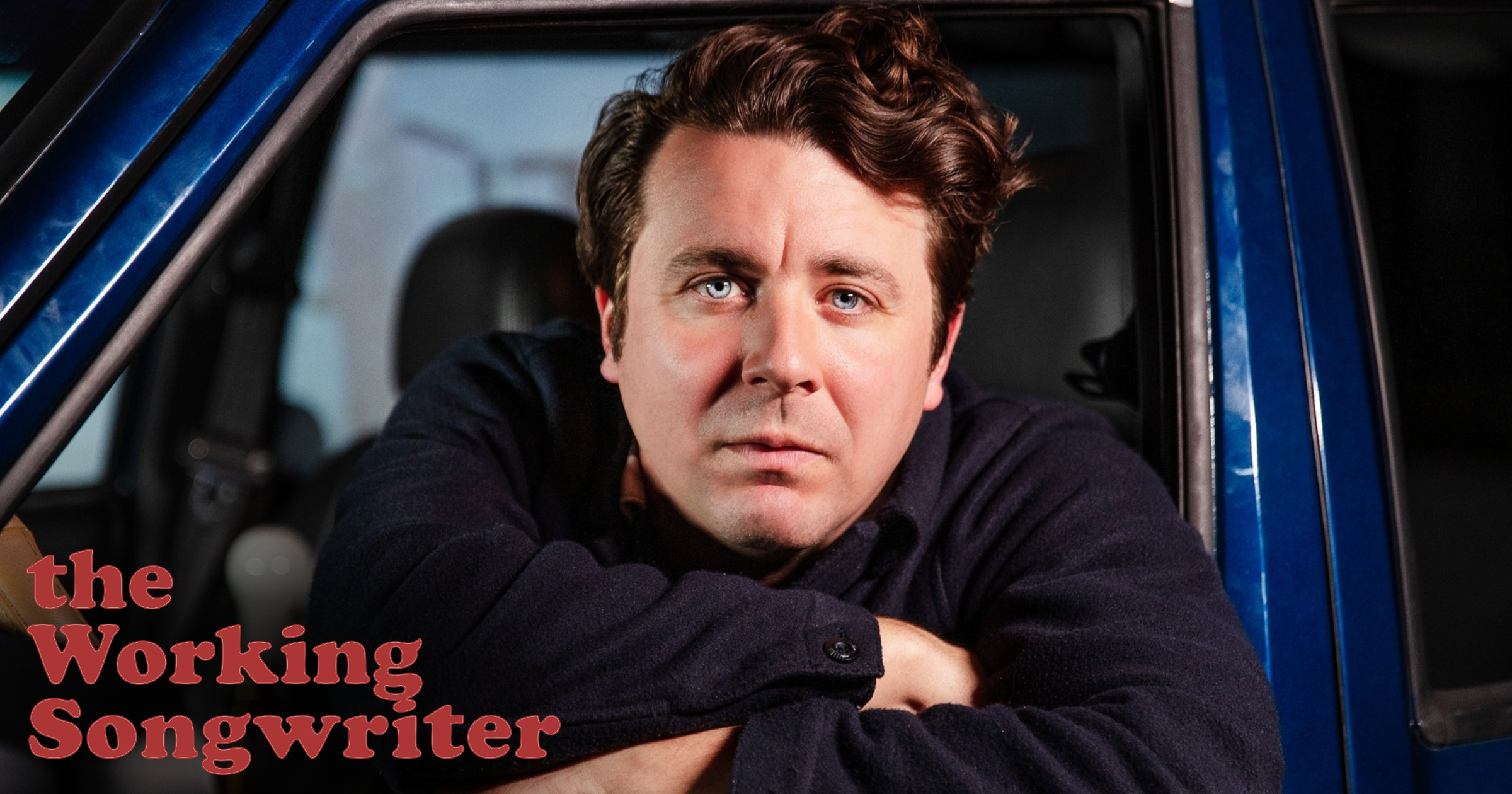
Joe Pug’s The Working Songwriter Joins BGS Podcast Network

The BGS Podcast Network is proud to announce our first addition of a new (to us) show in 2026, bringing artist and singer-songwriter Joe Pug‘s hit podcast, The Working Songwriter, on board. Beginning January 9, the Working Songwriter will be distributed exclusively through BGS and available wherever you stream podcasts.

“After ten years and over three hundred episode of doing this podcast independently, we’ve decided to go pro!” Pug says. “[BGS] is the perfect home for our show. They focus on American roots music, but ultimately they celebrate any kind of songwriting as long as it’s of a very high quality. I think that’s pretty similar to the ethos of The Working Songwriter.”

SUBSCRIBE: APPLE • SPOTIFYLIBSYN

Over a decade of work and hundreds of episodes, Pug has explored songwriting, music-making, artfulness, and creative practices with some of the most thoughtful and entrancing voices in Americana, country, roots music, and songwriting as a whole. Over the years, guests have included such luminaries as Jerry Douglas, Charlie Peacock, John Hiatt, ERNEST, Chuck Prophet, Kim Richey, Bonny Light Horseman, Hunter Hayes, Iris Dement, Del McCoury, Keb’ Mo’, Darrell Scott, and countless others. Alongside these songcraft heavy-hitters are just as many fresh discoveries, newcomers, and essential-yet-underrated voices in the space, too.

The overlap between our rootsy BGS purview and Pug’s roster of guests is vast and varied, illustrating how perfect a fit the show will be for the BGS Podcast Network. “With their network,” Pug continues, “we’re gonna be able to get guests that we’ve never had before. We’re gonna be able to produce more content and we’re gonna be able to lean into video quite a bit more. I’d like to thank Cindy Howes and Amy Reitnouer Jacobs for believing in our show and helping to shepherd it to the next level.”

“The Working Songwriter has set the standard for long-form interviews with our favorite songwriters in the roots music world and beyond,” responded Cindy Howes, director of the BGS Podcast Network. “Joe’s ability to open up his guests in relaxing conversations on the craft of writing is endlessly impressive. The fact that a podcast of this caliber that legitimizes the best working songwriters is joining our roster is an honor. We are beyond excited to work with Joe and his team on this wonderful show.”

The latest season of the Working Songwriter will premiere this Friday, January 9, with guest Evan Bartels. Bartels, a singer-songwriter, burst onto the national scene with his 2017 debut, The Devil, God & Me. He has toured with American Aquarium, The White Buffalo, and John Moreland; he records for MCA/Universal; and he’s performed at Mile of Music, Americanafest, and the C2C Festival. We’re looking forward to beginning this new era for The Working Songwriter with Joe Pug, Evan Bartels, and all of you, right here on BGS.

To celebrate the announcement and the upcoming season premiere, listeners can subscribe to the Working Songwriter wherever they listen to podcasts. While you do, revisit and enjoy all past episodes of The Working Songwriter – including these five of our favorite selections below, chosen from over 10 years of superlative work.

Remembering Todd Snider (March 2020, rereleased November 2025)

Joe originally sat down with The Bard of East Nashville back in March of 2020, but after his untimely passing in November 2025 at the age of 59, TWS reissued this beautiful episode in his honor.


Jerry Douglas (June 2025)

An artist who needs little introduction to BGS audiences, GRAMMY-award winner Jerry Douglas is considered the contemporary master of the Dobro. Joe talks to Jerry about his long and storied career, playing alongside everyone from Ray Charles to Billy Strings.


Ashe (September 2024)

TWS covers songwriters of all backgrounds and genres, as demonstrated in this 2024 episode with Ashe.  The Berklee College of Music grad discusses her years writing songs for other artists such as Demi Lovato, only to find her own distinct voice (and a legion of obsessive fans, including the late Diane Keaton) in the last five years.


The Swell Season (October 2025)

The Oscar-winning and decades-spanning musical partnership of Glen Hansard and Marketa Irglová has captivated worldwide audiences, but this conversation with Joe from 2025 celebrated their first album together since 2009 (Forward), and showed their connection and chemistry was as deep as ever.


Bonny Light Horseman (February 2023)

Each member of the folk supergroup trio of Anaïs Mitchell (Hadestown), Eric D. Johnson (Fruit Bats), and Josh Kaufman (The National, Bob Weir, Josh Ritter) could easily deserve their own deep-dive episodes, but put together it’s clear that they are greater than the sum of their parts. Joe digs in with the three GRAMMY nominees to peek behind their magical music-making curtain.


Lead image courtesy of New Frontier Touring.
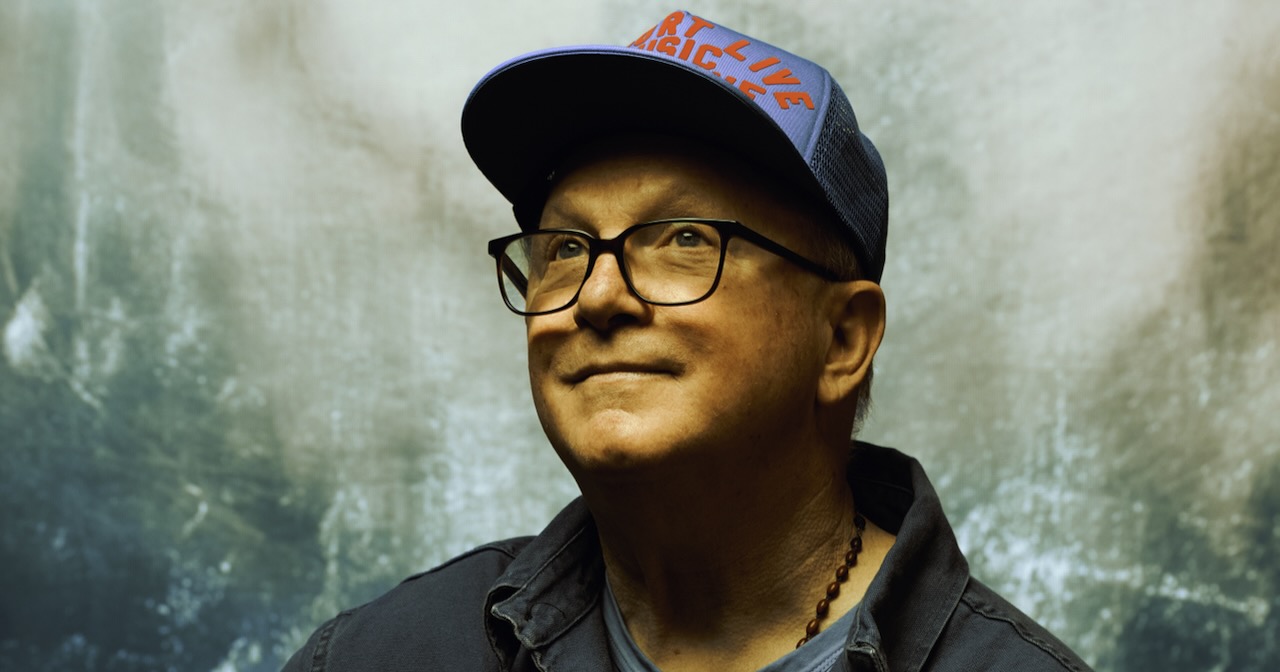
Open Mic: Charlie Peacock Pushes Through Chronic Pain on ‘EVERY KIND OF UH-OH’

With a 40+ year career spanning virtually every aspect of the music business – from performing and songwriting to production, development and even education – Charlie Peacock has battled myriad creative challenges. A standout in the Contemporary Christian format who was also deeply involved in the Americana folk boom of the 2010s (he was even the driving force behind The Civil Wars’ mainstream emergence), no problem seemed too big to handle. But for his new album EVERY KIND OF UH-OH, Peacock had to overcome an obstacle unlike the rest: a rare, debilitating health condition.

Diagnosed with Dysautonomia and Central Sensitization, Peacock has essentially been experiencing a never-ending headache since 2017 – seven grueling years and counting. Needless to say, it has upended the GRAMMY winner’s life, and while some days are better than others, the chronic pain prevented him from music making all together– until a flash of writing in 2023, that is.

Featuring 10 all-new songs penned in a two-week flurry, EVERY KIND OF UH-OH finds Peacock getting back to work, but with fresh appreciation for life’s messy beauty. Co-produced with his son Sam Ashworth, a peaceful mix of dream-folk and gospel match a tender, feathery tenor, as Peacock explores against-the-odds optimism with spirituality, purpose, and humor. In the end, it feels like a veteran songsmith’s statement of revelation; and a set of life lessons delivered with knowledge, not judgement.

Still fighting symptoms on the morning after a party celebrating the album’s arrival, Peacock spoke with BGS about how his life transformed and how it forever changed the way he makes music. Peacock also plans to release his memoir, Roots & Rhythm: A Life in Music in February.

We’re really interested in the way things like creativity and mindfulness and health intersect, so I’m fascinated by your story. Can you just tell me how you’re feeling today – both in a micro sense and in terms of the bigger picture with everything you’ve been through?

Charlie Peacock: Well, just for the background, I have a neurological disorder called Central Sensitization, which is a pain management disorder between the brain and the central nervous system about how pain is managed. So, my brain got tricked into thinking I am in trouble, and it’s sending me pain signals. Basically in the same way that if I scratched my arm on something, that scratch pain is there to tell me, “Hey, there’s something wrong with your arm. You might want to take a look at it.” Well, the brain functions in that way for all our pain management throughout our entire body.

So mine, this disorder that I have is that everyday for almost eight years, I’ve had an intractable headache. I’ve had an eight-year headache basically, and it goes up and down in terms of intensity. Sometimes it’s “You’ve got to go to the hospital” intensity. And most of the time it’s just sort of like a three or a four [on a scale of one to 10]. And I’ve learned to function through various methodologies and mindfulness and various kinds of treatments that I’ve done.

I imagine on top of the physical side of things, it has impacted your creativity. How did this change the way you look at making music?

Well, it got me back in some ways. It got me out of the music business and back into music making.

Really? How so?

At the point when I got sick, I was just turning 60 years old. So I was a 60-year-old man who’d been in the music business for 42 years, who was in writing rooms with 20-somethings. And even though part of my whole thing as a songwriter and a producer is that I’ve stayed relatively current, you’re still a person of your time and your generation. It’s like, could I make a trap song? Absolutely. But will I make one that is convincing to people who listen to trap? Maybe not. …

I was functioning more as the older, experienced sage that comes in and cleans up people’s songs. And so what the illness did was it put me back in that more childlike place of working on my own music and experiencing just the joy of creating, rather than coming in as the expert who’s going to be the song doctor or the producer who’s going to give that artist that extra 23% that makes them commercially viable or something like that. So that has been a real joy. And then of course, as I’ve said many times, it’s like you take care of the music and it takes care of you. That’s been the case just in terms of imagination and creativity during this illness, where it’s been a part of my medicine for sure.

Here we are eight years after the illness started and you’ve got a new record. What changed to bring this music out?

Well, [before] this illness period I had gone to Lipscomb University and created their commercial music program, and then became the head of the School of Music for a year. And it was during that time that I got sick. I was already kind of moving out of the producer-for-hire model and kind of had this education piece that was on my bucket list. So I had gone and done that and then I was just here working, making a lot of music, doing a lot of writing, working on a family, a screenplay for a family story from the 1800s, just doing a bunch of different creative things. …

[After the illness], I just had a willingness to say, “If my music career is over at this point, then I will have been really grateful.” And this memoir is kind the period on the end of the sentence. Then all of a sudden it was like I woke up one morning like “Is that an idea for a song?” It was brewing. So I started working on it and then a few more. And then I asked my son, “Hey, you want to help me finish this song?” I go out to his house and we hang and work on this song. We’re both super excited about it. And then he finally, after hearing more of the music, he was like, “Dad, you got to promise me you’ll take this seriously. Don’t just tell everybody, ‘Hey, I have a new record out on Friday and buy a couple ads on Facebook and call it a day.’ I think you need to actually do an old school release and get a distributor and have them set the record up.”

I said, “I don’t know if I have the energy for that.” But [Sam] said, “Well, I’ll help you.” And so he did help me. Really, the whole family has been a huge help. Sam came alongside me and he co-produced the record and we co-wrote three songs on it. And literally, it’s a 10-song album. Within 14 days. I had all 10 songs written. And it was just one of those times where it was just time to do that. I didn’t know it was, but it was.

Fortunately, I also had some pretty good windows of health that I could [record]. I had some days when I tried to sing where it’s just like, “Man, it’s just not happening.” But I’d wait a few days and get rested up again and go up to the studio and sing, and it would still be there. I was actually surprised myself, some of the range that I was able to sing at still.

Have the songs taken on a new shape for you or a new dimension, topic-wise and thematically?

Well, my great-grandfather was a fiddler in Louisiana and my grandfather from Oklahoma loved to sing all the Okie songs of the era. And I thought, let me just lean into that a little bit. So I would say this record is a little taste of that, especially the instrumentation is pretty much still the same in terms of rootsy guitars and just simple drums and bass and fiddle and pedal steel. And the only difference between this record is I really leaned into the gospel vocal sound. A lot of my friends that have been dominant in Black gospel music. And so that’s a difference. Narrative-wise, I was really trying to do this kind of literary thing that was a mix of plain-speak American roots, with these literary elements, and then also take a spiritual element, but not make it religious, and try to create a narrative that was uniquely American. I think in its influence, it’s almost like reading some of the classic American novelists.

There’s a wonderful mix of storytelling and deeper spirituality, for sure. Thank you, Charlie. I’ll just leave you with the big picture. What do you hope people take away from this record?

I think for me, even listening to the songs and seeing the reaction from folks, what they said afterwards is, “This is a world that I want to enter into. There’s something about what you’re creating on this record, this musical world, and this invitation to come on in that feels really safe and that I will belong here and I’ll be well loved, cared for, not judged – allowed to just be myself.”

And I think that’s what we want. I mean, I think that’s what makes our heart beat, is that we just want to be known totally. We want to be known like the intricacies of our personalities. We don’t want to be known superficially. And I hope there’s something about this music that sends that signal that, yeah, I do too. Come on in and listen and see if you find some of that here.


Photo Credit: Jeremy Cowart