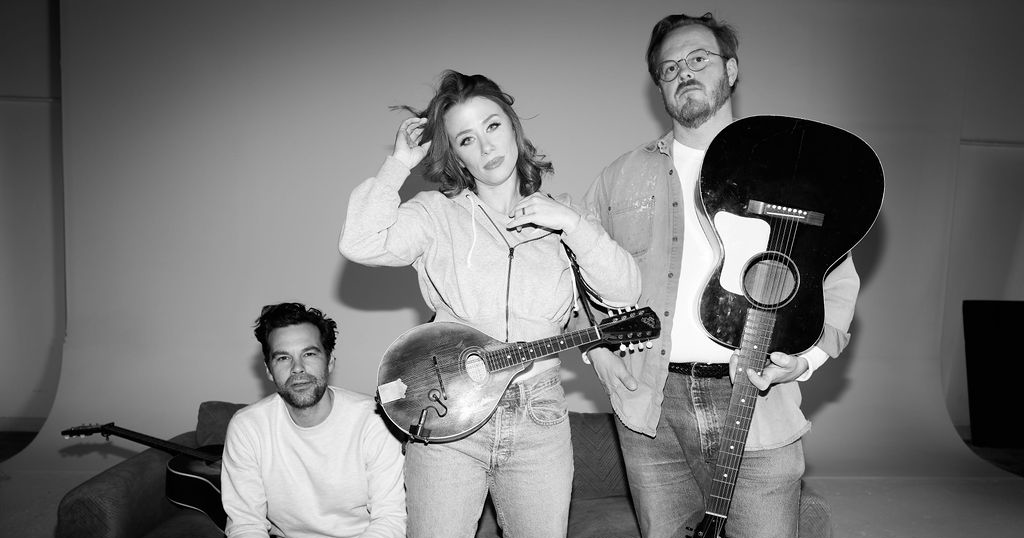
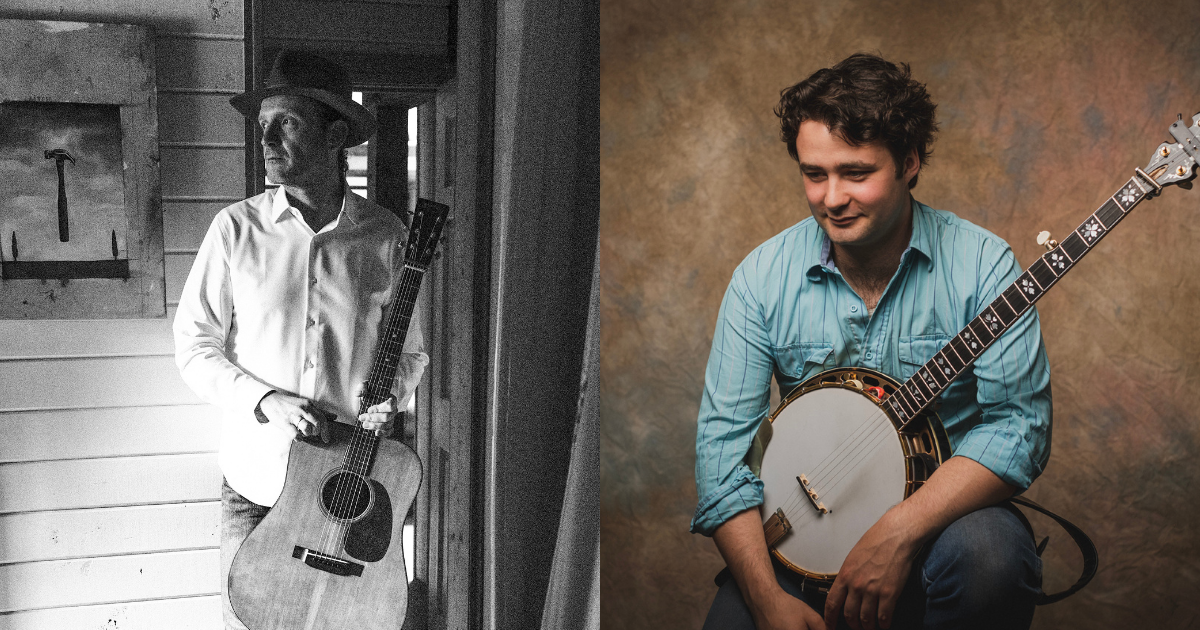
You Gotta Hear This: New Music From Don Williams, Victoria Bailey, and More

This week it’s absolutely packed in our weekly roundup of new roots music! You Gotta Hear This…

From the Blue Ridge Mountains of Western North Carolina, the Asheville Mountain Boys kick us off with a new performance video for “Don’t Take Me Back Again.” It’s a track from their debut self-titled album, which was just released in February. It’s straight-ahead bluegrass that will transport you right back to their beautiful home turf in Southern Appalachia. Also in bluegrass, from just down the ridge from NC in Boiling Springs, South Carolina, husband-and-wife duo Benson (Wayne and Kristin Scott Benson) have a new single out today, “Maybe It’s You.” Featuring their friend Heath Williams on the lead vocal, it’s a clean and crisp example of modern bluegrass with traditional bones.

You’ll also get to hear a lovely bluegrass-gospel-western rendition of a Randy Travis cut, “He’s My Rock, My Sword, My Shield” below, brought to us by Southern California singer-songwriter and roots artist Victoria Bailey. She effortlessly combines bluegrass, classic country, country & western, and gospel with her version of the familiar tune. The loping, cowgirl feel is just perfect. Plus, impeccable fiddler and multi-instrumentalist Andy Leftwich has a new album out today, Aced. To celebrate, we’re sharing “Crossville” from that collection, a tune from the catalog of Ricky Skaggs – Leftwich’s former boss, who’s a friend and a mentor – that has a transatlantic and somewhat Celtic feel. It features Leftwich on both fiddle and mandolin.

From further territory on the roots genre map, Paula Boggs Band calls on both Blind Boys of Alabama and Valerie June as special guests on their recording of “Ain’t Gonna Let Nobody Turn Me ‘Round.” Soulful string band folk is a perfect backdrop for the languid, marching track – one that remains all too timely and applicable in 2026. Watch a new lyric video for the song below and join the sing-along party, and the struggle for justice, too. Don’t miss Serafima and the Shakedowns’ paean to Seattle, the Queen of the Pacific Northwest. “Shivers” is a chill and vibing Americana track with lush guitars backing gentle ruminations on friendship, community, and place. Whether you have or haven’t felt the “shivers” in a while, this song will be there for you when you do again.

Keep scrolling, as there’s more gold to find. For instance, Gregory Alan Isakov and Sylvan Esso released a track together earlier this week, “Fade Into You.” It’s a lovely cover song of the cult favorite ’80s and ’90s alt-rock band Mazzy Star. For a while, Isakov wasn’t sure the track was finished – that is, until he called upon Amelia Meath of Sylvan Esso to complete the number with her vocals. Like Isakov, we love how it turned out. Finally, a legend of country music returns, posthumously, with a new album on May 29. Don Williams passed away in 2017, but his powerful legacy lives on. We spoke to his son, Tim Williams, about the latest single from Epilogue: The Cellar Tapes, a collection of found recordings made by Don himself dating back to the ’70s. The new single is an alternate version of a favorite track, “I’m The One,” that puts a magical focus on Williams’ vocals. You won’t want to miss it.

So much to love and enjoy is waiting for you below – You Gotta Hear This!

The Asheville Mountain Boys, “Don’t Take Me Back Again”

Artist: The Asheville Mountain Boys
Hometown: Asheville, North Carolina
Song: “Don’t Take Me Back Again”
Album: The Asheville Mountain Boys
Release Date: February 12, 2026 (album)

In Their Words: “‘Don’t Take Me Back Again’ is an original song written by our guitar player, Marshall Brown, and is featured on our new self-titled LP. Marshall brought the song to the group about a year ago and we had so much fun working it up into an early ’50s-style bluegrass song. Zeb and I wrote exchanging mandolin and banjo riffs for the song instead of normal solos; we felt that was an homage to how early Jimmy Martin songs would have more melody-based riffs than conventional solos. We shot the video at Asheville Guitar Pedals in West Asheville as sort of a tongue in cheek reference to our motto: ‘No Plugs No Pedals Only Bluegrass.’ We loved working with Rebecca Jones (video) and Carter Giegerich (audio) on this in-person, fully live take of the song. “ – John Duncan

Track Credits:
Marshall Brown – Lead vocal, guitar
Jacob Brewer – Tenor vocal, bass
John Duncan – Banjo, baritone vocal
Zeb Gambill – Mandolin

Video Credit: Videography by Rebecca Branson Jones, audio by Carter Giegerich. 


Victoria Bailey, “He’s My Rock, My Sword, My Shield”

Artist: Victoria Bailey
Hometown: Huntington Beach, California
Song: “He’s My Rock, My Sword, My Shield”
Release Date: April 24, 2026

In Their Words: “My cover of this Randy’s Travis gospel song, ‘He’s My Rock, My Sword, My Shield,’ truly sets the tone for where I am in music and with my faith. It’s been a few years since my album release (A Cowgirl Rides On) and I continue to grow a deep love for bluegrass and gospel. It only made sense to go in and record one of my all-time favorites by Randy Travis before I dive into my next record.

“This song was recorded live in studio with my bluegrass band at Station House Studio in Los Angeles, produced by my good friend Brian Whelan. It was a sweet reunion being back in that room and to honor such a beautiful, spiritual song. I often describe my sound as ‘a little bit gospel, a little bit bluegrass, and everything in between.’ This next single is a perfect recipe of all those things and I’m looking forward to more of it this year!” – Victoria Bailey

Track Credits:
Victoria Bailey – Vocals
Brian Whelan – Producer, lead guitar, BGVs
Ted Russell Kamp – Bass
Luke Adams – Drums
Philip Glenn – Fiddle
Leeann Skoda – BGVs


Benson, “Maybe It’s You”

Artist: Benson
Hometown: Boiling Springs, South Carolina
Song: “Maybe It’s You”
Release Date: April 17, 2026
Label: Mountain Home Music Company

In Their Words: “We love the tried-and-true themes of classic bluegrass songs. Cabins, farms, and mountains were relevant to the writers then. In fact, if you can find a new song that is reminiscent of those standards, it’s a real find. I think ‘Maybe It’s You’ is a nice representation of a modern bluegrass song, lyrically. Troubled relationships are timeless, but this is a contemporary take on that same theme.” – Kristin Scott Benson

“Heath Williams sang lead on ‘Maybe It’s You’ and we are so lucky to work with him. He has been a huge part of many Benson songs, like ‘Oh Me of Little Faith’ and ‘Lay ‘Em Down.’ He’s not from a bluegrass background, but is perfectly suited for it and has a really fresh, special take. In fact, Terry Herd, one of the co-writers, specifically mentioned him because Terry thought his approach would be ideal. After years of going to church with Heath and playing with him on occasion, it’s a joy to be recording with him now.” – Wayne Benson

Track Credits:
Heath Williams – Lead vocal
Wayne Benson – Mandolin
Kristin Scott Benson – Banjo
Cody Kilby – Acoustic
Kevin McKinnon – Bass
Zack Arnold – Harmony vocals


Paula Boggs Band, “Ain’t Gonna Let Nobody Turn Me ‘Round”

Artist: Paula Boggs Band
Hometown: Seattle, Washington
Song: “Ain’t Gonna Let Nobody Turn Me ‘Round” featuring Blind Boys of Alabama and Valerie June
Album: Sumatra
Release Date: March 27, 2026 (album)
Label: Boggs Media LLC

In Their Words: “Our cover of the civil rights anthem, ‘Ain’t Gonna Let Nobody Turn Me ‘Round,’ feels more relevant today than when we recorded it. To highlight its American roots heritage, we incorporated bluegrass instruments like banjo and fiddle. The featured artists, Blind Boys of Alabama and Valerie June, further enhance the song’s messages of hope and determination. The lyric video grounds the song in present times.” – Paula Boggs

Track Credits:
Paula Boggs – Lead vocals
Tor Dietrichson – Percussion
Jacob Evans – Drums, percussion
Darren Loucas – Acoustic guitar, Dobro, banjo, ukulele
Paul Matthew Moore – Acoustic piano, percussion
David Salonen – Upright bass, fiddle
Blind Boys of Alabama (Ricky McKinnie, Sterling Glass, J.W. Smith, Joey Williams) – Co-lead vocals
Valerie June – Co-lead vocals


Gregory Alan Isakov and Sylvan Esso, “Fade Into You”

Artist: Gregory Alan Isakov and Sylvan Esso
Hometown: Gregory Alan Isakov: Born in Johannesburg, South Africa; grew up in Philadelphia, Pennsylvania. Sylvan Esso: Durham, North Carolina
Song: “Fade Into You”
Release Date: April 16, 2026
Label: Dualtone

In Their Words: “I grew up listening to Mazzy Star and sort of sketched this song out one afternoon. I had read an article about Hope Sandoval (the singer of Mazzy Star) the week before and there was this paragraph about how she played a few shows at the Sydney Opera House in almost complete darkness. Some of the crowd was super disgruntled about it and walked out. I remember thinking, ‘Wow, what a hero.’ I sat on the recording I made for a long time, thinking it wasn’t quite finished, and reached out to Amelia of Sylvan Esso. She has one of my favorite voices of all time. Once I heard her on it, it felt ready. I really love how it came out.” – Gregory Alan Isakov


Andy Leftwich, “Crossville”

Artist: Andy Leftwich
Hometown: Carthage, Tennessee
Song: “Crossville”
Album: Aced
Release Date: April 17, 2026
Label: Mountain Home Music Company

In Their Words: “One of the greatest joys of playing music with Ricky Skaggs was getting a chance to jam on his original instrumentals! They all have great melodies and are structured in a way that gives you an opportunity to stretch out and push yourself. This song is certainly that. Ricky has always inspired me with his creativity and heart behind each note that he plays and I always looked forward to playing this one with him each night! It’s one of my favorites! I thought I’d pay homage to my friend and former boss by recording one of his wonderful compositions, ‘Crossville.'” – Andy Leftwich

Track Credits:
Andy Leftwich – Fiddle, mandolin
Byron House – Upright bass
Cody Kilby – Acoustic guitar
Matt Menefee – Banjo


Serafima and the Shakedowns, “Shivers”

Artist: Serafima and The Shakedowns
Hometown: Seattle, Washington
Song: “Shivers”
Album: Ride Easy
Release Date: April 14, 2026 (single); May 1, 2026 (album)
Label: BWGiBWGAN

In Their Words: “‘Shivers’ is an ode to Seattle, Queen of the Pacific Northwest – a cloud-soaked rumination that finds the song’s lonely voice wondering, is there anyone out there? My friends have left the city and I’ve heard I’m supposed to have a guardian angel – but where is she? Maybe she’s hiding behind the marine layer.

“This is a song about the city I grew up in, missing all your friends that have moved far away, feeling like they lied to you about stuff like having a guardian angel, and wondering if heaven is a real place – either up there or down here.” – Serafima Healy

Track Credits:
Serafima Healy – Vocals, guitar
Sam Burrows – Guitar
Joe McPhee – Bass
Jules Tennyson – Drums
Finn O’Hea – Trumpet
Aaron Khawaja – Piano
Jay Kardong – Pedal steel

Video Credits: Hand animations by Serafima Healy.


Don Williams, “I’m The One (Alternate Version)”

Artist: Don Williams
Hometown: Nashville, Tennessee
Song: “I’m The One (Alternate Version)”
Album: Epilogue: The Cellar Tapes
Release Date: April 17, 2026 (single); May 29, 2026 (album)
Label: Craft Recordings

In Their Words: “I remember this song very well from when I was 13-14 years old. I always loved the song. Obviously, Daddy did too, or there would not have been strings on it. Strings are always about the last thing before mixing (sometimes percussion). When I realized that it was one of the songs on the tapes in the cellar, I was excited. I did, though, want to take a crack at stripping it down a bit or making a little more room for Dad’s vocal, which was my intention and the approach I took. The original version is definitely cool and pretty complicated, actually, but I wanted a version that would be a platform from which maybe there’d be a little more focus on the vocals.” – Tim Williams, son of Don Williams


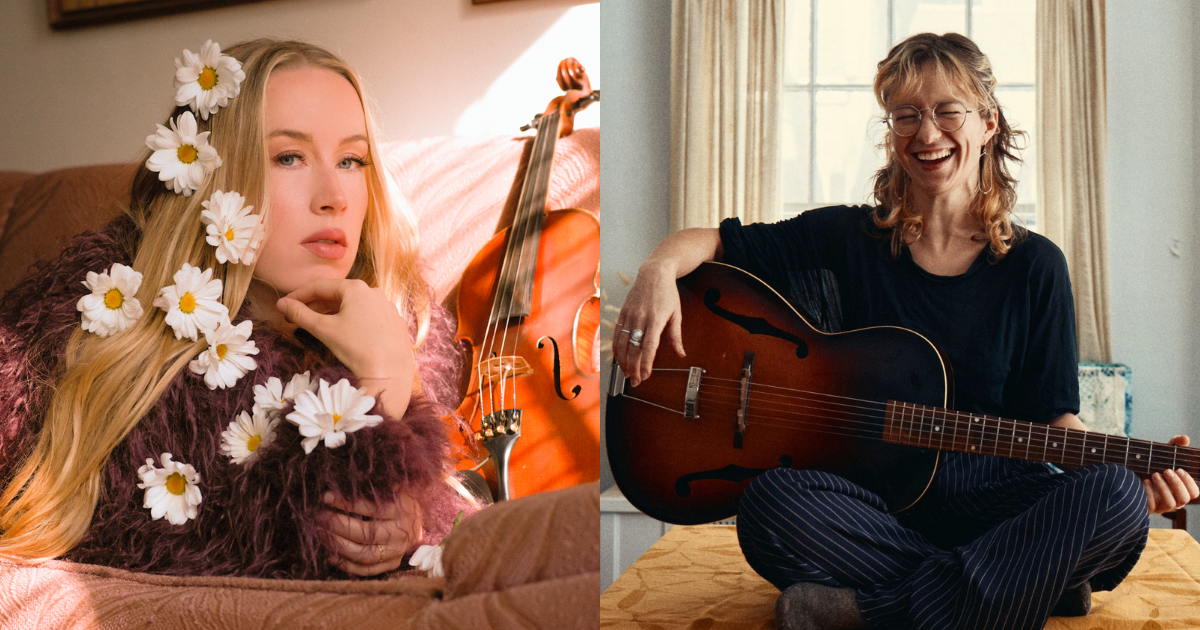
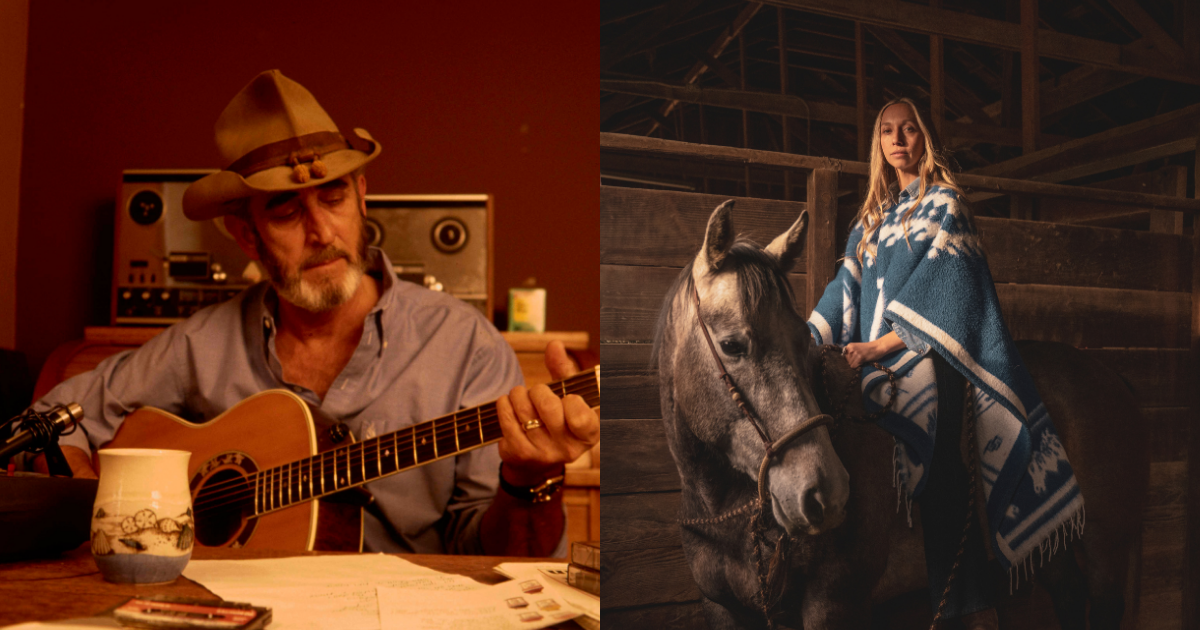
Photo Credit: Don Williams by Jim McGuire via the Grand Ole Opry Archives; Victoria Bailey by Dylan Gordon.

Queen Esther Made a Civil War Album Unlike All the Rest

Civil War albums are all too common in roots music, bluegrass, country, and Americana. Usually, these concept projects romanticize and valorize one of the darkest periods in our nation’s history, while cheerfully and cartoonishly detached from reality and untethered from the nuances of this horrifying and violent period of tumult in the U.S. Revisionism and imperialism are enacted by fiddles and banjos in loose, contrived musical period garb.

Audiences seem to devour this kind of idyllic reimagination of the Civil War and the issues that gave rise to it. Though chattel slavery and its foundational role in our economy were central to the conflict, Civil War concept albums rarely interrogate those facts, instead leaning on listeners’ love for story songs and cursory understanding of “brothers against brothers” narrative paradigms to sell records and tickets. The sketchiness of this practice is overlooked across the board, perhaps due to the sheer ubiquity of such efforts.

On February 6, artist, musician, songwriter, actor, and playwright Queen Esther released a very different sort of Civil War album, Blackbirding. Enabled by a grant from The National Parks Arts Foundation, Queen Esther worked and lived in residence at Gettysburg National Military Park in Gettysburg, Pennsylvania, for a month in 2020. During that time, she communed with the land, the place, and the losses and griefs seeped into the blood-soaked soil, plumbing stories, myths, memory, and feelings to craft her 12-song reckoning with the Civil War. Original songs, songs from that time period, and fascinating covers combine into a work of roots music and theater, dramatization and storytelling interwoven with knowledge-bearing and memory-keeping.

Queen Esther being a Southern Black feminist multi-hyphenate creative is exactly why Blackbirding stands out among its peers in the curséd Civil War concept album space. There is no idealization or revisionism happening in Queen Esther’s songs. Instead, there’s a tangible humanity and an awe-inspiring alchemy of grief, loss, and crimes against humanity into beautiful, redemptive music.

Queen Esther first brought Blackbirding into the world as a piece of performance art with a staged reading in 2024. Even now, in its LP form, these songs lean forward, doing narrative work perceptible whether on stage or off, and coaxing listeners to abandon passive listening and – as all theater asks – inhabit a third, artistic, creative space together in our interaction with these compositions.

The central point of the album is made over and over again across the 12 tracks and throughout our lengthy and in-depth BGS conversation. “Blackbirding,” the 19th-century practice of kidnapping free Black folks and selling them into slavery or back into slavery, never really went away. The Civil War was not won. Reconstruction failed. Slavery itself was not abolished, but rebranded. As such, Blackbirding, whether from the perspective of its content or its genre aesthetics, isn’t a throwback or time capsule album. This is music made in the present, for the present, about the present, and it calls on all of us – again, in the present – to reckon with and consider how we each contribute to or act in defiance of the continuation of racial apartheid and imperialism in the United States.

Do not fear, though, because Queen Esther’s approach to such musicmaking is remarkably joyous, grounded, and compassionate. It’s clear she’s not only ready to engage in the conversations this music evokes, but that is exactly her purpose. And the ultimate culmination of her many talents. In this way, she yet again distinguishes herself from other such concept albums in Americana.

I’ve been a fan of yours for a few years, ever since we discovered your TED Talk. When I first watched it, it was so revelatory. It felt like you supplied vocabulary – and knowledge and expertise – that I wish I would’ve had my whole life to help describe the multi-ethnic origins of roots music and bluegrass and country. If all of this came from “Scotch-Irish tradition,” then why does bluegrass sound like bluegrass? Why does country sound like country? Why doesn’t it sound like Irish music or Scots music or music from the British Isles? It sounds different.

I just wanted to start by saying thank you for that talk – and thank you for all of the insight, feeling, and emotion that you bring to these intellectual topics that people tend to forget are about real humans, real experiences, and real music.

Queen Esther: Absolutely. I really appreciate you saying that. I think more often than not, Black people have these conversations amongst ourselves. We wait until the door is closed and then we talk. I think we should have more conversations with everyone in the room. As long as they’re willing to listen. That’s a tall order. Much more so than you would think.

I’m really happy about this album, especially because people are starting to have conversations around the songs, topics, and everything that I’m bringing up. The fact is that slavery has never ended. It was just modified. The Civil War has never ended. It just evolved. “Blackbirding” has never ended. It just got a lot more inclusive.

Those three things are standing in the way of America being America. There is the America that is on paper – the one that is in the brochure with the Statue of Liberty, the flag behind it, and mom, and apple pie, and all of this stuff. And none of it is true. It’s all a marketing ploy. The actual America that really exists, that’s the one that Black people have had to endure and survive for hundreds of years. That’s the America that turned its back on us.

You know as well as I do that there are so many Civil War albums in bluegrass, folk, string band music, and Americana. So many are built upon the revisionist history that you’re talking about. The manicured, sanitized “picket fence and 2.5 kids” version of the “American Dream.” So, normally when I get a pitch about an album like this, it just goes straight to my email archive. Knowing you and knowing your work – and especially the way that you bring theater and all of your multi-hyphenate titles into crafting and creating – I was so excited to have a chance to talk about approaching the Civil War and approaching Gettysburg as an inspiration for music.

Blackbirding is set in the present. You’re talking about how slavery never went away, how reconstruction failed, and how the Civil War was not won. You’re contextualizing this art in the present sonically, as well. Because, like you’re saying, the Civil War never ended, slavery never ended, blackbirding never ended. Can you talk a little bit about placing all of this discourse in the present and not just in period garb, as it were?

I have to say perspective is a powerful thing. As a Black woman, as a Southerner, as someone that’s two generations removed from slavery, as a creative, I never heard any of this told from a Black perspective. It was always “the lost cause”: “These Yankees came and they just attacked us from out of nowhere. We were living this beautiful life and they just ruined everything.” When nothing could be further from the truth.

They literally terrorized Black people. They tore us apart, they raped our children. They did all manner of evil constantly, under the guise of Christianity. And it was even uglier than anyone would dare to imagine. Which is why they’re struggling to hide Black history, to hide lost history, to make sure that it stays lost. To not have anyone like me turn over the rock to see what’s underneath.

At the same time, these songs from minstrelsy, these songs from not that long ago, they’re important songs. They should be rediscovered. The problem that I’ve always had is that once you have that technical prowess as a musician and once you plumb the depths with that music, no one was bringing that music forward into the present. Not unless they were … putting it in a historical context, and that’s important, but to bring it into the now [is just as important]. …

Having a sense of intellectual curiosity, it’s really important. It doesn’t matter that you’re not the smartest, but that you are curious intellectually and that you are brave enough to explore that curiosity is way more important. That’s really my bedrock. That’s where I’m coming from now.

I’m a generative performing artist. … We are the ones who generate our work and we perform that work. Some people don’t necessarily perform their work. They just write it or they create it and they’re looking for other people to do the work, to perform the work, so that they can get their work out there. Lots of songwriters like that. Lots of lyricists are like that. That’s beautiful. That’s great. …

The songs would come to me, they would just float up in my head. It’s like a patchwork quilt. You take all these different kinds of fabric and all these bits and pieces. But you’re making this mosaic that turns into this overall image that is bigger than whatever bits and pieces you brought to it in the first place.

Talking about that mosaic, it makes me think that of course we would end up at this point, with a project like this, with a conversation like this, and with a body of work that couldn’t have been made if you had tried to step outside of yourself or your own identity to make it.

Exactly. All of that fueled me. I was reaching out in different genres, not just musically, but in the world. I was doing a lot of alternative theater, I was doing cabaret. I was doing performance art, I was doing solo performance. I was doing storytelling. I’d get up on stage and I would do just about anything. That was a world in and of itself.

Now, after a certain point, when you’re a generative performing artist, you’re looking for grants so that you can develop the work in general. It takes seven to nine years to develop a musical. It takes five to seven years to develop a play. When you see someone go, “Oh yeah, my new play, it’s up.” They put in a heavy grind! That’s five years of rewrites and workshops and readings. Some theater taking them on with their theater company and developing that work until it was ready for a test audience, not even necessarily ready [to open]. It’s just a lot of hard work and a lot of heavy lifting. There are certain grants that make that possible, where you just have to go away and you have to write and create.

I found a grant that would let me do that with this album through the National Park Service. The National Parks Arts Foundation has grants to at least a dozen National Parks. You can go to the park, you can live on the park, and they will pay you.

This project is also a work of theater. What jumped out to me first and foremost in that regard is what you’re talking about – the residency, the grant, being on location. Bluegrass, roots music, country music, they all ask us to be in a place together, but not in the same way that theater does. Theater is very much created so the audience are not passive participants. It actively invites listeners and collaborators and bystanders into a space and into a place.

You are doing that with this body of work – and with your residency at Gettysburg. I thought that was one of the most fascinating things about this project. Using theater, with a capital T, to help do that work of transporting all of us to the battlefield, to Gettysburg, to the geographical place that you are evoking with these songs.

I’ve been doing theater ever since I could stand up straight. Think about the cavemen, just standing in front of their brethren and telling a story about what happened to them that day. If my grandmother were here right now and in on this conversation, she’d tell you that I was telling stories ever since I could talk. I would just make things up. She would be sitting there washing dishes and I would try to distract her by making up something wild or crazy or imaginative. I don’t know, I just gotta say something to make her drop that dishcloth or at least laugh or something. [Laughs]

What is fantastic realism? Fantastic realism is when you have ordinary circumstances and then something extraordinary just pops right in. … So the idea of theatricalizing whatever was happening around me as a little kid, [that’s fantastic realism]. If we were sitting here at a table talking, for example, and then an elephant came along and took the hat off your head – that kind of a thing. Just the outrageous Southern tall tale. Bombastic storytelling is always floating just beyond your reach, I think, as a Southerner. It’s just how we do.

And of course, like everything in the South, this is an African tradition. This is an oral tradition handed down from West Africa. West African traditions [are] something else that people have a really hard time saying out loud and acknowledging. It’s not that other cultures didn’t tell stories, but our influence as Africans, as enslaved Africans, of our African ancestors on the South and on America, is seismic. It’s time for people to make the shift however small, however great, and center that and acknowledge it. They can’t even acknowledge it. …

I’m going to tell you a story. I almost always start [performances] with, “You wanna hear a story? I got a story to tell you.” Sometimes I’ll sing it, sometimes I’ll say it with music happening around me or behind me. But this is a story that you’re gonna want to hear. And every single song on [Blackbirding] is wrapped up in a story. There’s a story that’s around it that’s historical. There’s a story that resonates into the now, and there’s a story that I bring to you as an audience when I’m performing the song itself.

I’m thinking about how there’s so much music made in these genre spaces that is also putting on a costume, or telling a story, or doing theater, but that often isn’t grounded in reality at all. It’s all construction. So where some people might interface with your art and think, “Oh, this is a musical, this is theater, this is going to be a play, this is going to be ‘make believe.’” It’s actually so much further from that.

Oh no, it’s reality!

Exactly. And to me, that’s the whole story here. The thing I wanted to talk about most about Blackbirding is the point that you made right at the top – and that you’ve made throughout this conversation. You’re not talking about something that was happening a while ago and isn’t happening today.

Look, the 13th Amendment said slavery’s over “except.” Except? That’s a gigantic loophole. Except for what? Except for incarceration. That means if you’re incarcerated, you’re a slave. What if someone said to you, “You’re fired except on Tuesdays”? Then I’m not fired. You have to come in on Tuesday for four hours. Other than that you’re fired. You don’t work here. How much sense does that make? No one would hear an employer say that and go, “Am I fired or not?” Am I free or not?

You are free. Except they had to make that exception. They had to. Why? Because when the Civil War ended, this country was in absolute shambles. And because Black people were the actual currency. There were 4 million of us and we were basically worth trillions in today’s money.

We went off and we started our own little hamlets and towns, and we started working for ourselves. Suddenly there was this massive tilt. Black people were the money and had all of these resources, energy, and power. And just by sheer force of will, we started building for ourselves, which is why they started tearing us down. Showing up to each and every single community and just murdering people, burning people [alive] in their homes. Coming up with all of these lies built on pseudoscience to justify all of the things that they did. …

But it never ended. Pulling Black people over on the road, out in the middle of nowhere for no reason whatsoever. Beating them up. Maiming them, murdering them in some instances. This has always been the way. This has always been the case.

I’m imagining you on site at Gettysburg. How do you take that sort of emotional devastation or the intrinsic triggering and challenging nature of these topics and turn them into something beautiful? Do you see them as beautiful to begin with? I’m trying to imagine how you take care of yourself emotionally and psychically as you’re doing this important work. Because I think there must be an emotional toll to it, but you clearly are built for it as well. This feels like your wheelhouse – and the way you talk about it and the comfortability you have in having these conversations.

Simple. I am not an atheist. I am not an agnostic. I believe in God. I believe in Jesus. I’m a Christian, and I know that God is with me. I feel God’s presence upon me. I feel God hovering over me, protecting me divinely. I feel that I’m walking in divine purpose and in divine order. I know that I am divinely protected, that the blood of Jesus covers me everywhere I go. …

There’s this point at which inspiration takes over. There’s a point at which you are no longer there, and inspiration is there instead. An actor prepares– the idea is that you have technique, right? Your technique is there whether you’re playing an instrument or singing or washing the dishes or driving the car.

Let’s say driving the car. I don’t know how to drive. So, every time I get behind the wheel and the car is moving, even if it’s moving slightly, I’m screaming like a banshee. I’m so excited. But when I get in a car [with my partner], he just does what he’s been doing. He doesn’t think about it. He adjusts the window here and he readjusts this here, he puts the key in, and he does all of these dozen or more motions. He just does it automatically.

That’s the idea. When you make art, when you’re on stage, when you’re performing, when you’re creating, there has to be something that takes over. Inspiration takes over. Once you’ve got the technique, set the technique, learning how to drive the car, what do you do? Something else takes over. And I’m telling you, that’s something else for me, personally, is not my ego. For me, that’s the Holy Spirit.

I remember when I got to the house [at Gettysburg], everything was explained to me, and they gave me the keys. I’m sitting there in the parlor, I’m arranging everything, and it’s still light outside. I thought, “You know what? Why not?” I took my camera and I walked to Devil’s Den. The first song that I wrote was “The Devil May Care (But Jesus Knows).” I came back and I wrote that down like I was writing someone a letter. It just poured right out of me.

I can’t even begin to explain the process. I wrote it down and I wrote down the chords. I shaped it around everything that I did and I thought, “This is a complete song.” What is that song about? It’s about Devil’s Den, the Valley of Death, which is what they called that area in between Devil’s Den and Little Round Top. These soldiers would climb into Devil’s Den, which is these hulking, gigantic rocks. There was this big snake that lived there. It was huge. They called it the devil. It was so huge, it was as big around in the middle as a grown man’s waist. There were children that liked to play around that rock, so the townspeople got up the courage and killed it.

They would climb inside of that perfect coverage for a sniper and they would shoot Yankee soldiers that they could [see] from Little Round Top and they would fall into the Valley of Death. That was a run, Plum Creek – a run is a creek – and it was so filled with blood they just called it a bloody run. From where the creek started, all the way past the house that I lived in, all the way through that valley of death, was just nothing but human blood.

To be a soldier caught in [Devil’s Den] meant that you could not be saved. Someone would have to come and get you if you were wounded. More often than not, those soldiers died, not because they were shot and they fell down and they died. They died because no one came to get them. They died because they were wounded and the wounds got infected and they just bled out or [succumbed].

That Valley of Death comes for you, not just at the end of your life. It comes for you at any given moment, at any crisis that you have. Over and over and over again.

Can you talk a little bit about how you approached genre on these songs? Because I really love that you didn’t make a “time capsule” record that’s trying to sound like it came from the 1800s. At the same time, you’re collapsing time musically and creatively so that you can draw on those textures and on those sort of old-timey elements to do that storytelling for you, sonically. How did the production process actually look or feel as you were putting this collection together?

I think that when you have a kid or when you give birth to a kid, you just let that kid be the kid. You’re not sitting there going, “I want this kid to be this,” or “I want this kid to be that.”

That’s a really good metaphor. Just let them be themselves.

And what you’re doing, really, is sitting back and waiting to see what that kid turns into. You have no idea how they got so great at math. This kid is a mathematician. You can’t balance your checkbook. This kid is just explosively running in this whole other direction that you can’t even fathom. You have no idea what your children will do, what they will become. And none of it really has anything to do with you.

It’s the same thing. These songs came to me and when they came to me, sometimes fully formed, I literally wrote down what I heard in my head. And that really is it. Each song is its own world. I just let the song be what it is, whatever it is. However it came to me, I just let it be what it is.

I consider myself to be a transcriber of the song. I’m sitting there. The song is in my head and I’m just writing it down as quickly as possible. I’m someone with a butterfly net chasing the butterfly through the jungle. I’m running after the butterfly and I’m hoping that it doesn’t get away. It’s fluttering. It’s right above my head. Sometimes I capture it, sometimes I don’t. My job as a producer is to make sure that song sounds exactly the way it did in my head.

Even the cover songs, the Olivia Newton John song, “Magic.” When Olivia Newton John is singing that, it’s one way. It’s interesting. But I’m a Black woman and I’m singing that about my ancestors, and my family, and all of us in community. It turns into a completely different song.

You have to believe that we’re magic. Nothing can stand in our way. You have to believe that because, ultimately really, Black people never thought we were supposed to survive any of this.
Toni Morrison says that in an infamous speech that she gave, we were not just supposed to survive any of it. …

When the song comes, it comes as it comes. I knew that I had the goods as a producer, because the song sounded in the room the way they did in my head. That’s the best feeling. But moreover, more than anything else, you have to develop your own aesthetic. You have to know what’s good, what’s not good, and why. You have to know your own mind. You have to know your own aesthetic. And you have to have the courage and the willpower to stand on it.


Photo Credit: Whitney Browne
FARHOF’s Roots That Built the Hall Playlist

Located inside the historic Wang Theatre and founded by the Boch Center, the Folk Americana Roots Hall of Fame is Boston’s premier cultural and educational initiative dedicated to celebrating America’s rich musical heritage. Since its launch in 2019, FARHOF has honored the artists, songs, and movements that have shaped folk, Americana, and roots music while creating immersive exhibits, educational programming, and live experiences that connect audiences to the stories behind the sound. Guided by iconic artists and industry leaders, the Hall exists to honor the past, celebrate the present, and nurture the future of these genres.

On March 24, 2026, FARHOF will host its 2026 Induction Celebration at the Wang Theatre, an unforgettable evening recognizing the artists and industry leaders who helped build the foundation of folk, Americana, and roots music. This year’s honorees, whose collective achievements include 30 GRAMMY Awards and countless other accolades, represent the influence and ongoing evolution of the genres we preserve.

Our playlist theme, Roots That Built the Hall, celebrates the legacy and influence of this year’s inductees. Each song reflects the innovation and cultural impact of the artists who shaped Folk and Roots music, reminding us why this music endures and continues to inspire. – Denise Arellano, The Boch Center

“(I’m Your) Hoochie Coochie Man” – Muddy Waters

Muddy Waters electrified the Delta blues and carried it into the urban North, shaping the sound of modern roots music. This track demonstrates that blues roots continue to inspire folk and Americana, exemplifying the music and legacy the Folk Americana Roots Hall of Fame celebrates.

“Chain of Fools” – Aretha Franklin

Aretha’s voice bridges gospel, soul, and rhythm & blues, reminding us that roots music is inseparable from the Black musical traditions that shaped America. Her artistry embodies FARHOF’s mission to celebrate music as both cultural expression and social force.

“Suzanne” – Leonard Cohen

With poetic lyricism and folk instrumentation, Cohen represents the storytelling tradition central to folk music. His work highlights how intimate songwriting can shape national culture and influence generations to come.

“Make Me A Pallet On Your Floor” – Mississippi John Hurt

Hurt’s fingerpicking style and oral storytelling roots in this country blues standard echo the preserved histories and rare artifacts celebrated within FARHOF’s exhibits.

“My Journey To The Sky” – Sister Rosetta Tharpe

Blending gospel and the electric guitar, Sister Rosetta Tharpe helped lay the groundwork for rock ‘n’ roll. Her inclusion reflects FARHOF’s commitment to honoring artists whose innovations continue to ripple across genres.

“Running on Empty” – Jackson Browne

A pillar of folk and Americana, Browne captures the restless spirit of life on the road. His songs blend roots traditions with raw, lived experience, shaping the sound and soul of a generation.

“Both Sides Now” – Judy Collins

A defining voice of the 1960s folk revival, Collins helped bring reflective and socially aware songwriting to the mainstream. Her work showcases the genre’s power to spark dialogue and deepen cultural understanding.

“Harvest Moon” – Neil Young

Young’s blending of folk intimacy and country influence illustrates the fluid evolution of roots music. Songs like this show how tradition can feel timeless while still speaking to contemporary audiences.

“The Last Thing on My Mind” – Tom Paxton

Paxton’s songwriting embodies the heart of the folk process, simple melodies carrying profound emotional truth. His legacy reinforces FARHOF’s mission to preserve the craft of storytelling through song.

“Urge for Going” – Tom Rush

Rush played a pivotal role in championing emerging songwriters and expanding the Boston folk scene. His work connects directly to FARHOF’s educational spirit by nurturing future generations while honoring those who paved the way.

“Go Down Sunshine” – Odetta

Odetta’s commanding voice became a soundtrack to the Civil Rights Movement, proving music’s power to inspire social change. Her artistry ties directly to FARHOF’s belief that folk and roots music are not just entertainment, but vessels for justice, unity, and cultural preservation.

“All I Want” – Joni Mitchell

Joni Mitchell’s intricate songwriting and emotional clarity helped redefine the possibilities of folk music in the 1970s. “All I Want” is built upon the deeply personal storytelling that continues to influence generations of artists, embodying FARHOF’s commitment to honoring innovation within tradition.

“Tear the Fascists Down” – Woody Guthrie

Woody Guthrie stands as one of the foundational voices of American folk music, using song as a vehicle for social conscience and collective resilience. This track underscores how roots music has amplified the voices of working people and movements for justice, a legacy FARHOF preserves.

“Black Betty” – Lead Belly

Lead Belly’s recordings carried traditional work songs and prison chants into the American mainstream, ensuring these stories were not lost to time. “Black Betty” represents the oral traditions and lived histories that form the foundation of roots music and the cultural preservation FARHOF continues to strive for.

“It Ain’t Me Babe” – Joan Baez

Joan Baez helped bring folk music into the national spotlight during a pivotal era of cultural change. Her interpretation of this song reflects the genre’s spirit of independence and social awareness, qualities that continue to shape the folk and Americana traditions celebrated within the Hall.


Graphics courtesy of the Folk Americana Roots Hall of Fame.

The Lone Bellow’s Latest Album is a Communal Singalong

The Lone Bellow are far from alone with the launch of their new album, What a Time to Be Alive.

Released on their own label, the collection conveys a shared vision, even beyond the founding members of Zach Williams, Kanene Pipkin, and Brian Elmquist. Williams wanted to factor in the ideas from their touring bandmates – namely, multi-instrumentalist Tyler James (formerly of Escondido) and drummer Julian Doro (formerly of the Whigs), ensuring everybody felt like they had a say. The group prepared the bulk of the material in a formerly abandoned firehouse in Henderson, Kentucky and polished the project in Muscle Shoals, Alabama, with Elmquist serving as producer.

When the album was in the mixing phase, the hard drive storing the new music was stolen during a van break-in while the group were on tour in Chicago. The band turned to GoFundMe, hoping to recoup some of the costs of rerecording. They were surprised to wind up with nearly $25,000 in donations, arguably making their fans just as invested in the project as everyone else in the band.

Not unlike the Lone Bellow’s full-throttle live shows, the new music practically begs the listener to sing or shout along. Indeed, What a Time to Be Alive does feel communal.

“This is what our hope was with this one,” Williams says. “You know, this is our sixth record, and this is definitely a way of life for us, and we’re very, very grateful for it. But it was also the record where we were like, you know what? We don’t have to try to write some hit radio single. We don’t have to play some ambiguous game. We can just make the beautiful record that we want to make, and we’ll just release it in the way we want to release it.”

Zach Williams caught up with BGS by phone on a sunny afternoon in Nashville, where the group relocated from Brooklyn in 2016.

What was the energy in the studio like as this record was taking shape?

Zach Williams: We did this one a bit different than we’ve done other records. One of the main things that I love that we did with this one is, usually somebody writes a song, and they come in and that intellectual property belongs to the songwriter. That’s it. And I wanted to make a record where everything was just split evenly between all five members of the band, no matter what. We decided to do that and that really created a very different atmosphere to work in.

It alleviated a bit of the quiet little murmurs. … You know, when you’re making something with somebody, and you don’t have any ownership in the song, sometimes you can just show up and be like, “All right, I play the drums. Here’s me playing the drums. Bye.” But when it was like, “Hey, you’re going to have an actual piece of this thing,” everybody just showed up, ready to pour their whole selves into it.

One of the most fun songs on here is “Honeysuckle.” I haven’t heard The Lone Bellow do something with that kind of old-time vibe. How did it feel to put that song together?

George Jones and Willie and a few of the old guys, they would have these murder ballads, is what I call them. They would just be singing their little heart out about burying a guy. And I was like, “I want to write a murder ballad.” So that’s our murder ballad. I did change the last verse. The original last verse was talking about how the trash man didn’t know that he was carrying out dead bodies to a truck. I was like, “You know what? I’ll fix that. I’ll clean that up just a little bit.”

Personally, I usually don’t get to play guitar on records, because I’m not a technically savvy guitar player. The guitar is basically a means to an end for me to try to write a melody or lyrics. And on that one, Brian was like, “Hey, you have this way of playing this riff that you wrote that has a sense of humor to it, and I can’t do it.” So, I play my thing and then he doubles up and plays with me. And they decided to keep the little laughs that were in the microphone, where I’m literally laughing at myself because of how bad I think it sounds. Brian was like, “No, we’re keeping all the laughter.”

That’s a big thing that we did with this record. We kept a lot of the human nature of it. …We made this record a while back. We started our own little record label to release it. That took about a year to put that whole thing together, with Thirty Tigers and distribution and all that. So, we’ve been sitting on this record for a second, and this was before AI started dropping hits. Now I’m so glad that all of that human nature is captured in this record, because there’s no denying that it’s absolutely as real as it can get. And I hope that that will just ease some souls out there.

I like the line in “I’m Here for You” about slipping down the water slide. I could picture that exactly where you are in that scene.

That’s literally how I met my wife. I was 12 years old at summer camp. In the late ‘80s, early ‘90s, there was this couple called Jim and Tammy Faye Bakker and they had a strange Christian-themed theme park in South Carolina. After the poo hit the fan, they shut the theme park down, and then these other people opened it back up and called it New Heritage USA. The week that they opened it up was the week that I went there for summer camp.

At the turn of the century, [the Associated Press] collected the top 100 most influential pictures taken of the century. One of the top 100 pictures is of a man named Jerry Falwell in a suit sliding down that slide. It’s because of the story of how he corralled his way into taking over that whole establishment. … So, that’s literally the slide that that song mentions, and that’s just the memory of how I fell in love as a little boy, as a 12-year-old idiot, maybe even younger.

Are you a bluegrass fan? Or did you grow up listening to bluegrass?

Man, I’m a huge bluegrass fan. Being in a van with Kanene, who grew up in Fredericksburg, Virginia, she knows bluegrass! I grew up like white trash. So, if there’s like a white trash bluegrass…

I grew up in a family where you’d sit around in the basement and play music together. I think that’s a base level for bluegrass. And I grew up thinking that was totally normal and now I know it was not. So I’m really grateful for bluegrass.

How old were you when you picked up the guitar?

I picked up the guitar at, like, 13, but I didn’t have any guitar lessons or anything. I had a sweet Charvel, which was like Jackson Charvel. It was super heavy metal. I think someone gave it to me, but I didn’t know that you needed a guitar amp for the first several years. [Laughs] A scary amount of time passed where I was like, “I guess this is just how a guitar is supposed to sound.”

But you held on. There’s something about the guitar sound, I guess, that you loved.

Yeah, my grandpa played the guitar, and I would go and live with him in the summers. He would play old hymns at night. I’d fall asleep listening to him playing the old spirituals.

That makes a lot of sense, because one thing your band does as well as any band, it has that dynamic. It has that rise and fall of the voice and in the arrangements. I hadn’t thought about that being based in spirituals and gospel. Did that influence the way you write?

One hundred percent, man. For good and for bad, it’s there. All the baggage is there, and there were beautiful parts of growing up in that kind of culture, too. I don’t want to throw the baby out with the bathwater, but it was also pretty weird. … I grew up in a church where the pastor would run all the way around the room and jump up and down on the couches and scream and holler. It was wild. It was like big tent revival kind of stuff. We didn’t ever go down to snake handling or anything. But there was some wild stuff. And it wasn’t until probably college, and then living in New York, where I was like, “I don’t know if all that stuff was good for everybody.”

But the core of a human being, wanting to feel the beauty, wanting to feel the presence of God, if you want to call it God or energy, I believe that’s very real. That’s what I love about especially live shows is everybody literally invests in the night. They buy tickets and they show up, and we’re facing each other, and it’s like, we’re going to try to create something memorable here. I think, especially right now, it’s such an important moment to just feel alive and connect with other humans, face to face.

How would you personally describe that feeling of being on stage? What’s that energy like from your perspective?

Jim James gave an interview a couple months ago and he nailed it. Like, every night, I have a pretty bad wrestling match in my own mind of, “Am I doing this to try to entertain? Is there a competitive spirit in me where I want to try to sing better than other people?” And the best nights are when I can just be, and let go, and just be alive and a part of the moment. And it doesn’t happen a terrible amount.

What usually happens is, I’m in my head battling thoughts of impostor syndrome on stage in front of 2000 people, night after night, which is really annoying. You would think by now that I would be like, “It’s cool, everything’s fine.” But that’s just not how it works for me. So, on the nights when I can let go of that impostor syndrome and just be another spoke in the wheel, those are the nights where we all ascend to a different place in our souls. I love those nights.


Photo Credit: Emily Dorio

You Gotta Hear This: New Music From Thomm Jutz, Frank Evans, and More

Get ready to enjoy some excellent new roots music – bluegrass, country, blues, and more.

To start us off and get us in a romantic holiday mood, the Bibelhauser Brothers from Kentucky offer their bluegrass rendition of John Prine’s “Glory of True Love.” Releasing, appropriately, on Valentine’s Day, the song reinforces just how well suited Prine originals are to the bluegrass treatment – it doesn’t have to just be “Paradise”! Following up with his own cover of a country classicist, banjo picker Frank Evans pulls together an all-star cast for a live video performance of Roger Miller’s “TJ’s Last Ride.” Evans released the single studio version last week, following it up with Shad Cobb, Thomas Cassell, Mike Bub, and Jimmy Stewart joining him for the excellent live video of the track.

For a bit of gospel, Eighteen Mile releases a new single today, “Living Waters,” showing yet again the deep connections between bluegrass and sacred music. It’s a thoughtful, contemplative, and inspiring breath of fresh air – or, perhaps, a refreshing sip of cool, living waters. Plus, singer-songwriter Thomm Jutz brings us a live performance video of a new bluesy, original track, “Ramblin’ Gamblin’ Blues,” just voice and tender fingerpicked, acoustic blues in duet. Jutz reflects on the undying temptation of such vices and how the low points they often bring can be a vehicle to better things. “Ramblin’ Gamblin’ Blues” heralds Jutz’s upcoming solo album, Ring-A-Bellin’, arriving in April.

To close us out, Nashville honky-tonkin’ staples – and life partners – Hannah Juanita & Mose Wilson have a brand new EP and with it, a video for the title track, “If I Ever Lost You.” Gauzy and retro, Juanita and Wilson put on throwback styles and sounds without it feeling contrived or gratuitous – while all decked out in countrified wedding garb. It makes perfect sense, as they explain, “As we prepare to wed this year, the lyrics hit especially close to home. We drew inspiration from the greats who paved the road: George & Tammy, Loretta & Ernest, Red & Kitty, keeping their timeless storytelling at the core.”

There’s plenty to boot-scoot to below, so get scrolling! You Gotta Hear This…

Bibelhauser Brothers, “Glory Of True Love”

Artist: Bibelhauser Brothers
Hometown: Louisville, Kentucky
Song: “Glory of True Love”
Release Date: February 14, 2026
Label: Common Loon Records

In Their Words: “‘Glory Of True Love’ has been a part of our repertoire during live shows for many years with the Bibelhauser Brothers. It’s a beautiful feeling to ‘grass up’ such a timeless tale of love, written by one of the most prolific songwriters of his generation, John Prine. Recording this single has been a really special way to follow up since dropping our full-length record, Down the Road, including mostly original songs just four months prior, as our band and our signature sound has evolved. This is our first recording featuring Boston, Kentucky, native Turner Hutchens on mandolin, with Jeff Guernsey tracking twin fiddles, Steve Cooley on banjo, Adam on bass, and Aaron singing and playing guitar. We hope you enjoy our own Bibelhauser Brothers spin on this John Prine classic, with more music to come soon!” – Bibelhauser Brothers, Aaron and Adam

Track Credits:
Aaron Bibelhauser – Vocal, guitar
Adam Bibelhauser – Bass
Steve Cooley – Banjo
Turner Hutchens – Mandolin
Jeff Guernsey – Fiddles


Eighteen Mile, “Living Waters”

Artist: Eighteen Mile
Hometown: Upstate South Carolina
Song: “Living Waters”
Release Date: February 13, 2026

In Their Words: “In the Bible, there is a story commonly called the story of the ‘woman at the well.’ In that story, Jesus is talking to a lady who was married five times, likely abused and abandoned in those relationships before eventually becoming an outcast in her society. Jesus, using an analogy, called himself the ‘living water’ and said that she could believe in him and be completely, eternally fulfilled. C.S. Lewis famously said, ‘If I find in myself a desire which no experience in this world can satisfy, the most probable explanation is that I was made for another world.’ This song captures the heart behind everything Eighteen Mile does. We want people to experience and find complete fulfillment in Jesus, the ‘Living Waters.'” – Carson Aaron

Track Credits:
Hallie Ritter – Upright bass, harmony vocal
Carson Aaron – Acoustic guitar, harmony vocal
Emily Guy – Lead vocal
Jack Ritter – Acoustic guitar
Savannah Aaron – Fiddle
Andy Leftwich – Mandola
Steve Pettit – Mandolin
Rob Ickes – Resonator guitar


Frank Evans, “TJ’s Last Ride”

Artist: Frank Evans
Hometown: Toronto, Ontario, Canada
Song: “TJ’s Last Ride”
Release Date: February 6, 2026
Label: Englehardt Music Group

In Their Words: “I’ve loved Roger Miller’s music since childhood, from the Robin Hood soundtrack to constant car rides with his greatest hits, which made choosing one of his songs feel natural. ‘TJ’s Last Ride’ stood out for its Hartford-like imagery and the mournful warmth of a Stanley Brothers ballad. In the session, we agreed to keep it simple – the take you hear is almost entirely the third run-through. I was honored to record it with Casey Campbell, Mike Bub, Justin Moses, Shad Cobb, and Jake Stargel.” – Frank Evans

Video Performance Credits:
Frank Evans – Banjo, vocals
Jimmy Stewart – Dobro, vocals
Mike Bub – Bass
Thomas Cassell – Mandolin
Shadd Cobb – Fiddle
Jake Stargel – Guitar

Video Credits:
Videographer – Kyle Horan
Video Editor – Frank Evans


Thomm Jutz, “Ramblin’ Gamblin’ Blues”

Artist: Thomm Jutz
Hometown: Nashville, Tennessee
Song: “Ramblin’ Gamblin’ Blues”
Album: Ring-A-Bellin’
Release Date: February 13, 2026 (single); April 3, 2026 (album)

In Their Words: “Going on the road at 19 was the perfect way to live at the time. No responsibilities but to make it to the next gig. Do what you know how to do and move on. That way of living follows its own archetypal patterns, that’s why it doesn’t matter where you are, you could be going up and down the Mississippi River in 1898 or the damn Autobahn in Germany in 1998.

“There’s always somebody waiting to play another game, frequently with a bottle of booze. For some people, that charm never wears off. It did for me. I got sick of the people I was with, sick of myself for sitting down at the table to play their game.

“As it turned out, that part wasn’t over when I moved to Nashville – as it turned out, it was necessary, so better things could come.” – Thomm Jutz


Hannah Juanita & Mose Wilson, “If I Ever Lost You”

Artist: Hannah Juanita & Mose Wilson
Hometown: Nashville, Tennessee
Song: “If I Ever Lost You”
Album: If I Ever Lost You (EP)
Release Date: February 13, 2026

In Their Words: “‘If I Ever Lost You’ is a love letter to the golden era of country delivered in a classic, heartfelt shuffle. It’s our first co-release and our first duet, built from years of collaboration and crafted as a performance we both get to share on stage. The song speaks from the heart; love is everything when it’s here, and its absence is everything we fear. As we prepare to wed this year, the lyrics hit especially close to home. We drew inspiration from the greats who paved the road: George & Tammy, Loretta & Ernest, Red & Kitty, keeping their timeless storytelling at the core.” – Hannah Juanita & Mose Wilson

Track Credits:
Hannah Juanita – Vocals
Mose Wilson – Guitar, vocals
Jeff Taylor – Piano
Norbert McGettigan III – Bass
Matty Meyer – Drums
Ryan Stigmon – Pedal steel


Photo Credit: Thomm Jutz by Don VanCleave; Frank Evans by Scott Simontacchi.

Paul Burch’s Songs for Absence and Guarding Space

The songs for my album Cry Love came like automatic writing, as if exhaled after too long at a high altitude. And they were recorded as if my band, the WPA Ballclub, had known them for a long time.

A common theme thematically and lyrically is absence. Absence can be volatile. The songs that inspired Cry Love have much in common, particularly a sense of space. Bedrock instruments such as bass or drums are absent or played as loops. Sometimes there’s hardly instruments at all.

Our decade since 2020 has been a slow developing picture of things absent or out of focus. First place. Then time. Then people. Then, this year, the absence for me and my family became the loss of a person. Earth, air, sky, salty sea, and sand were thrown amuck. Cry Love and these songs guard that space – that absence – with music. – Paul Burch


A while back, if I remember right, my life was one long party where all hearts were open wide, where all wines kept flowing.

I ran away. O witches, O misery, O hatred, my treasure’s been turned over to you!

I managed to make every trace of human hope vanish from my mind. I pounced on every joy like a ferocious animal eager to strangle it.

So…it dawned on me to look again for the key to that ancient party where I might find my appetite once more.

A. Rimbaud, A Season in Hell


“Paris” – Moondog

The Viking of 6th Avenue, who lost his sight as a boy, spent most of his life performing on the corners between 52nd and 55th street. His compositions and collages made him friends like Charlie Parker, Benny Goodman, and Arturo Toscanini, who testified in court on Moondog’s behalf in his suit against DJ Alan Freed for co-opting “Moondog” for his radio show in Cleveland. Freed lost and apologized on air. This is Moondog’s late in life collaboration with the London Saxophonic. Beautiful.

“If I Lived in a Picture” – The Green Pajamas

The Green Pajamas are from Seattle and, like me, have never been on a major label. But that’s never stopped them from making gorgeous tunes like this one that upon first listen instantly vaulted them to one of my favorites ever.

“Telephone Blues” – Snoozer Quinn

My dear friend, supersonic guitarist and producer Richard Bennett, turned me on to Snoozer Quinn, the lost jazz pioneer who in the ’20s and ’30s scared the wits out of contemporaries Lonnie Johnson and Eddie Lang with his out of this world sound. There are stories of musicians filling hotel rooms and hallways to gander at a Snoozer jam session. Louis Armstrong was a great fan, as well.

Snoozer left the cutthroat NYC scene and went home to Louisiana where he died young from tuberculosis – but not before a musician pal captured him literally in his deathbed. The best part of this story is I turned Tim O’Brien onto Snoozer and Tim turned on his ole pal Bill Frisell. My good deed.

“How Much I Owe” – The Radio Four

All of the Nashboro gospel recordings are beautiful, but I’m especially drawn to the urgency of the Radio Four. Thanks to Jonathan Marx of Lambchop for the introduction. Featuring the great country bassist Lightning Chance, whose credits include Hank Williams and the Everly Brothers – and suggesting the Jordanaires’ “number system” for vocal parts be applied to Nashville sessions.

“Poinciana” – Ahmad Jamal Trio

Recorded live at the Pershing Hotel in Chicago. I especially love “Poinciana” for drummer Vernel Fournier, who reminds me of Nashville great and WPA batteur Justin Amaral. Bassist Israel played on Charlie Christian’s “Profoundly Blue.” Recorded by Chess Records engineer Malcolm Chisholm, who probably cut a session for Muddy Waters the next day.

“Sun Rays,” “Last of My Kind” – Pony Hunt

Jessie Antonick, who performs as Pony Hunt, is a musical gem. I love this live performance of “Sun Rays.” The finger snaps just send me.

I also dig their lovely version of my tune, “Last of My Kind,” which sounds like an alternative version of the WPA Ballclub.

“So Sweet You Are” – Dog On Fleas

I’m sure these lyrics got into my head for songs like “I Won’t Miss My Baby Anymore” and “Braggin'” which share the Willie Dixon “left is right, I may I might” school of playful revelation.

“Ready to Leave” – Emahoy Tsege Mariam Gebru

For me, all of Ethiopian composer and pianist Emahoy Tsege Mariam Gebru’s works are enchanting. But I especially love the album Souvenirs, her first vocal collection. Mississippi Records describes it as “songs of wisdom, loss, mourning, and exile sung directly into a boombox,” which aptly describes my feelings writing Cry Love.

“The Whale Has Swallowed Me” – J.B. Lenoir

Both John Lee Hooker and Mr. Lenoir excelled at sparse blues storying around a hypnotic, looping beat. And a whale of a story it is. The great Fred Below, on drums, powered hundreds of classics at Chess.

(Watch a great live video of J.B. Lenoir performing the song on YouTube.)

“Misery” – Barrett Strong

A hypnotic, menacing tune in which melancholy carries a blade and a broken bottle. Sung from the heart of misery itself by Motown’s first hit artist (“Money”). I love the looping carousel bass line. Los Lobos did a beautiful version, too.

“I Need Somebody to Lean On” – Elvis Presley

Elvis was having a hard time musically and spiritually in the early ’60s but still made some beautiful records. By Doc Pomus and Mort Shuman (“Save the Last Dance for Me”). Elvis sounds inspired and committed with phrasing that evokes a bit of Chet Baker.

“Complex” – Tristen

I’ve been crazy for Tristen’s music since I first heard her perform with a trio in front of Whole Foods (of all places) over a dozen years ago. That was the old Nashville. We both play Epiphone Casinos, which makes us siblings of sorts – members of an exclusive club. I’d like to think so, anyway. “You can have your way until you get in my way.”

“Blow Wind Blow” – Muddy Waters

A great era for Muddy on stage with fiercely driving rhythm courtesy three guitarists and Pinetop Perkins.


Photo Credit: Jim Herrington. Pictured: Paul Burch (L) and Fats Kaplin (R). 

You Gotta Hear This: New Music From Aaron Burdett, Trey Hedrick, and More

Happy New Year! We’re so excited to bring you our first collection of new music and videos for 2026. We’ve missed you over the past few weeks and, well, You Gotta Hear This…

Kicking us off, our old friend Joshua Britt returns with a new artist project, The Boy The Earth Sings To, and an official video for an original song, “Eyes Of God.” Falling on the continuum between gospel, sacred, and contemporary Christian roots music, the lush alt-folk track is built around the inspiration of a new mandola, tying the tone wood used to build the instrument to the forested visuals of the video. Meanwhile, Western North Carolina-based singer-songwriter Aaron Burdett unveils a new single, “Arthur’s Last Dance,” which pays tribute to folk dancer Arthur Grimes and his final performances at MerleFest before his retirement. It’s driving modern bluegrass appropriately perfect for flatfooting, clogging, and polishing those floorboards.

Then, from just up the mountains, Lonesome River Band also bring their first new single of 2026, “Bernadette,” written by Bob and Ginger Minner. Below, Bob offers his perspective on writing the tune, which he and his wife immediately imagined LRB recording, as soon as they had finished writing it. If you like crooked contemporary bluegrass that’s steeped in old-time mountain music – with a slightly dark, modal tinge – you’ll love this one.

Let’s continue up the mountains now, across Virginia and West Virginia to southeastern Ohio, where we’ll find the music of singer-songwriter Trey Hedrick and this new track, “Shoestring,” which features Tim O’Brien. It’s a testament to Hedrick’s grandpa, his relocation of the family to Ohio, and the way life, love, work, and place are passed down generation to generation.

Rounding out our collection this week, it’s a premiere we published elsewhere on the site this morning, as well. Celebrating his upcoming collaborative album, guitarist Bryan Sutton launches a hilarious and entertaining animated music video for “The Devil Went Down to Deep Gap” featuring Billy Strings, Del McCoury, and more. It’s a delightful reimagining of Charlie Daniels’ “The Devil Went Down to Georgia” that tells a fantastic version of Doc Watson’s origin story, pitting Doc’s style of picking against shredding metal electric guitars played by Sutton and Strings. You won’t want to miss this masterpiece of country, bluegrass, and flatpicking storytelling.

What a great way to kick off the year, right? There’s plenty to hear, love, and enjoy below. You Gotta Hear This!

The Boy The Earth Sings To, “Eyes of God”

Artist: The Boy The Earth Sings To
Hometown: Franklin, Kentucky
Song: “Eyes Of God”
Album: The Quiet Voice Of God
Release Date: November 7, 2025

In Their Words: “Years ago, my band played a show with Sierra Hull in Montana and that’s where she introduced me to mandolin builder Bruce Weber. Visiting his shop was unforgettable – an old schoolhouse where one room was filled with raw, uncarved slabs of wood that he would walk across, knocking on each piece, saying, ‘They all sound different, but some of them sing.’ It felt like he was listening for the mandolin already inside the wood, the way Michelangelo spoke about finding David inside the marble. Bruce built an octave mandolin for me that became the backbone of this album and while I was writing it I came across another Weber mandola. The first night I brought it home, I picked it up and wrote ‘Eyes Of God’ in one pass, as if the words and melody were already waiting inside that piece of wood. My favorite art has always felt more like discovery than invention.

“For the video I was inspired by time I spent in Bolzano, Italy, reading about the singing trees in the high altitude mountain forest – God placing the best wood high in the mountains, starved for air instead of down in the village. A reminder to me that making something great always requires adventure.” – Joshua Britt

Track Credits:
Joshua Britt – Vocals, mandola, other instruments, songwriter
Matt Menefee – Banjo
Neilson Hubbard – Drums
Colter Britt – Harmony vocals
Sarah Drake – Harmony vocals

Video Credits: Filmed on location in the Colorado Rockies.
Directed by Joshua Britt and Quincy Britt.


Aaron Burdett, “Arthur’s Last Dance”

Artist: Aaron Burdett
Hometown: Saluda, North Carolina
Song: “Arthur’s Last Dance”
Release Date: January 9, 2026
Label: Organic Records

In Their Words: “I was first introduced to Arthur Grimes when I lived in Boone, NC, in the ’90s. He’d materialize now and then at many shows I was playing or attending over the years. So when I played a set at MerleFest 2024 with Steep Canyon Rangers and heard that Arthur was going to be there with Old Crow Medicine Show – to do his last dance before largely retiring – my interest was piqued. After our set, I was checking out other performances and, sure enough, got to see Arthur doing his thing on the Watson stage one last time. It was an event that deserved a few songwriting notes. Those notes I took that night are what turned into this song commemorating Arthur’s long career dancing with any and every band or performer who came through the High Country of NC over the past 50 years or so.” – Aaron Burdett

Track Credits:
Aaron Burdett – Lead vocal, acoustic guitar
Kristin Scott Benson – Banjo
Carley Arrowood – Fiddle
Tristan Scroggins – Mandolin
Jon Weisberger – Upright bass
Wendy Hickman – Harmony vocal
Travis Book – Harmony vocal


Trey Hedrick, “Shoestring” (featuring Tim O’Brien)

Artist: Trey Hedrick
Hometown: Wilkesville, Ohio
Song: “Shoestring” featuring Tim O’Brien
Album: Sing, Appalachia
Release Date: January 7, 2026 (single); February 18, 2026 (album)

In Their Words: “‘Shoestring’ is a song about my Papaw, who was an incredible singer and multi-instrumentalist and the engine to the musical life of my immediate and extended family. Through him I came to the writers and songs that I still call on frequently in my own writings. Pap grew up in Parsons, West Virginia, and when work dried up or, more likely, after a need to move on after his brother Skip died in a mining accident, he moved north to southern Ohio. A move that anchored the geography of our family to southern Ohio after many generations in West Virginia and Kentucky. I didn’t try and likely couldn’t have written ‘Shoestring’ from any perspective other than reverent grandson, intentionally setting aside any precise detail. ‘Shoestring’ is about place, love, work, and life passed down, intentionally or not. I was honored to have Tim O’Brien sing and play fiddle on the track – Tim’s music has been an inspiration and has long meant a great deal to me.” – Trey Hedrick

Track Credits:
Trey Hedrick – Lead vocals, acoustic guitar, songwriter
Tim O’Brien – Lead and background vocals, fiddle
Maya de Vitry – Background vocals
John Mailander – Fiddle
Ethan Ballinger – Mandolin
Frank Evans – Banjo
Phillipe Bronchtein – Pedal steel
Jamie Dick – Drums
Rhees Williams – Bass


Lonesome River Band, “Bernadette”

Artist: Lonesome River Band
Hometown: Floyd, Virginia
Song: “Bernadette”
Release Date: January 9, 2026
Label: Mountain Home Music Company

In Their Words: “My wife Ginger and I write a lot of songs together and sometimes the ideas come from the strangest of places. ‘Bernadette’ came from when one of Ginger’s favorite authors, Shawn Inmon, who asked his fans to offer up unique women’s names to be used in his next novel. We were driving around and joking about names like Ethel, Maude, Calry, etc., and I just blurted out ‘How ’bout Bernadette?’ And out of nowhere I sang that name and first line. We got home and sat down and we wrote it in no time. It just fell out, so to speak. Plus, I always wanted to use the word ‘trifling’ in a song, so it seemed fitting for a woman like Bernadette in the story. We did a guitar and vocal demo of it and I sent it right to my buddy Jesse Smathers, because LRB was who we heard in our heads doing it as we wrote it. Thanks to LRB for cutting this one, we’re honored.” – Bob Minner, songwriter

Track Credits:
Sammy Shelor – Banjo
Jesse Smathers – Acoustic guitar, lead vocal, harmony vocal
Mike Hartgrove – Fiddle
Adam Miller – Mandolin
Kameron Keller – Upright bass
Rod Riley – Electric guitar
Bob & Ginger Minner – Songwriters


Bryan Sutton, “Devil Went Down to Deep Gap” with Billy Strings

Artist: Bryan Sutton with Billy Strings
Hometown: Nashville, Tennessee
Song: “The Devil Went Down to Deep Gap”
Album: From Roots to Branches
Release Date: January 9, 2026 (single/video)
Label: Mountain Home Music Company

In Their Words: “It was listening to Charlie Daniels’ original ‘The Devil Went Down to Georgia’ with my youngest daughter, Lily. She has very eclectic and broad musical tastes. I’ve loved sharing music with her and checking out what she has discovered. We found some other covers of the original and one that stuck with me was Jerry Reed’s interpretation, where he makes Johnny a guitarist instead of a fiddler. I have been working on a duets record for some time, collecting recordings here and there with my pals, and knew I wanted to do something different with Billy, as he and I have a whole record of duet playing.

“Billy and I also share a love for heavy metal. I was trying to think of a way he and I could do something connected to this duets project that would allow us to play acoustic and electric. It all kind of came together when I realized this song would allow for that. The Doc [Watson] origin story came about thinking how to make this not just a cover, but more personal and fun. It’s also another subtle tribute to Doc, who would oftentimes change or add lyrics to a song in order to make it fit for him. I fashioned the story, made a little demo, and sent it to Billy. He was into it and we were off.” – Bryan Sutton

Read more here. 


Photo Credit: Aaron Burdett by Sandlin Gaither; Trey Hedrick by Chris Heidl.

BGS Class of 2025: The Year in Roots Music

Roots music was everywhere this year. It’s time we decide once and for all: Is roots music enjoying a “moment”? Or are these genres and sonic stylings always this foundational to popular and mainstream music?

Maybe roots is just at the center of everything we do here at BGS, but we’re inclined to the latter option. Roots music, folk music, whatever you want to call it, these styles are at the root – pun intended – of everything we love, not just in our scenes and spaces, but what we love about pop music, radio hits, and the musical mainstream, too. It’s no wonder, then, that roots shows up in albums and offerings by Bad Bunny and Sabrina Carpenter. That roots music finds its way across the globe in the fight for justice. That banjos and fiddles and the blues and bluegrass can be seeds by which entire resplendent artistic universes can be birthed, whether festivals or films or documentaries or albums or songs.

For our final year-end retrospective list of 2025, we asked our BGS contributors to reflect on the roots music and moments that stuck with them over the course of this year. Instead of setting strict criteria for what qualified as “roots music,” we did just the opposite, leaving our year-end “best” prompt as loose, open, and broad as possible. The results reaffirm our central belief that roots music isn’t a niche, it’s everything. There’s no limit to what it can touch on, impact, and transform.

We look forward to continuing to celebrate all things roots music and roots culture with you in 2026. In the meantime, enjoy our BGS Class of 2025. Roots music below, bluegrass here, and Good Country here.

Bad Bunny, DeBÍ TiRAR MáS FOToS

Last year, the most mainstream and far-reaching roots album was most certainly Beyoncé’s Cowboy Carter. The project has amassed billions of streams and listens, millions of sales, and has been certified Platinum by RIAA. This year, the most prominent roots album has received little to none of the controversial discourse of “belonging” and genre and roots-adjacency that Cowboy Carter attracted. Bad Bunny’s 2025 masterpiece, DeBÍ TiRAR MáS FOToS, is perhaps a bit sneakier in its rootsiness – or, being that it was made by a Puertorriqueño and is delivered entirely in Spanish, perhaps the same sorts of racism that put Beyoncé under the crosshairs may have relieved Bad Bunny of such targeting.

DeBÍ TiRAR MáS FOToS is jaw-dropping in its artistic and sonic accomplishments. Reggaeton and pop, hip-hop and house are grounded and contextualized by roots music, which does incredible heavy artistic lifting across the album. Interludes and intros reference many of the Latin and Caribbean folk styles that would birth the genres Bad Bunny currently inhabits. Calls of endemic frogs are mentioned alongside varied sounds of the diaspora, gentrification decried while advocating for self-determination. The album successfully does the work of so many solely folk and/or roots projects, but given its mainstream appeal and A-lister creator, that fact seems to have been lost in the glitz, glamour, and Super Bowl Halftime Show of it all. Make no mistake, though, for all the things that it is, DeBÍ TiRAR MáS FOToS is obviously roots music. – Justin Hiltner


Carsie Blanton

Singer-songwriter Carsie Blanton gave the most fun performances I saw on folk stages this year. Whether solo in the round or with frequent collaborators Sean Trischka, Joe Plowman, and Isa Burke, a Carsie show feels like a block party. People pack in corners to see what she will cook up next: a saucy tale, a power pop-influenced anthem of revolution, a quiet moment that demands reverent attention. Blanton has a gift for translating history into sing-alongs without softening any of her political edges. It takes an expert vocalist and arranger to sing “I guess America’s coming untied/ Half of my neighbors are living outside” without the audience feeling gloomy or preached at.

It helps that Blanton embodies the kind of working-class swagger that only a bad bitch from New Jersey can pull off. An outspoken feminist and member of the Party for Socialism and Liberation, this past October she brought the revolutionary hope of her songs to Global Sumud Flotilla to Gaza, where she risked her life as a member of the humanitarian coalition. Blanton, along with many of her comrades, was detained when the Israeli military intercepted their boats. Her bandmates were waiting at the airport when she got home. – Lizzie No


Brooklyn Folk Festival

Celebrating its 17th year, the Brooklyn Folk Festival is the best of the independent roots music community incarnate. Each November, the festival brings together members of the New York folk music community with musicians from across the country (and sometimes the world) for one weekend of homegrown joy, hosted in the Saint Ann and the Holy Trinity Episcopal church in Brooklyn. Musicians swap instruments and stories and audiences pack church pews and sit cross-legged on the floor to listen, intently.

The festival fosters space both for old-timers and young musicians; each year students from the Jalopy Theatre and School of Music, which hosts the event, perform. This year, the mainstage audience waited patiently, giving grace to 91-year-old folk legend Alice Gerrard (of Hazel & Alice) as she remembered the lyrics to one of her songs. Friends, lovers, and children waltzed together to Black string band New Dangerfield. And when musician Nick Shoulders invoked folk music’s long history of protest and compared old-time music to public lands – dubbing both worthy and precious resources, which should be protected and preserved as free for all – the entire room cheered. Community uplift at its purist and sweetest. – Meredith Lawrence


Sabrina Carpenter’s Sneaky Roots

They say the Germans have a word for everything. Do you think there’s one for how good it feels when roots music sneaks into the pop mainstream? Maybe… Beyoncénfreude? There should be some term for it, because it’s a special kind of satisfaction, and this year the good vibes continued with Ms. Short n’ Sweet herself, Sabrina Carpenter.

The superstar had already shown a genuine appreciation for country when she teamed up with Dolly Parton on “Please, Please, Please” (even changing explicit lyrics to better suit the mild-mannered icon) and with the dreamy country-folk of “Slim Pickins.” But in 2025 two important things happened. 1) She made her Grand Ole Opry debut in October, beaming with pride and lavishing the institution with praise. “Please, Please, Please” and “Slim Pickins” were both part of her set. And, 2) “Man Child.” Beneath the disco pulse ran an undercurrent of country twang, with a rhinestoned electric guitar hook dripping in her signature campiness.

This alone would be a prime case of Beyoncénfreude, but the best part was how Carpenter felt no need to call attention to the matter. It wasn’t a play or statement. She just wanted some country in there and knew her fans would accept it. What that says about roots music and the mainstream is definitely a 2025 highlight. – Chris Parton


Neko Case, “Winchester Mansion of Sound”

The late great Flat Duo Jets guitarist Dexter Romweber, who died at a too-young 57 last year, was an inspirational figure to generations of artists, Neko Case among them. The Americana siren repaid that debt with a cameo on Dex Romweber Duo’s 2009 LP Ruins of Berlin, and goes one better with this eulogy from her latest album, Neon Grey Midnight Green. Over spectral tack piano plinking away, Case paints a picture of kindred spirits bound together by music:

I still think of you
And your wild, recurve guitar
Only you can play so far out of tune
And still kick me in the heart.

By the end, shortly before the full band kicks in for the outro, Case concludes, “Only music is forever.” Perfect.

This has been just one of 2025’s Romweber afterlife artifacts, including posthumous induction into the North Carolina Music Hall of fame and depiction in the teen drama TV series, The Runarounds. But this one is the best of all. – David Menconi


Chatham Rabbits, Be Real With Me

Despite its general lamenting about growing older – something I can relate to all too well – I can’t get enough of husband-wife duo Chatham Rabbits on Be Real With Me. But instead of focusing on the aches, pains, and other changes that come with the passing of time, Sarah and Austin McCombie also reflect on the wisdom that accompanies it as well.

This manifests itself in missives like “Matador,” where Sarah sings about trusting people too fast and ignoring red flags along the way, and “Gas Money,” which touches on overcommitting to relationships with others before first looking after yourself. The duo also navigate everything from falling out with longtime companions (“Childhood Friends”) to wanting freedom while also having desires to build and nurture a family (“Collateral Damage”), painting an understandably complex web of stories in the process.

The result is a very millennial-leaning record that puts a positive spin on aging as a young adult and will leave any 20-something listening ready to do what Austin describes on the album’s lead track, “Facing 29” – “Grabbing 30 by the strap of its boots.” – Matt Wickstrom


Michael Daves, Early Morning Sun

2025 has been a bang-up year for new releases and one at the top of my list is Michael Daves’ five song EP, Early Morning Sun. Daves’ music is always inspiring, but this EP differs from his past releases. Unlike Orchids and Violence, which was a two-part album with one side being bluegrass covers and the other being electric covers of those same bluegrass songs, Early Morning Sun is just Daves and his guitar.

All recorded on a low-tuned Kay guitar in an old church in Brooklyn, the EP has a rough, thrashy bluegrass and somewhat country feel. It’s an album of covers that, if you live in Brooklyn, you’ve probably heard Michael play around town, especially at the Jalopy Theatre or in the old days at Rockwood Music Hall. What’s special about this EP is that you can really feel the energy of how it was recorded. The slight echo of the church compliments the songs in a unique way, bringing a lot of oomph to the songs both in his vocals and his guitar playing. – Emma Turoff


Flock of Dimes, The Life You Save

Feeling weighed down by life? Tired of propping up others who can’t (or won’t) get their act together? Friend, have I got a record for you.

Jenn Wasner has been telling survivors’ stories through exquisite, deeply textured music for two decades. Her third Flock of Dimes LP, The Life You Save, leans into the atmosphere of Wasner’s voice over instrumental theatrics. Its songs find her in the deeply wearying role of reluctant savior, trying her best to heal her little corner of the world – or at least herself. The album’s money shot is “Long After Midnight,” which sounds like it could be about anything – from trying to save a friend from a drug problem or a parent sliding into dementia. The video shows Wasner sitting on the floor singing as every piece of furniture behind her is removed, finally directing attention to herself near the end:

I live my life among the lucky ones
When things are bad I never let them know
When you come from where I come from
There’s only so far you can go…

But if you try some time, you just might find, you get what you need. – David Menconi


Rhiannon Giddens & Justin Robinson, What Did the Blackbird Say to the Crow

Rhiannon Giddens reunites with former Carolina Chocolate Drops bandmate Justin Robinson for what is essentially a crash course in the music of North Carolina. What Did the Blackbird Say to the Crow contains 18 songs – a healthy mix of instrumentals and tracks with lyrics. The music comes alive in the pair’s very capable hands and invites the listener to take a 44-minute stroll through Appalachia and North Carolina’s Piedmont. Their late mentor, Piedmont musician Joe Thompson, taught them all he knew, which is quite evident on selections such as “Hook and Line,” “Little Brown Jug,” and “Old Molly Hare.” Together, it’s like no time has passed between Giddens and Robinson, and they reach new heights in their work with some of the most propulsive and emotive string work of the year.

What Did the Blackbird Say to the Crow demonstrates that learning and growing never end. String work is best served when untethered to strict structures, but rather fluid and gently gliding, they evoke both a sense of whimsy and raw emotion. – Bee Delores


The History of Sound

I was in a cab going up the mountain to see Bugonia, and I was talking to another queer friend about The History of Sound. Specifically, about Josh O’Connor and Paul Mescal singing “Pretty Saro” and “Silver Dagger” to each other as a method of seduction. We talked about other versions of both songs – especially “Silver Dagger” – about how tender the song is in general, how O’Connor makes it softer, and about how his halting, half-good singing was effective in ways that, for example, Joan Baez wasn’t.

I thought a lot about the “Silver Dagger” scene, with a heat and a hunger, more than anything else in that film; a song which was too formalist to fully represent the erotic lives of the main characters. The movie made me sad and aroused, and what else can you ask for from a film? But it also made me worry about what songs we absorb from which traditions, and that the trading of these two famous songs as signifiers of a kind of melancholic, cock-blocked Appalachia only considers one kind of desire, one kind of hunger, and one kind of aesthetic. One marked by loss, and one which never completes except in death.

I wondered what it would mean, instead of “don’t sing love songs,” to sing every possible love song for every possible kind of love. In that too-short scene in the tent, Mescal and O’Connor sing to each other as a mode of seduction, but we get an incomplete song and an incomplete seduction. If we are listening to folk songs for their ardor, then the tradition must allow for all kinds of ardor – all kinds of desire. Sure, we have their version of “Pretty Saro” (the movie convinced me that nothing would be sexier than hearing that song post-coitally), but what about everything from “The Money Comes Rolling In” to “The Wanton Seed” to “The Two Magicians”? – Steacy Easton


I’m With Her, Wild and Clear and Blue

Right from the get-go, 2025 was a hard year. The Los Angeles wildfires ripped through homes and communities in January, displacing thousands of people, including many of my friends and music industry peers. Even for those of us whose homes were unscathed, everything suddenly felt untethered and dangerous, like it could disappear at any second.

For me, nothing captured that unnatural feeling quite like I’m With Her’s “Standing on the Fault Line.” “Is it when the reservoir runs out/ And the birds stop flying south/ Are we gonna know it’s time to flee?,” questions Sara Watkins. Many of us did have to flee, loading our cars with whatever we could grab; evacuating to anywhere that seemed remotely safer. But as climate change and economic and political upheaval continuously flip our world upside down, is anywhere really safe?

The rest of I’m With Her’s beautiful album, Wild and Clear and Blue, has been a soothing balm amidst these strange times. Each song captures a different aspect of womanhood, family, home, and the slipping of time – a testament to the shared songwriting duties of Aoife O’Donovan, Sara Watkins, and Sarah Jarosz. Their harmonies ring out like an old friend offering words of comfort on the other end of the line. – Amy Reitnouer Jacobs


Lilith Fair: Building a Mystery

One of the highlights of the late 1990s was Lilith Fair, a popular music festival co-founded by Sarah McLachlan and featuring the talent of such acts as Fiona Apple, Mary Chapin Carpenter, Sheryl Crow, Bonnie Raitt, and The Chicks over three years (1997-99). Director Ally Pankiw, known for I Used to Be Funny and two episodes of Black Mirror, pulls from a remarkable 600 hours of never-before-seen footage that cuts to the core of what Lilith Fair meant – and continues to mean – for women and female-identifying people. Interviews with Emmylou Harris, Brandi Carlile, and Jewel, among others, give new insight into the landmark festival and the tough-as-nails artists who stormed its stages.

Pankiw pulls back the curtain and offers the audience a peek into the blood, sweat, and tears that festival planners and the talent endured for the sake of the art and proving to the world that women artists were far more valuable than as tokens in a sea of men. Lilith Fair: Building a Mystery is raw, honest, and probing. For any casual music fan, it’s a must-watch of the year. – Bee Delores


Jess Sah Bi, Jesus-Christ Ne Deçoit Pas

Seven years ago, I worked on the reissue of Our Garden Needs Its Flowers (1985) by the West African country, folk, and afro-pop duo Jess Sah Bi & Peter One. Back in the 1980s, they were one of the most popular musical acts in Côte d’Ivoire (Ivory Coast), entertaining stadium-sized audiences at home, and later on, throughout Benin, Burkina Faso, and Togo.

When I first heard it, Jess Sah Bi & Peter One’s music was a revelation. In a sense, it offered a whole new lens through which to view country and folk music, while unlocking an entirely different set of African musical histories to learn from. Afterwards, Peter One scored a deal with Verve Records, culminating in his celebrated comeback album, Come Back to Me (2023).

Earlier this year, Awesome Tapes From Africa, the label that gave Our Garden Needs Its Flowers a second wind, reissued Jess Sah Bi’s rare early-1990s gospel, folk, and country solo album, Jesus-Christ Ne Deçoit Pas (Jesus Christ Does Not Disappoint). Written and recorded after recovering from a mystery illness and relocating from Côte d’Ivoire to the United States, the album’s seven songs, sung in French and Gouro, are soaring, transcendent, and undeniable. – Martyn Pepperell


Caroline Spence, Heart Go Wild

For me, 2025 has been typified by abject, all-encompassing grief. Singer-songwriter Caroline Spence’s past albums are certainly also heartfelt and lean towards tear-jerking and raw emotion-inhabiting, but Heart Go Wild feels particularly primed for a good, cathartic, therapeutic cry. Spence processes quite a few life and career changes within these songs, but the specificity by which these tracks and lyrics were born don’t hem them in or limit their relatability. On the contrary, by Spence opening up her own particular introspections to all of us, yet again, she enables each of her listeners to find our own healing, growth, and redemption in the same way she has. Through song.

Tracks like “Fun at Parties,” “Confront It,” “Why the Tree Loves the Ax,” and “Where the Time Goes” – really, the entire collection – have been remedies I didn’t know I would need so deeply when the album was first announced. Spence never needs to rely on tropes or platitudes to handle these sorts of topics. She rises above gratuitousness or melodrama, even while she acknowledges the sorts of grief, pain, and change she’s reckoning with aren’t aberrations from the human experience, they are the human experience. She’s reminding herself as much as each of us, and I suppose that’s where the magic of her particular skillset truly lies. – Justin Hiltner


Billy Strings at IBMA World of Bluegrass

When it comes to the International Bluegrass Music Association, two big things happened in 2025: the annual conference, festival, and awards show found new digs in Chattanooga, Tennessee, and Billy Strings finally returned to where it all began for the star. Taking home his fourth Entertainer of the Year award this year, Strings made a genuine, heartfelt effort to appear at the IBMA events. Not only to accept his recognition, but also to hang around the festivities all week.

Strings kicked off the conference with a stunning keynote address, only to then perform two shows in Chattanooga (one with his full band, one with guitar wizard and mentor Bryan Sutton). Throughout the week, Strings casually popped up all over the city, either jumping in on jam circles or merely stopping to chat with fans and fellow musicians alike, including a memorable jam with 90-year-old bluegrass icon Paul Williams. Strings’ presence was a well-received thing for a bluegrass community not only indebted to the six-string ace for what he’s brought to the scene, but also to remind everyone he hasn’t abandoned bluegrass — it’ll always be the essence of his melodic core. – Garret K. Woodward


Molly Tuttle, So Long Little Miss Sunshine

Molly Tuttle’s So Long Little Miss Sunshine actually comes loaded with sunshine and it’s evident from all angles. The empowered and fearless lyrics start on the first track, “Everything Burns,” and continue through “No Regrets” and “Story of My So-Called Life,” showing Tuttle standing proudly in feelings, intentions, and reflections that are true to this chapter in her life.

Whether she’s basking in a seemingly perfect headspace (“There’s no valley I can’t cross, or mountain I can’t climb/ I’m in a golden state of mind”) or making a messy choice and owning it without self-abasement (“Don’t try to fix it when you break my heart/ Knew when you hit me with your poison dart”), every moment is deliberate and delivered with confidence. That includes the sonic side of things, too – despite judgmental heat coming from folks who think Tuttle is trading in pickin’ parties for pop(ularity).

First: There’s plenty of Tuttle’s prodigious musicianship shining on this record. Second: take a cue from Tuttle herself and embrace what’s new as we go into the new year! Because for Tuttle, not all the personality on this album is new. It’s just new to us because she’s finally letting it out and letting it breathe. – Kira Grunenberg


Cristina Vane, Hear My Call

The Italian-born, Nashville-based singer and multi-instrumentalist Cristina Vane has long been at home playing bluegrass, country, blues and everything in between, but on Hear My Call she’s finally at home with the most important thing of all — herself.

Across the album’s 13 tracks Vane embraces the cultures and sounds that have shaped her, from finding joy in everywhere she’s been on the rock anthem, “Little Girl From Nowhere,” to relating to the stories of someone born an ocean away on the banjo ballad, “My Mountain.” While many songs on the record lean heavy into introspection and the strength that comes from it, others find power in everything from fun and sensual moments (“Shake It Babe”) to moving on from people who don’t value your presence and time (“You Ain’t Special”).

On top of Vane’s clever songwriting, I also can’t get enough of her playing on this album. Throughout, she moves effortlessly from banjo to slide guitar without skipping a beat, further reinforcing her staying power. This is someone to watch from 2026 onward. – Matt Wickstrom


Lead Image: Justin Robinson & Rhiannon Giddens by Karen Cox; I’m With Her by Alysse Gafkjen; Carsie Blanton by Bobby Bonsey.

Southern Avenue: Music for Peace, Empowerment, and a GRAMMY Nomination

Through joy and sorrow – and they’ve known both in their ten years as a band – Southern Avenue do what they do best: make music. Lead vocalist/songwriter Tierinii Jackson, her husband, guitarist/songwriter Ori Naftaly, and her sisters, drummer/vocalist/songwriter Tikyra “T.K.” Jackson and percussionist/violinist/vocalist Ava Jackson, all reach into their spiritual and emotional wells to tell their stories through song.

It’s there on Family (released in April on Alligator Records), their latest and fourth album. True to its title, it’s a musical journey tracing the band’s personal and professional history. Family was recorded at Royal Studios in Southern Avenue’s home city, Memphis. GRAMMY winners John Burk and Boo Mitchell produced and mixed, respectively.

Southern Avenue write, record, and play with one goal in mind: “We’ve always been a band that speaks about peace and empowerment,” says Tierinii Jackson. “Our music is a place where we can leave the ails of the world outside. We can come together, be equal, and heal.” It’s a noble mission that comes from lived experience and presents in a unique blend of blues, funk, soul, gospel, country, and a healthy serving of guitars.

The rhythmic foundation upon which Southern Avenue is built stems in part from the guitar-and-drums pocket that Naftaly and Tykira Jackson create. “With Ori coming up with really juicy stuff and playing slide, it’s super easy for me to be inspired,” says Jackson. “I feel like what’s actually happening is we all allow ourselves to be creative and truthful to our stories, and we are connected to our ancestors, to our roots, to something much bigger than us. Within that, you get the pocket, because we are locked in.”

Naftaly seconds: “At the end of the day, nothing replaces two people that want to do right by the music, no matter what, and have almost a decade of doing it.”

First interviewed on BGS for Good Country in May 2025, the musicians reunited with BGS just weeks after learning of Family’s GRAMMY nomination for Best Contemporary Blues Album. As requested in their GC 5+5, there were no questions about “how [they] met and how the band started.” You can learn more about that here.

Congratulations on your second GRAMMY nomination. What does this mean to you, musically and personally?

Ori Naftaly: We’re very proud of ourselves, for sure. We felt that this album was special when we were writing and recording it, not just because it’s good music, [but also] because it’s coming from who we are as people. This is the most transparent we ever were. We felt that it is going to resonate. The circumstances for the album are special, and the story behind it. The [nomination] makes us proud because we’ve been so true to ourselves. It confirms our belief that you can create real music, without gimmicks, and it gets appreciated.

Tikyra Jackson: The first time we were nominated [for second album Keep On in 2019], just finding out, in that moment it does something to you that you wouldn’t expect, especially growing up watching the GRAMMYs every year. Five years later, to be nominated a second time, it feels like the first time all over again, because we work so hard.

A lot of times, when you’re the artist, you don’t take time to look at the work you’ve done. You just keep going. With this project being so personal to us, and representative also of our culture and those that came before us, it represents a lot. The GRAMMYs recognizing us also recognizes Memphis in a lot of ways. It gives us hope for the future, that we are becoming the world we live in and not just participants in it; that the world looks like us.

Tierinii Jackson: It makes me feel great. The first time we were nominated, I felt like we had something to prove. We were putting our best foot forward, trying to make everybody happy. But with this project in particular, we really wanted to embrace our roots. It had nothing to do with what people expected of us. It had nothing to do with trying to prove ourselves. It was our time to embrace our lineage, to embrace each other. This nomination is special because it came at a time where we finally found our identity in our journey of self-love. We’re being rewarded for something that’s very, very close to us. We proved we could do it while staying true to ourselves.

Ava Jackson: The previous GRAMMY nomination, I wasn’t [as] involved in the band. I would come in and record background vocals. So the nomination hit, but not as much as it does now. When we found out, my hands were shaking. I had way more involvement in this album as far as contributing to the harmonies, percussion, and fiddle. Having so much of myself involved and getting rewarded with a nomination is something I’m very grateful for. The album is so layered in who we are as individuals and as a family. It’s a triumphant thing to be rewarded and know that you did it wholeheartedly, you put yourself out there, it was authentic. There was so much effort put in even before we stepped into the studio. It’s such a privilege to get a nomination. I’m very appreciative of the process and how everyone has been receiving the album.

In an interview with Rolling Stone, you referred to yourselves as “the spirit of Memphis.” Memphis has a rich musical history … and also a “history.” In those contexts, what is “the spirit of Memphis”?

Tierinii Jackson: The music of Memphis has always reflected the story of Memphis – the struggles, the conflicts, the triumph of being resilient, all the challenges. That’s what we are as a group. We face challenges not only in Memphis, but also in the music business. As young Black women, and for Ori, as a foreigner, we face these challenges, but we turn it into something beautiful.

Our music is uplifting. Our music is positive. No matter what you hear about Memphis and the struggles the city goes through, when you walk into a store, somebody’s smiling at you. You still get that Southern hospitality. It still feels good here. That’s who we are. We are the spirit of Memphis. It doesn’t matter what we’re facing. We come through with this glorious, triumphant spirit. You dance and shout through all those troubles. We have fun. Our crowds – we make sure they’re clapping their hands, and we make it our intention to lift the spirits around us. That’s how you survive in Memphis – by being intentional with your words and how you communicate with your community. That’s how we reflect the spirit of Memphis.

The word “organic” is dreadfully overused, but it’s a bit inevitable with this album. Could you give us some insight into what happens when you create together? Maybe select one track and walk us through the process?

Tierinii Jackson: I would like to start with “Found A Friend In You.” We ladies were raised in church and that was all we knew for years. My father is from Senatobia, Mississippi, and he’s a guitar player. At some point, I wanted to know what the music was like where my father’s from, because I was looking to understand our identity in the blues genre. When I realized that the grooves we grew up playing in church was the sound of North Mississippi blues, we decided to dive in, because that came most natural to us.

“Found A Friend In You” is a Hill Country Blues groove, but it’s also a gospel groove, because blues and gospel are one and the same. That’s what we grew up playing in the church. So, foot-stomping, hand-clapping. It was the easiest to write. The lyrics flowed. The stops you hear right before the choruses – that’s organic. That’s second nature to us. When you hear that “dreadful” word “organic,” [all laugh] it means that when we’re our happiest, that’s the sound you hear, because that’s what comes from inside. That was put in us through generations of rhythms. It’s in our blood.

Tikyra Jackson: Getting into the studio, [there] came organic ideas and things. The tambourines on that song, you’ve got me playing on my hip, and Ava playing as well, and this energy of us being in a setting and worshiping in a way. We’re celebrating. You pull from your environment, and in the environment we grew up in, it was always extra instruments laying around. You just picked up something. In the studio, we came prepared, but a lot was inspired in the moment. When we talk about “organic,” we are so true to the sound and the music that we didn’t have the answers all the time throughout this process, and we trusted that we would find them along the way.

Ava Jackson: We recorded just about everything live and together. We did separate takes of our vocals with separate mics, takes with all three of us on one mic in a booth, and then we doubled all of that. It gives a very dense presence with the harmony. With this song, and in church, we’re hitting tambourines and it’s coming from the Holy Ghost, the spirit, and so you’re hitting it passionately.

What provides the drive in the song is us continuously playing that tambourine rhythm all the way throughout. Sometimes you add rhythmic ad-libs. With the harmonies, it’s like in church – you break out in song and everybody falls into place. I’ll be in the higher range, Tierinii in the mid-range, and TK in the lower range. We break out into that and it continues throughout the song, that reiteration of togetherness and the reflection of how we organically express what we’re singing.

The word “organic”– this style of music is innate for us. You weren’t taught how to do it. You were born into it. The fiddle adds another layer to the harmony and it also feels jovial. So towards the end it’s like you find your way. You’re triumphant. “Found A Friend In You” is like a foot-stomping, hand-clapping, praise type of song, and people receive it that way as well.

Ori, could you address the question from the perspective of guitars within Southern Avenue’s music?

Ori Naftaly: “Found A Friend In You” tells the story of me, Tierinii, and TK meeting and how it felt when we started playing together and finding peace. Past albums were different attempts at “What is the Southern Avenue sound?” When Ava joined full-time, I realized, “We have three singers. This is a family. This isn’t fabricated. This is who we are.” That’s the “organic” we talked about.

We doubled down on what makes us special and that also meant doubling down on guitars. I’ve been listening to Memphis music since I was 6 and I’ve been playing the blues since I can remember. The spirit of Memphis that we talked about earlier also comes from God putting me with Tony Pearson, a Black guitar player from Birmingham, Alabama, for a decade [in Israel], teaching me what it means to play the blues. Many blues purists will tell me that I am not a “blues guitar player,” but the blues is in everything I do; I can’t get away from it. It’s a feeling, not a formula. We play the blues all the time, but we don’t play traditional blues. We play original new music that ends up being blues. So the guitars are a reflection of my existence within the group.

Tierinii Jackson: For years, Ori was the blues guy and me and TK were trying to push the band to be more funk and contemporary. What we’re embracing today, Ori saw years ago. It took us a journey to get to this point where we said, “It’s time for us to embrace our roots and this sound.” We grew up very sheltered, so we were in our rebellious era. We wanted to be rock stars, funk stars, pop stars. We didn’t know who we were. We didn’t know what was special about us. Our fans saw us before we saw ourselves. When we harmonized, they heard the soul, the church, the blues. It took us a while to grow up and ask ourselves, “Who are we?”

When the pandemic set us down and we didn’t have the stage, the crew, the co-writes, and the producers, it was, “Who are we to our core and what can we do?” This is what we came up with. All the tours and festivals that we’ve been through, we haven’t heard anybody do the three-part harmony over the Hill Country grooves. Ori has always been the blues guy. He’s always been trying to get us to see what was special about ourselves. But he also respects us enough to allow us to have this journey.

Given your origin stories, the state of the world, and what you are trying to accomplish – in addition to the stressors of touring, the industry, parenthood, and life in general – how does music help protect your mental health?

Tierinii Jackson: It’s the only tool I’ve had since I was young. I grew up with six siblings. My house was chaos, and I never developed a relationship with my mother where I could talk to her about things and she could give me guiding advice. Music has always been my peace within the chaos. It was always my closest companion. Growing up, I had “friends” at school, but I never had close relationships where I could speak about things. So music has always been my only safe space. When I need to express myself, it’s music that I express myself into. When I need to be hugged, it’s music that will show up in the universe and hit me in the heart. It’s like God’s sign, letting me know I’m not alone. Music is my gift. It’s everything to do with my mental health. It’s the only thing that’s holding me.

Ori Naftaly: All of our albums, we write for our mental health. But there’s two aspects: keeping yourself sane [and] growing spiritually. We do both. We grow spiritually, and we use music as a barrier. We all used music as a gateway when we were kids and as we grew up. We do the same here. We choose to have lyrics that uplift people. If we wrote songs that don’t have messages in them, maybe we wouldn’t touch people the same way.

Ava Jackson: Being raised around music and church, it’s always been a communal thing. There’s always been people jamming and the enjoyment of making music. I think that does provide a certain amount of healing. Music provides release or relief. You hear a song, or you’re singing a song, you’re singing from your heart and soul, and what comes from the heart reaches the heart. Music is where people find true healing and where they can express whatever they’ve been holding in. Music enables you to release all of those emotions or tears. Mentally, I feel a lot better when I’m playing music. If I don’t practice my violin, or if I don’t play for a long time, I start to feel more of a depressive state. But when I do play, I feel that dopamine. I feel the rise in energy and I feel a lot more sharp. To have that at your fingertips is a privilege, and that’s something I know I’ll have forever.

Tikyra Jackson: For me, growing up, music was like drinking water. It was always there. I didn’t know how valuable it was. It was just something I could do. It was music and cinema. We watched so many movies growing up that showed me what the world could look like outside of going to church every day, because that’s really all we did. But in going to church, what did I love about it? The music. Our family was the musicians of the church. My mom was the organist. My dad was a guitar player. My big brother and me — drummers. Then you have the choir. All the girls are in the choir.

Today, music has given me experiences that let me know that as people, it doesn’t matter where you are. We’re all the same. We all want to be understood, we all want to be heard, and we all want to be loved. Music allows me to understand people without having, necessarily, a literal conversation, but a spiritual conversation. Each time you open yourself up in this manner, you evolve, you grow, you expand. Every time you play music, you create new neurological pathways. Within that, I agree with Ava. I have to do this. Music can reach you and touch you in ways that the natural world cannot. It reminds you of what’s important.


Photo Credit: Rory Doyle

Despite a Sad And Beautiful World, Mavis Staples Still Transcends

Such words as “legendary,” “transcendent,” and “magnificent,” while accurate, only skim the surface in describing the greatness of vocalist Mavis Staples. There’s no idiomatic area where she doesn’t excel and no song, regardless of origin or writer, that she can’t turn into a personal triumph. She’s also a genuine survivor, both in the familial (she’s the last living member of the Staple Singers) and socio-political sense (she’s a cultural warrior and champion of the Civil Rights era whose resonant voice has inspired generations of listeners).

For many artists, claiming they’ve gotten better with age is at best polite overstatement, and at worst woeful exaggeration. But Staples at 86 still has the authoritative edge, tonal quality, and lyrical flair that’s always marked her performances. It seems hard to believe she’s been singing since childhood, and listening to the 10 tracks on her newest release, Sad And Beautiful World (released November 7 by Anti), you hear the confident, jubilant sound of a vocal titan.

That Staples can cover with equal distinction and flair songs penned by Tom Waits, Curtis Mayfield, Gillian Welch & David Rawlings, Leonard Cohen, and Frank Ocean reaffirms her versatility. Producer Brad Cook smartly lets her voice dominate through each setting, regardless of instrumental backdrops, tempo or lyrical setting. Her spoken word narrative adds additional punch to the cover of Ocean’s “Godspeed” and underscores its recurring themes of urgency and redemption that fuel the album’s sensibility.

But the album also contains prominent message tracks, most notably “We Got To Have Peace,” a number whose tone and lyrics couldn’t be more timely in an era where it seems lunacy often runs supreme. “Anthem” and “Satisfied Mind” are just as powerful and energetic in their declarations of the importance of persistence, kindness, and goodwill. “Everybody Needs Love” provides the perfect finale, with Staples superbly punctuating its theme and completing a 38-minute epic work. Indeed, songwriter Kevin Morby has offered perhaps the best tribute to Staples’ brilliance possible, when he gave a press statement about what it meant to have her doing his song “Beautiful Strangers,” which is another memorable and passionate number.

“It isn’t easy to put into words what it feels like having one of the best, most important vocalists and cultural figures of both the 20th and 21st century sing one of my songs,” Morby said. “But hearing Mavis sing ‘Beautiful Strangers’ is hands down the greatest moment and highest honor of my career. Far beyond any kind of accolade or acclaim – having one of my biggest heroes sing something I wrote is the most validating and flattering thing that could ever happen to me as a songwriter and person. Thank you, Mavis.”

Staples has been awesome for so long, sometimes it’s easy to forget how many different periods and genres her artistry covers. The original family unit the Staple Singers were gospel and folk song giants. The unit included her sisters Cleotha and Yvonne, plus her brother Pervis, her father Pops, whose roots reached back to the seminal days of Delta blues, and Charlie Patton, who served as anchor, both vocally and on guitar. The Staple Singers began singing in Chicago churches in the late ’40s, became recording artists in the early ’50s, and earned their first hit with “Uncloudy Day” in 1952, recorded for the Black-owned label Vee-Jay. By the ’60s they were a cornerstone unit of the Civil Rights Movement, often accompanying Dr. Martin Luther King at rallies.

Mavis began really getting noticed as a solo performer during their transition in the late ’60s and early ’70s to a soul and pop unit. The decision to sign with Stax Records and the shift to secular music was one Pops often acknowledged as a controversial one, but it ultimately paid off as the group’s status elevated into crossover stars. They had eight Top hits in the early and mid-’70s; “I’ll Take You There” and “Let’s Do It Again” were chart toppers and “Who Took The Merry Out of Christmas” reached number two. Mavis also cut her first solo single in the late ’60s, then a full self-titled release for Stax in 1969. Their songs were expertly produced, featuring the crisp and outstanding backing of Booker T. & the MGs. Other essential hits included “I’ll Take You There” and “Respect Yourself.”

Slowly but surely, Mavis began to establish herself outside the Staples family trademark. Her soundtrack LP, A Piece of the Action on Curtis Mayfield’s label, helped her reach some new audiences, as did another self-titled mid-‘80s LP. But it was a pair of releases produced by Prince in the ’90s that really helped her reach the next generation of listeners. The second by the duo, The Voice, was another masterpiece. It included her magical version of Prince’s “Positivity,” as well as a cover of “Melody Cool” from the film Graffiti Bridge. Staples returned to the church in 1996 for a marvelous release, Spirituals & Gospels: Dedicated to Mahalia Jackson, that personified the close friendship that Jackson had with the entire Staples family and her influence on Mavis, personally and professionally.

Over the course of the 21st century, Mavis Staples has unquestionably become an iconic figure. The roster of artists with whom she’s worked over the course of her remarkable career is an astonishing one, both in terms of talent and musical approach. She’s recorded with jazz guitarist John Scofield, Los Lobos, Bob Dylan, Johnny Paycheck, Natalie Merchant, George Jones, Delbert McClinton, Aretha Franklin, Nona Hendryx, and Ann Peebles, to cite only a handful. Staples has also continued making emphatic message albums, among them the 2017 dynamo If All I Was Was Black. Her voice has been sampled by rappers and hip-hop and pop artists like Salt ‘N’ Pepa, Ice Cube, Ludacris, and Hozier.

Mavis also been featured in a host of television shows and films, among them The Tonight Show with Jay Leno, The Late Show With David Letterman, Conan, and “CBS Saturday Morning: Saturday Sessions,” and she was the featured performer on the very first episode of The Late Show With Stephen Colbert. Her film resume includes appearances in Martin Scorsese’s The Last Waltz and Antoine Fuqua’s documentary Lightning in a Bottle, about the Salute to the Blues concert at Radio City Music Hall in February 2003.

Mavis!, the first feature documentary about Staples and the Staple Singers, was directed by Jessica Edwards and had its world premiere at SXSW in March 2015. It was later screened in theaters and was broadcast on HBO in February 2016, eventually winning a Peabody Award. Her appearance with Mahalia Jackson at the 1969 Harlem Cultural Festival is among the many highlights in the award-winning documentary Summer of Soul, which was released in 2021. Staples has even been portrayed on film, played by Laura Kariuki in the 2024 hit film, A Complete Unknown.

Staples has rightly won numerous awards. The array includes three GRAMMYs and a GRAMMY Lifetime Achievement Award, induction into the Rock and Roll, Gospel Music, and Blues Halls of Fame, and having been a Kennedy Center Honoree. The Rock and Roll Hall of Fame honored her a second time in 2019 with the inaugural Rock Hall Honors Award for her solo work. Rolling Stone named her 56th among the “100 Greatest Singers of all Time” in 2008, though there was already no question about her inclusion in that select company.

Amazingly, there doesn’t seem to be any slowing down for Mavis Staples. She celebrated her 80th birthday at the Apollo Theater in 2019, returning to the famed venue where she first appeared as a teenager 63 years before that date. She did a series of collaborative birthday concerts that year with special guests that included David Byrne and Norah Jones. She also collaborated with Run the Jewels on the track “Pulling the Pin” from their studio album RTJ4. In 2022, Staples released Carry Me Home, a collaborative effort with the late Levon Helm that they recorded together at Helm’s Midnight Ramble in 2011.

She’s already announced upcoming tour dates for 2026 at three famous sites: Chicago’s Chicago Theatre, Nashville’s Ryman Auditorium, and New York’s Beacon Theatre. Mavis Staples also remains a voice for social justice. Way back in 2010, she performed at the Rally to Restore Sanity and/or Fear alongside singer Jeff Tweedy. In 2011, she was joined onstage at the Outside Lands Music And Arts Festival by Arcade Fire singer Win Butler. The two performed a version of “The Weight” by The Band. Shortly after the release of her 2016 LP Livin’ On A High Note, produced by M. Ward with songs written for her by Nick Cave, Justin Vernon, Neko Case, and others, Staples issued these prophetic words:

I’ve been singing my freedom songs and I wanted to stretch out and sing some songs that were new. I told the writers I was looking for some joyful songs. I want to leave something to lift people up; I’m so busy making people cry, not from sadness, but I’m always telling a part of history that brought us down and I’m trying to bring us back up.

These songwriters gave me a challenge. They gave me that feeling of, “Hey, I can hang! I can still do this!” There’s a variety, and it makes me feel refreshed and brand new. Just like Benjamin Booker wrote on the opening track, “I got friends and I got love around me, I got people, the people who love me.” I’m living on a high note, I’m above the clouds. I’m just so grateful. I must be the happiest old girl in the world. Yes, indeed.

Anyone paying attention to the songs on Sad And Beautiful World knows that’s still the case with Mavis Staples’ music.


Photo Credit: Elizabeth De La Piedra