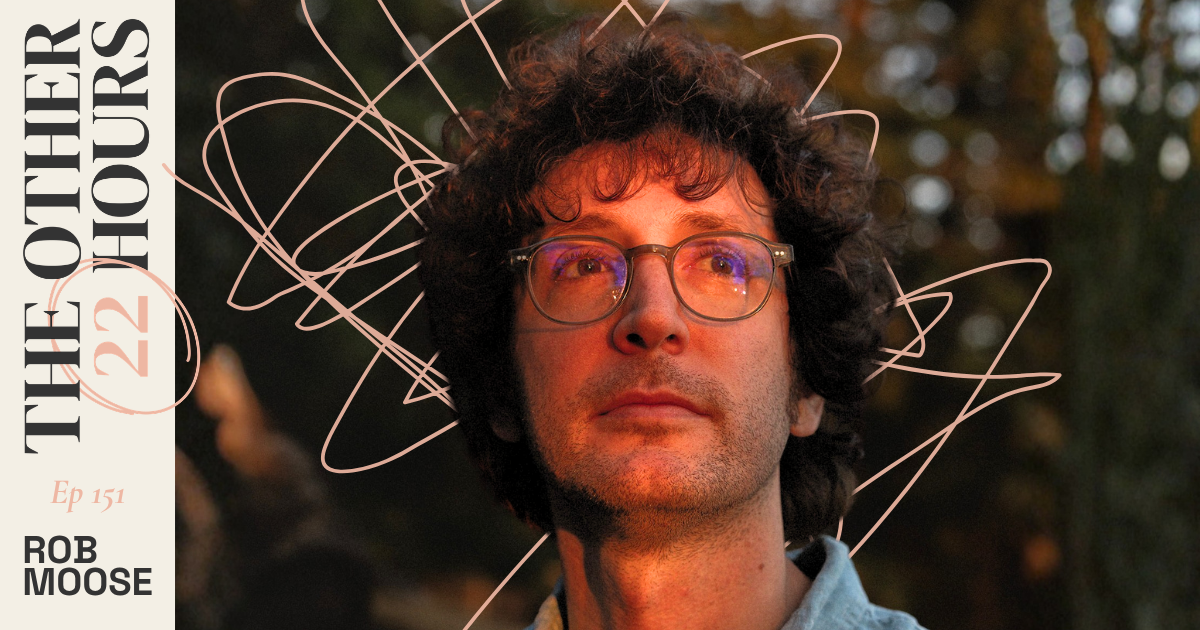
The Other 22 Hours: Rob Moose

Behind nearly every influential indie-rock and pop record of the last 15 years has been the brilliant mind and hand of string arranger and multi-instrumentalist Rob Moose. The three-time GRAMMY winner has contributed to thousands of records by the likes of Paul Simon, Taylor Swift, Phoebe Bridgers, Bon Iver, St. Vincent, Bruce Hornsby, and Mumford & Sons. In this calming, deeply reflective conversation on The Other 22 Hours, Rob opens up about “peaking” in the live touring industry, the transition to a studio-centric life, and how fatherhood has introduced a powerful focus into his creative process. It is an exploration of legacy, creative boundaries, and why sustaining a 20-year career ultimately comes down to treating music not as an athletic feat, but as a deeply human relationship.

LISTEN: APPLE • SPOTIFY • AMAZON • MP3

In This Episode:

Rob Moose
Manhattan School of Music
Columbia University
The New School
Interlochen Arts Academy
Nirvana
Bon Iver
SNL
Paul Simon
Madison Square Garden
Bowery Ballroom
The Artist’s Way – Julia Cameron
Nonesuch Record
Gabe Kahane

Go Deeper: 

Watch: View this entire conversation above or on YouTube.
Explore: Find similar conversations in these themed playlists.
Connect: Join the conversation on Instagram.

The Other 22 Hours is hosted by Aaron Shafer-Haiss (producer, mixer, musician) and Michaela Anne (songwriter, artist, creative coach). More about Aaron’s workMore about Michaela Anne’s work.


Produced by Aaron Shafer-Haiss. Original music written, performed and produced by Aaron Shafer-Haiss.

Photo Credit: Max Wanger

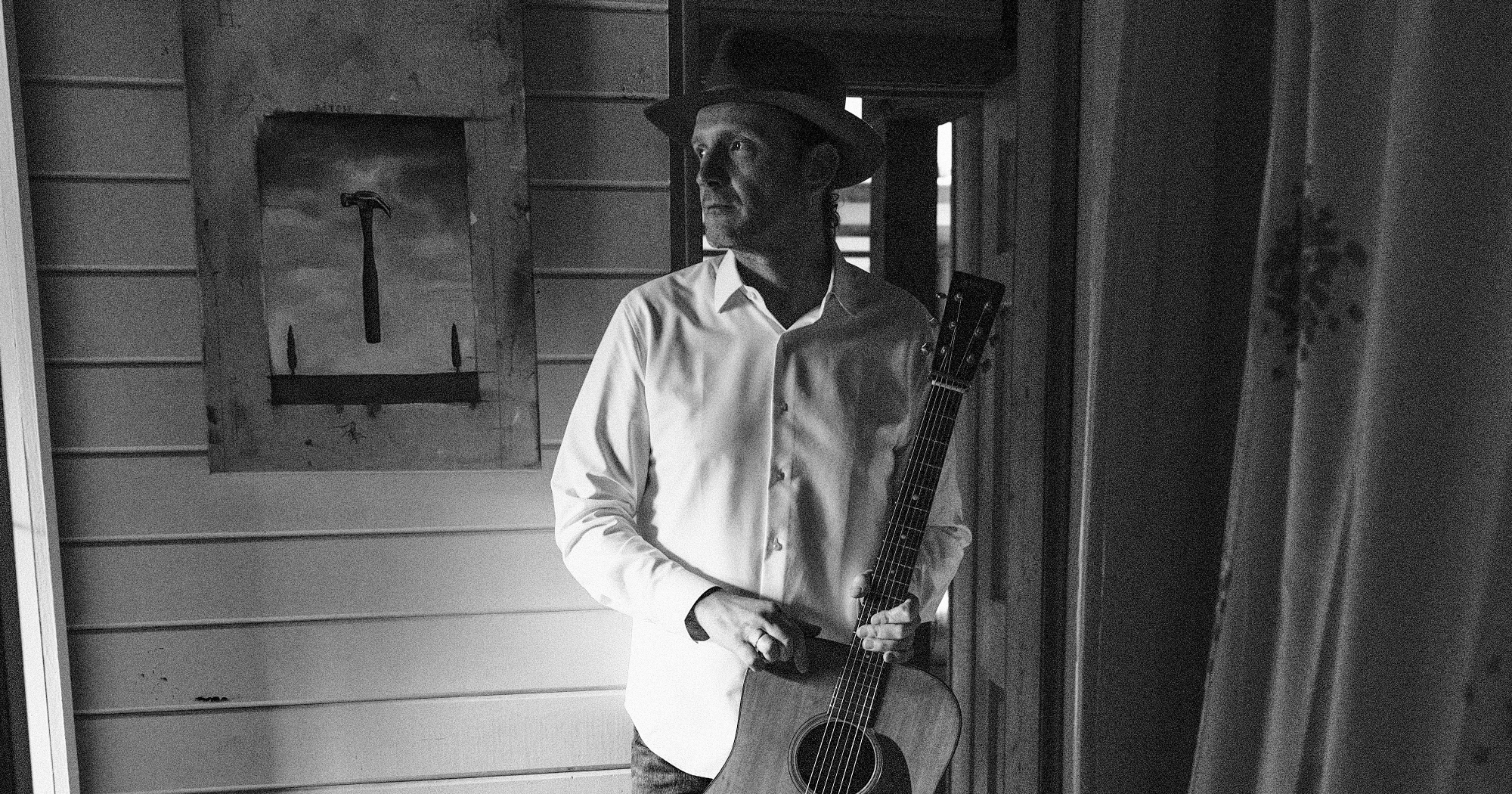
The Mythology and Alchemy of Thomm Jutz

Thomm Jutz has worked with a wide cast of characters since moving to Nashville in the early 2000s – John Prine, Nanci Griffith, Todd Snider, Billy Strings, and the SteelDrivers’ Tammy Rogers. But on his latest record, Ring-A-Bellin’, he strived to capture each song with the smallest musical unit possible.

The result of the 18-track album, released April 3, is a distinctly timeless vibe that feels just as much rooted to the present day as it does the mid-1900s or Civil War era, due to its recurring themes of history, mythology, and working with your hands. From self improvement (“Sharpen Your Knife”) to using natural disaster as a metaphor for perseverance (“Holy Mother Mountain”), the mastery that comes with time (“The Hammer And The Anvil”) and becoming more grounded in yourself (“Settle Me Down”), the GRAMMY-nominated transplant from Germany waxes philosophical and takes listeners back to a period long before we walked the Earth.

According to Jutz, the approach – recording with only a small group of people all in the same room not wearing headphones – is his way of replicating the process for how musicians would’ve recorded a century ago.

“This is how I want to make music right now,” he declares. “I don’t want to make a layered record – not because there’s anything wrong with that, it’s just not what I’m feeling at the moment. It’s like saying I don’t want to use red in my paintings right now, because I’ve used enough of it already.”

During a lengthy conversation with BGS at his Belmont office on Music Row, Jutz spoke about his concept of home, how psychology and mythology informed Ring-A-Bellin’, and a companion book that takes listeners even further into the world of his 18 new songs.

You’re releasing this album with a companion book. Tell me a little about what’s inside and why you decided to adopt this approach?

Thomm Jutz: It’s more and more important to create some kind of parallel narrative to the music nowadays. Vinyl has seen a resurgence over the last couple years, but it is not practical for me to take on my one trip to Europe every year. Because of that, I wanted to create something that was still a larger format, fun to hold, and had all the liner notes present without being something so small it’s hard to read.

I’ve also always enjoyed writing and reading – especially during my last 10 years as an instructor at Belmont – so I wanted to articulate some of those thoughts as they relate to the songs on this record in a longer form. When I got to working on it I quickly realized I was in over my head with the graphic design aspect of it, so I consulted my friend Gina Meredith. I just told her what I wanted artwork for and commissioned various folks to create pieces for each song. But rather than tell them what to make, I just sent them the music and had them use the songs as their creative prompts. Because of that I don’t always see the linear connection between the songs and the graphics that were made, but that’s also my favorite part.

A lot of my thoughts on this record revolve around analytic and Jungian psychology, alchemy and things like that, which are difficult to talk about in a tiny CD booklet, so I wanted to do something that allowed for a more longform format.

Overall, this record has a timeless feel – it could be (and is) from 2026, but if I didn’t know any better I wouldn’t second guess if someone told me it was from the mid-1900s or Civil War era as well, especially songs like “Sharpen Your Knife” and “The Hammer And The Anvil.” What are your thoughts on the vibe you were able to conjure up here?

I’m a traditionalist at heart, so everything I do is always trying to bring something new to the way I perceive what came before us, whether that’s lyrically, thematically, or in the recording process – which in this case was mostly all done live. I just think there tends to be more mystery with that music. There’s new music that does that too, but it’s easier for me to find that in old music because the cultural context can be studied since it’s not as close to my own lived experience. No matter how much I listen to or read about Charley Patton, I’ll never understand what he fully experienced because I was never there.

Regarding the songs you mentioned, both talk about people working with their hands, but they’re also metaphors for working on yourself – like you are the hammer, you are the anvil, you are the iron that’s being forged. Those mantras are rooted in human thought and analytical psychology, which is something I’ve dealt with and thought about a lot over the last 15 years. Particularly in terms of how mythology and history go together, and how understood the former is.

On one hand, some people think a myth is a lie and others say a myth is a fact, but both are wrong. A myth is a metaphor and must be understood as one. These songs are an effort to create a mythological framework that is a mirror image of my development as a person and artist. If you ever want to develop as an artist, you must develop as a person first.

With so much of this record wrapped up in concepts like history, psychology, and mythology, what’s the timeline for bringing the 18 songs on it to life?

These songs came from a period of about three years, but when I started I wasn’t setting out to make a record – I just wanted to experiment with a couple things. I had a few songs that I co-wrote with my friend Adam Wright that I wanted to test out with only me singing and playing and Mark Fain on bass. And it worked out really well. As I got fascinated with that process I began looking through my catalog and noticed that the songs which spoke to me the most were all ones that formed a narrative arc.

However, it’s not an autobiographical record that says, “I was born here,” “I did this,” and “This is how it made me feel.” But more so, one that explores spiritual development. I’m not interested in autobiographical songwriting. I find it very claustrophobic how you have to spell everything out to the listener. When you do that you’re shutting them out with nothing to do, which has me opting for a more open approach. A song is only ever truly finished when the listener interprets it for themselves, not with what the person who wrote it intended.

One of the songs on Ring-A-Bellin’ that is tied to more recent events is “Holy Mother Mountain,” which was inspired by the fallout of Hurricane Helene, specifically in Western North Carolina. But it’s also a metaphor for overcoming adversity. Care to explain?

That song is a good example of how writing with someone else – in this case Mando Saenz – can profoundly shape an idea. I remember Helene happening and having this line “Holy Mother Mountain” appear to me out of nowhere. From then on I couldn’t stop thinking about it, so I brought it to a writing session with him and said I didn’t know what to do with it. Then the co-writing dance ensued, with him taking the lead, followed by me for a bit, until it started becoming much clearer that there was no way to move forward without it being about Hurricane Helene somehow.

While it was inspired by that, the song is also about overcoming adversity and understanding that it’s going to happen again. Just because you live through Helene doesn’t mean there’s not another storm coming right behind it. If that storm showed us anything, it’s that perceived climate safety in Appalachia is not true. Also, “mother” and “mountain” are not just a nice alliteration, but there’s also a feminine quality about a mountain. An inverted mountain is a valley – or a place you can seek refuge in – and if you go on top of a mountain, you might find yourself closer to some kind of spiritual awareness.

The song is much more a collection of images that relate to the archetypal images of mother and mountain. Maybe even the word “holy” in the title has something to do with the fact of how little modernity treats nature with respect. Maybe that’s what we need to do – not bring offerings, but bring out attention to it instead of riding around and abusing it like crazy.

On “Too Many Walls” you sing about the idea of home. Given that you moved to the states 25 years ago from Germany, what is “home” to you?

Home and time are two of the biggest themes we write about, and it’s longing that connects the two – longing for home, longing to belong somewhere, longing to live in a different period of time, longing to get over something. Over the last couple years, I’ve also started thinking more about how strange a thing it is to build a house, because you’re just enclosing space that’s been there all along. You’re building and calling it something that wasn’t there before, but the land was always there. It’s a strange construct, and at the same time we need shelter.

From an early age I didn’t feel at home where I was because I longed for a place where music was part of the everyday lived experience. But in Germany after 1945 that was completely out of the picture, because the Nazi regime had completely and absurdly abused any sense of folklore. Since I was longing for an environment where people played music, I went to Ireland for the first time with my wife when I was 18 since it was much closer than coming [to the United States], which we couldn’t afford at the time. I was amazed by the music coming out of the pubs there – it felt so natural, like it was rising out of the Earth.

That fascination carried over into my love of American roots music. In that sense, “home” is where I feel connected to a place through music since that’s my main way of expressing myself. Additionally, southwestern Appalachia and the Black Forest that I’m from in Germany can look astonishingly similar sometimes, so when I go back to visit my parents I occasionally feel like I’m navigating the mountains around Johnson City, [Tennessee]. When I’m in Johnson City I sometimes imagine I’m back in Germany. But Appalachia has more importance to me now because it’s where I live and long to be. If it weren’t for all the writing I do in Nashville and my work at Belmont, I’d be in Appalachia fulltime, because it just speaks to me. When I haven’t been in a while I can start feeling something deep inside me – it’s not a heaviness, but a feeling of “I just really wanna fucking go.” [Laughs]

What has bringing this record to life taught you about yourself?

It’s taught me that I know nothing about graphic design and should always let someone else handle that instead. [Laughs]

In all seriousness, it has taught me that while I don’t consider myself a great singer, I can still enjoy the way I deliver a song if I do it correctly. It’s also taught me that while I have great deficiencies as a guitar player, I do enjoy the way I play guitar and this record, where I’m keenly aware of everything wrong with my playing. Even Tony Rice said that about his playing.

It’s not a sense of having completed my journey as a guitar player, but quite the opposite. It’s more like I’m aware of what’s missing. It’s also taught me that staying on the path of creating and writing a lot. You have to be in it for the long game in today’s environment and be doing it for the right reasons or you’ll run yourself ragged. I already understood that a little bit, but now I understand it even better. Maybe that’s what it’s all about – gaining a little awareness and moving on.


Photo Credit: Don VanCleave

Tenille Townes:
In Her Own Words

Editor’s Note: Earlier this month, we shared our exclusive Artist of the Month interview with Tenille Townes exploring the many factors and creative processes that brought about her excellent new album, The Acrobat.

That interview, with BGS contributor Alison Richter, included many more golden moments and special tidbits that ended up cut for length, so we’re excited to share portions of those edits here as a bonus follow-up to our feature conversation. Below, enjoy Townes’ insight, wisdom, and feelings about her songwriting methods, collaborating with Lori McKenna, trusting herself at the helm of her new album, and more.

And, continue exploring all of our Artist of the Month coverage of Tenille Townes – and our Essentials Playlist – right here, on Good Country and BGS.

Songwriting

I have a notes thing on my phone that I’m always picking at. I also have random voice notes in my phone from airplane windows. There’s something about the perspective of zooming out. I think about songs differently up there, so there’s plenty of voice memos of me singing into the window seat with the hum of the engine.

Songwriting is so interesting because it calls you to be present in the moment. When I’m more present, I notice songs around me anywhere. It’s the gift of paying attention. I push myself to keep working on that, striving to notice what’s happening around me and how I feel about it. That’s what inspires me to keep writing.

Working with Lori McKenna

I love Lori so much. Talk about somebody with lived experience, and also she has this way of completely disarming any sort of fear. Obviously she’s a legend. She’s a hero to me. She’s been that forever. When I first moved to Nashville, I saw her play a round at the Bluebird [Cafe] and I was like, “I want to write songs like that someday.” I dove into her whole catalog and learned so much from studying her work. There’s such vulnerability to her writing and there’s so much she isn’t afraid to say. She’s paved the way for so many writers. We’ve all learned from her.

I’ll never forget when we got to write for the first time. I was so nervous, but she made me feel at home and listened to and valued all the things. I had the best day. A lot of times people will say, “Be careful about meeting your heroes.” That could be the farthest thing from the truth about Lori. She’s over and beyond what you would expect. From that, we struck up a friendship and have gotten to write a ton of songs through the years.

She invited me to Boston and I got to spend a few days with her, writing in her music room. I loved every second of that trip. A lot of the songs on this record came from that time with the two of us together. She was always so encouraging about my work tapes. She was like, “You should really make a record of that someday.” So it’s full circle to me to have some of our songs together on this project.

It made sense to extend the invitation, in case she was up for singing on “the acrobat,” and she ever so graciously said yes. It was such a great experience getting to work on that with her. She starts singing as the fortune teller in the song. She enters around that line, which is such a timely entrance because she’s got this perspective of wisdom that comes from lived experience and from somebody who’s a complete master of the craft. I respect her so much, and I’m so glad to call her a friend.

The Work Tapes Were the Album

@tenilletownes anybody else feel this with me? This song is gonna be yours on Friday… thanks for pre-saving!! #newmusic #indiemusic #theacrobat #canadiancountrymusic #folkmusic ♬ original sound – Tenille Townes

I was maybe four or five songs in. Honestly, if I’d sat down at the beginning of it and gone, “I’m gonna produce a record,” I’m not sure I’d have ever started. I had so much fear and anxiety at that time – that plan never would have worked. But it’s like this record guided me along its way.

I got a few songs done and sent it to a producer friend I’ve worked with in the past. I was like, “This is something I’m excited about. Who should I get to mix this or would you want to maybe guide the rest?” He was like, “I don’t think you need anybody. You should see this through. This sounds wonderful. Just follow your gut and enjoy the ride.” That was so encouraging to hear in that pivotal moment. I kept going and I really enjoyed the process beyond that point.

I think I’m hardwired … in my family system and everything I was always the peacekeeper, and it’s in my nature to make sure everybody else is okay. It was really strengthening to not have to check on anybody else in this process and to trust my own compass again. I’m glad I gave myself permission to do that, but it was never the initial plan.

The Challenges of Self-Producing

Once I decided I was doing it, I had reached the part in my healing, my mental health journey, where I was starting to recognize that the imperfections of this project were actually where the magic was. I think the music guiding me [toward] that was a little bit of a spiritual letting go. That’s the practice.

One of the themes in this record is letting go. Even making it was a practice of that and going, “I could do that fifty more times and get it perfect, or I could accept that I think it sounds beautiful and human just like that,” and that’s what I did.

“she plays the piano”

This song is so special to me and it’s been a special one to me for years. I wrote it with Lori McKenna, Alex Stacey, and Amy Wadge over Zoom during the pandemic. I remember finishing it and going, “This song is so special. I don’t know when its moment is going to be,” because it wasn’t quite in the vibe of what I was releasing at that time. But I knew the song would tell me when it was time and I’m so glad the time is now.

The idea came from visiting my great-grandmother at her nursing home. She was there for close to 10 years and was on the Alzheimer’s and dementia ward. It was so tough, especially watching my grandmother. She went all the time, and watching her with her mom in that space was devastating. The fact that she didn’t recognize any of us or know where she was, that she was always time traveling, that was heartbreaking to have a front row seat to.

We went to visit and have lunch one day and there was this woman, this other patient, in the cafeteria. They had a keyboard, and at lunchtime she would sit and play this polka over and over. This sweet woman couldn’t tell us her name, she had no idea where she was, but she could play that polka like nobody’s business. She’d play the song and then glance around her shoulder and wait for us to clap. We’d cheer every time. It was like she played Carnegie Hall or something. We would applaud her and then she’d turn and face the piano and start the song over again.

I sat there, as a teenager, thinking how music can remember who we are even more than our mind can sometimes. That’s such a powerful thing. I’ll never forget witnessing that. I’ve wanted to write that song for a lot of years, so I’m glad it’s a part of this project. I think of that sweet woman and my great-grandmother every time I play it.


Want more? Dive into our Artist of the Month coverage of Tenille Townes here.

Photo Credit: Robert Chavers

Basic Folk: Mark Erelli & Joe Henry

Joe Henry has released 15 studio albums, apprenticed for legendary producer T Bone Burnett and, in turn, has produced many other musicians’ albums on his own, including three GRAMMY Award-winning albums – for Solomon Burke, Carolina Chocolate Drops, and Ramblin’ Jack Elliott. He’s co-written a few songs as well, including a couple with his sister-in-law, who happens to be the one and only legendary pop icon Madonna. His latest album is Life and Time, a collaboration with songwriter Mike Reid, who has written many wonderful songs like “I Can’t Make You Love Me,” one of Bonnie Raitt’s most successful and beloved recordings. In recent years, Joe has struck up a friendship with our bestie, Mark Erelli. Mark’s been on Basic Folk 10,000 times and in honor of his new record, Spring Green, we invited him to do whatever he wanted on this appearance on the pod. Mark chose to be in conversation with his friend Joe on location at Joe’s beautiful studio located north of Portland on the coast of Maine.

LISTEN: APPLE • SPOTIFY • AMAZON • MP3

In 2020, Mark was diagnosed with retinitis pigmentosa (or RP) which is causing him to slowly go blind. Joe was diagnosed with stage 4 prostate cancer in 2018 and was told he only had months to live. Now, in 2026, his cancer is in remission and his health has improved. In this Basic Folk conversation, they tackle topics such as asking for help and finding hope while living with chronic illnesses. They also get into other parallels the two musicians have experienced, including how music has shaped their male friendships and being free of vanity. Mark and Joe have never worked together, but their respect and admiration for the other is clear from their time together. Here’s hoping a collaboration is in the works for the near future!


Photo Credit: Joe Henry by David McClister; Mark Erelli by Joe Navas.

The Other 22 Hours: Butch Walker

Butch Walker has spent decades at the summit of the music industry, producing multi-platinum records for icons like Pink, Katy Perry, and Green Day while fronting his own high-energy solo tours. Yet, despite reaching that peak, he found himself “climbing the hill” so intently that he had forgotten to look at the view, leading to burnout and a desire to step back. In this episode of the Other 22 Hours, we explore the courage required to dismantle an ego-driven path in favor of a soul-driven one, and finding unbridled joy in the simple act of being a “sponge” for new inspiration.

LISTEN: APPLE • SPOTIFYAMAZONMP3

In This Episode:

– Butch Walker
– Marvelous 3
– John Legend
– Frank Zappa
– Train
– Taylor Swift
– Bad Bunny
– Kendrick Lamar
– Desmond Child

Go Deeper:

Watch: View this entire conversation on YouTube.
Explore: Find similar conversations in these themed playlists.
Connect: Join the conversation on Instagram.

The Other 22 Hours is hosted by Aaron Shafer-Haiss (producer, mixer, musician) and Michaela Anne (songwriter, artist, creative coach). More about Aaron’s work. More about Michaela Anne’s work.


Produced by Aaron Shafer-Haiss. Original music written, performed and produced by Aaron Shafer-Haiss.

Photo Credit: Rose Catherine Hohl

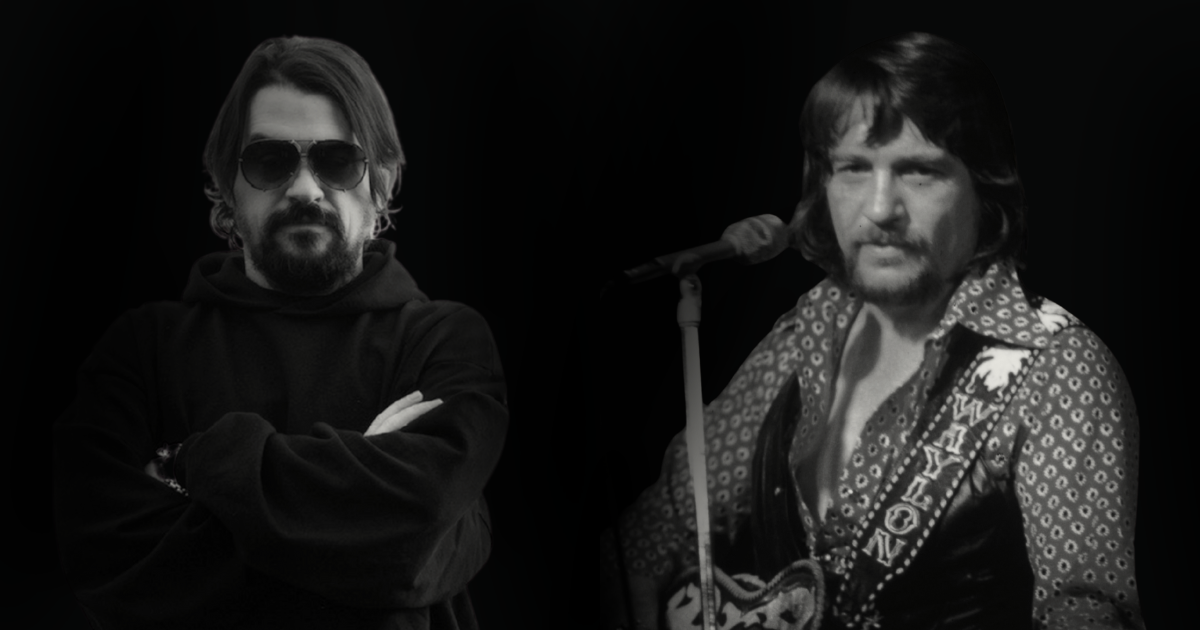
Shooter Jennings’ Heartfelt Tribute to His Legendary Father

Being the son or daughter of a legendary artist can often cause self-esteem and identity problems, especially if offspring choose their famous parent’s profession. But that clearly hasn’t been the case with Waylon Albright Jennings, much better known to music fans as “Shooter.”

The son of greats Waylon Jennings and Jessi Colter, Shooter Jennings has forged an impressive career as a singer, songwriter, instrumentalist, and producer covering over three decades, while displaying an idiomatic flexibility that’s seen him excel with both country and rock projects. Though he never uses the term “prodigy,” he was playing drums at five, taking piano lessons at eight, and sitting in with his father’s band on guitar at 14, while often spending time riding on his dad’s tour bus. Since then, he’s done an array of projects from heading bands to helming sessions, but he’s also always upheld a mantra of his father’s, which is stressing authenticity and passion in whatever he’s doing, writing, or playing.

Towards that end, Shooter’s newest venture both pays tribute to his famous father and reaffirms the musical values both have always championed. That’s the album Songbird (released October 3 via Son of Jessi/Thirty Tigers), which is the first of a planned posthumous trilogy of releases from the famed vocalist, who was one of the most distinctive and dominant voices to emerge in modern country during the ’70s and ’80s. Waylon’s landmark recordings, both as a solo artist and later in collaborations with Willie Nelson, Johnny Cash, Kris Kristofferson, Tompall Glaser and Jessi Colter, not only ushered in the “outlaw country” movement, they signaled a major step forward for artistic independence and creative freedom that resonated across the popular music spectrum.

Waylon Jennings was an innovative and vital figure not only as a performer, but as a personality. His voice and stature helped give gravitas to an otherwise forgettable TV show (The Dukes of Hazzard) and helped fuel a drive for authenticity within country. Still, despite that quest for freshness and originality, Waylon knew how to make hits. He had 16 number one tunes on Billboard‘s Hot Country Songs chart and 11 number one albums on Billboard‘s Top Country Albums chart during his amazing career, while always being a staunch advocate for his view of what constituted country.

Though Shooter has always called himself “an MTV kid who went down the rabbit hole with rock and roll,” he’s also long held a great reverence and respect for country. He began sorting through hundreds of his father’s personal studio recordings during the summer of 2024. Having just begun an exclusive residency at Hollywood’s historic Sunset Sound Studio 3 (which he redubbed “Snake Mountain”), Shooter began examining the tapes with veteran engineer Nate Haessly. Things moved quickly, his initial goal of finding previously lost Waylon songs he could share with the world morphing into instead deciding the best way to present what turned out to be a rich treasure trove of recordings. The material he was hearing was recorded between 1973 and 1984 and featured such guest stars as Tony Joe White and Jessi Colter.

“I started listening to this material last year and knew right away I had to put it out,” Shooter said during a recent phone interview with Good Country. “Once we began thinking about what we would put out there first, ‘Songbird’ just really kind of took over.

“Everyone that I played the song for heard it and they were really emotionally affected. Many broke out in tears the first time they heard it. It was an example of my father’s philosophy about doing songs from other people. Any song that he chose to record he would turn it into his own type of anthem. I really think that was the case with ‘Songbird,’” Shooter continued. “It gives the album a power and special flavor, and I’m really proud of everything on it.”

Songbird was released the first week of October, with Jennings’ evocative and stirring cover of the Fleetwood Mac tune its lead single. It debuted at number six on Billboard‘s Top Album Sales chart and it’s been in either the Top 10 or 20 on a host of other charts as well, representing the highest any Jennings LP has charted in 35 years. The 10-track release contains several other notable singles, most of them already previously complete. But on a couple of cuts, Shooter utilized the talents of surviving members of The Waylors, including guitarist Gordon Payne, bassist Jerry Bridges, keyboardist Barny Robertson, and backing vocalist Carter Robertson to add some spice. Elizabeth Cook and Ashley Monroe were also enlisted to help propel Songbird to new heights. Shooter mixed the songs in a purely analog fashion on Sunset Sound Studio 3’s custom 1976 DeMedio API mixing board.

Another song that’s quite appropriate in these times of extreme social conflict and division is Waylon’s version of Johnny Rodriguez’s “The Cowboy (Small Texas Town),” which finds him urging both cowboys and hippies to direct their ire away from each other and towards those causing greater structural harm to society. Additional recommended cuts include a sizzling Jennings version of Johnny Cash’s “After The Ball” and “I’d Like To Love You Baby” that features Jessi Colter.

Both “Wrong Road Again” and “I’m Gonna Lay Back With My Woman” are trademark Jennings numbers, while his version of Jesse Winchester’s “Brand New Tennessee Waltz” is also solid. The one criticism that some hardcore Waylon fans might make is Songbird doesn’t offer any previously unissued gems that he penned, feedback that Shooter’s been around long enough to anticipate. “What we went through and chose here were numbers that were made memorable through his treatments,” he continued.

“That’s something that my father always talked about and stressed, that whenever you do a song, make sure that you’re not just replicating something else, you’re making your own statement. That’s why Songbird has such an impact and that’s the case with everything on this album. These are songs that he loved from other people and wanted to perform and put his own stamp on them.”

Though born in Nashville, Shooter made the move to Los Angeles in 2001. Since then, he’s comfortably moved back and forth between rock and country. He’s had a mixed amount of success as a performer, cutting 11 albums and EPs in both genres. His biggest country hit came on the 2005 LP, Put The O Back in Country. That album’s lead single, “Fourth of July,” peaked at No. 22. The album version featured a cameo by George Jones, who sang the chorus to his signature song, “He Stopped Loving Her Today,” at the end. Unfortunately that was purged from the radio version, but Jones was credited on the Billboard charts.

The album also spotlighted Shooter’s then-new band, The .357s, which consisted of Leroy Powell on guitar, Bryan Keeling on drums, Ted Kamp on bass, Robby Turner on steel, and backing vocals by Bonnie Bramlett. Later that year his song “Busted in Baylor County” was featured in the 2005 film version of The Dukes of Hazzard. Furthermore, Jennings portrayed his father in the Johnny Cash biopic Walk The Line alongside Joaquin Phoenix and Reese Witherspoon. His rendition of his father’s song “I’m A Long Way From Home” was featured on the film’s soundtrack.

Still, Shooter’s greatest fame has come as a producer for a wealth of recordings. He was introduced to the studio as a child, his earliest exposure being inside Chips Moman’s studio in Nashville. His rock influences come through in his at times freewheeling use of studio technology that wasn’t in general use during his father’s heyday, but on any of his productions he’s never let the artist’s voice be overwhelmed by layers of excessive production or backdrop.

He’s been nominated for five GRAMMYs in that role and won two. A short list of memorable sessions he’s produced include such artists as Brandi Carlile (Best Americana Album GRAMMY), Tanya Tucker (Best Country Album GRAMMY), and American Aquarium, as well as Jessi Colter, Jamey Johnson, Jaime Wyatt, The White Buffalo, Hellbound Glory, The Mastersons, Julie Roberts, Kelsey Waldon, Yelawolf, Marilyn Manson, Jason Boland, Billy Don Burns, Avi Kaplan, Billy Ray Cyrus, and Angry Grandpa. Just this year alone, Shooter Jennings produced acclaimed releases by the Turnpike Troubadours, Charley Crockett, and Jake Owen.

When asked what he enjoys most or looks for in terms of production collaborations, Jennings says, “The people that I truly enjoy working with the most are the ones who have their own ideas of what they want to do, how they want to sound, or what they want to sing. Then they bring those ideas into the studio and we take it from there. I’m not really quite as good when it comes to just taking someone who doesn’t really have a sense of who they are and saying why don’t you try this or try that.

“With Charley [Crockett], for instance, that guy comes into the studio and he’s already got all these things together and we can just hit the road from there and take it forward. A guy like Duff [McKagan], who can just write their ass off, or a group like American Aquarium, I can get really excited. Brandi [Carlile] came to me and wanted me to work with her and that was a fantastic experience. But in general, if you’re someone who has their concept of what they want to do, then we can sit down and really make it work in the studio.”

Shooter also has amassed some good credits in the worlds of broadcasting, film, and television. As well as getting the chance to portray his father in the 2005 film Walk The Line, he has made celebrity appearances on television shows CSI, Marvel’s The Punisher, and American Revolutions, while also playing a gunslinger in the 2013 film The Other Life.

Back in 2009, Shooter participated in a CMT Crossroads session, paired with close friend and fellow musician Jamey Johnson. The evening’s set list consisted entirely of duets, including a cover of “Outlaw Shit” from the Waylon Forever album, two songs from Jennings’s discography – “God Bless Alabama” and “It Ain’t Easy” – and four songs from Johnson’s album That Lonesome Song including “High Cost Of Living,” “Mowing Down The Roses,” “Between Jennings and Jones,” and “In Color.”

Shooter cites Glenn Danzig and the band Oasis as folks that he hasn’t yet worked with whom he’d like to in the future. But right now, his main focus is on the two remaining Waylon Jennings posthumous recordings – though he’s not sure yet exactly when they will come out or what will be on them.

“One thing I can say for sure is that there’s a lot more great music coming,” Shooter concluded. “I was really amazed at how much great stuff is there, and I think the fans are going to really be thrilled when we get these next two out there. My father did a lot of great music before he passed, and we’re going to get as much of it out there as we can.”


Photos courtesy of Shooter Jennings.

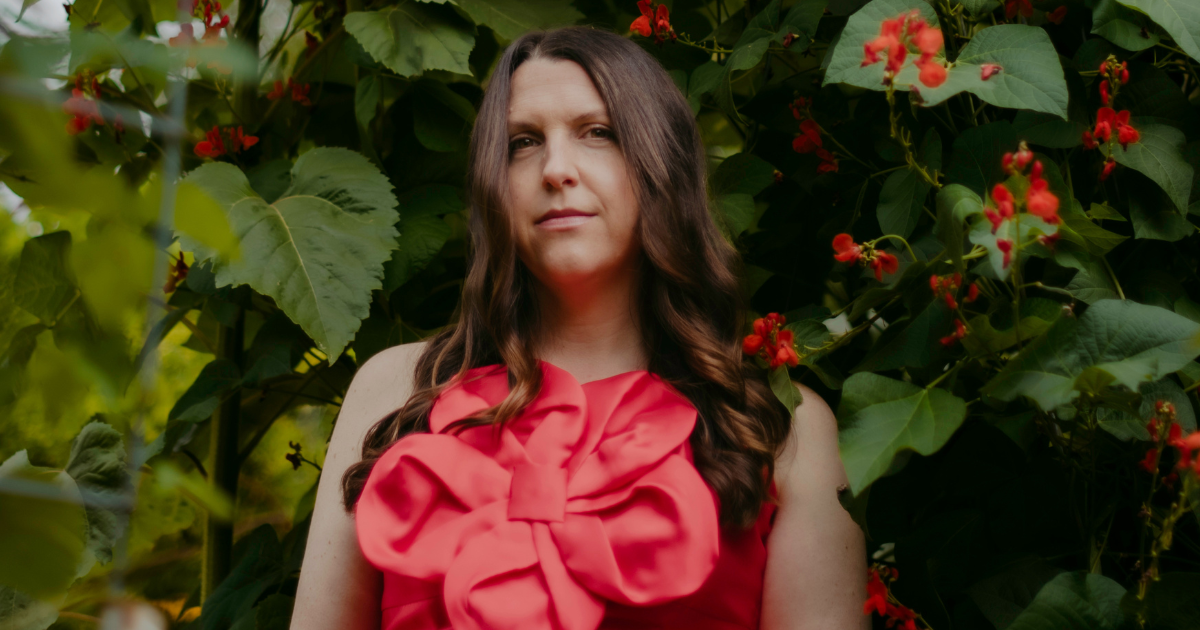
Caroline Spence in Conversation With Lori McKenna

Caroline Spence and Lori McKenna are both lauded for writing songs that cut straight to the heart. In conversation, it’s clear they also share admiration and a generosity of spirit, offering insight into how a life built around family can both coexist with and deepen a life in music. The two met with BGS via Zoom to discuss Spence’s new record, Heart Go Wild, produced by Peter Groenwald, Mark Campbell, and Spence herself.

As Spence charts her first year of motherhood, McKenna reflects on building a catalog of piercingly honest songs while raising five children of her own. Together, they explore the mysteries of publishing, the influence of mentors like Mary Gauthier, and the butterfly effect of one songwriter’s choices on another’s path.

Their exchange drifts from songwriting craft to the role of co-writers in self-discovery into the bigger questions of life: how family and creativity intertwine, how community ripples outward, and how songs become offerings that carry meaning long after they leave the writer’s hands.

What emerges is a portrait of two artists at different points along similar paths, each proving that family life and creative life are not competing forces, but intertwined sources of inspiration and strength.

I know you two have a lot to talk about, but I’d love to start, if we can, with how you know each other? Did you know of each other musically first, and then how did you come to know each other personally?

Lori McKenna: I think the first time we met might have been at breakfast that time?

Caroline Spence: Right. I think that was another Bluegrass Situation connection. I think that was the first time I met you.

I had a good friend from summer camp and we would often trade mixes. She put one of your songs on a CD for me. I had already found Patty Griffin and was having my singer-songwriter love affair. That led me to The Kitchen Tapes, which led me to everything else. And I distinctly remember when Faith Hill cut “Stealing Kisses” and I thought, “Wait, that’s how that works?” I didn’t know what publishing was. I didn’t know how music worked in that way and that became a new little baby dream of mine that I carried with me: to write a song that was good enough that maybe somebody else would want to sing it. I feel like I would not be aware of the job that I have had I not found you, Lori.

LM: That is really cool. I remember not knowing anything about publishing, how it works and all that stuff, too. And I still feel like I know just a tiny bit more.

CS: I know, totally. It’s still a mystery.

LM: We were at a wedding over the weekend and my son Chris, who’s a writer in town, has his first single that he co-wrote that’s going to radio. So we were singing songs and at the end of the night, my brother was like, “Chris sold the song!” I’m like, “It’s not called selling the song.” He’s like, “Well, how does it work?” Nobody knows.

CS: Yeah, nobody knows. They just stream it now into the abyss.

LM: The only reason I knew anything was because of Mary Gauthier. I did know people who had moved to Nashville before Mary, but because I’m in the Boston area, they came back saying, “Yep, it’s very different.” It is very different in Nashville. I didn’t know anyone who had stayed before Mary, you know? I love being inspired by other people. I love it that that’s how life works, that you see someone else do something, and you’re like, “Wait! I can do that! At least I can try!”

CS: I’ve been thinking about that a lot lately, the butterfly effect, and how that happens within our community. Like, if Mary hadn’t done this, then this wouldn’t have happened for you, and if you hadn’t done that, then I wouldn’t have known about this, and I’ve been thinking about that as I’ve been in this creative community for a decade now. There’s so much stuff that you never know your little ripple is doing.

LM: The ripple is such a good word. It’s such a ripple, isn’t it? It’s crazy. We’re really lucky. I know you just had a baby, but the number of people that come up to me and ask, “How did you do this with kids?” Nobody told me that I couldn’t. I know stories of other artists that someone’s told, “You can’t do this and have a family at the same time.” I’ve heard those stories, but nobody ever told me that.

It didn’t seem impossible at the time. But now my son Chris has a baby. I look at them and I’m like, “Wait, how does anybody do that ever? How does anybody have a baby?”

CS: Man, some days it really feels that way. Most days it feels that way. No one ever said that to me either, but those are absolutely the cultural messages you absorb. There are certain gigs I might not get because of my familial obligations, but you just make your choices. And I’m not building my life around what I “might get.” I want to build my life around what I know I want to have. I just feel like all of that is gonna feed your person. You can’t starve yourself of these big, beautiful growth opportunities for some sort of potential. My life is bigger than my career, and I would like it to be as big as possible.

LM: And it’s crazy, right?

CS: Yeah, it’s nuts. Absolutely nuts. The fact that I got a shower this morning is a big win.

LM: Well, that and the fact you’re putting a record out!

CS: Yeah, yeah, and the record!

LM: You did good.

CS: It’s a little bit cuckoo, but it’s been done for a while. A lot of the heavy lifting was done even before I was pregnant, so that was an accidentally smart idea and we’ve just had to be strategic about everything else. I feel like there’ll be a lot of people who assume this is a record about marriage and family, which it’s not. I’m sure I will have that, but this feels like a record that’s more about the chaos before I decided I could do all that.

LM: From the minute I knew who you were, I’ve always loved the way that you express your feelings in such a way that makes other people be like, “Oh! I’ve felt like that! This song makes me realize that I’m not alone in feeling that.”

There’s something in the way that you write that is like arms are reaching out, but they’re also like, “I know you feel this way, too and it’s okay that we all feel this way.” I feel like that’s why music exists. For someone pulling over their car and being like, “Oh my god, okay, I’m not gonna die today because I just heard the song!” It is the biggest reason, the service of songwriting, as Mary Gauthier says. You don’t do it consciously, but it just is your way of doing it. It just seems so innate in the way you write.

CS: That’s so kind and means a lot to me, because that’s really how I feel about it. It’s been a progression. I started writing because I needed to get these hard things out when I was a younger person and as I started putting those out there, I would have conversations where someone would say, “I feel that way, too.” That kind of cemented in me to keep writing from that place, because that’s what music did, and still does for me.

What is personal is universal. I feel like someone smart said that before I did, but it’s so true. And Mary’s perspective of songs as a service resonates so deeply with me. There’s a quote I read when I was doing The Artist Way a few years ago that says, “The artist has to be humble, for he is essentially a channel.” To let the divine in, whatever it is, to flow through you, you have to get small and get in your humanity.

And when I’m feeling really in my head and when I don’t want to perform or I’m feeling self-critical, I think about what I’m doing as an offering, and it makes me feel better and more inside what I’m trying to do.

LM: I love the offering.

CS: People want to feel understood. As a listener, you want to find your soundtrack for your hard time or your good time.

LM: Well, congratulations on doing all this, because the record’s beautiful, as usual. You co-produced this whole thing, right? Did you always co-produce? Because this record seems, and I hate to use the word “rockier,” but it feels like it moves a little bit more. Was that intentional?

CS: I think a lot of that might sort of be a songwriting change for me. I feel like I’ve gotten better at translating what I’m hearing into the actual thing, so I think that’s a skill I’ve slowly developed from my slow folk songs for years.

LM: The transition is so beautiful. With the song “Soft Animal,” if I wrote that song, it would be just the slowest. It wouldn’t move the way [it does].

CS: It totally started on the page, too. It was very much like a poem. Sometimes I sit down to a piece of writing, if I’m going through my ideas, and if something’s sort of dead on the page, I’ll just start playing. That one was one where it sort of just came out that way. The clash of “Soft Animal” to something that felt really thrashy, the irony of that felt celebratory to me, and it was fun. That’s one of my favorites production-wise on the record.

LM: Oh, that’s great. When I work with a producer, you can tell. You can listen to the record and know that this is definitely different. But there’s been this really consistent line with you the whole time, which is kind of remarkable when you think about how much you’ve changed in life and as a person over the years. There’s this vibe that really just comes through where you can tell that you are a big piece of the production of everything.

CS: Thank you for saying that. That was actually a dealbreaker thing for me for this record, that I would only work with people who would give me a production credit, because I felt like over the years – and not to discredit the people who are credited as producers on my albums – but because of who they are as producers, it was collaborative, and there were times when I was making sure that my vision got to the finish line in spite of their initial instincts. I didn’t know it mattered to me until maybe I’d read some press that would bring that person’s name into it and it made me feel a certain way.

Producers are important because I think it’s really helpful to get outside of yourself and your own instincts, and to be challenged. But sometimes what’s helpful is to be challenged, and then you know exactly how firmly you feel about something.

For this record, I really wanted to know that it was collaborative from the jump. That felt incredible, and I worked with two people who had the best energy and a healthy sense of ego, and it was just really fun.

LM: That’s awesome. You come through. I’m exactly the opposite, because I can’t stand being in the studio.

CS: I understand that as well.

LM: I don’t know how you do it, because I literally only hear the song and what it sounds like when I sit at my kitchen table and sing it. People kept telling me over the years that I’d start to hear parts. So I am a person who needs producers… I’m just like, “Here are the songs.”

CS: Yeah, I’ve done that so many times, I’ve given a pile of songs and been like, “I don’t know what I made. What’s speaking to you?”

LM: Well, this morning I was listening to the album again, and I thought, “Oh, she’s gonna produce other people’s records someday.”

CS: That’s very kind and, honestly, a thought I hadn’t really had for myself, but I really did enjoy it. I think if I ever do that, it’s gonna be because of the experience I just had with these people that built up my confidence in that space. It was a lot of fun.

LM: You have this beautiful voice. I have an unpretty voice and you have a very pretty voice that you know how to use really well. You can say the hard things with that beautifully well-orchestrated production and then your beautiful voice, and it still makes you feel all the feels, versus I always feel like no matter what I sing, it’s gonna sound sad.

CS: I feel like a lot of the time I try to be like, “I’m not so sweet,” and grit up the production or avoid certain songs. I was self-conscious about it, which I think may be some internalized misogyny, because I have such a high female voice.

Speaking of songs being of service, babies and children come out singing, you know? It’s such a natural thing to do. We’re meant to do it. It’s joyous; it’s a release. And knowing the way it feels in my body to perform or really sing has changed the way I perceive my own voice.

LM: It is the first thing anybody knows how to do.

CS: Your voice has this wisdom to it. It kind of doesn’t matter what you’re singing; it sounds like you believe what you’re saying and you trust what you’re saying. You have this earnestness to your voice. If you were singing “Red Solo Cup” I’d be like, “That song means a lot to me.”

LM: I actually was at a round at the Bluebird [Cafe] with the Warren Brothers a couple of weeks ago, and they sang “Red Solo Cup.” I am so jealous of songs like that, because I could never write them.

In terms of writing for you, how have things changed since the baby?

CS: I haven’t had the same amount of headspace. My publisher held a sync camp and my mom came to town to help. I wrote for days straight and that felt really good to get back at it. As far as writing by myself, that’s just now kind of coming back.

LM: Is your son enjoying you playing the guitar?

CS: It’s a pacifying thing. I could put him in his playpen if I want to and mess around on guitar, and he’s super happy to listen. The other day, I was practicing for this Springsteen cover night that I got asked to do and I just started kind of riffing around. The flow started and that felt really good. I was like, “Oh, okay, it’s still in there.” I just hadn’t had the circumstances to put myself in the position where I’m visited by that energy. Being in creative spaces with others has been really nice right now, too, to slowly rebuild.

LM: When my kids were little, I actually wrote a lot. They all shared a bedroom and, after dinner, my husband would work on the house while I tried to sing them songs – sometimes terrible ones – or make up songs while they fell asleep. That routine gave me more time to write than I expected.

Two of my kids are songwriters now, though at the time they probably went to sleep just to get away from me singing the same line over and over. But honestly, if I hadn’t had that hour and a half every night with them, I don’t think I would have learned how to write. I wasn’t planning to be a musician. My children gave me the time and space to discover that.

By the time I had five kids, I started doing open mics. I never would have had the courage to get up there if I didn’t have my kids. They were my world, so if people didn’t like what I did on stage, I could always just go home and sing in the living room with them. That gave me the confidence to try.

CS: That balance is so important and it’s hard to reverse-engineer for people. If you move somewhere completely career-focused, you can get lost in that and miss the balance of family and partnership. I feel like any sense of longevity in life or career needs that.

For me, I’ve realized that to be a happy, well-rounded person – good partner, good friend – I need a rich family and personal life. Otherwise, my career just eats me alive. I think the reason you’ve been able to sustain your career and create a catalog of songs full of humanity is that you’ve always had that balance.

LM: Exactly. And it’s not just a woman’s thing. I know men who do it, too. But when you put family first, you have to say no to some things. You can’t always do that week-long tour, for example. But the things you say no to fade away; you don’t remember them. You only remember what you did. Instead, you stayed home and sat in the backyard with your kids and that’s the summer you wrote that one song that you’re still singing years later.

Love is supposed to be the thing you surrender to. It just opens up the universe wider. I’ve seen it happen again and again; even songwriters who know exactly what they want in their twenties, after falling in love or having a child, the world opens up in new ways.

CS: That’s making me emotional. That’s exactly where I am right now. I feel like my life is starting in a really good way. My career feels like it is starting over again. It is making me recalibrate how I want to show up in the world. And it’s freeing to have my compass aligned around my family. It feels like a new beginning. It’s really beautiful.

LM: That’s exactly it. Parenthood gives you a stream of love you hadn’t experienced before and it changes everything creatively. For me, it didn’t really happen until my fifth child, but it always happens. The universe shows up when you do something hard, like having a baby. I remember putting out a record in May, right around the birth of my son, David. By Thanksgiving, I had Faith Hill cuts. It’s like the universe says, “We should remind her that she gets to keep doing this.”

CS: That really resonates.

LM: I always listen to the last song on a record first.

CS: I love that because some of my favorite songs on your records are the last songs.

LM: When I heard “Where the Light Gets Through,” that song is such an offering, such a service. I don’t know if you want to talk about where that song came from, but years from now you are still going to have people tapping you on the shoulder saying “thank you” for that song.

CS: We’d made the record basically and we couldn’t figure out the last one. I said to the producers, “What if we write this one together?” Mark and Peter started building the track. I was going through ideas and I’d been writing a lot about my brother-in-law’s passing away. It just so happened that something I’d written fit almost exactly word for word and we shaped it from there. It couldn’t have just been me on that record, because it needed to feel lighter than I wanted it to.

LM: I know exactly what you are talking about. That’s why I love co-writing. You get perspectives that you could never create alone. Sometimes you can’t do it by yourself, and the song only exists because of that.

I’ve had that experience with Liz [Rose] and Hillary [Lindsey]. I had a song I’d been trying to write for a month by myself and I was so mad I couldn’t. I showed it to them and Liz was writing and singing it immediately. Hillary was like, “Do you know this song?”

CS: Do you feel like that is possible because you know each other so well that they can meet you where your brain is?

LM: Absolutely. And that’s another thing I love about co-writing. You fall in love with each other so quickly in the room. And when you trust yourself with someone, you can say the dumbest thing and it might turn into the smartest thing. I rarely sit with someone who doesn’t make me feel like I can speak my mind. With Liz and Hillary, Liz can read my mind and Hillary is like a musical and emotional genius. They both are.

Parenthood also gives you that focus. You don’t have all the time in the world, so you go straight to the point.

CS: I’ve heard many parents say they become more productive because they have to think differently about time and energy. I feel that now, with my baby being a little more self-sufficient.

LM: Exactly. And think of all the things you can do since having a kid! You weren’t opening drawers with your feet before, were you! Well, I love what you do, and I was genuinely happy when I heard you were pregnant. It’s a good thing for artists to step into family life.

CS: There’s a class of women my age choosing to have families now, balancing careers – it feels like a statement in all the best ways.

LM: Parenthood changes your perspective. You look back and wonder how you managed everything, but the flow and the creative life meet you there. You make the things you have to make because that’s what we’re here for.

CS: Man, there’s a lot of stuff I needed to hear today that you just spouted out. Thank you for spending time with this record.

LM: Congratulations. The record is so good. I hope the biggest challenge with it is all the things you have to say no to.

CS: And I won’t remember them, like you said.


Explore more of our Artist of the Month content on Caroline Spence here.

Photo Credit: Caroline Walker Evans

Basic Folk: Maya de Vitry, Ethan Jodziewicz, Joel Timmons, Shelby Means

Maya de Vitry, Ethan Jodziewicz, Joel Timmons, and Shelby Means are on Basic Folk today talking about their new collaborations. Maya produced both Shelby and Joel’s debut solo albums this year; Joel and Ethan play in Maya’s band; and the two couples (Joel & Shelby are married and Ethan & Maya are partners) are all very close friends. They met in Nashville, where Maya & Ethan still live, while Joel & Shelby live in Charleston, South Carolina. Joel talks about the huge gesture Shelby made in leaving Nashville behind for his hometown of Charleston. He also talks about the elated feeling they both got when Shelby, who also used to tour with Della Mae, got the chance to play upright as a member of Molly Tuttle & Golden Highway.

LISTEN: APPLE • SPOTIFY • AMAZON • MP3

Big themes of this friend group include trust, lifting each other up, and being one another’s “vibe coaches.” In our conversation we talk about choosing love, connecting with your music friends in non-musical ways, and, of course, the most epic hair in Americana: Joel Timmons and his mullet. The group shares insights on how they are still close and able to connect and spend time with each other despite the distance. Short flights and drives are worth it when you’ve got friends like this.


Photo Credit: Shelby Means by Hunter McRae Photography; Ethan Jodziewicz by Joel Timmons; Joel Timmons by Scott Simontacchi; Maya de Vitry by Kaitlyn Raitz.

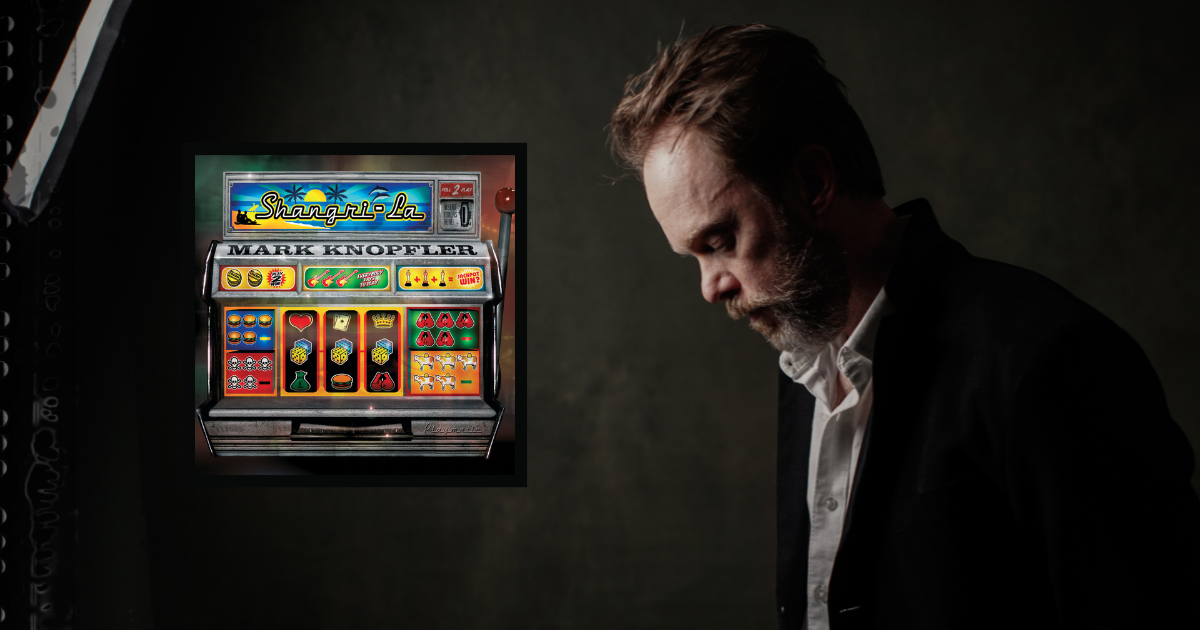
Mark Knopfler’s ‘Shangri-La’ Rearranged Adam Wright’s Artistic DNA

(Editor’s Note: No Skips is a brand new feature from BGS that asks artists, songwriters, musicians, and industry professionals what albums they regard as perfect, with every track a masterpiece – i.e., No Skips!

For the first edition of the column, songwriter-artist-musician Adam Wright highlights Mark Knopfler’s seminal album, Shangri-La, as we look ahead to Wright’s own upcoming project, Nature of Necessity, coming later this year.)

There are only a few times in your creative life when someone’s work hits you so hard it rearranges your artistic DNA. I could probably count those moments for me on one hand.

Shangri-La was a big one. It told me that you can write away from the outside understanding of things. That you can start from the inside of your own knowledge and continue inward. It also taught me that you can write about anything you find interesting. That being understood is not as important as whether or not you’ve put something down worthy of working out for whomever decides to try to understand it. And that there are so many things to write about that are not falling in and out of love. (People probably could have stopped writing love songs in 1950 and we still would have too many.)

The depth and perspective of the storytelling, the crafted excellence of the writing and the sublimely tasteful musicianship make it, to me, Knopfler’s masterpiece. He’s done this on all of his albums, they all include brilliant gems of songs, but Shangri-La is just perfection from top to bottom. – Adam Wright

“5:15 AM” (Track 1)

Like all of the songs on this album, “5:15 AM” is exquisitely written and recorded. It is the story of a coal miner on his way home from the night shift discovering a murder victim who turns out to be involved with organized crime. It is chock-full of lingo and references to specifics about gambling machines, nightclubs, and lots of mining terms. The way Mark weaves all of this language into lyricism and brings it back to the tragic lives of the coal miners at the end is exceptional and beautiful writing. The recording is gorgeous and still somehow earthy as dirt. Just a masterclass in songcraft.

“Boom, Like That” (Track 2)

“Boom, Like That” is about the rise of Ray Kroc from a milkshake salesman to a fast food emperor. Like “5:15 AM,” there are plenty of specific references in this one. “Going to San Bernardino, ring a ding ding. Milkshake mixes, that’s my thing now.” You’re in the middle of the beginning of a story right off the bat. I love songs from the character’s perspective and few writers do that as well as Knopfler.

The movie The Founder was filmed in my hometown of Newnan, Georgia. I noticed the town when I saw it, so I looked it up and read a bit about the filming. While the song was inspired by the book about Kroc, I’d read the movie was actually inspired by the song. Even if the song weren’t so well-written, the riff at the end of the chorus is enough to keep any guitar player happily busy for days.

“All That Matters” (Track 11)

Much of Shangri-La is written from the perspective of the characters in its songs. The title track and “All That Matters” seem to be more personal. “All That Matters” is just a sweet, simple song from a father to his children. Again, beautifully written and pretty as porcelain. It has some surprising chordal and melodic turns in the B section to juxtapose the nursery rhymey-ness of the verses. Just perfect. And a nice respite from the mostly cynical tone of much of the album.

“Stand Up Guy” (Track 12)

“Brew the coffee in a bucket/ Double straight man and banjo/ If you don’t got the snake oil/ Buster, you don’t got a show.”

Again, you’re right smack dab in the middle of someone’s story. This time it’s a musician in a group of traveling, Victorian-era pitchmen. They apparently have teamed up with “the Doctor” who peddles snake oil medicine to townspeople and does it well enough to keep them fed on beefsteak and whiskey. Just wonderfully interesting, both lyrically and musically.

If you wanted to become a very good songwriter (or musician or producer, for that matter), you could only study Shangri-La for years and get a very long way toward the goal. I’ve been mining this album for inspiration for twenty years. It always gives me something more.


Photo Credit: Jo Lopez

Basic Folk: Gary Louris

(Editor’s Note: This special episode of Basic Folk featuring Gary Louris is guest-hosted by singer-songwriter and friend of the podcast Mark Erelli.)

You probably know Gary Louris as the leader of The Jayhawks – or as they refer to themselves, “a band from Minnesota.” The Jayhawks are pioneers of roots rock, alt-country, and Americana. Whatever you wanna call it, they’ve been making records where rock, pop, country, and other forms of American roots music overlap since the mid-1980s.

But Louris’s hidden superpower is that he’s kind of like a musical Swiss Army knife – he’s basically got a creative skill for any application. Want him and his band to serve as accompanists for some of the most distinctive singer-songwriters, like Wesley Stage and Joe Henry? He can do that. Looking for achingly perfect, near-fraternal harmonies on hit songs like Counting Crows’ “Mr. Jones”? He can (and did) do that. If you’re Tedeschi Trucks Band or The Chicks and looking for someone to write you some catchy, melodic, roots-pop songs? Gary’s your guy. If that’s not enough, he has also produced records for artists like Dar Williams, The Sadies, and The Jayhawks, too. Whatever your musical need may be, chances are that Gary Louris can do it.

LISTEN: APPLE • SPOTIFY • AMAZON • MP3

In between all these varied musical roles, Louris has also found time to release several solo albums, the newest of which – Dark Country – was released earlier this month. He recorded it mostly solo in his home studio and the word on the street is that this collection of songs, inspired by his wife, is his most intimate and romantic album yet. I’ve been a big fan of Gary Louris for basically my entire adult life and enjoyed our wide-ranging Basic Folk conversation, touching on the way technical limitations can shape an artist’s style, what he’s learned from a career’s worth of collaborations, his process working on his new solo album, the relationship between versatility and longevity, and what the influence of romance on his songwriting looks like now, in the fifth decade of his music career.


Listen to Mark Erelli guest on Basic Folk here.

Photo Credit: Steve Cohen