Caleb Caudle, ‘Love That’s Wild’

It’s a new year and, thus, time for renewal: an action which manifests itself in most of us as a set of empty promises that we’ll make, and then break, as the months progress. Drink less or, at least, just have a glass of red wine instead of those tequilas. Exercise more, at least three times a week. Try for a raise or a new project. Speak up on the job. Stop biting your nails. Do more this, do less that. Resolve to have resolve.

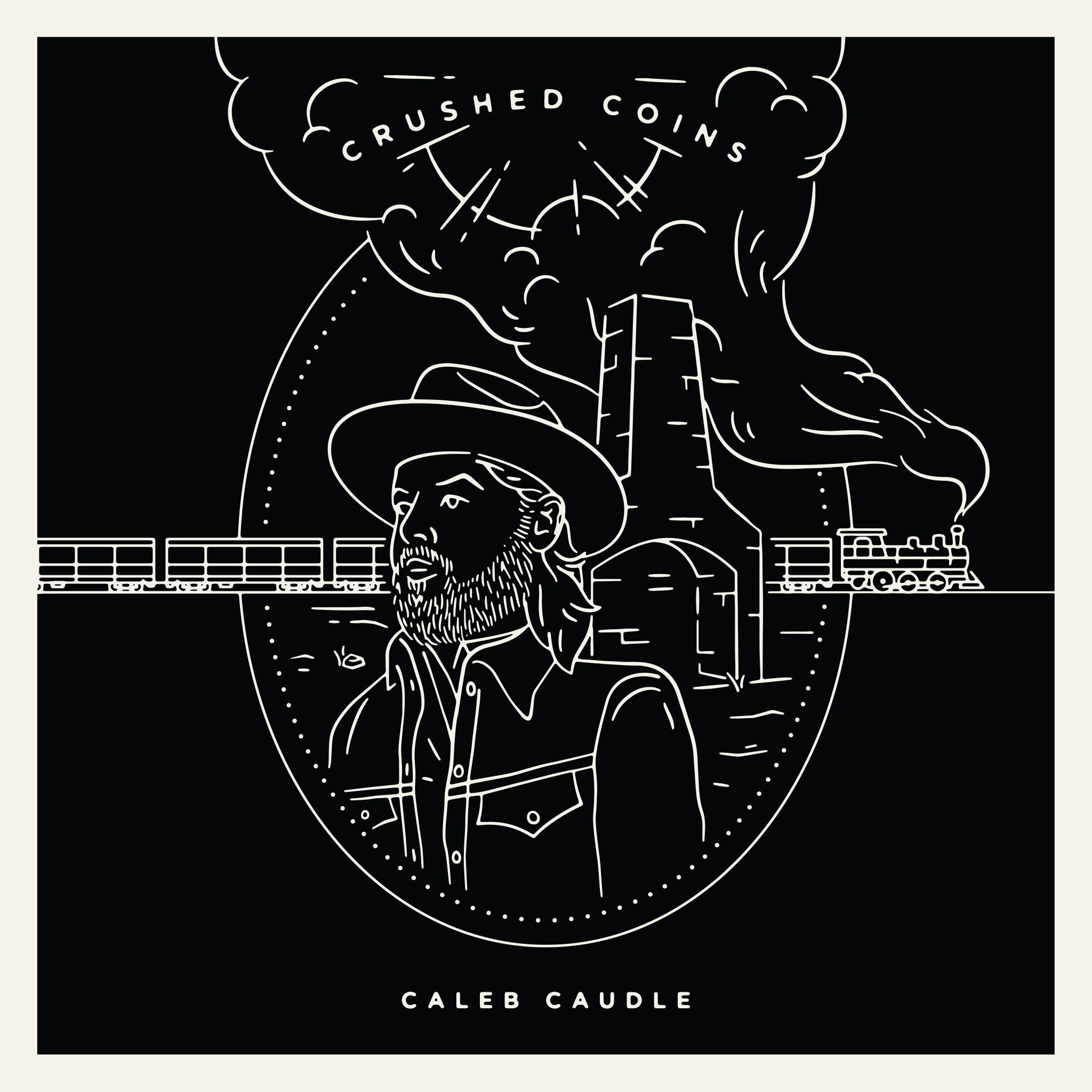
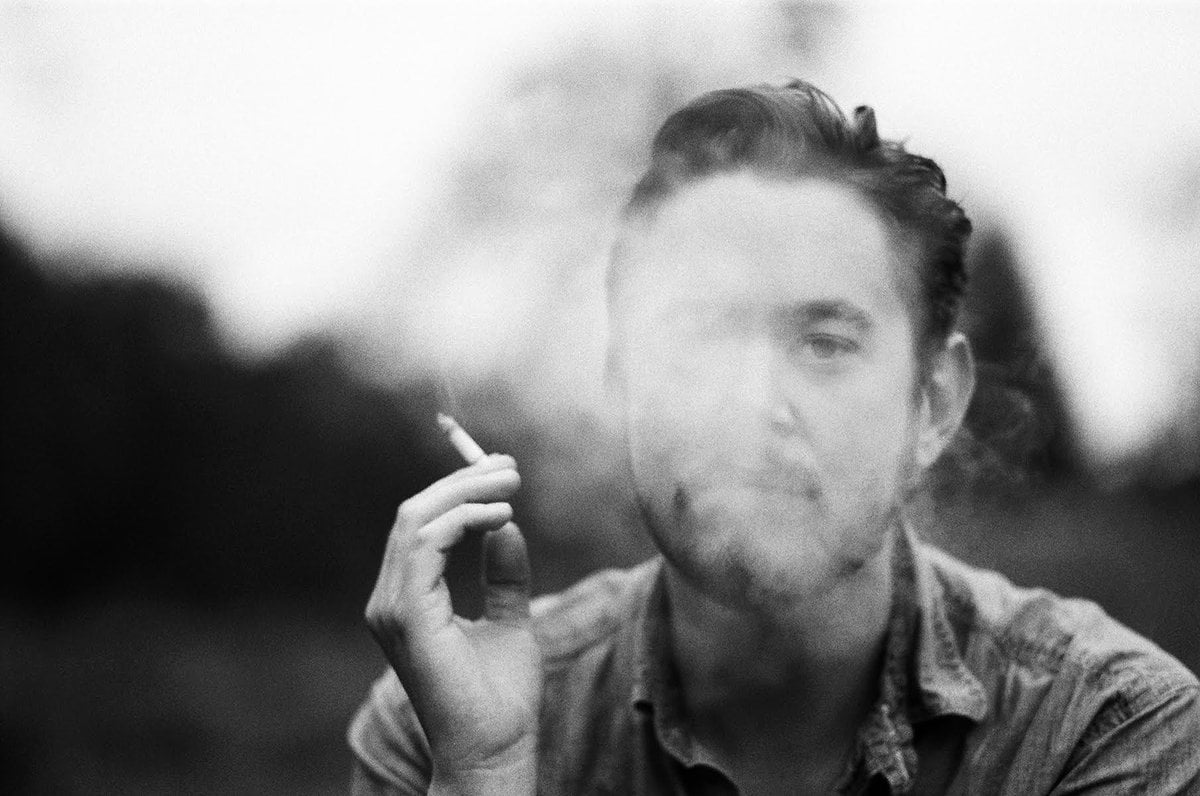
Caleb Caudle’s not making resolutions for just one year on “Love That’s Wild,” from his forthcoming LP, Crushed Coins. Instead, he’s casting a humble promise for eternity — and that’s to love the one you’re with, and do it well. Caudle has a knack for simple melodies as much as he does unusual arrangements, and here he rests his sweet, casual delivery on an understated but infectiously captivating ode to romance. “I was a wreck ’til you came along, stumbling home at the break of dawn,” sings Caudle to a jangly rhythm. “Now we fall asleep with all the lights on.” A wild love doesn’t have to be unpredictable and uncertain; love can be wildly fulfilling when it’s permanent and secure, too. So maybe don’t give up the carbs this new year, and resolve to gamble on a love that’s wild, instead.

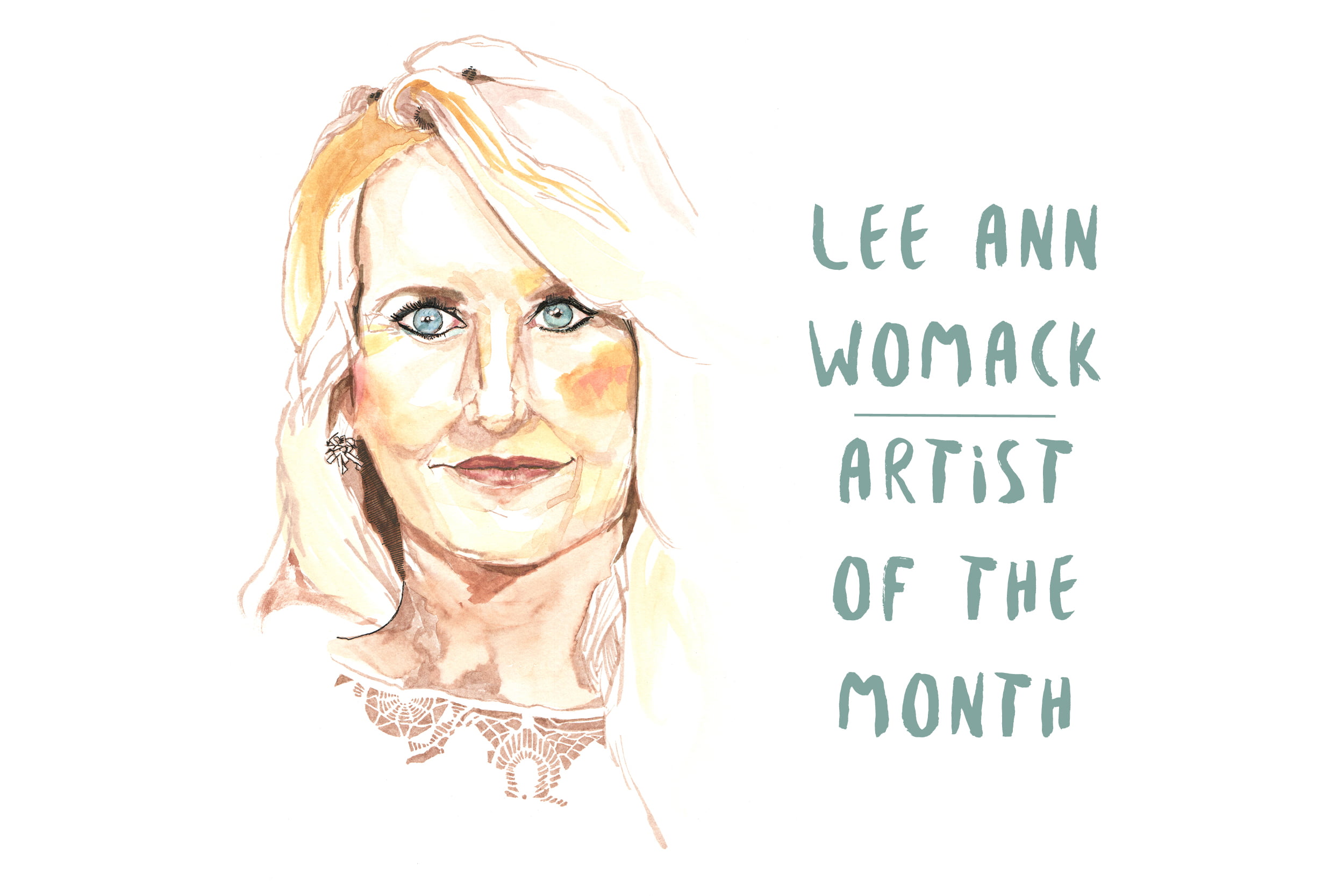
Lee Ann Womack: Keeping it Real

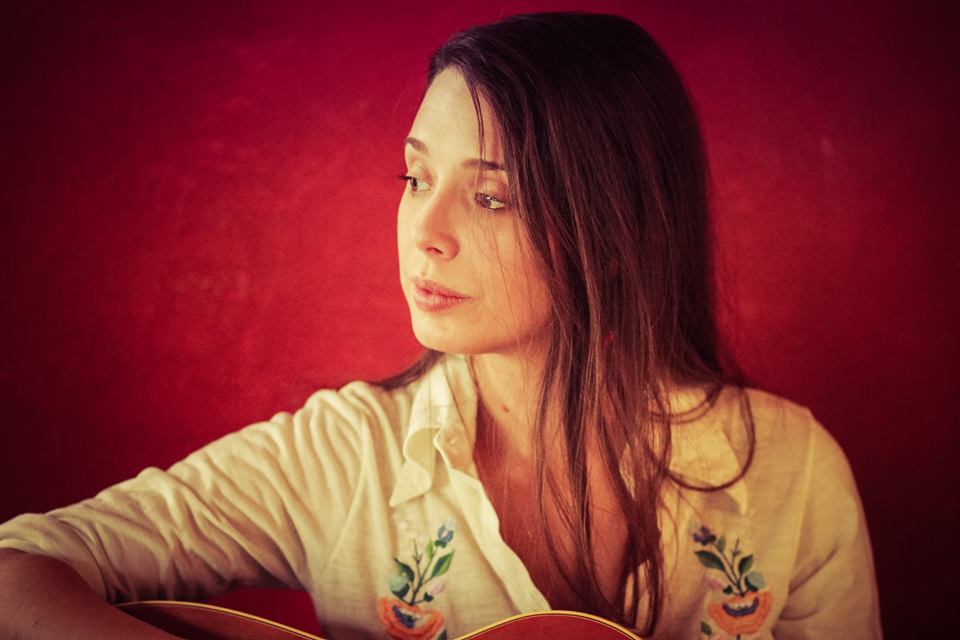
Lee Ann Womack had to get out of Nashville to make what she calls a real country music record. Specifically, she had to get about 800 miles away. For her eighth — and maybe her best — album, The Lonely, the Lonesome & the Gone, Womack trekked down to Houston, Texas, and set up camp at the historic SugarHill Studio, which has hosted famed sessions by some of her musical heroes: Lightnin’ Hopkins, the Sir Douglas Quintet, George Jones, and many others. Nashville has plenty of similarly legendary rooms, of course, but Womack needed to get away from the grinding gears of the country music machine — what she derides as “McRecords.”

“It’s like a factory,” she says. “What was great about being down there in Texas is that you’re in a studio where people go to work everyday and you have all kinds of music being recorded there. Nobody’s going in thinking, ‘We’ve got to lay down a three-minute uptempo love song for radio.’ They’re not thinking about how we’re going to make the most money out of three minutes of music. All they’re thinking about is going in and making great music.”

Womack is one of the few artists who can drop a phrase like “real country music” into conversation without sounding defensive, dismissive, or derisive — in other words, without buying into received notions of authenticity. Her definition of “real” is deeply personal and based on the country music that was popular 40 or 50 or even 60 years ago, but Lonely proves that even old tunes and old sounds can speak to this modern moment. Rather than restrictive, the term becomes freeing: These new songs range from the stately countrypolitan of “Hollywood” to the gritty blues of “All the Trouble,” from the beautiful reimagining of the 1959 Lefty Frizzell “Long Black Veil” to the remarkable insights of the title track, a country song about country songs.

Recording in Houston actually brought her closer to some of her Nashville heroes. Womack grew up in a small town called Jacksonville, Texas, about three hours due north of Houston. Her father was a country radio DJ, a profession that provided his daughter with a deep grounding in the music’s history. As a child, she loved Bob Wills & His Texas Playboys. “I thought he was funny. The music was upbeat and bouncy, which any kid would like, and then you’ve got this guy talking all over the tracks: [Imitating Wills’ falsetto] ‘Shoot low, sheriff! I think he’s riding a Shetland!’” She might have been laughing at the bandleader’s antics, but she was subconsciously absorbing the complex horns and fiddles. “It becomes part of the fabric of your musical DNA.”

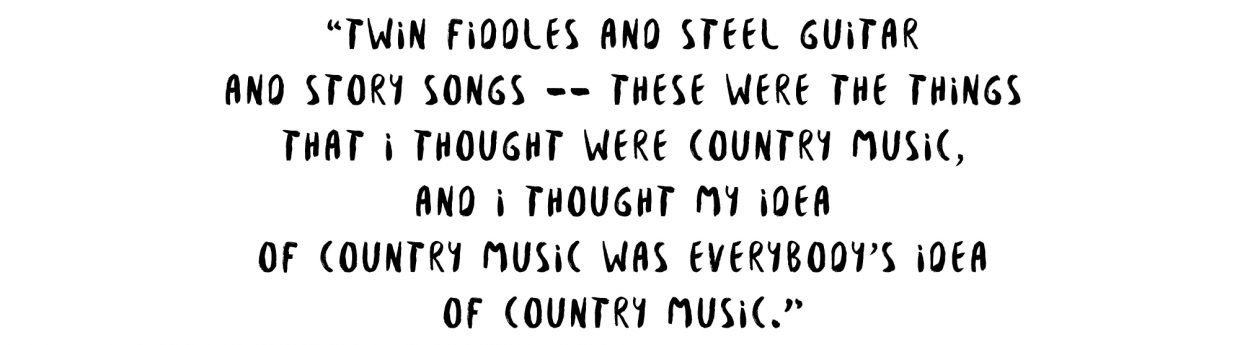
As she grew up, Womack raided her parents’ record collection, which was full of albums by Ray Price, George Jones, Porter Waggoner, Dolly Parton, and, of course, Willie Nelson. “Twin fiddles and steel guitar and story songs — these were the things that I thought were country music, and I thought my idea of country music was everybody’s idea of country music.” Ironically, being in Nashville only distanced Womack from her first loves. “Growing up in East Texas, I was full of dreams and hope. Then I moved to Nashville and, after 20 years, you get kind of jaded. Things change,” she says. “Every time I go back home, I have a spark of that feeling I had growing up. I wanted that again. I haven’t made a record in that frame of mind in so long. I just wanted to be surrounded again by the things that shaped me growing up.”

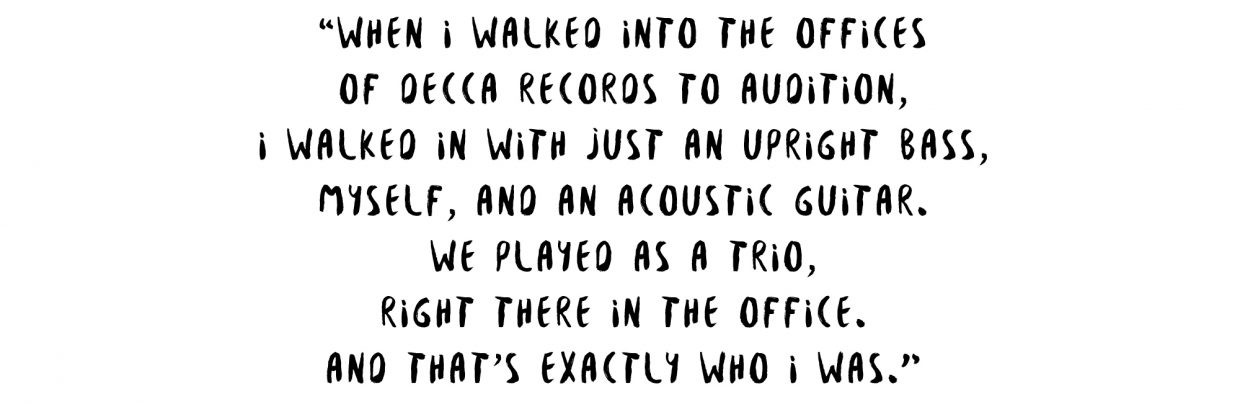
All of those old sounds inform the new record, which was produced by her husband, Frank Liddell, and finds Womack moving even further away from the country mainstream. Disregarding the need for radio airplay and signing with ATO Records [home to the Drive-By Truckers and Hurray for the Riff Raff] suggests she is cementing her place within the Americana market, adopting a rootsier sound for a very different kind of audience. As she recounts her career, however, Womack insists she has always gravitated toward this kind of music, even when she was just starting out. “When I walked into the offices of Decca Records to audition, I walked in with just an upright bass, myself, and an acoustic guitar. We played as a trio, right there in the office,” she recounts. “And that’s exactly who I was. My first record had a song on it called ‘Never Again, Again,’ and that was stone-cold country. Even in 1997, I felt like I needed to remind people of what country music really was.”

And yet, within the country sphere and without, she is best known for 2000’s smash single, “I Hope You Dance,” which achieved the crossover success so many Nashville artists covet. Recorded with Sons of the Desert, it’s a slick and sentimental pop-country anthem whose uplifting lyrics could double as a graduation speech or a Hallmark card: “I hope you still feel small, when you stand beside the ocean. Whenever one door closes, I hope one more opens.”

To her credit, Womack doesn’t ignore or disregard her biggest hit, no matter that it is something of an outlier in her catalog. She still performs it at almost every concert, still sings it like it’s a brand-new song, still invests those lyrics with sincerity and immense generosity, even as she strips it down to its core. “Those lyrics still stand up with just an acoustic guitar,” she says. “I might have cut a couple of lightweight pieces along the way, but I tried to cut the best songs I could find. And now when I go out and play with fewer musicians in a more stripped-down setting, those songs hold up because they were great songs to begin with. I guess a lot of shit got put on them to make them more commercial.”

That is perhaps one of Womack’s most undervalued talents: She is a sensitive and intuitive song collector with a discerning ear for complex sentiments, sturdy melodies, and relatable characters. On her last album, 2014’s The Way I’m Livin’, she covered the Texas singer/songwriter Hayes Carll and managed to outdo Neil Young on her tender version of “Out on a Weekend.” Lonely includes a handful of old-school covers, but the standouts are those penned by young scribes like Brent Cobb, Adam Wright, and Jay Knowles.

During the sessions in Houston, there were discussions about the title track, which includes the line, “[Hank Williams] never wrote about watching a Camry pulling out of a crowded apartment parking lot.” According to Wright, who co-wrote the tune, “Some people were like, ‘Camry isn’t very cool. Is there another car we can use?’ But Lee Ann said, ‘No, it’s a Camry. Those are the lyrics and that’s what it is.’ And that’s the point, after all. It’s not a Jaguar. It’s not a cool car. It’s not romantic.” As she sings it, that is one of the most arresting lines in a song this year — country or otherwise — and she delivers it with a gentle despair and even a little resignation, as though measuring the romance of an old country song and the reality of everyday life. “The care she takes with these songs left a big impression on me,” says Wright.

For Womack, country music is real when it’s about real people — not just the musicians who write and sing the songs, but the listeners who play those tunes over and over again, who hear their own dreams and hopes echoed back to them. “I have this theme about myself and about others,” says Womack. “I don’t know how else to describe it, except to say that I am drawn to losers. I hate to call anybody a loser, but I throw myself in that pile.”

By “losers,” she means people facing down challenges bigger than they are, and that accounts for just about everybody on earth. “That’s why I’m drawn to songs like ‘All the Trouble’ and ‘I Hope You Dance.’ They’re about challenges, about hard moments in life,” she muses. “There was a time when country music spoke more to those types of people. Now it’s speaking to a different group of people. That’s fine, but I want to speak to the challenges of life. The lonely, the lonesome, and the gone? Those are my people.”


Lede illustration by Cat Ferraz.

Hangin’ & Sangin’: Little Bandit

From the Bluegrass Situation and WMOT Roots Radio, it’s Hangin’ & Sangin’ with your host, BGS editor Kelly McCartney. Every week Hangin’ & Sangin’ offers up casual conversation and acoustic performances by some of your favorite roots artists. From bluegrass to folk, country, blues, and Americana, we stand at the intersection of modern roots music and old time traditions bringing you roots culture — redefined.

With me today at Hillbilly Central, Little Bandit! Or Alex Caress of Little Bandit.

Hi!

Breakfast Alone is the album. Nashville Scene voted it best country album of the year!

I can’t believe it!

Frankly, I was shocked and so happy when I saw it.

Yeah, I mean for a really independent record to obviously have made that sort of impact is humbling. It’s awesome.

Yeah, cool. And we premiered a video (“Sinking”) this week on BGS, so you’re just going to town!

Yeah, me and Stacie Huckeba, who directed the video, went up to the river and made sure no one was around and jumped in the river naked. There were some shocked joggers, but it was alright. [Laughs]

Well, we mentioned your new video for “Sinking,” but in your “Bed of Bad Luck” video, I appreciate how fully and honestly you represent yourself. You have your fella in there, and you’re making out with him in it, and I feel like … I appreciate it as art, first of all, but I appreciate it as a gay person because that takes the energy; it kind of sucks the air out of the room and it takes the shame out of it. So, then, if anybody does have an issue with who you are, it’s not you, it’s clearly them. Was that kind of part of your thinking, in not just that video, but how you present yourself as who you are?

Yeah I never wanted there to be a question, or have it be “Is he or isn’t he?”

Scuttlebutt.

Yeah, “I heard that he has a boyfriend” or whatever. May as well just put it out there, and I felt like, at the time that it came out was in January of this year, so it just felt like the right moment to be open and to be honest and show the world that I don’t care. [Laughs]

Even in [the Americana world], though, do you ever feel tokenized? Othered? Because I go to a lot of shows, and there are very often, probably nine out of 10, I’m probably the only queer in the club. Although I do joke that sometimes Kacey Musgraves is there to help me balance the room. [Laughs] It’s not that I don’t feel welcome; it’s just that I notice, “Okay, I’m the only one. Okay, whatever.”

There is an element of tokenization, is that the word?

Let’s go with it. We could say “tokenigaytion.”

[Laughs] I was hoping that I wasn’t putting myself in that position by having come out of the gate with that video, but for the most part [there’s], been a lot of support and a lot of the right things have come out of it, you know?

At AmericanaFest this year, they invited me to a panel about identity in music with Patterson Hood and Chastity Brown, Rev. Sekou, [and] I felt like, “What am I doing here? I’m just gay!” [Laughs] … But you know, I felt that there might be elements of tokenization — tokenigaytion — but I feel like the conversations that have come out of it have been more valuable than any of that.

Right. And you also run around with a pretty cool group of folks — Margo Price, Adia Victoria, Nikki Lane, and a bunch of other super talented people who also have some element of outlier in their identities, too. So that must help, I would assume.

Yeah we “grew up,” so to speak, at the Five Spot, just hangin’ there every night and playing shows, sort of feeling like outcasts over in East Nashville doing our own thing, before it was “East Nashville,” you know?

Musically, you have this classic sound. The outlaw country vibe is all the rage these days, but you go further back than that. You go back to ‘50s, ‘60s — where country, pop, rock ‘n’ roll, rockabilly was sort of all still mushed together. Where did that come from? Was that stuff that you listened to growing up?

Well, growing up, it was a lot of Bob Dylan, Jackson Browne, and my dad loved Roy Orbison and stuff like that.

There it is!

Yeah, and I feel like that contributed a lot to it.

Roy’s kind of the quintessential intersection of all that stuff.

Yeah, and having that sort of drama in the music really appealed to me. [Laughs] Because I did theater, too, and that sort of theatrical thing that you can bring to music and a live show really appealed to me. I love getting on the stage and sort of putting it all out there.

Song-wise, what’s so great is that you sketch out the lives — and, more than once, the death — of these marginalized characters, in a song like “Platform Shoes,” for instance. What draws you to those types of stories? And to murder?

There’s nothing like a tragic country song, and there’s something very real and palpable about tragedy and death that you can really wrap your mind around. As far as, you know, murder and all that stuff …

‘Cause it’s not just death, it’s murder. Let’s be clear!

Some of that is thinking about all those old murder ballads and kind of seeing a little bit of the humor in that, and kind of taking that trope and throwing it on its head and making it something a little bit more subversive.

And I’ve noticed in reading about you that I’ve seen the word “sardonic” applied a number of times, and comparisons to Father John Misty and what not. And I get that. That’s definitely there, but I feel like — and you can tell me if I’m getting this right — I feel like there’s a compassion underneath that, in your songs, that I don’t necessarily hear in some of the others in that milieu that write like that.

Right, I mean it’s not supposed to be a comedy show, you know? And it’s not supposed to be 100 percent satire or commentary. There’s a little bit of humanity in there.

It’s like you’re telling it from the inside out rather than an outsider just watching something.

Right. Because, I mean, there’s still humanity in it. There has to be a way to connect to that character’s humanity. And I guess that also brings you back to the theater element, because you put yourself in that person’s shoes, you’re gonna start to feel those emotions, too.

Watch all the episodes on YouTube, or download and subscribe to the Hangin’ & Sangin’ podcast and other BGS programs every week via iTunes, Podbean, or your favorite podcast platform.

WATCH: Kristina Murray, ‘How Tall the Glass’

Artist: Kristina Murray
Hometown: Nashville, TN
Song: “How Tall the Glass”

In Their Words: “For a month or so prior to writing ‘How Tall the Glass,’ I’d been on a listening binge of early turtleneck-wearing Willie and pompadour-styling Paycheck, and was just obsessing over both their exaggerated vocal phrasings and unique perspectives on love, life, and drinking — and how and when those things collide. Late one night last November, I’d been sipping Bulleit bourbon, missing my lover, and messing around just writing and picking, when I said to myself — as I reached for another beer — ‘Well, it’s just a two-step process from the fridge to the cup!’ I thought that sounded like something Willie would philosophize, and the song just poured (no pun intended) out from there; it really took shape with the refrain line, which muses and smirks in self defeat, ‘How empty the bottle, how tall the glass.” — Kristina Murray


Photo credit: Sarah McLaughlin

Amanda Shires Calls Country Out on the Carpet

The slogan tee has been around for a minute, but lately they have evolved from funny pop culture references — “My neck, my back, my Netflix, and my snacks” tee comes to mind — to thought-provoking and political statements. Some of my personal favorites include Third Man’s “Icky Trump” tee, Midnight Rider’s “Nasty Woman” tee, Rorey Carroll’s “DIY Choice” tee, and Amanda Shires’ “Nashville Sound” tee. They’ve even found a place in high-end fashion. Dior’s artistic director, Maria Grazia Chiuri, sent models down the runway wearing the titles of two different feminist texts, “Why Have There Been No Great Women Artists” and “We should all be feminists.”

Slogan tees are a portable billboard, allowing wearers to open up a dialogue about issues that are often ignored. So, whether this latest trend has you rolling your eyes or loading up your shopping cart, you can’t deny its success in sparking curiosity and conversations this past year.

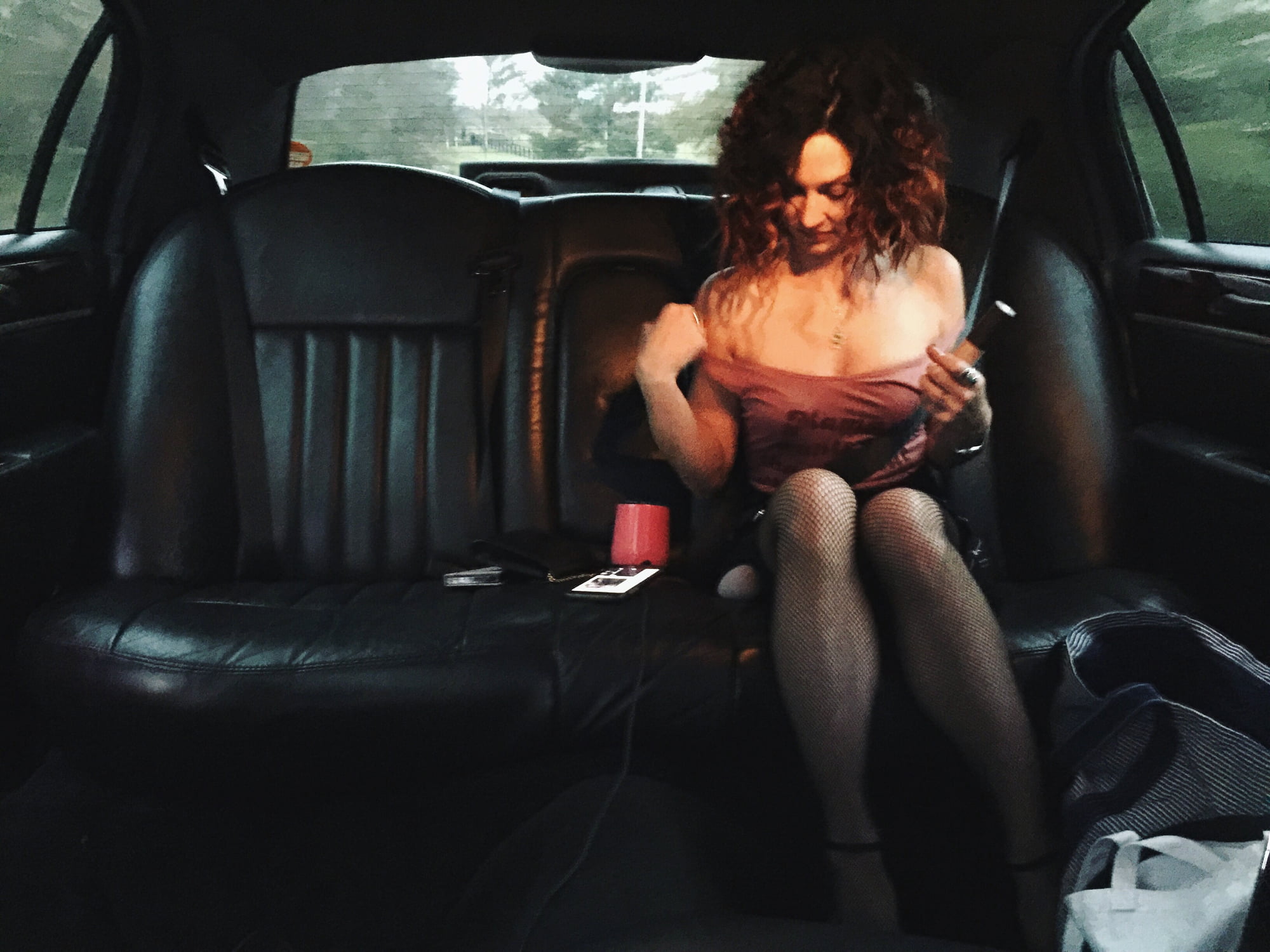
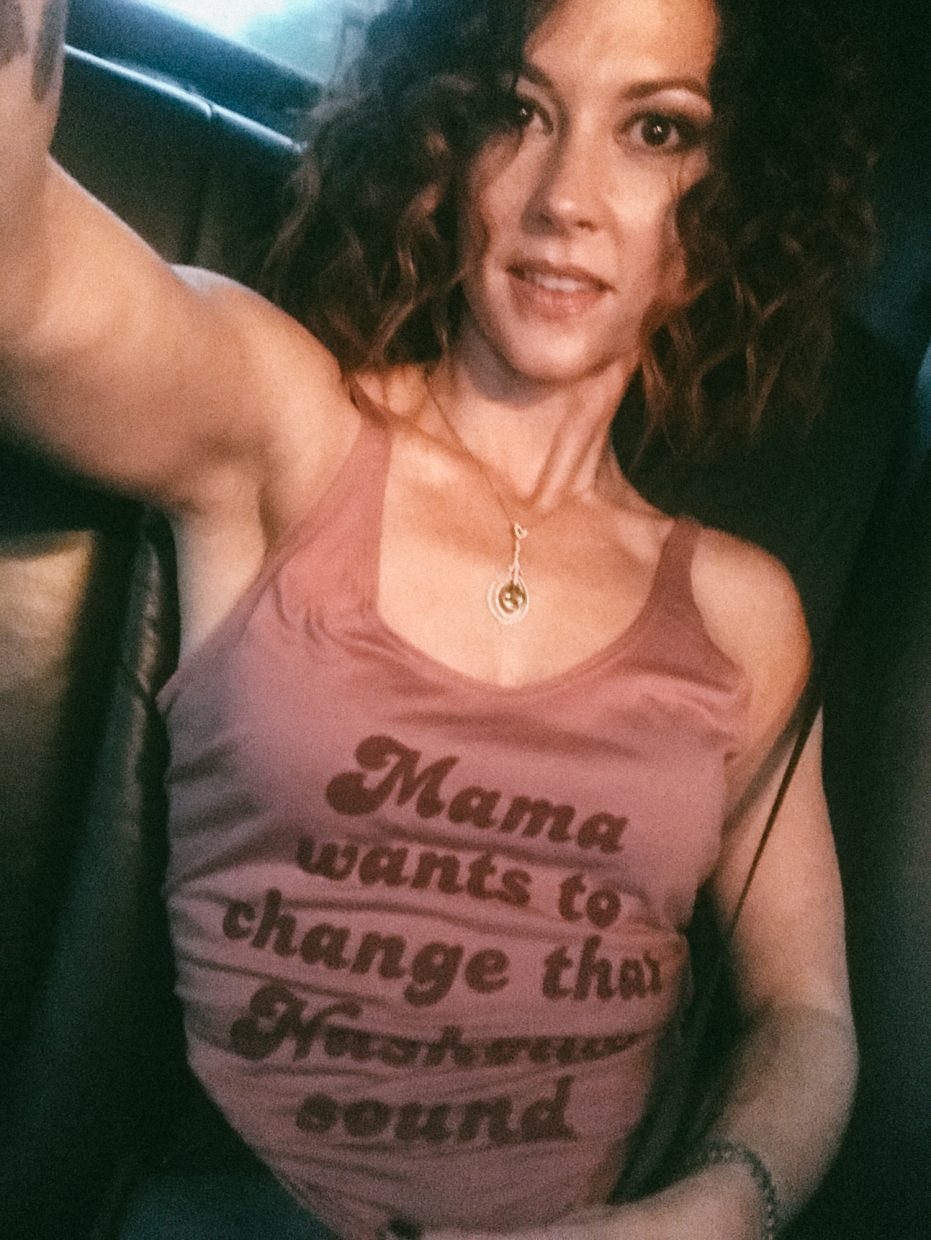
Singer/Songwriter Amanda Shires knows how to get a message across and she did just that earlier this month at the 2017 CMA awards. Ditching the request for formal attire, Shires stood tall on the red carpet wearing heels, fishnets, a pencil skirt, and a mauve tank top with lyrics “Mama wants to change that Nashville sound” (from Jason Isbell’s “White Man’s World” off The Nashville Sound) printed across the front. These lyrics acknowledge the struggle female artists face in mainstream country music, and Shires felt there was no better place to display this message than at the CMA Awards.

In order to keep the conversation of gender inequality rolling, I sat down with Amanda and asked her a few questions.

Earlier this month you wore a tank top to the CMAs with Jason Isbell‘s lyric “Mama wants to change that Nashville sound.” Why do you feel those lyrics were important to wear to the CMAs?

I feel like it’s important because I feel like there’s room to let more women’s voices be heard and there’s not enough being done about it in the moment we’re in right now.

What is the change you would like to make in the “Nashville sound”?

I mean, ideally it would be equality — the number of female singers to male singers being played on the radio. A shorter distance in the earnings between the two sexes, but that would have to start higher up because the industry is still being run by old-ass white dudes, and you know it could use a lot more women, a lot more people of color, it could use a lot more as far as diversity goes.

I listened to the radio
 and, out of 28 songs, I heard two women voices and one of them happens to be in a band that also has male singers, and I feel like that’s a step, but there are a lot of steps to go from. Okay one of the problems, one of the defenses that country radio stations have is “There aren’t requests for female singers,” and that’s a weird cycle, a weird catch-22 because if there were more women being played, then the audience would have more women to choose from as far as requests goes, but as it is, you can really only name two if you’re just a general country listener. Whether or not it changes, I mean, TBD.

We have to try and speak up for one another and try to do it together.

When you wore that tank, you were voicing a desired change for equality in a male-dominated genre. Do you think the lyric was also written with other country music minorities in mind?

I don’t know because I didn’t write it, but I do know that it applies to me, and that’s why I feel I can pirate that and take it to be mine because, whoever said it or wrote it first, Jason Isbell, that’s fine, but it is also like, “Oh cool. There’s a guy out there actually thinking about that, too.” It’s good to know there are more socially aware and empathetic persons out there than just those of us who are struggling.

I know that we can stand to see more diversity than just being a woman vs man struggle. I don’t even it’s like a versus — I think it’s just a thing that exists. I think if there was more education and more thoughtfulness in what was being played on the radio and not treating ladies like they’re a garnish or tomatoes on a salad, we could be getting a lot further. I feel like country music is behind the times in a lot of ways. Pop, rock, hip-hop … they play lots of ladies. Country? Behind. That’s not even talking about the musical part, which needs to change, too.

Country music subject matter is lame these days, too. That’s another soapbox, but part of the change we need. We can’t wear a tank top and skirt to an awards show while a guy wears a tee shirt and jeans? “Oh my God, someone call the E! Online!”

Do you feel your message was well received at the CMA Awards?

At the CMA Awards? I don’t know, but I know as far as fans of my work and people that are like-minded, it was well received. I don’t really hang out with industry folks, so who knows?

Why do you think E! chose to focus on the outfit being inappropriate and Rolling Stone chose to focus on the statement?

Because E! is base. Rolling Stone, I think Rolling Stone knows what time it is. E!’s not credible. No one thinks “Oh, I should listen to what they think of someone’s style opinions.”

You mentioned earlier about how the woman’s role in country music has changed a little, but is still stuck in 1957.

Yeah.

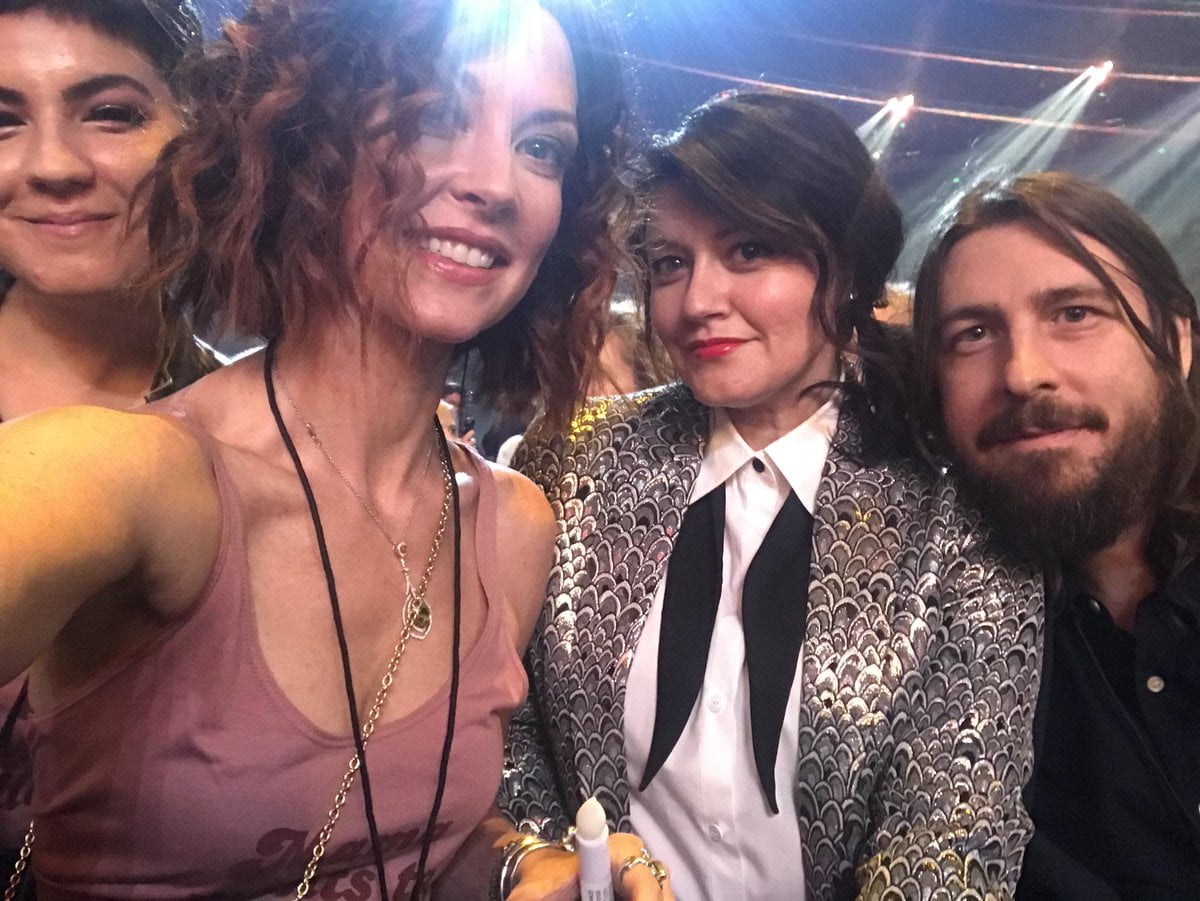
Kelly Garcia, Amanda Shires, Ledja Cobb, and Dave Cobb at the CMA Awards.

What do you think are the steps needed to progress a little bit (or a lot!) more here?

Women championing other women. So much in music is, “Oh, how do you explain it?” Say that there are 10 slots for you to make a top 10 record. They give one, if you’re lucky, to a female. And all the girls are fighting for this one spot, so naturally they’re sort of like, “Oh no, if this person gets it, that means I’m less than,” but it’s not that way. Everybody who makes something great is worthy of a spot. It’s just they don’t make enough spots.

I would say for every time they play that Keith Urban “Female” song, which this article is not about that, they should probably spin three-to-five female artists directly following, if that’s the message that they are trying to send. If Urban is really wanting to do something, he should probably really do it. I really hope folks aren’t treating this idea as a trend, and I really hope the ultimate goal isn’t to monetize this important shit. Because right now, to me, it feels a lot like, “Oh, this is a cool trend to follow. This is what they want. I’m gonna go cash in on that right now.”

Other steps would be to hire women engineers etc. I know a few engineers and women producers. I don’t know.

What role do you think listeners/fans have in raising awareness and affecting change?

Just have the conversation… They can call their radio stations and complain when women aren’t being played. They can count the songs and write down who sang them and have proof when questions are asked. They can also go support live lady artists. A lot of people claim that they don’t like a female voice. Well, it’s just they haven’t heard enough of them. Everybody likes fucking Joni Mitchell. Yeah call in, make things happen like that. Actually support live music because as hard as it is for a parent, a mother or father, to go out and see live music, pay to park the car, and buy dinner and all that, it’s the same amount of difficulty for a woman who is a performer with a child and all that kind of stuff.

I think to make a difference you have to be active and you have to actively participate within your community further than just messaging on social media. That’s not enough. You have to participate. You have to actively support and actively show up. You might get to bed an hour later, but you’re doing something. Anything you can do to support is good past being on a screen. I think that being in the moment and showing up with your physical self — body  or whatever I don’t know — means more and it’s more noticeable.

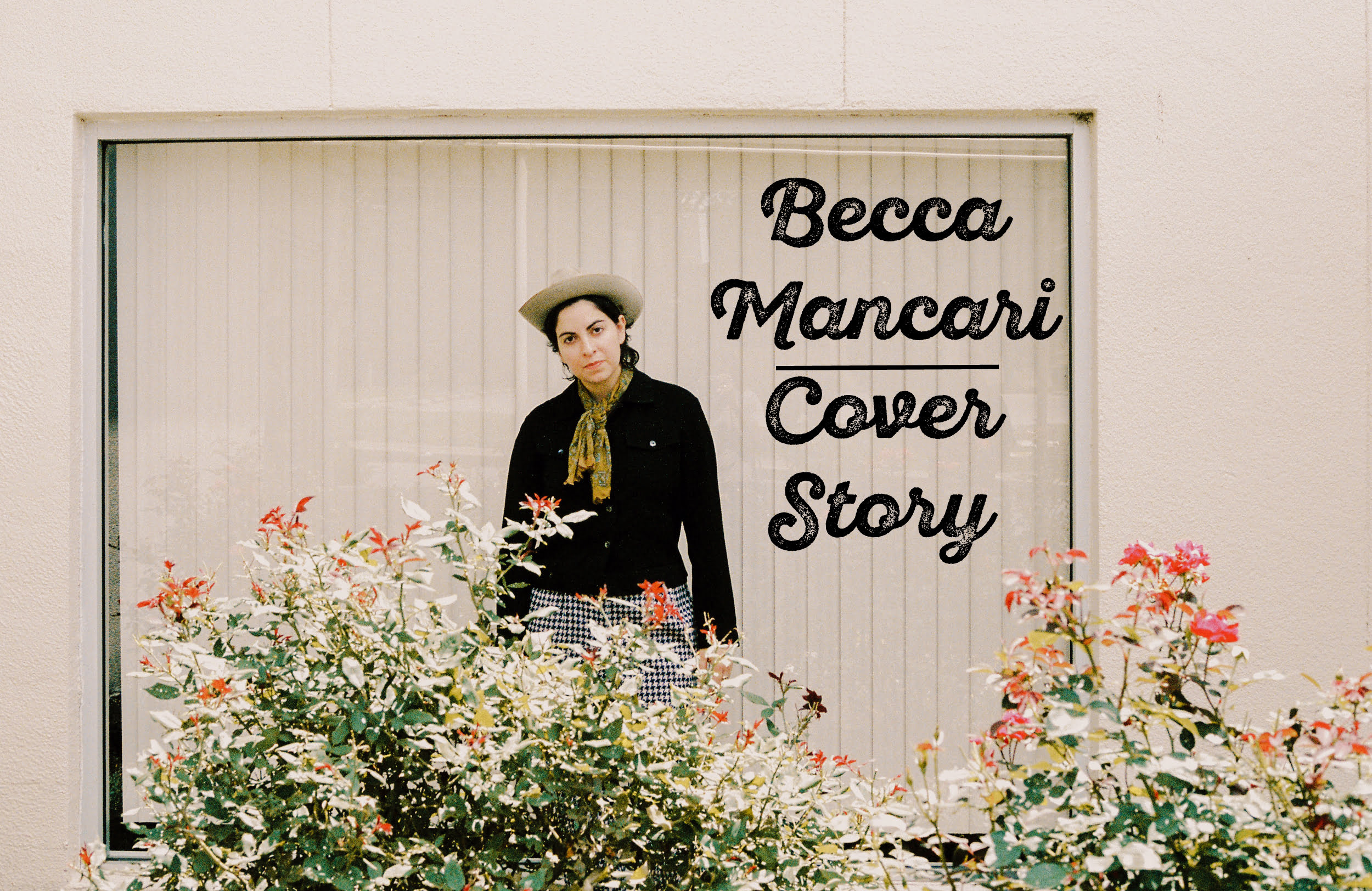
A Lot of Life: A Conversation with Becca Mancari

Becca Mancari may live in Nashville, but the sound she’s developed in her music is anything but “Nashville.” It makes a good deal of sense, though, when you consider Mancari’s earlier life, which included stints in India, the Blue Ridge Mountains, south Florida, and Staten Island.

On her debut album Good Woman, Mancari weaves her myriad life experiences into a lush tapestry of gold-toned tales which, sonically, hew far more closely to dreamy California folk-pop than the tradition-heavy throwback country currently making the rounds in much of Music City’s music scene. In doing so, Mancari has transcended her status as a local favorite to that of a nationally acclaimed artist, songs like “Golden” and “Arizona Fire” earning her nods from major outlets like NPR and Rolling Stone.

Mancari is also one third of one of the most buzzed-about new bands of any genre — Bermuda Triangle. Alongside singer/songwriter Jesse Lafser and Alabama Shakes’ Brittany Howard, Mancari and Bermuda Triangle recently released a single (the Laurel Canyon-esque ballad “Rosey”) and have plans to tour intermittently throughout the rest of the year. 

You have a new solo album. Can you tell me how the album first started to take shape for you?

The album, it’s my debut record. I’ve only had one song out, “Summertime Mama,” and now we have two versions, which I think confused people a little bit. But it’s so great, the idea of the power of one song. I had that one song do its work and time-and-a-half. Everything from Ann Powers featuring us last year with NPR for AmericanaFest — which is huge, she’s been a huge blessing in my life.

I decided I was going to take my time. I met a lot of producers and I just couldn’t get the right vibe. I noticed that this guy — his name is Kyle Ryan — he would be coming to our shows all the time. I know he’s a busy guy. He’s Kacey Musgraves’ band leader, and he’s also deeply involved in her recordings now. But he would just keep showing up and, by the last time, he had a notebook in his hand and was taking notes at my show. I went up to him afternoon and I go, “Hey man, you wanna get coffee?” So we did.

I actually had never really heard anything that he had done production-wise, but everything that he talked to me about, I was on the same page, from inspirations like Tame Impala to the way he is more of a Beatles fan and less of a — and this is not against the Nashville sound or the country way, but I just don’t feel like I fit in that world, and I didn’t want to make a throwback record. I would say he was like another member of our band. Tracking was all done by my live band. The only “studio” musician was a trumpet player that I had come in.

Did y’all do the actual recording in Nashville?

Yeah, we did it over at his studio, which is right behind his house, right close to Mas Tacos. Of course, there’s like a million studios everywhere. He makes gold, man. He’s incredible.

You mentioned how the Nashville sound of the current isn’t necessarily what you’re after or what you do, but it does seem like you’ve still been embraced by that fan base — which, granted, is pretty broad these days. What do you think it is about your music that still appeals to that contingent?

That’s a good question. I don’t know. I feel like we are so much of a family in Nashville, so I feel like that’s kind of playing into it. I have friends like JP Harris or Christina Murray or Margo [Price] — real country musicians — and they listen to other music, too. It’s not the only music they listen to, and I think that what I’ve noticed is that they’ve been excited to come to the shows because they’re like, “Hey, you’re doing something different on that steel. I don’t know what you’re doing, but I really like it.” I think it’s just refreshing, maybe.

I really don’t have any background in country music. I didn’t really listen to it growing up. I don’t know how to play it, even. I do think, though, that I love songwriters, and I’d say my greatest influences, when I was young and still now, are Bob Dylan, Neil Young, even John Prine. To me, these people are able to translate even in the indie world because they’re just great songs. You can kind of do whatever you want, when you have great songs. I let my guys take what I write and put the sounds to it, put the vibe on it, and that’s how we function as a band.

Since you’re an artist crafting such song- and lyric-driven music, do you have a tried-and-true writing process that you follow?

I do the traditional sit down and pull out my guitar and be by myself thing. “Golden” came to me in the night, which is fairly rare. I think one of the things I also like to do is I listen to one record over and over and over again. I was listening to Gillian Welch at the time when I wrote that song, and I just wouldn’t stop listening to it, and there was this one song — I think it’s called “Orphan Girl” and it’s not the same thing at all — but there’s this one note that I keep turning in my brain.

That’s how I kind of take melodies sometimes, where I’m like … it’s not their melody, but it’s a hearing thing. I write a lot as a hearer. I don’t know how to read music. I wish I did, but I don’t. I play it by ear and I always have. I’ve always been really sensitive to sound, so a lot of times, it’s sound. I write better when I’m in the car driving, watching things and hearing things. I also voice memo a lot, then I take it back and figure it out on guitar. So it depends. But a lot of it is from sound, for some reason.

Lyrically, the songs sound like they are very personal. Do you draw very heavily from your own life?

I think I do. I’m in awe of the John Prines of the world who write these stories, but they are very personal. I also try and allow space for somebody else’s emotions and feelings and thoughts. There’s an element of somebody wanting to take it for themselves. But yes, a lot of this record has an overarch of time and life in it. I think it’s just because it’s my first record, too, so there’s a lot of life in this one, including mine.

It sounds like you’ve led a pretty nomadic existence, moving from place to place and seeing lots of things. How do you think that transience, if at all, has influenced you as an artist?

Oh, man. When you grow up with parents like mine that just wanted us to see so much of the world … My first time leaving the country was at 14. Not many people get to do that. I went to Peru when I was a kid and experienced that and saw so much of another part of the world that we aren’t introduced to, oftentimes. I think that has helped me open my eyes to seeing the other side of things, with empathy and compassion, I hope.

It’s easy to forget, in the world that we live in. We become obsessed with our own stuff. But I do think that helped. I was talking the other day in an interview with Ann [Powers], and she was asking me about that. I got to live in India for a while, and my older sister lived there for five years. Just spending time around Hindi culture — which is so different than anything I’ve ever experienced. I can’t explain India. Even the way we made “Arizona Fire,” I feel like there’s an entrancing, kind of dream-like aspect to it where I did get inspired by the hypnotic, circular sound that is in traditional Hindi music. Traveling all over the country, seeing different ways of life, I feel like, if I could tell any young person, I’d say, “Go. Go see everything you can, because it’s going to seep into you.”

Going back to what you said about writing from a place of compassion and empathy … one thing I find myself wondering about anybody who’s releasing a piece of art right now is whether or not the political climate had an impact on those pieces. Did you find yourself feeling influenced by that, when you were writing some of these songs?

Yeah, there’s definitely some social aspects. “Devil’s Mouth” is very personal to me. It has my family involved in it. I had some even — I don’t know what the word is — baggage, or pain, I guess, from feeling like I’m on the outside of things, even being somebody that came out [as gay] pretty young, when it was pretty scary still. Those things are definitely reflected in there.

The current climate that we live in reminds me a lot of when I was little. There’s a lot of fear-based living. And there’s a lot of an idea of pushing us away from people who have really worked hard to be open. And even what happened just recently with DACA … I wrote a song with Bermuda Triangle, another band that I’m in, called “Tear Us Apart,” and it has everything to do with it. It’s actually really emotional for me to even get into right now because it deeply affects my family — my nuclear family of me and my girlfriend — and just the life we have. It’s a lot.

Right now, I feel like I have not even gone to those places yet to figure out how to have a voice. I just talk openly, and I will use my music however to defend people that are in trouble right now. And there are a lot of people that are, and a lot of people that don’t really understand what it’s like to be affected by the Trump administration. I grew up in a Hispanic culture, and it’s a scary time for a lot of us. I’ve been really upset for the last few days. I don’t even know how to explain it right now.

Well, on a more optimistic note, you did mention Bermuda Triangle. I haven’t seen people this excited about a new band in a while. How did y’all first start pulling this project together?

Oh, man. Thank God for the light-hearted things in life. We have serious songs — serious heartbreak, political things — but we are just so about having fun. If you’re ever able to come to a show, it’s just funny. Brittany is hilarious. I like to have a good time, and we’re all truly best friends. I hang out with them all the time. They’re the people I’m spending my life with. So it was just a natural progression. Brittany and I met each other four years ago, and we joke/believe that we met each other in a past life, all three of us. We talked to a psychic and she was like, “Oh yeah, you’ve known each other for forever.” So there’s a little element of mystery and fun and also just true friendship.

For us, what a wonderful time to be together and enjoy each other, and that’s what we want our shows to be like. I don’t know why I’ve read any of this stuff, but I’ve read some haters already, but Brittany is so special to people, and I get that. But the thing is, we’re also special to each other and she understands that. I think the world needs to understand that more, especially with us as women. We celebrate each other. We don’t compete against each other. We push each other to be better, and that’s what this band is about. We really truly love each other, and we really truly believe in each other’s music. We get to demonstrate that in the way we want to and not because we have to survive off this band. We all have our projects. Brittany is going to continue to blow our minds. Jesse has been the most underrated writer in Nashville for years, and I’m just so proud to see her finally get the attention she deserves. I’m just excited that this Triangle is going to give us an open door to have fun, but also to put out some really great stuff. Yeah, we basically met on porches drinking tequila and started playing music.


Photo credit: Zachary Gray

Hangin’ & Sangin’: Travis Meadows

From the Bluegrass Situation and WMOT Roots Radio, it’s Hangin’ & Sangin’ with your host, BGS editor Kelly McCartney. Every week Hangin’ & Sangin’ offers up casual conversation and acoustic performances by some of your favorite roots artists. From bluegrass to folk, country, blues, and Americana, we stand at the intersection of modern roots music and old time traditions bringing you roots culture — redefined.

With me today at Hillbilly Central, Travis Meadows. Welcome.

Glad to be here.

So happy you’re here. You have a new record, First Cigarette.

Yes, ma’am.

It’s a beauty, man. It really is.

I’m pretty excited about it!

I feel like … “if onlys” are a big part of this record, or the disposing thereof — the discarding of excuses of not being right here, right now. That’s in the title track and in a bunch of the other songs. So, the balancing act between accepting where you are and who you are, and still striving to be better — how do you see that and how do you achieve that?

Oh, man! I didn’t realize it was gonna get so deep in this interview.

Oh, yeah, man. [Laughs]

You know, I don’t know. My whole life these days is kind of in 24-hour increments. I can’t get too locked into the past because I can’t do anything about that, and I can’t do anything about tomorrow, so my whole life is just kind of centering around “right now.” And that kind of reflects itself in my writing, you know what I mean?

Trying to give your best to this moment.

To this moment, yeah! And I will say that, on this record, I did something that I had not done on the previous records, and that was taking into consideration the audience listening. It’s such an unusual thing that is happening in my life, but I didn’t know that people were gonna gravitate to these songs and that I was actually gonna get invited to play places … But then I started [thinking], you know, “If I were in the audience and I was listening to one wrist-slitter after another, I wouldn’t like this! It’s a little depressing.”

And so, on this record, I was very adamant about putting some breathers in there, some levity, just a chance to enjoy music and not have to think as much as you were on the previous songs. You know what I mean? Which, in some ways, is, I feel like, a little bit of a sign of personal growth, because the first two records were just completely self-absorbent, self-indulgent records. I was just writing songs for me. And I still write songs for me, but I was thinking, “If I were in the audience, I would want something fast every now and then. I’d want a little breathing time.”

But I think, even if you are writing for you, if you’re writing with truth, it’s gonna resonate with people.

I think so.

And I think about, on this record, a song like “Better Boat.” That’s a song that I resonate with and I think probably a lot of people would — anyone who’s trying to better themselves by going deeper into their relationships. That’s what that is to me, you know?

Yeah, absolutely.

But that wasn’t always how you looked at life was it? Through that lens?

No, and regrettably I can still be quite pessimistic. You know, I’m just a dark son of a gun! But I’m getting better about it, and I’m embracing the moment more and more. I’ve actually — I cannot believe I’m about to say this — but I’ve actually, even in the past week with the reaction to the record where I ought to be jumping up and down and just beside myself, I’m kind of freaking out. People cannot like this this much! That’s my brain. And I have to [think], “They keep showing up to the shows.” So it’s humbling and it’s challenging and, heck, if they’re gonna keep showing up, I’m gonna keep showing up. And that’s kind of where I’m at.

Sometimes, I think, for those of us who have had troubled or dark or broken lives — which, technically, is everybody …

Pretty much.

Some more than others. But I think joy is one of the hardest things to embrace, right?

I went through a preacher phase for a while. It’s so funny because I’ve gone through these little chapters of my life. I almost completely change. I look at those chapters like it was somebody else. … One or two [of my long-time friends] said, “I don’t know what you were doing in the preaching days, but you’re preaching now.” And that was way too much responsibility for me. … I’m just singing my songs. That’s enough for me.

But it did make me look at, “What is it that I am doing?” And I think what it is, with me being this vulnerable and telling this much truth about myself, I think I’m giving people permission to be okay with themselves — who they are, where they are, scars and all. I think we have this kind of messed up idea, “Well, if I could marry this person, or if I had this much money, or if I was doing this job instead of this one, things would be better.” And I think the secret is, if I’ve stumbled onto anything in these few years that I’ve been kickin’ around, is that the idea of contentment comes from being okay where you’re at right now, which is hard. It’s like a bird that lands on your shoulder and as soon as you look, it’s gone! But those moments where you have that serenity, that calm, that peace.

But I think the other thing that you do through your songs is, by digging into your truth and laying it out there for the whole world to see, in all its ragged vulnerability and rawness, you’re giving people the permission to look at their stuff, too. And they’ll be like, “Oh, well, he’s doing that, so maybe it’s okay if I kind of turn the lens inward a little bit.”

Absolutely.

Watch all the episodes on YouTube, or download and subscribe to the Hangin’ & Sangin’ podcast and other BGS programs every week via iTunes, Podbean, or your favorite podcast platform.


Photo credit: Joshua Black Wilkins

WATCH: Elijah Ocean, ‘Chain of Gold’

Artist: Elijah Ocean
Hometown: Los Angeles, CA
Song: “Chain of Gold”
Album: Elijah Ocean
Release Date: August 4, 2017
Label: New Wheel Music

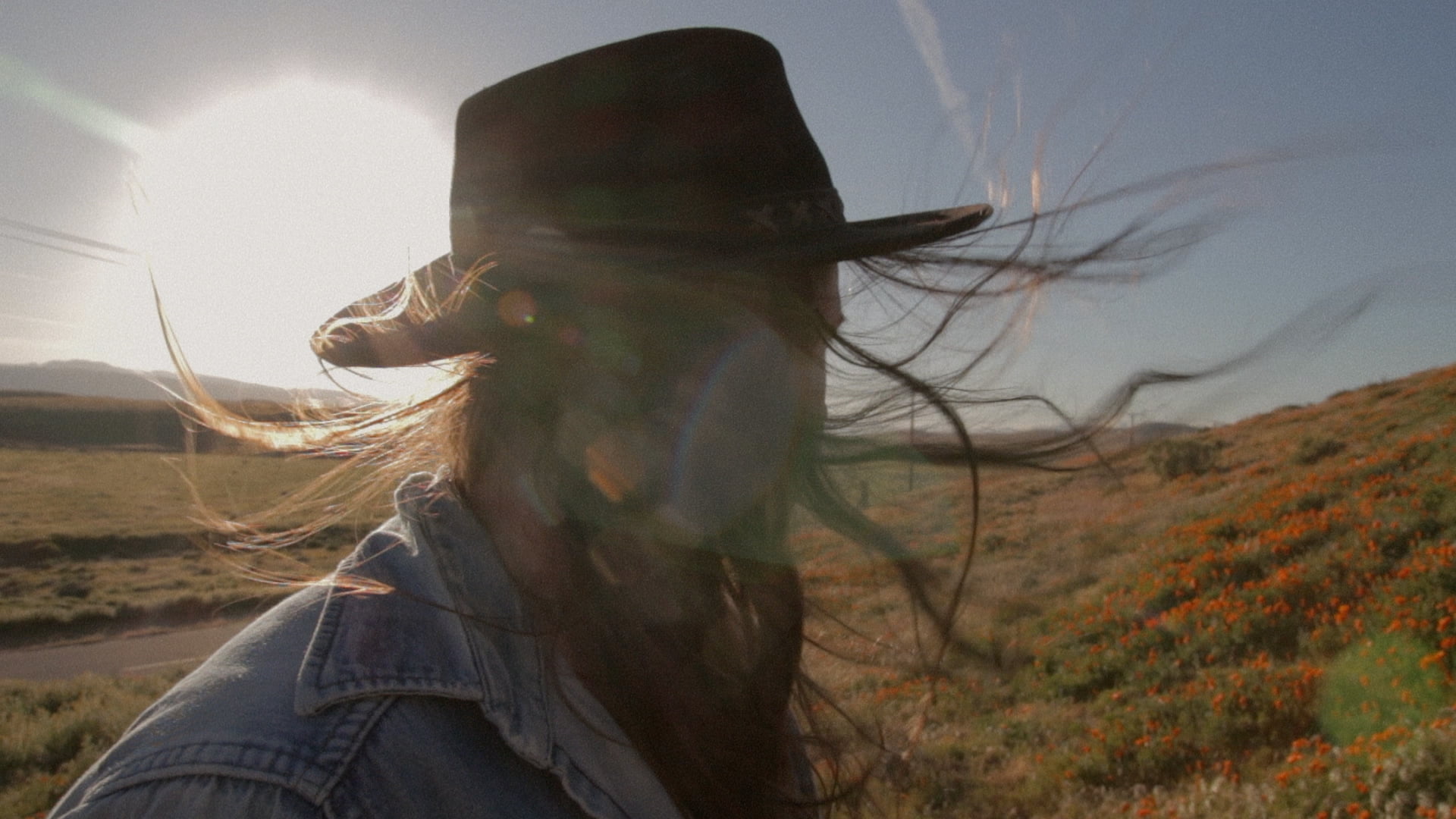
In Their Words: “I wrote this song from the point of view of a guy who is stuck in the past, clinging to a piece of jewelry that represents the memory of his lost love. We filmed the video in Antelope Valley, California, during a fleeting super-bloom of poppies.” — Elijah Ocean

Photo credit: Chell Stephen

Hangin’ & Sangin’: Lee Ann Womack

From the Bluegrass Situation and WMOT Roots Radio, it’s Hangin’ & Sangin’ with your host, BGS editor Kelly McCartney. Every week Hangin’ & Sangin’ offers up casual conversation and acoustic performances by some of your favorite roots artists. From bluegrass to folk, country, blues, and Americana, we stand at the intersection of modern roots music and old time traditions bringing you roots culture — redefined.

With me today at 21c Museum Hotel in Nashville … Lee Ann Womack!

Yay!

What?! And Lex Price on guitar. Welcome, you guys! Lee Ann Womack in a penthouse suite is the stuff dreams are made of, just generally, but I’m going to melt into a puddle, at some point, when you start singing.

[Laughs] Well, I’m happy to be here.

You have a new record coming out October 27 — The Lonely, the Lonesome, & the Gone. It is 54 minutes of pure flawlessness, and it’s all I want to listen to right now. I’m so glad that I have it ahead of everybody, and I won’t get sick of it. So, congratulations, it’s wonderful.

[Laughs] Thank you! I had fun making it. I’m glad you like it.

The first time I listened to this record, my immediate reaction was that it felt like you felt more confident and more comfortable than ever. Not that you sounded in any way bad before, it just felt like … I don’t want to say “you found your voice” because I think that’s always been there. But you’re stepping into it when you want to, you’re hanging back when you need to. Is that because you wrote some of the songs or is it something else, do you think?

I think it’s probably age, I mean experience … not being so worried about what people think. And hopefully the more you do something, the better you get at it, so if you’re singing for years and years and years, hopefully you get better at it. But also, this is probably the first time I made a record where I just really wasn’t worried about a staff of people at a label “getting it” or anything like that. I just did what I wanted to do.

Someone called this record your Wrecking Ball.

Ooh, I didn’t know that! I like that.

I’ll tell you who later. But I kind of took that to mean that you have hit your stride now, at this point. You’ve kind of found your sound, which was always in there, but you’ve moved all the other stuff away.

That’s fair. Yeah, that’s good. I mean I recorded all those records for a major label, you know, and they have things that they expect. Also, as the artist, when you sign a contract, you agree to make a certain kind of music, and so without having those constraints, I really have been able to just enjoy myself. Whereas before, I enjoyed little bits and pieces, now I enjoy the entire thing, and it’s nice.

Do you pick and write songs that you know you’re gonna enjoy singing live and will enjoy singing live for years to come, is that part of it?

Yes, definitely. And songs that move me for one reason or another. I don’t worry so much about, “Okay is this gonna move six million people?” Or, “Is this gonna move the promotion staff?” Or, whatever. I just worry that it moves me. And if it moves me, I’m a music lover, then it’s gonna move somebody else.

Now, you are absolute royalty within the Americana community.

Aww.

But I also love that the Grammys and the actual country music — the CMAs and stuff like that — are also still recognizing you and still nodding in your direction. So do you feel like that’s kind of the best of all possible scenarios, to be straddling it all and not just one or the other?

I mean it’s nice, very nice, but I have had my hand in each of these areas from the beginning, you know? My very first single was “Never Again, Again” and it had Ricky Skaggs and Sharon White singing the harmony on it. And I’ve been working with Buddy Miller for however long — years and years — and Jim Lauderdale. And, as far as the bluegrass world goes, I love my bluegrass friends.

I know you do.

Yeah, and love the music, love the lifestyle and everything. So yeah, I’ve kind of had my hand in a lot of different places over the years, and that’s kind of just who I am.

But it’s weird that you haven’t always been perceived that way, right? People perceived you in a different way.

And that was frustrating for me because, I mean, you can tell by the way I talk and sing, you know that I’m country. [Laughs]

[Laughs] No way around that!

My favorite singer is George Jones. To me, George Jones is a country singer, but he’s a soul singer, you know? And Ralph Stanley’s a soul singer! If it’s born out of something that’s real rootsy, then I’m gonna love it. And that’s who I am, that’s how I was born I guess.

And that’s the thread running through this record too, you burn down all the walls. It’s hardly strictly country and hardly strictly anything … But that soulfulness and you just pouring yourself into it, that’s the thread, and it’s amazing that, after all these records, that it’s clear that you’re a fan first. That’s coming [through], your love of music and your enjoyment singing. Is that something you have to work at or is that just naturally coming?

No, I don’t have to work at it. If I didn’t sing, I feel like I’d die or something, like it keeps my heart beating or something. I don’t know. But you know what? I don’t have to sing on stage in front of thousands and thousands of people. I can sit down in my living room at home with my guitar and sing, and it still feeds whatever that is. I sing and hum to myself all the time and my daughters are like, “Would you stop doing that?” I’ll be grocery shopping or whatever.

While all the rest of us are like, “Can we come over?”

[Laughs] It’s funny because it’s like I don’t even know I’m doing it.

Watch all the episodes on YouTube, or download and subscribe to the Hangin’ & Sangin’ podcast and other BGS programs every week via iTunes, Podbean, or your favorite podcast platform.


Photo credit: Ebru Yildiz

LISTEN: Whitney Rose, ‘Trucker’s Funeral’

Artist: Whitney Rose
Hometown: Prince Edward Island, Canada, and Austin, Texas
Song: “Trucker’s Funeral”
Album: Rule 62
Release Date: October 6, 2017
Label: Six Shooter/Thirty Tigers

In Their Words: “One thing that’s happening with my songwriting as I’m getting older is that I’m exploring outside of my own experiences a lot more. Most of my life is spent on the road now and, as a result of that, I get to meet a hell of a lot of people. Different kinds of people, too. It’s great, and one of my favorite things about what I do. ‘Trucker’s Funeral’ is one of my favorite songs on the album and one of the most fun to write, too, because it’s based on a true story. I had a meeting at Bank of America here in Austin last year and, when the meeting was over, the B of A employee told me about going to his grandfather’s funeral here in Texas and finding out he had a whole other family on the west coast. Because he was a trucker and always on the road, neither family had any idea. As he was telling me this story, I was jotting down lyrics on my banking papers because it was just too intriguing of a story to not be made into a song. If I was a filmmaker, I’d have made a movie about it.” — Whitney Rose


Photo credit: Jen Squires