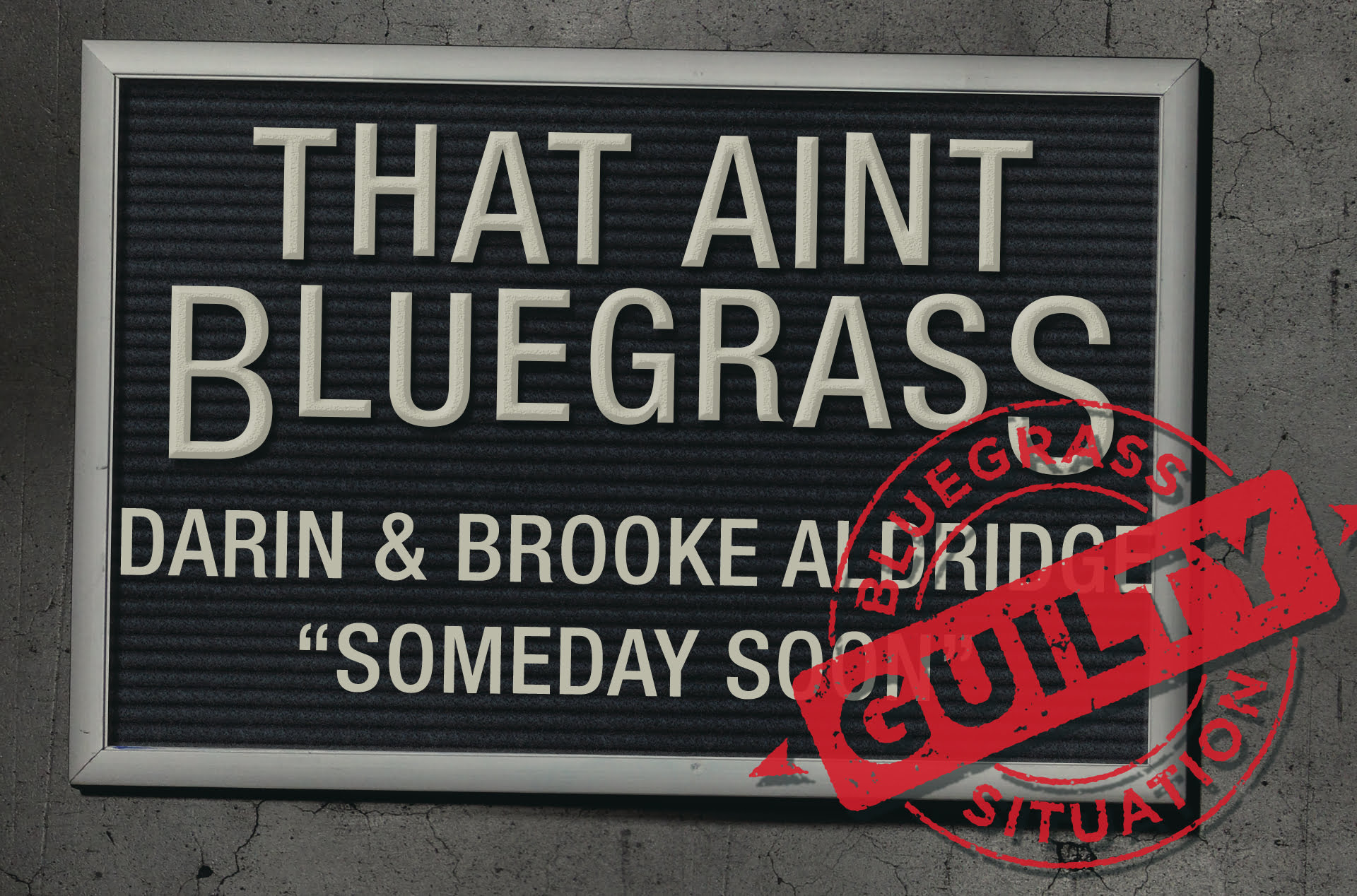
That Ain’t Bluegrass: Darin & Brooke Aldridge

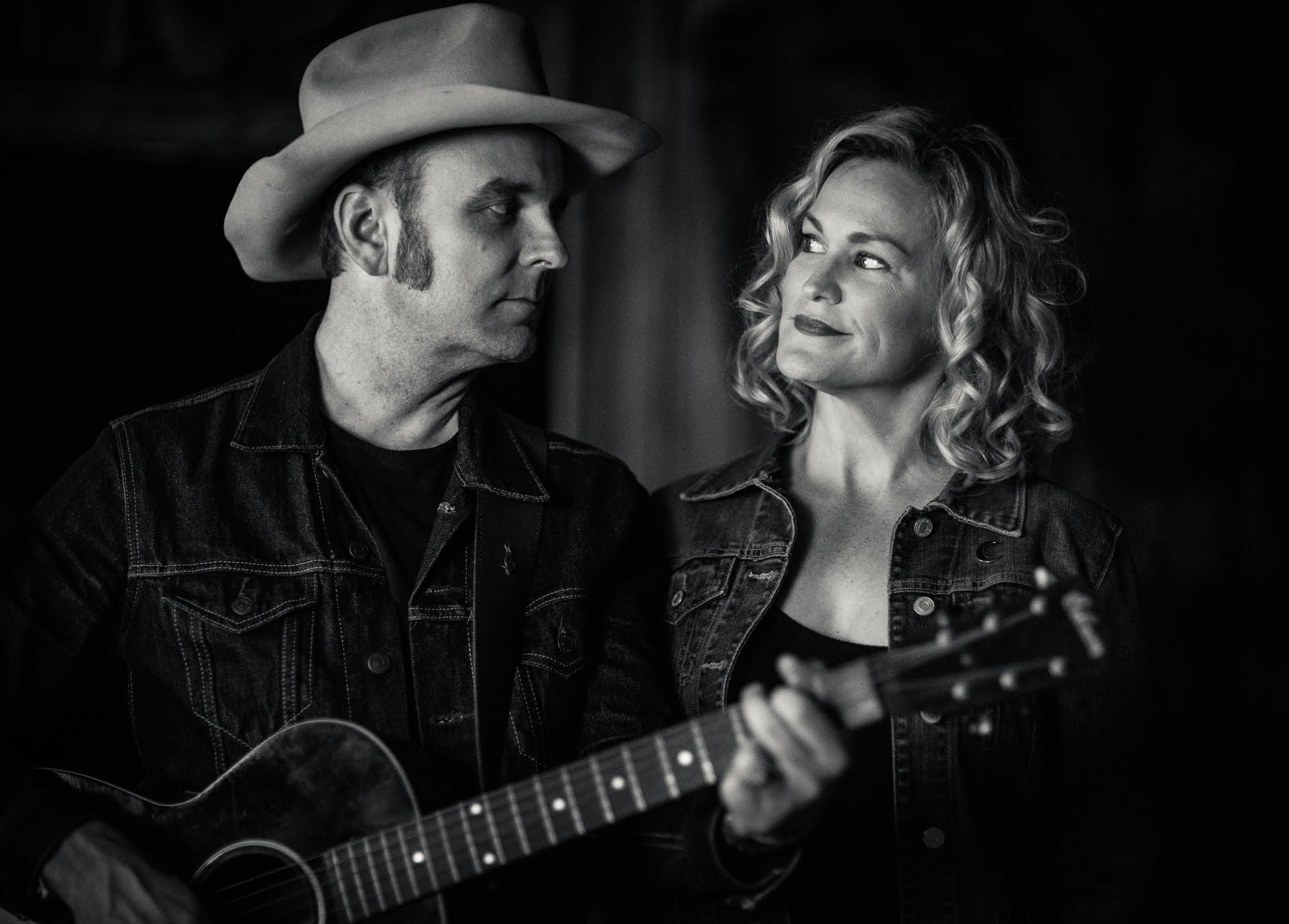
Artist: Darin & Brooke Aldridge
Song: “ Someday Soon” (originally by Ian & Sylvia)
Album: Faster and Farther

When did you first hear “Someday Soon?”

Darin Aldridge: It’s one of the tunes that Brooke and I have been doing in the living room around our house, as we just sit around playing, coming up with tunes. [Laughs] Suzy Bogguss was probably the first for both of us. We were in Sarasota, Florida, about a year-and-a-half or two years ago with John Cowan — we’ve been on tour a lot with him lately. And the Nitty Gritty Dirt Band, some of those guys were down there. We were just soundchecking, and Brooke started singing the song as a vocal check. And they all asked if we would do that song that night. We started doing it from there.

What was your process for arranging it and putting it together?

We kept it in the same key for her. It sang really well. The chords are so beautiful in it the way Ian Tyson wrote them, so we thought, “Why change anything that’s not really broken?” She does hold out a part of it toward the end. It’s such a good note for her. And that’s different from any other versions of the song. We arranged it with the band we would be performing live with, so it would have the fiddle and guitar break. Dobro was in our band, at the time, so that’s how we had that in there.

It’s been a tradition since the beginning of bluegrass for artists to take songs from outside of the genre and turn them into bluegrass songs. Why do you think that is?

I think that as people in different genres and different eras — say the ‘60s til now — people just play music that they enjoy, writing they enjoy. I got to be a part of the Country Gentlemen in the last decade or so that Charlie Waller was alive. They were probably known as the first bluegrass artists to really be reaching out in the ‘60s, doing a lot of folk tunes, a lot of rock songs, like things from the movie Exodus and so forth. That trickled down through the decades. If it’s just a good song, it’s hard to keep down, and I think that’s what keeps a lot of the music fresh. Even Monroe ventured into some of the bluesy music, so did Flatt & Scruggs, to keep along with the times. Different artists just picked things that they enjoyed or spoke to them.

What’s your favorite thing about performing this song?

Probably the crowd response. It speaks to a lot of new folks listening to it the first time, then you get the older generation that have heard it from the hit by Judy Collins in the ‘60s, or from Suzy Bogguss’s hit — people who are 40 or 50 years old remember that from the ‘90s. It’s a good crowd favorite. We got to perform it on the Grand Ole Opry this year, when we debuted, and it got a great response. It’s just been a wonderful song. It’s up for IBMA Song of the Year. It’s been number one for us on the Bluegrass Today chart, Roots Music Report, and, I think, Bluegrass Unlimited.

You know that ain’t bluegrass, right?

[Laughs] ‘Cause it don’t have a banjo in it! I see it from both sides. Considering bluegrass the way Monroe and them played it in 1946 with that instrumentation — that’s ground zero for bluegrass. This song doesn’t have banjo in it, but it’s got soul, it’s got instrumentation of bluegrass, and of course wonderful singing. It’s hard to keep that down. It can crossover to whatever. It’s not too far from Suzy’s version of it or mainstream country and it’s hit a lot of country radio.

That’s a hard question, you know? If it’s bluegrass or it’s not. I think it’s people’s opinion about what they enjoy and that opinion is growing wider and wider, which makes the music grow. Why not let them fight over what they think is and isn’t bluegrass? That’s why they make CDs and downloads, so you can choose yourself, I guess? [Laughs]

A Minute In Galax with Wild Ponies

Welcome to “A Minute In …” — a BGS feature that turns our favorite artists into hometown reporters. In our latest column, Doug Williams of Wild Ponies takes us through the town of his youth — Galax, Virginia. It’s also the town where Wild Ponies recorded their latest release, aptly titled Galax.

Galax, Virginia, is a little mountain town and is pretty much the undisputed center of the old-time and bluegrass music world. It’s the home of the Crooked Road and the Galax Old-Time Fiddlers’ Convention (82 years and running). It’s hard to get it down to just a minute in Galax — this might be more like a minute-and-a-half. There’s so much cool stuff, it’s hard to choose what to leave out — like the historical Rex Theater (hosts bluegrass bands every Friday night and broadcasts them live on WBRF, but also where my dad spent Saturday afternoons as a kid watching Westerns while his dad worked in Pless’s hardware store). I’ll do my best to give you an honest spin around the town and sneak in as much as I can. — Doug Williams

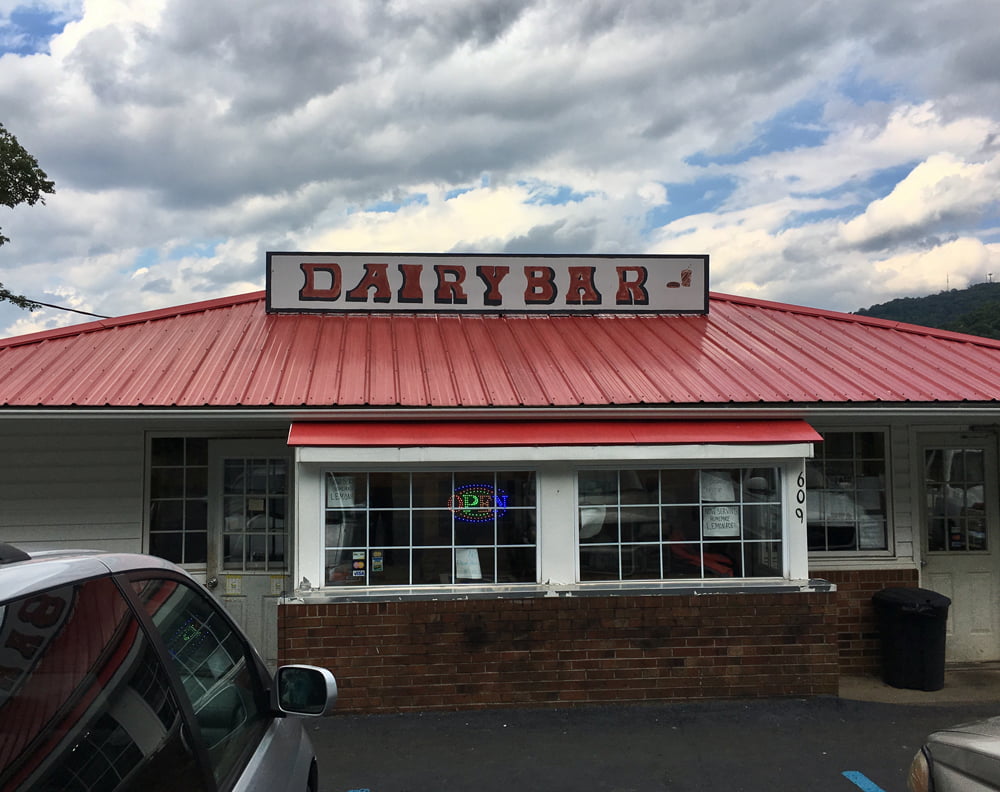
The Dairy Bar: Get a hot dog basket and a lemonade. Killer burgers, too. When my mom was a kid, she’d get the lime float. This is a real old-school drive-in, and they’ll bring the food right out to you. You can sit in your car or get out and sit on the deck, which gives you a bird’s eye view of Felts Park. So, if you’re there the second weekend of August, you can look down on the mayhem of the Fiddlers’ Convention while you chew. 


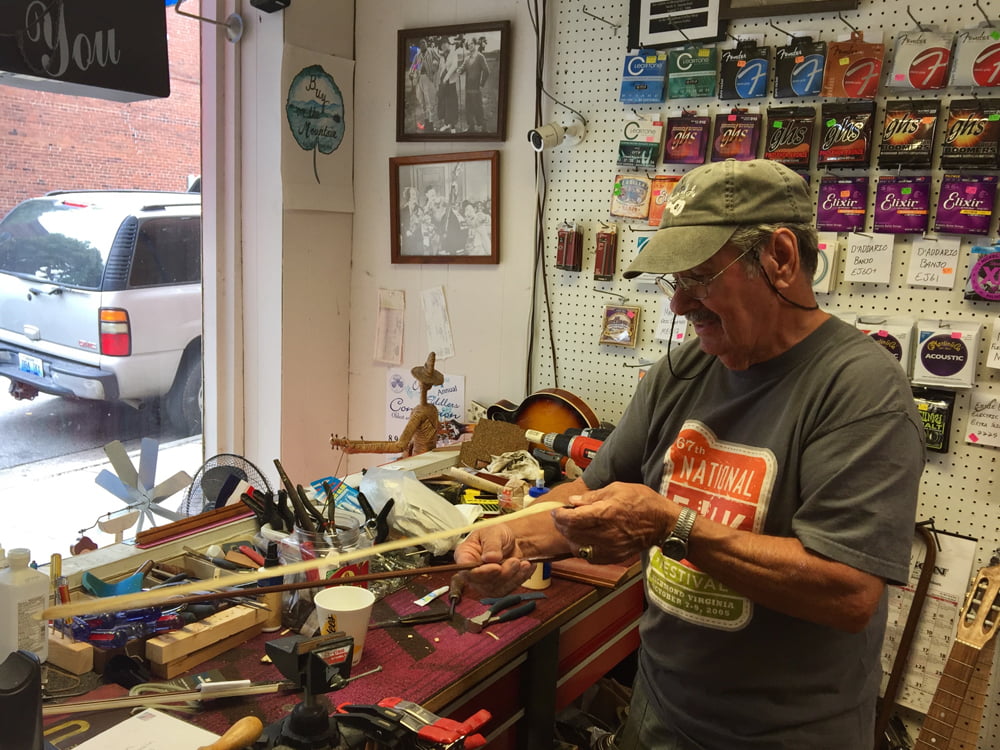
Barr’s Fiddle Shop: It’s hard to believe, but there’s only one music store in Galax. Barr’s is more than a fiddle shop, though; it’s also a small museum and an incredibly important place in American music history. It used to be a barber shop and, in the early 1920s, it was the place Al Hopkins formed his band that became known as the Hill Billies. This was the first ever use of that term, and actually has a pretty decent claim to the real foundation of country music. These guys were recorded in 1925, and the Bristol Sessions didn’t happen until 1927.  Either way, at least we got the word “hillbilly” out of it.  

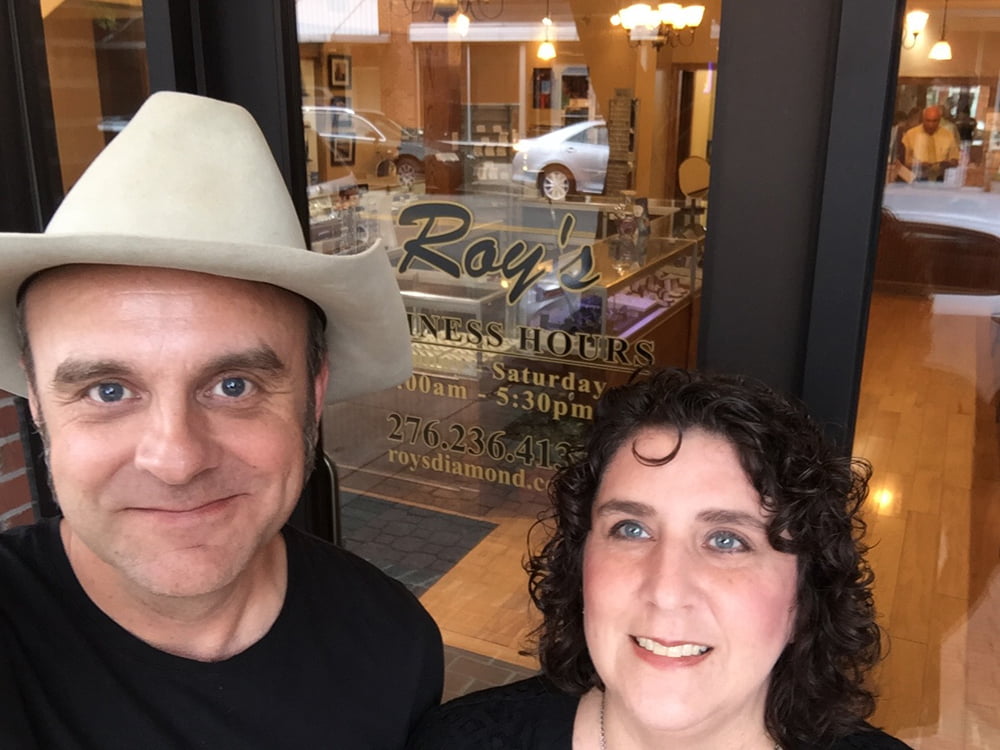
Roy’s: Directly across Main Street from Barr’s Fiddle Shop is Roy’s Jewelry. I’ve got to include Roy’s. They have some cool stuff. You can get custom Galax leaf jewelry here. Be sure to ask for Judith when you go in. Her father, Hazen Burnette, was one of my grandfather’s best friends. Hazen spent more time on horseback around Galax than anyone else. There was even an article about it in Western Horseman. Judith helped my grandfather pick out a LOT of jewelry for my grandmother over the years and, for that, she deserves sainthood. She’s also a huge part of the personality of WBRF. You can tune in and listen to her Blueridge Backroads show in the evenings. She’s great! 

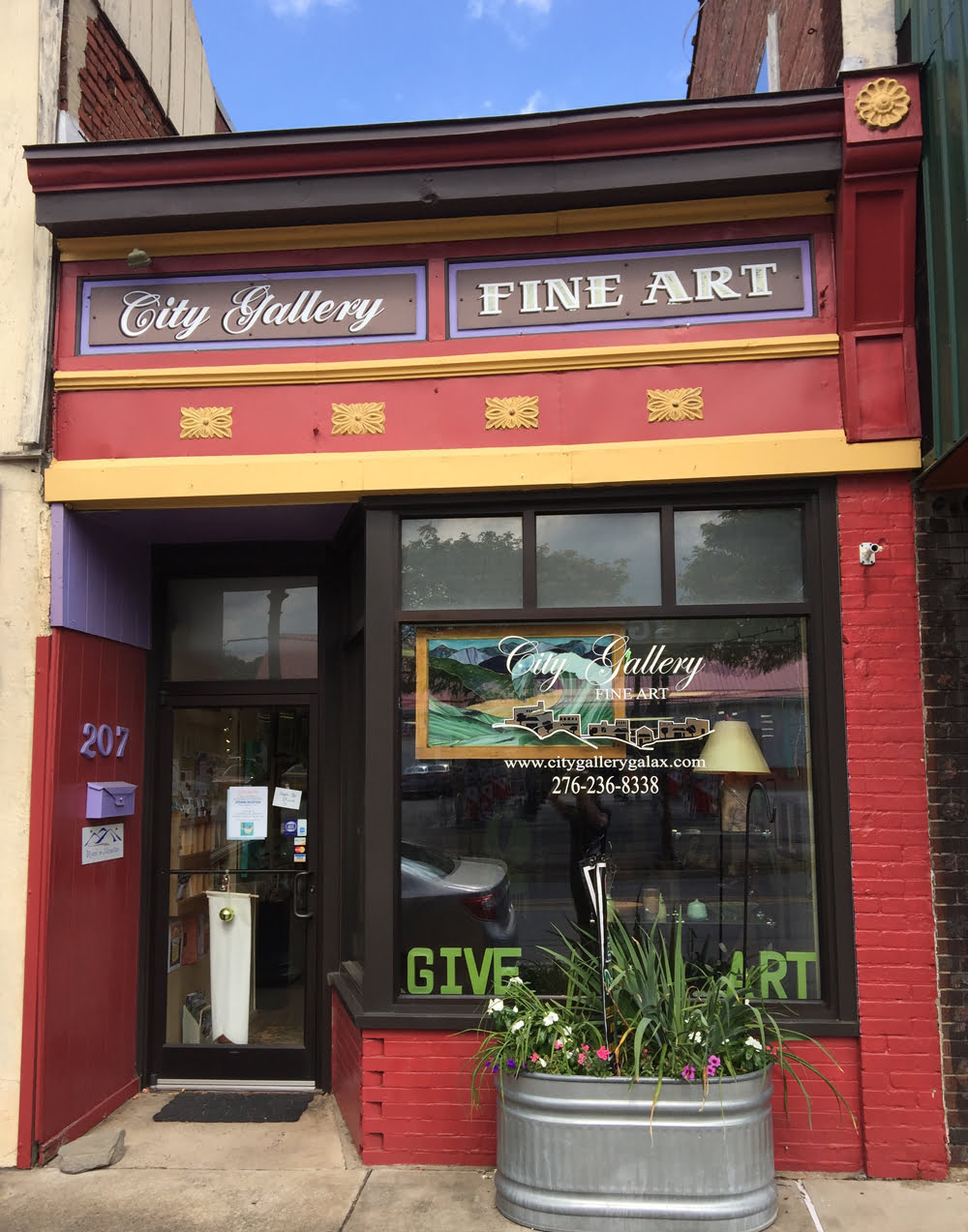
City Gallery: While we’re still wandering around on Main Street, you’ve got to stop by City Gallery. It’s sort of a local artisan center — paintings, handmade jewelry, just all kinds of cool stuff. We’re friends with a lot of the artists who sell things here, and it’s always fun to duck in and see what’s new. Becky Guynn’s paintings of local musicians and places in Galax really capture the spirit. Karin Carlson-Muncy’s copper work just blows me away.  I could go on … just trust me. 

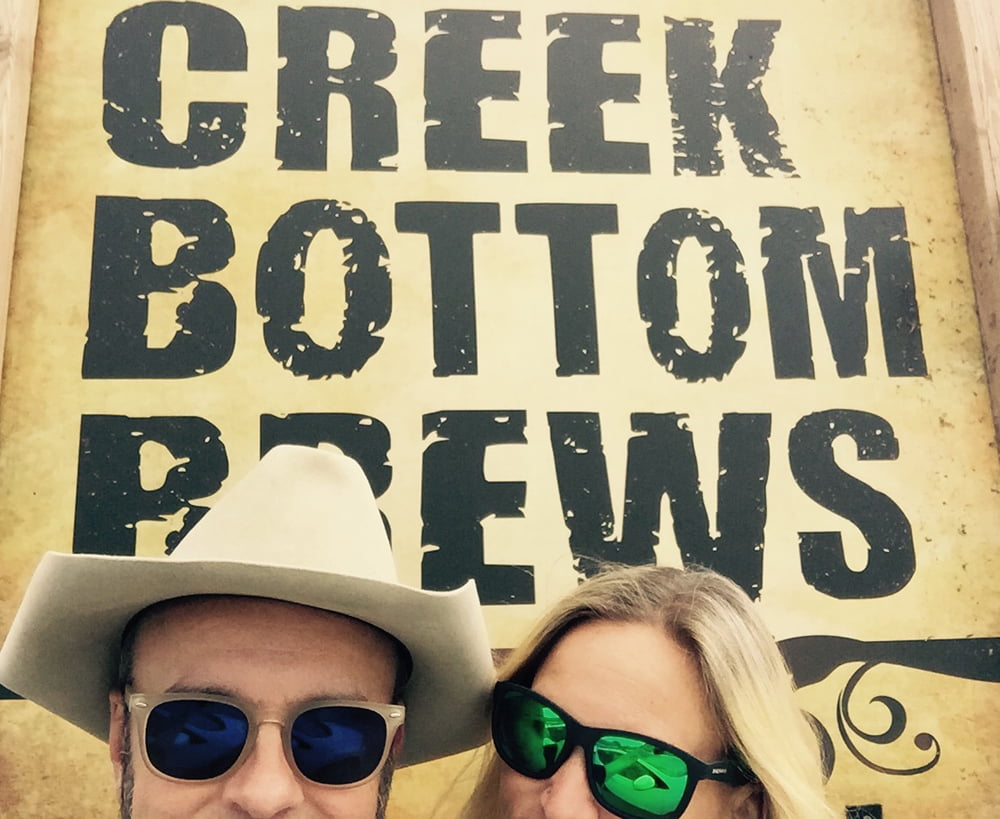
Creek Bottom Brews: This is a new place — it’s only been around for a few years — but it’s a welcome addition. It’s definitely not the place to go, if you’re just trying to breeze through town real quick and not let anybody know you’re there. You will be spotted. But that’s okay; we love our Galax family and friends. Creek Bottom has WiFi, which is great because my cell phone doesn’t work in Galax. They also have their own beer, which is really good, and a pretty huge assortment of other brews on tap and in bottles and cans (just clap your hands). Even if Creek Bottom didn’t have Wifi and beer, I’d still go for the pizza. They’ve got a big brick oven and they just keep cranking them out. So, so good. 

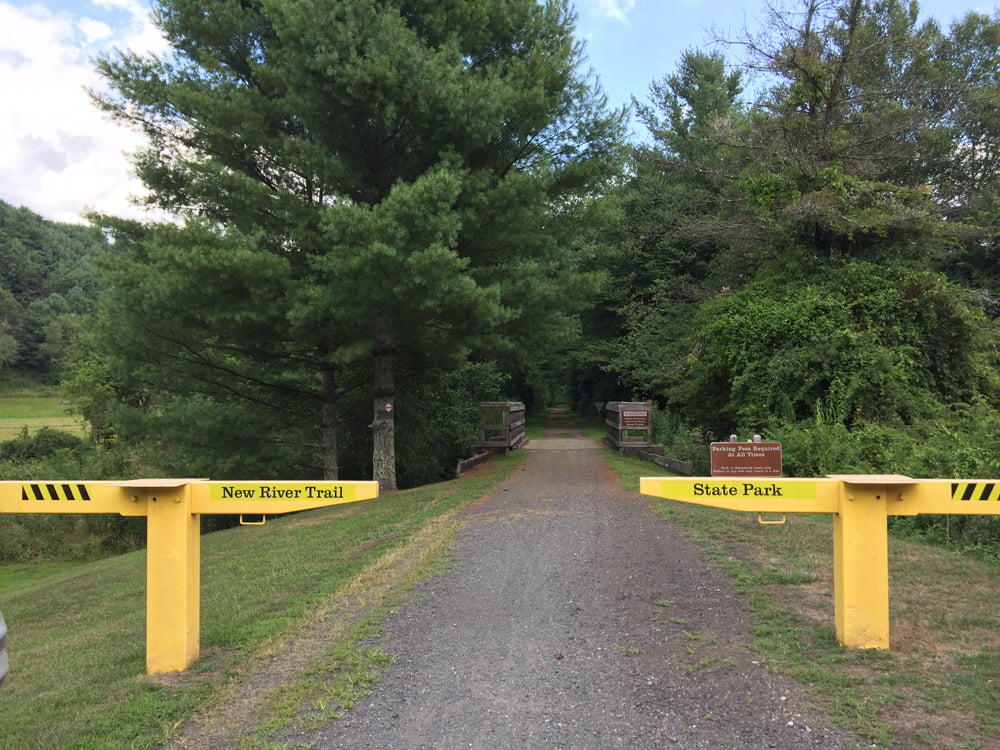
The New River Trail: It would be hard to not mention the New River Trail. It’s part of the Rails-to-Trails program. This particular stretch runs 57 miles, from Fries to Pulaski, and goes right through downtown Galax. It also goes right by my grandfather’s farm at the Gambetta Junction. (We spell it “Gambetty,” but whatever.) When I was a kid, we’d ride horses along the train tracks before it was converted into a state park. The trail follows along beside Chestnut Creek and then the New River. It’s a gorgeous place to ride bikes, horses, or just hike and look for Galax leaves. When we were making the Galax record at the farm, it just got too hot to play music and we all went down to the trail and hiked around a bit and played in the creek.   

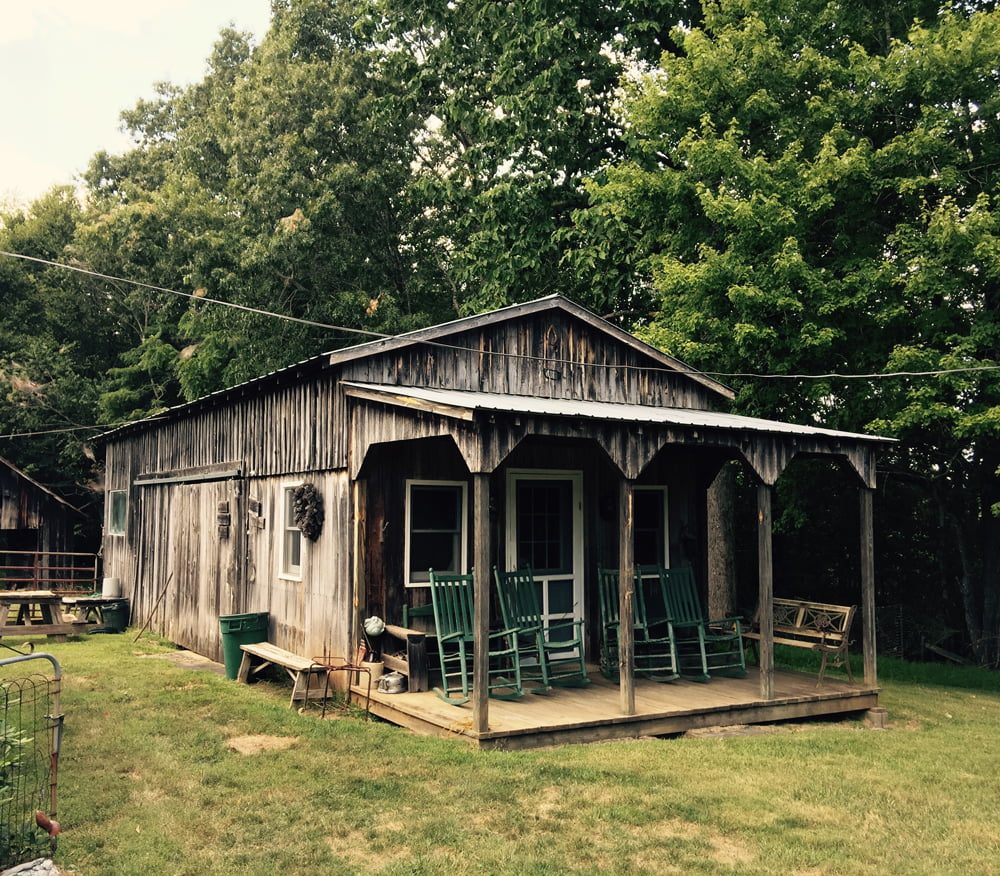
The Shed: I’m not going to tell you exactly where this is, but it’s not far from the New River Trail. This place used to be home to the best song circles and old-time jams anywhere in the world. Turns out, it’s a pretty good temporary recording studio, too.  

WATCH: Doyle Lawson and Quicksilver, ‘Blue Train’

Artist: Doyle Lawson and Quicksilver
Hometown: Fordtown, TN
Song: “Blue Train”
Album: A Tribute to John D. Loudermilk
Release Date: September 15, 2017
Label: Vector Recordings

In Their Words: “When I was getting songs together for the Hard Game of Love recording, I was thumbing through an old Country Song Roundup magazine. I turned a page and there was ‘Blue Train of the Heartbreak Railroad Line’ written by John D. Loudermilk. It was first recorded by George Hamilton IV, and I remembered the melody. My first thought was that it would be the opening song for the CD. The fans fell in love with the song as soon they heard it and it stayed at #1 on the bluegrass charts for about six months. I still close most of my shows with it. Every artist hopes that, someday, they will have a signature song and ‘Blue Train’ is mine.

I have long been a fan of John D’s writing because he wrote outside the box a lot of times. After I met John, he told me that he had written ‘Blue Train’ when was in South Africa and noticed that he was on the blue train. When he arrived at his destination, he had finished the song. John could — and did — write songs the way a lot of us wish we could. And you can put me at the top of the list of wishers.” — Doyle Lawson


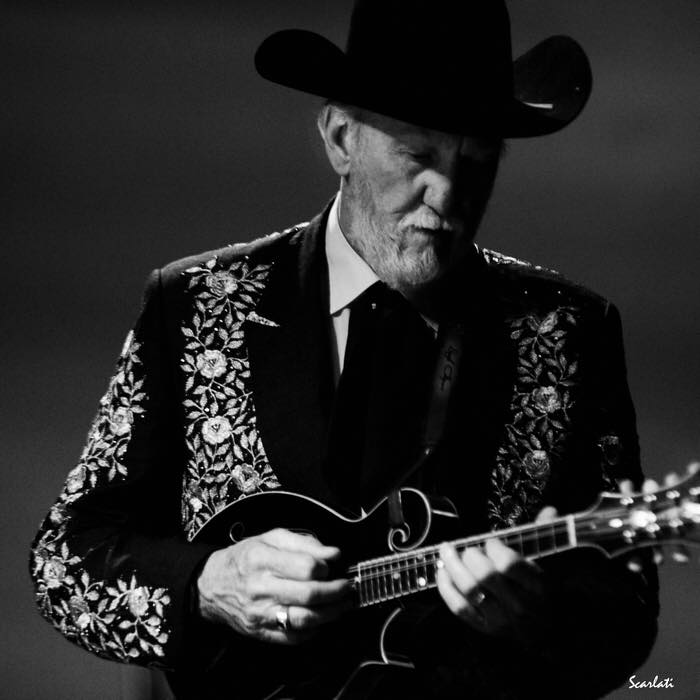
Photo credit: Anthony Scarlati

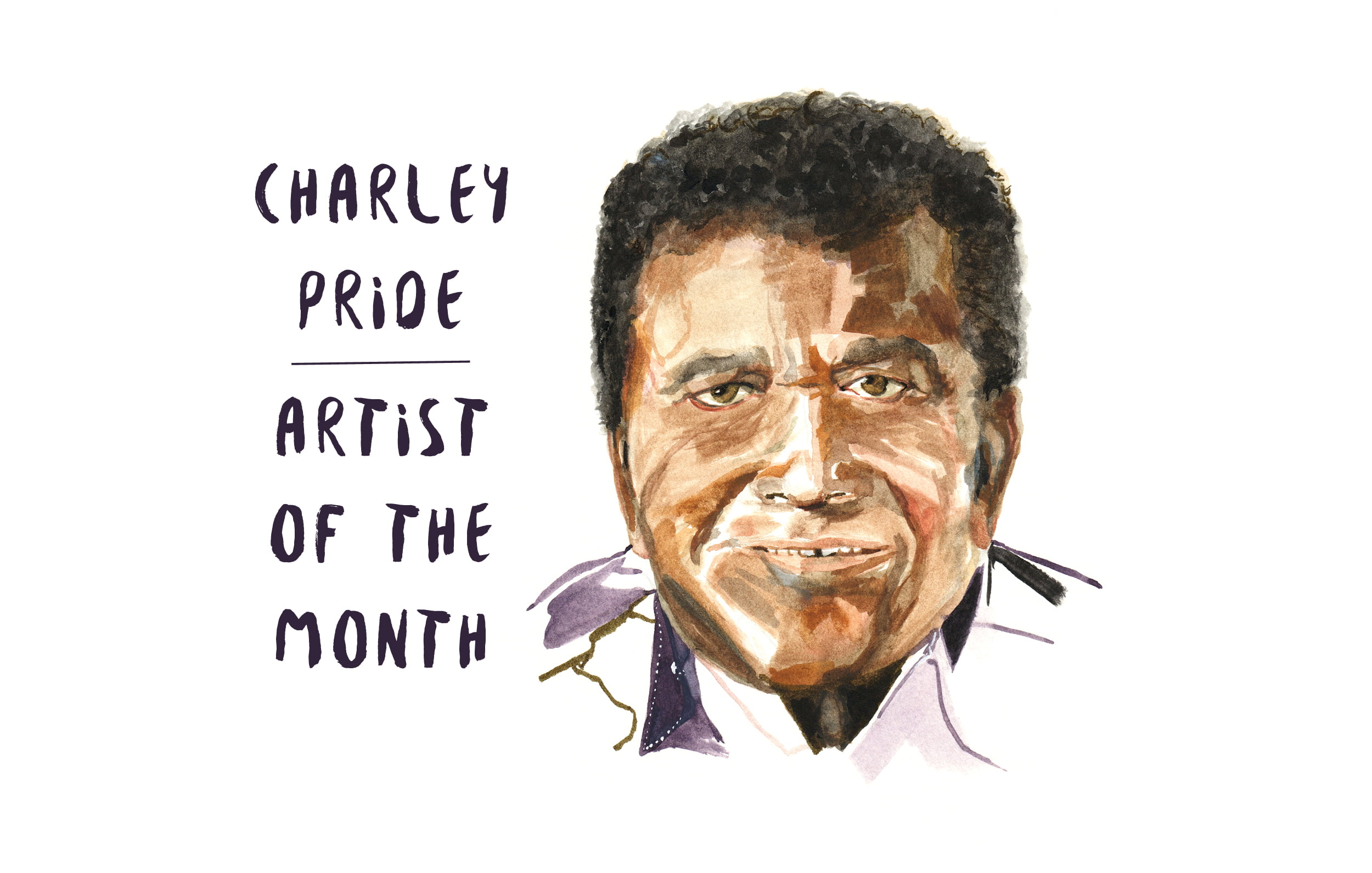
Charley Pride: Crossing Over Generations

Charley Pride might be 83 and a living country legend, but that doesn’t mean he’s not wise or proud enough to still listen to his wife. “It’s been six years since the last one,” Pride says of his 2011 album, Choices. “And my wife said, ‘Why don’t you try and find a producer you might like to work with?'” Pride heard her loud and clear and, together, they found Billy Yates, a renowned Nashville artist, producer, and songwriter. Even in his 80s, Pride wasn’t afraid to shake things up a little. Clearly, he’s never been afraid to take chances and drive from his gut — straight to 36 number one songs and spots in the Country Music Hall of Fame and the Grand Ole Opry.

The result is Music in My Heart, 13 songs of tender country traditionalism centered on Pride’s warm tone and classic, twangy spikes of fiddle and steel guitar. After all these years and one of country’s most storied careers, Pride’s never found a reason to veer away from what he does best — songs that grow fruitfully from the genre’s original roots, watered with the souls of Bill Monroe and Roy Acuff.

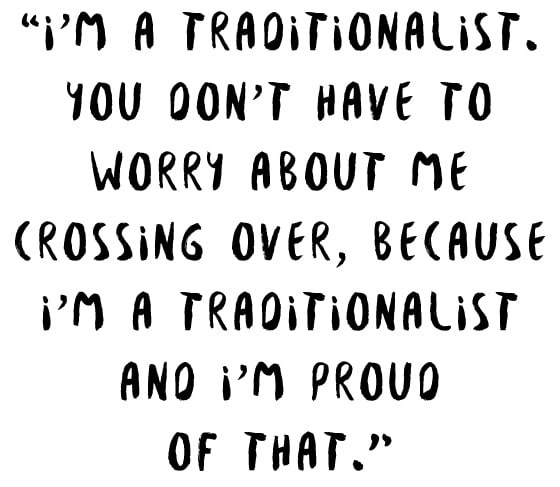
“I’m a traditionalist,” says Pride. He repeats the phrase so it’s undeniably clear: “A traditionalist. You don’t have to worry about me crossing over, because I’m a traditionalist and I’m proud of that. People used to say to me, after ‘Kiss an Angel Good Mornin” started going up the charts, ‘Charley, when are you going to cross over?’ I said, ‘I ain’t going to cross over to nothing.’ They want me to cross over? They crossed over to me!”

Pride, who’s sold over 70 million records worldwide, has certainly earned the right to stick to his convictions — and he’s also proven the value of driving straight from the heart, with equal parts hard work along the way. Pride grew up the son of a sharecropper on a cotton farm in Sledge, Mississippi, and has lived a life worthy of the movie screens, so much so that a biopic has been in the works for years (at one point, Dwayne Johnson, aka the Rock, was even in talks to play the singer). Pride held tenure in the Negro baseball league, was drafted by the Army, and ended up in Nashville after his plans in sports crumbled. He took the bus to Tennessee, eventually breaking barriers with hit after hit in the ’60s, ’70s, and ’80s. Even now, he’s still working, performing sometimes 40 concert dates a year. The only difference is that he’s singing to multiple generations.

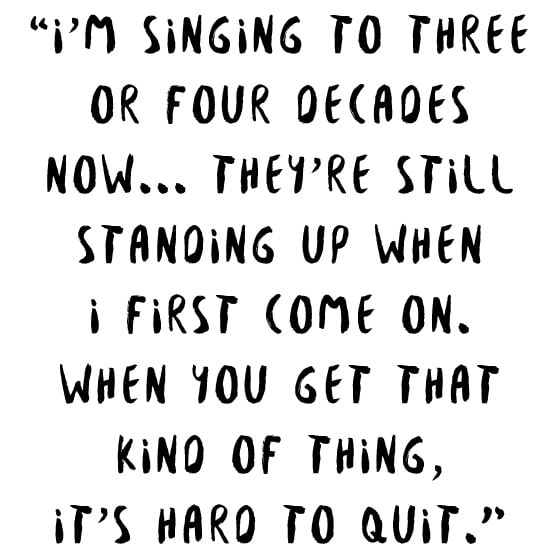
“I’m singing to three or four decades now,” Pride says. “I was in Indiana a few years back, and a lady hollered out in the audience, ‘Charley! You’re singing to five generations!’ I’m singing to grandmothers, grandfathers, granddaughters. I don’t want to sound like I’m bragging, but they’re still standing up when I first come on. They scream, ‘Oh, Charley. You’ve still got it!’ Not just the ladies; the men are, too. When you get that kind of thing, it’s hard to quit.”

Indeed, Music in My Heart is still very much progressing and alive. Instead of compiling an album of tributes, or something trying to appeal to country’s current trends, it’s unapologetic in its tone: it opens on “New Patches,” with fiddle that’s clear as day, undeniably traditional and Southern-rooted. Pride’s voice, too, has only honeyed as the years have gone on, deepening a touch, yet barely fraying. Even in his personal listening, he’s never strayed from the classics. “I listen mostly to Willie’s Roadhouse,” he admits, about his buddy Willie Nelson’s classic country show on SiriusXM. He sees Randy Travis as the dividing line of sorts between the new and the old guard.

“From Randy Travis came Tim McGraw, Garth Brooks, up to Taylor Swift, to now,” he says. “Most of them, I’ve met and they’ve been really good to me, same as my peers up to George Strait. I’ve liked not one or two of their songs, but a whole bunch. Garth Brooks, he treats me like a dad. Well, not a dad, but with respect, for my being a traditionalist.”

Predictably, it’s once again his wife Rozene — to whom he’s been wed since 1956 — who is the balancing force. “If I’m in her car, she listens to the people coming up,” Pride admits, though don’t ask him to recall any of their names. “The youngsters that are coming up right now.” Pride’s own youngster — his son, Dion — carries on the family tradition with some other famous offspring: Marty Haggard and Georgette Jones, something Pride himself brings full circle on Music in My Heart by covering Haggard’s “The Way It Was in ’51.”

With the genre’s recent embrace of traditionalism, it would be a pity to put Pride only in the category of dust-gathering legacy acts: He is one, undoubtedly, but he’s still making music that has ample power to scratch that modern classic country itch. Maybe that’s because he still sees his best days ahead of him. “I think this is my best work, and I’m not just saying that: I’m stating facts that I believe,” he says. “I culled these songs down to the ones I really love, the way I have done all my life. Like I’ve always said, I’m in the business of selling lyrics, feeling, and emotions.”

And Music in My Heart is beating fast and furiously with all of those things, 83 years in the making.


Lede illustration by Cat Ferraz.

Karen Pittelman: Bring Your Truth

A queer Jew from Brooklyn seems like the most unlikely candidate to front a country band, right? If you factor in Karen Pittelman’s past experience singing and performing punk and queercore, her current old country-influenced, honky tonk-inspired group, Karen & the Sorrows, seems even more implausible. Addressing these kind of assumptions about who “owns” country or who is allowed “admission” to country — by the mainstream country machine, country radio, country writers, or country fans at large — is why the following conversation is so important. On the surface, it would be easy, even hackneyed, to presume that Pittelman and company came to country as opportunists on the waves of the Americana tide. But considering LGBTQ+ identities and perspectives in roots music necessitates digging deeper. Doing so in our laughter-filled dialogue with Pittelman was both enlightening and encouraging.

Before Karen & the Sorrows, you were singing in a punk band. I wonder how you bridged the gap between punk and country — it sounds like it was something of a homecoming for you. Did identity play into you leaving country behind? Did you feel that in punk you would be more free to be yourself rather than in country?

Yeah, I think that that’s true. I came up around queercore, a place where making music and building queer community are all one thing. But I also think the distance between country and punk isn’t as far as people like to think. Who’s more punk than Johnny Cash? Johnny Cash is punk as fuck. I think, in terms of genres that give you a space to tap into anger and make something out of that, punk and country are two of the best. Punk isn’t so good for heartbreak and that’s what took me back to country. Really, what I love the most are sad songs. My heart was broken and, I dunno, I guess when my heart breaks, pedal steel comes out. [Laughs] Different things happen for different people’s hearts, but that’s what’s in mine, so I had to come back to country, whether I wanted to or not.

What was the beginning of country for you? Did you grow up listening to it?

I guess I’m not the average country music listener. I grew up in New York City. Being a queer Jew, I’m not whatever is supposed to be the stereotype of a country music listener. [Laughs] I think lots of people who love country music don’t fit the stereotypes. My dad, when I was growing up, ran a company called Heartland Music and he made compilation albums that were sold on TV. He was working, through my childhood, mostly with country music stars. He would be making these commercials with Conway and Loretta, and George Jones, and Don Williams, and then come back home and play me everything — and force me to listen to everything and learn it. I was kind of resistant, but it all sunk in. I guess it was just in there waiting to come out later.

I always find it interesting that a lot of people who might be opposed to LGBTQ+ rights feel that, because these identities are becoming more visible in more traditionally conservative spheres — roots music, country, bluegrass, old-time — that people with othered identities are “infiltrators.” But when I have these conversations with diverse people, their stories are exactly analogous to anybody else’s experience getting into these genres. Where do you think this disconnect is happening?

I think that’s a kind of stance that happens not just in this situation, but in a lot of different situations where people are feeling afraid of anyone who feels like an “other” to them. Not just LGBTQ, but anybody who is outside of who they define as their community. It always feels like people are infiltrating, because the “others” feel scary. Almost always, whoever is being termed the “other” has been there all along. Especially in America, we’re all mixed up with each other whether we understand it or not. Depending on where you live, maybe things are less racially or religiously diverse, but you don’t have to travel very far before that changes. And certainly you can’t get away from LGBTQ people; we’re everywhere. We’re 10 percent of the population. So, whether someone realizes it or not, we’re always there. We’re your friends and your community. Maybe that makes it even more scary — people having to redefine who they are and who they think everyone else is in relationship to themselves.

I think that’s what I grapple with the most in trying to unpack these issues with people who may stand in opposition. Because of the way the narrative has been told for so long, it’s easy to think that these ideas have only cropped up in the past 30 to 40 years. It’s hard to undo the revisionist history that everyone holds so closely, because it’s a linchpin to their worldview.

When the history of queer people in music is erased, of course nobody knows that it’s actually there. Queer people have been making all kinds of music all along, of course. If you’re not used to hearing that, I get it. You’ve been told your whole life that somebody is the enemy, that somebody is dangerous to you because of who they are — no matter how you define that “other” — you’ve got a lot to disentangle and unpack before you can see me or somebody else as a fellow musician, your neighbor, your friend, or your family.

I noticed, when I first started reading about your band and your album, that you’re clearly labeled and tagged “queer country.” In the course of these interviews and conversations, I’ve found a whole continuum of visibility and display of artists’ identities in what they create. I wondered how you got to the point where you wanted it to be overtly queer?

To me, first and foremost, it’s about the music. First, second, and third it’s about the music — and I just want people to hear the music. As a woman, though, I already don’t get to have that luxury (of being less visible). It’s already going to be, “Ah, women in music.” [Laughs] It happened because I was just craving the space for queer country to exist and I so missed having that space in queercore and queer punk shows. Not that queer space is the only space that I can feel comfortable in or the only space I want to play, but it really feels like home to me. I felt like I needed to make that space for myself and then other people, too, especially when other people were saying, “Yes! We need this, too.” That inspired me and made me feel like I had to keep going. That’s how we started calling it queer country.

Obviously, like we were just talking about, queer people have been making country all along — we’re going to play our record release show with Lavender Country and Patrick Haggerty made his out, proud, queer country album in 1973! I needed this community and, in order to make community, you have to be willing to announce it. “Okay, this is going to be queer country and that’s who we are and anyone else who feels the same way, come play this show with us!” [Laughs]

I can totally relate to that. I grew up in bluegrass — traditional, straight-ahead bluegrass. I didn’t realize that I craved a space to be queer within bluegrass until I tripped into such a space. You feel this burden lifted that you didn’t realize you were carrying around, just from feeling like the odd person out. It feels so good!

Especially in the way that roots music wants to claim a sort of “home” — a space where everyone can feel welcome, where it isn’t about putting on some kind of airs. This is music that’s about telling the truth about your life, about telling the truth of who you are and where you come from, so it’s important that we’re creating a space together where our lives feel known. I think it’s hard to realize, when you grow up with a certain kind of music, that you’re not being included in it. You know, but you don’t know in your bones, until you’re in a space where you are included. Then you realize how lonesome it felt all along.

That really resonates with me. It feels like the LGBTQ+ community in roots music is starting to network and weave together this strong fabric with each other. I love that.

I feel like we’re making it together right now! It’s amazing!

I want to ask you about “Take Me for a Ride” off of your new record, The Narrow Place. I love that it’s basically bro country, but queer. While listening to it, though, I could imagine someone hearing the lyric “I wanna kiss that pretty mouth and keep on kissing south” sung by a woman to a woman and being appalled by how “inappropriate” it is. Meanwhile, Sam Hunt’s “Body Like a Back Road” has been at number one for a record-breaking 25 weeks!

[Laughs] Yeah, “Body Like a Back Road” is way dirtier! It’s funny: I wasn’t sure, when I was working on that song, how dirty it would end up being, but I knew what I was going for. I think it ended up pretty sweet, as far as saying dirty things go! [Laughs] But “Body Like a Back Road” is filthy! And so catchy.

So how do we bridge this logical gap for people? We talked about this a little bit before — queer people have always been in country; queer people come to country music the same ways as everybody else. How do we show people that don’t want us to “flaunt it in their faces,” that it’s really not any different than Sam Hunt singing about “driving with his eyes closed”?

[Laughs] Hmm. I had this really interesting experience with someone writing a comment on one of our videos on YouTube. They wrote this really nice comment about how much they love the song and the band, but then they basically said exactly what you just said: “I don’t understand why you have to be putting all of these identity politics and labels on things.” I wrestled with it for a while, but then I wrote back saying, “Thank you so much. You know, I wouldn’t describe it as ‘putting labels.’ I would just say that all of my favorite country music and musicians just try to bring the truth of their lives to the music.” The person wrote me back saying, “Oh, I get that. Thank you for taking the time.”

Now, obviously, it doesn’t always go like that! [Laughs] That was like the world’s best case scenario of that conversation. He felt heard, I felt heard, everything went great. I mean, why do you want to hear Tim McGraw and Faith Hill sing “It’s Your Love”? It’s because they love each other! For real and in real ways. It’s beautiful, and you feel the truth of it. Yes, there’s an entirely different question here of how authenticity gets constructed. It’s complicated. That said, I do believe in bringing your truth to the music. If we all agree that that’s something we love about country music, then we’re going to need to find a way to let everybody who makes the music bring their truth.


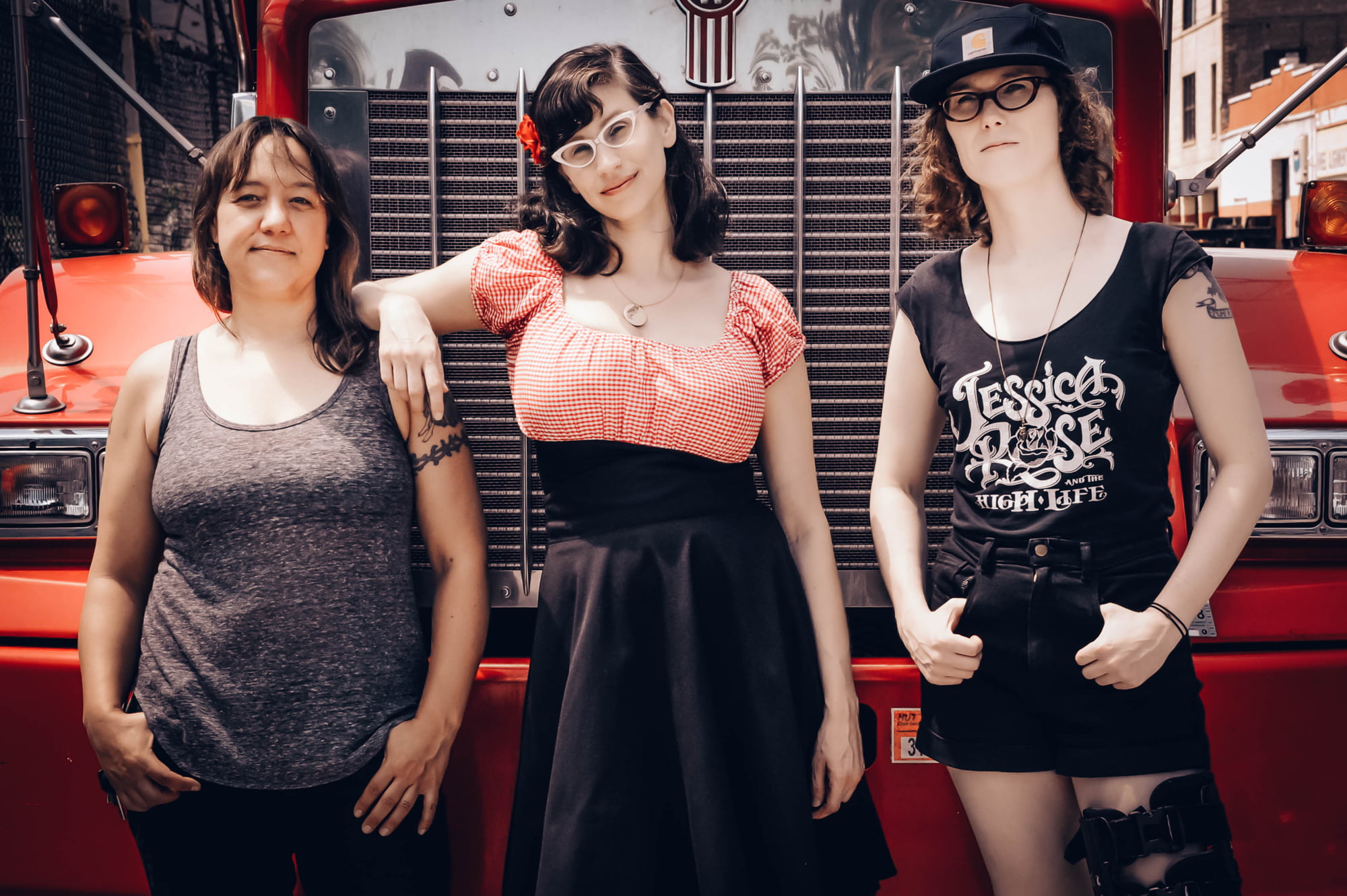
Photo Credit: Carole Litwin — (from left to right) Tami Johnson, Karen Pittelman, and Elana Redfield
WATCH: Tyler Childers, ‘Born Again’

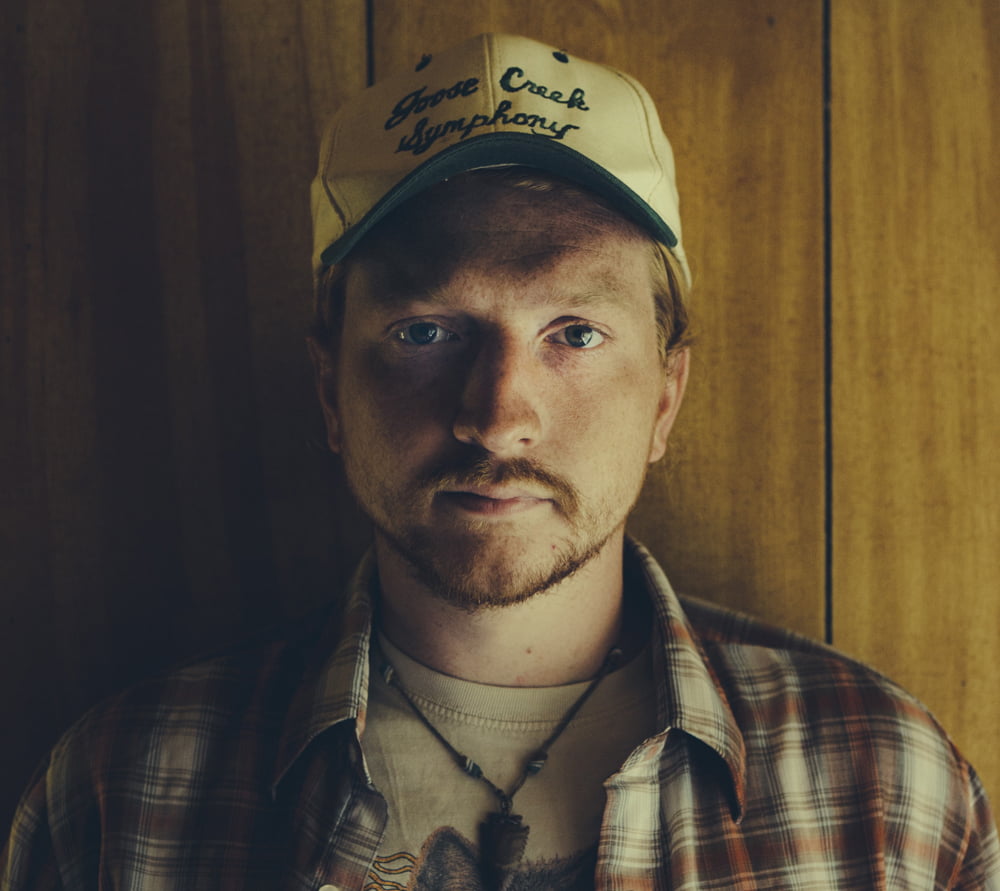
Artist: Tyler Childers
Hometown: Lawrence Country, KY
Song: “Born Again”
Release Date: August 4, 2017
Label: Hickman Holler Records via Thirty Tigers

In Their Words: “My buddy Byron let me borrow his recurve and gave me a crash course on shooting. He talked about hitting a deer in the ‘boiler room’ … the vitals. I liked the way that sounded and always wanted to use that in a song. So this is my redneck commentary on reincarnation.” — Tyler Childers


Photo credit: David McClister

Best of: Grand Ole Opry

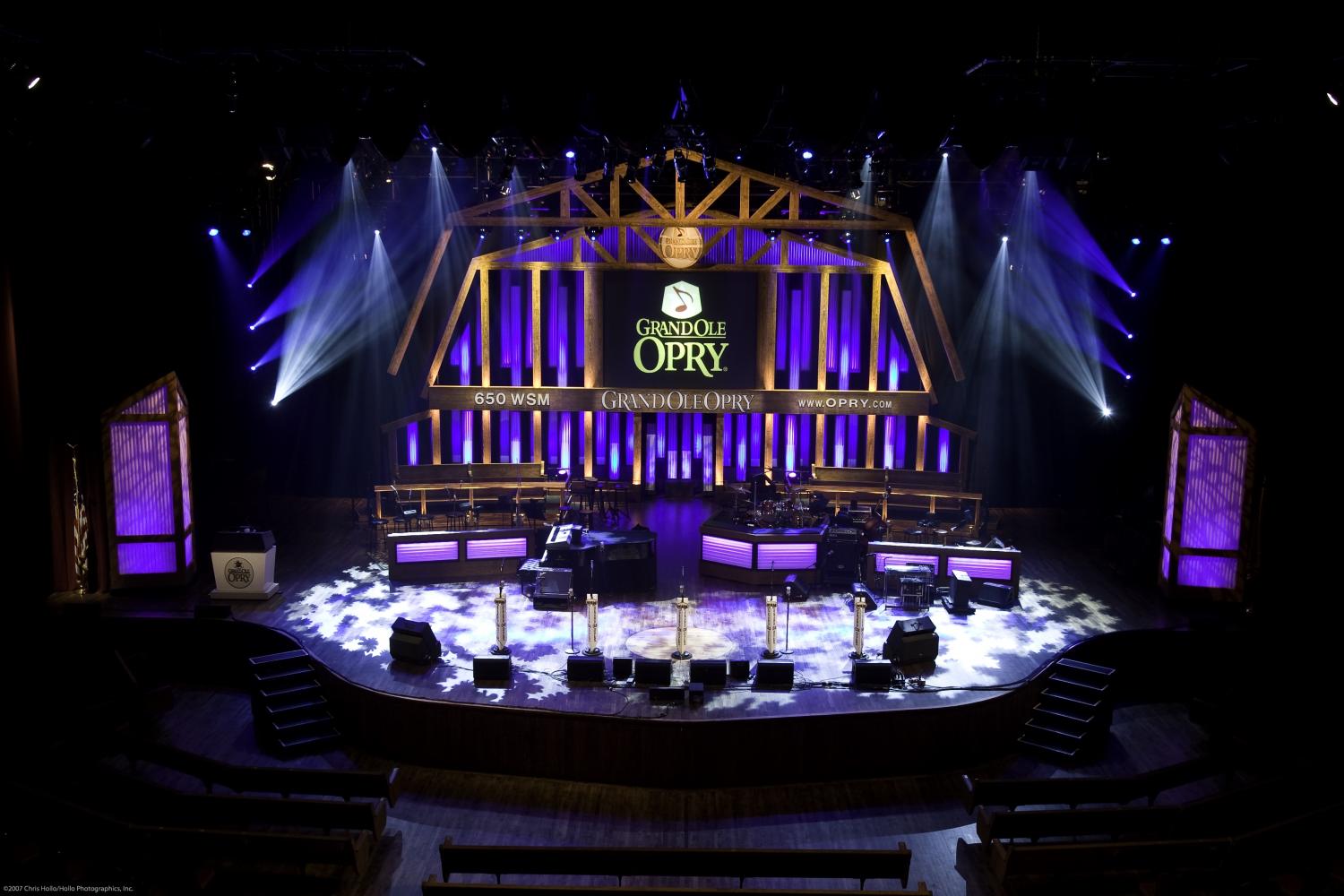
When I think of country music, I think of the Grand Ole Opry. As far as I’m concerned, the two are synonyms. What began as the WSM Barn Dance radio show in 1925 has grown into an entire entertainment experience (their YouTube even has style videos), and solidified Nashville as the Country Music Capital. With its rich history, it is no wonder that aspiring country and bluegrass musicians across the globe dream of making an Opry debut. Here are five performances from “country’s most famous stage” for your enjoyment:

Johnny Cash — “Ring of Fire”

Let’s start off with this throwback video of Johnny Cash performing one of his most famous songs, “Ring of Fire,” at the Ryman Auditorium in 1968. While Cash had a tumultuous relationship with the Opry — and was even banned from the show for a period of time in the middle of his career — there is no doubt that his music is always a treat to listen to.

Carson Peters & Ricky Skaggs — “Blue Moon of Kentucky”

While the Opry is an integral part of country music’s rich history, it also ensures a bright future for country music by recognizing young talent. In this 2014 video, then 10-year-old Carson Peters, joined by seasoned Opry member Ricky Skaggs, breathes new life into Bill Monroe’s “Blue Moon of Kentucky.”

Alison Krauss & Jamey Johnson — “My Dixie Darlin’”

Every time Alison Krauss and Jamey Johnson make music together, the result is magical. While Johnson holds down the lead vocals beautifully on this stripped-down rendition of the Carter Family classic, “My Dixie Darlin’,” Krauss’s sweet harmonies and fiddle playing are icing on the cake.

Merle Haggard — “Workin’ Man Blues”

Country music legend Merle Haggard never became an Opry member, but he did perform there many times during his long career. Here, Haggard sings his anthem for the working class, “Workin’ Man Blues,” on the Opry in 1977. Make sure to stick around untill the end to catch an amazing guitar solo!

Steven Curtis Chapman & Ricky Skaggs — “What a Friend We Have in Jesus”

Many musicians across various genres have recorded and performed the old Christian hymn “What a Friend We Have in Jesus,” but this rendition by Steven Curtis Chapman and Ricky Skaggs is my favorite, by far. Chapman and Skaggs deliver the song with a certain tenderness that pairs perfectly with the already comforting lyrics of the song.

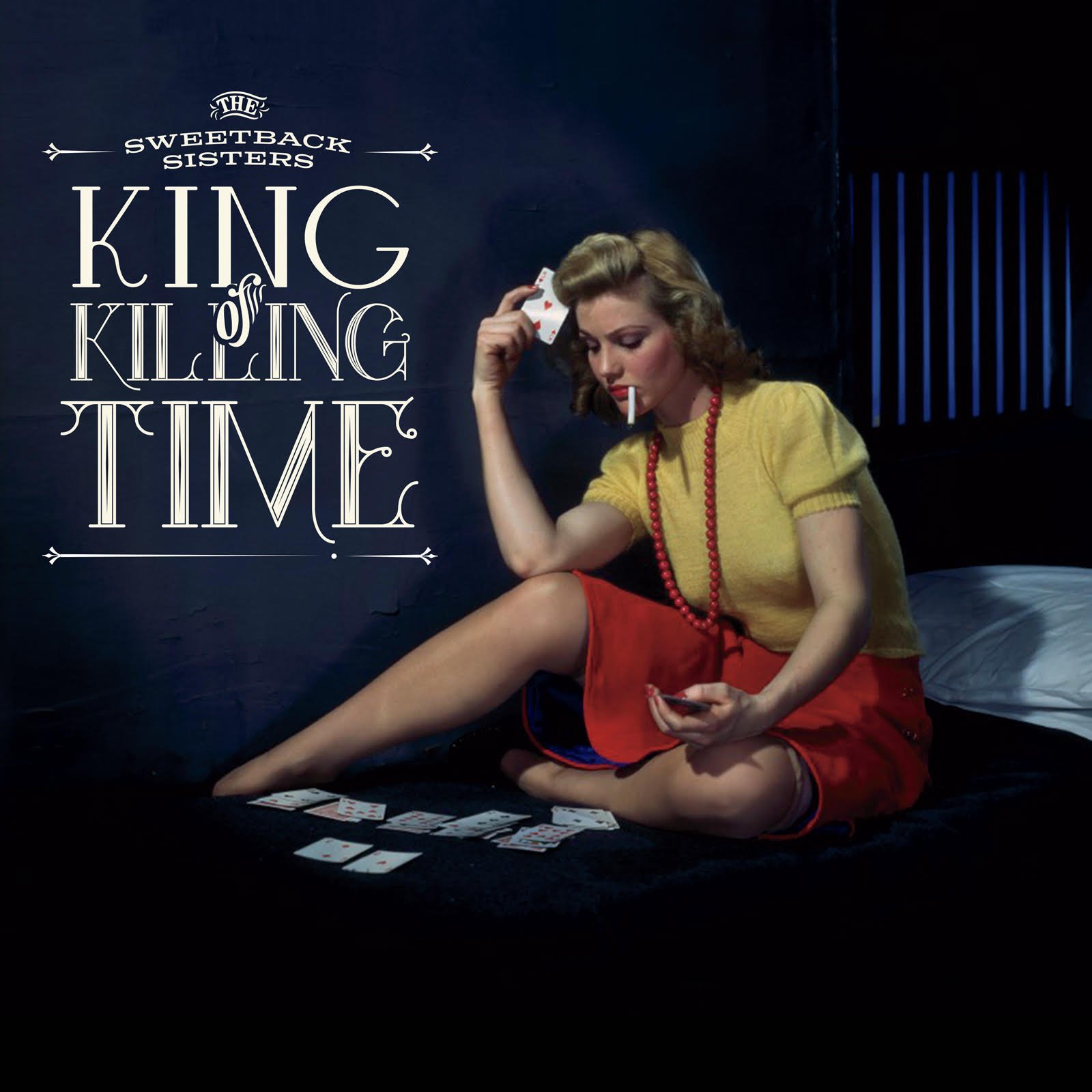
STREAM: The Sweetback Sisters, ‘King of Killing Time’

Artist: The Sweetback Sisters
Hometown: Brooklyn, NY
Album: King of Killing Time
Release Date: August 25, 2017
Label: Signature Sounds

In Their Words: “In a way, it felt like some of these songs — especially ‘I’m Gonna Cry’ and ‘Trouble’ — demanded that we make a record for them. They wouldn’t rest until we’d cut them the way they deserved, with a solid posse of electric guitars and fiddles and no-holds-barred vocals and plenty of harmony.” — Emily Miller.

“It’s true that there was never any question which songs were boss in this project, but they needed the counterweight of swingier, quieter tracks to fill out the record as a whole. In the end, we get this great balance of the scale: a wide, sprawling view of our kind of country music.” — Zara Bode

LISTEN: Fred Wickham, ‘Wedding Song’

Artist: Fred Wickham
Hometown: Kansas, MO
Song: “Wedding Song”
Album: Mariosa Delta
Release Date: September 29, 2017
Label: Thirty Days Records

In Their Words: “’Wedding Song’ will never be played at anybody’s wedding. Its more of an ‘anti-wedding song.’ Sometimes you know somebody’s making a big mistake and there’s not a lot you can do about it.

I don’t think there’s a better guitar player in the world than D. Clinton Thompson. I’ve been a fan for as long as I can remember, and it was a real treat to have him play on a song where it’s appropriate for him to really cut loose. Donnie’s a consummate player and, like Lou Whitney, he’s always been more concerned with what’s best for the song than with showing off. ‘Wedding Song’ was built for speed and Donnie really lets it fly. The result is pretty spectacular.” — Fred Wickham


Photo credit: Fred Wickham Jr.

LISTEN: Dead Rock West, ‘More Love’

Artist: Dead Rock West
Hometown: Los Angeles, CA
Song: “More Love”
Album: More Love
Release Date: August 11, 2017
Label: Omnivore Records

In Their Words: “During the spring of 2015, I was sitting on the couch — the windows and doors were open in the house. I was listening to the bustle outside, playing guitar, and wondering about love and if it ever comes back around after slamming the door and leaving bitterly. It was spring time in California and everything — I mean EVERY thing — was in bloom. It was evening time, but not yet dark. There were bullfrog sounds from the L.A. river, birds singing and building nests in the eves above me, children laughing and playing, an ice creams truck’s happy tune blasting through a ragged bullhorn as it moved down the street to greet the kids. In the cool air were smells of jasmine and orange blossom, a feeling of newness was all around: Everything was gonna be alright. In fact, it WAS alright.” — Frank Lee Drennen


Photo credit: Patrick Dennis