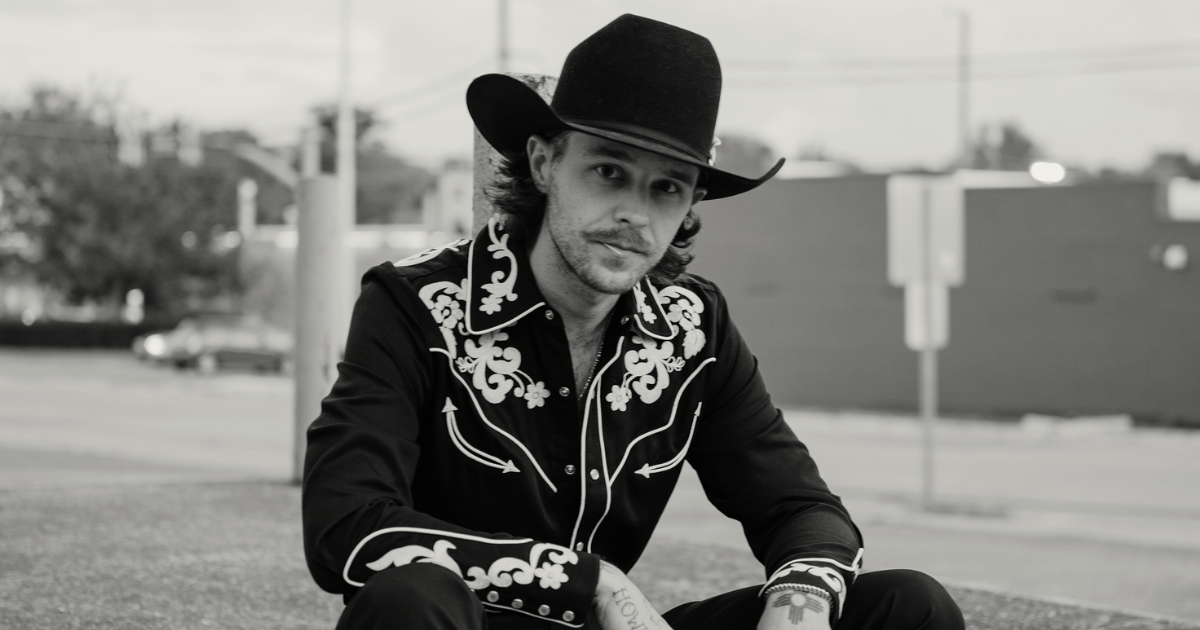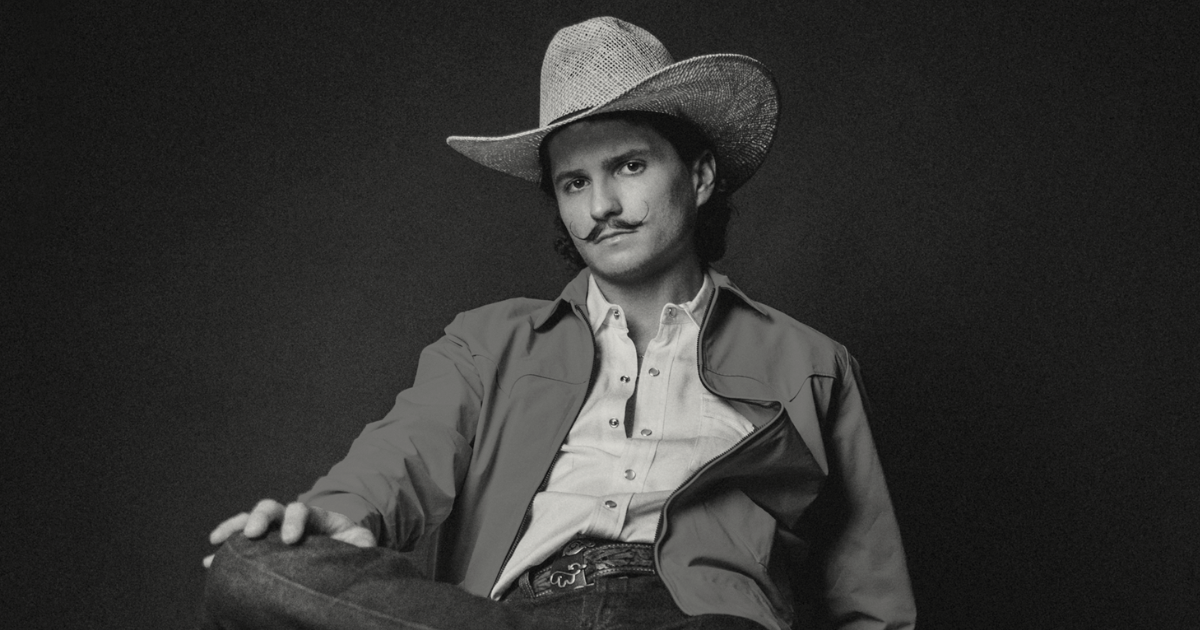
Braxton Keith’s Real Damn Deal is Country Through and Through

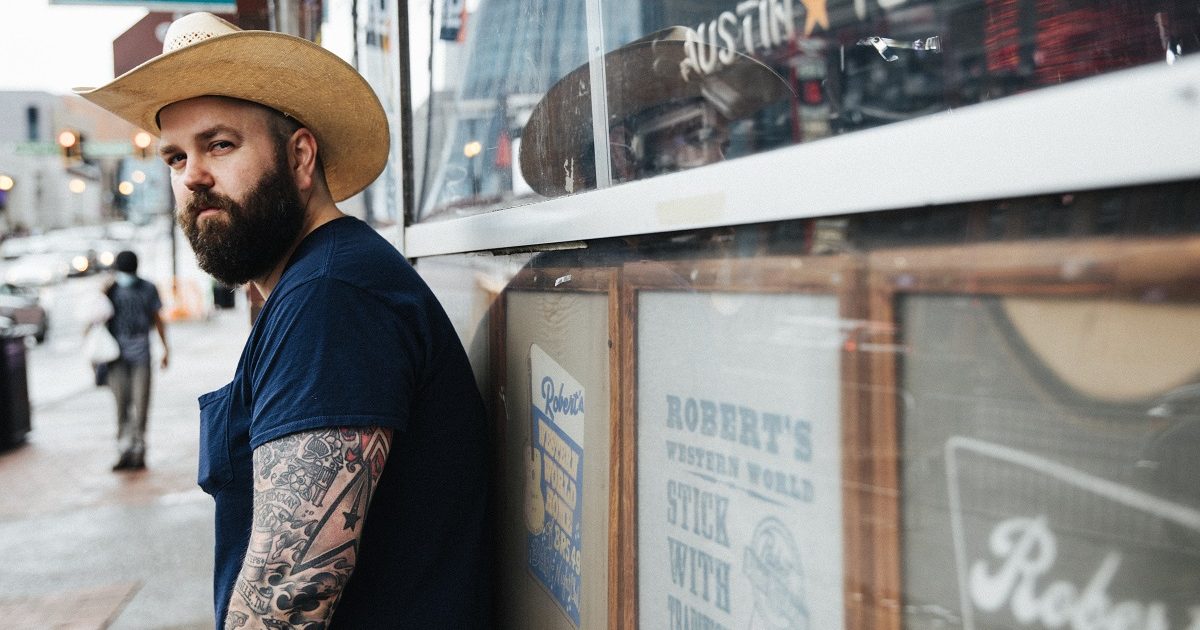
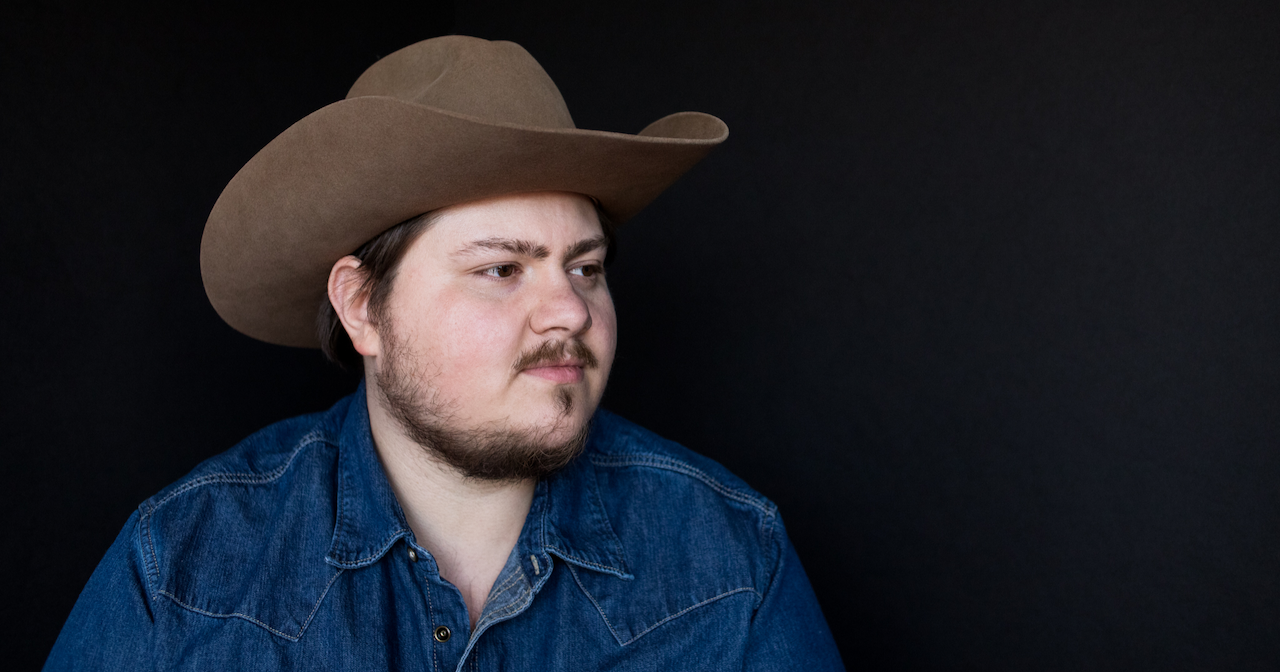
After years of building up a fan base through high-energy shows and viral social media posts, nobody is more ready for Braxton Keith’s debut album than… Braxton Keith. Raised in Midland, Texas and living in Nashville, Keith is only half-kidding when he says he’s probably listened to the new project five thousand times. Now he’s eager to hear what everybody else has to say.

His fans won’t be surprised that Real Damn Deal sounds like country through and through. Released on Warner Records on May 15, the album picks up the momentum of Keith’s gold-certified 2024 single “Cozy” and the unlikely embrace of his reverent cover of George Strait’s “The Chair.” Although he was skeptical about re-recording it, Keith found that his take on “The Chair” is serving as a gateway for his younger fans into the trenches of classic country.

Keith co-wrote a majority of the songs on the new album, but also included compelling material by Country Music Hall of Fame member Roger Miller, Americana all-star Jim Lauderdale, and some of Music Row’s most creative writers – such as Jessie Jo Dillon, Tony Lane, Liz Rose, and Morgane and Chris Stapleton, among many others. In this interview with Good Country, Keith talks about discovering country’s legends through his grandparents, learning to love the English language because of dyslexia, and hearing those inescapable ’90s country comparisons.

On this album, “Under Them Neons” sets the scene of a night in a country bar. It has a reference to Keith Whitley in it, too. He had a bluegrass pedigree, as you know, before he became a country star. Did you ever get interested in bluegrass?

Braxton Keith: I would say I have always been interested in bluegrass. Now I, by no means, am a bluegrass picker or anything of that sort, but I’ve always been interested in bluegrass, for sure. It’s such an interesting form of country music, I’d say. Very intricate, and it’s really cool to just watch. In fact, “I Ain’t Tryin’” on this record is written by Brice Long, Carson Peters, and Will Jones, and Carson is a bluegrass picker. He plays in a bluegrass band [Carson Peters & Iron Mountain] and opens up for us every once in a while.

How did you get introduced to Keith Whitley’s music?

Keith Whitley’s probably always been in the background for me. But definitely through listening to whatever was on the radio, listening to my grandparents’ old records and stuff. Keith Whitley has definitely been one that I’ve known about for a long time. I would say him, George Strait, Marty Robbins, and Ronnie Milsap … all the deep divers that you got to go in and figure out yourself.

Is that what you did? Figured it out for yourself?

I just tried to figure out what I liked the best. I really was attracted to these older artists because of the storytelling, but also they have a technical skill about their writing – and their melodies. Some of their melodies are pretty insane that I was trying to emulate, longing to hear again, or to make new.

You say you were listening to your grandparents’ records. Were they vinyl records?

Yes, sir. I don’t remember how old I was, but I remember sitting down and listening to Marty Robbins for the first time and Porter Wagoner. I remember hearing “The Carroll County Accident” and just thinking, “What is this? This is a whole different type of music that I’ve never even experienced before.” I think I was like 13, maybe even younger than that.

Every time we went over there, the Grand Ole Opry was on TV, or CMT was on at least, so we were always exposed to it. I guess I just didn’t realize what was going on until I got a little bit older. I got an iPod, and I think it was the Shuffle. It didn’t even have a screen. You just had to know what your songs were. That was the first time I really got interested in checking out music for myself. I didn’t have to listen to exactly what my parents were listening to anymore.

My mom was a big ‘80s rock person. She really didn’t like country music very much at all, because it’s very sad, she thinks. [Laughs] And my dad was listening to country music, but just whatever was on the radio. He wasn’t very specific in what he liked to listen to.

I’d read that your brothers were athletic, but you were not. However, you had musical talent. Is that accurate to say?

I would say, yeah. I tried to be athletic. I wanted to be, but they definitely had a leg up on me, on the sports and stuff. When I was a little kid we did this thing called Greater Midland Football League. From when you’re in third grade to when you’re in sixth grade you can go after school and do a football program. I never got to do that, because in third grade I actually figured out I was dyslexic. So, every day after school, I would go to classes and learn about the English language, which is probably why I ended up liking writing. So it all works out in the end. I was just a couple years behind when it got to football.

When you were learning about the English language, did you like to read too?

No. That was my big deal, that I struggled – I still do struggle – with reading. It just takes me a little bit longer and I have to really slow down and be thinking about what I’m reading to understand it. I like audiobooks a lot. Anything that I can do where I’m listening to somebody else read helps. But I would say I just liked writing. Before it was songs, I liked writing essays or whatever the assignment was. I’ve always liked writing. Coming up with my own stuff.

Did you play instruments during this time?

Yeah, absolutely. I played piano since I was in kindergarten, and I ended up playing for a while. I played for six to seven years and then I ended up quitting piano. I started piano because I loved Elton John. He was my big inspiration behind music when I was really young. I really wanted to learn “Crocodile Rock” and my piano teacher just wouldn’t let me do it. So I was like, “Man, I gotta go do something else.”

That was about the time I started picking up guitar, because my little brother was playing guitar at the time. So I was like, “Well, I’ll just go to lessons with him.” I started picking it up, got my first guitar, and never looked back. He doesn’t play anymore, but we started out together picking “Hotel California.” I remember us just sitting there for hours trying to get that thing down.

On this album, “Wind Blows” reminds me of how country music sounded in the ’90s. It reminds me of a Tim McGraw deep cut. What do you like most about “Wind Blows”?

I like the story it tells. You know, I grew up in Midland, Texas. And if there’s anything we know about Midland, it’s that there’s a lot of wind blowing in Midland. It’s kind of telling the story of how, when I lived in Midland, Midland was the end of the earth to me. There was nothing else there. And once I left, I never looked back. I went to Angelo [State University in San Angelo]. I’ve moved to San Antonio and Nashville, and we’re traveling all over all the time, just running and gunning. And the road keeps on going, you know? It’s cool to reminisce on the past, but my time in Midland’s gone and it ain’t coming back. That’s kind of what “Wind Blows” means.

Do you like it when people use the ’90s country comparison? Do you think that’s flattering? Or do you have an opinion when people say you sound like ’90s country?

I don’t have an opinion. The thing is, I don’t know if I’ve ever labeled it, which is funny to me. … You’ve heard the record. I would say it’d be very hard to pin that as ‘90s country. I would say that there’s some ‘90s elements in there, but there are elements from a lot of different dates in country music within that. I would just say we’re country, and we’re just trying to be country.

Well, you do start with a Western swing tune on this record.

Absolutely. Have you heard Jake Worthington’s new record? He has a song called “My Home’s in Oklahoma” and that one is a Western swing song. I heard that one after I’d been on a big Bob Wills kick. I just came back from Houston. Most of the rides that I do, I try to listen to different music every time. I was listening to a bunch of Bob Wills. When I heard that Jake Worthington swing tune, it was like, “Oh, son, we’ve got to have a Western swing tune on this record!”

So we called in Brice and Carson. That’s when Carson’s bluegrass magic came out. They ended up writing that beautiful “I Ain’t Tryin’” Western swing song. You couldn’t ask for a better song to start this record off. It’s upbeat, gets you in there. We’ve been ending the set with “I Ain’t Tryin’” lately, and it’s really fun. The crowds dig it. It’s a good one to just swing around to.

Did you ever get pursued to be on The Voice or American Idol or shows like that?

Not until after I was already pursuing this pretty heavily, and at that time, I was trying to stay away from those avenues. I’ve heard some nightmare stories about their contracts and how you are allowed to put out music after the show. And I just kind of knew where we were going. That’s the cool thing about being a Texas artist. There’s so many other Texas artists that are running around on the road, booking their own shows, that you can just learn from some of those guys. That’s basically what I did.

Jake Worthington [who was on The Voice in 2014] had a long talk with me about what he thought about TV and the way that it impacted his career. At that time in my career, I just didn’t think that it was necessary for me to do anything like that. I definitely think it helps put your name out there a lot more. But it also can have some hindrances sometimes.

How did you find the Roger Miller tune, “Am I All Alone (Or Is It Only Me)”?

I do believe Jamey Johnson was talking to William Beckmann one day and telling him, “Man, that’s such a great tune. You should cut that on your next record.” And then me and William ended up going and having a couple drinks, which turned into a bunch of drinks. And he was like, “Man, I listened to this song, and I’m kind of thinking about cutting it.” So I started listening to it. I was like, “Yo, are you gonna cut that song? Because if not, I’m cutting it. Like, I’m going to the studio tomorrow. I’m cutting it.” He was like, “Yeah, go ahead.” So we ended up putting it on the record. It’s one of my favorite songs to play live. It’s one of my favorite songs on the record. It’s such a beautiful song. Every time that I hear it, I’m like, “That is such a well-written song.”

Are there other songs on your record that you would like people to know about?

I would say the only other thing that we didn’t talk about is, there’s a Mae Estes collab on there, “Hurt by Heart.” I met Mae on the road about two years ago, like, less than 100 miles south of Canada somewhere, at a festival. She was singing and just blew me away. Her voice is so beautiful. She has such a great classic timbre to her voice that I knew I needed her on this record.

We’d been looking for a duet piece for a long time. Ended up writing “Hurt by Heart” [with Trent Tomlinson and Scotty Emerick] and pitched it to her. She came over to the studio one day, dressed and ready for a show that she had in Nashville somewhere. She cut her part in 10 minutes and then I spent the next two hours trying to make my part sound as good as hers. [Laughs] I just can’t brag on Mae enough. The audience that hasn’t heard Mae should definitely check her out. Her music is really good.

You’re surrounding yourself with good people. You got Mae Estes, William Beckmann, Jake Worthingon… It’s refreshing to see this new generation cheering each other on.

That’s the way you gotta do it, man. We’re all in this together. Everybody needs to be cheering each other on and helping everybody out. That’s the way I see it.


Want more Good Country? Sign up to receive our monthly email newsletter – and much more music! – direct to your inbox.

Photo Credit: Benjamin Humphrey
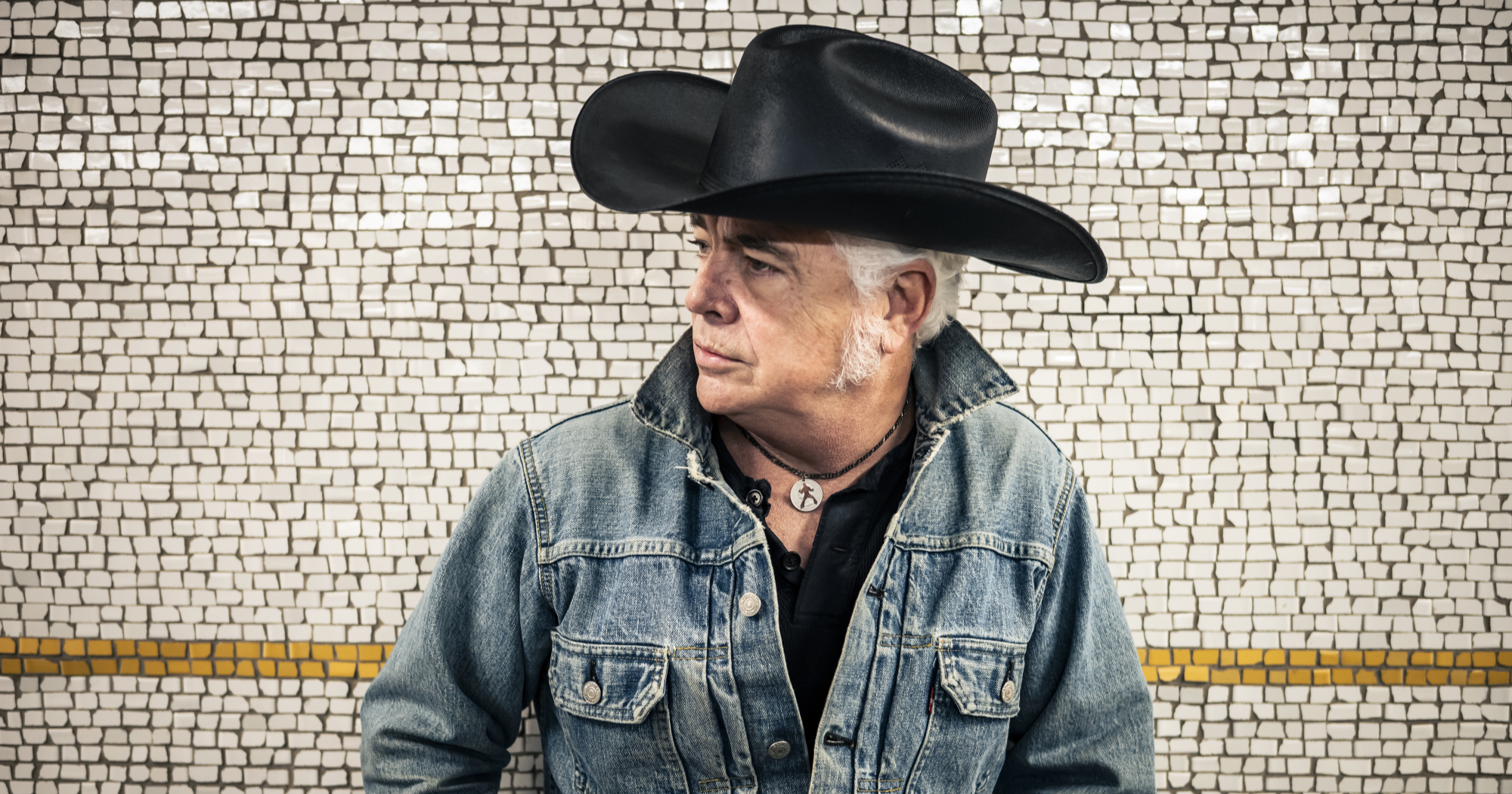
Dale Watson’s Ameripolitan Today Playlist

Ameripolitan music can be best defined as original music with prominent roots influence, and it has four categories: honky tonk, Western swing, rockabilly, and outlaw. My Mixtape features a song by an artist that represents the roots and then I’ll play a new artist that directly was influenced by them. You can hear the natural growth of country music when you listen to Lefty Frizzell and Merle Haggard or Kitty Wells and Loretta Lynn back to back. (Many of the roots artists had nicknames, I miss that.)

While some may hear an artist’s influence and say they are copying them, I’m of the opinion that John Lennon shared when asked about The Beatles’ influences. He said, and I paraphrase here, “One’s originality comes out in their inability to imitate their influences.” Very well said. – Dale Watson

“Who’s Gonna Take The Garbage Out” – Loretta Lynn, Ernest Tubb

Ernest Tubb had a distinctive voice as you hear on this song he sings with Loretta Lynn. Here’s the Texas Troubadour with the Coal Miner’s Daughter.

“My Wife Thinks You’re Dead” – Junior Brown

And no one is more evidently influenced by him than Junior Brown.

“Undo the Right” – Johnny Bush

Johnny Bush, otherwise known as the “Country Caruso,” was a drummer for Ray Price, the Cherokee Cowboy, before going out on his own. You would definitely hear that influence if you back-to-back Ray Price to Johnny Bush. Both are huge influences to every singer that grew up in Texas.

“Texas Honky Tonk” – Justin Trevino

This young man from Texas is carrying the Bush torch.

“D-I-V-O-R-C-E” – Tammy Wynette

The First Lady of Country Music, Tammy Wynette was married to the Possum, George Jones. She is easily at the top of women that influenced the newer singers.

“Houston Belongs To Me” – Sunny Sweeney

Singing her own divorce song, here’s Sunny Sweeney!

“Big Balls in Cowtown” – Bob Wills & His Texas Playboys

In the Western swing category this is the master, Bob Wills & His Texas Playboys.

“Riding High in Texas” – Asleep at the Wheel, Billy Strings

Though they’ve been around a while, they still burn up the road and proudly wear Bob Wills as their biggest influence. Ian Stewart sings as guest picker Billy Strings shines.

“Here in Frisco” – Merle Haggard

The Hag has influenced generations and even in death he still does. He once told me he forgot he wrote this song and was glad I brought it up so he can add it to his playlist again.

“This Highway” – Zephaniah OHora

Zephaniah OHora is now based in Nashville and he’s got a lot of great original songs. On this song you can hear the Hag in him.

“Bob Wills Is Still the King” – Waylon Jennings

In the outlaw world there is none more influential than Waylon, and in Texas we were all influenced by Bob Wills.

“Long White Line” – Sturgill Simpson

This particular song draws heavily on Waylon’s influence. And I like it.

“Ramblin’ Man” – Hank Williams

Hank Williams’ voice is one of the most recognizable in music. His songs are timeless and still inspire singers and songwriters alike.

“Thunderstorms and Neon Signs” – Wayne Hancock

You can definitely hear Hank in Wayne Hancock, but his own voice is definitely original, too – as well as his great songwriting.

“Guitars, Cadillacs” – Dwight Yoakam

Dwight Yoakam has influenced many a newcomer. Just as he was obviously influenced by Buck Owens. He came along when Nashville needed reminded of its roots.

“Lost in the City Lights” – Johnny Falstaff

Though not well known as of yet, Johnny Falstaff is picking up Dwight’s hat.

“Blue Kentucky Girl” – Loretta Lynn

The Coal Miner’s Daughter definitely left big shoes to fill, but her sassy songs inspired many women artists.

“Don’t You Ever Give Up On Love” – Brennen Leigh

That inspiration can be traced right to Brennen Leigh.

“Good Hearted Woman” – Waylon Jennings, Willie Nelson

Here’s the quintessential outlaw song by the most famously influential artists, the Red Headed Stranger, Willie Nelson, and Waymore, sometimes called Wautawsha, Waylon Jennings.

“Willie Waylon and Whiskey” – Dale Watson

The last song I’ll put in here’s is mine, because with pride I will state, yes, I am heavily influenced by Willie and Waylon. And sometimes whiskey.


Photo Credit: Jacob Blinkenstaff

The Performance of Rodeo, Music, and Country & Western

A few years ago, Tyler Halverson had a near-breakthrough hit with his track “Mac Miller,” a song more spoken than sung about the too-soon-departed hip-hop star and how Halverson felt about him. It was a modest song, and a discreet one, a mumbled ode to a kind of masculinity, arguing in favor of a wide and expansive country aesthetic. When he sings about the cowboy killer in the first verse of the song, there is some ambivalence there: Is it the cowboy doing the killing or the cowboy being killed? And, is it an actual cowboy or the larger myth of the West?

The West here is a distinct category from back when country used to be C&W, before the W for western was dropped. Halverson knows more about that W than most other twentysomethings. He grew up in a small town in South Dakota, surrounded by farmland and ranchland. Basically anything that could be done with cattle in the Dakotas, Halverson or his family have likely done. There might be some dissonance here, that ode to Mac Miller perhaps at expense to these country bona fides, but his parents loved listening to music as much as they loved working with cattle. He tells stories about driving around in a truck with his folks playing rock, rap, and country in their truck and making sure that he saw live shows in all those genres.

Music and rodeo are two kinds of performance, two ways of big action, and both boast big audiences – but songs about rodeo are often about the idea of the West. There are songs about small towns by people who haven’t lived in small towns for decades, or whose ideas of small towns are more about commuter suburbs an hour from Atlanta.

The small town is reflected in a kind of fascist excess lately and the rodeo has been stripped of any of its working class parts. What’s left is a kind of stadium tour. If local and small rodeos abstract the actual tasks of ranch hands (roping, tying, cutting cattle, breaking broncos), the overtaking of the Professional Bull Riders Tour made spectacle of that abstraction. Halverson has noted that middle ground between the rodeo and the cattle lots – and has also noted where the music business overlaps with these concerns, though he has not reached PBR or stadium tour levels himself. Yet.

Listening to Halverson’s many songs about the rodeo on his brand new album, In Defense of Drinking (released February 13, 2026 via CmdShft), they are another kind of cowboy killer. One of the best things about his song about Mac Miller was how artful it was displaying the boredom of driving around a small town, the anomie of a blank Saturday night, of being on the aux cord flipping through songs, trying to find something to listen to, trying to find something to do.

So, when Halverson returns to the cowboy killer idea in “Fort Worth Losing,” a song about heartbreak in the stockyards that slices through the myth of the West with a surgical precision, the song bucks, guitars roaring. Then, almost instead of a chorus, a guitar break arrives sounding like an outtake of “Ghost Riders of the Sky.” The mix of failure, heartbreak, heartland rock, and cowboy songs adds to the great tradition of Texas-shaped heartbreak. (It’s less goofy than George Strait’s “All My Exes” and more serious than Mark Chesnutt’s “Going Through the Big D,” but you could two-step to all three.)

“Forth Worth Losing” is one of three rodeo songs on the album; there is a reprise of “Beer Garden Baby,” this time with Parker McCollum – a rollicking and tender song which reminds a potential hookup of the differences between those who ride and those who play music for those riders. The musicians get paid, never out of the money. For all of its joviality, there is an undercurrent of playful cruelty. The musician asks the barrel racer, “Who’s going to pay for your Coors tonight, honey?” They still have tonight – to drink, to smoke dope, to fuck, to play music, and play at being a cowgirl or a cowboy.

The carpe diem nature of these dual performances is made even clearer with “Eight Second Ride,” a tense ballad which notes that “the time between is a long comedown.” Describing the comedown, about “rodeo queens, go around dreams,” and then eventually noting that the lack of money and the melancholy of that comedown doesn’t matter as much as the “eight second high.” His point punctuated with a squall of harmonica.

If “Beer Garden Baby” is a gender-reversed argument about the intersections of musicians and riders, the idea is made deeper and sadder on the heartbreaking “Like the Rodeo,” where Halverson asks, “Could she ever love me, like the rodeo?” He’s telling the listener that the musician and the rider have the same kind of itinerant circuit, one which might never develop into any kind of permanence. Though, on the next song, he makes the suggestion that wanting “cows and cowboy babies” might result in that Dakota grassland. That the cattle of the rodeo might lead to the cattle of the range, in a personal song made more poignant when realising this might be what his parents have done.

These rodeo songs have a kind of modesty, a small softness, that could be considered sober. And though at least one of them is about drinking, the soberness of the sound could also mark a move away from the partying done by the rowdy boys who sing about the events which Halverson sings.

In the ballad “In Defense of Drinking,” which rests on a double entendre that would make ‘70s countrypolitan singers proud, the narrator’s lover leaves him because he’s an asshole who drinks. It’s not the booze’s fault, but the fault of the person who drinks. The soberness continues on the last song of the album, “Son, Brother, Believer.” He sells the cliché from the first line, “I know these hands are made for praying,” but there is a lovely line about rolling joints with the Book of James. The song is about not wanting to disappoint his mother and not wanting to go to Hell, but there is a weariness and a sadness about the realization. Like how his rodeo songs strip away the large-scale spectacle for the one-on-one intimacy of after the show; this Jesus song is about giving up everything for the Lord. The number is threaded by a poignant, almost weeping harmonica, correcting the raucous instrumentation of “Eight Second Ride.”

The modesty of the record, especially the ballads, marks the conversation I had with Halverson for Good Country, a back-and-forth where the silences are as telling as the insights – and where Halverson is only willing to speak for himself. If In Defense of Drinking kills that cowboy, it’s one where the cowboy can’t speak for anyone but their own experience, and also one which foregrounds the eight second ride, the dance after, and the smoke at the back of the chutes.

I know that you have talked about listening to the radio in your parents’ truck and how that can help explain the eclecticism of your work, but I am wondering also about where you first heard Mac Miller. Does his work still influence this album?

Tyler Halverson: Me and my parents were like big concert junkies. They were going to everything… and were kind of just around music a lot. And then we would show cattle all over the country and that’d be at kind of fairs and festivals and stuff like that. So there would always be concerts going on there as well. I feel like it was just [that] we’re kind of always around it.

What was it like working with Wade Forster – you’ve mentioned that touring the rodeo and touring music are similar, can you talk a little bit about that? I love how smart the rodeo songs are on this album, and how careful they are in their metaphors. I know you rode for a while, how directly does the riding undergird the writing?

I mean, I think the rodeo and the music hustle is kind of the same thing, just in the sense of you’re not making no money sitting still. You got to keep going to the next one. Kind of the fun part of it, too, is that it’s like singing, starting out. You’re playing every shithole bar that you can find that lets you sing for four hours for a couple hundred bucks. It’s the same thing for rodeo in some small town that’s not paying out, too. Well, it’s the same kind of progression and build up, I think. I think just being around that – like my dad’s side was all horses and rodeo. My mom’s was all cattle and farming – the whole thing on both sides of that. It’s just a whole big gamble. If you’re gonna ride, you don’t know if that show is going to sell out, or if anyone’s gonna come. I think it’s all that.

There are two drinking songs on this album or perhaps anti-drinking songs [“In Defense of Drinking” and “Son, Brother, Believer”], but they are also in some ways about sobriety. Do you think there is a reconsideration of what drinking means in country right now or do the songs function as a kind of reconsideration?

Yeah, I mean, I think I can’t really speak for anybody else, and what’s going on right now, but I think for myself, you know, when you’re playing, we’ve played 115, 120 shows the last couple years, and you can get a little carried away [with] the party… every damn night.

And then that trickles right back home to me, so I think it was just a little like, I don’t know, sober enough, and a little realization. But it’s not all one big party, you know. Take care of yourself a little bit when you’re off the road.

Marissa Moss and Natalie Weiner of Don’t Rock the Inbox have talked about you as connecting to a revived Texas scene, and I know that you spent a year there, not in Nashville. How was that time? Do you consider yourself part of that scene, and also how was the Bob Wills festival?

Yeah, it was like a year or two. [It] was good for me to kind of reset and, I mean, at the time, we put “Beer Garden Baby.” That was kind of going off in Texas. So it was nice. It was a good timing for that, to be there, to play … I think I was just a little upset and fighting with Nashville at the time. I think Texas was great for just kind of reassuring me that we’re … doing it all right and we’re on the right track. It was a good little pressure, breath, fresh air, I think.

That town [Turkey, Texas] itself was just like 300 people. The dogs that get dropped off at the Allsup’s gas station by random truckers and shit like that, like there is nobody there. My phone didn’t work. I lived a block away from… Hotel Turkey [which] was owned by Bob Wills. There’s a huge history and music scene there in itself. That hotel’s got music every weekend, year-round.

So there’s always this kind of like, little transient hippie hole, people stopping in and out. It’s cool for that, just meeting people and then getting out of Nashville and being around people that were just having normal everyday conversations. …You can’t meet a stranger in Turkey, Texas. Whoever’s at the bar that night you’re sitting by, you’re gonna be friends with them. It’s gonna be just fine, but it was refreshing to kind of hear people with real jobs, real problems, and real things going on in life and collecting from that.

You grew up in Canton, South Dakota, right? About 30 minutes from Sioux Falls?

30, 40 minutes south of Sioux Falls.

How was growing up in Canton?

I grew up in a small town. Like, my family, my mom and dad were probably about the only ones living in town. Everybody else was out in the country… So I kind of grew up with the best of both worlds, I guess. I mean, during the week, I’d be hanging out in town skateboarding with my friends and all that and causing trouble. Then we’d go out to the farm on the weekends and we were just out there working cattle or going to a cattle show.

It’s kind of nice being able to have both, and I think that kind of helped frame a lot of music – like my taste and my phrasing. The things that I have just by hanging out with the kids in town and a bunch of my friends. Like my neighbor was in this punk band for a long time. So I didn’t pick up an acoustic guitar. How about my skateboard, electric guitar, and I had a mohawk? And then I’d show up at a cattle chute with that. I was just a misfit the whole time.

Thinking about working with members of Muscadline Bloodline [as producers] – I always think of them as a little outsider, too. How did that process work? How did you get them involved in the album?

Well, Gary Stanton, he found a clip of “Beer Garden Baby” way back in the day when I was [sending it] ‘round and he’s actually the one that reached out and said we should make a record. That’s where the first record came from. And then we made another one with Eddie Spear. I was kind of missing the sound that was going on with the first record, I guess, after that, and decided to go back with them.

I just think that they’re great, Gary and Ryan [Youmans] as the other producers. We’ve just always been pretty collaborative on sound and what we’re trying to go towards. I think they understand my crowd and what I’m trying to do, maybe sometimes a little better than I do. It was an easy choice to go with them. I look up to Muscadine a lot and what they’re doing independently. I just really trust Gary with the sound of what we’re trying to do. They’re doing it all on their own and busting their asses and making it happen.


Photo Credit: Ben Christensen

The Latest of Joshua Hedley’s Many Hats

As one of Nashville’s key classic-country connoisseurs, fiddle maestro Joshua Hedley has long been a musician of many hats. In 2018 his first solo album Mr. Jukebox tapped 1960s-style countrypolitan. 2022’s Neon Blue embraced the lush warmth of the ‘90s-era format, and he regularly thrills crowds with cover sets from across time at the famed Nashville honky-tonk, Robert’s Western World. Yet with his new album All Hat, Hedley dons the metaphorical cap he’s long obsessed over – the wide-brimmed stetson of his Western Swing heroes.

A titan of twang and perhaps Broadway’s finest down-home devotee of the traditional arts, All Hat finds the lifelong Bob Wills fan going back to his roots. Produced by Western Swing icon and Asleep at the Wheel founder Ray Benson, the album captures the upbeat joy of an eminently danceable (yet often overlooked) country style, which Hedley has been loving and learning since he was 8 years old.

Over 11 tracks of old-style originals, he celebrates a genre defined by jaunty rhythms and euphoric solos meant to keep a crowd dancing long into the night. With an already-respected resumé, Hedley still calls All Hat his “pièce de resistance,” and feels Western Swing deserves its due in this era of cultural callbacks.

“It’s definitely not seen the renaissance that say bluegrass or the outlaw country sound have,” he laments.

Joshua Hedley spoke with Good Country about the new album, the differences between Western Swing and other country styles, and what it’s like to be produced by one of your heroes. Plus, he explains how “getting stoned and playing country music” is the best cure for creative burnout.

Your new album is called All Hat. But that term is famously used to describe posers – and you don’t fit that bill when it comes to country. So why are you calling it All Hat?

Joshua Hedley: Well some people disagree, man. [Laughs] I don’t know what constitutes “not a poser.” I would think playing country music since you were 8 would take care of that, but apparently not.

Really?

It is what it is. I don’t really give a shit, but it was just kind of poking fun at myself and those criticisms. I just think it’s funny. But honestly, for the album, I was working on a different album. I was writing for something else and I was on the road with Asleep at the Wheel and Brennen Leigh – we were doing a package show tour together – and I was just hanging out with Ray. He was like, “You ought to let me make a record on you.” I’ve been wanting to do another Western Swing album for a long time and I was just like, “This is it.” When Ray Benson wants to make a record on you, you make a fucking Western Swing record.

It came out really great. I’m enjoying it for sure. I wonder, how are you feeling about your craft these days? Like you said you’ve been doing this since… well, your whole life really.

Man, I’m feeling good about it these days. This album in particular has been just a joy all the way around. Writing – it was really fun. Recording – it was really fun. Playing these songs live is super fun, and it’s something I’ve been needing. You get pretty burned out when you do it this much. I come off the road and I go back to playing music just at home. When you play like that, you get burnt out hard – and I was really burnt out. This record is kind of pulling me out of the burnout.

That’s interesting. I’ve been watching you at Robert’s Western World for years and it’s always felt like you had that dialed in. I mean, you’ve earned the respect of everybody in the field, and you could probably be making a more commercial play, but it seems like you’re more inspired to make music with your friends and do small residencies. Is that a more satisfying life?

Definitely. I’ve done a lot of touring and all of that, but when I’m really having fun is when I’m down at Robert’s or Dee’s [Country Cocktail Lounge] or Skinny Dennis. I’ve been playing these solo acoustic shifts at Dee’s, it’s just two hours a week and I just sit there with my guitar and get stoned and play country songs. It’s kind of empty in there, and I get to do whatever I want. I forgot how much fun I have doing that, so I’ve been leaning more towards playing at Robert’s and doing the honky-tonk thing lately, just because at the end of the day, you got to do what makes you happy. If I was going to do something I wasn’t enjoying, then I could get a desk job and probably make a lot more money than I make doing this.

Maybe.

I wonder, do you ever feel like you know a secret that some of your peers are missing? I mean, when you talk about that burnout phase, and being able to sit down and just get stoned and play country music, is that a secret hack of the lifestyle?

I don’t know about a hack or anything like that, but for me, I am having the most fun when I am playing covers and just singing old songs that I really love. You hear a great song on the radio and the feeling that you get from hearing that song? Imagine the feeling you get from singing it. That’s my jam.

You’ve been calling All Hat your “pièce de resistance.” And I cannot speak French, so I can’t say that phrase. But how do you figure?

I love country music in all its forms – well… maybe not all its forms. But most of its forms. Western Swing has always been my very favorite thing to play and sing, and I actually made a tribute to Bob Wills when I was 15 with Buddy Spicher and his band up here in Nashville.

What? Really?

Yeah, it’s all Bob Wills covers, and a lot of ’em, I think probably I learned them from Asleep at the Wheel. … It’s just always been on my mind that I should write one of these instead of just doing Bob Wills songs, and always wanted to do it. And then getting to do it with somebody like Ray and with the players who are on the album – guys I’ve looked up to my whole life. I don’t know, it’s just the vibe was in the room and this record came out better than I could ever imagine.

Tell me a little bit about your songwriting on this one. What do you do differently when you’re writing a Western Swing tune?

Oh yeah. It is actually quite different because a lot of those melodies come out of the pop world. And when I say pop, I mean like ’30s and ’40s pop.

Like the original pop.

The original pop. Big band music and stuff like that. Country’s very structured, at least the classic kind that I do to where you’re verse, chorus, turnaround, chorus, outro, something like that. It’s real regimented and formulaic and it’s a different approach to writing Western Swing. A lot of those songs are just one verse, and then you play a bunch of solos, and then you just repeat that verse and take it home, which is a very jazz standards thing to do.

I guess I never thought of that.

Like on “Fresh Hot Biscuits.” I kind of approached that how Bob and them would approach “Ida Red” or something, which is really just a fiddle tune that he wrote words to. I leaned into borrowing old lines from old blues songs and tried to find some of those old lines. Like in “All Hat” – “I know a gal up over the hill/ She won’t do it, but her sister will.” That line’s as old as time.

Right. So the structure, is that because it’s made for dancing?

Yeah, the vocal is secondary a lot of the time, and the lyrics certainly are. It’s more about dancing and the whole thing evolved out of square dance culture and callers where there weren’t lyrics to the songs. It was just a guy telling you what to do on the dance floor. The lyrics are kind of secondary to the overall vibe, and the musicianship is really a big part of it, too.

I did want to ask you about “Stuck in Texas” because that one’s got Ray on it. It’s got that jumpy beat, and a little bit of yodeling in there, too. Where did that one come from?

I had wrote several songs that had really similar chord progressions at that time. I had written them in a row, and I was trying to get out of that. And I’m also trying to push myself on guitar to write outside of three chords, four chords. I just kind of came up with that. I was thinking about the Sons of the Pioneers when I wrote that song, wanting a real good guy, cowboy-movie cowboy. Thinking about Gene Autry and stuff. Then it was just a no brainer for Ray to step in on. Mr. Texas.

What’s it like to be produced by a guy like Ray Benson? Is it different than playing in his band?

It is different than playing in his band because his band is his brainchild and he knows exactly what he wants it to sound like. I think he recognized that this was my brainchild and we all kind of did it together. Ray, he kind of choreographed a lot of it being like, “We should throw the ensemble part here and twin this,” and “We got to have fiddle on the intro,” that sort of thing. But a lot of it was just a group of guys that play together all the time getting together and playing these songs. And what happened was just natural.

You said somewhere in your bio that you grew up playing fiddle with guys who were in their 50s and 60s, and learning from them. I just wonder, is that what you aspire to be one day?

Yeah, definitely. There’s actually this kid Nash [Grier] that comes down to Robert’s whenever Brazilbilly plays and it’s always a treat. He’s like six or seven years old and he’s a really great fiddle player. He comes up and he sings “Hey, Good Lookin'” and he plays “Orange Blossom Special” behind his back – all the little things I used to do when I was his age. Now that I’m 40 years old, I’m like, “Man, look at that little guy.” It really brings back memories. I was that kid and I love seeing a new generation embracing all this stuff. It’s really special to get to pass it on.

What you hope people take away from this one. I know it’s a labor of love for you and a lot of fun to do, but what do you hope people get from this thing? Do you want to spark a revival?

I don’t know about any revival, but I hope people have fun with it. I hope that they don’t take it too serious. Music can get so heavy these days, and I get it. But I want to remind folks that you can just keep it light and make a great record. Sometimes it’s nice to just dance, to just do some two-stepping, learn how to polka and not be so serious all the time. It’s all fun. That’s why we got into this. So I just want people to remember to enjoy themselves.


Photo Credit: Joshua Black Wilkins

Celebrating Black History Month: DeFord Bailey, Tina Turner, Keb’ Mo’, and More

To celebrate Black History Month – and the vital contributions of Black, Afro-, and African American artists and musicians to American roots music – BGS, Good Country, and our friends at Real Roots Radio in southwestern Ohio have partnered once again. This time, we’ll be bringing you weekly collections of a variety of Black roots musicians who have been featured on Real Roots Radio’s airwaves. You can listen to Real Roots Radio online 24/7 or via their FREE app for smartphones or tablets. If you’re based in Ohio, tune in via 100.3 (Xenia, Dayton, Springfield), 106.7 (Wilmington), or 105.5 (Eaton).

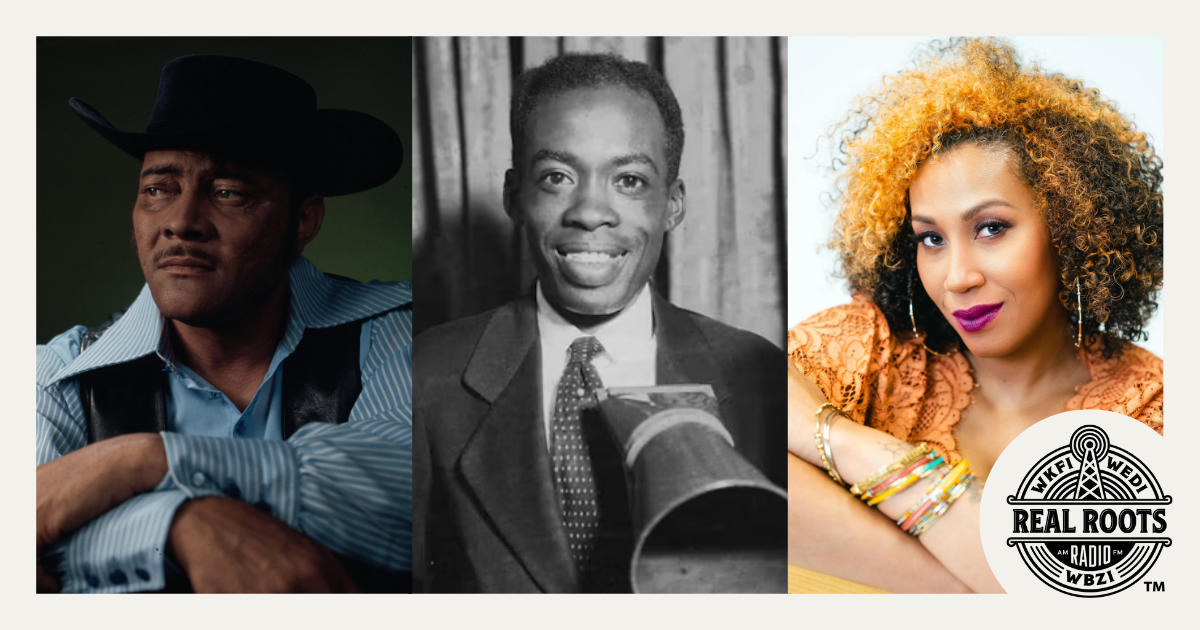
American roots music – in any of its many forms – wouldn’t exist today without the culture, stories, skills, and experiences of Black folks. Each week throughout February, we’ll spotlight this simple yet profound fact by diving into the catalogs and careers of some of the most important figures in our genres. For week two of the series, RRR host Daniel Mullins shares songs and stories of Stoney Edwards, Rissi Palmer, Keb’ Mo’, Tina Turner, and DeFord Bailey. Check out the first week of the series here.

We’ll return each Friday through the end of the month to bring you even more music celebrating Black History and the songs and sounds we all hold dear. Plus, you can find a full playlist with more than 100 songs below from dozens and dozens of seminal artists, performers, songwriters, and instrumentalists from every corner of folk, country, bluegrass, old-time, blues, and beyond.

Black history is American roots music history; the two are inseparable. As we celebrate Black History Month and its legacy, we hope you’ll join us in holding up and appreciating the artists who make country, bluegrass, blues, folk, and Americana the incredible and impactful genres that they are today.

Stoney Edwards (1929 – 1997)

If you don’t know the late, great Stoney Edwards’ name, it’s time to fix that – because his story in country is as powerful as the songs he sang.

Born Frenchie Edwards in Seminole Country, Oklahoma, in 1929, Stoney was part African American, Native American, and Irish. The son of sharecroppers, he was a prominent bootlegger in Oklahoma during his younger years. Stoney had dreams of playing the historic Grand Ole Opry. His big break in music would come later in life, in his early 40s, when he was discovered in California singing his honky-tonk style at a benefit for the King of Western Swing, Bob Wills.

Stoney was signed to Capitol Records in the early ’70s and from there he made history. He scored fifteen charting singles, including a pair of Top 20 hits, one of which – his 1973 hit “She’s My Rock” – is still revered as a bona fide country standard later covered by artists like Brenda Lee and George Jones. His songs were deeply authentic, whether he was singing about love, loss, or his own experiences growing up poor and Black in America. He gave a voice to the underdog, often drawing from his own struggles, including battling discrimination and working blue-collar jobs before music. Edwards would also record several songs saluting his country heroes over the years, including “The Jimmie Rodgers Blues,” “Daddy Bluegrass,” and his Top 40 hit, “Hank and Lefty Raised My Country Soul.”

Stoney’s music wasn’t just about catchy melodies; it was about storytelling. His debut single was inspired by a true story. Before he hit it big as a country singer, Stoney was trying to provide for his family working as a forklift operator at a steel refinery in San Francisco. A workplace accident resulted in Edwards being sealed up in a tank and suffering dangerous carbon dioxide poisoning; he endured an extensive two-year recovery, both physically and mentally. During this time, Stoney was struggling to care for his wife and children, so he planned to leave in the middle of the night. However he tripped over one of his daughter’s toys, and it prompted him to stay. In 1970, backed by the virtually unknown Asleep at the Wheel, Stoney Edwards released his debut single, the autobiographical “A Two Dollar Toy.”

While his career didn’t reach the same commercial heights as some of his peers, Stoney Edwards left an indelible mark on country music. He paved the way for greater diversity in the genre and showed that country music is for everyone – no matter where you come from or what you look like. Stoney Edwards passed away from stomach cancer in 1997 at the age of 67.

Suggested Listening:
She’s My Rock
Hank and Lefty Raised My Country Soul

Rissi Palmer (b. 1981)

She’s a trailblazer in country music, a voice for change, and an artist who refuses to be boxed in – meet Rissi Palmer!

Palmer’s mother passed away when she was just seven years old, but she instilled in her a love for the music of Patsy Cline. Rissi would burst onto the country scene in 2007 with her hit single, “Country Girl,” making history as one of the few Black women to chart on the Billboard country charts. Rissi has built a career on breaking barriers by blending country, soul, and R&B into a sound all her own. She has penned some empowering original songs, helping folks on the margins feel seen, especially her most personal song, “You Were Here,” dealing with the heartbreak of a miscarriage.

Beyond the music, Palmer uses her platform to uplift underrepresented voices in country and roots music. As the host of Color Me Country radio on Apple Music, she spotlights Black, Indigenous, and Latino artists in country music – proving that the genre belongs to everyone. With her powerful voice and unwavering spirit, Rissi Palmer isn’t just making music, she’s making history.

Suggested Listening:
Leavin’ On Your Mind
Seeds

Keb’ Mo’ (b. 1951)

Keb’ Mo’ is a modern blues legend. Born Kevin Moore, this L.A. native blends Delta blues with folk, soul, and a touch of country. With his smooth vocals and masterful guitar skills, he’s kept the blues alive for over four decades.

Mo’ is heavily influenced by the late Robert Johnson, who preceded Keb’ by about 60 years. Keb’ portrayed Robert Johnson in a 1998 documentary and included two Johnson covers on his breakthrough self-titled album in 1994. He has since won five GRAMMY Awards, collaborated with legends like Bonnie Raitt, Jackson Browne, and Taj Mahal, and performed for multiple U.S. presidents.

Mo’ is embedded in country and Americana music as well, working with cats like Lyle Lovett, Old Crow Medicine Show, John Berry, Alison Brown, Jerry Douglas, and Darius Rucker over the years. He has been quick to share his respect for country and gospel traditions, appearing on the critically acclaimed all-star album, Orthophonic Joy, recreating the magic of the 1927 Bristol Sessions – country music’s big bang.

Whether he’s playing a heartfelt ballad or a foot-stomping blues groove, Keb’ Mo’ keeps the genre fresh and timeless. His music isn’t just about the past – it’s about where the blues is going next. We love his passion for all things American roots music. Fifty years into his remarkable career, Keb’ Mo’ is still one cool cat.

Suggested Listening:
To The Work
Good Strong Woman” featuring Darius Rucker

Tina Turner (1939 – 2023)

She was the Queen of rock ‘n’ roll, but did you know Tina Turner had deep country roots?

Born Anna Mae Bullock, she grew up in Nutbush, Tennessee. Tina recalled picking cotton as a youngster during her hardscrabble rural upbringing. Her musical journey began by singing at church on Sunday mornings. She grew up on country, gospel, and blues. Turner and her husband, Ike (who was abusive towards her) had massive success in R&B and rock and roll, but her first solo record was actually a country album.

In 1974, Turner released her debut LP, Tina Turns The Country On!, introducing herself as a solo act. Featuring top musicians, including Country Music Hall of Famer James Burton on guitar, Tina tackled songs from country greats like Dolly Parton, Kris Kristofferson, and Hank Snow. It would go on to receive a GRAMMY nomination for Best Female R&B Vocal Performance in 1975. Over the years, unreleased songs from this groundbreaking album would be dropped, including her powerful take on “Stand by Your Man.”

However, her most enduring impact on country might be as the inspiration behind one of the outlaw movement’s most popular hits. In 1969, Waylon Jennings was staying at a motel in Fort Worth, Texas, when he saw a newspaper ad about Ike & Tina Turner that intrigued him enough to interrupt Willie Nelson during a poker game so they could write a country classic. The phrase that struck Waylon heralded Turner as “a good hearted woman loving a two-timin’ man.” Sound familiar?

From honky-tonks to stadiums, Tina Turner’s fiery spirit left an unforgettable mark on practically every genre – country, rock, and everything in between.

Suggested Listening:
Stand By Your Man
Good Hearted Woman

DeFord Bailey (1899 – 1982)

Let’s go back to the early days of country to a name that shaped the Grand Ole Opry, but is often forgotten: DeFord Bailey, “The Harmonica Wizard!”

Born in 1899 in Smith County, Tennessee, Bailey grew up around banjos and fiddles in a musical family, saying that he learned the “Black hillbilly music” tradition. He overcame polio as a child, resulting in his short stature – he was only 4’ 10” tall – but it was through this ordeal that he found his voice in a harmonica. While recovering from the disease, he was bedridden for a year, and learned to mimic the sounds he heard outside on his harmonica: trains, animals, and the rhythms of life.

In 1927, Bailey became one of the first stars of the Grand Ole Opry on Nashville’s WSM, dazzling crowds with hits like “Pan American Blues.” He was actually the first artist introduced after George D. Hay referred to WSM’s Barn Dance as the “Grand Ole Opry” for the first time to poke fun at NBC’s classical Grand Opera. Bailey would also become the first artist to record in Music City. His hits like “Fox Chase,” “John Henry,” and “Evening Prayer Blues” captivated radio audiences, making him one of the Opry’s most popular performers. He would tour with other stars like Roy Acuff, Uncle Dave Macon, The Delmore Brothers, and Bill Monroe, but would often not be allowed to stay in the same hotels or eat at the same restaurants as his white contemporaries due to Jim Crow laws.

In 1941, DeFord Bailey was unceremoniously fired from the Grand Ole Opry under suspicious circumstances. He would make his living shining shoes in Nashville and would not perform on the Opry again until 1974, the first of only a handful of final performances on the radio program which he helped grow during its infancy, before his passing in 1982.

The Grand Ole Opry would eventually work to reconcile its mistreatment of its first Black member, issuing a public apology to the late DeFord Bailey in 2023 with his descendants on hand. Old Crow Medicine Show was there to celebrate the occasion, performing their tribute song to Bailey led by black percussionist Jerry Pentecost, entitled “DeFord Rides Again.”

In 2005, Bailey was rightfully inducted into the Country Music Hall of Fame and over 40 years since his passing, he is still recognized as the Harmonica Wizard.

Suggested Listening:
Pan American Blues
Evening Prayer Blues


Want more Good Country? Sign up on Substack for our monthly email newsletter full of everything country.

Listen to Real Roots Radio online 24/7 or via their FREE app for smartphones or tablets.

Photo Credit: Stoney Edwards by Universal Music Group; DeFord Bailey courtesy of the Country Music Hall of Fame; Rissi Palmer by Chris Charles.

MIXTAPE: Mile Twelve’s Favorite Short Story Songs

Songs can be truly short short stories. There is so little time, so little space to convey a complete narrative. That challenge has always thrilled us when crafting our music. When we were asked to create a themed playlist for The Bluegrass Situation, I thought through our own songs that formed the new album Close Enough to Hear (out February 3) and wondered what common thread tied them together. Many of them really are conveying a story, something with a beginning, middle and end. We all went back to our favorite short story songs and marveled at the writers’ ability to forge a genuine drama, with a plot and characters, inciting events and climaxes, in just a few short minutes. It’s a high wire act, where every single word counts and nothing can be wasted. Here’s a list of our favorite short story songs. — Evan Murphy (acoustic guitar), Mile Twelve

Bruce Molsky (Molsky’s Mountain Drifters) – “Between the Wars”

This song makes me emotional every time I hear it. Bruce delivers this Billy Bragg song so powerfully and honestly, giving it a distinctly American flavor. – Nate Sabat (upright bass)

Bobbie Gentry – “Papa, Won’t You Let Me Go to Town With You”

I was recently turned on to Bobbie Gentry through the Cocaine and Rhinestones podcast by Tyler Mahan Coe (highly recommended) and stumbled on this song while checking out her catalog. She’s done such an incredible job painting a musical representation of that longing, wishing feeling of wanting to be included. And on a dorkier note, listen to how the phrasing of the hook is different on line one of the chorus than it is on line four. So, so good. — Nate

Cy Winstanley – “Little Richard Is Alive and Well in Nashville, TN”

Our good friends of the duo Tattletale Saints are excellent songwriters from New Zealand, now based in Nashville. This song about Little Richard has beautiful, clear imagery that pulls you right into the song. It’s a mellow performance, not trying too hard and resulting in a memorable story about a unique Nashville music legend. – BB Bowness (banjo)

Jean Ritchie – “West Virginia Mine Disaster”

This haunting a cappella song written by Jean Ritchie is sung from the wife’s point of view as she awaits news of her husband’s fate down in the mine. The song captures the anxiety and uncertainty she feels while she imagines a possible future without her husband. — BB

Jason Isbell – “Speed Trap Town”

A dozen cheap roses in a shopping cart, veins through the skin like a faded tattoo. Isbell’s tight, sparse images bloom into vignettes which form a complete story by the end of this song. A man has reached the limits of his patience with a stagnant life. His father lays dying in the ICU, he has no prospects, nothing to stay for. After long years, he finally decides to pack it up and break free. When I am in a period of writing I actually can’t listen to songs this good. They torment me with their lean, sinewy perfection. To use Isbell’s own language, there is no fat on these lyrics. Everybody knows you in a speed trap town. — Evan

Bruce Springsteen – “Highway Patrolman”

“My name’s Joe Roberts, I work for the state” might as well be “Call me Ishmael.” For me, this is the quintessential short story song. There are major motion pictures with plots less deep. It’s the struggle between two brothers, Joe and Frankie, one a state trooper and the other a struggling veteran who can’t seem to stay out of trouble. “I got a brother named Frankie, and Frankie ain’t no good,” sings Joe. Maybe it’s the fact that I have two older brothers, but when Joe watches Frankie’s taillights disappear across the border I cry, even after hundreds of listens. “I musta done a 110 through Michigan County that night.” How desperate was Joe to catch Frankie, to save him from himself? This song has taught me so much about musical storytelling. Springsteen is larger than life, for me and so many others. I wish I could open the back of his head and see how he does it. Thank God we have his music, it’s sacred. — Evan

Gillian Welch – “Caleb Meyer”

“Caleb Meyer, he lived alone in them hollerin’ pines” opens this exquisitely brutal ghost story. Gillian Welch has reshaped the very structure of modern folk songwriting. She and David Rawlings prove that when the song, the vocals and the playing are flawless you really don’t need anything more. “Caleb Meyer” is a haunting murder ballad. A woman fights for her life, finding a broken bottle to slash the throat of her would-be rapist. I am in that room with her when I listen to this, the hair standing up straight on the back of my neck. It’s a full-fledged Western, and she does it in three damn minutes. She is a force of nature. — Evan

John Prine – “Hello in There”

The lives of Prine’s characters are smaller and simpler than the legends of epic folk ballads. There’s no steam drill, no six shooters, no gallows at dawn. It’s just Loretta, Davie and Rudy, a back porch, a TV that plays the same old news. This is Prine’s genius, making the mundane transcendent in its beauty and its tragedy. It’s like watching modern human life itself dancing on top of his gorgeous finger-picked eighth notes. He was one of our great American prophets, observing, critiquing, reflecting, teaching. He is missed so dearly. — Evan

Josh Ritter – “The Temptation of Adam”

“‘If this was the Cold War, we could keep each other warm,’ I said on the first occasion that I met Marie.” Ritter is a favorite of novelist Stephen King. It’s not surprising, given the literary grandeur of his songwriting. The strange, post-apocalyptic tale of Marie and the missile silo transfixed me when I first heard it. It’s more mesmerizing with each repeat listen. How does someone create a world so fully realized, so convincing, with such simple tools at their disposal? What a gorgeously weird tale. — Evan

Cindy Walker, recorded by Bob Wills – “Dusty Skies”

When I was younger, I had four or five Bob Wills CDs that were pretty much on repeat for my whole childhood. This Cindy Walker song was on a couple of them, and every time I heard that fiddle intro, it would stop me in my tracks. I’d sit there completely absorbed in the stark, dusty imagery. This song is lyrically and musically as simple as it gets, but it packs a heavy emotional punch. When this song was recorded by Bob in 1941, the Dust Bowl was barely history, and I can feel the pain it caused in every beat. You don’t always need fancy chords and poetry to make a statement—sometimes you just need a semi-natural disaster. — Ella Jordan (fiddle)

Joni Mitchell – “The Last Time I Saw Richard”

How can you have a playlist without a Joni Mitchell song? The oppressively ordinary yet starkly evocative imagery in the second half (only Joni can put a dishwasher in a song) somehow reminds me a little of some of Lucia Berlin’s writing. This is one of those songs that if you had never heard anybody sing it and you just read the lyrics, it would still be a beautiful poem. One that takes you on a journey, and makes you feel things. One that makes you question your life choices. We all hope it’s only a phase, these dark café days…. – Ella

Randy Newman – “Dixie Flyer”

This is one of my favorite songs from Randy Newman. He sings about traveling around the United States as a child of a Jewish immigrant family in an attempt to find a home and live the American Dream. He deals with themes such as privilege and the issue of losing one’s culture while assimilating. This is the story of many families during the end of the 19th century and beginning of the 20th and continues to be a relatable topic today. – Korey Brodsky (mandolin)

Songwriter Unknown, Recorded by Hazel & Alice – “Two Soldiers”

The story of two Union soldiers during the Civil War who promise each other they will bring news back to their families if one of them does not make it through the battle. The imagery of war is vivid and the storytelling is masterful. Hazel & Alice bring this one to life in their incredible version. — Korey


Photo Credit: Dave Green Photography

BGS 5+5: Joshua Hedley

Artist: Joshua Hedley
Hometown: Naples, Florida
Latest Album: Neon Blue
Personal Nicknames: Mr. Jukebox

Which artist has influenced you the most…and how?

I found Bob Wills at a very young age. Probably 10 years old or somewhere around there. I was instantly obsessed. He really struck a chord with me. Something about the blend of country and jazz resonated with me and particularly inspired me to be better at my instrument. I would lock myself in my parent’s bathroom with a CD player and my fiddle and just wear out this Bob Wills greatest hits CD for hours, trying to learn all the fiddle parts and solos and stuff. It really strengthened my ear at that age when you just soak up knowledge like a sponge. I probably wouldn’t be playing at the level I’m at today if I hadn’t discovered Bob Wills when I was so young.

What was the first moment that you knew you wanted to be a musician?

Honestly, it’s almost like I was born into it. I don’t remember the first moment I knew. I just always did. I asked my parents for a fiddle when I was 3. They told me to ask again when I was older, and I did, five years later. They got me one when I was 8 and I just took to it almost instantly. I just knew that’s what I was going to do with my life from then on. I started playing for real, professionally in bands, when I was about 12 and after that it was all over. That was it. I decided then I was going to move to Nashville and play country music for the rest of my life.

What’s the toughest time you ever had writing a song?

I always have a tough time writing. More specifically with finding inspiration and focus. I had this brief period of inspiration when I wrote Mr. Jukebox, but before that and ever since, I’ve always had a hard time writing. I struggle with ADHD, so it’s hard for me to stay focused on a single idea long enough to write a whole song. There’s also a level of self confidence needed to be a great writer that I lack. I can recognize a great song that someone else wrote, but even if other people tell me how much they love my songs, I always second-guess them myself. I always feel embarrassed playing my own music.

What has been the best advice you’ve received in your career so far?

Don’t read your press. Especially the reviews. Good or bad, they’ll affect your ego negatively. Someone once told me when I was just a kid, “You’re never as bad as they say you are, but you’re never as good as they say you are either.” You can’t control what people write about you. If it’s negative, it can crush you, but if it’s positive, it can inflate your ego too much. Neither of those things are good for you. Staying away from your own press seems like good advice to me, even if I don’t always take it.

Since food and music go so well together, what is your dream pairing of a meal and a musician?

You can probably tell just by looking at me that I enjoy food. I like everything from Michelin Star to Taco Bell. My buddy Sean Brock is absolutely crushing the food game in Nashville right now. It’d be cool to do a show where he catered it. Maybe do a bunch of traditional Florida foods like gator tail, smoked mullet, frog legs, Cuban sandwiches, key lime pie — stuff like that. Then me and Elizabeth Cook and Wade Sapp can play a bunch of country music from Floridian artists like Mel Tillis, Pam Tillis, Slim Whitman, Vassar Clements, John Anderson, Terri Gibbs, Gary Stewart (not actually Floridian, but we claim him), etc. Actually…I kind of want to make that happen now.


Photo Credit: Joshua Black Wilkins

LISTEN: Brennen Leigh, “If Tommy Duncan’s Voice Was Booze”

Artist: Brennen Leigh
Hometown: Fargo, North Dakota
Song: “If Tommy Duncan’s Voice Was Booze”
Album: Obsessed with the West
Release Date: May 6, 2022
Label: Signature Sounds

In Their Words: “When I was a kid and I first heard Bob Wills and His Texas Playboys, I assumed (as a lot of people do) that Bob was the singer. In reality, it was usually Tommy Duncan, who’s remembered for his relaxed, beautiful, distinctively Texas voice. To me, he sounds like drinking a chocolate milkshake feels. That’s the feeling I wanted to convey with ‘If Tommy Duncan’s Voice Was Booze.’ I was telling my friend Paul Kramer that I’d drink Tommy’s voice if I could; that it’s so sweet and smooth I wanted to make dessert out of it. Intoxicating. So we found a way to tie that idea to some other things we liked…wishes we had…and gave it what I call the Jimmie Rodgers treatment. Paul brought a little jazz influence into the room and we called it a song.” — Brennen Leigh


Photo Credit: Lyza Renee

Texas Songwriter Vincent Neil Emerson Believes Indigenous Music Is Folk Music

The self-titled country album by East Texan singer-songwriter Vincent Neil Emerson (Choctaw-Apache) oozes of the iconic “Wild West” with honky-tonk sensibilities and bluegrass touches that combine so many favorite textures and styles of country and Americana’s primordial ooze. His personality and identity are forward in every aspect of the project, from the lyrics to the production to the genre fluidity of each individual track – all of which marvelously combine into a cohesive whole.

In Emerson’s exclusive Shout & Shine live session (watch below), he performs two tracks from the album, “High on Gettin’ By” and “The Ballad of the Choctaw-Apache,” a song that dutifully tells the story of his grandmother’s community which was impacted by the creation of a man-made lake, the Toledo Bend Reservoir. The flooding of Toledo Bend had a disproportionate impact on impoverished, rural, and marginalized communities – including many Indigenous people – on the Texas-Louisiana border. 

On first listen, “The Ballad of the Choctaw-Apache” feels like many classic country songs telling of injustice and standing in opposition to empire and “the man,” but Emerson’s personal connection to the tale is the entrancing spotlight under which this song shines. As you enjoy Emerson’s performance, take in our interview, when we connected via phone to discuss the album, Emerson’s creative process, and the overarching fact that, as he puts it, “Indigenous music is folk music. Indigenous stories are part of American folklore.”

BGS: I loved listening to the album and something that’s striking to me is that it feels so country, but also combines a lot of different genre aesthetics from different subsets of country in a unique way. I hear bluegrass in it, I hear string band music in it as well as western swing and classic country. How do you approach production and deciding which songs sound like what? There are a lot of different flavors here, but they still sound cohesive as well.

Emerson: With this one I got really lucky having Rodney Crowell producing the album. I think a lot of his ideas were what I was hearing in my head anyways. It matched up very well. As far as instrumentation, song by song we sat down and said, “Here’s what I think the song needs.” We were trying to fit the instrumentation around the song and around the story of the song. As opposed to doing it the other way around. If it sounded bluegrassy, that’s because it probably needed it, I guess! 

To me it sounds like that golden age of country before it was divided into sub-genres and all country was just country. 

I appreciate that! 

What was it like working with Rodney? What was the balancing act like as far as his fingerprints being on the music and yours? 

Nothing was forced, it was kind of like, “We got this song and this is what we’re going to do.” And, “Yeah, that sounds good!” [Chuckles] I wouldn’t say he was very hands-off, he knew exactly what he was doing. I didn’t really question any move that he made. It was kind of surreal getting to work with him. 

A bystander, or a casual listener, when they hear “Ballad of the Choctaw-Apache” might just hear a country & western song, but I know for you it’s not just a classic, archetypical country song tale, it’s much more personal. It tells the iconic story of this country and this continent of the theft of land, culture, and ways of being from natives. I wonder if you could tell us a bit more about that song and how it’s more than just you writing a “rootsy” song.

I started writing that song after I sat down and talked with my grandmother about her upbringing, what she went through, and how the whole Toledo Bend Reservoir [creation in Texas and Louisiana and the displacement of natives and entire communities] affected her family. As I’ve been learning more about my tribe I felt that it was necessary to write something about that. I haven’t heard any songs written about it – in fact, not a lot of people talk about it. I thought it was needed. 

Sometimes music like yours can get pigeonholed as “time capsule music” or throwback music. Something I love about this collection of songs is that, even though it’s classic and timeless, it doesn’t feel dusty or antiquated or divorced from the present. Can you talk a bit about that? Your music is down to earth, too, but it doesn’t feel like you’re trying to make music that’s retro. 

There are a lot of bands out there that sort of play dress-up. There’s nothing wrong with that! I respect that and I’ve done it, too, but they’re trying really hard to be a certain era. I love all that music from the old school — I love Bob Wills — it’s just a personal choice. I don’t feel the need to “dress up” or try really hard to make the music sound like it was from back then. I’m so heavily influenced by the people around me and what’s going on around me constantly. 

One guy who really had a good mix of that, too, was Justin Townes Earle. He had the old-time thing going on, then he could bust out “Rogers Park,” a piano ballad, and move in and out of [many different styles]. A personal style of songwriting should be a melting pot, it should be all eras – past and present. 

Music is so subjective, I’m a firm believer in the idea that however you hear it is what it is. Whether that’s a positive thing or a negative thing to someone, I think it’s their right. I can’t tell anybody they’re wrong for forming their own opinion about my music – or anybody’s music. 

It sounds like the process of letting a song have a life of its own is a big part of the process for you and that you understand an audience is always going to project onto or perceive meaning maybe where you didn’t yourself. 

I don’t like to bounce my stuff off of people that much, because I’m going to write what I’m going to write. I don’t want to let people influence me too much in that way. But it is a really good feeling whenever you write something and you get a positive reaction or positive feedback. I think I’m more focused on the songwriting. As long as I’m being one hundred percent honest with myself in the song then I feel like it’s a tool for me to express myself completely. I feel that’s good enough. 

A point that I always try to make about country, Americana – especially “country & western” specifically – Texas swing, and western swing traditions is that none of these genres would exist without the contributions of Indigenous folks. Especially when you think about Indigenous folks living in the occupied “Wild West” before any other folks did. And there were Black and brown folks who were cowboys before white folks ever were. I feel like that’s always missed, forest-for-the-trees style, by the roots music establishment these days. Country wouldn’t exist without Indigenous folks. Do you have thoughts on that? Have you thought about how your music draws on that legacy? 

That’s something I’m still trying to understand myself and really learn about. I think you definitely have a great point there. If you think about it, the settlers came over and they didn’t know how to work the land, they didn’t know how to hunt over here. Natives taught them all that and the settlers took that information and they thrived with it. Our society would not exist in the U.S. if it weren’t for the people who were here before. And it applies to the music as well, yeah.

The album feels so western. Like rhinestones and cactuses and false-fronted buildings. It feels so “authentic,” but it’s not just about the nationalism of settling the Wild West and it’s not about these white supremacist myths about cowboys and western culture. Could you talk a bit about that aesthetic? How Texas and the West and something like cowboy poetry and storytelling come through your songwriting? 

I never really set out to try to write about these things, it’s just the things I’ve been surrounded by. I worked on a ranch for a little while. “High on the Mountain,” that song came to me while I was literally on the top of a mountain – well, it was more of a hill – while I was in Palo Duro Canyon. Growing up in Texas, seeing all that stuff, it kinda [left an impression]. A lot of it, as far as stylistically, comes from listening to people like Bob Wills and Townes Van Zandt and Blaze Foley. Anyone that I’ve been influenced by, their influence creeps into it. It’s definitely not just a brand, it’s more my life. [Laughs] I never really thought about it, actually! 

I grew up between a horse ranch and a cow pasture in East Texas. I grew up in the middle of nowhere. When you get into cities like Dallas, Fort Worth, Houston, Austin, San Antonio, these bigger cities, there’s a lot more to the area I’m from than just little podunk country towns. I learned that when I was 19. I moved over here [to the Fort Worth area] and was like, “Holy shit!” There was a lot going on. There’s a lot of rich, cultural, musical history. I’d like to dive more into that on the next record. I want to try to put some Tejano music in the blender. Maybe some polka and western swing. See what happens! If you go down around the Hill Country there’s a lot of German music, German immigrants, there are entire communities that still speak German over there. 

Maybe this is a good way to wrap up our conversation: Who’s inspiring you right now? Who are you listening to? 

As far as Indigenous artists go, I think folks really need to listen to Leo Rondeau. He is one of the baddest motherfuckers out there doing it right now. Really, really great music. In the realm of music I play, there’s not a whole lot of Indigenous people doing it. Of course, I think there are a lot of people with Indigenous heritage, but as far as being able to immediately trace your roots back like my grandmother who is Choctaw-Apache from Ebarb, Louisiana, there’s not a lot of that. It’s kind of a shame. And I’m not the end-all be-all on the subject! I’m not the most up to date on things. I’m sure there are a lot more, I’d love to learn more and hear more. It’s a good thing to bring up and a good question to ask, because it’s something people should be thinking about. 


Photo credit: Melissa Payne

Asleep at the Wheel Turns 50, But Ray Benson Didn’t Know If It Would Last

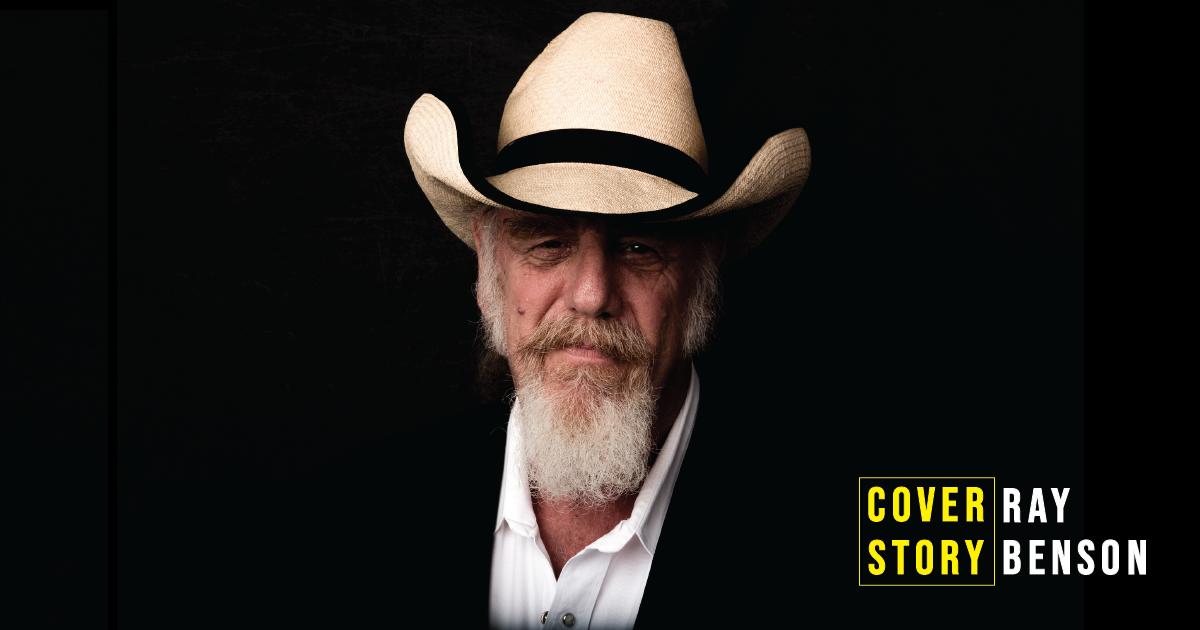
The term eclectic hardly seems broad enough to accurately describe either the approach of the marvelous band Asleep at the Wheel, or the energetic and fluid style of its lead vocalist and guitarist Ray Benson. The band he formed along with Lucky Oceans and Leroy Preston while farm-sitting in Paw Paw, West Virginia, 50 years ago is now an American cultural institution, although things didn’t really explode for them until they relocated to Austin.

Their latest release, Half a Hundred Years, pays homage to Asleep at the Wheel’s diverse and impressive legacy, although it’s one Benson freely admits he never seriously thought would continue for 50 years.

“Well, when you’re a 19-year-old kid, you don’t even know if the band will be around for 10 years,” he tells BGS with a laugh. “It really wasn’t something at the time that I had any notions about, things about legacy or impact. We were a band that wanted to play a lot of different types of music and enjoyed being around each other. That’s kind of been the trademark ever since.”

Country and Western swing are the foundational genres of their music, but the ensemble is hardly restricted or limited by them. Over their tenure Asleep at the Wheel’s repertoire has also included R&B, blues, jazz, rock and pop, while their albums and live shows feature a constantly evolving blend of originals and inspired covers. In addition, the band seamlessly maintained its trademark sound through numerous personnel changes, while navigating shifts in audience tastes and music industry practices.

“I’ve always been a real music lover, and that’s what’s driven the band all these years,” Benson continues. “Of course, the music business today is so different from the way it was when we started out. Hell, when we started they didn’t even have fax machines. You really thought in terms of radio and marketing a song, and you were trying to get your album played and then that would be the springboard for having it sold in the stores. Today, there’s such a focus on streaming. Vinyl’s made a bit of a comeback, but that’s because CDs are doing so poorly. Then the technology changed so dramatically, with the ability to sonically do things in the studio that we didn’t even dream about back in the ’70s.”

Indeed, Benson’s entire career — inside and outside the band — has been one of variety and experimentation. He taught himself to play the guitar as a 9-year-old. The first song he ever played completely came from a beer commercial he heard during broadcasts of his hometown Philadelphia Phillies. Benson teamed with his sister in a folk group The Four G’s at 11, then while in college he encountered a group whose concept he utilized (with variations) upon forming Asleep at the Wheel. It was that Commander Cody & His Lost Planet Airmen concert in Washington, D.C., where Benson saw and heard a band brilliantly mixing multiple genres in a free-flowing performance mode.

Following their time in West Virginia, Asleep at the Wheel relocated out west in the early ‘70s, playing in various East Bay clubs in California. A show where they shared the stage with Van Morrison, followed by his raving about them in Rolling Stone, began to open some doors. They toured with Black country vocalist Stoney Edwards in 1971, cut a debut LP that did well in the Southwest, then moved to Austin in 1973 after being encouraged by Doug Sahm and Willie Nelson. Upon their arrival in Texas, their second LP was issued by Epic.

However it was after their third LP, with the Top 10 country hit “The Letter That Johnny Walker Read,” that Asleep at the Wheel emerged as a top attraction. By 1978 they were winning the first of their 10 Grammys. They survived a lean period in the ’80s, then bounced back in the ’90s. Benson made another savvy decision that helped sustain the band’s success, recruiting several top country artists to cut two Bob Wills tribute LPs. Then came another hit in 2000, “Roly Poly,” with the [Dixie] Chicks. As a result, Asleep at the Wheel became one of the few country acts that’s managed to have chart records across four consecutive decades.

Their journey is duly reflected in Half a Hundred Years. “I looked at this album as a way to kind of look back and ahead at the same time,” Benson continues. “It covers everything that we’ve done and are doing.” Besides including such heavyweight guest stars as Lyle Lovett, George Strait, Lee Ann Womack, Willie Nelson and Emmylou Harris, the CD is sequenced in an intriguing fashion. The first 11 songs are new tracks featuring original band members. Songs 12-16 (with the exception of 14) feature the current band teaming with various band alumni. Cuts 17-19 are previously unreleased material, while track 14 combines the current band with two of Asleep at the Wheel’s former female singers. “We’re putting this out pretty much every way (configuration) that you can,” Benson adds.

Despite the pandemic, Asleep at the Wheel’s already done several shows and plans more in the near future. Benson has also branched out over the years to do things outside the band arena, among them being on the board of Austin City Limits, a role that led to his hosting the regional TV series Texas Music Scene for several years. He’s also been a prolific producer on LPs by Dale Watson, Suzy Bogguss, Aaron Watson, James Hand and Carolyn Wonderland, plus singles for Willie Nelson, Aaron Neville, Brad Paisley, Pam Tillis, Trace Adkins, Merle Haggard, and Vince Gill. Benson even cut a solo LP, Beyond Time, in 2003 and his autobiography Comin’ Right at Ya was published in 2015. In addition, he’s a founding member of the Rhythm & Blues Foundation, and the owner of a recording studio and label (Bismeaux Studios/Bismeaux Records).

Though it doesn’t seem possible that there are things in the music world Benson hasn’t done yet, he’s quick to list a few people he’d love to work with. “Well, I always wanted to record with Tony Bennett, but he’s retired now,” Benson says. “I’ve sung with Boz Scaggs, but have never done a whole album with him. I’d really enjoy doing that. Also, Billy Gibbons of ZZ Top. He’s someone else I’ve sung with, but really would like to do a complete project.”

He concludes, “At this point I really don’t even think about how much longer Asleep at the Wheel will go on because who would ever have given us 50 years? But I can say that I’m still really enjoying it, and this latest project and going out and playing to support it, and the reaction of the people even with everything that’s going on now… well, that tells me we’ve still got a lot of folks out there who enjoy what we do.”


Photo credit: Mike Shore