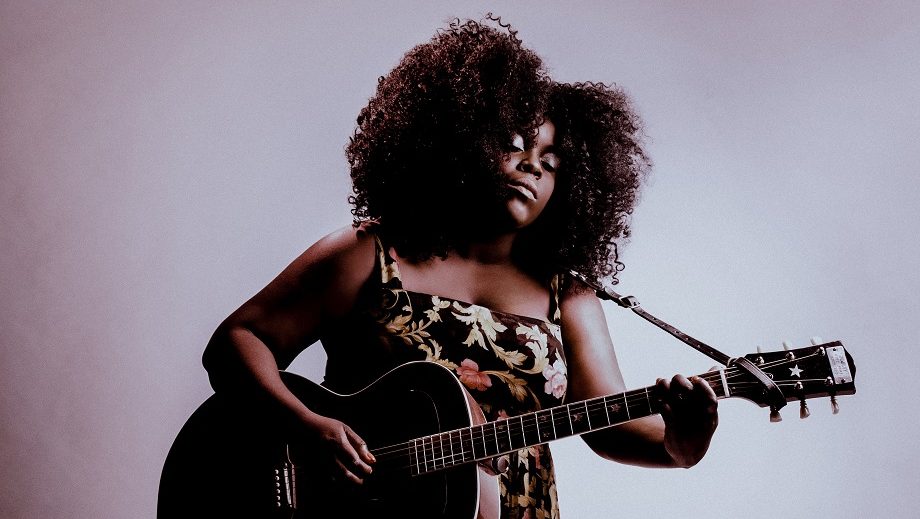
WATCH: Yola, “Goodbye Yellow Brick Road”

Artist: Yola
Hometown: Bristol, England
Song: “Goodbye Yellow Brick Road”
Album: Walk Through Fire: Deluxe Edition
(Featuring “I Don’t Wanna Lie” and “Goodbye Yellow Brick Road”)

In Their Words: “Can’t believe it has only been a year since we announced Walk Through Fire, working with Dan Auerbach and the team has been an absolute dream and [I am] so proud of everything we have achieved. So many great songs from that session didn’t make the final cut, including ‘I Don’t Wanna Lie.’ I’m a HUGE Elton fan and we’ve been playing ‘Goodbye Yellow Brick Road’ on the tour and wanted to cut a version for this release, which Dan also produced! And then for Elton to personally premiere it, well that is the icing on the cake!” — Yola


Photo credit: Daniel Jackson

WATCH: Yola Makes Her Grand Ole Opry Debut

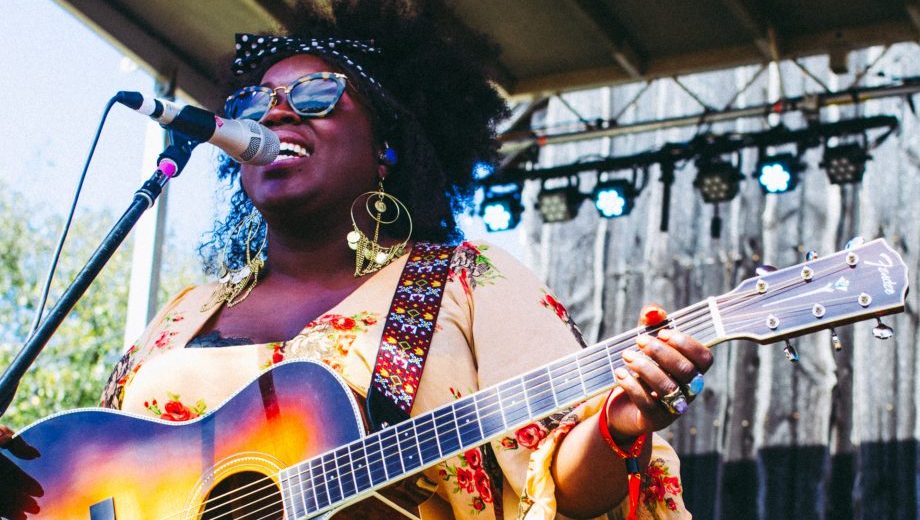
Bold, brilliant, beautiful, and British — these are just a few words that describe the music of singer/songwriter Yola. 2019 has been monumental for the new queen of country soul from across the sea as she collaborated with Black Keys’ founder and Nashville hotshot producer Dan Auerbach to produce her solo debut, Walk Through Fire.

Her powerful voice and old school styling reinvigorate the tradition of combining country and soul music, a classic bridging of two seemingly unrelated musical traditions; and an accomplishment Yola’s musical heroes Charley Pride and Dolly Parton would admire. Among her more recent success, Yola was featured in a song from The Highwomen’s first album and in September, she made her debut on country music’s most famous stage.

Watch as Yola shows us around Nashville and takes us behind the scenes of her Grand Ole Opry debut.


Photo Credit: Alysse Gafkjen

Britain’s Yola Blends Soul, Country, and ’60s Pop on Astonishing Debut

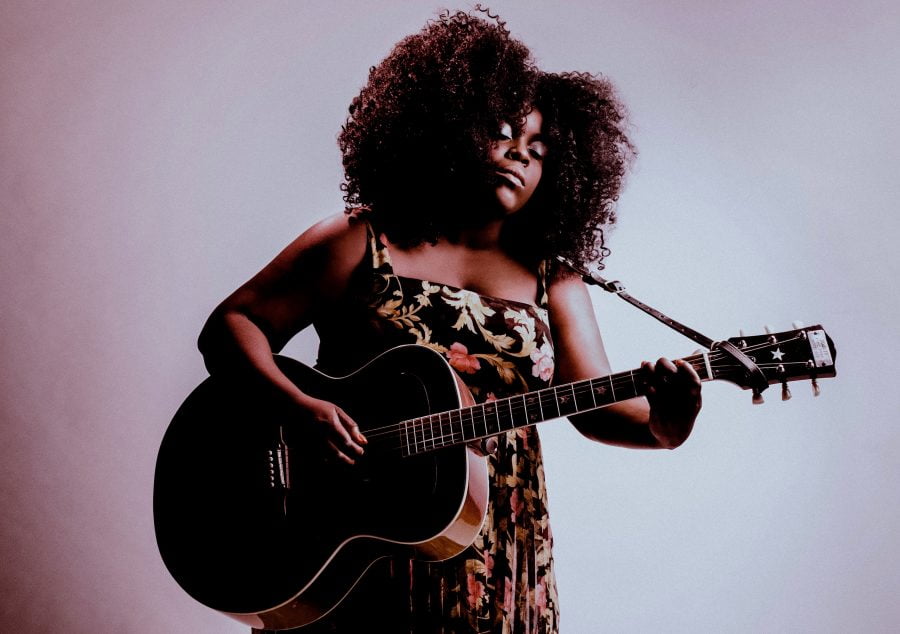
If you’ve ever had the good fortune of being in the audience for one of Yola’s live shows, you will have been utterly blown away not only by the power of the British singer/songwriter’s voice and the intensity of her songs’ arrangements, but also by the bedlam her audiences devolve into in the presence of such a commanding, charming, visibly strong black woman. Yola owns each of these unabashed facets of her identity with bright-eyed self-awareness and unbridled joy, all of which pour forth from her astonishing debut album, Walk Through Fire.

This grandiose power that Yola possesses is deliberately not the focal point of the album, though. She and her collaborator/producer Dan Auerbach have artfully balanced the wildness of Yola’s experiences in myriad genres (pop, electronic, and rock among them) with the subtlety and nuance that her deft songwriting demands. It’s not just an album sung by a “strong black woman,” it’s not just country-soul, it’s not just a late ’60s/early ’70s pop throwback, it’s not just a collection of heart-wrenching, impossibly visceral love songs — it’s effortlessly and masterfully all of the above.

We sat down with Yola during her release week press gambit in Nashville and began our conversation recapping this year’s Grammy Awards.

BGS: In one of her Grammy acceptance speeches this year Brandi Carlile called Americana  “An island of misfits.” I wonder if you agree — and what do you feel like you bring to this island of misfits?

Yola: I do agree. I think Brandi Carlile is on point by saying that. It feels as though people have congregated in Americana, maybe even running from other genres. It’s a place where we are celebrating eclecticism and being open and we’re at least seeking to be diverse — and trying to understand that diversity, instead of having fingers in the ears. There’s a little bit more to the scene. It allows people like Brandi Carlile to rise to the top, and rightfully so, because of their talent!

I have found, for me, that after being associated with a lot of different genres over the years, I’ve had to fight to just be me. I’ve had to do as much fighting in this particular scene, because everyone’s crossing something with something or being more unexpected than other genres. Doing shows at AmericanaFest and in this particular scene has given me a chance to develop. Full stop. And to get started.

When I first started I was pretty terrified to do what I was doing. Americana allows me to be like, “Hi, okay, I’m the black British woman with the afro — no, not the other one, the one called Yola.” [Laughs] And I can go, “Okay, I’m going to mix some soul with some country, but not in the way you think I’m going to do that.” Yes there’s going to be a ’60s pop sound in there, but again, probably not in the way you think I’m going to do that, either. Maybe it is my Britishness that is giving me the angle from which I approach each thing.

I feel like the album is decidedly country-soul, and it’s interesting to me because we’re in this community — Americana with a capital A — that is majority-white.

Mhmm. Heck yeah!

We’re working on diversity, like you said, but we’re a work in progress. So I wonder how you feel your blackness is part of that country-soul designation and how much of that is not connected to your blackness, as well. I feel like so many people, especially in the audience for your shows, see you step up on stage and they’re ready to scream and holler because there’s a “strong black woman” presence on stage–

Yes.

So I wonder do you feel a differentiation between what you’re establishing as country-soul for country-soul’s sake, and how much comes from your identity as a black woman?

Well, I think it starts with identity, because everything starts from within and from where you think you fit. Where do I fit? I think my entire musical journey has been based on where the frick I fit.

An island of misfits.

Yes, exactly. I found a bunch of weirdos that were as weird as I was and was like, “This is great!” [Laughs] That’s what has led me where I want to go, musically. It’s about finding what my voice wants to do. It’s all about the physicality of my voice, it’s got a soft side, almost choral, that then flips to this big, yelly, slightly more Tina [Turner] side. I can move very smoothly from one to the other. My voice is a seesaw in that situation. I need to be able to be the fullness of myself, so that’s kind of where the country-soul comes from — from within.

That’s at least physically what it is, as well as growing up listening to that music, listening to people who were already doing what I’m doing. I’m by no means inventing the wheel or even reinventing it, for that matter. It’s something that’s just been done. Ray Charles has done it. Mavis is doing it. Maybe the way I’m doing it, with this retro pop kind of angle, is something that others haven’t done, necessarily. But that is narrow in comparison to the vast eclecticism of my musical taste. It’s out of control how broad a day’s playlist can sound.

We’ve talked about this, because I want you to make a bluegrass record!

[Laughs] You’re like, “Are you ready to do that?” And I’m like, “Hey, I’ve got so many genres to get through right now!”

Add it to the list.

Just tack it on, you know? I don’t know if I’m going to go all the way like, Beck levels of breadth. He’s covered some ground, it’s impressive. But I’m enjoying this kind of freedom right now. As fun as it is knowing that country and soul are always going to come out, it’s nice to be able to be free enough to explore gospel and blues and rock and roll and pop. You can hear from the record there are probably four comfortable genres within it and they all move completely seamlessly from one to the next. That’s what I love about music. I love how close it all is.

Going back to the physicality of your voice for a moment, one of the things that struck me about the album is that it feels like you’re laying back–

Mmmm. You know me!

It feels like you’re being reserved, your signature Yola-dialed-up-to-eleven isn’t there all of the time. Talk me through that less-is-more decision making process.

Certainly, the songs kind of spoke for themselves. When you finish writing a song you can decide whether you’re going to tack a big ol’ outro on the end of it and then whether you’re going to freaking scream to the heights of the ceiling on that outro. But I thought, I don’t know whether I listen to albums where the singer is going hell-for-leather, top to bottom, all the way through. I like to listen to albums top to bottom and I like a bit of a gradient. So as the songs come, one by one, I kind of have a look and think, “Okay, I don’t think the song needs this.” It’s about trying to respect the song and the will of the song. Sometimes the song really needs it, like “It Ain’t Easier.” I’m going to go there! [Laughs] I was purposefully selective and I think it was each song that led me.

The songs do feel like they’re all related, but they’re all distinct. For instance, “Still Gone” and “Keep Me Here” back to back feel like the same story told from slightly different perspectives.

They are! “Still Gone,” in my mind is about being in a relationship. You met someone, they were amazing, then whoever the heck that person was, they fucked off and the person you end up with is your consolation prize. You’re looking over your shoulder thinking, “Oh, still gone!” It’s like chasing the dragon, but it’s the person you were dating. That first hit, that’s the one. Everything else after just pales in comparison. It’s very much that moment of realization, that moment before you start checking out of the new relationship, when you start staring off into the distance.

That faraway look in your eye!

That faraway look in your eye! It’s all tied together. That’s the precursor feeling. It’s the “You’re literally everywhere, but you’re not here” situation.

So “Keep Me Here” turns that same idea on its ear.

It does! Because you haven’t got the guts to be alone. You’re being a chicken. You’re being fed, again, chasing the dragon. Like, “That first hit was good, can’t we just have that bit?” No, you can’t. You have to have the full wonderful person — especially when they’re not wonderful, that’s challenging. You’re just hoping for those little moments, those little glimpses that keep you hooked in. In my situation, I was working with my ex, my partner at the time, and so it was very much like being totally hooked, and musically hooked, and socially hooked, and all of these hooks become something that keep you holding on in light of glaringly horrible interactions in every part of your life. I think it takes a lot of self esteem to grow up enough to realize you need to move on. The twenties are not really the time when self esteem is at its full!

It’s funny that we begin that “chasing the dragon” when we’re in our twenties when we have no idea what that thing actually is.

[Laughs] Exactly! We have no idea! But we’re just desperately going for the thing. It felt good that one time, maybe it will happen again. It’s about as well-advised as taking smack, you know? It shouldn’t be like a hit, though. It should be consistent. But you don’t learn about the healthy ways of doing life until you have the experience.


Photo credit: Alysse Gafkjen

Crys Matthews: Driving Out Hate with Love

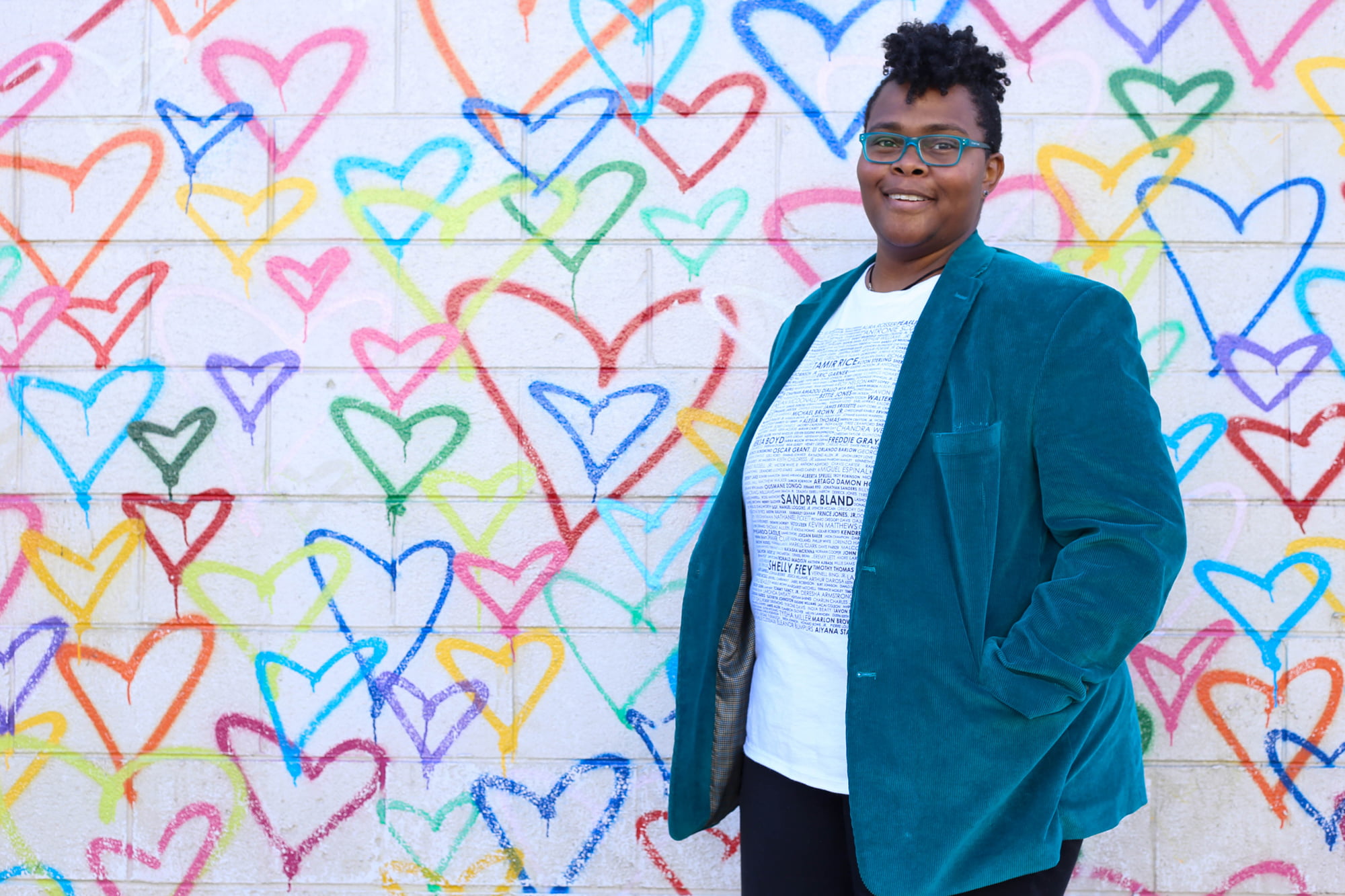
After she describes her multi-faceted identity, Americana and country soul singer/songwriter Crys Matthews laughs with a slight trace of self-deprecation, “I’m the poster child for intersectionality, right?!” She is.

While each and every day, on each and every media platform, we’re reminded of the division, alienation, marginalization, and divisiveness rampant in our country (and our world), we’re not often enough met with people like Matthews who exist as reminders of what beauty can occur when we bridge those divides.

A native of the South and the daughter of a preacher, this Americana-creating, Black lesbian — who is in an interracial marriage — understands and appreciates the myriad ways her background informs her ability to help others empathize with those with whom they might assume they have nothing in common. With her recent full-length album, The Imagineers, and her compassionate, politically charged EP, she is recruiting an “Army of Lovers,” despite all of the divides — real or perceived — that come between us, driving out hate not with hate, but with love.

Country or Americana or roots music fans might not expect someone described like you to fit into this music. How did you come into roots music? What’s your background in it?

I was born and raised in North Carolina — I live in Virginia now — and I went to college at Appalachian State University in Boone, North Carolina, which is a bluegrass Mecca. I never set out to really create [within] any specific genre of music or anything like that. My songwriting process, it’s very organic. The songs just come out how they come out. Living in Boone all that time, I just fell in love with the Blue Ridge and with all of that. I guess osmosis is what you would say — it just fused its way into my music and into my songwriting style. It seems like every year it just gets country-er and country-er, which is hilarious to me. [Laughs] Listening back through the newest album I was like, “Oh, my God, my grandpa would be so proud!”

Did your grandpa get you into country music?

Oh yeah, we’re so Southern. Like I said, born and raised in North Carolina, but in the southeastern part of North Carolina. It is so country over there. [Laughs] I grew up watching The Dukes of Hazzard and other stuff that you wouldn’t necessarily expect. I guess it feels foreign to people when they think about, okay, “A Black lesbian isn’t going to be watching Dukes of Hazzard with her grandpa.” But, if you grew up in southeastern North Carolina, I’m pretty sure almost everyone watched The Dukes of Hazzard no matter what, no matter who you were. I’ve never lived my life trying to fit into any specific thing. I just am who I am, and the things that I’m into are just the things I’m into. The things I think about, think are beautiful, and love in the world center so heavily around my home state.

The title track of your EP, Battle Hymn for an Army of Lovers, is an upbeat, hopeful number. It’s looking to the future and outward-facing, but it’s also very realistic and grounded. It’s not denying the realities of this moment in time. Why did you strike that balance?

I always try to be like that in life. I feel like every big moment that has ever happened in this country has happened, at the root of it, because of love. And because of somebody loving somebody else and/or not being okay with the person that they love not having fair treatment, in some regard.

My worldview is that love is always the thing that moves us forward. It always is and it probably always will be. It’s super important to me. As frustrating and hard as this moment is for me, obviously, as a triple-minority, it is terrifying for me living in this time, I trust and believe so deeply that love will move us forward. It was very important for me to use that song and use that message for rallying the army of lovers, mobilizing the army of lovers, and believing wholeheartedly in trying to live that notion of Dr. King’s, that hate cannot drive out hate, only love can do that.

I appreciate in your music that you’re including specific calls to action. In your song “Paris Is Burning,” you sing, “Dark days call for more than profile picture overlays,” and that line resonates so much with me because we’re in a time when just showing up doesn’t really count for much anymore. You aren’t letting listeners and fans feel like just putting on your EP is taking action.

Again, growing up in the South, the history of activism, what it means, and how important it is is not lost on me. Being a singer/songwriter, having a platform, and with people actually listening to what I have to say, it would be so hypocritical to not use that platform, in some regard, to actually have a call to action, to let people know what’s happening in the world beyond their possibly limited view, let them know things that they can do to help. And people who aren’t them, who may not have whatever privilege they may have, need them to help. It was super important to have the mindset of the soundtrack of the resistance.

I went into it hoping that it would come out in a way that would motivate people, and inspire people, and make them do something. It’s so hard feeling so powerless, and I think so many of us are so frustrated right now, because we feel powerless, but we’re not. It’s important to remember that. I hope that these songs remind people that there are things that we can do. We cannot be complacent. We have to act.

As a triple-minority, like you said before, you don’t exactly have the luxury or privilege of choosing how much or how little of your identity is visible through your art, but I wonder if you think about how much you present in your songs, or if you just let that happen organically, as well?

It depends on certain songs. I have this song from my album, Come What May, called “You Remind Me,” that [was inspired by] the Lovings of Virginia [of the U.S. Supreme Court case on interracial marriage, Loving v. Virginia] and Edith Windsor and Thea Spyer [of the case United States v. Windsor on same-sex marriage]. It’s about how we keep having to learn the same lesson in this country about love, and how we can’t seem to let people love who they want to love. It’s a parallel of those two things and, of course, my wife and I decided we wanted to piss everybody off and be an interracial, lesbian couple. [Laughs]

The love songs, for me, I feel like those things are just so universal. Only people who don’t realize how universal they are think that they’re different and weird. People are like, “Oh my God! Gay marriage!” And I think, “If you could just see us sitting on the couch with our cats and dogs and bunny, being like, ‘Are we going to watch TV? What are we doing?’” It’s so boring! [Laughs] It’s just what everyone else is doing on their couch at the end of a work day. It’s crazy that we even have any kind of distinction between the two, because it is literally so boring.

Me, personally, I’ve been married for four years. In general, we’re just as mundane as every other person who’s been married for four years. In the love songs, I don’t try to make an effort to make them any more “normal” or any more heteronormative. That’s just the reality of it. I think that people would be better served to actually realize and know that. It’s always fun for me, when I write a song that’s about my life, and somebody’s like, “I feel the exact same way about my husband!” or “I feel the exact same way about my wife!” Because inside I’m like, “Yes. That’s the point.”

That’s what it means to be human.

Exactly. The best line I think Jason Mraz ever wrote was in regard to humanity. He says, “Our name is our virtue.” That’s so much it. If we could just be more human, that’s all we ever need to do.

How do you think we can bridge the gap that divides all of us right now? Do you think it’s just playing these songs and letting it filter in for people?

I do. I really do. The hard thing for us to do is engage one another. It’s a scary thing — rejection is a scary thing, being the butt of somebody’s anger is a very scary thing — but we have to engage each other. I sing the songs that are a little more difficult in places where it’s not necessarily the most advisable thing for me to do. Ultimately, if I don’t make those people think, if I can’t make them feel something or think something, they’re not going to do it on their own, because they’re only going to be hanging out with the same type of people. I feel like we have a responsibility to put ourselves in those uncomfortable situations for the good of the whole. We have to do it.

It’s very difficult traversing this world with a limited worldview. It’s so easy, for so many of us, to just be comfortable. If you’re a 30-year-old white guy, with all of your 30-year-old white guy friends, it’s not that you’re a bad person; it’s not that you don’t care about anyone else’s issues or their daily life. It’s just not your reality because it’s not something you see every day. Worldviews are so different. Simple things can help people think, but it’s so much easier to be comfortable. Whereas, with me, I don’t really have a choice. I’m always in various multi-cultural situations. If more of us did that, it would just be second nature to realize what somebody else’s walk through life looks like because you aren’t just having to imagine it; you’re literally standing there watching it.


Photo credit: Sarah Stuart