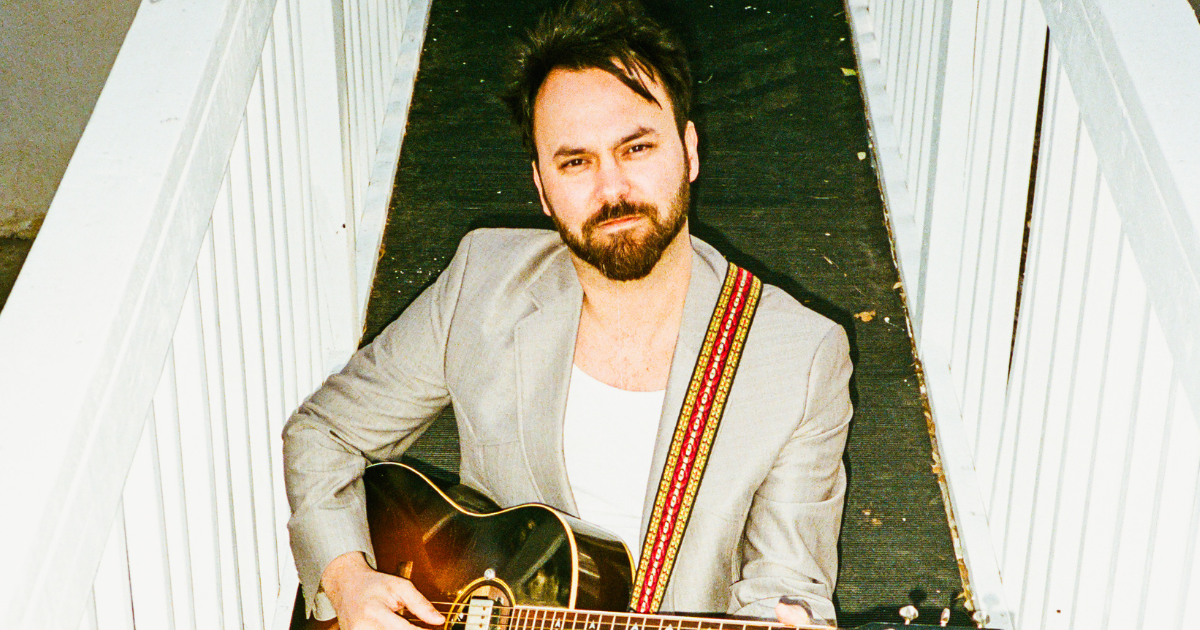
Texas has long been known for its singer-songwriters and country acts, but there’s plenty of music within the Lone Star State that navigates outside those boundaries as well. A few recent examples include Spoon, Gary Clark Jr., Khruangbin, White Denim, and Shakey Graves, the latter of which has become a cult hero of sorts in the folk and roots music space.
Born Alejandro Rose-Garcia, Graves’ career in music didn’t begin to take hold until the mid-2000s following acting roles with the Spy Kids franchise and television series Friday Night Lights, but once it did momentum hasn’t slowed since. Each step along the way the singer has reinvented himself. From the solo one-man band setup on his independent 2011 debut, Roll the Bones, to 2014’s And The War Came – which featured the indelible Esmé Patterson on songs like “Dearly Departed” and “Big Time Nashville Star” and eventually culminated in Graves winning Emerging Artist Of The Year at the 2015 Americana Honors & Awards – to the trippy, extended jams of 2023’s Deadstock anthology.
That constant transformation leaves listeners in perpetual awe. Among those caught in the cycle of captivation has been BGS executive director and co-founder Amy Reitnouer Jacobs, who first encountered Graves at Pickathon in Happy Valley, Oregon.
“I remember hearing him start his set and watching the crowd grow,” recalls Reitnouer Jacobs of that maiden experience. “There’s certain festival sets where you can feel a palpable energy and buzz, and this was one of them. It was just him, a guitar, a harmonica, and a suitcase holding a kick drum. It was a truly magical moment where you knew the person you’re watching is really gonna hit.”
In the 18 months that followed, Reitnouer Jacobs began booking Graves on several BGS-related gigs and sponsored stages at places like Bonnaroo, the Newport Folk Festival, and the LA Bluegrass Situation Festival. Around the same time, Graves was starting to pop off with his first big hit, the aforementioned “Dearly Departed,” which to this day remains his second-most streamed song ever with over 133 million listens on Spotify at the time of this story’s publication.
According to Reitnouer Jacobs, being around to witness Graves then was like a once-in-a-lifetime opportunity that is still in the process of playing out: “There’s a few key moments in anyone’s career where, if they’re lucky, they get to witness and be adjacent to somebody’s incredible talent,” she explains. “Getting to know Alejandro feels exactly like that.”
“He is always beholden to himself first and foremost,” she continues. “He’s not an artist that will crank out material just for the sake of doing so. When he comes up with something it’s going to be really considerate and developed. He’s also not afraid to try new things. I’ve seen him with a full band and solo, acoustic and plugged in. It really speaks to his multifaceted nature and how no one artist exists within a vacuum. Sometimes roots music can get a bit caught up in that, but Alejandro does a good job of having these different sides of him coexist and come through in his music.”
Speaking of trying new things, Graves does just that on his latest record, Fondness, Etc. Out May 15, the album of home recordings takes on an ambient and lo-fi approach that most closely compares to his simplified 2017 project, Shakey Graves And The Horse He Rode In On. Accompanying the minimalist methodology on these songs are the sound of bird calls and wind gusts on “On My Own” and various tropical noises on “I Once Was An Ocean” that give the compilation a very lived-in feel, something that’s not often the case for an artist who’s constantly reimagining his own work.
Per Reitnouer Jacobs, she thinks a lot of that intimacy and experimentation goes back to Graves’ roots in Austin, a Texas town known for embracing its weird side. “There’s a lot of really cool stuff happening in that part of Texas, so it doesn’t surprise me that something like ambient music is sneaking into what he does,” she observes. “My favorite artist, personally, is Kate Bush, with my top lyric of hers being ‘let the weirdness in’ on her song ‘Leave It Open.’ I go back to that a lot, because I think artists fearless enough to let the weirdness in are the ones who actually move their genres forward, which is exactly what Alejandro is doing.”
Bluegrass picking, soulful singing, and clever comedy complemented a night of contemporary country music as two of America’s longest-running institutions reunited in New York City on Friday, March 21, 2026 when the Grand Ole Opry returned to Carnegie Hall.
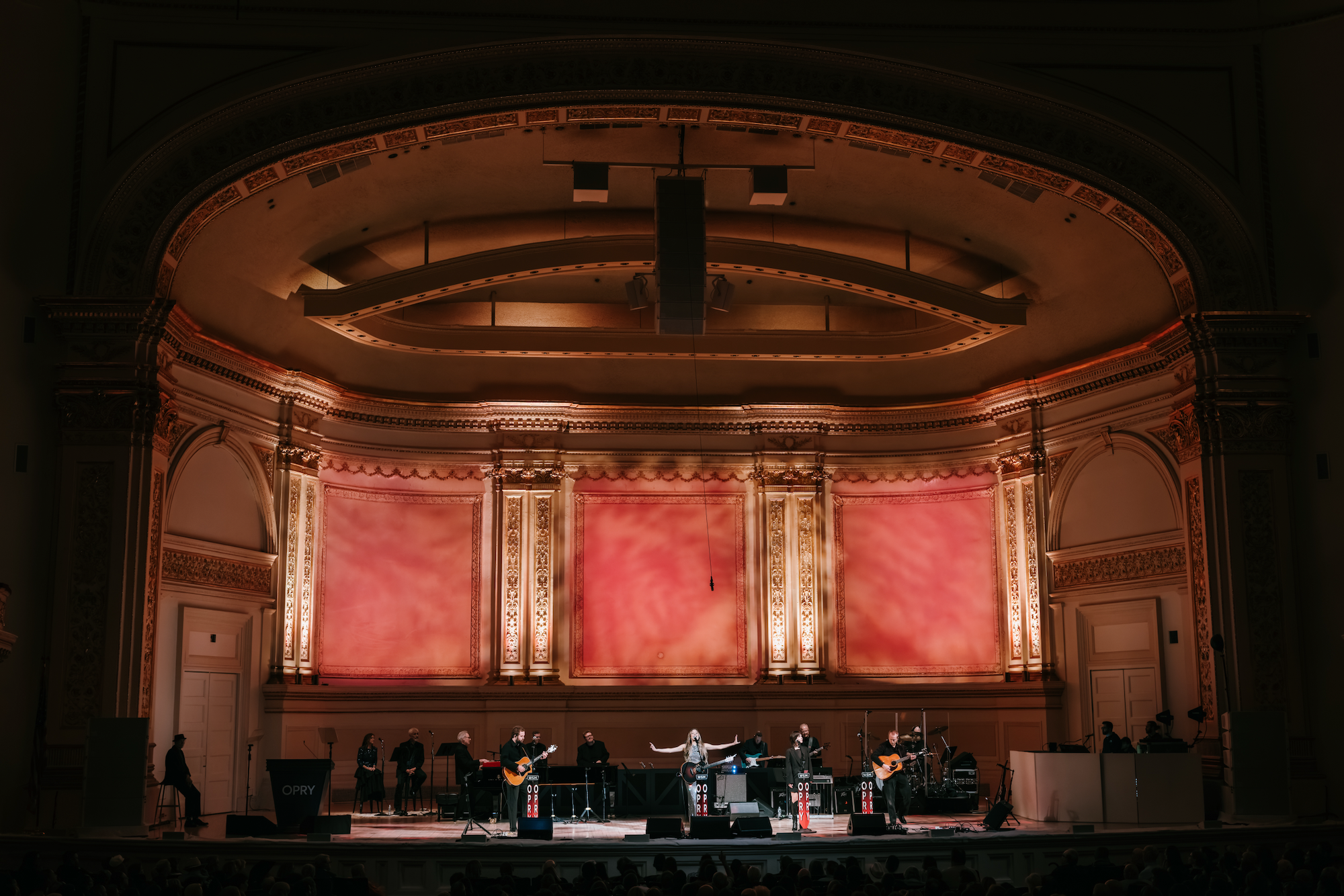
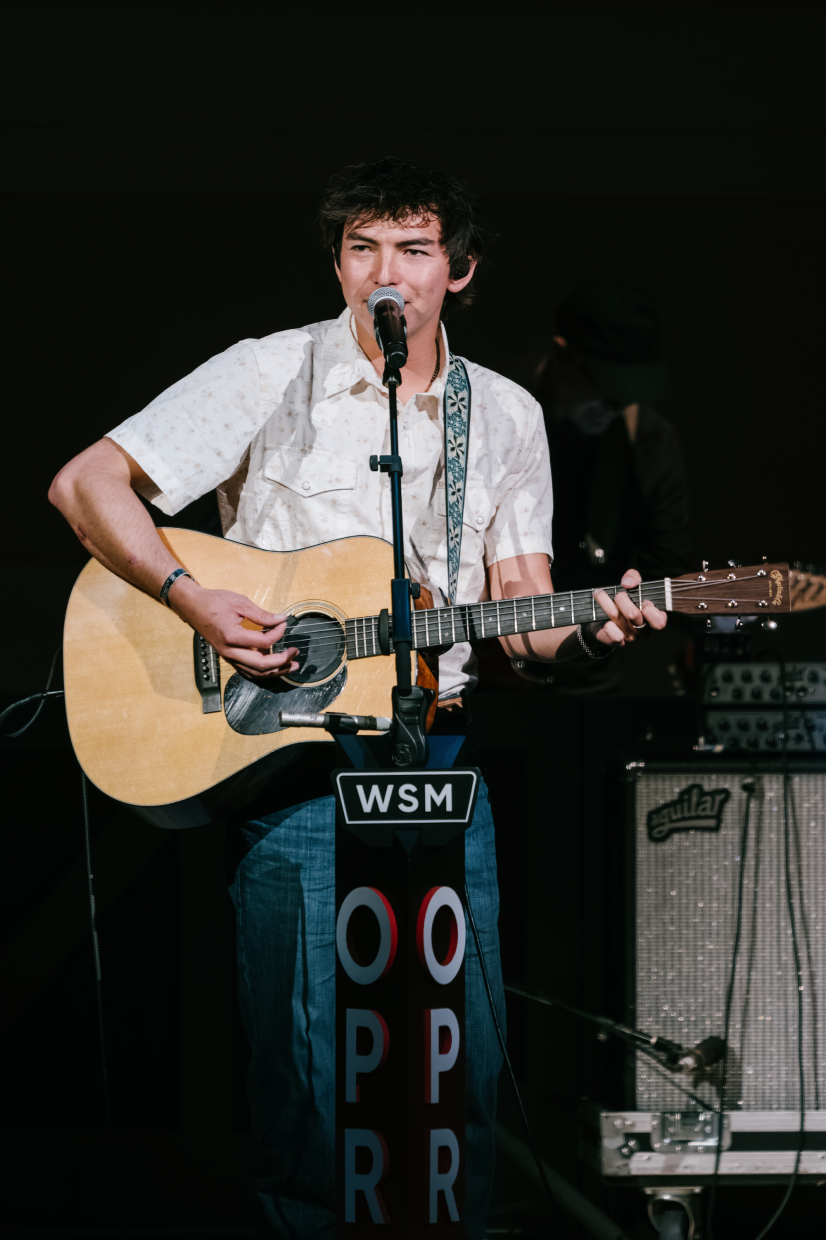
Amidst the elegant surroundings, the evening offered a prestigious Carnegie Hall debut for all six performers: Opry members Kelsea Ballerini, Henry Cho, Scotty McCreery and Rhonda Vincent, and special guests Wyatt Flores and The War and Treaty. Although there wasn’t a barn backdrop or a velvet curtain, the ivory walls were often lit up in red reminiscent of the Grand Ole Opry House in Nashville throughout the night.
Kelsea Ballerini performs with a gorgeous and iconic Carnegie Hall backdrop.
If you poke around long enough, there are hints of Carnegie Hall’s connection to country music – an autographed photo of Emmylou Harris in an upper tier, a souvenir program on display from Johnny Cash’s 1962 debut, and a collage of albums recorded at the venue, including the iconic one from Buck Owens & The Buckaroos in 1966. Of course, bluegrass fans also know that the Country Gentlemen and Flatt & Scruggs recorded landmark live albums from the fabled stage, too.
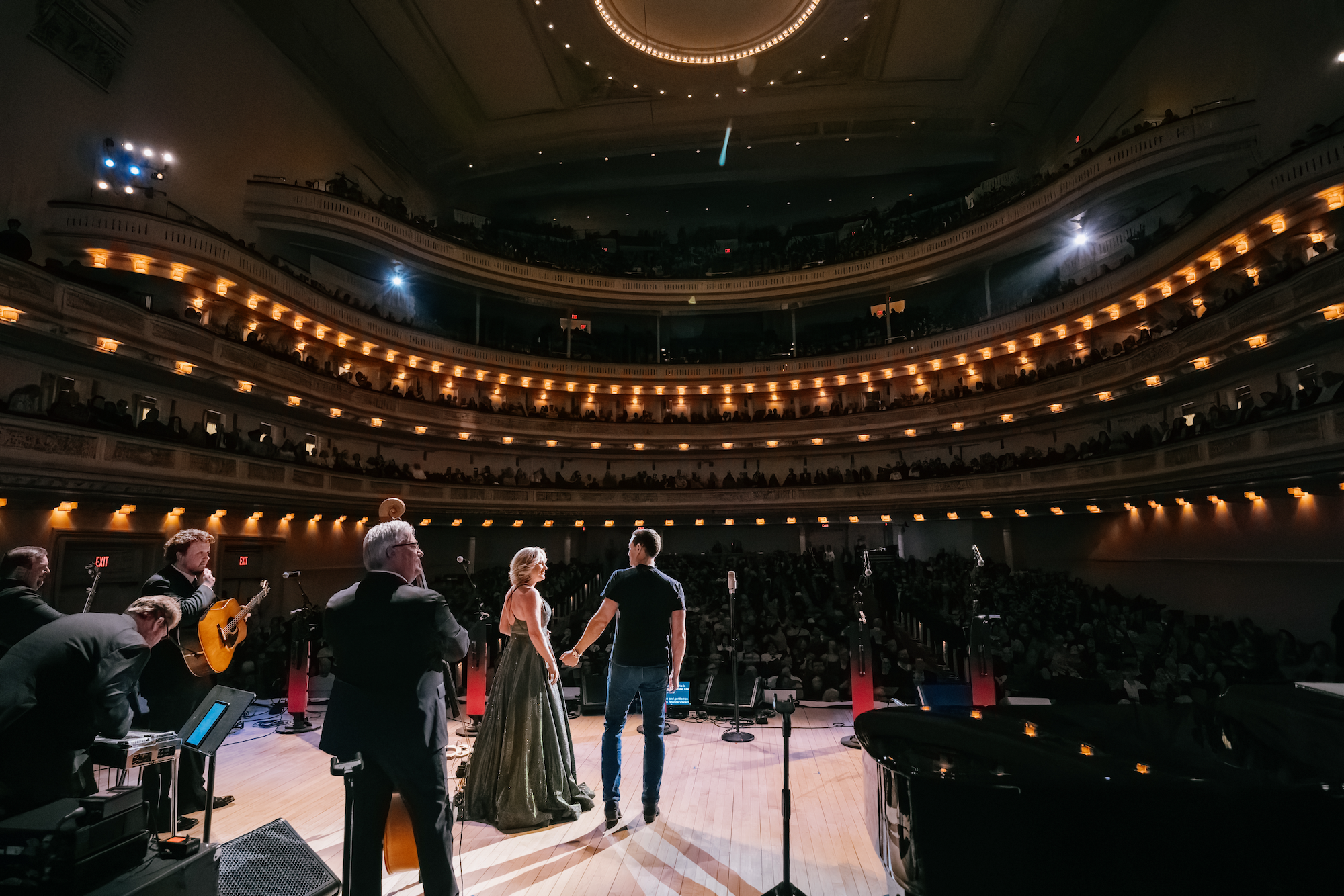
Scotty McCreery joins Rhonda Vincent & the Rage on stage at Carnegie Hall for “Blue Moon of Kentucky.”
Rhonda Vincent & The Rage carried on that bluegrass tradition by opening the show with a rendition of Bill Monroe’s “Blue Moon of Kentucky.” McCreery also stepped onstage to give an Elvis Presley-inspired performance of the classic song, which Monroe wrote. After some welcoming remarks from Opry host Charlie Mattos, Vincent resumed her energetic performance with “Kentucky Borderline,” a bluegrass cover of Dolly Parton’s “9 to 5,” and a pleasant sing-along version of John Denver’s “Take Me Home, Country Roads.” Keeping with bluegrass tradition, Vincent also introduced her beaming band members: Aaron McDaris on banjo, Adam Haynes on fiddle, Zack Arnold on guitar and vocals, and Mickey Harris on bass.
Wyatt Flores made his Carnegie Hall debut.
Wyatt Flores, a fast-rising, 24-year-old newcomer, admitted he was nervous to play Carnegie Hall since many of his favorite live albums were recorded there. However, the raspy-voiced Oklahoma native confidently delivered a well-received set of new songs, including “Runnin’ on E,” “Half the Man,” and “South Dakota.” Flores told the audience he was sharing this career achievement with his parents (on their first-ever trip to New York City) and his girlfriend (the inspiration for “South Dakota”).
The War and Treaty’s Michael and Tanya Trotter lifted up the crowd with “Five More Minutes,” then slowed things back down with an emotional interpretation of Otis Redding’s “Sittin’ on the Dock of the Bay.” Michael Trotter took a few moments to speak about the duo’s musical influences and the artists who inspired them, including Ray Charles, Rissi Palmer, and John Prine. They concluded the first half of the show with strong performances of “Yesterday’s Burn” and “You Can’t Hurt Me Anymore.”
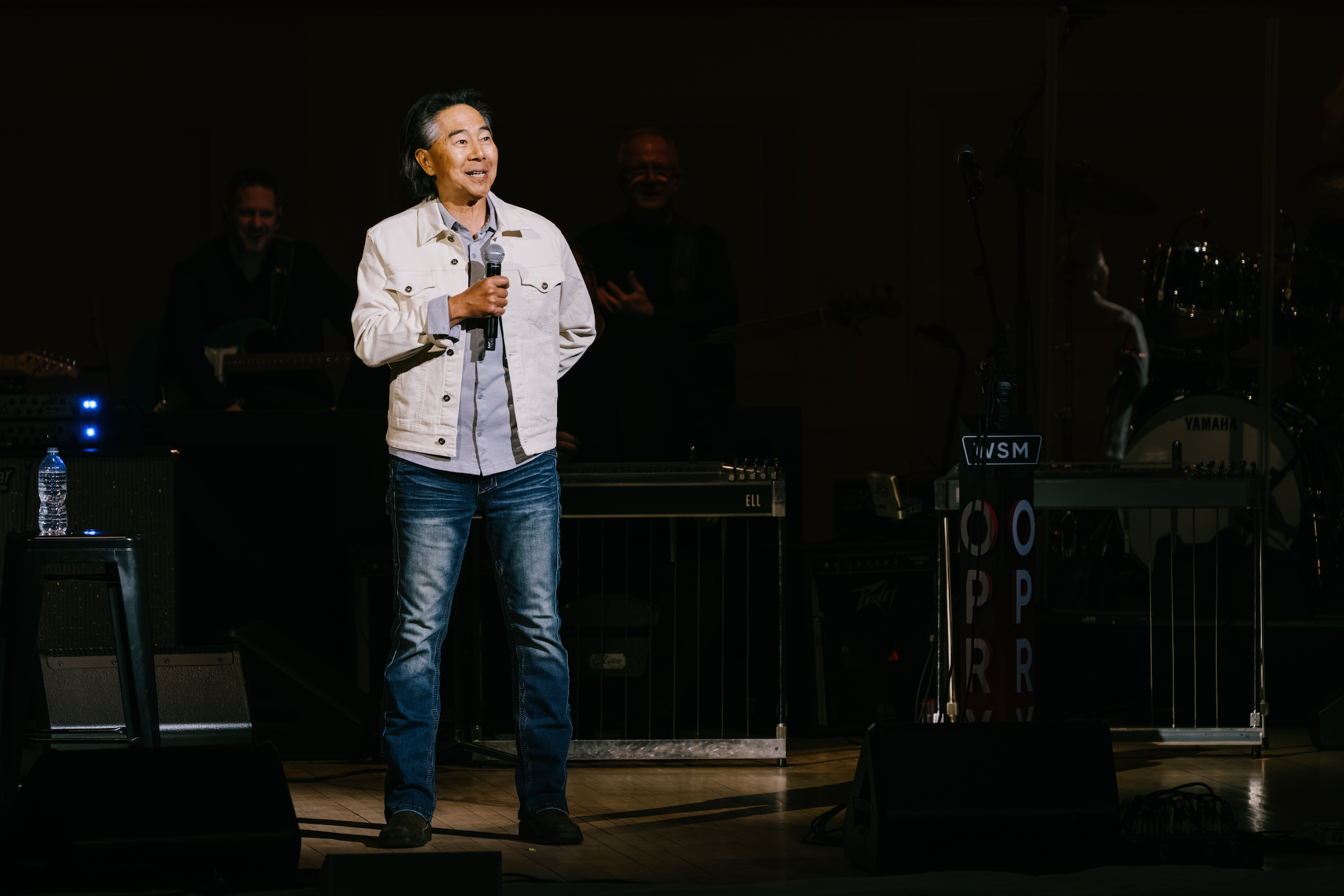
Grand Ole Opry member, comedian Henry Cho performs during the show.
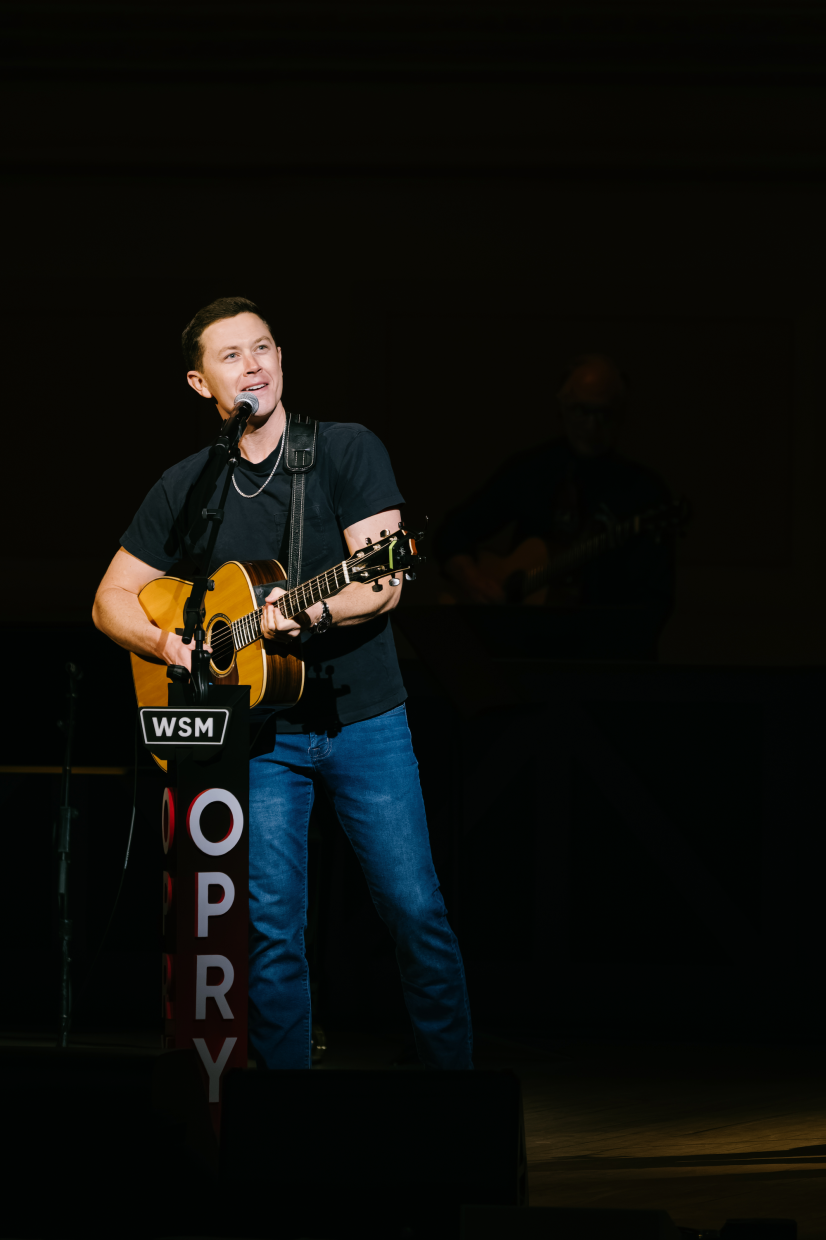
New York City is obviously a comedy town and Henry Cho rose to the occasion with a mix of signature quips and amusing stories about his wife, kids, and friends. Fresh off a European tour, the good-natured Scotty McCreery worked the stage as he sang some of his best-known radio hits, including “It Matters to Her,” “Damn Strait,” “Five More Minutes,” and “Bottle Rockets.” East Tennessee native Kelsea Ballerini closed the evening with conversational banter, an announcement that she’s now living in New York City, and a country-tinged selection of fan favorites, such as “Baggage,” “I Sit in Parks,” and “If You Go Down (I’m Goin’ Down Too).”
‘American Idol’ winner and Grand Ole Opry member Scotty McCreery delighted the NYC audience.
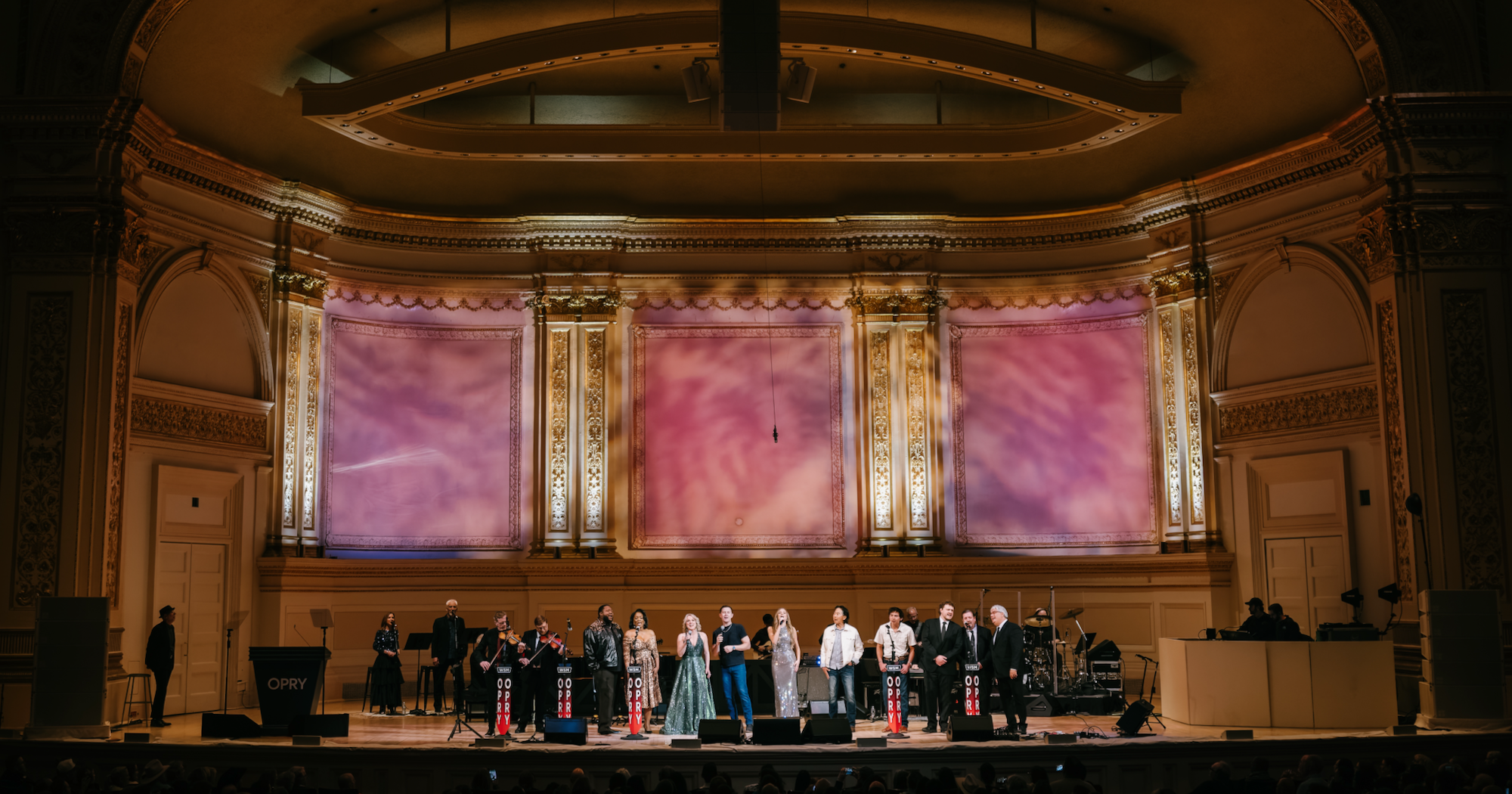
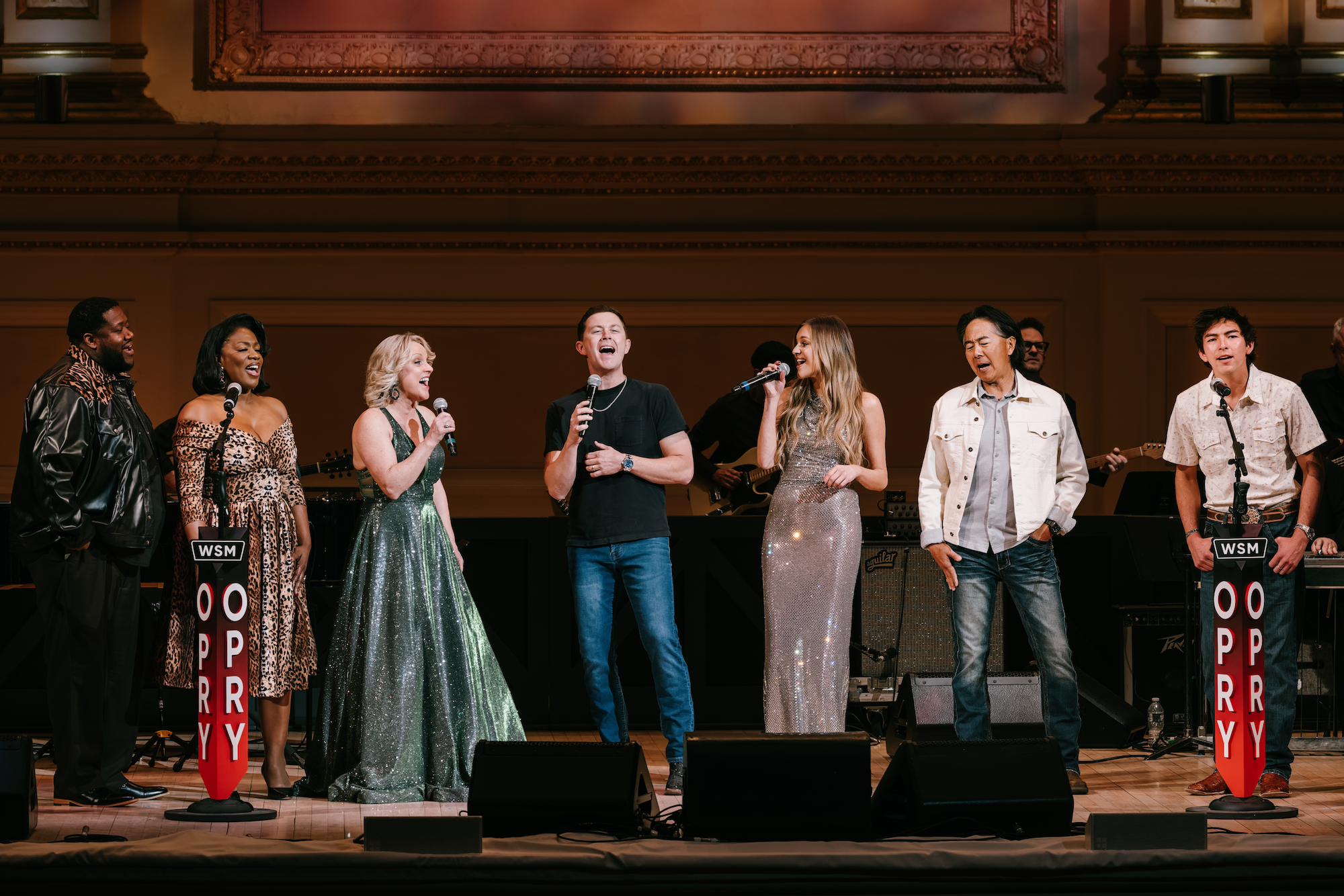
Among the night’s performers, Ballerini has surprisingly been an Opry member the longest. Prior to joining the roster in 2019, she would often sing a country classic during her guest appearances. At Carnegie Hall, she revived “Make the World Go Away,” which she learned from Martina McBride’s 1995 album of country classics, Timeless. She also shared her belief that country music is for everyone, a fitting comment on a night that explored the breadth of the genre. Many of the Opry’s special nights conclude with an all-sing finale of “Will the Circle Be Unbroken,” and this performance was no exception.
The star-studded cast of the Grand Ole Opry at Carnegie Hall sing “Will the Circle Be Unbroken” together to conclude the evening.
During his hosting duties, Mattos mentioned that Carnegie Hall opened in 1891, just one year before the Ryman Auditorium in Nashville, the Opry’s former (and still occasional) home. Yet this is only the show’s fourth time at Carnegie Hall, following visits in 1947, 1961, and 2005. The fortuitous timing for this event is part of Carnegie Hall’s United in Sound: America at 250 series and coincides with the Opry’s 100th year. (The world’s longest-running radio reached that milestone on November 28, 2025.) With country now reaching more listeners than ever before, here’s hoping for a New York City encore as the Opry’s new century begins.
All photos shot by Fadi Khelr, courtesy of the Grand Ole Opry. Lead Image: The entire cast of the evening return to the Carnegie Hall Stage to perform “Will the Circle Be Unbroken” together.
Roots music was everywhere this year. It’s time we decide once and for all: Is roots music enjoying a “moment”? Or are these genres and sonic stylings alwaysthis foundational to popular and mainstream music?
Maybe roots is just at the center of everything we do here at BGS, but we’re inclined to the latter option. Roots music, folk music, whatever you want to call it, these styles are at the root – pun intended – of everything we love, not just in our scenes and spaces, but what we love about pop music, radio hits, and the musical mainstream, too. It’s no wonder, then, that roots shows up in albums and offerings by Bad Bunny and Sabrina Carpenter. That roots music finds its way across the globe in the fight for justice. That banjos and fiddles and the blues and bluegrass can be seeds by which entire resplendent artistic universes can be birthed, whether festivals or films or documentaries or albums or songs.
For our final year-end retrospective list of 2025, we asked our BGS contributors to reflect on the roots music and moments that stuck with them over the course of this year. Instead of setting strict criteria for what qualified as “roots music,” we did just the opposite, leaving our year-end “best” prompt as loose, open, and broad as possible. The results reaffirm our central belief that roots music isn’t a niche, it’s everything. There’s no limit to what it can touch on, impact, and transform.
We look forward to continuing to celebrate all things roots music and roots culture with you in 2026. In the meantime, enjoy our BGS Class of 2025. Roots music below, bluegrass here, and Good Country here.
Bad Bunny, DeBÍ TiRAR MáS FOToS
Last year, the most mainstream and far-reaching roots album was most certainly Beyoncé’s Cowboy Carter. The project has amassed billions of streams and listens, millions of sales, and has been certified Platinum by RIAA. This year, the most prominent roots album has received little to none of the controversial discourse of “belonging” and genre and roots-adjacency that Cowboy Carter attracted. Bad Bunny’s 2025 masterpiece, DeBÍ TiRAR MáS FOToS, is perhaps a bit sneakier in its rootsiness – or, being that it was made by a Puertorriqueño and is delivered entirely in Spanish, perhaps the same sorts of racism that put Beyoncé under the crosshairs may have relieved Bad Bunny of such targeting.
DeBÍ TiRAR MáS FOToS is jaw-dropping in its artistic and sonic accomplishments. Reggaeton and pop, hip-hop and house are grounded and contextualized by roots music, which does incredible heavy artistic lifting across the album. Interludes and intros reference many of the Latin and Caribbean folk styles that would birth the genres Bad Bunny currently inhabits. Calls of endemic frogs are mentioned alongside varied sounds of the diaspora, gentrification decried while advocating for self-determination. The album successfully does the work of so many solely folk and/or roots projects, but given its mainstream appeal and A-lister creator, that fact seems to have been lost in the glitz, glamour, and Super Bowl Halftime Show of it all. Make no mistake, though, for all the things that it is, DeBÍ TiRAR MáS FOToS is obviously roots music. – Justin Hiltner
Carsie Blanton
Singer-songwriter Carsie Blanton gave the most fun performances I saw on folk stages this year. Whether solo in the round or with frequent collaborators Sean Trischka, Joe Plowman, and Isa Burke, a Carsie show feels like a block party. People pack in corners to see what she will cook up next: a saucy tale, a power pop-influenced anthem of revolution, a quiet moment that demands reverent attention. Blanton has a gift for translating history into sing-alongs without softening any of her political edges. It takes an expert vocalist and arranger to sing “I guess America’s coming untied/ Half of my neighbors are living outside” without the audience feeling gloomy or preached at.
It helps that Blanton embodies the kind of working-class swagger that only a bad bitch from New Jersey can pull off. An outspoken feminist and member of the Party for Socialism and Liberation, this past October she brought the revolutionary hope of her songs to Global Sumud Flotilla to Gaza, where she risked her life as a member of the humanitarian coalition. Blanton, along with many of her comrades, was detained when the Israeli military intercepted their boats. Her bandmates were waiting at the airport when she got home. – Lizzie No
Brooklyn Folk Festival
Celebrating its 17th year, the Brooklyn Folk Festival is the best of the independent roots music community incarnate. Each November, the festival brings together members of the New York folk music community with musicians from across the country (and sometimes the world) for one weekend of homegrown joy, hosted in the Saint Ann and the Holy Trinity Episcopal church in Brooklyn. Musicians swap instruments and stories and audiences pack church pews and sit cross-legged on the floor to listen, intently.
The festival fosters space both for old-timers and young musicians; each year students from the Jalopy Theatre and School of Music, which hosts the event, perform. This year, the mainstage audience waited patiently, giving grace to 91-year-old folk legend Alice Gerrard (of Hazel & Alice) as she remembered the lyrics to one of her songs. Friends, lovers, and children waltzed together to Black string band New Dangerfield. And when musician Nick Shoulders invoked folk music’s long history of protest and compared old-time music to public lands – dubbing both worthy and precious resources, which should be protected and preserved as free for all – the entire room cheered. Community uplift at its purist and sweetest. – Meredith Lawrence
Sabrina Carpenter’s Sneaky Roots
They say the Germans have a word for everything. Do you think there’s one for how good it feels when roots music sneaks into the pop mainstream? Maybe… Beyoncénfreude? There should be some term for it, because it’s a special kind of satisfaction, and this year the good vibes continued with Ms. Short n’ Sweet herself, Sabrina Carpenter.
The superstar had already shown a genuine appreciation for country when she teamed up with Dolly Parton on “Please, Please, Please” (even changing explicit lyrics to better suit the mild-mannered icon) and with the dreamy country-folk of “Slim Pickins.” But in 2025 two important things happened. 1) She made her Grand Ole Opry debut in October, beaming with pride and lavishing the institution with praise. “Please, Please, Please” and “Slim Pickins” were both part of her set. And, 2) “Man Child.” Beneath the disco pulse ran an undercurrent of country twang, with a rhinestoned electric guitar hook dripping in her signature campiness.
This alone would be a prime case of Beyoncénfreude, but the best part was how Carpenter felt no need to call attention to the matter. It wasn’t a play or statement. She just wanted some country in there and knew her fans would accept it. What that says about roots music and the mainstream is definitely a 2025 highlight. – Chris Parton
Neko Case, “Winchester Mansion of Sound”
The late great Flat Duo Jets guitarist Dexter Romweber, who died at a too-young 57 last year, was an inspirational figure to generations of artists, Neko Case among them. The Americana siren repaid that debt with a cameo on Dex Romweber Duo’s 2009 LP Ruins of Berlin, and goes one better with this eulogy from her latest album, Neon Grey Midnight Green. Over spectral tack piano plinking away, Case paints a picture of kindred spirits bound together by music:
I still think of you And your wild, recurve guitar Only you can play so far out of tune And still kick me in the heart.
By the end, shortly before the full band kicks in for the outro, Case concludes, “Only music is forever.” Perfect.
This has been just one of 2025’s Romweber afterlife artifacts, including posthumous induction into the North Carolina Music Hall of fame and depiction in the teen drama TV series, The Runarounds. But this one is the best of all. – David Menconi
Chatham Rabbits, Be Real With Me
Despite its general lamenting about growing older – something I can relate to all too well – I can’t get enough of husband-wife duo Chatham Rabbits on Be Real With Me. But instead of focusing on the aches, pains, and other changes that come with the passing of time, Sarah and Austin McCombie also reflect on the wisdom that accompanies it as well.
This manifests itself in missives like “Matador,” where Sarah sings about trusting people too fast and ignoring red flags along the way, and “Gas Money,” which touches on overcommitting to relationships with others before first looking after yourself. The duo also navigate everything from falling out with longtime companions (“Childhood Friends”) to wanting freedom while also having desires to build and nurture a family (“Collateral Damage”), painting an understandably complex web of stories in the process.
The result is a very millennial-leaning record that puts a positive spin on aging as a young adult and will leave any 20-something listening ready to do what Austin describes on the album’s lead track, “Facing 29” – “Grabbing 30 by the strap of its boots.” – Matt Wickstrom
Michael Daves, Early Morning Sun
2025 has been a bang-up year for new releases and one at the top of my list is Michael Daves’ five song EP, Early Morning Sun. Daves’ music is always inspiring, but this EP differs from his past releases. Unlike Orchids and Violence, which was a two-part album with one side being bluegrass covers and the other being electric covers of those same bluegrass songs, Early Morning Sun is just Daves and his guitar.
All recorded on a low-tuned Kay guitar in an old church in Brooklyn, the EP has a rough, thrashy bluegrass and somewhat country feel. It’s an album of covers that, if you live in Brooklyn, you’ve probably heard Michael play around town, especially at the Jalopy Theatre or in the old days at Rockwood Music Hall. What’s special about this EP is that you can really feel the energy of how it was recorded. The slight echo of the church compliments the songs in a unique way, bringing a lot of oomph to the songs both in his vocals and his guitar playing. – Emma Turoff
Flock of Dimes, The Life You Save
Feeling weighed down by life? Tired of propping up others who can’t (or won’t) get their act together? Friend, have I got a record for you.
Jenn Wasner has been telling survivors’ stories through exquisite, deeply textured music for two decades. Her third Flock of Dimes LP, The Life You Save, leans into the atmosphere of Wasner’s voice over instrumental theatrics. Its songs find her in the deeply wearying role of reluctant savior, trying her best to heal her little corner of the world – or at least herself. The album’s money shot is “Long After Midnight,” which sounds like it could be about anything – from trying to save a friend from a drug problem or a parent sliding into dementia. The video shows Wasner sitting on the floor singing as every piece of furniture behind her is removed, finally directing attention to herself near the end:
I live my life among the lucky ones When things are bad I never let them know When you come from where I come from There’s only so far you can go…
But if you try some time, you just might find, you get what you need. – David Menconi
Rhiannon Giddens & Justin Robinson, What Did the Blackbird Say to the Crow
Rhiannon Giddens reunites with former Carolina Chocolate Drops bandmate Justin Robinson for what is essentially a crash course in the music of North Carolina. What Did the Blackbird Say to the Crow contains 18 songs – a healthy mix of instrumentals and tracks with lyrics. The music comes alive in the pair’s very capable hands and invites the listener to take a 44-minute stroll through Appalachia and North Carolina’s Piedmont. Their late mentor, Piedmont musician Joe Thompson, taught them all he knew, which is quite evident on selections such as “Hook and Line,” “Little Brown Jug,” and “Old Molly Hare.” Together, it’s like no time has passed between Giddens and Robinson, and they reach new heights in their work with some of the most propulsive and emotive string work of the year.
What Did the Blackbird Say to the Crow demonstrates that learning and growing never end. String work is best served when untethered to strict structures, but rather fluid and gently gliding, they evoke both a sense of whimsy and raw emotion. – Bee Delores
The History of Sound
I was in a cab going up the mountain to see Bugonia, and I was talking to another queer friend about The History of Sound. Specifically, about Josh O’Connor and Paul Mescal singing “Pretty Saro” and “Silver Dagger” to each other as a method of seduction. We talked about other versions of both songs – especially “Silver Dagger” – about how tender the song is in general, how O’Connor makes it softer, and about how his halting, half-good singing was effective in ways that, for example, Joan Baez wasn’t.
I thought a lot about the “Silver Dagger” scene, with a heat and a hunger, more than anything else in that film; a song which was too formalist to fully represent the erotic lives of the main characters. The movie made me sad and aroused, and what else can you ask for from a film? But it also made me worry about what songs we absorb from which traditions, and that the trading of these two famous songs as signifiers of a kind of melancholic, cock-blocked Appalachia only considers one kind of desire, one kind of hunger, and one kind of aesthetic. One marked by loss, and one which never completes except in death.
I wondered what it would mean, instead of “don’t sing love songs,” to sing every possible love song for every possible kind of love. In that too-short scene in the tent, Mescal and O’Connor sing to each other as a mode of seduction, but we get an incomplete song and an incomplete seduction. If we are listening to folk songs for their ardor, then the tradition must allow for all kinds of ardor – all kinds of desire. Sure, we have their version of “Pretty Saro” (the movie convinced me that nothing would be sexier than hearing that song post-coitally), but what about everything from “The Money Comes Rolling In” to “The Wanton Seed” to “The Two Magicians”? – Steacy Easton
I’m With Her, Wild and Clear and Blue
Right from the get-go, 2025 was a hard year. The Los Angeles wildfires ripped through homes and communities in January, displacing thousands of people, including many of my friends and music industry peers. Even for those of us whose homes were unscathed, everything suddenly felt untethered and dangerous, like it could disappear at any second.
For me, nothing captured that unnatural feeling quite like I’m With Her’s “Standing on the Fault Line.” “Is it when the reservoir runs out/ And the birds stop flying south/ Are we gonna know it’s time to flee?,” questions Sara Watkins. Many of us did have to flee, loading our cars with whatever we could grab; evacuating to anywhere that seemed remotely safer. But as climate change and economic and political upheaval continuously flip our world upside down, is anywhere really safe?
The rest of I’m With Her’s beautiful album, Wild and Clear and Blue, has been a soothing balm amidst these strange times. Each song captures a different aspect of womanhood, family, home, and the slipping of time – a testament to the shared songwriting duties of Aoife O’Donovan, Sara Watkins, and Sarah Jarosz. Their harmonies ring out like an old friend offering words of comfort on the other end of the line. – Amy Reitnouer Jacobs
Lilith Fair: Building a Mystery
One of the highlights of the late 1990s was Lilith Fair, a popular music festival co-founded by Sarah McLachlan and featuring the talent of such acts as Fiona Apple, Mary Chapin Carpenter, Sheryl Crow, Bonnie Raitt, and The Chicks over three years (1997-99). Director Ally Pankiw, known for I Used to Be Funny and two episodes of Black Mirror, pulls from a remarkable 600 hours of never-before-seen footage that cuts to the core of what Lilith Fair meant – and continues to mean – for women and female-identifying people. Interviews with Emmylou Harris, Brandi Carlile, and Jewel, among others, give new insight into the landmark festival and the tough-as-nails artists who stormed its stages.
Pankiw pulls back the curtain and offers the audience a peek into the blood, sweat, and tears that festival planners and the talent endured for the sake of the art and proving to the world that women artists were far more valuable than as tokens in a sea of men. Lilith Fair: Building a Mystery is raw, honest, and probing. For any casual music fan, it’s a must-watch of the year. – Bee Delores
Jess Sah Bi, Jesus-Christ Ne Deçoit Pas
Seven years ago, I worked on the reissue of Our Garden Needs Its Flowers (1985) by the West African country, folk, and afro-pop duo Jess Sah Bi & Peter One. Back in the 1980s, they were one of the most popular musical acts in Côte d’Ivoire (Ivory Coast), entertaining stadium-sized audiences at home, and later on, throughout Benin, Burkina Faso, and Togo.
When I first heard it, Jess Sah Bi & Peter One’s music was a revelation. In a sense, it offered a whole new lens through which to view country and folk music, while unlocking an entirely different set of African musical histories to learn from. Afterwards, Peter One scored a deal with Verve Records, culminating in his celebrated comeback album, Come Back to Me (2023).
Earlier this year, Awesome Tapes From Africa, the label that gave Our Garden Needs Its Flowers a second wind, reissued Jess Sah Bi’s rare early-1990s gospel, folk, and country solo album, Jesus-Christ Ne Deçoit Pas (Jesus Christ Does Not Disappoint). Written and recorded after recovering from a mystery illness and relocating from Côte d’Ivoire to the United States, the album’s seven songs, sung in French and Gouro, are soaring, transcendent, and undeniable. – Martyn Pepperell
Caroline Spence, Heart Go Wild
For me, 2025 has been typified by abject, all-encompassing grief. Singer-songwriter Caroline Spence’s past albums are certainly also heartfelt and lean towards tear-jerking and raw emotion-inhabiting, but Heart Go Wild feels particularly primed for a good, cathartic, therapeutic cry. Spence processes quite a few life and career changes within these songs, but the specificity by which these tracks and lyrics were born don’t hem them in or limit their relatability. On the contrary, by Spence opening up her own particular introspections to all of us, yet again, she enables each of her listeners to find our own healing, growth, and redemption in the same way she has. Through song.
Tracks like “Fun at Parties,” “Confront It,” “Why the Tree Loves the Ax,” and “Where the Time Goes” – really, the entire collection – have been remedies I didn’t know I would need so deeply when the album was first announced. Spence never needs to rely on tropes or platitudes to handle these sorts of topics. She rises above gratuitousness or melodrama, even while she acknowledges the sorts of grief, pain, and change she’s reckoning with aren’t aberrations from the human experience, they are the human experience. She’s reminding herself as much as each of us, and I suppose that’s where the magic of her particular skillset truly lies. – Justin Hiltner
Billy Strings at IBMA World of Bluegrass
When it comes to the International Bluegrass Music Association, two big things happened in 2025: the annual conference, festival, and awards show found new digs in Chattanooga, Tennessee, and Billy Strings finally returned to where it all began for the star. Taking home his fourth Entertainer of the Year award this year, Strings made a genuine, heartfelt effort to appear at the IBMA events. Not only to accept his recognition, but also to hang around the festivities all week.
Strings kicked off the conference with a stunning keynote address, only to then perform two shows in Chattanooga (one with his full band, one with guitar wizard and mentor Bryan Sutton). Throughout the week, Strings casually popped up all over the city, either jumping in on jam circles or merely stopping to chat with fans and fellow musicians alike, including a memorable jam with 90-year-old bluegrass icon Paul Williams. Strings’ presence was a well-received thing for a bluegrass community not only indebted to the six-string ace for what he’s brought to the scene, but also to remind everyone he hasn’t abandoned bluegrass — it’ll always be the essence of his melodic core. – Garret K. Woodward
Molly Tuttle, So Long Little Miss Sunshine
Molly Tuttle’s So Long Little Miss Sunshine actually comes loaded with sunshine and it’s evident from all angles. The empowered and fearless lyrics start on the first track, “Everything Burns,” and continue through “No Regrets” and “Story of My So-Called Life,” showing Tuttle standing proudly in feelings, intentions, and reflections that are true to this chapter in her life.
Whether she’s basking in a seemingly perfect headspace (“There’s no valley I can’t cross, or mountain I can’t climb/ I’m in a golden state of mind”) or making a messy choice and owning it without self-abasement (“Don’t try to fix it when you break my heart/ Knew when you hit me with your poison dart”), every moment is deliberate and delivered with confidence. That includes the sonic side of things, too – despite judgmental heat coming from folks who think Tuttle is trading in pickin’ parties for pop(ularity).
First: There’s plenty of Tuttle’s prodigious musicianship shining on this record. Second: take a cue from Tuttle herself and embrace what’s new as we go into the new year! Because for Tuttle, not all the personality on this album is new. It’s just new to us because she’s finally letting it out and letting it breathe. – Kira Grunenberg
Cristina Vane, Hear My Call
The Italian-born, Nashville-based singer and multi-instrumentalist Cristina Vane has long been at home playing bluegrass, country, blues and everything in between, but on Hear My Call she’s finally at home with the most important thing of all — herself.
Across the album’s 13 tracks Vane embraces the cultures and sounds that have shaped her, from finding joy in everywhere she’s been on the rock anthem, “Little Girl From Nowhere,” to relating to the stories of someone born an ocean away on the banjo ballad, “My Mountain.” While many songs on the record lean heavy into introspection and the strength that comes from it, others find power in everything from fun and sensual moments (“Shake It Babe”) to moving on from people who don’t value your presence and time (“You Ain’t Special”).
On top of Vane’s clever songwriting, I also can’t get enough of her playing on this album. Throughout, she moves effortlessly from banjo to slide guitar without skipping a beat, further reinforcing her staying power. This is someone to watch from 2026 onward. – Matt Wickstrom
Lead Image: Justin Robinson & Rhiannon Giddens by Karen Cox; I’m With Her by Alysse Gafkjen; Carsie Blanton by Bobby Bonsey.
Artist:Rebecca Lynn Howard Hometown: Salyersville, Kentucky Latest Album:I’m Not Who You Think I Am (out May 2, 2025) Personal Nicknames (or rejected band names): My family and friends call me Aunt B
What has been the best advice you’ve received in your career so far?
The best advice I’ve ever received is to tell the truth, no matter how hard, no matter how messy. People don’t connect with perfection, they connect with honesty. When I started writing from that place, everything changed. Music became more than just a craft. It became a way to heal, not just for me but for my fans too.
What’s the toughest time you ever had writing a song?
Honestly, the hardest songs to write are the ones I need to write the most. There was a time after my dad passed away when I couldn’t write at all. Every time I tried, it felt like I was staring into this giant void of grief and I didn’t have the words to make sense of it. Eventually, I stopped trying to force it and just let myself feel everything. When I finally sat down to write again, the song came out in one sitting. It was like the words had been there, waiting for me to be ready.
Which elements of nature do you spend the most time with and how do those impact your work?
Water, hands down! There’s something about being near water, whether it’s the ocean, a river, or even just a hard rain that takes away the noise in my head. It’s where I think the clearest and where my best lyrics come from. It helps me know that everything moves in seasons, especially the hard things.
If you were a color, what shade would you be – and why?
I’d be a deep blue… the kind that’s somewhere between dusk and the ocean just before a storm. That kind of blue is my favorite color cause it holds a lot of depth, beauty, a little bit of sadness, but also an understated kind of strength.
Since food and music go so well together, what is your dream pairing of a meal and a musician?
I’d love to sit down to a slow, home-cooked Southern meal. Something warm and comforting, like my mom’s homemade biscuits and honey butter, with a side of conversations about Jesus. And the perfect soundtrack? Probably someone like Johnny Cash or Brandi Carlile. Something raw – and real – and full of stories.
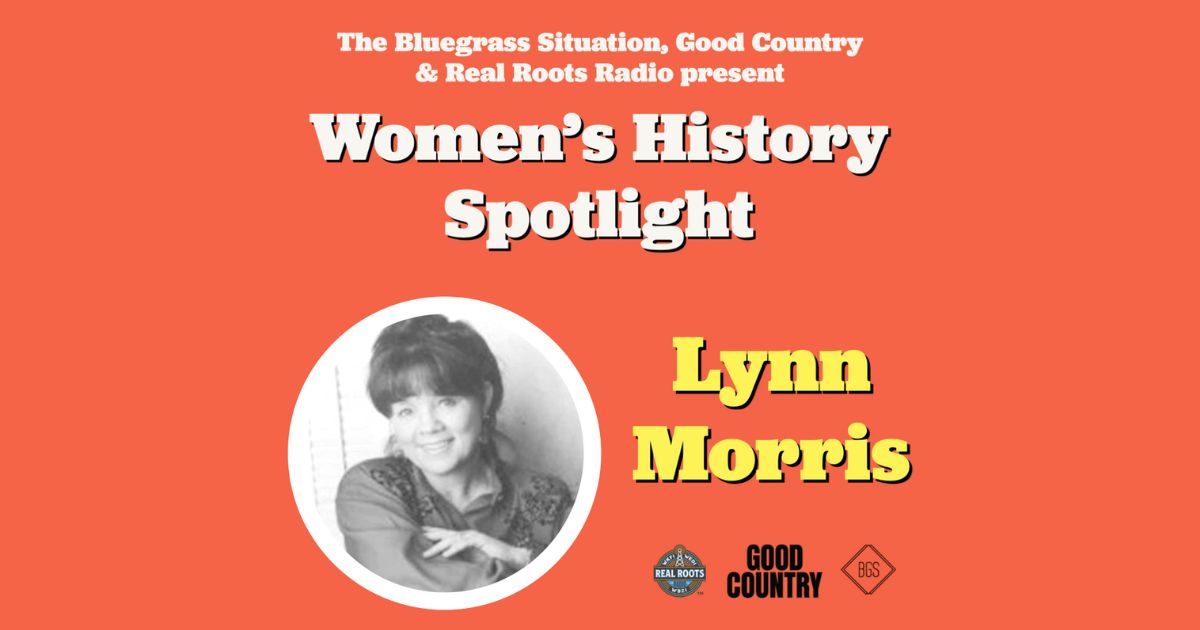
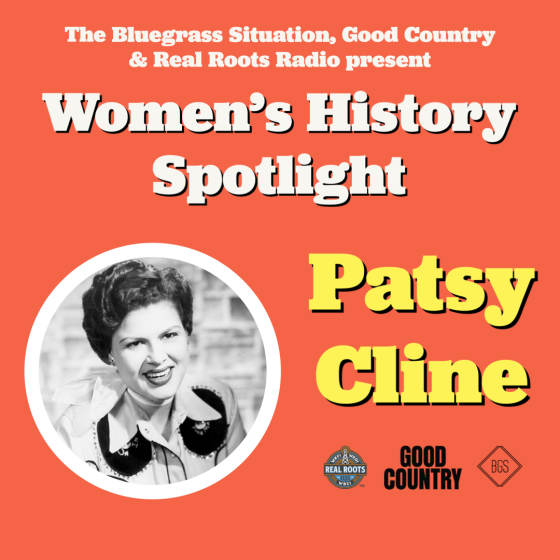
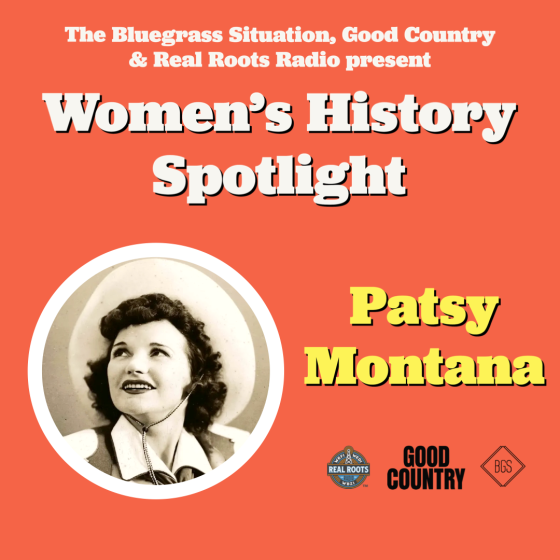
March is Women’s History Month, and BGS, Good Country, and Real Roots Radio have partnered to highlight a variety of our favorite women in country, bluegrass, and roots music with our Women’s History Spotlight.
Each weekday in March at 11AM Eastern (8AM Pacific) on Real Roots Radio, host Daniel Mullins will be celebrating a powerful woman in roots music during the Women’s History Spotlight segment of The Daniel Mullins Midday Music Spectacular. Then, we will have a Friday recap here on BGS featuring the artists highlighted throughout the previous week. No list is comprehensive, but we hope to feature some familiar favorites as well as some trailblazers whose music and impact might not be as familiar to you.
You can listen to Real Roots Radio online 24/7 or via their FREE app for smartphones or tablets. You can also ask your smart speaker at home to play “Real Roots Radio.” Based out of southwestern Ohio, we feature the best in country, bluegrass, and Americana music — past and present.
Each week in March, we hope you enjoy learning more about the incredible women who have made American roots music what it is today.
Patsy Cline
One of the most impactful voices in 20th century American music, Patsy Cline’s legacy still looms large over country music. An crossover star in the genre, her timeless voice has influenced generations of country stars — Loretta Lynn, k.d. lang, Mandy Barnett, and countless others. The strength and emotion with which she sang endeared her to music fans of all walks of life; she has sold over 14 million albums and had songs on the country charts two decades after her untimely passing. Her 1973 posthumous induction into the Country Music Hall of Fame made her the first solo female artist inducted into the hallowed hall.
This week marked the anniversary of the tragic 1963 plane accident that took the lives of Patsy Cline, Cowboy Copas, Hawkshaw Hawkins, and their pilot, Randy Hughes. Although she passed away at the age of 32, there is always Patsy Cline.
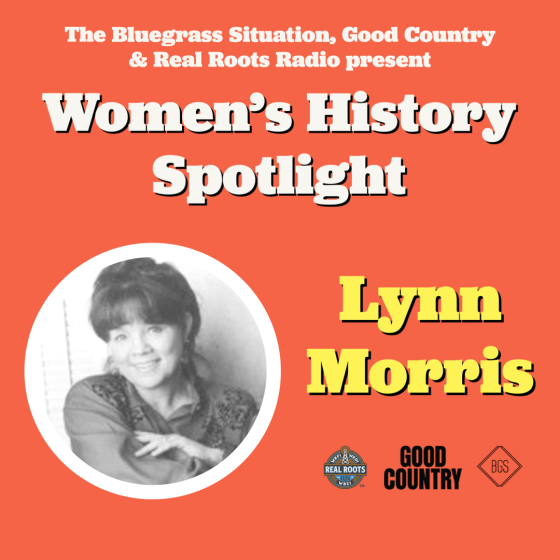
Lynn Morris
A recent inductee into the Bluegrass Music Hall of Fame, Lynn Morris is renowned in bluegrass circles for her virtuosity as a musician and her sincerity as a vocalist. The first person to win the National Banjo Championship in Winfield, Kansas twice, she is also a fantastic guitar player. After playing with Whetstone Run throughout much of the 1980s, she founded The Lynn Morris Band in 1988. Anchored by her heartfelt voice, The Lynn Morris Band featured a who’s who of future bluegrass stars over the years, including Jesse Brock, Ron Stewart, Chris Jones, Tom Adams, Jeff Autry, Audie Blaylock, and Marshall Wilborn (Lynn’s husband), among many others. She was forced to retire in 2003 due to a stroke, but her love for animals and radiant smile have continue to inspire the bluegrass community.
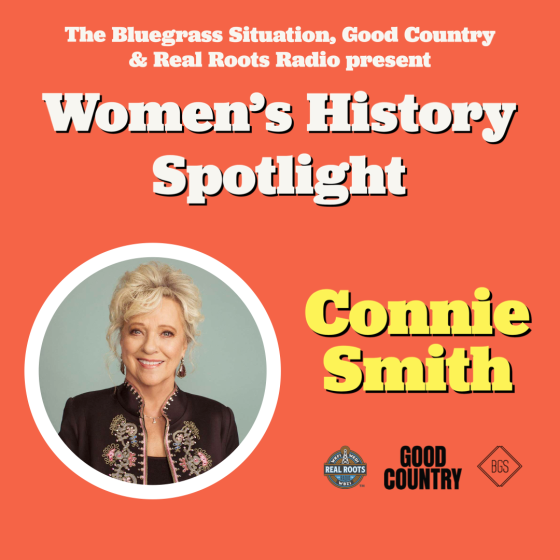
Connie Smith
Connie Smith was discovered at a talent contest in Columbus, Ohio at the famed Frontier Ranch by Bill Anderson, who quickly got her to Nashville where her debut single, “Once A Day,” shot to the top of the charts (her only number one hit). Connie Smith was an instant star. After many hit records, she semi-retired beginning in the late ’70s, only working sparingly while she raised her children, until she mounted a comeback in the mid ’90s. She continues to captivate Opry audiences, is still releasing powerful country albums, and was inducted into the Country Music Hall of Fame in 2012. Once billed as “Miss Cute ’n’ Country,” Eddie Stubbs more aptly (and more appropriately) dubbed her “The Rolls Royce of Country Music Singers.”
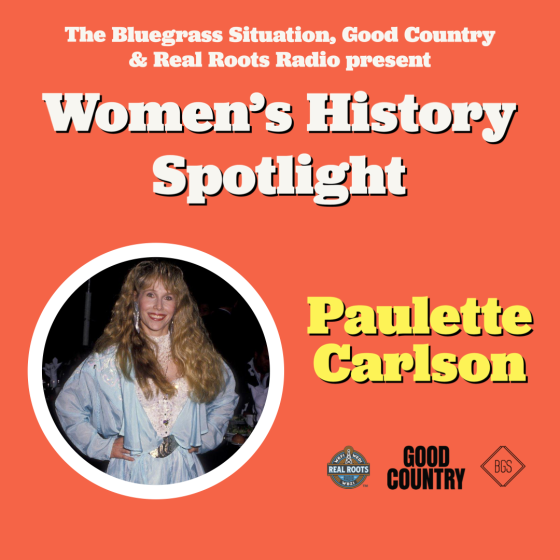
Paulette Carlson
’80s and ’90s country still slaps (which is one of the few things people can agree on these days), and if you’re familiar with country music from that era, you’re definitely familiar with the voice of Paulette Carlson. A Minnesota native, her talent quickly outgrew the bars of Minneapolis and Fargo, North Dakota and she moved to Music City in the late ’70s. After working as a songwriter and releasing a few songs on her own, she formed the band Highway 101 in 1986.
On the strength of Paulette’s distinct vocals, Highway 101 quickly began churning out hit records, like “Whiskey, If You Were A Woman,” “Walkin’, Talkin’, Cryin’,” “Barely Beatin’ Broken Heart,” and their breakthrough hit, “The Bed You Made For Me” (written by Carlson). Highway 101 received “Vocal Group of the Year” honors in 1988 and 1989 at both the CMA and ACM awards. Paulette Carlson left the band in 1990 to pursue a solo career, but failed to reach the commercial success that she achieved while leading Highway 101. In recent years, she has resumed recording touring, with several songs saluting the military, inspired by her brother Gary, a Vietnam War veteran.
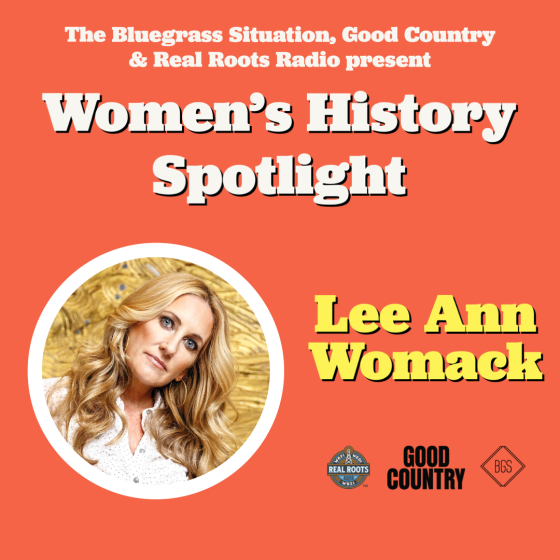
Lee Ann Womack
One of the most revered country vocalists of her generation, Lee Ann Womack’s impact on the current generation of female vocalists is obvious. In bluegrass alone, Sister Sadie’s Dani Flowers and Jaelee Roberts both point to her as a major influence, and before that, Flatt Lonesome’s Charli Robertson and Kelsi Harrigill did the same.
While “I Hope You Dance” is still played at nearly every graduation ceremony and high school prom, the depth of Womack’s talent and catalog is remarkable. Her ability to combine her style of traditional country with contemporary elements has allowed her to find great success outside of the genre, while unashamedly being an advocate for country music. In addition to some killer records of her own in recent years (I’m looking straight at you, The Lonely, The Lonesome & The Gone), the timelessness of her voice and the respect she has among her peers has allowed her name to pop up on some amazing all-star albums that truly run the gamut. I implore you to check out her contributions to Divided & United: Songs of the Civil War, last year’s Nashville tribute to the music of Bill & Gloria Gather, the country tribute to Elton John (Restoration), the Fisk Jubilee Singer’s 150th anniversary project, and the award-winning Industrial Strength Bluegrass album.
Patsy Montana
Born Rubye Rose Blevins, Patsy Montana was the original singin’ cowgirl. Her musical talent really blossomed during her time studying at what is now UCLA, where she studied violin, sang, played guitar, and yodeled on the side (which would remain a prominent part of her music). She traveled to Chicago’s World Fair with the hopes of receiving recognition for her family’s watermelon that she toted from Arkansas, but wound up auditioning for WLS’s National Barn Dance, becoming a part of the cast, and quickly becoming a radio star.
Her 1935 hit, “I Wanna Be A Cowboy’s Sweetheart,” would be country music’s first million-selling single by a female artist. She performed on WLS’s airwaves until the 1950s, until she took time off from the music business, but would continue to record occasionally into the 1990s. (Her 1964 album even featured a young lead guitarist named Waylon Jennings, before he was a household name.) Her impact in the early days of country music is remarkable as a trailblazer in the genre. A member of the Country Music Hall of Fame, Patsy Montana is known to have been an influence on future Hall of Famers like Patsy Cline and Dottie West.
It’s also not a stretch that Patsy Montana may have inspired Jessie the Yodeling Cowgirl from the Toy Story franchise… Well, at least it is known that the singing voice of Jessie, Devon Dawson, is influenced by Patsy Montana, but Jessie herself seemed pretty excited to receive the “Patsy Montana Award” by the National Cowgirl Museum in 2000. (Yes. This is actually happened.)
We hope you enjoyed this first installment of our Women’s History Spotlight presented by Real Roots Radio, Good Country, and BGS. Stay tuned for weekly updates each Friday in March.
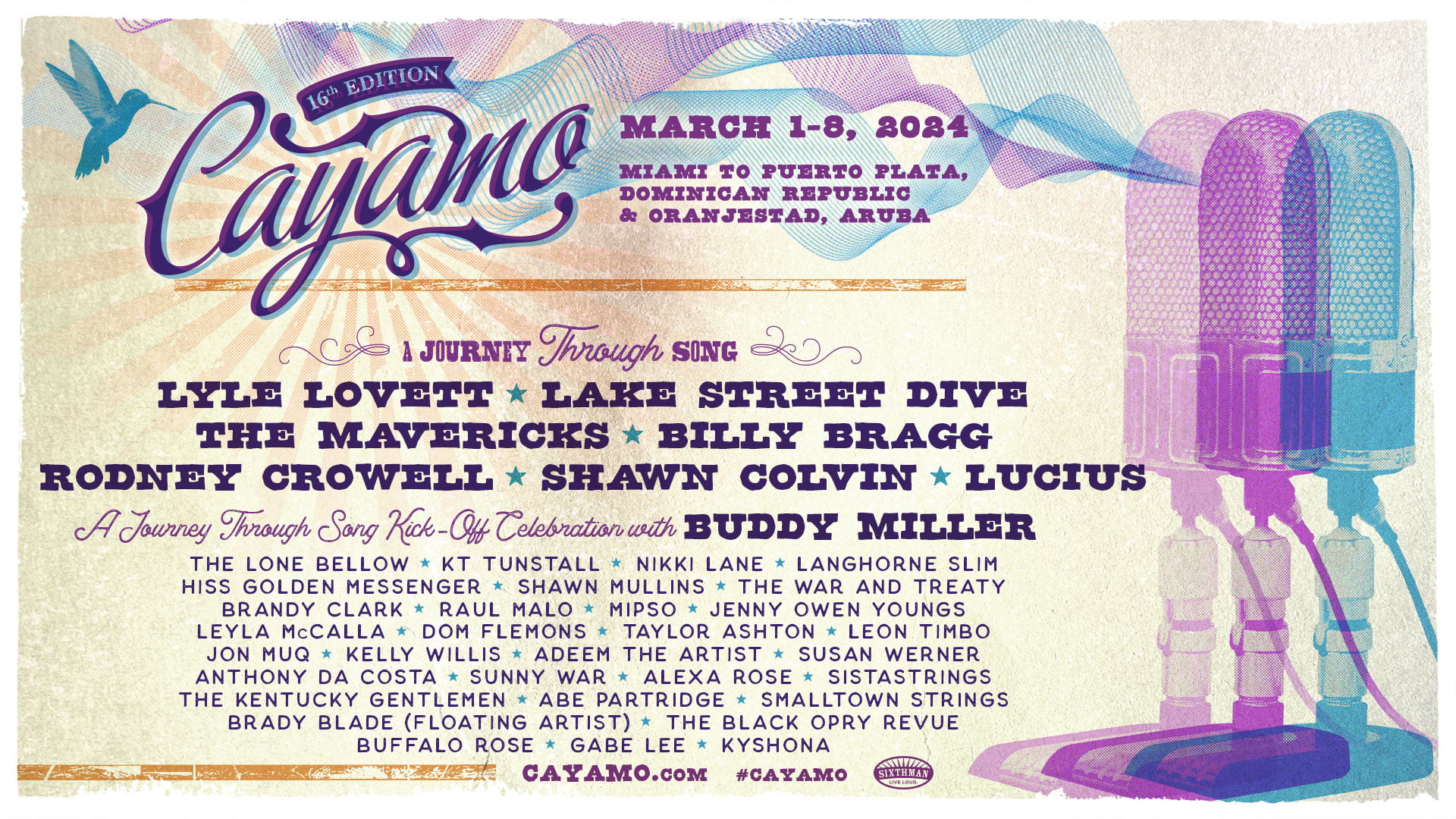
In a mere 10 days, Cayamo’s 16th edition will set sail from Miami for a week of Americana and roots music afloat on the beautiful Caribbean. Fans will spend the intimate week enjoying shows, collaborations, activities, and special events featuring the best musicians and artists in the roots music scene, all while porting in the Dominican Republic and Aruba. The voyage has been long sold out, but for the lucky folks who will be on board the Norwegian Pearl, BGS has a few tips, tricks, and event highlights you won’t want to miss from the jam packed Cayamo schedule.
If you aren’t a ticket holder for Cayamo 2024, join the waiting list – and it’s never too early to start planning next year! This one-of-a-kind roots music event is a truly special experience. Check out the list below for just a few reasons why Cayamo is such a hot ticket and why we’re so looking forward to being back on board with all of you in a few short days.
Buddy Miller’s Port Show Send-Off
Guitarist, producer, and Music City renaissance man Buddy Miller is no stranger to Cayamo, but this year he’s doing a very special port show to kick-off the entire voyage. Directly after the welcome toast on the pool deck on Friday, March 1, Miller will give the Norwegian Pearl a proper send off with the very first performance of the cruise. Catch his set from 3:45 to 5:00pm, with the all aboard call following at 5:30pm, then it’s bon voyage and goodbye to Miami!
As you can tell from this video shot from the audience on Cayamo 2019, you never know who is going to get up on stage with whom – we’re excited to see what special collaborations Miller puts on with other artists and pickers on the lineup.
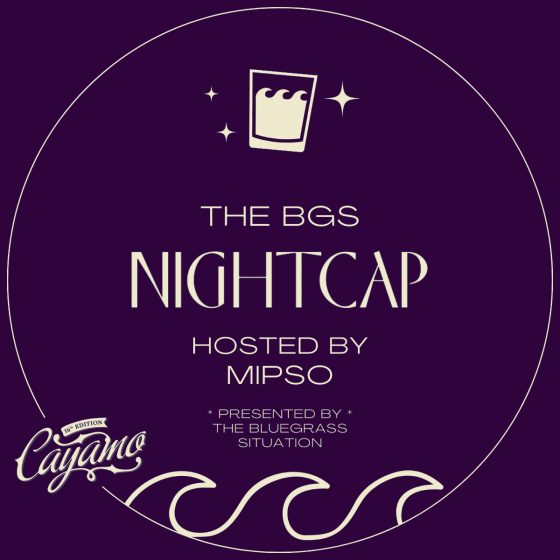
The BGS Nightcap Hosted by Mipso
One of the reasons we love Cayamo is getting to hang with and reconnect with so many of our friends! On Tuesday, March 5, at 11:00pm in the ship’s Stardust Theater we’ll reprise our popular Nightcap super jam show from last year, this time with our old pals Mipso as hosts. Speaking of special collaborations, there are bound to be many, many such collaborations at our Nightcap, so don’t miss it if you’ll be on board.
Cayamo Wine Tasting
Let’s continue with “hangs with friends” for another moment, because a bit earlier in the week, before our BGS Nightcap, Jacob Sharp of Mipso and our own executive director, Amy Reitnouer Jacobs, will be hosting a casual and friendly Cayamo Wine Tasting on Monday, March 4 from 1:00pm to 2:00pm in the ship’s Summer Palace. Sharp moonlights as a wine connoisseur and distributor when not making/playing music and our own Reitnouer Jacobs is known to love a good bottle, too. So if you’d like to sip and “nerd out” a bit about wine, soil, grapes, and winemaking, don’t miss the Cayamo Wine Tasting! It’s a perfect example of the unique types of events available to attendees. As the event description puts it, “Amy and Jacob’s friendship is based around sharing food, wine, and music that they see as emotionally poignant – and they’re excited to share that connection with you.”
BGS / Black Opry Artist Karaoke
Everyone loves karaoke and the teams at BGS and Black Opry certainly agree on that point! We couldn’t imagine a more fun cruise ship activity than getting together a bunch of the amazing artists on the Cayamo lineup to sing karaoke songs with the Black Opry house band backing them up. It’s sure to be a wild, hilarious, and enormously fun time. Catch the action in the Atrium on deck 7 on Wednesday, March 6 at 11:30pm. You never know who might show up to holler your favorite karaoke track!
Coffee & Conversation
Join the hosts of BGS’s podcast Basic Folk, Lizzie No and Cindy Howes, for a live-taped podcast conversation over coffee on Monday, March 4, at 9:00am. Their discussion, entitled, “Community/Commodity: Supporting and Sustaining Artists, Orgs, and Fans in the 21st Century,” will explore how the music industry, its artists, musicians, fans, and listeners can be active participants in creating a world where art isn’t just about consumption – and where music isn’t just a commodity. Bring your morning coffee or tea and enjoy a stimulating conversation that asks how events and organizations like Cayamo can be a model for more community-supported and community-engaging music in the future.
In today’s day and age, it seems like one must choose between capitalism or community… or is that really the case? Is there a way that these two can live side by side in the music industry? We’ll discuss all that and more in this very special live recording of FOLK DEBATE CLUB AT SEA! by Basic Folk.
Shows, Shows, Shows!
Of course, let’s not lose the forest for the trees, here. The most tantalizing part of Cayamo is indeed the limitless live shows, special concerts, and on-stage collaborations that the cruise is known for the world over. Boasting over 100 scheduled shows, there’s music for all tastes and from across the American roots spectrum. Below we’ll collect a handful we’re especially excited to catch on the ship.
We can’t wait to set sail with all of you on Cayamo 2024!
SistaStrings
You know them from their work with Peter Mulvey, Allison Russell, Brandi Carlile, Brandy Clark, and many more, but SistaStrings aren’t just a premier string duo working as side musicians with all your favs in Americana – they’re impeccable as a stand-alone group, too. We’ll be catching their set on Saturday, March 2, but we’ll also be keeping an eye out for them to pop up with many other performers on the lineup throughout the voyage.
Sunny War
Sunny War has long been a BGS favorite and she’s certainly one not-to-miss during Cayamo 2024. Her music is often touted for its combination of blues and punk, but even a fleeting exposure to her particular musical stylings reveals she is an artist all her own. There’s nobody out there who quite sounds like Sunny War.
Gabe Lee
If you’re looking for Good Country while on board Cayamo, look no further than Gabe Lee. A Nashville native, Lee offers a forward-looking, gritty, and real take on Music Row’s particular brand of country music. He’s an excellent songwriter and frontman who’s opened for most of your favorite roots artists and we can’t wait to see him shine on the ship.
Black Opry
OF COURSE we’re so excited Black Opry is on board Cayamo 2024. You won’t want to miss our karaoke event, but even more important is that you don’t miss their marquee event, the Black Opry Writer’s Round, which has been a tent pole of this collective’s work for the past several years. (That show is Monday, March 4, at 11:00am in the Stardust Theater.)
There’s a reason why Black Opry is showing up just about everywhere these days – and it’s not just Beyoncé going country. This collective centers the art and experiences of a group of folks who remain underserved and underrepresented in Nashville, on Music Row, and at events like these. And the artists they showcase are always of the highest quality.
In whatever iteration Black Opry will take during their many events on Cayamo, they will demonstrate yet again that these musicians, pickers, and singer-songwriters making American Roots music are joyfully carrying on an age-old tradition – while reminding all of us how none of these genres would exist without the vital contributions of Black folks and Black creators.
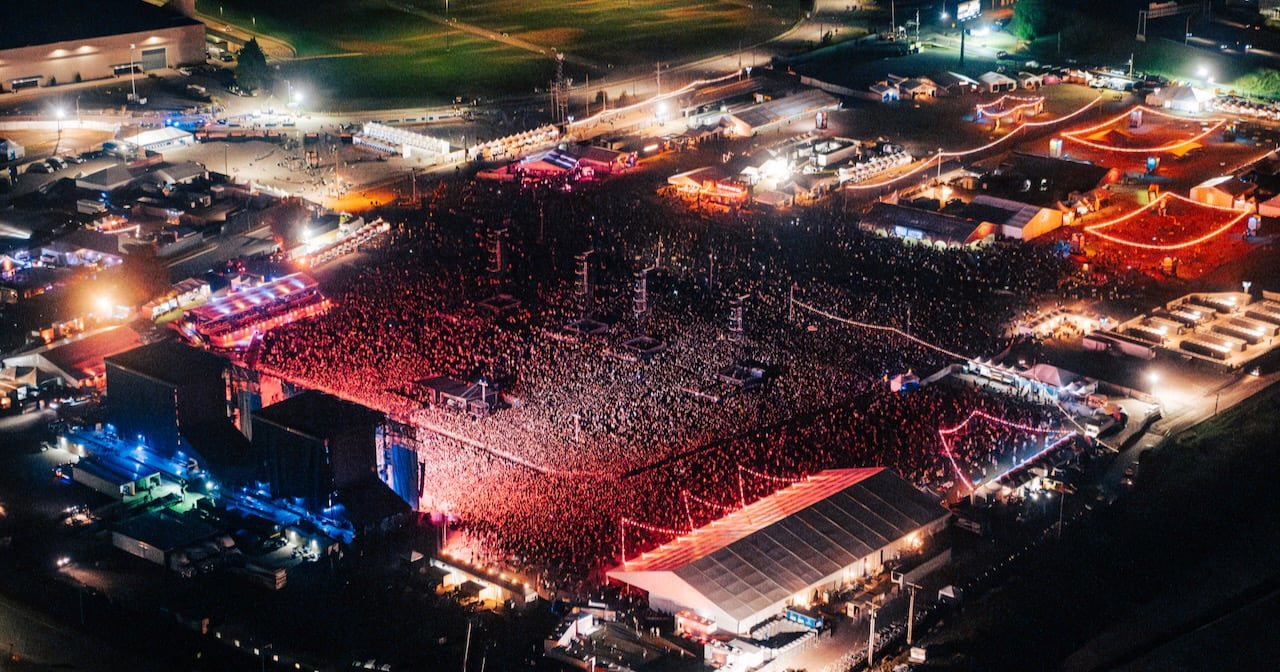
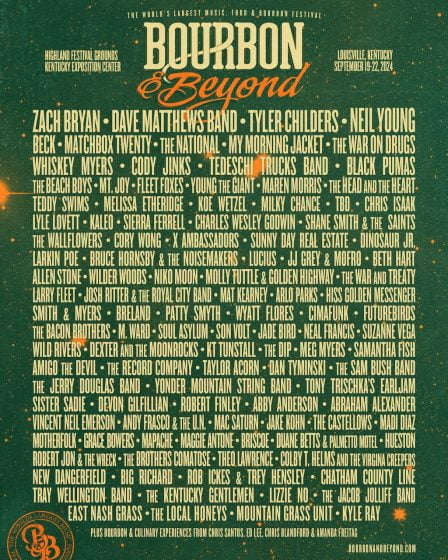
Today, Bourbon & Beyond, the world’s largest music and bourbon festival, announced its lineup for their 2024 event, to be held in Louisville at the Kentucky Expo Center September 19 through 22, 2024. With headliners such as Neil Young, Zach Bryan, Tyler Childers, and many more, the festival promises a roster filled-to-bursting with the best acts from country, Americana, bluegrass, and beyond.
BGS will return to the festival for ours and the festival’s sixth consecutive year, once again curating the musicians and bands that will grace the Bluegrass Situation Stage. Housed in the Kroger Big Bourbon Bar, the BGS stage will feature bluegrass, line dancing, and as much bourbon as you can drink from dozens of distilleries. Each day of the festival our stage will culminate with performances by Sam Bush Band, the Jerry Douglas Band, Yonder Mountain String Band, and Tony Trischka’s Earl Jam. Plus, don’t miss exciting acts like IBMA Entertainer of the Year winners Sister Sadie, newly-minted Black string band New Dangerfield, and KY neighbors the Local Honeys and the Kentucky Gentlemen. See the full list of performers for the Bluegrass Situation Stage below.
Kentucky Governor Andy Beshear, via press release, had this to say about the festival: “The Commonwealth of Kentucky is honored to be hosting Bourbon & Beyond in Louisville this September,” he said. “The festival brings in fans from all over the world and showcases the best of Kentucky; highlighting our rich culture of bourbon, the best in local culinary, and a top tier musical lineup. We can’t wait to welcome fans once again for this great tradition that we all in Kentucky are proud to call our own.”
First-rate bands and artists from across the American roots music community can be found throughout Bourbon & Beyond’s lineup, not only at the Bluegrass Situation Stage. This year, Bourbon & Beyond adds two new secondary stages, as well as the usual BGS Stage and the Oak and Barrel main stages. From Tedeschi Trucks Band and Black Pumas to Melissa Etheridge and Molly Tuttle & Golden Highway, there’s truly something for everyone. Don’t miss sets by Larkin Poe, Josh Ritter, Jade Bird, Lyle Lovett, Sierra Ferrell, Devon Gilfillian, Vincent Neil Emerson, Robert Finley, Hiss Golden Messenger, and so many more.
Another highlight of Bourbon & Beyond each year are the bourbon and culinary events, workshops, and activations that feature celebrity chefs and food-and-drink experts such as Chris Blandford, Amanda Freitag, Ed Lee, Chris Santos, and more. All in all, Bourbon & Beyond promises to yet again be your complete music, bourbon, and food festival in beautiful Kentucky. Tickets are on sale now – we hope you’ll join us in Louisville for another year of Bourbon & Beyond!
The Bluegrass Situation Stage Lineup
Sam Bush Band The Jerry Douglas Band Yonder Mountain String Band Tony Trischka’s Earl Jam: A Tribute to Earl Scruggs Sister Sadie New Dangerfield Big Richard Rob Ickes & Trey Hensley The Brothers Comatose The Local Honeys Tray Wellington Band Chatham County Line The Kentucky Gentlemen East Nash Grass Mountain Grass Unit Jacob Jolliff Band …and more to be announced!
Photo Credit: Nathan Zucker, courtesy of Bourbon & Beyond.
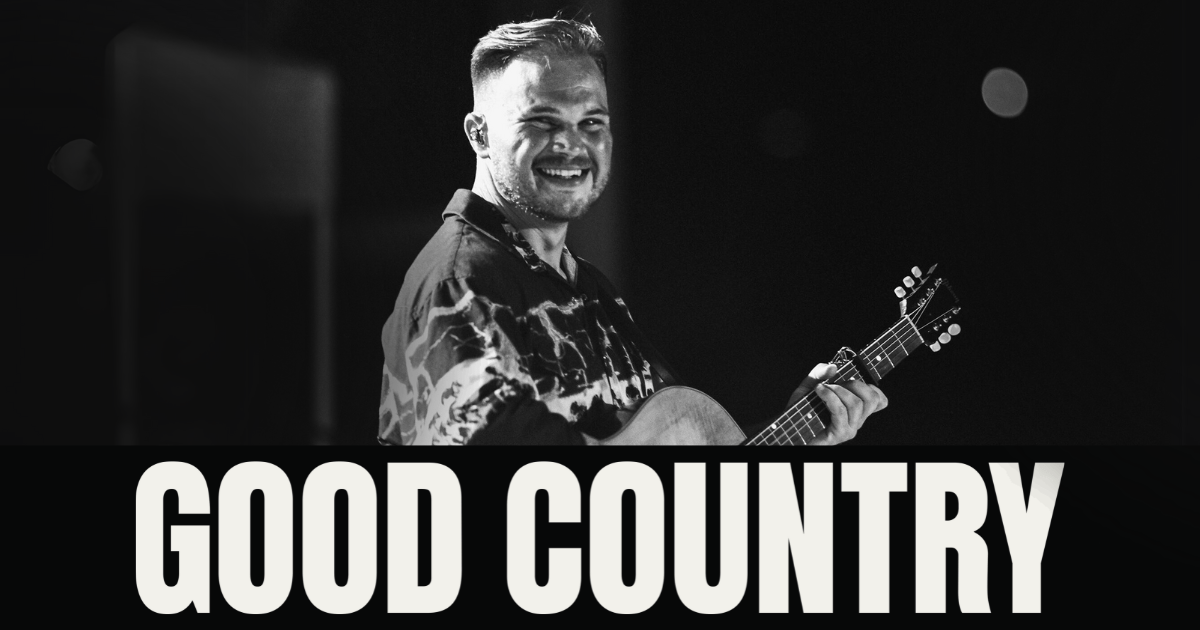
BGS is proud to announce the launch of a new brand in 2024: GOOD COUNTRY. By this point, you may have seen or heard mentions of Good Country on our site, at our events, and on our socials feeds as we prepare this exciting new expansion for our readers and fans.
Launching in mid-January 2024, Good Country is a curated, bespoke email newsletter that will highlight all good country from across the roots music landscape. Every other week, GC will deliver high-end country music reporting, long reads, playlists, videos, and exclusive content from your favorite country artists direct to your email inbox. As you scroll, you’ll dive into the deep and broad world of Good Country, from gritty and raw Americana to glitzy and glamorous radio hits, from bluegrass supergroups to southern rock ensembles and swampy string bands. Sign up for Good Country now.
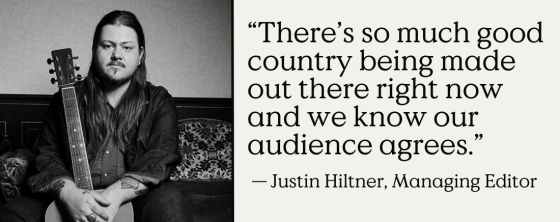
“Good Country is a brand new horizon for BGS,” says managing editor Justin Hiltner. “But, at the same time, it’s nothing more than a reinforcement of our values as a media company and roots music community. Country – like its family members bluegrass, folk, and Americana – is more than just music, it’s a lifestyle, an identity, a way of being. There’s so much good country being made out there right now and we know our audience agrees. Whatever ‘good country’ means, you’ll know it when you hear it. And you’ll hear plenty of it in this newsletter!”
Each issue of Good Country will center features, think pieces, and interviews penned by the best writers and thinkers in country music highlighting not just the biggest names in the genre, but new and upstart artists as well. Exclusive newsletter content will live alongside deep dive playlists, sonic explorations, and thoughtful examinations of what country is, who makes it, and to whom it can belong – everyone.
BGS co-founder, actor, activist, and musician Ed Helms, will be featured in each issue as well with “Ed’s Picks,” artists and bands selected by Helms himself, direct from his own listening.
“From the very beginning, BGS was forged on a foundation of celebrating the full spectrum of roots music fans and artists,” explains BGS co-founder Amy Reitnouer Jacobs. “This community has never been one thing, nor has it been static. It’s a diverse, expansive, and ever-changing art form. The same can and should be said for country music. And that’s why now is the perfect time to create a more representative media landscape. It’s time for Good Country.”
Good Country’s first issues will feature music, art, and content featuring Zach Bryan, Sierra Ferrell, Amanda Fields, Veronique Medrano, Shania Twain, Chris Stapleton, Vincent Neil Emerson, Brittney Spencer, and so many more. No matter your entry point to this music, with our new brand and newsletter you will find endless Good Country to enjoy. Interact with content in your email inbox, on our website, and on our social media – wherever you are, Good Country will meet you there.
Good Country isn’t about deciding what is or isn’t good country music. Good Country is a place. It’s a way of looking at the world, a way of enjoying music. If you think it’s good and you think it’s country, then you’ve found Good Country.
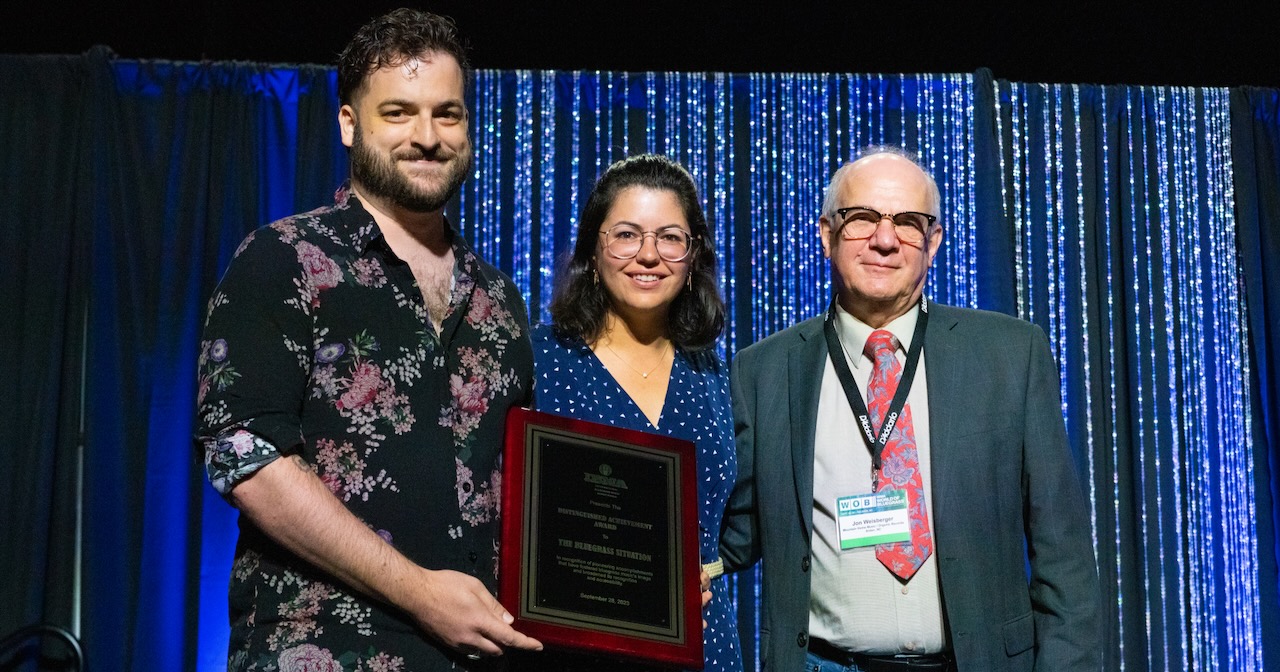
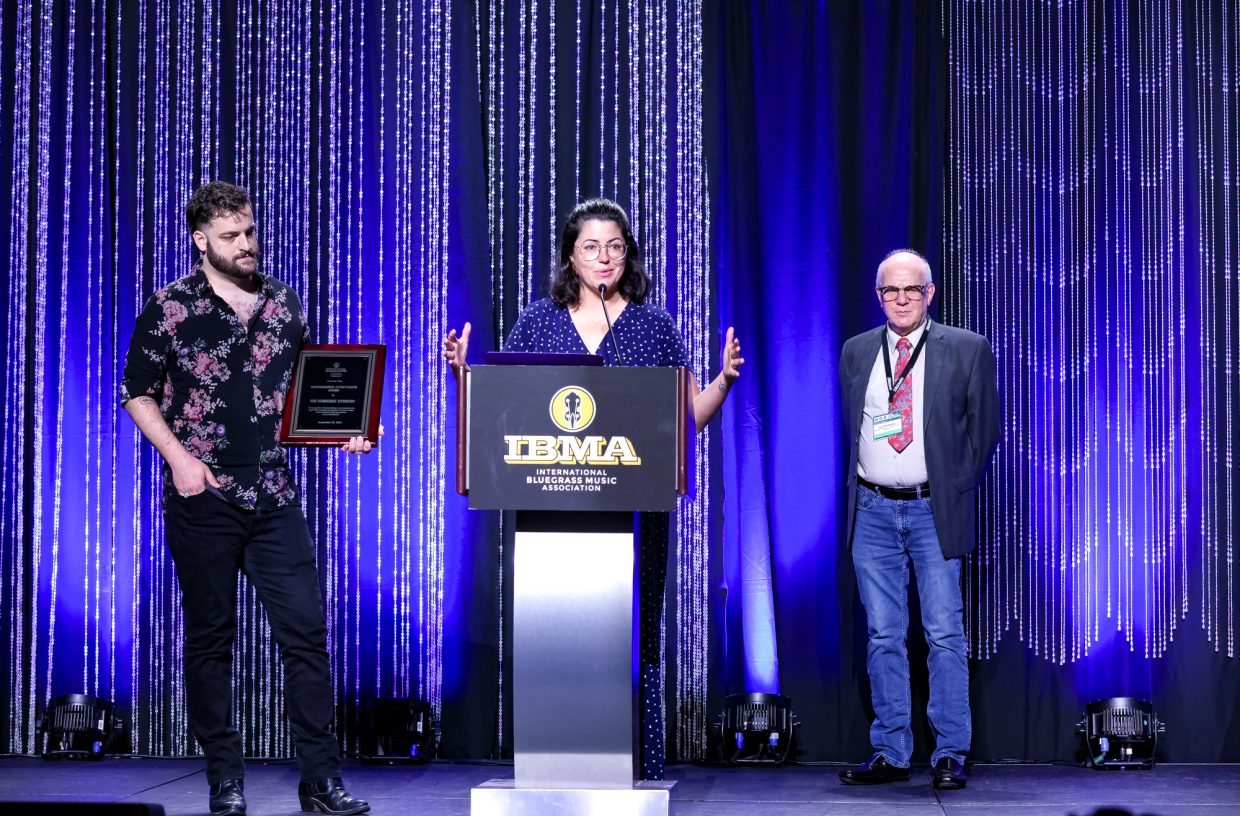
(Editor’s Note: On Thursday, September 28, 2023, BGS contributor, musician, songwriter, and bluegrass industry leader Jon Weisberger presented BGS with IBMA’s Distinguished Achievement Award at the organization’s annual business conference. Below, enjoy Weisberger’s award presentation speech, adapted for print, and photos from the Industry Awards luncheon.)
The International Bluegrass Music Association’s Distinguished Achievement Award was created as the organization’s first honor, just a year after its 1985 founding. Among the first recipients were Bill Monroe, gospel songwriter Albert E. Brumley, and (now-BGS contributor) Neil V. Rosenberg.
After 1991, when the Hall of Honor (now the Bluegrass Music Hall of Fame) was established, the DAA became a way to recognize a variety of accomplishments — a lifetime of achievement for many recipients, but also activities taking place in more compressed timespans, as when the Coen Brothers and T Bone Burnett were recipients in 2001 for the singular act of creating the film, O Brother, Where Art Thou?, and the accompanying soundtrack album. And while most of the recipients are people, some are entities, like WSM’s Grand Ole Opry (2000), the Station Inn (2003), and Bluegrass Unlimited magazine (2016).
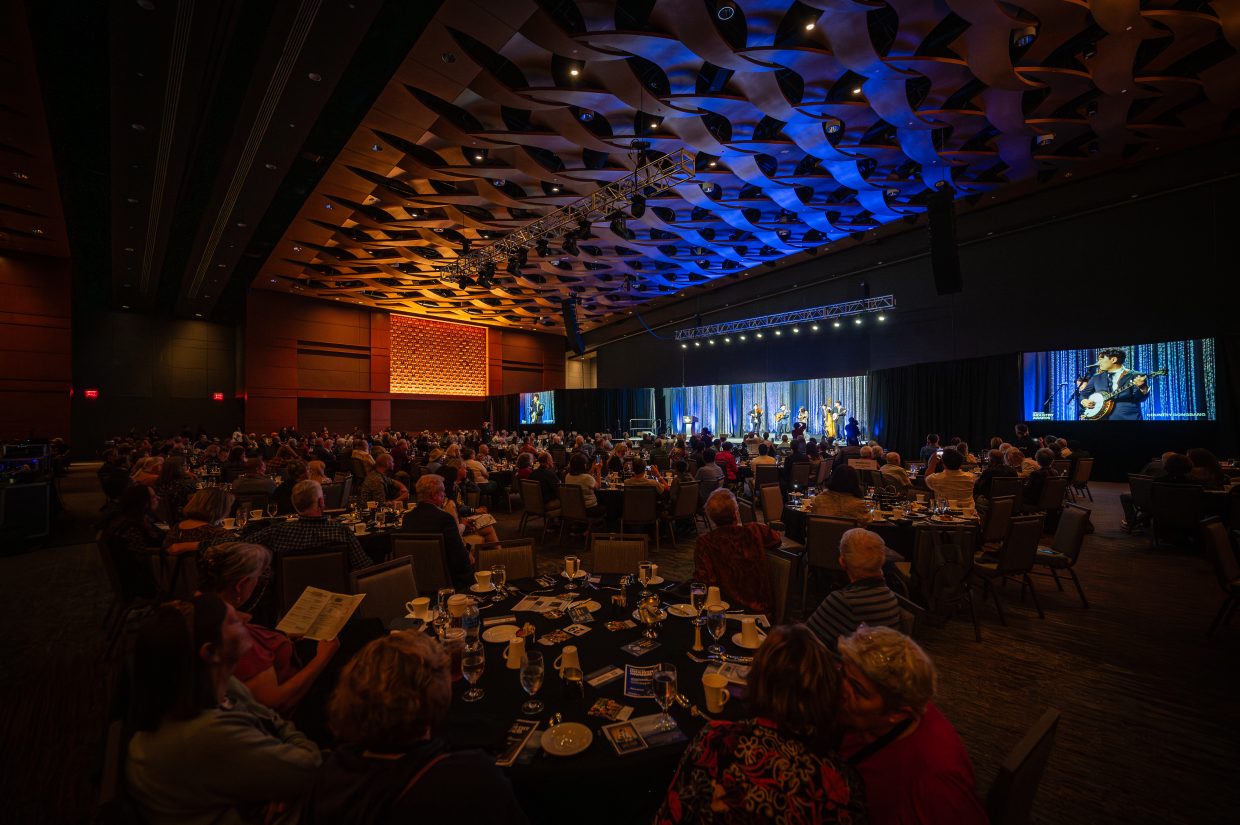
Country Gongbang, of South Korea, perform during the IBMA Industry Awards Luncheon. (Photo by Rob Laughter)
Either way, the award criteria direct the selection committee to consider those who “have fostered bluegrass music’s image with developments that will broaden the music’s recognition and accessibility.” Further, the award criteria state, “Their contributions should be unique given the relative period of time in which they were made and should embody the spirit of one who pioneers or opens new possibilities for the music.” These are descriptions that fit the Bluegrass Situation perfectly.
Having celebrated its 10th anniversary just last year, this site contains an extensive amount of material that recalls a multitude of highlights from that first decade. So rather than recount them, I chose, when presenting the award—an invitation for which I’m deeply grateful — to recognize what Ed Helms, Amy Reitnouer Jacobs, their dedicated staff and many contributors have done to broaden the music’s recognition and accessibility and open new possibilities for the music is to look at why these things are important and how they have met the challenge.
For more than 50 years, bluegrass music has been dependent, for the renewal of its audiences and of its musicians, on exposure beyond its cloistered garden. From The Beverly Hillbillies through the Nitty Gritty Dirt Band’s Circle album through the mainstream success of Ricky Skaggs and Alison Krauss to O Brother and, more recently, artists like Molly Tuttle and Billy Strings, our music has needed not only community-building institutions that cater to those already familiar with it, but a plethora of vehicles that expose new audiences to this music.
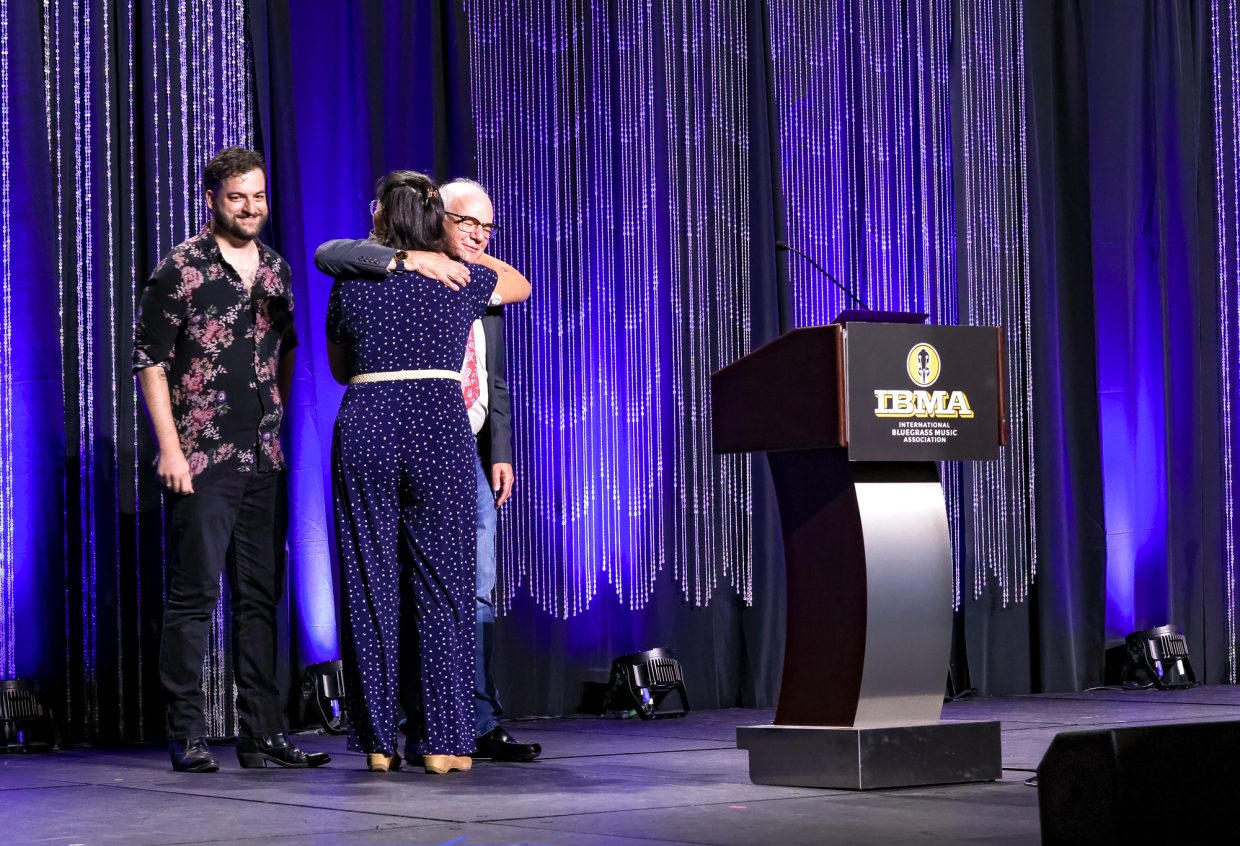
BGS executive director Amy Reitnouer Jacobs reacts to Jon Weisberger’s DAA presentation. Justin Hiltner, managing editor, looks on. (Photo by Willa Stein)
This is how many people, including many in the IBMA, first became aware of bluegrass, and in the past decade, no one has done more to introduce this music to new audiences than the Bluegrass Situation. By covering the broad range of roots music under its “bluegrass” rubric, and by insisting on presenting the full range of bluegrass music and musicians in all their diversity, the Sitch has invited hundreds of thousands into the fold — and the same is true of the events the Bluegrass Situation has organized and sponsored.
Indeed, one of the Sitch’s distinctive contributions has been its dual role as a chronicler of the broad array of bluegrass and related musical artists and as a presenter, bringing the artists and the music they make directly to audiences. Especially through its curated stages at major music festivals, the Bluegrass Situation has introduced thousands — tens of thousands by now — to artists like bluegrass Hall of Famers Ricky Skaggs, Del McCoury, and Sam Bush.
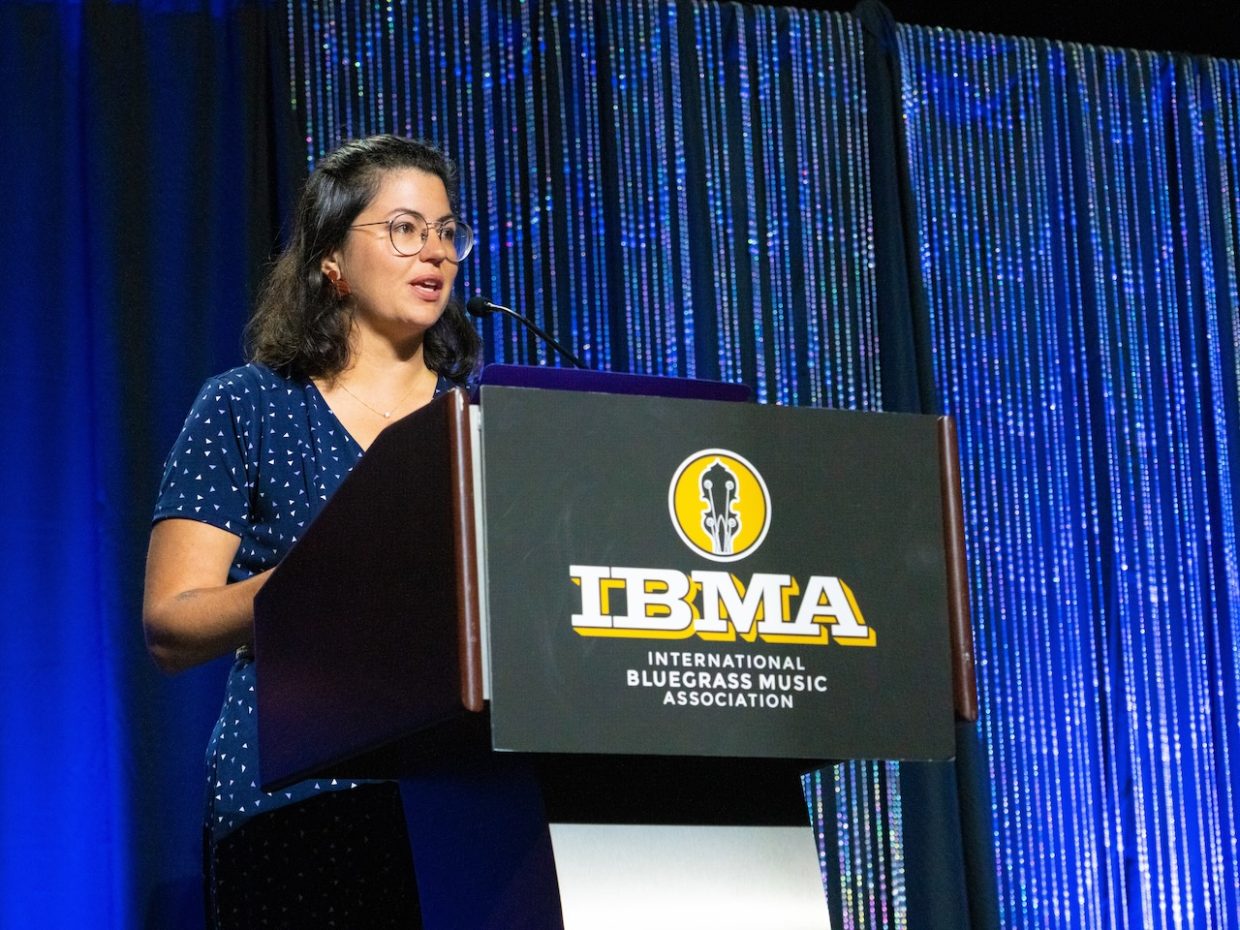
Amy Reitnouer Jacobs speaks to the Industry Awards Luncheon audience. (Photo by Dan Schram)
In this way, the Sitch has spent more than a decade devoted both to the important work of bringing a wide variety of roots music to audiences across the country and around the world, and to the important work of bringing the whole array of bluegrass artists, from Larry Sparks, Junior Sisk, Michael Cleveland, and High Fidelity to the Infamous Stringdusters, Leftover Salmon, Molly Tuttle, and Billy Strings to the attention of those attracted to the Sitch’s website and events by its coverage and presentation of all the other roots music artists within their purview. So, someone who visits the site to read an Allison Russell feature has an opportunity to learn about Lynn Morris, while another who attends the Bourbon & Beyond festival to see The Black Keys might have their ear caught by the sound of Dan Tyminski or The Cleverlys performing on the Sitch’s curated stage.
These are the kinds of connections — and the kind of day in, day out, year in and year out work — that, in the words of the Distinguished Achievement Award criteria, “broaden the music’s recognition and accessibility.” These are the ways in which bluegrass is able to draw in new generations of fans — and new generations of musicians and industry activists, too. For more than 10 years, now, Ed Helms, Amy Reitnouer Jacobs and the Bluegrass Situation have been doing the work, and all of us in the bluegrass community have benefitted from their efforts. It gave me great pleasure to present them with this award.
L to R: Justin Hiltner, Amy Reitnouer Jacobs, Jon Weisberger at the 2023 IBMA Industry Awards Luncheon. (Photo by Willa Stein)
Photos by Rob Laughter, Dan Schram, and Willa Stein as noted; Lead image of Hiltner, Reitnouer Jacobs, and Weisberger by Dan Schram; All photos courtesy of IBMA.
On the heels of being awarded IBMA’s Distinguished Achievement Award, the BGS team is excited to announce a few staff changes in our organization that took effect earlier this summer. Our incredible Managing Editor of 4+ years, Craig Shelburne, was recently offered an opportunity for a once-in-a-lifetime project – more details to come – and consequently has had to end his time with BGS. While we miss him dearly, with his unending dedication to and love of roots music, his singular journalistic perspective, and his legendary puns lighting up our lives, we are so thrilled for him in this next chapter of his career and the entire team wishes him the best.
With Shelburne’s departure, we are absolutely delighted to have longtime BGS team member Justin Hiltner back in the fold, now acting as our Managing Editor. Justin Hiltner is a queer and disabled banjo player, songwriter, and music writer known from Peabody Award-winning podcast Dolly Parton’s America. He recently completed a national tour of Broadway’s Tony Award-winning revival of Oklahoma! and played banjo and guitar for a limited run of the musical Bright Star at the Miracle Theatre in Miami. His debut solo album, 1992, was released in December 2022 and was a Best of 2022 selection by NPR Music, Slate, and more. (We covered the project here.) Hiltner has been nominated for Momentum Instrumentalist of the Year, Momentum Industry Involvement, Writer of the Year, and Collaborative Recording of the Year by the International Bluegrass Music Association (IBMA). In 2016 he co-founded Shout & Shine, a showcase, column, and video series celebrating representation and inclusion in bluegrass with BGS before going on to become our social media director and, later, Digital Brand Director. He also helped found – and currently sits on the board – for Bluegrass Pride, a non-profit with a mission of uplifting LGBTQ+ folks in roots music, and recently he served on Folk Alliance International’s Cultural Equity Council.
Lonnie Lee Hood, BGS Social Media Editor
In addition, we’ve also had the joy of recently adding Lonnie Lee Hood to our team as our Social Media Editor. Lonnie is a journalist and writer located in Middle Tennessee. They are currently working on their debut book, Redneck Revolution, with the West Virginia University Press. They live with their potbelly pig and look forward to building a small, sustainable homestead in the mountains.
Former BGS media director and executive assistant Shelby Williamson has also moved into a new position within our staff, stepping into the newly created Creative Director role. Williamson has overseen many aspects of BGS’ outward facing brand over the past handful of years, from our Instagram channel and email newsletter to the ever-expanding BGS Podcast Network, leading production and development of shows such as Harmonics with Beth Behrs and Carolina Calling. As Creative Director, Williamson will oversee a visual branding refresh coming to BGS soon and will also co-edit a new country-geared vertical within the BGS brand with Hiltner, to be announced soon.
Rounding out the BGS staff are co-founder and executive director Amy Reitnouer Jacobs and web and audience development expert Joe Klingl, in addition to our BGS family of contributors, writers, and creatives. Our team is already enjoying this latest evolution of BGS and we’re excited to continue connecting with our community in this new chapter.
This website uses cookies to improve your experience. We'll assume you're ok with this, but you can opt-out if you wish.AcceptRejectRead More
Privacy & Cookies Policy
Privacy Overview
This website uses cookies to improve your experience while you navigate through the website. Out of these, the cookies that are categorized as necessary are stored on your browser as they are essential for the working of basic functionalities of the website. We also use third-party cookies that help us analyze and understand how you use this website. These cookies will be stored in your browser only with your consent. You also have the option to opt-out of these cookies. But opting out of some of these cookies may affect your browsing experience.
Necessary cookies are absolutely essential for the website to function properly. This category only includes cookies that ensures basic functionalities and security features of the website. These cookies do not store any personal information.
Any cookies that may not be particularly necessary for the website to function and is used specifically to collect user personal data via analytics, ads, other embedded contents are termed as non-necessary cookies. It is mandatory to procure user consent prior to running these cookies on your website.