Put Your Movin’ Shoes on and Dance

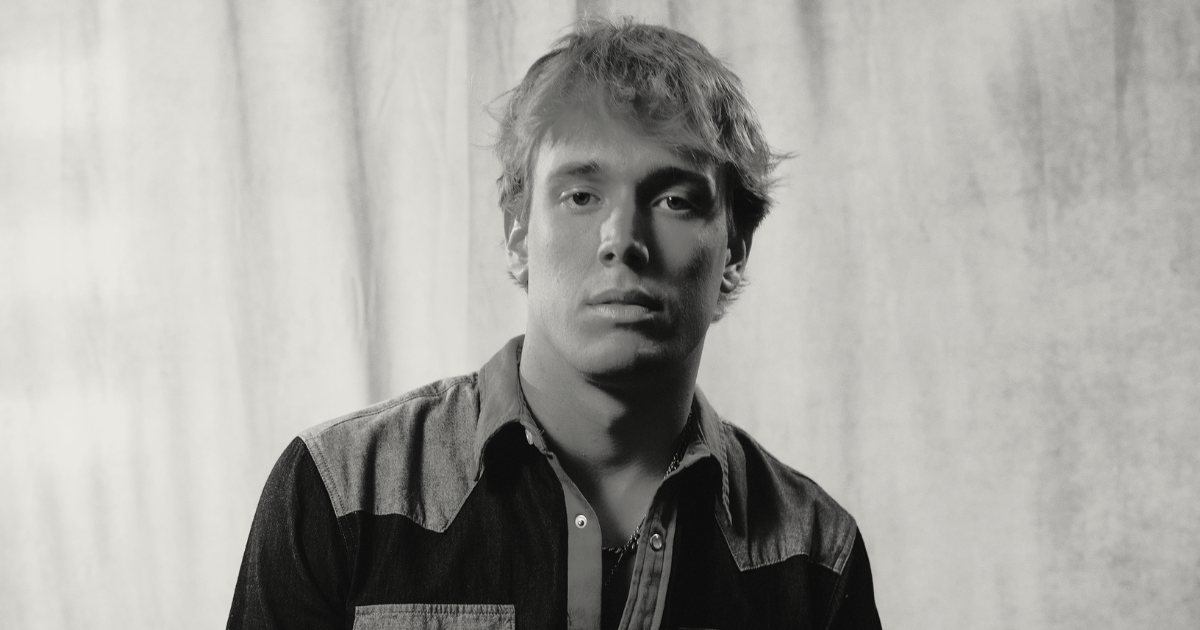
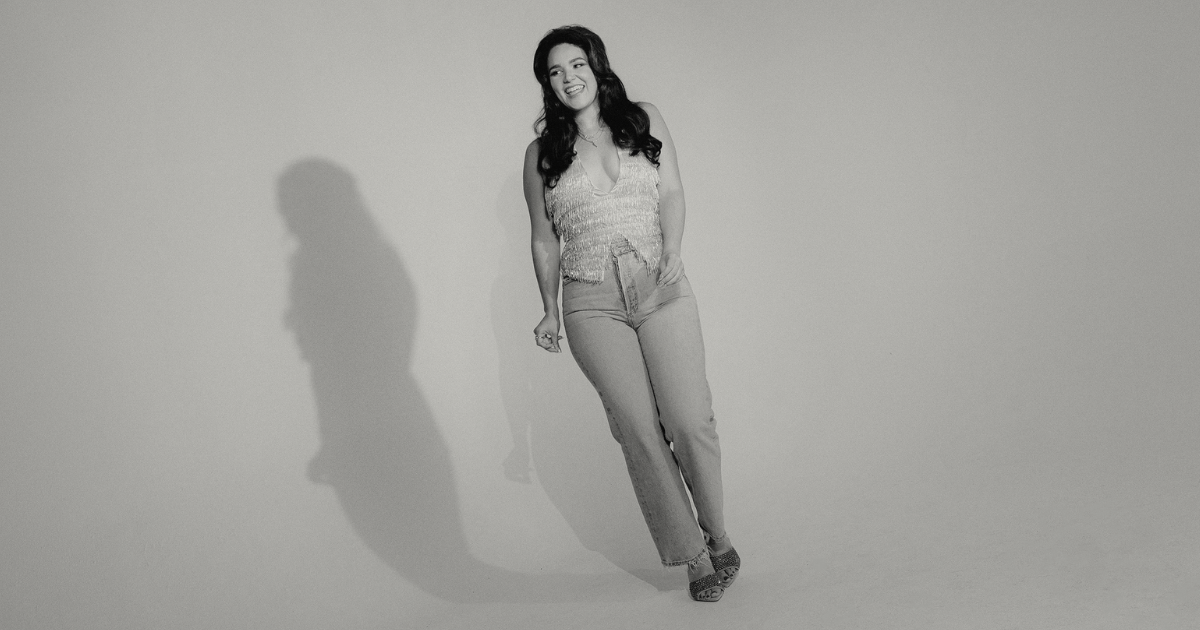
After spending time On The Ranch in 2022 and hopping in the car for 2024’s Drive & Cry, Emily Nenni now finds herself out on the dance floor with her latest record, Movin’ Shoes. Released May 1, the album is the California-born, Nashville-based singer’s third project in collaboration with New West Records.

It’s also her most ambitious and vulnerable to date, with Nenni singing about everything from feeling comfortable in her own skin (“Livin’ In Shame”) to getting caught up in a heated argument (“You Only Said It To Hurt Me”) and doing what makes you happy (“Not A Winner”). All amid a backdrop of Stax horns, pedal steel, and other accompaniments captured in Memphis with producer John James Tourville (of the Deslondes) and engineer Matt Ross-Spang. The two also worked with Nenni on Drive & Cry, but this time around the setting was at Ross-Spang’s new Southern Grooves studio, which offered up new opportunities to stretch out and experiment musically.

The result is a mix of honky-tonk and Southern soul that invokes Booker T & the M.G.’s and B.B. King (“Movin’ Shoes”); William Bell and Aretha Franklin (“What Have I Done Wrong”); Diana Ross (“Not A Winner”) and the Supremes (“Livin’ In Shame”). Even more crossover moments occur with a bluesy rendition of Paul Simon’s “Tenderness” and a reimagining of Cass Elliot’s (of The Mamas & The Papas) “Talkin’ To Your Toothbrush” that illustrate Nenni’s confidence in full bloom.

“This isn’t strictly honky-tonk like my former records, even though it’s still all the same influences,” Nenni explains. “I’m just drawing from more artists and genres than I have in the past.”

Ahead of Movin’ Shoes’ release, Nenni spoke with Good Country about the evolution of her sound, the relationship she has with her dog Edna (whom she sings about on the song “Home With My Dog”), her reverse lip sync video for “Livin’ In Shame,” and more.

One of my favorite songs from Movin’ Shoes that captures your new sound is “Yes It Hurt.” Did you always plan to incorporate horns in it?

Emily Nenni: “Yes It Hurt” was probably the most outside of what I’ve done on any of my past three records. It was a bit nerve-racking, because I initially just planned to record the phrase “yes it hurt” repeated with some harmonies to use as an interlude. I never envisioned it being a full song, but JJ [John James Tourville] came up with a whole thing around it that I added verses to the day before we went in to record. I didn’t really know what I was doing, but I trusted him, and getting to see three horn players shred on my song made it all worth it. I’ve always wanted horns on my record, but didn’t want it to be such a big departure from what I’ve been doing.

What was the timeline for these songs coming together?

Aside from the covers, the entire record was written over the course of a month and a half. I sent JJ voice memos of most songs about a week before heading into the studio, which left him no time for pre-production. We had been talking, though, and had both the musicians and space to record, so I just trusted it would all come together.

The only song I had to build my lyrics around JJ’s production was on “Take My Money.” I had all the lyrics but no melody, because everything I tried didn’t fit right. Then he went and made it into this really cool and funky honky-tonk type song that has become one of my favorites on the entire record.

Was this your first time recording in Memphis?

Yes. We recorded Drive & Cry at the Creative Shop in Nashville, but it was actually mixed in Memphis with Matt Ross-Spang. When JJ and I drove down there for that I could just tell the two of them would work really well together on a full record, so around six months later I emailed them both asking about it. It was bittersweet because this is the first record where I haven’t worked with Jake Davis as an engineer. That being said, we did capture some vocals for “What Have I Done Wrong” at his house, so he still was able to be part of the mix, which was very important for me.

What led to you making “Movin’ Shoes” the album’s title track?

After I wrote the song I began thinking it would be a good name for the record, because I primarily write for the dancers at our shows – it’s my favorite thing! Some of these songs aren’t in that vein as much, but you can dance to anything.

In the end, the idea of moving and the content of that song touching on how you treat others when you’re out in the world is an overarching theme of not just it, but the record as a whole, which made it a natural fit to place as the title track.

You’ve always been an empathetic songwriter. What made you want to lean into that side of yourself even more on this collection of songs?

I spend a lot of time with myself, especially when we’re off the road. I’ve taken time to sort out my thoughts about the world we’re living in and that can get really heavy. It’s starting to affect the way people are interacting with each other, so with every encounter I have I’m thinking nonstop about the best way to handle it. It’s so important to think about and discuss not just how we’re treating each other, but ourselves too. When you’re in a funky headspace it’s nice being able to put on a song as a reminder for how to exist. Sometimes we need encouragement to be ourselves. My hope is that this album can help to remind folks of that.

You just mentioned spending time alone, which I know is at the center of the song “Home With My Dog.” I also love how it directly follows a cover of Delbert McClinton’s “Honky Tonkin’ (Guess I’ve Done Me Some),” a song about wild nights inside Texas dance halls. Did you notice their contrasting messages when you placed them back to back?

They are very much like two sides of the same coin. I’m only 32 now, but in my early 20s I could go out six or seven nights a week and could get up early the next day with no problems, but nowadays I need five nights’ rest for every night I do make it out of the house. [Laughs]. But aside from that, our dog Edna had some health issues while we were on the road in Europe a couple years ago. So now when I’m off the road I just want to be home with her and that’s all that matters. Even though “Honky Tonkin’” is a cover, it got me thinking about my early days in Nashville, hopping around the bars and in and out of conversation, and what those conversations consisted of. It all made me realize what’s most important, which is being here with our sweet little girl, taking care of myself, and not being out past my bedtime.

I can totally relate. I don’t get out anywhere near as often as I do now. However, I also don’t live in Nashville. I imagine the pressure to make appearances is amplified there with everything going on and the industry so close?

Exactly! We also live really close to Skinny Dennis – which I love – but it’s also really easy to go there and have too much fun and [then I] can’t hang around with anyone for a while. [Laughs] It is wonderful though, so I do remind myself to remain involved in our lovely community here. It’s nice being around so many honky-tonk women and checking in to see how they’re doing or sharing stories. The world is a heavy place right now – from what we see in the news to the realities of life on the road – so being home is a good chance to reset. Even if I do it too much. [Laughs]

You also cover Paul Simon’s “Tenderness” and Cass Elliot’s “Talkin’ To My Toothbrush” on Movin’ Shoes. How do you go about deciding which songs from others to tackle?

I often will come up with a list of potential cover songs before going into the studio, because I always like having one to cover. But with this record we wound up doing three. It’s fun to pick a random song that somebody maybe hasn’t heard, to introduce them to a new artist’s catalog. I decided to cover “Honky Tonkin’” because I couldn’t get enough of it and thought it would be a fun one for the dancers, and the riff is really great. Then with “Tenderness,” lyrically it reflects a lot of the message of this record, which is how we’re treating each other. Sonically, I thought Paul Simon’s recording was a nice combination of country and soul and something I could replicate while also making it my own as well. And with “Talkin’ To Your Toothbrush” I just thought it was a great song that would be fun to cover. Cass has such a dreamy voice, and the Dobro on that song was so good too.

How did you get the concept for your reverse lip sync music video of “Livin’ In Shame,” which reminds me of a similar trick you used a few years ago on a video for “On The Ranch”?

Joshua Shoemaker developed and directed both of those videos! “On The Ranch” is a one-take and “Livin’ In Shame” is multi-take and backwards. This was my third music video with him – he also did “Get To Know Ya” [from Drive & Cry]. For “Livin’ In Shame,” Joshua heard the message clear as day, so it was filmed backwards to convey it. Wiping away makeup and left with just me!

The message of “Livin’ In Shame,” feeling comfortable in your own skin, goes hand-in-hand with another of my favorites on the record, “Not a Winner,” and its declaration of realizing your worth. What are your thoughts on those two songs and how they tie together?

The two songs are big on self-reflection. I have put in a lot of work to be more patient and present with myself and my journey. It’s certainly easier some days than others, and that’s okay. I hope these songs help listeners be kinder to themselves too.

Movin’ Shoes is dropping the same day that you celebrate 12 years in Nashville. What’s the biggest thing you’ve learned from your dozen trips around the sun in Music City?

I’ve just learned to be more confident in my own songwriting and the band I have around me. When recording and collaborating, I’ve also gotten more comfortable contributing my own thoughts. When I first moved to town my lack of confidence had me shying away from putting myself out there and sharing what was on my mind. I’ve got everyone I’ve played with these past 12 years to thank for welcoming and embracing me. They’ve all been very non-judgmental, and that’s made all the difference in the world.

What has bringing this record to life taught you about yourself?

That it is okay to step outside of your comfort zone. Trying new things like using different instrumentation, recording outside of Nashville and being more outspoken about asking for what I want have all helped to build my confidence too. I’m more comfortable than ever with the “new” and with myself, which I think will be very helpful to me in all aspects of life, not just music.

Other than releasing Movin’ Shoes, what’s next for you?

I have already started writing a new record and I’m looking forward to getting back to the studio!


Photo Credit: Emilia Pare
12 Fantastic Merle Haggard Covers

April 6 would have been Merle Haggard’s 89th birthday – and was also the tenth anniversary of his death. So, before these anniversaries get too far in the rearview mirror, I wanted to take a moment to remember one of country music’s all-time legends – and one of the great singer-songwriters in all American popular music.

One lesson of Haggard’s career is that you best honor your musical heroes, not only by playing their records at home or talking up their influence in interviews, but by continuing to perform their songs – on stage and in the studio. Merle released tribute albums to Jimmie Rodgers, Bob Wills, and Elvis Presley, and across his catalog cut at least an album’s worth of Lefty Frizzell songs.

Since his death, it’s been nice to see how often Merle’s musical contemporaries and descendants have taken Haggard’s model to heart, recording his songs and even releasing entire Merle Haggard tribute albums.

In recognition of his ongoing legacy, I’ve chosen 12 of my favorite cover versions of songs by Merle Haggard. I shared a kind of companion piece to this list last week, at No Fences Review, pulling choices from the 20th century only. Now, for Good Country, I’m focusing my dozen picks on Hag covers from this century.

I could assemble similarly strong lists every week for months without running out of possibilities. But these dozen Hag covers are among the very favorites.

“You Don’t Have Far to Go” – Candi Staton (from His Hands, 2006)

Co-written with trucker-song specialist Red Simpson, “You Don’t Have Very Far to Go” was the earliest of Merle’s songs to have legs. Recorded more than a couple dozen times through the years (including three versions from Hag himself), it’s proven a special favorite of first-name-basis country women. Bonnie and Connie, Rosanne and Lucinda, and others all seem to sing the song directly to some toxic asshole: “If I’m not crying, you’re not satisfied.”

My favorite reading of the song in that way is by Candi Staton. She became renowned for her disco and gospel recordings, but when first establishing herself as an R&B star circa 1970, it was with striking country soul takes on hits by Tammy Wynette and Patsy Cline. Decades later, she deploys Merle’s old song to deliver a master class in soulful, thought-by-thought phrasing. Staton sounds fragile and beaten down yet, by the end, her tone hints she may finally have had enough.

“Hungry Eyes” – Leona Williams (from Leona Williams Sings Merle Haggard, 2008)

Leona Williams may be best known as Haggard’s third wife, but she’s a tremendous artist in her own right, a country music lifer who played bass behind Loretta Lynn in the 1960s, enjoyed a solo career worth tracking down, and wrote or co-wrote chart toppers “You Take Me for Granted” and “Someday When Things Are Good” for Merle in the early ‘80s.

Leona’s version of “Hungry Eyes,” from her superb 2008 Haggard tribute, always stops me in my tracks. In the verses, she sounds haunted by her parents’ long-ago struggles. At each chorus, she gulps and springs to the top of her range, once again meeting her mother’s dissatisfied gaze. “She only wanted things she really needed!”

“The Running Kind” – Marty Stuart & His Fabulous Superlatives (from The Marty Stuart Show, c. 2009 or 2010)

“The Running Kind” is both one of country music’s great declarations of independence and, for Haggard, a great self-own: Merle boasts that he’s always on the run from one thing or the other even though, “I know running’s not the answer” to anything. The sentiment can serve as a kind of thesis statement for the Hag’s own restless life and career, so it’s ironic that my favorite version of the song isn’t Merle’s but this live cut from Marty Stuart. From an episode of the singer’s television series, Stuart and his Superlatives rage noisily and headlong, while staying absolutely controlled, through Merle’s tune. The solos from Kenny Vaughan and Stuart are my idea of Telecaster heaven.

“Ramblin’ Fever” – Tanya Tucker (from My Turn, 2009)

My pick for the best-ever “Ramblin’ Fever” is this version by Tanya Tucker. Riding an outlaw thump spiked by country disco high-hat, Tucker honors a musical hero, a former paramour, and a kindred rambling spirit. To that end, she loves it when some good-lookin’ fella rubs her back, but what really turns her on comes in the a.m. when she can drink a cup of coffee before leaving. The series of guitar solos that play out the final 1:20 here sound like she’s already out the door.

“How Did You Find Me Here?” – k.d. lang (from Sweet Relief III: Pennies from Heaven, 2013)

“How Did You Find Me Here?” was among Merle’s finest new songs of this century. From 2010’s I Am What I Am, Merle sings the number like a grim but grateful gospel ballad – his savior has come for him in his grave. “Thank you, Lord,” he prays at the close.

k.d. lang’s spare, ethereal reading feels less straightforwardly religious but, if anything, more spiritual. She’s desperately alone, at her nadir, but now someone – a lover or friend, her sponsor or her community – has seen her for who she is, taken her in. Lang’s contralto sounds bleary-eyed and dumbfounded, but she gains strength as she goes, ready to move on up.

“I Think I’ll Just Stay Here and Drink” – Suzy Bogguss (from Lucky, 2014)

Back in 1989, one of Suzy Bogguss’ earliest charting singles was a cover of “Somewhere Between,” still my favorite version of that great Haggard ballad. So my expectations were unreasonably high for Lucky, a full-length Merle Haggard tribute that she released in 2014. But the album’s a gem straight through, and I especially recommend her take on “I Think I’ll Just Stay Here and Drink.”

Most versions of Merle’s boozy romantic complaint have been done by rowdy dudes who sound like they’re slamming shots while ordering their fourth pitcher ahead of passing out. Bogguss, by contrast, comes off country-jazz cool, sipping a good bourbon and commiserating with herself in some dark corner. Don’t wait up. She’s going to be here awhile.

“Shelly’s Winter Love” – Lonesome River Band (from Turn on a Dime, 2014)

Merle’s most haunting song is about depression: Shelly’s depression each winter, the narrator’s the rest of the year round when the sunshine’s lured her back to town. This Lonesome River Band rendition from 2014 is the most haunting I know. Brandon Rickman sings beautifully but frighteningly too, and LRB’s pacing, like seasonal affective disorder set to a melody, reflects the long, slow days of a long dark winter. Midway through, Sammy Shelor’s banjo plunks a drip, drip, drip, that quickly gathers to a stream. A thaw’s coming; spring is on the way. It won’t be long now…

“A Working Man Can’t Get Nowhere Today” – Rob Ickes & Trey Hensley (from Before the Sun Goes Down, 2015)

This was a savvy cover choice by Rob Ickes, 15-time winner of the IBMA’s Resophonic Guitar Player of the Year award, and Trey Hensley, the association’s pick for Guitar Player of the Year in 2023. For one thing, the song is an underappreciated gem of the Haggard songbook, recorded maybe not even half a dozen times since Merle had a hit with it in 1977. More importantly, this Hag number lets Ickes and Hensley trade elegantly exhausted solos while tapping into a perpetually frustrating and common condition: Working your ass off every day to to put food on the table yet still coming up short. Hensley moans, “I’ll still be deep in debt the day that I fall dead.”

“Some of Us Fly” – Bonnie “Prince” Billy (from Best Troubador, 2017)

Merle’s “Some of Us Fly” served as the concluding track to his underrated release Chicago Wind, from 2005, and featured a guest vocal from Toby Keith. Because both men had already experienced such heights in their career, the message of each chorus – “Some of us fly but all of us fall” – comes off a little like superstars performing their humility. But where Haggard and Keith share hard-won wisdom, Bonnie “Prince” Billy casts a spell. With his duet partner, Irish singer/flutist Nuala Kennedy, he surrenders to a mystery.

On the remarkable 2017 Haggard tribute album, Best Troubador, Billy (AKA indie songster Will Oldham) and Kennedy whisper their way through Merle’s song in cautious harmony, their hands clutched tightly. The whole performance feels so fragile a strong wind might blow it way.

“Today I Started Loving You Again” – Eli “Paperboy” Reed (from Down Every Road, 2022)

Eli Reed specializes in making over all manner of roots-adjacent material into cool, committed soul music. Down Every Road does that for the Haggard songbook with thrilling results straight through. (A duet between Eli and Sabine McCalla on Merle’s most covered song, “Today I Started Loving You Again,” was inspired by a famous, but officially unreleased, 1969 version by Buck Owens and soul singer Bettye Swann.)

I especially appreciate Reed’s take on Merle’s celebratory kiss-off “I’m Bringing Home Good News,” which he relocates from Merle’s dusty, country-rocking San Joaquin all the way down to Louisiana for some funky Tony Joe White-styled swamp.

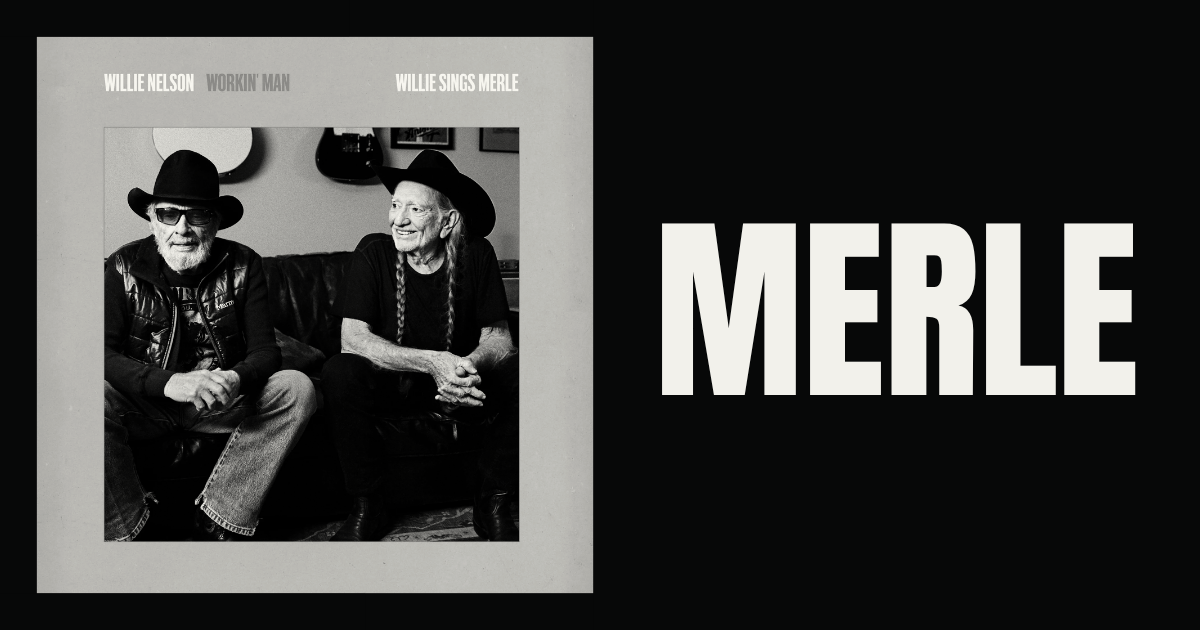
“Workin’ Man Blues” – Willie Nelson (from Workin’ Man: Willie Sings Merle, 2025)

One of Hag’s signature hits, “Workin’ Man Blues,” is usually framed as a purely blue-collar anthem, but it’s good to remember he identified the song as a blues. Having to work to survive while hoping your body holds out as long as you’ll need it is something to be cursed more than celebrated.

From last year’s Workin’ Man: Willie Sings Merle, a 92-year-old Nelson delivers his friend’s lines with a bit of a slur, weary and resigned but also grateful still to be working, to be on the road again until he runs out of road. Similarly, Willie’s arrangement sheds Merle’s Elvis-y fanfare for some hard, use-it-or-lose-it swing. “Play it, little sister,” he says, introducing one of the hot-jazziest solos in the career of the late Family band pianist Bobbie Nelson. Willie’s solos up top and midway through, meanwhile, are things of singular beauty, guitar work that sounds like play but refuses to hide the callouses and the miles. “As long as my two hands are fit to use…”

“Daddy Tried” – Jade Jackson (single, 2026)

Merle’s “Mama Tried” has been covered well over 100 times since he wrote it for the Killers Three soundtrack in 1968. But the song’s indelible ascending chorus and its universal theme – Merle sings it as if he’s as proud of defying his mom as he is remorseful for disappointing her – have encouraged people to use the song in all kinds of ways. Country comic Don Bowman parodied it as “Pappa Tried” as early as 1969 and more recently Angeleena Presley was clearly in conversation with Merle’s classic when she released “Mama I Tried” in 2017. As was Keith Urban when he sampled its lick for “Coming Home” in 2023.

Jade Jackson grew up in a small Cali town between Bakersfield and the Pacific, and her updated, gender-flipped take on Merle’s tale sounds just like that: Her voice feels a little dusty and a little sunny. Switching out Merle’s locale from “prison” to “Nashville” is funny because those two aren’t at all alike, but also because maybe they’re a little alike. For sure the ache in her voice reveals her as another singer-songwriter in a long line of kindred spirits to Merle; she’s going to go her own way, no matter her dad’s good advice.


David Cantwell is the author of The Running Kind: Listening to Merle Haggard, the co-author of Heartaches by the Number: Country Music’s 500 Greatest Singles and the co-creator of No Fences Review. His byline has appeared at Rolling Stone Country, The New Yorker, Slate, and No Depression, among other publications.

Photo Credit: Workin’ Man: Willie Sings Merle on Legacy Recordings

Hudson Westbrook Is Ready for What’s Next

It was not so long ago that Hudson Westbrook was in college at Texas Tech. But today, he’s one of the most promising and hard-to-pin-down young acts in country, helping pull Texan artistic independence into the mainstream.

Joining trailblazing stars like Cody Johnson and Parker McCollum, Westbrook celebrated his first Number One in February after finding a home for “House Again” on the Mediabase country radio chart. Also certified Platinum by the RIAA, it’s more evidence of a shift away from cookie-cutter tailgate anthems: an emotionally complex ballad rooted in the experience of a kid watching the fallout of their parents’ divorce.

Westbrook paired raw lyrical nerve with a soulful, tender touch, helping the newcomer tally one billion streams in 18 months, with an exponential growing profile – and then he switched things up.

His recently released Exclusive EP features five tracks awash in rootsy R&B, proving the 21-year-old won’t be held to a narrow interpretation of Red Dirt musicality. But he’s not satisfied there, either. His new radio single “Painted You Pretty” (from the debut album Texas Forever) matches country simplicity with an earnest romantic hook, and this summer he’ll tour arenas and stadiums with Bailey Zimmerman, Morgan Wallen, and one of his heroes, George Strait.

Speaking with Good Country at an East Nashville coffeeshop – just one day after meeting a pig on the podcast of his other hero, Tracy Lawrence – the fresh-faced star looks ahead to new music and shares his impression on what’s driving the Texas-and-traditional country resurgence. Barely two years into a rocket ride of a professional career, he’s still learning the ropes, and sometimes, the lingo. But Hudson Westbrook has all the artistic confidence he’ll ever need.

We last talked in 2024 and at the time you were just out of college. The only thing you had released was “Take It Slow,” and then “House Again” came out. How have things changed?

Yeah, I was working at that feed store and it wasn’t that long ago. I’d written “House Again” and then I just remember I was so confused as to what was going on. Now I look up and I’m like, “I was blowing up the whole time.” I didn’t realize how big it was getting. It’s hard to feel it. I’d be like “Hey y’all, is 5,000 tickets good here?” And they’re like, “Do you realize what you just did?” And I’m always like “… No.” [Laughs]

I’m getting bigger and bigger and bigger and bigger. I want to keep getting bigger, but I want to keep it small. So [lately] it’s just really been focusing on doing that. Not losing yourself. Focusing on grounding myself right now, making sure I’m calling my family and whatever it might be. And then also it’s celebrating it, too.

You just had the Number One [with “House Again”]. What’d you do to celebrate?

We were in Hawaii, so we drank – I don’t know – 15 margaritas? [Laughs] The coolest part about that song is it was my second co-write and I was like, “Yo, I don’t know what I’m doing.” [Co-writers Dan Alley and Neil Medley] said, “Well, what’s your hook?” I said, “What’s a hook?” And they started laughing. I’m like, “Bro, I don’t know what the hell that is, but I had this idea.” …

So it just blew up. And I was so scared, just because it’s saying goodbye to a lot of stuff, honestly. It all happened so fast. If anyone had to have someone explain to them how to deal with a fast moment, I’d say if their songs are working, slow down.

Really? What do you mean?

Because that was a song that was for me. I was like, “I’m writing these songs I love and they’re ready by the time that we need them, so throw them out there.” And, “I’m already in Nashville, so let’s film the music video.” We never really planned on dropping anything, which is kind of crazy. I wish I would’ve slowed down a little bit and then realized what was happening so I could soak it in. It’s still happening. It’s still great. But I would just tell people, maybe slow down if it’s happening that fast. I feel like a lot of times I didn’t know who Hudson Westbrook was when I put songs out. And now I’ve sat down and we recorded four songs on Monday and I’m like, “This is the vibe. This is what we’re doing.” It’s so refreshing.

You’re going to be sharing a stadium stage with George Strait [at Jones AT&T Stadium in Lubbock, Texas on April 25]. That’s a homecoming show and I know he means a lot to you, so how does that make you feel?

That’s where I went to college. I sat on the 50-yard line since I was 7 years old, watched every single football game at [Texas] Tech, watched every single concert, listened to George Strait since I was in the womb. It was “Check Yes or No.” It was “Troubadour.” It was “The Fireman.” All that was in my house from an early age. So I don’t know, it’s just crazy. It’s a little nerve-wracking, like who knows what’s going to happen? I’ve also never played a stadium yet. All my friends are going to be there. It’s just going to be weird.

I would say there are some similarities between you and George Strait and maybe that’s just because of your background. You’ve been traveling around, have you noticed a difference in country music depending on where you are?

I go to Florida and [the fans are] screaming the most Texas country song I have. And Texas country just means that production. It’s a view of writing and it’s a perspective. I use real drums. The biggest country music artists in the world don’t use real drums right now. That changes everything. And so now we got to be like, “How can we be different than everything else?” I think that’s by being natural, in a sense.

There’s definitely a moment happening for Texas country, bluegrass, and traditional roots, with Zach Top and some more of your peers. Is it just perfect timing for you?

I think we’re pushing it into that direction because I think we’re trying to get back what we wanted to hear. I know if I talk to Zach, he’d be like, “Yeah, dude, I want acoustic and drums and a shaker and I want it all to be in there.” I feel like we make country music and it sounds like the show. You could literally put a band on stage and play it with no auto tune, no tracks. And that’s what makes it unique for us, because it’s like no one’s ever going to play the same thing twice.

What’s coming next, though? The Exclusive EP is out now and it’s definitely different than Texas Forever.

To be honest, I was like, “I want to try a bigger sound, something more mainstream.” And so I chased it – but I did not give up on the songwriting. My songwriting was very intentional and it was very love story-based [on Exclusive].

I love them, but I’m going back to my Texas country sound. We just recorded a song called “Hey Dallas,” which is really cool. Then we did a song called “Backwards,” which is really cool. And then I don’t know, I’m leaning in to John Mayer production a bit – but no crazy guitar solo. [Laughs] I was like, I ain’t doing none of that.

I can say, definitely some more soul and a bit of R&B in there, for sure. It’s electric guitars driving the whole thing – and I love electrics and baritones. I want that to drive all my stuff from now on. My voice just sounds better with it to me.

So it’s going to be like a whole new fresh album?

Totally new. I have like 120 songs and a lot of them are pretty good. I’m not saying they’re all for me, but I finally did what I should have done and that was sit back, find my key, find the way I like to write, really be intentional about what I’m writing. I wrote a song called “Nowhere Bound” that is probably one of my favorite songs. It’s like, I never stop in any city and don’t ever slow down.

When are you all going to be sharing new stuff?

Next month. I’m dropping “Slow Hand” by Conway Twitty [on Gavin Adcock’s Country Never Dies project, March 13]. His voice is incredible. I ain’t going to lie. It was not easy to cover that shit. [Laughs] He’s got just some weird things and then you’re like holding this note out for 10 minutes. [Laughs]

To be honest, dude, even if none of that stuff [I wrote] is usable, my goal this year is to do something that no one’s ever done and create a freaking path so far into my own lane that’s nothing like anybody else that … it’s undeniable, because I’m going to do what I want.

I feel like right now I’m growing and I’m learning and I’m doing whatever, but now it’s like, “How do I take it to the next level?” I think the way you take it to the next level is just getting deeper into yourself and telling [the fans] more.


Photo Credit: Peyton Dollar

The Band of Heathens Leave Nothing on the Table

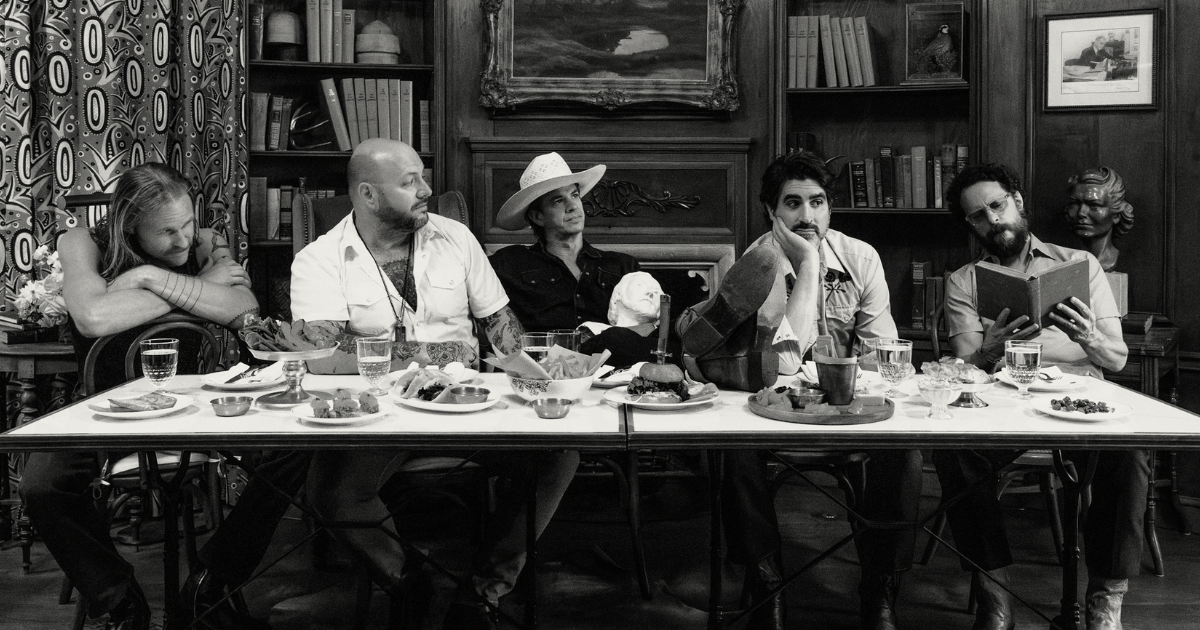
Don’t be fooled by their name, as the Band of Heathens actually give us something to believe in.

Coinciding with their 20th anniversary as a band, their new project Country Sides is equally feel-good and philosophical. The band’s co-founders and songwriters Gordy Quist and Ed Jurdi called in to Good Country from their homes in Austin and Asheville, respectively, to talk through their inspirations for the album, their writing (and rewriting) process, and how banjo fits into their house of music.

Just a few weeks after our visit, Country Sides and the single “Take the Cake” topped the Americana Music Association’s album and singles airplay charts simultaneously, a new feat for the well-established group.

“We have been really fortunate as an independent band,” Quist says. “We’ve never been on a label or been a part of the machine, and we just have a lot of gratitude for the 20 years we’ve had together as a band.

“This record is like a message of gratitude for all that we do have. And as much as we love making records, the live show is certainly my favorite part of this career. That’s what’s special about this band. When we get on stage, I feel lucky to be a part of this thing that really is fun live, so I would encourage people to check out a live show if you haven’t done it.”

As I was listening to the album, I was picking up a lot of messages of encouragement. It feels like a positive record to me. Is that a fair statement, do you think?

Ed Jurdi: Yeah, I think so. It’s like the musical retrospective of the band, in a way, sort of our history as an entity. Maybe in the background, with the realization that we’re making it 20 years at this point, there’s a little bit of a celebratory nature. I don’t know about Gordy, but in my writing process, I tend to almost have the opposite reaction to everything going on around me, outside in the world. If everything’s really negative, and the messaging is really negative, and there’s a lack of hope – maybe it’s a form of escapism for me, but I tend to lean into that [opposite reaction] a little bit more in my messaging.

And insofar as sharing music with people, it’s almost like the internal pep talk that I’m having with myself turns itself into the art and into the lyrics and something to share as a message with other people. We’ve never really been ones for beating people over the head with the message, but things are pretty wild and wooly – and not in a good way out there, in a lot of ways. So, I think some messages of community and togetherness and rallying around a common good – we could certainly use more of that.

Did you have a certain sound in mind as you made this record?

Gordy Quist: I think we talked about trying to make a country soul record. We were listening to some of the early Dobie Gray records and thought, “OK, what if we took a mix of soul music and country music melodies and textured it…” We put more pedal steel on this record than we probably ever have on any record. And that was intentional. From the beginning we knew we wanted to do that. I guess it was intentional to try to make a country soul record. Whether we did that or not, I’m not sure. But that’s how we arrived at whatever we did.

I like the spirit of fellowship in the song “High on Our Own Supply” and there’s a lyric in there about hearing the banjo playing soft and slow, like a stereo. This being the Bluegrass Situation (and Good Country), I’m curious, do you often reach for the banjo?

EJ: I do. I’m a terrible banjo player. You know, my buddy Graham Sharp in Steep Canyon Rangers is an amazing banjo player. So if I need a banjo on a record, I’d probably call him.

I think writing “High on Our Own Supply,” it was almost like we’re building a house of music. You know, if you were to go into any room in that house, there might be this different scene going on. You open the door and there’s someone in there playing the banjo, and it’s so good, it sounds like it’s just coming out of the stereo.

The song “Pleasing People” reminded me of soul music from the ‘70s and I wondered about that soul influence. How does that show up in your music?

GQ: I guess there’s two elements. I think the rhythm section is the foundation of soul music and the groove. That was something on this record we really tried to dig into. The band right now – Clint Simmons on the drums and Nick Jay on bass – are a deep and heavy rhythm section, so that lends itself to a style of American roots music that leans into soul music. But also, simplicity. Lyrics that sound conversational and simple but have some depth to them. It’s hard to do that well. That’s part of what makes soul music great – that it’s simple but it’s good.

It takes skill to make it look easy or sound simple. What’s your editing process and your rewriting process like for you?

EJ: It never really ends. Even after we record these songs, I definitely change lyrics to songs as we play them live. The cool thing about these songs, especially making a recording, it’s a snapshot in time. But songs, I think of all the artistic mediums, they kind of move with you through time in a really special way. What a song means to you at 16 can mean something completely different to you at 40. You’ve piled up life experiences and you view the world in a little bit of a different way. So that’s always fun, but editing is constant.

I would say Gordy and I both are doing a lot of lyrical editing and we’re doing a lot of musical editing, too. When we get together and make records, it looks something like Tuesday morning, 10 o’clock: “Hey, Gordy, what do you got?” You know, Gordy grabs an acoustic guitar, sits in the middle of the room… And I’ve [already] heard these songs we’ve worked on, the two of us, but that’s the first time that Trevor Nealon (our keyboard player) and Nick and Clint have heard the songs.

So it’s like, “Hey, OK, first impressions? Go!” and then we start filling the canvas up, taking stuff away, adding stuff, changing colors, all these different things, until we’re at a point where we feel like we’ve edited something down to a nice, presentable format. So, it’s a work in progress, always. To your point, the more you can tolerate the editing, the better things become. It certainly is the most challenging part of the job, but it can also be the most rewarding.

“Take the Cake” has a great vibe. I’m sort of a workaholic, so it’s a nice message to hear, to hit pause and go do something fun. What were you hoping to convey in that song?

GQ: I think I was playing with the idea of giving versus taking, in life. I’ve been working on that song and editing that song for a couple of years actually. I’ve had it for a while. You know, there’s a weird juxtaposition of giving and taking. If you are always taking, in theory you should have lots of things because you’re receiving them. But in reality, you usually end up empty, whether it be friendships or whatever.

The opposite is true also. If you’re always giving and generosity leads, in theory the fear side of you thinks you’re going to run out of stuff. But the opposite actually is true. And that’s kind of what I was playing with, just the idea of letting go of that consumerism or just the [mentality of] “I need to keep what’s mine.” And being cool with letting go of that and letting generosity be the leading force.

As you mentioned earlier, this album is like a 20th anniversary celebration of the band. Are you enjoying this period of your life? You still have a lot of years ahead, but you’ve got 20 years of experience behind you too.

EJ: Yeah, I think it’s a good vantage point. I’ve heard Gordy describe it as standing at almost the peak of a hill. We’re all dads, so we can look down and look at our kids and remember being their age. Looking the other way on the hill, we see our parents, and we remember our grandparents being that age. So, it’s kind of a trip to be in this middle age of life. We still have the energy of young people. I think the fire is still there. There’s no lack of commitment or of energy or passion to what we’re doing. But we’ve assimilated a little bit more wisdom, and we have a few more tricks up our sleeve, a few more shortcuts. It’s fun exploring those things and trying to share them with people.

GQ: Talking about this phase of life that we’re in, I have this feeling like, when we were young, making our first records, we would put everything into it and the goal always was, “I hope this is good enough that we get to keep making records and make another record.” At the end of every record we’ve made I felt like, “Man, that’s the best thing we’ve ever done and I don’t know how we’re ever going to top that.” Whether it is truly the best thing we’ve ever done or not each time, that’s not for us to decide, but it feels that way to us.

EJ: We’ve always left nothing on the table when we’ve made a record. Now we’re just a little bit more conscious of our surroundings and what our intentions are. Again, I don’t think there’s ever been a lack of effort, but now there’s maybe a realization like, “Hey, every time we get on stage, every time we sing, every time we make a record, it might be the last time we do, so let’s make sure we’re doing it with everything we got. Let’s leave it all out there, because at the end of the day, that’s all you got.” You can feel good about that in the rearview mirror.


Photos courtesy of the artist.

Sawtooth
Country Soul

To say Kashus Culpepper’s life has changed over the last five years is an understatement. A former state champion wrestler, firefighter, and EMT, the Alabama native developed a raspy, smoke-and-voodoo vocal while stationed in Spain with the U.S. Navy in 2020, forced to pass the pandemic in his bunk. Since then, he’s knocked over one milestone after another.

With a distinctive mix of country, blues, Southern rock, and soul, the 27-year-old cites Robert Johnson, Bill Withers, and Hank Williams as inspirations and is now bringing his roots-renegade instincts to mainstream fans. Despite only releasing his first official track in June of 2024, the music industry short-timer has earned big-time appreciation.

That includes the respect of heroes like Elton John and John Mayer, a Grand Ole Opry debut, tour dates around the country, and inclusion on 2025 “artist-to-watch” lists at GRAMMY.com, Apple, Billboard, Pandora, and more. Culpepper just finished a run of dates with Leon Bridges and he’ll hit the road with Whiskey Myers in June before joining tours by Sierra Ferrell, Darius Rucker, and others later on in the summer. It would all be overwhelming, if he had time to think about it.

“I’ve just been taking it day by day,” Culpepper tells Good Country with a hearty laugh, waiting to perform at a community festival in Arkansas last month. “I think that’s the best course of action. Don’t think too far in the future and just take each show, each writing session, each recording session one at a time. Just pray everything works out and keep going. … Because when things started happening, I was like, ‘Oh, snap.’”

We wanted to get to know Culpepper before anything else “happens,” and figure out what’s fueling the hype. As it turns out, this all-natural talent is just going with the flow.

I read that you didn’t even start playing guitar until you were in Spain for the Navy, right? What made you want to do that?

Kashus Culpepper: Yeah, in Spain we got shut down and I didn’t have nothing else to do, man. I mean, literally I was bored out my mind. It’s a different type of boredom, because during COVID you couldn’t do nothing. It’s not like you can just go outside or go to a bar or hang with your friends. We couldn’t do nothing. So this was a weird point in my life and my buddy had a guitar in the barracks. I was like, “Well, this is a perfect time. I literally have nothing to do.” I just went on YouTube and looked up covers I wanted to learn. Music has always been something I go back to whenever life is hard. So I resorted back to music and that ended up leading me to learn guitar, eventually learn to write songs.

Thank God for YouTube, huh?

Shout out Marty Schwartz!

You seem to have a lot of diverse tastes, but that bluesy, soulful country thing – why did that speak to you?

I think maybe that’s just my music taste. My first taste of music was gospel, and I’m from Southern Alabama, so gospel there, it’s really rootsy already. It already sounds like a folk song. And the way they sing it sounds so bluesy, like old Son House type of vibes. From there I got into blues music outside of church. I got into country music and R&B and folk music a little. I’m all over the place when I listen to music. I can go from Allman Brothers to a Conway Twitty song really quick.

But I know you like John Mayer and all that stuff, too, right?

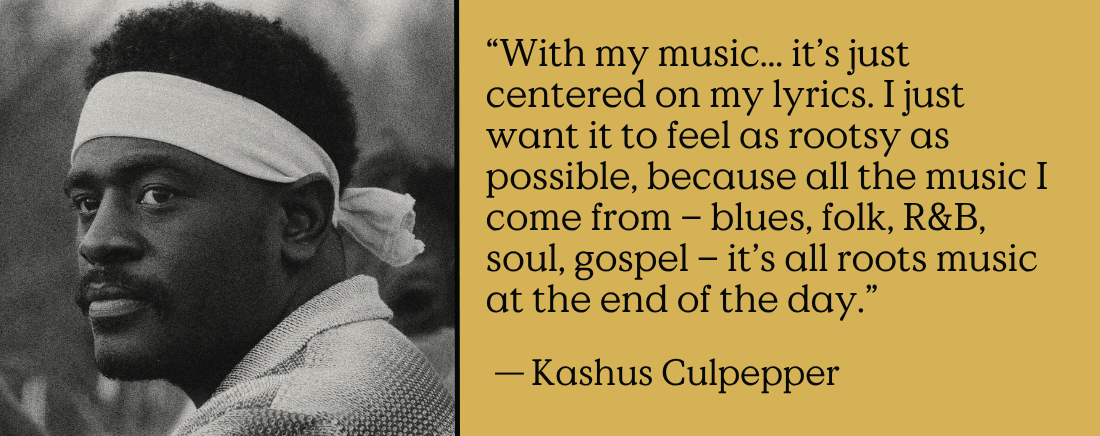
Yeah, yeah. I mean, I love so many of those rock artists, ZZ Top, Led Zeppelin, Skynyrd. People ask me all the time my influence and I’m just like, “Bro, it’s so hard to name everybody.” John Mayer was a huge thing for me. Recently I went back to Norah Jones, I’m like, “Man, I used to love this record.” But with my music, at the end of the day, it’s just centered on my lyrics. I just want it to feel as rootsy as possible, because all the music I come from – blues, folk, R&B, soul, gospel – it’s all roots music at the end of the day.

Your voice is so good at expressing these really raw emotional states, I think. Is that how you are naturally? Or does that only come out in your music?

Most of the time? Honestly man, it’s just with the music. It’s hard to open up to the people. I think for me music has been great, just to express how I actually feel through my singing and my lyrics. I don’t usually just tell people.

So you’re from Alabama. After the Navy, did you go home and keep playing?

I got out the Navy in 2022 and by that point I already had gigs booked on the Mississippi Gulf Coast. I was booked at all these casinos, all these bars. I was booked out for a year in advance. I got out and went straight to full-time doing cover band shows pretty much for another year, until I literally couldn’t take any more of it. Then that’s when I decided I really want to write songs. Literally, I decided “I’m going to move back home to save as much money as I can and move to Nashville.” I was home for maybe a week or two and posting a lot on TikTok and I remember I was in my mom’s living room. I posted a TikTok, I went out because I had an interview for a job, I got back home, and it had reached 100,000 views. From there it was just, “Oh, snap. It’s going on.”

@kashculpeppermusic Replying to @Casey Wayne One week till “Man of His Word” drops! Appreciating all the support on this one❤️ Pre-save link in bio🔥 #country #singersongwriter #original #kashusculpepper #newmusic #livemusic #countrymusic #countrymusiclover #tour #soul #newcountry ♬ original sound – Kashus Culpepper

That’s awesome. Congratulations on how that all turned out. I think one reason for it might be that your music seems so unconventional, almost untamed. Maybe because you did it on your own? Do you feel like fans are hungry for that?

I think so. We talked about John Mayer. John Mayer is kind of like that. He’s all over the place. Sometimes he’ll do a blues song and then straight up pop, and then an R&B song with Leon Bridges. I think people just love that from artists. Artists just being artists. Just do whatever the song feels like. That’s how I feel with songs.

“A Man of His Word” is super soulful, with lots of that gospel influence and a big raspy vocal. Tell me about being the man a girl deserves. Where’s that theme coming from?

I wrote that song with Natalie Hemby and at the time we was just talking about life. The song is from a perspective of a guy looking into a girl and she’s going through hardships, because she don’t have a man of his word. She’s drinking a lot, doing a whole bunch of stuff. The song has a lot of me in it. I grew up with a single mother and you don’t know how those things can affect you without having somebody in your life you can trust. You get the feeling you can’t really trust nobody, because that’s not part of your life, and that leads to mental health problems or substance abuse. You don’t even notice it at the time, until you look back and you’re like, “Dang, that’s why I feel that way.”

After that comes “Broken Wing Bird” with Sierra Ferrell and it’s on the opposite end of the spectrum. Very threadbare and folky, right?

Oh man. So I’m a huge fan of Willie Nelson. One of my favorite songs is “Funny How Time Slips Away” – I just love so much the crooner era that he was doing – and I wanted a song that felt like that.

I wrote the song about somebody that’s not really good for you and you just keep taking ‘em back regardless, because you love them and no matter what they do, you’re always going to. So she’s like my broken-winged bird – no matter what she does, she’s flying back and I’m always going to help her out and then she’ll probably be on her way again.

It’s been good getting to know you a little. Big picture, what do you hope people take away from your music?

I think overall, I hope they can see I’m just an artist trying to express the way I see things, and I hope in some way they can find music that can fit every part of their life. Whether they’re trying to have a good time out partying, or if they want to soak into the sadness of a lover they lost, I just hope my music can fit some aspect of their life. And I hope they can enjoy it.


Photo Credit: Cole Calfee

Sign up here to receive Good Country’s email newsletter direct to your inbox.

Boot Scootin’ Country Soul

(Editor’s Note: Sign up here to receive Good Country issues when they launch, direct to your email inbox via Substack.)

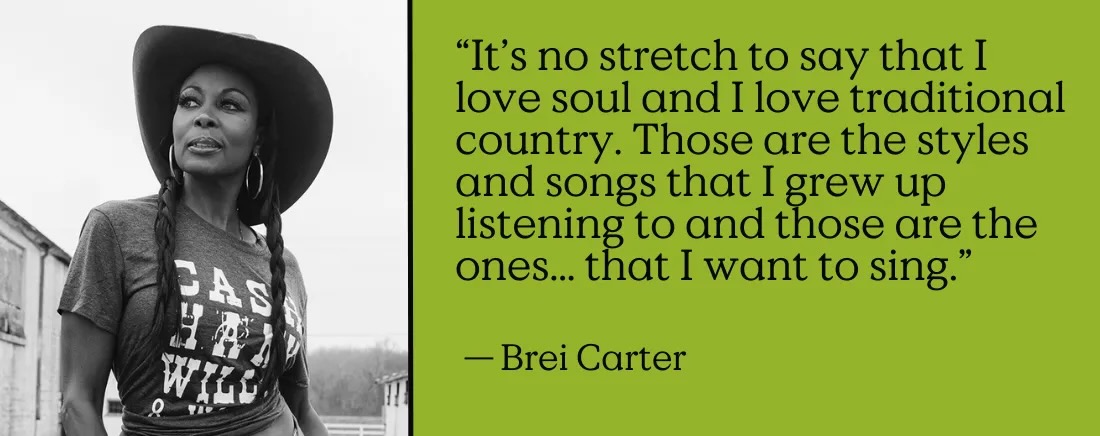
Recording artist Brei Carter is currently enjoying the best of both worlds for any performer. She’s found her niche artistically and is thriving in it, excelling in a hybrid sound she calls “country soul,” one that nicely blends each genre’s special characteristics: soul’s emotional fury and country’s narrative focus. Louisiana born, she relocated to Nashville in 2019 is now working on an upcoming LP that she promises will really show listeners how much these two genres can be combined into her own distinctive style.

“I’ve always kind of gravitated towards all kinds of music, but vocally I’ve found that soul and country are the styles that work best,” Carter said during a recent interview. “For me, it’s no stretch to say that I love soul and I love traditional country. Those are the styles and songs that I grew up listening to and those are the ones that really are suited for the types of things that I want to sing.”

Considering the long history of performers who’ve taken soul tunes and made them into country hits or vice versa, Carter’s certainly in good company.

But, she’s also enjoying commercial success in a different vein. Her single, “Boots Get To Talking,” has quickly become a line dance staple. An energetic, engaging number that’s also a collaboration with the person she calls “my mentor and inspiration,” Elektrohorse, the song has generated its own line dance, something that Carter immediately credits Elektrohorse with enhancing and developing.

“When I first played him the song and told him what I wanted to do, I had my own ideas for how it would work as a line dance,” Carter continued. “He told me, ‘Brei, I’ve got some ideas, too. I think we can really do something with this.’ He took it and did some things with it that I never would have considered and he made it into something huge.”

“Boots Get To Talking” is one of those songs that really has something for every taste. It certainly has a catchy backbeat, equal parts honky-tonk and hip-hop. There’s some underlying blues feel to it as well, but when utilized in the line-dance environment the tune has an added energy and fury. “It’s my new anthem,” Carter adds, “And I’m so happy that it’s getting such a great reaction and response everywhere. It’s also a signal that people will always respond to good music and songs that make them happy and make them feel good.”

That desire, to reach across boundaries and unite people through music, has always been a big part of Carter’s performing mission. Her musical background growing up in Monroe, Louisiana included equal parts Loretta Lynn, Aretha Franklin, Charley Pride, and gospel music: “Plus a healthy dose of Cajun and Zydeco,” Carter adds. “That’s where my love of dance was developed. In those dance halls, no one ever sits down.”

Carter’s earned impressive academic credentials: a Bachelors in Business from University of Louisiana in Monroe, a Masters in International Relations from Webster University, and a Doctorate in Theology from New Foundation Theological Seminary. She’s also a proud U.S. Army veteran, having served as an enlisted soldier and as an officer.

After deciding that music would be her career path, Carter’s been carefully crafting her style. Her first single, “Gave Him A Girl,” got enough positive attention to lead to appearances on RFD-TV, WSMV-TV, WoodSongs’ Old-Time Radio Hour, among others. She made her CMA Fest debut in 2022, and released her debut album, Brand New Country, which featured a fine cover of Charley Pride’s “Kiss an Angel Good Morning,” and the powerful biographical piece, “Stronger Than That.” Carter released her most recent single last year, “Straight Up Country Crazy,” as well as her first Holiday EP, the critically acclaimed Twinkling Tales of Christmas.

Still, she acknowledges it took a while before she really understood exactly what she wanted to do from a technical perspective. “I realize now that my voice really does fall right in that middle area between country and soul,” Carter continued. “That’s a territory where I’m comfortable, and that’s really the area that I want to emphasize now.” With an upcoming series of concert dates set to begin this month, plus her new LP that will be coming later this year, Brei Carter feels really confident about the future.

“I’m really happy about where things are going for me musically, and what the future holds,” Carter concludes. “I’ve found the right mix musically, and the line-dance hit has really been a blessing, as has working with Elektrohorse. I’m very much ready to see what’s coming next.”

Sign up here to receive Good Country issues when they launch, direct to your email inbox via Substack.


Lead Image: Brei Carter by Heather Carpenter.
Inlay Image: Brei Carter by Berlin M.

Three Chords and… Authenticity?

(Editor’s Note: Sign up here to receive Good Country issues when they launch, direct to your email inbox via Substack.)

In country and roots music, authenticity is treated like the most valuable currency of all. Maybe that’s because the genre has always been caught between the fiction that this music is frozen in amber and the reality that it has always borrowed liberally from current musical trends in order to have commercial value. The earliest popular country music was an amalgamation of regional music from rural white artists, music stolen wholesale from Black and Indigenous artists, and plenty of nods to prevailing pop (i.e., urban or non-rural) trends – looking back at the places young laborers and listeners that had been drawn to cities came from, and the exciting present and future they found themselves in once they arrived.

Can anyone or anything truly be considered “authentic” in America, a country whose identity is built on masking fundamental historical truths?

While artists like Zach Bryan are hailed for their “authenticity,” the vast majority of the current class of mainstream country and Americana artists grew up in suburbs, in postmodern America, in the internet age, and are graduates of major colleges – like Nashville’s Belmont University or Boston’s Berklee College of Music. Their experiences are also authentic, of course, to each individual artist – just as Bryan’s initial motel room demos are electrifying for the soul he brought to them. But these origins bring up questions around how country and Americana construct “authentic” narratives, especially to market roots music.

Still, it’s noticeable that certain types of creators are automatically considered “authentic” country artists – and they often match the complexion of the first generations of country singers, when “race records” and “hillbilly music” were originally split and whose most famous individuals wore cowboy cosplay on stage.

We want to tip you off to some real Good Country music: Music that portrays life in its complexity and a deep appreciation for one’s roots, whether they lie in the Bronx, rural Arkansas, or anywhere else on this rich blue marble we live on. Because authenticity in country doesn’t necessarily equate to rurality, to back roads and red dirt and farm trucks; real country music is real not because it’s built to be “authentic,” but because it’s honest.

Hurray For the Riff Raff

Hurray For the Riff Raff’s Alynda Segarra is from a little bit of everywhere, but the Bronx is where they grew up and the punk houses of the Lower East Side raised them. Between their jazz artist father and picking up a guitar as they rode the rails, Segarra’s approach to folk music began with a traditional bent and has since exhaled into an expansive approach, as with their astonishing 2022 album Life on Earth. Their upcoming album The Past Is Still Alive finds Segarra focusing more on twang, but their philosophical core has always remained the same: breathing life into unspoken pain and empowering people that society would like us to forget.

Amythyst Kiah

Amythyst Kiah’s music is a powerful force. Inspired by the blues and old time music, Kiah uses her art to prop the furnace doors open to make way for blasts of grief and abandonment. Kiah grew up in Chattanooga, Tennessee and picked up the guitar while attending an arts magnet school. She fell in love with old time music at East Tennessee State University and never looked back.

I first saw Kiah in 2016 at Karen Pittelman’s Queer Country Quarterly, her first show in NYC. Karen introduced her by remarking, “trust me, she’s going to be famous.” When Kiah belted her powerful alto, we all knew we were in the midst of greatness. Kiah’s most recent work on Wary + Strange (2021) takes us in a more experimental direction, but her exploration of alienation – like a toy in her hands – informs her music no matter what she’s plugging into her pedalboard. Kiah’s “Black Myself,” originally recorded with supergroup Our Native Daughters, fiercely proclaims her love for herself and her ancestors.

Willi Carlisle

Willi Carlisle has seen a thing or two in his travels across the lower 48. Carlisle cut his teeth musically in DIY and punk rock, but his search for queer role models and love for poetry drew him to New York City. With disgust for the elitism of the poetry scene there – and their mockery of his roots in the Midwest – Carlisle went searching for a life of words in folk music.

Carlisle has a knack for painting complex portraits of down-and-out characters, refusing to be drawn into simple narratives of left and right, red and blue. His stunning “When the Pills Wear Off” from the upcoming Critterland demonstrates Carlisle’s ability to turn the personal into the political – and back into the personal again. This is not the blind invective of JD Vance, but the realization that only empathy can build bridges between people who think they have nothing in common.

(Editor’s Note: Willi Carlisle is BGS’s February 2024 Artist of the Month.)

ISMAY

ISMAY (née Avery Hellman) has spent their whole life around folk and bluegrass music – their grandfather is one of the founders of the Hardly Strictly Bluegrass festival. As a contestant on Apple TV+’s short-lived My Kind of Country competition series, ISMAY is very much a representative of roots music’s vanguard. With their sparse arrangements and winsome vocals, ISMAY’s music feels like deconstructed folk music. They understand the core elements of the sound thanks to a lifetime immersed in it, and they create something wholly unique from its constituent parts, as we hear on “Point Reyes.” There, ISMAY’s contemplative vocals are orbited by a gauzy cloud of pedal steel and gentle finger-picking. ISMAY’s upcoming album Desert Pavement speaks to their sense of place: all of their music is enamored by nature. “Golden Palomino” illustrates ISMAY’s love for their rural California upbringing, guiding us to realize how much our natural and inner worlds inform each other.

Buffalo Nichols

You’d be hard-pressed to find a more devastating songwriter or guitar player than Buffalo Nichols. Nichols, like many teenagers before him, picked up a guitar and played his way through the hip-hop and hardcore scenes in his Milwaukee hometown. He found himself drawn to blues music as he began to dig into his mother’s collection and connect with Cream City’s West African community. Nichols and musical partner Joanna Rose made a mark on the Americana scene with their duo Nickel and Rose, shining a harsh light on the ignorance on full display in the community’s supposedly liberal refuge on the song “Americana.”

With his most recent solo album The Fatalist, Nichols brings all of his experience to bear on a remarkable collection of songs that combine elements of all of his musical loves. On his rendition of the classic “You’re Gonna Need Somebody On Your Bond,” Nichols’ guitar becomes an extension of his own body with lightning-fast licks. Buttressed by electronic drum samples and a haze of synths, Nichols shows that music is at its most vital when it is rooted in the past and embraces the future.

Ally Free

Ally Free is one to keep your eye on in 2024. They write in their bio that they see music as the universal language that can bring people together, and that’s clear on their versatile 2019 album Rise. From the nu metal-inspired chugging of “Fool’s Gold” to the craftsman’s approach to “Fast Train,” Free isn’t embarrassed to draw from any inspiration to make a damn good song. Free’s rich alto gives their music depth: from their performances, it’s clear that this is someone who has lived a lot of life. Free is one of the newest members of the Black Opry and has taken a few steps out of their Huntsville, AL hometown to playing more shows around Nashville. Here’s hoping that means the rest of us get to hear more from this remarkable performer soon.

William Prince

William Prince’s voice carries a warm, earthy timbre that is wholly unique. Prince grew up on Peguis First Nation (in what is now Canada) and is well-versed in the travails of people living under oppression. But that experience is translated into patience and warmth, a gentle perseverance that can only come from a keen observer. Prince’s stark breakout album Reliever (2020) has given way to the warm Stand in the Joy (2023), which details the travails and victories we most often find in daily life. “Tanqueray” is a gorgeous example of Prince’s dynamic, a story of two improbable lovers finally coming together to make it work.

Sabine McCalla

Sabine McCalla is readying for a breakout 2024. McCalla’s music is steeped in the sounds of New Orleans, which she has made her home. McCalla has performed with others, but her performance on Offbeat Magazine’s OnBeat Session from September 2023 shows us she’s ready to step out on her own. For now, we have her 2018 EP Folk, which sports arresting songs that feel timeless. Maybe it’s the gentle groove in her music that feels like the stately flow of the Mississippi River – discordant with the immediacy of her lyrics that protest violence and oppression, as demonstrated by “I Went to the Levee.”

Margo Cilker

Look – Margo Cilker is literally a cowboy, okay?? Isn’t that what you imagine when someone mentions “country music” and “authenticity” in the same breath? But Cilker’s music glorifies a life of searching, not a mythologized America of white picket fences, so you can also picture the quintessential Nashville executive saying, “We like cowboys, but no, not like that.”

Cilker’s latest album, critical darling Valley of Heart’s Delight, is nostalgic for her family orchard in California’s Santa Clara Valley – but not without a heavy dose of reality. “Mother Told Her Mother Told Me” caution the listener not to become too attached to any one place – and the cost of leaving it behind. Cilker’s impassioned “With The Middle” cuts to the core of her work – a weighing of the contrasts between pleasure and pain and yearning to find common ground between the two.

Brittany Howard

Brittany Howard transcends pretty much everything – except the act of exploration with wild abandon. Having gained notoriety as the lead singer of the retro soul band the Alabama Shakes, Howard seemingly will not rest until she’s drawn with every musical crayon in the box. In her recent interview with NPR’s Jewly Hight, Howard cracks that she grew up in a trailer and would still be perfectly content to be working the land somewhere. But her music has led her elsewhere, perhaps everywhere. Howard has teased a few songs off her upcoming album, What Now, with the title track featuring hooky grooves and propulsive energy, but it’s “Red Flags” that astounds with its jarring drum loop, woozy vocals, and disorienting production that demonstrates how much mastery Howard has gained in her craft as an artist and storyteller.

Samantha Crain

Few artists in the last decade have shown the same growth and versatility as Samantha Crain. A part of the rich Tulsa music scene that has given us John Moreland, John Calvin Abney, and M Lockwood Porter, Crain follows a road all her own. Under Branch & Thorn & Tree (2015) found Crain exploring the pride and trauma of her Choctaw heritage through folk-inspired music. In 2017, Crain broke her own mold with the quirky indie-pop album You Had Me at Goodbye (2017.) Since her 2020 album, A Small Death, Crain has been playing in the spaces in between, utilizing woodwinds, pedal steel, pianos, and guitar to create a woozy soundscape as her spacious, gravelly voice helps us stay anchored in the real.

Nick Shoulders

Nick Shoulders rounds up the list with his commanding All Bad. While Shoulders’ music leans traditional sonically, it’s anything but. The Fayetteville, Arkansas singer begins his album with phaser blasts and a menacing invitation to a “conversation,” and that conversation is explicitly about all the “country” stylings that deserve to be thrown in the trash heap – and the many, many qualities we need to hold on to and claim for ourselves: grit, honesty, love, and togetherness. “Won’t Fence Us In” and “Appreciate’cha” speak to this theme most clearly, but the way Shoulders approaches the classic country canon with loving irreverence reminds us that we never have to be weighed down by tradition.


Sign up here to receive Good Country issues when they launch, direct to your email inbox via Substack.

Photo Credit: Margo Cilker by Jen Borst.

LISTEN: Stoll Vaughan, “Fate”

Artist: Stoll Vaughan
Hometown: Lexington, Kentucky
Song: “Fate”
Album: Dream in Color
Release Date: February 23, 2024
Label: Commonwealth Artist

In Their Words: “When my daughter was born, I was reflecting on the distance my wife and I had covered, welcoming the next chapter of raising our child and finding ourselves surrounded by the demands of parenthood. I realized how fortunate I have been to have such a gracious spirit as my partner. I had known this, but the song was a rediscovery. She has always been the responsible one, always the kindest among us. She softly carries me as I dance in the darkness with my fears and ambition. She could hold me to the fire, but she never does. She loves me unconditionally. I know she could have done better than me, but that’s not how this universe works. I believe in Fate.” – Stoll Vaughan


Photo Credit: Effie Dozier

Brent Cobb Follows the Inspiration of His ‘Southern Star’

Over his entire Grammy-nominated career, Brent Cobb has made no secret of being guided by a “Southern Star” – a rootsy creative beacon shining high above and seeming to point straight down on his South Georgia home.

A native of the Peach state, Cobb has staked a claim on the organic side of country, with acclaimed projects like Shine On a Rainy Day, Providence Canyon, and even the 2022 gospel set, And Now, Let’s Turn to Page…. Each one paints a loving portrait of Southern life, looking far beyond the cliches for inspiration. But with his new album Southern Star, those pictures are more vivid (and more Southern) than ever.

Finding easy-going wisdom and big-picture beauty in the simple minutiae of everyday life, Southern Star is engrossed in all things Georgia. Ten tender tracks were recorded in Macon, using Georgian musicians and embracing the sonic history of the region. That means a warm, humid mix of back-porch country and rural R&B, with funky (but feather soft) bass lines and a casual vocal drawl, as Cobb invites listeners in to his personal world – a world full of unexpected contrasts, and undeniable human wonder.

Speaking with BGS from that South Georgia home on a sunny fall day – perhaps the last one of the lawn-mowing season, he says – the humble and homegrown singer-songwriter explains what makes his Southern Star shine so bright.

Every artist or songwriter goes through phases of how they think about their role. What’s important to you these days?

Brent Cobb: It really hasn’t changed a whole lot. I know that doesn’t sound good, but I always try to still focus on my roots of where I’m from, and I try to still be universally personal, personally universal. … I think there’s something so poetic about specifically the American South and rural life, but also something that if you do it right, anybody anywhere can relate to it. So that’s really what I try to do. I try to make music that my kids can enjoy and that my grandma could enjoy, and everybody in between.

Tell me a little bit about Southern Star, the imagery of that title, specifically. I mean, is this kind of a play on the idea of a North Star guiding you?

Partly, yeah. You always learn growing up, if you get lost out there, you look for the Northern Star, it’ll guide you and give you direction. But I’m from South Georgia, so I look for the Southern Star. [Laughs]  … So partly that. Then there was also my buddy ‘Rowdy’ Jason Cope, who was the founding member of The Steel Woods and played electric guitar for Jamey Johnson from 2008 until 2014 or so. He’s no longer with us [Cope passed away at age 42 in 2021, after suffering “severe complications from diabetes”]. But during those days he lived about 45 minutes outside Nashville, and I’d go down there to his place and we’d go to this little bar and it was a pretty seedy little spot where we’d hang out, it was called the Southern Star.

Plus, I often thought about my buddy as someone who sort of behind the scenes had a lot of influence on a lot of people, but they may not even be aware of it. He never got to be a superstar, but if nothing else he was a Southern star. And I feel that same way about myself sometimes. So there are a couple different meanings behind it. … I miss him every day.

The other part of this album is what seems like a love letter to Georgia – and maybe just the whole region. It can be easy to misunderstand the Southern people and the area, and you’ve called it kind of a melting pot, right? What’s so inspiring to you about Georgia?

I think it’s because, well, first of all the American South as a whole, there would be no music as we know it if not for the American South. And that comes with its blessings and the curses, and it wouldn’t be the same place without those things also. Specifically Macon is the home of Otis Redding and Little Richard, and then you have Ray Charles from right down the road, and then right up the road you got James Brown, and then of course the Allman Brothers. There’s so many endless artists that have influenced the whole world.

But then even just as day-to-day life, where I’m from, every school I went to, we’re all mixed in together down here. We’re living and praying and learning and working all together. It’s easy to be on the outside and look in, and go, ‘Man, the South, what a terrible place.’ And there are some terrible things that still happen to this day, and historically that are terrible, but for the most part we’re all living and working and eating and breathing together. You don’t hear about that side of the South so much. But I think that’s why the music from here is so influencing and so profound – it isn’t just one way. And you got people that obviously have had to struggle and people who still struggle to this day, but that’s where the good shit comes from. That’s where the great art comes from, for better or worse.

I read that this was your first self-produced record. Did it have a different vibe working that way, or did the sound come out any different?

Luckily I was able to use a couple of my friends as guinea pigs, so I got a little comfortable in the producer’s seat [on previous projects]. But more than anything I believe first of all, to make a great album, you need great songs, and then you can record them any way you want to record them. If it’s a great song, it’s a great song no matter what.

… I think the second most important part of making a great album is the drums and percussion. Once you have those two things, you can really leave it at that and it’s going to be great. Folks can sing along and might want to dance a little bit. You’re going to be fine.

Then you need a little funky bass part. And, being from that area of the music I heard my whole life – soul music and gospel music, it all has keys. So I knew I had to have some keys and organ on there. I don’t know that it was much different [from other records], except for this time I had nearly 20 years of experience.

“It’s a Start” is such an interesting track. On the surface, it’s just about simple things. But it seems to kind of point at a bigger truth, right? Where’d that come from?

Well, I appreciate you noticing that, because it’s with intent. I try to do that with most all of my songs – like I said earlier, to make something personal, make it universal. What is the core of that emotion or that experience? And vice versa, universally personal. That song particularly, I wanted to throw everybody off and not give that song a double meaning.

Really, why’s that?

I feel like sometimes I’m stuck in between two worlds. Sometimes I feel like people only think ‘Oh, there’s Brent writing another album about Georgia.’ And then I feel like some people go, ‘What is the deeper meaning here?’ Most of the time there is one for me, but that song is really about nothing and intentionally, it’s about exactly what it says.

People can get real meta about certain songwriters, but I just think that’s a mark of a really good artist.

Yeah I’m not ever complaining as long as anybody’s listening for any reason. I do think it’s funny though. Sometimes I feel like other songwriters may get the benefit of the doubt, like it’ll be a really on-the-nose double meaning, just real obvious that, “Oh, okay, you meant to give it this undercurrent.” Then other songwriters, sometimes I feel like including myself, they do not get that benefit. They only get the doubt. [Laughs]

Call me a simple man – I am. There should always be a little something extra in there if someone’s looking for it. But I also think a songwriter should do their best to craft it so that it can be enjoyed at face value.

“Shade Tree” seems like a fitting way to end things, then. It wraps the record up with a peaceful, soothing scene. Where did that come from?

Well, my sister and I had started that song two years probably before I even knew that I was going to make an album. My sister is such a wonderful singer and she’s got a lot of soul in her voice, but like me, she has a kid. It’s hard to just sit down and write a song together. Well, then I get studio time booked and I wanted to finish that song because I thought it really defined Southern Star as a way of life in the South – there was a pecan tree in my grandma’s backyard, so after church and after Sunday dinner, the whole family would hang out under it in the shade tree. A lot of things happened [under that tree] …

The day before going in the studio, I went over to my sister’s house and I had dropped my kids off at school, and we drank some coffee on her back porch amongst some pine trees. Then my wife, she threw in some lines and it became a family affair. And yeah, it seemed fitting.

The whole thing seems like it has so much personal meaning. What do you hope people take away from this one?

More than anything I always hope, like I’ve said, that it’s universally personal. I hope that anybody will be able to take away from it whatever they feel. And if nothing else, I hope they can just enjoy it in the background.


Photo Credit: Jace Kartye

Ronnie Milsap’s Final Nashville Show Displays His Broad Musical Impact

The career of singer-songwriter Ronnie Milsap has been remarkably inclusive from an idiomatic standpoint, even if it’s also accurate to say his greatest acclaim has come within country circles. But over the course of five plus decades in the performing and recording arena, Milsap has also toured with James Brown and Ray Charles, been a pianist for JJ Cale, had R&B hits – with songs penned by Ashford & Simpson or previously recorded by Chuck Jackson – cut successful gospel and adult contemporary songs and albums, and even worked the oldies circuit while covering ’50s classic rock and roll and doo-wop.

Still, it’s his poignant, soul-tinged country tunes that have made Ronnie Milsap so beloved, while earning him induction into the Country Music Hall of Fame and membership in the Grand Ole Opry. A two-time Country Music Association Male Vocalist of the Year, Milsap also helped induct longtime friend and mentor Charles (who once encouraged him to choose music over law school) into the Country Hall of Fame. During the ’70s and ’80s Milsap enjoyed a frequent presence on the country charts, and during the ’80s scored thirteen of his thirty-five number one hits. 

Even as times and tastes changed, Milsap adapted and continued to enjoy success through the ’90s and into the next millennium. Now, at 80, he recently decided it was time to call a halt to performing in Music City. Pausing a couple of weeks before his final Nashville show at Bridgestone Arena October 3, Milsap told BGS that there’s one idiom he loves that folks don’t often cite or acknowledge when discussing his influences.

“Man I love bluegrass too,” Milsap said. “Those harmonies, the melodies, that’s a sound that I’ve always enjoyed. Some people didn’t understand exactly where ‘Smoky Mountain Rain’ came from, but that’s the influence. Also gospel is a big influence and of course, I’ve always loved country and soul music. All of it I just absorbed and worked into my own style.”

That sound, an inspired blend of mellow tone and emphatic delivery has made the list of unforgettable Milsap tunes a lengthy one: “(There’s) No Gettin’ Over Me,” “Pure Love,” “Only One Love In My Live,” “(I’m A) Stand By My Woman Man,” or “Daydreams About Night Things,” to cite just five of his numerous hits. Milsap has managed the difficult task of being both sentimental and evocative, never letting his vocals become maudlin or exaggerated, and always credible and persuasive in his stories and testimonies.

Milsap’s also maintained a healthy interest in contemporary happenings and performers, as evidenced by his 2018 LP The Duets, which he called “one of my favorites.”

“Man I love that Kelly Clarkson,” he added. “She’s fantastic. Working with her was a thrill and I love how she sings. Ricky Skaggs, he’s one of the all-time greatest musicians I’ve ever seen and heard. He’s incredible. There are still so many good young singers out there and great musicians in Nashville. It’s a real pleasure to hear them, and I’m so happy about this show coming up. It’s such an honor.”

The last Milsap concert was billed as “The Final Nashville Show,” and a packed house filled Bridgestone Arena two weeks ago. Twenty-nine artists across the country spectrum performed 30 tunes to mark Milsap’s 50 years. The event was co-hosted by radio veterans Storme Warren (The Big 615) and Bill Cody (WSM), while such luminaries as Reba McEntire, Dolly Parton, Clint Black, and Luke Bryan whose schedules didn’t permit them to attend or participate sent videotaped tributes. In addition, prior to the show, new Nashville mayor Freddie O’Connell declared it “Ronnie Milsap Day,” and Tennessee governor Bill Lee added an official proclamation honoring Milsap’s “Final Nashville Show.”

Depending on personal perspective and taste, there were multiple highlights. One contemporary star who got maximum exposure and delivered a powerhouse performance was Scotty McCreery, whose version of “Pure Love” was a big audience winner, as was Randy Houser’s “Don’t You Ever Get Tired (of Hurting Me)” and Trace Adkins’ “She Keeps the Home Fires Burning.” 

Kelly Clarkson’s “It Was Almost Like a Song” was a show stopper, as powerful and dynamic as anything anyone did during the evening, and a rousing rebuttal to those who think her iconic daytime status protects another overrated celebrity. A pair of surprises were gospel vocalist/pianist Gordon Mote and contemporary Christian star Steven Curtis Chapman. Both took secular tunes and soared on them; Mote on “Lost In the Fifties Tonight (In the Still of the Night)” and Chapman on “What a Difference You’ve Made In My Life.”

Band of Heathen’s rendition of “Houston Solution” and Breland’s cover of “Any Day Now” got polite applause, while rousing songs performed by Sara Evans (“Let’s Take the Long Way Around the World,”), The McCrary Sisters (“Stand By Me,” and also appearing backing Clarkson), Terri Clark (“My Love”) and Lorrie Morgan (“I’d Be A Legend In My Time”) reaffirmed the appeal Milsap’s best tunes have had for both men and women vocalists. Elizabeth Cook’s “Nobody Likes Sad Songs” added another element, that of a fresh, lesser known but emerging artist enhancing her reputation with a strong and impressive performance.

Appropriately, the guest of honor closed the show, and while Milsap at 80 isn’t the singer he was in his prime, he remains an effective entertainer. His closing set began with “Smoky Mountain Rain,” and also included “America the Beautiful,” “Stranger In My House,” and “There’s No Getting Over Me.” The night ended with a stage full of the performers who’d previously paid homage to Milsap backing him on an engaging version of the Rolling Stones’ “Honky Tonk Woman.”

Throughout the evening, all the performers were superbly supported by the Nashville session band Sixwire, augmented by special guests like the great Country Music Hall of Famer Charlie McCoy and saxophonist/steel guitarist John Heinrich, a longtime Milsap band member. It was a memorable night, and a wonderful celebration of a premier American musical talent.


Photo courtesy of Gold Mountain Entertainment