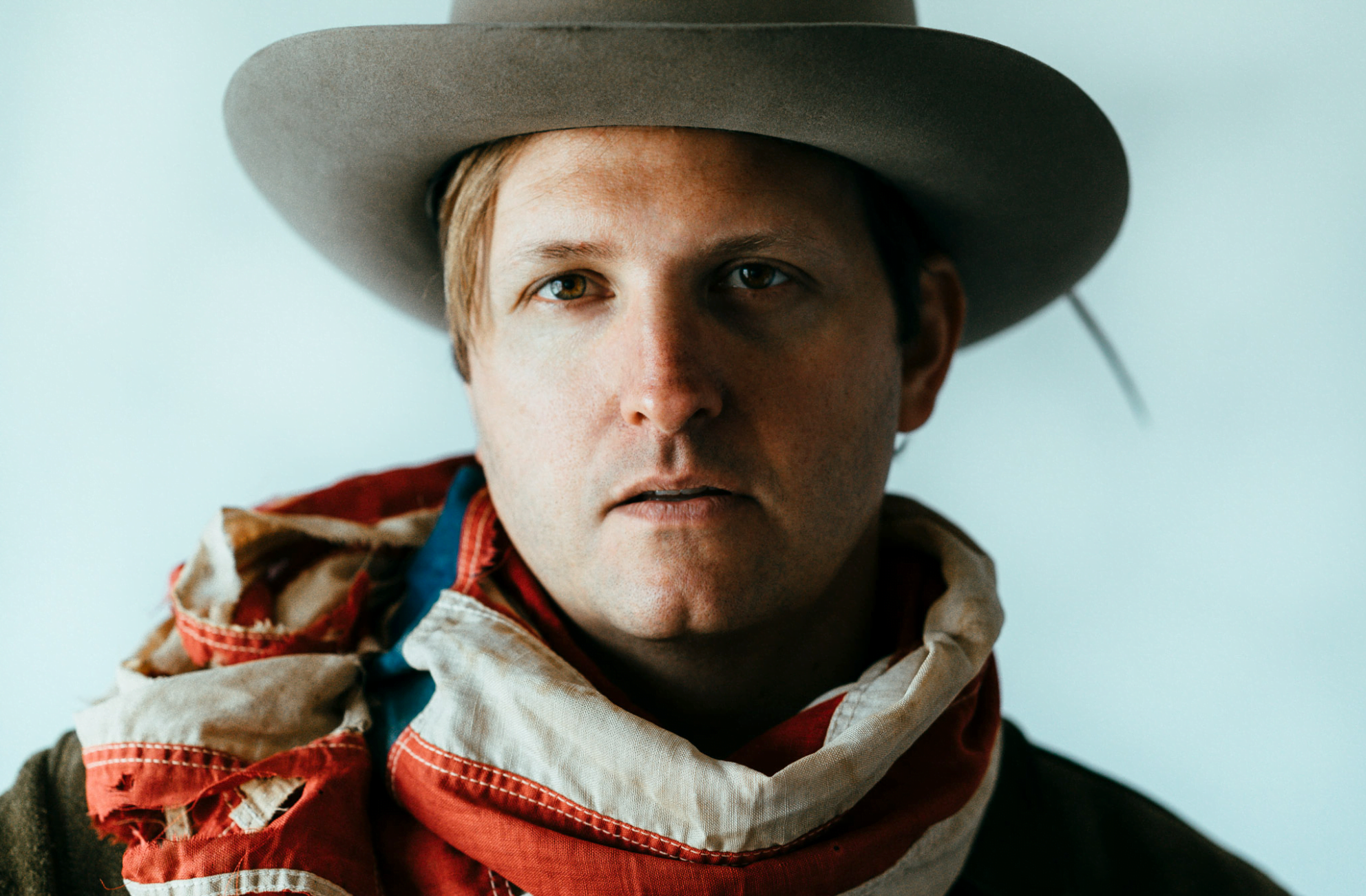
Joshua Ray Walker Has Got the Stuff

When Joshua Ray Walker received a cancer diagnosis in early 2024, he thought he only had months to live. This led him to contemplate not only his life and what he’s done with it, but his possessions and what would happen to them if he were to perish.

His latest album, Stuff, is the culmination of that pondering. Across 10 songs, the Dallas-based singer breathes life into a variety of inanimate objects ranging from a brick to the scent of perfume on sheets, bowling balls striving for perfect games, and even Barbie dolls eyeing everlasting love. Despite its deeply personal nature, the record leans into universal themes of grief and mourning since we’re all ultimately destined to suffer the same fate.

“We’ve all had someone in our lives die,” he says. “That’s why love and death are go-to topics for most songwriters – they’re two of our most universal concepts.”

With his future uncertain, Walker threw the rule book out for recording Stuff. Teaming up with longtime producer John Pedigo inside his home studio, the duo laid down everything on their own in a week – even instruments like the synth and melodica that Walker had never tinkered with before. The result is the “Sexy After Dark” singer’s most personal, dark, experimental, and hopeful album all rolled into one.

“Growing up everyone wanted to make records in their bedroom, but I never knew anyone with nice enough equipment to actually do it,” says Walker, who’s now stacked up a year’s worth of clean CT scans. “In junior high and high school I remember recording vocals in my friend’s laundry room or sneaking into a friend’s house whose mom had a piano and recording parts on it on the fly. There’s just always been something really fun about trying to make something sound the way we wanted from a sound people wouldn’t expect.”

Ahead of Stuff’s release, Walker spoke with Good Country from inside his van stacked to the gills with merch ahead of a run supporting Molly Tuttle. Our conversation covered his health struggles, the healing nature of writing these songs, experimenting in the studio, and more.

How’d the idea for this album come about?

Joshua Ray Walker: Before I even got sick I had thought about writing a song or album from the perspective of inanimate objects. Once I fell ill, I made a plan with my best friend and producer, John Pedigo, to write a song every week so that at the end of my year [at] home doing treatment I could have 50 new songs. When you’re planning to write that much, it’s easier if you pick a theme.

At the time, I was also starting to do estate planning for myself due to the nature of my advanced cancer. Even though I had multiple family members die where I was the main person who had to deal with their belongings after they passed, it was an eye-opening experience. So somewhere between the inanimate object song idea and thinking about where all my personal belongings would go if I died, I came up with the idea to write a whole album of songs from the perspective of stuff that was left over at an estate sale.

Subconsciously I was feeling like a burden to people. Anytime you’re sick, it’s a lot of effort that your loved ones have to put in, and even though they reassure you that you’re not a burden, it doesn’t stop you from thinking that way. [On this album] I was trying to think about that while projecting onto these items how leftover stuff can be a burden even after its owner is dead and gone.

Were any of the songs on Stuff more difficult to bring to life than others?

There were around 30 different ideas for the actual items, so the ones that got made were the ones that came the quickest since we were in a time crunch to make the record. If it was difficult it just didn’t end up getting written.

That being said, there was definitely some unexpected stuff. Like on “Brick” – I wasn’t necessarily expecting a brick to make it on the record, but it actually ended up being one of my favorites. I’ve always been very nostalgic for physical items as well, which only made it easier to connect with these objects. It made for a fun challenge writing from these perspectives and trying to get people to relate to it or have some emotional response. I’m known for being able to write from a character’s perspective and have been fascinated by how fictional characters can conjure up real emotions. It made me wonder if I could take things a step further and get people to feel something for these fictional objects.

Well, I’d say mission accomplished!

In addition to the concept and lyrical depth of these songs I also adore the sonic direction as well, which pulls from your previous material at times while navigating into pop, electronic, and other territory elsewhere. What motivated you to take that approach?

Because of where I was at with my health when we were conceptualizing the record, I really just wanted to explore some sounds that I’ve always loved and been influenced by, but didn’t make sense for the projects I worked on previously. Since I wasn’t sure how many more records I would be able to make I wanted to have as few limitations on what I was making as possible. If you put yourself in a box it forces you to be pretty creative. The rules were that John and I had to play all the instruments and we could only use ones we already had inside his home studio. It forced us to stretch a bit from our normal production style and was a lot of fun to make. We did it all in a week, locking ourselves in the studio for as many as 14 hours a day to get it all done.

Were there any instruments you played that you hadn’t tinkered with much before, if at all?

I played a lot of the keys, which I’d never really done before.I’d never played synths or melodica before, either. There were also just a lot of weird ambient sounds on the record. At one point we even had a sponge tucked under the bridge of a guitar as I was playing the strings with drumsticks, giving it a dulcimer-esque sound. We also utilized paper clips on ukulele strings to make them rattle, the pull string from a lamp on a cymbal so it would sizzle and random cups and pillows as percussion on the song “Stuff” – we wanted to turn non-instruments into instruments.

One of the songs I love most on Stuff is “Barbie,” a song about playing with dollhouses that contains some of the best one-liners on the whole record like, “…Do you want to play house with me and practice making babies?” Tell me about how it came to be?

Like you said, it’s a song about kids playing house put onto the characters of Barbie and G.I. Joe. It’s Barbie looking out her window and seeing G.I. Joe get played with in the sandbox and pining for this love connection. For one reason or another, G.I. Joe makes it into the house one day and they have the chance to run off in her Jeep and canoodle. When you’re a kid you don’t even really know what that means, but if you watch kids play with dolls at some point they’re going to make them kiss. They know people fall in love, but they don’t understand how or why – they’re just acting out what they see their parents doing. Such a big part of childhood is trying to figure out what all that means, so I thought it’d be funny to have Barbie trying to work that out for herself in this song.

Sounds like it has the potential to lead to a lot of conversations about the birds and the bees between parents and their kids. [Laughs]

Another song I want to ask you about is “Bowling Ball,” which features by far your lowest vocal register on the entire album. Tell me about your decision with that along with what made you want to bring a bowling ball of all things to life?

I don’t bowl much anymore, but used to be in a league when I was a kid. There’s a local bowling alley in my neighborhood called Jupiter Lanes that I’ve been very nostalgic for since I had a birthday party there and won a Johnny Bravo bowling ball when I was eight. [John Pedigo] is also a good bowler who grew up with a mom who worked at a bowling alley. We both know more about bowling than the average person, which allowed us to write a song from the ball’s perspective pretty well.

It’s got the best beginning, middle, and end to any song on the record, because it’s one short story about someone getting ready to finally bowl a perfect game. Only a frame away they throw too hard and pick up a chip or crack in the ball return, leading to a “put me in coach” or Rudy moment. They’re contemplating whether to walk over to the pro shop to get a new ball to finish out their first perfect game or continue on with ole faithful that got you there.

In terms of the vocal delivery, that’s pitch-shifted down with a Whammy pedal – I simply don’t have that kind of range on my own. That’s also something you’re just not allowed to do on a typical country record, which is another rule I guess we broke.

I gotta know more about this Johnny Bravo bowling ball!

I got it from that bowling league I mentioned, which was sponsored by Cartoon Network. At the end of the league, if you placed in the top three you were able to pick out a custom ball with whatever Cartoon Network character you wanted on it. The color was called galaxy, which is this purple kind of nebula-like color with Johnny Bravo etched into the side. It was awesome!

I remember choosing between him and Dexter, but I wound up choosing Johnny because of my dad, who would jokingly do an impression of Johnny Bravo’s voice that I loved. I also just related to that character and had a blonde pompadour haircut of my own.

You mentioned the song being about the journey to bowling a perfect game. Have you ever tossed one?

Definitely not. [Laughs] The best I’ve ever done is in the 220 range. I peaked at bowling when I was around nine years old. If I were to go bowling right now I would not do well at all.

With how much you’ve stepped outside your comfort zone on Tropicana and Stuff, what direction do you see taking next, musically?

I have a lot of projects, but only thought I’d have a couple years to make them, so I focused on jotting all of them down since I tend to see records as entire concepts, not just collections of songs. I have an autobiographical project I’m wrapping up now, but I also have a western trilogy on my mind along with a bluegrass record and even something a bit heavier.

Hopefully I’ll get to keep making records and all of these projects will come to light. Even though my music sounds different record to record they’re all still country in my mind. I’m always trying to make country music, whether it sounds like that or not.

What has Stuff and everything you’ve experienced the last couple of years taught you about yourself?

I hold onto things a lot less now than I used to. But in general, I just want to spend more time doing things I like with people that I like. This health scare has taught me to make music however I feel like making it and to do it as much as I can while I still can.


Lead image courtesy of the artist.
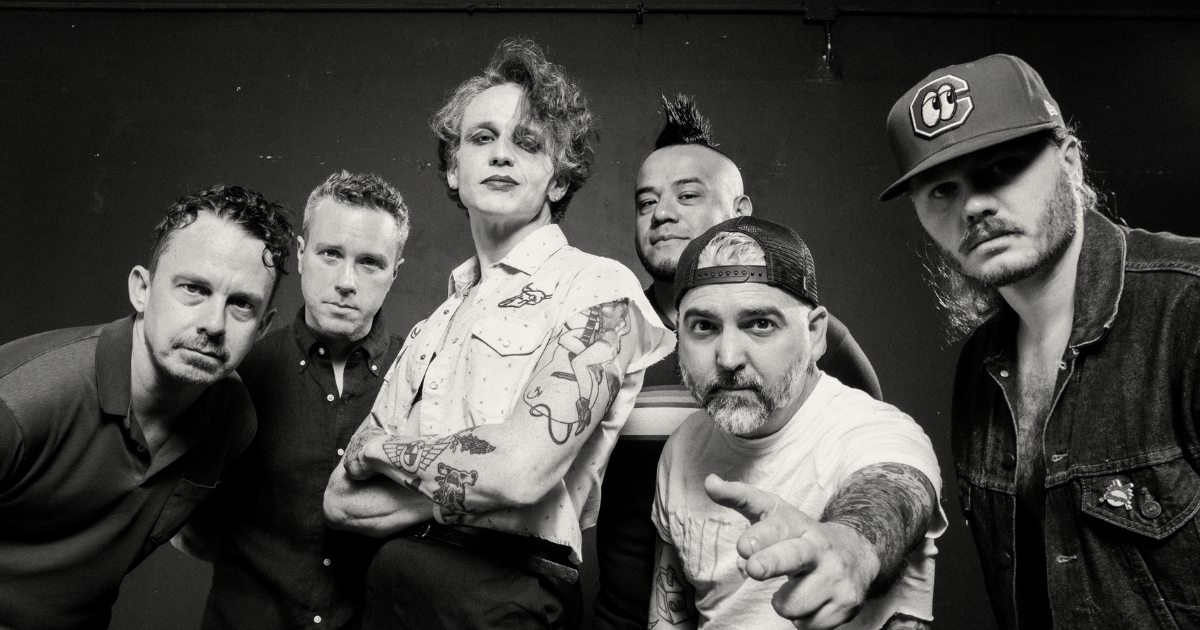
Vandoliers Find Liberation
in Life Behind Bars

Vandoliers are doing their part to keep the spirit of alt-country alive with their raucous blend of punk, country, and mariachi. In other words, they’re the quintessential Texas dive bar band.

They’ve long been outspoken supporters of the queer community, going viral for protesting the Tennessee Drag Band by performing in dresses as a protest; that was when lead singer Jenni Rose realized that she may be a member of the LGBTQIA+ community herself. And so, the band’s fifth and newest album, Life Behind Bars (released June 27), finds the Vandoliers exploring the wild desert landscape of the heart: sobriety, grief, gender dysphoria — and joy in liberation.

Good Country spoke with group members Rose and multi-instrumentalist Cory Graves in early June about collaborating as a six-piece band, working with producer Ted Hutt to push the band to ever-more lyrical honesty and musical proficiency, and the profound impact Jenni’s sobriety and coming out has had on the band.

The album’s title track, “Life Behind Bars,” deals in part with frustrations of life on the road – but Vandoliers are known for bringing the party. How do you balance these two realities?

Jenni Rose: I couldn’t be a lead singer of this band unless I got sober. I tried really hard to be the party person and be the lead singer and be able to do this hundreds of times a year. I just couldn’t do everything. Put the party down for a little bit, and that brought up so much in my life. It made the shows exponentially better. It made me a better singer. On this record, you’re really hearing me processing this new identity, this new life unfolding. It starts with the question, “Why can’t I get sober?” and then it’s like – “Oh my God, I’m in the wrong body.”

I was dealing with a lot. Cory was dealing with a lot, the whole band was dealing with a lot. We have made four records of us asking, “Where am I at in my life? What am I going through?” We’ve been able to conquer the humorous and the serious, so we weren’t really out of our comfort zone by talking about big feelings, but they’re in this album for sure.

The song has four co-writers: you two, Joshua Ray Walker, and John Pedigo – Texas royalty for sure. While it’s common for pop country songs to have many writers, it’s a bit unusual in the Americana world. How did you all even find yourselves in one place together?

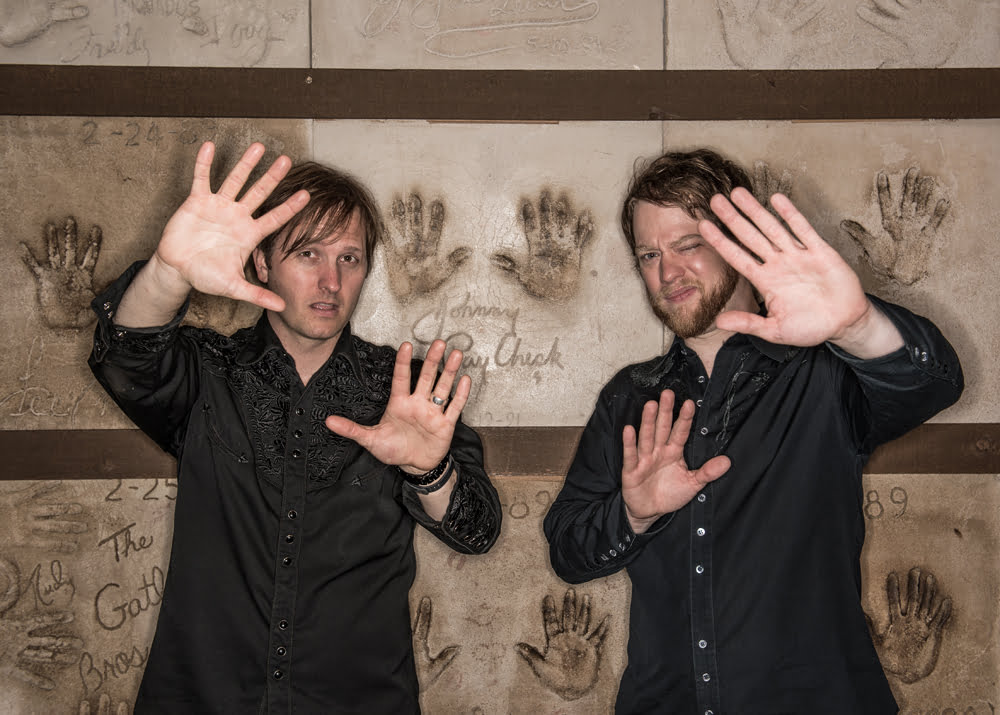
JR: Josh Walker and I are really close. I was with him a lot during his cancer diagnosis. We were catching up and we were about to go to Sonic Ranch to record. I suggested we just go write a song and call up John, who used to produce our records. He pretty much has a co-write on every Vandoliers record except for the last one. We love writing together.

Josh Walker brought up the frustrations with touring and we were talking about how we can keep doing it. Then we thought, “Let’s say we didn’t do it. What else are we gonna do? What kind of jobs are hiring 40-year-olds for entry-level positions?” Cory and Josh had been talking about this line “life behind bars” as a double entendre for years. We all related to it and everybody just started throwing out lines. And then by the end of it, we were all screaming the hook and we had a song.

When you began working with producer, Ted Hutt, he said your songs were “superficial” and pushed you to go deeper. How was it to hear that feedback?

JR: It was wonderful. That conversation was like a year before we got to the studio. So I came in with like 40 tunes. Cory came in with like six or seven. Ted really took the time to listen to our writing and pick the songs that were right for the record. He pushed me so hard with my lyric writing and my vocal performance.

I was writing and rewriting things, clarifying, digging deeper into what I was trying to say and that opened me up to a lot of emotions. I knew I was gonna hit gender dysphoria, but I didn’t know I was gonna hit it there. Then [the] Pandora’s Box was completely opened.

Cory Graves: We’ve always craved a producer that would come in and be like a seventh voice in the room, like a tiebreaker voice or someone who could come in with other ideas. We’ve gotten that a little bit here and there in the past, but never as much as I think some of us wanted. He was heavy-handed, like suggesting we change a song from a punk song to a country song or changing the key.

We all knew that we wanted that. Going in, we all agreed that if Ted wanted to try something, everyone would just be happy about it and try it. That’s exactly what happened. It always worked out for the better.

What lessons do you think you’ll bring with you from this process?

JR: I’m already better at being fully vulnerable when I write. Life Behind Bars is me opening up, whereas some of my writing right now is pretty brutal. I’m excited about moving forward being fully aware and shameless in my writing now.

The band itself is so collaborative, by nature of the kinds of sounds you make. How does the band work together?

CG: We all have so many different influences. None of the songs ended up sounding like the demos. They ended up sounding like a piece of everyone. My song, “Thoughts and Prayers,” was more of a punk song, but ended up as a rockabilly song. “Life Behind Bars” started as an emo song while “Bible Belt” was kind of like a Green Day song. Now it’s like The Cars meets, like – I don’t know. So many different things. There’s a twang to it, but also ’80s rock, because Dustin [Fleming], our guitar player, was in a Cars cover band. So he’s got that in his blood.

There are different things that we each bring out from our past into the tunes.

Jenni, it sounds like for a while you isolated yourself socially from the band a bit. How do you both feel things have changed since you’ve come out?

JR: When I was trying to quit drinking, I changed all of my habits just to make sure that I could. It would have jeopardized my career if I kept going the way that I was going. I didn’t wanna do that, ’cause it’s not just my career, it’s everybody’s career. So I started going to the gym after the shows and then journaling during the day, having a ten-minute free write, word-vomit of poetry that I would send to Ted. I would do this every day and that would take me three hours – most of the van ride. So I’d be in my headphones, dead silent with everybody, and I was cocooning. I was going through a lot and I was trying to heal while in motion.

So everybody got to live with a hermit, essentially, for three years. I know it wasn’t cool, but I had to do it. I’m writing these songs. I’m reading every fucking self-help book I can possibly grab to figure out why I’m an addict. The dysphoria is starting to pick up and ramp up, because I’m starting to understand my emotions instead of dull them and ignore them. I am becoming more in tune with my body at the gym and noticing the dysphoria there and starting to understand myself better and better and better. While all of this is happening, I’m on fucking tour all over the world with six other people.

They’re watching somebody change the way that they eat. They’re watching somebody change what they do during the day. They’re watching my social life become pretty much non-existent. … Everybody becomes [at] arm’s-length on the road for a couple years. And then at a Taco Bell, I tell everybody I’m a trans girl and it’s like I’m right back to the party, I can like hang out again, I can go out after the show, or I can skip the gym. … I’m existing as my highest self after years of searching.

It sounds like your coming out has been a fairly positive experience so far.

JR: I saw immediately how quickly my relationships have been healing since coming out. Each person I told – before coming out publicly – it was great. Now I just get to be in a band with my friends again and they get to know me fully without me being scared of rejection.

I can’t manipulate anybody into accepting me. I can’t control how they feel about me. There’s nothing I can say that would make them either love me or not love me. You just kind of get to figure out who’s with you or not. I am so blessed that the people that are around me are at such a high quality. I think it’s a testament to just my exquisite taste in humans. I’ve been so blessed.

Everybody around me loves me and wants me to keep going and wants to keep being in my life, which is not what I thought that they would do. I assumed that I would be abandoned by everybody, because that’s the narrative that we’re all used to, but it’s been really beautiful. I’m really glad I did it.

Your coming out process has been very public. Your band went viral for protesting the Tennessee drag ban the day it was passed by wearing dresses on stage. And now, you’ve come out in Rolling Stone. So, how are you doing?

JR: Wearing the dresses was Cory’s idea. I have worn so many dresses behind closed doors. No one knew this side of me. When we went shopping for dresses, we all were having fun. When I put it on I was so nervous, but I was also really comfortable. And then we went out and played and I twirled. I had a great time. I thought only like 80 people were gonna see this, that I’d wear a dress for this one show and that would be it. Then everybody saw it.

That was kind of when I realized I had this aspect of me. It was the first time anybody had seen it and everybody kind of saw it at once. It made me wanna drink again, ’cause I didn’t want this to keep multiplying because I was scared. It wasn’t the first time I’d worn a dress and I knew that that wasn’t the first time that I felt comfortable doing so. I didn’t know if I wanted to accept that, or think that it was anything more than a kink or whatever. But I was sober and I did have to deal with it, and I did have to talk about it with my family and my wife.

If anybody’s reading this and they’re questioning if they should come out, you should. It’s good for you.

What are you each most excited about getting the album out in the world and touring it?

CG: I’m excited that people are gonna hear a little bit of a different side of us and to see what they think of it. I think more people are gonna be aware of us than ever, and I’m excited to see how people react to that.

Also, I’ve been doing music for, I don’t know, 20-something years. I’m 41 years old. I’ve never sung a lead vocal on any record in my entire life. I’m just excited for that [“Thoughts and Prayers”] to be in the world. That’s a big accomplishment for me, personally.

JR: I’m glad you sang it. You sang it much better than I was singing it!

I am most excited to be seen as 100% me on the road and to see what that does. So far, it’s been really magical. I think it’s been really positive. As I’m out and I’m playing, these bars or venues or theaters or little music series or festivals, they’re gonna see a trans person in a band, maybe at a country festival, maybe in a small town, maybe at a place that they wouldn’t usually see a queer person, and they’re gonna have to figure out how they feel about that.

I think the thing that I’m most excited about is posing that question to people and giving them a chance to react. I have faith in our fans, but I also have faith in our country, too. I don’t think hate has as much of a stronghold as we might think. It’s there for sure, but I think there’s a lot of love too.


Photo Credit: Vincent Monsaint

WATCH: Pedigo’s Magic Pilsner, “Garage Sale”

Artist: Pedigo’s Magic Pilsner
Hometown: Dallas, Texas
Song: “Garage Sale”
Album: Pedigo’s Magic Pilsner
Label: State Fair Records

In Their Words: “We were so lucky to work with Josh David Jordan on the ‘Garage Sale’ video. He’s just wrapped his first feature This World Won’t Break, and I thought it would be cool to incorporate his movie’s world and characters in the video. His mind and vision are stunning. It stars the ever-so-talented Roxanna Redfoot as the girl tossing the guy (Greg Schroeder) out as she revels in her in her own debaucherous depravity. We shot it in Tim Delaughter’s (Tripping Daisy/Polyphonic Spree) mother-in-law’s house minutes before they tore it down — so we could really make a mess without any relative aftermath — which was very cool. All in all it was such a fun day. Then Josh ‘got’ to edit it. Great times.” — John Pedigo


Photo credit: Cal Quinn

John Pedigo, ‘Warning Shot’

Music has a way of speaking for those who cannot: the thoughts of a secret lover, a disenfranchised worker, a child unborn. That’s why honesty, rather than explicit or factual truth, is one of the most powerful tools a songwriter can have. What can you imagine? What brain can you get inside? Who can you be or who can you sing for, and can that be someone who could never speak themselves?

On “Warning Shot,” from his new record, Magic Pilsner, John Pedigo — one half of the O’s — does this by imagining the thoughts of someone only after they have died, en route to their own funeral. Not watching from above in a religious or spiritual way, but in true quest to uncover what a man who is no longer with us might actually be thinking. In “Warning Shot,” this message comes straight from the casket, but Pedigo treats death as enough of an open-ended concept so a funeral — and our ashes — aren’t only concepts experienced by those no longer breathing. Alternating subtle acoustics with piano and strings, it’s a song that helped Pedigo come to terms with the loss of his own father. But the healing doesn’t end there.

“The record was a mostly solitary adventure, and I was racing against time trying to finish it and still create a definitive sound,” Pedigo says. “It became much more to me than a song; it was the driving force for me to continue.” Rebirth through death: seeing life the way only a songwriter can.

LISTEN: The O’s, ‘Brand New Start’

Artist: The O's
Hometown: Dallas, TX
Song: "Brand New Start"
Album: Honeycomb
Release Date: February 5
Label: Punch Five Records

In Their Words: "I always liken the song to the classic ‘the girl leaves you, and you try to deal with it’ type of sentiment. The story is pretty straight forward: She leaves in the beginning verse, guy decides to follow through with their planned vacation (omitting all the fun he actually has) during the second verse. Then, in the third verse — when all the anxiety, regret, and ultimately his realization that she’s actually gone comes — he has one final plea for her heart. Alas, he loses." — John Pedigo