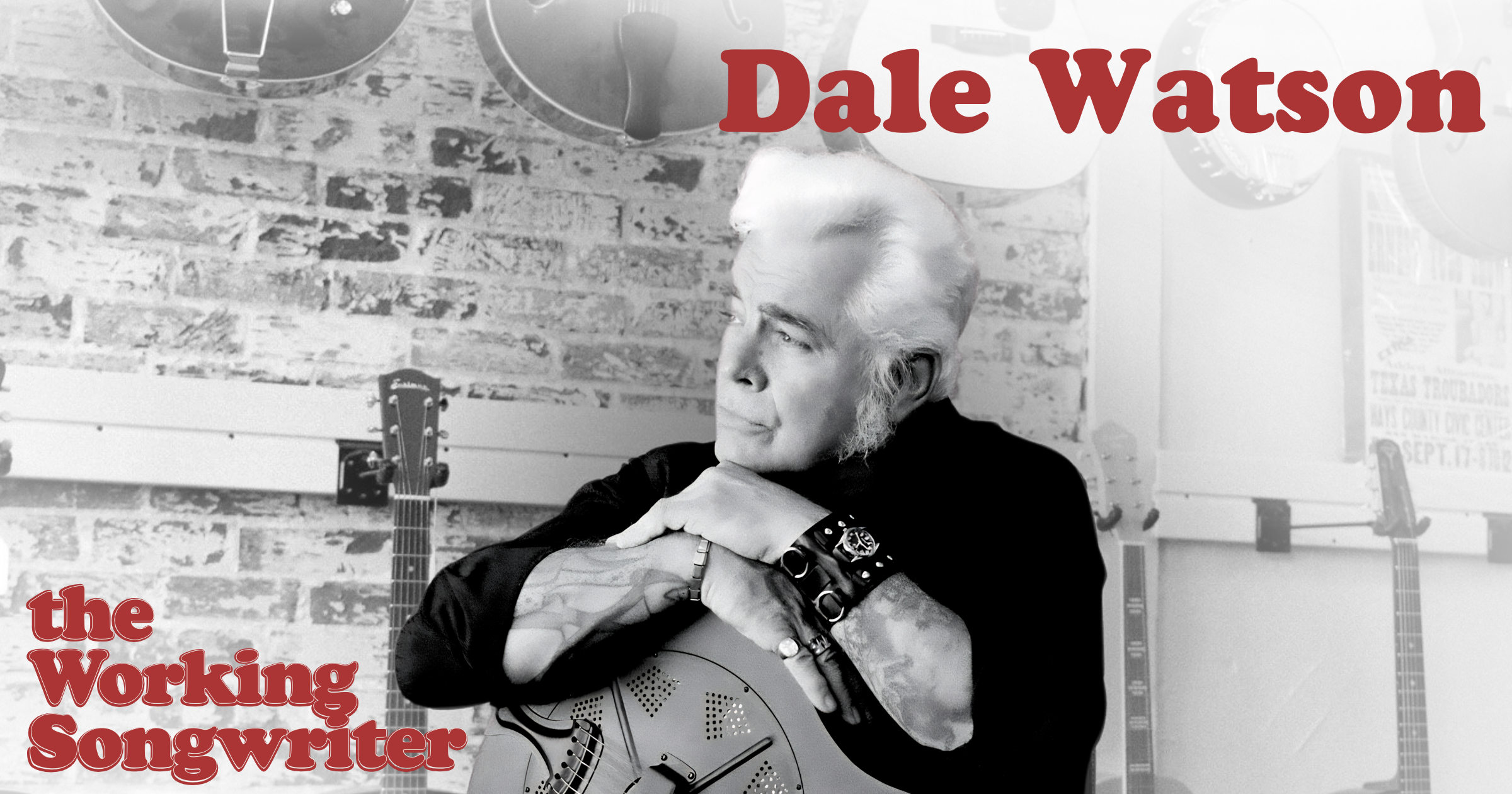
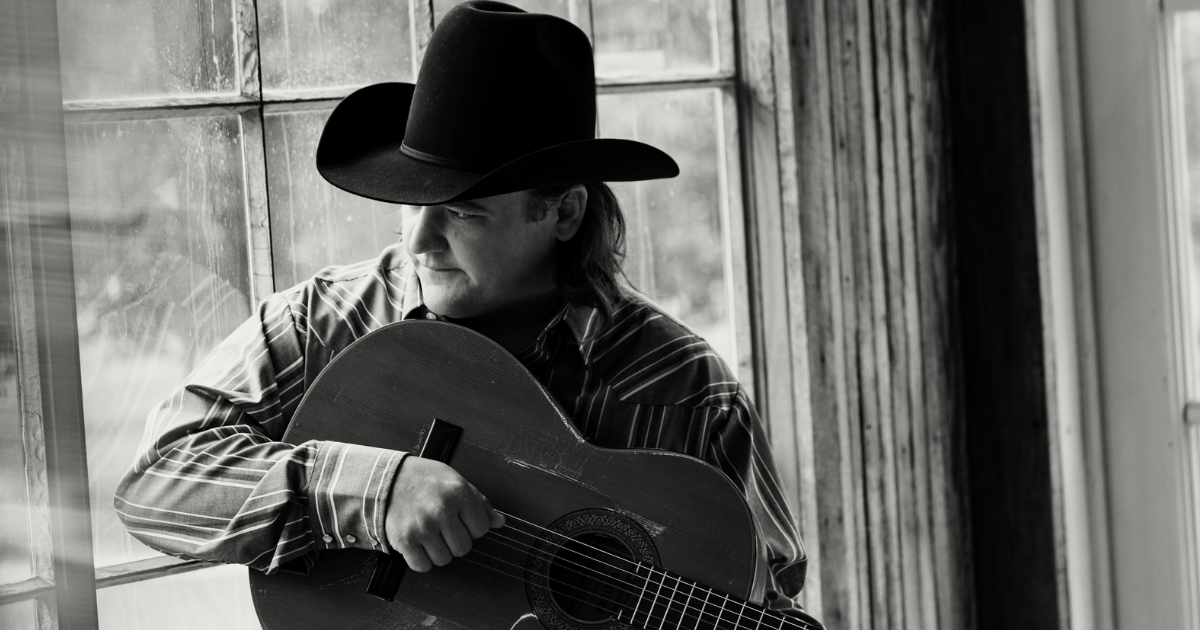
Our guest this week was born in Birmingham, Alabama, but, just like Davy Crockett, got to Texas as soon as he could. Dale Watson began his musical career playing the clubs of Houston before decamping to Austin and becoming a fixture in the live music capital of the world. The music machine in Nashville never fully embraced Watson’s traditionalist combination of Western swing, rockabilly, and country, but he’s built a devoted cult following the world over on his own. It’s a style of music that he calls “Ameripolitan.”
Watson has toured with all the greats: Merle Haggard, Johnny Cash, Willie Nelson, and Kris Kristofferson. He’s appeared on The Late Show with David Lettermen, Jimmy Kimmel Live!, and of course Austin City Limits. He’s performed at Stagecoach, Bristol Rhythm & Roots, and a host of other festivals.
He was a 2005 Austin Music Hall of Fame inductee and he was awarded the title of Texas State Musician in 2007. He founded the Ameripolitan Music Awards in 2014. The Austin Chronicle calls him their “local honky-tonk hero” and Saving Country Music says that “Dale Watson is all about keeping the honky-tonk traditions alive.”
I got a chance to catch up with Watson a few months ago to hear about his musical journey so far.
The music scene in Tulsa, Oklahoma, is alive and well. If I’d thought otherwise at any point in time, it wouldn’t take long for a stranger in an Austin dive or a songwriter in Nashville to remind me – and they have. I’ve called Tulsa home for 10 years and gladly claim and evangelize her as often as I can. This little-big town’s reputation of producing quality singer-songwriters and musicians is justified, however biased I am.
Come with me, Keyland, on a little walk through a Tulsa-Mixtape journey. Before we begin, I’d like to offer a few important listening notes:
1) I regret that I will inevitably leave some folks out, merely due to the limitation of brevity. My sincerest apologies. But I’d like to point out that this list is composed of my personal friends in the Tulsa music scene. Beers on me at the Mercury Lounge to any friends I leave out here…
2) This is a list of current artists. The Tulsa music scene is often associated with only a handful of eclectic deceased writers and musicians. God bless them – but Tulsa has changed a lot in the last 50 years or so. My friends included here do an amazing job of looking ahead at what the future holds.
Ramsey is one of my best friends and most likely the very best musician I know. He plays drums and sings harmonies in my band, Keyland, and he is an incredible guitar and banjo player. In the best way, this album is more a composition than anything else.
“Stranger” – Wilderado
This is my favorite band. I so respect the way these guys approach rock and roll with a blue-collar “dad” mentality. It’s truly inspiring, and the way I want to approach music as a career.
“Coyote” – Ken Pomeroy, John Moreland
This is a two-for-one selection: Ken and John are both powerhouse songwriters and singers. Both these artists are gifted in very special ways and I’m glad they make music.
“Get to You” – Micah Felts
Micah Felts is hilarious, a fantastic songwriter, and an all-around great dude and friend. He is also a stellar acoustic guitar player.
“Better If Worse” – HAFFWAY
Sam Westhoff is slipping in this Tulsa music list, because I sure as hell wasn’t going to leave him out. He is one of my best friends and has produced all of my music. He lives in Nashville now and is famous (rightfully so).
“Comanche Moon” – John Ferrell
John Ferrell is one of the most rawly talented players and singers I know. I met John while we were both in college and he learned to play guitar better than me and all my other friends in like three months.
“Marigold” – Chris Bo Jones
Also sneaking in this Tulsa list is OKC rockstar Chris Bo Jones. Lineman by day, rock star by night, Chris is one of my favorite singers.
“Outside” – MORE&MORE, Beachfriends
Brady Ballew (the happiest person I know) used to play professional soccer. Now his band MORE&MORE and Keyland like to sell out shows in our favorite Tulsa dive, the Mercury Lounge. I’ve listened to this song 10,000 times.
“Call Me Anytime” – Sports
Christian introduced me to nicotine toothpicks and Australian beer one time after a HAFFWAY show. These guys produce a lot of cool stuff in Tulsa. And Sports is like a huge band.
“Bullfighter” – Joleen Brown
Joleen Brown is Tulsa’s sweetheart. Her voice is crazy good and she is the sweetest, coolest person you will meet.
“Wishes” – Travis Linville
I’m new to Travis’s music and I’m so glad I found it. This is like a Tom Petty song in the best way. I don’t know Travis super well, but it seems like he has a really grounded view on the reality of what it means to be a musician in 2026, and for all the right reasons.
“More” – Kalyn Fay
Kayln Fay just put out a really cool record that highlights and honors her Cherokee culture and roots.
“This Damn Funky” – Johnny Mullenax
Johnny plays guitar 1000 miles per hour. Johnny’s band plays their music at 1000 miles per hour also. The live show is insane.
“South and Pine” – Zach Bryan, King Cabbage Brass Band
I have not met Zach yet, but I have drank one million beers at 5 or 6 of his concerts. The horn section in this new record of his is a Tulsa band called the King Cabbage Brass Band and it is physically impossible to not have fun at a show of theirs. And they also do really cool work in our community by teaching band camps for kids – they recently held a concert at Cain’s Ballroom and their band camp kids absolutely crushed a song on the main stage.
“Cowboy Song” – BC & the Big Rig, Jacob Tovar
This is another two-for-one selection: Brandon Clark was one of the first people to ever believe in my band, Keyland, and let us play our first real gig with them. Jacob Tovar has a buttery voice and one of the funniest people you could give a microphone to. You can catch both of these gentleman holding down separate residencies at local dives – Tonkin’ Tuesdays with Tovar and BC’s Sunday Service – you guessed it, at the Mercury Lounge.
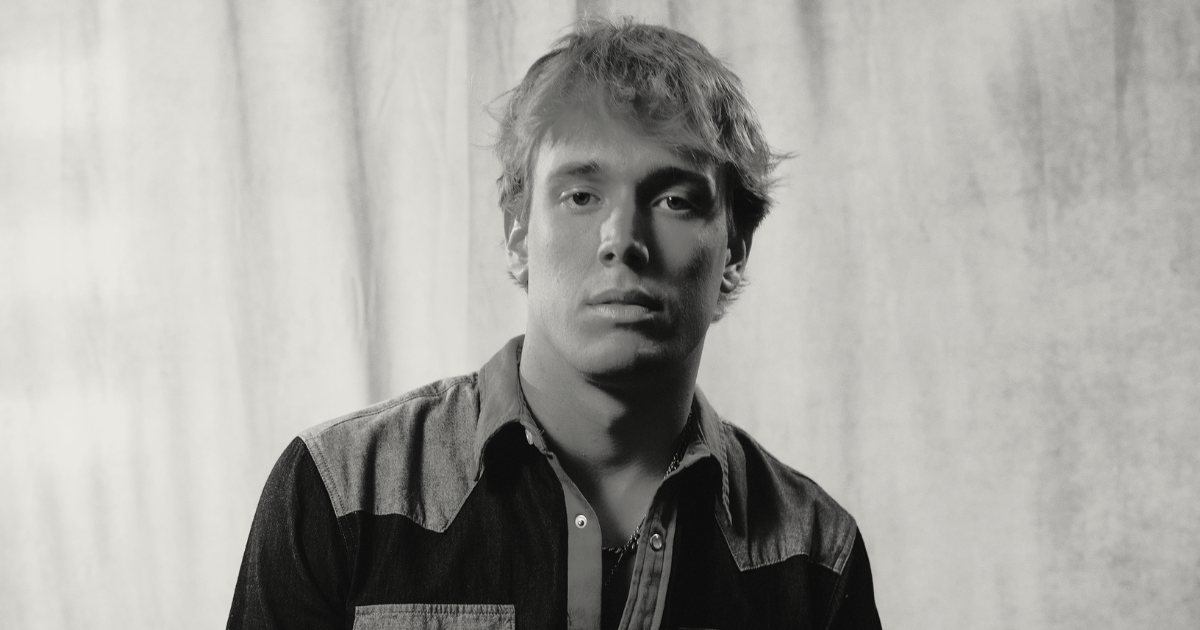
It was not so long ago that Hudson Westbrook was in college at Texas Tech. But today, he’s one of the most promising and hard-to-pin-down young acts in country, helping pull Texan artistic independence into the mainstream.
Joining trailblazing stars like Cody Johnson and Parker McCollum, Westbrook celebrated his first Number One in February after finding a home for “House Again” on the Mediabase country radio chart. Also certified Platinum by the RIAA, it’s more evidence of a shift away from cookie-cutter tailgate anthems: an emotionally complex ballad rooted in the experience of a kid watching the fallout of their parents’ divorce.
Westbrook paired raw lyrical nerve with a soulful, tender touch, helping the newcomer tally one billion streams in 18 months, with an exponential growing profile – and then he switched things up.
His recently released Exclusive EP features five tracks awash in rootsy R&B, proving the 21-year-old won’t be held to a narrow interpretation of Red Dirt musicality. But he’s not satisfied there, either. His new radio single “Painted You Pretty” (from the debut album Texas Forever) matches country simplicity with an earnest romantic hook, and this summer he’ll tour arenas and stadiums with Bailey Zimmerman, Morgan Wallen, and one of his heroes, George Strait.
Speaking with Good Country at an East Nashville coffeeshop – just one day after meeting a pig on the podcast of his other hero, Tracy Lawrence – the fresh-faced star looks ahead to new music and shares his impression on what’s driving the Texas-and-traditional country resurgence. Barely two years into a rocket ride of a professional career, he’s still learning the ropes, and sometimes, the lingo. But Hudson Westbrook has all the artistic confidence he’ll ever need.
We last talked in 2024 and at the time you were just out of college. The only thing you had released was “Take It Slow,” and then “House Again” came out. How have things changed?
Yeah, I was working at that feed store and it wasn’t that long ago. I’d written “House Again” and then I just remember I was so confused as to what was going on. Now I look up and I’m like, “I was blowing up the whole time.” I didn’t realize how big it was getting. It’s hard to feel it. I’d be like “Hey y’all, is 5,000 tickets good here?” And they’re like, “Do you realize what you just did?” And I’m always like “… No.” [Laughs]
I’m getting bigger and bigger and bigger and bigger. I want to keep getting bigger, but I want to keep it small. So [lately] it’s just really been focusing on doing that. Not losing yourself. Focusing on grounding myself right now, making sure I’m calling my family and whatever it might be. And then also it’s celebrating it, too.
You just had the Number One [with “House Again”]. What’d you do to celebrate?
We were in Hawaii, so we drank – I don’t know – 15 margaritas? [Laughs] The coolest part about that song is it was my second co-write and I was like, “Yo, I don’t know what I’m doing.” [Co-writers Dan Alley and Neil Medley] said, “Well, what’s your hook?” I said, “What’s a hook?” And they started laughing. I’m like, “Bro, I don’t know what the hell that is, but I had this idea.” …
So it just blew up. And I was so scared, just because it’s saying goodbye to a lot of stuff, honestly. It all happened so fast. If anyone had to have someone explain to them how to deal with a fast moment, I’d say if their songs are working, slow down.
Really? What do you mean?
Because that was a song that was for me. I was like, “I’m writing these songs I love and they’re ready by the time that we need them, so throw them out there.” And, “I’m already in Nashville, so let’s film the music video.” We never really planned on dropping anything, which is kind of crazy. I wish I would’ve slowed down a little bit and then realized what was happening so I could soak it in. It’s still happening. It’s still great. But I would just tell people, maybe slow down if it’s happening that fast. I feel like a lot of times I didn’t know who Hudson Westbrook was when I put songs out. And now I’ve sat down and we recorded four songs on Monday and I’m like, “This is the vibe. This is what we’re doing.” It’s so refreshing.
You’re going to be sharing a stadium stage with George Strait [at Jones AT&T Stadium in Lubbock, Texas on April 25]. That’s a homecoming show and I know he means a lot to you, so how does that make you feel?
That’s where I went to college. I sat on the 50-yard line since I was 7 years old, watched every single football game at [Texas] Tech, watched every single concert, listened to George Strait since I was in the womb. It was “Check Yes or No.” It was “Troubadour.” It was “The Fireman.” All that was in my house from an early age. So I don’t know, it’s just crazy. It’s a little nerve-wracking, like who knows what’s going to happen? I’ve also never played a stadium yet. All my friends are going to be there. It’s just going to be weird.
I would say there are some similarities between you and George Strait and maybe that’s just because of your background. You’ve been traveling around, have you noticed a difference in country music depending on where you are?
I go to Florida and [the fans are] screaming the most Texas country song I have. And Texas country just means that production. It’s a view of writing and it’s a perspective. I use real drums. The biggest country music artists in the world don’t use real drums right now. That changes everything. And so now we got to be like, “How can we be different than everything else?” I think that’s by being natural, in a sense.
There’s definitely a moment happening for Texas country, bluegrass, and traditional roots, with Zach Top and some more of your peers. Is it just perfect timing for you?
I think we’re pushing it into that direction because I think we’re trying to get back what we wanted to hear. I know if I talk to Zach, he’d be like, “Yeah, dude, I want acoustic and drums and a shaker and I want it all to be in there.” I feel like we make country music and it sounds like the show. You could literally put a band on stage and play it with no auto tune, no tracks. And that’s what makes it unique for us, because it’s like no one’s ever going to play the same thing twice.
What’s coming next, though? The Exclusive EP is out now and it’s definitely different than Texas Forever.
To be honest, I was like, “I want to try a bigger sound, something more mainstream.” And so I chased it – but I did not give up on the songwriting. My songwriting was very intentional and it was very love story-based [on Exclusive].
I love them, but I’m going back to my Texas country sound. We just recorded a song called “Hey Dallas,” which is really cool. Then we did a song called “Backwards,” which is really cool. And then I don’t know, I’m leaning in to John Mayer production a bit – but no crazy guitar solo. [Laughs] I was like, I ain’t doing none of that.
I can say, definitely some more soul and a bit of R&B in there, for sure. It’s electric guitars driving the whole thing – and I love electrics and baritones. I want that to drive all my stuff from now on. My voice just sounds better with it to me.
So it’s going to be like a whole new fresh album?
Totally new. I have like 120 songs and a lot of them are pretty good. I’m not saying they’re all for me, but I finally did what I should have done and that was sit back, find my key, find the way I like to write, really be intentional about what I’m writing. I wrote a song called “Nowhere Bound” that is probably one of my favorite songs. It’s like, I never stop in any city and don’t ever slow down.
When are you all going to be sharing new stuff?
Next month. I’m dropping “Slow Hand” by Conway Twitty [on Gavin Adcock’s Country Never Dies project, March 13]. His voice is incredible. I ain’t going to lie. It was not easy to cover that shit. [Laughs] He’s got just some weird things and then you’re like holding this note out for 10 minutes. [Laughs]
To be honest, dude, even if none of that stuff [I wrote] is usable, my goal this year is to do something that no one’s ever done and create a freaking path so far into my own lane that’s nothing like anybody else that … it’s undeniable, because I’m going to do what I want.
I feel like right now I’m growing and I’m learning and I’m doing whatever, but now it’s like, “How do I take it to the next level?” I think the way you take it to the next level is just getting deeper into yourself and telling [the fans] more.
It’s Friday and it’s new music time! We’ve got a few things on the slate that you simply gotta hear.
Starting us off, quickly rising bluegrass up-and-comer 16-year-old Asher Brinson gives us a sneak preview of his upcoming single, “Midnight Hurricane,” the title track for an album the young songwriter and picker has set for release in early April. “Midnight Hurricane” features Sierra Hull on mandolin and Lindsay Lou on vocals – and Brinson more than holds his own among the talented roster on the track.
Also in bluegrass sounds, Jesse Smathers turns the clock and calendar back to the primordial musical ooze before bluegrass with his rendition of “Take A Drink On Me.” The track was inspired by Charlie Poole and the North Carolina Ramblers, with whom Smathers shares a hometown. As the artist and mandolinist puts it, “This tune is a prime example of early popular dance music” – the kinda stuff that inspired the earliest bluegrass artists like Bill Monroe, Earl Scruggs, and many others. In the hands of Smathers and his band, it’s a bluegrass song fit for any era.
There’s Good Country to enjoy below, as well. Mac Cornish unveils a new track, her cover of Ian & Sylvia’s “Trucker’s Cafe.” You can almost catch the glint of bright sunshine off a chromed truck stop diner listening to the tune, lush with pedal steel and honky-tonkin’ guitar. The boot scootin’ track was recorded in Nashville and produced by Andrija Tokic.
To round us out, Tenille Townes returns to the site with “The Acrobat,” a contemplative and resonant song featuring another of our favs, Lori McKenna. “When you’re barely hanging on it’s easy to let go,” Townes sings, her voice rich with emotion and conviction. The song is the title track for Townes’ upcoming album, set for release in April, and is a fitting nexus point for the LP. “After losing my way for a while,” Townes shares with BGS, “this song felt like such an important anchor for this album.” You can watch the brand new music video for “The Acrobat” below.
Take a scroll and enjoy your listen – You Gotta Hear This!
Asher Brinson, “Midnight Hurricane”
Artist:Asher Brinson Hometown: Newport, North Carolina Song: “Midnight Hurricane” Album:Midnight Hurricane Release Date: March 6, 2026 (single); April 3, 2026 (album)
In Their Words: “When Chris Henry and I got together to write, I told him I was having an ‘off’ day and he said to let it flow – say whatever was on my mind. Those thoughts became the first line of ‘Midnight Hurricane.’ Growing up on the North Carolina coast, hurricanes have always just been a part of my life. And it seemed like they always hit at night! Midnight is quiet, but your thoughts aren’t, and hurricanes are like that — all of your feelings hitting at once. It’s a love story wrapped in chaos and after the storm, there’s a calm that makes you appreciate what’s steady and real. With Sierra Hull on mandolin and Lindsay Lou on vocals, this song instantly became one of my favorites. I feel like they both added just the right touch. While hurricanes unfortunately bring destruction, they also have a way of bringing people and communities together… to uplift each other, support, and rebuild.” – Asher Brinson
Track Credits: Asher Brinson – Guitar, lead vocal Cory Walker – Banjo Jason Carter – Fiddle Christopher Henry – Bass, baritone vocal Sierra Hull – Mandolin Lindsay Lou – Tenor vocal
Mac Cornish, “Trucker’s Cafe”
Artist:Mac Cornish Hometown: Currently Nashville, Tennessee, but grew up in the Bay Area, California Song: “Trucker’s Cafe” Release Date: February 27, 2026
In Their Words: “This single is a cover of the Ian & Sylvia song, ‘Trucker’s Cafe.’ The song is from their 1969 record, Great Speckled Bird, which they also used as the name of their newly formed band, including the likes of Buddy Cage and David Briggs. Ian and Sylvia are a huge influence on me because of their blending of folk, rock ‘n’ roll, and country – especially on this album and this song. The song is a subversive take on the trucking country fad of the 1960s and ’70s, taking the perspective of a heartbroken truck stop diner waitress. The vocals are distinctly folk with their vibrato and falsetto, but the instrumentation is all rockin’ country goodness with walking bass and ripping pedal steel. I’ve always said that the best year in music was 1969. This is one of the many songs I absolutely love from that year in music and it only felt right to record a cover and honor my influences. My cover was recorded in October of 2025 at the Bomb Shelter in Nashville, TN and was produced by Andrija Tokic.” – Mac Cornish
Track Credits: Mac Cornish – Vocals, acoustic guitar Charlie Fuerstch – Electric guitar Jeff Taylor – Piano Cooper Dickerson – Pedal steel Jack Lawrence – Bass Dave Racine – Drums
Jesse Smathers, “Take A Drink On Me”
Artist:Jesse Smathers Hometown: Floyd, Virginia Song: “Take A Drink On Me” Release Date: February 27, 2026 Label: Mountain Home Music Company
In Their Words: “Though my familial roots are deeply planted in Western North Carolina, I was raised in Eden, NC – the home of Charlie Poole. I spent my youth picking and competing at the Charlie Poole Festival there. The festival was held at Morehead Park, on the same grounds where the cotton mill Poole used to work at once stood. I heard the music of Charlie Poole and the North Carolina Ramblers ringing throughout my childhood. He, along with his bandmates, were some of the most prominent precursors to bluegrass stylings that came nearly 20 years later. Tales of Poole, Posey Rorer, and Norman Woodlief are still being told today, as you would expect, with larger-than-life personalities and musicians.
“I often imagine this scene: walking down Morgan Road in Spray (one of three small communities that made up Eden) in 1926 as a bystander and hearing the centric bounce of Piedmont Mill music in the distance. As I approach, I witness the North Carolina Ramblers sitting on a stoop sharing tunes and a jug of the best white liquor that the area along the NC/VA line is so notorious for. That sight is exactly what came to mind when recording this tune and what comes to mind when I hear it back. This tune is a prime example of early popular dance music. Hunter Berry on fiddle masterfully captured the necessary musical essences all while integrating his own spontaneous and playful liveliness. The same can be said of Corbin Hayslett who mixed in popping Charlie Poole banjo techniques. Whether it’s a Coke, glass of tea, a beer, or a jar of Shooting Creek’s finest, all you rounders get ready to party and ‘Take A Drink On Me’!” – Jesse Smathers
Track Credits: Jesse Smathers – Guitar, lead vocal Hunter Berry – Fiddle Corbin Hayslett – Banjo Nick Goad – Mandolin, harmony vocal Joe Hannabach – Upright bass Patrick Robertson – Harmony vocal
Tenille Townes, “The Acrobat” featuring Lori McKenna
Artist:Tenille Townes Hometown: Grande Prairie, Alberta, Canada Song: “The Acrobat” featuring Lori McKenna Album:The Acrobat Release Date: February 27, 2026 (single); April 10, 2026 (album)
In Their Words: “There’s an underlying whisper in this song saying you don’t have to make yourself smaller anymore, and it is my greatest hope that someone hearing this could believe it’s true. I have been navigating a return to self season in my life and reclaiming the belief that I don’t have to contort myself to fit what anyone else needs. After losing my way for a while, this song felt like such an important anchor for this album. Writing this song through the lens of a character helped me to hold enough distance from myself to be able to write the truth, and name the quiet damage that comes from performing, instead of just being.
“Lori McKenna has been a compass influence for me and it’s an honor to have her singing on this song we wrote together. I love how she enters the recording on the line about the fortune teller with all her knowledge, because Lori has been that voice of wisdom for me for years through her songs. The honesty in her lyrics and the way her voice holds emotional tension has given me permission to explore that kind of vulnerability in my own writing. I’m grateful for our friendship, and for the opportunity to share a love for the craft of a song with someone I am still so inspired by.” – Tenille Townes
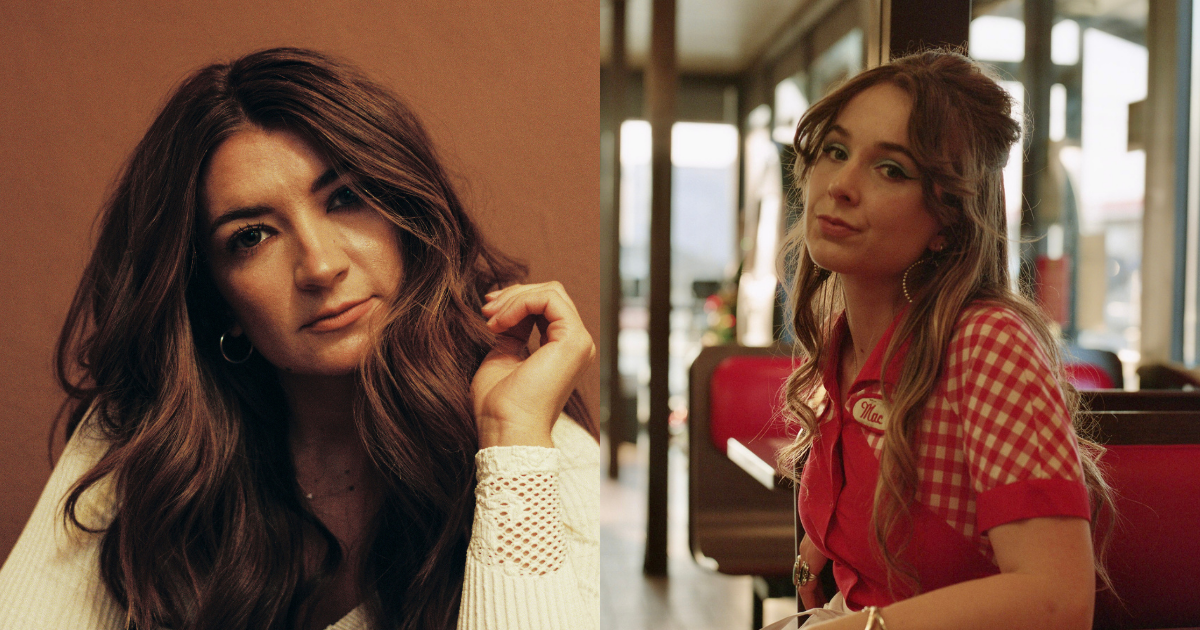
Photo Credit: Tenille Townes by Madison Rensing; Mac Cornish by Mandi Fountain.
For anyone cheering on the mainstream country return of classic roots musicianship, Spencer Hatcher is a name to remember. Joining the likes of Zach Top and even Billy Strings, he’s a new country artist with some decidedly old-school tendencies and a deep foundation in bluegrass.
Having dropped his debut EP, Honky Tonk Hideaway, in November 2025, the Virginia native planted his flag for two-stepping rhythms and hot-blooded twang. Hatcher got his start in a family bluegrass band; over six tracks, his rich Shenandoah Valley vocal stands center stage, flanked by boundless barn-dance energy and timeless emotional heft. But with a thriving TikTok fanbase and a steamy, slow-dancing debut at country radio (“When She Calls Me Cowboy”), his style goes beyond nostalgia. It marks a shift in possibility, with room for roots artists in the commercial country space.
Speaking with Good Country a few weeks into his first promotional radio tour, Hatcher filled us in on his bluegrass beginnings and why they will always be his baseline. Plus, he opens up about the mainstream return of roots country, TikTok-ing back when it was “a dancing app,” and where he sees his music evolving.
Lately it seems like the foundational stuff from bluegrass and classic country is making a mainstream comeback, and you’re part of that. Do you have any sense of what is driving it?
Spencer Hatcher: I think that it’s like anything, I do believe in a full-circle moment – everything comes back into style. In this case, I’m overjoyed that the traditional sound is coming back. I’ve always called that “real country music,” and that’s just the stuff that all my heroes played. Growing up, I didn’t even know what modern country music was. I thought George Jones was modern. I thought that Johnny Cash and Waylon Jennings were modern, and then I found out that stuff was 30 years old 20 years ago.
You grew up on a farm in Virginia, right? Shenandoah Valley?
Yes, sir.
How did you get your country education?
A lot of it was just literally how I was raised. It’s what I lived by. I don’t know if everybody lives by what they sing, but I certainly do. I remember at a very early age, probably 6 or 7 years old, I learned how to drive a tractor and I’d be out in the fields every day working with my dad and running cows, and we had some goats. That’s just been my lifestyle. It’s what I love, still today. Growing up on a farm in the Shenandoah Valley right there at the Blue Ridge Mountains, and coming from a small town, that’s what home is to me. I had a lot of bluegrass around me, of course, in the Blue Ridge Mountains, and a lot of old-style country music. So that’s what we listened to, and sang, and jammed to on Friday nights.
You had a family bluegrass band. What drew you all into that music? I mean, this would’ve been in the 2000s. It wasn’t really in fashion.
It’s a fair statement to say that, in the 2000s, bluegrass was probably at an all-time low as far as popularity goes. But in my hometown, you wouldn’t really know that. There were jams, and what attracted me to it was definitely my dad. I can remember my dad sitting there watching me and my brothers play, and he’d be either playing the guitar or playing the banjo and singing. Growing up, I wanted to be like my dad, and so I picked up the banjo at 12 years old and started playing that, and I was just absorbed in it. That was the moment that music really took me over.
I just wanted to play the banjo, and so that’s what I did for three years straight. Friday night wasn’t spent with my friends at football games. It was at the local jam session where the average age was probably 75 years old. … Then my younger brother Connor decided to pick up the bass fiddle and that was history. From there, we started a band and we started playing everywhere we could.
Early on, you and Connor made bluegrass and country life seem fun on TikTok and you ended up with a pretty big following. What made you want to start posting?
I’d seen some friends do it in college and I admired their confidence. I was never into social media. I had it, but I didn’t post. It wasn’t an interest I had. But after I graduated college in 2019, I decided to move back home in March as COVID had hit, and I said, “I’m going to go back home and see about just playing country music.” I didn’t really know what I was going to do. I had a business degree. I was maybe going to be a financial advisor or something, but music was what I wanted to do. It’s what I did all through college, too. I was in four bands in college, and I just had this infatuation with becoming a country performer. I wanted to add that into my bluegrass shows.
So, I did the only thing I thought I could, and I decided to turn on a camera and sing a song. It took about six weeks for me to work up the courage to finally post that video. … And the fifth one is the one that went viral. It only took five videos and it was insane.
Wow, that’s pretty fast. And I think it’s cool that something so modern as TikTok can have so much fiddle playing and traditional lifestyle on there.
Back then in 2020, TikTok was still a dancing app, and I hadn’t seen any [country lifestyle] stuff on there yet. I was like, “Well, I’m going to show people how we live around here and just be myself.” I would oftentimes just turn the camera on and just let it roll.
Let’s talk about where you’re at now. You’ve got this country career going and it’s a little different from the bluegrass stuff, right? I mean, do you see a difference?
Yes, sir. There definitely is. But I guess you could say [I take] a very bluegrass, old-fashioned approach. I play as many shows as I can, just like the guys in bluegrass do and always have. … Of course, yes, the music is different, but I do believe that you can hear some bluegrass influence in my country music. It’s real country music. What we do in the studio, we can directly replicate on stage, and that’s how it is in bluegrass music. That’s how I wanted my country music to be.
I’ve got a fiddle, I’ve got a pedal steel, I’ve got guitars. Every single show I still play bluegrass. And maybe the difference between country music and bluegrass is that country is a little bit more polished, a little bit more produced. But I don’t like a tremendous amount of production. I don’t have anything faking my songs like bass loops or autotune or anything like that. If you come to a show, you get what you hear online.
Honky Tonk Hideaway is your debut EP. What did you want it to be like?
There was definitely a lot of thought and planning that went into the EP. And the song itself, “Honky Tonk Hideaway,” was a very exciting song. I’ve been calling it a barn burner. It’s one that makes you want to get up and dance, and that’s one thing that I hold pretty highly at my shows. I want people to just have fun and dance and have a good time. They did back in the day – you watch Urban Cowboy and everybody’s dancing, everybody’s cutting up and having fun. I don’t know if that’s been lost over the years, but I know that at my shows, a lot of people feel like they can get up and be themselves.
Did you have much of a hand in the songwriting, or are these outside cuts that you fell in love with?
All of these songs right now have been outside cuts, because basically I came to [Nashville in] July of 2024 and it was immediately like, “We need to get to the studio, let’s start getting some music.” There have been songs floating around Nashville for 30 years and they’re just stacked up – things people wrote years and years ago. There’s a song that I’ve not released yet, but it was written in 2009, so for 16 years it’s just been laying in a folder and nobody’s cut it until I came to town. And I’m like, “Man, I love this. This is country music.”
That’s a lot of what these first couple songs that people are getting to hear are. But since I’ve been in town, I’ve been doing a lot of writing and we’re very excited about the songs that I’ve gotten to write. I think we’re going to see a lot more Spencer Hatcher songs coming in the future.
There’s a lot of gold out there that’s still yet to be mined, I suppose.
Yeah, I mean, it was amazing. My producers would reach out to some of the really big companies and say, “Hey, we’ve got a new artist in town that’s looking for songs like George Strait would cut, or Joe Diffie or Keith Whitley or Merle Haggard, so send us what you got.” And we would get these folders of 50 songs and you just go through it and listen and listen.
Tell me about the single, “When She Calls Me Cowboy.” It’s got some of that Keith Whitley thing going on, in my opinion. Why did you want that to be the first single at country radio?
To me, that’s a very special song. … If anything, I compare it to maybe a Conway Twitty song, because it’s pretty intimate, but it certainly isn’t a Conway Twitty song. … It’s very country, very traditional. I love the melody, I love the words, and it’s relatable. I would say a lot of people can relate to a song like that.
I was thinking the same about “Cold Beer and Common Sense.” I feel like everybody has been saying they wish for more of that these days. What’s the sentiment behind the song?
Man, that message is just so powerful and it’s one I wish the entire world could listen to and live by – and not necessarily the cold beer part. As far as common sense and everybody getting along, regardless of what side of the fence you stand on, regardless of your political party, that’s one thing a lot of people want – to make it about politics. It’s like, “This is not a political song.” You’ve got to listen to the words. It’s about no matter what your beliefs are, everybody should be able to sit at a table and laugh and have fun and get along. I’ve always believed that there needs to be so much more of that in the world. And that’s honestly why I’m in music, is because music spreads joy. It spreads smiles.
Want more Good Country? Sign up to receive our monthly email newsletter – and much more music! – direct to your inbox.
When Joshua Ray Walker received a cancer diagnosis in early 2024, he thought he only had months to live. This led him to contemplate not only his life and what he’s done with it, but his possessions and what would happen to them if he were to perish.
His latest album, Stuff, is the culmination of that pondering. Across 10 songs, the Dallas-based singer breathes life into a variety of inanimate objects ranging from a brick to the scent of perfume on sheets, bowling balls striving for perfect games, and even Barbie dolls eyeing everlasting love. Despite its deeply personal nature, the record leans into universal themes of grief and mourning since we’re all ultimately destined to suffer the same fate.
“We’ve all had someone in our lives die,” he says. “That’s why love and death are go-to topics for most songwriters – they’re two of our most universal concepts.”
With his future uncertain, Walker threw the rule book out for recording Stuff. Teaming up with longtime producer John Pedigo inside his home studio, the duo laid down everything on their own in a week – even instruments like the synth and melodica that Walker had never tinkered with before. The result is the “Sexy After Dark” singer’s most personal, dark, experimental, and hopeful album all rolled into one.
“Growing up everyone wanted to make records in their bedroom, but I never knew anyone with nice enough equipment to actually do it,” says Walker, who’s now stacked up a year’s worth of clean CT scans. “In junior high and high school I remember recording vocals in my friend’s laundry room or sneaking into a friend’s house whose mom had a piano and recording parts on it on the fly. There’s just always been something really fun about trying to make something sound the way we wanted from a sound people wouldn’t expect.”
Ahead of Stuff’s release, Walker spoke with Good Country from inside his van stacked to the gills with merch ahead of a run supporting Molly Tuttle. Our conversation covered his health struggles, the healing nature of writing these songs, experimenting in the studio, and more.
How’d the idea for this album come about?
Joshua Ray Walker: Before I even got sick I had thought about writing a song or album from the perspective of inanimate objects. Once I fell ill, I made a plan with my best friend and producer, John Pedigo, to write a song every week so that at the end of my year [at] home doing treatment I could have 50 new songs. When you’re planning to write that much, it’s easier if you pick a theme.
At the time, I was also starting to do estate planning for myself due to the nature of my advanced cancer. Even though I had multiple family members die where I was the main person who had to deal with their belongings after they passed, it was an eye-opening experience. So somewhere between the inanimate object song idea and thinking about where all my personal belongings would go if I died, I came up with the idea to write a whole album of songs from the perspective of stuff that was left over at an estate sale.
Subconsciously I was feeling like a burden to people. Anytime you’re sick, it’s a lot of effort that your loved ones have to put in, and even though they reassure you that you’re not a burden, it doesn’t stop you from thinking that way. [On this album] I was trying to think about that while projecting onto these items how leftover stuff can be a burden even after its owner is dead and gone.
Were any of the songs on Stuff more difficult to bring to life than others?
There were around 30 different ideas for the actual items, so the ones that got made were the ones that came the quickest since we were in a time crunch to make the record. If it was difficult it just didn’t end up getting written.
That being said, there was definitely some unexpected stuff. Like on “Brick” – I wasn’t necessarily expecting a brick to make it on the record, but it actually ended up being one of my favorites. I’ve always been very nostalgic for physical items as well, which only made it easier to connect with these objects. It made for a fun challenge writing from these perspectives and trying to get people to relate to it or have some emotional response. I’m known for being able to write from a character’s perspective and have been fascinated by how fictional characters can conjure up real emotions. It made me wonder if I could take things a step further and get people to feel something for these fictional objects.
Well, I’d say mission accomplished!
In addition to the concept and lyrical depth of these songs I also adore the sonic direction as well, which pulls from your previous material at times while navigating into pop, electronic, and other territory elsewhere. What motivated you to take that approach?
Because of where I was at with my health when we were conceptualizing the record, I really just wanted to explore some sounds that I’ve always loved and been influenced by, but didn’t make sense for the projects I worked on previously. Since I wasn’t sure how many more records I would be able to make I wanted to have as few limitations on what I was making as possible. If you put yourself in a box it forces you to be pretty creative. The rules were that John and I had to play all the instruments and we could only use ones we already had inside his home studio. It forced us to stretch a bit from our normal production style and was a lot of fun to make. We did it all in a week, locking ourselves in the studio for as many as 14 hours a day to get it all done.
Were there any instruments you played that you hadn’t tinkered with much before, if at all?
I played a lot of the keys, which I’d never really done before.I’d never played synths or melodica before, either. There were also just a lot of weird ambient sounds on the record. At one point we even had a sponge tucked under the bridge of a guitar as I was playing the strings with drumsticks, giving it a dulcimer-esque sound. We also utilized paper clips on ukulele strings to make them rattle, the pull string from a lamp on a cymbal so it would sizzle and random cups and pillows as percussion on the song “Stuff” – we wanted to turn non-instruments into instruments.
One of the songs I love most on Stuff is “Barbie,” a song about playing with dollhouses that contains some of the best one-liners on the whole record like, “…Do you want to play house with me and practice making babies?” Tell me about how it came to be?
Like you said, it’s a song about kids playing house put onto the characters of Barbie and G.I. Joe. It’s Barbie looking out her window and seeing G.I. Joe get played with in the sandbox and pining for this love connection. For one reason or another, G.I. Joe makes it into the house one day and they have the chance to run off in her Jeep and canoodle. When you’re a kid you don’t even really know what that means, but if you watch kids play with dolls at some point they’re going to make them kiss. They know people fall in love, but they don’t understand how or why – they’re just acting out what they see their parents doing. Such a big part of childhood is trying to figure out what all that means, so I thought it’d be funny to have Barbie trying to work that out for herself in this song.
Sounds like it has the potential to lead to a lot of conversations about the birds and the bees between parents and their kids. [Laughs]
Another song I want to ask you about is “Bowling Ball,” which features by far your lowest vocal register on the entire album. Tell me about your decision with that along with what made you want to bring a bowling ball of all things to life?
I don’t bowl much anymore, but used to be in a league when I was a kid. There’s a local bowling alley in my neighborhood called Jupiter Lanes that I’ve been very nostalgic for since I had a birthday party there and won a Johnny Bravo bowling ball when I was eight. [John Pedigo] is also a good bowler who grew up with a mom who worked at a bowling alley. We both know more about bowling than the average person, which allowed us to write a song from the ball’s perspective pretty well.
It’s got the best beginning, middle, and end to any song on the record, because it’s one short story about someone getting ready to finally bowl a perfect game. Only a frame away they throw too hard and pick up a chip or crack in the ball return, leading to a “put me in coach” or Rudy moment. They’re contemplating whether to walk over to the pro shop to get a new ball to finish out their first perfect game or continue on with ole faithful that got you there.
In terms of the vocal delivery, that’s pitch-shifted down with a Whammy pedal – I simply don’t have that kind of range on my own. That’s also something you’re just not allowed to do on a typical country record, which is another rule I guess we broke.
I gotta know more about this Johnny Bravo bowling ball!
I got it from that bowling league I mentioned, which was sponsored by Cartoon Network. At the end of the league, if you placed in the top three you were able to pick out a custom ball with whatever Cartoon Network character you wanted on it. The color was called galaxy, which is this purple kind of nebula-like color with Johnny Bravo etched into the side. It was awesome!
I remember choosing between him and Dexter, but I wound up choosing Johnny because of my dad, who would jokingly do an impression of Johnny Bravo’s voice that I loved. I also just related to that character and had a blonde pompadour haircut of my own.
You mentioned the song being about the journey to bowling a perfect game. Have you ever tossed one?
Definitely not. [Laughs] The best I’ve ever done is in the 220 range. I peaked at bowling when I was around nine years old. If I were to go bowling right now I would not do well at all.
With how much you’ve stepped outside your comfort zone on Tropicana and Stuff, what direction do you see taking next, musically?
I have a lot of projects, but only thought I’d have a couple years to make them, so I focused on jotting all of them down since I tend to see records as entire concepts, not just collections of songs. I have an autobiographical project I’m wrapping up now, but I also have a western trilogy on my mind along with a bluegrass record and even something a bit heavier.
Hopefully I’ll get to keep making records and all of these projects will come to light. Even though my music sounds different record to record they’re all still country in my mind. I’m always trying to make country music, whether it sounds like that or not.
What has Stuff and everything you’ve experienced the last couple of years taught you about yourself?
I hold onto things a lot less now than I used to. But in general, I just want to spend more time doing things I like with people that I like. This health scare has taught me to make music however I feel like making it and to do it as much as I can while I still can.
Holding the attention of a roomful of moderately smashed bar-goers is no small feat, let alone with a traditional Irish folksong. But last May, country singer-songwriter Dylan Earl ended his set at Brooklyn’s Skinny Dennis standing on top of the bar and singing an a cappella version of “Wild Mountain Thyme.”
“Will you go, lassie go/ And we’ll all go together/ To pull wild mountain thyme/ All around the blooming heather,” Earl implored in his warm baritone, towering above the room in worn jeans, boots, and a sleeves-cut-off T-shirt from his Arkansas-based label, Gar Hole Records. In spite of all the alcohol collectively consumed by the listeners who packed the venue to its beer-tinged walls that evening, the room was just about as quiet as a divey honky-tonk can be.
By ending his set with the kind of folk song which, passed down through generations, comprises one major lineage of country music – indeed, “Wild Mountain Thyme” is based in a much older Scottish folk song – Earl invoked a deep vernacular tradition and history often left out of modern country. Earl’s music attracts labels like “old-school” and “classic country,” and his voice certainly lends itself to those comparisons, but his own compositions convey a whole lot more. Rejecting the banality of tired Southern stereotypes, Earl writes punk-hearted, poetic music rooted in a love of people and place; music which is both socially and class-conscious and captures wide-ranging cultural unease and indignation with nuance and wit.
On his fourth studio album, Level-Headed Even Smile (released September 19), Earl makes clear that his is not a return to a bygone era so much as a carrying on of a long tradition of speaking truth to power and of imbuing dimension and worth into the lives of overlooked characters and issues too easily reduced to absolutes.
“I’d rather be an outlaw than in with the law/ All this authority worship is the strangest thing I ever saw,” he sings in “Outlaw Country,” a thesis statement of sorts for the album and Earl himself. Earl wrote “Outlaw Country” out of frustration at how many people made assumptions about his beliefs and morals because of his appearance – and because he plays country music with a whole lot of Southern twang. Earl wanted to make it clear where he stands.
“I finished high school in a very rural part of Arkansas; I identify with the Deep South, but I don’t identify with its most prevalent fucking right-wing rhetoric… I still want to remain approachable to those people I completely disagree with, because I think that’s an important part of making art, is creating discourse,” he says. “I want to try to approach these people and try to have that conversation. Be like, ‘Listen here, brother, I’m just like you, but you don’t have to be a racist piece of shit. It’s way more fun in life to be happy and be inclusive. Your soul will be happier because of that.’”
Lately, outlaw country morphed from its subversive roots into a shorthand for wicked good independent country or a slightly more specific alternative to Americana. While both wicked good and independent, Earl’s version also rekindles contempt for the establishment that fueled the original outlaw country movement:
I’d rather be a bootlegger than a bootlicker A side stepper than a homewrecker And I don’t get a pick me up From putting other people down
It’s clear to see by the air I breathe Working class solidarity Is the only way We’re gonna stamp that fascist out
Sardonic and irreverent, “Outlaw Country” is an anthem for anyone who ever believed in love and community over corruption and power. But rather than a callback, Earl’s music is of and for the next generation of ne’er-do-wells and dreamers living on the fringes, hoping for something better.
Earl grew up in Lake Charles, Louisiana, where he split his time between separated parents. Chafing at the craven habits of money and influence that he witnessed from his father, a powerful local lawyer, Earl preferred the warmth and love he felt in the house his mother shared with his grandmother. (Despite a rocky childhood, Earl’s now building a relationship with his dad.)
“I was living in poverty on one side and then I was living in opulence on the other side, and the poverty side is where I wanted to be, because that’s where all the love was,” Earl says. “I’m so lucky to have that, to be able to have identified where love was at a young age and identify where my soul felt good.”
Earl’s mother showed him how to seek joy and adventure, filling life with road trips and camping weekends. When he was just five years old, Earl’s mother plopped a map in his lap and taught him to navigate. Perpetually tight on money and resources and mired in an enduring custody battle with his father, she nonetheless taught him how to get away from it all, instilling in him a curiosity about the world. On the road, they stopped to check out historical markers, explored parks and rivers and the Gulf Coast, and watched giant boats come in while picnicking along the Intracoastal Waterway.
“That developed a sense of wonder and being like, ‘I don’t fucking need money to feel this type of happiness, to feel this sense of joy and adventure and love of life, just life in its purest form,” Earl says, choking up. (He firmly believes more men should cry, and that it helps him be more humane.)
“Her sense of adventure, her true passion for living, it’s amazing to me; it still is amazing to me.”
The album’s title and thematic heart – level-headed even smile – are derived from that approach to living life fully. For Earl, it’s an essential mechanism of coping and connecting. Remain engaged in the world and aware of all its horrors and tragedies, he says, but then, when it gets to be too much, know when and how to take a break:
Some nights I’m crying on the backroads Rolling my smoke backwards Trying to keep a level-headed even smile Don’t you know I might take a while to get there Just hoping I get anywhere Trying to keep a little level-headed even smile
“At some point we’ve got to unplug from the fucking screen and just go explore things that are fucking real, like the trees around us, or the grass, or the water, or the sun or the moon, and try to get in touch with that more primal sense of ourselves,” Earl says. “That is where we can really most quickly and most efficiently achieve happiness, it’s getting in touch with the simplest form of ourselves.”
Beside the love from his mother, Earl describes himself as a depressed kid who struggled in school and wanted desperately to escape his hometown and father and stepmother. At 15, he convinced his father to send him to boarding school which, in part because of Hurricane Katrina’s devastation of Louisiana, ended up being in rural Arkansas. At the Subiaco Abbey and Academy, Earl studied with monks who’d taken a vow of poverty and offered rigorous, benevolent study, kindness, and care. Though he’s an atheist, Earl counts the monks, whom he visits regularly, as mentors, connecting with them still through shared spirituality.
“We all fucking showed up pissed off as hell. And we found love and we found love amongst each other; we found love from those monks and found nature,” Earl says, reverently, of his time at Subiaco. “It saved my fucking life. The whole thing; I found joy and happiness for the first time in my life.”
Level-Headed Even Smile is dedicated to Earl’s late friend, William, who was the first to befriend him at Subiaco. “He helped me clear my heart,” Earl says. As he sings of those halcyon days on “Two Kinds of Loner,” “We were two kinds of loner/ A misfit and a wayward son…”
Armed with the sense of wonder his mom taught him, liberated by the fallow morals of youth, and subsumed by the ready escapism afforded by their surroundings, Earl and William learned every back road. They’d steal beer from the back of William’s dad’s Crossroads Tavern and drive for hours exploring the backwoods and levees along the Arkansas River.
“William was the first to show me the country air. Hanging out with him, something about getting in that truck after class, taking off down Lile Ridge Road, cracking a beer, putting on whatever weird music he was listening to at the time, that was the first sense of fucking true freedom I ever had in my life,” Earl says.
Stopping just shy of wistful, “Two Kinds of Loner” is a bittersweet, intimate portrait of the desperately important work of becoming oneself as a teenager – and of the raw beauty in forming kinship through human connection rather than blood relation:
Down where the kudzu meets the bodark And the darkness first let go of me High in a cab of a buddy I had He showed me the county air I used to not care about nothing Because no one seemed to care for me
After high school, Earl attended Hendrix College, a liberal arts school which lived up to its name situated in Conway, Arkansas. A few years earlier, Earl borrowed his father’s old guitar – a Yamaha FG 180 Red Tag, which he still plays today – and learned enough chords to make himself useful around a bonfire and impress the local girls. Encouraged by one of the monks at Subiaco, who noticed him straying from lesson plans, Earl started writing his own music.
When he got to college, he landed feet first in a robust DIY music scene. Together with a group of friends – including Gar Hole Records cofounder and label manager Kurt DeLashmet – Earl played a circuit of local house venues: White House, Blue House, Brick House, and occasionally Shit Mansion, where both also lived for a time. To this day, their two-day, 28-band Butt Ranger music festival thrown by friends at the White House remains one of Earl’s favorite shows.
“We were drunk off our fucking asses on plastic bottle whiskey and snorting Adderall and fucking ripping cigs and shit like that. It was fucked up. It was so awesome. It was just blood and piss everywhere,” Earl says. He recalls the floor at White House buckling so deeply that by the end of the night all his gear, including his oversized amp, wound up in a pile in the middle of the floor. Volume was of primary concern, tone and other nuances distinctly secondary. “What a fucking beautiful, carnal, amazing culture to be a part of,” he says.
Two songs on Even Smile come from those early days playing music first in college and, afterwards, in Little Rock, where Earl and his band Swampbird moved. (Earl lived in Little Rock for a few years then moved to Fayetteville, where he still lives.) Both songs are paeans to the chaotic moil of early adulthood rendered heady and hazy by too much booze and too little grounding: “Broken Parts,” which he first recorded with Swampbird, and “Little Rock Bottom,” about his time in Arkansas’ capital city.
“I don’t really quite realize it until I am talking about it, how much of my life and my story is wound up into that album,” Earl, who’s now in his mid-30s, admits. The album feels like a fitting way to process and close that chapter of life. “I do feel like I’ve left it on the table and I’ve left it all out on the field, so to speak.”
In total, Even Smile is a loving, layered depiction of both Arkansas specifically and the south in general. Among his many influences, Earl includes Arkansas gonzo poet Frank Stanford (who also attended Subiaco and whose burial there Lucinda Williams memorialized in her song, “Pineola”). Stanford’s realism and wild abandon creep into Earl’s songwriting sensibilities; they share a love of the South and its complexities and a reverence for and dedication to illuminating those stories.
Alongside a few cheeky disquisitions on life on the fringes – including road dog ode “Get In The Truck” – throughout the album Earl relishes the beauty of his home territory. Perhaps nowhere more so than on “High On The Ouachitas,” an extended soliloquy on the wild beauty of the mountain range, his chosen retreat for a reset and solace:
When I’m high on Ouachita High as I ever saw the Arkansas With goldenrod and reindeer lichen Twist flowers in bloom There’s just no place I’d rather waste my afternoons Than high on Ouachita
“I love it so fucking much, because I know all of the nuance and I know all the beauty that’s deep underneath all of the stereotypes. And just how fascinatingly complex our communities are,” Earl says. “It’s fucking beautiful. You have two and a half million acres of national forest. So we have the cleanest drinking water in America; we have endless amounts of outdoor recreation; the food is fucking kick ass; the people are the sweetest ever.”
Earl rounded out Level-Headed Even Smile with two very on-theme cover songs: beloved Arkansas folksinger Jimmy Driftwood’s “White River Valley,” a love letter to Arkansas’s pastoral beauty, and Utah Phillips’ peripatetic wanderer’s lament, “Rock Me to Sleep,” which concludes the album. Together they bracket the glib “Lawn Chair,” written with Cameron Duddy and Jonathan Terrell.
Earl jokes when playing the song live that it might be the worst song he’s ever written. And superficially it sounds like the kind of redneck anthem that might confirm the uneducated listener’s worst stereotypes about uncouth Arkansans: “It’s a whipass life just being me/ It don’t cost much to be the free/ I got my lawn chair/ And I’m sitting on top of the world.” Yet the song is also a sly rebuke against taking everything too seriously. Convivial in its roughness, it’s a gleeful, carefree reminder of the many ways to keep a level-headed even smile.
“If I’m feeling bogged down and feeling depressed, oftentimes it has nothing to do with the task at hand, it’s just that I’ve been absorbing how terrible the fucking world is and it makes me incapable of interacting and interfacing with my immediate world, because I’m so fucking caught up in that goddamn bullshit… and it is not allowing you to reach your full potential as a biological piece of anatomy that is somehow living on this planet,” Earl says.
“[A level-headed even smile is] an attempt to focus on your humanness and try to reattach yourself to the earth and detach from the problems of the earth; and just go out and find your smile. Go find your joy amongst all the fucking evil.”
Fall marks the beginning of “over the river and through the woods season,” whether your destination is grandma’s house, an off-season beach, a u-pick apple orchard or pumpkin patch, a spangled and harlequin forest, or an autumn music and arts festival. As you navigate the changing season and enjoy leaf-peeping, apple butter, hot cocoa, and hot dogs roasted over the fire, there’s one genre certain to accompany you through each and every picturesque context the “-ber” months give us – that’s Good Country.
Country is perfect for fall, whether you’re raising a beer, whiskey, or cider alone or among friends. From driving through tobacco country during curing season in September, to tailgating at the football stadium, to winding your way over the Smoky Mountains, to soaking in the last bit of summer sun, there’s a country song ready to soundtrack your falling back in love with cozy season.
Dripping with nostalgia, evocative text painting, a rich and deep connection to nature, and a reverence for community, folkways, and tradition, country music just may be synonymous with fall – and our playlist certainly helps make that case. We hope you enjoy listening and we wanna know: what country songs always get you in an autumnal mood? Did they make the list?
Photo Credit: Album cover, New Harvest… First Gathering, Dolly Parton.
With a new generation boasting unapologetic traditional influence, there’s more classic-sounding country in the mainstream today than in many years before. With his second album, When I Write the Song, Jake Worthington captures one specific aspect of honky-tonk history better than the rest – its sense of humor.
That’s definitely not to say Worthington’s new album is a joke. Far from it. Over 14 songs, the Texas native sinks down into the depths of sorrow and lets his heart believe in miracles all the same. His love of the classic country form is just as authentic as his barrel-chested vocal twang, and with producers Jon Randall and Chuck Ainley joining his team, it gets highlighted with more sincerity than ever. But right from the opening track, Worthington walks in the footsteps of artists like Johnny Paycheck or Jerry Reed; his down-home demeanor is as country as it gets.
Meanwhile, the solo-written title track is almost alarmingly personal and Worthington welcomes Miranda Lambert, Marty Stuart, and Mae Estes as special guests on other tracks. When I Write the Song arrived on September 12 and by touring through the end of the year with both Jon Pardi and Zach Top, Worthington adds even more evidence of an ongoing trad renaissance.
Good Country spoke with Worthington about writing the way he lives and chasing honky-tonk inspiration farther than ever. Plus, he reveals a secret appreciation fans might not suspect.
For fans who don’t necessarily know, you have always been a proud purveyor of the classic country arts. I think that’s pretty fair to say. Are fans going to get more of that on this record or what?
Jake Worthington: Damn right. Yes, sir. I guess that whole narrative don’t ever really change for me. I don’t ever want to make any other kind of music. When somebody listens to a record that I am a part of or put together, I hope they can have a definitive direction to point to and say “That’s what country music sounds like.”
I think that comes across for sure. Now, it’s good timing because there’s kind of a little traditional renaissance going on in the mainstream. Do you agree with that?
Damn right. Absolutely. I’ve never been more inspired in terms of our genre than I am right now. I think a lot of people are writing and singing and recording great country music and I think that folks of all ages are wanting to hear it. Another thing, too, is I don’t think it’s a fad of any sort. I find it interesting – you hear terms like “traditional” or the whole “’90s” deal or whatever. To me, it’s just country music getting made in 2025. I think that’s really exciting, to know that’s the case. It wasn’t like that just a couple years ago.
So you don’t think it’s people cosplaying country?
I know it’s genuine for me. I can’t control what other people do, but hey, if they want to play dress up, that don’t bother me none. I think it’s good for country music. I’m glad that they’re wanting to dress like a grownup.
One thing that I’ve always loved about classic country itself, and something that you do well on this record, is to have a touch of humor. That’s not around as much anymore, but you do that well.
Well, I think it’s funny. I have always struggled with the idea that I never wanted to not be taken serious as a singer or songwriter, but I still like to have fun. I still cut up and it ain’t all rain and storms all the time. I think country music allows room for all of that. There’s definitely a couple songs on this record that is lighthearted, and I guess I was all right with that.
There’s definitely some hardcore heartbreak in here, but the reason I ask is because of the opening track, “It Ain’t the Whiskey.” There are not many songs about getting pulled over and accused of a DUI these days – even fewer that are fun.
Well, some of us write from the research department, I guess. Unfortunately, I was just trying to make light of what was a really shitty situation for me at one point in time in my life. I’ve made some dumb decisions in my adolescence, I guess. That was a good way to look back and laugh at it.
How about “Two First Names”? This one reminds me of a little bit of Joe Diffie and the way he was able to merge classic country and a funny line.
Well, shoot man, thanks. That’s just about a country girl. I’ve got a handful of women I know and love in my life that got two first names and I love that we got away with writing it without ever saying an actual name. … There wasn’t one of us that wrote that song who ain’t from the country, and we’ve all got women we love and know that got two first names. We all love a country girl.
Hell yeah. Now, one thing about this record, you definitely got to work with some big names. You got Jon Randall and Chuck Ainley helping out on production, along with Joey Moi. I wonder with those two guys specifically, Jon and Chuck, did they help you move your sound or your style forward?
Definitely I think. There’s four tracks that I recorded top to bottom with Chuck and Jon … there’s a lot of really awesome things that I got to do through working with Joey. But I think for me, I wasn’t ever totally happy with the way things were ending up sonically. That was my biggest change that I was after, was just kind of where it landed sonically.
Really?
Especially with the vocal. I’m a very imperfect singer. I’m not a perfect singer. I want that to be heard. I don’t want to be masked.
Joey’s amazing, but he definitely comes from a different world sonically, right?
Yeah, and I wanted to work with guys that were making country records that inspired me. But again, I tracked nine of them songs with Joey and man, I love all of it. Chuck wound up mixing the record and Jon come in when we went to track the last four songs and it’s been a dream come true. I get to work with my heroes, man.
You also got to work with Miranda Lambert [plus Marty Stuart and Mae Estes]. Tell me about doing “Hello Shitty Day” with Miranda, it’s a cool broken-hearted waltz. Did you guys get to know each other?
Sure. I mean, I know it sounds a little simple, but she had texted me the song and I asked if I could cut it. She said yes and I said, “Would you sing on it?” And she said, “Hell yes,” so by God, that’s what we did. I don’t know, man. I wasn’t trying to get on the radio with that song. I just thought it was brilliant. I love that song.
One thing I’ve got to ask you, since this is BGS. Do you have any ties to bluegrass, or was that ever a part of what you listened to?
Where I’m from, oddly enough down there in Southeast Texas, we had to go find that stuff. There’s nooks and crannies in East Texas where these cats kinda start out in bluegrass and I think they find it through gospel music and stuff like that. But I wasn’t in the church or nothing – I was baptized in beer and I’m here to testify, you hear me?
Ha!
The great words of Kevin Fowler. But a lot of the stuff I loved the most was coming out of Ohio. When I discovered Dave Evans, that shit knocked me out.
Really?
Oh gosh. There’s something called “99 Years [Is Almost for Life].” One day I’d like to record it, but I understand that bluegrass is just as sacred as country music, so if you’re going to do it, you got to do it right and I think it starts with putting your heart and soul in it.
But I always loved Ralph Stanley. I’ve always loved Flatt & Scruggs and Bill Monroe. I mean, that might sound a little standard, but I love that stuff. Harley Allen’s one of my favorite songwriters and his daddy, Red Allen, I love the records he done. Ronnie Bowman and Lonesome River Band. I like that stuff.
Short answer – yes, sir. Hell yes. I love bluegrass.
That’s amazing. It sounds like you’re deep into it. I mean, maybe it doesn’t show up too much in what you’re doing right now, but maybe one day you ought to do a bluegrass record.
Oh, man. We’ll see, but right now all I want to do is what sounds like country music to me. I think it’s a matter of if you got electrics on it or not. It’s just soul music. It’s gotta come from the heart.
That’s a good segue because I wanted to ask you about the title track, “When I Write the Song,” and writing that solo. You were able to share your pain quite a bit. Where did that come from?
I don’t always wind up writing by myself. I think a lot of us writers sit down and try, and if we could, we would write a lot by ourselves. But that one just kind of fell out. I’d been six, seven years in [to my career] and I don’t know, I think I was a little hurt and kind of angry. I got a whole lot of, “You can’t sing that kind of music. That ain’t never going to work.” Sad songs and waltzes and whatnot. I don’t know why it’s so easy to write about the hard things or the bad things. It seems to be easier than it is to write about the good things sometimes. That’s just kind of where I was at with it.
When I wrote it, I was headed home from some gig and at the time I had been staying at my parents’. They had just got one of them push button door locks to the house with a code on it and I did not remember the damn code. There wasn’t no way I was getting in the house, so I had a guitar and a six pack of beer, a back porch, and plenty of time.
You’re kidding.
That’s what come out of that. I sat on that song for a long time. I was kind of scared of it. I wasn’t sure if it was for anybody. I wasn’t sure if it was any good. But I’m a songwriter and I think that’s just my way of showing it.
That’s real country music to me, so thank you for sharing the story. It’s funny that you got locked out – almost feels meant to be.
I’ve been locked out of a lot of things, hoss.
You’re going to be out on the road with Zach Top and Jon Pardi, right? In their own way, they both definitely inject some classic country into the mainstream, too. Are those tours a good fit for you?
Damn right, man. You tell me anywhere else, you’re going to see three steel guitars and three fiddle players in one stage. … I’m a fan of both of them guys and they know it, and I revere and respect the hell out of them. I’m grateful to get to go work with ‘em. That’s going to be a lot of band, buddy.
All right, Jake, thanks for the time, man. Let me leave you with the big picture. Just tell me what you hope people get from this record.
Well, take away a little piece of my heart while I’m giving it to you. Country music’s here to stay and I don’t think it ever left. I’m just grateful to be a little spoke in the wheels and I hope that when they hear this record, it’s something that they can go to and say, “This is what country music sounds like.”
“Let me look at your radar,” Ashley Monroe says, pulling out her phone. “I have all kinds of radar apps on here: 24-hour flight radar, storm trackers…” She types in my location. “Yep, it just popped up red,” she says, forebodingly.
We’re speaking over Zoom about her album Tennessee Lightning and, fittingly, a massive storm is rumbling through New York, with loud thunderclaps sending a jolt through our conversation. Monroe is calling from an apartment in West Nashville, which she rents as a creative space in a building shared by fellow musicians and friends Meg McRee, Ben Chapman, and Lukas Nelson. The weather in Nashville is calm for now, but there’s always the chance another tempest could be brewing.
“For a while there I was like, someone’s gotta get me a bunker. ASAP,” she says.
Tennessee Lightning is her sixth studio album (not including the four she’s released as part of supergroup Pistol Annies alongside Miranda Lambert and Angaleena Presley) and her first since 2021’s Rosegold. The latter found her sloughing off the classic country sounds that defined her early work and embracing trap beats and synthy pop moments. Shortly after the release of Rosegold, Monroe underwent treatment for a rare form of blood cancer, a life-altering experience that she’s still processing. Now in remission, she feels newly awash in creative inspiration, breaking the creative silence that immediately followed her diagnosis.
The resulting album, her second as co-producer with GRAMMY-winning producer and engineer Gena Johnson, is a sprawling, 17-song “patchwork quilt” of songs that range from gritty rockers to moony love songs to bracingly stripped-down piano ballads. It’s less story-song-heavy than her beloved early work, but Monroe says that the album – a mix of new and older originals, along with a few carefully chosen covers – is as personal and revealing as anything she’s ever recorded.
“With every song on this record, I feel and see my own personal story in it,” she says. “Maybe I just didn’t need to put the third parties in this time.”
The release of Tennessee Lightning dovetails with the tenth anniversary of The Blade, Monroe’s GRAMMY-nominated 2015 album, which she recently celebrated with an intimate show at The Basement East and it remains fresh on her mind. She spoke to Good Country about her rootsy new sound, whether it’s safe to call this her Americana turn, and how music helps her weather life’s most painful storms.
I’m curious about the title of the album. It’s interesting, because in many ways, this feels like a homecoming, but then it’s also quite different from your earlier music. How did Tennessee Lightning start coming together?
Ashley Monroe: There’s actually a song called “Tennessee Lightning” that I wrote with Shelby Lynne and Jedd Hughes. It’s awesome, but by the end we had over 25 songs and it wasn’t fitting the album anymore. And at that point, it’s almost like Tennessee Lightning had become me, in a way. It’s just a zap of like, “This is everything. Boom.” Gena Johnson is the co-producer and engineer on this record and a dear friend. The two of us loaded up a ton of gear a couple years ago and rented a cabin in East Tennessee. We went to my dad’s grave, we went to see my Granny and Poppy and drove the back roads in Tazewell, Tennessee. We just immersed ourselves in going back to the roots of it all.
We set up the studio there and she recorded me on the front porch, she recorded me in the yard. We started recording “I’m Gonna Run,” which is a song I wrote in 2004, on the same trip as I wrote “Satisfied” and “Used.” We started with that song, and I was really trying not to overthink anything. I was just letting whatever songs needed to come through, come through. I always say this album is like a patchwork quilt of my life, and that applies to my friends that I’ve asked to play on this record: T Bone Burnett, Butch Walker, Brendan Benson, Marty Stuart, Brittney Spencer, Karen Fairchild. I made a joke the other day, “I’ve called in so many favors, I’m going to have to make new friends to call it more favors.”
I think people may be tempted to call this your Americana record. How do you feel about that?
Great. I’ll take that. Americana has been good to me. A lot of Americana radio stations played “Hands on You” when no one else would, and a lot of other songs. So that’s good company.
Also, I’m from East Tennessee, so no one can really hear my voice and say that I’m not country. It’s just there in the accent and the tenor of it. It’s Appalachia. That’s why I think it’s cool to not do something obvious sometimes, to not cut yourself short or shave the edges off. “I’m Gonna Run” reminds me of when Emmylou did Wrecking Ball, just those weird things she did that I love so much. I’ll take Americana all day.
The sound of this record is quite varied as well.
I guess Tennessee Lightning has different types, but it’s all real musicians, it’s all organic. “Amen Love” I was writing with Ashley Ray and Summer Overstreet, whose dad wrote “Forever and Ever Amen.” We wrote the song for Miley Cyrus, and Ashley’s husband recorded the demo. The song ended up not getting cut, but it just kept haunting me. I always like to do a sexy one, like “Hands on You” and “Wild Love,” so I thought it made sense for the young love part of the record.
Then there’s just me and Marty Stuart and Shelby Lynne on “The Touch,” and that’s as country as anything I’ve done. Gena was really good at getting the raw edges and the breaths and everything. “There You Are” was recorded in one take. It’s just me and the piano. I never did it again in the studio, ever. And then there are other songs that are more polished or have different instrumentation, but Tennessee Lightning to me is like a flash of everything. It’s not just one part; it’s all parts.
I’m wondering if maybe not chasing the country radio thing anymore freed you to explore all these different sounds.
I’m sure it did, even though I will say every label I’ve been on – Columbia, then RCA, then Warner LA and Warner Nashville – I’ve been lucky to have label people who were great at the creative part. My first single was “Satisfied,” which didn’t work, but I love that they chose that. Cris Lacy at Warner was also great at helping me pick songs. I didn’t think anyone would like “Hands on You,” but she heard the work tape and convinced me to record it.
When I got dropped by Warner, I thought to myself, “Now I can do anything.” And it’s been fun to explore. Gena is good about feeling when the spirit is moving through. She knows I like to sing in the dark or with candles. We shut the blinds, and I get to sit in that zone, and she captures it. It’s emotional, it’s raw, and I like recording like that without having to think, “What’s the label gonna say?”
You’ve been called a critical darling pretty much throughout your career. With Rosegold, it seemed like the first time the response was more tentative – warmly received, but not quite as glowing from everyone, particularly the “real country” crowd. Did the response to that record influence your approach to this one?
I really didn’t think about that at all, so that’s interesting. Honestly, though, what I will do next is a honky-tonk record. I know my band, and I know exactly what I’m going to do, which is honky-tonk it to the depths. I haven’t done a live thing like that, and I like switching it up. In my mind, what makes a memorable artist, a true artist, is when everything doesn’t sound exactly the same. Tennessee Lightning just felt like, “What are you feeling? What is it?” It’s cool when art reflects what you’re going through at the time, and for me going back to my roots will always have that earthiness.
I’m thankful for all the great reviews and the “critical darling” thing means a lot, especially as someone who doesn’t win awards or get nominated or included, really, in any circle. I’m okay with that, in a way, because I have a certain confidence — I know I have a gift. I know some people will feel it and some people won’t, but no one can deny I’m doing what I was put on this earth to do. I don’t put too much value on what people think of me, especially now after what I’ve been through. I won’t lose sleep over what a critic thinks.
Another thing that came up with Rosegold was this idea of protecting your joy, of not wanting to feel sadness anymore. Tennessee Lightning has songs that are more cutting – “There You Are” almost feels like it could be on The Blade. It made me wonder if your relationship to your art and this idea of protecting your joy changed between this album and the last one.
You know, when I got pregnant was really the first time I thought, “I’ve got to be careful about what enters here.” That doesn’t mean being delusional or not knowing that things can happen, will happen. Of course, something can always come along and bring you to your knees. But it’s about knowing when everything’s okay and shining a light on it and letting it radiate for a little bit. Rosegold was about hyperfocusing on the good and just letting it beam out for a split second.
I don’t mind if music is sad. I kind of prefer it. With this one, there are some sweet love songs, but also not all these songs are new. “My Favorite Movie” was one Vince [Gill] and I wrote in 2015 around The Blade time. He had it on one of his records, and just never did my version of it. “Hot Rod Pipedream” was written in 2015 or 2016, and “Risen Road” was from around the same time.
Let’s talk about The Blade, which just celebrated its tenth anniversary. You played the album through at a show in Nashville recently. What was it like revisiting those songs?
It was so special because I hadn’t really sung those songs. I’m funny about that – I don’t go back and listen to my old records. It’s not like you forget, but you do move on. Singing those songs, even at rehearsal, I got so emotional.
Did any of the songs in particular hit you differently this time?
I was thinking “I Buried Your Love Alive.” I literally felt thunder. I don’t know how to explain it, but there’s a ghost in that one. “Bombshell,” too. At the show I was thinking about how relevant it still is. I still understand the emotion in that song.
In the commentary you recorded at the time, you mentioned that “Bombshell” could be about a few different scenarios. It struck me that you said it could be about a breakup, but it could be about telling someone you have cancer.
I remember that. I forgot until you started to say that, but it’s so true. It’s that feeling of like, “This is big news, and it’s going to blow up life as I know it.” It was definitely a bombshell, and then I had to tell people I had cancer.
I was diagnosed in 2021, and when I came into Tennessee Lightning, I knew that I had to step back and reflect. I had to look back at the whole picture. I had someone ask me in an interview recently why I didn’t sing about cancer on the album. It’s like, I don’t want to think about cancer. Music to me is my holy, sacred place. Even though I sing about painful things and I can keep those emotions with me, I didn’t want to think about it enough to write a song about it. Maybe it’s that cancer has already robbed so much from me. I mean, it killed my dad. It’s already affected me, my family. Maybe I haven’t fully processed it yet. In a way I’m pretending it didn’t happen.
The only place on the record where I did feel the cancer feeling or acknowledgement of my emotions around it was “Jesus, Hold My Hand.” I used to sing that song when I was really young and feeling scared. I really felt it because when I was really sick, with chemo and everything, I felt as close as I ever have to that feeling of handing it over or surrender. It was like I was leaning on the spirit more than ever before.
The hymn is such a stunning moment, in a way that feels different from what you’ve done before. There are a lot of religious references in your songs, but there’s also this thread of religious guilt, particularly on the Pistol Annies songs “Beige” and “Leavers Lullaby.” There’s a lyric in the latter, “It’s as deep as the water that stains me” that comes to mind. Would you say your relationship to your faith has changed?
I can’t speak for the other Annies, but for me the “bite” in those songs is directed toward the people rather than about the pureness of it. The judgment and sending people to hell thing. I grew up with the Bible Belt and I think Jesus has a sense of humor and a lot of church people don’t. With “Risen Road,” it’s like, “You can read the Bible, quote it verse for verse/ You can steal a pain pill out of Mama’s purse.” And when I say “you,” I mean me, because I would do that. I think there’s something to being humble enough to say, “I can believe in God and still be exactly who I am.”
I wanted to ask about that line on “Risen Road,” which of course caught my attention. Between this song, “Best Years of My Life” and of course “Takin’ Pills,” pain pills have become something of a motif in your work. Why is that?
Well, because I was on pain pills for a long, long, long time. My dad died when I was 13, and at the time I was very straitlaced. All my family lived on the same road, we went to church, nobody cussed, nobody drank, nobody smoked. After my dad died, my mom kind of disappeared with a guy. She had a nervous breakdown, really, looking back. He died in February 2000, and she was gone by June.
Looking back, I was flailing. I was devastated, and my mom wasn’t around, and then my brother started having wild, wild parties and I was like, “Hell, I might as well. Give me a Zigma.” Everyone around me had pills and I’d say, “Give me a pill.” I was probably 14 or 15 and my cousin and I would keep a mirror under the front seat and snort oxycontin. Not oxycodone. Oxycontin. It’s a miracle I’m still alive, because I didn’t even know what that was. I just knew that it numbed me out. And, in all fairness, I needed numbing out. I’m not saying it’s the right thing to do, but sometimes, if you can just stay alive – and thank God I did – these things will get you through.
Honestly, though, I don’t think I was ever hooked on them. I’ve never had trouble giving up something when I know I need to. I was on them in my 20s a lot and I was drinking a lot at the time. And then, you know, I OD’d at Saddle Ranch in LA. Like, they thought I was dead. I was like, “Are you crazy? You survive all of that and then let a pill take you out?” So, after that, I quit taking them. But, you know, I took them after my C-section. I took all of them. I just think different people are wired differently and I do think it’s kind of funny now.
“She’s on the highest dose of Prozac a woman can take.” I was.
“She likes to pop her pain pills with every little ache.” I did.
It’s interesting, what you said about wanting to feel numb, because the songs that you wrote during that time had so much pain in them. They really cut.
Well, music’s always been where I let my pain seep out. When my dad died, I remember holding my guitar and sitting at the edge of my waterbed, and it was like the guitar was saving my life. It was keeping me together. And I still use music like that – I pour out pain that I don’t even know is in there sometimes. The pain pills don’t get you all the way numb. They get you numb for about 25 minutes, and I needed those 25 minutes back then.
Photo Credit: Erika Rock
This website uses cookies to improve your experience. We'll assume you're ok with this, but you can opt-out if you wish.AcceptRejectRead More
Privacy & Cookies Policy
Privacy Overview
This website uses cookies to improve your experience while you navigate through the website. Out of these, the cookies that are categorized as necessary are stored on your browser as they are essential for the working of basic functionalities of the website. We also use third-party cookies that help us analyze and understand how you use this website. These cookies will be stored in your browser only with your consent. You also have the option to opt-out of these cookies. But opting out of some of these cookies may affect your browsing experience.
Necessary cookies are absolutely essential for the website to function properly. This category only includes cookies that ensures basic functionalities and security features of the website. These cookies do not store any personal information.
Any cookies that may not be particularly necessary for the website to function and is used specifically to collect user personal data via analytics, ads, other embedded contents are termed as non-necessary cookies. It is mandatory to procure user consent prior to running these cookies on your website.