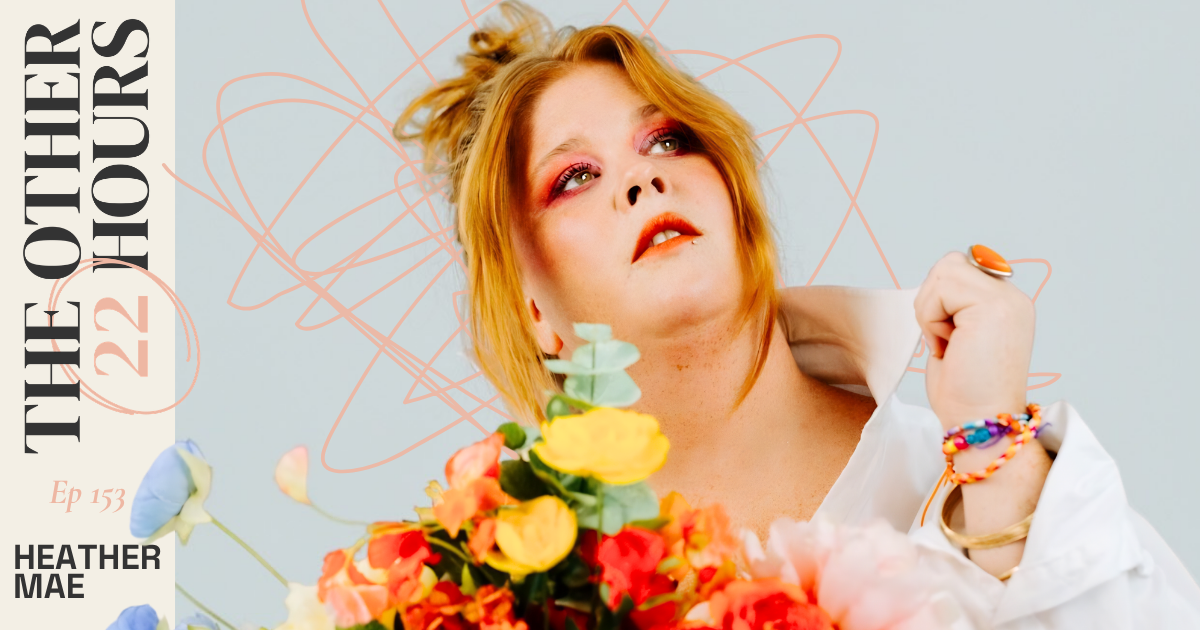
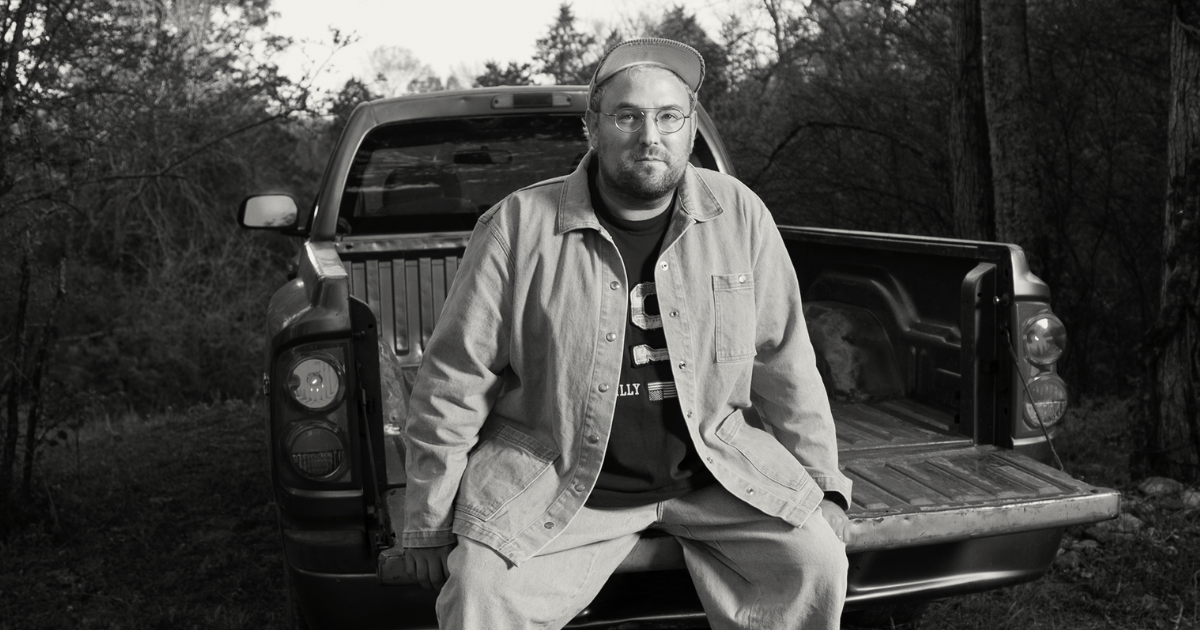
We often look at an artist’s career through the lens of industry accolades: the tours, the streaming numbers, the awards. But what happens when you intentionally dismantle your creative ego to build something focused entirely on collective liberation? Heather Mae is an award-winning independent artist, the founder of Singing Resistance Nashville, and a prominent voice in organized musical activism. Following a viral arrest at the Tennessee State Capitol while protesting anti-trans legislation, Heather sits down with The Other 22 Hours to discuss the profound impacts of communal singing, navigating trauma as a neurodivergent and queer creator, and how to balance radical empathy without completely burning out. It’s an expansive, deeply human conversation about moving past the modern traps of artistic productivity to discover what it truly means to be of service.
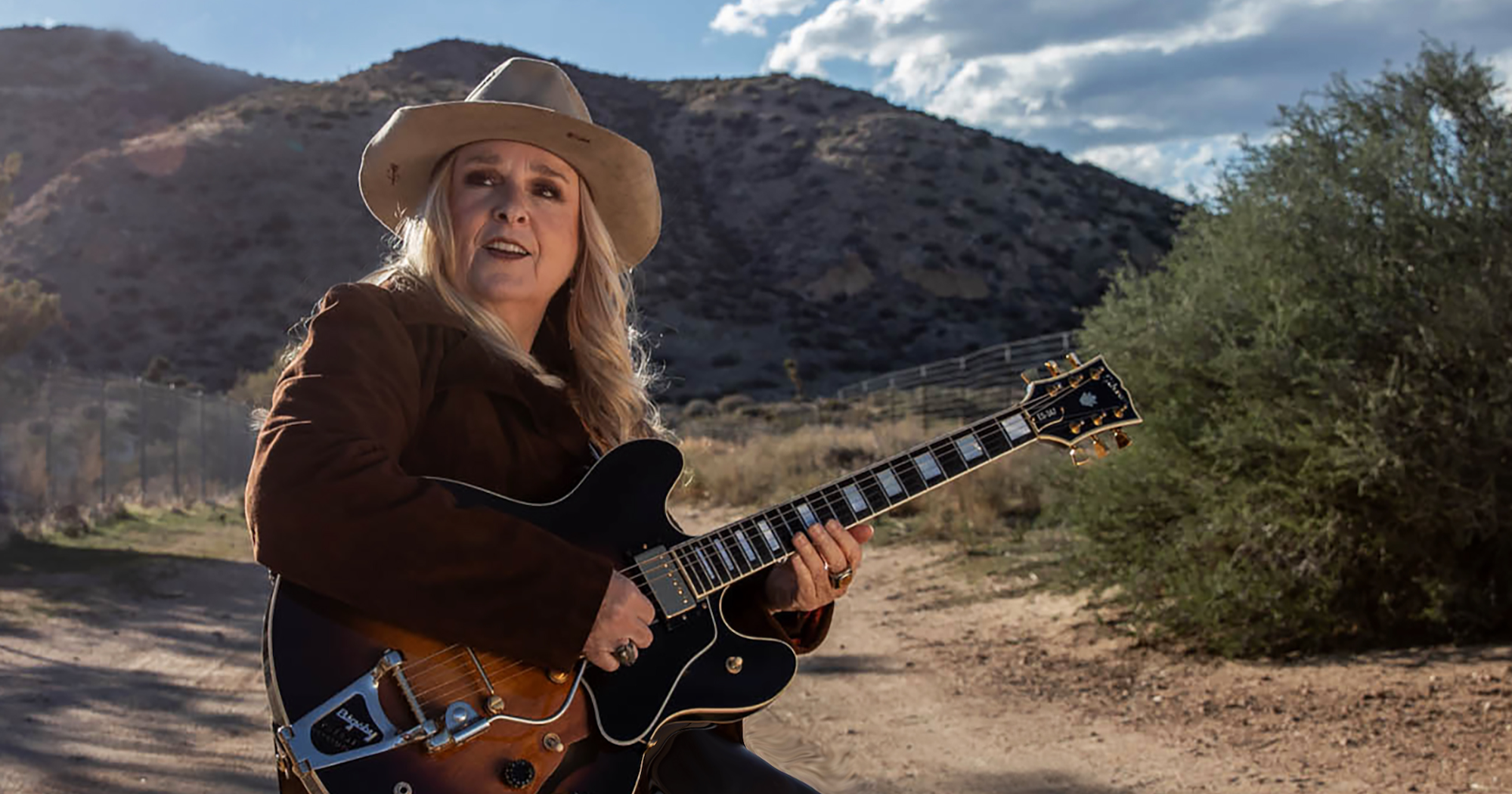
Few people have experienced the highs and lows of the music business to the degree that Melissa Etheridge has. Since releasing her self-titled debut in 1988, she has won two GRAMMYs (and been nominated for many others); been hailed as the second coming of Janis Joplin; won the Gibson Award for Best Female Rock Guitarist; become a mom several times over; been a social activist both for the LGBTQ+ community and for people addicted to opioids; written a memoir; and performed a one woman show on Broadway. Not bad for a kid from Leavenworth, Kansas.
That said, Etheridge has also suffered more than her share of setbacks. She has weathered a couple of high-profile divorces, battled breast cancer – who can forget her duet with Joss Stone at the 2005 GRAMMYs when she took the stage bald after undergoing chemotherapy – and, in 2020, lost her son Beckett to addiction.
The one constant throughout all these ups and downs has been her music, a brand of heartland rock that manages to be personal and universal at the same time. Etheridge is nearly as popular with blue-collar men as she is with lesbians, owing to her raspy vocals, formidable guitar chops, and unpretentious persona. And she’s racked up an impressive list of hits over the years including “Come To My Window,” “If I Wanted To,” “Ain’t It Heavy,” “Similar Features,” “I Want To Come Over,” “Bring Me Some Water,” and “I’m the Only One.”
2026 is shaping up to be a big year for Etheridge. She returned on March 27 with Rise, her first studio album in five years. On the eve of its release, she and her band kicked off a six-week tour in Detroit. And for the first time, Etheridge was nominated for induction into the Rock & Roll Hall of Fame this year.
Rise was recorded in Los Angeles with co-producer Shooter Jennings and includes 11 songs. While they’re diverse musically, the album as a whole feels like a complete statement. It’s a testimony to resilience, to sticking with life through all its ups and downs.
The title track and “Bein’ Alive” (which opens the disc) are both life-affirming rockers. “The Other Side of Blue” is a contemplative duet with Chris Stapleton. The playful “If You Ever Leave Me” puts an Americana spin on Mental As Anything’s ‘80s hit, “If You Leave Me (Can I Come Too).”
The shuffling, midtempo “Matches” was inspired by Johnny Cash’s 1970 concert at the U.S. penitentiary in Etheridge’s hometown. But the two final songs on Rise are also its most personal and poignant. “Call You” is a moving tribute to her son Beckett, while “More Love” was written for her daughter Bailey when she got engaged.
BGS recently had the pleasure of catching up with Melissa Etheridge for a Cover Story interview.
Let’s start with Rise. This is your first new album in five years, which is a significant amount of time. But you’ve been very busy in the last five years; I read your book and saw your show on Broadway. So it’s not like you’ve been sitting around! What do you get out of recording an album that you might not get from doing theater or writing a book?
Melissa Etheridge: Even though I haven’t had an album out in five years, the [last] album I put out, One Way Out, was a previous recording that I’d done seven years before that. So it’s really nine years since I’ve written. And I’ve lived so much of life – from loss to the pandemic to just growth. That’s the part about making a record. I knew that I could create a collection of songs that would make an album.
I love the art form of an album. You know, 45 minutes to be with the listener and take them through an emotional journey. That’s my favorite part; the real crafting of it was the writing. And it was about a year’s worth of pulling things together and then writing [in] December of ’24 and January and February. Then going in the studio [last] March. Going in, it’s so much fun with the road band that I have. It’s like putting on a favorite pair of jeans. Then getting Shooter Jennings to produce it! His studio, Sunset Sound, is so amazing. So it was a pleasure recording there.
It really does flow as an album, but it touches on a lot of different moods. Listening to it as one piece, I felt a sense of renewal and also resilience.
Yeah, that’s something I wanted to get across. There’s so much I experienced through the loss of my son five years ago. That’s about the most devastating thing you can go through. Having gone through that loss, [I] decided that I wasn’t going to drown myself in guilt and shame, I wasn’t going to die – that I was going to experience this, heal with my family, keep loving ourselves, knowing that everyone makes their own choices. I could not save him, he had to make the choices for that. And then making art from that – you know, loving yourself enough to be able to say, “God, I love being alive.”
Writing those songs – especially in this day and age when I find such negativity – if you start believing that, then that’s what you’re gonna see. So I wanted to put [out] positivity without being patronizing or [using] platitudes. You know, lifting people up. Going, “Yeah, you’re gonna fall sometimes. You’re gonna taste the dirt. You’re gonna rise.”
[“Rise”] came after the LA fires. That was something I went through with my family. We had to evacuate. It came right up to our neighborhood. I gotta tell you, LA firefighters are heroes. Every single one of ‘em. They were able to keep it from our neighborhood. But there was a moment, when we were watching the fire reports, where it was like, “Okay. There’s a good possibility that we might lose everything.” I was in a hotel with people who were losing everything. To experience that and then say, “They’re just things. We’ve got our health, our family, our pets.” You know, you’re gonna still rise. There are gonna be these things that knock you down, but man! You’re gonna be stronger and better for it. It’s hard to hear but it’s so true.
I was gonna ask you why “Rise” was the title track but you kind of just told me!
The second to last song on the album is “Call You,” which is really moving and I know you wrote about your son. I don’t have children, but two months ago I lost two of my best friends, one to suicide and one to early onset Alzheimer’s. So I’ve been struggling the last couple of months with a lot of existential stuff and wanting to call my friend Mark – and I can’t. So that song really resonated with me. I guess I wanted to share that with you.
Yeah. Life is full of loss. It really is. You’re not living if you don’t have some loss. And the older you get, the more you’re gonna see it. That’s when the existential stuff [comes in]. I am more than just my body, I am a separate soul here experiencing it. The greater part of me is that non-physical place that I’m connected to – that source that everyone is [connected to].
In “Call You,” I tried to simplify that. Because to me, the times when I miss him the most are the times when it’s like, “I wanna call you!” Even my father who died 30 years ago, you know? When I was nominated for the Rock Hall, I was like “Oh, I just wanna call my dad!”
[“Call You”] was actually the first song I wrote for the album. I knew I had to get that emotional experience down. I had to write that song first.
I also wanted to ask you about “Matches.” When I spoke to you last, you told me about Johnny Cash playing in Kansas when you were just a kid and how one of your thoughts was, “Prisons must be the place where you find entertainers.”
[Melissa laughs]
Tell me more about that and maybe your thoughts about The Man in Black.
Well, growing up in a small town, Leavenworth, we have no places for big artists. Kansas City is 45 minutes away. But our town, in the ‘60s, that just wasn’t a thing. All of a sudden, in 1969, he came to the prison. He came to our town! “Oh my god!” Someone who I’d only seen on his television show or [heard] on the radio and was such a cultural icon – he’s in the same space as me! That really kind of said to me, “Whoa. Maybe I could do that.” It felt close to me. [Cash] always made a big impression on me. I always loved his music, his individuality.
“Matches” was supposed to be a scratch pad song for me. I had just come from the I’m Not Broken [docuseries]. I did a concert in 2023 at the Kansas Women’s Penitentiary. So I was still sort of playing off of that and singing. Scratch songs for me are songs [where] I’m writing for fun and it starts the juices flowing. I kept writing these verses and I played a little bit for my wife, [Linda]. And she said, “You have to put that on! What do you mean that’s a scratch song?”
Can you tell me some wonderful things about Linda?
[Laughs] Yes, I can! That’s easy. For 12 years we’ve been married. We were together four years before that. And before that, we were best friends for 10 years! I married my best friend.
She is… everything I needed or wanted or dreamt about. The only way you really get someone like that in your life is to understand your needs and wants. And to have the love for yourself that you are looking for in other people. The minute I really got in contact with myself and understood what I wanted and loved, I was able to see the best kind of love for me. And she was it.
There’s just a constant partnership that is astounding – a love and desire that never goes away. And it’s because I’m not looking for her to fix me or make everything great. I’m looking for her to be by my side as we both make our choices and walk through this world together.
Tell me a little about “The Other Side of Blue” and what it was like duetting with Chris Stapleton.
Ah! Chris Stapleton is just a national treasure. His soul and his talent and his mind and his heart are so beautiful and so rare. He’s such a unique talent and an incredible man.
I really didn’t know him at all, I just was a big fan. And I didn’t really want to do a duet on this album. But I remember telling my manager, “If I ever did do a duet, I would love it to be with Chris Stapleton. Maybe ask him if he wants to write a song together.” So my manager sent out the request. He said yeah, and that made me so happy. I went down and we wrote the song.
We were writing in RCA Studio A in Nashville, which is where Chet Atkins [recorded]. A massive, huge, historic studio! I just walked in and, “Hello, hello.” We sat down and had guitars in hand. We were just talking and five minutes go by and he asked me about my kids. I said, “Well, I had four but I lost one.” He said, “Oh, I’m sorry.” And I said, “No, no. He was my greatest teacher.” He looked at me and he goes, “You talk in song.”
That was the first line: “Sometimes, I listen when she talks in song.” We were writing within 15 minutes of showing up. It just appeared – every line. It took us maybe an hour and a half to write that song.
You mentioned being nominated for the Rock Hall. Tell me how that feels after all this time.
Well, I was eligible for about 12 years. [Laughs] I was like, “Don’t think about it! It’s not a comment on your music.” I didn’t make my music so that I would be in the Rock & Roll Hall of Fame, that’s not what it’s about. It is lovely and feels really good to be recognized by your peers – by a group of people in the music business who say, “Your contribution to rock and roll has meant something.”
I’ve been on the voting body for exactly 10 years now. Obviously, certain things are subjective, but I thought this year there were a lot of good nominees. More diverse than last year’s group.
Yeah, I love Sade. I love Pink. Lauryn Hill I think is a good one. And then Iron Maiden, come on! It’s time, guys!
I always like to ask you about one older song. My favorite, which I’ve already asked you about, is “Ain’t It Heavy.” Is it okay to ask you about one of the really popular ones? I try not to ask the same things everyone asks. But I am curious about “Bring Me Some Water.”
Oh, that’s good! At least it wasn’t “Come To My Window.” No, “Bring Me Some Water” – that’s fun, that’s an older song.
I’d been playing women’s bars in Los Angeles for five years and a lot of record companies came and turned me down. But Chris Blackwell [finally] comes in and signs me right on the spot, for Island Records. Bam! I’d never made a record and I had no idea [what to do]. So my manager gets this producer, Jim Gaines, from San Francisco. This is 1986. It’s the middle of the ‘80s sound – that sort of Steve Miller, Journey [thing]. We made this record and I play it for Chris Blackwell and he hates it! Because it doesn’t sound like the girl he saw at the bar. It sounds overblown – lots and lots of keyboards and my voice way at the top. He hates it and I’m like, “Oh my God, he hates my album.”
I convinced him to give me four days to try it again in the studio. But in between the time that I finished the first album and went into record again – which became the debut – I wrote “Bring Me Some Water” about this relationship I had with a lovely woman named Kathleen. We lived together and we had this open relationship – which is just a mindfuck! [Laughs] I wouldn’t advise anyone to do that.
This is her being gone and me sitting at home in the middle of September, in Los Angeles. I’m living on Melrose and it’s hot. It’s so hot! So I sit down and I’m like, “Okay. I gotta get back to traditional blues stuff.” I’m just playing [the riff], it’s old Muddy Waters but it’s speeded up. I’m singing about, you know, the foul air. I’m just hot and uncomfortable and I’m mad. So, I wrote this song and Chris Blackwell loved it.
“I don’t know when I became an activist,” MORGXN admits. “I’m just a human being who sings from the heart, but my heart is very broken by the world that we are currently living in.”
The singer-songwriter lived in Los Angeles for 10 years before moving back home to Nashville in 2022. “The minute I came back to Nashville, I ran into a guy once. He was like, ‘I only see you at the Capitol singing,’” he recalls. “When I moved back, they were trying to ban drag queens. They were trying to ban women’s access to health care.”
Most recently, he took to the Tennessee State Capitol to protest bills against same-sex marriage. “This is how rights get tested: one state, one bill, one ‘exception,’ and suddenly the floor moves under all of us,” he wrote on Instagram.
“I don’t even think about it as activism. I think about it as humanity. We are more alike as human beings than the media, the news, and politicians would want you to believe,” he explains. “It breaks my heart. If you have listened to this album, there are songs about love and the human experience. The album is for anybody bold enough to live as who they are in the middle of the heartland.
“That is what I hope people get from this album. I hope they feel less alone in their activism… I wouldn’t even use the word activism. I hope they feel less alone in their humanity, period.”
On March 6, MORGXN released a deluxe edition of his album, HEARTLAND, and while it pulls from country music, he wouldn’t exactly label it as such. “I don’t care what genre you tell me it is. I care that I’m speaking something that is true to me, and that’s how I make music,” he says. “I don’t make music outside in.
“I make music inside out. I find what’s inside, and I try to bring it outside,” he continues. “And the heartland is a place that is normally not reserved for people like me and you. And yet, living in the heartland, I see that everyone belongs in the heartland. The heartland is a space for everybody, and I want to reclaim the heartland for everybody.”
Good Country hopped on a Zoom call with MORGXN a week before the album’s release and chatted about collaborations with Tenille Townes and Maggie Rose, the meaning of community, the political divide in country, and the hardest lessons he’s learned since coming out as gay at 19 years old.
What are some of your favorite lyrics on the album?
MORGXN: “GOD CODED” is maybe the most important song I’ve ever written, whether or not most people hear the song – it’s not a radio song. But it is probably the most important song I’ve ever ushered into being. I have no problem with god or religion. I have a huge problem when people use god and religion as a weapon of their hate.
“WILLOW” I wrote for my friend’s daughter who has cerebral palsy, so that she knows that she is a bright light. Already that song has inspired other people, which really means that she has inspired other people. It’s hard for me to choose… “MIGRATION” is about losing my dog. I don’t have a favorite lyric – it’s like choosing a child. [Laughs]
Okay, here’s my funniest favorite line, “EVERGREENS.” The first line: “Tell me your sign/ And I’ll tell you mine/ And I’ll tell you if we’ll be okay.” I think that’s funny, because if I’m dating somebody, I will be like, “What is your sign?” And I’m going to decide right away if we’re even going to be compatible, which is maybe absolutely chaotic, but I love it.
With the deluxe edition of HEARTLAND you have several collaborators, including Tenille Townes, Ruby Amanfu, and Maggie Rose. How did you choose who you wanted, and what did they bring to the table?
Collaboration is like water to me. You know, I have many liquids here on my table. I am a gay man, so I have tons of liquid everywhere around – iced coffee is always a yes. Collaboration is also like breathing to me. When I think about making music, “the bible” to me is Willie Nelson and “On the Road Again.” The life I love is making music with my friends, and I can’t wait to get on the road again. That is how I think about music.
When I moved to Nashville, there were voices that I saw popping up that were saying really important things, like [Tenille Townes’] “Jersey on the Wall.” They were saying messages that really resonated with me inside of a space that is still not reserved for people like me.
I came here in 2022, which was 11 years after this manager told me I would never make it in music as an openly gay person. In Nashville, there was a thing bubbling up, but it was like you were reserved for this sideshow experience. You can be gay, but only during June, only when there’s a tent for you to stand under. That’s not how I believe in love or life or humanity. I reached out to several people wanting to create. Truth be told, I have people in my DMs who are massive artists, who love what I’m doing, but who can’t align with who I am because it will hurt their fan base. That’s insane. That’s 2026 for you.
But artists like Tenille Townes, Maggie Rose, Ruby Amanfu, Katie Pruitt – who’s obviously a queer beacon – and Langhorne Slim, they were people who were brave enough to collaborate outside of what is the norm for them. I’m really honored that they’re helping me create this version of the heartland where everyone gets to live.
With Tenille, “HEAVEN KNOWS” was the first song we ever wrote together. It was actually the day we met. The song has this sort of inner child: Why do we even keep trying in a world that feels so hard? Why do you love when your heart has been broken so many times? Why do you keep making music when it feels like the music industry is as crazy as ever? And why do you keep being a good person in a world that is hell-bent on trying to make you feel like you are an abomination? I try because I care. I love so deeply, you know.
Having grown up in Nashville, what did community mean to you then, before you came out at 19?
The one thing I’ll say about being queer in America – maybe anywhere in the world – is you’re forced to create community, and sometimes family, when that is not a given for you. I was very lucky that my family was… more confused and scared than they were not accepting. But my husband’s journey with his community – he grew up evangelical and his community kicked him out. He was going to be a pastor, going to seminary, and once he came out, he was kicked out of the church. I didn’t have that experience … but family to me widened the moment I came out. The idea that family was not just the people you were born into, but it is the people and friends and lovers who you collect along the way that were missing for me as a kid. Growing up here, I had a hard time fitting in, because everything I did stood out.
I played the Bluebird [Cafe] last night with Molly Tuttle, Maggie Rose, Liz Longley, and Ketch [Secor] from Old Crow Medicine Show. I’m sitting there singing “MY REVIVAL” – and I’ll cry thinking about this, but it’s like I’m sitting there singing [that song]. My husband is over here and the whole room is singing along with me. I have painted nails, singing my song at the Bluebird with legends. I’m the co-chair of the diversity committee for the Recording Academy in the Nashville chapter. I don’t know if I’ve “made it,” because I don’t think making it is even like the goal here. I want a career and a life, not a moment in time. That’s “making it” to me. For the closeted gay boy who was scared to ever reveal who he truly is, that’s my revival. There’s retribution. There’s deep healing, and there’s tons of gratitude, as well.
The divide in country music right now between people who are willing to sacrifice a fan base and those who aren’t is always widening. It’s cool to see who has come forward to make their voices heard.
Country music is three chords and the truth. That’s still the bible, but it has lost its way. There is a real ricochet happening where people are afraid to be truthful, because truth can sear and truth can be very quiet but very powerful. Nashville is at a breaking point. It’s a small town. We are growing by leaps and bounds. There’s a real deciding line between: do we make this a city for everybody or do we make this a city for the select few? That’s the same for country music, folk, Americana, and gospel.
“HEARTLAND,” the song, definitely pulls on gospel, folk, Americana, and pop, for sure, but it also pulls on country because it’s a story. I thought I’d see my name in lights. I thought that my life would be this flashy thing. It’s not. I fell in love with a man, and we have a farm, and we’re building a life together. That’s love to me. It’s a story. It’s my story. It’s real. So, it’s country; it’s folk; it’s Americana; it’s gospel. Now, will any of those genres accept me? I have no idea.
But the people on my album have accepted me for who I am and love me for who I am. And that, I think, is what the heartland is all about. You know, love thy neighbor. What happened to that?
You turn 39 this year, which happens to be 20 years since you came out. Was there any significance in releasing HEARTLAND (Deluxe Version) this year?
It’s funny. Titles of an album are like mystery buckets. I actually have a title for my next album and I’m so excited about it. Prince once said that he’s like two albums ahead of whatever’s commercially released. And I love that for him. I’m one album ahead of what is commercially released. Album titles visit me like a fever dream. Even HEARTLAND – the song, I gotta call out Josh Dorr, the co-writer on that song, who had a number one with Blake Shelton this year with “Texas.” He’s a legitimate country songwriter. Not even legitimate country songwriters would take a session with somebody like me and it takes guts to do that.
I haven’t thought about how it’s 20 years since I came out, but it makes a lot of sense. I have a song called “home.” When people were like, “Where is home?” I would be like, “Well, anywhere but Nashville, Tennessee, because that place would never accept a person like me.” Now, to be making a life here, building a farm, hosting Pride on our farm, there is something beautiful in that. It may have taken 20 years, but I’m home. It’s beautiful. I hadn’t really thought about time like that.
When we wrote “HEARTLAND,” I wrote it on the piano that I grew up on. There’s always ghosts in the bones of old instruments, but it’s safe where my heart lands. It’s the heartland, but it’s also where my heart gets to land safely. That’s the kind of love and belonging I wish for everybody. I’m not somebody who believes that you have to be in a relationship to be happy, or that you have to be married to be happy. That’s bullshit. That’s heteronormative, capitalist nonsense. You can find belonging amongst community, friends, and lovers. Does your heart have a place to hang its hat? That’s home.
What have been the hardest lessons you’ve learned over two decades?
The thing that comes up in my head is: it’s not over ‘til the fat lady sings. I’ve been a fat lady so… [Laughs] It will fall apart, and that’s okay. The true story is what happens when you pick yourself back up and keep going.
I’m far less interested in talking to somebody who’s never moved across the country once. I can’t really relate to you. If you’ve never sold all your belongings and moved somewhere at least twice, we might not have a lot of similar things to relate to. It doesn’t have to be grand moves. My husband has lived in a bunch of places in Nashville, has not left Nashville, but he’s lived a lot of life. You have to have lost everything once, probably twice, and hopefully that’s it. But it’s really about how you pick yourself back up at the bottom, and keep trying again.
Whether you think it’s good or not, it won’t last, and that’s okay. There’s beauty and grace in that. I have a friend, Kristen Griffith[-VanderYacht], who’s a [floral designer] – I think he’s now in Detroit – and he’s gone through a lot. He was on the Drew Barrymore Show, and the guest host was asking, “How do you keep flowers alive for longer?” Kristen grabbed his hand and he was like, “Here’s the thing, lean in close, I want you to hear this: they’re not meant to last. They’re meant to be beautiful for the moment that they’re there, and you’re meant to appreciate them in all their glory, and then you’re meant to let it go.”
That is really hard. That is maybe [informing] some of the themes about my next album, actually. It’s loving and letting go. Life is not linear. It’s not meant to be. Cherish all of the beauty, because nothing lasts forever. And there’s a ton of freedom in that sentence.
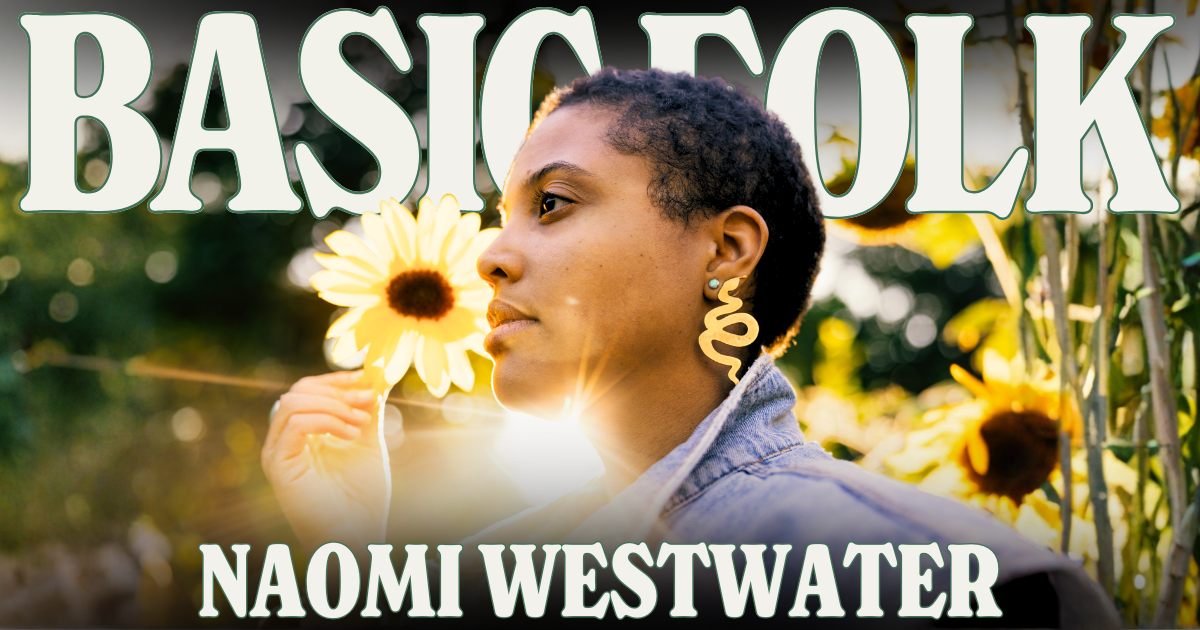
Something you might notice about Boston musician Naomi Westwater is that they have both sides of the brain on lock. They are very good at community organizing, grant applying, advocating, and other “left-brained” activities. However, they are also a creative, deeply spiritual, open-hearted person, traits typically associated with the right brain. That’s not always something that goes hand-in-hand, but it is a beautiful thing when it does!
Westwater, who identifies as queer and Black-multiracial, grew up on Cape Cod in Massachusetts, where they never felt like they fit in. Thanks to their parents, there was a lot of music being played: reggae, jazz, funk, classic rock and ’70s feminist folk. There was always a deep connection with nature, which plays into their spiritual practice and their songwriting, two areas they previously kept separate.
On their album, Cycle & Change (released May 9, 2025), Naomi made an effort to fully embrace her identity as a songwriter and a witch. She shares, “Each song ties back to its seasonal context, weaving a story that spans spring’s hopeful beginnings, summer’s vibrancy, autumn’s introspection, and winter’s quietude…” Right in the final stretch of preparing to release the album, all these very hard things happened: the sudden loss of Naomi’s father; they went through a divorce; and they relocated. It was as if, with the album, they had created the blueprint for remaining grounded during these challenging life changes. We get into all of this on Basic Folk, as well as navigating self-advocacy while struggling to get their endometriosis and adenomyosis diagnosed and treated and the impact their father’s death had on their creativity.
Your weekly dose of new music is here! You Gotta Hear This.
We’ve got a couple of brand new music videos, leading off with Big Richard absolutely smashing a David Olney song, “Millionaire.” To say the track is apropos for this moment in time would be a laughable understatement. The string band/bluegrass supergroup give it their signature impassioned treatment, with energy, conviction, and musicality. Their new music video for the just-released single was shot in and around Salt Lake City. Plus, Boston-based alt-folk duo Sweet Petunia bring us a new music video, as well. Their new, stark indie folk track “Grub” is set to a delightful animated, stop-motion, hand-drawn music video. The song explores identity, embodiment, beauty, and pain, and holds space for solidarity for trans and gender-nonconforming folks.
You’ll also find a music video for Michael Haney’s new cover of a Bruce Springsteen song, “Brilliant Disguise,” rich in Americana rock ‘n’ roll. Haney knew he wanted to record the number because of how it “speaks directly to the heart of the human condition.” Singer-songwriter Kirby Lyle picks up the same mantle on the title track for his brand new EP, Change Is Hard. It’s also a song of solidarity and community, because who is going to save us if we don’t save us? But we are going to save us.
It’s a lovely collection of tracks this week highlighting community, togetherness, and how roots music is built upon both. We hope you enjoy, cause we think You Gotta Hear This!
Big Richard, “Millionaire”
Artist:Big Richard Hometown: Denver, Colorado Song: “Millionaire” Album:Pet Release Date: January 13, 2026 (single); February 6, 2026 (album) Label: Signature Sounds
In Their Words: “‘Millionaire’ is a song about the greed and corruption of the rich written by David Olney, originally released in 1991. It is still wildly topical nearly 35 years later, although it might be time to change ‘millionaire’ to ‘billionaire’ at this point.
“We added this song to our setlist just after the inauguration last year and it has become one of the most emotionally charged moments in our sets. For us, this song is a unifying message, because regardless of which side of the line you voted on, we are all on the same side in the great class war. All of us are at the mercy of a very few, who only have their own best interests in mind, and who would never dismantle the systems that hold them in their places of power. It’s up to us to join with our neighbors and tear it down, from the joke that is the insurance industry to the politicians that are openly bought and controlled by corporations.
“We filmed the music video in Salt Lake City, where local fans will recognize many of the landmarks, which include the state capitol building, the offices of the LDS (who currently own more real estate than any other entity in the world), and the fuel refineries that choke the air of that beautiful city.
“We sing this old song with a lot of hope in dark days like these. Our species is brilliant, and more than capable of solving the problems that we have, if we would put the money in the right pockets and put limits on the folks that choose to hoard it.” – Dr. Joy Adams
Video Credit: Wonderstone Films
Michael Haney, “Brilliant Disguise”
Artist:Michael Haney Hometown: Originally from Columbia, South Carolina; now living in Nashville, Tennessee Song: “Brilliant Disguise” Release Date: January 23, 2026 Label: Rock Ridge Music
In Their Words: “I chose to record ‘Brilliant Disguise’ by Bruce Springsteen as an up-tempo rock version, because I’ve always been drawn to the tension and truth in that song. It’s one of his most well-known pieces from a transitional period in his life, and I think it speaks directly to the heart of the human condition — that universal experience of hiding parts of ourselves, even from those we love most. The more you sit with it, the more you realize the song captures something even deeper: how often we don’t truly know who we are in the first place. We walk through life trying to piece together our identities, yet we still build masks on top of that uncertainty — sometimes to protect ourselves, sometimes because we’re afraid of being seen, and sometimes for reasons we don’t fully understand.
“I liked the idea of doing late-’80s Springsteen as if mid-to-late-’70s Springsteen had taken it on, with that raw, energetic edge that defined his early sound. Reimagining it that way let me lean into the emotional conflict at the center of the song — the push and pull between authenticity and self-deception — while giving it the kind of drive that felt truer to my own voice. It’s not a song that’s been covered often, which made it feel like the perfect addition to my catalog: both as a tribute to his songwriting and as a reflection of where I am personally right now, navigating my own questions about identity, honesty, and the parts of ourselves we choose — or struggle — to reveal.” – Michael Haney
Track Credits: Michael Haney – Vocals Ben Jackson – Drums, percussion, keys, Hammond B3 organ Luis Espaillat – Bass Brian Fechino – Acoustic guitar, electric guitar Brad Sample – Electric guitar Kaleb Thomas Jones – BGVs
Kirby Lyle, “Change Is Hard”
Artist:Kirby Lyle Hometown: Nashville, Tennessee Song: “Change Is Hard” Album:Change Is Hard (EP) Release Date: January 16, 2026
In Their Words: “‘Who’s gonna save us if we don’t save us?’ That’s the line. We are. Us. You and me. Right here in the moment. Every time I play ‘Change Is Hard,’ my soul activates! I’m so full of gratitude that the heart has an infinite capacity when it’s shared, because I can’t express this feeling alone. The music commands a full choir and joyful ruckus of players to lift it up to megaphone level. When the audience engages, our positive energy is ubiquitous! The hope is simple: inspiration toward progress – personal and societal. It’s on us. Be moved. Get better. Make each other better. Together.” – Kirby Lyle
Track Credits: Kirby Lyle – Lead vocals, guitar, auxiliary percussion, songwriter, background vocals Kyle Tuttle – Banjo Keyboard – Jacob Merlin Erika Nalow – Saxophones Jordan Perlson – Drums Background Vocalists: Maya de Vitry, Kyle Tuttle, Ethan Jodziewicz, Anthony Saddic, Brenna, Dana Baker, Emory Major, Noelle McFarland, Rachel Isabella, Sean Donovan, Kimberly Albertson, Laura Stack
In Their Words: “‘Grub’ is a song about my experience of being trans and the beauty and the pain that come with it. The song came to me almost completely at once. Most of the first verse came out in one fell swoop as you hear it today, but the second verse was inspired by a video of beautiful baby birds crowded into a small nest. I was so jealous of how close and happy they looked — a perfect opposite to reflect the isolation and sense of otherness that I explore in the first half of the song. Maddy and I then spent two hours just playing it over and over and over again until we finally found the perfect duet of banjo and vocals to support the song.
“I feel so lucky to have been able to share this song with so many other trans people through years of performing it live and hear how they connect to it within the context of their own experiences. It feels particularly special to be putting ‘Grub’ out in a time where our rights and lives as trans people are being put in harm’s way in a much more visible way than in the past few years.” – Mairead Guy
Video Credit: Riley Halliday
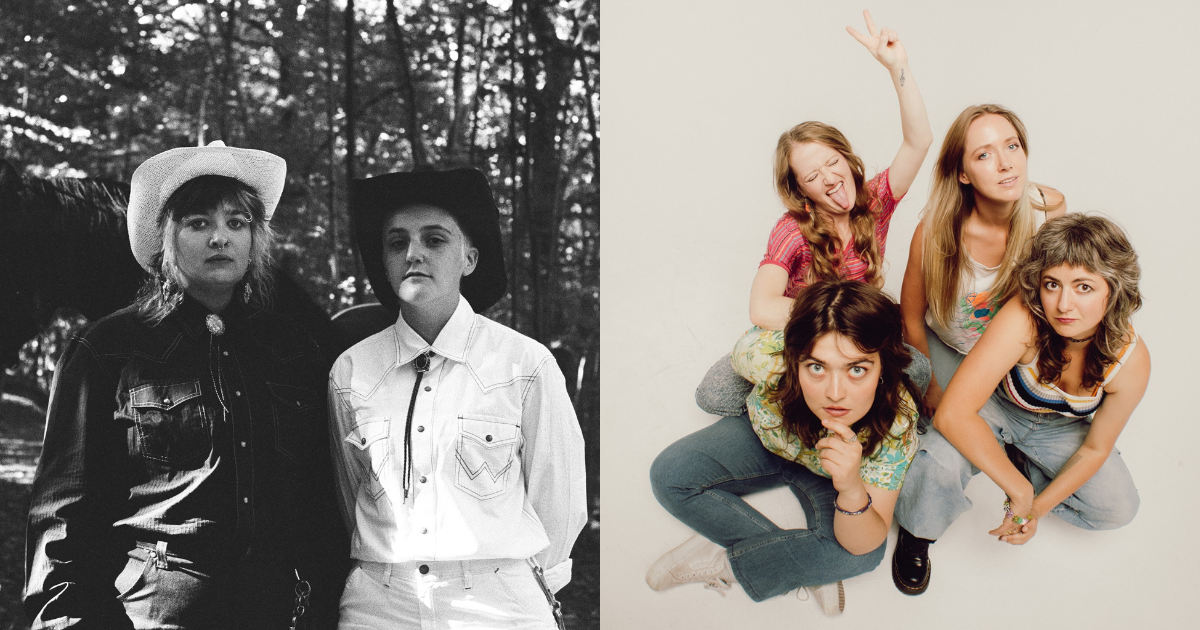
Photo Credit: Sweet Petunia by JJ Gonson; Big Richard by Rett Rogers.
During the 1992 CMA Awards, Kathy Mattea had a decision to make. The singer-songwriter and 1989 and 1990 CMA Female Vocalist of the Year had opted to wear four red AIDS awareness ribbons, which had become prominent at award shows such as the Tonys, the GRAMMYs, and the Oscars. In ‘92, the Country Music Association decided to hand out green ribbons to promote environmental protection. According to a Billboard article, reports of the CMA’s decision sparked controversy and the organization reacted by offering to distribute red ribbons to artists backstage.
But there was no plan to publicly address the disease on the broadcast. After a local columnist wrote that country fans may not know what the red ribbons symbolize, calling for Mattea to publicly speak out on AIDS – which had become the number one cause of death for all Americans ages 25 to 44 – Mattea realized simply wearing the ribbon was not enough.
“We went to the CMA and said, look, we’ve been called out and I don’t wanna grandstand and I don’t want to go against you guys, but can you help me?” Mattea says. “We basically got no response. So the night of the show I had to decide what I was going to do. I didn’t want to be sanctimonious… How do you stand up in a moment when you feel called to do something bigger? I just went backstage during the commercial before and searched my heart.”
When Mattea took the stage to present, she spoke the names of three of her friends who had died from AIDS. One of those names belonged to her dear friend Michael, who had died without ever telling Mattea he had the disease.
“The problem was he couldn’t tell me,” she says. “You didn’t know who you could talk to and who you couldn’t back then. It’s hard to fathom now, but that’s the way it was.
“Something in me just kind snapped and I thought, I’d like to do something to help. I had a long talk with my manager and I was like, these people in New York who are working on this, they don’t even know that I’m down here in Nashville and we’re dealing with it, too.”
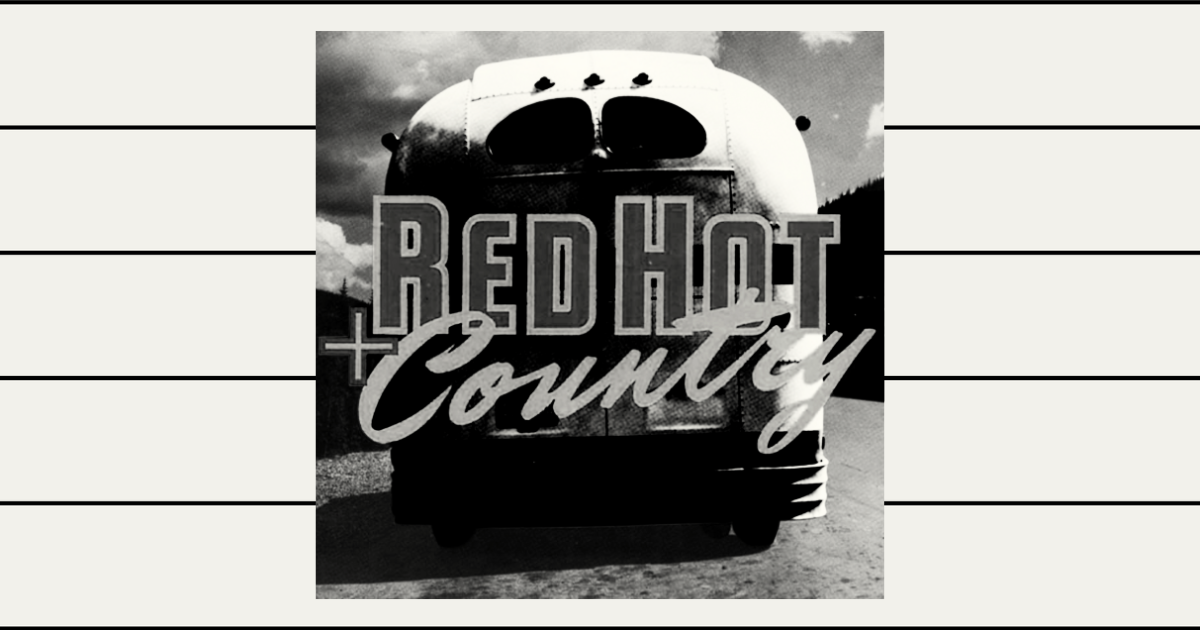
Mattea got in touch with the Red Hot organization, which was founded by Leigh Blake and John Carlin in 1989 to raise awareness and financial support around the AIDS epidemic. Carlin, who got his start in the New York art world, where he curated shows at the Whitney Museum of American Art and befriended artists such as Keith Haring and David Wojnarowicz, had already experienced immense loss among his friend group.
“Being in New York in the 1980s was at the start this kind of paradise liberation. There was all this creativity. If you think of the late ‘70s and early ‘80s in New York, it’s when hip-hop, punk art, music, the East Village arts scene, graffiti, all these things were really being born culturally,” Carlin says.
“Then by the mid ‘80s, the specter of HIV and AIDS turned what felt like a paradise into an inferno. All of a sudden people that you would see at parties or at openings – you’d go, ‘Where’s Nicholas?’ and people get that kind of quiet look and say, ‘Oh, he’s sick. He’s in St. Vincent’s.’”
Carlin, who had since left his job as an art curator to work as an entertainment lawyer, began working on Red Hot’s first project, 1990’s Red Hot + Blue, a compilation album featuring pop and rock artists such as Sinead O’Connor, Debbie Harry, Iggy Pop, U2, David Byrne, and more covering the songs of Cole Porter. The album was a smash hit, raising money for AIDS organizations, including ACT UP, a grassroots protest movement which successfully pushed the government and pharmaceutical companies to release drugs that now allow people to live with HIV.
Despite its success, Carlin had no initial plans to release more Red Hot compilations. He left the law firm where he was employed after the partners gave him an ultimatum. (“My reward for [organizing the project] was basically the partners of the law firm said, ‘stop doing that or leave,’” Carlin says.) Then he received a phone call that would change everything.
“I got a call from George Michael’s manager saying George was a big Red Hot fan. He wants to contribute a song to your next album,” Carlin says. “At the time, we didn’t have a next album. But, in 1991, if George Michael says he wants to give you a track, we were like, ‘Well, we better get an album together.’”
In 1992, the organization released Red Hot + Dance, featuring Michael, Madonna, Sly & the Family Stone, Lisa Stansfield, and more. The album cover featured artwork by Keith Haring. No Alternative, featuring Nirvana, Soul Asylum, Pavement, Patti Smith, and more, followed – and even spawned an MTV special with live performances. AIDS awareness was becoming a key issue among the MTV generation, but the country music industry was still mostly silent.
“I don’t think the seriousness of the problem has hit home yet with the country audience,” Mark Chesnutt, who co-chaired the Country Music AIDS Awareness Campaign alongside Mary Chapin Carpenter, told Billboard in 1992. “Most of the people who speak about AIDS and participate in the awareness programs have been in the pop business, movie stars and rock stars.”
Starting the Conversation
If Nashville’s music industry was slower to respond to the AIDS epidemic, it certainly wasn’t because the community hadn’t been impacted.
“If people found out you were HIV positive, there were landlords who threw people out on the street,” Mattea says. “There were medical facilities that would not take them in. I had a friend who worked on my crew for a while who was legendary in Nashville for taking people in during the AIDS crisis. If you had nowhere to go, you went to his house and he had an army of volunteers. There were lots of stories like that. But there was also a lot of rejection and a lot of stigma.”
After Mattea’s statement at the 1992 CMA Awards, she was quietly approached by people who had been impacted by AIDS. At an event the morning after the award show, Mattea was approached by a man named Bubba who worked at a large radio station in the Deep South who had lost his high school best friend to AIDS. Later, a man who worked for The Nashville Network’s hit talk show Nashville Now told Mattea his son was diagnosed with HIV. Another, a Nashville radio DJ, told Mattea that he had AIDS, but didn’t feel comfortable telling anyone else in his workplace.
“There were all these people in our community who couldn’t talk to each other about it,” Mattea says. “That’s what I was wanting – some compassion and support and for people to be able to speak up about what they were struggling with and hear each other.”
In 1992, Nashville mayor Phil Bredesen and Jo Walker-Meador, former executive director of the CMA, co-chaired the city’s first AIDS Walk. Mattea and Chesnutt performed at the event. With Red Hot + Country, Mattea set out to help expand country music’s AIDS outreach beyond Music City, leaving nerve-wracked answering machine messages for anyone she thought might be interested in taking part in the project.
“Kathy was very brave. I think it’s almost like a heroic gesture for her to take a stand at that moment,” John Carlin says. “Let’s just say [there was] a lot of homophobia in the South and country music in general, and AIDS-phobia. It was not a topic people wanted to talk about. It was really difficult. I think she made it her business so that people couldn’t ignore it.”
Hunter Kelly, a country journalist who hosted Apple Music Country’s Proud Radio from 2020 to 2024, says, as a gay kid growing up in Alabama, artists who championed LGBTQ+ causes felt like a safe place. He remembers Mattea’s speech at the 1992 CMA Awards and attending Reba McEntire’s 1996 tour and seeing her bring a replica of the famous AIDS Memorial Quilt, an ongoing community project to honor the lives lost to HIV/ AIDS.
“I definitely knew on some level I was gay, but I was also in a Southern Baptist church, so I was drawn to those things,” Kelly says. “I was drawn to that mainstream representation that was more open to queer people.”
“Teach Your Children Well”
Carlin says the original idea for the Red Hot + Country album was to have country artists cover John Lennon songs. He even met with Yoko Ono, who granted the organization permission to use Lennon’s songs for the project. But when that idea didn’t come to fruition, the theme shifted to the Laurel Canyon folk-rock scene of the ‘60s and ‘70s and the songs of Jackson Browne, James Taylor, and Bob Dylan. The album would be produced by Randy Scruggs, a GRAMMY-winning musician and songwriter whose own father, Earl Scruggs, had played a significant role in the cross-generational Nitty Gritty Dirt Band album Will the Circle Be Unbroken two decades earlier.
“Randy kind of wanted to recreate that spirit of bringing generations together and, obviously, because of his dad, he had access on a level that I never could get,” Carlin says.
Alongside renditions of Crosby, Stills, Nash & Young’s “Teach Your Children Well” and Jackson Browne’s “Rock Me on the Water,” the album featured covers of country classics, such as the Carter Family’s “Keep On the Sunny Side” that had inspired California folkies of the ‘60s.
The album also features the first recording by the band Wilco, which was formed by Jeff Tweedy in 1994 after the breakup of his former band, Uncle Tupelo. The group teamed up with singer-songwriter Syd Straw to perform “The T.B. is Whipping Me,” an Ernest Tubb song inspired by his hero Jimmie Rodgers, who died of tuberculosis in 1933.
Carlin says he wanted to highlight that Rodgers, known as the father of country, had also died from a disease that weakened the immune system.
“What is the difference between tuberculosis and HIV? Really nothing other than homophobia,” Carlin says. “It’s a disease; it doesn’t choose people.”
Other standouts include Nanci Griffith and Jimmy Webb’s “If These Old Walls Could Speak,” Patty Loveless’ “When I Reach the Place I’m Going,” and Marty Stuart and Jerry & Tammy Sullivan’s cover of the traditional gospel tune, “Up Above My Head/ Blind Bartimus.”
Perhaps the most stirring song on the album is Mary Chapin Carpenter’s “Willie Short,” which was written by Carpenter’s producer and guitarist John Jennings after seeing a Newsweek feature called “The Faces of AIDS.” There, he spotted the photo of a Houston dishwasher named Willie Short.
“I was looking at the pictures, and under the picture of Willie Short, there was a very affecting caption and it just got to me: ‘Don’t forget me. From time to time, mention my name’,” Jennings told The Washington Post in 1994.
Red Hot also produced a Red Hot + Country television special, which aired on CMT. The program featured Mattea, Griffith, Earl Scruggs, Carl Perkins, Waylon Jennings, Vassar Clements, and more performing at the Ryman as well as interviews with rural and Southern folks impacted by the AIDS epidemic.
“Three Chords and the Truth”
In many ways, the early ‘90s seemed to usher in a new era in country, where queer issues were concerned. Kelly points to Garth Brooks’ song “We Shall Be Free,” which includes the line “when we’re free to love anyone we choose.”
“You also had Bill Clinton, who was a Southerner, but also a Democrat, in office,” Kelly says. “Culturally, in ‘94, there was a lot going on that dovetailed – I really see the Red Hot + Country album as country music being a part of the mainstream at that time.”
None of that translated to radio play, however. Despite the Red Hot + Country’s wealth of talent, Carlin says the album was “dead on arrival,” a huge contrast to the compilation album Common Thread: The Songs of the Eagles which was released the year prior and was certified Platinum three times by the RIAA. Red Hot + Country peaked at No. 30 on the U.S. Billboard Top Country Albums chart.
“Sadly, it was pretty clear it was homophobia in country radio,” Carlin says. “At that time, if you didn’t get played on radio, you couldn’t get arrested.”
Though Red Hot + Country didn’t gain the listenership of previous Red Hot releases, Carlin and Mattea both remain extremely proud of the project.
“It’s a beautiful cross section of musicians and music. Many of these people I know and love, and I feel proud of my community for stepping in and stepping up and doing something to try to contribute in this situation that just felt so impossible back then,” Mattea says. “I’m more of a ‘fraidy cat than it might appear, and I’m happy with my younger self that I could listen to my heart and step in.”
In the years since Red Hot + Country, LGBTQ+ representation in country music has grown tremendously. Queer artists such as Chely Wright, Brandi Carlile, Brandy Clark, Orville Peck, T.J. Osborne, and the Kentucky Gentlemen have opened doors within the genre. But Kelly says when he launched Proud Radio in 2020, he faced many of the same roadblocks Red Hot + Country faced 25 years earlier.
“There were artists whose publicists would be like ‘We don’t want to make [being gay] the main focus or we don’t want to belabor it,” Kelly says. “With the anti-DEI [diversity, equity and inclusion] thing [from the] Trump administration coming in, we might as well be in 1994, as far as the mainstream country space.”
Kelly champions LGBTQ+ country artists Adam Mac and Chris Housman’s recently released “The Outside” as an anthem for queer country artists who’ve never felt embraced by the industry.
“I keep going and keep hoping for progress, but it’s disheartening,” Kelly says. “But also I look to artists like Chris and Adam who keep making great music and purposefully [making music] in the mainstream.”
Earlier this year, singer-songwriter David Michael Hawkins, an openly gay and openly HIV-positive country artist, released his song “Sin,” which addresses the stigma around HIV.
“When I started to look back on the emotion surrounding primarily the stigma attached to the diagnosis, that’s where the emotional well ran really deep,” Hawkins says. “Stigma is rampant in a lot of LGBTQIA identities. For me, the HIV diagnosis was a big part of it, which was also surrounded by poverty, which was surrounded by substance abuse. They were all in this weird cycle of feeding each other. The healthier I got physically, mentally, and emotionally, the more I was able to put words to that deep well of emotion.”
Hawkins says he wants to expand the conversation around HIV/AIDS by helping more artists feel comfortable with sharing their personal connection to the disease.
“Sin is not the first country song written about HIV. There are probably hundreds or thousands, but up until very recently and maybe up until my song, there’s no one that’s been transparent about that being the root of why the song was written,” Hawkins says.
“I think if the industry is doing our job, which is to offer a safe space for artists to come up with inspiration from anyone or anything, then the artists should feel comfortable saying, ‘Yes, this is about HIV, or this is about drug use, or this is about domestic violence,’ and however closely it’s attached to them as an individual. I think we could probably do a little bit better about letting artists know that no matter the subject matter or the inspiration, if it’s a good song and if it helps people – if it’s three chords and the truth – then we’ve done our job as country musicians.”
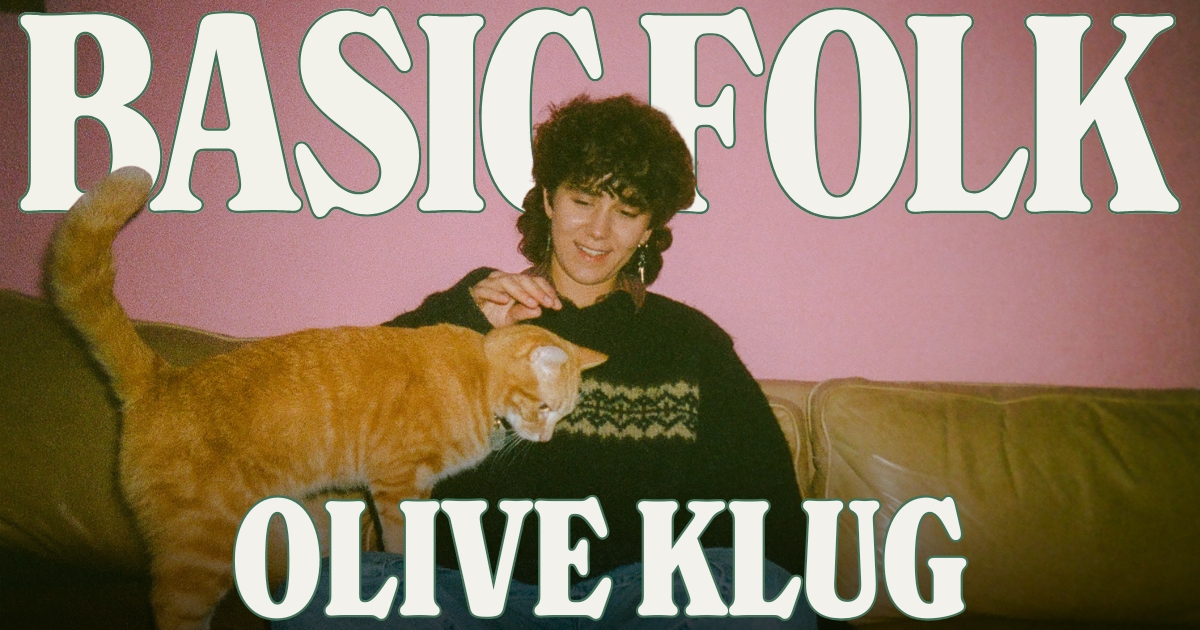
Olive Klug and I recorded this interview in my closet while they were in Portland, Maine, to play a show. Along with their band Cori, Haley, and Payton they stayed with us and it was a real pleasure to be around them for a few days. You can tell that Olive is at their best around their band and it is a true collaboration on stage. Shoutout to the whole crew for leaving such a remarkable impression on me and my wife and for assembling some baby furniture while they were staying at our house.
In our conversation for Basic Folk, Olive takes us on a journey through their musical upbringing, exploring their childhood influences, including their father’s eclectic taste in ’60s and ’70s rock and folk. Olive discusses their love for Joni Mitchell and Taylor Swift, which inspired them to learn guitar and develop their own musical tastes. They provide insights into their early internet presence on platforms like YouTube and Tumblr, and how these shaped their creative expression and online identity.
Olive also touches on their experience of transitioning to a music career, going viral on TikTok, and the emotional and practical challenges that come with it. Additionally, they delve into how their psychology background and neurodiversity inform their songwriting, live performances, and day-to-day life. Our conversation wraps up with thoughts on the productive chaos of touring, the importance of community in the folk world, and their aspirations for long-term, sustainable growth in the music industry. Everyone belongs at the Olive Klug show. They leave their glow wherever their travels take them.
@oliveklugThe gay cowboys keep leaving nashvillea title=”♬ original sound – Olive Klug” href=”https://www.tiktok.com/music/original-sound-7519310944065817375?refer=embed” target=”_blank” rel=”noopener”>♬ original sound – Olive Klug
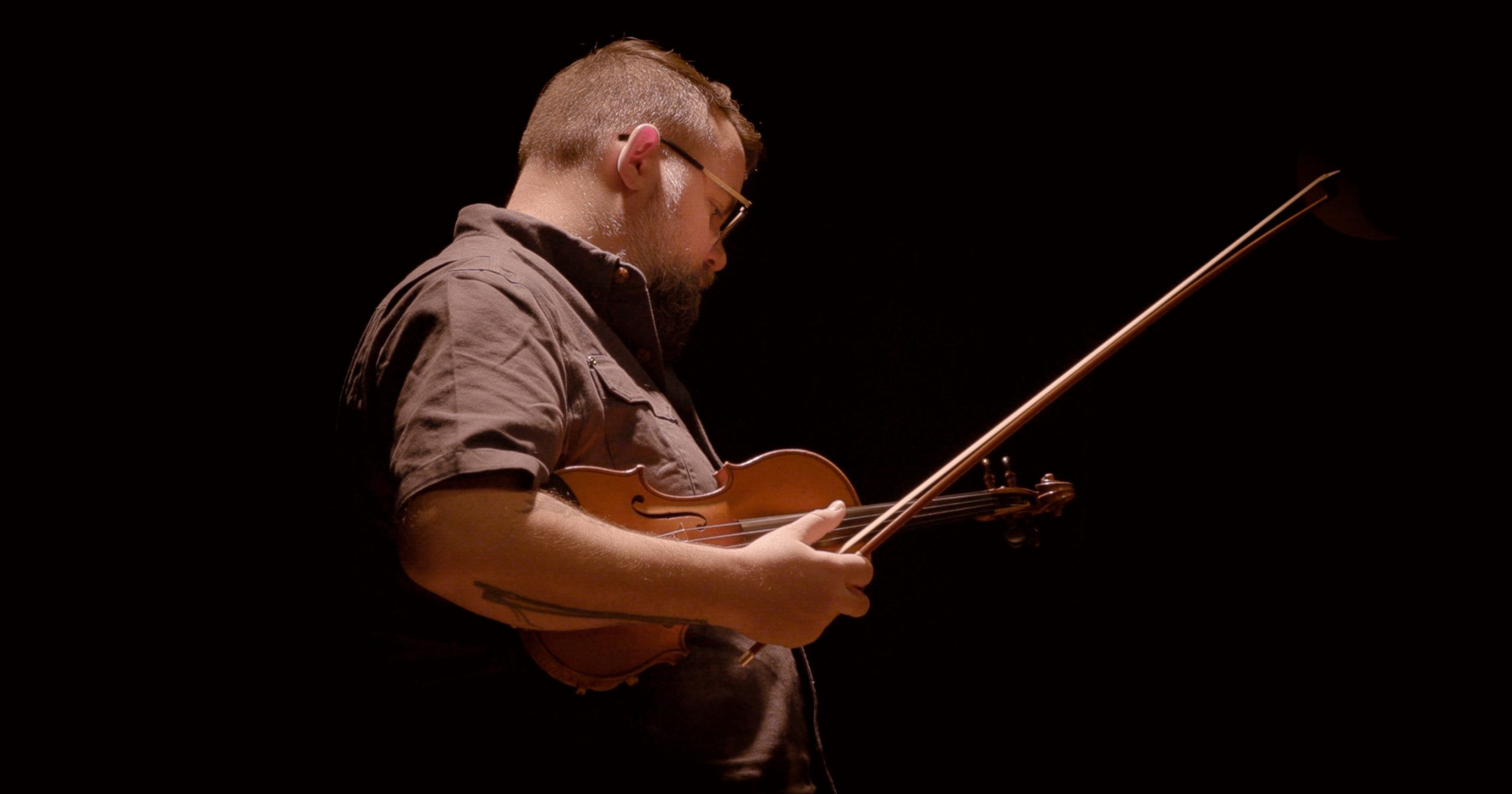
Bluegrass and country fans may recognize Kentucky-born, San Francisco-based fiddler Brandon Godman from touring, recording, and performing with folks like Dale Ann Bradley, Laurie Lewis, Jon Pardi, the Band Perry, the Music City Doughboys, and many more. He’s also an accomplished business owner and luthier, helming two fiddle repair and retail shops based in Nashville (The Violin Shop) and the Bay Area (The Fiddle Mercantile.) In addition, Godman helped found Bluegrass Pride and was instrumental in organizing the non-profit association’s float and marching contingent that won the coveted “Best Overall” ribbon from the 2017 SF Pride Parade.
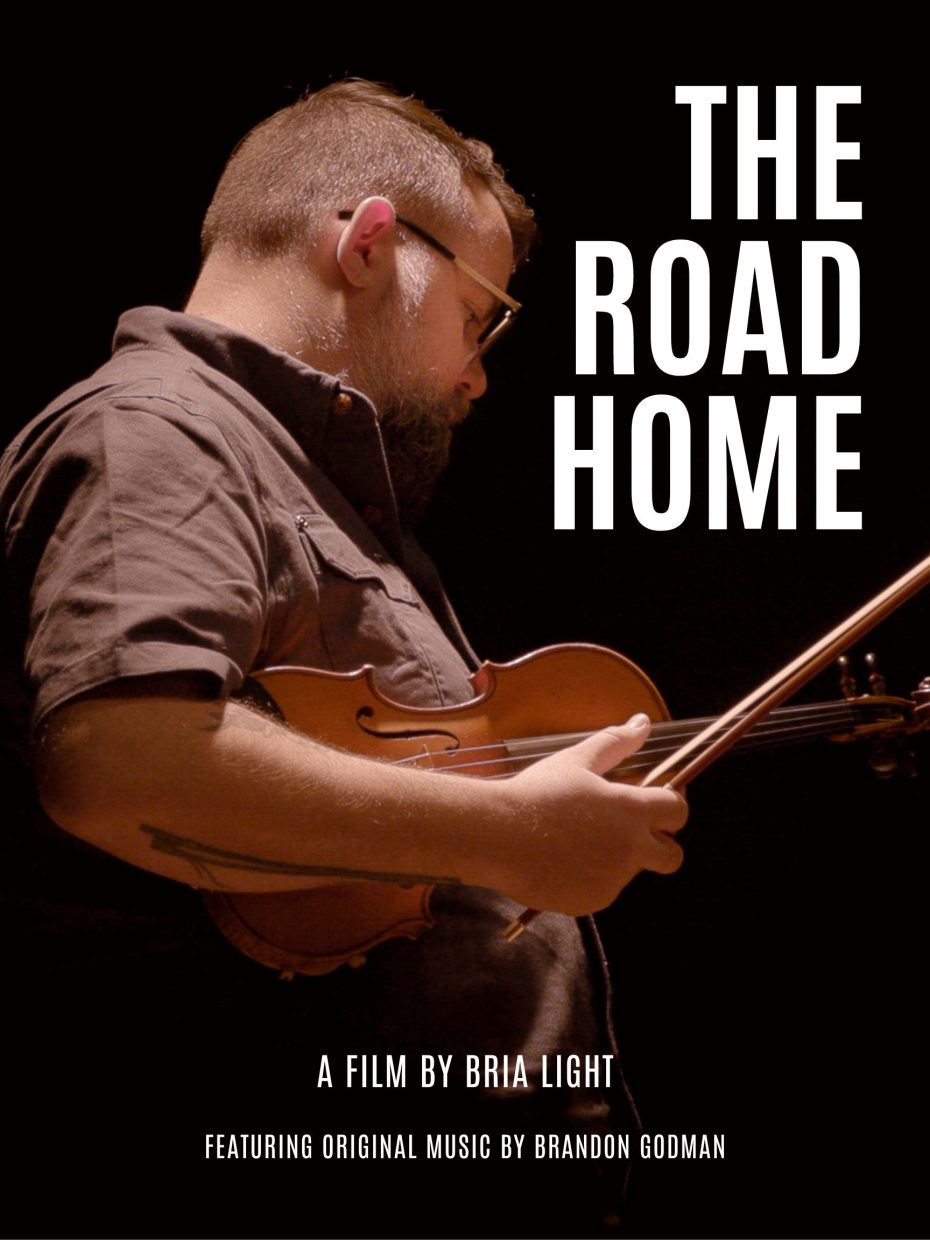
Godman has played fiddle his entire life, beginning on the instrument as a young child in Northern Kentucky. His skills span old-time, bluegrass, western swing, country, contest fiddle, and beyond, and his career, by necessity often, has been remarkably varied, boasting stories of success, trials, tribulations, and highs and lows beyond his years. Now, filmmaker Bria Light has crafted a remarkable, heartfelt, and stunning documentary short all about Godman and his journey on and with the fiddle.
Shot and crafted in 2022 and 2023 as Light’s thesis film at UC Berkeley’s Graduate School of Journalism, The Road Home is an intimate and gorgeous look at Godman and his relationship with his instrument, his career path, and his rural home in Kentucky. The film includes lovely original music – much drawn from Godman’s acclaimed 2024 solo album, I Heard the Morgan Bell – that offers many varied samples of his expansive skillset on fiddle throughout, a perfect score and soundtrack for the 20 minute-plus documentary. Together, Light and Godman travel from California to Kentucky, visit with Godman’s family, share old memories and stories, and examine the complications and intricacies of family and community, the transient, intangible nature of “home,” and the pains and reliefs of leaving and returning.
Now, for the first time, The Road Home is available to screen online, right here on BGS and on YouTube. (Watch below.)
Light has a deft and artful touch as a filmmaker and director, utilizing the fiddle and Godman’s original compositions as an enormous character in these narratives, propelling the story forward and entrancing viewers with the sights, sounds, textures, and mythos of Northern Kentucky – as could only be delivered by a musician and creative like Godman. The end result is moving and illuminating, subverting expectations of the region, the instrument, the genres we associate with the fiddle, and the communities we expect – or don’t expect – to love these traditions and the people who keep them alive.
We spoke to Light via email about the film, its conception and making, and the twists and turns along the way that led Light and Godman to this stellar piece of visual, aural, and narrative storytelling.
Let’s begin by going back to the beginning. Can you tell us a bit of the story of how this film project came to be? What inspired you and how did you get connected with Brandon?
Bria Light: I made this film for my thesis film in the documentary film program at UC Berkeley’s Graduate School of Journalism and when it came time to look for a story that I would be spending all year working on, I knew I wanted a story that was music-related. But I also wanted to find a story that revealed something deeper about how music can help us find our way through the sometimes fraught path of being human. I eventually got connected with Brandon, who agreed to let me into his life and tell me this slice of his story.
This film tells such an expansive story in a relatively short amount of time. What was it like trying to condense such an interesting and often complicated narrative into this short film “package”?
I’ve sometimes used the metaphor that making a film feels like having the vast expanse and depth of the ocean stretching out before you and your job is to chart the best course from continent to continent. It can feel overwhelming! At every turn there are not only creative decisions to be made (What part of this person’s complex life do I focus on? Do I shoot this scene? Do I interview that person?), but also ethical ones (Who is affected by telling this story and how? Should I or should I not reveal someone’s identity? What impact am I hoping for this film to have and how is that best served?).
While you’re finding and crafting the story, it’s not always self-evident what the best, most meaningful storyline is and you want to explore a million different possible paths. You end up with hours and hours of footage (the ocean) that you have to fully explore to find the best course. And the thing is, you have to try things out to see if they work in a movie and until that golden moment where something works, it, well, doesn’t work. So it is a process of months – or years for feature docs – of trial and error, during much of which you suspect you might be terribly lost at sea and had no business becoming a sailor in the first place, to follow the metaphor… until one fine day you’re like, “Land ho!” and things start coming together and you can sleep again at night. [Laughs]
I feel like you let the music itself, and the tradition of fiddle music and roots music, do a lot of the storytelling here. What is it like translating music to a visual media like film in this way and leveraging it to help advance your narrative?
Absolutely. One of the key elements of my vision of the film from the beginning was to leverage the richness of this musical tradition and Brandon’s music within that to assist in telling his personal story. In fact, I pictured the music almost as a character itself. Music, of course, is a storyteller, even when it doesn’t have lyrics. So thinking of the music almost like the narrator of the story felt very natural.
Of course, Brandon creating his album of original tunes, I Heard The Morgan Bell, is part of the film’s narrative as well, so it all tied together organically. Additionally, since part of the film delves into the past and the creation of the album was the part of the story that was unfolding in the present, it helped provide a narrative thread to follow and to tie Brandon’s musical and personal evolution together from his past to his present.
Can you tell us a bit about what it was like traveling to Kentucky with Brandon?
It was very, very cold! Our trip to Kentucky took place over Christmas week and it just so happened to be during a cold snap that swept the entire country. It was in the single digits temperature-wise, in the negatives with wind chill, and the roads were covered in thick ice. I had envisioned going there and shooting scenes on the family farm with golden winter light sparkling in the crisp air, etc., and instead there was roaring wind so bitterly cold that you could barely be outside for two minutes before your fingers were completely numb. At one point, my camera was having some issues because it was so cold! But of course we filmed mostly inside and Brandon’s family was so warm and welcoming. I ate a copious amount of Mamaw’s famous chocolate peanut butter squares!
The music of the film is so stunning, and some of the selections went on to be included on Brandon’s 2024 album, which you mentioned already, I Heard the Morgan Bell – it was one of our favorite bluegrass albums of last year. Was there a “music supervision” process for the film? Did you leave it up to Brandon? What was it like collaborating on what would become the soundtrack and soundbed for your visuals?
Brandon was so generous in granting me permission to select music from his album, which was still in process, to use for the film. Through the course of our many hours of conversation over the year, he told me many of the stories behind the songs, of the inspiration and ideas that led to their creation. So I used that, along with the general feel and mood of the tune, to inform my choices as to which pieces to include where. Normally, you’re right, there would be a music supervision process, but in this case I had the privilege of working directly with Brandon, who was essentially also the film’s composer!
Do you have a favorite moment in the film? Or from the process of crafting it?
Hmm, there are so many memories attached to the creation of this film! I loved filming and editing the “Morgan Bell” scene in the church. The music is so gorgeous and I knew I would love filming in low light with stained glass church windows as the container for that wordless song that expresses so much emotion.
I also loved the moment in the editing process where I found the old footage of Brandon as a young teen on a local TV show. In Kentucky, his parents had given me a paper bag full of photo albums and old VHS tapes of Brandon at fiddling contests and other things to go through and see what I could use. Late one night, after a full day on campus, I headed back to the edit rooms in the journalism school to continue digitizing and going through the old VHS tapes. I got to one tape, began watching it, and it seemed to be all recorded re-runs of Days of Our Lives. After fast-fowarding through so many episodes of Days of Our Lives, I was wondering if that tape had been mistakenly included. I was about to stop when suddenly it cut to the footage of Brandon on the local TV station. It ended up becoming of my favorite scenes in the film, thanks to the very enthusiastic TV show host and a young, guileless Brandon.
Another favorite part of making the film was simply working with Brandon and getting to know him throughout our many conversations together. He’s such an old soul was a joy to work with, which is of course not always the case when making a film about someone’s real life. He was always open and willing to go along for the ride, despite the vulnerability required.
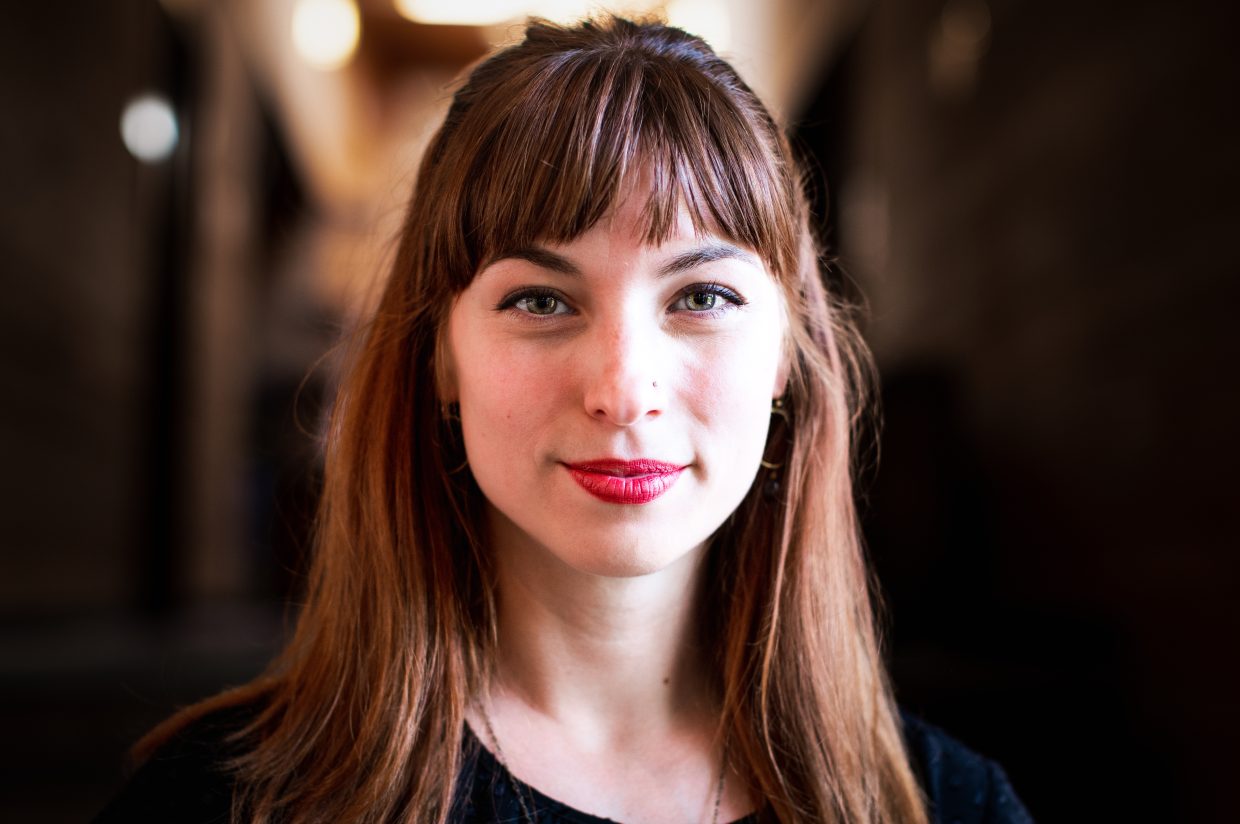
Filmmaker Bria Light, creator and director of ‘The Road Home.’
Maybe it’s an obvious question to ask, but what’s your goal? Making such an incredible and involved piece of art is goal enough, but where do you hope to take this film? How are you thinking about getting it in front of audiences? What’s next for the project?
I had several goals: I hoped some people might see a bit of themselves in the story and feel that they, too – despite having been made to feel othered in the past – belong in bluegrass and country music, that this music can be a home for everyone.
I also hoped that people would see Brandon’s story and say, “Wow, I didn’t realize there were still folks facing this type of persecution in the music industry.” This wasn’t so long ago. And unfortunately, as we all know, we are seeing today the continuation and resurgence of anti-LGBTQ laws and bigotry all over the country and the world. Another hope I have for the film is that by sharing stories that elevate the depth and humanness of the characters onscreen, folks from all sides of the political spectrum might, over time, begin to think about these issues in a new light.
What’s next? Recently the film screened to lovely and engaged audiences at the Sebastopol Documentary Film Festival and next it will play a bit farther from home at the Sound on Screen Film Festival in South Africa. I’m also hoping to show the film at music events or conferences, to continue to share Brandon’s story with audiences around the country.
What did you learn during the making of The Road Home that was unexpected? What will you take with you into future projects – whether in a similar vein or in another space entirely?
I learned so much! I learned the importance of finding that balance of pre-planning and knowing what the story is about while at the same time going with the flow of real-life, nonfiction storytelling – that is to say, you can’t actually predict how life is going to unfold, so you have to hold your preconceived ideas in one hand, while leaving room for the story to reveal itself to you as it unfolds in real time in the other. One thing I “learned” (in quotation marks because I’m still learning it…!) is to trust the creative process, with its highs and lows, self-doubts, rewarding moments, and ultimately, you find that you have gotten to the end of your creative process and survived! There are really too many things I’ve learned that I’ll be taking with me into future projects, so I’ll just leave it there for now.
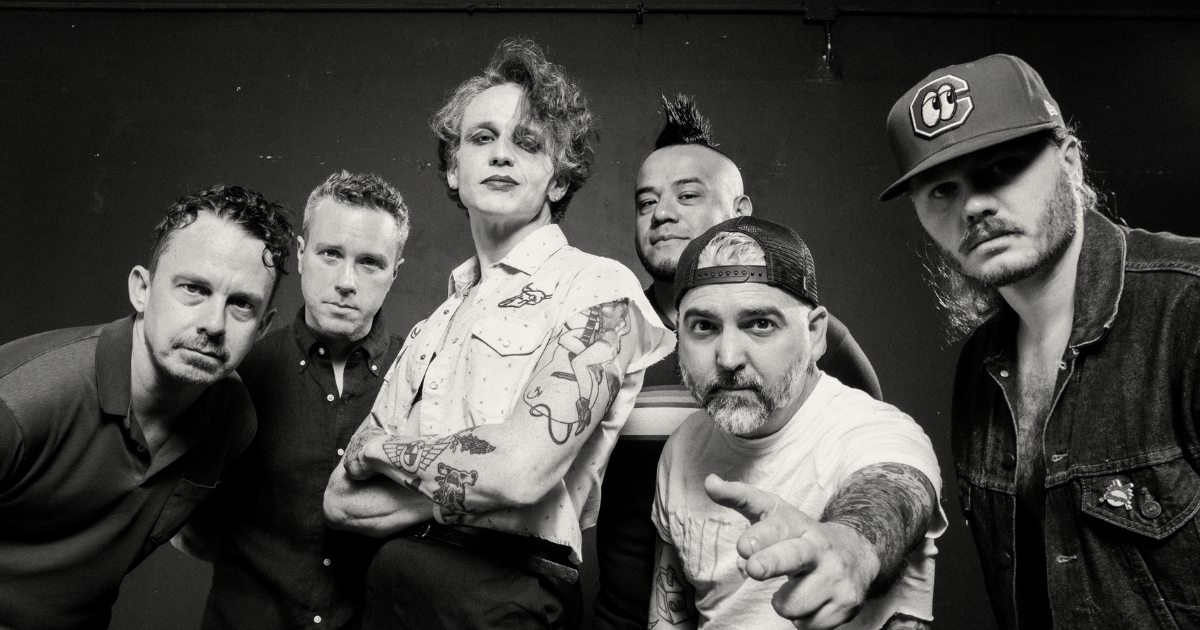
Vandoliers are doing their part to keep the spirit of alt-country alive with their raucous blend of punk, country, and mariachi. In other words, they’re the quintessential Texas dive bar band.
They’ve long been outspoken supporters of the queer community, going viral for protesting the Tennessee Drag Band by performing in dresses as a protest; that was when lead singer Jenni Rose realized that she may be a member of the LGBTQIA+ community herself. And so, the band’s fifth and newest album, Life Behind Bars (released June 27), finds the Vandoliers exploring the wild desert landscape of the heart: sobriety, grief, gender dysphoria — and joy in liberation.
Good Country spoke with group members Rose and multi-instrumentalist Cory Graves in early June about collaborating as a six-piece band, working with producer Ted Hutt to push the band to ever-more lyrical honesty and musical proficiency, and the profound impact Jenni’s sobriety and coming out has had on the band.
The album’s title track, “Life Behind Bars,” deals in part with frustrations of life on the road – but Vandoliers are known for bringing the party. How do you balance these two realities?
Jenni Rose: I couldn’t be a lead singer of this band unless I got sober. I tried really hard to be the party person and be the lead singer and be able to do this hundreds of times a year. I just couldn’t do everything. Put the party down for a little bit, and that brought up so much in my life. It made the shows exponentially better. It made me a better singer. On this record, you’re really hearing me processing this new identity, this new life unfolding. It starts with the question, “Why can’t I get sober?” and then it’s like – “Oh my God, I’m in the wrong body.”
I was dealing with a lot. Cory was dealing with a lot, the whole band was dealing with a lot. We have made four records of us asking, “Where am I at in my life? What am I going through?” We’ve been able to conquer the humorous and the serious, so we weren’t really out of our comfort zone by talking about big feelings, but they’re in this album for sure.
The song has four co-writers: you two, Joshua Ray Walker, and John Pedigo – Texas royalty for sure. While it’s common for pop country songs to have many writers, it’s a bit unusual in the Americana world. How did you all even find yourselves in one place together?
JR: Josh Walker and I are really close. I was with him a lot during his cancer diagnosis. We were catching up and we were about to go to Sonic Ranch to record. I suggested we just go write a song and call up John, who used to produce our records. He pretty much has a co-write on every Vandoliers record except for the last one. We love writing together.
Josh Walker brought up the frustrations with touring and we were talking about how we can keep doing it. Then we thought, “Let’s say we didn’t do it. What else are we gonna do? What kind of jobs are hiring 40-year-olds for entry-level positions?” Cory and Josh had been talking about this line “life behind bars” as a double entendre for years. We all related to it and everybody just started throwing out lines. And then by the end of it, we were all screaming the hook and we had a song.
When you began working with producer, Ted Hutt, he said your songs were “superficial” and pushed you to go deeper. How was it to hear that feedback?
JR: It was wonderful. That conversation was like a year before we got to the studio. So I came in with like 40 tunes. Cory came in with like six or seven. Ted really took the time to listen to our writing and pick the songs that were right for the record. He pushed me so hard with my lyric writing and my vocal performance.
I was writing and rewriting things, clarifying, digging deeper into what I was trying to say and that opened me up to a lot of emotions. I knew I was gonna hit gender dysphoria, but I didn’t know I was gonna hit it there. Then [the] Pandora’s Box was completely opened.
Cory Graves: We’ve always craved a producer that would come in and be like a seventh voice in the room, like a tiebreaker voice or someone who could come in with other ideas. We’ve gotten that a little bit here and there in the past, but never as much as I think some of us wanted. He was heavy-handed, like suggesting we change a song from a punk song to a country song or changing the key.
We all knew that we wanted that. Going in, we all agreed that if Ted wanted to try something, everyone would just be happy about it and try it. That’s exactly what happened. It always worked out for the better.
What lessons do you think you’ll bring with you from this process?
JR: I’m already better at being fully vulnerable when I write. Life Behind Bars is me opening up, whereas some of my writing right now is pretty brutal. I’m excited about moving forward being fully aware and shameless in my writing now.
The band itself is so collaborative, by nature of the kinds of sounds you make. How does the band work together?
CG: We all have so many different influences. None of the songs ended up sounding like the demos. They ended up sounding like a piece of everyone. My song, “Thoughts and Prayers,” was more of a punk song, but ended up as a rockabilly song. “Life Behind Bars” started as an emo song while “Bible Belt” was kind of like a Green Day song. Now it’s like The Cars meets, like – I don’t know. So many different things. There’s a twang to it, but also ’80s rock, because Dustin [Fleming], our guitar player, was in a Cars cover band. So he’s got that in his blood.
There are different things that we each bring out from our past into the tunes.
Jenni, it sounds like for a while you isolated yourself socially from the band a bit. How do you both feel things have changed since you’ve come out?
JR: When I was trying to quit drinking, I changed all of my habits just to make sure that I could. It would have jeopardized my career if I kept going the way that I was going. I didn’t wanna do that, ’cause it’s not just my career, it’s everybody’s career. So I started going to the gym after the shows and then journaling during the day, having a ten-minute free write, word-vomit of poetry that I would send to Ted. I would do this every day and that would take me three hours – most of the van ride. So I’d be in my headphones, dead silent with everybody, and I was cocooning. I was going through a lot and I was trying to heal while in motion.
So everybody got to live with a hermit, essentially, for three years. I know it wasn’t cool, but I had to do it. I’m writing these songs. I’m reading every fucking self-help book I can possibly grab to figure out why I’m an addict. The dysphoria is starting to pick up and ramp up, because I’m starting to understand my emotions instead of dull them and ignore them. I am becoming more in tune with my body at the gym and noticing the dysphoria there and starting to understand myself better and better and better. While all of this is happening, I’m on fucking tour all over the world with six other people.
They’re watching somebody change the way that they eat. They’re watching somebody change what they do during the day. They’re watching my social life become pretty much non-existent. … Everybody becomes [at] arm’s-length on the road for a couple years. And then at a Taco Bell, I tell everybody I’m a trans girl and it’s like I’m right back to the party, I can like hang out again, I can go out after the show, or I can skip the gym. … I’m existing as my highest self after years of searching.
It sounds like your coming out has been a fairly positive experience so far.
JR: I saw immediately how quickly my relationships have been healing since coming out. Each person I told – before coming out publicly – it was great. Now I just get to be in a band with my friends again and they get to know me fully without me being scared of rejection.
I can’t manipulate anybody into accepting me. I can’t control how they feel about me. There’s nothing I can say that would make them either love me or not love me. You just kind of get to figure out who’s with you or not. I am so blessed that the people that are around me are at such a high quality. I think it’s a testament to just my exquisite taste in humans. I’ve been so blessed.
Everybody around me loves me and wants me to keep going and wants to keep being in my life, which is not what I thought that they would do. I assumed that I would be abandoned by everybody, because that’s the narrative that we’re all used to, but it’s been really beautiful. I’m really glad I did it.
Your coming out process has been very public. Your band went viral for protesting the Tennessee drag ban the day it was passed by wearing dresses on stage. And now, you’ve come out in Rolling Stone. So, how are you doing?
JR: Wearing the dresses was Cory’s idea. I have worn so many dresses behind closed doors. No one knew this side of me. When we went shopping for dresses, we all were having fun. When I put it on I was so nervous, but I was also really comfortable. And then we went out and played and I twirled. I had a great time. I thought only like 80 people were gonna see this, that I’d wear a dress for this one show and that would be it. Then everybody saw it.
That was kind of when I realized I had this aspect of me. It was the first time anybody had seen it and everybody kind of saw it at once. It made me wanna drink again, ’cause I didn’t want this to keep multiplying because I was scared. It wasn’t the first time I’d worn a dress and I knew that that wasn’t the first time that I felt comfortable doing so. I didn’t know if I wanted to accept that, or think that it was anything more than a kink or whatever. But I was sober and I did have to deal with it, and I did have to talk about it with my family and my wife.
If anybody’s reading this and they’re questioning if they should come out, you should. It’s good for you.
What are you each most excited about getting the album out in the world and touring it?
CG: I’m excited that people are gonna hear a little bit of a different side of us and to see what they think of it. I think more people are gonna be aware of us than ever, and I’m excited to see how people react to that.
Also, I’ve been doing music for, I don’t know, 20-something years. I’m 41 years old. I’ve never sung a lead vocal on any record in my entire life. I’m just excited for that [“Thoughts and Prayers”] to be in the world. That’s a big accomplishment for me, personally.
JR: I’m glad you sang it. You sang it much better than I was singing it!
I am most excited to be seen as 100% me on the road and to see what that does. So far, it’s been really magical. I think it’s been really positive. As I’m out and I’m playing, these bars or venues or theaters or little music series or festivals, they’re gonna see a trans person in a band, maybe at a country festival, maybe in a small town, maybe at a place that they wouldn’t usually see a queer person, and they’re gonna have to figure out how they feel about that.
I think the thing that I’m most excited about is posing that question to people and giving them a chance to react. I have faith in our fans, but I also have faith in our country, too. I don’t think hate has as much of a stronghold as we might think. It’s there for sure, but I think there’s a lot of love too.
Photo Credit: Vincent Monsaint
This website uses cookies to improve your experience. We'll assume you're ok with this, but you can opt-out if you wish.AcceptRejectRead More
Privacy & Cookies Policy
Privacy Overview
This website uses cookies to improve your experience while you navigate through the website. Out of these, the cookies that are categorized as necessary are stored on your browser as they are essential for the working of basic functionalities of the website. We also use third-party cookies that help us analyze and understand how you use this website. These cookies will be stored in your browser only with your consent. You also have the option to opt-out of these cookies. But opting out of some of these cookies may affect your browsing experience.
Necessary cookies are absolutely essential for the website to function properly. This category only includes cookies that ensures basic functionalities and security features of the website. These cookies do not store any personal information.
Any cookies that may not be particularly necessary for the website to function and is used specifically to collect user personal data via analytics, ads, other embedded contents are termed as non-necessary cookies. It is mandatory to procure user consent prior to running these cookies on your website.